
quête:revolution

Feels as if we're stepping outside the known universe of Nigga Fox but simultaneously being invited in. It's not about being hermetic, shutting out followers of his trademark dance beats or making an experimental statement per se. All this music comes effortlessly during sessions such as any other, so don't throw away valuable time searching for a concept.
"Chá Preto" sounds revolutionary but not so much in his discography, accustomed as we are to game-changing compositional solutions in the afro musical continuum but - never forget - also in Dance Music taken as a broad genre. But is it Dance? Certainly a fair amount of suffering and introspection comes clear throughout the album, namely in the sequence made up of "Má Rotina" and "Mutadoree Leonor". "Mutadoree" is a free, alternative spelling of "much pain" and each listener can process the info as s(h)e pleases. The music is also strikingly beautiful, so there's really no final word on this.
Beats come sparse, a very personal phraseology, the dancefloor a memory. Or just something to keep in mind for a future night out. Presently there's no lack of adventure or excitement in these grooves, a uniquely themed one-person show of musical skills and bare emotion. It ends in a snap, not a trace of embellishment. Pragmatic and out of the loop. Rewind and feel it all over again. Any comparison in mind? Flip through History books and you won't find this chapter.

3
également disponible
vol. 2[14,50 €]

4
In summer 2023 Zion Train released the critically acclaimed album "Dissident Sound" which was heavily featured by the likes of Don Letts and magazines "Mint" and "Riddim". Now tracks from the album have been reworked and will be released on the Spring Equinox. The vinyl will feature remixes from Paolo Baldini, Dub FX, Insintensi, and Professor Skank. Artwork designed by Mark Vojnic of the Zagreb Design University.

9
More about the world has changed than not in the decade since dance production dyad Frank & Tony released their last full-length record, 2014’s You Go Girl. Despite, or perhaps in spite of, this shifting landscape, house music has managed to stay fundamentally reliable (either a bug or its greatest feature, depending on who you ask). Where previously, Frank & Tony have been celebrated for their contemplative, studious approach to the genre, with 2024’s Ethos, the Brooklyn/Biarritz-based duo return amidst metastatic cultural upheaval to prove out those scholarly credentials — with an album that serves to remind listeners why dancefloors and liberatory politics consistently share the language of movements and revolutions.
Undoubtedly, Ethos is tremendously influenced by the multitude of projects originating from, and supported by, the duo and their label in the decade since You Go Girl– releasing records from a vast diversity of artists (including Nadia Khan, Gry, Villete, Darand Land, Alex Albrecht, DJ Sprinkles and CCL), and Harris becoming curatorial voice of Brooklyn’s premiere venue for audiophiles, Public Records, where he continues to amplify work across a global diaspora (and where the duo maintain a residency of wide praise).
It is this bright energy and focus on the necessity of community and relationships that animates the aptly-titled Ethos. If past Frank & Tony releases have been lauded as ‘a coloring book in which someone has exclusively drawn inside the lines… with extreme precision,’ Ethos deviates by inviting friends in for a game of exquisite corpse. From singer and pianist Eliana Glass, whose androgynous, double-reeded voice freestyles across album opener Olympia, to distinct track features from fellow house masterminds DaRand Land, DJ Aakmael and Lawrence over half of the album’s nine tracks highlight artists in the larger Scissor & Thread circle.

10
When the grunge explosion of the early `90s elevated Seattle's flannel-clad misfits out of the divey clubs of downtown and into the mainstream, a new generation of restless artists filled the void left in the Pacific Northwest's underground music scene. The under-21 crowd making music in the wake of Nevermind seemed even less enamored with the slick production values, classic rock nods, and testosterone-fueled moshing culture that came with the Zeitgeist, favoring their own kind of Revolution Summer-style pivot away from the popular sounds of the era towards a more emotionally nuanced, melodic, and inclusive style of punk. The Puget Sound trio Lync perfectly captured the spirit of that era, blending the passionate chaos of the DC and San Diego scenes with the rough-hewn DIY pop sensibilities of Olympia's thriving indie community into one unified sound. Though they were only a band for two years, they helped define the next era of the Northwest underground, inspiring countless other artists and instigating the creation of beloved records from the region. After being out of print for over a decade, the band's sole LP These Are Not Fall Colors has been remastered and expanded into a 2xLP with the inclusion of "Can't Tie Yet"_a compilation track from the album's recording session_into a deluxe edition available courtesy of Suicide Squeeze Records. Originally released on K Records in the summer of '94 just a few months before the band called it quits, These Are Not Fall Colors is a boisterous collection of scrappy basement-show anthems played on duct-taped-together gear. Led by the off-kilter melodies of late singer/guitarist Sam Jayne and hammered into place by the driving bass of James Bertram and drum battery of David Schneider, the album's eleven songs channel that undefinable sound of the early `90s before descriptors like "post-hardcore" and "emo" became pejorative terms. Sure, you get a sense of the more sophisticated mid-tempo punk approach on songs like "B" and "Silverspoon Glasses," and maybe catch wind of wistful songwriting on "Pennies to Save" and "Cue Cards," but Lync seemed to cull their ideas from whatever bits of inspiration they could find in the gray gloom and geographic isolation of western Washington, absorbing it all and churning it together into a style uniquely their own. Despite Lync's short existence, modest aspirations, and DIY approach, their work had a ripple effect. Jayne would go on to make music under the moniker of Love As Laughter. Built to Spill's Doug Martsch was so enamored by the album that he enlisted Bertram and Schneider to serve as his rhythm section on the There's Nothing Wrong with Love tour. These Are Not Fall Colors engineer Phil Ek would go on to help record and produce records by Fleet Foxes, Band of Horses, and The Shins. Early bassist Isaac Brock and These Are Not Fall Colors album art contributor Jeremiah Green would go on to form Modest Mouse. Bertram and Green would also go on to form the revered indie rock group Red Stars Theory. At times it feels like you could pick any major Northwest indie rock group from the `90s and `00s and trace their DNA back to Lync. The deluxe edition of These Are Not Fall Colors comes pressed on 180g vinyl and packaged in a gatefold cover with printed inner sleeves and expanded artwork by Jesse LeDoux. The 2xLP also features an 18x24 poster with extensive liner notes by Brian Cook. Altogether, this new version of These Are Not Fall Colors not only brings this celebrated classic back into analog libraries of old fans, it also provides new context and appreciation for Lync's ongoing impact on both a local and international level.
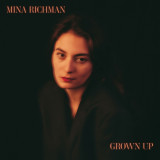
In Berlin geboren, aber in der Kleinstadt Bad Salzuflen aufgewachsen, pendelt Mina zwischen den Welten und entdeckt in der CD-Sammlung ihrer Tante Schätze wie Joan As Police Woman und Nina Simone. Soul und Blues, die Hip-Hop-Kultur und die Revolte der großen Singer-Songwriterinnen stehen Pate, als sie an ihrer Debüt-EP ,Jaywalker" (2022) arbeitet, mit der sie als beste Newcomerin für den PopNRW Preis nominiert wird. Von ihrem Vater ,aus Versehen" zur Feministin erzogen - wie sie es einmal in einem ,Zeit"-Interview formulierte - bediente sie sich für ihren Künstlerinnennamen beim berühmten Cher-Zitat ,Mom, I am a rich man". Ihr Solidaritäts-Song ,Baba Said" geht während der Revolution im Iran schlagartig viral und verschafft der Sängerin über Nacht auf dem ganzen Globus Aufmerksamkeit. Das Musikalische mit dem Gesellschaftlichen zu verbinden war ihr schon immer ein Anliegen. Mit renommierten Festivalslots bei dem New Fall, Herzberg und Reeperbahn Festival und Supportshows für Maxim, Anna Calvi und Alice Merton zeigt Mina, dass sie ,mit 25 Jahren schon eine ganz schöne Powerfrau ist." (WDR 5, 2022) Mit ihrem Debütalbum ,Grown Up" stellt sich Mina Richman nun dem Erwachsenwerden. Mit schonungsloser Ehrlichkeit kehrt sie in ihre Kindheit zurück und verarbeitet streitende Eltern, kulturelle Entwurzelung und den gesellschaftlichen, wie auch ihren persönlichen Umgang mit ihrem Körper. Ehrlich. Queer. Selbstbestimmt. Auch musikalisch ist Mina gereift und stellt einen Sound mit Einflüssen aus Soul, Folk, Indie und HipHop vor, zeigt dass Amy Winehouse, Ronda oder die Alabama Shakes nicht spurlos an ihr vorbei gegangen sind, beleuchtet die schönen Seiten des Erwachsenwerdens: Mut und liebe Menschen, die einen begleiten. Das Album ,Grown Up" wird am 15. März 2024 über Windig erscheinen und anschließend auf einer großen Release Tournee vorgestellt.

- Diamonds Are A Girl S Best Friend
- When Love Goes Wrong (With Jane Russell)
- Two Little Girls From Little Rock (With Jane Russell)
- Bye Bye Baby
- Ladies Of The Chorus
- Every Baby Needs A Da Da Daddy
- Anyone Can See I Love You
- Kiss
- One Silver Dollar
- Down In The Meadow
- The River Of No Return
- Im Gonna File My Claim
- I Wanna Be Loved By You
- I M Through With Love
- Runnin Wild
- Some Like It Hot
- She Acts Like A Woman Should
- You D Be Surprised
- Do It Again
- A Fine Romance
- After You Get What You Want, You Don T Want It
- Heat Wave
- A Man Chases A Girl (With Donald O Connor)
- Lazy
- That Old Black Magic
- I Found A Dream (With Laurence Olivier)
- My Heart Belongs To Daddy
- Let S Make Love (With Yves Montand & Frankie Vaughan)
- Incurably Romantic (With Yves Montand)
- Incurably Romantic (With Frankie Vaughan)
- Specialization
- Rachmaninov" & "Chopsticks" (With Tom Ewell)
- Happy Birthday (For President Kennedy); Thanks For The Memory
33
Marilyn Monroe (born June 1, 1926, Los Angeles, California, U.S.—died August 5, 1962, Los Angeles). Known for playing comic "blonde bombshell" characters, she became one of the most popular sex symbols of the 1950s and early 1960s, as well as an emblem of the era's sexual revolution. She had a good voice that matched her seductive visual appeal, and her limited catalog includes effective interpretations of the work of such songwriters as Harold Adamson and Hoagy Carmichael, Harold Arlen and Johnny Mercer; Irving Berlin, Sammy Cahn and Cole Porter. Marilyn Monroe's singing constitutes a significant part of her overall appeal as a performer. On this album “Diamonds Are A Girl's Best Friend”," I Wanna Be Loved By You", “Happy Birthday (For President Kennedy) ”, “The River of No Return ”, “Two Little Girls From Little Rock (ft. Jane Russell)”. a.o. Limited Edition on Blue Transparent coloured vinyl.

Like the best of them, Daniel Chavez got his start immersing himself in the nightclubs, dingy basements, and record stores of Chicago. Cycling around the South Side with records and a small PA system strapped to his back, he found himself at Smartbar and eventually began slinging records at Gramaphone alongside some of the deepest heads of his generation. Before long, Daniel made the jump to Brooklyn and landed at A-1 Records, while diving further into the global deep house community and soaking up knowledge like a sponge. After sowing seeds in obscurity for many years, Daniel saw the fruits of his labor in 2023 with a debut 12” on Halo’s Muted Noise imprint.
These tracks were designed and refined over the course of a year to meet the strict specifications of the Jewel soundsystem and dancefloor. “Writing on Water” is a submersive, simmering tune that heaves and moans for eight minutes, but could probably go on for an hour. “Terras” strips away the layers to reveal a spacious, floating world supported by a fat, rolling bassline. On the flip, “Spiraling” echoes a feeling of early My Love Is Underground and the New York deep house golden era before it: a time of revolution. Finally, “67th Session” combines space and depth with a simple vibraphone riff that can go off day or night.

Miles Davis' A Tribute to Jack Johnson is the best jazz-rock record ever made. Equally inspired by the leader's desire to assemble the "greatest rock and roll band you have ever heard,” his adoration of Johnson, and Black Power politics, Davis created a hard-hitting set that surges with excitement, intensity, majesty, and power. Bridging the electric fusion he'd pursued on earlier efforts with a funkier, dirtier rhythmic approach, Davis zeroes in on concepts of spontaneity, freedom, and identity seldom achieved in the studio — and just as infrequently accepted by the mainstream.
Sourced from the original analog master tapes, pressed on MoFi SuperVinyl, and housed in a Stoughton jacket, Mobile Fidelity's 180g LP reissue brings it all to fore with startling realism. Benefitting from SuperVinyl’s nearly inaudible noise floor, superb groove definition, and clean, ultra-quiet surfaces, this 180g LP showcases everything — from the bold tonality of the headliner's white-hot trumpet solos to the decay of crashing cymbals, carry of wiry guitar notes, and echoes of the studio — in reference fashion.
Bristling with exuberance, Davis' high-register passages explode with authority and commanding presence. Around him, a barrage of urgent backbeats, knifing riffs, and supple bass lines emerge amidst black backgrounds. One of the most prominent differences long-time fans will notice is how much more aggressive, immediate, and vibrant the music sounds, with those aspects central to the composer's original desires.
Utilizing wah-wah and distortion, the go-to instrumentalist of the performances— guitarist John McLaughlin — attacks with a nasty edge, slashing style, and vicious streak that allows A Tribute to Jack Johnson< cross the until-then-impenetrable divide between rock and jazz. Davis puts both feet in the former camp and erases any gap. The stories of the record’s creation are nearly as legendary as the sounds within: Two sessions, multiple jams, different sets of musicians (several uncredited), and near-miraculous production perfectionism that made it all appear cohesive.
The least-well-known masterpiece of Davis' career, the 1971 record — seamlessly assembled and spliced together by producer Teo Macero — was a victim of limited record-label promotion. Audiences also didn’t immediately know what to make of its original cover art — faithfully replicated here. In addition, the powers that be at Columbia Records were directing the public’s attention to Miles at Fillmore, a completely different kind of album guided by two keyboardists. A Tribute to Jack Johnson practically lives in a different universe, one from the future. To many listeners who did manage to hear it — among them critic/musician Robert Quine, Stooges leader Iggy Pop, and renowned critic Robert Christgau — it surpassed everything that came before.
Indeed, Davis treated it as a personal manifesto: An opportunity to salute the Black championship boxer admired for his threatening image to the establishment and impeccable taste in clothes, cars, women and music. Davis explains in the liner notes his affinity for Johnson — a stance mirrored by the defiant music, which hits with a prize fighter's force and reflects the graceful elegance with which a pugilist navigates the ring — and closes the album with a Johnson quote read by Brock Peters.
Inspired not only by Johnson but by Jimi Hendrix and Sly Stone, Davis changed his approach and his band. He surrounds himself with a cadre of musicians in their 20s and, in the case of bassist Michael Henderson, a 19-year-old fresh from touring with Stevie Wonder. Henderson gives Davis what he requested: boogie-based grooves that don’t lose shape or direction. Soprano saxophonist Steve Grossman, drummer Billy Cobham, and organist Herbie Hancock adhere to a similar aesthetic that prizes brazenness, innovation, and energy.
In that vein, during a portion of “Yesternow,” Davis segues into a separate performance (which became known in its entirety as “Willie Nelson”) played by guitarists McLaughlin and Sonny Sharrock, bass clarinetist Bernie Maupin, keyboardist Chick Corea, bassist Dave Holland, and drummer Jack DeJohnette. Dig it!
Talking with jazz scholar Bill Milkowski — who himself noted how McLaughlin’s unrestrained style, decibel-forward volumes, and rapid-fire power chords engendered himself to the rock crowd at the same time that his harmonics and syncopation still definitely made him a jazz player — guitarist Henry Kaiser summed up part of the appeal of A Tribute to Jack Johnson as well as anyone, saying: “It’s a jazz record that way way more open than other jazz records at the time, but still not free jazz. McLaughlin’s rhythm guitar playing on ‘Right Off’ — the use of different chords in a rock shuffle than what anybody had used before — was revolutionary.”
And to think that’s just one aspect of a record that contains multitudes. “Never let them forget it.” Indeed.

In Berlin geboren, aber in der Kleinstadt Bad Salzuflen aufgewachsen, pendelt Mina zwischen den Welten und entdeckt in der CD-Sammlung ihrer Tante Schätze wie Joan As Police Woman und Nina Simone. Soul und Blues, die Hip-Hop-Kultur und die Revolte der großen Singer-Songwriterinnen stehen Pate, als sie an ihrer Debüt-EP ,Jaywalker" (2022) arbeitet, mit der sie als beste Newcomerin für den PopNRW Preis nominiert wird. Von ihrem Vater ,aus Versehen" zur Feministin erzogen - wie sie es einmal in einem ,Zeit"-Interview formulierte - bediente sie sich für ihren Künstlerinnennamen beim berühmten Cher-Zitat ,Mom, I am a rich man". Ihr Solidaritäts-Song ,Baba Said" geht während der Revolution im Iran schlagartig viral und verschafft der Sängerin über Nacht auf dem ganzen Globus Aufmerksamkeit. Das Musikalische mit dem Gesellschaftlichen zu verbinden war ihr schon immer ein Anliegen. Mit renommierten Festivalslots bei dem New Fall, Herzberg und Reeperbahn Festival und Supportshows für Maxim, Anna Calvi und Alice Merton zeigt Mina, dass sie ,mit 25 Jahren schon eine ganz schöne Powerfrau ist." (WDR 5, 2022) Mit ihrem Debütalbum ,Grown Up" stellt sich Mina Richman nun dem Erwachsenwerden. Mit schonungsloser Ehrlichkeit kehrt sie in ihre Kindheit zurück und verarbeitet streitende Eltern, kulturelle Entwurzelung und den gesellschaftlichen, wie auch ihren persönlichen Umgang mit ihrem Körper. Ehrlich. Queer. Selbstbestimmt. Auch musikalisch ist Mina gereift und stellt einen Sound mit Einflüssen aus Soul, Folk, Indie und HipHop vor, zeigt dass Amy Winehouse, Ronda oder die Alabama Shakes nicht spurlos an ihr vorbei gegangen sind, beleuchtet die schönen Seiten des Erwachsenwerdens: Mut und liebe Menschen, die einen begleiten. Das Album ,Grown Up" wird am 15. März 2024 über Windig erscheinen und anschließend auf einer großen Release Tournee vorgestellt.

4
After the great reception of the first vinyl signed by the label head FM-3, it was difficult to overcome, but the banana house is a mine of emerging talent and quality in what broken rhythm is concerned... BAN002 is a Various Artist of four cuts in which artists such as CoolTasty, Majestic Noise and Tomy are chosen, obtaining a very appetizing shake full of sonic nuances, which will leave a genuine taste in your mouth. Try it, we are sure you'll love it!!!

8
HJirok is a mythical figure, conceived as a fictional character by Iranian-born Kurdish singer and artist Hani Mojahedy. Together with versatile music producer And Toma of Mouse On Mars, she combined a variety of sounds collected during their joint travels to Iraqi Kurdistan and elsewhere with heavily processed recordings of Sufi drum rhythms and setar melodies. The result is a driving, dubbed-out, and deeply intricate soundscape that perfectly sets the stage for Mojahedy's extended, unconventional vocal techniques and polyglot lyrics. Both informed by tradition and rigorously forward-looking, »Hjirok« (with a lowercase J) is at once a profoundly personal album and a universal utopian promise. As a ghost from the past, HJirok draws on Mojtahedy's memories to mould a new future out of them.
The foundation for »Hjirok« was laid in the city of Erbil in the Kurdish part of Iraq. During one of their stays in the region, Mojahedy and Toma recorded the three percussionists Hadi Alizadeh, Jawad Salkhordeh and Serdar Saydan as well as setar player Ali Choolaei from Motahedy's backing band while they were playingthe rhythms and notes that she had grown up with in the house of her grandfather in the Iranian city of Sanandaj. Her memories of that place revolve around hypnotic Sufi music, dervishes in deep trance, and ecstatic singing. Much like this music seemed to open a portal to other dimensions, the inhabitants of the house lived in a sort of alternative reality: It provided them with a hideaway from political circumstances. Following the Iranian revolution in 1979, a Kurdish rebellion ensued but was met with the utmost brutality by the new regime, which resulted in the death of thousands.
It is no coincidence that the music on »Hirok« would draw on rhythmic patterns that were passed on from one generation to the next for hundreds of years. »The project is rooted in the figures of the Sufi dervishes and thus a culture that precedes today's political, social, cultural, and religious systems,« explains Mohtahedy. »The Sufi sound travelled around the entire world. I like to think of it as a dialogue between peoples-one based on the rhythms of the drums and the sound of their voices.« Toma adds that by electronically transforming the recordings and enriching them with field recordings from both rural and urban spaces, they were able to use the stories told by the drums and the setar to create an entirely new narrative.
The story told by these eight pieces is hence a deeply personal, but also inherently political one. Moitahedy herself left Iran in 2004 and relocated to Berlin in 2010. Having continued to use her art as a platform to tirelessly advocate for the rights of the Kurdish people and women under oppressive regimes, she has not been allowed to return to her country of origin ever since. »Hani is singing for equality and there are people who are afraid of that-her femininity, her strength.« Toma says. Much like earlier Hirok sound installations addressed human-made climate change and other systemic ills, also »Hjirok« can hardly be disconnected from far-reaching struggles for liberation and equality.
This is also true on a thematic and even linguistic level. »The lyrics are about a promise,« Mojahedy says, citing Kurdish writer Ebdulla Pesêw as an inspiration. »At their core, these are about that day on which violence and fear become a thing of the past; what they tell you is ot not give up, to keep hoping,« she adds. The promise embedded in them is an emancipatory one. These contents are mirrored on a linguistic level: The lyrics were written in both Kurdish and Farsi, blurring the lines between the two languages and thus, Kurdish and Persian cultures.
Mojahedy, or rather HJirok, conveys these philosophical themes with elegance. Herversatile vocal performance is only loosely basedo n established styles. »Of course everything started with traditional rhythms, but we kept pushing things further and further, so Idid the same with my voice,« Mojahedy explains. »There were no boundaries.« The same can be said of the field recordings that she and Toma used. Whether it's conversations between members of the Pesmerge, the Kurdish armed forces, having a chat in meadow full of bunnies or the humming and buzzing of metropolises like Tehran: »Hirok« paints a sonic picture that is quite literally autopian one; that of a non-place in which different soundscapes, cultures and ways of life coexist peacefully.
What the album conjures up from Mojahedy's memory is not only a very specific place during a unique time in history as experienced by a single person. It is also ametaphorical home open to anyone who wishes to enter - promise of a better, more egalitarian future for everyone. Hence, HJirok will bring it on tour, presenting the material as an audio-visual live show that makes use of the photo and video material that Mojahedy and Toma have collected during their travels through Kurdistan.ja

- A1: Fela Kuti - International Thief Thief (I.t.t.) (Armonica & Moblack Extended Mix)
- A2: Fela Kuti - International Thief Thief (I.t.t.) (Armonica & Moblack Extended Dub)
- B1: Moblack, Emmanuel Jal & Henrik Schwarz - Chagu (Henrik Schwarz Extended Version)
- B2: Moblack, Emmanuel Jal & Henrik Schwarz - Chagu (Moblack Extended Version)
4
Repress!
These are the words of legendary Nigerian musician and activist Fela Kuti, words that remain as true as ever over two decades since his untimely death. A pioneer of the Nigerian revolution, his fight against police oppression remains an ongoing conversation in the country. Now, Defected pays tribute to the vital work of Fela with a special 12” release, as Armonica and MoBlack revisit Fela Kuti’s ‘International Thief Thief (I T. T.)’ as the fight against systemic corruption continues to be a pressing issue in Nigeria. The A-Side features Armonica & MoBlack’s flawlessly executed and ever respectful remix of the record where Fela called out and directly attacked former Nigerian president General Obasanjo and Moshood Abjola, the CEO of Nigeria’s biggest national telecommunications conglomerate I.T.T and Decca Records. Their homage to Fela brings a powerful and culturally relevant piece of music to the forefront of dance culture in 2020.
On the reverse side is ‘Chagu’, where a powerful and evocative spoken word narration is provided by South Sudanese-Canadian artist, actor, former child soldier and political activist Emmanuel Jal. A collaboration between Emmanuel, MoBlack and Henrik Schwarz, both producers provide their own version of ‘Chagu’, with MoBlack opting for a classic afro-house beat and hypnotic percussion, while Henrik’s signature crisp, harmonious composition makes for a guaranteed dancefloor weapon. Both visionary producers, Henrik and MoBlack’s versions are equally impactful, complementing the immediacy of Emmanuel’s lyrics.

Sydney rock outfit The Blamers are a modern band—two modern men, two modern women—with a revolutionary bent. Utilizing the latest cutting-edge stereophonic technology, the group—fuelled by an obsession with early garage greats—are at the fore of a sonic campaign to simplify rock back to its basic proto-punk form. With hooky riffs and a healthy dose of tambourine, the group are preparing to release their debut album early-2024 after a string of singles. The Blamers have shared the stage with Aussie heavy hitters The Chats, Bad Dreems, Pist idiots and blistered clubs around Australia with their no bullshit, beer-soaked sound. It’s a wonder that a band like The Blamers hasn’t come earlier! If you like the hard ass style of 60s punk with the wit of The B52’s, here it is.

Back again for the first time in a few years, note price increase. Unfettered by studio time limitations with their own home base of Echo Canyon, SYR 2 shows Sonic Youth chasing the shadows of predecessor SYR 1 and the series' distinct aesthetic: total exploration of freedom and further discovery. While the cover art evokes European contempo classical releases of yore, Sonic Youth distinctively reinvent their own personal output potential the way those kinds of records revolutionized a previously defined genre. Their ethos of utilizing the roots of the Ramones, Television, VU, Stooges, and No Wave to shape their first decade now find the band in later years bullet-pointing fascination in AMM, MEV, improvised music, free jazz and other outer-limit/organic refractions of traditional rock. While Sonic Youth's spontaneous-creation moments had long been showcased in their recordings, Peel Sessions, and live, SYR 2 sums up the band's state in 1997: rolling lots of tape, fine-tuning ideas and presenting great moments of exciting new directions, allowing deep-listener type fans to gain better insight into their sound process. Add to that the alchemy of Jim O'Rourke's gradual entry into the core band which would soon be fully on display for SYR 3, and this series is an X-ray of evolution, dissection and reconstruction

5
également disponible
Vol. 2[12,82 €]
In a world threatened by environmental decay, a passionate young man embarked on a daring quest to save the planet. Will his vision of a sustainable future become a reality, proving that the passion of one young man could ignite a revolution and ultimately save the planet for generations to come? Find out by following the Chronicles Of Bru, the new series of EP composed by Jesse Bru and produced by Happiness Therapy!

5
également disponible
Vol. 1[12,82 €]
In a world threatened by environmental decay, a passionate young man embarked on a daring quest to save the planet.
Will his vision of a sustainable future become a reality, proving that the passion of one young man could ignite a revolution and ultimately save the planet for generations to come?
Find out by following the Chronicles Of Bru, the new series of EP composed by Jesse Bru and produced by Happiness Therapy!

- A1: Bob Marley - Soul Rebel
- A2: Alpha Blondy - Cocody Rock
- A3: Gregory Isaacs - Babylon Too Rough
- A4: Ken Boothe - Artibella
- A5: Max Romeo - Stop Picking Me
- A6: Sly & Robbie - Night Nurse Feat Simply Red - Radio Mix
- B1: John Holt - Police In Helicopter
- B2: Eek-A-Mouse - Ganja Smuggling
- B3: Don Carlos - Rivers Of Babylon
- B4: Freddy Mcgregor - Big Ship Sailing
- B5: Jacob Miller - Tenement Yard
- B6: The Congos - La La Bam-Bam
- C1: Alton Ellis - I'm Still In Love
- C2: Dennis Brown - Revolution
- C3: Errol Dunkley - Ok Fred
- C4: Groundation, Don Carlo & The Congos - Jah Jah Know
- C5: Black Uhuru - Sinsemilla
- D1: Ini Kamoze - World A Music
- D2: Yelloman - Zungguzungguguzungguzeng
- D3: Lee Scratch Perry & The Upsetters - Soul Fire
- D4: Alborosie - No Cocaine
- D5: Chaka Demus & Pliers - Murder She Wrote
22

Das erste Album mit Gesang der geliebten äthiopischen Nonne, Komponistin und Pianistin Emahoy Tsege Mariam Gebru enthält tiefgründige und bewegende Kassettenaufnahmen, die inmitten politischer Umwälzungen und Unruhen entstanden sind. Es sind Lieder über Weisheit, Verlust, Trauer und Exil, die direkt in eine Boombox gesungen und von Emahoys unverwechselbarem Klavier begleitet werden. Obwohl sie die Lieder noch im Haus ihrer Familie in Addis Abeba schrieb und aufnahm, singt Emahoy über den Schmerz, weit weg von zu Hause zu sein, über die Revolution von 1974 und den Roten Terror in Äthiopien und über eine Vorahnung ihres zukünftigen Exils in Jerusalem. Im 21. Jahrhundert ist Emahoy weltweit für ihren ganz eigenen melodischen und rhythmischen Stil bekannt geworden. Häufig als "jazzy" oder "honky tonk" fehlinterpretiert, entspringt Emahoys Musik in Wirklichkeit einer tiefen Auseinandersetzung mit der westlichen klassischen Tradition, gemischt mit ihrem Hintergrund in traditioneller und orthodoxer äthiopischer Musik. Diese Lieder, die zwischen 1977 und 1985 aufgenommen wurden, unterscheiden sich von allem, was die Künstlerin bisher veröffentlicht hat. Die Geräusche der Vögel vor dem Fenster, das Knarren der Klavierbank und das Klopfen von Emahoys Finger auf der Aufnahmetaste vermitteln das Gefühl, bei der Künstlerin zu sein, während sie aufnimmt. Emahoys Texte, die sie auf Amharisch singt, sind poetisch und schwer von der Last des Exils. "Als ich hinausschaute / hinter die Wolken / konnte ich den Himmel meines Landes nicht sehen / bin ich wirklich so weit gegangen?", fragt sie in "Is It Sunny or Cloudy in the Land You Live?" Ihr Gesang ist zart und innig und zeichnet die melodischen Konturen ihres Klaviers nach.
