In the Italian panorama of the '70s, Chrisma (Christina Moser and Maurizio Arcieri) skirted the common rules of Italian pop (the aura of progressive rock or the first wave of prolific folk singers); in fact, they created Italian new wave from scratch. After the release of their 1977 debut album Chinese Restaurant (SPITTLE 051LP) -- so far from the punk revolution and so deep into the algid dynamics of the Mittel-European sound -- came Hibernation, their creative peak on which they embrace the revelation of the man-machine and venture into the realms of incomparable robots Kraftwerk. Again the album was produced by Niko Papathanassiou (brother of the Greek legend Vangelis), and it features very sophisticated cover artwork created by famous photographer Mario Convertino. Chrisma, so far ahead of their time, crafted an opus that should be considered at the same emotional level as the most famous synth-pop bands from the UK and Germany. Highlights include "Vetra Platz," a long digital ride worthy of the most famous Kraftwerk singles; "Calling" and "Gott Gott Electron," a primeval couplet of furious post-punk numbers; and the lush "Lover," with Miss Moser still in top form. This reissue includes the original artwork with a silver background. RIYL: T. Rex, Nico, Kraftwerk.
Cerca:revolution
- A1: Eat Static - Kothluwalawa
- A2: Magic Mushroom Band - Aravinda
- A3: The Ullulators - Zulu Proons
- B1: Ozric Tentacles - Secret Names
- B2: Revolutionary Dub Warriors - Dread V1
- B3: Junkwaffel - Substrata
- C1: The Ullulators - Simply Conscious Dub
- C2: Magic Mushroom Band - Squatter In The House
- C3: Ozric Tentacles - Sploosh!
- D1: Divine Soma Experience - Music Is Magic
- D2: Extremadura - Epsilon
Musique Pour La Danse is proud to present SPACED OUT!, a compilation curated by Belgian artist and producer DJ Athome (Front de Cadeaux) which focuses on psychedelic dub, space rock, and early electronica created in the UK's festival scene between 1986 and 1996, the result of a life long passion and 30 years of following artists from the festival scene.
It was a loosely organized British musical movement born in the early 80s and focused on free festivals in Stonehenge and other countercultural sites across the country. It represented a continuation of the psychedelic spirit of the 60s, with altered states of consciousness, dub production techniques, non-Western influences as well as instruments featuring heavily, along with a desire to side-step mainstream venues, labels, and attitudes.
Musically, it took on many forms, from mind-expanding space rock to third eye-opening electronica to shattering psychedelic dub. Visually, the zines, cassettes, LPs, and CDs created by this scene also displayed heavy influences from 60's psychedelia, updated for the late 80s and early 90s.
In the 90s, the zines and cassettes reached the eyes and ears of DJ Athome, then a young DJ living in Liège. After meeting a group of like-minded individuals organizing local gigs which was single-handedly responsible for putting Liège on the map for many British bands, he dived headfirst into the sights and the sounds of this festival scene, gathering as many albums as possible and joining local collectives involved in the organization of events.
This compilation is in equal amounts an introduction for newcomers and a confirmation for those who already know that this was without a doubt one of the trippiest and most compelling psychedelic musical movements of the last decades, notable for its hybridity, its sincerity, and above all its wonderfully life-changing effects for listeners and performers alike.
The compilation is presented in 2LP format, along with a limited edition Riso printed scene which features a foreword by acclaimed philosopher Timothy Morton, along with liner notes by David Borsu, one of the key players of Liège's musical collectives in the 90s and illustrations by designer Andrew Beltran.
3 track 7” Strictly Limited Half Blue/Half Yellow Vinyl Includes postcard and poster.
Part of the Optic Sevens 3.0 Reissue Series.
Chin-Chin, an all-female group consisting of Karin (guitar/ vocals), Esther (bass/vocals) and Marie-Anne (drums/ vocals) was formed in 1982 in Biel, Switzerland.
Originally released in 1986 on 53rd & 3rd, these 3 tracks make their first appearance on 7”. Look out for their forthcoming Singles and BBC Sessions album on Sealed Records.
- A1: Alf Layla
- A2: Hazihi Laylati
- A3: Fakarouni
- B1: W Marrat El Ayam
- B2: Amal Hayati
- B3: Men Ajel Aaynayk
- B4: Anta Oumri
Omar Khorshid (9-Oct-1945 – 29-May-1981) is an Egyptian musician, composer, accompanist, and actor.
Born in Cairo, Omar Khorshid was a well-known guitarist who accompanied many Arabic singers, including Farid Al Atrach, Oum Koulsoum, Mohammed Abdel Wahab, and Abdel Halim Hafez.
From 1973 to 1977, Khorshid moved to Lebanon and began recording albums under his own name, working with sound engineer Nabil Moumtaz at Polysound Studios in Beirut.
Khorshid's musicality in orchestra performances, original songs, and film scores was considered revolutionary at the time in the Middle East. His extensive theoretical knowledge, fusion of Western sounds with Eastern sounds, and incorporation of different, more modern instruments (e.g. the electric guitar, electric keyboard, and synthesizer) in Arabic music was previously unheard of.
Khorshid's unique style sparked inspiration from many aspiring musicians not only in the Middle East, but in Europe and the Americas as well. His mixing of "modern" instruments with older Arabic tunes spawned a new, more modern sound of Arabic music that many use for belly-dancing today.
Tony Scott (born Anthony Joseph Sciacca June 17, 1921 – March 28, 2007) was an American jazz clarinetist and arranger with an interest in folk music around the world. For most of his career he was held in high esteem in new-age music circles because of his involvement in music linked to Asian cultures and to meditation. Tony performed with many star as Billie Holiday, Sarah Vaughan and Harry Belafonte and before moving to Italy in the early ‘70’s he just cut two sought after masterpiece moving forward from his early idea of bop and cool jazz. In particular ‘Djanger Bali’ (1967 Saba) - recorded with The Indonesian All Stars - and the self titled Tony Scott (1968 Verve) - featuring Richard Davis on bass, John Berberian on oud and Attila Zoller on guitar – set the pace for a revolution in terms. This set recorded in Africa around the mid 90’s is a pure rhythm festival pushing the boundaries of his afro fusion agenda
- A1: The Benefits Of The Fake Commute
- A2: Parasitic Future
- A3: Work Permits And The Isolation Of Equipment
- A4: A Case For Co-Operation Between Humans And Machines
- B1: Maintenance Tips For Heavy Equipment
- B2: Work After Machinery
- B3: Avoiding Cross-Contamination In Your Food Business
- B4: Does The Next Industrial Revolution Spell The End Of Manufacturing Jobs?
Alleged Witches debut album breaks down centuries of human labour into an eight-part instruction manual for company best practice, stock control and tips for the optimum commute. The final break from nature, it's Pagan funeral marches, insect rhythms and doomed ambience for one last trip up the river. Artwork from Bill Connors.
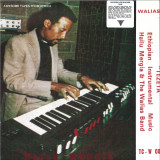
From their genesis as members of the Venus club in-house band in the early 70s, Hailu Mergia and the Walias Band were at the forefront of the musical revolution during an era where modern instruments and foreign styles superseded the traditional fare to become the staple sound of Ethiopia. No one would argue that the Walias were the trailblazing powerhouse of modern Ethiopian music. They were the first band to form independently without affiliation to a theatre house, a club or a hotel; unprecedented and risky as they had to raise all funding for expenses by themselves including buying equipment. They were the first to release full instrumental albums, considered to be commercially unviable at the time. They opened their own recording studio, with band members Melake Gebre and Mahmoud Aman doubling as technical buffs during sessions. They were also the first independent band to tour abroad. In short, they were the pioneers every band tried to emulate; some more successfully than others.
Odds are, any Ethiopian over the age of 35 who had access to TV or radio by the early 90s, will instantly recognize the sound of Walias. What is not a given is, how many would actually identify the band itself. Barely a day went by without hearing the Walias either in the background on radio or as an accompaniment to various programs on TV.
This Tezeta album, the band’s second recording, released in 1975, is one of those that have been impossible to find for nearly three decades. Sourced by Awesome Tapes From Africa and expertly remastered by Jessica Thompson, its unique and funky renditions of standards and popular songs of the day are so quintessentially Walias, flavorful and evocative. Hailu's melodic organ, unashamedly front and center in every track, makes even the complex pieces accessible.
Profoundly engaging; it's an immersive trip down memory lane for those of us getting reacquainted with it, while also an enthralling and gratifying experience for fresh ears.
Virtually unknown recording outside Ethiopia.
Documents Mergia & Walias legendary early period.
Follow-up to reissue of hugely popular seminal Ethiopian instrumentals LP Tche Belew (ATFA012)
Cassette-only, released in 1975 on the band’s in-house label to fund their record store.
Beautifully-rendered instrumentals of classic Ethiopian standards.
- Dark Strands - The Last Ride
- Dark Strands - We Own The Night
- Dark Strands - Black Dog
- Dark Strands - Wandering Star
- Vox Low - I'll Save You Anyway (Evelyne)
- Vox Low - I'm Coming To Your House (Feat. Tarik Ziour)
- Vox Low - Loving Hell
- High Boys - Drunken Master
- High Boys - Down With Chaos
- High Boys - This Is The Captain Speaking
- High Boys - No Hope For A Sexual Revolution
- Timothy J. Fairplay - Mindfighter
- Timothy J. Fairplay - Nightmare City
- Timothy J. Fairplay - Lost In The Mirror Maze
- Timothy J. Fairplay - Jennifer Has Some Strange Ideas
- Fontän - Sen Sen No Sen (Red Axes Remix)
- Fontän - Mangsebung (Timothy J Fairplay Remix)
- Fontän - Gangri (Khjinda Remix)
- Fontän - Bardo (Mythologen Remix)
- Fontän - Shadows (Pardon Moi Remix)
- Birds Of Paradise - Tito
- Birds Of Paradise - Joy-Rides
- Birds Of Paradise - Smoking Holiday
- Birds Of Paradise - Breather Resist
- Mythologen - The Joy I Feel
- Mythologen - Canavan's Peckham Pool Club
- Mythologen - Blackheath
- Mythologen - House Of Parakeet
- Jamie Paton - Enhance 224
- Jamie Paton - State Line
- Jamie Paton - Disk Memories
- Jamie Paton - Leviathan Aftermath
- Frak - Corridor
- Frak - Stetoskop
- Frak - Micro Fisson
- Frak - Arcitect
- Birds - Solitary Dancers
- Birds - Night Time Life
- Birds - Dont Drink The Acid Water
- Birds - Young Blood
What better way to celebrate 100 releases than with a handmade box containing soul expanding music!? Höga Nord Rekords have reached an important goal and releases a rare box set containing all 12” from the HNRUK-series plus a new record from Birds, unique for this box. Except Birds, this compilation includes Dark Strands, High Boys, Vox Low, Timothy J. Fairplay, Fontän, Bird Of Paradise, Mythologen, Jamie Paton and Frak.
The music is of course the main focus of all releases on Höga Nord Rekords but what birthday gift comes without a proper wrapping? This exclusive handmade box made in Norrmalms kartongfabrik in Stockholm, is a celebration to the Scandinavian Bronze age. You’ll find rock carvings like those on the artwork scattered over the land but mostly near Gothenburg, home of Höga Nord Rekords on the Swedish west coast.
Archaeological evidence proves similarities in ornaments and pictures between the Nordic and European Bronze age, just like you find common features in the music released on our label. Though the acts in this compilation box come from all over Europe and beyond, they stem from an obscured and mysterious common source of escapism, purity and creativity.
Heavy music’s evolution has always been a murky swamp of sub-genres. So, combining Thin Lizzy’s glistening twin guitar harmonies with Melvins- grade sludge and a hearty dose of proto-metal psych probably shouldn’t sound so revolutionary as it does in the hands of L.A. quartet Deathchant. But theirs is a special, transcendent sound.
Waste, the band’s sophomore album and first for RidingEasy Records, is anything but. The 33-minute, 7-song blast flows seamlessly from song to song, aided by droning segues, while simultaneously slithering between genres and moods. Rumbling noise, chiming guitar melodies, bluesy boogie, NWOBHM thrash, COC grunge and punk fury all rear their head at times, sometimes all at once.
Though you wouldn’t be able to tell by the concise structures and well- crafted songs, a lot of Deathchant’s music is improvised, both in the studio and live. That’s not to suggest their songs are jammy — they’re very tightly organized compositions. But the four musicians have that special musical telepathy that allows them to keep the song structures open-ended.
“Improv is a huge things for us and always has been,” singer/guitarist T.J. Lemieux says. “The musical freedom to look at the other dudes in the band and be able to take things wherever we want to go is magical. I like the feel of flying off the hinges.”
Likewise, the band itself is similarly amorphous in its membership. “We run the band with an open door. No lineup is definitive,” Lemieux explains. On Waste, the lineup is: Lemieux, George Camacho on bass, Colin Fahrner on drums, and John Belino on second guitar.
Waste was recorded live in a rented cabin in the mountains of Big Bear, CA. “We packed a big-ass van and set up in the living room and kitchen,” Lemieux says. “Tracked it live, with overdubs after.” The whole album was recorded over two separate weekends, engineered by Steve Schroeder, who also recorded the band’s 2019 self-titled debut album.
“I’d say it has sort of a DIY LA punk aesthetic,” he adds. “Very ironically going hand in hand with a classic metal vibe: Thin Lizzy, Judas Priest, classic Deep Purple, Uriah Heep and other melodic heavy rock bands.”
Heavy music’s evolution has always been a murky swamp of sub-genres. So, combining Thin Lizzy’s glistening twin guitar harmonies with Melvins- grade sludge and a hearty dose of proto-metal psych probably shouldn’t sound so revolutionary as it does in the hands of L.A. quartet Deathchant. But theirs is a special, transcendent sound.
Waste, the band’s sophomore album and first for RidingEasy Records, is anything but. The 33-minute, 7-song blast flows seamlessly from song to song, aided by droning segues, while simultaneously slithering between genres and moods. Rumbling noise, chiming guitar melodies, bluesy boogie, NWOBHM thrash, COC grunge and punk fury all rear their head at times, sometimes all at once.
Though you wouldn’t be able to tell by the concise structures and well- crafted songs, a lot of Deathchant’s music is improvised, both in the studio and live. That’s not to suggest their songs are jammy — they’re very tightly organized compositions. But the four musicians have that special musical telepathy that allows them to keep the song structures open-ended.
“Improv is a huge things for us and always has been,” singer/guitarist T.J. Lemieux says. “The musical freedom to look at the other dudes in the band and be able to take things wherever we want to go is magical. I like the feel of flying off the hinges.”
Likewise, the band itself is similarly amorphous in its membership. “We run the band with an open door. No lineup is definitive,” Lemieux explains. On Waste, the lineup is: Lemieux, George Camacho on bass, Colin Fahrner on drums, and John Belino on second guitar.
Waste was recorded live in a rented cabin in the mountains of Big Bear, CA. “We packed a big-ass van and set up in the living room and kitchen,” Lemieux says. “Tracked it live, with overdubs after.” The whole album was recorded over two separate weekends, engineered by Steve Schroeder, who also recorded the band’s 2019 self-titled debut album.
“I’d say it has sort of a DIY LA punk aesthetic,” he adds. “Very ironically going hand in hand with a classic metal vibe: Thin Lizzy, Judas Priest, classic Deep Purple, Uriah Heep and other melodic heavy rock bands.”
Kojaque follows his critically acclaimed cult concept record, ‘Deli Daydreams’, with an
expansive, urgent debut album. In this landmark debut, Kojaque mines both his
emotional interior as an artist, and the external forces of a love triangle barrelling
towards chaos. ‘Town’s Dead’ is a mind-bending, explosive and expansive trip,
documenting a tumultuous love triangle that unfolds across New Year’s Eve in a
place where gentrification poses as much a threat as the violence of street dealers.
Sonically, the record smashes any previous expectations, stretching an aural palate
that leaps from rage to solace, from clattering musical combustions to tender
ruminations. The tremendous scope and scale of ‘Town’s Dead’ demonstrates an
artist utterly untethered to assumptions about what a particular voice or genre should
be, and instead explores radical musical territory. Dark corners of parks, bedrooms,
clubs, streets and psyches are excavated and pouring over the rubble is an artist
who refuses to conform, unafraid of the vulnerabilities that are exposed when the
voice rings true, because there’s just no point in being anything else.
Kojaque is part of a new wave of Irish artists flooding the world with blistering and
sophisticated literature, film and music - ideas and work that emerged from a social
revolution stonewalled by late-stage capitalism. Welcome to that state of mind, where
the path less travelled is the only one worth taking.
On the announcement of his debut album Kojaque has said: “‘Town’s Dead’ comes
from the potential that I see in Dublin and in the people I’m surrounded by day in and
day out. There’s nothing but talent and ambition among young people, I’m constantly
reminded of that through the art and music that I see being made but I think so often
the city grinds you down, it takes your hope and your ambition. I know that it can
change because so many of my friends express the exact same wants, desires and
frustrations with living in Ireland. If so many of us are on the same page then I know
that things can change, there just needs to be some sort of catalyst to kick start that
change and for me that’s always been art and music. Time and time again, amazing
art continues to be made in spite of the struggles and setbacks that are presented
when living here. The title track and the album is a fight against what can sometimes
feel inevitable, it’s a rejection of what people tell you is your destiny as a young
person in the city, Town’s NOT dead it’s just Dormant.”
CD housed in digisleeve containing 12-page lyric and photo booklet.
Black double vinyl housed in 5mm wide spine single sleeve with 12-page lyric and
photo booklet.
“Hints of Odd Future and its offspring... Kojaque is not your average rapper” - i-D
“Dublin’s hip-hop community are making waves right now... an intimate introduction
to the world this bold artist inhabits” - Clash
“Social realist rhymes set to silky hip-hop” - NME
“Likeable and funny” - Trench
“The Dublin MC forcing us to face real life; both the gory and the glory” - Wonderland
“Ireland’s freshest hip-hop hope, Kojaque, serves ‘soft hip hop’ with a side order of
poetry and performance art” - Notion
Operation: Mindcrime is regarded as one of the greatest concept metal albums of all time. The band’s third album, originally released May 3rd 1988, is based around Nikki, a recovering drug addict, who becomes disillusioned with a corrupt society and joins a revolutionary group to assassinate political leaders. Operation: Mindcrime was produced by Peter Collins (Bon Jovi, Rush, Alice Cooper) and was recorded, mixed and mastered digitally on a Sony 24-track digital tape machine. It was certified platinum in 1991 in the US and was ranked in the Top 100 Metal Albums Of All Time by both Kerrang! and Billboard magazines. Available on multi-formats, this new version was remastered at Abbey Road Studios and brings together all the available recordings to tell the story of this remarkable album. The deluxe version, housed in a 10″ x 10″ box, is the final word on this exceptional album. It also contains a DVD which features the accompanying promotional videos and a live performance of the album. The expanded booklet features new sleeve notes by noted journalist Alex Milas who spoke with Geoff Tate about the making of the album and the concept behind it.
Jimmy Smith was a self-taught pianist who abandoned the instrument in 1954 in favour of the Hammond B3 organ, renting a Philadelphia warehouse and woodshedding for a year until he emerged with a revolutionary style that immediately caught the ear of Alfred Lion. The Blue Note boss dubbed him The Incredible Jimmy Smith and recorded the B3 innovator as frequently as he could between 1956 and 1963. It’s a testament to Smith’s volcanic creativity that he recorded not one but two soul jazz classics — Midnight Special and Back at the Chicken Shack — when he entered Rudy Van Gelder’s studio on April 25, 1960 with Stanley Turrentine on tenor saxophone, Kenny Burrell on guitar, and Donald Bailey on drums. This Blue Note Classic Vinyl Edition is all-analog, mastered by Kevin Gray from the original master tapes, and pressed on 180g vinyl at Optimal.
- A1: Freddie Mcgregor - I Am A Revolutionist
- A2: The Silvertones - Burning In My Soul
- A3: Wailing Souls - Without You
- A4: Devon Russell - Jah Jah Fire
- A5: Trevor Clarke - Sufferation
- B1: The Gladiators - Sonia
- B2: Judah Eskender Tafari - Always Trying
- B3: The Viceroys - Ya Ho
- B4: Im & Count Ossie - Give Me Back Me Language & Me Culture
- C1: The Gladiators - Serious Thing
- C2: The Prospectors - Glory For I
- C3: Wailing Souls - Things & Time
- C4: Pablove Black - Inner Peace
- C5: The Gladiators - Peace
- D1: Horace Andy - Mr Jolly Man
- D2: Wailing Souls - Rock But Don’t Fall
- D3: Albert Griffiths & The Gladiators - Righteous Man
- D4: The Viceroys - So Many Problems
Soul Jazz Records’ new Studio One collection ‘Fire Over Babylon: Dread, Peace and Conscious Sounds at Studio One’ features a stellar selection of 70s roots music – classic and rare tracks recorded at
Clement Dodd’s musical empire at 13 Brentford Road in the 1970s.
Rastafarian-inspired Roots music was an ever-important aspect of Studio One’s output from the start of the 1970s onwards and this album features many of the ground-breaking groups and artists that
established the sound of Jamaica during this decade and beyond.
Featured here are seminal artists such as Freddie McGregor, The Wailing Souls, The Gladiators, Horace Andy, Devon Russell, Cedric Brooks, Count Ossie, Judah Eskender Tafari alongside a host of lesserknown rare cuts made at Studio One from artists such as The Prospectors, Viceroys and Pablove Black. Studio One and founder Clement Dodd’s connection with Rastafarianism dates back to the early 1960s, with Dodd accompanying members of the Skatalites up to the hills of Kingston to listen to the music of the Rastafarian Count Ossie and his drummers. The album sleevenotes discuss how Clement Dodd’s musical links, as well as his role in heading the most important record label in Reggae, are in many ways linked to the beliefs of Rastafarianism. This album is released as a heavyweight black vinyl double-album with gatefold sleeve, full notes and
download code, deluxe CD with full booklet and slipcase and digital album.
Question everything. Consider your sources. Be wary of ulterior motives, insidious media narratives and even your own unconscious bias. Trust sparingly and try to make smart, informed choices. As the world slides further into ruin, it’s more important than ever to be vigilant and fight back. Luckily, Hacktivist are back to help cut through the noise and bullshit, tooled-up and ready to attack with renewed vigour and reinforced ranks. With Jot Maxi and J. Hurley now sharing the vocal and lyrical load, drummer Rich Hawking and bassist Josh Gurner bringing the beats and rhythms, and guitarist and production don James Hewitt fleshing out the group’s genre-fluid muscle, new album Hyperdialect arrives less like a mission statement and more as a flaming musical Molotov, declaring all-out war. “Hyperdialect isn’t an album for people to just casually listen to,” J insists, “we’ve taken things to the next level, which I didn’t even think was possible. We spit the truth. *We are the truth.*” In 2016, when Hacktivist initially set sights on their enemies with debut album Outside The Box, the world wasn’t fully equipped to heed their warnings and pay attention to its timely rallying cries. They return into a very different one, however – a world that’s sadly now all-too-finely-attuned to the horrors they first forecasted four years ago. “It’s becoming clear that we are on the brink of some type of revolution,” says Jot, with no small dose of conviction or optimism. “Hacktivist are here to bring truth and positivity – the silver lining of a society clouded in poisonous fear. Hacktivist also represents a voice that isn’t afraid of saying what needs to be said. We’re already living in the future. We have the choice to either be shaped by it or to stand up and shape it ourselves. Which path will you take?” It was with those battle lines clearly drawn and ambitions duly set that Hacktivist entered into the creation of Hyperdialect. Starting almost two years ago and developing on the acerbic sonic filth introduced by 2019 singles Reprogram and Dogs Of War, the five-piece felt fired up by their new working dynamic and the collective process involved, with each member actively encouraged to contribute ideas until the best outcome was reached. Unusually, for such a group of bloody-minded insurrectionists, this democratic approach worked wonders – a testament to how much they were all on the same page on these 12 tracks.
Here’s a monster of its own. Not to be confused with Trevor Jackson early 2000 project (even if the british producer has obviously been informed by post-punk, dub, post-industrial and the likes) Playgroup was more than anything a collective, based somewhere around Bristol and London. Drummer Bruce Smith was the key figure behind the project. Neneh Cherry husband and fabulous motorik force for The Pop Group, The Slits, New Age Steppers, African Head Charge and – more recently - Public Image Limited, Bruce brought the post-punk aura into the realm of controlled chaos with several partners in crime.
Playgroup is the so-called English version of Jamaican dub, informed by the industrial revolution and the studio wizardy of On U Sound acolytes. Crucial Tony (Creation Rebel, Dub Syndicate, Singers & Players) on bass and guitars, Sean Oliver (New Age Steppers, Rip Rig & Panic) on guitar, the almighty Style Scott (Creation Rebel, Dub Syndicate, New Age Steppers) on drums and percussionists Eskimo (African Head Charge, Creation Rebel, Mark Stewart And The Maffia) and Bonjo I (African Head Charge) are among the main conspirators here. Produced by none else tham Adrian Sherwwod Epic Sound Battles Chaper One still resonates with its original dark humor and guerrilla warfare tactics.
Brooklyn-based duo Julian Duron and Michael Sherburn are Earth Boys, connoisseurs of heady house music that warms you with soft summer heat. Returning to Shall Not Fade after the success of their sellout LP Earth Tones last year, Automatic EP continues the Bristol label's new Classic Cuts series. It beautifully blends jazz instrumentation with deep house energy, creating sophisticated and unique dance music.
The title track is absolutely not to be missed - it's something a little different from the duo, centralising completely infectious vocals that are guaranteed to circulate your head for hours, a clean cut hit. Jazz sax meanders over the laidback house beat and into the next track "Okokok," which nods to Middle Eastern disco, this time the sax solos pair with a throbbing acid bassline. This acidic edge is brought to the forefront in the hard hitting business of "Revolution 420", a rave ready number infused with laser cut synths and dreamy pads.
Floating flute samples bring in the B side, the hazey natural breaks but disco influenced bassline making "Hush" both muted and danceable. Earth Boys bring master house producer JT Donaldson on board for the closing track, a sound soaked with funk n soul influence in its chunky slap bass and crooning female vocals. "Love Got You" winds the EP to a close with style - both cool and romantic, understated and glittering with character.
Order SNFCC004 now
unsubscribe from this list update subscription preferences distribution.triplevision.nl
Triple Vision Record Distribution BV · Achterhaven 160 · Rotterdam, Zuid-Holland 3024 RC · Netherlands
Lee 'Scratch' Perry's Black Ark Studio opened its doors in 1974. Situated in his backyard at 5 Washington Gardens, Kingston, Jamaica. Using only basic
equipment, a Teac Four-Track Recorder, a Sound craft mixing desk, an Echoplex delay unit and later adding a Phaser effects unit that he used in conjunction with his Roland RE201 Space Echo. He managed mixing down the tracks from Four track to Two track to make his distinctive whirling sound that sets apart the Black Ark Sound from the other Jamaican Studios.
Born Rainford Hugh Perry, 28 March 1936, Hanover, Jamaica. He began his career at the grand age of 16, working for Clement ‘Coxsone’ Dodd’s sound
system, rising quickly to the position of record scout and organising recording sessions during his 3-year period 1963-1966. Restlessness and unsatisfied with credit he felt due to him he moved on to work with Producers J.J. Johnson and Clancy Eccles, the latter of which would help him set up his ‘Upsetter’ label in 1968, which would see his first of many recordings telling the injustices done to him by previous employers. ‘The Upsetter’ track itself pointed at Mr Dodd but reflected to Perry when he inherited it as a nick name alongside many others during the course of his career, including ‘Scratch’, again taken from one of his recordings ‘Chicken Scratch’ recorded in 1965/1966. Perrys work in 1968 with producer Joe Gibbs was fruitful and resulted in many successful releases, but again feeling a lack of credit and itchy feet, it was time to move on. Still not having a studio of his own, Perry recorded at the various Kingston establishments at the time, Randy’s Studio 17 on North Parade, Dynamics on Bell Road and Harry J’s on Roosevelt Avenue where the bulk of the aforementioned recordings with The Wailers were carried out. His dream was always to build his own studio and not to have to work to the constraints of the other studios and producers.
On opening the Black Ark studios, the hits seemed to come immediately. Firstly with Junior Byles' 'Curly Locks' and in 1975 the massive crossover hit Susan Cadogans' 'Hurt So Good' that reached No 4 in the UK charts.1976 saw Island Records releasing Perrys vast output, timeless material like the Heptones 'Party Time', Max Romeo's 'War Inna Babylon' Bob Marley and the Wailers 'Jah Live', 'Punky Reggae Party' and Junior Murvins 'Police and Thieves' to name but a few.But sometimes missing out on a few classics like Perrys own 'Roast Fish, Collie Weed & Corn Bread' and possibly one of the best reggae albums of all time The Congos 'Heart of the Congos'. Dub releases like 'Revolution Dub' (1975) showed a way forward for his production skills in this formidable arena. Having his own studio allowed him to build up a vast catalogue of tracks to work on. We have culled together some lost productions that Lee Perry carried out with singer Mike Brookes, a fine singer, arranger from that special time in the Black Arks history. Sounding like Junior Marvin in parts and Max Romeo in others but still carrying a distinctive Falsetto voice. Some classic tracks as you can see recorded with the cream of musicians at Lee Perrys disposal. Mr Perry works his magic that gives these songs that distinctive feel that his output.
carried around the mid 1970's.
So we hope you enjoy some more lost treasures from the Black Ark that we feel should be added to that mighty cannon of material that still sound so fresh and strong today.
- A1: When We Pray
- A2: Let You Down
- A3: Messenger
- A4: August
- A5: Your Chosen Misery
- A6: Obey
- A7: The Day The Rats Went To War
- A8: Lucretia My Reflection
- B1: Obey (Unplugged & Live Version)
- 2: Brother
- B3: Patterns
- B4: Brother (Unplugged & Live Version)
- B5: This Old Man
- B6: Let You Down (Unplugged & Live Version)
- B7: Equilibrium
- B8: A Very Good Year (Unplugged & Live Version)
- B9: Everything Is Fading
In 2018 one of metal’s most defining and revolutionary vocalists, WARREL DANE, celebrated his highly anticipated inaugural solo effort, “Praises To The War Machine”, which saw him further honing his craft to perfection. Dane, who first shattered the boundaries of conventionality with the legendary Sanctuary and Nevermore, proved that he is one of metal’s most diverse frontmen with this solo effort as he unleashes a barrage of introspective and personal lyrics that are heartfelt and extremely powerful. All of this emotion backed with his soaring angelic and dynamic vocals provides all of the necessary elements for a savagely captivating, melodic assault that quickly hooks you in. Before beginning this new venture Dane went out and surrounded himself with some of the best musicians that he could find. This search ultimately resulted in landing the renowned Peter Wichers (ex-Soilwork) on guitars and bass, Dirk Verbeuren (Soilwork) on drums and Matt Wicklund (ex-Himsa) on guitars. The effort was also recorded and mixed by Wichers (coproducer Soilwork) and features guest musicians Jeff Loomis (Nevermore) and James Murphy (Obituary, Testament, etc.). Additionally this 2021 extended version reissues contains four live tracks from the album on side C featuring singer/songwriter Jonny Smokes which also will be available on all digital platforms. “Praises To The War Machine” is an absolute must for all Nevermore fans. Prepare yourself for the sheer beauty and elegance that awaits.
Politicians Under Firestorm is the second record by Alessandro Paolone a.k.a. Doc Pavlonium, released on La Sabbia.
An imaginary firestorm that politicians and people from all over the world are facing right now. Most of the tracks have been composed during the pandemic Covid-19, when our lives have been restricted in lockdowns where it is hard to move freely and meet each other. It's a floating world, very close to the polar inversion, crossing a technological revolution that humans have never seen before.
We must not lose ourselves! The key is the continuous research.