The Master Scratch Band was first break-dance / hip-hop / electro funk band in Yugoslavia in 1984. The band members were Zoran Vracevic, Zoran Jevtic and Milutin Stoisiljevic, previously known as Data and Sizike. Jugoton, the biggest label in Yugoslavia, published Data 7'' and MSB's 'Degout' 12'' with limited edition cassette containing two bonus tracks. Impossible to find on the collectors market, Fox & His Friends team in collaboration with Jugoton / Croatia Records is releasing a full, complete version of the rare "The Breakwar" tape, with tracks "Tonight" and "Pocket" never pressed on vinyl. All tracks are sourced from original studio tapes. With the kind help of Zoran Vracevic on credit list and liner notes, this is now the ultimate Master Scratch Band album, released originally in a year 1984 when break-dance was in the peak of its popularity in Yugoslavia. While Data was synthpop, Sizike mellow synth-disco recorded in private studio, this release is pure breaks and hip-hop electro, done old-school way in one of the best studios in Yugoslavia, Enco Lesic's 'Druga maca' in Belgrade. MSB used impressive electronic gear and were helped by huge list of famous musicians and guests: Duca Markovic from hit-show 'Hit meseca' (Yugoslavian Top Of The Pops); Japanac on bass, Max Vincent of Max & Intro on synths, Dudu Vudu from Du-Du-A, Goranka Matic as photographer and many more. MSB sampling technique and choices are unique: from obscure industrial records to freestyle; from found-sounds to cut-up breaks and even real prank-calls. This is document of time that still sounds fresh and needs to find it's new, young audience of hip-hop history researchers, break-dancers, b-boys, b-girls and DJ's. When you know that it's produced in 1984 Yugoslavia, far away, but actually, so close to its USA & EU brothers and sisters, it's even more mind-boggling. Thanks to Fox & His Friends and Jugoton CR collaboration, this gem is waiting for your freezes, footwork and electric boogie moves. ----- Equipment used: Commodore 64 Computer, Roland MC-4B Microcomposer, Prophet Pro-One, RSF Cobol II Expander, Korg Mono-Poly Synthesizer, PPG Wave 2.3 Synthesizer, PPG Waveterm Computer, Boss DE-200 Digital Delay, Drumtraks Digital Drum Machine, Roland TR-808 Rhythm Composer, Electro Harmonix Vocoder, Linn Drum MKII, Juno 60, SH-101, SVC-350, VP-330 Vocoders, Polysix & MS10, Simmons drum module.
out of Stock
Last delivered 8 months ago available to reorder, subject to availability
Type “Was Joan of Arc” into Google and the suggested endings for this statement give you an accurate gauge of her place in pop culture: “Catholic” / “a nun” / “canonised” / “a prophet” / “French” / “a witch” and so on. Related questions to “What were Joan of Arc’s last words” on the info-sharing site Quora include “Was Joan of Arc bisexual” and “Was Joan of Arc simply crazy?” Everyone seems to agree this person was burned at the stake in 1431, but beyond that, Joan’s narrative is an enigma. It is this lack of definition that the production duo Pillow Queen harnessed for their second release, Burn Me Up. Inverting the image of the devout Christian girl, the Joan who stands as this record’s heroine was a heretic, a transvestite, most definitely a dyke and a hot femme-top at that.
Opening up the A-side, the title track is a call— a battle cry, but also a summoning. In a time of need one calls upon their patrons and elders from history; a DJ beckons and gathers dancers to the floor; prayer and sweat go hand and hand. A traditional Irish bodhrán drum beats out the first rhythms, joined by a steamy vocal sample that gets caught, chopped, and soon “Burns Me Up” is pumping along with organ chords and distorted keys. Pivoting away from the 4/4 format, “Submission” is a textured, downtempo slow-burner, with close-mic’d vocals from Vani-T and the D. Tiffany’s deft drum programming. When the choral pads come in, there’s an echo of the 1990s German worldbeat project Enigma, with its Gregorian chants and flutes laid on top of lounge beats—here, though, the chorus is stripped of kitsch, only driving the track deeper into a mood.
If Burn Me Up’s sequence of tracks is read as a kind of narrative, they seem to tell the story of Joan’s last moments. “Burn Me Up” is, frankly, heat—aggressive, the high-end crackles and the bass puts a pyre under one’s feet. “Submission” is like an exhale, a giving-in to death’s grip; there is, along with the sensuous tread, a melancholy. It only makes sense that one flips the record to “Resurrection”, which rolls in a tremolo’d wail of pitched vocals for 30 seconds before a kick drum begins the 141-BPM march. The percussion is central here, as the track shifts between polyrhythms like a range of resuscitations, varied heartbeats. “Salvation” closes the record, again dialling back the tempo to the deep nod of dub. To no surprise, the scene of redemption here is not one of sunlit cherubs—the church bell sample tolls one strike every few measures of bass-throb and shadow, while Vani-T intones, “Then he lay down and died”. Death can be salvation to some; living as many selves, living in contradiction, is a saving grace to many more.
out of Stock
Last delivered 2 years ago available to reorder, subject to availability
The 4th release on Sofia by KiNK is all about warmth. The harmonies are deep, the instruments are muffled, the rhythms are humanised. Even when some of the tracks are getting a bit aggressive, they are not hurting, but giving the right amount of energy and surprise. This record is built from some of the live streams Strahil was doing during the pandemic lockdown in April. "101 Reasons" is a track with disco epic-ness and techno attitude. It captures KiNK's dream of being on the sweaty floor again, surrounded by dancers, one big family, like it used to be. "Dreamer" is low key house music, with melodies, leaking between the notes and the rhythms are somehow derailing, but instead of chaos, you get that dreamy feeling like if you watch a ribbon in the sky. The phenomenal Dutch artist Frits Wentink delivers a tighter version of the track with his unique swing on the drums and extra chords, which uplift the track with new energy. The closing song "Set The Mood Right" is recorded with his usual collaborator Rachel Row on the vocals. It's a very relaxed downtempo track, which takes an unexpected turn and it's a perfect open end for the record. A warm record for the cold days.
out of Stock
Last delivered 2 years ago available to reorder, subject to availability
Musique Pour La Danse presents Roomservice, Dutchman Orlando Voorn's forgotten yet unforgettable IDM-leaning, home-listening electronica / techno album from 1994 under his Living Room alias, originally released on the producer's cult Night Vision label.
Praised unequivocally by those lucky enough to have heard it, this criminally underrated record nonetheless deserves pride of place when talking about forward-thinking electronic music from the early 90s.
While it is widely acknowledged that Orlando Voorn's productions are one of the most fascinating prisms through which to experience a European take on the Detroit sound, Roomservice is also a strong reminder that the paradigm shift from sweaty raves to enhanced home listening, championed by Warp's Artificial Intelligence series, early Rephlex releases, along with projects such as The Black Dog, Plaid or Autechre was in fact not only limited to British artists.
As its name indicates, The Living Room is not geared for warehouses but instead interested in a more intimate and domestic setting. As such, it does not contain over the top bangers, but it's hard to find any filler in this album where all the tracks are killer, catchy and memorable. All displaying a sophisticated yet immediate focus on warm melodies and grooves no heavier than a feather, these emotional cuts provide a wonderful and intricate soundscape for introspective listeners to explore, and they will surely find echoes of ideas developped by Manuel Gottsching, Steve Reich and Pat Metheny scattered accross the album.
While some tracks are rhythmic and would fill a dancefloor in a second with their four to the floor or broken beats, the album also gives room for more ambient excursions to occur and develop brilliantly. But once again, it's more likely you'll end up dancing on your couch rather than dozing off.
2020 might be the most difficult year in recent history for dancefloors worldwide, yet that's not going to stop Musique Pour La Danse from reissuing this gem of an album for listeners, dancers, and DJs of today and tomorrow.
Words by Ed Isar.
out of Stock
Last delivered 5 years ago available to reorder, subject to availability
Sometimes, what seems “to be” ... isn’t. And what “was” actually wasn’t. What’s "in" is sometimes out. And what was thought to be "north" is sometimes south.Similarly, up until now, there just wasn’t enough ... of TOO MUCH.
That’s how its been, ever since dynamic-duo TOO MUCH — Rich Morel & Ian Svenonius – let the world listen in on their once-in-a-millenia electro-beat gobstopper “PATENT LEATHER” (MERGE RECORDS); the monster hit which defined dance floors since its release in 2019.
“PATENT LEATHER” a bewitching blend of lechery and love, was tattooed on the brain of every loitering lothario in every night-club, roadhouse, and streetlight latrine in both the free and not-so-free worlds.It was so incessant; it shook houses down, burned parliament, and crashed the stock market. Dancers everywhere pleaded for more.
TOO MUCH have finally relented and deigned to give the heaving, begging, prostrate mass a new mess of motor-robot rhythm rockers. Yes, that's correct. TOO MUCH have a full length record and they call it ... “CLUB EMOTION.”
CLUB EMOTION is nine songs of pure ecstacy perfectly suited for the club, the car or the closet.Its a pure joy to listen to in one’s bedroom or at the beach. On a stroll, at a drive-thru, or while careening through the astral-plane, looking for a ro- mantic rendezvous.
out of Stock
Last delivered 5 years ago available to reorder, subject to availability
Gentle waves lap the soft white sand. The limitless ocean fills the view as the sun slowly sinks below the horizon. As the day ends in blue and orange tones, the heat begins to subside, a sure sign that the slow evening migration from the beach will soon begin. A pleasant, yet formidable music comes from the radio tuned into a frequency transmitted from Paris. Maybe it was written and recorded in the 70s, or maybe it has simply soaked in that aesthetic all the way down to the pauses. It doesn't really matter. Delving deep to explore the roots of Brazil’s musical tradition, the Camarão Orkestra has tapped into Candomblé and its rhythms. Born on the drums of enslaved Africans in a ritual that invokes numerous deities, they lay the foundation for this new album, Nação África. The eleven musicians, guided by Amanda Roldan’s silky voice and guest appearance by Anthony Joseph (“Canto De Bahia”), explore and embrace the murmuring polyrhythm of Brazilian percussion instruments, vibrating berimbau and squeaking cuícas, pouring their tightlywound funk bass into the groove and letting their jazz fly free, together and solo. The seven nonchalant tracks get your hips swaying, whether you’re in a comfortable armchair or surrounded by other dancers. They take your mind far away, on a journey paved by analog synths with Fender Rhodes crystals to the horizon where the sun’s last glimmer has finally faded away. The brass section’s shiny bells, valves and keys reflect the images and ambiance of the soft Brazilian night air.
out of Stock
Last delivered 8 months ago available to reorder, subject to availability
„Room With A View“ sees Rone returning to his musical roots and the set-up of his early albums: purely electronic, solitarily conceived without any musical collaborators. At the same time he was able to leave his comfort zone through a new kind of artistic liaison. The album was produced alongside a live show commissioned by the Théâtre du Châtelet in Paris and developed together with choreography collective (LA) HORDE and 20 dancers of the Ballet National de Marseille. This new kind of collaborative approach allowed Rone to produce his most sincere and far-reaching music in some time. Inspired by discussions of collapsologie and climate change, „Room With A View“ offers food for thought on how to deal with one of the most pressing issues of humanity.
The Fenchman manages to let his trademark sound shine in a new light, pleasing early fans as well as every electronica enthusiast. Typically melodic beats like „Ginkgo Biloba“ nestle against tracks that exhibit classic influences from Boards of Canada („La Marbrerie“) to SAW-era Aphex Twin („Raverie“), euphoric dancefloor rhythms sit next to contemplative synth work. Tracks like „Sophora Japonica“ showcase Rone’s mastership in atmosphere, which sometimes requires no drums at all. Elsewhere, Rone is clearly reviving the club-centric vibe of „Tohu Bohu“ and experimenting with elements of dub. It all makes for and adventurous and rewarding listen.
Most importantly, Rone is redefining the notion of „organic“ in electronic music through use of field and voice recordings. Be it his own child chattering, Aurelien Barrau or Alain Damasio debating, or the dance troupe rehearsing and discussing the show. "Because the writing process of the album was very machine focused, it seemed appropriate to feed back a human touch into the music and to still have bodies involved". Thus „Esperanza“ uses the steps of the dancers as a rhythm to start a new track, while in „Human“ they serve as a choir. This idea of extended human collaboration becomes apparent also on the album cover.
out of Stock
Last delivered 3 years ago available to reorder, subject to availability
„Room With A View“ sees Rone returning to his musical roots and the set-up of his early albums: purely electronic, solitarily conceived without any musical collaborators. At the same time he was able to leave his comfort zone through a new kind of artistic liaison. The album was produced alongside a live show commissioned by the Théâtre du Châtelet in Paris and developed together with choreography collective (LA) HORDE and 20 dancers of the Ballet National de Marseille. This new kind of collaborative approach allowed Rone to produce his most sincere and far-reaching music in some time. Inspired by discussions of collapsologie and climate change, „Room With A View“ offers food for thought on how to deal with one of the most pressing issues of humanity.
The Fenchman manages to let his trademark sound shine in a new light, pleasing early fans as well as every electronica enthusiast. Typically melodic beats like „Ginkgo Biloba“ nestle against tracks that exhibit classic influences from Boards of Canada („La Marbrerie“) to SAW-era Aphex Twin („Raverie“), euphoric dancefloor rhythms sit next to contemplative synth work. Tracks like „Sophora Japonica“ showcase Rone’s mastership in atmosphere, which sometimes requires no drums at all. Elsewhere, Rone is clearly reviving the club-centric vibe of „Tohu Bohu“ and experimenting with elements of dub. It all makes for and adventurous and rewarding listen.
Most importantly, Rone is redefining the notion of „organic“ in electronic music through use of field and voice recordings. Be it his own child chattering, Aurelien Barrau or Alain Damasio debating, or the dance troupe rehearsing and discussing the show. "Because the writing process of the album was very machine focused, it seemed appropriate to feed back a human touch into the music and to still have bodies involved". Thus „Esperanza“ uses the steps of the dancers as a rhythm to start a new track, while in „Human“ they serve as a choir. This idea of extended human collaboration becomes apparent also on the album cover.
out of Stock
Last delivered 4 years ago available to reorder, subject to availability
Inspired by the otherworldly Sounds of Horror Sci-fi Soundtracks, Filippo Diana is able to merge vintage, experimental- and library music into sth. contemporary & soul-shifting.
After his debut Release Nemesi, he's now joins Slow Motion for his first Mini-Album Musica per "Commenti Sonori". Slow, earthly rhythms churn from the inside, expelling a complex, abstract sound that is still very tangible to a dancers ear.
out of Stock
Last delivered 5 years ago available to reorder, subject to availability
Two years after the drop of his latest solo effort, 'Strangers', Budapest cross-dimensional vibes trader Imre Kiss clocks in on Dalmata Daniel with the eagerly awaited followup to his widescreen, sci-fi ready sonic adventures. Here again, the Hungarian producer - who's made a name for himself through discerning blends of kosmische-infused nostalgia and uplifting emotional apexes, takes us off to a world of sense-awakening wonders and hidden alien treasures, well supported in his quest by Den Haag's legend Intergalactic Gary, up on the flip with a heat-seeking belter of a remix.
Written during a tour across Japan, the title-track 'Oimachi' breaks things in on a punchy yet immersively emotional note, flexing out the blunt Casio arpeggios and muscular bass leads for what results in a soul-whelming, wildly enjoyable trip away from the gridlocked 4/4 paradigm. The further jagged and wonky 'Whipromance' extrudes a weirdo-friendly piece of stretchin' electronics from its squelchy gangue of acid subs and straightforward drumwork, all set against a refreshingly contemplative dawn of pastel-brushed pads and ample beat-free sequences that shall leave weary dancers in a daze.
Flip sides and here comes 'Soft Obsession' - a fine-tuned assembly of organic envelopes, plurally sourced sample library and that idiosyncratic sense of otherworldliness the name of Imre Kiss has become synonymous with. Opening the sunroof onto a luxuriantly arranged and incredibly deep forest of rhythmic folds and textures, this is the very kind of track to send you off to the zone on a one-way trip. Rounding off the journey in true Moebius-esque fashion, Intergalactic Gary lets his unmatched jockey know-how do the talk through a mind-expanding finisher that'll be sure to please both the lovers of stadium-sized epics and all-night-long chock-a-block sweatbox action.
/Baptiste Girou/
out of Stock
Last delivered 5 years ago available to reorder, subject to availability
Having made a huge impact amid Carl Craig’s celebrated 2019 entry in Planet E's Detroit Love mix compilation series, Ataxia's anthemic ‘Oblivion’ arrives on vinyl for the first time alongside a new cut, ‘Michaelangelos’. Each track takes Ataxia’s notoriously detailed production techniques and applies them to a widescreen, enveloping template.
Constructed from rubbery basslines, wormholes of rave power and a structure that applies tension and release to killer effect, ‘Oblivion’ has continued to engross dancers since it’s digital release, transmitting an increasingly rare blend of minimal yet maximal rave pleasures.
On ‘Michaelangelos’, Ataxia further demonstrates a fluid ability to keep listeners on their toes, shuffling the deck but applying the same irresistible tricks to a rhythmic, tripping cut and the unexpected sample at its core.
Consisting of Eric Ricker and Ted Krisko, Ataxia have previously released on labels including Visionquest, 2020 Vision, Leftroom and Kevin Saunderson's KMS Recordings. They currently hold down long term residencies at the legendary Marble Bar and TV Lounge in their hometown of Detroit.
out of Stock
Last delivered 6 years ago available to reorder, subject to availability
Album features Ernie K Doe’s ‘Here Come The Girls’, The Meters, Eddie Bo, Professor Longhair, Lee Dorsey, Wild Magnolias and more.
This is the definitive collection of New Orleans Funk featuring acknowledged masters next to some of the earlier artists who shaped the meaning of funk. The album is also filled with many rare, sought after and undiscovered funk tracks. It covers the period from the emergence of New Orleans Funk in the early 1960's through to the mid-seventies.
The record is an essential part of anyone in any way interested in Funk's record collection. It has some vital ingredients in it that you can't find elsewhere. With the sound of the New Orleans Funeral March Bands, Mardi Gras Indian Tribes and Saturday Night Fish Fries all as inspiration New Orleans Funk developed into a unique sound.
New Orleans is a port town. Originally owned by the French, this was where many slaves were brought from the West Indies. Many of these slaves came from Haiti and brought with them the religion of Voodoo and its drums and music. It became one of the first parts of America to develop a strong African-American culture leading to the invention of Jazz in the early 1900's.
A main feature of Jazz in New Orleans were the Jazz Funeral Marching bands. Solemn Brass bands accompanying a coffin would, on burial, be joined by a second line of drummers and dancers which would turn the event into a celebration of the spirit cutting free from earth. This African tradition is strong in New Orleans and still goes on to this day. The backline drums play a syncopated style that is neither on the beat nor the off-beat. It is these rhythms that are the basis of New Orleans Funk.
The album comes with a booklet presenting a historical explanation to how and why this music came about, and with lots of information about the people involved.
Reviews: "A Perfect Primer For Funk Fans" Q (Top 5 albums of the year). "Probably the finest compilation that Soul Jazz has released. Essential" Time Out.
It’s been a busy eight months since Dampé’s debut on Dirt Crew Recordings. That time has seen the producer hold down monthly slots on Rinse FM, contribute a downtempo electronica/jazz edit to the S3A ‘Pages Remixes” EP as well as open big rooms for the likes of Surgeon and Blawan.
The intervening months have also seen the producer set up camp in the Rhythm Section studio in South East London, and the result of new access to studio gear can be heard all across ‘Garden’. Compared to the debut ‘Peach Shuffle’ this is a far more machine-led and darker listening experience. Snatches of acoustic instruments and space remain, but it’s never long before the disembodied vocals and oversaturated classic drum kits return reminding you this is music best enjoyed in the club.
‘A Basement, 10 Years Ago’ started just there. A bass line dimly recalled from a long-lost 6am jam is sequenced on a weighty analogue keyboard, while syrupy R&B vocals dance around mbira and gangsa, all slowly building and building together. ‘727 and Arp Breaks’ is a love letter to two of the producer’s favourite instruments from the studio. A TR-727 and an Arp Odyssey collide across dubbed out stabs to form some very rolling breaks.
Sunday Night Machines’ sees Dampé tame the box-of-physics that is the Arp Odyssey again with a sprawling meditation on two repeating arpeggios.
‘Garden’ is the one for the dancers. Four variations play with the same melodic theme in distinct sections, with the second variation being the deepest and most floor-ready the whole record gets. ‘France’ is a warped dub-come-hip hop beat that manages to conjure both Lil Jon and Yusef Lateef. We approached Liverpool’s finest ASOK (Lobster Theremin, M>O>S Delsin) for remix duties and to close out the record with a twisted bang. He turned in a propelling weapon that brings a whole new texture to the track listing. It’s very 90’s, very ravey and very raw, in a true IDM style.
With this eclectic mix of sounds we are entering another chapter of the Dirt Crew story and we hope you dig it as much as we do!
out of Stock
Last delivered 5 years ago available to reorder, subject to availability
Brian Kage’s fourth release on Michigander Music “303 in the 313 EP” features 4 uniquely gritty and acid-soaked manifestations of mid 90’s Detroit. This exercise in analog monosynth mastery directly connects the grittiness of the urban landscape with the raw spirit of creative freedom.
Detroitasaurus starts the record off with a subtle prehistoric soundscape, steadily building rhythmic tension using hypnotic toms and melodic drum patterns. Razor sharp 909 hats hammer down there through the sonic mist as the journey continues to build. Shrieking jurassic trumpets cap off each of the peaking climbs to reveal metallic broken-down structures that are bound together with oscillating 303 threads and a grooving bassline.
Van Dyke Vessel features an atmosphere of textured percussion and metallic analog synths that wind around a deep square bass groove. Suddenly, truncated growling vocal samples start to collect into the catchy phrase “Let’s take this to outer space”. Swelling pads give way to squealing acid as this track transports dancers to a nostalgic melodic dimension.
Delray Dance undulates with thick bass slowly building into a body focused groove as it winds up and gives way to a rugged 303 saw with fluttering Spanish style synth stabs. Classic Detroit pads continue to swell, adding to the tension and leaving enough sonic space for melodic mixes in and out. This tune is the perfect tool to transition between genres.
Zonin breaks the mold by combining old-school electro vibes with a heavy dose of acid and freestyle hip hop. Heavy broken beats are combined with a rockin’ nostalgic bassline and layered party vocals that transports you to the center of the dancefloor on the best night you’ve ever had.
out of Stock
Last delivered 2 years ago available to reorder, subject to availability
Where Future Unfolds is a new work spirited by Chicago-based sound & visual artist Damon Locks. Starting as a solo sound collage piece (where Locks pulled samples from Civil Rights era speeches and recordings to create an improvisational pallet for performance on his drum machine), over 4 years the project has blossomed into his 15-piece Black Monument Ensemble - featuring musicians (including Angel Bat Dawid on clarinets and Dana Hall on drums), singers (alumni of the Chicago Children"s Choir), and dancers (members of Chicago youth dance company Move Me Soul). Where Future Unfolds is a live capture of the ensemble"s epic debut at the Garfield Park Botanical Conservatory on the West Side of Chicago. Recalling the spirits of Phil Cohran"s Artistic Heritage Ensemble, Eddie Gale"s Black Rhythm Happening, Archie Shepp"s Attica Blues, and Public Enemy"s It Takes a Nation of Millions to Hold Us Back, the album presents an inspired, innovative & immediate intersection of gospel, jazz, activism & 808 breaks.
out of Stock
Last delivered 6 years ago available to reorder, subject to availability
Reissue of this HEAVY Ghana disco / rap / boogie tune..., BIIG one!! Comes with a instrumental cover version by Welsh group Drymbago on the flip..
Soundway Records reissues Free Youth’s long sought-after 1985 single “We Can Move”, their only release - fully restored, remastered and available for the first time on digital and 12” vinyl. “We Can Move” is the first known iteration of Ghanaian hip hop, emerging at the dawn of ‘hip-life’ (hip hop meets highlife).
Free Youth comprised three main members: Terry “Sir Robot” Bright, Lenny “Nii Addy” Dimple, and Abednego “King Abed” Ayim Bright. In the early 80s they began performing in clubs and parties across Accra, with friends and other dancers occasionally joining them on stage – including Reggie Rockstone, who later went on to find commercial success.
In 1985, the band were approached by a producer and invited to record at a local studio. Without having written down any music, Terry, Lenny and Abed sang the parts and beatboxed the rhythms to the session musicians prior to recording. Out of this session came “We Can Move”, a blend of hip-hop and Afro-funk with a proto disco-boogie beat, punchy trumpet riffs and melodic rapping.
Included in the Soundway reissue is an exclusive instrumental cover version of “We Can Move” from Welsh ensemble Drymbago. This replaces the original B side track “Freedom Video Centre”, which was an advertising jingle for a business associated with their former producer.
out of Stock
Last delivered 10 days ago available to reorder, subject to availability
Cosmic Bridge’s club focused ‘Earthbase Series’ continues with ‘Nocturnal’ the new release from Russian producer A.Fruit.
Four tracks that fuse Footwork, Drum’n’Bass, Techno and bold sound design into the 160 BPM framework. A er a heavy hitting set of releases via Russian imprint Hyperboloid, Irish modern trendsetters Rua Sound, and the ever vigilant Med School, so please welcome A.Fruit to the Cosmic Bridge roster.
Label boss Om Unit says: “Anna has a rare ear in this 160bpm world; one foot firmly in the techier sound-design lane, and one in the world of fun dance floor sounds. Well mixed, and not too serious! It’s great to have her on board and we look forward to sharing a stage soon!”
Kicking things off is ‘Make Them Shake’, a hypnotic and contorted expression of footwork with bubbling bass and drum FX - only for the boldest of dancers. ‘Polykarp’ comes complete with rugged old school hardcore chops twisted into a technoid stepper. ‘Deep Insight’, is reminiscent of early Moving Shadow Jungle; hypnotic & minimalist with tight drums, glitches and jazzy late night moments. Closing track ’Before You Go’ is a breaks filled, garage-footwork workout; cheeky vocal cuts and rolling syncopated rhythms for your waistline!
out of Stock
Last delivered 7 years ago available to reorder, subject to availability
Die 13 Tracks auf "Polymer", darunter energiegeladene Banger, helle, melodische, viszerale Rhythmen und hypnotische Strukturen, bilden das vielleicht kompakteste Album von Plaid. Das Duo ging Anfang der 1990er aus der Formation The Black Dog hervor und zählt neben Acts wie Aphex Twin, Autechre oder Nightmares On Wax zu den Eckpfeilern des Warp-Labels. In ihrer langjährigen Karriere arbeiteten Plaid zusammen mit Björk, London Sinfonietta und den Southbank Gamelan Players und füllten Venues vom Sydney Opera House über das Londoner Bloc bis zum Berliner Berghain. "Polymer" trägt all die Emotionen, Einflüsse und Inspirationen in sich und funktioniert als ihr Statement in modernen Zeiten.
out of Stock
Last delivered 3 years ago available to reorder, subject to availability
Back in 2007 Names You Can Trust was launched with an EP from Greenwood Rhythm Coalition. For NYCT's landmark 50th single release, the group returns, drawing on the same long-simmering stew of African, Caribbean and American funk and dancefloor vibes that flavored that first release, but with a sound more deeply infused and farseeing than anything they've done before. The spacey, arcing cut is woven through with guitar that blurs the lines between western twang and soukous popcorn and anchored by cabinet-rattling low end. Spread over two sides of a seven-inch single or available in unedited form digitally, "Jewels" is hypnotic and quite uncategorizable, except to say that sitting still will not be an option when it spins. Adventurous DJs, headphone journeyers, underground dancers, postmodern tropicalistas, and all those whose musical tastes dwell somewhere in the magical twilight of imaginary cities, take note.
out of Stock
Last delivered 7 years ago available to reorder, subject to availability
Third LP of Cabaret Contemporain, French band (featuring Fabrizio Rat on keys) who use acoustic instruments (piano, guitar, bass, drums, contrabass) to produce a « hand-crafted » club music infused with techno. Inspired by Jeff Mills, Robert Hood or Drexciya, the five members already had a career on classical scene; their idea is not to replay classical techno tunes but to create a new path for the electronic music. 2 tracks featuring with the label boss, Arnaud Rebotini.
« Ballaro », which opens Cabaret Contemporain's third album, begins with light percussions, which seem to turn on themselves, while being conveyed by reverberations close to dub. After a few minutes of convolutions, the piece gets out of hand, transporting the listener into a rich form of pulsating trance, irrigated by a soaring melody and punctuated by persistent piano tones. « La selva »; more subdued, has the same energy, the track ending in an even more powerful way, a kind of paroxysm.
Finally, the strangest and most minimal « Cactus », features a singular groove, which evokes the most brutal house from Chicago, or the sometimes obsessive techno from Detroit. Just like other tracks such as « Transistor » or « TGV », fuelled by sweat and trance, Séquence Collective bears all the intensity of a techno cut for clubs' dancefloors. The only difference being that their music is not played with synths, drum machines or software, but with acoustic instruments. Dual curriculum The band is composed of five musicians and a sound engineer: Fabrizio Rat on piano, Giani Caserotto on guitar, Julien Loutelier on drums, Ronan Courty and Simon Drappier on double bass and of course Pierre Favrez on console. They are all in their thirties and met at the prestigious Paris Conservatoire in the late 2000s. However, all the musicians in the band have a double curriculum and navigate freely between the institutional realm and the underground or pop music scenes. Through classical or contemporary music, jazz and improvisation, rock and experimentation, they share a common passion for the original and futuristic techno of the 1990s, that of Jeff Mills, Robert Hood or Drexciya, which they have decided to reinvent and further in their own way. Not as a simple stylistic exercise practiced by virtuoso musicians, but rather as a new path for modern music, and for their generation. « The original idea » they say, « was to make club music by hand, like craftsmen. Like in the early days of jazz, our band managed to transform itself into a kind of dancing machine. Our music is therefore functional because it is danceable, but also mental and abstract, while offering several layers of listening. You can dance and play, have a purely physical and sensory connection to the music. But you can also immerse yourself in its listening, perceive refined harmonies or more complex rhythmic superpositions »
If the tones of Cabaret Contemporain are truly unique it is because each member of the band has developed a very personal approach through the use ''prepared'' instruments. The strings of their piano, guitar or double bass may recall strange machines with literally incredible sounds, obtained using objects such as chopsticks, clothes pegs, foil, hangers, a tiny pie mould or many other utensils from a DIY store. A collective energy
Cabaret Contemporain is first and foremost a live band that has been performing in venues and festivals since its inception in 2012 (Nuits Sonores, Siestes Electroniques, L'Aéronef, Le Trabendo, Philharmonie de Paris, Gaîté Lyrique, Rewire, Dancity, Barcelona Accio Musical...), both at traditional jazz and contemporary music venues, and more often at electro music hubs. When facing the audience, the band, which plays each of its sets in one go, without a break, shows an intense physical presence, which competes with the musical power of DJs who share the stage with them. Their performance, full of tension and repetition, which requires maximum concentration and a state close to trance from the musicians, is sometimes, according to them, « a mental journey and a mystic experience ». A dimension that brings to mind the historical techno culture and its dancers who, communicating on the dancefloor, were carried until the early hours of the morning by the power of the beat. An album inspired by the stage Since their beginnings, their compositions on record have drawn their energy directly from the practice of their concerts, whether referring to Terry Riley (2014) or Moondog (2015), an EP and an album dedicated to the repertoire of the two American artists, the original compositions of Cabaret Contemporain (2016) and Satellite EP (2017), as well as this new album. Séquence collective can be listened to as a condensed transcription of their inventions and their live experiments. The tracks, more than half of which were improvised during sessions held in the former Vogue studios near Paris, were recorded in live conditions, « like an old school rock band » they say. As usual, they invited a new musician to join them in the studio. After collaborating with Étienne Jaumet or Château-Flight, Arnaud Rebotini, César winner for best film music, added a welcome synth touch on two tracks (Pro- One, Prophet 600), which boosted the group's formidable collective energy. The album ends with « October Glide », again performed with Rebotini, a lyrical and lively track, built on a powerful and slow progression of timbres and percussions, which would ideally find its place at the core of a techno party « peak time »
In September 2016 Chouk Bwa met the Brussels-based duo The Ångstromers. A traditional Haitian Mizik Rasin — roots music — band, Chouk Bwa, formerly Chouk Bwa Libète, realizes the source of a drum and dance style using percussion and call-and-response vocals that are infused with Haitian Vodou.
'Chouk Bwa' means 'Root' in Haitian Creole. Three percussionists and two dancers are led by composer Jean Claude 'Sambaton' Dorvil on vocals and the fer, an iron bar/bell that announces different rhythms employed to call up the spirits, assisted by Gomez 'Djopipi' Henris.
Chouk Bwa display the deep African heritage of Haiti, torn from Africa and secretly re-planted in a new land. The band members speak for Haiti, a nation that has seen the hardest of times and maintains a relentless spirit and strength through its culture.
The two tracks were selected from the first meeting with the Ångstromers at Café Central, Brussels, recorded live in September 2016. Modular synths and other vintage electronic instruments bring another dimension to Chouk Bwa's music.
out of Stock
Last delivered 7 years ago available to reorder, subject to availability
Digging 80s pop obscurities has long been part of Emotional Rescue's mission statement and the unearthing of this cover of the Talking Heads classic by the little known, Italian new wave band Politrio for a limited 7" press is a worthy addition.
Formed by guitarist, songwriter and producer Giorgio Canali alongside Massimo Sbaragli and Roberto Zoli for the short-lived project. With just one album released of new wave, pop rock, it was their contribution to an Amnesty International benefit LP that spawned this excellent version of Byrne, Franz and Weymouth penned classic. Coming out of the CBGBs scene of post-punk downtown NYC, the song, released on their aptly titled 1977 "77" debut album, has gone on to become one of the defining songs of it's time. Further enhanced with their mesmeric performance in the 1984 Stop Making Sense film and album, it has been ripe for reinterpretation. Politrio's version keeps and captures much of the original, but with their own swing, rhythm, Italian-English vocal delivery, rock guitar, bells and keys. While remaining instantly recognizable, this is a unique version, with the straightened drumming giving it some added punch and kick.
This is backed by a systematically cool, delicate but additional re-edit by the Berlin based Italian duo Dama and Budino aka Double Wave. Rising names in the Berlin scene they are part of the Oscillator collective, label and parties and can be heard at some of the best parties right now.
Letting the instrumental interplay of funky, slap bass and rock guitar have more time to shine, the edit builds and drops, dubs and builds again to the vocals and lyrics known so well, offering an alternative sing-a-long for the more wonky DJs and dancers out there.
Since 2008 Düsseldorf based producer and live wizard Stefan Schwander deeply concentrates on his always evolving electronic venture named Harmonious Thelonious. It besprinkles the world with fractional musical structures in the spirits of American minimal music, in order to immingle them with African rhythm patterns. Exceptional hypnotic opiates, enlarged with twisted harmonies and tricky rhythm archetypes. All heavy danceable!
After five magnetic albums for labels like Emotional Response and his old home base Italic as well as a highly acclaimed string of EPs for in-demand platforms like Asafa, Diskant, Disk, Kontra-Muzik, Meakusma, The Trilogy Tapes or Versatile Records, he now produced a heavy arresting 'Petrolia' LP for Marmo Music - a label that is not new to Harmonious Thelonious. Already on the label's second release Tru West: 'The DOWC part 2' his 'Sunset Liturgy' fingerprints are audible with a moving remix. Now he delivers six epic tunes that only partly dance the familiar Harmonious Thelonious dance. There are deeply traces from Africa and Arabia. There is the polyrhythmic witchery that makes his music special. But in contrast his new tunes are more mental then his former ones. They have a menacing industrial feel but yet continue to be enlarged with the enchanting spirits of the land of the Sahara. Furthermore, there is a slight manic touch arising from nervous electronic and foremost organic melodies. The live played jittery is coming from the Berlin based experimental musician Ghazi Barakat, also known under monikers like Pharoah Chromium or Crème de Hassan for mind shredding ambient, drone, experimental, noise, industrial, free jazz and free improvisation music from beyond. For Harmonious Thelonious Barakat, who also produced together with Marmo Music artist Günther Schickert the collaboration album 'OXTLR' in 2014, tuned his wind instruments Rauschpfeife and Kangling elflock-stricken the Master Musicians of Jajouka way. And instead of giving them a prominent lead position, Schwander deeply implements his tones into his propulsive creations to evoke a modern rhythmic meltdown of Occident versus Orient spheres that exhale a deeply absorbing soul.
A record, who's psychedelic energy fits perfect into the Marmo Music cosmos - a world where the progressiveness of the 70ties continues to live in the current to disband all white bread musical norms for the energy of music without classes. Dancers of the world, unite!
Batida is to release his new album "Dois" via Soundway Records.
Strands of Afro-House, Kuduro, Benga, Semba, samples from old Angolan movies and Afrobeat tracks, African MCs and musicians from all over the world are all deftly mixed together by Pedro Coquenão.
Inspired by the multicultural hotbed of his home city of Lisbon and trips to Nairobi and Luanda, 'Dois' was predominately produced in his own garage-studio over a two-year period.
In 2012 Batida's explosive self-titled debut came out on Soundway Records. Mixing the syncopated rhythms of Kuduro with elements of 1970s Semba and Congolese-influenced guitar licks, Pedro Coquenão won fans for an album that "demanded movement" (The Line of Best Fit) and "gave a view of the old and new, the West and Africa." (The Guardian)
Much of the remix and sampling spirit from the first record remains but 'Dois' also features live instrumentation along with a host of different guests.
English, Portuguese, Quimbundo and Zulu languages all feature on 'Luxo' with Spoek Mathambo (South Africa) & his crew contributing the lyrics together with Angolan MC Sacerdote and a guitar riff by Duncan Lloyd (Maximo Park). On 'Céu' Coquenão pushes things in a deeper direction, dis-assembling and reforming elements of the Francois & The Atlas Mountains studio sessions of the track 'Les Plus Beaux' .
His widely acclaimed live show, featuring dancers, MC's, visuals and live electronics has seen him perform at Africa Express and on the Ten Cities project, live on the Boiler Room and all across Europe at some of the biggest festivals.
Walter Gibbons, a true master of the mix, a disco legend, a pioneer of dance music. There's literally very few who can lay claim to progressing the artform of studio mixing and technique than the late Gibbons. His contribution to contemporary music cannot be understated, first as a DJ where his drum laced experimentation captured the ears and minds of his peers and the dancers, then later as a mixer and studio genius where he continued on his quest. Often fixated on the percussion and breaks within records his versions would often dive into spaced out, dubby and stripped back territory that very few of his peers were even contemplating at that time, fervently reconstructing the tracks themselves and often the time, space and dancefloor within which the record was being played. A true original, Gibbons was behind many of the 'definitive' versions of the classics, his unique style often catapulting records that were just fine in their original form into brand new colourful, cosmic interpretations that flourished sonically and rhythmically with brand new sounds that bristled with vision.
Salsoul Records thought a well programmed and thought out retrospective of this legends output was in order and this incredible collection of tracks is where we find ourselves. A stellar compilation across 2 heavyweight slabs of wax featuring of some of Gibbons' finest works. Included you'll find genre defining cuts like his mixes of Double Exposure, Loleatta Holloway, Love Committee, First Choice and many more.
A truly essential package for the die-hard Disco aficionado or for those who are exploring this most important movement in dance music for the first time. Curated with the full input and backing of Salsoul Records and carefully selected to reflect the truly timeless nature of the music contained within. For listening, for dancing, for turning on a party!
Remastered by Optimum Mastering. Artwork & design by Million Dollar Disco. Fully authorised.
Autre fell asleep in a gondola and awoke in the Krankenhaus. This is his first offering for the ESP Institute. Side A's Everybody In The Past is sharp techno aimed for the alleys of your mind — gritty, driving, and melodic combinations of blown-out drums and classic electro riffs that relentlessly sprint for a good 4 minutes before a squelching arpeggio and angelic solo kick in — tugging the heartstrings and lighting a beacon for those noble morning dancers lost at the front left speaker, channeling from the deep. On Side B, Frigo completely dismantles any expectations you might have after listening to its predecessor. An undoubtedly seductive Samba rhythm comprised of distant snares, rim shots and cowbells holds together an aggressively active bassline, a steel drum harmony and synth solo that crawl all over like a funky worm. This track is truly something special, a gift for the prodigious selector — when dropped in the deserved context, it has the potential to unlock unprecedented levels of euphoria. These two songs are as fluid as a paintbrush yet precise as a scalpel.
Mindshift Records Is Proud To Present Trouble12, "homan Square", By Area Featuring Remix Appearances By Murdoc And Drmlgcc, Culminating In A Stellar Release Pressed On Limited-edition Vinyl, Out Of Continued Respect For The Vinyl Medium.
The Release Begins With "dark Days", A Strong Cut With Deep Kicks, Hard Claps, And Solid
Basslines All Combined To Create A Euphoric Experience For Both Listeners And Dancers.
Up Next, A Remix Of "alta" By Murdoc Brings Us To The Next Level With Pulsating Bass, Haunting Vocals And Crafty Syth-work, Sure To Please Closing Out The A-side Very Nicely.
Opening The B-side, We Have Drmlgcc's Remix Of "dark Days", A Bass-heavy Rendition Of The Original, Featuring Unique Synth Pads, Great Percussion, And Rhythmic Pauses Throughout The Progression Of The Track.
Concluding The Release Is The Original Mix Of "alta", A Unique Composition
Returning Us Full-circle And Closing Out The Ep "homan Square".
out of Stock
Last delivered 4 years ago available to reorder, subject to availability
The music on this EP was conceived in China, between 1989 and 1993. The original tracks were mixed to DAT in real time, in a small neighbour-proof studio inside my apartment in Macau, a 19th floor with a view to the hurricanes. There's a small, unexpected or improbable story behind each track, some little magic fused with the local atmosphere, certainly guaranteeing their lasting authenticity 25 years later.
TAIPEI DISCO
Late 80s Guangzhou was an exotic city where the traditional past coexisted in harmony with the present and even already with the future.
I'd rather spend my weekends in Guangzhou than diving into Hong Kong consumerism - as most ex-pats in Macau did. I took a cab at the border and travelled 150 Km through chaotic roads with family and friends until reaching the hot, humid, mega South China metropolis.
We ate on street joints in the evenings, went on to a karaoke bar and ended up at Taipei Disco, the only proper club in town. All the others were inside hotels and played generic music or they were seedy, sleazy, smoky cabarets.
Taipei Disco used to be a cinema and played cantonese pop music and anglo-saxon pop/rock (that was new). The spacious dance floor was generously lighted, the atmosphere was airy and modern. Boys and girls were in the habit of dancing in pairs, one in front of the other, observing a respectful yet sensual distance. When the girl took a few steps back, the boy went along and vice versa. With legs and feet (more than the upper bodies) synchronized with the music, they never exceeded in extroversion. Cool.
I always carried a MicroComposer and a portable DAT recorder in my travels through China and weekends in Canton. Any spontaneous musical idea was imediately recorded and memorized. The MicroComposer allowed multitrack recording, which was very handy on the road. Based on the emphatic choreography of Taipei Disco's dancers, i started to compose a rhythm track while sitting at a table, with headphones, listening to Cantopop in the background. As if by magic - not a rare occasion in music - everything began fitting together. Odd as it may seem, the track ended up sounding more germanic (Kraftwerkian) than Cantonese pop.
The story ends in a circle: the cantonese DJ at Taipei Disco, whom i used to ask to play certain records, wanted to play my music at the disco when it was basically only just a rhythm track and little else. From a cupboard under his set up he took out a battered keyboard (unrecognizable brand) and invited me to play over the track with the available sounds on the keyboard. The circle was complete, with Cantonese clubbers happily dancing forwards and backwards, as if it were another Cantopop hit.
I didn't get payed but the house offered us free ice cream cups in which little Portuguese flags were sticked.
The track would be finished later, in studio, with vocoder strings ensemble and synth solos.
TAIPEI DISCO (LIVE)
The live version of 'Taipei Disco' was recorded during a live set at the China Pop venue, in Macau, 1993. China Pop was a rock club built in the ample space of an old fishing warehouse, located in the labyrinthic Inner Harbour area. It was decorated with large Mao Zedong and Cultural Revolution posters and memorabilia and had a unique atmosphere, fusing Pop Art with film noir. We began our performance at 1AM, pretty early for Macau's nightlife standards. We were lucky. An audience showed up. And in Macau there were always several friends among the audience, which tranformed a musical performance into a relaxed party.
The atmosphere was particularly surreal on that night. The front row was dominated by French Crazy Horse dancers, a sort of Oriental Moulin Rouge. The girls had finished their last performance of the evening at the Crazy Horse and were still energized from their show. During our performance, right in front of us and perfectly synched, we could hear the famous irreverent screams of can-can dancers. You always had to expect the unexpected in Macau.
RED MAMBO (IMPROMPTU)
I was familiar with the Portuguese-speaking African countries well before having lived in China. I found myself returning several times to one in particular, always attracted by its magic and very distinct, identitary culture and music: Cape Verde.
During the early years of DWART a lot of the inspiration for drum machine rhythms (Roland's TR series) came from African music, especially from new musical trends that gained full autonomy with Cape Verde's independence from Portugal, as was the case with funaná.
I had the privilege of having known and befriended some of the greatest Capeverdian composers, musicians and singers during the 70s and 80s, such as Bana, Luís Morais, Cesária Évora, Paulino Vieira, Chico Serra, Tito Paris, and historical bands such as Bulimundo (ambassadors of funaná) and Os Tubarões (great innovators of morna, coladera and funaná, with the sonic impact of an afro-beat big band).
When Luís Filipe de Barros began playing Os Tubarões for the first time on Portuguese radio, that was the turning point for African music in Portugal. The 'Tabanca' album was so widely heard and talked about that it quickly got a Portuguese release through one of the big labels of the time.
The mystic of this band from the Santiago Island would reach the East. Os Tubarões played to a packed room in Macau in 1992, and after the bombastic gig we arranged a dinner and party at my place.
We ate and drank generously and the moment came for a jam session at the small studio on the 19th floor. Because Os Tubarões didn't all fit in the studio, we recorded an impromptu with only three of the musicians: Tótó Silva (electric guitar), Mário Russo Bettencourt (bass) and Zeca Couto (piano). And there we were improvising without barriers, suddenly detached from cultural roots, labels and constraints, a truly unique moment. The track is now being released exactly as it was recorded, imbued with the real communion between the musicians. And it could only be titled 'Red Mambo'. I wish to dedicate it to the memory of Ildo Lobo and Jaime do Rosário, founders of Os Tubarões, sadly and too soon departed from the land of music.
The second of Alma Negra's 12 Rhythms Series is dedicated to the Maloya sound from La Réunion, a tiny island where a
melting pot of cultures is reflected strongly in its music. Maloya's roots go back to the time of slavery, its quick tempo and raw
energy making it not only a popular dance music but also a powerful protest through movement.
On their Maloya EP, the Basel collective pay tribute to the hypnotic rhythms that were feared both by the Catholic Church and the French government for the musical form's subversive part in the rebellion against colonialism.
The release revolves around two contrasting Alma Negra re-workings of Lindigo's Tany Be. The first takes a classic call &
response structure in 12/8 and 6/8 rhythms, adding a driving bass line and guitar licks. A solid 909-kick locks things in step,
along with a sax flourish and FM synths. Their re-imagining of African and Tamil influences for modern dancers is a triumphant
manifestation of the music's origins.
With the main reworking focusing on a rolling dance floor groove, the Dub Mix concentrates on trance-inducing aspect of
Maloya. Using a modular set up to pick apart layers of percussion, it is a dense and heady trip into the spirit world.
The B side focuses on Christine Salem, one of today's stars of the Maloya scene. Without wanting to squeeze the soul from her
deep tones, Kabaré is slowed down a notch, with drums added sparingly. This sensitive treatment gives the track just enough
weight and tension to punch in on todays dance floors without losing the intent of the original.
The source material for this EP has been road tested from the very beginning of Alma Negra's journey. The collective have gone
to great lengths to ensure the original creators are on board with their treatment of their music and are honoured to be given the
chance to distil their own ethos into a record that is bubbling with today's dance floor drive. Their reverent treatment aims to
preserve the power and beauty of the source material, to bring uncovered gems to a new audience.
DJ Katapila's Aroo EP is the latest addition to the iconoclastic producer's catalog of fast-paced, pan-West African-influenced dance music. From a young age, Ishmael Abbey was a beloved local DJ in Accra, Ghana's competitive and rapidly-evolving music galaxy. DJ Katapila's debut release with Awesome Tapes From Africa, 2016's reissue of Trotro, ignited international acclaim for the Ghanaian DJ and producer: The New York Times, Pitchfork, Resident Advisor and FACT heaped praise on his work. Katapila launched a touring career beyond his grueling schedule of all-night parties around Ghana's southern coast and neighboring countries, heading to Europe and the UK, where he performed at festivals and clubs the pasty two years. Katapila brought Ghana's street party culture to audiences overseas, a wave of joy and happy dancers were left in his wake. The song Aroo' uses his earlier song Cocoawra' as a jumping off point and expands upon its endearing quick-rhythmed interplay of vocal hiccups and percussive clinks. Katapila thinks of Aroo' as a simple math equation: Francophone rhythms plus techno equals so hot and danceable.' While traveling this past summer in Europe, he continued to work on the minimalist electronic music steeped in his hometown rhythms that has made him a growing and singular voice in West African music. Having never travelled outside his region before, the contemporary sounds of London impacted his sonic palette, triggering new song African Techno.' He explains, In Europe and the UK they like these techno songs and house music. They have songs that sound like African music, and we have songs that sound like house music and techno music.' Ghana Baby DJ' references his ongoing development of Ga dance music style gbe ohe. It also conjures his daughter's voice and inimitable vibe and blends it with the characteristic clave rhythm of this. The EP's final cut is a track released with a an eye-catching music video this summer called "Monkey." Following radio play in Ghana and demand from fans online, this track makes its debut on vinyl. Awesome Tapes From Africa is proud to present new music from this unmistakably original artist with an honesty and unpretentiousness that feels good at this current point in history.
Techno Album of the month March 2018 in Mixmag UK!
Central to the Israeli club scene, Deep'a & Biri have long been defying expectations even within a community they helped construct. Serving as resident DJs, activists and bookers for Tel Aviv's legendary Barzilay Club, the pair helped build a transcendent club scene. Hugely influential artists such as Robert Hood, Derrick May, Rødhad, Ben Klock and Moritz Von Oswald passed through the club, enjoying legendary crowds and what they could surely sense was a genuine air of anarchy, rebellion and unadulterated rave pleasure.
As the duo held down dozens of parties with dozens of DJs, there was no 'eureka' moment for their emerging sound; just a steady stream of brilliant, inspiring electronic music, much of which left an indelible imprint on the pair. Now based in Berlin, for Deep'a & Biri, things are much the same, even if the landscape and the city is different. Always rooted in the fertile ground between machines and emotion, on their second full-length LP, 'Dominance', the duo demonstrate their unique grasp of the sensitive, unfolding relationship between man and machine. Steadfast in their insistence never to remain in one lane in terms of their sound, 'Dominance' flawlessly segues between forcefulness and weightlessness. From beginning to end, this is not a record afraid to show its teeth with an uncompromising, instantly recognisable techno palette that kicks the foundations of any sound system with menace, anger and determination, particularly on tracks such as the dense 'Voltage' and pulsing throughout the more industrial flourishes of 'Ecole De Nancy' and 'Seeking Solace'.
Beyond these grittier, although never mindless, moments of authority, a sense of escapism and curiosity imbues the album. 'Alpha Cephei' offers the first hint of Deep'a & Biri's more wistful concepts, producing a smoke trail of twinkling electronics out of a smudged but distinctive bassline. That understated sense of emotional catharsis carries throughout, to be found between the complex-yet-familiar bells that drive 'Flow Diverter's' rhythm to a Detroit-indebted landscape that will surely instantly elasticate any keen dancers, while 'False Memories' offers big-room techno fulfillment with none of the character or sincerity removed for cheap thrills. Saving the most remarkable moments for last, the pair sign off 'Dominance' with the poignant and purifying 'Astral Trails', fusing an ethereal, ambient landscape with the more pronounced rhythms of their hardware.
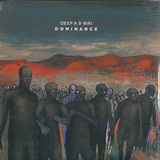
The album's distinctive artwork comes from the studio of Jewish orthodox artist Avraham Guy Barchil, who forged a powerful connection with Deep'a, both was immediately drawn to 'weird atmosphere, amazing technique and emotions involved with his work'. Perhaps one of the most interesting painters from Israel, Avraham is known for his unique perspective, taking his inspiration from the Zohar - the foundational work in the literature of Jewish mystical thought known as Kabbalah. The ambiguous figures represent mystical aspects of the Torah (the five books of Moses), as well as material on mysticism and mythical cosmogony.
Ensuring their natural, conscious touch always remains at the forefront of this unapologetically machine-driven music, Deep'a & Biri have produced an album in the lineage of their heroes and greatest influences. Cerebral yet satisfying, deep yet always engaging, 'Dominance' both reasserts and evolves Deep'a & Biri's forward facing and singular sound.
Long time friend of the label, Neue Grafik, steps forth with his most fully realised offering to date. This record has been a long time coming, born out of a encounter in Paris back in 2016. This meeting of minds led to a blossoming friendship between Fred ( Neue Grafik) and Bradley ( RS INTL) which has taken them across 3 continents, countless dance-floors and finally crystallised onto this 12'.
The record itself takes cues from the broken-beat sound of London while paying homage to the Parisian house dance scene. Largely sample based, but also employing much more live instrumentation than ever before, Neue Grafik's music is informed by movement and in turn offers so much for Dancers to respond to.
The EP begins with the lysergic ebbs and flows of 'Innervision', ( in which Wayne Snow graces the record with a sublime vocal performance) and moves effortlessly to the uplifting bruk of 'Dance to Yemanja' via the staccato of ' to Peckham Rye'( a homage to the labels origins) , before finishing on the hauntingly melancholic tones of 'Aulnay's Tears' - an homage to the victim's of police brutality in the Parisian Suburb in 2017.
With releases on 22a, Beat X Changers and Wolf Music and a whole host of exciting plans for the near future - we're very pleased to welcome Monsieur Grafik onboard!
Deep Club resident dj and head strobe controller Lone Dancer marks our label's 4th entry with his
first solo 12' on vinyl. After finishing two quality tape albums in 2017 already for Jacktone and Always
Human Tapes, 'House is a Tunnel' arrives packed with 4 club-ready jagged tekno bangers and one cut
for the chillout room. Side A - Communication: The title track is a sure-fire party starter centered around
a thick kickdrum and a repeating synth rhythm laced with weird percussion and synth stabs trickling
through the texture. Next, 'PO12-3' combines crisp claps, hats, and a central synth theme that calls
for an intergalactic rave. 'Colony Dwelling' kicks off the Transportation side, taking our extraterrestrial
dancers to a new dimension steeped in fog juice and flangers. 'Floor' has a chill intro until it launches
into a gritty track that throws broken kickdrums and distorted synths in every direction. Finally, 'Night
Rain' puts the party to rest utilizng soft pads while hinting at moments from the night before.
Overall, 'House is a Tunnel' is a fitting dance-centric conglomeration of Lone Dancer's unique style of
jacking techno, broken beats, and spaced out tracks that has set him apart in 2017.
—Ryan Scannura
Support by:
Jackie House
Derek Plaslaiko
Noncompliant aka DJ Shiva
Heidi Sabertooth
Bil Todd
Dee Washington
KUF create emotion-laden dialogues across layers of time and dimensions of sound. Voices recorded in private are chopped up and brought out center-stage to sing with beats hammered out right here and now. Glowing synths push forward. Basslines rise to grab the melodic role of a track while a vowel is truncated and locked into a grid, driving the rhythm. Voices move within the frame of a sample, performed by hands pushing keys, guided by the ear, immersed in a trio session's deep flow... A vortex of quirky hands, responsive ears and glowing circuits. Since Thomas A. Edison first recorded the human voice in 1877, the recording arts have changed music forever. Musicians have explored the endless possibilities of bouncing their input onto layers of tape, off the walls of an echo chamber or the circuitry of electronic helpers - technology that modulates, spatializes, shifts, divides or multiplies the work of human hands and mouths. An era of sampling offered a cubistic analysis of the recorded past and DJs took dancers onto intricately fractured time travels. This is the historic foundation that KUF keep probing. Just like the sampler and the DJ before them, they found new ways to re-allocate where machine and man stand when making music together. Most importantly, they turn the resulting friction into sparkling bursts of energy. 'Universe' digs deeper into the android vocal chords. The album offers sweeping melodies, different beats and persistent bass. Immerse in the intimacy of the voices, probably recorded in trains, backstage areas and at late night private parties during Berlin Lichtenberg warehouse rehearsals. By striking the keys, KUF squeeze out and serve up all
OMEN Recordings is off running to the industrial techno races againand this third release has already been gaining traction around the globe with high anticipation and support from many respected producers and DJs alike. The Puppetskin EP written and produced by German and French artists RENDERED with remixes by American producers BLACK ASTEROID and AXKAN is off to a great start. RENDERED starts off strong with the title track Puppetskin" (A1), with strong breakbeat kicks, thrashing snares and rich synth lines that are melodic and spacey. The dancefloor will surely love the Charles Manson samples. Nightmoves' (A2) also heads the pack with shuffling kicks while rich, minor-tuned pads take you on a persistent journey. About half way through, you will be moved by a 4/4 pattern that sneaks in and will be a favorite for the dancers. BLACK ASTEROID's remix of Puppetskin' (B2) does not disappoint as signature Black Asteroid textures and rhythms come alive in this rendition. Although it has rounded, full soundscapes that sound perfect for a large venue, its pumping, hypnotizing bass lines and screeching sirens keep you pulled into the darkness. AXKAN stays in the pack with his earthshattering remix of Puppetskin' (B1) by starting slow with a profound intro to then push the audio boundaries with his powerful kick and bassline, to gain more and more strength with vocal samples, distorted drums and FX. AXKAN uses every stem of the original in such a creative way to help win the race. This EP, soon to be available on vinyl and digital formats, exceeds the expectations of sound design and techno together. No matter what time of night it is, these tracks can be played in a versatile way. While still employing darker textures, a breath of light creeps its way in. Listening to this EP start to finish is definitely worthwhile.
After nearly a decade in the making, Zomby finally dispatches Mercury's Rainbow, his astonishing and uniquely formulated dedication to Wiley's series of Eskibeat releases, a.k.a. the cornerstone of grime.
Originally recorded over an intense couple of weeks while suffering from circadian dysrhythmia,
Mercury's Rainbow documents Zomby riffing on intricately hand-programmed arpeggios, using theories of colour and its relation to the sonic chromatic spectrum - the circle of fifths - to place an expressively avant spin on the Wiley Kat's slyding Triton squares and frozen, post-garage drum patterns.
Rather than simply imitating Wiley's foundational unit of grime currency, Zomby innovates with a structure of bewildering, modal styles, refracting 16 diamond-cut permutations according to a colour-sound spectrum of tonalities. In the process he effectively loosens up and liquifies the Eski riddim, rendering its bones and sinew in varying states of reactive, physical deliquescence or GIF-like micro-organisms.
For dancers and DJs, the fluid contours and viscous, displaced rhythmic anticipation of Mercury's Rainbow suggests myriad geometries for movement in-the-mix, and serves to single-handedly put to sleep a whole genre of also-ran, prosaic 'future grime' thru its methodical, inventively ground-up construction.
While it's difficult to say with certainty, if Mercury's Rainbow was issued at the same time it was created, it may have arguably altered the course of UK grime instrumentals in much the same way
Wiley's original template coined a whole new genre, essentially making it the last word in grime futurism, proper.
Greenlight by DJ Manny is the fifth release from TEKLIFE Records. This 10 trackLP is a masterclass in footwork production by one of TEKLIFE's leading figures. Born and raised in Harvey on the South-Side of Chicago, DJ Manny has been footworking since the age of ten. The Footwork sound has developed in unison with the dance style that accompanies it, and Manny embodies this synergy.DJ Manny is without doubt one of the best dancers on the scene, harnessing control, grace and power in every movement. So when he steps into the studio, he knows instinctively how to create tracks that make you want to move your feet.Instead of relying on chopped up samples, DJ Manny is more inclined to pickup the microphone himself, and this gives Greenlight an original and individual personality.On the opening track titled Way you Move, his flow is soulful and almost vergingon melodic. His laid back drawl sounds equally great on club bangers like Life in This Bitch and If U Want It. As a young man, DJ Manny was the protégé of the late great DJ Rashad, and Rashad's influence reverberates through classic - sounding footwork tracks like Boop Me Down and I'll Hurt Ya Baby.Elsewhere on Greenlight, DJ Manny explores different moods to great effect.Ghost Out is atmospheric and menacing, with a sparse, minimal rhythm and fearsome lowend pulsing through siren synths. Life In This Bitch is a defiant statement of self-affirmation, and Zancrash feat. DJ Taye is uplifting and dreamy,with complex rhythmic patterns evocative of vintage jungle records.DJ Taye makes a significant contribution to this record, collaborating with DJ Manny on 5 productions including the title track. A fellow TEKLIFE squad member, Taye is a highly accomplished producer in his own right, Expect to hear more from him very soon on HYPERDUB Records. Greenlight also features guest appearances from DJ Lucky, Gant-Man and Sucia.
the third and final part of the jacob f. desvarieux anthology on endless flight brings two more hot productions of the fabled french zouk veteran with roots in guadeloupe.
the tune 'rifyx' is taken from desvarieux's 1985 album 'oh madiana' and delivers arresting jazz-funk and zouk-suspense enlarged with touching horns, synth-enthusiasm and longing female vocals.
the second song comes from the paris based, west cameroon born singer tala, produced by desvarieux for tala's album 'mother africa' in 1982. also here desvarieux tuned the synthesizers odd and edgy to let them dance with an afro styled rhythm.
above all tala sings sexy with a chorus of girls while percussions go crazy and the sounds of horns are longing for the sky.
on top of everything endless flight asked again the japanese producer kuniyuik to edit a desvarieux track. he chose 'rifyx' and tuned it into an epic soulful eight minutes long dream house
anthem that funks all dancers crazy. hotter than hot stuff here!
Bottom Forty's fifth release and second vinyl press showcases two French producers living and banging the drums in Berlin; a long time Bottom Forty favorite, La Fraicheur, teamed up with veteran producer and Leonizer record label ownerLeonard de Leonard. La Fraicheur, a producer of emotional and story-telling minimal techno, is seen here paired with Leonard de Leonard to turn up the heat on our first club-banger release track, 'Afraid of the Groove'. La Fraicheur and Leonard de Leonard beat the hell out of their analog Elektron to lay out a relentless whipping melody that demands a twirling dance floor while a classic minimal bass line, rhythm and 'she's uh-fraid of the groove' sample keep this track dark, dirty and underground.
In a beautiful contrast to the heart-pounding A-side, flip to the B-side for 'Une Place au Soleil'. Literally translated as 'a place in the sun', the saying is more about conveying the emotion of 'your hard work is putting you in a good place in life'. 'Une Place au Soleil' is a gorgeous deep house track filled with teasingly melodic stabs and subtle hardware sounds that come and go, crashing on the record like powerful but soothing waves on the hot beach sands. While 'Afraid of the Groove' may twist a peak-hour dance floor into a frenzy, 'Une Place au Soleil' will entrance them in the after hours, reminding dancers why electronic music is so beautiful and why dance floors can carry so much emotional release.
Yet another contrasting track, the remix of 'Afraid of the Groove' by the Milan based Elisa Bee, is what makes this record compact yet powerfully diverse for many dance floors. Entering the realm of ghetto-tech with pounding and distorted toms and kicks and fervent stabs, Elisa Bee's remix is like a rollercoaster that keeps ascending, building tension upon tension as it rides further into the sky, taking everyone along for the ride with it.
Echoe returns for its first outing of 2017 and fifth release since starting in earnest last year. ECHOE005 marks the first remix package in the label's discography, offering up four stellar remixes of Francesca Lombardo's "Remembrance" song. A clear stand-out in the label boss's inimitable repertoire, "Remembrance" has been given the rework treatment by house and techno stalwarts: Cassy, Laura Jones, Jade and La Fleur.
Cassy offers up the first remix, focussing her reinterpretation around an enormous and insistent bassline, murky and dense in equal measure, that rolls from start to finish. Undulating hats inject further energy, doubling in pace strategically whilst complimenting the 4/4 groove. Utilising the originals' emotional resonance, Cassy creates soft textures and refined arpeggiated patterns, adding a further dimension to the track's impassioned narrative.
Laura Jones's remix comes in the form of a low-slung, jazzy drum work-out, adorned with sub-heavy kicks and a snarling low-end that offers much of the track's sonic weight. Gentle bell-like keys float alongside modulated synth stabs that filter in and out of focus, whilst Jones's drum programming becomes progressively more and more frenetic.
Jade's reimagining sees a broken beat take the reigns, leaving space for soft percussive rhythms and an earth shaking low-end that pushes the song into ghetto house territory. Hi-hat pick-ups and jittery vocal cuts provide further momentum before the groove lands on sturdy 4/4 terrain. Jade's deftly arranged breakdowns, punctuated by panned drum fills and granular FX, adds welcome tension to the track, making a return to rolling drum-patterns and buzzing bass-sequences all the more rewarding as they come back in.
The final remix comes courtesy of La Fleur who delivers the most peak-time, club focussed material on the package. Staying true to the original's hook, La Fleur brings melody to the fore, whilst deploying snappy drums alongside chilling atmospherics and tech heavy stabs, set to keep dancers moving into early hours and beyond.