quête:rhythm in progress

Genres
Tout
Metaboman - Ja / Noe LP 3x12"

Metaboman

Ja / Noe LP 3x12"

3x12inchMKKRAUSELP005
Musik Krause
18.02.2013

Musik Krause, the label with that special funk and the wide view releases the fourth album in their 10-year history. The circle is complete. In 2002 they started with Metaboman. Now there is the album. As a part of the record-spinning Krause Duo he's known a number of escapades having to do with the 'bash' or rather party culture. Inventively they go about things on a winding path. The have a developed a completely singular metaphoric like a Krauzy schroud and trashno effect. Even if on this long player there is a good deal of gravitation and disengaged handbrake, the beloved notorious krause-vibe swings in every beat, as Metaboman forges the iron. He wants to go further and let himself be taken away, and above all with the musicians he has won over with his live-project to massage the masses from the stage. Krause Duo remains. The album comes in this regard as a gesture providing the direction. Solo here is the conductor, the arranger and the composer in one. Various artists is the keyword, good ol' Metaboman. On all ten songs our friendly neighborhood sonic meister sets the notes and vibes between the skillful, grooving rhythms. In this way there is a bonafied club album in the room that understands rhythm-feeling. Music that in the club context brings an attribute that stands far above the plain acoustic shock and scream. Party But of course, yet still both feet in the game with not a little insubordination, depth, plumes of smoke and indulgence. Metaboman has always had his own vision, which plays out and mirrors his own authentic uniqueness. He doesn't find sounds. He finds shapes and forms and that is the progressive aspect, not the new sounds but rather the new forms. He 's not merely about the subteranean bassdrum, but rather telling his own story. He gives his pieces space and depth. The music itself is positioned somewhere within a sonic cosmos. The listener can functionally hear the record in a club. A freak and his freaks invite you and in your heart you know long before it is apparent that you belong. You can clearly hear that this dude and his folks want me to be there! This album encompasses the moment and keeps it safe for posterity. This music is the language of Metaboman and it is the understood. inkl. digital download code

En stock

Disponible en stock et prêt pour l'expédition

10,88
FreedomB - Essence Of Soul EP

FreedomB Delivers Timeless Groove on 'Essence Of Soul EP'. FreedomB is an artist defined by groove and movement rather than place. Drawing influence from jazz, funk, soul, and the earliest house and electronic rhythms, his sound is rooted in timeless dance music traditions and built for long, immersive nights on the floor. Focused on rhythm, flow, and emotional energy, FreedomB's productions exist to make people dance without compromise. With releases on labels such as Knee Deep In Sound, Roush, Toolroom, Sola, ElRow Music, and Flashmob Records, FreedomB has earned support from leading names including Hot Since 82, Supernova, Hector Couto, Solardo, and Flashmob. Now joining the Definitive Recordings catalogue, FreedomB presents 'Essence Of Soul EP', a two-track release that captures his deep-rooted love for classic house, disco, and soulful dancefloor energy. On 'Mi House Es Tu House', FreedomB delivers pure house nostalgia. A groovy beat and subtle bassline form the foundation, joined by classic piano chords that immediately set the tone. As the track unfolds, disco samples, a 90s-style synth melody, and a soulful female vocal sample build toward a powerful breakdown before dropping back into full groove, introducing a second timeless house synth theme. It's uplifting, energetic, and perfectly designed for any house music dancefloor. The title track 'Essence Of Soul' shifts into a deeper, more disco-infused direction. A straighter, nu-disco- inspired rhythm sets the pace while layered synths evolve throughout the arrangement. An 80s-style bassline anchors the groove, accompanied by filtered vocal chants, disco effects, and a spoken-word vocal reflecting on the meaning of music and the dancefloor. As the track progresses, rich piano chords and classic high house strings lift the energy into an emotional, late-night crescendo. 'Essence Of Soul EP' is a celebration of groove, soul, and timeless house energy. A release that lets the music speak and invites you to dance.

pré-commande17.04.2026

il devrait être publié sur 17.04.2026

14,71
Various - Tchic Tchic: French Bossa Nova 1963-1974  Colored Edition LP 2x12"
  • A1: Les Masques - Il Faut Tenir (1969)
  • A2: Isabelle Aubret - Casa Forte (1971)
  • A3: Christianne Legrand - Hlm Et Ciné Roman (1972)
  • A4: Jean Constantin - Pas Tant D'chichi Ponpon (1972)
  • A5: Billy Nencioli & Baden Powell - Si Rien Ne Va (1969)
  • B1-: Marpessa Dawn - Le Petit Cuica (1963)
  • B2: Jean-Pierre Sabar - Vai Vai (1974)
  • B3: Sophia Loren - De Jour En Jour (1963)
  • B4: Isabelle - Jusqu’à La Tombée Du Jour (1969)
  • B5: Sylvia Fels - Corto Maltesse (1974)
  • C1: Frank Gérard - Comme Une Samba (1972)
  • C2: Ann Sorel - La Poupée Des Favellas (1971)
  • C3: Charles Level - Un Enfant Café Au Lait (1971)
  • C4: Andrea Parisy - Les Mains Qui Font Du Bien (1970)
  • C5: Audrey Arno - Quand Jean-Paul Rentrera (1969)
  • C6: Aldo Frank - T’as Vu Ce Printemps (1970)
  • D1: Christianne Legrand - Cent Mille Poissons Dans Ton Filet (1972)
  • D2: Clarinha - Lemenja (1970)
  • D3: Hit Parade Des Enfants - Aquarela (1976)
  • D4: Jean-Pierre Lang - Tendresse (1965)
  • D5: Magalie Noël - Une Énorme Samba (1970)
  • D6: Françoise Legrand - La Lune

Ever since the late 1950s bossa-nova revolution, Brazil’s influence on French music has been undeniable. Pierre Barouh, Georges Moustaki and a vast array of lesser known artists, all made the Musica Popular Brasileira (MPB) an axis of promotion at the service of a cool and metaphysical, modern and mixed Brazilian lifestyle. Some were seduced by the poetic languors of the bossa, some were looking for fun, and others just loved the American hybridization of jazz-bossa, jazz-samba.


What is bossa nova? One of its creators, Joao Gilberto said: "Its style, cadence, everything is samba. At the very start, we didn't call it bossa nova, we sang a little samba made up of a single note - Samba de uma nota so .... The discussion around the origins of bossa nova is therefore useless”. It is nevertheless useful to remember that these magnificent Brazilian songs, which the guitarist describes as samba, were shifted and balanced around improbable chords. "I like things that lean, the in-betweens that limp with grace," said Pierre Barrouh, quoting Jean Cocteau.


With emotion, arrangements for violin and supple guitar licks, bossa nova rapidly changed. A transformation that can be heard in the Tchic, tchic, French Bossa Nova 1963-1974 compilation, the result of a cultural reappropriation, which traveled through the United States and supplemented itself in France.

A musical revolution that has remained significant, bossa nova was born in Rio. From 1956 to 1961, Brazil lived through its golden years. In five years, the country had invented its modernist style. Elected president in 1956, Juscelino Kubitschek de Oliveira, an elegant man with a broad forehead, brandished a promising slogan: "Fifty years of progress in five years". He quickly got to work. Not worried about increasing debt, he launched the project for a new federal capital, Brasilia, designed by the communist architect Oscar Niemeyer. Volkswagen opened state-of-the-art factories and created the “fusquinha”, the Beetle. In Rio, the Vespa made its first appearance. The Arpoador Surf Club crew run into the “girl” from Ipanema, Helô Pinheiro - the tanned garota ("chick"), between a flower and mermaid, who at 17 walked by the Veloso bar, where the fiery author and composer, Tom Jobim and Vinicius de Moraes, were getting drunk on whiskey. From then on, bossa symbolized cool.

In 1958, Joao Gilberto recorded Chega de Saudade, which the directors of Philips denied, calling it "music for fagots". The marketing director, who believed in it, secretly pressed 3000 78-inch vinyls and distributed them at schools around Rio, creating a tidal wave.

American jazzmen then took over. In particular, trumpeter Dizzy Gillespie and guitarist Charlie Byrd. In November 1962, the Brazilian Ministry of Foreign Affairs funded a "Bossa-Nova" concert at Carnegie Hall in New York, inviting the genre’s pioneers. Unprepared, the show soon turned to disaster. But the troupe was invited to the White House by Jackie Kennedy. The first lady loved "the new beat" and in particular Maria Ninguem, a song by Carlos Lyra, later covered by Brigitte Bardot.

In Brazil, the 1964 military coup quickly ended this euphoria. The destructive atmosphere that ensued pushed many Brazilian musicians to leave, if not to exile. Thus, Tom Jobim, Sergio Mendes and Joao Gilberto arrived to the United States. In New York, Joao Gilberto met saxophonist Stan Getz. At the time, he was married to the Bahianese Astrud Weinert Gilberto, who had a German father. She had never sung before, but she knew how to speak English. Getz therefore asked her to replace her husband on The Girl From Ipanema. The Getz/Gilberto record with Tom Jobim on piano, was released in March 1964. Phil Ramone, the "pope of pop" was in charge of sound.

Bossa nova arrived in Paris through the classic “guitar-voice” channel (Pierre Barouh, Baden Powell, Moustaki…) But France loved jazz and Paris had already welcomed its American contributors. All these good people were to pass through Saint-Germain-des-Prés. The cabaret l'Escale became the Mecca of Latin American sound where one could find Pierre Barrouh and his friends, such as the Camara Trio, samba-jazz aces, whose only record was published by the Saravah label. With a band strangely called Les Masques (a band that included Nicole Croisille and Pierre Vassiliu, among others), the Camara Trio recorded an interesting Brazilian Sound, including the track Il faut tenir which is present on this tasty compilation of rarities.

Other enlightened musicians can also be found on the compilation, such as Jean-Pierre Sabar (songwriter for Hardy, Auffray, Leforestier ...) and the French pop rock organist Balthazar. In 1975, Sabar recorded Aurinkoinen Musiikkimatka on a Finnish label, which featured the crazy Vai, Vai, included on this record. We are now following the footsteps of Brazilian electronic musicians such as Sergio Mendes, Eumir Deodato or Marcos Valle who created funk and disco sounds on their keyboards and synthesizers. A style that influenced Véronique Sanson when she wrote Jusqu’à la Tombée de la nuit in 1969 for Isabelle de Funès, the niece of Louis and a great friend of Michel Berger - Sanson did end up singing this track on her 1992 Sans Regret record.


The pinnacle of exoticism and travel, Sylvia Fels’ Corto Maltese includes bongos, sea mist and ocean sounds. The title was taken from Jacky Chalard’s concept album written in 1974, Je suis vivant, mais j’ai peur (I am alive, but I am scared), based on Gilbert Deflez’s science fiction novel.


However, bossa nova extended the scope of popularity. "In the 1970s, I was a fan of Sergio Mendes, Getz / Gilberto. I fell in love with this music that I knew because I had been an orchestral singer, " explained Isabelle Aubret, who in 1971 delivered a composite record of covers by the very funky Jorge Ben, Orfeu Negro, Tom Jobim, Vinicius de Morais and Jean Ferrat. "I recorded this album for Meys Records in Paris, far from Brazil, with wonderful musicians, François Raubert, Roland Vincent, Alain Goraguer...". The latter wrote the arrangements for Casa Forte, a very percussive title borrowed from Edu Lobo, one of the initiators of the bossa who spent time in California. "Jazz and bossa came together and produced very rhythmic music. I love singing, it allows me to dream, to have fun, to feel a high on stage, and these songs brought me joy, made me swing, my singing felt like a dance.”


The world tours of French singers and their desire for the tropics, often brought them to Rio with its hills, forests, caipirinhas and tanned bodies. There are surprises though, like this Iemenja (Iemenja is the goddess of the sea in the Afro-Brazilian candomblé religion). Not unlike the composer and musician Jean-Pierre Lang, based in Sao Paulo, Claire Chevalier taught Brazil to Brazil. In 1970, the singer and painter published a 45-inch vinyl, Mon mari et mes amants (My husband and my lovers), under the improbable pseudonym of Clarinha (little Claire). She was then living in Rio, with her husband, Joël Leibovitz, who founded a band called Azimuth, and who owned a record label specialized in "sambas enredos" songs for samba school parades.


For its B side, she asked Pierre Perret to come up with lyrics for a song composed by Carlos Imperial: "Oh goddess of the sea, o goddess Iemenja, I bring a white rose to adorn your long hair ..." . "Perret came to see us, and we had fun, remembers Joël Leibovitz. We wrote Lemenja for fun, we recorded it at the Havaí studio, behind the Central do Brasil the central station. Erlon Chaves, the arranger who worked with Elis Regina, joined us" adding his share of Afro-Brazilian percussions and funky brass to the mix.

There is a common misunderstanding in Franco-Brazilian history: that bossa, admittedly hedonistic, is perceived as funny, even though the poets who wrote the texts are often philosophizing on the human condition. Its French interpreters pull it towards a carnival inspired universe, far removed from its fundamental essence. Thus, Jean Constantin covered the famous Samba da minha terra, an ode to the art of samba written by the classic Bahian composer Dorival Caymmi, renaming it with the enticing title of Pas tant de tchi tchi pompon: "On your pier there is no tchi tchi / when you arch your back, you know everything is alright ”(lyrics by Gérard Calvi). This expedited bossa aims for the absurd, but retains a certain elegance.

Indeed, Jean Constantin was not an idiot, the rather large man had a huge mustache and liked fantasy, (Les pantoufles à papa, Le pacha, inspired by cha-cha-cha-cha, salsa and jazz) but he was also the lyricist of Mon manège à moi interpreted by Edith Piaf, the composer of Mon Truc en plume by Zizi Jeanmaire and the soundtrack of François Truffaut’s 400 Blows. Le Poulpe, published in 1970, from which this bossa is extract, was arranged by Jean-Claude Vannier, an accomplice of Serge Gainsbourg’s Melody Nelson. In short: "There is enough of samba / By looking at the parasol / Because my poor cabeza / Is going to die in the sun".

Even the American actress Marpessa Down, who was at the heart of the bossa nova revolution with her role as Euridyce in Marcel Camus’ film Orfeu Negro, winner of the 1959 Cannes Palme d'or, fed the clichée with Je voudrais parler au petit cuica - "Tell me how you manage to always make people want to dance / It's true, I must admit that I cannot resist your magic" - in consequence, once can hear the cuica, a little drum inherited from the Bantu.


But bossa nova had many angles. Societal, of course, pushing actresses who were symbols of women's liberation like Brigitte Bardot, Jeanne Moreau, or Sophia Loren to engage in the exercise of accelerated bossa. In February of 1963, Sophia Loren made a record in French in Rome, Je ne t'aime plus, featuring the song De jour en jour, a bossa written by two Italians, Armando Trovajoli and Tino Fornai, which was released a little later by Barclay. Bossa accompanied the 1960s, a decade of moral liberation. Ann Sorel, who interpreted La Poupée des favellas, caused a sensation with L’amour à plusieurs, a provocative song written by Frédéric Bottom and Jean-Claude Vannier. As for the actress Andrea Parisy, she displayed her bourgeois cheekiness in Marcel Carné's Les Tricheurs before interpreting Les mains qui font du bien. And Magalie Noël, the friend of Boris Vian, who sung Johnny fais-moi mal, was hired to sing Une énorme Samba, composed by Alain Goraguer (arranger to Gainsbourg, Bobby Lapointe and Jean Ferrat) with lyrics by Frédéric Botton.

But in the end, of what wood is bossa nova made of? The answer is given by Christianne Legrand, daughter of Raymond the conductor, and sister to Michel the composer: "With me, with jà" - jà means "immediately" in Portuguese. In 1972, the singer, an expert in vocal jazz and a member of the Double Six, published Le Brésil de Christianne Legrand. Two songs included on the Tchic Tchic compilation that demonstrate how bossa, jazz, funk, rock, etc. work like a swiss army knife: the music is used to denounce broken systems, or miracles, HLM et ciné roman, Cent mille poissons dans ton filet, two songs from the O Cafona soundtrack, a successful telenovela broadcast, at the time in black and white, on TV Globo. The first was adapted in French by the fighter and friend of the Legrand tribe, Agnès Varda. The second is content with a play on words, jostling them into a summer fun.


Véronique Mortaigne

pré-commande17.04.2026

il devrait être publié sur 17.04.2026

27,31
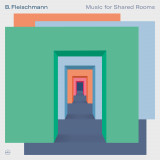
B. Fleischmann - Music for Shared Rooms LP 2x12"

»Music for Shared Rooms« is B. Fleischmann’s eleventh solo album and his first since 2018. It is also not an album, or at least not in the conventional sense of the word. These 16 instrumental pieces provide a kaleidoscopic glimpse of a forward-thinking musician at home in many different musical worlds, including experimental and abstract music, pop and more classically-minded compositional forms. These pieces were culled from an archive of roughly 600 compositions for theatre pieces and films written throughout the past twelve years. The Österreichischer Filmpreis-awarded composer, however, aimed for more than simply documenting his extensive work in and with different media. To do so, he edited and re-mixed the individual recordings for this release, taking them out of their contexts and reworking them for an audience who can experience them in a different setting. »Music for Shared Rooms« makes it possible for its listeners to engage with the sounds and to fill the spaces they open up with their own imagination.

Roughly speaking, music for theatre or film can serve two functions: it either takes the lead, or underscores what is happening on stage or screen. The marvelous thing about these pieces is that they manage to do both. Fleischmann’s work as a prolific producer has always drawn on contrasts, at times combining pop sentiment with rigid experimentation, the seemingly naive with the intricate and complex. This approach also marks the tracks collected here: bringing together acoustic elements and electronic sounds, at times working with conventional structures but always de- and re-contextualising them, Fleischmann constructs a vivid dramaturgy out of discrete singular compositions, letting them interact across the record.

Take, for example, the opener »Träumerei« and the following »Brenne«: after the soothing acoustic sounds of the former, the latter quickly picks up speed with hard-hitting drum machine rhythms. It’s a stark contrast sonically and stylistically, however both tracks are tied together by a certain harmonic sensibility. This sort of dramaturgical interconnectedness of varied musical materials is the thread that runs through »Music for Shared Rooms«. A droney piece for string instruments like »Sehnsucht« is followed by a trip-hop beat, before »Schock« lives up to its title with skittering beats and piercing high frequencies. The differences between the pieces may be striking, but the progression from one to the other is subtle. It goes on like this through different moods and tempos. There’s soothing-yet-eerie piano pieces like the »Für Elise«-inspired »Der Lärmkrieg«, gentle house grooves, joyful synthesizer excursions and, finally, »Die Erde ist mir fremd geworden«, a collage of abstract textures and concrete sounds.

All these pieces create distinct situations through the juxtaposition of diverse musical elements, but are also bound together by a single vision. Writing music for theatre pieces or film requires a composer and his pieces to engage with people and their movements in space, which is exactly what Fleischmann offers on this record. He breaks down the fourth wall and invites his listeners into his world, a wide-ranging musical panorama. »Music for Shared Rooms« is indeed not an album in the conventional sense of the word, but more like a photo album in which each page opens up a new space to get lost in; recreates different scenes in which you can immerse yourself. These are shared rooms indeed.

pas en stock

Commandez maintenant et nous commanderons l'article pour vous chez notre fournisseur.

28,53
Sapu - Travels EP

Sapu

Travels EP

12inchPRECS004
Portal Records
14.04.2026
 
2

The latest from Portal Records sees Rhythm By Nature’s SaPu bring forth four club-ready recordings. Designed with late-night listening in mind, SaPu’s Travels EP is an energetic and atmospheric expression of club music, a brand of electronic music reflective of its roots, with presence in today’s club sound.

pas en stock

Commandez maintenant et nous commanderons l'article pour vous chez notre fournisseur.

12,56
Zé Ibarra - Afim

Zé Ibarra

Afim

12inchMRBLP324
Mr Bongo
13.04.2026
  • A1: Infinito Em Nós
  • A2: Segredo
  • A3: Transe
  • A4: Retrato De Maria Lúcia
  • B1: Da Menor Importância
  • B2: Morena
  • B3: Essa Confusão
  • B4: Hexagrama 28

Mr Bongo proudly presents, ‘AFIM’, the second solo album by one of Brazil’s most exciting new talents, Zé Ibarra. You may be familiar with the hypnotic, entrancing tones of Ibarra’s vocals through his work with the Latin Grammy award-winning, four-piece, Bala Desejo and the band Dônica. He has also toured with the musical titan, Milton Nascimento, performing guitar and vocals, which is quite the honour and a testament to Ibarra's craft. As a solo artist, he has performed headline solo shows in Japan, Portugal and the US, as well as recently completing a support tour with the great, Seu Jorge.

‘AFIM’ is comprised of eight tracks, featuring Zé’s own compositions as well as cover versions of tracks by contemporaries and friends, Sophia Chablau, Tom Veloso, and Dora Morelenbaum. It combines elements of MPB, jazz, pop and progressive rock in a bold, authoritative style. The album represents the intersection between different facets of the artist, from the stripped-down, intimate, guitar singer-songwriter, to dense arrangements with sweeping strings sections. Writing this album allowed Ibarra "to explore sides of myself that had not yet been organized in an album: a certain darkness, a more cinematic musicality, a desire for new soundscapes.

The album features the single, 'Transe', a song with an instantly comforting tone reminiscent of classic Brazilian songs of the past (think Caetano Veloso). It is built on a rhythmic guitar that supports dynamic sound layers, opening space for Ibarra's intense interpretation. Cinematic atmospheres that lend an air of mystery come courtesy of string arrangements by Jaques Morelenbaum.

His unique cover version of Sophia Chablau's 'Segredo' is equally compelling, taking Sophia's punky-indie original in a different direction and making it feel like his own. 'Essa Confusão', a song celebrating the intensity of love and co-written by Dora Morelenbaum, is steered into epic, 70's AOR, singer-songwriter territory with wind arrangements by Ibarra, Jorge Continentino and strings by Jaques Morelenbaum.

The album is the result of the collaboration of experienced musicians and long-time partners of Ibarra. Fellow Bala Desejo and Dônica member Lucas Nunes co-produced the album. The core band featured on the record consists of Lucas Nunes on organs, Alberto Continentino on bass, Daniel Conceição and Thomas Harres on drums and percussion, Rodrigo Pacato on additional percussion, Chico Lira on Fender Rhodes and Guilherme Lírio on guitar.

The overall feel of the record is archetypically quintessential without slipping into retro mode. It is a stunning album from one of the finest musicians of his generation. A true star of Brazil’s blooming contemporary scene.

pas en stock

Commandez maintenant et nous commanderons l'article pour vous chez notre fournisseur.

27,05

Derniere entrée: 7 jours
Guilty Razors - Complete Recordings 1977 - 1978

UILTY RAZORS, BONA FIDE PUNKS.


Writings on the topic that go off in all directions, mind-numbing lectures given by academics, and testimonies, most of them heavily doctored, from those who “lived through that era”: so many people today fantasize about the early days of punk in our country… This blessed moment when no one had yet thought of flaunting a ridiculous green mohawk, taking Sid Vicious as a hero, or – even worse – making the so-called alternative scene both festive and boorish. There was no such thing in 1976 or 1977, when it wasn’t easy to get hold of the first 45s by the Pistols or the Clash. Few people were aware of what was happening on the fringes of the fringes at the time. Malcolm McLaren was virtually unknown, and having short hair made you seem strange. Who knew then that rock music, which had taken a very bad turn since the early 1970s, would once again become an essential element of liberation? That, thanks to short and fast songs, it would once again rediscover that primitive, social side that was so hated by older generations? Who knew that, besides a few loners who read the music press (it was even better if they read it in English) and frequented the right record stores? Many of these formed bands, because it was impossible to do otherwise. We quickly went from listening to the Velvet Underground to trying to play the Stooges’ intros. It’s a somewhat collective story, even though there weren’t many people to start it.
The Guilty Razors were among those who took part in this initial upheaval in Paris. They were far from being the worst. They had something special and even released a single that was well above the national average. They also had enough songs to fill an album, the one you’re holding. In everyone’s opinion, they were definitely not among the punk impostors that followed in their wake. They were, at least, genuine and credible.

Guilty Razors, Parisian punk band (1975-1978). To understand something about their somewhat linear but very energetic sound, we might need to talk about the context in which it was born and, more broadly, recall the boredom (a theme that would become capital in punk songs) coupled with the desire to blow everything off, which were the basis for the formation of bands playing a rejuvenated rock music ; about the passion for a few records by the Kinks or the early Who, by the Stooges, by the Velvet mostly, which set you apart from the crowd.
And of course, we should remember this new wave, which was promoted by a few articles in the specialized press and some cutting-edge record stores, coming from New York or London, whose small but powerful influence could be felt in Paris and in a handful of isolated places in the provinces, lulled to sleep by so many appalling things, from Tangerine Dream to President Giscard d’Estaing...
In 1975-76, French music was, as almost always, in a sorry state ; it was still dominated by Johnny Hallyday and Sylvie Vartan. Local rock music was also rather bleak, apart from Bijou and Little Bob who tried to revive this small scene with poorly sound-engineered gigs played to almost no one.
In the working class suburbs at the time, it was mainly hard rock music played to 11 that helped people forget about their gruelling shifts at the factory. Here and there, on the outskirts of major cities, you still could find a few rockers with sideburns wearing black armbands since the death of Gene Vincent, but it wasn’t a proper mass movement, just a source of real danger to anyone they came across who wasn't like them. In August 1976, a festival unlike any other took place in Mont-de-Marsan – the First European Punk Festival as the poster said – with almost as many people on stage as in the audience. Yet, on that day, a quasi historical event happened, when, under the blazing afternoon sun, a band of unknowns called The Damned made an unprecedented noise in the arena, reminiscent of the chaotic Stooges in their early adolescence. They were the first genuine punk band to perform in our country: from then on, anything was possible, almost anything seemed permissible.

It makes sense that the four+1 members of Guilty Razors, who initially amplified acoustic guitars with crappy tape recorder microphones, would adopt punk music (pronounced paink in French) naturally and instinctively, since it combines liberating noise with speed of execution and – crucially – a very healthy sense of rebellion (the protesters of May 1968 proclaimed, and it was even a slogan, that they weren’t against old people, but against what had made them grow old. In the mid-1970s, it seemed normal and obvious that old people should now ALSO be targeted!!!).
At the time, the desire to fight back, and break down authority and apathy, was either red or black, often taking the form of leafleting, tumultuous general assemblies in the schoolyard, and massive or shabby demonstrations, most of the time overflowing with an exciting vitality that sometimes turned into fights with the riot police. Indeed, soon after the end of the Vietnam War and following Pinochet’s coup in Chile, all over France, Trotskyist and anarcho-libertarian fervour was firmly entrenched among parts of the educated youth population, who were equally rebellious and troublemakers whenever they had the chance. It should also be noted that when the single "Anarchy in the UK" was first heard, even though not many of us had access to it, both the title and its explosive sound immediately resonated with some of those troublemakers crying out for ANARCHY!!! Meanwhile, the left-wing majority still equated punks with reckless young neo-Nazis. Of course, the widely circulated photos in the mainstream press of Siouxsie Sioux with her swastikas didn’t necessarily help to win over the theorists of the Great Revolution. It took Joe Strummer to introduce The Clash as an anti-racist, anti-fascist and anti-ignorance band for the rejection of old-school revolutionaries to fade a little.

The Lycée Jean-Baptiste Say at Porte d’Auteuil, despite being located in the very posh and very exclusive 16th arrondissement of Paris, didn’t escape these "committed" upheavals, which doubled as the perfect outlet for the less timid members of this generation.
“Back then, politics were fun,” says Tristam Nada, who studied there and went on to become Guilty Razors’ frontman. “Jean-Baptiste was the leftist high-school in the neighbourhood. When the far right guys from the GUD came down there, the Communist League guys from elsewhere helped us fight them off.”
Anything that could challenge authority was fair game and of course, strikes for just about any reason would lead to increasingly frequent truancy (with a definitive farewell to education that would soon follow). Tristam Nada spent his 10th and 11th unfinished grades with José Perez, who had come from Spain, where his father, a janitor, had been sentenced to death by Franco. “José steered my tastes towards solid acts such as The Who. Like most teenagers, I had previously absorbed just about everything that came my way, from Yes to Led Zeppelin to Genesis. I was exploring… And then one day, he told me that he and his brother Carlos wanted to start a rock band.” The Perez brothers already played guitar. “Of course, they were Spanish!”, jokes their singer. “Then, somewhat reluctantly, José took up the bass and we were soon joined by Jano – who called himself Jano Homicid – who took up the rhythm guitar.” Several drummers would later join this core of not easily intimidated young guys who didn’t let adversity get the better of them.

The first rehearsals of the newly named Guilty Razors took place in the bedroom of a Perez aunt. There, the three rookies tried to cover a few standards, songs that often were an integral part of their lives. During a first, short gig, in front of a bewildered audience of tough old-school rockers, they launched into a clunky version of the Velvet Underground's “Heroin”. Challenge or recklessness? A bit of both, probably… And then, step by step, their limited repertoire expanded as they decided to write their own songs, sung in a not always very accurate or academic English, but who cared about proper grammar or the right vocabulary, since what truly mattered was to make the words sound as good as possible while playing very, very fast music? And spitting out those words in a language that left no doubt as to what it conveyed mattered as well.
Trying their hand a the kind of rock music disliked by most of the neighbourhood, making noise, being fiercely provocative: they still belonged to a tiny clique who, at this very moment, had chosen to impose this difference. And there were very few places in France or elsewhere, where one could witness the first stirrings of something that wasn’t a trend yet, let alone a movement.

In the provinces, in late 1976 or early 1977, there couldn’t be more than thirty record stores that were a bit more discerning than average, where you could hear this new kind of short-haired rock music called “punk”. The old clientele, who previously had no problem coming in to buy the latest McCartney or Aerosmith LP, now felt a little less comfortable there…
In Paris, these enlightened places were quite rare and often located nex to what would become the Forum des Halles, a big shopping mall. Between three aging sex workers, a couple of second-hand clothes shops, sellers of hippie paraphernalia and small fashion designers, the good word was loudly spread in two pioneering places – propagators of what was still only a new underground movement. Historically, the first one was the Open Market, a kind of poorly, but tastefully stocked cave. Speakers blasted out the sound of sixties garage bands from the Nuggets compilation (a crucial reference for José Perez) or the badly dressed English kids of Eddie and the Hot Rods. This black-painted den was opened a few years earlier by Marc Zermati, a character who wasn’t always in a sunny disposition, but always quite radical in his (good) choices and his opinions. He founded the independent label Skydog and was one of the promoters of the Mont-de-Marsan punk festivals. Not far from there was Harry Cover, another store more in tune with the new New York scene, which was amply covered in the house fanzine, Rock News (even though it was in it that the photos of the Sex Pistols were first published in France).
It was a favorite hang-out of the Perez brothers and Tristam Nada, as the latter explained. “It’s at Harry Cover’s that we first heard the Pistols and Clash’s 45s, and after that, we decided to start writing our first songs. If they could do it, so could we!”
The sonic shocks that were “Anarchy in the UK”, “White Riot” or the Buzzcocks’s EP, “Spiral Scratch” – which Guilty Razors' sound is reminiscent of – were soon to be amplified by an unparalleled visual shock. In April 1977, right after the release of their first LP, The Clash performed at the Palais des Glaces in Paris, during a punk night organised by Marc Zermati. For many who were there, it was the gig of a lifetime…
Of course, Guilty Razors and Tristam were in the audience: “That concert was fabulous… We Parisian punks were almost all dressed in black and white, with white shirts, skinny leather ties, bikers jackets or light jackets, etc. The Clash, on the other hand, wore colourful clothes. Well, the next day, at the Gibus, you’d spot everyone who had been at this concert, but they weren’t wearing anything black, they were all wearing colours.”

It makes sense to mention the Gibus club, as Guilty Razors often played there (sometimes in front of a hostile audience). It was also the only place in Paris that regularly scheduled new Parisian or Anglo-Saxon acts, such as Generation X, Siouxsie and the Banshees, the Slits, and Johnny Thunders who would become a kind of messed-up mascot for the venue. A little later, in 1978, the Rose Bonbon – formerly the Nashville – also attracted nightly owls in search of electric thrills… In 1977, the iconic but not necessarily excellent Asphalt Jungle often played at the Gibus, sometimes sharing the bill with Metal Urbain, the only band whose aura would later transcend the French borders (“I saw them as the French Sex Pistols,” said Geoff Travis, head of their British label Rough Trade). Already established in this small scene, Metal Urbain helped the young and restless Guilty Razors who had just arrived. Guitarist for Metal Urbain Hermann Schwartz remembers it: “They were younger than us, we were a bit like their mentors even if it’s too strong a word… At least they were credible. We thought they were good, and they had good songs which reminded of the Buzzcocks that I liked a lot. But at some point, they started hanging out with the Hells Angels. That’s when we stopped following them.”

The break-up was mutual, since, Guilty Razors, for their part, were shocked when they saw a fringe element of the audience at Metal Urbain concerts who repeatedly shouted “Sieg Heil” and gave Nazi salutes. These provocations, even still minor (the bulk of the skinhead crowd would later make their presence felt during concerts), weren’t really to the liking of the Perez brothers, whose anti-fascist convictions were firmly rooted. Some things are non-negotiable.
A few months earlier (in July 1978), Guilty Razors had nevertheless opened very successfully for Metal Urbain at the Bus Palladium, a more traditonally old-school rock night-club. But, as was sometimes the case back then, the night turned into a mass brawl when suburban rockers came to “beat up punks”.

Back then, Parisian nights weren’t always sweet and serene.

So, after opening as best as they could for The Jam (their sound having been ruined by the PA system), our local heroes were – once again – met outside by a horde of greasers out to get them. “Thankfully,” says Tristam, “we were with our roadies, motorless bikers who acted as a protective barrier. We were chased in the neighbouring streets and the whole thing ended in front of a bar, with the owner coming out with a rifle…”
Although Tristam and the Perez brothers narrowly escaped various, potentially bloody, incidents, they weren’t completely innocent of wrongdoing either. They still find amusing their mugging of two strangers in the street for example (“We were broke and we simply wanted to buy tickets for the Heartbreakers concert that night,” says Tristam). It so happened that their victims were two key figures in the rock business at the time: radio presenter Alain Manneval and music publisher Philippe Constantin. They filed a complaint and sought monetary compensation, but somehow the band’s manager, the skilful but very controversial Alexis, managed to get the complaint withdrawn and Guilty Razors ended up signing with Constantin with a substantial advance.

They also signed with Polydor and the label released in 1978 their only three-track 45, featuring “I Don't Wanna be A Rich”, “Hurts and Noises” and “Provocate” (songs that exuded perpetual rebellion and an unquenchable desire for “class” confrontation). It was a very good record, but due to a lack of promotion (radio stations didn’t play French artists singing in English), it didn’t sell very well. Only 800 copies were allegedly sold and the rest of the stock was pulped… Initially, the three tracks were to be included on a LP that never came to be, since they were dropped by Polydor (“Let’s say we sometimes caused a ruckus in their offices!” laughs Tristam.) In order to perfect the long-awaited LP, the band recorded demos of other tracks. There was a cover of Pink Floyd's “Lucifer Sam” from the Syd Barrett era – proof of an enduring love for the sixties’ greats –, “Wake Up” a hangover tale and “Bad Heart” about the Baader-Meinhof gang, whose actions had a profound impact on the era and on a generation seeking extreme dissent... On the album you’re now discovering, you can also hear five previously unreleased tracks recorded a bit later during an extended and freezing stay in Madrid, in a makeshift studio with the invaluable help of a drummer also acting as sound engineer. He was both an enthusiastic old hippie and a proper whizz at sound engineering. Here too, certain influences from the fifties and sixties (Link Wray, the Troggs) are more than obvious in the band’s music.

Shortly after a final stormy and rather barbaric (on the audience’s side) “Punk night” at the Olympia in June 1978, Tristam left the band ; his bandmates continued without him for a short while.

But like most pioneering punk bands of the era, Guilty Razors eventually split up for good after three years (besides once in Spain, they’d only played in Paris). The reason for ceasing business activities were more or less the same for everyone: there were no venues outside one’s small circuit to play this kind of rock music, which was still frightening, unknown, or of little interest to most people. The chances of recording an LP were virtually null, since major labels were only signing unoriginal but reassuring sub-Téléphone clones, and the smaller ones were only interested in progressive rock or French chanson for youth clubs. And what about self-production? No one in our small safety-pinned world had thought about it yet. There wasn’t enough money to embark on that sort of venture anyway.

So yes, the early days of punk in France were truly No Future!

pas en stock

Commandez maintenant et nous commanderons l'article pour vous chez notre fournisseur.

21,43

Derniere entrée: 7 jours
ALEX ZHANG HUNGTAI - DRAS

ALEX ZHANG HUNGTAI

DRAS

12inchSPLP164
Shelter Press
10.04.2026
  • Erg
  • Dras
  • El Khela
  • Xilitla
  • Estado
  • Rub' Al Khali
  • Pulque
  • White Dwarf
  • Mazil

Alex Zhang Hungtai steht auf ,Dras" still da, aber es ist eine Stille, die jede Menge Möglichkeiten hat. Diese neun Stücke wurden 2019 in der Saint Joseph Oratory in Montreal aufgenommen (kurz bevor ein Klavier kaputtgemacht wurde) und lagen während der Pandemiejahre auf seiner Festplatte, bis endlich der Funke übersprang. Was jetzt entsteht, fühlt sich an, als würde man jemandem dabei zusehen, wie er die Konturen seiner eigenen inneren Landschaft nachzeichnet, wobei jede Melodielinie eine sorgfältige Auseinandersetzung mit dem Unbewussten ist. Dies ist nur im weitesten Sinne ein Saxophon-Album. Das Terrain hier ist taktil und unerbittlich. Im Titeltrack werden schwierige Melodien auseinandergerissen und zu emotionalen Drones geformt, wobei Dissonanzen ineinandergreifen, während Töne mit metallischem Glanz ihren Weg durch die Sinne bahnen. ,El Khela" bricht sich in spektrale Schichten, die mit ewiger Schwerkraft ziehen, während ,Estado" Trost in seiner eigenen Dunstglocke findet, mit Rhythmen, die kaum hörbar sind, aber mit ihrer Kadenz, die sich an grauen Wänden abzeichnet, vorwärts führen. Es sind kleine Momente, die zu kathartischen Klangatmen werden und jeweils neue Passagen durch die psychische Geografie offenbaren. Es liegt Schönheit in den subtilen Wiederholungen des Openers ,Erg" und in den leuchtenden Progressionen von ,White Dwarf". Zhangs Saxophon wird zu einer Wünschelrute für das Unbekannte, während Elektrizität durch die Adern des Albums fließt und sein Atem alles an etwas wortlos Menschlichem verankert. Die digitale Bearbeitung dieser Kirchenaufnahmen verdeckt nicht das menschliche Element von ,Dras". Sie verwandelt das Rohmaterial in etwas, das zwischen äußerem Raum und innerer Landschaft navigiert. Als der Schlusssong ,Mazil" kommt, lässt Alex Zhang Hungtai sein Saxophon seine volle Resonanz entfalten. Tiefe, kehlige Klänge öffnen sich wie Abgründe unter melodischen Konstellationen, die in dichter Schwerkraft schweben. Hier herrscht Endgültigkeit, auch wenn sich etwas in diesen Passagen schwerelos anfühlt. Diese Musik ist durchdrungen von innerem Dialog, einem wortlosen Zauber, der über dem psychischen Abgrund tanzt. Tonale Sequenzen zerfallen in betäubende Klänge, eine scharfe, elegante Kante, die schneidet, ohne Blut zu vergießen. Dieses einsame Werk der Erforschung wird zu etwas Gemeinschaftlichem. ,Dras" ist eine Karte, um den Raum zwischen dem, wo wir sind, und dem, wo wir hingehen könnten, zu durchqueren.

pré-commande10.04.2026

il devrait être publié sur 10.04.2026

24,79
Various - Various VII

That time of the year has arrived! The next Various Artists is the prefect blend between old and new generations, including 2 new addition to the label and 2 familiar faces.

Opening the EP is MikeroBenics with “Julika (Original Mix)”. This track was officially released in 1994 on Harthouse and through the years on other labels in different versions. The version we are publishing has never seen the light before today. A deep melancholy trance journey characterised by driving acid lines and club-oriented rhythms. Followed by the return of Noboot with “Drive Control”. Made in 2022, this track bring us back to the sound of his first release. An immersive electro-acid track with a 303 melody that moves with punchy rhythms, letting our bodies move and our brains fly.

On the B side, Periferico is back with a new production made in 2021. “2804 A DEF12MIX” is an engaging journey into Livio progressive house world. Closing the VA, we welcome our dear friend CRL with “Breathe”. Composed in 2024 while trying new techniques and samples, characterised by its ethereal pads and a slow unfolding vortex of acid bassline, brings the minds into a deeper conscious state.

pas en stock

Commandez maintenant et nous commanderons l'article pour vous chez notre fournisseur.

13,40

Derniere entrée: 9 jours
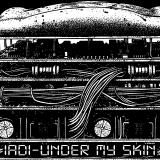
IADI - Under My Skin

IADI

Under My Skin

12inchNEOLIFE003
Neo Life
03.04.2026out soon

Between flesh and silicon. “Under My Skin” (2026) is the first album by IADI, released by Neo Life. A record like few
others, highly conceptual, cover art included. Its essence lies in the folds of the increasingly ambiguous relationship
between man and machine, where the former designs the latter and, perhaps without fully realizing it, is gradually
destined to adapt and be reprogrammed by it. Each track of “Under My Skin” is, in fact, a sort of interface, connector, or
any other imaginative point of contact between two creative phases, amid emotional impulses and binary calculations.
The sonic architecture oscillates between analog warmth and algorithmic coldness, constructing landscapes in which
pulsating synthesizers and mechanical rhythms seem to question each other. There's no linear narrative, but rather a
progressive immersion in a zone of near-friction, where the comfort of technology coexists with more than a faint
musical uneasiness, like a background noise that never ceases to remind you who's truly in charge. In “Under My Skin”,
the machine is neither an enemy nor a simple instrument: it's a real presence, intimate, even tactile, amplifying desires,
fears, and dreams of dawns beyond the digital realm. Intelligent dance music. Less noise, more sensations. Electronic,
but profoundly human.
The final result, then, is a music project that speaks to the present, yet sounds like an X-ray of the future, capturing that
fragile moment when humanity and technology stop observing each other from afar and begin to merge, track after
track. It's no coincidence that IADI's album opens with “Impulse”, an immediate expression of an electrical impulse, for
both humans and machines, which is also the language of the nervous system, as fast as it is vital—pure energy and
rhythm, a track as intense as it is irregular. And after this introduction, it's the turn of the equally erratic “Axon”, whose
title describes the neuron that transmits the signal over distance, telling the listener to sit back and relax for a new
journey through the notes toward the more melodic “Cortex”. The cerebral cortex, the ultimate seat of thought and
memory, becomes the source from which the musical flow of the first part of the work is drawn.
Then, suddenly, an automatic, or instinctive, response to the constant succession of impulses: “Reflex”, or zerotemperature techno, with a fragmented pace, featuring vocal samples, breaks, and restarts. In the producer's
imagination, the subsequent, and conversely placid, “Neuron” represents the emotional core of the second part of the
work, providing a kind of respite from the seething vibrations. While the neuron is the basic unit of the nervous system,
the synapse is the functional connection point between one neuron and another effector cell, essential for the
transmission of nerve impulses and communication in the nervous system, enabling functions such as learning and
movement. Likewise, a track like “Synapse” once again illuminates the path traced by IADI. The more experimental and
streamlined “Static” instead suggests true ordered chaos. “Dreamstate” is the conclusion suspended in the void, relating
to that dreamlike state between waking and sleeping, where consciousness fades toward infinity and visions begin. Pure
fading into the subconscious. Eternal return to where it all began. Dancing is a form of consciousness. Every beat is a
question. IADI, however, holds all the answers you need.

pré-commande

Cet article n'a pas encore été publié. Vous pouvez pré-commander le produit maintenant.

21,81
Optical Phase - Tranvision

Originally released in 1993 on Full Motion Records, Tranvision by Optical Phase is a cult Italian progressive house / trance record from the early ’90s underground.

Produced during the golden era of Italian progressive, the track captures the hypnotic and melodic sound that defined many European dancefloors of the time, driven by atmospheric pads, rolling rhythms and uplifting synth progressions.

Long sought-after by DJs and collectors, the record has become increasingly hard to find in its original pressing.

Now finally back on vinyl, making this early ’90s Italian progressive gem available again for a new generation of DJs and collectors.

pas en stock

Commandez maintenant et nous commanderons l'article pour vous chez notre fournisseur.

14,50

Derniere entrée: 17 jours
45 Trio - Nebulosa / Tenorio 7"

The latest release from Jazz Room is a tribute to the legendary pianist Tenorio Jr. by Cult J-Jazzers 45 Trio, and is their tribute to the Mystery Man who spearheaded Brazilian samba jazz.

Side-A features a cover of 'Nebulosa', released in 1964 and still regarded as a pinnacle of piano jazz, approached in a manner unique to 45 Trio. With delicate touch, profound performance and arrangement, they breathe new life into this classic. It get's really Funky halfway through too, watch the Jazz Dancers take the lead on this one!

Side-A '#Tenorio' was crafted as an homage to his work. Light rhythms intertwine with sophisticated chord progressions, creating a groove that fuses jazz and samba with a contemporary Dance Floor feel.

pas en stock

Commandez maintenant et nous commanderons l'article pour vous chez notre fournisseur.

15,34

Derniere entrée: 7 jours
Various - States & Paths

Driveline Records launches its catalog with a focused four-track vinyl EP built for the dancefloor, presenting four distinct yet cohesive techno cuts driven by groove, atmosphere and functionality.

The A-side opens with Invexis - "Roots", a hypnotic builder that slowly unfolds into a funky-driven rhythm. Tight hi-hats and rolling basslines carry the track forward, culminating in a subtle yet engaging melodic progression that lifts the energy without losing tension.

Next, Pylot - "Observation" delivers a highly functional club tool based on steady loops and an aquatic sound design. Aggressive low-end and raw basslines support an atmospheric and hypnotic flow, making it a solid choice for mid-set pressure and long blends.

On the B-side, Berlin-based duo Disguised contribute "Gitty (Dub Mix)", a dub-influenced and dreamy track designed to keep the dancefloor moving while creating a floating, immersive mood. Deep grooves and spacey textures balance rhythm and emotion.

Closing the EP, Shadow Hrym - "Delia" explores more melancholic territory, combining tribal and funky rhythms with emotive soundscapes, offering a powerful and memorable ending to the record.

A strong debut statement that defines Driveline Records' sonic vision: DJ-oriented techno with depth, groove and atmosphere, pressed on vinyl for dedicated selectors.

pas en stock

Commandez maintenant et nous commanderons l'article pour vous chez notre fournisseur.

13,03

Derniere entrée: 10 jours
E.R.P. - WGD 12010

E.R.P.

WGD 12010

12inchWGD12010
We're Going Deep
10.03.2026

Placid aka Paul Wise is the operator in chief at ‘We’re Going Deep’ – an online community and record label born out of a lifelong love affair with the many shades of electronic rhythm, and an obsession for collecting records since 1988. With a mission to share and release new music via his We’re Going Deep and We’re Going Back imprints, you’ll find only the best in underground Acid, Electro, IDM, Techno and House for the dance floor and your listening pleasure.

Up next in the label series, We’re Going Deep is excited to welcome 4 tracks of fresh material from pivotal electronic music maker Gerard Hanson, under his much prized E.R.P. alias. Renown for keeping his profile below the radar and letting the machines do all the talking for him. Hanson’s work as a producer has been much coveted since his debut back in the mid 90s as Convextion. Hailing from Dallas, Texas, he has become something of a hero in the underground Electro community. His work as E.R.P. has left a huge impression on labels such as Frustrated Funk, Bleep43 and Semantica over the years. Renown for his distinctive shimmering machine funk aesthetic, he ably summons the outer reaches of deep space listening thanks to his innate mastery of brooding, sci-fi soundscapes that few can equal.

Following releases for Apnea and Synchrophone, Hanson lifts off with a heartfelt tribute to our recently departed friend James Baker on ‘One4ReKab’. Ascending with the pulse of a steady kick drum, precision snares take hold as whispered vocals seep in and out of consciousness. Underpinned by trademark angular bass tones, soaring strings inject a deep sense of foreboding as all the parts fuse with a fierce glow. Stepping things a notch back as the sonic trajectory levels out, ‘Onward’ takes a more contemplative stance in a fusion of hypnotic drum programming that leads the fray whilst subtle arpeggios flow, all whilst wistful melodies wind you in.

Over on the flipside, Hanson revisits his 2008 composition “Multipole Vector” to launch yet another interstellar cruise by mission in the shape of “Multipole Vector II”. Leading with the simplest of bass progressions and metronomic beat programming, twinkling synth elements reach across the void as chords sweep to and fro to powerful effect. Ending out on the uplifting yet almost IDM inflected tones of “Self Unemployed”, this low tempo air rounds the EP off on an equally captivating note filled with playful charm, that makes this collection of music all the more pleasing.

pas en stock

Commandez maintenant et nous commanderons l'article pour vous chez notre fournisseur.

12,19

Derniere entrée: 30 jours
VARIOUS - 40 Years Of Metal Drumming

Various

40 Years Of Metal Drumming

7x12"-VinylGCRBOX044
GCR Zyx
06.03.2026
  • Economist - Never Bite The Hand That Feeds
  • Economist - Innocently Introverted
  • Economist - Flowing Thoughts
  • Economist - Improving Yourself
  • Economist - Aircastles Decay
  • Economist - Final Way
  • Scrollkeeper - Your Blood First
  • Scrollkeeper - Wetiko
  • Scrollkeeper - Misery
  • Viron - Liberator
  • Viron - On The Run
  • Viron - The Isle Of Man
  • Viron - Sniper
  • Viron - Dreams Of Eschaton
  • Viron - Lucifer Arise (Drumcheck Mix)
  • Viron - Sander
  • Viron - Blow The Fuse
  • Viron - Viron
  • Viron - Doomsday
  • Viron - Prelude - Run For Tomorrow
  • Viron - The Witch (Demo)

-Boxset mit vier Alben featuring Drummer Neudi (u.a. Manilla Road, Trance, Griffin, Savage Grace…)

- Limited Edition mit handsignierter Autogrammkarte

Schon mit 8 Jahren entdeckte Andreas Neuderth, der seit Mitte der Achtziger nur noch den Spitzname NEUDI benutzt, sein Talent für das Schlagzeug. Sogar bereits schon etwas früher wurde er zum Fan harter
Rockklänge, die üblichen Verdächtigen wie Kiss, Status Quo und Rush. Mit 15 Jahren, im Jahr 1986, taucht sein Drumming erstmals auf einem Tape der Band SUDDEN DARKNESS auf, was 2026 zu einem Jubiläumsjahr für
den heute in Rheinhessen lebenden Musiker darstellt. Seine bekanntesten Stationen sind neben MANILLA ROAD (2011 bis zum Tod von Mark Shelton im Jahr 2018) und SAVAGE GRACE (2009/2010) aktuell TRANCE,
ROXXCALIBUR, ANGEL OF DAMNATION, IRONSWORD, JAMESON RAID und die Manilla Road-Nachfolgeband SENTRY. Das 1994er ECONOMIST Album „New Built Ghetto Status“ bezeichnet Neudi trotz all diesen genannten Namen als „eines der drei besten Alben, auf denen ich zu hören bin“. In der Tat darf man getrost sagen, dass es den Stil von ECONOMIST wohl nur einmal gibt. 1995 wurde die CD von Massacre/Intercord lizensiert, doch
mit dem progressiven Stil war man seiner Zeit einfach zu weit voraus.

Als Reissue, erstmals als Doppel LP mit dem unveröffentlichten zweiten Album „Mind Movies“ erschienen, erntete man nun endlich die verdient euphorischen Kritiken. VIRON (2004/2006 und 2008) war nach einer Zeit
der Experimente Neudis Rückkehr zum traditionellen Metal, den er als Fan auch zuvor nie verlassen hat. Die zwei hochgelobten Alben waren indirekt der Vorgänger der erfolgreicheren Band ROXXCALIBUR. SCROLLKEEPER
ist eine Band aus Texas, die für ihre EP „Wetico“ als Manilla Road-Fans mit Neudi zusammenarbeiten wollten. Neudi ist bekannt für sein „busy drumming“. Beeinflusst von Neil Peart (Rush), Randy Foxe (Manilla Road) oder Ian Paice (Deep Purple) bietet er nicht nur die genreübliche Rhythmusarbeit „im Hintergrund“, sondern bringt das Instrument teils auffällig in den Vordergrund. (Infotext von Michael Gresner, Januar 2026)

pré-commande06.03.2026

il devrait être publié sur 06.03.2026

40,29
Makebo - The Universe EP

Makebo

The Universe EP

12inchADID122
All Day I Dream
05.03.2026

Makebo Shares New Four-Track The Universe EP

Woven with textured sound design and warped synthwork, The Universe presents a detailed and deliberate journey shaped by contrast and progression across its 32 minutes. The title track sets the foundation with crunchy low-end and hypnotic percussion that steadily pull the listener inward. ‘Galaxy’ follows with buoyant rhythms that introduce a sense of lift, while ‘Save Me’ deepens the mood with gritty basslines and mystical vocals, adding emotional weight without disrupting the EP’s flow. Closing with ‘Birth Of A New Sun,’ Makebo delivers a club-driven finale that encapsulates The Universe’s expansive, forward-moving themes.

pas en stock

Commandez maintenant et nous commanderons l'article pour vous chez notre fournisseur.

15,92

Derniere entrée: 7 jours
Various - 12 INCH LOVERS 11 LP 2x12"

Since 2020, 12 Inch Lovers have been releasing new samplers every year, eagerly anticipated by collectors. These samplers have now become a staple and are easily added to vinyl collections across Europe. They offer timeless classics and rare tracks that are often hard to find elsewhere.

With Samplers 11 & 12, they surprise again with a mix of modern classics and tracks that have never been released on vinyl or are difficult to find. By adding unique and exclusive tracks, the 12 Inch Lovers samplers remain innovative and high-quality. They are a must-have for DJs, collectors, and fans of contemporary classics!

SAMPLER 11

A1) Paul Kalkbrenner - No Goodbye (2019)

Berlin techno producer Paul Kalkbrenner became world-famous with his 2008 hit Sky & Sand. Since then, he has released one record after another and performed all over the world in the biggest venues and at the most renowned festivals. No Goodbye is one of his more recent hits, released in the summer of 2019.

The track was created using an a cappella he received on a demo tape while on tour. He was immediately inspired by the vocal and built his own sound and production around it. Interestingly, Kalkbrenner rarely uses vocals, but for No Goodbye he collaborated with Australian singer Chiara Hunter, giving the track a unique and instantly recognisable character. The result is a stylish, dance-floor-friendly track with a rolling house groove that quickly became a modern classic on dance floors worldwide.

A2) Water World - Give Me Love (2000)

This trance classic by Water World appeared in 2000 on the French label Adequat Records and is the perfect tune for a sunny summer evening. Warm melodies and pulsing beats instantly create that beach feeling, as if you were dancing with your feet in the sand. The record recalls Beachball by Nalin & Kane, sharing the same dreamy, sun-drenched vibe.

Behind Water World were producers Laurent David and Frédéric De Backer-names well known to many trance fans. In the nineties De Backer was active with projects such as Global Trance Mission (Dream Mission) and Y-Traxx, the trio that released the 1997 classic Mystery Land.

Give Me Love clearly bears their combined signature: euphoric, warm and melodic, with a timeless build that perfectly balances emotion and energy. The track was released on vinyl as part of Trance E.P. Vol. 01 and remains a fixture in retro-trance sets to this day.

B1) Panoramic - Colors (1996)

Colors by Panoramic is a Belgian trance classic released in 1996 on the legendary label XTC Records, a sub-label of Bonzai Records. Panoramic was a collaboration between Belgian techno icon Marco Bailey and Mauro Mirisola. The duo, also known under playful aliases such as The Coke Man & Sniff, released an EP featuring two powerful trance tracks.

We chose Colors, a tune with pure Belgian trance DNA: driving rhythm, dreamy synths and a catchy female vocal. The combination of Bailey's production expertise and Mirisola's creative touch resulted in a timeless track that still appears in many classic playlists.

B2) Natasha Bedingfield - Pocketful Of Sunshine (StoneBridge Club Remix) (2008)

British singer-songwriter Natasha Bedingfield released the album Pocketful of Sunshine in 2008, featuring the title track as a single. The original pop version became a major hit in North America, reaching the Top 5 in the US. Swedish DJ and producer StoneBridge (Sten Hallström) reworked the song into a groovy house version, released in the summer of 2008.

StoneBridge gave the upbeat pop tune a club-ready beat and an infectious piano riff that made it shine on dance floors worldwide. It was not his first time transforming pop into house gold-he had already achieved global fame with his remix of Robin S - Show Me Love (1992), one of the greatest house anthems of all time. He also remixed Sia - The Girl You Lost to Cocaine in 2008, another club favourite.

The StoneBridge Club Remix of Pocketful of Sunshine appeared on a special remix EP in July 2008 and was played endlessly in clubs-by us too, in the venues where we performed. The result is a timeless, sun-soaked house classic thatmakes sitting still impossible.

C1) Y-Traxx - Mystery Land (Fred Baker vs Mr Sam's Magical Mystery Dub Mix) (original release 1995)

Y-Traxx was a nineties trance project by DJs Laurent David and Fred Baker. This trance classic first appeared in 1995 as a B-side but gained real attention when it featured on a Paul Oakenfold mix album. Thanks to that success it received an official re-release in 1998 on the respected French label FFRR (Full Frequency Range Recordings).

In 2003 an excellent remix by Mr. Sam & Fred Baker followed on the Nebula label. That version is highly sought after on vinyl by trance collectors, and we are proud to feature it on our new sampler.

C2) Weiss - Feel My Needs (2018)

Feel My Needs by British producer Weiss (alias Richard Dinsdale) is the tune with that unmistakable old-school piano and catchy vocal that instantly pulls you onto the dance floor. Released in May 2018on the UK label Toolroom Records, the track is pure feel-good house with a modern touch. From the very first piano riff, hands go up in the air.

Toolroom even called it a "future anthem" for the summer of 2018, and indeed Feel My Needs became a huge floor-filler. The record charted high on global dance lists and gained massive popularity at festivals and clubs that year. With its warm piano chords, tight beat and soulful vocal, this is a modern house classic that will stay in the collective club memory for a long time.

D1) The Killers - Mr. Brightside (Jacques Lu Cont's Thin White Duke Mix) (2005)

American band The Killers formed in 2001 and scored a massive hit a few years later with Mr Brightside. Taken from their debut album Hot Fuss (2004), it became their biggest and best-known track-a true rock-pop anthem.

In 2005 the song was given an electronic twist when renowned producer and remixer Jacques Lu Cont (the alias of Stuart Price) created an eight-minute dance version titled Mr Brightside (Jacques Lu Cont's Thin White Duke Mix). This remix replaced the raw rock energy with a more progressive and electronic vibe, driven by a steady beat and long build-up.

The track found a second life in club culture and quickly became a dance-floor favourite. For vinyl collectors it was an instant must-have, and to this day it stands as the perfect party closer. The Killers themselves loved it so much that they often used the remix live as an outro, followed by the original version. A remix that perfectly bridged rock and club culture-and has since become a genuine classic.

D2) Sia - Drink To Get Drunk (Different Gear Remix) (2001)

The legendary ice-cube sleeve says it all: Drink to Get Drunk was a huge club hit in the early 2000s. Released in 2001 on the UK label INCredible, a sub-label of Sony Music, it was a collaboration between British DJ duo DifferentGear (Gino Scaletti & Quinn Whalley) and singer Sia.

The producers took Sia's original song Drink to Get Drunk from her album Healing Is Difficult and gave it a complete transformation, keeping her distinctive vocal and placing it over a hypnotic progressive-house groove.

The combination of Sia's unmistakable voice and the deep, driving production hit hard: the track became hugely popular in Belgian clubs and turned into an anthem of its time. In Belgium it even reached number one in the dance chart in early 2001, and it also performed strongly in the UK and the Netherlands.

To this day it remains a nostalgic crowd-pleaser that perfectly captures the atmosphere of the early 2000s.

pas en stock

Commandez maintenant et nous commanderons l'article pour vous chez notre fournisseur.

26,26

Derniere entrée: 44 jours
Giuliano Lomonte - Moonlight EP

raum…musik welcomes Giuliano Lomonte for its 120th release with Moonlight EP — a three-track journey cross-sectioning house and techno with hints of 90’s progressive trance, combining precise rhythmic control, atmospheric depth, and club-focused energy. Tools built for tension, release, and maximum dancefloor impact.

The EP opens with “Drynation”, a ten-minute prog-tech-house roller built on hypnotic grooves, rolling low-end, and evolving percussive patterns and synth textures, locking the floor in with a steady pulse and a masterful play of tension and release. “Moonlight” shifts into deeper, proggy techno territory, weaving subtle percussive motifs over a simple interchanged kick-and-bass foundation. Fluid and restrained, the track unfolds slowly, with minimal drum variations and gently filtered synths, creating an elegant sense of forward motion. Closing the EP, “One Step Ahead” balances stripped-back tribal house energy with rolling grooves, detailed percussion, and warm pads, resulting in a deeper cut that is precise, functional, and full of understated character.

With Moonlight EP, Lomonte confirms his mastery of tension, texture, and subtle movement, delivering a record that reinforces Raum…Musik’s reputation for high-quality, dancefloor-ready music while highlighting his signature blend of rhythm, refinement, and subtle progression.

pas en stock

Commandez maintenant et nous commanderons l'article pour vous chez notre fournisseur.

13,40

Derniere entrée: 35 jours
Polyphia - Remember That You Will Die

Die genreübergreifende Instrumentalband Polyphia besteht aus den Gitarristen Tim Henson und Scott
LePage, Bassist Clay Gober und Schlagzeuger Clay Aeschliman. Seit ihrer Gründung 2010 in Plano,
Texas, hat sich Polyphia einen Namen gemacht, indem sie komplexe Gitarrenriffs mit Hip-Hop-Rhythmen,
basslastigem Trap und Einflüssen aus Progressive Metal und Rock verbindet. Die Band hat bisher drei
Studioalben veröffentlicht – „Muse“ (2014), „Renaissance“ (2016) und „New Levels New Devils“ (2018)
– sowie zwei EPs und einige Singles. Ihr beeindruckender Katalog hat ihnen über 400 Millionen Streams
weltweit, über 140 Millionen YouTube-Aufrufe und internationale Anerkennung eingebracht.

pré-commande27.02.2026

il devrait être publié sur 27.02.2026

30,46
King Tubby - The Roots Of Dub

“Tubby did three original dub albums, ‘Dub From The Roots’. ‘The Roots of Dub’ and the third is ‘Brass Rockers’ with Tommy McCook ‘pon the flying cymbals. Where he mixed it with the horn going in and out in a dub way and one named ‘Shalom Dub’ you can call Tubby’s too because he mixed the versions as they were off forty fives’’

Bunny ‘Striker’ Lee

King Tubby and Producer Bunny ‘Striker’ Lee are intertwined in the birth of Dub Music. After discovering a mistake that made a ‘serious joke’ (more of which later...) they went on to release the first pressings of this new musical genre namely ‘Dub Music’. Tubby’s vast knowledge of electronics and Bunny’s vast catalogue of rhythms would lay the foundations of what today is taken as a standard... the Remix / Version cuts to an existing vocal tune.

Osbourne ‘King Tubby’ Ruddock was born in Kingston, Jamaica on 28th January 1941 and grew up in the High Holborn Street area of downtown Kingston. He studied electronics at Kingston’s National Technical College and also on two correspondence courses from the U.S.A... When he had qualified Tubby began repairing radios and other electrical appliances in a shack in the back yard of his mother’s home. His work in the early days included winding transformers and building amplifiers for Kingston’s Sound Systems. Tubby built his first Sound System in 1957 playing jazz and Rhythm & Blues at local weddings and birthday parties. His reputation as a man who knew and understood both electronics and music grew steadily and as the sixties drew to a close. Tubby
purchased his own basic two track equipment. He installed this alongside his dub cutting machine, a home-made mixing console, and his impressive collection of jazz albums in the back bedroom of his home at 18 Dromilly Avenue which he christened his music room.

Tubby and Striker were at Treasure Isle Studio’s one day while Ruddy from Spanish Town was working with the engineer Byron Smith....

“Tubby and myself was talking when Ruddy was cutting some dub but Smithy (engineer) made a mistake through we were talking and forgot to put in the voice. It was two track recording in those days. Ruddy said ‘No Man! Make it stay! and so they cut the rhythm. When I went over to Ruddy’s that Saturday night a dance was in progress and when they played the vocal to the tune... then he said we’re going to play ‘Part Two’. They never called it ‘Version’..and then he played the rhythm track. The song was a catchy song and everybody started to sing along and the deejay started to toast so everything went down well. On Monday morning I went up and I said ‘Tubbs the mistake we made was a serious joke.It mash up Spanish Town! The people went wild. So you have to start to do that now ‘cause when the man put on the ‘Part Two’ everyone start singing this song. It played about twenty times. I said you try Tubbs!’...Well the next Saturday night now when Tubby strung up down the farm U Roy said he’s going to play ‘Part Two’ but Tubby did it different now. He started with the voice then dropped it out and let the rhythm run and then he brought in the voice in the middle and from there Tubby started to get really popular.’’
Bunny ‘Striker’ Lee

Dynamic Sounds upgraded to sixteen track recording in 1972 and Tubby purchased, again with the help of a deal brokered by Bunny Lee. The old four track equipment and the MCI console from their Studio B. The four tracks now gave him far wider scope to work with and he began to create a new musical form where the bass and drum parts were brought up while the faders allowed Tubby to ease the vocal and rhythm in and out of the mix. It was only a matter of time before Tubby’s dub plate experiments began to make it on to vinyl and the first ever long-playing King Tubby releases would feature a collection of his mixes to a selection of Strikers rhythms. So please sit back and enjoy this historic set of sounds. Lovingly restored and with a few extra gems added to the CD Editions. These releases were the first to carry the name of King Tubby and the first to credit the great musicians that contributed so much to the rhythms that made these albums possible.

pas en stock

Commandez maintenant et nous commanderons l'article pour vous chez notre fournisseur.

13,24

Derniere entrée: 57 jours
Articles par page:
N/ABPM
Vinyl