Polytechnic Recordings - sublabel of Disctechno Music - presents a split EP of jacking house and psychedelic rhythms from Detroit’s DJ Slush and Dretraxx. Label co-founder DJ Slush follows up his Model Collapse EP with 2 jacking, sleazy, 80's-tinged house tracks with garbled vocal samples on A1 and B2. Dretraxx - head of Detroit’s acid-forward Body Worx party - delivers dubbed out modular grooves and on A2. On B1, Interdimensional Transmissions’ BMG remixes Dretraxx for the No Way Back Mix, with some freaky heart-pumping analog techno. Recommended for fans of Midwest rhythms.
Buscar:rhythm o
Mr Bongo proudly presents, ‘AFIM’, the second solo album by one of Brazil’s most exciting new talents, Zé Ibarra. You may be familiar with the hypnotic, entrancing tones of Ibarra’s vocals through his work with the Latin Grammy award-winning, four-piece, Bala Desejo and the band Dônica. He has also toured with the musical titan, Milton Nascimento, performing guitar and vocals, which is quite the honour and a testament to Ibarra's craft. As a solo artist, he has performed headline solo shows in Japan, Portugal and the US, as well as recently completing a support tour with the great, Seu Jorge.
‘AFIM’ is comprised of eight tracks, featuring Zé’s own compositions as well as cover versions of tracks by contemporaries and friends, Sophia Chablau, Tom Veloso, and Dora Morelenbaum. It combines elements of MPB, jazz, pop and progressive rock in a bold, authoritative style. The album represents the intersection between different facets of the artist, from the stripped-down, intimate, guitar singer-songwriter, to dense arrangements with sweeping strings sections. Writing this album allowed Ibarra "to explore sides of myself that had not yet been organized in an album: a certain darkness, a more cinematic musicality, a desire for new soundscapes.
The album features the single, 'Transe', a song with an instantly comforting tone reminiscent of classic Brazilian songs of the past (think Caetano Veloso). It is built on a rhythmic guitar that supports dynamic sound layers, opening space for Ibarra's intense interpretation. Cinematic atmospheres that lend an air of mystery come courtesy of string arrangements by Jaques Morelenbaum.
His unique cover version of Sophia Chablau's 'Segredo' is equally compelling, taking Sophia's punky-indie original in a different direction and making it feel like his own. 'Essa Confusão', a song celebrating the intensity of love and co-written by Dora Morelenbaum, is steered into epic, 70's AOR, singer-songwriter territory with wind arrangements by Ibarra, Jorge Continentino and strings by Jaques Morelenbaum.
The album is the result of the collaboration of experienced musicians and long-time partners of Ibarra. Fellow Bala Desejo and Dônica member Lucas Nunes co-produced the album. The core band featured on the record consists of Lucas Nunes on organs, Alberto Continentino on bass, Daniel Conceição and Thomas Harres on drums and percussion, Rodrigo Pacato on additional percussion, Chico Lira on Fender Rhodes and Guilherme Lírio on guitar.
The overall feel of the record is archetypically quintessential without slipping into retro mode. It is a stunning album from one of the finest musicians of his generation. A true star of Brazil’s blooming contemporary scene.
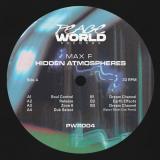
Peace World Records returns with Hidden Atmospheres, the debut release produced by Max F and mixed by Space Ghost. Drawing from classic deep house and esoteric club sounds of the '90s and early 2000s, this seven-track collection channels these influences into fresh territory while preserving the digital grit and dreamlike essence of the era.
The release strikes a delicate balance between the meditative and the kinetic. On the A Side, tracks “Soul Control” and “Zone 6” highlight subtle yet hard-hitting percussion grooves and deep basslines that anchor the mix beneath ethereal pads and sweeps. Each track builds through hypnotic, evolving arrangements that reward close listening. On the B side, “Dream Channel” and “Earth Effects" both feature airy, spectral synth progressions that interweave with ephemeral yet decisive melodies, demonstrating a refined insight of space and dynamics. To round things off, Space Ghost took a crack at an energetic club remix of “Dream Channel. ” Carried by a classic 909 house rhythm and a bubbly bassline, the remix offers a fun, uplifting take on the original, complete with organ stabs and MIDI sax!
As a whole, Hidden Atmospheres delivers something new for fans of 90s and 2000s era house music. Think Ronin, Hanna, Chris Brann, Wamdue Kids—artists whose work holds its own in the club while remaining equally suited for intimate late-night listening. Throughout the record, tracks drift seamlessly between shimmering dancefloor functionality and liminal, introspective ambience, inviting repeat listens that reveal new details and "hidden atmospheres" with eachpass.
Hidden Atmospheres lands on Peace World Records April 9th, 2026.
g B3. Dream Channel Space Ghost Club Remix
oma totem returns to Hivern Discs with the second EP in the exercicis ritmics series, volum 2. the EP features five tracks plus two digital bonus tracks, offering an extended deep dive into percussion, exploring accelerated and even more intricate rhythms. available as a limited edition with an outer sleeve printed at l'Anacronica, as well as a standard edition including an inner sleeve and inlay. artwork by juns castella mastered by dubplates mastering distributed via clone
180 GR Records is proud to present a new release by N-Zino, reimagining two tracks previously released by Four Flies Records: Mo... and Living Disco Club, offering two distinct yet complementary interpretations. Mo... (180 GR Disco Mix) takes its cue from the original Banda Maje version, itself a contemporary homage to Peppino Di Capri, already given a club reinterpretation. N-Zino elevates the track with a nu disco approach, emphasizing its elegant groove and sunnier, funkier side, blending disco influences with pulsing basslines, shimmering percussion, and warm synth textures, all infused with contemporary sensibilities while keeping the original melody alive. The result is a bright, danceable reinterpretation designed for both listening and the dancefloor. In a different yet perfectly complementary direction, Living Disco Club (Don Ciccio Tribute Mix) explores a deep house dimension, turning Banda Maje's disco-inspired original into a hypnotic, late-night groove. Deep bass, soft drum machines, essential rhythms, and atmospheric pads create a rich, warm, immersive vibe, ideal for after-hours or more refined, introspective club moments. Together, these remixes highlight N-Zino and 180 GR Records' vision: celebrating strong musical roots, connecting Italy's musical past with contemporary club culture, offering tracks that honor the tradition and the originals released by Four Flies, while speaking directly to modern dancefloors.
A cocktail of rebellious queer vocal fragments, deceptive percussive granules and swaying hammered vibrations, upsammy and Valentina Magaletti's first collaboration trembles with suspense. The seeds of 'Seismo' were sown following a commission from Amsterdam's Rijksmuseum to soundtrack an exhibition of work from the Museum Boijmans van Beuningen in Rotterdam and the duo didn't want to approach their collaboration flippantly. So, wandering the museum's maze of rooms, they recorded various improvised percussive sounds with their arsenal of microphones, using the space to inform various rhythms and textures that were sculpted later into electroacoustic vignettes. This was just the starting point, though; as Magaletti and upsammy began performing together, the project evolved and 'Seismo' began to take shape. The duo had struck on a salient aesthetic concept, using mostly digital and acoustic mallet instruments to blur the boundary between their roles and create friction between the synthetic and the authentic. And the finished record is a phantasmagoric push-and-pull between its various conflicting elements: harmony and dissonance, randomness and predictability, openness and constraint. 'Seismo' isn't the first time that upsammy has studied her environment in search of revelation. On her acclaimed second album, 2024's 'Germ in a Population of Buildings', the Amsterdam-based DJ, producer and multidisciplinary artist erected her complex, unorthodox rhythms and eerie melodies around a modernist frame of field recordings collected in various cityscapes, countering heavyweight basslines with subtle, microscopic sounds. London-based Italian vanguard Magaletti, meanwhile, has applied her unique logic to innumerable projects at this point, working with everyone from batida icon Nídia and hardcore-dub outfit Moin to French writer Fanny Chiarello and British bass scientist Shackleton. For years she's approached the drums with criticism, attempting to challenge any preconceptions, something that's most visible on 2020's 'A Queer Anthology of Drums'. And both artists' thoughtful perspectives are welded together seamlessly on 'Seismo', a dizzying suite of eight eccentric statements that's fragile but never insecure, gauzy but not indistinct. An unnerving sense of space characterizes 'It Comes to an End' as Magaletti's in situ improvisations herald for upsammy's microscopic glitches and chiming pitch-bent melodies. It's almost unbalancing to witness the track's impossible dimensionality, the interplay between reverberant marimba hits and bone-dry synths, or percussion that's been recorded and processed in consciously different settings. A new architecture emerges in the sound itself that the two artists scan and explore meticulously, testing its boundaries with undulating hybridized rhythms on the invigorating 'Superimposed' and offsetting the powdery drums with liquified smacks and alien voices. The duo's vibrations are knotted with piano flourishes on 'Hyperlocalize', balanced with artificial clanks and clangs that disappear into the track's sonorous atmosphere, replaced by whispers and half-hallucinated insectoid chirps. 'Seismo' is an album that feeds off the energy generated by its juxtapositions: the tension and anticipation that's melted by rapid, hyperactive movement and the finely drawn rhythms disrupted by a layer of indistinct, barely perceptible microsounds. It's a collaboration that sounds like two minds challenging each other but not wrestling, each peering from their own distinct vantage point and imagining a third landscape shaped by optimistic, queer vibrations.
- A1: Fear
- A2: After The Fear
- A3: Sorry Not Sorry (Featuring Braxton Cook & Tallulah Rose)
- A4: The Heart Part 2 (Featuring 3Ddy)
- A5: He Is
- B1: Waiting For You (Featuring Reggie Dartey)
- B2: You Are
- B3: Rest Here (Featuring Marco Bernadis)
- B4: Walk With Me (Featuring Sheila Maurice-Grey)
- B5: The Rock (Featuring 3Ddy)
On Psalm Funk, Bnnyhunna deepens the artistic language he first articulated on his celebrated debut Echoes of a Prayer. Rather than retracing familiar ground, the Amsterdam-based composer and producer expands his palette, allowing rhythm and space to carry as much narrative weight as harmony and lyricism.
While Echoes of a Prayer felt personal and devoted, Psalm Funk opens things up. Gospel harmonies stay central to his music, but now they are energized by smooth funk rhythms and heightened by the flexibility of jazz improvisation. Bnnyhunna moves between styles effortlessly, in a way that nothing seems borrowed, but everything feels lived in.
At the center of the record is an understanding of space. Silence acts not as an absence but as a structure. Breath, restraint, and patience shape the music just as much as basslines and backbeats. This awareness of dynamics allows the album to grow without losing its focus. It signifies a subtle but important change in Bnnyhunna as an artist, moving from inward reflection to forward momentum, from prayer as personal dialogue to prayer as a physical expression. The clarity, discipline, and emotional depth that marked his debut remain, now directed into something more rhythmically confident and spiritually uplifting.
Fusing gospel, funk, jazz, and African rhythmic traditions, Psalm Funk serves as both a meditation and an outpouring. It invites deep thought while demanding a physical response.
The album includes collaborations with American saxophonist Braxton Cook, trumpeter Sheila Maurice-Grey of Kokoroko, 3DDY, and Reggie Dartey, among others. The singles "Sorry Not Sorry" and "Waiting For You" have already hinted at the project's range, while the latest single, "The Heart Part 2," further expands on the album's dynamic and emotional scope.
To celebrate the release, Bnnyhunna will tour the Netherlands in April, with performances in Amsterdam, Rotterdam, and Nijmegen before heading to the UK for a show at The Great Escape.
Released in October 2024, Bnnyhunna's debut album Echoes of a Prayer was created as a dialogue with God, a personal call expressed through sound. The record resonated both with fans and media, gaining support from platforms like 3voor12, Rolling Stone Africa, and Afromixx. It reached the airwaves of BBC Radio 1 in the UK, KEXP in the US, J-Wave in Japan, and 3FM in the Netherlands, and landed in playlists such as BUTTER, Morning Rhythm, and Vanguard.
In 2025, Echoes of a Prayer earned the Edison Pop award for Soul/R&B/Funk and received Grammy consideration for Best Alternative Jazz Album. On stage, Bnnyhunna established his presence with performances at festivals such as Lowlands, Couleur Cafe, Brick Lane Jazz Festival, Dour, and Super Sonic Jazz, as well as his first tour in Japan.
Upcoming live shows:
10/04/26 - BIRD, Rotterdam (NL)
11/04/26 - Doornroosje, Nijmegen (NL)
12/04/26 - Tolhuistuin, Amsterdam (NL)
13/05/26 - The Great Escape, Brighton (UK)
First time reissue of JP / US free jazz rarity.
The 1970s were Marion Brown’s most searching decade, a period during which he sought to move beyond the free jazz of the previous era and find more personal approaches to structuring improvisation and composition. After leaving New York for Europe in 1967, Brown began reshaping his music into what he described as “a more deliberate kind of music that had more structure to it,” pacing it so that moods and modes could develop over time. Albums such as In Sommerhausen, Afternoon of a Georgia Faun, Geechee Recollections, and Sweet Earth Flying trace this evolution: rhythmic structures moved to the foreground, harmony receded, and composition became a matter of orchestrating interlocking rhythmic parts as one would polyphonic lines.
Released in 1976, Awofofora is an overlooked but crucial entry in that sequence. At the time, its use of funk and reggae beats, electric guitars, and grooves drawn from contemporary Black popular music led some to misread it as a jazz-rock detour. In retrospect, it is entirely consistent with Brown’s methodology. As he admired in the Art Ensemble of Chicago, the stimulus comes from within the community. Here Brown filters Afro-Caribbean rhythms and funk through his own sensibility, abstracting their structural qualities rather than adopting surface style.
“La Placita,” making its first recorded appearance, layers distinct rhythmic phrases in a manner reminiscent of African drum ensembles, over which Brown and trumpeter Ambrose Jackson spin extended improvisations. The standard “Flamingo” is reshaped through diasporic rhythm and lyrical soloing, while “Pepi’s Tempo” and “Mangoes” harness crisp funk and reggae grooves to generate what Brown called a “manifestation of community” through collective improvisation. Even the overdubbed solo feature “And Then They Danced” reflects his structural thinking, ingeniously re-voicing a duet composition for two alto saxophones performed by one player.
This was the only recording by a short-lived band that briefly polarized audiences during festival appearances in 1976. Yet Brown consistently sought unity across change: different sounds, same principles — rhythm as structure, melody as architecture, collective improvisation, and above all, the primacy of tone. Awofofora stands not as a departure, but as a vivid synthesis of the elements he had been refining since the late 1960s, its grooves and golden alto lines conveying a sound drawn, in his words, “from life and from the world of experience.”
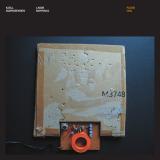
Some years ago, Kjell Bjørgeengen and Keith Rowe attempted to convert video signals into sound by setting up Rowe’s pickups next to an old CRT monitor, turning its magnetic field into a sound generator. Rowe further developed the system with David Jones at Alfred University, slimming down the setup using a copper coil, a circuit board, a video input, and a telephone pickup. Jones named it the »Flood Coil«, and it’s that instrument you can see on the album’s front cover and that lies at the core of these recordings, made without any physical live input from the artists themselves. In essence, it’s generative music in its purest form.
Bjørgeengen’s video feed is generated by oscillators, then routed into Marhaug’s pedals and then back into the Flood Coil, so any visual shifts alter the sound, and any modification to the sound changes the video. The duo have played this setup live many times, but for this studio version they left the system to do its thing without any intervention for two minutes at a time before moving onto the next idea. They recorded hours and hours using this process and then selected 18 highlights for this album, extracting harsh noise, power electronics, lulling feedback drone, and peculiar rhythmic snippets to show the scope of their technique.
A wall of growling, hi-octane Pulse Demon-style noise opens the set, gradually exposing us to more asymmetric textures, shifting through unstable repetitions that transform Merzbow’s metal-inspired screams into »Aaltopiiri«-era rhythmic noise. It’s remarkable, actually, how much Marhaug and Bjørgeengen can squeeze from the system, chancing on shivering, lower-case chugs and pops, galloping drums, soundsystem subs, and grinding blast beats that sound like Napalm Death’s »Scum« piped through a broken amp stack. It ain’t pretty, but noise/industrial freaks will revel in the fierce delights inside.
- Erg
- Dras
- El Khela
- Xilitla
- Estado
- Rub' Al Khali
- Pulque
- White Dwarf
- Mazil
Alex Zhang Hungtai steht auf ,Dras" still da, aber es ist eine Stille, die jede Menge Möglichkeiten hat. Diese neun Stücke wurden 2019 in der Saint Joseph Oratory in Montreal aufgenommen (kurz bevor ein Klavier kaputtgemacht wurde) und lagen während der Pandemiejahre auf seiner Festplatte, bis endlich der Funke übersprang. Was jetzt entsteht, fühlt sich an, als würde man jemandem dabei zusehen, wie er die Konturen seiner eigenen inneren Landschaft nachzeichnet, wobei jede Melodielinie eine sorgfältige Auseinandersetzung mit dem Unbewussten ist. Dies ist nur im weitesten Sinne ein Saxophon-Album. Das Terrain hier ist taktil und unerbittlich. Im Titeltrack werden schwierige Melodien auseinandergerissen und zu emotionalen Drones geformt, wobei Dissonanzen ineinandergreifen, während Töne mit metallischem Glanz ihren Weg durch die Sinne bahnen. ,El Khela" bricht sich in spektrale Schichten, die mit ewiger Schwerkraft ziehen, während ,Estado" Trost in seiner eigenen Dunstglocke findet, mit Rhythmen, die kaum hörbar sind, aber mit ihrer Kadenz, die sich an grauen Wänden abzeichnet, vorwärts führen. Es sind kleine Momente, die zu kathartischen Klangatmen werden und jeweils neue Passagen durch die psychische Geografie offenbaren. Es liegt Schönheit in den subtilen Wiederholungen des Openers ,Erg" und in den leuchtenden Progressionen von ,White Dwarf". Zhangs Saxophon wird zu einer Wünschelrute für das Unbekannte, während Elektrizität durch die Adern des Albums fließt und sein Atem alles an etwas wortlos Menschlichem verankert. Die digitale Bearbeitung dieser Kirchenaufnahmen verdeckt nicht das menschliche Element von ,Dras". Sie verwandelt das Rohmaterial in etwas, das zwischen äußerem Raum und innerer Landschaft navigiert. Als der Schlusssong ,Mazil" kommt, lässt Alex Zhang Hungtai sein Saxophon seine volle Resonanz entfalten. Tiefe, kehlige Klänge öffnen sich wie Abgründe unter melodischen Konstellationen, die in dichter Schwerkraft schweben. Hier herrscht Endgültigkeit, auch wenn sich etwas in diesen Passagen schwerelos anfühlt. Diese Musik ist durchdrungen von innerem Dialog, einem wortlosen Zauber, der über dem psychischen Abgrund tanzt. Tonale Sequenzen zerfallen in betäubende Klänge, eine scharfe, elegante Kante, die schneidet, ohne Blut zu vergießen. Dieses einsame Werk der Erforschung wird zu etwas Gemeinschaftlichem. ,Dras" ist eine Karte, um den Raum zwischen dem, wo wir sind, und dem, wo wir hingehen könnten, zu durchqueren.
- Asylums In Jerusalem
- A Slow Soul
- Jacques Derrida
- Lions After Slumber
- Faithless
- Sex
- Rock-A-Boy Blue
- Gettin' Havin' & Holdin
- The Sweetest Girl
Das Debütalbum einer der renommiertesten und einflussreichsten Bands Großbritanniens, Songs to Remember, versetzt uns zurück in die Anfänge von Scritti Politti. Die von Green Gartside angeführte Gruppe, die aus der DIY-Szene der Einzimmerwohnungen in Camden Ende der 70er Jahre hervorgegangen war, hatte jedoch eine musikalische Vision, die der von Miles Davis (mit dem sie später zusammenarbeiteten) in nichts nachstand. Mit Songs To Remember, das sowohl die feurige Politik der damaligen Zeit als auch eine aufkeimende Pop-Sensibilität widerspiegelte, etablierte sich die Gruppe als einer der wahren Innovatoren der frühen 80er Jahre. Songs to Remember, das bei seiner Veröffentlichung 1982 vom NME als "witzig und genial" beschrieben wurde, wurde für diese längst überfällige Vinyl-Neuauflage vollständig remastered, was Gartside persönlich überwacht hat. "Mark E Smith, damals Künstler bei Rough Trade, sagte einmal zu mir: 'Scritti hat die beste Rhythmusgruppe in der Rockmusik." Er erwähnte Green Gartside nicht, daher weiß ich nicht, was er von ihm hielt. Ich weiß jedoch, dass wir bei Rough Trade alle von Greens honigsüßer Stimme und seinen brillanten Texten fasziniert waren. Es waren aufregende Zeiten, in denen die Menge an purem Talent, die in das Rough-Trade-Universum strömte, einfach überwältigend war. Niemand mehr als Green, der den intelligenten Angriff auf die Zitadelle der Popmusik-Perfektion verkörperte. Ich erinnere mich, dass ich sehr stolz auf "Songs To Remember" war, zu einer Zeit, als es für uns noch eine relativ neue Erfahrung war, ganze Alben zu veröffentlichen." - Geoff Travis
- 1: Wonderful To Be Loved
- 1: 2Don't Stop Smiling
- 1: 3Gentle Man
- 1: 4Crying Baby Won't Help The Hurt
- 1: 5Love Is Gonna Rain Down On Me
- 1: 6Slow Change Up
- 1: 7Lost Her Love
- 1: 8All I Want Is You
- 1: 9With A Broken Heart
- 1: 0The Magic Of Your Love
- 1: What About Me
- 1: 2Hiding In Your Heart
- 1: 3I'll Never Love Again
OPAQUE PEACH VINYL[24,79 €]
Was ist Sweet Soul? Vielleicht die perfekte Mischung aus Lowrider und symphonischem Soul? Eine üppige und dennoch lebendige Produktion, die in hörbare Seide gehüllt zu sein scheint und jeden Zuhörer innehalten lässt. So oder so, wenn eines sicher ist, dann ist es, dass sein Zweck vollkommen klar bleibt. Vergnügen, langsam und gemächlich, bajito y suavecito. Jeder Kuss beginnt mit Soul oder Sweet Soul für Lowrider. Sweet Soul ist der Vorläufer dessen, was wir heute als Modern Soul bezeichnen. Er kam in den späten 60er und 70er Jahren auf, parallel zu - aber getrennt von - dem raueren, funkgetriebenen Soul, der die Radiowellen dominierte. Während diese Musik harte Rhythmen und rohe Emotionen förderte, milderte Sweet Soul die Kanten. Sie bevorzugte Melodie, Wärme und Raffinesse und verlieh ihr ein ruhiges, üppiges Gefühl, das es leicht machte, zu ihr zurückzukehren und sie auch Jahrzehnte später noch zu lieben.
- And You May Find Yourself
- Tzing
- Flip The Script (Dispair)
- Tropical + Electronical
- Beacon
- Made In Italy
- Les Belles Vacances
- Dissolving
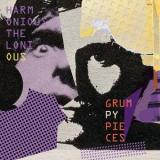
Mit Grumpy Pieces kehrt der Düsseldorfer Musiker Harmonious Thelonious alias Stefan Schwander mit einem Werk zurück, das seine langjährige Klangästhetik präzise destilliert und zugleich spürbar aufreibt. Wieder verbinden sich Pan-Afrikanische und Nahöstliche Rhythmuskonzepte, minimalistische Wiederholungsstrukturen und reduzierter Elektronik-Einsatz zu einem hypnotischen Sound - diesmal jedoch rauer, trockener und offener für Brüche als zuvor. Die acht Stücke wirken wie unter Spannung gesetzt: Melodien schaben über kantige Bassfundamente, scharfe Snare-Schläge durchschneiden das Gefüge, und trotz des klaren Groove-Fokus ist ständig ein nervöses Knistern präsent. Grumpy Pieces reflektiert eine Gegenwart voller politischer und gesellschaftlicher Reibung - ohne explizite Kommentare, aber mit einer Musik, die Reibung selbst zum Gestaltungsmittel macht. Während die A-Seite vergleichsweise direkt beginnt, öffnet sich die B-Seite zunehmend dem kontrollierten Zerfall, bis der finale Track "Dissolving" den Titel programmatisch umsetzt. Entstanden ist das Album in Schwanders Düsseldorfer Studio - intuitiv, unmittelbar, ohne große Bildschirm-Arrangements, eng verwoben mit seiner live-erprobten, tranceartigen Arbeitsweise. Grumpy Pieces ist kein Bruch, sondern eine Zuspitzung: ein kraftvoll verdichtetes, körperliches und zugleich unruhiges Album, das die charakteristische Handschrift von Harmonious Thelonious schärft. Tanzmusik mit Widerstand - und Biss.
- 01: Feel Like Dancing
- 02: Thicker Than Water
- 03: A Message From The Meters
- 04: Catch This
- 05: Fussy Girl
- 06: Cool And Deadly
- 07: The Life
- 08: Keep Your Step
- 09: Make It Reggay
- 10: Behind My Shoulders
- 11: Stormy Weather
- 12: We Shall Overcome
Killer Groove Records proudly presents "Keep Your Step", the explosive comeback by Italian rock steady & early reggae ambassadors The Appetizers, a soulful celebration of reggae's timeless spirit.
"Keep Your Step" marks the band's much-awaited return, landing April 10th on limited edition LP, CD digipack and digital format featuring two exclusive bonus tracks.
The Appetizers deliver a masterclass in roots reggae music with their highly anticipated second studio album, bridging Jamaica's golden age with contemporary relevance. "Keep Your Step" is a heartfelt sonic journey where the band blends rocksteady and early reggae with funk and soul influences to create a sound that's both genuine and refreshingly modern.
The fourteen tracks move fluidly between infectious dancefloor fillers and socially conscious lyrics. From the laid-back swing of "Feel Like Dancing" to the hypnotic rhythm of "Thicker Than Water", the band demonstrates their versatility while remaining true to the roots of Jamaican sound. "A Message from The Meters" pays tribute to the legendary funk pioneers, while the instrumental "Catch This" and "Make It Reggay" highlight the band's musical prowess and the deep connections between reggae and funk.
Meanwhile, tracks like "Fussy Girl" and "Behind My Shoulders" explore love's complexities with humor and soul. The album's heart lies in its social consciousness. "Cool and Deadly", "The Life", "Stormy Weather" and the album title track "Keep Your Step" tell stories of perseverance through life's struggles.
With the hopeful anthem "We Shall Overcome," The Appetizers deliver a timely message about genuine human connection in a social media-dominated era. The digital edition closes with "Get Some Rollin'" and "Swing and Sway," rounding out the journey with two additional gems.
"Keep Your Step" pays homage to Jamaican music legends, from Jackie Mittoo and Tommy McCook to Toots & the Maytals, while carving out The Appetizers' own distinctive sound. This is a groove made for both the dance floor and the soul, proving that reggae's power to inspire, unite, and uplift remains as vital as ever.
The production stays true to The Appetizers' signature sound: organic tones, deep groove, and that live-room vibe you only get when real musicians are locked in together. Luca Monza and Claudio Mambrini, the band's core members, handled the artistic production. Mastering came courtesy of the great JJ Golden (Black Pumas, Sharon Jones & The Dap-Kings, Jr. Thomas & The Volcanos, The Frightnrs) at Golden Mastering in Ventura, California. JJ is one of the most trusted engineers working in this sound, ensuring every ounce of warmth and authenticity came through.
The Appetizers are a rocksteady and early reggae band formed in Milan in 2020 by musicians deeply embedded in the Italian and international reggae scene. Musicians from different paths united by a shared vision: recreating that vintage Caribbean and American sound with authenticity, respect and a forward-thinking edge.
Drawing inspiration from Jamaica's golden era and channeling the soul of Delroy Wilson, Alton Ellis, the early Wailers, and The Upsetters, The Appetizers carry forward the essence of bass culture with a pure, fully organic approach.
Their debut album Listen Up! (2022), released via Belgian imprint Badasonic Records (home to The Slackers, The Aggrolites, David Hillyard & Victor Rice), featured ten original tracks and a dub cut by Victor Rice. Distributed across Europe, the UK, the US, and Japan, it quickly earned international recognition among reggae connoisseurs and selectors worldwide.
Following extensive touring, including shows with The Slackers, Black Uhuru, Skip Marley, and more, the band returned to the studio to record "Keep Your Step", their second album produced by Killer Groove Records. Here the band expands its musical language, weaving together the spirit of historic Jamaican labels like Studio One and Treasure Isle with '60s funk, arriving at a warm, organic, and timeless sound: soul, Jamaican roots, and modern sensibility in perfect balance. Their lyrics explore heartbreak, social issues, and reflections on life and music, performed with dedication and respect for tradition while always pushing forward.
If you're into The Skatalites, The Ethiopians, and those classic Caribbean rhythms, this one's for you.
- A1: I Want A Lover (Mixed By Mighty Massa)
- B1: Empty Wind (Mixed By Mighty Massa)
THE SILVER SONICS, led by Ryo Murata who also plays keyboards for THE SKA FLAMES, release their long-awaited 7-inch single after a hiatus of about
12 years.
Side A features “I WANT A LOVER,” whose catchy melody and vocals grab your heart.
Side B includes the mellow Caribbean instrumental ska track “EMPTY WIND,” whose rhythm, punctuated by the guiro, makes you want to sway your body.
- 1: Hold It
- 2: Life Slime
- 3: Toxic Spillage
- 4: Battery Pack
- 5: Another Way
- 6: Sorry Eyes
- 7: Infinity Ooze
- 8: Crystal Cave
- 9: Torch Song
- 10: Werewolf Ending
New album from Pictish Trail, AKA Johnny Lynch, known for his wildly inventive electro-acoustic psych-pop. Life Slime is the sixth full-length album by Pictish Trail (AKA Johnny Lynch) - a strange, tender, psychedelic electro-pop record shaped by transformation, exhaustion, hope, guilt, and renewal. Written at home on the Isle of Eigg and recorded at Mike Lindsay's studio down in Margate (Tunng / LUMP), the album follows 2022's critically acclaimed Island Family, further refining Lynch's world of lo-fi electronics, warped pop melodies, baggy psych rhythms and emotionally direct songwriting. It's a record that balances woozy synth-pop, motorik propulsion and intimate acoustic songwriting, all infused with the emotional messiness that gives the album its title. Across the album's singles - the guilt-stained psych-pop ballad 'Hold It', the life-affirming shimmer of 'Infinity Ooze', the late-night confession of 'Torch Song', the expansive eight-minute centrepiece 'Another Way', and the cinematic closer 'Werewolf Ending' - Life Slime charts a journey from emotional fracture to uneasy release. 'Sorry Eyes' brings a punchy electro-pop strut with a sharp emotional edge, 'Crystal Cave' drifts through crystalline guitars and shoegaze haze into transformation, and the title track 'Life Slime' moves with a slow, weary swagger toward bittersweet acceptance. Together, these tracks form a cohesive album statement about surrender, resistance, change and renewal. "Wonderfully weird pop"- Brooklyn Vegan For fans of Hot Chip, The Flaming Lips, Liars, Mercury Rev, Beck, John Grant, Empire of the Sun, Grandaddy. Colour vinyl and digisleeve CD
- 1: Interval
- 2: Interval
- 3: Interval
- 4: Interval
Mit Interval festigen Tesa ihre eigenständige Position innerhalb der europäischen Instrumental-Post-Rock- und Heavy- Music-Szene. Unbeeindruckt von Trends oder Genregrenzen konzentriert sich die Band auf Reduktion, Präzision und eine intensive Erforschung von Klang, Raum und Stille. Interval ist der Soundtrack zum Film TESA MAN - A Music Film (Eröffnungsfilm des Riga International Film Festival 2024). Das Album besteht aus vier ausgedehnten Kompositionen. Schwere Riffs, dichte Rhythmen und atmosphärische Texturen treffen auf Momente der Zurückhaltung und Stille. Die Wirkung entsteht nicht durch permanente Steigerung, sondern durch kontrollierte Intensität und bewusst gesetzte Dynamik - jeder Ton ist präzise platziert, jede Pause integraler Bestandteil des Ganzen. Zwei Jahrzehnte nach ihrer Gründung bewegt sich die Band weiterhinbewusst jenseits kurzlebiger Trends und Erwartungen und entwickelt eine Klangsprache, die auf Spannung, Dynamik und Geduld basiert. Gemastert von James Plotkin (u. a. Sunn O))), Earth, Electric Wizard, Tim Hecker)
HYPER GAL are restless. Since 2019, Kansai’s minimalist duo has been in persistent, perpetual motion.
In January of 2024, SKiN GRAFT Records introduced HYPER GAL to western audiences, giving the previously self-released album “Pure” a worldwide release. It was followed by “After Image”; a new full-length record; in September of that same year. In short order HYPER GAL left Japan to embark on a month-long European tour, performing at festivals such as Left of the Dial in Rotterdam and Le Guess Who? in Utrecht.
Consisting of Koharu Ishida (vocals) and Kurumi Kadoya (drums), HYPER GAL craft a sound all their own, characterized by avant-garde rhythms, looping landscapes, and hypnotic vocals. Their music resists traditional genre boundaries to carve out a truly singular sonic space.
With their fourth album “Our Hyper”, HYPER GAL thrust their sound into a deeper, harder core. Songs unfold into surprising shapes, embracing shadowy turns emboldened by a heavier low-end, while unearthing sharp takes on Japan’s harsh noise roots. The drums have grown even more acrobatic and unorthodox, while the vocals take on new colors, shifting from mesmerizing repetition to melodic, pop-tinged expression.
The album’s artwork is no less adventurous and features masks created by contemporary artist Tokiyoshi Akina and photographed in the band’s own hands, signaling resistance to the performative dualities of social media and a commitment to authenticity.
Despite the lean, unadorned two-piece setup, HYPER GAL’s music attains an intense and unmistakable presence - an unwavering momentum driven by an unrelenting intent. “Our Hyper” is HYPER GAL amplified.
"With each release they appear as mirage sculptors, using simple tools (drums, keyboards, vocals) in craft of multi-genre spanning work which only becomes more captivating the simpler their execution becomes...”
– MYSTIFICATION
The sibling duo behind the music on Graceful Degradation — organ and drums, nothing more, nothing less — carve out a sound that feels unmistakably organic in a world drifting steadily toward the synthetic. Their interplay is entirely live, subtle in its details yet dynamic in its momentum, built on the kind of instinctive communication only brothers can share.
The music is fully instrumental, unfolding in a borderland where dreamy retro pop dissolves into the hazy textures of shoegaze and the unruly pulse of noisy, electronic leaning jazz. It’s a sonic world that feels both familiar and elusive, nostalgic yet inherently restless. Melodies shimmer and blur, rhythms swell and contract, and the space between the notes becomes as expressive as the notes themselves.
What emerges is a sound that resists easy categorization: warm but unpredictable, intimate yet expansive, grounded in the physicality of two musicians performing in real time. The organ breathes like a living organism, shifting from soft focus ambience to swirling, saturated harmonics, while the drums move with a fluid, human elasticity — sometimes whisper quiet, sometimes erupting with raw, kinetic force.
In this in between terrain, the duo has always found its identity and its freedom. Their music doesn’t chase perfection; it chases presence. It embraces imperfection, celebrates spontaneity, and insists on staying alive in a landscape where so much is becoming weightless and automated.
This is instrumental music with a pulse: subtle, dynamic, and unmistakably human.