For over 4 years, David Coccagna aka Chaperone has been a constant part of Great Circles, as musician, art director, and muse. With Snapback Balaclava he once again fully embodies all of those roles, delivering three inspiring tracks, selecting his remixers with specific attention to their musical histories, and designing his cover art.
Across the A-side, Chaperone scrapes away at the grit - personal grit, the grit of anxiety, and Philly grit. These are meditations on loops, and loops on meditations. Each one appears on the surface to be a brief quote, but time dilation takes over, and minutes later we discover that Chaperone has welcomed us into and back out of his own healing moment.
Like Chaperone's P O N D release (GRCR-009), the B-side of Snapback Balaclava is a Great Circles extended family affair with a trio of diverse remixes that expose and exploit fragments of the chaos Chaperone so carefully contained.
Hitoshi Kojima (Thrive) reinterprets Pulse Feels Swells Beating with relentless syncopated rhythms and synth lines that hang like massive string drones. M//R lays down a signature percussion ensemble palette, zeroes in on otherwise peripheral elements of Grit Neglect, and then deftly navigates sea change with both. Matt Korvette and Sean McGuinness of Philly punk band Pissed Jeans open up the pit and finish the story, taking Femur Baseball Bat to its literal and brutal potential with monstrous vocals and kicks.
VENT forges new alliances, as Dee Grinski and Tolga Baklacioglu joins forces to explore musical synergies on a collaborative LP release of drone alchemy, eternal rhythms and harrowing vocalisations, which explores the lightless mazes of subconscious voids, teasing at barely understood taboos. Tolga's past explorations of unrelenting industrial sounds are further refined, and enforced with Dee's vocal talent that covers a wide range of expression - from commanding and authoritative to harrowing howls of disembodied despair. They invite us to come with on a journey towards the lightless fringes of cognisance.
Headed up by mult-instrumentalist (and Gentleman's Dub Club member) Nick Tyson, XOA fuses golden era 1970s Afrobeat with deep grooves and contemporary electronic productons sizzling with analogue synths, guitars and percussive rhythms. Collaboraton has always been at the heart of the project, with an
emphasis on live instrumentaton, crucial to transmitng a rich energy on the tracks.
Hailing from London, Tyson has been building a keen following with his live gigs and DJ sets, including a sell-out live show at the Jazz Cafe featuring Eva Lazarus and Dele Sosimi on vocals. The new release on Soundway refects his steady progression towards sophistcated producton and collaboratve processes, as well as his ability to efortlessly cross multple genres.
A high-speed car chase between a Dodge Charger and a Ford Mustang, with super-cop Bullitt at the wheel, who forces the hitman off the road and into a petrol station, which explodes and incinerates him. Prior to that, harsh clashes of metal, hubcaps flying all over the place, and the chief character Steve McQueen, who grimly changes gears and hurtles through the streets of San Francisco, wheels screaming and rubber burning. That was how Hollywood staged one of the longest and most dramatic car chases, long before the days of the Anti-Blocking-System and Anti-Slide-Control.
Very up-to-date and just as exciting as the screenplay is the music Lalo Schifrin wrote for the film, which embeds the characters, places and events in a musical context. For example, "Bullitt": the metrically angular main theme portrays a mysterious, cool character who sums up a situation with keen alertness and then makes his attack with the speed of lightning.
Initially the music travels through easy-going Latin terrain. But gradually the rhythmic texture changes and takes a rougher path, with clicks, knocks and hammering. Legendary flute lines create a compensatory placidness with airy clouds floating above the sharp mix. A really special track is "Shifting Gears": here you can listen to Schifrin tuning the car, how he manipulates a jammed springy bossa to take on the sound of clean, smooth-running rock.
This Speakers Corner LP was remastered using pure analogue components only, from the master tapes through to the cutting head. All royalties and mechanical rights have been paid.
out of Stock
Last delivered 5 years ago available to reorder, subject to availability
Mouse on Mars' Andi Toma and Jan St. Werner return with their most
inventive album to date, Dimensional People. The electronic music pioneers
have been critically acclaimed for their playful and inventive sound and
production techniques on releases spanning from the early '90s to now. In
demand from a surprising array of artists their most recent contributions are
featured on the Grammy award winning album Sleep Well Beast by The
National.
The duo are joined on Dimensional People by an impressive list of guests
: Justin Vernon (Bon Iver), Aaron and Bryce Dessner (The National), Zach
Condon (Beirut), Spank Rock, Swamp Dogg, Eric D. Clarke, Lisa Hannigan,
Amanda Blank, Sam Amidon, Ensemble Musikfabrik, and about 20 more
musical collaborators. The cast of characters are as unique as they are vast,
clearly a rich quarry for the prodigious duo.
Dimensional People is by it's nature a collaborative album. Originally
premiering as a spatial composition using object-based mixing technology
playing with the possibilities of sonic design (4D Sound) and collective
musicianship, the recording expands upon these ideas. Dimensional People
expresses itself as a dynamic 50-piece orchestra, telling a story in sound.
Mouse on Mars offer sound as a means to encourage open-minded societies,
aided by cutting-edge technology including their own MoMinstruments
music software or a spatial mixing technique called object based mixing,
with which a spatial version of the work was created. It is a conceptual
puzzle composed around one harmonic spectrum within one rhythmic
scheme, mostly in the tempo of 145bpm (inspired by Chicago footwork,
so the dance oor is not entirely absent). Looking ahead, Dimensional
People will also be realized through installation, presenting the work as an
immersive listening experience, as well as performance.
Wælder are moving between ambient, industrial and pop. Their rhythms and soundscapes of voices, obscure samples and distorted field-recordings build spaces of barren material and soft ground, which teem and crawl - strange and harmonious. To present their music live, Wælder are mixing analogue and digital effects with guitar, synthesizers, vocals and loops. Rhythms and atmospheres blur, dissolve and re-assemble. Their live shows are often framed by visuals, generated in collaboration with various visual artists.
Dublin based musician Lerosa has built an impressive discography throughout the years. With his first efforts dating back to 2005 the producer who has a broad palette of sounds has already been around for over 10 years with releases for a vary of respected labels.
For the first release on SAFTX , Lerosa hands out a taster of the labels new series ambitions. Vivrant house music is most definitely the back bone of Playa De La Guancha as a whole. The opening is packed with a strapping rhythm section and a vocal cut that is reminiscent of the Trax Records classic House Nation . Julius Steinhoff (of Smallpeople fame) gives Soul Tracing a modern sounding treatment that completely shifts the feel of the original and turns it into an adventurous piece of contemporary electronics.
Lerosa opens up the B side with Bruised which is a work out of alternating basslines and brutal machine claps that give the piece a club oriented feel. Acidic sounds cut through the mix with determination and wobbly synth sounds serve as a pleasant sauce for this intergalactic sounding work. Marauder is a hefty bit at a slower tempo than it s predecessors. A loose rhythm section is causing for the listener the focus on the immense LFO threated sounds that float on to and the low down bassline that supports the overall atmosphere in a grounded manner. Playa De La Guancha will be available through all specialized retailers starting early April.
Kicking off Vivod's new pheasant series and making their debut on the label, UNI.OMNI are a Glaswegian duo comprising of MWX and Wave Energy Converter. Inspired by feelings of duality and the unpredictability of our dynamic world, UNI.OMNI respond with challenging dark electronic notes, driven vocals and expansive percussive backdrops. Their tracks emit contradictory feelings of chaos and calm, motion and stillness, frustration and excitement, whilst using the energy and turmoil of big city life as motivation for their first EP. "Acceptance Resistance" kicks things off with an experimental, cavernous foray that shifts to the rhythmic, subliminal undertones of "Metaphysical Lives". Both "Sequential Self" and "Viral Dread" are attuned to empowerment, exacerbated by the strains of the modern world, with strong vocals reiterating the need for resilience in the forgotten generation.
Molten Moods releases another finely curated various artists record with tracks by Skee Mask, Kessel Vale, Jonas Yamer and Konrad Wehrmeister. Kessel Vales opening track Voguing Geisha' is an unconventional breakbeat masterpiece following his sense of harmony and rhythm already shown through previous releases on Tanstaafl Records and Rhythm Nation. As the track unfolds it reveals musical storytelling by integrating a technoid polyrhythmic loop structure into melodic synth figures, slowly deconstructing in the end. Skee Mask collaborated with Molten Moods labelhead and Carl Gari member Jonas Yamer on Fanta Ocean', it being the first release ever outside of his Ilian Tape homebase. The outcome is a moody IDM piece with cinematic qualities, complex but soothing. The B-Side begins with Xenomorph' by Konrad Wehrmeister, who is known by his releases on Public Possession and SVS Records. This trancy yet distorted and detailed electro banger surely takes on the role of the records dancefloor highlight. The closing track Insgeheim' is delivered by Molten Moods head honcho Jonas Yamer. Here groovy kicks, distorted chords and a psychedelic pad are woven into one compelling 10 am techno track. The common thread of Molten Moods 4 is four young Munich artists going on a joint trip into idiosyncratic electronic music. The resulting tracks intertwine as one modern and diverse techno record. Out on 12 vinyl and wav by the end of March 2018. In the tradition of Molten Moods' cost-conscious design strategies by Paul Bernhard, the record comes with a xeroxed low budget sticker set.
Mastered by Manmade.
out of Stock
Last delivered 7 years ago available to reorder, subject to availability
Dapayk Solo, Berlin based producer and veteran of the minimal techno scene, announces the release of his 10th studio album 'The Calling'. This latest project will be the producer's first solo album since
2015. The 8-track double 12inch LP will be available via Dapayk Solo's label Mo's Ferry Productions and comes with a free download voucher for the extended 12-track digital album.
The first track on this LP 'The Calling' shares its name with the album and starts off with a pang of energetic, chopped beats before exploding into a brassy melody, continuously gaining momentum.
'Blackout' immediately announces itself as a next generation Detroit House anthem. The rolling synths, hi hats, and vocals make this one of the most outstanding tracks on the album. 'Aurora' stays true to its name with a buildup composed of throbbing ethereal synths that give the track an otherworldly vibe. 'Flood' transports listeners to the dancefloor with its pulsating bassline combined with Komplement's quaint vocals.
The second part of the album begins with 'After All', one of the most enticing tracks on the album. It combines the groovy rhythm of four to the floor percussion with tantalizing vocals by VARS before New Release Information 'Low Tinnitus' reverts to Dapayk's signature minimalist sound. The transition into 'Wanderer' continues the momentum built up by the previous tracks. The closing 'Walk With Me' is a deep-house jam that features a rhythmic shaker layered under Mental Bend's powerful vocals.
Dapayk Solo, alias Niklas Worgt, isn't afraid to try new things. With 5 aliases under his belt, he continuously strives to experiment with different styles and production techniques to create innovative sounds. Throughout the span of two decades he went from producing drum'n'bass to house to ultimately crafting the groovy, edgy techno sound that he's now known for.
With more than ten LP releases and over 70 single releases on his record, he is one of the main protagonists in the world of underground electronic music. In 2017, he released an LP titled 'Harbour' with his wife Eva Padberg under one of his many projects, Dapayk & Padberg. While that album aimed to steer away from traditional club beats, 'The Calling' sees Dapayk reassume his deep, dark, and infectious sound. While Dapayk is often categorized as a minimal producer, the LP proves that he is capable of extending beyond the scope of a single genre. 'The Calling' is just another example of why Dapayk has managed to stay in the scene for so long: he loves electronic music and he's great at
making it, too.
The second of Alma Negra's 12 Rhythms Series is dedicated to the Maloya sound from La Réunion, a tiny island where a
melting pot of cultures is reflected strongly in its music. Maloya's roots go back to the time of slavery, its quick tempo and raw
energy making it not only a popular dance music but also a powerful protest through movement.
On their Maloya EP, the Basel collective pay tribute to the hypnotic rhythms that were feared both by the Catholic Church and the French government for the musical form's subversive part in the rebellion against colonialism.
The release revolves around two contrasting Alma Negra re-workings of Lindigo's Tany Be. The first takes a classic call &
response structure in 12/8 and 6/8 rhythms, adding a driving bass line and guitar licks. A solid 909-kick locks things in step,
along with a sax flourish and FM synths. Their re-imagining of African and Tamil influences for modern dancers is a triumphant
manifestation of the music's origins.
With the main reworking focusing on a rolling dance floor groove, the Dub Mix concentrates on trance-inducing aspect of
Maloya. Using a modular set up to pick apart layers of percussion, it is a dense and heady trip into the spirit world.
The B side focuses on Christine Salem, one of today's stars of the Maloya scene. Without wanting to squeeze the soul from her
deep tones, Kabaré is slowed down a notch, with drums added sparingly. This sensitive treatment gives the track just enough
weight and tension to punch in on todays dance floors without losing the intent of the original.
The source material for this EP has been road tested from the very beginning of Alma Negra's journey. The collective have gone
to great lengths to ensure the original creators are on board with their treatment of their music and are honoured to be given the
chance to distil their own ethos into a record that is bubbling with today's dance floor drive. Their reverent treatment aims to
preserve the power and beauty of the source material, to bring uncovered gems to a new audience.
Originally from the United Kingdom, funky soul-jazz veterans The New Mastersounds have been touring USA, Europe and Japan for over a decade and return here with their twelfth studio album, recorded in New Orleans and Denver and featuring a slew of musical guests.
"Renewable Energy" expands on the NMS template while still providing plenty of the band's trademark sounds. Guitarist Eddie Roberts, drummer Simon Allen, bassist Pete Shand and keyboardist Joe Tatton are joined on this 11-track effort by a number of guests: Sam Bell, one of the founding members of NMS precursor The Mastersounds who also guested on two previous NMS albums, plays percussion on most of the tracks. Mike Olmos and Joe Cohen of the West Coast Horns once again provide added horn action as they did on "Made For Pleasure" from 2015, while Adryon de León from LA band Orgone contributes vocals on "Gonna Be Just Me". Uptempo numbers "Tantalus" and "Yokacoka" see the band flexing their playing chops over a tightly-wound rhythm, while "Green Was Beautiful" and "Groovin On The Groomers" are toe-tapping slabs of soul jazz. The band's cover of James Gang's "Funk 49" takes the album in a fuzzed-out psych-rock direction with Eddie singing the lead, while the moody Hancock-esque inflections of "Stash" and the sweet mellow vibes of "Swimming With My Fishies" add the final brushstrokes of colour to the canvas.
'Turbatrix', the eighth release on Sheffield's Computer Club imprint, is provided by mysterious French artist Arandel. No newcomer to the musical spectrum, Arandel has long been associated with the French label InFiné, alongside global names such as Carl Craig and Apparat.
'Locus I' surprises as analogue rasps and pings spar with lush synths and a driving 4/4 rhythmic code. Key track 'Locus II' is a siren to the ghosts of Sheffield's electronic musical heritage, with relentless bleeps and a concrete sub-bass.
'Locus III' is a midnight romp through a neon-tinged city where only the holograms know your name. The fourth and final track, a blissed-out ambient piece soaked in celestial sounds, is a meditative end to a thrilling journey of invention and musical mastery.
DJ Katapila's Aroo EP is the latest addition to the iconoclastic producer's catalog of fast-paced, pan-West African-influenced dance music. From a young age, Ishmael Abbey was a beloved local DJ in Accra, Ghana's competitive and rapidly-evolving music galaxy. DJ Katapila's debut release with Awesome Tapes From Africa, 2016's reissue of Trotro, ignited international acclaim for the Ghanaian DJ and producer: The New York Times, Pitchfork, Resident Advisor and FACT heaped praise on his work. Katapila launched a touring career beyond his grueling schedule of all-night parties around Ghana's southern coast and neighboring countries, heading to Europe and the UK, where he performed at festivals and clubs the pasty two years. Katapila brought Ghana's street party culture to audiences overseas, a wave of joy and happy dancers were left in his wake. The song Aroo' uses his earlier song Cocoawra' as a jumping off point and expands upon its endearing quick-rhythmed interplay of vocal hiccups and percussive clinks. Katapila thinks of Aroo' as a simple math equation: Francophone rhythms plus techno equals so hot and danceable.' While traveling this past summer in Europe, he continued to work on the minimalist electronic music steeped in his hometown rhythms that has made him a growing and singular voice in West African music. Having never travelled outside his region before, the contemporary sounds of London impacted his sonic palette, triggering new song African Techno.' He explains, In Europe and the UK they like these techno songs and house music. They have songs that sound like African music, and we have songs that sound like house music and techno music.' Ghana Baby DJ' references his ongoing development of Ga dance music style gbe ohe. It also conjures his daughter's voice and inimitable vibe and blends it with the characteristic clave rhythm of this. The EP's final cut is a track released with a an eye-catching music video this summer called "Monkey." Following radio play in Ghana and demand from fans online, this track makes its debut on vinyl. Awesome Tapes From Africa is proud to present new music from this unmistakably original artist with an honesty and unpretentiousness that feels good at this current point in history.
Running Back welcomes Andreas Grosser for the start of it's non-dancefloor series 'Running Back Incantations'. Think Tornado Wallace's 'Lonely Planet' or Suzanne Kraft's 'Missum' who both would have been good and early contenders for a series like that, and you are half way there. Andres Grosser though, was 'there' and that way before. Probably best-known for his 1987 collaboration 'Babel' with Klaus Schulze, Grosser is a bit of a dark horse in the universe whose big bang was krautrock and that went on to be called cosmic, space music or simply new age.
A native East-Berliner, Grosser crossed the Wall in 1981 and next to studying piano, his day job was to advise, sell, maintain and invent electronic music instruments. Naturally, Grosser had a good connection to and support from local Berlin musicians and groups, while working at night in his own studio and in those of others. Fast forward 37 years and Andreas is now one the worlds leading microphone technicians specialising in German and Austrian vintage types.
'Venite Visum' is an anthology of recordings made between 1976 and1980. Released in 1981 on UK's York House Recordings as a cassette tape only, it features some of the most out there, hypnotic and still state-of-the art space music ever to be known to man. For the first time transferred onto vinyl, compact disc and available as a digital download, it was perhaps best described by one reviewer at the time as; "powerfully relentless, repetitive themes which are constantly embellished and subjected to variations in tone colour and instrumentations. The music surges, coming in waves that approach and recede, but with each surge the waves seem to be higher up the shore.'
Now carefully transferred from an archived tape, remastered and compiled on a double album for the first time, it features the previously unreleased and not less mesmerizing 'The Quantum Leap'. Come and visit the hidden and almost forgotten
Toby Tobias has a lengthy history of disturbing the peace. This is his second offering for the ESP Institute. On side A, Second Stimulus stirs shimmering staccato chords, roaming pipes and detuned robotic sighs into quite the disorienting stew—the loose arrangement remaining fragmented over 9 minutes of touch-and-go 808 programming, picking up a pseudo bassline assembled from sub toms, introducing a gritty break loop and eventually blissing out into oblivion. With side B's Synchro Surfer, Toby plays with the notion of suspense by gently teasing a muted kick and percussion rhythm under washes of white noise, bleeps and sirens that are tape-dubbed and which, over time, begin a dialogue with each other, as if the machines have declared mutiny on the garage. Toby continues to stretch his limits with his output for the ESP Institute, possibly headed toward a full-fledged devolution of conventional dance music. These two songs may have you arrested for public nuisance.
Spread across two 180g discs, spanning 24 cuts and served in a gatefold sleeve designed by members and affiliates, the Young Echo LP is a capsule intended for cementation through time.
It's been almost five years since their last album. As a group, extended radio submissions, prolonged studio sessions and notorious club nights make up the cogs of time. Over the course of these years, the network has grown continually, both as one, and with singular, multi-directional paths from each of the 11 artists that make up the Young Echo collective, counting Jabu, Vessel, Kahn, Neek, Ishan Sound, Ossia, Manonmars, Bogues, Rider Shafique, chester giles and Jasmine towards the crew, with projects such as Bandulu, FuckPunk, O$VMV$M, Gorgon Sound and ASDA adding to the table in their individual ways.However, this record aims not to be judged on any single producer or vocalist. It is most effective as a whole, simply titled Young Echo. Of course each of the artists has an important part to play, but it is very much about the act of balance, accepting individualism to form a greater whole.A good example is the welcome addition of new energy coming from Jasmine (1/3 of Jabu) who injects endless space with her vocals, perfectly answered by the cool-killin' wordplay of Manonmars - who makes his long awaited debut here - sharing stage with the immediate poetry of ASDA's very own chester giles, along the mighty sound of Rider Shafique, and Bogues' versatile style that can flit between rap & song within seconds. Five very different vocalists that could've tried to find a compromise, but instead choose to connect in different ways, finding their niche in the equal range of rhythms and sounds that sprawl in this shared space, the juxtaposition.
Detuned soundsystem stylings, love songs swaying in hacked up ambience, skeletal dancehall, microphone technique, dread electronics, outsider pop, this record manifests the outcome of the shapeshifting anarchy which rears it's head when no one idea can rule, embracing the diversities when one path must be made up of many.
Gitkin sold guitars. To be precise, he re-branded, sold and traded knock-off Gibsons. A lone, travelling salesman, he toted his counterfeit wares to guitar stores and music emporiums. His trade took him to most corners of the USA, passing through big, smoggy cities and nowheresville small towns. His nights were spent at not-so-salubrious motels. It was at those nocturnal stop-offs that he'd often cross paths with newcomers to the States. His fellow travellers were mostly immigrants, newly-arrived, from places like Ethiopia, Mexico, Indonesia.
Or at least, that's the story as Brian J Gitkin has been able to piece it together. This album, '5 Star Motel', is by a different Gitkin, an ode to the one described above. Or to put it another way, this is the younger Gitkin's homage to his elder relative: the elusive, guitar salesman uncle he never met. A steady drip of anecdotes have construed an image of his relation's itinerant, huckster lifestyle. Finding a cassette of his recordings, it spoke of the effect of those encounters: lo-fi and scratchy, the music leaped seamlessly, in difficult to discern ways, between different far-flung styles.
On '5 Star Motel', that younger Gitkin (henceforth referred to simply as Gitkin) has sought to expand the philosophy he encountered on that tape. The guitar is common thread, the raft to navigate a sun-dappled stream of ideas. It's an embrace of cultures where folkloric stringed instruments still rule, or where they've led to a more recent embrace of the electric guitar. He traces the loose, meandering paths which join them together.
It's about America, the world outside its borders, and the inscrutable, inevitable dialogue that exists between them. Take 'Cancion Del Rey', where the sound of Peruvian chicha - steady-moving, alluring, and lyrical - winds its way through Gitkin's fuzz-filtered licks, and the rhythm underpinning it. Or 'Yama', where Middle Eastern influences echo out of grooving, cyclical riffs. Touching on the distinctive tones of Tuareg music and the Sahara, too, 'Grand Street Feast' charts a sand-dusted, melodic misadventure.
In a scenario of overwhelming number of instruments, musicians often do not take the time to deepen and explore the creative possibilities of each gear they possess. One Instrument aims at counter-acting this tendency by challenging and limiting each artist in producing a composition by using only one instrument of their choice.
The LP opens with a composition by In Bloom, the new project of Martino Bertola, who drives us directly into a melodic ambience. To follow it is the dense, polyrhythmic experiment by Fabian Kempe's project 'Korridor'. Serena Butler's piece is built around spacey sounds and breezy rhythms.
Yhdessa, the newly born Dutch-Italian duo formed by Grand River (Aimee Portioli) and Enrica Falqui, leans towards ambient atmospherics and ominous sonorities with a refined Northern European touch. Yair Elazar Glotman ventures us across his contrabass player skills giving an acoustic touch to the record.
Swedish producer, Fjader (Ida Matsdotter), handles the flip with a moody techno cut filled with evasive analog acutes.
Claudio PRC delivers an electroacoustic soundscape created with a tiny, graceful drone machine.
The Dutch duo, Wanderwelle, closes the LP with a dreamy and delicate excursion evoking the mysterious sides of nature.
After hosting Farron to perform for a showcase in Matera, South Italy, and following a solid, immediate aural connection with the crew, XCPT now invites the Bavaria-based artist and Shaw Cuts shaolin master to submerse himself in his talent of wielding harmonious synths, championing percussion and corruptive basslines for the label's third release, 'Bistro Baggio'. The release offers three original cuts plus an interpretation of one of the tracks, 'Paneth', by label honcho Nothus, exploring calculated rhythms and sounds that delve into varying atmospheres and transporting you from a blacked-out club to a quaint starlit stream in the woods.
out of Stock
Last delivered 6 years ago available to reorder, subject to availability
* After two years of the "Anubi" released, awaited return on the Italian duo Beat Movement has embarked a new journey in Berlin and unveils this landmark sequel under Luciano Lamanna's Love Blast, among their own label Dlbm. the duo has released Ep's collaborating various artists like Endlec and Umwelt. Moving into the future sound, Beat Movement envisions a new era of dynamic techno by curating futuristic and punchy form of music dismissing the most commonly used of dark frequencies which break all the usual boundaries of techno music. Entrainment is a futuristic prodigy with hypnotic synthesis, syncopated basses, and progressing into intense rhythms that will encapsulate the mind and body, transporting it to a full-blown raving era.
Soren Jahan launches a new limited series from the Ygrok camp, (ssto). Variations on an Oud melody combine with his signature complex rhythm programming. Taksim Part 1 and 2 are two different recording sessions live sequenced directly to cassette. Mastering by Anscorm.
There are some records that manage to sound both of a time and utterly timeless and Bon Voyage Organisation's Jungle Quelle Jungle (a nod to Supertramp's Crisis What Crisis) is one of those albums. Its silken-smooth production, irresistible grooves, funk-tinged guitars, lush soundscapes and general glowing presence could easily lead one to believe that have dug up a lost disco gem from the 1970s. However, behind the disco-pop gleam lies eerie dystopian sci-fi ruminations of a futuristic bent and tones that can often feel as French as they do Asian or African.
This sort of cross-continental exploration is an expansion on BVO's previous two EPs, the man behind the Organisation, Adrien Durand, says. 'I tried to continue the musical expedition between dystopian Science-Fiction Haunted Africa - plus Haitian Vaudou on 'Soleil Dieu' - and futuristic Asia. Addressing, in a double entendre manner, some of the political issues that I am sensitive to.' In fact the jungle in question in the album's title is a metaphorical one and one that creates a vast series of environments for Durand to explore such subjects as world trade, utopian ideals and themes of idols, as well as of time and communication. However, one will need to speak French to decipher such explorations, as well as shake off the natural impulse to move with every glorious beat on its 13 tracks, of which are moved along by Maud Nadal and Agathe Bonitzer's golden vocals.
Durand is a full-time producer based in Paris, working with the likes of Amadou & Mariam, so it makes sense that this record would absolutely sparkle in this department. Durand feeds off the variety of musicians coming and going during recording sessions as well as the rotating members and numbers of people involved with the band but fundamentally he writes all songs on piano first before bringing them to record live. 'We recorded a rhythm section of five - drums, percussion, guitar and myself on bass/synth bass and keyboards - at La Frette which is a studio located in a mansion outside of Paris and fitted with a beautiful 1973 NEVE desk. We only used analogue gear, by taste really, and found it a pretty reliable way of doing things. This simply consists of putting good players together in a room and waiting for the right take to happen.' Two four-day sessions and a 'cooling off' period (to let the recordings settle) soon followed before Durand picked the material back up to give it a final polish.
The resulting album is one loaded with intricacies and idiosyncrasies, something that Durand puts down to his own unique approach. 'I don't consider myself much of a songwriter but I love arranging rhythm sections and I'm pretty proud of the ones on this record.' This applies when it comes to working with such musicians as Inor Sotolongo Zapata, who with Durand used traditional Cuban percussive instruments and explored Haitian rhythms. When Durand expands on some of the ideas and influences that were funnelled into the record, you begin to get a sense of the vastness of the sounds that fill his world, from Trevor Horn's production work on ABC's Lexicon of Love, to the literary work of JG Ballard to the visual flair of the original Blade Runner and even the Tuareg sounds of Tinariwen, due to the fact that his studio neighbours their manager's and he would hear their rhythms bleeding through the walls. You therefore end up with an album that offers tracks such as 'GOMA' that fuses Chinese and African rhythms as well as 'SI D'Adventure' a piece of pop music that is dazzlingly hook-laden.
As a result of this cooking pot of sounds, influences, thoughts and creations, Durand has more of a gumbo approach to making this music than a set-out scientific formula. 'There is no definite recipe for me to like the production of a record,' he says. 'Of course it really sticks out that my work is really influenced by the 1978-1983 period, the golden age and last stand of analogue studios and session musicians.' Whilst Durand adores the traditional and conventional music, he really views this as something bigger and wider. 'I have a taste for the otherworldly vibe from records coming from less sought-after musical scenes, particularly Poland, Haiti, Ethiopia, Somalia, Congo and early Cantonese pop. Languages and the rapport of the people involved in the making of those records really inspires me. I particularly hate the use of the word 'World Music' as a potpourri for everything that doesn't sound quite western enough.'
It was chance that brought about the release of One/Three, Dabrye's debut album. Early demos were tucked on the B side of a cassette Tadd Mullinix passed to Sam Valenti in 2000 while working at the Dubplate Pressure record shop in Ann Arbor. Mullinix had spent the late '90s producing jungle, techno, house, hip-hop and more using the All Sound Tracker software as a primary instrument. Each style pulled from a similar sound palette as Mullinix used limitations to define the contours of di-erent musical personalities. Dabrye was his hip-hop wildstyle, a captivating collage of sparse instrumentals inspired by the laid back vibes of midwestern hip-hop and east coast boom bap, the futuristic funk of Umma-era Jay Dee, and the calculated subtlety of Detroit dance music. Released in 2001 as the first in an intended trilogy, One/Three announced Dabrye's arrival with an unavoidable contribution to Detroit hip-hop. Ghostly International is reissuing the album in 2017 for the first time, including a long overdue vinyl edition.
On its release One/Three was the rare album that appealed to both fans of Slum Village's smooth yet rugged hip-hop and enthusiasts of the distinct American IDM released by labels like Schematic. Over the following decade, the inadvertent demo submission turned into a body of work that placed Dabrye alongside innovators such as Prefuse 73 amid the cannon of a new generation of producers. Today, One/Three remains a concise and intriguing study in instrumental hip-hop that helps join the dots between J Dilla and Flying Lotus.
One/Three is a record that says much with little. There are no obvious hip-hop tropes. Instead Mullinix captures the ingenious minimalism of '90s hip-hop instrumentals to build tracks both supple and hard, joyous and melancholy, full of sharply angled rhythms and warm rubbery basslines: 'The Lish' throws a sickly sweet saxophone against digitally fragmented melodies, 'How Many Times (with this)' draws you in with an irresistible, clipped guitar groove, the rhythmic stutter of 'Smoking The Edge' makes your head spin with pleasure. Playing with his inspirations, Mullinix injects omitted downbeats for imagined rhymes and repurposes the intricacy of ragga jungle for breakdowns.
But what really defines One/Three is the rhythmic sensibility and metric modulation of Detroit's school of hip-hop production, which Mullinix was a fervent student of. The beats feel like they're constantly escaping a rigid tempo grid even though they are, in fact, pretty tight. A lot of it is nuance,' Mullinix explains. I've been known to say that I'm not impressed by spectacle. I think that nuance is what really captivates people.'
If you like your beats with a dash of class, do not miss this. An essential purchase of the highest order.' -BBC
- First time all tracks from the original 2001 release appear on vinyl.
- Remastered by Daddy Kev
- Standard weight black vinyl is inserted in to 3.5mm matte finish vinyl jacket.
- Download card includes free download of the Payback EP
Portuguese artist Ka§par gives Parisian label Escapade its third release. The four tracks span across a wide range of electronic sounds, telling a story that calls on many emotions. 'Wail Of A Loon' opens the record with an experimental atmosphere. After this laid back introduction, Ka§par goes into a much stronger style: 'Rigged's energy and catchy, twirling melody make it a total banger. On the B side, the mood gets much warmer and groovy. 'Vital' is the perfect tune to warm up a dancefloor, thanks to a swinging rhythm, mesmerizing vocal samples and funky synth lines. 'Alma D'Ouro' rounds up the record with strong jazzy vibes. Beautiful chords and piano solos never dissapoint!
Ghanaian music legend Ebo Taylor returns with perhaps his finest album to date.
But don't take our word for it. That's coming straight from the man himself.
And he should know after more than 60 years in the business.
The 81-year-old composer, arranger, guitarist and vocalist has been a key figure in the evolving afro-funk sound since the Seventies, working with the likes of Apagya Show Band, CK Mann and Pat Thomas.
Famously, he rubbed shoulders with Fela Kuti while studying in London in the Sixties, before going on to lead the Ghana Black Star Band (featuring Osei and Sol Amarfio from Osibisa) and later the Uhuru Dance Band back in Ghana. Like Fela, he is always pushing forward, constantly reconceptualising his sound and
attuning it for a new generation. Part teacher, part messenger.
Listen to Yen Ara and you will not only hear the high-energy afrobeat, sweet highlife, jazz and konkoma influences that he's famous for. There is also a disco pulse and hard-hitting percussive edge to the tracks, which were produced by Justin Adams (Tinariwen, Rachid Taha, Robert Plant) and recorded in the live room at Electric Monkey Studio in Amsterdam. An Ebo Taylor for these times, you might say.
His group, the Saltpond City Band, are all handpicked local musicians featuring two of his sons. An appropriate line-up on an album whose titles means we'.
And they are on fine form, ripping through tracks such as 'Krumandey' (a surefire party starter) and 'Mind Your Own Business' (a simple message delivered over a frenetic drum rhythm).
Elsewhere, 'Aboa Kyirbin' will please fans of tough afrobeat grooves, while Taylor could well be inciting a riot at his next gig with 'Mumudey Mumudey', We hear him calling for 'preshaaah' and leading us into a call and response as the trumpet takes us higher. And the lift of those horns on 'Ankoma'm' evokes some
of his finest work such as 'Love & Death' and 'Come Along', the latter recorded with the Pelikans and featured on a recent Mr Bongo reissue.
The latest release on Francis Harris' Scissor & Thread label out of Brooklyn is another exercise in deep and meditative atmospheres. The label, comprised of a tight knit collective of multi-faceted composers, vocalists and instrumentalists, always strives to develop new projects based on a shared aesthetic, and this five track EP is both boundary pushing and fully synchronized with the label's approach. With Melquíades' 'Blue Caves' Melbourne based Composer and Sound Designer Alexander Albrecht presents his solo debut EP following on from the 'Tidal River' album he released as part of the Albrecht La'Brooy duo. The title track 'Blue Caves' is a skittering, weightless exploration of space, seemingly built around lush field recordings and fragments of melody developing out of the ether. 'Avlemonas' flows from a similar source, but crystallizes around an off kilter rhythm and occasional subby bass, balanced against swooping pads and piano motifs. 'Morning Breeze' seems to revel in the evocative nature of its title, with hand played percussion backing more wistful, emotive piano sketches and wandering bass notes, before the track settles into a hypnotic groove. Label head Francis Harris provides another take on the track for his Re-form version, a more dancefloor aimed excursion that draws deeply from the classic deep house of the New York and Detroit masters. Ending the relases is 'Patio', which drifts back towards the ambient territories of the opening tracks, with exquisite, understated instrumentation and a melancholic yet elated vibe.
Paris club kid MAXIME IKO joins BPitch with this five-track trip into the depths of his mind !
Infused with acid licks and electro motifs, this is a scintillating debut from an artist who represents diversity and inclusiveness - two cornerstones of club culture. Maxime's influences range from the gothic, dark and lurid through to the often flamboyant gay culture, launching his own highly-regarded gay event at Rex Club called 'Cockorico' and, later, putting on 'Le Bal Con' at Badaboum - a party that celebrated the wild, creative side of nightlife with art performances and lots of crazing dancing. Maxime's 'Concilium' EP starts with the frenetic 'Achartade', a track which pulsates with eerie vibes, closing with the multi-tempo closer 'Concilium' - a demonstration of Maxime's penchant for playfulness and experimentation. In between those two killer cuts we have 'Repulsion', where the main riff has a jaunty, arpeggiated rhythm, 'Timeline's Wrong', a heads down acid roller with vocal stabs and a totally absorbing atmosphere and finally, 'Closure' a spine-tingling emotionally-charged adventure. One that will lift the roof off anywhere it's played. An accomplished collection from a man who values the roots of electronic music culture and brings his own unique vibe with each performance and new release... allez!
The early 2000s were a time of upheaval for hip-hop. The underground and mainstream divide that had dened so much of the previous decade was showing the rst signs of irrelevance. Timbaland and The Neptunes made radio rappers sound futuristic while independent artists struggled in a quagmire of backpacks and misguided claims to keep it real. Away from this, in a misunderstood middle ground between hip-hop and electronic music, a new generation of artists were busy imagining a new sound for hip-hop.
One such artist was Scott Prefuse 73' Herren, whose perpendicular MPC chops on his 2001 debut for Warp Records set curious minds racing with possibilities. That same year Tadd Mullinix released his debut as Dabrye on Ghostly International, a sonic wildstyle that appealed to both hip-hop heads and IDM nerds. Sometime that same year Herren and Mullinix met after sharing a bill in Detroit. CD-Rs were exchanged and a year later Eastern Development, Herren's newly launched label, released Dabrye's Instrmntl, a short album with a big impact. On its fteenth anniversary Ghostly International is reissuing Instrmtl on vinyl and making it available digitally for the rst time.
Instrmntl is a continuation of the beat experiments Dabrye began with One/Three and a bridge to the diverse textures that would dene Two/Three four years later. About half of its nine tracks (ten if you lived in Japan) were created at the same time as One/Three while the rest were newer or made specically for the album. Once again Mullinix looked outside of hip-hop to techno, house, and drum & bass for stylistic and technical ideas while embracing the blissful minimalism of a good hip-hop instrumental and the rhythmic nuance of Detroit.
Despite the similarities between Dabrye's debut and this follow up, Mullinix didn't simply replicate what had made One/Three so arresting. He pushed and pulled further between the two cornerstones of his approach to reveal more potentials. Instrmntl takes you deeper into electronic depths — the rugged synth stutter of 'Won', the tumbling, wobbling bass in 'No Child Of God', the electro get down of 'Prospects (Marshall Law)' — while also treading more organic grounds by letting samples breathe and moods unfurl at a gentler pace ('Take Me Home', 'Evelyn', and 'You Know The Formula Right'). And then there are the moments where this push and pull nds balance and the result becomes more, as it does on the mournful march of 'D-Town Tabernacle Choir' and the twinkling daydream of 'This Is Where I Came In'.
At just over 30 minutes, Instrmntl offers a snapshot of a time when potentials seemed innite, when lines could be drawn between jazz, ragga jungle, techno, and hip-hop and the resulting shape divined an exciting future.
- Reissue of the out of print 2002 album, available for the rst time on Ghostly.
- Includes previously Japanese-only bonus track, Gimme Lowlands'
- Standard weight blue vinyl is housed in a matte jacket.
- Dabrye's beats are like Jay Dee getting crunked up with Autechre.' — Prefuse 73
*2017 repress, New Artwork* A remarkable follow-up to a timeless album that shows the band taking greater risks in songwriting and playfully experimenting with production techniques.
This album is Witch's stunning swansong before the fast-changing music industry and political environment in Zambia took its toll on the group. Again rooted in American FM radio, from soft rock ballads to boogie, this album sees the group embrace their Zambian roots to a greater degree, which is reflected in the rhythms and even the title of the album. This time around Patrick Mwondela pushes his synth work and electronic production to a whole other level. Kuomboka is the unforgettable last voyage of this legendary band.
Rudy returns to Faze Action Records with an all-new collection of atmospheric and evocative tropical sounds. Last August saw the release of the By Nature EP that encapsulated the steamy and exotic textures of the Balearic sound.
This time, Midnight Safari takes up where on the beaches of Formentera, where the last EP left us. This time setting sail on a Midnight Safari with Marimba's and chugging rhythms underpinning sophisticated Piano' melodies. Following this we drop anchor and appreciate the evening breeze of In The Air with its haunting 'Cello, endless drifting arpeggio's and tropical percussion with a hint of North Africa. Reach Backless points the way squarely to the dance floor with chunky drums and synth bass, synth hooks galore and that piano solo that launches into starry evening skies. It's back down to earth with the settled quiet bass guitar harmonics of Windchimes before heading into the more soulful and synth melodic territory of Solar Plex.
"The enigmatic DOKTA returns with 'London Nights' the third single taken from his forthcoming album -'Metronomic'.
DOKTA has already received support from Seth Troxler, Laurent Garnier, AME, Maya Jane Coles, Archie Hamilton, Mano Le Tough & Damian Lazarus. London Nights is the sound of DOKTA at his best - real musicians and live parts are intricately woven together in ever evolving arrangement. The piece starts with a moment of orchestral bliss before heading directly into a low slung rumble of bass frequencies and tight drum programming, complimented with trippy vocals. London Nights sees remixes from Constant Sounds founder and One Records regular Burnski taking it straight to sunrise at Panorama Bar, providing his trademark groove and euphoric pads. Complimented by a stripped down slice of dub techno contributed by Ralph Lawson, similar to his recent Lost in Time dub production with heavy bottom end sub and heavily worked poly rhythms, as well as Alden Records' Jason Heath, completing the package with a beautifully orchestrated string version.London Nights is out on 26th February and the album 'Metronomic' is out 26th March.
A double album of dirty, raw, bone-grinding Techno from post apocalyptic survival times by Franziska Lantz released on Global Warming Records, London 2017 Loaded with heavy distortion, fat textures, harsh beats, relentless rhythms, moody synths and erratic melodies, this sound is bursting with rawness and urgency. Harness your speakers and dance!
Digipack, 4C print w/ solid color. Cover artwork expands over all pages, liner notes inside.
2 x 12", silver grey vinyl
5 1 1 5 9 3 is the first full-length album release of Vienna based artist Electric Indigo, who started DJing in the late 1980s, worked at the legendary Hard Wax record store in the early 1990s, and effortlessly manages to entertain the dancing crowd at Berghain as much as the contemporary music avant-garde at Wien Modern.
5 1 1 5 9 3 combines influences of both worlds into a consistent and coherent album. Crystalline metallic objects collide, embedded into fractured endless spaces, sparse rhythmical syncopations shaping grids, holding sonic particles in place. Rare vocal transformations inject a human touch. 5 1 1 5 9 3 offers a unique universe, full of color and light, partially flirting with current club music and at other times diving deep into sublime sonic areas.
Aroop Roy has been making waves with his unique sounds for the past few years, with a wealth of successful releases and a busy gig schedule at the helm of some of the best clubs around the world. By fusing elements of Jazz, Afro, Latin, Funk and Soul with the deeper end of House and Disco, Aroop has forged his own style with EPs on revered labels including G.A.M.M, Basic Fingers, Freestyle and Lazy Days. For his Delusions Of Grandeur debut he pulled out all the stops, delivering three original tracks which further show his diversity as an artist and ability to produce left of centre, quality underground music without losing sight of the dancefloor.
Things kick off with Save Our Love, a track that's absolutely brimming with energy thanks to punchy Wurlitzer chops, tension-building Philly strings, and a rock-solid disco groove.
Next up we have What I love which sees Aroop take an altogether more freaky approach flipping an uptempo rolling break, distorted synth line, cross-rhythm stabs and rasping vocal cuts into an edgy dance floor workout.
Closing this brilliant EP is the low-slung bump of Walk That Walk featuring original vocals from Oakland, CA based Blacktroniks who delivers his flow on top of a bass-heavy slice of deep electro boogie.
out of Stock
Last delivered 7 years ago available to reorder, subject to availability
The third release on MDRNTY REC comes from a longtime favorite and friend of the house: Mr. Guillaume & The Coutu Dumonts mostly known for his productions on Musique Risquée, Circus Company, Oslo or for his many other projects and aliases. ! Our fellow Canadian has crafted this Ep specially for us and we are happy to welcome him on the label. On remix duties we have Argentinian Ernesto Ferreyra (partner in crime with Guillaume in the project Chic Miniature). ! This release is a deep excursion into the groove of house and the hypnotic beauty of techno. It is designed for those late hours when everyone is dancing eyes closed, digging a little deeper into the moment. ! Modern Sublime is a long burner cinematic piece of music with it's guitars, epic vocals, drum fills and acid bass lines. This track has it all and skillfully drives the tension high as the story unfolds. ! Landing on the B side showcases a very different but equally hypnotic face of this talented and longtime celebrated producer, with it's arpeggiated melodies and lush pads Guillaume guides us to safe ground with this beautiful and precisely calibrated track full of emotions. ! Last but not least, Ernesto's remix reconfigures the rhythmical structures of Landing and masterfully transforms it into a peak time house gem, guaranteed to move any living soul in the dance floor.
Latency 009, from Tokyo: four eerie, multi-rhythmic, bass-heavy excursions, with roots in abstract hip hop and the classic d&b of Photek and Source Direct.
Techno Album of the month March 2018 in Mixmag UK!
Central to the Israeli club scene, Deep'a & Biri have long been defying expectations even within a community they helped construct. Serving as resident DJs, activists and bookers for Tel Aviv's legendary Barzilay Club, the pair helped build a transcendent club scene. Hugely influential artists such as Robert Hood, Derrick May, Rødhad, Ben Klock and Moritz Von Oswald passed through the club, enjoying legendary crowds and what they could surely sense was a genuine air of anarchy, rebellion and unadulterated rave pleasure.
As the duo held down dozens of parties with dozens of DJs, there was no 'eureka' moment for their emerging sound; just a steady stream of brilliant, inspiring electronic music, much of which left an indelible imprint on the pair. Now based in Berlin, for Deep'a & Biri, things are much the same, even if the landscape and the city is different. Always rooted in the fertile ground between machines and emotion, on their second full-length LP, 'Dominance', the duo demonstrate their unique grasp of the sensitive, unfolding relationship between man and machine. Steadfast in their insistence never to remain in one lane in terms of their sound, 'Dominance' flawlessly segues between forcefulness and weightlessness. From beginning to end, this is not a record afraid to show its teeth with an uncompromising, instantly recognisable techno palette that kicks the foundations of any sound system with menace, anger and determination, particularly on tracks such as the dense 'Voltage' and pulsing throughout the more industrial flourishes of 'Ecole De Nancy' and 'Seeking Solace'.
Beyond these grittier, although never mindless, moments of authority, a sense of escapism and curiosity imbues the album. 'Alpha Cephei' offers the first hint of Deep'a & Biri's more wistful concepts, producing a smoke trail of twinkling electronics out of a smudged but distinctive bassline. That understated sense of emotional catharsis carries throughout, to be found between the complex-yet-familiar bells that drive 'Flow Diverter's' rhythm to a Detroit-indebted landscape that will surely instantly elasticate any keen dancers, while 'False Memories' offers big-room techno fulfillment with none of the character or sincerity removed for cheap thrills. Saving the most remarkable moments for last, the pair sign off 'Dominance' with the poignant and purifying 'Astral Trails', fusing an ethereal, ambient landscape with the more pronounced rhythms of their hardware.
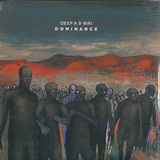
The album's distinctive artwork comes from the studio of Jewish orthodox artist Avraham Guy Barchil, who forged a powerful connection with Deep'a, both was immediately drawn to 'weird atmosphere, amazing technique and emotions involved with his work'. Perhaps one of the most interesting painters from Israel, Avraham is known for his unique perspective, taking his inspiration from the Zohar - the foundational work in the literature of Jewish mystical thought known as Kabbalah. The ambiguous figures represent mystical aspects of the Torah (the five books of Moses), as well as material on mysticism and mythical cosmogony.
Ensuring their natural, conscious touch always remains at the forefront of this unapologetically machine-driven music, Deep'a & Biri have produced an album in the lineage of their heroes and greatest influences. Cerebral yet satisfying, deep yet always engaging, 'Dominance' both reasserts and evolves Deep'a & Biri's forward facing and singular sound.
In an interview with Jazz Magazine in the early 1970s, Dharma, as a collective voice, outlined their method: 'we try to reach, within free jazz, the same sort of rhythmic cohesion as in Bop, a cohesion based not exactly on tempo, but something which feels like tempo. A kind of underlying pulse'. Evidence of these ideas can be heard immediately on listening to Mr Robinson, the first album by the Dharma Quintet, for whom community living seemed obvious, in order to add to the aforementioned cohesion. Through this, the group members played together on a daily basis, trying out things which were worked on day in, day out. They were also listening to a lot of records, with of course a preference for free jazz, but not forgetting Miles Davis in his electric period, notably for the keyboards of Keith Jarrett and Chick Corea. To which should be added esthetical-political concerns based on a refusal of hierarchy, and a desire to escape from a restrictive academic approach... It was within this framework that Jef Sicard and Gérard Coppéré (saxophones, flute, bass clarinet), Patricio Villarroel (electric and acoustic piano), Michel Gladieux (bass) and Jacques Mahieux (drums) formed the first version of a collective united by structured intentions. Because, within Dharma, individual improvisation cannot be envisaged outside of a clearly designated framework, even non-tempo. The result is a beneficial cohesion, and moments of great beauty born of a collective excitement and giving rise to ambiances which seemed almost possessed. The use of modes could seem to link Mr Robinson to the spiritual jazz of the past but that is without taking into account the fact that the benevolent spirit of Eric Dolphy seems to watch over this album. In France, a similar desire for cohesion could be found in the Cohelmec Ensemble, who had parallel preoccupations, to the point where their bassist, François Méchali, ended up by joining Dharma: there is unfortunately no recorded trace of this, just the memories. As a quintet, with however some personnel changes, Dharma recorded three albums (there is also one as a trio, under the name of Dharma Trio), which are all of fundamental importance (Dharma would also accompany, and to great effect, the songs of Jean-Marie Vivier and Colette Magny). Individually, the members would record with musicians passing through (notably Anthony Ortega, Dave Burrell) and participated in other key groups including Machi Oul and Full Moon Ensemble.
Tadd Mullinix first made a name for himself as Dabrye in the early 2000s with a pair of instrumental albums combining the rhythmic finesse of Detroit hip-hop with the ingenuity of electronic music. But instrumental beats were only a temporary goal, a way for Mullinix to catch the ears of MCs. On Two/Three, his second Dabrye album for Ghostly International, Mullinix brought together a formidable crew of local and national talent to make the statement he'd always intended. Released in 2006, Two/Three o-ered a fevered vision of rap's future that remains just as intoxicating a decade on. Ahead of the long-await-ed conclusion of Dabrye's hip-hop trilogy in 2018, Ghostly is reissuing Two/Three.
Dabrye's move towards rap began in 2004 with the album's first single, 'Game Over' featuring Jay Dee and Phat Kat. An early inspiration of Dabrye's, Jay Dee invited Mullinix to his crib in 2002 for a listening session during which he picked the 'Game Over' beat to rap on. Crucially everyone involved was in accord that despite perceptions of their respective work this would be a hardcore rap song. Together with Kat, Jay delivered a one-two lyrical punch on 'Game Over' that no one saw coming. Detroit made the world go round and everyone's head spun. 'Game Over' set the tone for the album and, over the next few years, became a Detroit anthem — shortly after Jay's passing in 2006 the audience at Movement Festival sung his verse.
Moody, propulsive, and above all ambitious, Two/Three emerges from a sonic stew of Detroit and UK dance music, Jamaican sound clashes, and hip-hop sampledelia. The guests, a who's who of the mid-'00s underground rap scene, engage in a raucous rhyming session that pays as much attention to the realities of the streets as it does world events. MF Doom, Wildchild, Vast Aire, Beans, and AG represent for the various coasts while local talents — Waajeed, Ta-Raach, Invincible, Finale, Kadence, Guilty Simpson, Big Tone, Phat Kat, and Jay Dee — bring Two/Three alive with an infectious energy. In between bursts of raw rap and hard beats, Dabrye showcases detailed instrumentals that evoke bleak industrial futures, underwater meditations, and smoky late night sessions. With Two/Three Dabrye placed himself at the forefront of hip-hop's new wave, throwing a Molotov cocktail into the rap world as uncompromising as the head-twisting cover art from WK Interact. The independent press praised Mullinix's audacity. Over the following years the impact of Two/Threewas felt in slow increments as Dabrye's music became central to the sonic makeup of a new generation of producers. As this beat scene grew and moved away from rap, it showed Mullinix the influence of his work and the value of his vision for Dabrye as his own brand of Detroit hip-hop.