
quête:ri

- A1: Return Of The Knödler Show 2 52
- A2: The Frogs Of Miwa - Cho (1) 4 52
- A3: Waiting (I) 5 38
- A4: An Old Friend Passes By 3 46
- A5: Coco Bolo Strip (1) 5 25
- B1: Peace And Pipe Utopia 3 14
- B2: Unidentified Dancing Object 1 44
- B3: The Call (I) 2 41
- B4: Wenn Das Rohr Dommelt 4 03
- B5: Mariahilf (Live Version) 3 36
- B6: Watching The Shades (I) 2 59
- B7: Playing The Table Music (Ii) 2 43
- C1: Could Be Nice Too 5 29
- C2: Ox Of Inner Depth 4 51
- C3: Ymir Shows Up 3 58
- C4: Could Be Nice 5 24
- C5: Playing The Table Music (I) 4 23
- D1: Coco Bolo Strip (Ii) 4 52
- D2: Locusts Looking Like Men 5 55
- D3: Waiting (Ii) ︎ 3 36
- D4: No Stove 2 29
- D5: An Old Friend Passes By Again 3 00
- D6: Heimkehr Der Holzböcke 3 16
23
Black Truffle is thrilled to announce Dalbergia Retusa, an extensive double LP selection of the solo guitar music of Hans Reichel, compiled by Oren Ambarchi. Last heard on Black Truffle as one quarter of the joyously anarchic Bergisch-Brandenburgisches Quartett, Hans Reichel (1949-2011) is one of the great figures of experimental guitar music. Though perhaps lesser known than peers like Derek Bailey, Fred Frith and Keith Rowe, Reichel’s rethinking of the instrument was in some ways the most radical of all. Early on, he dispensed with existing guitars to build a series of his own that explored the use of additional strings and fretboards, moveable pickups, extra bridges, special capos, and other innovations documented in the extensive booklet accompanying this release.
Reichel was a long-term resident of Wuppertal, the small Western Germany city that became an unlikely centre of European free jazz in the late 1960s, also home to Peter Brötzmann and Peter Kowald. His solo debut Wichlinghauser Blues was an early entry into the FMP discography and began a relationship with the label that stretched into the 1990s; all the solo performances heard here were first released on FMP. As Reichel says in the charming archival interview with Markus Müller included here, he was ‘always a cuckoo’s egg at FMP’, a label that began as an outlet for roaring European free jazz. What strikes the listener right from the opening selection on Dalbergia Retusa—‘Return of the Knödler show’, from 1987’s The Dawn of Dachsman—is the extraordinary beauty of Reichel’s music, at once alien in the shimmering sonorities and unconventional pitch relationships made possible by his invented instruments, and deeply lyrical, even romantic in its harmonic content. Growing up in West Germany in the 1960s, Reichel’s formative influences were mainly British and American rock bands, a background that shines through in many of the pieces included here: ‘An old friend passes by’ is haunted by the ghost of Hendrix’s rhythm guitar, and the wild closer ‘Heimkehr der Holzböcke’, taken from a rare 1975 7” and the only piece to use overdubbing, layers errant hammer-on and slide tones over a Canned Heat boogie chug.
Reichel was an important source for the development of Oren Ambarchi’s own extended approach to the electric guitar. Appropriately enough, his selection opens with the very first piece by Reichel he ever heard, on a flexidisc included with a 1989 issue of Guitar Player magazine. Though Reichel collaborated with others extensively in many settings and also performed on violin and his other major contribution to instrument invention, the daxophone, his music for solo guitar remains at the core of his oeuvre. Focusing exclusively on solo pieces recorded between 1973 and 1988, the 23 pieces on Dalbergia Retusa showcase the range and consistency of Reichel’s work, allowing the listener to see how his performances developed hand-in-hand with his instrumental inventions. On a piece from his very first LP, played on an 11-string instrument (partly strung with piano strings and using a schnapps glass a slide), we hear his intensive exploration of fret-hammering to create zither-like, chiming tone, which Reichel would hone further in later years with a double fretboard guitar specifically designed to be hammered rather than fretted and picked. On a piece from 1979’s Death of the Rare Bird Ymir, Reichel uses two steel-string acoustic guitars at once, with beautiful results: ‘some even say too beautiful’, he jokes in the interview included here. Many of the pieces from the 1980s make use of varieties of the ‘pick behind the bridge guitar’, instruments of uncanny harmonic richness primarily designed to be played on the ‘wrong’ side of the bridge. At times the unexpected behaviour of attacks, resonance, and decay can almost seem electronic, conjuring up the technology-assisted work of Henry Kaiser or even Fennesz, but realised solely through Reichel’s unorthodox techniques on his invented instruments. Extensively illustrated with photos and Reichel’s own plans and drawings of his instruments, Dalbergia Retusa is an essential introduction to the unique world of Hans Reichel. Rarely has music been at once so strange and so beautiful.
- A1: Light The Flare (3 47 Min)
- A2: Everyone Is Gone (3 27 Min)
- A3: The Good One (4 40 Min)
- A4: Destroy Us (6 12 Min)
- A5: We're All Gonna Hurt (4 52 Min)
- B1: Echo Spiegel (4 27 Min)
- B2: Parabolic L (3 56 Min)
- B3: Rough Ending (5 07 Min)
- B4: Goodbye My Friends (3 27 Min)
- B5: You're Killing Me Inside (4 08 Min)
10
Ten years after the cult debut, Phil Kieran returns under his Le Carousel alias with a dazzling follow-up. The Humans Will Destroy Us blends shoegaze-inspired electronics, lush analogue textures, and dreamy synthscapes into a rich, cinematic journey. A colourful evolution of the underground classic - emotional, timeless, and deeply human.

6
Brooklyn Sway's 8th installment arrives from outside with more unexpected debuts and riotous returns to form. Experienced Barcelonian Larry Lan's epic 10-minute opener 'WTNG' is minimal goes post-punk, repurposing well-known, undisguised lyrics into an aggressive take on early Perlon and explanation enough for his recent album drop on Cadenza. BKS vets N/UM return with 'A Free Woman in Queens' showing off a reduced side of their sound adjacent to mid-00s minimal with plenty of character, its stripped intro giving way to a fuller, dubbed-out second half, with the cheeky vocal and instrumental touches joined by a swelling pad. Featuring spoken vox from Mari Blue and the debut of BKS co-head Asha Jasz alongside DeWinter and Jay Prouty, 'Acid in Your Coffee' takes the dirtier route, with layers of zapping electronics, an insistent single-note acid bass, and synths drifting between tones and textures all veering off like its vocals before eventually returning to center. LA/Bucktown scallywag $coe brings it home with 'The Devil is a MF Liar', an acid jam whose profanity-laced vocal samples don't require divine intervention to decipher. Bookended by a pair of interludes, the first on the power of repetition and the last in memoriam BK legend Big Sexy in his own words, and again featuring striking artwork from notable NYC street artist Fumero, BKS keeps that Sway from going astray.
Kim Gordon hat Kunst und Noise über Jahrzehnte immer wieder neu gedacht - und dabei nie an Schärfe verloren. Vierzig Jahre nach ihren Anfängen wirkt ihre Vision noch immer provokant. Dieses Abenteuer setzt sie mit ihrem dritten Soloalbum "PLAY ME" fort, das am 13. März bei Matador Records erscheint. Mit der Ankündigung erscheint die erste Single "NOT TODAY", begleitet von einem Kurzfilm der Modedesignerinnen und Filmemacherinnen Kate und Laura Mulleavy (Rodarte). Gordon trägt darin ein eigens für sie gefertigtes, handgefärbtes Seidentüllkleid. Der Song offenbart eine neue, fast poetische Spannung in ihrer Stimme: "Da kam eine andere Stimme zum Vorschein", so Gordon. "PLAY ME" ist ein konzentriertes, direktes Album, das ihren Sound um melodischere Beats und den motorischen Drive des Krautrock erweitert. Entstanden ist es erneut mit Produzent Justin Raisen (Charli XCX, Sky Ferreira, Yves Tumor). Die Songs sind kurz, prägnant und stark rhythmusorientiert - fokussierter und selbstbewusster als zuvor. Nach "No Home Record" (2019) und "The Collective" (2024, zwei Grammy-Nominierungen) richtet Gordon den Blick auf die Gegenwart: Tech-Macht, KI-getriebene Kulturverflachung, den Abbau demokratischer Strukturen und den absurden Alltag des Spätkapitalismus. Trotz dieser Themen ist "PLAY ME" ein nach innen gewandtes, geradezu körperliches und ebenso emotionales Album. Mit verzerrten Stimmen und schroffen Beats legen Songs wie "Square Jaw", "Dirty Tech" oder "Busy Bee" gesellschaftliche Realitäten frei. Der Titeltrack entlarvt die Logik einer durchkuratierten Komfortkultur. "PLAY ME" ist radikal gegenwärtig, widerständig und kompromisslos eigenständig.

With »News from Planet Zombie«, The Notwist return to view after years of exploration and experiment with an album rich in both melancholy and positivity, sketched across a suite of thrilling, fiercely committed pop songs. It’s an album reflecting a chaotic world, but responding with warmth and generosity, to achieve creative and spiritual consolidation. Recorded in their home base of Munich, it reconnects with the security of the local to explore the troubles of the global: a guiding impulse writ large across this album’s eleven songs. It’s also the first studio album since 1995’s »12« that the entire band recorded together in the studio in its expanded live formation.
A new album by The Notwist is always a curious endeavour; their musical language is as consistent and resilient as the contexts for creativity are unpredictable and ever shifting. For »News from Planet Zombie«, the core trio of Markus and Micha Acher and Cico Beck embraced the plural possibilities of writing together, bringing songs to the collective and then arranging, rehearsing and recording that material live, in the studio.
The result is an album that’s energised, fully in ›the now‹, with spectacular moments where you can hear the magic bubbling up in the dynamic between the Achers, Beck, and fellow members Theresa Loibl, Max Punktezahl, Karl Ivar Refseth, and Andi Haberl. If »Teeth« begins »News from Planet Zombie« quietly and reflectively, by »X-Ray« everyone’s supercharged, blasting out future anthems with the collective energy cranked up high. The chiming keys of »Propeller« skim the instrumental’s surface like stones across burbling water; »The Turning« clangs its way into one of the album’s most heartwarming melodies.
»News from Planet Zombie« was recorded over one week at Import Export, a non-profit space for arts and music. You can tell, too; there are some pleasingly rough edges here, as though The Notwist’s striving for hazy perfection means they’re also confident enough to let the songs breathe and mutate between our ears. That openness to chance also takes in guest turns from friends both local and international, reflective of a cosmopolitan Munich: Enid Valu joins in on vocals, while Haruka Yoshizawa guests on taishōgoto and harmonium, Tianping Christoph Xiao on clarinet, and Mathias Götz on trombone.
The Notwist aren’t best known for cover versions, but »News from Planet Zombie« features two: a gorgeous version of Neil Young’s »Red Sun« (from 2000’s »Silver & Gold«), which the group originally developed for a theatre play directed by Jette Steckel, and a take on Athens, Georgia folk-pop gang Lovers’ »How the Story Ends«. They slot into the album’s narrative perfectly, nestling in like old friends, revealing The Notwist as poetic interpreters. Played well, the cover version is both acknowledgement of fellow travellers and act of generosity, and The Notwist nail both aspects here.
And that narrative, the way the album plays out? »News from Planet Zombie« acknowledges the distress of our current geopolitical impasse, while reminding us there are collective ways forward. Fed through the figure of the zombie, Markus Acher explores our anxieties: »In the title and some lyrics I reference B- and horror-movies, which is a reference to the crazy world at the moment, which seems to be like a really bad and unrealistic B-movie.« But there’s a reminder here not to lose the thread entirely, that these things, too, will pass.
»The river here in Munich I often go to has been there forever and will be there long after us,« Acher reflects, pinpointing an important source of succour for him, »always the same but always changing. Very calming, but also always reminding me that like this river time only flows into one direction and you can’t go back. Every moment is very precious.«
Artwork by Marie Vermont
The Notwist:
Markus Acher: vocals, guitar
Micha Acher: bass, sousaphone, euphonium, trumpet
Cico Beck: electronics, keyboards, guitar, recorder, percussion
Theresa Loibl: bassclarinet, clarinet, piano, harmonium, organ
Max Punktezahl: guitar
Karl Ivar Refseth: marimbaphone, vibraphone, glockenspiel, congas, percussion
Andi Haberl: drums, dulcimer
+
Enid Valu: vocals on 1, 2, 3, 4, 5, 7, 9, 10, 11
Haruka Yoshizawa: taishōgoto on 6, harmonium on 9, 10, 11
Tianping Christoph Xiao: clarinet on 4, 10, 11
Mathias Götz: trombone on 4, 10, 11

Nightfall marks Maoh's first release on The Third Room, channelling a sound distilled through years of deep exploration. Four tracks evoke natural forces and instinctive motion, reshaping the dancefloor into a psychedelic, collective yet deeply personal journey driven by a relentless, precise groove. Maoh commits to a tightly defined sonic language born from tribal percussion and restrained rhythmic dynamic, creating a physical and grounded listening experience. Deeply rooted in repetition and pulse, the release remains precise in its contemporary execution, serving as a bridge capable of uniting listeners in shared momentum. As the tool-driven composition unfolds into storylines, revealing vast and unfamiliar landscapes, sparse voices surface to complete the narrative like a final breath, reminding us of the human presence within the universal expanse that the release encapsulates. Ultimately, Nightfall traces a continuous line from early collective expression to a forward-facing, technological present. Rhythm functions here as ritual and joint movement, articulated with clarity and intent.

3
High Altitude 002 brings together three rising forces from three different corners of the world. Stckman, Simone Rossari, and Goosebumps represent a new generation of producers with a shared futuristic vision and a highly distinctive musical identity.
The EP features three forward-thinking tracks, each shaped by the unique taste and cultural background of its creator, yet unified by a powerful, modern sound aesthetic. From deep afterhours mornings to the most crucial peak-time moments of the night, High Altitude 002 is designed to fit seamlessly into any part of a DJ set.
A global collaboration, a futuristic attitude, and a fresh perspective on underground dance music — this is High Altitude 002.
Melohman and Paco Colombas Unveil 'Palma de Janeiro': A Rhythmic Bridge Between Mallorca and Brazil...
PALMA DE MALLORCA - Producers Melohman and Paco Colombas announce their new EP, 'Palma de Janeiro' on GAMM, a vibrant sonic fusion where Mallorcan tradition meets Brazilian pulse. All together, the result is a highly percussive house workout with a South American feel.
The project centers on a unique dialogue between two worlds: the Mediterranean drone of the Ximbomba and the tropical snap of the Pandeiro.
Inspired by the festive spirit of Mallorca's 'Devil' - a mischievous figure of joy and dance - the EP weaves together communal island roots with the duo's deep-seated passion for Brazilian music.
Born from years of crate-digging and travels across Brazil, 'Palma de Janeiro' is more than a collaboration; it is a celebration of music as a universal language. It is a tribute to the dancefloor, where local heritage and global rhythms collide.

5
Peach Discs' first release of 2026 comes from fast-rising star of the Manchester scene PACH. (pronounced "pack"). Five slippery rollers built for dark rooms, wafty terraces and the most locked-in of afters.
"The Wake-Up Call" EP represents the full spectrum of the PACH. sound, one rooted in the minimal tunes coming out of Romania but with a cheeky playfulness that can only come from a life spent in the trenches of UK club culture. The A1 "Keep It Bubblin’" is a prime example, as Todd Edwards-style vocal chops flirt back and forth with dub-inspired feedback lines, or "5am Wake-Up Call's" skipping, UKG-adjascent hats. Things get a little rowdier with "Complex Waveform's" scuzzy bassline that wouldn't sound out of place coming from the Clone Records ecosystem. Here it's bolted to a chassis of tough, techy drums and trippy vox that tickle at your peripheries. Flip to the B-side for something a little deeper – the dubbed-out percussion and disembodied voices of "Not That Kinda Party" contrasting with the moody, low-key synthetic tones of "Book The Dungeon", both sharing a mutual concept of smartly stripped-back, hypnotic jams that focus on heads-down grooves and rolling energy.
8
Lucas Santtana’s tenth album celebrates the vitality and musicality of the Romance languages.
The heir to Brazilian tropicalism, Santtana marks 25 years of his career with Brasiliano, a true collective celebration that brings together prestigious collaborators: Gilberto Gil, Oxmo Puccino, Flavia Coelho, Piers Faccini, Chico César, Paralamas do Sucesso, Cocanha, Dimartino, Karyna Gomes, Tainara Takua, Rachel Reis and Maria Lado.
Sung in eight different languages, Brasiliano is both an ode to linguistic diversity and a testament to its symbolic power. Carried by luminous and layered arrangements where voices intertwine like a polyphonic conversation, the album treats language as a musical instrument in its own right, but also as a political tool. Santtana questions cultural heritage, identity, colonial memory, and the possibility of a shared language. With his singular approach—blending popular rhythms, contemporary soundscapes and vibrant melodies—he celebrates the love and exchange embodied in Romance languages, where music becomes fertile ground for encounters and reinvention.

- 1: Private Symphony (Feat. Stuart Murdoch)
- 2: The Cold Collar (Feat. Gruff Rhys)
- 3: Love Is A Life That Lasts Forever (Feat. Molly Linen)
- 4: First Moonbeams Of Adulthood
- 5: Road To The Amber Room
- 6: Hachi No Su (Feat. Saya From Tenniscoats)
- 7: In Portmanteau (Feat. Field Music)
- 8: Irreparable Parables
- 9: Spectators In The Absence Of God (Feat. Kathryn Joseph)
- 10: Soul Enters The Ocean Sun Climbs Out The Sea
10
également disponible
Pink Vinyl[26,26 €]
Very limited numbers, orders will need to be confirmed.
For his new album, Irreparable Parables, Andrew Wasylyk felt a strong desire to write a set of songs featuring an element hitherto rare in his work: the human voice. Equally strong was the conviction that he did not want to sing them himself.
The Scottish multi-instrumentalist and composer set about assembling a group of guest singers, sending out the songs to wherever they were in the world. The vocals were recorded remotely and then, like migrating birds, winged their way back to Scotland. The result is an album of great beauty which, perhaps preeminently in Wasylyk’s work, expresses the vulnerability and resilience of the human spirit.
Six singers appear on the record, represented by six songbirds illustrated on the sleeve by Clay Pipe Music’s Frances Castle. The cuckoo is a nod to Belle and Sebastian’s 2004 single ‘I’m A Cuckoo’, that band’s Stuart Murdoch being the first voice you hear on the new album. When the vocal for ‘Private Symphony #2’ arrived, says Wasylyk, “it was everything that I was looking for and more. But this is Stuart Murdoch. Of course he’s going to make something incredibly beautiful and thoughtful.”
The song lyrics were, for the most part, written by the singers. The music is Wasylyk’s creation. He navigates a sound world that lies somewhere beyond the borders of classical and jazz, ambient and abstract. It is difficult to describe, but easy to understand, which is to say to feel. That is the way Wasylyk’s work is experienced: as a feeling. It takes you back to childhood, perhaps, to feelings of comfort and safety, or to memories of walks at sunrise and sunset, or to the way a shadow falls on a particular field in a particular place at a particular time in your life. This is consoling music. That is why, though pretty, it is not merely pretty. These are songs to shore up the soul.
Wasylyk writes in a room, in his native Dundee, full of “half broken” instruments. He picks these up, plays a little, seeking an idea, a feeling, a door that lies ajar. The musical palette of Irreparable Parables includes brass and woodwind, a six-piece string section, guitar, bass, drums, vibraphone, Mellotron, Fender Rhodes, tape loops, synthesisers and percussion. The strings were arranged by the cellist Pete Harvey, a long-term collaborator.
Among the other guest vocalists are Gruff Rhys of the Super Furry Animals, Saya Ueno from Japan’s Tenniscoats and Peter Brewis from Field Music. Wasylyk himself takes the lead vocal on the title track, though a throat infection and touch of pitch-shifting have altered his singing in a way that even he, having fallen out of love with his own voice, finds acceptable.
The heart of the record can, arguably, be found in two tracks, ‘Love Is A Life That Lasts Forever’ and ‘Spectators In The Absence of God’, sung respectively by Molly Linen and Kathryn Joseph. The former, bright with trumpets, was inspired by the writing of Derek Jarman. “I was feeling deeply upset about the world and wanted to try and write some- thing that was obviously hopeful,” Wasylyk says.
‘Spectators …’ offers an emotional counterpoint. It is an “apocalyptic hymn” that seems to grapple with watching human suffering from afar, too distant to be at physical risk, but experiencing the psychological wounding, and feelings of helplessness, even complicity, that come with constant awareness of other people’s pain. “Kathryn’s a pal, I love her dearly, and she’s a brilliant artist who really feels what she writes,” Wasylyk says. “The cracked tenderness of her voice is spellbinding.”
The album closes with an instrumental piece, ‘Soul Enters The Ocean Sun Climbs Out Of The Sea’, all piano and strings, that offers a sense of resolution and ascension. A good moment, too, for Wasylyk to reflect upon the artistic companionship that he enjoyed while making this record – the songbirds that answered his call: “These humans are incredible at what they do. I’m deeply grateful and feel so lucky. It blows my mind.”
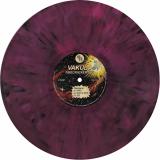
Phonogramme is pleased to re-issue one of the finest and most saught after material of Ukrainian genius Vakula, originally released in 2010 on Firecracker Records. All the DJs must check the cruising Detroit beatdown of 'Black & White', the properly laidback vibes and the rich atmospheres of 'You Can Do' and the smoky jazz tangibility of 'Different Tone'. Fans of Fudge Fingas, Linkwood, KDJ, Theo P ... this is for you.
8
STRICTLY LIMITED TO 100 COPIES ARTIST PROJECT After discovering techno at La Concrète, invited by my girlfriend, it was a revelation, and I very quickly felt the urge to contribute in my own way. My intention has been to create tracks infused with positive energy (even if the creative process sometimes leads into slightly darker corners of music). Still, I realized—rather late—the importance of the musical genre known as “techno.” Here is my reflection on it: Nothing is closer to village music (with everything that implies among indigenous peoples, for example—important and respected moments of communion) than techno. On one side, you have basic organic instruments and the voice; on the other, the most advanced technology available. But fundamentally, the difference is only superficial—the essence is the same: a guide, and people who participate intuitively, ultimately finding or discovering their own inner paths… individuation. Techno represents the re-emergence of a kind of initiation rite that had been missing in the West for quite some time—a sort of continuation of Woodstock, more spread out over time but just as powerful from a societal perspective. This release is my contribution to that revival, in the same way a villager might feel free to join trance music with a simple stick that sounds right, or a drum—something intuitive that all our ancestors must have practiced naturally at one point or another. In short, nothing pretentious—just something made with heart
4
TRANSMISSIONS #1 connects four distinct Skylax signals into a single flow. Each track comes from a precise moment, a specific context, and a clear dancefloor function. Together, they form a transmission built on movement, use and continuity. A1. F.T.G – Tribute ’89 (Fuckthegovernment #001 Mix) is a raw drum-machine workout positioned between dark Chicago house and late-’89 European techno. Stripped, direct and uncompromising, Tribute ’89 quickly became an underground staple, heavily played by Ricardo Villalobos and Raresh — a foundational Skylax signal. A2. Nick Beringer – 57th Corner, taken from Second Floor (Wax Classic, 2016), is a tech-leaning deep house cut marked by restraint, precision and late-night tension, capturing Beringer at a pivotal point in his long-standing relationship with Skylax. B1. Floorfillers – Love Is Growing delivers a powerful house-disco statement rooted in old-school foundations, where filtered disco loops, raw drum programming and uplifting swing echo the lineage of DJ Sneak, Paul Johnson, early Roulé / Crydamoure-era French touch and classic Chicago jack — a modern floor-driver with timeless intent. B2. Nicolas Aftalion – Rue des Wallons brings deep, soulful house with a strong Kerri Chandler influence; warm chords, chunky drums and emotional weight firmly grounded in early ’90s US garage tradition. Supported by Cinthie, it closes the transmission with groove, balance and purpose. TRANSMISSIONS #1 — built to move, built to last, signals in motion. Four tracks. Four signals. Still moving.

5
Inner City Sound Archives returns with its second chapter — digging deeper into the forgotten vaults of New York’s underground disco culture.
This new volume brings to light another cache of mysterious acetate recordings: no titles, no credits, just cryptic handwriting, tape hiss, and the unmistakable pulse of a bygone era. Painstakingly transferred and fully remastered through analog processes, these raw and extended cuts preserve the full emotional weight of the original sessions — dusty, physical, and made to move bodies in the dark.
These are tracks that once passed hand-to-hand among a tight circle of selectors, whispered about and played just once or twice at legendary loft parties between 1978 and 1983. Then, silence. Until now. Once championed in the shadows by the likes of Larry Levan, Francis Grasso, Steve D’Acquisto, but also by more elusive selectors like Bobby Guttadaro, Michael Cappello, Roy Thode, and Mark Paul Simon — these grooves return to tell their story, the way they were meant to be heard. Each piece is a sonic time capsule — hypnotic, unpolished, and intimate. Pressed loud and with care, for those who still believe in the ritual of vinyl.

After debuting on Delsin in 2023 as Reeko, Spanish techno icon Juan Rico now steps up as Architectural to present his second EP on the Amsterdam based label. Where Reeko is known for his adventurous, highly energized, broken techno bangers, his approach as Architectural is more fine-drawn. Over the course of four tracks, his tracks build slowly into immersive pulsations, pushing deep frequencies into captivating rhythm grooves layered with mesmerizing atmospheres.
11
Andreu G. Serra and Kiran Leonard first met in Lisbon nine years ago, arriving in the city within weeks of each other by chance. Living together in a crumbling warehouse in Alto São João, they recorded a series of improvisations that became The Piri Piri Samplers (Memorials of Distinction, 2019): Serra’s abrasive, tape-warped guitar lines colliding with Leonard’s stark, pedal-free counterpoint. They played a single gallery show, left Lisbon that summer, and then spent almost a decade living in different countries.
When Stroom reissued The Piri Piri Samplers in 2024, the label suggested the duo make a new record. At first, it seemed impossible: Leonard was in London, Ubaldo in southern Catalonia, and their attempts at long-distance recording quickly collapsed into nothing. But the near-failure sparked something. Leonard travelled to Catalonia to restart the process in person; soon after, Serra moved to South London, and the pair began meeting every week.
The result is Making Friends: a richer, more expansive album built over six months. Where The Piri Piri Samplers was assembled from raw improvisations, Making Friends transforms fragments into fully realised songs, weaving together nylon and steel-string guitars, piano, drums, bells, samplers and more. For the first time, Serra and Leonard sing together, each in his own language - Catalan and English - sometimes translating one another in real time.
Musically, Making Friends still carries the jagged dissonance and free-blues spirit of the duo’s earlier work, while opening outward toward everything from emo and blown-out noise to fractured chamber pop. There are only three guests on the album, and they are worth mentioning: Rachel Leonard and Antonia Serra (the musicians' mothers) on the seventh tune, and the American poet Pete Simonelli (of Enablers) appears on Top of Duboce / Tyne Bridge Crossing, one of the album’s two sprawling centerpieces.
At its heart, Making Friends is an album about friendship: about distance, reunion, family, and the stubborn need to make music together. It begins with uncertainty and disconnection, but ends somewhere stronger - with, as put on the closing track, “molta il.lusió per lo que pugue vindre” or “much excitement for what may come.”
4
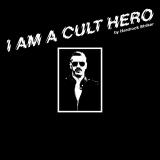
Some records are collections of tracks. Others are fragments of a life. I AM A CULT HERO is not a debut. It is a return to origin. Before Skylax Records. Before Los Angeles. Before the architecture of house music became clear. There was Sarcelles. Concrete towers. Invisible youth. Yet a coded multicultural energy where funk, soul, early hip-hop and primitive electronics coexisted before categories existed. Sarcelles was not Compton, but spiritually it was the same frontier.
95200 is not just a postcode. It is the birthplace of Hardrock Striker. 368 was the bus to the train station — the crossing line between isolation and possibility. Each journey toward Paris felt like entering another system. Those nights required discipline. Instinct. Strategy. Music was not distraction. It was structure.
Years later, Los Angeles revealed the hidden architecture behind those early intuitions. House music was not a genre but a living mechanism — built on vinyl culture, extended mixes, dubplates and repetition as language. That system had already been shaped and transmitted by pioneers such as Ron Hardy, Larry Levan, Frankie Knuckles, Electrifying Mojo, Hot Mix 5, Mark Kamins and Ron Murphy. Hardrock Striker did not imitate that language. He internalized it. The tracks on I AM A CULT HERO operate as transmissions.
Gospel For Dancers (95200 Mix / Dub) is vertical — ritual energy, lift and controlled expansion. Dance here is elevation. Erotic Loop (368 Mix / Dub) is horizontal — hypnotic repetition, circular bass motion and gradual immersion. Repetition becomes destination.
95200 and 368 are coordinates. Origin and transit. Memory and motion. Anchor and crossing.
From Sarcelles to Paris to Los Angeles to Skylax & now, back to the source.
This record closes the circle. Hardrock Striker has transformed origin into signal. Signal into structure. Structure into permanence.
A cult hero is not declared. A cult hero is revealed. Vinyl is the only truth.
