With recent releases for some of the scene’s leading labels, Fideles (aka Daniele Aprile and Mario Roberti) are an Italian duo on the rise. Their spellbinding ‘Impressum’ EP is both a fine example of the Fideles sound and exactly in keeping with the direction Tale Of Us are steering their Afterlife label. Inspired by the Ionian sea in Southern Italy, low-pitched basslines and soaring synths give the tracks just the right amount of drama, whilst the rich sound-design allows them to make the most of a big system; something Tale Of Us have put to great use in their sets this year. Take the emotionally-charged title track, the rolling, mechanical drums of ‘Kalotypse’ or the more restrained ‘Hadar’. Across all five tracks Fideles’ character shines through the adventurous melodies and distinctive touch, creating an inspiring next episode of the Afterlife catalogue.
In ,Library Copy Do Not Remove" präsentiert JJ Weihl von Discovery Zone eine digitale Verzauberung der Realität, in der er das Materielle und das Immaterielle miteinander verwebt, um zu zeigen, dass es sich dabei tatsächlich um zwei Aspekte ein und desselben handelt. In Weihls Welt sind Natur und Technologie keine Feinde, sondern erschaffen sich gegenseitig in einem unendlichen Tanz aus Bedeutung und Reflexion. Ursprünglich als Raumsound für das Zeiss-Groß-Planetarium in Berlin geschaffen, ist ,Library Copy Do Not Remove" eine Schöpfungsmythologie für das simulierte Universum. Dabei handelt es sich jedoch nicht um eine trockene, bostromische, maskuline Fantasie einer digitalen Realität, der die Geheimnisse der Natur fehlen. Stattdessen fordert Weihl den Zuhörer auf, im Rahmen einer Simulation Raum für die beeindruckende Realität der natürlichen Welt zu lassen. Wenn unsere Welt simuliert ist, dann muss die Simulation in der Lage sein, die Schönheit und Pracht der Natur zu erschaffen. Auf diese Weise betreibt Weihl eine ambient-artige Alchemie, die eine große Versöhnung von Natur und Technologie fordert, während sie uns auffordert, darüber nachzudenken, wie und wo die Erfahrung transzendenten menschlichen Bewusstseins zwischen ihnen existieren könnte. Die Songs auf ,Library Copy Do Not Remove" entstanden, während Weihl gleichzeitig ihr zweites Album ,Quantum Web" fertigstellte, und spiegeln einen weitreichenden, inspirierenden Zustand aus Aufregung und Angst wider, der mit der Aufgabe einherging, Musik für einen so einzigartigen Raum zu komponieren. Die Songs selbst wurden durch Ambisonics geformt, ein spezielles Format für räumliches Audio, das direktional ist, anstatt auf Kanälen zu basieren (wie Stereo), und wurden über ein Mosaik aus 49 Lautsprechern übertragen. Da es für Live-Auftritte geschrieben wurde, war ,Library Copy Do Not Remove" nie als Album im eigentlichen Sinne gedacht, sondern als dreidimensionales Ereignis. Auf diese Weise spiegelte die Klanginszenierung wider, wie wir Klang in unserem Alltag wahrnehmen: uns aus allen Richtungen umgebend. Für diese Albumveröffentlichung hat Weihl alle Songs gemeinsam mit ihrem langjährigen Produzenten E/T von Grund auf neu abgemischt und die Konstellation der Tracks für ein Stereoerlebnis neu konzipiert und überarbeitet. Inspiriert von den Werken von James Gleick, LD Deutsch, Johannes Kepler und Jorge Luis Borges, erforscht ,Library Copy Do Not Remove" die kreative Spannung zwischen Realität und Wahrnehmung, Information und Mythologie, Harmonie und Unordnung. Im gesamten Album fragt Weihl, wie wir als Menschen das Universum um uns herum und den zugrunde liegenden Code, der es belebt, verstehen lernen. Was dabei entsteht, ist ein klanglicher Mythos, der von spiralförmigen digitalen Universen erzählt, die ineinander verschachtelt sind und in denen jeder teilnehmende Akteur gleichzeitig sowohl Teil als auch das Ganze der Realität ist. Auf diese Weise ist ,Library Copy Do Not Remove" ein cyber-Ausdruck zeitloser Weisheit: Anstelle von ,wie oben, so unten" könnte Weihl vorschlagen: ,wie der Input, so der Output".
Reissue of Spirit Caravan's debut album. Jug Fulla Sun follows a sonic continuum that began in the late '70s when Scott "Wino" Weinrich emerged from the outskirts of Washington, D.C., with the Obsessed, his stripped-down hybrid of biker rock and metal. That outfit made tremendous strides in bridging the gap between the long-haired metal contingent and the still developing, though already rabid, D.C. hardcore scene. Jug Fulla Sun shows Wino augmenting his trademark brand of doom-laden guitar work and slow-fuse vocal ferocity with greater lyrical depth and overall textural breadth. The songs are rich, refined, articulate, and created by a lifer, a true veteran of the hard music scene. Wino has obviously gone to great lengths here to subordinate his outlaw vision to a more expansive, comprehensive view of mankind, and of greater truths. The somewhat nebulous scope of his lyrics is enhanced by Lungfish vocalist/tattoo artist Dan Higgs' cryptic cover painting. An excellent album. - All Music
REISSUE of Spirit Caravan's debut album. Neon green vinyl, limited to 350 copies. Jug Fulla Sun follows a sonic continuum that began in the late '70s when Scott "Wino" Weinrich emerged from the outskirts of Washington, D.C., with the Obsessed, his stripped-down hybrid of biker rock and metal. That outfit made tremendous strides in bridging the gap between the long-haired metal contingent and the still developing, though already rabid, D.C. hardcore scene. Jug Fulla Sun shows Wino augmenting his trademark brand of doom-laden guitar work and slow-fuse vocal ferocity with greater lyrical depth and overall textural breadth. The songs are rich, refined, articulate, and created by a lifer, a true veteran of the hard music scene. Wino has obviously gone to great lengths here to subordinate his outlaw vision to a more expansive, comprehensive view of mankind, and of greater truths. The somewhat nebulous scope of his lyrics is enhanced by Lungfish vocalist/tattoo artist Dan Higgs' cryptic cover painting. An excellent album. - All Music
Random ReVINYL Edition. Black Mountain, the front-line soldiers for the Black Mountain Army, an arts collective from Vancouver, British Columbia, write, perform and record music that speaks (and sings) to this realization: that solutions are rarely simple, that the world is as complex as it is ambiguous, and that music sprinkled with an inoculating dose of madness may well be the Pied Piper that takes us all back into the primordial mountain, where our hearts can be made steady and our minds can be set free. Their debut self-titled record, like a space probe built of erector set parts and transmitting secret and arcane messages to earth by string, charts territories unknown yet remains grounded by the roots of classic rock and roll. It is easy to discern these roots: Black Sabbath, Animals-era Pink Floyd, Blue Cheer, Led Zeppelin and Can. Principal songwriter Stephen McBean's vocals are a smoother, bluesier amalgam of the voices of Neil Young, Mick Jagger and perhaps a James Brown loaded on cough syrup. And when Amber Webber's voice joins Stephen's, the combination brings to mind the potency and chemistry of Richard and Linda Thompson singing together on Shoot Out The Lights, or of Meat Loaf and Ellen Foley howling together on Bat Out Of Hell. Musical comparisons aside, the Black Mountain full-length is one part protest song, one part pop-cultural commentary, and one part sick-groove-rock casserole peppered with mesmerizing ballads and intoxicating ditties. "Modern Music" is the lead-off hitter and counts its way to the imposing and riff-rife "Don't Run Our Hearts Around". Immediately thereafter, the sludge-rock masterpiece "Druganaut" establishes the fecund heart and tone of the record. Black Mountain have also just recently released a 12-inch single (on Jagjaguwar), including an extended mix of "Druganaut" on the A-side. And the band's currently sexploitative counterpart The Pink Mountaintops, a band that also pipes into the prolific well-spring of Stephen McBean's mind, released their self-titled debut record (on Jagjaguwar as well) this past summer. A video by Heather Trawick of the song "Druganaut" is included on the CD version of the Black Mountain self-titled record.
Erwan Keravec is a virtuoso Scottish bagpiper, accomplished composer, innovator and performer of considerable distinction. Active since the 1990s, he represents a singular and remarkable figure within the French musical landscape, navigating the fertile terrain between Breton traditional music and cutting-edge contemporary creation. His forthcoming solo album "Whitewater," to be released through Ici d'ailleurs, marks a deeply personal artistic statement-a homecoming of sorts for the musician, following fifteen years devoted primarily to collective endeavours. His sonic palette evokes the pioneering electronic work of Eliane Radigue, the experimental philosophy of Pauline Oliveros, and the musique concrète innovations of Nurse With Wound. A Homecoming: The album represents a work of artistic maturation, gestating over several years whilst Keravec devoted considerable energies to developing his ensemble projects since 2010. For this accomplished musician, the album marks a significant return to intimate, personal engagement with his instrument-a meditative and exploratory practice pursued in solitude. A Poetic Journey: "Whitewater" stands as a rich and deeply poetic achievement-a sound voyage of considerable delicacy and enchantment, which reinvents the bagpipe as a portal to profound listening. Rather like an immersion within water itself, it invites the attentive listener into a wholly transformed relationship with an instrument of ancient provenance.
Das fünfte Lemonheads-Album 'It's A Shame About Ray', wird zum 34.Jahrestag wieder als Single Vinyl auf grünem Vinyl mit der Original-Tracklist nachgepresst. Beschrieben von Musikjournalist und Autor Everett True als "Ein 30-minütiger Einblick in das, was es heißt, hart und schnell und locker und glücklich mit gleichgesinnten Kumpels zu leben, angetrieben von einer gemeinsamen Liebe zu ähnlichen Bands und Drogen und Alkohol und Freiheit". It's A Shame About Ray" hatte in jenen berauschenden, sorglosen Tagen des Jahres '92 eine beträchtliche Wirkung. Die Platte fängt perfekt Dandos Fähigkeit ein, die Sehnsucht und Lust der Teenager mühelos in einem zweiminütigen Popsong zu verpacken. Singles wie "My Drug Buddy" und der luftig-perfekte Pop des Titeltracks mögen herausstechen, aber die eigentliche Stärke des Albums liegt in den Tracks dazwischen; das wirklich fantastische 'Confetti' (über die Scheidung von Evans Eltern) und die atemberaubend lässige Akustik-Coverversion von 'Frank Mills' (aus dem Hippie-Musical Hair), eine Version, in der jedes Quäntchen Pathos und Gefühl für die verlorene Generation der 1960er mitzuschwingen scheint. Wenn Evan Dando Zeilen wie "I love him/but it embarrasses me/To walk down the street with him/He lives in Brooklyn somewhere/And he wears his white crash helmet" singt, weiß man erst richtig zu schätzen, wie wunderbar und verlockend Popmusik sein kann. Und dann gibt es da noch den Ansturm von Aufsässigkeit und Unverfrorenheit im wunderbar verkürzten 'Bit Part'; das aufgedrehte 'Ceiling Fan In My Spoon'... das war Jungs/Teenager-Popmusik mit Stil auf einem Niveau mit The Kinks, den frühen Undertones und den Wipers. "Ray sounds revelatory in its restlessness, mixing college pop with country flair and relocating Gus Van Sant's Portland atmosphere to New England." Pitchfork *****½
The project is built on the meeting between a Game Boy, played live on stage without any filters, and a distorted guitar. The result is a powerful, stripped-down show with no frills--both massive and impactful. Their first self-titled album, Gom Jabbar, is released by Subsound Records. Recorded, mixed, and mastered by Riccardo Gamondi, it features eight tracks of low-resolution violence, interspersed with ambient soundscapes. GET READY FOR THE LOW RESOLUTION REVOLUTION!
The project is built on the meeting between a Game Boy, played live on stage without any filters, and a distorted guitar. The result is a powerful, stripped-down show with no frills--both massive and impactful. Their first self-titled album, Gom Jabbar, is released by Subsound Records. Recorded, mixed, and mastered by Riccardo Gamondi, it features eight tracks of low-resolution violence, interspersed with ambient soundscapes. GET READY FOR THE LOW RESOLUTION REVOLUTION!
Bun B and Statik Selektah are back with TrillStatik 5, the latest chapter in their annual live-recorded series. This time they’re setting up shop in Miami, building the album from the ground up right on the live stream, just like they do every year.
The formula stays true: Bun B’s classic Southern delivery over Statik’s signature boom-bap production, creating that easy, natural chemistry fans expect. As always, a lineup of guests will drop in throughout the session — no advance announcements, everyone gets revealed as they walk into the studio.
Simple, raw, and made in real time. TrillStatik 5 continues the tradition with a new city, new vibes, and the same spirit that makes these sessions special.
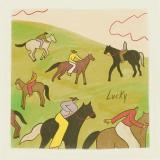
LUCKY is the self-titled debut album by the San Francisco band, born of a collaboration between songwriters Andrew St James (French Cassettes, Juan Wayne) and Peter Kegler (Half Stack). Now a full band featuring, the group combines anthemic indie-rock with y’allternative twang, the perfect soundtrack for long drives and late night revelries.
The story begins when St James booked Kegler’s band Half Stack for a show with Juan Wayne at the Rickshaw Stop in San Francisco. The two immediately recognized each other as kindred spirits and before long they were spending late nights at The Lucky Horseshoe in Bernal Heights, where they pledged to make an album together. Much like Lennon-McCartney or Jagger-Richards, St James and Kegler showed up with their own songs and helped each other dial them in, the songs becoming something totally unique in the process. Pretty soon they recruited Elsasser and headed into the studio with producer Joe Santarpia (Mac DeMarco), where they blazed through more than half a dozen songs in a few days, capturing first takes of raw energy.
Album opener “Falling Through”, written by Kegler on a long drive over HWY 17 to Santa Cruz, pairs talkin’ country vocals on the verse with a hard hitting chorus, eventually ramping up to a phased out guitar solo and a truly epic bridge with gang vocals and an ad lib from St James. Meanwhile, lead single “Traveler” was the first song written for the album, originally a folky shuffle, St James thought it was a goner but Kegler helped recast it as a mid-tempo rocker with a twangy alt-country edge. “Friends” is a true-to-life account of St James’ lifestyle as he shuttled between San Francisco and Los Angeles, paying homage to the City’s legendary House of Prime Rib with a propulsive beat that recalls Girls, Kings of Leon, and the grandiose energy of the E Street Band.
Highly anticipated debutalbum from LUCKY. Press coverage includes reviews and features in Various Small Flames, Glide Magazine, Broken Dreams Club, and more.
“...equal parts laidback swagger and earnest emotion…” - Various Small Flames
“LUCKY is becoming one of the most exciting figures to emerge in alt-country in some time.” - Glide Magazine.
Soul, jazz-rock, candombe and funk blend in the cocktail of La Banda's first and sole album. Often regarded as Argentina's first supergroup, the ensemble built a reputation on their explosive live performances during a time of political repression. Short-lived but unforgettable, the six-piece brought together top-tier jazz musicians—five Argentinians alongside Uruguayan icon Rubén Rada—to deliver a deep, hard-hitting sound that resonates far beyond its era.
Rada arrived in Buenos Aires bruised — a romantic disaster and a string of empty concert halls back in Montevideo had pushed him to start over at 35. Behind him lay a remarkable journey: from inventing candombe beat with El Kinto, to leading the Latin rock powerhouse Tótem, to recording cosmic jazz with Opa alongside the Fattoruso brothers. Trumpeter Benny Izaguirre, the band's architect, gathered around him a cast of heavyweights: pianist Jorge Navarro, an essential figure in the Buenos Aires jazz scene since the 1950s; saxophonist Bernardo Baraj, forged in Alma y Vida, Argentina's jazz-rock champions; and the irresistible rhythm section of bassist Ricardo Sanz and drummer Luis Ceravolo, both veterans of Astor Piazzolla's quintet. All three — Baraj, Sanz and Ceravolo — were simultaneously part of Banda Spinetta, the jazz-oriented project of Argentine legend Luis Alberto Spinetta.
The sessions also drew in two guests who needed no introduction: guitarist David Lebón — veteran of Pappo's Blues, Pescado Rabioso, Color Humano and Serú Girán, one of Argentine rock's true giants — and guitarist and producer Daniel Homer, a quietly indispensable figure across Buenos Aires' jazz and rock scenes.
Recorded in 1979 and gone almost as soon as it arrived — La Banda's brief existence and this sole album are what Buenos Aires sounded like when it was allowed to breathe. Between raids, between disappearances, in the stolen hours when music was louder than fear.
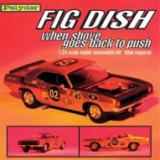
Chicago's FIG DISH didn't name themselves after a soft, sweet, fleshy fruit; rather, the name is a phonetic approximation of the German expletive, fick dich, (make of that what you will) FIG DISH were four high school friends: guitarists/ vocalists Rick Ness and Blake Smith, bassist/vocalist Mike Willison, and drummer Andy Hamilton. In their day (a day that began in the late Winter of 1991 and ended in the early summer of 1998), they were known for catchy songs, memorable (often booze-fueled) live shows, and selfsabotage.
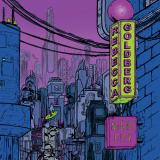
Rebecca Goldberg presents the release of her debut full-length album, Night City, a deeply personal and expansive body of work that reflects a decade of artistic growth, exploration, and connection. Produced and arranged by Goldberg, this album captures the evolution of her sound through years of practice, travel, collaboration and mentorship.
Including 12 tracks across a 2x LP, Night City draws from the rich lineage of Detroit electronic music. Goldberg cites influences from dystopian cityscapes and futurism to space exploration and the possibilities of technology. The result is a forward-thinking genre-spanning collection.
The album features two notable collaborations: “444,” created with Jnn Aprl and recorded in her studio in Seoul, South Korea, and “Tunnel,” featuring Detroit techno artist Tiptonaires. Each collaboration adds a distinct voice and texture to the record’s immersive sonic world.
Night City was mixed and mastered by Andy Toth, with album artwork illustrated by Mark Sarmel. A limited run of vinyl is available for preorder now, pressed at Archer Record Pressing Co. in Detroit. The album will be released on Detroit Underground.
At its core, Night City is an offering shaped by experience and guided by curiosity, marking a significant milestone in Rebecca Goldberg’s musical journey.
out of Stock
Last delivered 70 days ago available to reorder, subject to availability
Acid Jazz presents the second volume of their Jazz Sessions series with the first album from the Matt Berry Trio, with Matt Berry joined by band members Phill Scragg and Graham Mann on ‘Everything’s Peachy’.
When not creating numerous indelible characters on the screen, Matt Berry has forged a remarkable, diverse and acclaimed career as a recording artist. Following the widely lauded ‘Heard Noises’ (2025) and a collaboration album with KPM ‘Simplicity’ (2023), he returns in yet another musical guise as leader of a studio-based mid-century jazz adjacent trio.
‘Everything Peachy’ is a 12-part instrumental suite, inspired by ‘the Sky King’ (American folk hero Richard “Beebo” Russell), who stole a large aircraft with no flight training, performing stunts and manoeuvres, before crashing to his own demise, and takes its name from his response to air traffic control.
Conveying variously the chaos, nostalgia, regret and acceptance of Russell’s maiden flight, it is an open, freeform and flowing composition, drawing influence from the electronic experiments of Miles Davis and the melancholy of Satie, to create another moment of musical beauty from Matt’s curious and ever-moving musical mind.
The Jazz Sessions series was conceived by Acid Jazz founder Ed Piller as a return to the jazz roots of the label. The first release came from former Style Council drummer Steve White, with his first album as leader ’Soul Drums’, further releases will follow over the next year.
For nearly four decades, since its founding during the mid 1980s, the Belgian imprint, Sub Rosa, has continuously plumbed the depths of numerous, radical creative histories, assembling a catalog of releases that has almost no equivalent, while remaining nearly impossible to nail down. That said, for most of its run, Sub Rosa has been primarily recognized for its rigorous explorations of the lesser explored shadows of experimental sound practice (sound-art, sound-poetry, early electronic and electroacoustic music, free-improvisation, etc.), delivering a remarkable body of artifacts that have collectively helped to rewrite history in their wake. While it's always been impossible to anticipate where the label might take us next, threading their catalog are plenty of releases that throw further wrenches in the cogs, expanding our understanding of what they pursue, as in the case of a handful of titles, appearing as early as the 1980s, dedicated to ethnographic field-recordings from various parts of the world. Among the most striking and celebrated of these was 2017's Ethiopian Urban And Tribal Music: Mindanoo Mistiru / Gold From Wax, comprising an astounding body of recordings made by Ragnar Johnson and Ralph Harrisson in Ethiopia during 1971, reissuing material originally released by Lyrichord the following year. Now, Sub Rosa returns to the incredible work embarked upon by the pair and captured on that same trip with Ethiopian Musics 1971, comprising the recordings originally released by Ocora shortly after their completion, expanded in this edition to include an entire disc of never before released music. Widely regarded as some of the most important field-recordings ever made of indigenous Ethiopian folk music (as captivating and intoxicating as they are revelatory: providing insights into the roots of the country's singular traditions of popular music and jazz that have come to be celebrated the world over), this incredible collection is issued by Sub Rosa in a beautifully produced 2LP edition, complemented by a four page insert providing detailed descriptions of each song, as well as notes by the ethnomusicologists and recordists, as well as a 2CD edition, with a twelve page booklet. Insanely good and absolutely essential for any fan of field-recording, ethnomusicology, the music of Ethiopia, or the label's mission at large. Once again, Sub Rosa has defied our expectations and delivered a remarkably important intervention in the history of recorded sound.
Located in the Horn of Africa region of East Africa, few cultures are distinctly singular, while being so diverse (containing 80 distinct ethnic groups who speak 70 languages and 200 dialects) as that of Ethiopia. The home to some of the oldest surviving sects of Judaism, Christianity, and Islam (each contributing important aspects of its collective cultural body), particularly the country's culinary and musical traditions have become celebrated the world over, and (generally speaking) feel entirely independent of those of its neighbors. Given this, it's unsurprising that, during the summer of 1971, the young ethnographer, Ragnar Johnson, accompanied by Ralph Harrisson, traveled to Ethiopia to begin his brief career as a field recording ethnomusicologist, capturing material on reels of magnetic tape that would be subsequently released across three LPs for Lyrichord and Ocora, respectively, coming to form a cornerstone of documentation and study of the country's many indigenous musical traditions, as well as providing wide, global access to them for the first time. While Johnson's recording career was relatively brief, ending toward the end of the decade when he began to focus more on teaching in UK universities, with a focus on the anthropology of art and social anthropology, his impact on the field was lasting. Between 1971 and 1979, in addition to those he made in Ethiopia, he made hugely significant recordings in Yemen (also issued by Lyrichord before being reissued by Sub Rosa) and Papua New Guinea, which were originally released by David Toop's Quartz Publications to wide celebration, before being revisited by Ideologic Organ in 2023.
While it's worth noting that commercial releases of ethnomusicological recordings by labels like Folkways, Lyrichord, and Ocora were still in their relatively early days when he entered the field, Johnson's recordings quickly stood apart for their vivid qualities and clarity of space, allowing them to stand the test of time. As he later stated: "I used a Uher Report L stereo tape recorder, BASF quarter inch tapes at a recording speed of seven and a half inches per second with two directional microphones mounted to record an isosceles triangle of stereo sound," he reveals. "The location of the microphones and musicians was critical. The musicians were fully informed of all aspects of the recording process."
Johnson's recordings are extremely vivid, there is a clear sense of space and the cries of the flutes exist across the entire stereo field. It's a reflection of Johnson's skill as a field recordist that his recordings continue to be reissued over forty years later. "I used a Uher Report L stereo tape recorder, BASF quarter inch tapes at a recording speed of seven and a half inches per second with two directional microphones mounted to record an isosceles triangle of stereo sound," he reveals. "The location of the microphones and musicians was critical. The musicians were fully informed of all aspects of the recording process… I used to enjoy being in the moment and hearing something wonderful despite the stress of the vigilance required to ensure that the recordings were accomplished according to plan. The responsibility is to record and document the music as effectively as possible so that it has been preserved for posterity. It is better to actually record music than to sit in a seminar room debating the ethics of recording music." It is this very ethos and sense of clarity that can be encountered across the length of Ethiopian Musics 1971.
For the sake of clarity, the two LPs of material that comprise Ethiopian Musics 1971 should be regarded as a single body of recordings alongside those made in Ethiopia by Ragnar Johnson and Ralph Harrisson during the summer of 1971 (previously issued by Lyrichord and reissued by Sub Rosa), and as two that have, until now, remained historically distinct. The first LP gathers that material released by Ocora during the early 1970s on Musiques Ethiopiennes, while the second comprises (as far as we can tell) twelve never before issued recordings, expanding the journey and making this the definitive edition of the release with its incredible total of 23 recordings of songs, allowing it ever greater scope to achieve the recordists' modus operandi of capturing the broadest and most diverse cross section of Ethiopia's many musical cultures, ranging from different forms of urban music captured in Addis Ababa, documenting largely orally transmitted idioms within which lyrical content is given greater emphasis than the instrumental components (played on masenko fiddles, craar and bagana lyres, washint flutes and kabaro drums), to folk idioms hailing from the Danakil desert and the border regions with Sudan and Kenya. There are songs sung and played in bars, divination chants, laments, dances, Christian songs, and Amharic sung poetry, to only begin to scratch the surface.
Ethiopian Musics 1971 is one of those rare albums where each musical moment is pure, intoxicating gold, while also being greater through the sum of its parts. There are the many songs, forming a rich tapestry of remarkable range across the respective two LPs/CDs (moments that wondrously flirt with sonic abstraction; hypnotic rhythms; pulsing chant; melodies that, in structural arrangement and tonal combination, help us reframe how such a thing might be understood, and a great deal more), each imbued with a remarkable directness and emotive sensibility, and there is the stunning quality of these recordings themselves, transporting each sound to our ears as though we intimately share its creator's space, while being imbued with the pure heart and remarkable spirit with which they were made. As we said before, it's little wonder, once heard, why these recordings and this music feels as fresh and relevant (enduring more than 50 years) today as when they were made. Once again, Sub Rosa has raised the bar with this essential addition to the incredible work that Ragnar Johnson and Ralph Harrisson did back in Ethiopia during 1971, radically expanding our access to the sounds that they captured with these stunning, beautifully produced 2LP and 2CD editions. Absolutely engrossing from the first sounding to the last, this one can't be missed.
ALERT: BIG 90s ITALIAN RAVE COMP - a lot of very in demand tunes on here.
Navigators
Franco Falsini and the Interactive Test Universe
There are musicians who follow their time.
And then there are those who seem to move along a different trajectory—like navigators crossing sonic eras without ever truly belonging to any one of them. The story of Franco Falsini belongs to the latter. It is a story that begins long before raves, before techno, before the word “electronic” had even become a recognizable musical genre. A story that moves across continents, technologies, and sonic visions, eventually arriving at a small creative laboratory born in Italy in the early 1990s: Interactive Test. This compilation is a fragment of that universe. But as often happens with the hidden histories of music, understanding it requires going back. Far back.
The Beginning: Machines, Tape and Space
In the late 1960s Franco Falsini leaves Italy and moves to the United States. It is not merely a geographical journey—it is also a journey into a new idea of music. At the time, synthesizers are only just emerging from research laboratories. Multitrack tape recorders allow musicians to build entire sonic worlds on their own. Technology is still far from standardized: every studio is almost an experimental workshop. In Virginia, Falsini builds one of his own. Among cables, oscillators, electric guitars and reels of magnetic tape, a kind of music begins to take shape that resembles nothing else being made at the time. It is not simply rock, and it is not yet truly electronic. It moves somewhere in the space between the two. Out of these explorations emerges Sensations' Fix, the project through which Falsini releases a series of albums during the 1970s. Records that seem to come from a parallel dimension: cosmic landscapes, electronically treated guitars, synthesizers drifting like satellites. Many years later those albums would be rediscovered as visionary works. But at the time they were simply the result of relentless curiosity. A curiosity that would never fade.
The City That Never Sleeps
In the 1980s Falsini’s trajectory leads him to New York. The city is a sonic organism in constant transformation. In its clubs and recording studios something entirely new is beginning to take shape: music built from drum machines, sequencers, and samplers, created for the body before the living room. It is the dawn of modern dance culture. Falsini works as a sound engineer, producer and experimenter. From close range he observes electronic music transforming into a global language. Machines become more accessible, computers begin entering studios, and rhythm takes on an increasingly central role. Yet even in this phase Falsini does not simply follow what is happening. He absorbs. Observes. Reimagines. When he eventually returns to Italy, he brings back not only technical experience but also a clear vision: the conviction that electronic music is an open space, a territory still waiting to be explored.
Tuscany, Early 1990s
At the beginning of the 1990s something is happening in Italy as well. In clubs, abandoned industrial warehouses and clandestine parties, a new scene is beginning to form. It is rave culture: a spontaneous movement bringing together DJs, producers and listeners in a collective experience driven by rhythm, technology, and creative freedom. It is within this context that Franco Falsini, together with his brother Riccardo, creates Interactive Test.
The name almost sounds like a scientific experiment. In many ways, it is. Interactive Test does not emerge as a traditional record label. It begins as a laboratory—a place where ideas, sounds and musical identities can be tested and explored. Around the Falsini studio in Tuscany a small constellation of artists and DJs begins to gather, helping to shape the sound of Italy’s emerging electronic scene. Among them are Andrea Giuditta, Francesco Farfa, Gabry Fasano, Roby Mastelloni, Roby J and many others. Each brings a different musical sensibility. But they all share the same intuition: electronic music is not a genre. It is a language.
The Laboratory of Identities
One of the most fascinating aspects of the Interactive Test universe is its constant play with identity. Franco Falsini releases music under several different names: Open Space, Youth Wave, Agent Fylfoyt, Man Myth Magic. These are not simply pseudonyms.
They are different sonic perspectives, as if each project were a window opening onto a parallel musical universe. Open Space, for example, explores more atmospheric and visionary territories. Youth Wave moves between electronic groove and club-oriented rhythms. Other projects experiment with digital psychedelia or hypnotic techno textures. Interactive Test becomes something more than a label. it becomes an ecosystem.
Domestic Machines, Infinite Worlds
Looking back today at the technology used in those productions, one might almost smile. Many tracks were created on Amiga computers, MIDI sequencers and analog synthesizers wired together in home studios—tools that appear modest when compared to today’s digital possibilities.
Yet precisely these limitations became a creative force. Every sound had to be built, shaped and reinvented. Sequences developed slowly, almost like living organisms. The tracks did not always follow traditional dance music structures; often they felt like genuine sonic journeys. Music built from space.
A Hidden Constellation
Many of the records released by Interactive Test in the 1990s remained for years almost invisible objects, circulating quietly among DJs, collectors, and devoted listeners. Yet it is precisely this underground existence that helped preserve them. Listening again today, one perceives something rare: the feeling of music that does not fully belong to its own time. Music suspended between different eras. Perhaps because it comes from a vision that both precedes and transcends trends.
Continuing the Journey
Looking at Franco Falsini’s entire path—from the electronic psychedelia of Sensations’ Fix to the rave culture of the 1990s—a surprisingly coherent line emerges.
A line defined by exploration.
Each project, each pseudonym, each record appears as a new route within the same great sonic voyage.
Interactive Test was one of its stations.
A laboratory.
A community.
A creative platform.
This compilation gathers some of its traces.
Not as a simple archive of the past, but as a map of a musical territory that continues to expand even today.
Like all true sonic explorations.
out of Stock
Last delivered 4 days ago available to reorder, subject to availability
In-demand AfroColombia Remix Vol. 1 finally repressed!
A collection of Afro-Colombian classics (Champeta, Son de Sexteto, Currulao) revisited by talented producers from the global club scene.
Ten years ago, a sound was born that bridged roots and reinvention. Today, Galletas Calientes Records is proud to announce the official reissue of AfroColombia Remix Vol. 1 on vinyl, in collaboration with legendary Colombian label Palenque Records.
Originally released a decade ago, this project brought together visionary producers and timeless Afro-Colombian rhythms, creating a dialogue between tradition and the global electronic underground. Now, remastered and pressed on wax again, the record returns with renewed depth—warmer, richer, and ready to be experienced the way it was always meant to be heard.
This limited vinyl edition celebrates the legacy of the original release while honouring the artists, communities, and sounds that inspired it. Whether you’ve been with us since day one or are discovering it for the first time, this reissue is an invitation to reconnect with a pivotal moment in Afro-Colombian musical fusion.
out of Stock
Last delivered 39 days ago available to reorder, subject to availability
Seasoned sunset soundtrack label-owner, DJ and composer Mark Barrott returns with new album The Exit Diaries. A constant innovator and master of chillout, the record is a rich, deluxe affair comprising two long-form instrumental pieces that weave together soul, jazz, orchestral composition and electronica. With over three decades of output across multiple aliases, Barrott has carved out an influential space spanning early breakbeat futurism, Balearic folk, orchestral ambient and global electronica. He has earned widespread acclaim from the likes of Pitchfork, Mojo, Uncut alongside radio support from Mary Anne Hobbs, Elizabeth Alker and Hannah Peel. His new album ‘The Exit Diaries’ features two movements: side one, ‘Light Variations’, is inspired by “Sunday tunes” - a warm, slow-unfolding soundtrack of soul, Alice Coltrane–esque textures and gentle synths, elevated by the fluid drumming of Leo Taylor (The Invisible, Floating Points, Hot Chip). Side two, The Stone Tape, opens with the sweeping ‘When Devils Become Gods’, before drifting through the ambient landscapes of ‘Quarries’ and the cinematic, emotionally rich compositions ‘The Stone Cutter’s Dilemma’, ‘Land (iii)’ and ‘Closer’. Throughout, Barrott demonstrates a rare ability to transport listeners into deeply atmospheric, meditative spaces, delivering a deeply immersive and quietly profound addition to his catalogue.
Strut Records presents a brand new reissue of the 1975 Brian Auger’s Oblivion Express original album Reinforcements. A gem from the later years of the Oblivion Express band, Reinforcements sees Auger evolve from his early ‘70s jazz-rock fusions towards smoother jazz funk sophistication, continuing his journey from the previous year’s Straight Ahead.
With two former Oblivion Express drummers joining Average White Band, there are obvious comparisons to draw as several tracks lean into groove-driven arrangements and polished mid-’70s production.Never one to follow a predictable path, Auger crafts a steadfast, stylish album that captures the evolving sound of the era, offering a rich snapshot of mid-’70s British soul and jazz-funk.
A fan favourite, the album also marks the return of vocalist Alex Ligertwood (later of Santana), whose soulful delivery is a highlight of many Oblivion Express recordings.
He is joined by Jack Mills (guitar), Lennox Langton (percussion), Dave Dowle (drums), and new addition Clive Chaman (bass, flute) – a family affair with their various kids joining for the cover shoot, the full cast adorned in an array of fine mid-‘70s tank tops.
Album highlights include the heavy funk instrumental jam ‘Brain Damage,’ a dynamic, keyboard-driven showcase of Auger’s virtuosity alongside the burning latin jazz workout ‘Something Out of Nothing’ and soaring closer ‘Future Pilot’ taking us from our present day troubles to “thread the skies to a new location.”
‘Big Yin’ is a heartfelt tribute to former drummer Robbie McIntosh following his untimely death. As with all Auger albums, the energy is nothing but positive and soulful – his back cover quote states “May the love you bring to this world be reflected upon you.”
This new Strut reissue of Reinforcements is curated by Greg Boraman of Impressive Collective in collaboration with Brian and Karma Auger. Fully remastered from the original tapes by United Archiving’s Bill Smith, it is presented as a high-quality single LP replica edition.
The mighty Channel One Studios,Kingston, Jamaica, has its place set in Reggae's Musical History.Its distinctive sound the studio created on opening its doors in 1972 to its closure in the early 1980's made it the Producers, Singers and Musicians studio of choice during this furtive period. Achieving that vibe and clarity, separated it from the other Kingston establishments.
Run by the Hookim Family's four sons, Jo Jo the eldest followed by Paulie, Ernest and Kenneth. Their father originally came from China and married a Chinese Jamaican lady and settled in the St Andrews district before moving to Kingston Town itself. The family business was built on jukeboxes and one armed bandit machines in and around Kingston. A lucrative venture until the gaming laws changed in 1970, outlawing the gaming machines. So the music side of the business would have to be expanded. So it was decided to open a studio to make the music to supply their already established Jukebox enterprise. The four brothers opened Channel One Recording Studios in 1972 at 29 Maxfield Avenue, Kingston 13. Initially as we stated the purpose of the studio was for the brothers use only, but this would soon change when the various Producers all looking for that Channel One sound came asking for studio time.
The brothers had used the services of Bill Garnet a renowned and well respected technical engineer on setting up the studio. They spent a lot of time laying out the space to get the right acoustics and picking the right quipment. They went with a four track API desk and the best quality microphones such as Neuman, Sony and AKG, vital in obtaining the quality sound and track separation that would prove so worthwhile after the music was recorded to give the best flexibility on the final mix downs. Jo Jo would take over the production duties after the initial hiring of Syd Bucknor a producer who had worked closely with Coxonne Dodds Studio 1 stable. The first release on the Channel One label would be 'Don't Give Up The Fight' by Stranger Cole and Gladstone 'Gladdy' Anderson.The initial two thousand run being swallowed up by their Jukebox interests and so the steady flow of hits would run up to the brake through hit of 1975 'Right Time' by the Mighty Diamonds.
1977 saw Jo Jo extending his stays in New York to a semipermanent status, returning mainly to oversee recording sessions and then taking the results back to America for worldwide distribution. His brother Paulies senseless killing in that year also added to Jo Jo's decision to spend more time with his Hit Bound Manufacturing set up in New York. The Channel One studio would be upgraded in 1979 to sixteen tracks and although Jo Jo and Ernest still covered the mixing and engineering duties Kenneth would now supervise sessions. An often untold part of Channel Ones history is the involvement of Producer Niney The Observer. The mid to late 1970's were heavy times both musically and politically and Maxfield Avenue was in the heart of this crossfire. Some artists and musicians were weary of using the establishment especially when sessions ended late at night and exiting the studio at these times could be somewhat dangerous. But Niney’s fearlessness seen him over running and in many cases running the all night sessions with his trusted set of musicians loosely called The Soul Syndicate. Having the run of the mighty Channel One studio's allowed Niney to build up and work on a stockpile of rhythms that he still has yet to unleash on the world. We have been lucky to select a bunch of material from Niney's vaults for this release. Some great unreleased rhythms and some different cuts to some tracks you might already know. Niney's work with Dennis Brown and his own distinctive heavy roots style productions have been documented and indeed his work on Channel Ones Yellowman releases stand tall also. We hope this fine set of Niney Productions set inside the hollowed walls of Channel One will sit beside them as they so richly deserve.
out of Stock
Last delivered 5 years ago available to reorder, subject to availability
Written and recorded throughout 2025 in their longtime ex-taxi-office-turned studio 'Cherry Lips', and produced by frontman Richard Archer alongside longtime collaborator Wolsey White.
The album looks outside the window to the fractured present, and paints it in bold musical strokes, with the same sharp- eyed social commentary that powered their classic debut Stars of CCTV, but with fresh perspective, new sounds and hard-earned freedom.
Written and recorded throughout 2025 in their longtime ex-taxi-office-turned studio 'Cherry Lips', and produced by frontman Richard Archer alongside longtime collaborator Wolsey White.
The album looks outside the window to the fractured present, and paints it in bold musical strokes, with the same sharp- eyed social commentary that powered their classic debut Stars of CCTV, but with fresh perspective, new sounds and hard-earned freedom.
TAURO ist das Gemeinschaftsprojekt unter der Leitung der in Toronto ansässigen Künstlerin Cynthia Tauro, das in enger kreativer Zusammenarbeit mit Brendan Canning von Broken Social Scene entstanden ist. Was als informelle Songwriting-Sessions im Wohnzimmer begann, entwickelte sich organisch zu einem fokussierten Werk, das auf Vertrauen, einer gemeinsamen musikalischen Sprache und dem bewussten Verzicht auf das Überdenken der ,nächsten Schritte" basiert. Das Projekt ist bewusst schlank gehalten, wobei Entscheidungen im Raum bleiben und die Musik den Prozess leitet. Act One verbindet emotional direkte Pop-Songwriting-Elemente mit jazzbeeinflussten Harmonien, synthgetriebenen Texturen und zurückhaltenden rhythmischen Experimenten. Beeinflusst von Künstlern wie Air, Sade, Carole King und Tracey Thorn, schaffen die Songs ein Gleichgewicht zwischen Intimität und Vorwärtsbewegung, geprägt von jüngsten persönlichen Umbrüchen und dem gemeinsamen Interesse, der natürlichen Richtung jedes Songs zu folgen, anstatt einen vorbestimmten Sound zu erzwingen. Die Produktion ist songorientiert und explorativ, sodass Textur und Arrangement intuitiv entstehen können. Mit Beiträgen von bewährten Mitwirkenden wie Thom D'Arcy, Kintaro Akiyama, Moose (Spencer Muscio) und Josh Trager verfügt das Album über eine starke kreative Herkunft, während es sich weiterhin auf Cynthias Stimme und Perspektive konzentriert. Die frühe Unterstützung durch Trendsetter wie KEXP, KCRW und CBC Radio Canada signalisiert Entdeckungspotenzial und positioniert TAURO als modernes, songwriterorientiertes Projekt mit langfristigem Entwicklungspotenzial statt als einmalige Zusammenarbeit.
Sam Cooke, inventor and true King of Soul, recorded Mr. Soul in 1963, the same year as Night Beat, and seems to be its more adult counterpart, with soulful ballads taking up most of the album. A laidback tempo and rich arrangements lay the foundation for Sam's somewhat melancholy voice floats, creating an uplifting spirit that can mend anyone's broken heart.
With standards such as "Willow Weep For Me", "I Wish You Love", and "For Sentimental Reasons", Cooke shows a quiet emotive side of himself without losing his keen sense of melody, using the strength of his voice without overpowering the listener. Had Sam Cooke lived longer, we might have had more music of this rare quality. As it stands, we must make do with the treasures he left behind.
Mr. Soul is available as a limited edition of 1000 individually numbered copies on orange vinyl.
Citing sources from early Dub influenced Clash, Blitz and The Modern Lovers - Spiritual Cramp exist in a strange vacuum somewhere between David Byrne's oversized suit and a bar fight between a bunch of drunk goons on Polk Street in SF. Hate for the police, the government and the status quo are reoccurring themes in Bingham's lyrics. The sounds borrow from the past, echoes of late 70's / early 80's working class rock and punk, which function on the upbeat, showcasing very bright guitars yet generating darker vocal rhythms and darker patterning.
TRANSMISSIONS #1 connects four distinct Skylax signals into a single flow. Each track comes from a precise moment, a specific context, and a clear dancefloor function. Together, they form a transmission built on movement, use and continuity. A1. F.T.G – Tribute ’89 (Fuckthegovernment #001 Mix) is a raw drum-machine workout positioned between dark Chicago house and late-’89 European techno. Stripped, direct and uncompromising, Tribute ’89 quickly became an underground staple, heavily played by Ricardo Villalobos and Raresh — a foundational Skylax signal. A2. Nick Beringer – 57th Corner, taken from Second Floor (Wax Classic, 2016), is a tech-leaning deep house cut marked by restraint, precision and late-night tension, capturing Beringer at a pivotal point in his long-standing relationship with Skylax. B1. Floorfillers – Love Is Growing delivers a powerful house-disco statement rooted in old-school foundations, where filtered disco loops, raw drum programming and uplifting swing echo the lineage of DJ Sneak, Paul Johnson, early Roulé / Crydamoure-era French touch and classic Chicago jack — a modern floor-driver with timeless intent. B2. Nicolas Aftalion – Rue des Wallons brings deep, soulful house with a strong Kerri Chandler influence; warm chords, chunky drums and emotional weight firmly grounded in early ’90s US garage tradition. Supported by Cinthie, it closes the transmission with groove, balance and purpose. TRANSMISSIONS #1 — built to move, built to last, signals in motion. Four tracks. Four signals. Still moving.
out of Stock
Last delivered 21 days ago available to reorder, subject to availability
Vaalbara EP - Franco Rossi Sine Space 7 - Release date: 19 June 2026 - Vinyl
Franco Rossi makes his Sine Space 7 debut with Vaalbara, a five-track vinyl EP (including one vinyl-exclusive cut) that lands the Argentine producer firmly in the label's hypnotic and driving orbit. Following recent releases on Soma Records, MindTrip, and Secession, Rossi arrives with a record that feels both unmistakably his and right at home in the Sine Space 7 catalogue. His productions have already found support from the likes of DVS1, Richie Hawtin, and Setaoc Mass.
Opener Rodinia sets out raw and patient, with two rising builds carried by strange synthetic patterns over a darkening drone. Title track Vaalbara drifts on a modulating high synth line, locked into a hypnotic lower-frequency pattern that pulls the two registers into quiet synergy. Paramo keeps the floating quality but leans darker, with raw drums anchored by finely distorted rides and a backbone of dense texture. A Quemarropa pushes further into ear-candy territory. Distorted rides again, punctuated by one strange, track-cracking sound that refuses to let the listener settle.
The vinyl-exclusive closer Mar Adentro is the weight-bearer, a rolling low-end drive punctuated by a sub-heavy synthetic hit you feel in the chest.
Mastered by Robin Van Genechten at Wanton Mastering. Artwork by Norwegian macro photographer Petter Lilleengen.
Dario Rossi approaches electronic music like few others. His work as a percussionist has brought his unique rhythmic abilities to audiences around the globe. Born in Italy, Rossi combined percussion with samplers and synthesizers. His energy and talent have allowed these machines to be incorporated into his distinctive palette with very special results. 07Sep83 is his Bordello debut, with the title piece opening the four tracker. Beats cascade as analogue warmth laps the shore. Slow with a magnetic groove, elements of italo, wave and synth-pop intertwine to create a clean, bright sound that is at once familiar and totally unique.
Vocals arrive with “We’ll Meet Again.” Tempos rise while keys are emboldened by rich guitar strings. Lyrics counter with a melancholic tone that shifts into hope and fortified belief as melodies rise ever higher. The flip is “Lost.” Sharp drum patterns support notes that hark back to the majesty of Bobby O, the live sax by Augusto Pallocca and disco glory combining in this journey through genres. “Beat the Devil” closes. Sizzling from the outset, snares roll and snap. Rossi’s percussive prowess is on full display as synthlines flow over rhythmic ripples to the subtle and soulful strings that bring down the curtain.
out of Stock
Last delivered 77 days ago available to reorder, subject to availability
Harry Romero, Brothers Macklovitch, and Austin Ato team up on Rekids.
Harry Romero and Austin Ato return to Rekids alongside the debuting Brothers Macklovitch, aka A-Trak and Dave 1, with the ‘The Corner’ EP, arriving 5th June 2026. Romero has more than two decades of house pedigree behind him, continuing to refi ne a signature sound rooted in expert drum work and undeniable attitude. With a catalogue spanning seminal imprints from Nu Groove to Classic Recordings and Defected, the Bambossa Records boss builds on his 2025 debut with ‘Nice To Meet You’, once again showcasing his knack for balancing functional, floor-ready grooves with rich musical character.
Joining Harry Romero are Brothers Maklovitch, consisting of legendary turntablist A-Trak alongside his brother, David “Dave 1” Maklovitch of Chromeo, bringing decades of experience across the electronic spectrum, alongside versatile Scottish producer Austin Ato, who previously contributed to Oliver Dollar’s 2025 album on Radio Slave’s Rekids imprint.
Harry Romero, Brothers Macklovitch, and Austin Ato’s ‘The Corner’ (Piano Mix) opens the release, a warm and energetic house cut driven by bold, bouncy drums and jazzy melodic touches, as lively guitar licks and rolling piano lines inject an uplifting, expressive feel primed for the dancefloor. The ‘Deep In Jersey Dub’ follows, maintaining the heat with a more stripped-back approach, where filters and breakdowns build tension before a punchy drop, with teased-out guitars adding to its dynamic impact.
out of Stock
Last delivered 18 days ago available to reorder, subject to availability
This new album compiles several songs made in the years following Black To Comm's classic "Alphabet 1968" album. Originally released on the seminal Type label in 2009 (and to be reissued on Cellule 75 this year) "Alphabet 1968" combined the sound of vintage shellac and vinyl loops with broken electronics and field recordings, the press release mentioning disparate influences "ranging from Moondog to Basic Channel by way of Bernard Herrmann". In a beautiful one-page review in The Wire magazine (later reprinted in his book Ghosts Of My Life) Mark Fisher compared Richter's music to JF Sebastian’s miniature automata in Blade Runner ("with their bizarre mixture of the clockwork and the computerised, the antique and the ultramodern, the playful and the sinister"), ETA Hoffmann's inventor-magicians and Auguste Villiers de l'Isle-Adam's 1886 tale of Thomas Edison's (fictitious) construction of an artificial human.
Now titled "Coh Bâle" (inspired by a strange dream) these recordings were supposed to become a follow-up to said album but for reasons unknown it never materialized and the album seemed forever lost. At the time Richter started to dive deeper into several strains of (so-called) world music aka the folk music of Southeast Asia and Eastern Europe as well as liturgical and medieval music, the Kraut-Electronica of Harmonia and several certain Mediterranean experimentalists from the 1980's who started to merge their mostly electronic and field recording based compositions with traditional musics from all over the world by way of new sampling technology.
Many of the songs for the album were recorded while travelling and at various residencies around Europe: a detuned piano in a Thessaloniki basement (Richter played at a children's birthday party there), vintage synthesizers in the GRM studios in Paris, decaying acoustic instruments found in an old Black Forest mansion, childrens' voices at a workshop in Karlsruhe's ZKM Institute; then mixed on headphones in the ICE trains running between these places and his hometown Hamburg.
"Coh Bâle" is taking inspirations from old Nonesuch Explorer and Ocora LP's, Crammed Records, 80s Mediterranean Ambient (Nuno Canavarro, Roberto Musci) combined with the DIY spirit of Deux Filles and Flaming Tunes and the playfulness of Asa Chang & Junray. The songs are both mysterious and transparent, intricate and frugal, vibrant and patient. One of the album's unexpected climaxes is a gorgeous (artificial) berimbau version of the Welsh traditional "Iechyd o Gylch".
No two songs feature the same instrumentation and many acoustic sources (pianos, flutes, wood percussion, viola, tablas, autoharp) were disassembled and later coalesced into new configurations or used as virtual instruments; later combined with samples, field recordings, electronics and (on a few tracks) autotuned vocals reminding of recent works by the likes of Claire Rousay or More Eaze.
We had to wait for a worldwide pandemic for Richter to dig deep into the vaults and finally bring these recordings to light. This is the 2nd release from his archives after the "Diode, Triode" LP which presented Musique Concrète/Acousmatic recordings made at INA/GRM and ZKM. Another massive Double-CD (MM∞XX Vol. 1 & 2) was released last year featuring collaborations with 33 artists such as Andrew Pekler, Richard Youngs, Eric Chenaux, Maja Ratkje, Radwan Ghazi Moumneh of Jerusalem In my Heart, GRM boss François Bonnet (Kassel Jaeger), Felix Kubin, Timo van Luijk (In Camera, Af Ursin), Luke Fowler and many others, showing Richter's versatility and his willingness to reinvent himself for every new release.
Marc Richter is widely known under his Black To Comm moniker, having released (at least) 12 albums under this alias in the last 20 years. He is currently signed to the Thrill Jockey label. Richter composes soundtracks for film and has worked with visual artists such as Mike Kelley and Ho Tzu Nyen. He also records as Jemh Circs and Mouchoir Étanche for his own Cellule 75 label (named in tribute to the late Luc Ferrari).
out of Stock
Last delivered 4 months ago available to reorder, subject to availability
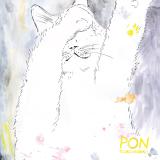
Pon is Tujiko Noriko’s sixth album for Editions Mego and a further extension of her already significant body of work as both a solo and collaborative artist. Dedicated to her cat who she adopted as an infant and passed away due an accident having been born deaf, Pon is imbued with abstraction, tenderness and a deep emotional resonance.
Noriko’s palette of electronics, romantic melodies and surprising sonic details are all fully present here, and like her last full length, 2023’s Crépuscule this is an epic work, released as a 2LP by Editions Mego alongside a Japanese CD release.
The unmistakable hue of Japan hovers throughout this emotional rich landscape. Subtle field recordings and fragile, abstract motifs drift through the album, all cloaked in a warmth and humanity that only Noriko seems able to conjure.
Pon moves effortlessly between the childlike and the obscure. There are moments of deceptive simplicity where unexpected elements suddenly surface — strange voices emerge on Boku Wa Obaka, Knife of Yonder is a standout: a startling ten-minute unfolding that begins with a warm, almost Eno-esque drift before launching into a soaring mid-section and finally landing somewhere unexpectedly blues-adjacent.
Kikoeru Pon is brimming with childlike wonder — a heartfelt ballad that dissolves into domestic field recordings, including sounds of the feline for whom both the album and track are named. A quietly devastating ending that brings the personal nature of the record into sharp focus.
There is a deep sense of the human in the way Noriko embraces technology. This is far from cold abstraction; rather, Ponfeels like a colourful photo album, documenting Noriko’s inner world and instincts with remarkable intimacy. Hovering in liminal states between pop, ambient and abstraction, this is a deeply affective and moving release that reveals new surprises with each listen.
The emotional range of Noriko’s latest offering inspires hope in a world in disarray. It is both gentle and epic and one which we feel embodies the work of an artist fully at the height of her powers.
out of Stock
Last delivered 4 months ago available to reorder, subject to availability
“L’École de la nuit” marks Versatile Records’ 30th anniversary with a musical découpage by label founder Gilb’R. The album’s 12 songs and numerous collaborations form an adroit exploration of life and music, all threaded together by lifelong “partner in crime” I:Cube’s signature mixdowns.
“Hà mar” represents the peak of the album’s organic spectrum—an instantly captivating melodic and percussive Brazilian song featuring Alvaro Lancellotti on guitar and vocals—while “White Light” serves as its electronic counterpart, with a classic pop feel, featuring Swedish singer Monica Tormell
Musically, “L’École de la nuit” moves across many different landscapes and languages, intersecting rock, shoegaze, ambient, electronica, and, of course, jazz. Gilb’R collaborates with a rich arsenal of guest musicians: saxophonist Quentin Rollet; guitarist and producer Maxime Delpierre; French artist Judah Warsky, with whom Gilb’R previously released an album; Jonny Nash, producer and guitarist; as well as Ben Shemie. Not least, father and son Julio and Julinho Pimentel contribute their distinctive percussion, alongside François Creamer on bass clarinet.
“L’École de la nuit” is the 50th album release on Versatile Records. It was initiated in Amsterdam, then entirely reimagined and rebuilt in Paris. It stands as a manifesto for the album format and a tribute to the listener.
out of Stock
Last delivered 66 days ago available to reorder, subject to availability
Brussels-based guitarist Benjamin Sauzereau is one of the most respected figures in Belgian jazz, working across the full spectrum-from elegant jazz to adventurous improvisation. You may know him from projects such as Les Chroniques de l'Inutile, Hendrik Lasure Warm Bad, Book of Air, and Fur. Over the past few years, he has written a large number of compositions under the umbrella of 'REMORQUE', performed in various line-ups-a concept somewhat reminiscent of John Zorn's Masada compositions.
These pieces share a clever and imaginative approach to composition, improvisation, and arrangement. Typically short but vibrant, they shimmer with color and atmosphere-sometimes lyrical and contemplative, other times playful, whimsical, or slightly prickly. Each piece opens up a small, self-contained universe full of nuance, refinement, and space, interpreted by musicians who navigate fluidly between classical discipline and free improvisation.
Following the first release Un on W.E.R.F. Records, Sauzereau now presents the highly anticipated follow-up: DEUX. This second chapter dives even deeper into the sonic world of REMORQUE-further refining its playful contrasts, rich textures, and poetic unpredictability. With DEUX, Sauzereau cements his reputation as a composer who continuously reshapes the boundaries between structure and freedom, offering a listening experience that is as intimate as it is exploratory.
out of Stock
Last delivered 4 months ago available to reorder, subject to availability
Die Synthesistin und Komponistin Emily A. Sprague verbindet intuitive Klangstrukturen mit ausdrucksstarkem Songwriting und schafft so weitläufige Klangwelten, die unmittelbar und mitreißend sind. Nach ersten Experimenten mit Gitarre und Keyboard als Teenager gründete Sprague Anfang der 2010er Jahre die Indie-Band Florist, mit der sie ein treues Publikum gewann, bevor sie sich 2017 unter ihrem eigenen Namen auf Umwelt- und Ambient-Kompositionen verlegte. Zu ihren Veröffentlichungen zählen mehrere Alben aus beiden Projekten, zuletzt Florists ,Jellywish" und ,Cloud Time" aus dem Jahr 2025 sowie nun die EP ,Double Moon". ,Double Moon" zeichnet psychische und greifbare Landschaften als parallele Welten nach. Durch beschwörende Wiederholungen und durchscheinende Klangfluten ebnet Sprague einen initiatorischen Weg mit modularer Komplexität und lyrischer Weitsicht, untermalt von V Haddads transparenter Stimme. Mit instinktiver Präzision offenbart ,Double Moon" sensorische Weite durch viszerale, szenische Komposition. Geprägt von gepatchten Farbverläufen, frostigen Winkeln und warmen, melodischen Wellen dreht sich jeder Klang um den nächsten, taucht gleichzeitig auf und verschwindet wieder in einem fesselnden Klangbogen. Dieser Track bewegt sich in schillernder Subtilität - die Farbe der Nacht, die sich über den Himmel zieht und die Silhouetten beleuchtet, die sie erst möglich macht.Der mittlere Track, ,Dusk (How to Fly)", ist seinem Titel getreu ein subtiles und bewegendes Experiment, das den Ausklang des Tages heraufbeschwört, zusammen mit einem flüchtigen Anflug von Erhabenheit und der nahen Möglichkeit des Fliegens. Faszinierend in seiner nachdenklichen Drift und leuchtenden Bildsprache verschmilzt der Track sanft synthetisierte Fäden mit einem langsamen akustischen Rausch - eine Melodie, die in grenzenlose Richtungen treibt. Geleitet von Spragues unverwechselbarer Gesangskaskade und briefartigen Fäden webt sich eine beschwingte Sequenz mühelos von grundlegenden Erinnerungen zu einer weiten emotionalen Öffnung und fragt: Wie könnten wir auf andere Weise hier sein? Wie können wir überhaupt etwas fühlen?« ,Double Moon (Andras Dub)" verleiht Spragues Originalkomposition eine strahlende Note: Der australische Produzent Andrew Wilson, alias Andras und eine Hälfte von Wilson Tanner, verwandelt die Textur des Originaltracks durch tiefe, strahlende Rhythmen. Jeder Takt springt und zerstreut sich, um etwas völlig Neues zu erschaffen.
out of Stock
Last delivered 4 months ago available to reorder, subject to availability
Acclaimed London collective Kokoroko have announced a brand new remix EP titled Brownswood Remix Editions 009 - Kokoroko remixes, set for release on 12th June 2026. The project reimagines standout tracks from their 2025 album Tuff Times Never Last, offering fresh perspectives on three fan favourites through a carefully curated selection of producers.
The EP brings together a dynamic trio of remixers: IG Culture, IZCO, and Musclecars, each delivering a distinct sonic interpretation rooted in club culture, soul, and rhythm-forward experimentation.
Brownswood Remix Editions 009 - Kokoroko remixes will be released on vinyl as part of the Brownswood Remix Editions series, landing as Edition 009. Known for spotlighting forward-thinking reinterpretations from across the global jazz and electronic spectrum, the Brownswood imprint brings a tangible, collector-friendly dimension to the project. This limited vinyl run offers fans and DJs alike the chance to experience these reworks in their fullest analog form, further cementing the EP’s place within the label’s celebrated remix catalogue.
Each remix expands the sonic world of Tuff Times Never Last, an album that resonated widely upon its release in July 2025, praised for its uplifting themes and rich blend of jazz, afrobeat, and soul influences.
With this release, Kokoroko continue to highlight the evolving dialogue between live instrumentation and electronic reinterpretation, reinforcing their place at the forefront of contemporary UK music.
out of Stock
Last delivered 85 days ago available to reorder, subject to availability
Songs Before Bed (2022) marks Otto Benson’s first physical release under his own name, following earlier
work under aliases including Memo Boy, OTTO, and Pudding Club.
Originally published as a digital-only release through Otto's own WNOADIARWB website and platforms on
New Year's Eve 2022, Songs Before Bed bridges the gap between the more experimental psychedelic
electronic works of OTTO and his most recent release, the acclaimed Peanut, released on NYE 2025.
Blending brief pop fragments with melodic bedroom guitar, droning ambient shoegaze textures, and blissful
IDM jaunts reminiscent of the Rephlex catalog, the album offers a seamless overview of Otto Benson's
genre-defying sound. Originally conceived as a late-night record, Songs Before Bed (2022) rewards
listening at any hour.
Remastered for vinyl by Stephan Mathieu and pressed on Sonopress EcoRecord, an environmentally
conscious alternative to PVC, special care was taken by Palto Flats and Otto Benson to make a sustainable
product without sacrificing sound quality.