Ben is a Detroit-based producer who makes up half of Symptoms of Love, along with BPT records alum Ryan Spencer. He here brings us a 4 tracker of the absolute highest order. It both sounds like music that no one else is making, while also sounding like a pastiche of everything that you've ever liked in the past. The magic formula baby!!!!!!! Shall we walk thru the music together?
BPT founder and music's #1 man Jeremy Castillo has described the EP absolutely brilliantly as such: "YMO style dissonant electro with a Detroit touch on the a side, with pitched down Patrick Cowley psychedelic Macarena on the B-side.
The A1 and title track is an incredible statement of intent from Ben - it really does sound like if Hosono grew up in Detroit listening to Electrifying Mojo. It's an absolute blast of sunlight coming through your headphones. Press play and watch your vitamin D levels rise baby!!!
A2 cut "Music Remembers" is a groovy joy ride reminiscent of Galaxy II Galaxy, complete with re-pitched vocal chops and 808 claps galore. This will hit SO hard on a spring day if you live in a city currently blanketed in snow.
On the flip, B1 "Whose Water" will be a big hit with anyone who dug Dam Funk's Garret project. Introspective downtempo synth fans rejoice!!! And we wrap a stellar outing with B2's "New Sun" - a propulsive Cosmic workout that will open up any dancefloor. The psychedelic Macarena is right baby!!!
Поиск:rise records
Все
Xistence Records is destroying the boundaries between house and techno. The Rise E.P. simply goes to show you a good label does not lose it's competency after 4 years of releasing music. This 4 tracker sounds sublime! If you like deep emotional melodic music, you should have this 12”.
Difficult to pick a standout track as they all offer something different…
The original version of Resilience is a stunning track, reminds of the early Octave One sound with a great mixture of percussion, classy bassline, nice layering of textures and melodies.
While Gerald Mitchell (Underground Resistance/Los Hermanos) retouch is a soulful stripped back tune with elegant drum work, linked together by a uplifting synth pattern.
Sunset To Sunrise, a delightful piece of haunting electronica. It’s a real journey back to the birth of Los Hermanos. Class!
Meteoric Rise original version came out as digital earlier on the label, Journey Around The Sun Mix here has the UR sound. It’s more complex, Detroit lesson in syncopation and rhythmic programming with chord stabs and shuffling drum work drives this one forward..epic!
“Without Hope None Of Us Have Anything “
Mister Bear Records introduces Limited Cuts 001, a new vinyl only sub-series dedicated to carefully crafted edits and reworks, running alongside the label’s original productions, with Reagan Ruler stepping up for the inaugural release.
As Nathan Fake rises from the nocturnal subterranea and rave catharsis of his previous records, on Evaporator, he resurfaces into the domain of daylight, bringing a tangible sense of air rushing against your face, of big skies, and endless landscapes. The idea of pop accessibility that trickled into 2023’s Crystal Vision is refracted here through the prism of sweeping ambient, deep electronica, and trance uplift. Evaporator is Fake’s idea of “airy daytime music”, with each track a different barometer reading across the album’s varying atmospheres, which range from vibrant sunbursts, bracing rainscapes, and fine mists of clement melodics. “It’s not overtly confrontational electronic club music,” states Fake. “It’s quite pleasant, it’s accessible. As I was progressing through making the tracklist, I called it a daytime album. It doesn’t feel like an afterparty album.” For the past decade Fake has been gingerly introducing collaborations with heroes and friends alike into his lone, idiosyncratic working process. Border Community alumni Dextro AKA Ewan Mackenzie transmutes his ferocious drumming for Pigs Pigs Pigs Pigs Pigs Pigs Pigs into the blurred choral thump of ‘Baltasound’. ‘Orbiting Meadows’, meanwhile, is his second collaboration with Clark, an eerily idyllic duet where microtonal 18EDO piano clangs slowly twirl around wailing pads. Evaporator marks the junction point of old technology and ever fresh creativity for Nathan. The trusty “dinosaur” age software, particularly Cubase VST5, that has powered two decades of music is rarely updated. “I used to sort of feel a bit ashamed of using such old software, and then I kind of had an epiphany – that’s just how I work”, comments Fake. “That’s just how I play. I’m very fond of these old tools, and I get the most joy out of them, but now I’ve incorporated new technology too.” When an artist accumulates so much synergy with their instrument, music making becomes instinctual. By Fake’s account, much of Evaporator just fell into place. The album title arrived randomly in his head (“it felt completely perfect. Airy.”), ideas looped and developed until things locked into place and just felt right. ‘The Ice House’ is a fleeting glimpse of the sonic world he taps into in this creative state, its glassy FM synths built around a counterpoint between rough-hewn crystalline arpeggios and sparse yet gravitas-bearing bass. “That riff I just wrote out on the keyboard, I just played it forever and ever and ever. The original track ended up being really short. Here you go, and it’s gone!” These unplanned channellings of sound call forth records from Fake’s past while he looks ahead, perhaps getting at the very essence of his musicianship. The opener ‘Aiwa’ (“the breeziest,” he muses) reminds of the introspection that characterised Providence, excited by the fire and grit of Steam Days’ textural experiments, its chunky slams and clatters surging into a flood of harmonic buzzing as they reach out for old wisdom. ‘Hypercube’ stampedes in a similar chronological confluence, infusing an incessant synth line reminiscent of the golden age of rave with the crackling, ecstatic energy of modern festival anthems. Like the vaporisation of liquid to particles, everything that Evaporator presents has a mutant desire to be amorphous. Sounds rarely settle; the irradiated garage beat of ‘Bialystok’ is pitched downwards to driving, rebounding effect, while ‘You’ll Find a Way’ warps static into shivering energy, cinematic synth strings building anticipation into a gradual gush of chords. This translates into a more expansive stereo field than Fake has explored before. ‘Slow Yamaha’ saves the wildest, most kinetic transformations for last with a cornucopia of crispy melodies and fried drums; a sibilance of cymbals on the left, a susurrus of shakers on the right, and kaleidoscopic lasers pulsing and fizzing all around. Evaporation culminating in pure excited atoms. In a world where music has increasingly become background content, making albums remains lifeblood for Fake: “It makes me realise how long; twenty years is ages! It’s weird to see how much the world has changed. Release day back then you did fuck all, now you spend all day on socials. When I grew up the people who made the electronic music I was into were quite mysterious, and the artwork was very abstract. There was a massive distance between you and that music, and that was a key part of it, really. Now it helps to be an extrovert, and I'm just not, but the album marks the first time my face has graced the cover art. I’ve never wanted to do this before, I'm very shy, and generally I don’t like being seen,” he professes. “But, twenty years in, I supposed I could try something new. I'm very lucky that I'm somehow surviving in this world, where the media world favours extroverts and interesting looking people. It’s not my world but somehow I’m still in it.” Evaporator continues to prove Nathan’s necessary presence, with some of his most engaging, varied, and magical music yet.
The crown jewel of Finnish Death Metal, reissued in a band-approved new 30th anniversary edition. Features a new vinyl master from the original source by Noise for Fiction, plus a booklet with a lengthy feature by Hippo Taatila and some visual memorabilia. As an added vinyl bonus there's a large poster by the original cover artist Rob Smits creating a new vision of the album cover for the new millennium. Together with bands like Demilich, Abhorrence, Disgrace, Xysma and Sentenced, Demigod from the wastelands of Loimaa, southern Finland, put Finland on the map in the global death metal scene in the late 80's and early 90's. Having risen to underground fame with their demo Unholy Domain, Slumber of Sullen Eyes was a hugely expected debut album. When it was finally released in 1992 after a complicated creation process at Tico-Tico Studios in northern Finland, it was received with open arms and drooling excitement by the then very active underground death metal scene. That scene was, however, short lived,and by 1994 pretty much every band had switched from death metal to something else entirely. What was left after the bands had left the building was a number of classic albums that constitute the legacy of Finnish Death Metal. Among them, Slumber of Sullen Eyes is one of the most original and ferocious. There was nobody like Demigod.
Marking their 51st release, long time label collaborator and friend Owain K returns to 200 with a brand new solo 4 track EP, Kinematic Equations.
Having joined 200 back in 2012 with the “Colonius EP”, a lot has happened in that time. With 50+ releases on the imprint and Owain setting up his own blog and a label under the Innate banner. However, some things remain - mutual friendship, a shared love of underground Electronic music and Kölsch!
15 years on the Welsh rooted, Bristol (UK) based artist delivers some of his best music to date in the shape of the “Kinematic Equations”. A four track journey into astral electronics that weave together his take on deep space sounds, fused with a healthy dose of dubby aesthetics that are close to the label’s heart.
Starting with the rhythmic pulse of ‘Axial Shifts’ on side A, chords steadily arc into life as the intensity rises and falls, all whilst keeping a measured trajectory. Drifting into the ether, ‘Open Cluster’ fills the zone where heavy sub meets filtered percussion to a rounded 909 kick, set with dreamy atmospherics and shimmering delays.
On side B ‘Eta Aquarid’ blazes a powerful trail to machine-like rumbling and evolving pads which burst brightly over the course. Last but not least, the magical aura of ‘Ghost Of Jupiter’ appears - a fusion of glimmering melodies that float over driving bottom end and steady percussion, bringing the EP to a perfect conclusion.
Written and produced by Owain Kimber
Mastered by Emanuel Geller at Salz Mastering
With Morocco Palace, Cybercafé aka Adam Dirk’heim delivers his very first full EP on Sequence Records - a record that balances raw energy and melancholy, blending emotional depth with a strong, forward-thinking dancefloor edge.
The EP opens with Electroskit, driven by an electric, almost extraterrestrial voice, before diving into raw electronic textures that set the tone. Dance & Control marks a first shift with its slow tempo, massive modulated synths and stretched tension. Then comes Nightshade, where the energy rises further through a rhythmic and emotional build-up carried by deep, melancholic, yet dancefloor-oriented synth lines.
On the B-side, Don Dolor flirts with instrumental EBM influence, while What Am I Talking About? closes the record with a hypnotic groove that stays with you long after the last note.
Morocco Palace lays the foundations of Cybercafé’s universe: a subtle balance between introspection, intensity, and dancefloor energy.
After a quiet year in the shadows, Mithra rises once more, offering four tributes to the sun. Opening the ritual, Titino’s “Sole Nero” radiates with dark-wave tension and Italo-synth euphoria, a storm of emotion forged for the twilight hours. Riccardo’s “Neosun” follows as a luminous, left-field Euro-pop surge to an ecstatic sunrise in motion. On the flip, Sweater’s “Talk to Me” drifts into warm organic grooves, a perfect hymn for open-air dusk and introspective transitions. Finally, Ewan Jansen’s “Kuseni Yayo” closes the circle with lush pads and earthy resonance, echoing the spirit of dawn breaking through the forest. Together, these four offerings form the first light of our next journey, an initiation toward the mountain peaks that lie ahead.
- 1: Testcard
- 2: Horizontal Hold
- 3: Not Waving
- 4: Water
- 5: Twilight Furniture
- 6: 24 Track Loop
- 7: Diet Of Worms
- 8: Music Like Escaping Gas
- 9: Rainforest
- 10: The Fall Of Saigon
- 11: Testcard (Locked Groove)
‘They went beyond punk before punk had properly started…the entire album is a controlled explosion of ideas. Nearly fifty years on, This Heat’s debut is something the world has still not completely caught up with.’ - Simon Reynolds
‘Over the years, there have been bands to play as aggressively, or even as strangely, but very few have been able to rise from their collective influences and histories to create music so singularly distinctive and inspiring.’ – Pitchfork 9/10
‘This Heat sounded like the future then ... and still do now.’ - Dan Snaith (Caribou)
Although widely considered to be Post-Punk’s finest, This Heat actually began performing and recording their music in 1976, the early days of London’s punk era. Within their two albums and an EP they perfected a strange and volatile new strain of avant-garde rock that time has proved to be massively influential, a blueprint for much that would follow: post-rock, math rock, homemade musique concrète, experimental electronica.
Numerous critics have recognised the band's influence on the music of Sonic Youth, Glenn Branca, Steven Wilson, Public Image Ltd., Radiohead, Swans, Shellac, Young Knives, Black Dice, Lightning Bolt and numerous other experimental and post-rock bands. Disbanding in 1982 they have left an undeniable legacy that has only continued to grow in stature and relevance.
The album This Heat, also known to fans and critics as the ‘Blue and Yellow’, was their eponymous debut release, recorded in sessions between February 1976 and September 1978 in a variety of studios including their own Cold Storage, a converted cold storage room in the Acme Studios complex. Innovating throughout, they combined loops and tape manipulation (producing for example the proto-drum and bass ‘24 Track Loop’) with live performance and haunting vocals to a complex, dissonant whole. The band recorded everything they ever did – including gigs – and tracks such as “Water” were entirely improvised in the studio.
Having recently passed the 50 year anniversary of their first gig, and the recording of material that appears on their debut album, the group’s surviving members Charles Bullen and Charles Hayward, true to their DIY roots, have set up an imprint to release their recordings for their growing fan base that is increasingly recognising their influential place in music history.
Wood White Sessions, the new sub label of Berlin based Sushitech Records dedicated to laid back, atmospheric dub presents its second release.
Roots For Your Soul, the new 12” album from Bristol’s Tubby Isiah, marks their second full length outing.
Featuring right stunning tracks, the record blends fresh material with carefully unearthed, previously unreleased archive sessions.
Together, these pieces form a heartfelt dub journey, rich with warm textures and unmistakable sonic character that define the Tubby Isiah’s sound.
Mastered at Wood White Studios and beautiful finished with artwork by in-house designer Scott Cottrell.
Wood White Sessions, the new sub label of Berlin based Sushitech Records dedicated to laid back, atmospheric dub presents its second release.
Roots For Your Soul, the new 12” album from Bristol’s Tubby Isiah, marks their second full length outing.
Featuring right stunning tracks, the record blends fresh material with carefully unearthed, previously unreleased archive sessions.
Together, these pieces form a heartfelt dub journey, rich with warm textures and unmistakable sonic character that define the Tubby Isiah’s sound.
Mastered at Wood White Studios and beautiful finished with artwork by in-house designer Scott Cottrell.
2026 Repress
How better to solidify over a year of meteoric rise than with the release of a debut EP? dublon is both the phenomenon of the moment and one of the most promising prospects for a lasting career in the electronic scene. The Norwegian producer has teamed up with top-tier musicians (saxophonists, pianists) to blend organic craftsmanship with his incredible electronic touch. He has also collaborated with respected and renowned artists like Tour-Maubourg, TABLE, and the incredible American singer Deza to bring this project to life.
The result is Nectar, an EP that balances touching elegance with an insatiable urge to dance to its uplifting rhythms. dublon and his Jazz-House sound are set to keep us moving all year long.
Neue Grafik has steadily built a strong reputation in recent years with releases on esteemed labels such as Rhythm Section, 22a, CoOp Presents, and Wolf Music. His sound is a distinctive fusion of jazz, house, and hip hop, infused with his African heritage, Parisian background, and a deep appreciation for London genres like broken beat and grime.
Neue Grafik first made a lasting impression on the community at Total Refreshment Centre (TRC)—the heart of London’s thriving jazz scene—during a spontaneous after-hours jam. Since then, there has been collaborations with notable artists including Nubya Garcia, Emma-Jean Thackray, Brother Portrait, Lord Apex and Allysha Joy.
The new album, ”Rachael”, is set for release on January 30th 2026. It stands as Neue Grafik's most ambitious project to date. Developed over the past year, the album explores themes inspired by the character of Rachael from the movie Blade Runner, representing the journey of love in all means, intimate, raw, tough, organic and honest offering a rich, emotional journey that balances lightness with depth—an introspective dive into the artist's evolving musical identity.
With Stronger, her third EP, Mira Ló continues her rapid ascent within the French electronic scene. A cathartic project born from a period of personal upheaval, this EP is both a cry of resilience and a celebration of club culture as a space for healing. The Paris-based queer producer and DJ turns pain into creative force, and the dancefloor into refuge, release, and rebirth. Across four emotionally charged tracks, Stronger traces the contours of a club where one rises through the energy of the beat, the warmth of a caring community, and the affirmation of self through sound and movement. “This EP is my response to a very dark period in my life. I chose to turn pain into strength, to stand back up through music, and to reconnect with joy, intensity, and the collective. Each track follows a movement, of a body rising, a heart beating stronger, a soul regaining its light. Stronger is also a tribute to those who carried me when I could no longer stand on my own. It's proof that even in chaos, we can rebuild together.” Mira Ló The first chapter of this inner journey, “Riser” is a house track filled with enveloping melodies, ethereal pads, and organic chords that create a suspended sonic space. Its steady pulse and warm basslines evoke a rising from within. “I wanted this track to feel like a build-up, like breathing again. It's about that moment when you feel you're ready to rise once more, even after a fall, like a gentle but powerful wave,” says Mira Ló. With its R&B textures, pop-infused touches, and radiant production, “Brighter” glows with warmth. It captures the return of inner clarity, the rediscovery of joy and ease. Made to bring people together, it’s Instagram | Youtube | TikTok | SoundCloudboth immediate and heartfelt. “It’s a song about shining again, after the dark. I wanted something full of light and simplicity, a track that speaks to the heart and makes you want to dance without thinking.” A personal and introspective nod to the French Touch, “Higher” is driven by filtered basslines and hypnotic grooves. It channels a sense of euphoria that builds gradually, almost meditatively, like a joyful vertigo. “This track is about finding euphoria again, that moment when music lifts you beyond yourself. I grew up with the French Touch, and this is my way of coming back to it with my own voice.” Closing the journey, “Louder” is the most assertive track on the EP. Inspired by the UK bassline and garage scene, it bursts with percussive, punchy energy. This is where everything comes into full light, bold, unapologetic, and free. “I wrote Louder as a statement: I’m here, I exist, and I won’t stay silent anymore. It’s about partying as self-affirmation, as a joyful, powerful scream of identity. Meant to be played loud. Very loud.” Mira Ló, born Ana Lopez, is a queer producer and DJ based in Paris. Drawing from the full spectrum of club music, her sets and productions blend melancholic emotion with a unique, high-energy, euphoric touch - inspired by artists like Disclosure, salute, and Sammy Virji. From her early days playing in Parisian bars and intimate clubs, she quickly rose to the lineups of top French venues and festivals such as Peacock Society, Marvellous Island, and Lollapalooza - extending her reach across Europe and even to Chicago. She’s carved out a strong place for herself within the new wave of the French electronic scene, leaving a lasting impression with every appearance. In 2023, she released her debut EP Memories and was featured in Apple Music’s “Women In Electronic” series. That same year, she became a resident at Sacré in Paris, before unveiling her second EP Tribute To Chicago in 2024. She returns in 2025 with her third release, Stronger - once again proving she’s one of the most promising artists shaping the future of electronic music.
- A1: Design - Premonition
- A2: Vision - Lucifer’s Friend
- A3: Richard Bone - Alien Girl
- A4: John Howard - I Tune Into You
- A5: Ian North - We’re Not Lonely
- A6: Selwin Image - The Unknown
- B1: Harry Kakoulli - I’m On A Rocket
- B2: Rich Wilde - The Lady Wants To Be Alone
- B3: Billy London - Woman
- B4: Alan Burnham - Science Fiction
- B5: The Microbes - Computer
- B6: The Goo-Q - I’m A Computer
- C1: Gerry & The Holograms - Gerry & The Holograms
- C2: The Warlord - The Ultimate Warlord
- C3: Die Marinas - Fred From Jupiter
- C4: Dee Jay Bert & Eagle - I Am Your Master
- C5: Peta Lily & Michael Process - I Am A Time Bomb
- C6: Sole Sister - It’s Not What You Are But How
- D1: Alasdair Riddell - Do You Read Me?
- D2: Karel Fialka - Armband (The Mystery Song)
- D3: John Springate - My Life
- D4: Idncandescent Luminaire - Famous Names
- D5: Disco Volante - No Motion
- D6: Dream Unit - A Drop In The Ocean
2025 REPRESS ON TRANSPARENT GREEN VINYL
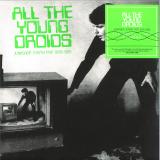
Compiled by Philip King “And then came the rise of synth pop : blokes with dodgy haircuts hunched over keyboard-operated machines stuffed with wires and do-it-yourself tone oscillators making sounds like a brood of geese passing gas in a wind tunnel. Whoopee! This is the way the ‘70s ended : not with a blood-curdling bang bang but with a cheap, synthesized, emasculating whimper.” NICK KENT, NME. All The Young Droids: Junkshop Synth Pop 1978-1985 is a new compilation that charts the underbelly of the epoch-defining sound of the synthesiser in 80s popular music. Compiled by Philip King (previously seen compiling All The Young Droogs, Glitterbest and Boobs - The Junkshop Glam Discotheque), the music here connects the dots between DIY synth enthusiasts grappling with new, cheap synthesisers at the tail-end of punk and wannabe, jobbing songwriters enthral to the new music pioneered by Gary Numan, Depeche Mode and Daniel Miller’s Mute Records. Featuring rare tracks of auto-didactic progressive pop music, proto-techno punk, shoot-for-the-stars-land-in-the-gutter chart flops and heralded, underground synth classics, School Daze paints a picture of beautiful failure. Complete with extensive sleeve notes written by King and never before seen imagery, all 24 tracks were remastered by RPM in-house engineer Simon Murphy, many from vinyl copies due to lost master tapes. The story told on All The Young Droids is one of the dawning opportunity presented by both the emergence to the market of cheaper analog synthesisers and the distribution networks plus indie labels that exploded with the advent of punk music in 1976. While the music that sprouted out all over the globe in the wake of these factors was decried as fake, plastic, a refutation of punk’s guitar-led revolution, it’s telling that much of the music on All The Young Droids.. was created in bedrooms, ramshackle studios and home-made set ups with often borrowed equipment. In the era of record labels jumping to capitalise on the success of The Sex Pistols, The Clash (both on major labels, of course) these artists struggled to stand out from a new gold-rush with next to no budget or PR team. With radio and labels desperate for the new Yazoo, what resulted was a testament to necessity being the mother of invention. At the time, the synthesiser was the music of the future, a shiny new machine that could paint like an orchestra with a single finger and a 4-track. In the hands of Manchester avant-pranksters Gerry & The Holograms it’s a pulsing, sardonic weapon.. the only instrument on the Messthetics classic lampooning of New Wave fashion. In Hamburg, a 16 year old Andreas Dorau used it to write and record (with his female classmates on vocals) a global smash in Fred Vom Jupiter (later licensed to Mute Records). The hard-to-find English version (Fred From Jupiter, natch) is included here. Many artists with alreadystoried careers caught the bug and recorded synthesiser-fuelled peons to space, computers, the future and, of course, love-interests. Harry Kakoulli, late of Squeeze, recorded a solo album in 1979 that included the incredible power-synth-pop smash-that-never-smashed I’m On A Rocket. Similarly, Ian North of Neo and American Power Pop stalwarts Milk ’n’ Cookies bought a Korg MS20 and used a tape machine to record We’re Not Lonely, an absolute lost-classic of minimal synth pop. We’re Not Lonely also features on the Junkshop Synth Pop sampler 7” twinned with John Howard unreleased track You Will See, released April 12th 2025. There are plenty of compilation debuts in evidence. Sole Sister were a mysterious trio who were featured on the Scaling Triangles compilation of female-fronted, queer-adjacent post-punk / underground music that also featured The Petticoats. Selwin Image were from San Francisco and featured members of the recently defunct power pop/punk group The Pushups. Their stupidly catchy The Unknown fizzes with New Wave energy - think XTC to Sparks but remains unreleased until now. Dream Unit’s A Drop In The Ocean is an early synth wave cut, positively teaming with Joy Division instrumentation, previously only released on a long-forgotten and super rare, self-released EP. Incandescent Luminaire’s Famous Names belies an archetypal struggle of a small-town trying to make it in a cruel industry but is a thrilling New Romantic-Synth Wave cross over with a OMD gloominess that’s a joy to hear. Feminist Minimal Wave track I Am A Time Bomb by performance artist Peta Lilly and Michael Chance is a revelation destined for new found cult status. It was released on 7” and lost until now. The flipside to the subterranean, never-made-it synth pop mentioned above are the ambitious, even fruity attempts at success that have a perennial elegance to their confidence. New Jersey-ite Billy London (real name Ed Barth) tried to cash in on the synth boom with Woman, released by a major label, a lurching new wave track built on the Louie Louie rhythm and a wonderfully camp Lou Reedstyle sleazy vocal before exploding in the synthesised chorus. The song bombed but with a chorus like this, you have to wonder why? Ex-Glitter Band member John Springate’s My Life is truly epic, with doomed chord progressions and massive sounding drums turning into at least 3 different songs in the course of the track. Before you wonder what’s going on the song resolves with a glorious return to the main refrain. The dry-ice-dressed dance floor is well catered for too. Design’s Premonition and Vision’s Lucifer’s Friend are stone-cold minimal synth bangers, well loved but given a new lease of life here. The Warlord’s The Ultimate Warlord was released in 1978, a homespun proto Hi NRG banger that was later re-recorded by The Immortals in Canada who had a club hit with it. One-man- band Disco Volante’s No Motion was re-issued by Synth wave label Medical in 2012 but makes its first vinyl compilation appearance here. Close your eyes and you can imagine what Lawrence of Felt would have sounded like with some cheap Korgs a little earlier in his career. Gibraltar-based trio The Microbes imagined a computer programming people to dance - how prescient - and ended up with a propulsive, robo-funk track with splendid rubbery bass playing over a tectonic drum machine. Previously picked up by Belgian label Stroom TV, Dee Jay Bert & Eagle’s heavily Euro-accented I Am Your Master demands the listener to “come to paradise!” In a frankly terrifying manner. All The Young Droids is the first compilation to peel away from the narrative that dour, Minimal Synth and Cold Wave were the only musical children of the first rush of synth pop. Philip King and School Daze Records describe a much more complicated world: along with the austere, Brutalist children of Daniel Miller (who produced Alan Burnham’s Bowie-Low-influenced Science Fiction here) was a plethora of desperate cash-ins, accidental mainstream hits, ambitious pop dramas and major label punts that went nowhere. Crucially, the compilation blurs the line between junk and treasure. What if the two things are interchangeable. What if it’s all science fiction?
The catalog of Discomagic’s sublabel Sensation Records is a true treasure chest of surprises. Rare gems sought after by collectors, whose prices on the secondary market often exceed €100, €200, and sometimes even €500. Once again, Vintage Pleasure Boutique reaches into this vault of highly coveted obscurities. This time, the focus is on SNS 8017.
It is one of the cult productions by Raffaele Fiume, revered, cherished and long admired mainly thanks to the distinctive vocal presence of Giusy Ravizza. Upon its original release in 1984, the record did not achieve major commercial success. However, with the resurgence of Italo disco, the rise of the internet, discussion forums, collector communities, online marketplaces and web radio stations, places where fans and collectors gathered to rediscover forgotten tracks, “Light” gradually emerged as a highly desirable, much-loved and increasingly hard-to-find title.
Once again, Vintage Pleasure Boutique steps in to meet the expectations of all those who wish to own a vinyl copy of Giusy Ravizza – “Light.” This is not the original Italian pressing with the SIAE stamp on the label, but it sounds absolutely excellent.
The Éthiopiques series returns! Essential archive recordings from an extremely fruitful period in Ethiopian music.
Before “Swinging Addis” took over the world, there was Moussié Nerses Nalbandian — the Armenian-born composer who shaped modern Ethiopian music. Mentor, arranger, and pioneer, he laid the foundations of Ethio-jazz.
This Éthiopiques volume revives his forgotten legacy, recorded live by Either/ Orchestra First issue ever with new exclusive photos and in depth liner 8-page insert.
“Ethiopian jazzmen are the best musicians that we have seen so far in Africa.
They really are promising handlers of jazz instruments.”
Wilbur De Paris
(1959, after a concert in Addis Ababa)
አዲስ፡ዘመን። *Addis zèmèn* **A new era.**
The time is the mid-1950s and early 1960s, just before "Swinging Addis" bloomed – or rather boomed – onto the scene. Brass instruments are still dominant, but the advent of the electric guitar, and the very first electronic organs, are just around the corner. Rock’n'Roll, R’n’B, Soul and the Twist have not yet barged their way in. Addis Ababa is steeped in the big band atmosphere of the post-war era, with Glenn Miller's *In the* *Mood* as its world-wide theme song, neck and neck with the Latin craze that was in vogue at the same period. Life has become enjoyable once again, with the return of peace after the terrible Italian Fascist invasion of Ethiopia (1935-1941). The redeployment of modern music is part and parcel of the postwar reconstruction. *Addis zèmèn* – a new era – is the watchword of the postwar period, just as it was all across war-torn Europe.
The generation who were the young parents of baby boomers** were the first to enjoy this musical renaissance, before the baby boomers themselves took over and forever super-charged the soundtrack of the final days of imperial reign. Music is Ethiopia's most popular art form, and very often serves as the best barometer for the upsurge of energy that is critical for reconstruction. Whether it be jazz in Saint-Germain-des-Prés or the *zazous* who revolutionised both jazz and French *chanson* after the *Libération*, be it Madrid's post-Franco Movida, or Dada, the Surrealists and *les années folles* that followed World War I, the periods just after mourning and hardship always give rise to brighter and more tuneful tomorrows. Addis Ababa, as the country's capital, and the epicentre of change, was no exception to this vital rule.
**Two generations of Nalbandian musicians**
Nersès Nalbandian belonged to a family of Armenian exiles, who had moved to Ethiopia in the mid-1920s. The uncle Kevork arrived along with the fabled "*Arba Lidjotch*", the** "*40 Kids*", young Armenian orphans and musicians that the Ras Tafari had recruited when he visited Jerusalem in 1924, intending to turn their brass band into the official imperial band. If Kevork Nalbandian was the one who first opened the way of modernism, pushing innovation so far as to invent musical theatre, it was his nephew Nersès who would go on to become, from the 1940s and until his death in 1977, a pivotal figure of modern Ethiopian music and of the heights it. Going all the way back to the 1950s. Nothing less. And it is Nersès who is largely to thank for the brassy colours that so greatly contributed to the international renown of Ethiopian groove. While the younger generations today venture timidly into the genealogy of their country's modern music, often losing their way amidst a distinctly xenophobic historiographical complacency, many survivors of the imperial period are still around to bear witness and pay tribute to the essential role that "Moussié Nersès" played in the rise of Abyssinia's musical modernity.
Given the year of his birth (15 March 1915), no one knows for sure if Nersès Nalbandian was born in Aintab, today Gaziantep (Turkiye/former Ottoman Empire) or on the other side of the border in Alep, Syria... What is certain is that his family, like the entire Armenian community, was amongst the victims of the genocide perpetrated by the Turks. Alep, the place of safety – today in ruins.
Before Nersès then, there was uncle Kevork (1887-1963). For a quarter of a century, he was a whirlwind of activity in music teaching and theatrical innovation. *Guèbrè Mariam le Gondaré* (የጎንደሬ ገብረ ማርያም አጥቶ ማግኘት, 1926 EC=1934) is his most famous creation. This play included "ten Ethiopian songs" — a totally innovative approach. According to his autobiographical notes, preserved by the Nalbandian family, Kevork indicates that he composed some 50 such pieces over the course of his career. This shows just how much he understood, very early on, the critical importance of song as Ethiopia's crowning artistic form. Indeed, for Ethiopian listeners, the most important thing is the lyrics, with all their multifarious mischief, far more than a strong melody, sophisticated arrangements or even an exceptional voice. (This is also why Ethiopians by and large, and beginning with the artists and producers themselves, believed for a long time — and wrongly — that their music could not possibly be exported, and could never win over audiences abroad, who did not speak the country's languages).
Last but not least, one of Kevork's major contributions remains composing Ethiopia's first national anthem – with lyrics by Yoftahé Negussié.
Nersès Nalbandian moved to Ethiopia at the end of the 1930s, at the behest of his ground-breaking uncle. Proficient in many instruments (pretty much everything but the drums), conductor, choir director, composer, arranger, adapter, creator, piano tuner, purveyor of rented pianos,... he was above all an energetic and influential teacher. From 1946 onwards, thanks to Kevork's connexion, Nersès was appointed musical director of the Addis Ababa Municipality Band. In just a few years, Nersès transformed it into the first truly modern ensemble, thanks to the quality of his teaching, his choice of repertoire, and the sophistication of his arrangements. It was this group that would go on to become the orchestra of the Haile Selassie Theatre shortly after its inauguration in 1955, which was a major celebration of the Emperor's jubilee, marking the 25th anniversary of his on-again-off-again reign.
At some point or other in his long career, Nersès Nalbandian had a hand in the creation of just about every institutional band (Municipality Band, Police Orchestra, Imperial Bodyguard Band, Army Band, Yared Music School…), but it was with the Haile Selassie Theatre – today the National Theatre – that his abilities were most on display, up until his death in 1977. To this must be added the development of choral singing in Ethiopia, hitherto unknown, and a sort of secret garden dedicated to the memory of Armenian sacred music, and brought together in two thick, unpublished volumes. Shortly before his death (November 13, 1977), he was appointed to lead the impressive Ethiopian delegation at Festac in Lagos, Nigeria (January-February 1977).
His status as a stateless foreigner regularly excluded him from the most senior positions, in spite of the respect he commanded (and commands to this day) from the musicians of his era. Naturally gifted and largely self-taught, Nerses was tirelessly curious about new musical developments, drawing inspiration from the very first imported records, and especially from listening intensely to the musical programmes broadcast over short-wave radio – BBC *First*. A prolific composer and arranger, he was constantly mindful of formalising and integrating Ethiopian parameters (specific “musical modes”, pentatonic scale, and the dominance of ternary rhythms) into his “modernisation” of the musical culture, rather than trying to over-westernise it. It even seems very probable that *Moussié* Nerses made a decisive contribution to the development of tighter music-teaching methods, in order to revitalise musical education during this period of prodigious cultural ferment. Flying in the face of all the historiographical and musicological evidence, it is taken as sacrosanct dogma that the four musical modes or chords officially recognised today, the *qǝñǝt* or *qiñit* (ቅኝት), are every bit as millennial as Ethiopia itself. It would appear however that some streamlining of these chords actually took place in around 1960. It was only from this time onward that music teaching was structured around these four fundamental musical modes and chords: *Ambassel*, *Bati*, *Tezeta* and *Antchi Hoyé*. A historical and musical “details” that is, apparently, difficult to swallow, especially if that should honour a *foreigner*. Modern Ethiopian music has Nersès to thank for many of its standards and, to this day, it is not unusual for the National Radio to broadcast thunderous oldies that bear unmistakable traces of his outrageously groovy touch.
- A1: Borai & Denham Audio - Make Me
- A2: Smoke City - Mr. Gorgeous (And Miss Curvaceous) (Mood Ii Swing Vocal Mix)
- B1: Chris Raven - I Know You Love Me Too (Bruce Norris Remix)
- B2: Grooveyard - Mary Go Wild
- C1: Dave Swayze - Last Flight To Paris
- C2: Joe Goddard - Music Is The Answer (Hot Since 82 Remix)
- D1: Just A Man - I'm Sorry (Original Club Mix)
- D2: Teddy Pendergrass - Life Is A Song Worth Singing (Jamie Jones Remix)
Since 2020, 12 Inch Lovers have been releasing new samplers every year, eagerly anticipated by collectors. These samplers have now become a staple and are easily added to vinyl collections across Europe. They offer timeless classics and rare tracks that are often hard to find elsewhere.
With Samplers 11 & 12, they surprise again with a mix of modern classics and tracks that have never been released on vinyl or are difficult to find. By adding unique and exclusive tracks, the 12 Inch Lovers samplers remain innovative and high-quality. They are a must-have for DJs, collectors, and fans of contemporary classics!
SAMPLER 12
A1) Borai & Denham Audio - Make Me (original release 2023)
Released in 2023 on the British label Room Two Records (catalogue R212001) on twelve inch vinyl, Make Me combines breakbeat, house and speed garage with high energy, featuring clear use of Amen breaks, rumbling sub bass and sharp rave sounds. At the heart of the track lies an instantly recognisable vocal hook from the mid eighties, a sample taken from Donna Allen - Serious (1986). The result feels like a long forgotten rave anthem from the nineties wrapped in a modern sound.
The original twelve inch pressing quickly became a highly sought after collector's item and received a limited pink vinyl repress in 2025. This track, first issued only on orange vinyl in 2023, was officially re released once all samples were cleared. It has every ingredient of a future classic, a true underground anthem for fans of modern UK rave and jungle energy.
A2) Smoke City - Mr. Gorgeous (and Miss Curvaceous) (Mood II Swing Vocal Mix) (original release 1997)
Originally released in 1997 on the album Flying Away by Smoke City. The Mood II Swing Remix, produced by New York house duo John Ciafone and Lem Springsteen (also the producers behind Ultra Naté - Free), takes the song straight to the dance floor with a smooth groove, soulful vocals and a deep, hypnotic flow.
The iconic line "Cool and calm, Mr Gorgeous..." remains untouched, while the remix enriches the original Latin and trip hop influences of the band with that distinctive late nineties house atmosphere. The result is a timeless club favourite, almost nine minutes of pure vibe (the Mood II Swing Vocal Mix runs 9minutes and 20 seconds), adored by DJs who like to bring a touch of soul to their house sets.
Released on Jive Records, the track received great praise. Music Week highlighted its "tight ay ay ay hook" and noted that the Mood II Swing and Hyperspace mixes made it a real standout. The original version reached number one in Italy in 1997, and the Mood II Swing Remix has since gained cult status in the Belgian club scene and beyond as the perfect marriage between soul and dance floor energy.
B1) Chris Raven - I Know You Love Me Too (Bruce Norris Remix) (original release 1997)
Christian Raabe, better known as Chris Raven, is a German producer who made his name in the late nineties progressive trance scene.
The Bruce Norris Remix of I Know You Love Me Too (Additive Records, catalogue 12AD 027) first appeared in late 1997 and was officially released in early 1998. The remix builds an euphoric atmosphere witha beautiful melody, dreamy pads and powerful drums, all typical of the progressive trance sound of that period.
The track gained extra attention when it appeared on Northern Exposure 3: Expeditions by Sasha and John Digweed in 1999. Many fans first discovered it there (especially the Van Bellen Remix version), helping to cement the cult status of I Know You Love Me Too within the progressive and trance community.
B2) Grooveyard - Mary Go Wild (original release 1996)
One of the most recognisable and iconic club tracks in Belgian and Dutch underground house history is without a doubt Mary Go Wild, released in 1996 on EC Records. The track quickly became the defining anthem of the rave scene in the Low Countries.
With a raw groove around 133 BPM, pumping four to the floor drums and the hypnotic vocal sample "Mary... go wild!", the record set dance floors ablaze in the nineties. Producer Jeroen Verheij, also known as Secret Cinema (from the classic Timeless Attitude), perfectly captured the raw energy of the European house movement of that era.
To this day Mary Go Wild stands as a symbol of pure rave power, a timeless anthem that, as one Discogs collector put it, "still works on any dance floor." Original twelve inch pressings on EC Records and later issues on Blanco Y Negro are highly sought after, and the track remains a staple in retro house and classic DJ sets.
C1) Dave Swayze - Last Flight To Paris (original release 2000)
Dave Swayze, best known for his classic Goldwave, has several hidden gems to his name, and Last Flight To Paris is certainly one of them. Released in November 2000 on the Belgian label Yeti Records, the track is a subtle blend of trance and progressive house. It is known for its emotional melody, dreamy build up and strong percussion, built on the foundation of progressive trance but with thewarmth and groove of house.
At the time, Last Flight To Paris was frequently played by progressive trance DJs and soon became a cult favourite among vinyl collectors within the genre. Original pressings on Yeti Records are now extremely rare and much sought after. The mix of emotion, euphoria and timeless club energy makes Last Flight To Paris a hidden treasure from the late trance era of 1999 and 2000.
C2) Joe Goddard - Music Is The Answer (Hot Since 82 Remix) (original release 2017)
This remix by Hot Since 82 (Daley Padley, from Barnsley in the north of England) for Music Is The Answer by Joe Goddard is partly based on the original classic Celeda - Music Is The Answer (in the Danny Tenaglia Remix). It was released in February 2017 as a digital exclusive through Domino Records.
Hot Since 82 reworked the original, a vocal house track by Hot Chip member Joe Goddard, into a deep, grooving house track with a warm rolling bass line. The soulful vocals of Joe Goddard (featuring SLO) take on a subtle melancholic tone in his remix, creating a modern house classic filled with emotion and drive.
The remix became a major club favourite in 2017 and 2018, supported by leading names in the tech house scene and heard at festivals around the world. Interestingly, this popular version had never been released on vinyl, which only increased its cult status among collectors. Music Is The Answer (Hot Since 82 Remix) remained a digital classic for years, until now, finally available in this long awaited vinyl edition.
D1) Just A Man - I'm Sorry (Original Club Mix) (original release early 2000s)
The French project Just A Man consists of brothers Hervé and Nicolas Subrechicot. Their track I'm Sorry is an emotionally charged house record that perfectly captures the early 2000s club atmosphere.
Released in 2003, the song combines soulful male vocals with a warm, rhythmic production that blends UK garage and classic club house influences. The Original Club Mix (6 minutes and 14 seconds) builds gradually towards a powerful, uplifting climax, carried by rich chords and an irresistible groove.
Although I'm Sorry stayed somewhat under the radar at the time, it is regarded by connoisseurs as a hidden gem, a perfect balance of melody and groove. The twelve inch vinyl release (on RKG / Motor Music, 2003) is now hard to find and highly prized among vinyl and house collectors, which only adds to its appeal.
I'm Sorry embodies the pure sound of early 2000s vocal house: sincere, funky and danceable, with that unmistakable UK garage touch, even more evident in the G Box Garage Club Remix on the same EP. An unfairly overlooked track that has always remained a true timeless classic since the very beginning of 12 Inch Lovers.
D2) Teddy Pendergrass -Life Is A Song Worth Singing (Jamie Jones Remix) (original release 2019)
In 2019 Jamie Jones breathed new life into the classic soul song by Teddy Pendergrass with a contemporary house rework. The remix was released in March 2019 as part of the digital EP Mixmag Presents: Teddy Pendergrass - The Remixes, issued in honour of the documentary If You Don't Know Me, a film about the rise of Teddy Pendergrass, the first African American male artist to achieve five consecutive platinum albums in the United States during the seventies.
Jamie Jones stayed true to the feel good essence of the 1978 original but wrapped it in a modern club sound, with pulsing synths, a warm rolling groove and a tight four to the floor beat providing the perfect base for Teddy's powerful and instantly recognisable voice.
The result is a captivating, soulful house track that effortlessly bridges past and present without losing the emotional power of Pendergrass's vocal delivery.
Despite its widespread popularity in the international club scene, where it became a favourite among DJs who love to blend soul with house, this remix never had a physical vinyl release. Until now, with its long awaited appearance on 12 Inch Lovers Sampler 12.