
pre-ordina ora26.06.2026
dovrebbe essere pubblicato su 26.06.2026
15,08 €
dovrebbe essere pubblicato su 26.06.2026

New 10th anniversary fully remastered special silver-vinyl edition of Soul Jazz Records" ground-breaking Venezuela 70 featuring Vytas Brenner, Pablo Schneider, Angel Rada, Miguel Angel Fuster and many more. Venezuela 70 was the first ever compilation of its kind to take a look at the fascinating music scene created in Venezuela in the 1970s, a stunning blend of Funk, Latin Rock, European electronic experimentalism, Jazz and more! Venezuela during the 1970s was both a modern cultural and economic powerhouse in Latin America, rich from vast oil supplies. Situated at the northern part of South America, with neighbouring Colombia to its west, Brazil to its south and a north coast bordering the Caribbean. The country"s position and wealth led to an explosion in cultural activity during this time. Taking musical influences from all these surroundings as well as healthy doses of American musical sounds, the 1970s saw the evolution of a new generation of creative Venezuelan artists such as Vytas Brenner, Angel Rada, Pablo Schneider and Miguel Angel Fuster, who all explored the possibilities of creating a stunning "melting pot" mix of underground rock, synthetic electronics, funk, jazz and Latin American while simultaneously exploring their links with Venezuelan roots music, creating a new sound.
dovrebbe essere pubblicato su 26.06.2026

The Mexican band The Survival created a blend of blues and acid rock influenced by the U.S. West Coast movement and British blues, captured on this 1971 album-the only one they recorded. They are often described as a combination of Country Joe and the Fish, Quicksilver Messenger Service, Moby Grape, and Ten Years After. One of the rarest records ever released in Mexico, it stands as a significant testament to the "onda chicana," a historical moment when Mexican youth took up instruments to express their reality. The group formed in August 1970 and recorded a single album, "La onda de The Survival" (1971), which combined laid-back blues with distortion. One distinctive feature was that lead vocals were handled by drummer Andrés Lusher-an unusual choice that gave the band a unique sonic identity. The album captured the spirit of the time, portraying generational shifts, repression of youth, fraternity, pacifism, and the influence of drugs. Despite their brief existence, The Survival and their sole album remain a significant testament to the "onda chicana", a lasting mark on the history of Mexican rock. Includes an insert with liner notes.
dovrebbe essere pubblicato su 26.06.2026

Sound Therapy is the culmination of over ten years of sonic experimentation, developed across the past three years between Sicily, the United Kingdom, and Brooklyn. It builds on the foundation of the 2021 Dub-Stuy single Pon Pause featuring Al Campbell, whose success became the catalyst for the album’s eight tracks.
Conceived across two distinct halves, the album reflects the dual nature of D-Operation Drop’s sound, moving from one drop and roots/steppers traditions into more modern, forward-leaning bass music. The whole is intended to move the listener between foundation and progression, day and night, light and dark, a dynamic reflected in both the music and album artwork.
Sound Therapy also reflects the collaborative nature of sound system culture, featuring vocalists Blakkamoore and JonnyGo Figure (US), Galas and Marina P (Italy), and Rider Shafique (UK), alongside instrumental contributions from Brooklyn-based saxophonist Troy Mobius. The album was collaboratively mixed in person with McPullish (US) and mastered at Star Delta (UK), with a focus on depth, weight, and sound system translation.
Sound Therapy stands as a complete body of work while establishing a broader musical direction for D-Operation Drop, with further singles, mixes, and related projects to follow.
dovrebbe essere pubblicato su 26.06.2026

The band The Screamin' Cheetah Wheelies emerged in 1991 in the Nashville blues scene. With their jam-oriented style, they quickly made a name in the live circuit and attracted the attention of major labels and ended up in the Billboard charts.
In 1996, they released their second album Magnolia. It was produced by Michael Barbiero (The Allman Brothers Band, Blues Traveler) and features a guest appearance by Warren Haynes of Gov't Mule. The album became a fan favourite and had two singles that appeared on the US Rock chart. Now, 30 years later Magnolia remains a Southern Rock classic and will finally be available on vinyl.
Magnolia is available as a 30th anniversary edition of 1500 individually numbered copies on blue vinyl and includes an insert.
dovrebbe essere pubblicato su 26.06.2026
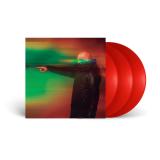
he all-time house music legend Roger Sanchez drops his brand new studio album ‘Spectrum’ - his first in twenty years. Previewed by three high-energy bangers - ‘Grinnin’ (with Fedde LeGrand), ‘Come My Way’ and ‘Temptation’ (with Low Steppa, featuring Ragdoll) - the record features the new focus track ‘How Do We Say Goodbye’, a collab with Karen Harding.
The globally celebrated and Grammy-winning DJ, producer and label head has been working on the album for years, much of it during his time in Shoreditch which has informed its euphoric UK summer sonic influences. But its diverse tracks reflect a spectrum of sounds, from pulsating club tracks to dancefloor fillers, through to more emotional moments and atmospheric elements. Lyrically it’s also the result of translating his personal experiences into song.
Roger says, “I’ve been working on this for the past six years, so it’s definitely a labour of love. During that time I got the chance to travel around the world and work with some amazing vocalists and songwriters to help me bring this project to life. I’ve got flavours from the UK, Spain, the US - all of this is part of the spectrum for. This project is about music and frequencies and light: so everything from the light to the soulful to the club-ready infrared, the emotionally-weighted ultraviolet. That’s what ‘Spectrum’ is all about for me.”
The new focus track ‘How Do We Say Goodbye’ was created with the topline extraordinaire and always in-demand collaborator Karen Harding, whose all-star credits include work with MNEK, Armand Van Helden, Rudimental, Wilkinson and many more. It’s a massive highlight of the album, with Karen’s soaring vocal class bringing both an irresistible hook and a touching sense of nostalgia, while Roger’s dynamic production ascends from a trance-like ambience into an electrifying drop.
Beyond the singles, ‘Spectrum’ also features a diverse array of other talents spanning multiple genres and nationalities. These include Melanic C, Kele Le Roc, Chico Castillo, Kelli-Leigh, Carnao Beats, Donae’O and more. It’s a guestlist which lives up to the anticipation for the record.
‘SPECTRUM’ is available as a special 3LP limited-edition pressed on red transparent vinyl.
dovrebbe essere pubblicato su 26.06.2026

This is the 12" already immortalized by Gilles Peterson! Dub Souljah, with its classic Roots Reggae/Dub-styled horns and brilliant lead and backing vocals, comes in two versions when Ekowmania meets DJ Sotofett. The first version, in 1970s tradition, is a rocking dancefloor Disco Dub with extended and highlighted percussion parts. Then there's the Ultra Dub – a severely deep and reduced dub where horns and vocals surface only intermittently through constant echoed kicks, minimal hi-hats, and a two-tone bassline. The title track is from Ekowmania's Dr. Afrodub album, produced by Jimi Tenor, but this 12" also includes two non-album cuts: the psychedelic Afro twist of Afrolistic Rock & Roll, and the cosmic Latin-styled Kuusikasi Funk, featuring beautiful saxophone and flute by Jimi Tenor. THIS 12" IS CUT WITH LOUD VOLUME FOR EXCELLENT CLUB USE!
dovrebbe essere pubblicato su 26.06.2026

ALERT: BIG 90s ITALIAN RAVE COMP - a lot of very in demand tunes on here.
Navigators
Franco Falsini and the Interactive Test Universe
There are musicians who follow their time.
And then there are those who seem to move along a different trajectory—like navigators crossing sonic eras without ever truly belonging to any one of them. The story of Franco Falsini belongs to the latter. It is a story that begins long before raves, before techno, before the word “electronic” had even become a recognizable musical genre. A story that moves across continents, technologies, and sonic visions, eventually arriving at a small creative laboratory born in Italy in the early 1990s: Interactive Test. This compilation is a fragment of that universe. But as often happens with the hidden histories of music, understanding it requires going back. Far back.
The Beginning: Machines, Tape and Space
In the late 1960s Franco Falsini leaves Italy and moves to the United States. It is not merely a geographical journey—it is also a journey into a new idea of music. At the time, synthesizers are only just emerging from research laboratories. Multitrack tape recorders allow musicians to build entire sonic worlds on their own. Technology is still far from standardized: every studio is almost an experimental workshop. In Virginia, Falsini builds one of his own. Among cables, oscillators, electric guitars and reels of magnetic tape, a kind of music begins to take shape that resembles nothing else being made at the time. It is not simply rock, and it is not yet truly electronic. It moves somewhere in the space between the two. Out of these explorations emerges Sensations' Fix, the project through which Falsini releases a series of albums during the 1970s. Records that seem to come from a parallel dimension: cosmic landscapes, electronically treated guitars, synthesizers drifting like satellites. Many years later those albums would be rediscovered as visionary works. But at the time they were simply the result of relentless curiosity. A curiosity that would never fade.
The City That Never Sleeps
In the 1980s Falsini’s trajectory leads him to New York. The city is a sonic organism in constant transformation. In its clubs and recording studios something entirely new is beginning to take shape: music built from drum machines, sequencers, and samplers, created for the body before the living room. It is the dawn of modern dance culture. Falsini works as a sound engineer, producer and experimenter. From close range he observes electronic music transforming into a global language. Machines become more accessible, computers begin entering studios, and rhythm takes on an increasingly central role. Yet even in this phase Falsini does not simply follow what is happening. He absorbs. Observes. Reimagines. When he eventually returns to Italy, he brings back not only technical experience but also a clear vision: the conviction that electronic music is an open space, a territory still waiting to be explored.
Tuscany, Early 1990s
At the beginning of the 1990s something is happening in Italy as well. In clubs, abandoned industrial warehouses and clandestine parties, a new scene is beginning to form. It is rave culture: a spontaneous movement bringing together DJs, producers and listeners in a collective experience driven by rhythm, technology, and creative freedom. It is within this context that Franco Falsini, together with his brother Riccardo, creates Interactive Test.
The name almost sounds like a scientific experiment. In many ways, it is. Interactive Test does not emerge as a traditional record label. It begins as a laboratory—a place where ideas, sounds and musical identities can be tested and explored. Around the Falsini studio in Tuscany a small constellation of artists and DJs begins to gather, helping to shape the sound of Italy’s emerging electronic scene. Among them are Andrea Giuditta, Francesco Farfa, Gabry Fasano, Roby Mastelloni, Roby J and many others. Each brings a different musical sensibility. But they all share the same intuition: electronic music is not a genre. It is a language.
The Laboratory of Identities
One of the most fascinating aspects of the Interactive Test universe is its constant play with identity. Franco Falsini releases music under several different names: Open Space, Youth Wave, Agent Fylfoyt, Man Myth Magic. These are not simply pseudonyms.
They are different sonic perspectives, as if each project were a window opening onto a parallel musical universe. Open Space, for example, explores more atmospheric and visionary territories. Youth Wave moves between electronic groove and club-oriented rhythms. Other projects experiment with digital psychedelia or hypnotic techno textures. Interactive Test becomes something more than a label. it becomes an ecosystem.
Domestic Machines, Infinite Worlds
Looking back today at the technology used in those productions, one might almost smile. Many tracks were created on Amiga computers, MIDI sequencers and analog synthesizers wired together in home studios—tools that appear modest when compared to today’s digital possibilities.
Yet precisely these limitations became a creative force. Every sound had to be built, shaped and reinvented. Sequences developed slowly, almost like living organisms. The tracks did not always follow traditional dance music structures; often they felt like genuine sonic journeys. Music built from space.
A Hidden Constellation
Many of the records released by Interactive Test in the 1990s remained for years almost invisible objects, circulating quietly among DJs, collectors, and devoted listeners. Yet it is precisely this underground existence that helped preserve them. Listening again today, one perceives something rare: the feeling of music that does not fully belong to its own time. Music suspended between different eras. Perhaps because it comes from a vision that both precedes and transcends trends.
Continuing the Journey
Looking at Franco Falsini’s entire path—from the electronic psychedelia of Sensations’ Fix to the rave culture of the 1990s—a surprisingly coherent line emerges.
A line defined by exploration.
Each project, each pseudonym, each record appears as a new route within the same great sonic voyage.
Interactive Test was one of its stations.
A laboratory.
A community.
A creative platform.
This compilation gathers some of its traces.
Not as a simple archive of the past, but as a map of a musical territory that continues to expand even today.
Like all true sonic explorations.
dovrebbe essere pubblicato su 26.06.2026

Roberta Flack: The Montreux Years präsentiert Live-Auftritte aus fast vier Jahrzehnten, von ihrem Debüt
beim Montreux Jazz Festival 1971 bis 2008. Diese neue Sammlung zeigt ihre stille Intensität als LivePerformerin, die ihr meisterhaftes Klavierspiel mit ihrer unverwechselbaren Stimme verbindet. Sie enthält
herausragende Versionen ihrer beliebtesten Klassiker sowie kraftvolle Interpretationen von Liedern anderer
namhafter Songwriter. Alle Aufnahmen dieser Sammlung sind bisher unveröffentlicht. Die Veröffentlichung
erscheint als 1 CD und 2 LP in audiophilem Vinyl und beinhaltet ein beeindruckendes neues Artwork, seltene
und bisher unveröffentlichte Fotos sowie exklusive Liner Notes ihrer langjährigen Managerin und Freundin
Suzanne Koga.
dovrebbe essere pubblicato su 26.06.2026

The dogs bark and the heavy-metal caravan tears through everything in its path. What lies ahead is a twisting, high-voltage journey for anyone with a taste for contemporary sound, and this record offers no lukewarm sightseeing, no pre-retirement indie pop-rock playlist drift. You'll have to learn to dance off-beat, wringing out every neuron before the final rinse. Drink your sweat, not your tears, and burn off the bitterness: that's the intended destination of the trip. This monstrous album has a computer where its heart should be. Three humans are wired into it: Michel Cloup, Manon Labry and Julien Rufié. Layer after layer, they've fed this sandpaper-and-digital-custard mille-feuille. On the menu, heaped and hurtling by the wagonload, the beast is stuffed with screams, laughter, melodies, noise: a frantic feast. It even leaves you wondering who's driving whom. Who seized control? The flesh? The printed circuits? Michel as a Titanic-'n'-Roll conductor? Julien and Manon as demolition apostles? Doesn't matter. For now, it rips, it saws, it strafes, it smashes, without pause. Rock debris_post or not_grumbling Parmentier-pop mash, white-hot hip hop spinning out, electro-disco-kraut fissuring, furious new French chanson: everything shoves its way into the blender. The real free world is here. Michel veers between naïve chants of dwindling hope, barking tsunamis of black fury and other delights, recounting the world in full 360 degrees as well as the twenty metres outside his front door. As ever, he speaks of himself, of us, speaks a lot, speaks too much. The intensity barely drops below the danger line; even the lows are stratospheric. Foot to the floor, calmly. In the thick of it, you'll wander room to room through the small theatre of France's grand political tragicomedy (David, Goliath and Godzilla), the consultation chamber of our disappointments (2027), the community repair shop of our hopes (Catharsis), the literary gym (The Poison, The Antidote), the torture room (H&M, with old Toulousain comrade Fredo Nonstop), the nightclub in flames (Shame, RIP), the electronic shooting gallery (Maria, Background Noise), the XXL confessional (For Whom? For What?) before ending in the Munch Room, the chamber of the primal scream (SISRAHTAC). "In the end, there are no words left. It howls, it howls, and it doesn't stop."
dovrebbe essere pubblicato su 26.06.2026

Somewhere between krautrock, noise rock, decaying psychedelia, and pagan proto-punk, Dééfait makes music like one performs a ritual: in trance, on repeat, and without a safety net. From the chaotic arteries of Mexico City to the basement venues of the Paris suburbs, Dééfait sculpts noise rock in apnea. Their self-titled debut EP is a noise rite: a wall of guitars, incantatory percussion, and possessed voices. With Dééfait, sound twists, repeats, stretches, until exhaustion and ecstasy. Formed in 2023, Dééfait brings together the Valero brothers (Lucas on guitar / Pablo, ex-Pays P, on drums), Enir Da (bass - Temir Alcy, Dali Muru & the Polyphonic Swarm), Grégoire Couvert (guitar), and Riki Lara, a Mexican-born vocalist and performer whose lyrics _ chanted, whispered, shouted _ alternate in three languages: English, Spanish, and French. Active on the Paris underground scene since 2024 (La Mécanique Ondulatoire, Le Cirque Électrique, Nouveaux Sauvages_), Dééfait imposes a ritual tension, physical, almost hallucinatory. No choruses to hum along to, no comforting melodies _ just a dense sonic flow that seeps and vibrates. This debut EP, set for release in December 2025 on Ici, d'ailleurs (Zëro, Matt Elliott, Bruit Noir_), lines up six long tracks resembling pagan litanies. Six extended pieces forming a possessed monologue, as if a camera had been slipped inside a burning body. Everything pants. Everything overflows. From We Love Each Other So Much That We Won't Belong To Any Species Anymore, love exceeds expected forms and becomes an organic pact, a ritual of species departure: "Cut me like you want, in bloom your fire," "We scratch consanguinity / We don't belong to any species anymore." It quickly suggests a call to ecstasy, to trance. The EP as a whole navigates unstable zones where desire, sacrifice, and alienation entwine like serpents on acid. Molokh 8 chants an offering to a carnivorous deity, between severed tongue and chemical body. In Bondbondbond, voices entangle, seek each other in a delirious, sensual chiaroscuro where pleasure derails into compulsion. It's a dogma-free ceremony, a game of inverted masks. Alether _ a live-explosive track and perhaps the most powerful of this first project _ shatters frameworks: convulsive dancing, possessed rhythms drowned by waves of guitar. Finally, Ferreri, cook for us closes the EP as a dark farce: a deviant homage to Italian filmmaker Marco Ferreri, the track chews and regurgitates words as if digesting an overfed world. Recorded in the chaos of DIY and mixed as a raw work, the record captures Dééfait's electric discharge in its purest state. The sound is dirty, visceral, possessed. Think Terminal Cheesecake, Boredoms, Nick Cave-era Birthday Party on acid, but also CAN impaled on an autopsy table, or a Giallo under a strobe light_ Yet it emerges as a singular work.
dovrebbe essere pubblicato su 26.06.2026
L'articolo è già in viaggio verso di noi e dovrebbe essere spedito da 26.06.2026.

As a follow-up to his most recent release on Fatsouls, we are pleased to present Trinidadian Deep’s – Deep Rooted Isle. As you could anticipate from him, the project is a fantastic collection of three excellent stand-alone pieces. With mesmerizing keys, dreamy pads, and layered percussion, the package produces a lush, ethereal soundtrack. We hope you enjoy it as much as we do.
dovrebbe essere pubblicato su 26.06.2026

dovrebbe essere pubblicato su 26.06.2026

Color Vinyl[54,58 €]
Light in the Attic präsentiert die lang erwartete Neuauflage von ,Synthesizing: Ten Ragas to a Disco Beat", dem revolutionären Album von 1982 vom Komponisten und Musiker Charanjit Singh. Er hat klassische indische Ragas mit den damals modernsten Roland-Synthesizern und Drumcomputern kombiniert und so ein elektronisches Meisterwerk geschaffen, das seiner Zeit weit voraus war. Bei den Live-Aufnahmen in den HMV-Studios in Mumbai verband Singh die Vergangenheit mit der Zukunft - er mischte die alte indische Tradition der Ragas (ein melodisches Gerüst, ähnlich einer Tonleiter, aus dem Musiker improvisieren oder komponieren können) mit pulsierenden elektronischen Dance-Beats. Das Album wurde ohne großes Aufsehen veröffentlicht, geriet in Vergessenheit und Singh zog sich aus dem Musikgeschäft zurück, um sich auf private Konzerte zu konzentrieren, aber damit fängt die Geschichte erst richtig an...
dovrebbe essere pubblicato su 26.06.2026

"Black & 'Pearlescent Transcendent Future'"-farbiges Vinyl. Light in the Attic präsentiert die lang erwartete Neuauflage von ,Synthesizing: Ten Ragas to a Disco Beat", dem revolutionären Album von 1982 vom Komponisten und Musiker Charanjit Singh. Er hat klassische indische Ragas mit den damals modernsten Roland-Synthesizern und Drumcomputern kombiniert und so ein elektronisches Meisterwerk geschaffen, das seiner Zeit weit voraus war. Bei den Live-Aufnahmen in den HMV-Studios in Mumbai verband Singh die Vergangenheit mit der Zukunft - er mischte die alte indische Tradition der Ragas (ein melodisches Gerüst, ähnlich einer Tonleiter, aus dem Musiker improvisieren oder komponieren können) mit pulsierenden elektronischen Dance-Beats. Das Album wurde ohne großes Aufsehen veröffentlicht, geriet in Vergessenheit und Singh zog sich aus dem Musikgeschäft zurück, um sich auf private Konzerte zu konzentrieren, aber damit fängt die Geschichte erst richtig an...
dovrebbe essere pubblicato su 26.06.2026

dovrebbe essere pubblicato su 26.06.2026
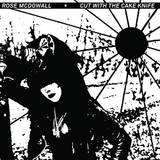
Cut The With The Cake Knife was recorded by Rose McDowall in 1988/89 following the break up of her group Strawberry Switchblade. Produced with the aid of several musicians in several studios, the album features songs written for the fabled second Strawberry Switchblade album. More importantly perhaps it showcases the honest, direct and life-affirming songs of one of the greatest unsung songwriters of the modern pop era at a tumultuous time in her career.
Tibet opens the set and could be one of the best pop songs you've never heard. The innate sadness of the songs' content - the loss of a friendship, impending sorrow - is heightened to heart-melting level by McDowall's pop nous and melodic sensibility. Choruses and hooks are everywhere on Cake Knife, from the outsider take on stadium 80s pop in Wings Of Heaven to the spiraling, ecstatic So Vicious, a glorious anthem that highlights the human fragility in McDowall's vocal performance, an instrument that has never lost the naïve purity it first exemplified in Strawberry Switchblade's early 80s recordings. The centerpiece of the album, the title-track, is the greatest Switchblade pop chart hit that never was. Like the veiled melancholy of her former group's hits, Cut With The Cake Knife hints at a darkness beneath the gloss, a darkness that saw McDowall delve into more esoteric territory with her subsequent recordings and collaborations. Cut With The Cake Knife serves as the bridge between the pop music McDowall had been making with her friends Jill Bryson, Lawrence from Felt and Primal Scream to what became a more extreme, deep sound informed by neo-folk and post industrial music.
Rose McDowall's role in the canon has always been one of an outsider. Beginning in Glasgow's East End in the avant proto-noise group The Poems, achieving fame briefly in the 80s and then disappearing into counter-cultural folklore, the emphasis in the internet-age has been skewed towards her image and cultural significance. Unseen to many, her solo work, her groups Sorrow and Spell and her collaborations with a whole host of underground luminaries have still touched lives. As McDowall elucidates: 'They're real sad songs, about real life. I've had people come up to me to say I'd connected with them and helped them. I remember a gig in America when we made a whole room cry. It was bizarre. A couple at the front of the stage started crying and then these two boys beside and suddenly everyone was crying. And I thought, "that's power."
Night School's issue of Cut With The Cake Knife includes unpublished photographs, extensive sleeve notes from Rose McDowall and 2 bonus tracks culled from the bootleg 7' 'Don't Fear The Reaper.' First vinyl pressing is Clear w/ Black swirl; 500 only / has DL card and booklet, with a poster
CD has extensive booklet and is packaged in anO-Card.
dovrebbe essere pubblicato su 26.06.2026
PNØ is the duo project of experimental vocalist Agnes Hvizdalek and techno innovator Jakob Schneidewind on electronics. They combine minimalistic musical structures with organic improvisations, pure vocal sounds with drum machines, synthesizers and effects
that trigger and manipulate each other’s output. Their vision for the future of music makes them explore crossing points between experimental and electronic dance music. Their first album, «Zakeri», was released in 2015. Since then, they have performed, among others, at ORF Musikprotokoll, Wiener Festwochen, Jazzwerkstatt Wien, Ottosonics, and de/semble.
The album «Hypatia» will be released on June 26th by Palazzo Recordings.
dovrebbe essere pubblicato su 26.06.2026

dovrebbe essere pubblicato su 26.06.2026
