While Toronto producer Demuir regularly features on a wide variety of house labels, it's always worth keeping an eye on his Purveyor Underground label and its' limited-edition offshoot. He's back on the latter label for this outing, where he shares vinyl space with long-serving Parisian producer (and Robsoul founder) Phil Weeks. Demuir handles side A, delivering two passes on 'The Spark': the lightly funk-fuelled original mix, where woozy jazz samples dance atop a rubbery bassline and vintage Masters at Work style beats, and the more bumpin', cut-up and sub-heavy swing of the 'Some Too Suspect remix'. On side B, Weeks delivers 'Party Time', a typically low-slung and analogue-rich deep house number where classic boogie-era vocal samples and occasional chords wrap around loose-limbed machine drums and a killer TB-303 acid bassline.
out of Stock
Last delivered 4 months ago available to reorder, subject to availability
For their very first offering, Hanna & Robbie unveils a 5-track album making an ever possible encounter between psychedelic fractured grooves and mellow sci-fi haze in a divergent electronic shell. Planet42 carves a slow-burning path through severance and trance, a trip back to the subconscious like an escape or a sin, guiding both body and mind into unfamiliar exploration
Taking a fey look on electronic performance, where dubby-inspired and fractured rhythms tend to unveil ethereal ambiances, HR was born and raised in the emergent underground electronic French scene and started being moving targets in 2023 with a first live show at the Supercamp Festival happy few’s gathering.
With a mosaic of gritty textures, clubby breaks and otherworldly echoes in the lead-off project Planet42, Hanna & Robbie dives deep in this restless esoteric tension their identity is all about : an spunky early signal sculpting precise and intricate yet atypical tones revealing this crawling need of delivering unsettled arrangements and dreamscaped lines. Already in the move for their next in order work, it is settled in their experimentation lab that new doses of psychedelia and delusive resonances were written as an incipit to a future alternative live act.
out of Stock
Last delivered 7 months ago available to reorder, subject to availability
Reggae music in many ways reminds us of America’s Motown records. The music comes out of its stable fast and furious we tend to know the songs, the artists, the
studio but who? are the players. The unsung heroes that in many cases, cut most of our favourite tracks One such band this applies to in the Reggae field is the Soul Syndicate Band.
Each Jamaican record producer would have their favourite set of musicians they would use, availability permitting. Although several musicians crossed over into different named bands. For example, a set of players working with Producer Bunny 'Striker' Lee would go under the guise of The Aggrovators. The same group working with Producer Joe Gibbs would work under the name The Professionals. Soul Syndicate were the band of choice for Producer Niney the Observer, who used them for his own recordings and when you put that aside the other artists Niney produced, Dennis Brown, Max Romeo, Michael Rose, I Roy, The Ethiopians, Barry Brown, Gregory Issacs and Freddie McGregor. To name a few and not necessary all, you begin to see the amount of material this set of musicians played on.
Built around the rhythm section of Calton 'Santa' Davis and George 'Fully' Fullwood, drums and bass respectfully. They were usually accompanied by Earl 'Chinna' Smith, Tony Chin on guitars, Keith Sterling, Gladstone 'Gladdy' Anderstone, Bernard 'Touter' Harvey, organ/keyboards and Noel 'Skully' Simms, percussion. Niney's tracks tended to be rhythm heavy and thus Sound System favourites.But when brass was needed/called for ,this was provided by the likes of Tommy McCook, Bobby Ellis, Felix ' Deadley Headley' Bennett. Niney not having a studio of his own at the time used most of Kingston's studios, again availability and money providing. But most of these cuts
selected for this release were cut at Channel 1 and a few exceptions at Randy's Studio 17 and at Joe Gibbs studio at Burns Avenue.
Niney also worked closely with King Tubby on his dub plates, so tracks after the recording sessions were taken to King Tubbys for reconstruction and sometimes
re-voicing over an existing rhythm. These were then used as version sides to the vocal cuts, but most importantly used to nice up the dances, being played out on King Tubbys Hometown Hi-Fi Sound System. We have pulled together a selection of such dub plate specials cut by the Soul Syndicate band for this release. Dub sides that emphasise how well the band worked together, and with Niney at the reigns and the added bonus of some Tubby magic sprinkled on top. Please see our Niney the Observer at King Tubbys 1973-1975 (JRO11) for further examples of this work.
We at Jamaican Recordings hope we are not alone in saluting the musicians, that played such a big part in producing many of our favourite Reggae Sounds. Having released titles by The Revolutionaries (JR003), The Aggrovators (JR005), Sly and Robbie (JR006), we are now pleased to release a selection of rare Dub cuts by another one of Jamaica's finest, the Soul Syndicate band to our catalogue...
Respect Jah Floyd.
out of Stock
Last delivered 7 months ago available to reorder, subject to availability
Minority Records is releasing a unique boxset Politique du silence with three early albums from Sylvain Chauveau, French composer of minimalist neoclassical music.
“When I made my first albums as a composer, I was obsessed with minimalism, and this quote from the film director Robert Bresson summed up my state of mind. I set myself three principles: 1) Use silence as a starting point, 2) Only add sound when it's absolutely essential, 3) Don't imitate the Anglo-Saxon musicians I admired, but draw on the musical culture of my country, France which lead me to listen intensively to Satie, Debussy and Ravel.” Chauveau explains the background to his work.
The collection Politique du silence contains the recordings of Des plumes dans la tête (2004), Un autre Décembre (2003) and Nocturne impalpable (2001) on coloured 180 gram vinyls. The cover features artwork by French photographer Valéry Lorenzo.
“When I discovered the simple and powerful black and white pictures by Valéry Lorenzo, in the 90s, I immediately fell in love with them. We became good friends and since then I ask him to let me use one of his photos for most of my album covers, or to make my portrait for press shots. It has become a real collaboration, music and images, for more than 25 years. It was then logical to ask him again for the cover of this boxset, like a gentle reflection on my piano and strings era. It's a true honour for me to see my early music recollected, repackaged, remastered after all this time. Which gives me hope that this music, in which I've put all my soul and heart during the years 2001 to 2003, is maybe not forgotten yet.” Chauveau himself adds of his collaboration with Valéry Lorenzo.
Nocturne impalpable and Un autre Décembre were re-issued by Minority Records in 2014 and 2015 and both titles completely sold out. This year’s release also includes the album Des plumes dans la tête in its world premiere on vinyl.
Nocturne Impalpable is a world of minimalism, abstraction, and contemporary rendition of classical music with variations for the piano, clarinet, strings, and accordion which are often compared to the compositions of composers Harold Budd and Claude Debussy. Here, Chauveau partially reveals his versatility as a composer by connecting electronic elements, noises, and ambient planes with monumental strings and piano preludes. The
album of piano variations Un autre Décembre is interspersed with field recordings and electronic noises. The inspiration for the recording of the album and for its name was the song Jaurès by the Belgian singer and composer Jacques Brel. This song tells the story of the grandparents’ generation who toiled in the mines. “Comfort and health won’t protect our generation from sadness and discontent. We also live through winter times, even if these are slightly warmer due to the current climate.” An album of 20 short instrumental sketches with several delicate intermezzos for the piano, string quartet, and the clarinet, Des plumes dans la tête, was composed for the eponymous film by director Thomas de Thier.
Sylvain Chauveau was born in 1971 in the French town of Bayonne and currently lives in Barcelona. His extensive discography of mainly meditative neo-classical recordings for the music labels FatCat, Sub Rosa, Sonic Pieces, and Flau is enriched by several collaborations and his participation in the Ensemble 0, Arca, and On projects. Chauveau has also composed many film soundtracks as well as music for the theatre. He has presented his works in Prague several times, most recently in the spring of 2024 at the Spectaculare festival. His compositions get tens of millions of streams on streaming services, and he’s been called the French king of minimalism.
Malena Zavala is an Argentinian-born, London-based artist, producer, and filmmaker, known for crafting ethereal, genre-blending music that navigates the space between her Latin heritage and her British upbringing. With the forthcoming album If This Life Could Start Again set for release on 30 January 2026 on Paraná Records, Zavala presents her most intimate, cohesive, and accomplished work to date, marking a significant evolution in her artistic journey.
With her new album, Malena creates an atmospheric dream pop world, weaving singer-songwriter intimacy with synth pop, Argentine folk, indiepop, rock and experimental music, threaded together by her blissful vocals and dreamy guitar work. Gorgeously warm and vivid, If This Life Could Start Again charts the journey from pain to acceptance, mapping out the non-linear nature of healing through a sonic landscape. Each song embodies a distinct emotion within that journey, from grief and chaos to feeling lost, seeking refuge, finding confidence, and finally acceptance and letting go. Drawing on her Argentinian roots, Malena uses the Andes mountains as both a visual and thematic anchor – the difficult climb towards higher ground becomes a metaphor for healing, whilst being lost at rock bottom reflects the darkest moments of the journey.
Completely composed and performed by Malena herself, the album was recorded in Girona’s L’Empordà countryside in Spain with producer Luke Smith. As a professional producer and audio engineer, this was Malena’s first time relinquishing production control – an intimate creative shift that allowed their shared vision to shape the album’s rich, enveloping sound.
However, Zavala’s career to date has been a testament to self-sufficient artistry. Her critically acclaimed debut, Aliso (2018), was written, recorded, and produced alone in her parents’ garage, which honed her dreamy bedroom pop sound. The album, praised by The Guardian for its “gently warped and beguilingly melancholy guitar pop,” ****, immediately catapulted her from DIY beginnings to prestigious stages, supporting acts like Lord Huron at London’s Roundhouse and Men I Trust at Village Underground and subsequently continuing on their UK/EU tours. Later with standout performances at Latitude, Green Man, and All Points East. Her consistent radio support from key influencers including BBC Radio 6 Music, BBC Radio 1's Huw Stephens, and Steve Lamacq has solidified her presence on the airwaves.
Her second album, La Yarará (2020), saw Zavala delve deeper into her roots, exploring Latin traditions like Cumbia and Bolero. This exploration of identity continues powerfully on the new album, but with a newfound lyrical depth and sonic confidence. The new album, If This Life Could Start Again, is a raw and transformative eight-track journey that maps the emotional landscape of healing. Written after a period of personal upheaval, the album traverses themes of grief, hereditary trauma, and self-discovery. The record’s narrative is structured like a mountain ascent. A challenging climb through varied emotional terrain, posing the central question: “Will you join the journey?” Sonically, this journey mirrors the non-linear path to acceptance, evolving from acoustic folk and synth-pop to funk-infused rhythms and rock anthems.
As a formidable live performer, Zavala has built a robust touring profile across the UK and Europe. She will embark on an extensive tour in February and March 2026 to support the album, with dates spanning major cities from London and Glasgow to Berlin, Paris, and Barcelona.
With If This Life Could Start Again, Malena Zavala fully realizes her artistic vision as a self-taught producer to an autonomous artist commanding her career through Paraná Records whilst reflecting the vast landscapes of her heritage and affirming her place as a compelling and evolving voice in contemporary music.
out of Stock
Last delivered 7 months ago available to reorder, subject to availability
If there is a year zero for the introduction of reggae music to Japan, you’d be forgiven for thinking it was 1979 when Bob Marley and the Wailers toured the country, trailed by an entourage of journalists, photographers and fans ready to spread the message of the music into all corners of Japanese society.
But the story of Japanese reggae is not a linear one, and the music that is collected on Tokyo Riddim 1976-1985 captures the moment J-reggae entered the broader public consciousness, merging commercial city pop style with an infectious backbeat, that has drawn comparisons with the emergence of Lovers Rock in the UK.
Rather than look directly to Jamaica, many producers and artists in Japan were inspired instead by the more approachable sounds of The Police and UB40, their reggae fix arriving pre-filtered through the lens of new wave pop from the UK. Playful and groovy, these album deep cuts have been overlooked for too long.
Among them are Miki Hirayama, the idol singer who borrowed the bassline from Bob Marley’s Natural Mystic on ‘Denshi Lenzi’, Chu Kosaka, who headed to Hawaii to cut the Jimmy Cliff-inspired ‘Music’ and Marlene, the Philippine songstress whose cover of Roberta Flack’s ‘Hittin’ Me Wear It Hurts’ owed much to her producer’s obsession with Sly & Robbie’s Compass Point sound.
Then there was Izumi “Mimi” Kobayashi, who enlisted the Babylon Warriors to perform on a dubbed-out version of her own track ‘Lazy Love’, the city pop-meets-new wave reggae sound of Miharu Koshi’s ‘Coffee Break’, Junko Yagami’s anti-apartheid deep cut ‘Johannesburg’ and Lily, whose ‘Tenkini Naare’ was produced by Ryuichi Sakamoto and closes out the compilation with a flourish.
While these stories may not always conform to neat narratives, they do provide a more accurate reflection of the indirect ways in which styles infiltrate one another and, in their naivety, have the potential to create something beautifully strange and entirely new. Previously only available in Japan, the tracks on this compilation are a testament to that curious alchemy.
Tokyo Riddim 1976-1985 is released on vinyl and as a full album download (no streaming), featuring original artwork by Japanese Fukuoka-based artist Noncheleee, whose cover pays homage to the iconic dancehall album art of Wilfred Limonious.
Released on 1st September, Tokyo Riddim 1976-1985 is part of Time Capsule's Nippon Series, a loose series of compilations exploring different musical scenes from Japan between the 1960s and 2010s.
out of Stock
Last delivered 8 months ago available to reorder, subject to availability
Remix EP featuring remixes by Justin Robertson and Hawksmoor
Magick Knives is a four-piece band conjuring cinematic post-punk from the sandy shadows of the Sonoran Desert. Drawing from gothic rock, darkwave, and cinematic atmospheres, their music is less composed than summoned, blending hypnotic basslines, ghostly guitar textures, and synths that shimmer.
Formed by vocalist/bassist Sonia Campbell and visual artist + guitarist/synth wizard Daniel Martin Diaz (Trees Speak), the band emerged through instinct and alchemy. Rounded out by lead guitarist Daniel Singleton and drummer Daniel Thomas, Magick Knives quickly found a shared sonic language that is brooding, immersive, and otherworldly.
„Wuthering Heights“ ist Charli xcx neues Album, welches sie für Emerald Fennells gleichnamigen neuen Film für Warner Bros. Pictures geschrieben. Der Film läuft unter dem deutschen Titel „Sturmhöhe“ am 12. Februar 2026 in unseren Kinos an, das Album erscheint einen Tag später bei Atlantic Records und kann ab sofort vorbestellt werden. Fennells Verfilmung erzählt eine der bekanntesten Liebesgeschichten der Literatur in einer radikal eigenen, zeitgenössischen Interpretation: Margot Robbie spielt Cathy, Jacob Elordi verkörpert Heathcliff. Ihre verbotene Anziehung schlägt um in eine Beziehung, die sich zwischen Begehren, Abhängigkeit und Kontrollverlust immer weiter auflädt.Für die vielfach ausgezeichnete britische Schauspielerin, Filmemacherin und Drehbuchautorin Emerald Fennell ist „Wuthering Heights“ nach „Promising Young Woman“ und „Saltburn“ die dritte Regiearbeit. Charli sagt über die Zusammenarbeit: „Emerald hat mich letztes Jahr an Weihnachten angerufen und gefragt, ob ich mir vorstellen könnte, an einem Song für ihre Adaption zu arbeiten. Ich habe das Drehbuch gelesen und war sofort inspiriert. Finn Keane und ich begannen daraufhin nicht nur an einem, sondern an mehreren Songs zu arbeiten, die sich stimmig in die Welt einfügen, die Emerald erschafft. Nach meinem letzten Album war es befreiend, komplett in etwas Neues einzutauchen – in einen Gegenpol zu dem, womit ich mich zuvor so intensiv beschäftigt hatte. Wenn ich an Wuthering Heights denke, denke ich an Leidenschaft und Schmerz, an England, an die Moore, an Matsch und Kälte, an Entschlossenheit und Härte.“
Gegründet 1992 in London von Sänger und Songwriter David Christian, gehören Comet Gain seit über drei Jahrzehnten zu den prägenden Namen des internationalen Indie-Underground. Inspiriert von Creation Records, den Television Personalities und Mod-Ikonen wie Dexys, The Style Council und Vic Godard, zieht die Band ihre Linie von The Velvet Underground, The Byrds bis zu den 13th Floor Elevators. Acht Alben auf Labels wie Wiiija, Kill Rock Stars, What"s Your Rupture und Fortuna POP! dokumentieren ihren unverwechselbaren Stil: eine Mischung aus französischer Nouvelle Vague und englischem "Kitchen Sink"-Herz, Riot Grrrl und Acid Punk, C86, Post-Punk und Northern Soul. "City Fallen Leaves", ursprünglich 2005 erschienen, gilt als Schlüsselwerk der Band und wird nun weltweit von Tapete Records neu aufgelegt. Boy/Girl-Vocals, kratzige Gitarren, Lo-Fi-Charme, Garagebeat und bittersüße Melodien machen dieses Album zu einem zeitlosen Statement für Enthusiasmus und Schmerz, Liebe und Wut. Einfach auflegen, laut drehen und wieder lebendig fühlen.
Iconic hip-hop duo The High & Mighty, composed of rapper Mr. Eon and producer DJ Mighty Mi, make their long-awaited return with Sound of Market, their first studio album in over twenty years. The release marks a powerful comeback for one of underground hip-hop’s most celebrated duos — a project steeped in nostalgia, boom-bap grit, and the timeless energy of East Coast rap.
Named in honor of Sound of Market Street, the legendary Philadelphia record store that served as a hub for crate diggers, DJs, and hip-hop heads for decades, the album pays homage to the culture that shaped The High & Mighty’s sound and identity. Much like the store itself, the record celebrates deep cuts, rare finds, and the shared love of vinyl that connects generations of hip-hop fans.
Across 17 tracks, Sound of Market revives the duo’s trademark wit and sharp lyricism while showcasing an impressive lineup of collaborators, including Kool Keith, The Alchemist, Your Old Droog, Large Professor, O.C., Chubb Rock, King T, Skillz, and many more. The result is a cohesive, sample-driven experience that bridges the classic and contemporary — reaffirming The High & Mighty’s status as true architects of independent hip-hop.
From the opening anthem “Two Man Crew” and the surreal swagger of “Pinky Tuskadero” with Kool Keith, to the cinematic boom of “Mighty’s Big 5 (Live from The Palestra)”, the record moves effortlessly through sharp lyricism, layered production, and a shared reverence for the foundations of the genre. Sound of Market is both a return and a reminder — a record that feels timeless in its authenticity.
„Wuthering Heights“ ist Charli xcx neues Album, welches sie für Emerald Fennells gleichnamigen neuen Film für Warner Bros. Pictures geschrieben. Der Film läuft unter dem deutschen Titel „Sturmhöhe“ am 12. Februar 2026 in unseren Kinos an, das Album erscheint einen Tag später bei Atlantic Records und kann ab sofort vorbestellt werden. Fennells Verfilmung erzählt eine der bekanntesten Liebesgeschichten der Literatur in einer radikal eigenen, zeitgenössischen Interpretation: Margot Robbie spielt Cathy, Jacob Elordi verkörpert Heathcliff. Ihre verbotene Anziehung schlägt um in eine Beziehung, die sich zwischen Begehren, Abhängigkeit und Kontrollverlust immer weiter auflädt.Für die vielfach ausgezeichnete britische Schauspielerin, Filmemacherin und Drehbuchautorin Emerald Fennell ist „Wuthering Heights“ nach „Promising Young Woman“ und „Saltburn“ die dritte Regiearbeit. Charli sagt über die Zusammenarbeit: „Emerald hat mich letztes Jahr an Weihnachten angerufen und gefragt, ob ich mir vorstellen könnte, an einem Song für ihre Adaption zu arbeiten. Ich habe das Drehbuch gelesen und war sofort inspiriert. Finn Keane und ich begannen daraufhin nicht nur an einem, sondern an mehreren Songs zu arbeiten, die sich stimmig in die Welt einfügen, die Emerald erschafft. Nach meinem letzten Album war es befreiend, komplett in etwas Neues einzutauchen – in einen Gegenpol zu dem, womit ich mich zuvor so intensiv beschäftigt hatte. Wenn ich an Wuthering Heights denke, denke ich an Leidenschaft und Schmerz, an England, an die Moore, an Matsch und Kälte, an Entschlossenheit und Härte.“
A moonstone glow infuses Boy Golden’s Best of Our Possible Lives, an album that finds its flow state. A pensive, questioning collection, Best of Our Possible Lives is informed by the artist’s intuitive, observational worldview, beaming honesty and levity in its quest for emotional balance. Buoyant, smooth and disarming, the music of singer-songwriter/producer Boy Golden is charmingly undefinable, drawing lines from the Tulsa sound to North Carolina indie, New Jersey DIY to swampy New Orleans folk. From opening riff to swirling final notes, Best of Our Possible Lives ripples like sun on the lake, an invitation to seek each our own bliss. Produced by Robbie Lackritz (Feist, Bahamas, Weather Station), Best of Our Possible Lives brought Boy Golden to Lucy’s Meat Market in Los Angeles with Pino Palladino (D’Angelo), Gabe Noel (Father John Misty), Joseph Shabason (Destroyer) and Abe Rounds (Meshell Ndegeocello) alongside Church of Better Daze founding members FONTINE and Austin Parachoniak. RIYL - Mk.gee, Waxahatchee, MJ Lenderman, Plant & Krauss’ Raising Sand, Paul Simon
For the first time, all the 1978 recording sessions of Lino Capra Vaccina's legendary Antico Adagio - including Frammenti da Antico Adagio and Echi Armonici da Antico Adagio - collected in one definitive deluxe edition. Minimalism, and so much more. Sheets of resonance, stunning harmonic interplay, intricate rhythms rising as one. Sidelong works of pulsing, hypnotic, ritualistic drone built from vibraphones, marimbas, gongs, bells, and cymbals, threaded by the sustained vocal tones of Juri Camisasca and Dana Matus. A trance-inducing, meditative, cosmic world of sonic interplay - the world beyond, joined with that which lays within.
Before an aberrant idea of progress ludicrously sped up our daily lives, even in hectic Milan it was possible to "play slowly" - with no pressure, simply following the path your art was showing you. This music moves between modal fascinations, ritual evocations, and states of hypnotic trance, evoking the acoustic environment of Tibetan and Zen Buddhist ceremonies and the temporal structures of Noh theatre, from which Vaccina took the name of his original label, Nō. Now, fittingly, this complete collection appears on Ubi Kū, the label of the Italian Buddhist Union.
Lino Vaccina (1953) first gained note as a member of Aktuala, creating a hybrid of rock, avant-garde, and ancient musics while incorporating sonic traditions from across the globe. After leaving in 1974, he studied at Milano's Civica Scuola di Musica, collaborating with Franco Battiato and Juri Camisasca, and forming Telaio Magnetico in 1975. In 1978 he self-released Antico Adagio in a tiny edition and wouldn't be heard from again until 1992. From 1979 to 1985 he was percussionist with the Orchestra of Teatro alla Scala under maestros such as Abbado and Ozawa. His career has been marked by an incredibly high bar of quality and a tragically slim recorded output - a rigorous and sensual language fusing Oriental, Mediterranean, and African influences with ritual elements and a cosmic sense of time.
As Massimo Torrigiani writes: "Lino Vaccina's music captivates through its internal coherence and its ability to generate states of suspension and deep listening - through undulations, small melodic fragments, dialogues between acoustic instruments and resonances that seem to evoke a phantom orchestra. An example of personal exploration, discipline and openness that speaks across time to anyone willing to be drawn into its sound."
Frammenti da Antico Adagio and Echi Armonici da Antico Adagio contain material from the original sessions, restored and issued by Die Schachtel in 2014 and 2017. The new masters, prepared by Giuseppe Ielasi, are based on those restorations and the original material. The package includes previously unpublished photographs from the May 1978 sessions and liner notes by Mauro Radice in Italian, English, and French. Cover art by Dana Matus. Printed by Legno, Milano & Mother Tongue, Verona.
Personnel: Lino Capra Vaccina (vibraphone, marimba, tablas, wooden drums, darbuka, cymbals, gong, metal sheets, bells, bass drum, tom, snare drum, piano, voice), Dana Matus (voice, percussion, cetra), Juri Camisasca (voice), Mario Garuti (violin), Roberto Mazza (oboe). Original production by Massimo Villa & Lino Vaccina with Piero Cannizzaro. Recorded May 1978 at Circle Studios, Milano.
The heights of the Italian avant-garde, at their very best.
Joe Allotta's solo project (drummer, composer, and singer) was born from his need for freedom of expression after numerous experiences
as a session musician for artists such as Davide Shorty, Johnny Marsiglia, Funk Shui Project, Mario Biondi, Leburn Maddox, Giles Robson,
Amy True, and Imaani (Incognito).
His compositions embody the desire to make jazz, in its various forms and influences, accessible to the widest possible audience without sacrificing the impact of an engaging and captivating live performance.
Joe Allotta blends hip hop, funk, and drum 'n' bass with contemporary jazz, perfectly blending vocals with his performances. He combines
his rhythmic exploration with a sweet and surprising voice, capable of lending further emotional depth to his music.
"Transition" is a musical journey that reflects a life in constant motion, where everything seems fleeting, fast, and fleeting, immersed in the
frenetic rhythms that surround us every day. The title also encompasses a more intimate dimension: the growth of his artistic identity. Joe is
no longer just a drummer and composer, but also a singer. His intense and surprising voice intertwines with his drumming in a continuous
dialogue, opening up new expressive possibilities and adding further depth to his musical language.
The album was produced in the studios of the Sghetto Club in Bologna, where Joe, together with his producer Jacopo Trapani, spent weeks
researching and experimenting: rehearsing, playing, processing and synthesizing sounds, developing and arranging ideas, thanks also to
the collaboration of extraordinary musicians. The result is a work that blends instinct and research, intimacy and openness, movement and
transformation: exactly what Transition aims to convey.
CREDITS
Giuseppe "Joe" Allotta: Compositions, Vocals, Drums, Bass, Keyboards
Jacopo Trapani: Compositions, Recording, Mixing
Chicco Allotta: Piano (Track 1)
Giovanni Galdo: Bass (Track 1)
Riccardo Dalle Vedove: Trombone (Track 1)
Piergiorgio Perrella: Guitar (Tracks 2, 5, 8, 9)
Elijah Lee Last Jacinto: Piano (Track 6)
Matteo Diego Scarcella: Sax (Track 6) Francesco Brini: Master
BLACK SWAN Return with Third Album “Paralyzed” — A Masterclass in Melodic Hard Rock Robin McAuley (McAuley Schenker Group), Reb Beach (Winger, Whitesnake), Jeff Pilson (Foreigner, The End Machine, ex-Dokken), and Matt Starr (Ace Frehley, Mr. Big) — collectively known as BLACK SWAN — are back with their explosive third album, Paralyzed. Following the critical acclaim of their previous releases, the supergroup once again delivers a powerful statement in modern hard rock. With all songs written and composed by McAuley, Pilson, and Beach, and expertly produced by Pilson, Paralyzed showcases Black Swan at their peak performance — offering a dynamic mix of towering vocals, razor-sharp riffs, and hook-laden melodies. The band’s chemistry continues to shine, elevating their songwriting and musical delivery to new heights.
Tracked at Pilson’s Los Angeles studio, the album reflects the tight-knit synergy among its members. McAuley’s commanding vocals remain as ageless, while the instrumentalists deliver with precision and fire. Much like its predecessors, the new record is a testament to the individual and collective talents of these seasoned musicians. Far from being a patchwork of their previous bands, BLACK SWAN has firmly carved out its own identity. Paralyzed is fresh, heavy, and melodically rich — a cohesive and compelling album that feels both classic and contemporary. Building upon the blueprint laid by their debut, Shake the World, the band expands their sonic universe. The result is a record that not only meets but surpasses expectations, cementing BLACK SWAN as a formidable force in the modern hard rock scene. Whether you’ve followed these legendary musicians since the heyday of '80s rock or you’re just now discovering their magic, Paralyzed is essential listening — a masterclass in melodic hard rock delivered by artists who continue to defy time and expectations.
It's a wild tribute to the chain- smoking Moto- Man from 1938 -- a character with so much hubris, he makes HAL 9000 look like a bundle of anxious circuits. On the A- side, "Elektro Returns" blasts off as a Clavioline- driven stomper with a bouncy beat and feverish chord changes. Think JEAN JACQUES PERREY on a bad LSD trip. On the other side, "I Am Elektro '25", reinvents their 2019 track of the same name. This fuzz- drenched pounder could have made THE VENTURES' Nokie Edwards wish he'd been built as a robot! Back from the future and outta space - LES ROBOTS return from their intergalactic journey! Moog on!
Maazn returns for its second release, Day Walker EP, featuring prolific French producer BOOH. Co-founder of BOOOoo! Records, alongside his sister Bousti, BOOH has taken a different direction for Day Walker EP, carefully crafting a unique balance between light and darkness. Electro leaning robotic vocoder samples and thumping basslines dominate the A side, with both Consequence and Magnetic System prepped to test the limits of any soundsystem.
The B-side follows a similar, but more introspective style, with title track Day Walker's slower pace and earworm synths more suited to hazey afters in forgotten corners. Kiss Me Goodbye closes out the EP with funk tinged acoustic bass sounds, married to driving EBM style drums that will even get your grandmother up and out of the chair.
out of Stock
Last delivered 19 days ago available to reorder, subject to availability
James Ruskin's Blueprint Records celebrates its 30th anniversary in 2026. Kicking off the festivities Vinicius Honorio returns to the label but this time it's alongside R.M.K who makes his Blueprint debut.
Vinicius Honorio is a Brazilian-born, London-based DJ and producer whose vision of techno is built on hypnotic repetition, gritty textures and emotional weight. With a career spanning over 2 decades, Vinicius has emerged as a powerful voice in contemporary techno - raw, focused and unflinchingly honest. His productions blend relentless drive with intricate groove, often laced with haunting melodic undertones and has released music on the likes of Figure, Token, Mord andSK_eleven, as well as Blueprint.
Hailing from London, R.M.K is the alias of Fossil Archive label head Roberto, representing a faster and more intense take on his unique brand of Techno. During his 20+ year career in music, he has formed friendships and worked in partnership with other respected artists such as Trevino (Marcus Intalex), Jamie Anderson, Robert Owens, Goldie and Nastia. Although the focus is always on the very heart of the most raucous of raves, R.M.K never shies away from groove and funk
out of Stock
Last delivered 3 months ago available to reorder, subject to availability
Robohands, das Projekt des Londoner Schlagzeugers/Komponisten Andy Baxter, gilt mit seiner experimentellen Erkundung des Jazz, Krautrock, Ambient und cineastischer Soundscapes als aufstrebender Name der internationalen Jazz/Ambient-Szene - mit über 10.000 verkauften LPs seiner fünf Alben und Auftritten bei den London Jazz, Montreal Jazz und Waking Life-Festivals. Die neue LP "Oranj" ist eine Hommage an die Pioniere der analogen Aufnahmetechnik mit Röhrenverstärkern, einem 1960er Fender Jazz-Bass, Fender Twin Reverb-Verstärkern und einer Vintage-Hammond-Orgel. Die Tracks vereinen die Wärme der 1960er/70er Jazz-Fusion und Soundtracks der Spät-1970er/80er mit modernen Einflüssen von Boards Of Canada bis Robert Glasper. Frenetische Uptempo-Nummern balancieren mit besinnlichen und experimentellen Momenten. Teils auf Tonband für zusätzliche Klangsättigung aufgenommen, ist es das bisher rohste und spontanste Album von Robohands.
out of Stock
Last delivered 4 months ago available to reorder, subject to availability
Following the release of Deltron 3030, all three members participated in the Gorillaz' self-titled debut album. With Del aka Deltron Zero on vocals, Dan the Automator aka The Cantankerous Captain Aptos on production, and Kid Koala aka Skiznoid the Boy Wonder on turntables, this album takes the listener on a paranoid journey set in a dystopian year 3030 dealing with viruses, the apocalypse, an oppressive government, and a war waged against a huge company called the Corporate Bank of Time that rules the universe, all to the well-crafted and consistent musical backing of the Automator. Appearances by Damon Albarn (The Gorillaz, Blur), Prince Paul, Peanut Butter Wolf, DJ Money Mark, Paul Barman, Mark Bell (Bjork, production), Sean Lennon, and Mr. Lif compliment Del's vocal style and add the right amount of flavor to this classic period piece.
Best known as the frontman of the influential indie rock trio Dinosaur Jr., J Mascis has also been a solo artist, producer, and film composer. Getting his start as a founding member of the hardcore band Deep Wound, Dinosaur Jr. was founded in 1984 and the group emerged among the most highly regarded alternative rock. By introducing volume and attack in his songs Mascis shed the strict limitations of early 1980’s hardcore, becoming an influence on the burgeoning grunge movement. Mascis’ body of work continues to inspire a generation of guitar players and songwriters today.
In 1997, Dinosaur Jr. disbanded and Mascis released More Light, his first recording under the moniker J Mascis + The Fog. Members and collaborators of The Fog have included Mike Watt (Minutemen / fIREHOSE), Ron Asheton (The Stooges), Robert Pollard (Guided By Voices), Kevin Shields (My Bloody Valentine), Dave Schools (Hard Working Americans / Widespread Panic) and Kyle Spence (Harvey Milk).
Soul Jazz Records present two hardcore bomb dancefloor fillers from Jerry Jones, originally released on Studio One in 1970.
‘There’s A Chance For Me’ gives Aretha Franklin's ‘Rocksteady’ a serious run for its money, while ‘Trying Times’ is Jerry Jones’s skanking version of Roberta Flack’s classic tune written by the mighty Donny Hathaway and Leroy Hutso
This 1983 period in which Gyllensköld was recorded was a fantastic time for the evolution of Steven Stapleton’s audio art. His collaborations with Diana Rogerson, Robert Haigh (Sema), David Tibet, and Thirlwell around this time elicited some of the most exciting work Nurse With Wound had yet recorded. Listen to this material and compare it to Chance Meeting and it becomes clear that in just a few years, Stapleton’s art had grown by leaps and bounds. The production quality on these tracks is remarkable, and the widening out of the NWW soundworld opened up a whole new audio toybox that Stapleton has continued to experiment with up to today. This new sound encompasses vocal experiments, vintage LPs of easy listening music, demented nursery rhymes, lateral references to disposable pop music, avant-garde jazz and minimalistic piano composition, all glued together with evocative atmospheres redolent of things unholy, troubling and perverse, but always oddly indefinable and puzzlingly misshapen. In retrospect, Gyllensköld can be seen as the beginning of the “mature” period of NWW, and thus it is an indispensible release for fans of the project. : Brainwashed
7", Transparent Royal Blue Vinyl
The track ‘Atrium’ was born during the Dream 3 sessions, on a day where it was just Claire and I in the studio. It wasn’t rehearsed at all before we started recording it. All I really had was the main guitar riff in drop D, inspired by the Rob Crow stylings of Heavy Vegetable and Thingy. The lyrics came quickly and received almost no editing. They circled around feelings of resentment, heartbreak and the idea that a sturdy love for oneself is necessary before you can truly love others. This release includes 2 B Sides from GOON’s critically acclaimed Dream 3 LP available on 7” vinyl for the first time.
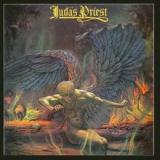
Kommen Sie mit auf die Reise mit den Masters Of Metal, deren Schicksal es weit nach ihrem zweiten Album war, zu Legenden zu werden.
Anfangs waren sie traurig und kämpften im 1976 noch nach Ruhm und Anerkennung, was sich heute in 2011 ganz anders darstellt und sie nun nach einer erfolgreichen Karriere mit ihrem massiven "Epitaph" eine weltweite Abschiedstournee feiern.
Dieses Album mit dem klassischen Line-Up mit KK. Downing und Glenn Tipton an den Gitarren und im Mittelpunkt mit dem souveränen Sänger Rob Halford, ebnete Judas Priest den Weg als eine der einflussreichsten und manchmal auch umstrittenen Band. Dieses Album der jugendlichen Band enthält neun aufregende Tracks, unter anderem Meilensteine wie "Victim Of Change" und "The Ripper" und natürlich den mächtigen Song "Epitaph".
Continuing our Parish series, here's two bad pieces of a killer driving uptempo digi rhythm with the classic '87 sound. Total vibes of the time, with a youthman singjay & deejay both giving you a slice of everyday reality via the tune. One of the best rhythms of this style, both tunes are truly hard to find on originals and both reissued here straight from master tapes, as with all in our Parish series.
out of Stock
Last delivered 8 months ago available to reorder, subject to availability
„10 Jahre Bunte Träumerei“ is a selection "Best Of" from our catalogue released so far - pressed into black gold and packed into a full print cover artwork
out of Stock
Last delivered 38 days ago available to reorder, subject to availability
For two decades, Hudd Traxx has stood as a pillar of underground house music – a label defined by longevity, taste, and its ability to bridge the old school with the new. To mark its twentieth anniversary, the revered UK imprint presents ‘20 Traxx From The Hudd’, a specially curated, all-new twenty-track compilation handpicked by label founder Eddie Leader.
The compilation brings together a global, star-studded lineup of artists who embody the Hudd Traxx ethos: soulful, inventive, and uncompromisingly underground. Contributions come from Groove Armada, Seven Davis Jr., Chez Damier, Cinthie, Jovonn, Oliver Dollar and others, offering a snapshot of the label’s wide-ranging influence. From the silky deep house depths of Black Loops’ opener ‘Soul to Soul Communication’, to the unmistakable analog warmth across Cinthie’s ‘Hudd House’, to the raw, stripped-back energy of Seven Davis Jr.’s ‘Infrasound’, the collection captures the many deeper shades of house Hudd Traxx has championed for twenty years.
Founded in 2005, Hudd Traxx has served as a trusted home for pioneering artists such as Nightmares On Wax and Matthew Herbert, guided by Eddie Leader’s consistent curatorial vision and unwavering commitment to craft. As a producer, his releases on Classic, Robsoul, and Balance Alliance have been supported by Laurent Garnier, Josh Wink, Disclosure, and many more. ‘20 Traxx From The Hudd’ isn’t just a celebration of the past; it’s a fervent reminder that Hudd Traxx remains as relevant and vital as ever.
out of Stock
Last delivered 21 days ago available to reorder, subject to availability
Techno pioneer Robert Hood debuts on Rekids with a blistering release entitled ‘Nothing Stops Detroit’ ahead of an album this winter.
Over the last three decades the Underground Resistance alum has continually been at the forefront of the techno genre whilst releasing on many of electronic music’s finest labels to boot. In recent years his solo outings have appeared on a select few labels such as Dekmantel, Music Man Records, not to mention his very own M-Plant. Having made appearances on Rekids in the past remixing label boss Radio Slave - both as Robert Hood (‘Don’t Stop No Sleep’) and Floorplan (‘Feel The Same’) - the Detroit originator now drops a four track release in his official debut on the label.
With its machine aesthetic, ‘Nothing Stops Detroit’ is unmistakably Hood from start to finish. Precision kick drums propel the title track forward as stuttering effects and deep stabs work alongside a march band rhythm. ‘7 Mile Dog’ is next with its grainy synths and scintillating pads, making way for the meandering bassline, rattling atmospherics and trippy, oscillating top line of ‘Ignite A War’. Finally, ‘The Cure’ is a cacophony of twisted percussion and rumbling low-end that energetically concludes matters.
out of Stock
Last delivered 6 days ago available to reorder, subject to availability
ELECTROVISION: Tres temas icónicos de Robert Cosmic, agotados durante años, ahora remasterizados e incluidos en un vinilo. Un nuevo tema, «Door Mir», disponible en vinilo por primera vez.
ELECTROVISION: Three iconic Robert Cosmic tracks, out of print for years, now remastered and included on vinyl. A new track, «Door Mir,» available on vinyl for the first time.
out of Stock
Last delivered 3 months ago available to reorder, subject to availability
Hot Creations new Vinyl Sampler featuring four of the Hottest recent release on Hot Creations.
The A Side features Kolter’s superb slice of old school House, ‘Red Alert’ a stomping powerhouse of a trackk, delivering relentless grooves and serious intensity. The A Side also features and Jamie Jones’s hugely popular rework of ‘XTC by HoneyLuv & Mason Maynard, a head bobbing hypnotic groover an exemplary, underground dubby take on the Original, intertwining layered effects and hypnotic atmospherics for the ultimate dancefloor weapon.
On the flip we have Lauren Lane’s monstrous Ryde Or Die Anthem, a inspired rework of DMX - Ruff Ryder's Anthem, a robust house cut that weaves hypnotic guitar strums, driving beats, and a mix of rolling low-ends and rapped vocals, coming together for a tripped-out ride with a deep bass and playful groove. Finally, we have Carloh’s ‘Quisiera Tenerte’ is a magnetic dancefloor filler, pulsing with a lively Latin groove and dripped in resonant basslines groove-led percussion, and hooky as hell vocal’s.
out of Stock
Last delivered 6 days ago available to reorder, subject to availability
Ayū returns to his home imprint with another EP, marking his second solo outing on the label. Whether operating alone or alongside Alfred Czital, Ayū has shaped a signature sound that fuels long nights and tightly packed dancefloors. Spiral Motion sees him dive further into his deeper, late-hour aesthetic. Smooth, yet hypnotic, and built for those moments when the room locks into a shared groove.
Side-A is a systematic prog compulsion. Starting with Ayū’s ‘Come on,’ the track deploys a strictly sequential energy curve, using its paced and nearly robotic vocal anchors as a command-line for dance-floor madness. A2, ‘Pure NRG’, as the name indicates, it’s an energy-based weapon built on a heavy bassline. Instrumental elements that add up sequentially through fades, boops, and rougher vocals.
Adding fuel to the EP, side B is dedicated to remixes of A-side creations. B1 by IN2STELLAR delivers the tech-house version of ‘Come on’. Drummy and spatial, the track builds up towards an explosion of rhythm. B2 crafted by D.Tiffany inverts ‘Pure NRG’ and presents it through a darker lens. Slowly, but surely, the track emphasizes shadow and minimal texture, flavored by D.Tiff’s tone & style.
out of Stock
Last delivered 4 months ago available to reorder, subject to availability
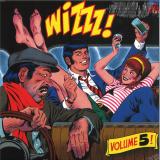
The journey through French-speaking pop archives continues with this fifth volume, packed with fuzz, gimmicks, and dissent. Far from the charts, the selected tracks display a great creative freedom, often backed by corrosive humor. Welcome to the surprising, kaleidoscopic, and colorful world of the late sixties and early seventies, Wizzz!
Born in Montauban, Robert Pico stumbled into music by chance when he met René Vaneste, then artistic director at Pathé-Marconi. René brought him to Paris to record his first 45 RPM EP in 1964. A year later, Pierre Perret introduced him to Vogue, where he recorded his second album with Claude Nougaro’s orchestra. Sylvie Vartan then introduced him to RCA, where he recorded four singles, including the astonishing "Chien Fidèle," a track backed by a hair-rising fuzz guitar. Alongside his solo career, he also composed for other artists like Alain Delon (the song was recorded but remains unreleased), Magali Noël, Bourvil, and Georges Guétary. In the Paris of the sixties, he mingled with Mireille Darc, Elsa Martinelli, Marie Laforêt, France Gall, Françoise Hardy, Petula Clark, Régine, Dani, Serge Gainsbourg, Joe Dassin, Franck Fernandel, Charles Level, and Roland Vincent. Despite his efforts and winning a Grand Prix Sacem for his final record, Robert Pico didn’t achieve the expected success in show business and decided to leave Paris and return to the Southwest, where he devoted himself to writing. He is the author of 23 books (including Delon et Compagnie, Jean-Marc Savary Editions 2025, a memoir about his youth and his many encounters). Today, he is relieved to never have become a celebrity and devotes himself to his work with passion.
In 1969, the Franco-Italian movie Erotissimo was released, directed by Gérard Pirès (who later directed Taxi in 1998, written and produced by Luc Besson). This pop comedy features Annie Girardot, Jean Yanne, Francis Blanche, Serge Gainsbourg, Nicole Croisille, Jacques Martin, and Patrick Topaloff. The soundtrack was written by Michel Polnareff and William Sheller, with lyrics by Jean-Lou Dabadie. "La Femme Faux-cils," performed by Annie Girardot. It recounts the feelings of a rich CEO's wife who seeks to develop her sex appeal under the influence of advertisement and magazines. Groovy, sparkling and light, this track, with ITS lush arrangements humorously critiques consumer society and feminine beauty standards.
“Je suis l’Etat” (1967) is the flagship track of the first EP by singer-songwriter Spauv Georges, aka Georges Larriaga, better known as Jim Larriaga (1941-2022). Born into a family of bakers, the young man was initially planning to become a hairdresser when he discovered English-speaking music through Elvis Presley and the Beatles. After this revelation, he decided he would become a songwriter and gave himself five years to succeed. He recorded his first two EP’s independently for RCA under the pseudonym Spauv Georges; meaning “that poor George”, a nickname given to him by the mother of her friend Jean-Pierre Prévotat (future drummer of the Players, Triangle, or Johnny Hallyday). Portraying a depressed and eccentric young man, Spauv Georges created corrosive and amusing songs that didn’t reach a wide audience, despite a TV appearance with Jean-Christophe Averty.
Supported by his loyal friend and fellow songwriter Jean-Max Rivière, Georges Larriaga met the future singer Carlos in the early '70s, then Sylvie Vartan’s assistant. He wrote songs for Carlos, including the popular "La vie est belle," "Y’a des indiens partout," and "La cantine", which went onto become a huge hit in 1972. He also composed for Claude François (“Anne-Marie”, 1971), Charlotte Julian (“Fleur de province”, 1972), helped launch child singer Roméo (who sold 4 million records), and later wrote the hit "Pas besoin d’éducation sexuelle" (1975) for the young Julie Bataille. In 1971, Jim recorded an album for Disc'Az: “L’univers étrange et fou de Jim Larriaga”, which featured pop gems like “La maison de mon père”.
The story of the song "Zoé" began when Pierre Dorsay, artistic director at Vogue Records, asked Swiss singer and musician Pierre Alain to write a song for a new female singer. The inspiration came when he realized that Zoé (the artist's name) was also the name of France's first atomic battery, created in 1948, which consisted of uranium oxide immersed in heavy water! The lyrics reflect a bubbling energy that must be handled with caution, while the instrumentation echoes this atomic theme, notably with the use of a theremin.
Zoé’s career lasted only as long as a single 45 RPM, but it seems Christine Fontane was the vocalist behind this pseudonym, who is known for several EPs, a good "popcorn" album in 1964, and a handful of children’s singles in the '70s. Regardless, the photograph on the cover is of a different girl entirely.
Later, Pierre Alain continued his career, writing songs for himself, Marie Laforêt, Danièle Licari, Alice Dona, Arlette Zola (3rd place in Eurovision 1982), and achieving multiple gold and platinum records in Canada. Also an inventor with several patents, president of the Romande Academy, and head of the French Alliance in Geneva, he now composes atonal music, books, and poetry. Moreover, he is also the host of "Les Mardis de Pierre Alain" at "Le P'tit Music'Hohl" in Geneva.
Filled with oriental choruses and fuzz guitar, "Fou" is from Jacques Da Sylva's only EP released by Vogue in 1967. Despite the quality of this recording, all traces of this singer disappear after this first effort.
Valentin is a baroque pop singer born in Belgium. He is the songwriter and composer of most of the tracks on his three singles released in the late 60s in Canada. A legend says that he reincarnated himself as Jacky Valentin during the 1970s for a rock'n'roll revival career in Belgium, but his older brother sadly debunked this story. Valentin's first two singles were arranged by Claude Rogen, a Parisian session pianist who had come to Canada to promote the song “Mister A Gogo”, a cover of David Bowie’s “Laughing Gnome”, adapted by singer Delphine, his wife at the time. Far from his usual network, Claude Rogen arranged music for Polydor, including the arrangements for “Je suis un vagabond” in 1969, a jerk tune with string arrangements and a furious optimism.
Jacques Malia wrote, composed, and recorded his only 45 EP for Festival in 1966. “Histoire de gitan” is an incredible beat track with bohemian scat that tells the story of a gypsy musician who came to Paris to make it in the Music-Hall, to no avail. The hero of the song and its author probably shared a similar fate, as Jacques Malia faded into anonymity after this remarkable attempt.
Bernard Jamet recorded two EPs for Barclay in the late sixties and co-wrote several songs with Christine Pilzer, Pascal Danel, and prolific songwriters Michel Delancray and Mya Simile. The track “Raison Légale” (1968), his masterpiece, immerses the listener in a courtroom right when a murderer is being judged, with jerk rhythm and free arrangements. A unique, paranoid, judicial, and psychedelic oddity.
Jean-Pierre Lebrot-Millers started his career in show business in 1967 as a singer and songwriter for the Philips label. After three singles, he wrote several songs of a new kind with his friend Pierre Halioche, in the midst of the sexual liberation movement and the democratization of drugs. With provocative lyrics, “Les filles du hasard” and “Barbara au Chapeau Rose” were released on a Philips singles in 1968. The character of Barbara was inspired by a queen of Parisian nightlife during the psychedelic years: model Charlotte Martin, who dated Eric Clapton from 1965 to 1968, then Jimmy Page from 1970 to 1983. Jean-Claude Petit’s arrangements, with a table-filled intro, soul brass, and Hendrixian guitar, emphasize the flamboyance of a hedonistic and sexy character, whose dog is named Junkie because “Junkie est un nom exquis”! The track was recorded live in three takes with a full orchestra.
Upon its release, the record was censored by Europe 1 and RTL due to its references to drug use. Jean-Pierre Lebrot was then banned from the airwaves and later dismissed by his record label. He changed his artist name to Jean-Pierre Millers, while his companion Pierre Halioche became D. Dolby for a new dreamy composition, “Chilla”, which Jean-Pierre produced himself with arrangements by Jean Musy. Once again, the song was immediately censored everywhere. After this setback, he decided to stop singing and started taking on odd jobs to support his Swedish wife and their son until the day he met Jean-Pierre Martin, then production manager at Decca, who had worked with Manu Dibango. Martin offered Jean-Pierre Lebrot-Millers, then employed at Rank Xerox, the position of artistic director at Decca. He accepted and became, a year later, promotion director (radio, press, TV). He worked on Julio Iglesias’s first album for Decca, which became a massive hit and allowed him to meet Claude Carrère. The latter asked him to write new songs and find their performers, much like a “talent scout.” It’s through him that Jean-Pierre discovered Julie Pietri and Corinne Hermès. He composed “Ma Pompadour” for Ringo, Sheila’s husband, and took the microphone again for the syncope hit “Rendez-Vous” in 1982.
That same year, Jean-Pierre Lebrot-Millers tried to release a track for which he had heavily gone into debt: “Si la vie est un cadeau”. Having recorded it in London, he presented it to numerous professionals, all of whom refused to get involved. The same thing happened with Antenne 2 and the Sacem when he proposed the song as France’s entry for Eurovision. He then met Haïm Saban, who was producing cartoon soundtracks and had just launched the Goldorak theme song. Saban, having listened to the song, declared it had the potential to become a hit. He sent Jean-Pierre and Corinne Hermès to meet the CEO of the Luxembourg radio and television network. The latter received them, asked to hear a verse and chorus a cappella in his office, and immediately hired them to represent Luxembourg at Eurovision 1983. They reworked the arrangements and recorded a new version with Haïm Saban as co-producer. The song ended up winning Eurovision 1983, a great comeback for our hero. He continued producing and hung out with the band Nacash in Belgium when a couple came to introduce their daughter for an impromptu audition in a hotel room. The girl sang “Les démons de minuit” while dancing to a radio cassette. Impressed, he had her take singing lessons for a year and composed a song for her (for which he had the melody and title, but no lyrics). This required him to go on the hunt for a lyricist, who ended up being Guy Carlier. They recorded the song, which was initially a ballad, at Bernard Estardy’s CBE studio, and gave the singer a new name: Melody. They showed the song around their industry network without success. Later, Estardy called Jean-Pierre to suggest changing the rhythm and making it pop-rock. Orlando, Dalida’s brother, liked the result and decided to co-produce the track. “Y’a pas que les grands qui rêvent » became a classic hit. The song has since been covered by Juliette Armanet (as a ballad, like the original) and Valentina.
Born into an aristocratic Breton family, Hervé Mettais-Cartier worked as a DJ at Queen Kiss, a nightclub in Poitiers, where he formed the band Les Concentrés with Michel (an actor) and Christian (a radio technician). Together, they created a repertoire of whimsical songs (“Ma bique est morte”, “J’suis un salaud”, “Fils de dégénéré”...) that they performed on stage dressed in white (in homage to “concentrated milk”). They performed at Bliboquet and Olympia in 1968 for the 10th edition of the “Relais de la chanson Française” organized by L’Humanité-Dimanche and Nous les Garçons et les Filles, sponsored by Pepsi Cola. Winners in the author-composer category, alongside Danish singer Dorte, their visibility allowed them to record a 45, and appear on television in Jean-Christophe Averty’s show. The A-side of the disc features Bruno le ravageur, a casatchok dedicated to Bruno Caquatrix, the director of Olympia, nicknamed in the song “Coq Atroce” or “croque-actrices”. The B-side is dedicated to “Fils de dégénéré”, a quirky tribute to Hervé's aristocratic roots, mixing absurdity with sophisticated vocal harmonies.
After Les Concentrés, Hervé Mettais-Cartier formed the duo La Paire et sa Bêtise with his friend Olivier Robert. They performed in Parisian cabarets and toured with Pierre Vassiliu. In the late 1970s, Hervé began a solo career. He recorded two albums for the Motors label in 1978 and 1979, which did not achieve their anticipated success due to lack of promotion. In 1980, he met Bernadette, with whom he started a family and created a “Chansons à voir” (songs to see) show that he performed until his death at the end of 2024.
Publicité comes from the final EP by the Missiles (Ducretet Thomson, 1966), a disc that also includes “La (nouvelle) guerre de cent ans”, featured on Volume 4 of our Wizzz! series. Please refer to the booklet for the story of the band.
“He’s 1.82 meters tall, 28 years old, weighs 135 kg, is black and Belgian”: this is the description of singer Hegesippe on the back of his sole single (Decca, 1967). He appears on the album cover wearing a Greek toga, like a hippie gag – we are at the end of the year 1967. In “Le crédo d’Hegesippe”, this former bodyguard of Antoine and the Charlots plays the delightful card of the thick brute converted to Flower-Power and non-violence, with arrangements by Jean-Daniel Mercier, aka Paul Mille.
“Ethéro-disco” was released on a promotional record for clients of the Maréchal company (Liège, Belgium) for the New Year 1979. Over a funky rhythm, celebrity impersonations (Brigitte Bardot, Jacques Dutronc, Fernandel…) deliver an enigmatic text about pharmaceutical products like ether, bismuth, and aspartate. The track was composed by Dan Sarravah (responsible for Joanna's “Hold-up inusité” featured on Wizzz! Volume 3) and Tony Talado, who was also a singer (one 45 in 1967), songwriter (with over a dozen credits between 1964 and 1985 in various styles from surf music to disco), author (Devenez Végétarien, Dricot Editions, 1985), ad designer, and psychologist.
Décollez-les is on the A-side of Mamlouk's only single, a pseudonym for Marsel Hurten, who is known for his work on several EPs in the late sixties, as well as composing music for Hervé Vilard’s “Capri, c’est fini”, Claude Channes' “La Haine”, Annie Philippe’s “On m’a toujours dit”, and Nancy Holloway’s “Panne de Cœur”.
This strange song, with Afrobeat horns and absurd dialogues between a chef and his kitchen staff, is the result of a collaboration between Marsel Hurten and one of his neighbors, a photographer from Pavillon-sous-Bois (93), where the musician settled after returning from the Algerian War. A music video was shot to promote the record.
Marsel Hurten was born in Tourcoing (59) into a musical family. At a young age, he joined the brass band founded by his grandfather, playing the piston before studying trumpet at the conservatory, as well as teaching himself how to play the guitar. As an orchestra musician, he toured in France, Belgium, Germany, and England. He released a series of solo 45’s between 1965 and 1968 for the DMF and Az labels before stopping recording to focus on working for other artists (Gilles Olivier, Noëlle Cordier…).
“L’amour nu” (Vogue, 1971) is the work of the short-lived Belgian band Mozaïque. The track, written by singer Jacques Albin, closely resembles another of his compositions, “Carré Blanc”, which he recorded in 1969 for Disc’AZ.
Represented by the Lumi Son micro-label based in Marignane (Côte d'Azur), Jean-Marc Garrigues released two 45 RPMs in the late sixties, defending the French jerk sound. The song “Je dis Non” is a short, joyful ode to youth, pop music, and rebellion.
Songwriter and performer Jacques Penuel released three singles. The first one, “Astronef 328” (Fontana, 1969), features a dizzying series of chords punctuated by sound effects, a sci-fi story, and arrangements by Jean-Claude Vannier.
We would like to sincerely thank Pierre Alain, Moon Blaha, Marsel Hurten, Bastien Larriaga, Jean-Pierre Lebrot-Millers, Bernadette Mettais-Cartier, Robert Pico, Olivier Robert, Claude Rogen, Micky Segura.
out of Stock
Last delivered 8 months ago available to reorder, subject to availability