Abbey Lincoln, often remembered for her seminal work with Max Roach, was a powerful performer and indeed one of the greatest Jazz voices of all time. "Straight Ahead" stands as one her best albums. Lincoln is matched here by a ultra-stellar line up including Jazz masters such as Booker Little — trumpet, Julian Priester — trombone Eric Dolphy — alto saxophone, bass clarinet, flute, Walter Benton and Coleman Hawkins — tenor saxophone, Mal Waldron — piano, Art Davis — bass, Max Roach — drums, Roger Sanders and Robert Whitley — congas. "Straight Ahead" is the perfect combination between Lincoln 's strong "Afro-Blue" tone singing, conscious lyrics and angular modern Jazz arrangements. Recorded in New York in a one-off studio session held on February 22, 1961 and released by Candid Records in the same year, the album includes highlights such as Oscar Brown jr's "When Malindy Sings", Thelonious Monk's "Blue Monk", Billie Holiday and Mal Waldron's "Left Alone" and "African Lady" a Randy Weston composition based on lyrics by the great writer Langston Hughes.
quête:robert m
"I first heard Lady In Satin in a mega-shopping mall somewhere in San Francisco. I was about 20 years old and didn't know much about Billie's records or her life or how her voice changed over the years. Anyway, the sound was coming from the other side of the mall and I remember mistaking her voice for a beautiful perfectly distorted electric guitar - some other-world thing floating there on this strange mournful ocean of strings and I was hooked for life. Ten years later in 2006 I recorded an electric guitar instrumental version of "I'm A Fool To Want You" for my album Post-War. In 2018 I performed a concert in LA. of all the songs from Lady In Satin as a quintet and began preparing guitar arrangements for the recordings compiled on this record - Think of Spring. The title comes from a poem written in 1924 by Jane Brown-Thompson that eventually became "I Get Along Without You Very Well" in 1938 - the first song here. The conceit of Think of Spring is to filter the songs and strings from Lady In Satin through a single acoustic guitar using various alternate tunings and a minimal amount of textures and studio manipulation. most of the songs were recorded on an analog Tascam four track. Think of Spring is inspired by Billie Holiday, Ray Ellis, J.J. Johnson, John Fahey and Robert Johnson. Proceeds from this record will benefit Inner-City Arts & Donors Choose via PLUS1 for Black Lives Fund." - M. Ward
Nuno Canavarro's Plux Quba hails from three decades in the past, yet the simple profi le of it's abstract/ambient/cutup collage makes it a record that sits quite comfortably in our IDM-informed future. In 1988, Plux Quba was a primal dark horse in the world of pants-forward electronic music - an obscurity issued with little explanation from the laid-back west coast of Europe: Portugal, of all places! - though the casual listener could hardly know that from an examination of the LP jacket. The vanguard of electronics in late-80s Europe was being pushed by organizations like Nurse With Wound, The Hafler Trio, HNAS - and yet, when Christoph Heemann came across this recording, it struck his ears and the ears of fellow listeners like nothing before. Plux Quba was handed around between the principles of the early 90s A-Musik scene: Jan St. Werner, C-Schulz, Frank Dommert, Georg Odijk, plus interested fellow travelers like Jim O'Rourke, to the intense curiosity of all. To ears that were already saturated with all things kraut, the dark corners of prog and the frontline of experimental and improvised music, it proved elusive. Not simply in how it sounded and how that sound was achieved, but in where it was coming from - like later Robert Ashley at times; certain stretches of melody recalled some of Eno's ambient pieces - but mostly, it was a completely alien soundscape!
Six studio albums, four original motion picture scores, and a plethora of side projects... Sébastien Tellier writes with every breath, composes melodies to the whim of his obsessions like his musical peers Robert Wyatt, Todd Rundgren or Ariel Pink. ‘Simple Mind’ is a lush though very minimalistic resume of some of his most beautiful compositions ; a classic live-recorded album where old and more recent songs will find a confined listener caught in a wave of domestic bliss.
Barang Bang Records Archive Series vol. 1
Previously unreleased recordings
Compiled by Gianmarco Liguori
Bernie McGann - alto sax
Kim Paterson - trumpet
Bobby Gebert - piano (side A)
Andy Brown – bass
George Neidorf – drums
Recorded by Trevor Graham in Sydney, Australia (copyright 1966)
There is no more engaging nor distinctive alto saxophone sound on the planet than McGann’s.
Sydney Morning Herald
McGann takes the language of Bebop then bends and stretches it to fit the contours of his own remarkable im-agination.
The Wire
Bernie McGann’s sound is exciting and physical, as heated as any post-coltrane modernist.
Downbeat
A lost treasure of Antipodean jazz
This compilation documents part of an exciting period in Australasian jazz. Recorded in Sydney, 1966, we can hear Bernie McGann was already one of the great Australian jazz stylists. At the time, the only publicly available recording he made was two tracks on the Jazz Australia compilation (1967) (CBS BP 233450).
Two years earlier, McGann was living in Auckland, New Zealand (1963-64). It was here that he worked regular-ly with Kim Paterson, Andy Brown and pianist Dave MacRae, and the basis of this band came into being.
‘Lazy Days’, ‘Chuggin’, and ‘Sky’ were salvaged from a cassette in Kim Paterson’s collection, one of the few remaining copies. Originally intended for a radio broadcast, the master tapes were reportedly destroyed after the session.
‘Rhythm-a-Ning’ and ‘When Will The Blues Leave?’ were taped by Trevor Graham at the Wayside Chapel in King’s Cross. Graham was a Sydney music journalist and ally of the avant garde, with the foresight to capture some of what was happening at the time.
This album is also notable for a rare appearance by the mysterious American drummer George Neidorf (mis-spelt as ‘Neidori’ in the liner notes on the first Soft Machine album), an early influence on drummer Robert Wyatt.
Field recordings of a major artist in strong company – a lost treasure of Antipodean modern jazz.
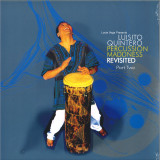
Grammy award winner & multi grammy nominated Luisito Quintero grew up with the Latin American and African tradition of percussion. His father is just as much a percussionist as his uncle Carlos Nene Quintero and his cousin Roberto Quintero . He became a member of the Orquesta Simfonica de Venezuela , but soon appeared with ensembles such as Grupo Guaco and El Trabuco
Venezolano and toured with Oscar D'León .
He then moved to New York, where he initially worked with Latin jazz musicians such as Willie Colón , Eddie Palmieri , Tito Puente and Celia Cruz . He then turned to the fusion of jazz, funk, salsa and African music and performed with George Benson , Herbie Hancock , Ravi Coltrane and Toshiko Akiyoshi , but also with pop musicians such as Gloria Estefan and Marc Anthony .
Vega Records are proud to present his new vinyl release “Percussion Maddness Revisited” Part Two. From the Osibisa remake by Luisito Quintero “Music For Gong Gong” to collaborations with the Great Richard Bona, Latin Jazz legend Hilton Ruiz and Salsa Veterans Jose Mangual and Milton Cardona, you can see the caliber of musicians that make up this timeless piece. For the afrohouse heads you have the new track “Yemaya” Featuring Nina Rodriguez remixed by Afrohouse King Manoo. Prepare for the sonic fun with vinyl pressings by Optimal !!
Percussions Maddness Revisited Part Two Double Vinyl Set out soon at a vinyl store near you !!!
Repress der 2014er Reissue von Brian Enos Album "Nerve Net" (1992). Auf "Nerve Net" kehrte Eno zum mehr rockorientierten Sound zurück. An dem Album wirkten Robert Fripp, Robert Quine und John Paul Jones mit. Der beiliegende Downloadcode enthält das legendäre 'lost' Album "My Squelchy Life", das für September 1991 geplant war, dann aber zurückgezogen und zum Mythos wurde.
Fabrizio Maurizi makes his debut on Infuse this October as he delivers his latest EP ‘Jumping’, backed by a remix from Pierre Codarin.
A staple within the Italian house and techno scene for over a decade, Bologna’s Fabrizio Maurizi is a producer and DJ now known across the globe for his seamless blend of the two styles across his productions and DJ sets. One half of the duo Bassa Clan, with material via their self-titled imprint, and a member of the Bolo Represent collective, Maurizi’s recent releases include EPs via labels such Bodyparts, Memoria, Want?, Re.face, whilst playing sets worldwide for renowned institutions such as fabric, Robert Johnson, Womb and Cocoricò. Next up, October signals the arrival of a new name to his catalogue as he heads to FUSE sister imprint Infuse to deliver three fresh productions in the form of his ‘Jumping’ EP – accompanied by bubbling UK talent Pierre Codarin on remix duties.
The slick and paired back title track ‘Jumping’ opens proceedings as Maurizi fuses minimal soundscapes with more jazz-influenced notes and tones, whilst Pierre Codarin’s remix ups the energy levels as he introduces metallic drum licks, spiralling electronics and a snaking bassline to the mix. On the flip, ‘Night and Day’ harnesses a classy blend of dubby chords, slinking hats and echoed vocals, before closing the package via the off-kilter rhythms and loose, glitch-driven drums of hypnotic after-hours cut ‘Caravel’.
Four Flies are proud and honoured to release the first vinyl reissue of Bruno Nicolai's outstanding original score for GEMINUS, a 1969 Italian TV mini-series directed by Luciano Emmer and starring Walter Chiari, Alida Chelli, and Ira von Fürstenberg.
Originally released under Italian label Gemelli, Nicolai's soundtrack has been remastered from the original master tapes and comes in a glossy, tip-on style jacket featuring the restored original cover artwork, as well as extended liner notes by film critics Francesco Cesari and Roberto Curti.
Bruno Nicolai composed and directed an eclectic score that brings together different music genres and influences, from 60s beat, psych, and progrock to baroque and experimental music. He did not hesitate to mix classical forms and structures with new instruments andremarkable, eccentric arrangements.
In 'Giano' (Janus), the interplay between a distorted electric guitar and a hypnotic harpsichord creates a strange, somewhat troubling ambience.
The delicate, celestial voice of Edda Dell'Orso leaves its unique emotional imprint on the most lyricalpiece in the soundtrack, 'Tema Barocco' (Baroque Theme).
The main theme 'Il cielo cade' (The Sky Is Falling) features a luxurious arrangement and stunning orchestration enhanced by enchanting vocal harmonies sung by 'I Cantori Moderni di Alessandroni'.
In other pieces, such as 'Larve' (Larvas), 'Il sognatore' (The Dreamer), 'Eclisse di luna' (Moon Eclipse), 'Visioni' (Visions), 'Catacombe' (Catacombs), and 'Notti romane' (Roman Nights), expressive and experimental solo passages played by instruments such as the vibraphone, sitar, harmonica, or percussions, contribute to the sombre, mysterious atmosphere of the score as a whole.
Trouble, the aptly named new album on Goner Records, is a confident and joy-filled statement delivering the good-news gospel message unapologetically through music influenced by Ray Charles, Junior Kimbrough, Bill Withers and of course, his father.
Recorded at legendary Royal Studios in Memphis by Lawrence “Boo” Mitchell (Al Green, Solomon Burke, John Mayer, Buddy Guy, Mark Ronson & Bruno Mars, North Mississippi Allstars), Trouble is the culmination of everything in Rev. Wilkins’s remarkable life, his regional history, his family music history. And in a world once again riven with discord and division, like the Memphis of Wilkins’ youth in the 1960’s, Trouble delivers passionate and confident musical performances with a message of hope that meets our present moment equal to the best music from that earlier era.
To call the Reverend John Wilkins a national treasure would not be an overstatement. He is the son of pre-war blues/folk-revival legend Reverend Robert Wilkins and he leads one of the most exciting and uplifting musical acts on the blues and gospel circuit today. His multiracial, multi-generational band blends soul, southern gospel and hill country rhythm, into a sound that has the infectious drive of hill country blues with the emotional heights of a summer tent revival.
Following in the footsteps of his famous father Rev. Robert Wilkins, a blues-singer turned preacher who went from the juke joint to the pulpit, the life of Rev. John Wilkins took a similar path, echoing the story of the elder Wilkins’ most famous song, “Prodigal Son.”
But in 2020 John Wilkins’ life has been closer to a different iconic bible character, Lazarus, as he has miraculously risen after surviving a month-long stay in intensive care battling Covid19 in a Memphis hospital. As Rev. Wilkins sings on the closing track of his forthcoming album, “I’ve come through the storm and rain, I’ve come through the storm and rain, and I made it!”
- A1: The Modern Tropical Quintet - Midnight In Moscow
- A2: James Reese & The Progressions - Throwing Stones (Kenny Dope Mix)
- A3: Cindy & The Playmates - Don't Stop This Train
- A4: Carnival - Eyes Growing Wider
- B1: Azwon - Paradise Island
- B2: Carlos Puebla, Santiago Martinez & Pedro Sosa - Sun Sun Damba E
- B3: Pepe Sanchez Y Su Rock-Band - Sentimiento
- B4: Dj Format & The Simonsound - The Peruvian
- C1: Hamlet Minassian - Al Elnim
- C2: Idrissa Soumaoro & L'eclipse De L' Ija - Nissodia (Mike D Remix)
- C3: Teaspoon Ndelu - Sputla
- C4: The Mombasa Vikings - Mama Matotoya
- D1: Lincoln - Amanha O Tempo Muda
- D2: Don Ricardo - Sonho Lindo
- D3: Ze Roberto - Lotus 72 D (Fast)
- D4: Wax Machine - Extralude (Wyndham Earl More-Than-An Interlude Remix)
- D5: Matty - Selfportrait
The latest release in the much loved Mr Bongo Record Club Series, Available on CD, 2LP Standard Vinyl & Special Edition 2LP Pink Translucent Vinyl.
Curating the tracks for a Mr Bongo Record Club compilation is always such a pleasure. At a time when the expression "Music is My Sanctuary" has an even greater cathartic impact for many people, we set out to make this volume an extra special one - like an old favourite mixtape or playlist.
For Volume 4 in this series we continue in the same mould as with previous editions, selecting current favorites and rare lost gems from the Brazilian, African, soul, funk, and disco genres. We present tracks from artists such as Azwon, Cindy & The Playmates, and Zé Roberto to name just a few. However, one main departure and progression to this edition is the first time inclusion of recordings by contemporary artists. These come from Matthew Tavares (of BADBADNOTGOOD fame), Wax Machine, and DJ Format & The Simonsound, which were originally featured on either limited private press vinyl releases or were previously only available digitally. We felt their inclusion was important and wanted to share these wonderful discoveries with a wider audience. They also complement, enrich, and fit perfectly with the flow and journey of the compilation.
Here at Mr Bongo we hope you will enjoy this selection of seventeen eclectic songs (in tempo and style) as much as we do, whether they make you move your feet, take you on a trip somewhere, or trigger a happy memory.
Released on 20/11/20 on double vinyl and CD with artwork illustration by Nicolas Burrows.
- 1: The Modern Tropical Quintet – Midnight In Moscow
- 2: James Reese & The Progressions - Throwing Stones (Kenny Dope Mix)
- 3: Cindy & The Playmates - Don’t Stop This Train
- 4: Carnival - Eyes Growing Wider
- 5: Azwon - Paradise Island
- 6: Carlos Puebla And Santiago Martinez And Pedro Sosa - Sun Sun Damba E
- 7: Pepe Sanchez – Sentimiento
- 8: Dj Format & The Simon Sound – The Peruvian
- 9: Hamlet Minassian - Al Elnim
- 10: Idrissa Soumaoro, L´eclipse De L´ I.j.a. - Nissodia (Mike D Remix)
- 11: Teaspoon Ndelu - Sputla
- 12: The Mombassa Vikings –Mama Matotoya
- 13: Lincoln - Amanhã O Tempo Muda
- 14: Don Ricardo - Sonho Lindo 15. Zé Roberto - Lotus 72 D (Fast)
- 16: Wax Machine - Extralude (Wyndham Earl's More Than-An-Interlude Remix)
- 17: Matty – Selfportrait
The latest release in the much loved Mr Bongo Record Club Series, Available on CD, 2LP Standard Vinyl & Special Edition 2LP Pink Translucent Vinyl.
Curating the tracks for a Mr Bongo Record Club compilation is always such a pleasure. At a time when the expression "Music is My Sanctuary" has an even greater cathartic impact for many people, we set out to make this volume an extra special one - like an old favourite mixtape or playlist.
For Volume 4 in this series we continue in the same mould as with previous editions, selecting current favorites and rare lost gems from the Brazilian, African, soul, funk, and disco genres. We present tracks from artists such as Azwon, Cindy & The Playmates, and Zé Roberto to name just a few. However, one main departure and progression to this edition is the first time inclusion of recordings by contemporary artists. These come from Matthew Tavares (of BADBADNOTGOOD fame), Wax Machine, and DJ Format & The Simonsound, which were originally featured on either limited private press vinyl releases or were previously only available digitally. We felt their inclusion was important and wanted to share these wonderful discoveries with a wider audience. They also complement, enrich, and fit perfectly with the flow and journey of the compilation.
Here at Mr Bongo we hope you will enjoy this selection of seventeen eclectic songs (in tempo and style) as much as we do, whether they make you move your feet, take you on a trip somewhere, or trigger a happy memory.
Released on 20/11/20 on double vinyl and CD with artwork illustration by Nicolas Burrows.
Who wouldn’t want to be soaking up the rays, Bali beachside right now, sippin’ on something strong, letting the music wash over you from the club behind? Well, following on from Austin Ato’s smasher for the label’s first release, Pantai People strap you in once again with a first-class ticket to that exotic, slice of summer we are all pining for, serving up four delectable edits from Marc Roberts.
- A1: Is He Trying To Tell Us Something? (Instrumental)
- A2: Rhapsody In Green
- A3: Baroque No 2
- A4: This Is My Beloved
- A5: Music For Advertising #1
- A6: Music For Advertising #2
- A7: Music For Advertising #3
- A8: Killers Of The Wild
- A9: Realizations Of An Aeropolis
- A10: Music For Advertising #4
- A11: Music For Advertising #5
- A12: Z Theme From "Music For Sensuous Lovers" (Part 1 - Instrumental)
- A13: The Blobs Son Of Blob Theme
- B1: Cathedral Of Pleasure
- B2: Ode To An African Violet
- B3: The Time Zone Space Walker
- B4: Dragonfly
- B5: The Lords Of Percussion Geisha Girl
- B6: The Electric Blues Society Our Day Will Come
BLACK VINYL[21,97 €]
Mort Garson’s road to cool cultural caché and the sublimity of Plantasia meant a decades’ long journey through an underworld of sophisticated, international, string-laced dreck (i.e., your great-grandparents’ record collection) to arrive at Music from Patch Cord Productions, this set of queasy-listening you now hold.
Music from Patch Cord Productions shows that Garson’s knack was to exist in both worlds, super-commercial and waaay out. He cut delirious minute-long blasts for commercials (as to whether or not they were actually ever aired remains unknown) and spacecraft-hovering études. Were there really account managers out there in the early ’70s that gave the greenlight to these commercial compositions which seemed to anticipate everyone from John Carpenter to Suicide? What were these campaigns actually for, Soylent Green? Regardless, Mort’s jingle work laid the groundwork for the future. As Robert Moog himself noted: “The jingles were important because they domesticated the sound.” Via Garson’s wizardry, the synthesizer transcended novelty to ubiquity and dominance.
Other curios and questions abound. How did Garson’s arrangement work for Arthur Prysock’s satiny body worship album This Is My Beloved transmogrify into the body-snatcher pulses of “This is My Beloved”? Are the two pieces even related? What is the IATA code for the airport of “Realizations of an Aeropolis”? What denomination is the “Cathedral of Pleasure”? If “Son of Blob” sounds like a hallucinatory melted ice cream truck theme, what on earth does Blob’s father sound like? Every sound wrangled out of that Moog by Garson pushes things further and further out.
Of course, these are all questions that may never get answers, as Garson wasn’t the most organized modern day composer, busy as he was conjuring strange new realms with his circuit boards and synths. He worked and wrote right up until his death in 2008, his daughter and Sacred Bones still going through all of the material left behind. He wouldn’t live to see it, but his renaissance was just around the corner, the seeds that had been scattered in record bins around the world suddenly coming to bear fruit. Take a bite!
- A1: Famous Ward Singers - I'm Getting Richer
- A2: The Harmonizing Five - I Don't Need Nobody But The Lord
- A3: The Sensational Six - Let Freedom Ring
- A4: The Gospel Harmonettes Specials - How Much More
- A5: The Christones - Lord, It's Me
- A6: The Staple Singers - Low Is The Way
- B1: Swindell Brothers - Trouble Of Mine
- B2: The Roberta Martin Singers - I'm Glad I'm A Witness For My Lord
- B3: Jimmy Scott - Sometimes I Feel Like A Motherless Child
- B4: Shirley Caesar And The Caravans - He First Loved Me
- B5: The Blind Boys Of Alabama - On Some Day
- B6: The Hightower Brothers - He That Believed
- C1: North Philadelphia Juniors - There's Something Within Me
- C2: The Selah Singers - The Wicked Race
- C3: The Ward Singers - Let The Train Roll Easy
- C4: The Stars Of Faith - Mean Old World
- C5: Marion Williams - Get Your Business Right
- C6: The Gospel Cavaliers - Are You Listening
- D1: The Caravans - Mercy
- D2: Eddie Williams And The Crusaders - They Won't Believe In Me
- D3: The Davis Sisters - Earnestly Praying
- D4: The Gospel Chimes - My Jesus Love Just Bubbles Over
- D5: The Angelic Gospel Choir - It's The Holy Ghost
- D6: The Angelic Choir - Wade In The Water
The first of three volumes: stomping, rollicking gospel music, intermingling with raw soul, searing blues, hard-rocking doo-wop and jazz, and storming r&b.
Infused and incandescent with the hurting, surging indignation of the Civil Rights movement, here are twenty-four precious scorchers by giants like the Staple Singers and Jimmy Scott, alongside devastating sides by less celebrated names like the Harmonising Five of Burlington, North Carolina, and teen-group the North Philadelphia Juniors, culminating triumphantly with slamming, sanctified versions of Hit The Road Jack and Wade In The Water.
Gatefold sleeve, with full-size booklet; beautifully designed, with stunning, rare photographs and original Savoy artwork.
Having studied the complicated art of dreaming on Live At The Robert Johnson earlier this year, DC Salas returns with another remarkable clutch of cosmic excursions. Linking up with long-standing Parisian chic beat connaisseurs Slowciety, it's time for Salas to show us a little 'Exquisite Chaos'…
Presentation (long version)
The clue is in the title; 'Exquisite Chaos' is smooth, classy, hi-definition piece of intergalactic drama. Sweeping synths, rocket-fuelled kicks and a bassline that could circumnavigate the universe many times over without needing to refuel, it's a classic DC Salas trip, the likes of which we've soaked up on labels such as Correspondant, Nein, BPitch and beyond.
It's backed up by the poignantly titled 'Undivided'. A call for unity, it's rattled with acid and sinewy synth lines all thrusting upwards with the positivity we missed for so long this year. Finally 'Forgotten Memories' if a full-on march into a neon unknown. Complete with flying flurries of breakbeats and rasping acid missives, it wraps up Salas's chaos theory exquisitely…. And it's backed by a remix from Roman Flügel.
Ensuring the EP climaxes with a fitting bang Flügel divides 'Undivided' into three movements, each one more bulldozing than the last. Supercharged with venomous acid and neck-snap breakbeats, it's Flügel at his most chaotic. And Slowciety at their most exquisite. We wouldn't expect anything less from DC Salas.
- A1: Is He Trying To Tell Us Something? (Instrumental)
- A2: Rhapsody In Green
- A3: Baroque No 2
- A4: This Is My Beloved
- A5: Music For Advertising #1
- A6: Music For Advertising #2
- A7: Music For Advertising #3
- A8: Killers Of The Wild
- A9: Realizations Of An Aeropolis
- A10: Music For Advertising #4
- A11: Music For Advertising #5
- A12: Z Theme From "Music For Sensuous Lovers" (Part 1 - Instrumental)
- A13: The Blobs Son Of Blob Theme
- B1: Cathedral Of Pleasure
- B2: Ode To An African Violet
- B3: The Time Zone Space Walker
- B4: Dragonfly
- B5: The Lords Of Percussion Geisha Girl
- B6: The Electric Blues Society Our Day Will Come
PURPLE VINYL[23,66 €]
Mort Garson’s road to cool cultural caché and the sublimity of Plantasia meant a decades’ long journey through an underworld of sophisticated, international, string-laced dreck (i.e., your great-grandparents’ record collection) to arrive at Music from Patch Cord Productions, this set of queasy-listening you now hold.
Music from Patch Cord Productions shows that Garson’s knack was to exist in both worlds, super-commercial and waaay out. He cut delirious minute-long blasts for commercials (as to whether or not they were actually ever aired remains unknown) and spacecraft-hovering études. Were there really account managers out there in the early ’70s that gave the greenlight to these commercial compositions which seemed to anticipate everyone from John Carpenter to Suicide? What were these campaigns actually for, Soylent Green? Regardless, Mort’s jingle work laid the groundwork for the future. As Robert Moog himself noted: “The jingles were important because they domesticated the sound.” Via Garson’s wizardry, the synthesizer transcended novelty to ubiquity and dominance.
Other curios and questions abound. How did Garson’s arrangement work for Arthur Prysock’s satiny body worship album This Is My Beloved transmogrify into the body-snatcher pulses of “This is My Beloved”? Are the two pieces even related? What is the IATA code for the airport of “Realizations of an Aeropolis”? What denomination is the “Cathedral of Pleasure”? If “Son of Blob” sounds like a hallucinatory melted ice cream truck theme, what on earth does Blob’s father sound like? Every sound wrangled out of that Moog by Garson pushes things further and further out.
Of course, these are all questions that may never get answers, as Garson wasn’t the most organized modern day composer, busy as he was conjuring strange new realms with his circuit boards and synths. He worked and wrote right up until his death in 2008, his daughter and Sacred Bones still going through all of the material left behind. He wouldn’t live to see it, but his renaissance was just around the corner, the seeds that had been scattered in record bins around the world suddenly coming to bear fruit. Take a bite!
After his first appearance on the „Plankton“ Compilation (BK014 July 2020) frankfurt based Dan Bay signed his first solo EP on Bunte Kuh. The „Fieser Niesel“ EP will be released on Vinyl and as a digital edition including 2 bonus tracks. Dan is also performing as a DJ or liveact with E-drum - he already released on Laut & Luise, Wayu Records, Leveldva, Finebeatz and Heimlich Musik. The EP also introduces the iconic female DJane Krystyna - the former Robert Johnson resident is giving her debut as a producer.
The first track „Reise ins Universum“ is a dreamy journey thru his universe of minimalistic music - endless, relaxing and trippy. The title track „Fieser Niesel“ is way more rolling with dark basslines and short bleeps - an overall great dancefloor workout. Next is AVEM´s Remix of „Reise ins Universum“ - Boris (who already released on Underyourskin, LOKD and Heimlich) added his unique signature - a fabolous 9 minute adventure full of melodies & deep grooves.
Benjamin Fehr - a berlin based active producer since 15+ years - treated „Fieser Niesel“ and maybe this track is the surprise of the EP - a glitchy & bleepy adventure that follows the roots of good old Robag Wruhme Tracks. „Jimi Nagel“ is the first out of 2 digital only tunes - something for the early after hours while „123“ is more suitable for the real club hours.
The Fall is a deconstruction of November by Dennis Johnson.
Written for solo piano in 1959, November is the first example of minimalist music composition and was the inspiration for La Monte Young's The Well-Tuned Piano (1964). The 66 minute piece is a collaboration between legendary artist Lustmord and renowned classical pianist Nicolas Horvath, in which they reduces Johnson's original November to its core element and place it in a landscape of complimentary sound. The Fall echo's November but with further resonance.
Recorded in May-June 2019 in Los Angeles, and Misy-sur-Yonne, France.
Lustmord
Active since 1980, born of the original 'industrial' scene of the period. With its own distinctive approach, blurring the line between music and sound design Lustmord's work has featured in 45 motion pictures including The Crow and Underworld and also in video games, television and commercials. Recently Lustmord scored the music for Paul Schrader's movie First Reformed. While Lustmord is often credited for creating the 'dark ambient' genre there is much more nuance to its work than what that label implies. The music is not dark, but is a light that shines into and upon the darkness. Notable collaborations amongst many include Tool, Melvins, Jarboe, John Balance of Coil, Clock DVA, Chris & Cosey, Paul Haslinger, Karin Park and Robert Rich.
Nicolas Horvath
An unusual artist with an unconventional résumé, pianist and electroacoustic composer Nicolas Horvath is known for his boundariesless musical explorations. Horvath is both an enthusiastic promoter of contemporary music - he has commissioned numerous works (including no fewer than 120 as part of his Homages to Philip Glass project in 2014) and collaborated with leading contemporary composers from around the world, including Alvin Lucier, Mamoru Fujieda, Jaan Rääts, Alvin Curran and Valentyn Silvestrov - and a rediscoverer of forgotten or neglected composers such as Moondog, Nobuo Uematsu, Germaine Tailleferre, François-Adrien Boieldieu, Hélène de Montgeroult, Jean Catoire, Karl August Hermann.
Veteran NYC based Scottish electronic musician Drew McDowall's latest work is his loftiest, most liturgical, and least industrial outing to date —and potentially the apex of his recent discography.Named after an ancient Greek word for votive offering, Agalmaexudes a hooded, devotional aura, creaking and keeling under vast rafters of stone, stained glass, and shredded wires. It's a music of majesty and mystery but also modernity, McDowall's refined modular system shape-shifting strings, piano, pipe organ, and choral masses into disorienting synthetic mirages of the sacred. He cites the intersection of “joy, terror, and the elegiac” as a centering inspiration –or, phrased more bluntly, “that 'what the fuck is going on' feeling.”
As a career collaborator himself, with stints in Coil, Psychic TV, and countless other shorter-lived partnerships, it's telling that McDowall chose this project to gather such an impressive spectrum of peers. Italian synthesist Caterina Barbieri, American drone organist Kali Malone, prolific multi-instrumentalistRobert Aiki Aubrey Lowe, operatic Humanbeast vocalist Maralie Armstrong-Rial, Saudi producer MSYLMA, and warped futurist beat-makers Bashar Suleiman and Elvin Brandhi cameo across the album's 42 minutes, contouring McDowall's nuanced negative spaces with shudders, shadows, and shivering flickers of serenity. Each of them shines in their spotlight, elevating these elusive alchemical states into surreal revelations of texture and transcendence.
McDowall's original working title for the record is revealing: Ritual Music.He speaks of his creative practice in ceremonial terms, negating binaries by seeking the middle path to anuminousequilibrium that erases the distinction between the inner and outer worlds.These compositions feel similarly processional and intuitive, at the crossroads of holiness and hallucination, the sacred vertigo of yawning naves rising into untouchable night skies. It's a vision of industrial music as enigma and invocation, cryptic hymnals of shroudedbeautysummoned in catacombs and crumbling cathedrals.
Despite its depths, Agalmais also an album of immediacy and emotion. Celestial laments of and for times of unrest and suffering. McDowall characterizes his initial intention for this music as an to attempt to convey experiences he felt incapable of putting into words: “To try and approach sublimity, or at least acknowledge it in some way.”Agalmamore than acknowledges the ineffable –it embodies it.
A journey to far outlands: this is exactly what one can feel when listening to Béliz. Entitled Mémoires, the album from the band Béliz, explores new territories where the Guadeloupean musical tradition meets the harmonic universe of the harp. Béliz is the dialogue between the world of classical harpist Anne Bacqueyrisse, percussionist Olivier Maurières and multi-instrumentalist and singer Edmony Krater, fervent supporter of the Gwo Ka, the ancestral musical tradition coming from Guadeloupe. Founder of the band Zepiss, once a member of Robert Oumaou's collective Gwakasonné, Edmony Krater always had the will to open the Ka to other cultures and to incorporate new sounds. Indeed, with Ti Jan Pou Vélo, his tribute album in the memory of Marcel Lollia known as Vélo (one of the greatest drummers of Guadeloupe), released in 1987, Edmony Krater brilliantly mixed jazz-fusion, Occitan folklore, synthesizers with the distinctive Ka rhythms.
The meeting of Anne Bacqueyrisse, Olivier Maurières and Edmony Krater at the Music Academy of Montauban, gave birth to Béliz. In 2009 the group of three musicians-teachers, under the impulse of one of their pupils, decided to record in studio their project, Mémoires. Béliz, with its innovative and singular artistic approach, is a true invitation to travel. The title “Arawak É Karayib” is a vibrant tribute to the native West Indian people. “Gwadloup” - an acoustic version of the song already featured on the album Ti Jan Pou Vélo - is an ode to Edmony’s beloved island. “Natibel”, an hymn to Nature - another cover from the Zepiss band – makes sense here in a minimalist version.
A true fusional object, Béliz moves us to new horizons, both imaginary and poetic.
Between Christmas 2000 and New Year 2001 producers Ekkehard Ehlers and Stephan Mathieu recorded an album of warm, soft, delicately crackling electronic music in the space of that week. It was christened with the ambivalent title "Heroin" and was released on CD via the label Brombron in 2001 and later in 2003 re-issued on Kit Clayton's Orthlorng Musork on double-LP with remixes the pair had commissioned as expansions.
17 years later Heroin sees its first vinyl release to include all 13 tracks from the original CD track-list on this LP + 12“ set. The centerpiece "Herz" finally receives its long deserved vinyl treatment (side C, at 45rpm) and on the flip side Thomas Brinkmann contributes a mirror in a magnificent remix of that very piece on side D.
Ehlers and Mathieu were both highly prolific solo artists during the period 2000-2004, and in just two years after the initial release of "Heroin" each had produced over half a dozen new solo recordings: among them the serial masterpiece Ehlers' "Plays" (Cornelius Cardew, Hurbert Fichte, John Cassavetes, Albert Ayler, Robert Johnson) released as 5 stunning LPs in a series on Staubgold, while Mathieu's 'Full Swing Edits' spread over five 10" records plus his album 'FrequencyLib' on Mille Plateaux, 'Die Entdeckung des Wetters' on Lucky Kitchen and ‘The Sad Mac’ on Atsushi Sasaki’s Headz label were greeted to critical acclaim.
Both artists were expanding their conceptual sonic approaches in the glow of developing laptop technologies which would to these times in 2020 seem quite primitive, but these two in that period used the state-of-the-art to aid and abet their conceptual visions, while at times the duo used unorthodox experimentation - yet always had a distinctively melodic and musical form at its heart and soul.
Ehlers can be seen as a conceptualist, as a meta-musician who interrogates the mediums and methods of sound production - reflecting on the conditions and possibilities of improvisation (e.g. "Plays Albert Ayler") and exploits ideas of mutation and distortion of popular aesthetics played out within a ghostly form of divine pop beauty in his project März.
Mathieu, originally a drummer and co-founder of what has come to be known as the Berlin 'Echtzeitmusik' scene. His approach could be similarly described as working a critical analyst and researcher: Subtly and precisely working in the realm of processing as a method of intervening in melodious/harmonic analog sound sources.
Ehlers and Mathieu may not think too much about their singular productions and publications outcomes, but instead concentrate on the process and musical personality that characterizes their gesture- style itself stays in the background - and they usher a music from small minimal sound sources coaching a patient music of slow intervention - much like a refraction of light than a concrete painting or a blurred photograph - beatus accident.
And indeed, "Heroin" is an album that embraces the happy accident being made up of reduced, often very catchy and very direct micro hooks which seem laser-guided into a space accepting obvious melodic beauty in what feels like an observation of musics unfolding and revealing it's DNA, embed with for a kind of yearning for innocence and naiveté - as if Satie were on the jukebox in "The Crying of Lot 49". Not to say the music is "reduced", but rather: 'restricted' and born from acceptance of limitations, and the artists allowing the sounds to just "be.." with some incremental degrees of coercion.
The album not only sounds like that of 2 producers who are both dreamers and scientists, but that Ehlers and Mathieu chose to work with these means in a dialogue together to reduce pop music to its musical/tonal core, it is not Pop music anymore, rather a ghostly pointilistic itteration of song. "Heroin" is located at this transition, around that point at which tracks, that were or could have become pop compositions, irrevocably slip into a static harmonic nirvana. We are invited to follow the arch of Heroin in a slow-motion morphine musical haze.
Heroin sounded timeless when originally released and proof is that it remains so, one wishes that Ehlers and Mathieu would convene again for a week, a month or an entire year to continue this process of slow rumination, picking affectionately over the sounds they both love - and then maybe when everything is condensed, evaporated they would write more songs with those sonic refractive elements that remain.
New Finnish imprint VIENO, kicks off with 10 track compilation of Finnish ambient, electronica & experimental music. Selection draws an emotionally infused red line throughout.
Travelling starts with "Pumpuli". Beautiful soft opener for ears and other senses. However, more deeper agenda follows. For darker soul searching Roberto Rodriguez provides 80´s synth driven "Third Act" followed by techno producer Satoi´s melancholic journey "Unohda".
B-Side goes on with dubby triphop influnced "Heimo M" by Aleksi Myllykoski with Finnish saxosphone legend Tapani Rinne. Paving the way for young and gifted Sansibar´s spacey techno breathing "ISS". Last track of the compilation, ”Ukki”, is a very personal, intriguingly gloomy, yet unpolished piano composition dedicated for recently deceased great grandfather of the artist, Mierka.
”I was just asked what’s my reason to create VIENO and bring out this compilation just now? I’ve been exploring the Finnish urban music and club scene for more than two decades and I recognize the space and craving is now present. Now is the right time to recreate and bring life to this art of subtle melancholy we Finns have always carried deep in us. In a way i´m tryin´to awaken the emotional energy more than just to paint insipid and expectedly ear friendly, atmospheric soundscapes.” - Jaako Hurme
- A1: Strange Timez (Feat. Robert Smith)
- A2: The Valley Of The Pagans (Feat. Beck)
- A3: The Lost Chord (Feat. Leee John)
- A4: Pac-Man (Feat. Schoolboy Q)
- A5: Chalk Tablet Towers (Feat. St Vincent)
- A6: The Pink Phantom (Feat. Elton John And 6Lack)
- B1: Aries (Feat. Peter Hook And Georgia)
- B2: Friday 13Th (Feat. Octavian)
- B3: Dead Butterflies (Feat. Kano And Roxani Arias)
- B4: Désolé (Feat. Fatoumata Diawara) (Extended Version)
- B5: Momentary Bliss (Feat. Slowthai And Slaves)
- C1: Opium (Feat. Earthgang)
- C2: Simplicity (Feat. Joan As Police Woman)
- C3: Severed Head (Feat. Goldlink And Unknown Mortal Orchestra)
- D1: With Love To An Ex (Feat Moonchild Sanelly)
- D2: Mls (Feat. Jpegmafia And Chai)
- D3: How Far? (Feat. Tony Allen And Skepta)
Gorillaz started the year with Episode 1 - ‘Momentary Bliss ft. slowthai and Slaves’ - of Song Machine, a whole new concept from one of the most innovative bands around. Now, six episodes in, Noodle, 2D, Murdoc and Russel have visited Morocco and Paris, London and Lake Como, as well as travelling all the way to the moon, and Gorillaz is ready to bring you the full collection titled Song Machine: Season One - Strange Timez, out on 23rd October 2020.
Song Machine is the ongoing and ever-evolving process which has seen Gorillaz joined by an expanding roster of collaborators captured live in Kong Studios and beyond. The result is an expansive collection of tracks embracing a myriad of sounds, styles, genres and attitudes from a breath-taking line-up of guest artists including Beck, Elton John, Fatoumata Diawara, Georgia, Kano, Leee John, Octavian, Peter Hook, Robert Smith, Roxani Arias, ScHoolboy Q, Slaves, Slowthai, St Vincent and 6LACK.
To date the project has seen over 100million streams on all tracks already and the band’s biggest period of sustained growth across both listenership and fanbase growth. All this before the album has even been announced!
Virtual band Gorillaz is singer 2D, bassist Murdoc Niccals, guitarist Noodle and drummer Russel Hobbs. Created by Damon Albarn and Jamie Hewlett, their acclaimed eponymous debut album was released in 2001. The BRIT and Grammy Award winning band’s subsequent albums are Demon Days (2005), Plastic Beach (2010), The Fall (2011), Humanz (2017) and The Now Now (2018). A truly global phenomenon, Gorillaz have achieved success in entirely ground-breaking ways, touring the world from San Diego to Syria, winning numerous awards including the coveted Jim Henson Creativity Honor.
The band are recognised by The Guinness Book Of World Records as the planet’s Most Successful Virtual Act.
2 x 180g Black 12” vinyl
20 page hardcover 12” art book
Song Machine Season One Deluxe CD
Download card for the full deluxe album
3 x 12” art prints
1 x 12” label copy sheet
j 10. Désolé (feat. Fatoumata Diawara) Extended Version
- A1: Runaway
- A2: Never Really Get There (Feat Jesse Mac Cormack)
- A3: Friends In Secret
- B1: From Me (Feat Bernache)
- B2: Stranger
- B3: Signal (Feat Daniel Belanger)
- B4: Naissance
- C1: Faces (Feat Jesse Mac Cormack)
- C2: Rainfall (Feat Robert Robert)
- C3: Proud
- C4: Love Spirit (Feat Sophia Bel)
- D1: Initial (Bonus Track)
- D2: Hidden Places (Bonus Track)
“His music defies predictable electronic pigeonholing” – VICE French-Canadian producer and live act Christophe Dubé, aka CRi, is a dance music star in the making. Following in the footsteps of fellow Montréalers Jacques Greene and Kaytranada, CRi has risen through the city’s bubbling scene in recent years and now reveals his debut album ‘Juvenile’. A self-taught college dropout, CRi caught the attention of tastemaker press with early single ‘Rush’ and his 'Someone Else' EP. 'Rush', accompanied by an award-nominated music video, and 'Someone Else' picked up a nomination for Electronic Release of The Year at the 2018 Juno Awards (Canada’s equivalent to The Grammy’s). “I’m just a pizza delivery guy that said fuck it…” CRi’s sound blurs light, dream-like melodies with textured production - capturing the energy of the dancefloor, and the nostalgia of the morning after. Christophe draws inspiration from his musical heroes Moby, St Germain and Daniel Bélanger (who appears on the album), along with more contemporary influences ranging from Caribou and Dark Sky to Jacques Greene and Actress.
A very welcome reissue of this amazing LP. Beautiful deep Brazilian music that soothes the soul.. Tip!!
The self-titled debut by the duo Jaime & Nair is a revelation of all sorts. Released in 1974 on CID under the influence of albums like "Clube Da Esquina" it is an expressive album full of charm through a gesture of swing. It shows an overall dreamy lullaby vibe with subtle touches of Brazilian folk and features well-known artists such as Wilson Das Neves, Orlandivo or José Roberto Bertrami as studio musicians. The outstanding and largely hailed song 'Sob O Mar' brings us back to a pure Brazilian soft-bossanova-beat adorned by luscious orchestral arrangements. It became a popular DJ tune for those in the know after being comped in the fantastic "High Jazz" series in the early 2000s, gaining this album grail status among collectors worldwide. An essential addition to any serious Brazilian music collection.
Aix Em Klemm is the moniker of the ambient music project consisting of Adam Wiltzie (Stars Of The Lid / A Winged Victory For The Sullen) and Robert Donne (Labradford / Anjou).
As Wiltzie told Sadness Is In The Sky fanzine, his collaboration with Donne began when “we all met during a Texas swing of a Labradford tour that Stars Of The Lid opened for back in 1996. They stayed at my house for a few days and we became close.”
A year later Wiltzie was asked to join Labradford for their Mi Media Naranja European tour of 1997 as the sound technician. This tour also included Bruce Gilbert of the legendary band Wire who was the opening act and joined them in the van for the entire tour. With Gilbert’s nightly improvisations of minidisk field recording explosions running through a Sherman Filterbank, it left a profound effect on Wiltzie and Donne, and led to inspiring internal philosophical discussions on the importance of improvisation. After concluding six weeks in the van, the idea of creating a unique collaboration separate from their other projects was realized. The duo exchanged tapes over the course of a year and then Donne ventured to Austin, TX for a week to record at Wiltzie’s home studio in 1999. The in-person collaboration moved much more quickly than the exchange of tracks by mail. One track on the Aix Em Klemm album, “Sparkwood And Twenty-One”, was written and recorded in one day. The duo took the mysterious name Aix Em Klemm and the self-titled debut was released in the autumn of 2000.
As of late, Wiltzie lives in Brussels, and Donne joined Stars Of The Lid on their last tour of Europe in 2016 playing modular synth. They still collaborate musically so new Aix Em Klemm recordings remain a possibility.
“The two extracted some morsels of sound from their respective group’s structures and constructed an altogether different and Zarathrustian ‘building of sound’—one that combines the haunting spirits of the old with the mystique of the new unknown.” —Tape Op
- A1: Made Of Stone
- A2: I Am The Resurrection (Jon Carter Remix)
- A3: Fools Gold (Grooverider Mix)
- B1: One Love (Utah Saints Remix)
- B2: I Wanna Be Adored (Rabbit In The Moon Remix - Bloody Valentine Edit)
- B3: Fools Gold (A Guy Called Gerald Top Won Mix)
- C1: Elephant Stone (Mint Royale Remix)
- C2: Waterfall (Paul Oakenfold & Steve Osborne 12" Remix)
- C3: She Bangs The Drums (Elephant Remix)
- D1: Shoot You Down (The Soul Hooligan Remix)
- D2: Waterfall (Justin Robertson Mix)
- D3: Elizabeth My Dear (Kinobe Remix)
The Remixes is a compilation album by The Stone Roses, which features remixes by various producers including Utah Saints and Paul Oakenfold. Various techno luminaries ply their skills reworking some of those early classic songs, and it is immediately clear that the Roses, even beyond the genius of their songs, were a preeminent dance band.
The Remixes is available as a limited edition of 3000 individually numbered copies on transparent & red swirled vinyl. The package includes an insert.
Nimbus Sextet are a major new talent on the UK jazz scene. Led by pianist/keyboardist Joe Nichols, the Glaswegian contemporary jazz outfit play infectiously original music that spans the musical spectrum. Nimbus Sextet’s fresh take on jazz blends instantly relatable melodic hooks with driving grooves, sophisticated musicianship and episodic compositions.
The core of the Nimbus Sextet sound comes courtesy of Joe with long-time collaborators Alex Palmer and Mischa Stevens. The trio met while studying at Edinburgh University and have continued to perform together ever since. Nimbus Sextet was fully formed in 2018 with the addition of Martin Fell and Euan Allardice joining the line-up with James Mackay arriving later.
It was around this point the band started to compose and record the first shoots of what would become Nimbus Sextet’s blend. A decidedly wellbalanced alchemy, arrived at somewhat naturally
by way of the varied musical influences and contributions from each of its culturally diverse members. You’re as likely to hear elements of
Herbie Hancock and Gil Scott-Heron as easily as The Roots and Robert Glasper.
Trouble, the aptly named new album on Goner Records, is a confident and joy-filled statement delivering the good-news gospel message unapologetically through music influenced by Ray Charles, Junior Kimbrough, Bill Withers and of course, his father.
Recorded at legendary Royal Studios in Memphis by Lawrence “Boo” Mitchell (Al Green, Solomon Burke, John Mayer, Buddy Guy, Mark Ronson & Bruno Mars, North Mississippi Allstars), Trouble is the culmination of everything in Rev. Wilkins’s remarkable life, his regional history, his family music history. And in a world once again riven with discord and division, like the Memphis of Wilkins’ youth in the 1960’s, Trouble delivers passionate and confident musical performances with a message of hope that meets our present moment equal to the best music from that earlier era.
To call the Reverend John Wilkins a national treasure would not be an overstatement. He is the son of pre-war blues/folk-revival legend Reverend Robert Wilkins and he leads one of the most exciting and uplifting musical acts on the blues and gospel circuit today. His multiracial, multi-generational band blends soul, southern gospel and hill country rhythm, into a sound that has the infectious drive of hill country blues with the emotional heights of a summer tent revival.
Following in the footsteps of his famous father Rev. Robert Wilkins, a blues-singer turned preacher who went from the juke joint to the pulpit, the life of Rev. John Wilkins took a similar path, echoing the story of the elder Wilkins’ most famous song, “Prodigal Son.”
But in 2020 John Wilkins’ life has been closer to a different iconic bible character, Lazarus, as he has miraculously risen after surviving a month-long stay in intensive care battling Covid19 in a Memphis hospital. As Rev. Wilkins sings on the closing track of his forthcoming album, “I’ve come through the storm and rain, I’ve come through the storm and rain, and I made it!”
And there is much to celebrate with this resurrection.
Following 2019’s release of Azymuth’s Demos (1973-75), two more home-recorded demo tracks by the Brazilian psychedelic jazz-funk masters have surfaced from a tape in drummer Ivan Conti’s private archive. These five-decade old recordings by the young band show the maturity, musicianship and distinctive style that saw Azymuth become one of the most important groups in Brazilian history.
Featuring an instrumental take on Roberto and Erasmo Carlos’ 1969 Jovem Guarda hit “As Curvas da Estrada de Santos”, and spacey psych-folk oddity “Zé e Paraná”, the new 7” release via Far Out Recordings shines yet more light on this critical period for Azymuth.
As is the case with many of Brazil’s pop icons, Roberto and Erasmo Carlos had been backed by Bertrami, Malheiros and Conti either on stage, in the studio, or with compositions (in Bertami’s case) since the late sixties. Conti notes that “As Curvas da Estrada de Santos” was a big hit in Brazil when it came out in ‘69 and had already been covered by Elis Regina a year later.
But where both Elis’ version and the original were grand pop-rock ballads, Azymuth’s take is a moody, melodic jazz excursion, featuring Bertami’s incredible Hammond organ, Fender Rhodes and grand piano juggling, Ivan Mamao Conti’s distinctively tough drums, and unusually, Alex Malheiros plays a double bass instead of an electric one.
As the title suggests, “Zé e Paraná” is guitarist João Américo (Paraná) playing alongside Bertami’s Rhodes comping, synth embellishments and dreamy wordless vocals. While credited as the composer and guitarist on “Linha do Horizonte” a track from Azymuth’s debut album which would become the theme tune for a famous novella, Paraná has to this day, remained relatively unknown.
Both tracks were recorded in Jose Roberto Bertrami’s house in Rio de Janiero at some point between 1973-75. These tracks were not recorded in a professional studio, meaning the sound quality differs from other Azymuth releases. At Far Out we take great pride and extreme care in ensuring our releases and reissues are produced to the best possible sound quality. In this case the original source material had not aged well and was considerably damaged. The sound has been restored to the best possible condition but there is still some noticeable tape hiss and slight distortion on ‘Zé e Paraná’. For this reason, we strongly advise listening to preview clips before buying this release.
Keyboards: José Roberto Bertrami
Guitar: João Américo ‘Paraná’
Produced by Azymuth and José Roberto Bertrami
Recorded at José Roberto Bertrami’s home studio in
Laranjeiras, Rio De Janeiro, Brazil 1973
Issue and project co-ordinator: Joe Davis
Additional tape restoration by Daniel Maunick at the Sugar Shack
Mastered by Frank at Carvery Cuts
- A1: Loyal Apology
- A2: News Summary
- A3: Constable Savage
- A4: Baronet Oswald Ernold Mosley
- A5: University Challenge
- A6: (I Like) Trucking
- A7: Sir Robert Mark
- A8: Hi-Fi Shop
- A9: England My Leotard
- A10: Divorce
- A11: Political Obit
- A12: The Main Points Again
- A13: Bad Language
- A14: Gift Shop
- B1: Hedgehog Apology
- B2: Supa Dupa
- B3: Soccer Violence
- B4: (Because I’m) Wet And Lonely (Barry Manilow Song)
- B5: That’s Lies
- B6: Creed (The New Revised Version)
- B7: I Believe (The Reagan Song)
- B8: The Aide
- B9: The Main Points Again
- B10: Not The Parrot Sketch
- B13: And Finally…
- B11: Open Marriage
- B12: Lager
“Not The Nine O'Clock News gave the world alternative comedy and made the media scene we have today.” – Mark Lewisohn, Radio Times Guide to TV Comedy
Celebrating over 40 years since the ground-breaking comedy series arrived on BBC TV, Demon Records proudly presents Hedgehog Sandwich - lovingly mastered on 180g heavyweight Hedgehog Splatter vinyl.
Let the famous signature tune take you back to the heady days of 1979, when Labour gave way to the Conservatives, striking workers created the Winter of Discontent, and Not The Nine O’Clock News inherited the BBC2 time slot vacated by Fawlty Towers. It quickly became a trailblazing smash hit, running for four series and making stars of Rowan Atkinson, Mel Smith, Pamela Stephenson and Griff Rhys-Jones.
Among the many famous, and much-loved, sketches included on the LPs are David Bloody Attenborough (aka Gerald the Gorilla), Points of View, General Synod’s “Life of Python”, Constable Savage, University Challenge, Hi-Fi Shop, That’s Lies, Not The Parrot Sketch, Open
Marriage, Question Time, Game For A Laugh, Two Ninnies, McEnroe’s Breakfast, What A Load of Willies, The Pope’s Visit, Simon and Garfunkel and – yes – The Return of Constable Savage. Produced and devised by John Lloyd and Sean Hardie, Not The Nine O’Clock News won a Silver Rose at the Montreux Festival and a BAFTA for Best Light Entertainment Programme. Its large writing team included such future luminaries of TV comedy as Richard Curtis, David Renwick,
Andrew Marshall, Guy Jenkin, Laurie Rowley, John Lloyd and Andy Hamilton. Presented as a faithfully reproduced facsimile gatefolds, and remastered from the original tapes
Italian producer Roberto Semeraro aka Pearl River Sound drops his first collaboration with Z.I.P.P.O on Fides called ‘VST Intended’. Combining IDM, Jungle and Acid elements this record reminds of to the early AFX, Luke Vibert , U-Ziq primal sounds. Completing this package on the B side two stomping remixes by Clone Records affiliate Ryan James Ford and Electro mysterious producer 2030.
Conceived as a loosely-based concept album around the idea of crushes and young love, that dog’s sophomore album Totally Crushed Out! is a touchstone underrated classic in line with of-the-era releases like the Breeders Last Splash and Liz Phair’s Exile in Guyville.
From the Sweet Valley High reminiscent illustrated album cover, to the A minus rating given by the dean Robert Christgau, to the Jenni Konner songwriting credit (long before she was the showrunner for HBO’s Girls) this album is quirky, smart, well-written and most of all...enjoyable.
that dog’s touring behind Totally Crushed Out! found them sharing stages with Foo Fighters, Weezer and Teenage Fanclub, their songs being covered live by Pearl Jam, collaborating with Beck, and the vid for “He’s Kissing Christian” achieving sub-Buzz Bin status on MTV.
This 25th anniversary reissue marks the first EVER vinyl appearance for this album. Showing their attention to detail, Third Man Records sleuths got their hands on the original oil painting used for the front cover art and worked directly from that for all relevant artwork needs.
Frankfurt dynamo Shan, fresh off the back more eclectic fire for Running Back and Live at Robert Johnson, get's to dive into the legendary Candi Staton vocal vaults, and comes back up with 'One Day' : classic sounding, piano-lead house on the Deep Mix, tough, big floor bumper on the Ruff Mix.
Remixes come from fast rising Bristol newcomer Litherland and Phonica's Earth Trax, both strong, with breaks and piano's on the former, space and widescreen dub all over the latter.
In 1978, Roy Roberts produced and wrote a song for soul music legend Eddie Floyd; this melancholy storyliner has languished in the vaults for over forty years. IZIPHO SOUL are thrilled to release on a 45 and continue our Rock House Records/Westwood Music Group licensed collaboration.
Featuring on the A Side, Southern soul legends Barbara Carr and Roy Roberts duet on the supreme mid-pacer ‘It’s Only You’.
250 collectors’ copies pressed for the Real Soul Heads!
Please note ‘Guess It Wasn’t Meant To Be’ has been restored from the original tape to its best possible quality - unrepairable damage is evident in the final parts.
Hot on the heels of their proud new charity project and first ever compilation ‘Freeride Millenium presents Queer Base’, this agenda setting label returns with an evocative new EP from Brazilian artist Rotciv, also appearing on vinyl in collaboration with Pauls Musique. DJing since 1996 and Berlin based since 2010, Rotciv has been playing places like the acclaimed Panorama Bar, Frankfurt’s legendary Robert Johnson club and the Cocktail D’Amore parties for many years. He runs Mister Mistery, a label focused on house music, while also releasing himself on Luv Shack, Unterton (Ostgut Ton) Skylax and many more. All this comes alongside his The Rimshooters project with Massimiliano Pagliara. He kicks off this fresh EP with ‘Number of Names’, a rugged roller on the border between house and techno with a phased bassline and rolling chords that get you in a meditative state. The more upbeat ‘Glutamate Transmission’ gets you shifting shapes with its daubs of acid, crisp percussive flashes and busy bassline, then ‘True Colour’ has an old school Chicago feel with its chatty claps and acid lines. The moods continue to evolve with style on ‘Bubbles The Chimp’, a tense cut of broken techno, futuristic machine sounds and lively synths. Beautiful ambient closer ‘Soundwaves’ is a lush comedown amongst the stars. This is a fully formed and journeying EP of fantastic underground sounds with artwork by Daniel Rajcsanyi.
- 10: On The Up (S.k.a.)
- 1: Shake It (Feat. Lamar Williams Jr)
- 2: Let's Go Back (Feat. Lamar Williams Jr)
- 3: Love They Deserve (Feat. Lamar Williams Jr)
- 4: Taking Me Down (Feat. Lamar Williams Jr)
- 5: Too Late To Worry (Feat. Lamar Williams Jr)
- 6: Layin' Low (Feat. Lamar Williams Jr)
- 7: Live Life Free (Feat. Lamar Williams Jr)
- 8: Kings & Queens (Feat. Lamar Williams Jr)
- 9: Permission To Land (Feat. Lamar Williams Jr & Jeff Franca)
- 11: Lovely Daze (Feat. Lamar Williams Jr)
The New Mastersounds have been delighting audiences with their infectious brand of funky soul-jazz for the two decades since they formed in Leeds in 1999. For the first five years of the band's career they were regulars at the Jazz Café in London, before they began to turn heads on the funk scene in the US, where guitarist/producer/bandleader Eddie Roberts now lives. For over a decade they have been a staple act of the late-night scene during New Orleans' annual Jazz Fest.
Recorded at Color Red Studios in Denver in December 2018, "Shake It" is a fresh Anglo-American collaboration between the band and vocalist Lamar Williams Jr (son of the late Allman Brothers bassist Lamar Williams), with high-class soulful horns from Mike Olmos & Jason Mingledorff, and percussion by Jeff Franca of Thievery Corporation
The first two singles from the album - "Let's Go Back" and "Kings & Queens" - are already enjoying radio support in UK (BBC6Music), France (FIP, RDWA), Spain (Radio 3, Radio Catalunya, Radio Calvia), Italy (Radio Populare), Germany (Radio Z) and Belgium (Radio Skorpio).
j 10. On The Up (S.K.A.) [feat. Lamar Williams Jr]
[j] 10. On The Up (S.K.A.) [feat. Lamar Williams Jr]
Robert Torres Psych-Funk, unreleased Kungfu flick theme tune, saved from the last remaining cassette copy Left, lost and almost forgotten. First time on a 45 and flipped with an Afro-Disco banger from China featuring MC Didjelirium. This limited edition picture cover release features special artwork from Mark Cursa.
Recumbent Speech, Ezra Feinberg’s second album, opens with a lament. Named for the Robert Frost poem, “Acquainted with the Night” was written during one of the many devastating spectacles of injustice under our current regime. Repeating flutes and synths beam out of a low-end darkness, reflecting a collective sense of loss and alienation. Rising slowly, thickening with guitars and strings, “Acquainted with the Night” lifts off, and so too does the album from there. The second track, “Letter to my Mind,'' features the dynamic interplay of Feinberg's guitar with the loose and playful drumming of Tortoise's John McEntire, both pushing and pulling atop a looping bass figure. "Palms Up" begins with a lockstep pulse recalling early Terry Riley before jumping into an Ashra-like jam with Afrobeat accents. Side B opens with "Ovation," a tryptic with McEntire on drums which sets a wide lens onto a sweeping landscape, with soaring flutes, wordless vocals, and a hypnotic bassline played on a humming fretless that recalls classic ECM jazz-fusion. The piece plunges into an ambient, interior space before reemerging with a guitar solo fried through an old Space Echo effects processor, conjuring lidded Pompeii-era Pink Floyd. The album's title-track finale, "Recumbent Speech," features the magical pedal steel of Chuck Johnson. Unwinding atop a Balearic analog synth pattern, Feinberg stretches textures of Fender Rhodes and acoustic guitar around Johnson’s lyrical steel, with nods to Japanese ambient legend Hiroshi Yoshimura, as well as Cluster & Eno. Recumbent Speech refers to the possibilities, pleasures, fears, and fantasies that occur the moment the noise dies down, when we are recumbent, in repose but still awake, still speaking, and still aware of ourselves as part of the maddening world. Ezra Feinberg is a guitarist, composer, and psychoanalyst living in Jackson Heights, NY. Feinberg was the founding member of the San Francisco psychedelic rock collective Citay, releasing albums on Important Records and Dead Oceans throughout the 2000s. After relocating to NYC, he issued his first solo record, Pentimento and Others, on his imprint Related States and on cassette on Stimulus Progression in 2018. The release, his first since Citay folded in 2012, earned praise from numerous music outlets including Paste Magazine, The Wire, Stereogum, Vice, and Aquarium Drunkard. In recent years, Feinberg has performed and toured near and far with Jefre Cantu-Ledesma, Steve Gunn, Alexander Turnquist, Cruel Diagonals, Daniel Carter, Jonas Reinhardt, Christopher Tignor, Kath Bloom, Robbie Lee, High Aura’d, Glasser, Ava Mendoza, Buck Curran, Real Estate, and many others, and has ongoing studio collaborations with Jefre Cantu-Ledesma and Arp, contributing both guitar and songwriting to the last Arp album Zebra.
Two years after he strikingly entered the world stage with Iron, a luminous track with a truly iconic video - Woodkid released The Golden Age, his first ever album, crafted and shaped in the utmost secrecy during the year 2012. While some might have just let the media hype do its work, Woodkid also known as Yoann Lemoine, chose to reverse the rules of the game. Following the release of a second single Run Boy Run, which became a classic in a matter of weeks - with the accompanying video nominated at the prestigious
Grammy Award in 2013, Woodkid decided to bring out his first album. A record with incredible ambition for this young Frenchman who America was already crazy about, picking up the momentum for his rise. The Golden Age is an epic quest, a beautiful and surprising adventure. The foundations of the Woodkid staple are of course all on display : percussions, string and brass arrangements, piano, programming and - of course - this powerful and sensitive voice that delicately runs through the melodies with great magnitude. A few months after its release The Golden Age was certified Platinum and
Woodkid went on to collect the Prize for “Best Live New Act” at the French Music Awards on February 14th 2014. As a multi-talented artist, Woodkid thought out his project with all aspects in mind. Initially working as a video director for the greatest (Lana Del Rey,
Drake and Rihanna), he then directs his own videos and starts creating the visuals and stage-design for his own live performances.
Since then, this gifted all-rounder has continued to explore multiple paths. In 2014 he works alongside contemporary artist JR on an original piece commissioned by the New York City Ballet (JR creating and Woodkid producing the music), takes the artistic reins of Pharrell Williams’ live shows and co-writes an original soundtrack with Hans Zimmer.
In 2015, Nils Frahm performs the soundtrack that Woodkid wrote for a
documentary on Ellis Island, directed by JR with commentaries from Robert De Niro.
The same year, cinematographer Jonas Cuaron (creator of gravity) asks him to write the music for his feature film “Desierto” a gruelling thriller set in the Mexican-American desert. Woodkid comes up with a radical and organic piece halfway between sound-design and film score, released in April 2016. He is to this day one of the most sought-after artists, a visionary and altruistic creator whose modern and powerful body of work continues to shape itself with every new encounter.
Pianist Roberto de la Barrera was arguably the first musician from Cartagena, Colombia to record music that would later be labeled "tropical" and "salsa" with his own group in the early to mid-1960s. He took the piano seat in the Discos Fuentes house orchestra and was also an arranger on several releases.
In 1970 he recorded his third album for the label, "Se formó la salsa", featuring an irresistible mix of Colombian and Cuban flavors, sometimes within the same tune, and often with that wonderful raw, loose, improvisational quality associated with the "descarga" jam sessions of Cachao and others a decade before.
Roberto de la Barrera was a pioneer in introducing modern Latin sounds from Havana, New York and San Juan. Sadly, his contributions in bringing salsa to the Caribbean region of Colombia and hence the rest of the country have gone largely unheralded, but hopefully this reissue will help set things straight.
Presented in facsimile artwork and pressed on 180g vinyl. Part of Vampisoul's reissue series of classic Fuentes LPs.
- A1: Kink - Machine Funk
- A2: Session Victim & Iron Curtis - Abalone (Gerd Janson Edit)
- B1: Genius Of Time - Network Labyrinth
- B2: Katerina - Sincerely, G
- B3: Robert Dietz - Isn’t It Nice
- C1: Roman Flügel - Feel The Heat (String Mix)
- C2: Dinky - This Ain’t No
- C3: Bella Boo - L A. Magic
- D1: Tiger & Woods - Lonely Toad
- D2: Todd Osborn - Friendly
When Bandcamp announced that they will be holding a special fundraiser on June 19th „that is specifically focused on racial justice, equality, and that they will donate their „share of revenues that day to the NAACP Legal Defence Fund“, we thought to put out a special sampler that contributes to that cause. All profits of the sales of „Music for the NAACP“ will go exactly there. Due to the lack of time, it might seemed knocked together, but old and new friends, from near and far alike did their best, to set it up. So, special thanks to everyone involved: especially to Lopazz at Mixmastering, Heidelberg, Rand Muzik Leipzig and the SST cutting house in Frankfurt, who did their part to also make this available on a 2x12“ compilation (same destination for its profits). Thank you for listening, helping and donating.
Sincerely,
Gerd Janson
Hello Everybody,
I hope that you will have as much enjoyment from my music here as I had performing it!! I would like at this time to give you a little "History" of myself and as to how I came to love the music that I play! Coming from a "Musical Family"; my father was Tyree Glenn, Musical Director and Trombonist with Louis Armstrong and played with the likes of Cab Calloway and Duke Ellington among others and my brother, Roger Glenn, a very "Talented Musician" in his own right, it was not difficult for me to be "Influenced" and get into "Show Business" as a Musician and Entertainer! My early years in the "Fifties" were spent playing the Saxophone with my "Teenage Band" in New Jersey and later, after 4 years at Marietta College in Ohio, in the "New York City Area" in the "Sixties"! As the song goes: "IF YOU CAN MAKE IT THERE, YOU CAN MAKE IT ANY WHERE" which I did and it was in New York City where I got my "Musical Education" which would become a part of me for the rest of my life! In the "Mid-Sixties", I was offered a "Partnership" in a Night Club in the Algarve Portugal and readily accepted the chance to perform "In My Own Club"! Moving on to Lisbon after a few successful years in the Algarve, I performed in TV and recorded records there in Lisbon! By the way, I played Professional Basketball for "Benfica Lisboa" which was and remains to this day, my "Big Love for Basketball" and was to be a big part of my life! From Lisbon, I eventually went on to live and play in Italy in the early Seventies with Rocky Roberts. Returning to Lisbon in the mid-Seventies, I worked with my buddy from my "New York City Days", the very talented "Singer & Entertainer" Wayne Bartlett, and we formed the "Duo": "Wayne & Tyree" and performed in the Casinos in Portugal! We accepted an offer to perform our show in Germany and as things worked out, I have been living and playing my music here since 1976! I have enjoyed bringing my "R&B" to everyone and showing just a little bit of how it was performing "R&B" in NYC back in the "Sixties"! I hope that you will enjoy this Compilation of my work here in Germany from the past years and I would especially like to thank Tramp Records for making this record possible and being a "True R&B Fan" of Tyree Glenn Jr. and my Music!
Having re-launched the Secretsundaze label last summer with their 'Stand Up' EP, the Secretsundaze production team make a marked return with the aptly titled 'Devious' EP. This follows on from a bunch of releases on the label from Silvestre, Carista, Eliphino and Joe Claussell.Secretsundaze also recently started a new re-edit series 'Secretsundaze Edits' with a contribution from themselves and Ge-ology topping Juno's Bestsellers charts (no.1 All Genres) for a good stint of February, gaining love from the likes of Gilles Petterson, Mary Anne Hobbs & Antal along the way. The pair have also recently released on esteemed labels such as Live at Robert Johnson, Phonica and Mule Musiq.
The second release from Wax Ninja, a Moscow-based record-shop-turned-record-label, is the longed-for gem cut by Artem Xio, the humble leading light of the local underground scene. Can't Stop Now EP is a universal musical weapon, perfect for a DJ bag in which a variety of genres - from hip-hop and jungle to garage house and techno - coexist peacefully. Each side reflects Xio's stages of formation: not only as a collector, DJ and artist, but primarily as a an educated listener with a sensitive ear. The title track Can't Stop Now was written in 2010 to be rethought 10 years after and become a house banger powered by emotionally charged vocals. The dramatic opus that is Crucial Moment pleases with its Detroit-style anguish, while the U Took My Love, an ode to electric organ, gives out some proper Jersey house vibe. Raw and heavy, True School was born out of an unreleased remix for the local rap group, and finally Now U Know takes you back to the beginning of 00s thanks to Cream Soda d'n'b rework. In other words, this "unstoppable" EP is a true delight both for nostalgic old school heads and for those who expect some quality time on the dancefloor.
DJ Feedbacks: (please find all feedbacks in the pdf sheet)
Laurent Garnier: “GREAT EP -- Love the whole thing”
Tensnake: “can't stop now is big thanks”
Robert Owens: ''cool tracks!"
Ka§par: "“For me the house tracks are fun and all, but it's the
Cream Soda jungle mix that's got me into this release,
thanks!”
Anja Schneider: “Great thx .”
Portable: “Wonderful summer vibes post lockdown!”
Black Madonna: “Nice!”
Moodsetter: “Damn Yeaaah !!!
This is classic New York underground sound...
what a vibe !!!
I just L. O. V. E. I. T !!!
Lennard Poschmann returns to Oliver Hafenbauer's Die Orakel label with a brand-new EP under his O-Wells alias.
'Ebecs' showcases the Robert Johnson resident's subtle, distinct approach to Detroit-ish,
IDM & ambient-influenced electronic music.
Opening track ‘Ectid’ is a free-floating introduction revealing a glorious acid undercurrent. ‘Bbmore’ demonstrates a different kind of approach with the same wistful ingredients, unravelling a tightly wound drum structure from the inside. On ‘Exolite’, the inverse unfolds, as Wells blends experimental textures and introduces stabs of cathartic and deep bass.
Introducing the other half of the release, ‘Culling Virus’ is Wells' take on simmering, paranoid electro. On the pairing of LL0P 1 and LL0P 2, he provides an intermission with two tense locked grooves before concluding the release with the cascading and dense ‘Shnuck’, a psychedelic transmission of complex layered sound design.
- A1: Mose Allison - If You're Going To The City
- A2: Les Mccann - Sad Little Girl
- A3: Lee Morgan - Psychedelic
- A4: Eddie Harris - Listen Here
- A5: Harold Mcnair - The Hipster
- B1: Art Blakey's Jazz Messengers - Kozo's Waltz
- B2: Joe Gordon - Terra Firma Irma
- B3: Blossom Dearie - Now At Last
- B4: Blue Mitchell - Mi Hermano
- C1: Jimmy Smith - A Walk On The Wild Side
- C2: David Axelrod - Get Up Off Your Knees
- C3: Brand New Heavies - Sphynx
- C4: Marlena Shaw - Look At Me, Look At You
- C5: Charles Williams - Trees & Grass & Things
- D1: Geoffrey Stoner - Bend Your Head Down Low
- D2: Blacks & Blues - Chains
- D3: Leon Thomas - Just In Time To See The Sun
- D4: Norman Connors - Mother Of The Future
- D5: Kamasi Washington - The Rhythm Changes
A follow up to 2018’s Jazz On The Corner which has now sold over 10,000 copies, and last year’s equally successful Soul On The Corner, this compilation see Martin and Eddie return to the world of jazz for another bite at the cherry after Volume one was declared to be “the best jazz compilation of the last 20 years” by Jazz FM’s Chris Phillips
The concept came from a radio show that Freeman and Piller put together for BBC Radio 6 Music which was so well received that the pair decided to dig deep into their record collections and build a double album of some of their favourite tracks.
The concept is simple: an album packed full of jazz gems which they hope are slightly off the beaten track. This year we have hidden gems from Nina Simone and Nicola Conte, classics from Roberta Flack, Roy Ayers and The MJQ, whilst the new British jazz generation is represented by Emma Emma-Jean Thackray. Running the gamut from hard bop, to progressive fusion via Latin beats, it’s an exhilarating listen from start to finish.
"Cramp Your Style" by All The People surely belongs among the canon of all time funk standards, sampled aplenty over the years, included on numerous compilations as well as being the recipient of cover versions from Breakestra and Killer Meters. Originally issued on the Blue Candle label back in 1972, a newly remastered edition of that 7" is now available for any funkateers out there without the 45 in their collections already. Robert Moore's yearning vocal sounds all the better for it too! And don't sleep on the bluesy delights of B side track "Watcha Gonna Do About It?".
- A1: Pendulum
- A2: Dark March
- A3: O Lucky Man
- A4: Pull My Daisy
- A5: Beehive
- A6: On Paul's Imp
- A7: Hardly
- A8: Cemetery Raga
- A9: Platform
- A10: Black Flame
- A11: Putty
- A12: One Two
- A13: Nocturnal
- B1: Swordfish
- B2: Cars
- B3: I'm Brave I'm Scared
- B4: Hooks 'N Lines
- B5: Original Putty
- B6: Ooh Everything, Every Little
- B7: Sugar Mommy Part One
- B8: Sugar Mommy Part Two
Alastair Galbraith is considered nothing less than a genius around these parts. A New Zealand underground legend active since the '80s, his solo works have seen release on Siltbreeze, MIE, Emperor Jones and Grapefruit Records while his own labels, Xpressway and Next Best Way have released the likes of The Dead C and Damo Suzuki. His list of collaborators reads like a who's who of freeform musicianship: Peter Jefferies, Bruce Russell, Robert Scott (The Clean; Flying Nun) and Maxine Funke to name but a few. Seconds Mark III is Galbraith's first solo album since Mass (2010) and is a collage of pensive, longing and almost forgotten pieces stitched in his inimitable style. A thrilling addition to A Colourful Storm's ever-expansive catalogue. 21-track LP
DJ Support and positive Feedback by the likes of
Laurent Garnier, Dixon, Ame, Adriatique, Ian Pooley, Timo Maas, Trikk, Frankey & Sandrino, Sacha, The Drifter, Severino (Horse Meet Disco), Alex Dallas (Zukunft Zürich),
Yør Kultura, Lehar, Denis Horvat, BOG, Echonomist, Fred Everything, Luca Bachetti, Karotte, Roberto Rodriguez…
We're happy to announce the fourth chapter of our sought-after Outbound series which also marks Lossless' second release in 2020. After two extended chapters of Outbound, fully showcasing our labels artist roster, Outbound.4 is a crisp double A-Side affair - featuring two killer Techno workouts courtesy of our French stalwart Anthony George Patrice followed up by two Deep/Dub House delights delivered by Son Dos.
Without a doubt, Berlin based frenchman Anthony George Patrice steadily adjusted and developed his sound to a higher level over the last years. His contribution on Side A - "DBZU (Eine Brücke Zum Übermenschen)" and "Crowned Eagle" exposing new artistic shades and Anthony's ability to take you on a sonic journey and soak you into his rich and driving deeper Techno soundscapes.
Side AA belongs to Son Dos - a creative power plant by two Sweden born men: Barcelona based Marco Gegenheimer and Tapia J. Arriagada living in Malta. The duo already caused a stir with their debut "Children Of Almost" on Outcast Oddity. Marco also released some great music on Studio Barnhus as one half of MLiR!
On our Outbound.4 the guys showcase two amazing cuts originated from fruitful studio jams.
The beautiful "Cala" is hypnotizing us in deep, meditative balearic territories while her powerful brother "Maffio" might have had a little testosterone injection along the way and moves us straight onto the dancefloor. Both tunes are capable to unveil their power outdoors just as much as they will in a sweaty basement!
Son Dos quoting on Anthony George Patrice's tracks:
"These songs sound like a Movie score to us, a soundtrack taking you further and further into an unexplored forest: ...you are on a mission ... chugging drums, haunting strings and rolling percussion guide you... your heartbeat intensifies, with each step that you take...
all of a sudden, the floor underneath you turns into flowing geometrical patterns and you start falling...
a voice tells you "Happiness Is A Miisunderstanding", and the fear you had leaves your mind...you connect yourself with a higher power and realise why you started this mission in the first place"
Anthony George Patrice quoting on Son Dos tracks:
"Lovely balearic yet powerful atmosphere on "Cala"… Head flies and shoes get used. All that you wish for!" ...
"Hands in the air for "Maffio"! Here comes the peaktime booming system. Simple, efficient yet super interesting and deeply rooted dance floor killer. This is ace!
Re-Release
Black Truffle is honoured to present the premier recordings of two recent works by legendary American experimental composer Alvin Lucier. A friend and contemporary of pioneers like Robert Ashley, David Behrman, Gordon Mumma, and Christian Wolff, Lucier has been crafting elegant explorations of the behavior of sound in physical space since the 1960s. Lucier is perhaps best known for I Am Sitting in a Room (1970), in which he repeatedly re-recorded his own speaking voice being played back into a room until the room's resonant frequencies entirely obscure the spoken text. Beginning in the early 1970s, he has written a remarkable catalogue of instrumental works that focus on phenomena produced by the interference between closely tuned pitches, such as audible beating, often using pure electronic tones produced by oscillators in combination with single instruments.
Demonstrating the restless creative drive of an artist now in his 80s, the two recent works presented here both feature the electric guitar, an instrument Lucier has just recently begun to explore. In Criss-Cross, Lucier's first composition for electric guitars, two guitarists using e-bows sweep slowly up and down a single semitone, beginning at opposite ends of the pitch range. The piece is a model of simplicity, exemplifying Lucier's desire not to 'compose' in the conventional sense, but rather to eliminate everything that 'distracts from the acoustical unfolding of the idea'. In this immaculately controlled performance of Criss-Cross by Oren Ambarchi and Stephen O'Malley, (for whom the piece was written in 2013), a seemingly simple idea creates a rich array of sonic effects - not simply beating patterns, which gradually slow down as the two tones reach unison and accelerate as they move further apart, but also the remarkable phenomenon of sound waves spinning in elliptical patterns through space between the two guitar amps.
In the comparatively lush Hanover, Lucier draws inspiration from the beautiful photograph that provides the LP with its cover, an image of the Dartmouth Jazz Band taken in 1918 featuring Lucier's father on violin. Using the instrumentation present in the photograph, Lucier creates an unearthly sound world of sliding tones from violin, alto and tenor saxophones, piano, vibraphone (bowed) and three electric guitars (which take the place of the banjos present in the photograph). Waves of slow glissandi create thick, complex beating patterns, gently punctuated by repeated single notes from the piano. The result is a piece that, like much of Lucier's instrumental music, is simultaneously both unperturbably calm and constantly in motion.
Stunning LP design by Stephen O'Malley including an inner sleeve with a portrait of Alvin Lucier by Kris Serafin.
Criss-Cross' recorded at Studios Ina GRM, Paris by Francois Bonnet and mixed by Alvin Lucier. Hanover' recorded in Zurich and mixed by Alvin Lucier.
Mastered and cut by Rashad Becker at D&M Belin.
Criss-Cross' recorded at Studios Ina GRM, Paris by Francois Bonnet and mixed by Alvin Lucier. Hanover' recorded in Zurich and mixed by Alvin Lucier.
Mastered and cut by Rashad Becker at D&M Berlin.
- A1: Titanium Girl
- A2: Love In A Different Way
- A3: Sea Of Size
- A4: Pebble
- A5: Small Town Psychopath
- A6: Sweet Agitation
- B1: Playing In The Dark
- B2: Snow At 10:23
- B3: Sugar Rush
- B4: This Reasoning
- B5: Fragment Pool
- B6: Put A Woman On The Moon
The Humans were Toyah, her musical director Chris Wong and multi-instrumentalist the late Bill Rieflin (drummer for King Crimson and latter-day REM, as well as Ministry, the Revolting Cocks, Lard, KMFDM, Pigface, Swans, Chris Connelly, and Nine Inch Nails) as well as Guest Human on this album, Robert Fripp.
Originally released in 2011 and issued on vinyl for the first time, this second album features “Sea Of Size” and “Small Town Psychopath”
- A1: Demigod
- A2: Is It Wrong
- A3: Twisted Soul
- A4: Fragment Pool
- B1: Sugar Rush
- B2: Quicksilver
- B3: Labyrinth
- B4: Icarus
- C1: Noise In Your Head
- C2: Telekinesis
- C3: Sweet Agitation
- C4: Put A Woman On The Moon
- D1: We Are The Humans
- D2: This Belongs To You
- D3: These Boots Are Made For Walkin’
- D4: Purple Haze
The Humans were Toyah, her musical director Chris Wong and multi-instrumentalist the late Bill Rieflin (drummer for King Crimson and latter-day REM, as well as Ministry, the Revolting Cocks, Lard, KMFDM, Pigface, Swans, Chris Connelly, and Nine Inch Nails).
Recorded in 2010 at London’s Scala theatre, and issued in its entirety for the first time, the concert features Guest Human throughout, Robert Fripp. The set list includes Humans favourites “Labyrinth”, “Sugar Rush” and “Demigod”, as well the two encore tunes, covers
of Nancy Sinatra’s “These Boots Are Made For Walkin’” and Jimi Hendrix’s “Purple Haze”.
Neil Young has said this album is “the unheard bridge between Harvest and Comes a Time”, which perfectly describes the warm, semi-acoustic feel of these twelve songs. Originally intended to be released in 1975, the album has remained unreleased since then, and has a legendary status among Neil’s fans.
Seven of the songs are previously unreleased on any album, and different versions of the other five songs would appear on later Neil Young albums. Neil plays guitar, piano and harmonica on the album, and is accompanied by a stellar group of musicians including Levon Helm, Ben Keith, Karl T Himmel, Tim Drummond, Emmylou Harris and Robbie Robertson.
Outta Sight’s collectable ‘Real Side’ series continues with two stunning sides from Ted Jarrett’s Nashville based ‘ref-o-ree’ label. Jarrett was a hugely successful songwriter and producer for a number of Tennessee labels before he formed Poncello and Spar ahead of the harder Soul sounding ‘ref-o-ree’ that was home to our star turn Wendell Watts. Little is known about Wendell Watts other than he recorded and released two 45s for the ‘ref-o-ree’ label in 1969. According to some sources he hailed from Detroit but these recordings are certainly Nashville based and were produced by label owner Ted Jarrett and arranged by his long-time collaborator Bob (Robert) Holmes. The 45s are highly collectable with “Kiss A Good Thing Goodbye” rarely seen for sale and available as a reissue for the very first time. Incredibly, both of our featured spins were originally released as B-sides. “You Girl” on the back of Watts’ soul-cover of the Peppermint Rainbow hit “Will You Be Staying After Sunday”, whilst “Kiss A Good Thing Goodbye” played second fiddle to the novelty Bob Holmes song “The Love Bug”. The latter was reissued in 1972 coupled with “Grooviest Thing Side Of Heaven” on the tiny Jiminie logo. Watts also released a chidren’s Christmas album in 1972, for which he wrote most of the songs, before bowing out of the music industry.
‘Reality Tunnels’ is a concept that was originally introduced by Robert Anton Wilson in his 1983 book ‘Prometheus Rising’. In essence, the concept of a reality tunnel relates to an idea on how we create our own perspective – the subjective filter that we each apply to the world around us; the things we perceive and what our consciousness deems worthy of attention, IE what we see and hear is entirely relative to what we do not.
At points angular and uncompromising with levels in the red, frequencies pushed out and EQ curves stretched into strange new shapes, Pinch mixes both low and hi fi on this boldly distinct sonic statement. It sees him flexing years of production skills – but unconventionally so – knowing well that safe predictability and rounded polish don’t get the most interesting results.
Dark trip hop Bristolia segues into blistering jungle on album opener ‘Entangled Particles’, before planet-hopping onto the spiky insidious grimestep of ‘All Man Got’, featuring the rugged rasp of OG warhorse Trim.
Beginning a triptych of future techno, ‘Accelerated Culture’ offers the album’s most relatively straightforward moment, albeit one of scorching, anthemic dancefloor heat. Delving deeper into the vortex is the synapse sparking wobbler ‘Returnity’, before ‘Finding Space’ reaches to the cosmos’ far-flung, glowing outlands.
Back to an urban reality is ‘Party’, where a subtly menacing sense of dread is ignited by Killa P’s incremental flow, which ramps-up and pairs-back the intensity in unexpected ways. Still moving freely between different realities, ‘Back To Beyond’ is beautiful gloaming ambience, executed with equal fine-tuned grace as the genre’s masters.
Jamaican vocalist Inezi lends sweet tones to the slow burning, roots-meets-modern-bass spiritual ‘Change Is A Must’, and on ‘Non-Terrestrial Forms’ an atmospheric, misty steppers intro segues stealthily into fiercely dystopian, amen-fuelled jungle tekno; marking one of several surprise attacks on the album, where a subtle-slight-of hand shoots the intensity level dynamically up.Closing as it begins, the album is bookended by a piece that recalls the dark, intricate soundscapes of Massive Attack’s ‘Mezzanine’ and Tricky’s ‘Maxinquaye’ – found here in ‘The Last One’s scorched, smoky rocker.
Hit the vinyl double pack for an exclusive and quite unique sounding 120bpm glitchy techno roller featuring man like Trim once again and live cello recordings.
‘Reality Tunnels’ is a concept that was originally introduced by Robert Anton Wilson in his 1983 book ‘Prometheus Rising’. In essence, the concept of a reality tunnel relates to an idea on how we create our own perspective – the subjective filter that we each apply to the world around us; the things we perceive and what our consciousness deems worthy of attention, IE what we see and hear is entirely relative to what we do not.
At points angular and uncompromising with levels in the red, frequencies pushed out and EQ curves stretched into strange new shapes, Pinch mixes both low and hi fi on this boldly distinct sonic statement. It sees him flexing years of production skills – but unconventionally so – knowing well that safe predictability and rounded polish don’t get the most interesting results.
Dark trip hop Bristolia segues into blistering jungle on album opener ‘Entangled Particles’, before planet-hopping onto the spiky insidious grimestep of ‘All Man Got’, featuring the rugged rasp of OG warhorse Trim.
Beginning a triptych of future techno, ‘Accelerated Culture’ offers the album’s most relatively straightforward moment, albeit one of scorching, anthemic dancefloor heat. Delving deeper into the vortex is the synapse sparking wobbler ‘Returnity’, before ‘Finding Space’ reaches to the cosmos’ far-flung, glowing outlands.
Back to an urban reality is ‘Party’, where a subtly menacing sense of dread is ignited by Killa P’s incremental flow, which ramps-up and pairs-back the intensity in unexpected ways. Still moving freely between different realities, ‘Back To Beyond’ is beautiful gloaming ambience, executed with equal fine-tuned grace as the genre’s masters.
Jamaican vocalist Inezi lends sweet tones to the slow burning, roots-meets-modern-bass spiritual ‘Change Is A Must’, and on ‘Non-Terrestrial Forms’ an atmospheric, misty steppers intro segues stealthily into fiercely dystopian, amen-fuelled jungle tekno; marking one of several surprise attacks on the album, where a subtle-slight-of hand shoots the intensity level dynamically up.Closing as it begins, the album is bookended by a piece that recalls the dark, intricate soundscapes of Massive Attack’s ‘Mezzanine’ and Tricky’s ‘Maxinquaye’ – found here in ‘The Last One’s scorched, smoky rocker.
Hit the vinyl double pack for an exclusive and quite unique sounding 120bpm glitchy techno roller featuring man like Trim once again and live cello recordings.
THE FISRT AUDIOTRIX ALBUM !!!!
10 Tracks by Ixindamix in multiple styles featuring Sim Simmer on The ones that left, Scallywag on Boom Boom Boom and Wotcha Braincells and Roberta Carrieri on Yodelix.
2 X 180G Vinyl in a beautifully designed full-colour picture sleeve with free download code inside.
What Ixindamix says !
"I’m extremely proud to present my new album “The Underground Tree” the first for over 10 years is out on 23rd May !
The title comes from a line in “Reserve the Right” – “We are family, I’ve got my possee and me, we’re fruit from the underground tree” the last track on the album, a rambling rap covering many subjects from climate change to data collection all written under the influence of a heavy hangover, where I foolishly decided it would be a good idea to get back on the mic. You can read more about that here …..
Also featuring on the album are Sim Simmer, Scallywag and Roberta Carrieri on vocals. From Bass House to Drum & Bass with a twist of Acid, Breakbeat, Ghetto, Garage and Swing, these 10 tracks are to be released on a double vinyl album available at the end of May. You can hear the megamix below.
Family is one of the most important things to us, whether it be blood or our larger sound system families, tribes or crews. They are the people that mean the most to us and make our everyday lives the best they can be. This album is dedicated to them all friends and fans the world over xxxx.
Debüt-EP des Londoner Duos Jockstrap (Georgia Ellery & Taylor Skye) auf Warp. Jockstraps Mixtur aus harten Dubstep/Industrial-Beats, klassischer Komposition und verdrehten, zum Teil perversen Fantasy-Erzählungen begeisterte die Fachmedien (Dazed, Pitchfork, BBC 6Music, The Quietus, The Face, The Guardian) bereits bei ihrem Einstand, der digitalen "Love Is The Key To The City" EP (2018, Kaya Kaya Records), woraufhin es Lobeshymnen hagelte und Warp Records das Duo vom Fleck weg signte. Die beiden Künstler kollaborierten einzeln und zusammen bereits mit Underworld, Dean Blunt, Injury Reserve und Damon Albarn's Africa Express, zudem spielte Georgia Ellery in dem mehrfach prämierten, britischen Film "BAIT".
- "My favourite avant-garde situationists." - Mary Anne Hobbs (BBC 6Music)
- "One of my favourite bands." - Matt Wilkinson (Beats1)
- "Jockstrap are giving classical romance a surreal twist." - The Face
- "Melodiously sweet and sophisticated yet tempered by bursts of naivety and caustically fucked up-ness." - The Quietus
- "I don’t know what kind of music Jockstrap are making right now, but I like it." - The Fader
- A1: Flag Day/The Mother Stone
- A2: I Want To Love You
- B1: The Great I Am
- B2: Lullabbey
- B3: No Where's Where Nothing's Died (A Marvelous Pain) (A Marvelous Pain)
- B4: Thanks For Staying
- C1: Little Planet Pig
- C2: You're So Wonderful
- C3: I Dig Your Dog
- C4: Katya
- B1: All I Am In You/The Big Worm
- B2: No Where's Where Nothing's Died
- B3: Licking The Days
- B4: For The Longest Time
- B5: The Hodge-Podge Porridge Poke
"I think most of it takes place in dreams," Caleb Landry Jones says of his debut solo album, The Mother Stone. "I'm talking more about dreams than I am about what's happened in the physical realm. Or I'm talking about both, and you're not sure what's what." Caleb Landry Jones was born in Garland, Texas in 1989 and comes from a long line of fiddle players. Three, maybe four generations back, on his mother's side. His grandfather wrote jingles for commercials, his mother was a singer-songwriter who taught piano lessons in the house, and his father was a contractor who did a lot of work for the Dallas music-equipment retailer Brook Mays and knew a guy if you needed a bass or a banjo. But Jones is not sure if you can hear any of this in his music and he does not play the fiddle. Jones has been writing and recording music since age 16, around the same time he started acting professionally. Played in a band called Robert Jones for a minute, lost his guitar player to higher education, moved into his own place, and broke up with somebody, at which point the songs really started coming hard and fast. "I started playing guitar and playing more keys," he says, "and then started writing record after record after record after record, because I didn't know what to do with myself. It was a good way of healing. And it felt like as soon as I started doing it, it felt like it needed to happen all the time." In the ensuing years he'd spend a lot of time carrying unrecorded songs around in his head like goldfish in a bag, waiting for a chance to record them in marathon sessions in his parents' barn. "You gotta play the songs every day, or every two or three days, to keep `em," he says. "Otherwise I forget them." Sometimes the ideas fuse together, one chapter to the next; this is how songs grow into seven-plus-minute epics like the ones on The Mother Stone. His back catalog is around seven hundred songs deep_ a whole discography of full albums, most of them unheard outside the barn, at least for now.
Onda Records comes back with a solo ep by Roberto Calamia & Cristiano Bencini aka GIM PRODUCTIONS , a great interpretation of all the shades of house , with deep atmospheres , vocal sampling and a long island mix from maestro Vincent Floyd. Absolutely a record you can't miss in your collection !
- A1: Mcflurry
- A2: Snake It
- A3: Fizzy
- A4: Rich List
- A5: Jobseker
- B1: Jolly Fucker
- B2: Routine Dean
- B3: Tied Up In Nottz
- B4: Big Dream
- B5: Blog Maggot
- B6: Tweet Tweet Tweet
- C1: Tarantula Deadly Cargo
- C2: Fat Tax
- C3: Slow One's Bothered
- C4: Revenue
- C5: Rochester
- D1: Tcr
- D2: Reef Of Grief
- D3: Bhs
- D4: Second
- D5: Obct
- D6: When You Come Up To Me
Das wohl wichtigste britische Duo dieser Zeit kehrt in den zwischenzeitlich verlassenen Heimathafen Rough Trade Records zurück und bittet nach dem Appetithäppchen English Tapas ohne Umschweife ans Buffet! Denn mit dem am 15. Mai erscheinenden All That Glue tischen Jason Williamson und Andrew Robert Lindsay Fearn ein wütendes Potpourri an Songs aus den letzten 7 Jahren ihres Schaffens auf - und halten damit wieder mal der gehobenen britischen Gesellschaft sowohl den Spiegel als auch den Mittelfinger entgegen. We call it: 22 Banger für ein Halleluja! Genauer: Langjährige Favoriten, B-Seiten, unveröffentlichte Tracks und Raritäten - alles natürlich handverlesen von der Band! Willkommen zurück Jungs und wohl bekomm's! Das Album erscheint als CD und LP. Außerdem gibt es eine limitierte deluxe Vinylausgabe in weiß mit extra ausführlichem Booklet.
If you do not know the basics, you cannot do the math - Belgian underground DJ mainstay Red D is starting Red Basics as a means to provide an outlet for his solo work. Forever inspired by a wealth of music from around the world the city of Detroit is where he always ends up and that is exactly the inspiration you will hear on this maiden release of the series. ‘Red Basics 1’ is a deep percussive house excursion with hints of Patrice Scott and Marcellus Pittman and ‘Red Basics 2’ moves into Robert Hood-styled gospel techno territory. Detroit love is where it’s at!
- 1: Echo Beach
- 2: Moonlight Dancing
- 3: Revive The World
- 4: The View
- 5: Moon Migration
- 1: Love’s Unkind
- 2: Dear Diary
- 3: Deadly As A Woman
- 4: Goodbye Baby
- 5: When A Woman Cries
- 6: Desire
“Desire” was Toyah’s first album for the EG label, and features her hit single cover version of “Echo Beach” as well as a cover of Donna Summer’s “Love’s Unkind”. Produced by Mike Hedges, the album features Robert Fripp (who co-wrote the title track) and Ronnie Wood.
The LP is pressed on 180 gram white vinyl and the inner sleeve features the lyrics.
Moscow's leading deep and underground house label Deepology presents a series of releases, Four Seasons. Four releases, vinyl only, each corresponding to a specific season of the year.
The first record, EP 1, includes four tracks by residents and friends of the label - an international team of the artists from Russia, Ukraine, Germany and Finland.
Limited edition of 300 copies. Spread the analogue love!
DJ Feedback:
Mark Farina, Sascha Dive, Luna City Express, Martin Landsky, Jimpster, DJ Linus, Charles Spencer, Nick Holder, Terry Francis, Jay West, Igor Marijuan (Ibiza Sonica FM), Glenn Underground, Jesus Gonsev, Robert Owens, Patrick Lindsey, Lars Behrenroth, Carlo Gambino, Mucho Soul, Finest Wear, Fer Ferrari, Sumsuch and more.
- A1: Zena Ayo - Long Long Gone
- A2: Rhonda Fleming - Cold Rain
- A3: Patsy Abbott W Margie Sherwin - Get Out Of Town
- A4: Honey Sanders - Some Like It Cool
- A5: Lynn Roberts - Beatnicks
- A6: Carol Gray - Cha Cha Bop
- B1: Lyn Avalon - I Walk The Streets
- B2: Nancy Dupont - Weather Report Love
- B3: Kay Martin & Her Body Guards - Fever
- B4: Cara Stewart W The Gold Coast Boys - The Midnight Blue
- B5: Del Rae - Contemplation Blues
- B6: Sarah Northcutt - Leav'n Woman
Stag-O-Lee präsentiert hier Teil 5 und 6 der usserst erfolgreichen Trashcan Records Serie, die sich obskuren und vergessenen Vinyl Schätzen aus den 50er und frühen 60er Jahren widmet. Die originalen 45er stammen aus der stattlichen Sammlung von Fedor, einem Sammler und Jäger aus Amsterdam, der sich in den letzten 25 Jahren durch tausende von Kisten mit Gebrauchtvinyl auf Flohmärkten der holländischen Metropole wühlte. Die Veröffentlichungen sind thematisch gegliedert - Vol. 5: Cha Cha compiliert 12 Tracks mit "an all-female beatnik extravaganza: the first vinyl compilation of its kind! From the bohemian misfit girl with her goateed boyfriend to the espresso sipping art school chick reading Kerouac..." . Vol. 6: The Natives Are Restless bietet 5 Tunes mit einem Dschungel-Thema auf der A-Seite und 5 luftige Exotica-Träume auf der B-Seite. Alle 24 Tracks sind "previously uncomped" und finden erstmals ihren Weg auf Großvinyl!!
1970’s best-kept Bossa Nova secret. Surrounded by mystery for nearly 50 years due to its obscurity, this is one of the most honest, personal and unpretentious albums of it's genre.
A selection of 12 exquisitely crafted songs supported by measured, subtle arrangements. The list of musicians born or raised in the Tijuca district of Rio de Janeiro is long and illustrious and includes names that have shaped Brazilian music: Tom Jobim, Roberto Carlos, Tim Maia, Milton Nascimento, Jorge Ben or Erasmo Carlos – to mention but a few.
We can now add to that list another name: Werther. In 1970, a man by that name recorded an album unique in its personality, its honesty, and its lack of pretense. In a time when Bossa Nova had become a global phenomenon and its main characters were already household names in Brazil, Werther assembled a collection of songs that uncannily – almost naively – remind us of the time when Bossa Nova was just a group of youngsters making music. His songs are about simple things: bohemian life, the sea, love.
Despite Werther and his friends being only in their teens, without any previous experience recording music, those working behind the scenes were not equally amateur. Producer Peter Keller had already worked with Aloysio De Oliveira in the quintessential Bossa Nova label Elenco, and was also an initial partner in Roberto Quartin’s cult label Forma.
Studio owner Bill Horne was a very loved character in the Rio jazz scene who had regularly taken part in the legendary meetings in Nara Leão’s apartment and befriended some of Brazil’s most respected musicians. Some of these musicians were, for example, Naná Vasconcelos and Edison Machado, who provided small contributions to Werther’s album.
Scottish trumpeter Malcolm Strachan is a founder member of top UK funk/jazz-funk band The Haggis Horns as well as being one of the busiest session musicians in the UK today. In a professional career spanning 20 years, he's recorded with the likes of Mark Ronson, Amy WineHouse, Corinne Bailey Rae, Jamiroquai, Martha Reeves and The Vandellas, Jesse Glynne, The Craig Charles Fantasy Funk Band, Black Honey, The New Mastersounds and Blue Note saxophone legend Lou Donaldson. Now he's finally releasing his first solo album, aptly titled "About Time", on Haggis Records and he's going back to his original roots... Jazz.
The album is a collection of original compositions, all written and arranged by Malcolm, which are firmly rooted in the classic acoustic modern jazz style typified by the great 60's and 70's recordings on the legendary Blue Note Records label. A nice variation of themes and tempos feature throughout the album. From full-on latin vibes to beautiful ballads, soul jazz grooves to cinematic soundtrack flavours, all woven together by a great group of experienced musicians.
Malcolm's core quartet is himself on trumpet/flugelhorn, fellow Haggis Horns members George Cooper (piano) and Erroll Rollins (drums), plus Courtny Tomas on double bass. Featured guests are Atholl Ransome on tenor sax (The Haggis Horns), Rob Mitchell on baritone sax (Abstract Orchestra) and Danny Barley on Trombone. Strings are courtesy of Richard Curran and the percussionist is one of the finest session players in Europe, Karl Vanden Bossche (Incognito, Robert Palmer, Joss Stone, The Gorillaz, Sade, Blur - He and Malcolm met while touring with Mark Ronson)
Malcolm's love of jazz comes from his parents. Aged 7, his jazz musician father gave him a trumpet. From then on, jazz was his life. His musical education came via music teachers, youth jazz orchestras and jazz summer schools but mostly from his dad's record collection listening to Art Blakey and Dizzy Gillespie records and learning to improvise and solo by ear. At 18, he enrolled at Leeds College of Music and quickly immersed himself in the city's vibrant acid jazz, funk and soul scene and from making his recording debut in 1999 with The New Mastersounds, jazz was his musical passion but took a back seat to funk/soul/pop which were the day job. Until now.
Jazz is back. The wait is over. It really is "About Time" for Malcolm Strachan.
KOGNITIF is back with MONOMETRIC 2020 EDITION, 6 years after the first edition. He totally reinterprets this deeply Trip-Hop album with a very wise and sharp ear and invites you to rediscover his classics , such as “Bande de Dégénérés” or “So Let’s Begin”. Jeannette Robertson’s gorgeous voice being delightfully enhanced by this remastering.
The most important pieces are still the 4 original tracks scattered across the album so just get ready, open ears wide and check this out !
Massaroni Record (MSR) was born with the collaboration between the distributor Ermanno Massaroni and the disc jockey Roberto Onofri, who was also a radio and television presenter. "Let's Go Out" captures the essence of the very first Italo-Disco in its most genuine and melodic form where it's not easy to understand the vocal part but this gives to the song a certain ambiguity and a rare case in which the vocoder is fine. In addition to original, radio and the essential instrumental version there is a well structured and strong M.B. Roller Disco Edit by Massimo Berardi (former Harlem Hustlers) useful to give greater balance to the entire release.
- A1: Episode One - Fit The Twenty
- B1: Episode Two - Fit The Twenty-Eighth
- C1: Episode Three - Fit The Twenty-Ninth
- D1: Episode Four - Fit The Thirtieth
- E1: Episode Five - Fit The Thirty-First
- F1: Episode Six - Fit The Thirty-Second
‘Oh, baby, this is where it gets good.’ - Zaphod
The last ever BBC radio series of The Hitchhiker’s Guide to the Galaxy makes its vinyl debut! Materialising in the lavish packaging style of the preceding five series (Primary Phase, Secondary Phase, Tertiary Phase, Quandary Phase and Quintessential Phase) the Hexagonal Phase will make its presence known to all humanity on heavyweight Neon Geen vinyl! First broadcast in 2018, the Hexagonal Phase is based on Eoin Colfer’s And Another Thing…, the first - and, to date, only – official sequel to Douglas Adams’s original book series. This is also the first ever publication of the original radio edits of the Hexagonal Phase, as heard on their original Radio 4 broadcast. Arthur Dent and friends are thrown back into the Whole General Mish Mash in a rattling adventure featuring Viking Gods and Irish confidence tricksters, taking in a rare glimpse of Eccenrica Gallumbits and a brief but memorable moment with The Ravenous Bugblatter Beast of Traal.
Starring John Lloyd as The Book, with Simon Jones as Arthur Dent, Geoff McGivern as Ford Prefect, Mark Wing-Davey as Zaphod, Sandra Dickinson as Trillian/Tricia McMillan, Samantha Béart as Random and Jim Broadbent as Marvin, with a guest cast including Jane Horrocks, Lenny Henry, Jon Culshaw, Mitch Benn, Ed Byrne, Toby Longworth, Professor Stephen Hawking and many more, with music by Philip Pope. Adapted, Directed and Co Produced by Dirk Maggs, based on the novel And Another Thing… by Eoin Colfer, with additional material by Douglas Adams.
Presented on 3 x 180g heavyweight neon green vinyl, and
presented in illustrated wallets inside a rigid, bound 20 page book,
including a perspective sleeve note by Geoff McGivern and a
concluding overview of the series’ development by Jem Roberts,
Adams’s official biograph
You’re home just in time for tea.’ - Fenchurch
Luz Azul is a group started by LA-based vocal and performance artist Anna Homler (aka Breadwoman) together with musicians Marcos Fernandes and Robert Montoya in 2007. On this record they compose their own mesmerising cosmic universe where the hypnotic speaking in tongue voice of Anna Homler blends mesmerising together with the sound of her found toys intensified by the shamanistic percussion of Marcos and the pulsating electronics of Montoya.
As fellow percussionists and sound artists, Marcos Fernandes and Robert Montoya's collaborations began in 1983 and ran the gamut from ambient to noise, rock to electronica to improvisation. Both were founding members of Trummerflora, a collective of creative musicians based in San Diego from 1999 to 2009.
All three artists were active in the improvised music scene in Southern California and met at Spring Reverb 2006, an annual festival of experimental music curated by the Trummerflra Collective. At the time, Fernandes was experimenting with processed percussion as well as phonography and samples while Montoyawas exploring improvisational possibilities on the computer.
Fernandes and Homler expressed their mutual interest in collaborating but it was not until the fall of 2007 that they performed a series of concerts together. Pleased with the results, they performed together again in the spring of 2008 with the addition of Montoya. There was chemistry and the trio promptly decided to enter the studio to capture their collective magic. The session yielded the music found on Luz Azul.
Anna Homler - voice, pocket theremin, sample sticks, whistles, assorted dry and squeaky objects, greeting cards, wood devil, tiny metals and motors and potato slicer
Marcos Fernandes - percussion & electronics
Robert Montoya - electronics
The Austrian electronic music label fortunea starts off the new decade
with a bang! This time they come up with a new EP by label fellow
Peletronic.
It’s called ‚Secret Escape‘ and begins with the raw and energetic title
track, that is driven by MPC-style melody chops and a grooving bassline. Definitely a lot of peak time potential here. The original track is accompanied by a remix of charismatic Australian dj- and producer Jad & The, who transforms it into an euphoric deep house weapon with funky breaks and analogue infused acid sequences.
The first track of the B-side is setting up a darker mood. It’s called „My
House Is Your House“ and comes up with spaced out elements that
complement each other into a late night/early morning club atmosphere.
Voice- and effect artefacts sprinkle through the listeners head, while kick and bassline are holding everything together. Jon Gravy makes the remix dutys on B2 and delivers a stomping alternative to the original. A funky reverberant guitar, a staccato male vocal and high pitched piano stabs gives you back these feellings of mid 1990s chicago house memories.
All in all a must have house record for this upcoming festival season.
Don’t miss out!
Support by Rainer Trüby, Mr. Ties, Ame, Tensnake, Robert Owens, Fred P, Kassian, Horse Meat Disco, Loz Goddard, Jeremy Glenn, Intr0beatz, Franck Roger, Carlo, Replika, Just Her, Sune, Orlando B, Reece Johnson
Toyah's personal favourite album of her catalogue, “Ophelia’s Shadow” (1991), features a band line-up including Trey Gunn on stick, Paul Beavis on drums and Tony Geballe on guitar. Two tracks, “Brilliant Day” and “Lords Of The Never Known” feature Robert Fripp and were originally played live by the band Sunday All Over The World (which featured Toyah, Fripp, Beavis and Gunn).
Issued on vinyl for the first time since 1991, with a new inner sleeve, the album is pressed on 180 gram translucent aqua vinyl.
First vinyl reissue of this fantastic 1981 album by Marcos Valle, one of the essential artists of Brazilian music.
Recorded in Brazil after spending the late 70s in the US, Marcos Valle brought together his innate talent and diverse influences on this irresistible record bursting with groove. Among a selection of top musicians, the line-up features Sivuca, Chicago's Peter Cetera, Robson Jorge and Azymuth's Jose Roberto Bertrami. Presented in facsimile artwork and pressed on 180g vinyl. A Record Store Day release.
First vinyl reissue of this 1977 LP by one of the great figures of Brazilian music. Brilliant tracks like E necessario, Verao carioca, Venha dormir em casa or Musica para Betinha make it one of the strongest albums to come out of Brazil in the 1970s. Presented in facsimile artwork and pressed on 180g vinyl. TIP!
Tim Maia was born in 1942 in the suburbs of Rio de Janeiro and started his musical career at an early age, along with close friends such as Roberto Carlos or Jorge Ben. Carlos would eventually help him to get a deal for his first single at CBS.
During the 70s Maia started to incorporate soul and funk elements into his style. After a two-year period involvement in the Racional cult in Brazil, Maia's funky style was still at its best when he released this album in 1977. It was his first and only recording for Som Livre, the legendary label that became extremely popular due to the many soap operas soundtracks in its extensive catalogue.
- A1: Gregorio Garcia Segura - Harlem Pop
- A2: Los Brandis Con Maria Nevada - Life's Song
- A3: Lin Barto - Sax Pop
- A4: Blas & His Friends - Supermarket
- A5: Jorge Enrique - Go Go
- A6: Roberto Serrano - Retorno
- A7: Rafael Martinez - Funny Comics
- A8: Orquesta A Latorre - Hotel Don Felipe
- A9: Orquesta Miramar - Pop Song
- A10: Conjunto Nueva Onda - A Su Aire
- A11: Ramon Gil - Mercurio
- A12: Mesie Bato - Violeta
- A13: Red-Key - Morning
- A14: Unidades - Caballo Salvaje
· This compilation features the rarest and unknown instrumental tracks of that Funky Groove early sound.
· Light music along with wind section and keyboard ready to hit the dance-floor, that we call Spanish-Grooves.
· Composers, musicians & arrangers like Gregorio García Segura, Rafael Martínez, Antonio Barco, Antonio Latorre, Jaime Botey, etc.
During the 70's, an important number of orchestras and dance bands popped up in our country but not many of them released their own songs or covers on vinyl, so we can’t say that our music library has bulky volumes, rather it’s just the opposite.
You have to dig deep in the catalogue of obscure record labels to find some quality pieces, which we will usually attribute to Tinglado 13, Conjunto Nueva Onda, The Matches, Conjunto Don Pelegrin, Rafael Martínez, Carlos de Ros, Salgado y su Grupo, Mesié Bató, Pedro González, Jorge Enrique.
Most orchestras played bossa nova, soul, some lounge and easy listening, and a usual mix of light music with wind section and keyboards, something like “spanish-soul” or “rhythm'n'blues-pasodoble”.
It was a time when the bands survived playing shows with a repertoire based, mostly, on Spanish popular songs and international hits.
Many artists recorded with nicknames, many others used licensed songs paying rights to the original authors and some orchestras changed their names when they pressed their records, in an attempt to appear modern or simply for pure commercial purposes, that's why it is difficult to trace accurately the musical path of many of these artists. This scene was especially intense in Aragon and Catalonia, where a bunch of labels emerged, often simply as platforms for bands to promote their own music.
This compilation aims to discover to a wider audience some of the most sought-after instrumental gems by discjokeys and disco music collectors, eager for soul, groove and hot sounds.
The Word is one of the better kept secrets of 1980s Austrian disco music. Yet once you put the needle on this record, you notice that it sounds oddly familiar. The awe inspiring signature piece “Lobster” has the same analogue, slow moving aesthetic as Zenit’s timeless “Waiting” that was featured on Edition Hawara’s first release. The same goes for the three other wonderfully unconventional, proto electronic songs: “Easy”, “All My Life” and the eponymous “ The Word”. And there are even more commonalities with Zenit’s LP: The vocals are Linda Sharrock’s, who here teamed up with Karl “Charly” Ratzer and Peter Ponger, the twin brother of legendary Falco producer Robert Ponger. The result of this collaboration is, well, also quite legendary. How this kind of sound emerged in Vienna in 1984 is still a bit of a mystery, but clearly all the stars were aligned when Sharrock, Ratzer and Ponger were jamming in the studio. We are very proud to share this secret with you. Just as there are very few lobsters in landlocked Vienna, there are very few records like this out there.
Portuguese artist Armando Mendes makes a huge statement with his debut album 'Parallel Universe', which was written and recorded over two and half years between LA, London and Berlin with legends including Robert Owens,Ithaka from the N.W.A. crew and Defected's Jinadu.
Armando Mendes is one of Portugal's most assured artists. His rich and musical sound is informed by jazz and funk and he has played all over the world from Russia to Australia, all while picking up more than 80,000 monthly plays on Spotify for his music. His tremendous debut album ranges across the electronic music spectrum from downbeat and jazzy to deep house and electronica.
Ithaka is the guest on the album opener 'This Life's All We Got,' which is a lush downbeat song with pensive lyrics. Late night jazz house stylings define 'Things U Do 2 Me' while 'Acid Yardies' looks to the club with its serrated 303s and dub wise drums. Chicago vocal royalty Robert Owens lends his heartfelt and buttery tones to the perfectly deep 'No Regrets' and after an acid and piano ambient fusion on 'MS20 Interlude' there is more rich, spiritual and jazzy house ('Parallel Universe,' ' Khun Pui - Mae Nam' and 'The Melody Inside') as well as more synth laden and electronic grooves to get dance floors moving ('One Night in Bangkok').
The majestic, percussive and colourful 'Tropical Affair' is just that, then things get tender and introspective on the gorgeous 'Electric 88' before a radio edit of the classy pop house that is 'The Melody Inside' feat. Jinadu closes things out in emotional fashion. This is a widescreen musical journey that makes a lasting impact from an artist who is looking set for big things.
REVE is a new label from Paris. Dedicated to artists from all around the world, genres & areas, respecting the 12' history, its heritage and available as digital too.
This new label brings its first issue with PAUL JOHNSON's cover aka THE P.J. PROJECT of one of considered best LARRY HEARD & ROBERT OWENS track : 'bring down the walls'.
Originally released in 1986 on Trax Records, Paul does the whole track with the last gear generation, 'the best ear of Chicago' goes back to the house roots.
On the other side, one of the few Ron Hardy's protégé : K ALEXI SHELBY interpretation of GLENN UNDERGROUND 'Indians & Bagpipes'. K refreshes this anthem with the highest Chicago Edit level you can aim. Deeply thinked structure. Doubling the bagpipes adding subliminal frequencies, colors wish is refreshing the track. He follows his rules and put his style in it. After playing it for years. It is both "handbanging" as we say here & subtile. Hit.
To conclude this extended play, PROFESSOR INC brings a remix focusing on the filters moves & trackey part of GLENN UNDERGROUND, big sound, infrabass & fatness underground dj tool.
This is how it is, 12' at its best, legit and godness. Mastering by Mathieu Berthet.
You may want to stock up on this one because who know when the pressings may stop.
Opening 2020 with a storm, Malka Tuti delivers a new 7” by mysterious artist 'Lena Muir'. Two cuts of Post Punk infused dance floor bonanza for your weirdo selectors set, or your next car chase. Sounding like they were taken out of a Robert Rodriguez movie, the 2 tracks push relentlessly forward, with a quirky drum machine, heavy bass and kick-ass guitar riffs. The 7” will be a vinyl only release, limited edition of 300 Copies.
A record to be enjoyed to its very last second AM Jazz is set to place this songwriter where he just might, finally, receive the recognition he deserves; from unsung hero to a truly worthy candidate for being called up to join the City of Manchester’s ranks of great musical icons. Whether you prefer to know him as Mr. Roberts or simply call him Al, it’s time to become acquainted with the real Jim Noir.
Tossing his bowler onto the hat stand and sliding on his slippers, AM Jazz sees ‘Jim’ putting his feet up whilst Alan Roberts takes the lead. A creative masterpiece for the record player and the mantlepiece, it’s a multi-layered album that features close friends including those dearly departed, and is his truest record to date, by a songwriter painting his own hypnotic Portrait of the Artist as a Young Man.
“I haven’t 'felt' like Jim Noir for a long time. I’m not sure I ever did; it was a construct of other people’s imaginations,” reveals Al. “AM Jazz is definitely the kind of music I make generally. It harks back to when I started making music years ago and didn’t worry about capturing a particular style. It will be nice to show people more of that.
It's the best album I've written; real hypnotic minimalism, the good stuff!” 15 years since he recorded the first ever 'Jim Noir' EP, AM
Jazz is the record all Noirheads won’t be surprised Al had inside him.
Letting the Beatlesesque stylings of his most recent album Finnish Line be (5 years ago no less), AM Jazz suits the Noir repertoire of his catalogue so far and is another homegrown offering which sees the Daveyhulme composer tinkering in his suburban Manchester studio once more, with the magic of his computer work sorcery, analog and tape recordings.
“For this I went back to the slightly more haphazard way I wrote my first album, Tower Of Love, wherein I’d use things in front of me, or a bit wrong like headphones for a microphone, to make the most Hi-Fi Lo-fi album ever.”
Whilst a brief disappearance of Jim’s online persona may have provoked bleak theories as to his whereabouts, Al had little time for digital distraction. Whilst writing and creating with friends, he has worked on electronic pet project, FAX with former Alfie guitarist, Ian Smith, and the vintage analogue house meets electro sound of his own solo EP Granada Personnel Recovery, as well as producing local band, Shaking Chainsor, and helping long-time musical colleague, Aidan Smith with his long-awaited 'The Planets' project; “I’ve been writing in dribs and drabs when I feel like it,” Al says. “I used to write all day everyday but it’s a lot harder now I’m (feeling) over 100 years old.” Never not sonically exploring or being inspired by the sounds around him, there was even a red-carpet moment when he appeared as a film premier guest after a couple of his songs were selected for the OST of director Jason Wingard’s film Eaten By Lions.
Performing all AM Jazz’s instrumental parts himself but also, at the right moment, bringing in present and past pals along the way, sexy lounge song, ‘Hexagons’ features 'Phil Anderson' and Mark Williamson singing and playing “legendary OTT guitar solo” respectively. Meanwhile the orchestration of ‘Peppergone’ waltzes like a beautifully romantic ode to Beethoven’s Moonlight Sonata – a tribute to dearly departed best friend 'Batfinks' who originally wrote the chords in his song 'Peppercorn.' “I hope he doesn’t think it’s shit,” Al jests. Listen closely and you may even find a few unsuspecting celebrity guest appearances as, perhaps, it could be the very first album to feature soundbites of podcasts sneaking onto the recordings. “I will have a podcast on if I’m recording; Adam Buxton, Athletico Mince, Frank Skinner or Richard Herring… I’m sure some mics will have picked them up, like in the old Tower of Love days,” he says referring to his breakout debut.
Culled from around 50 tunes AM Jazz moves like the time of the day, from dawn to night, stirring from the pop of ‘Good Mood’ and ‘Upside Down’s Beta Band groove. “As the album was playing, I imagined this smoky backstreet with all those neon signs outside clubs at about 4am,” Al says. Mellow ‘TOL Circle’ is like Percy Faith’s Theme From A Summer Place synthesized, capturing the style of TV library music or movie soundtrack obscurity that has always stirred Al’s curiosity, and the album plunges into a vast chasm of instrumental exploration with ‘Mystermoods,’ visiting Japan’s funky synth whiz duo Testpattern and Hakabashi Sakamoto. Darkening and deepening in intensity, ‘Eggshell’ is like an undiscovered gem from Angelo Badalamenti’s cutting room floor, the Panda Bear shimmer of ‘Lander’ is where blissful positivity and sadness meet, about another of his friends who left the world too young. “By the album’s close, its nearly time to let go and enter the ether,” he says of the album’s story. “Like one would do when they take their final sigh on this earth.”
Die 11 Neuen Songs Auf "everybody, Anyone" Wurden Wieder In Paul Wellers Black Barn Studios In Surrey Aufgenommen Und Von Den Beiden Stone Foundation-gründern Neil Jones Und Neil Sheasby Produziert. Selbstverständlich Ließ Es Sich Paul Weller Nicht Nehmen Auch Diesmal Wieder Mitzumischen Und Steuerte Piano, Gitarre Und Background-vocals Zu Diversen Songs Bei. Weitere Feature-gäste Sind Dr Robert (blow Monkeys), Mick Talbot (the Style Council), Hamish Stuart (the Average White Band) Sowie Die Britische Singer/songwriterin Kathryn Williams. Entstanden Ist Ein Neues, Grooviges, Songbasiertes Meisterwerk In Bester Britischer Soul-tradition. Ps: Das Streng Limitierte Cd+dvd Format Enthält Eine 31-minütige Dvd Mit Einem 12-minütigen Making-of Des Albums Sowie 3 Videoclips.
Woods 786 is back. The alter ego of Roberto Bosco returns with “Exploration 01”, a live jam recording split in two tracks performed with Elektron Analog 4 and Analog RYTM. Last Drop Records and Sonorous Waves' founder has been for years both a producer and a DJ with dates all around the world, now takes another step forward into ambient music. His hypnotic textures invite the listener to travel without moving. Mastered at Mixmastering Studio, the first joint effort between Souterraine.org and Envlp_Imprint, “Exploration 01” is a dreamy continuum of twenty-five minutes or a way to escape from everyday chaotic life. Synthesizers brings you the sound of outer space.
Berlin based cellist and composer 'Anne Müller', announces the release of her long awaited debut solo album 'Heliopause', on November, 22th. 'Heliopause' follows several Erased Tapes releases featuring Anne, including her celebrated collaboration with Nils Frahm titled 7fingers, appearances on Ólafur Arnalds & Nils Frahm’s Collaborative Works, Nils Frahm’s All Melody and his acclaimed soundtrack for the film Victoria, Lubomyr Melnyk’s Fallen Trees, as well as the two bespoke solo pieces Walzer für Robert and Bel Tono for the label’s 5th and 10th anniversary box sets. In fact, a glance at Müller’s Discogs boasts credits on over 60 releases since she began recording in 2007.
They Say: “Driving brass and sax ensemble over funky rhythm section, playing tracks of various feel and style”.
We say: From the Lincoln Continental that memorably adorns the cover to the tranquil funk contained within, this glowing ode to the grooving force of 70s American soul music is ice cool all over. With brilliant contributions from the Three Key Alans™ (Hawkshaw, Parker, Tew) as well as Mike Moran, Les Hurdle and Keith Roberts, this is driving music for only the vibiest cats.
Originally released in 1976, The All American Powerhouse is one of the very best of the Themes library releases. It’s killer. A feast of dramatic jazz, horizontal, melodic funk and bouncing sunshine-y West-Coast feels throughout, there also lurks an intense injection of the Blaxploitation sound. Understandable, given the subject matter and year it was released.
Highlights include Alan Parker’s confident, horn-heavy wah-wah-fuelled album-opener “Sweeny Todd”, Hawkshaw’s graceful “Getaway” glide and dramatic, breathless “Speed Run”, Mike Moran’s loose, organ-driven propulsive B-Boy classic “The Pick-Up” and Keith Roberts’ percussive tour de force “Overide” that closes out the LP.
Yet, perhaps the most significant track here is Les Hurdle’s long-adored “Soul Train”. A grooving, bass-heavy library classic, it’s all swirling strings, stabbing horns, heavy open drums and melodic funk-rock guitars. Add in the funky clavinet, and the combination works beautifully.
As with all of our other Themes re-issues, the audio for The All American Powerhouse comes from the original analogue tapes and has been remastered for vinyl by Be With regular Simon Francis. We’ve taken the same care with the sleeves, handing the reproduction duties over to Richard Robinson, the current custodian of KPM’s brand identity.
Remastered and reissued for the first time since their original release, AOTN are proud to present three classic cover versions from the lovers rock era. Al Charles' take on the Gap Band's 'Outstanding' is a full of swagger outing that takes all the sweetest of their melodies and gives it some added bass pressure for the dancefloor.
Tough to track down previously, the Sonia version of 'Easier To Love' was always a favourite amongst lovers fans. After getting a spin on Sam Floating Point's NTS show, its popularity soared and any remaining copies were quickly hoovered up. The final release brings together two of the finest lovers singers to ever duet, the late Jean Adebambo and Trevor Walters, covering Roberta Flack & Donny Hathaway's 'Back Together Again'.
The first press of the 12 comes in a printed AOTN sleeve which is a respectful tip of the hat to the OG dub vendor disco sleeve that many of these original 12s were distributed in.
- A1: Angelo Vaggi - Chameaux Tunisiens
- A2: Baker Street Band - Talkin Bout You
- A3: Al Aprile _ The Electric Art - Frattonove Under The Sky
- A4: Alphaville - Alphaville
- A5: Le Jour Prochain - Susan
- B1: Rocky Schiavone _ The Gangsters - Nessuno Mi Puo Giudicare
- B2: Off Set - 240 Seconds
- B3: Monofonic Orchestra - Lucys 1St Appointment
- B4: The Stumblers - Last Clean Shirt
- B5: Roberto Masotti - Automatic Guitar
'Matita Emostatica' is the re-issue of a sought after compilation connecting the most underrated outsider artists of the Milan scene, in the early eighties. The amazing artwork is the creation of influential designer and photographer Roberto Masotti, a very well known figure in the avantgarde and jazz realm (he made astonishing portraits for the likes of Anthony Braxton, Art Ensemble Of Chicago, Carla Bley, etc.)
The compilation was produced in 1981 by Al Aprile and released by Materiali Sonori. Among the 10 artists you can find future journalists, unstoppable record collectors, renowned photographers and influential underground persona ... just scroll down the album and read the names of Monofonic Orchestra, Angelo Vaggi, Baker Street Band, Al Aprile, Roberto Masotti and many others. The result was quite unbelievable, ranging from small cosmic opus to avantgarde symphonies and asymmetrical etno-world jams. In the end ‘Matita Emostatica’ was quite in line with the efforts coming from the rest of Europe and the other side of the ocean, so to speak the compilation wouldn’t be out of place in the Ralph or Crammed Discs catalogue. A postcard from a country that is no more.
WRWTFWW Records is beyond thrilled to announce the first ever vinyl maxi-single release for "Raum", Grauzone's best-kept secret and underground mega-gem from 1980. The four-track affair includes the full title track sourced from the original reels, as well as a club-ready rework by Naum Gabo (Jonnie Wilkes of Optimo and James Savage) with help from Dennis Young of Liquid Liquid, and an extended edit by legendary Frankfurt DJ Ata (Robert-Johnson club, Playhouse/Klang/Ongaku labels). The 12 inch vinyl is cut at 45rpm and comes with a never-seen cover art by band member Stephan Eicher and a handmade Xerox hype sticker.
Initally released almost 40 years ago on the beloved compilation Swiss Wave - The Album (Off Course Records) alongside the band's massive hit "Eisbär", "Raum" is the biggest Grauzone track people have yet to discover. An über-infectious New York style bassline played by Christian "GT" Trüssel and frantic drumming by Marco Repetto blend with Martin Eicher's hauntingly hopeless lyrics and Claudine Chirac's saxophone escapades to personify post-punk heaven and all its wonderful anomalies. It's disco with an edge, pop filled with fear, it's The Cure infused with proto-techno and Swiss art chic. Or maybe, it's simply one hell of a song that will make you dance and shout. It's good!
Please find enclosed one 'Deluxe' stereophonic gramophone record from Concept City, containing thirteen recordings of musics entirely produced upon 4-track portastudio for your pleasure and discourse - the sole work of Mr Robert Grant of this parish.
So states the photocopy insert from the 1985 November LP on Cordelia Records. Home to R. Stevie Moore, Rimarimba recently reissued by Freedom To Spend - and label owner Alan Jenkin's The Deep Freeze Mice, Cordelia was home to a menagerie of sound collage plucked from the ether.
Included is the only vinyl release from Concept City, spreading across 13 instrumental tracks of samples and noise. The Welsh choir and robovox meets hypnotic bass of Open The Network glides to the acoustics of Jayne Andrews and Filament, before Steam amasses TV ad cassette archives. As Etruria and Lapse Wine's Durutti meets reel-to-reel to the cold wave of War, Children and wasp synth of Helsinki, Grant slowly unfolds a masterpiece.
Looped drum samples, multiple layered to tape, sped up and slowed down for phasing, the title track is a pinnacle of 80s DiY genius. 'Crossroads' multi-sampling Meg leads to the exotica 'muzak' closings of Penetration and Friends. With just 5 albums over 40 years the music of Mr Concept can be a discovery and cherished.
Since forming in 2006 post-punk experimentalists Sebastian Melmoth have been on a thoughtful and adventurous musical journey. In a constant state of aural evolution, the London-based four-piece has a delivered a string of albums and EPs that variously touch on everything from garage-rock, grunge and lo-fi pop, to electro, new wave, dark ambient and music concrete, all the while drawing on a myriad of literary and artistic influences.
The band’s first release for Artificial Dance digs deep into their admirable and eye-opening catalogue and draws together some of the Amsterdam-based label’s favourites from the more electronic end of the band’s output. Entitled “The Dynamics of Vanity” – a comment on Western culture’s obsession with rehashing the past and the band’s own in-built distrust of artistic naval-gazing – the set is not a ‘best of’ retrospective but rather a ‘sort of’ selection of stylistically interconnected cuts that gives a very specific snapshot of the band’s work.
Check for example “Icarus”, a drowsy, hypnotic and sample-laden soundscape that effortlessly joins the dots between post-rock, pitched-down electronica and early morning ambient, or the slowly unfurling throb of thought-provoking opener “The Engineering of Consent”, a swelling, melancholic post-jazz meditation on propaganda and governmental mind control featuring spoken word samples from William S Burroughs in conversation with Brion Gysin, Timothy Leary, Les Levine and Robert Anton Wilson.
The showcased songs are typically hard-to-pin-down, too, with the re-imagined gothic horror break-up cut “Prosopagnosia’ and slow-burn audio addition of “Waiting For Godot” being joined by the wide-eyed morning dream-pop hallucinations of “Seeds (Descent Into Decadence)”. It all adds up to a collection that expertly showcases one engaging thread – of many – running through Sebastian Melmoth’s esoteric body of work.
TCB aka Chris Beißwenger, our boy on Jah bless road, goes a little something like: 1977, born cross-eyed, parents like Boney M; 1984, suburbia USA, DSNY, still cross-eyed; 1988, 98.7 Kiss FM New York on the school bus radio; 1989, Frankfurt Am Main, hyperactive, outsider, got lazered; 1991, drums and piano in cheesy school band; 1993, kicked out of Omen, kicked out of school band; 1994, kicked out of Omen again, got his own band; 1995, kicked out of band, finally in at Omen, The Box, Wild Pitch Club; 1996, got first car, Fasttracker, EMU ESI-32; 1999, no more car, no more Omen, Robert Johnson instead; 2002, first release, High Tide; 2003, Ableton 0.1 Beta, less MIDI, more gefrickel; 2004, exchange High Tide for CB Funk, kicked out of Cocoon; 2005, a silly move to Düsseldorf, Burkina Faso, more synthesizers; 2006, again silly in Düsseldorf, Brontosaurus, disco-house, love; 2007, Cologne and Frankfurt, back to piano, more love, still no car; 2008, with love to Frankfurt, Arto Mwambe on the road, storyteller; 2009, Mwambe still on the road, bored of work; 2010, Live At Robert Johnson, four-day week (thank God), four bike accidents; 2011, Europe, bored of piano, invention of The Citizen’s Band; 2012, modular cookery, thoughts of moving; 2013, Burkinian's death, Delphi's rise, almost made it, 2014, broke out of seven-year cycle too complicate
- A1: Roy Head & The Traits - Treat Her Right
- A2: The Bob Seger System - Ramblin' Gamblin' Man
- A3: Deep Purple - Boss Radio (Feat Humble Harve)
- A4: The Village Callers - Hush
- A5: Buchanan Brothers - Mug Root Beer Advertisement
- A6: Chad & Jeremy - Hector
- A7: Paul Revere & The Raiders - Son Of A Lovin' Man
- A8: Paul Revere & The Raiders - Paxton Quigley's Had The Course
- B1: The Box Tops - Tanya Tanning Butter Advertisement
- B2: Mitch Ryder & The Detroit Wheels - Good Thing
- B3: Deep Purple - Hungry
- B4: Buffy Sainte-Marie - Choo Choo Train
- B5: Simon & Garfunkel - Jenny Take A Ride
- B6: Paul Revere & The Raiders - Kentucky Woman
- B7: Los Bravos - The Circle Game
- C1: Dee Clark - Boss Radio (Feat The Real Don Steele)
- C10: Summer Blonde Advertisement
- C11: Brother Love's Traveling Salvation Show
- C2: Buffy Sainte-Marie - Mrs Robinson
- C3: Neil Diamond - Numero Uno Advertisement
- C4: Robert Corff - Bring A Little Lovin
- C5: Paul Revere & The Raiders - Suddenly/Heaven Sent Advertisement
- C6: Jose Feliciano - Vagabond High School Reunion
- C7: I Cantori Moderni Di Alessandroni - Khj Los Angeles Weather Report
- D1: Don't Chase Me Around
- D2: Mr Sun, Mr Moon (Feat Mark Lindsay)
- D3: California Dreamin
- D4: Dinamite Jim (English Version)
- D5: You Keep Me Hangin' On
- D6: Miss Lily Langtry
- D7: Khj Batman Promotion
- C8: Vanilla Fudge - The Illustrated Man Advertisement/Ready For Action
- C9: Maurice Jarre - Hey Little Girl
The soundtrack for Quentin Tarantino’s heavily anticipated music laden film Once Upon a Time… in Hollywood, personally curated by Tarantino himself, the soundtrack is a love letter to the music of 1960s era Hollywood. The Once Upon a Time… in Hollywood soundtrack features over 20 standout tracks from artists such as Paul Revere & The Raiders, Deep Purple, and Neil Diamond, as well as vintage radio advertisements, creating a true time capsule of a golden era of filmmaking.
Quentin Tarantino’s Once Upon a Time… in Hollywood visits 1969 Los Angeles, where everything is changing, as TV star Rick Dalton (Leonardo DiCaprio) and his longtime stunt double Cliff Booth (Brad Pitt) make their way around an industry they hardly recognize anymore. The ninth film from the writer/director features a large ensemble cast and multiple storylines in atribute to the final moments of Hollywood’s golden age. Written and directed by Quentin Tarantino. Produced by David Heyman, Shannon McIntosh and Quentin Tarantino. Georgia Kacandes, YU Dong and Jeffrey Chan serve as executive producers. The film also stars Margot Robbie as Sharon Tate plus Al Pacino, Emile Hirsch, Timothy Olyphant, Dakota Fanning, Bruce Dern, Lena Dunham and more.
Remastered[10,88 €]
The late composer, arranger, musician and record producer Nonato Buzar is a lesser known great (outside of Brazil). His legacy leaves behind a rich body of recordings, working with some of the cream of the Brazilian 60s and 70s music scene, such as Evinha, Elis Regina, Wilson Das Neves to name a few as well as Reggae legend Jimmy Cliff. The awesome organ driven dancer of ‘Cafuá’ is taken from Nonato & Seu Conjunto’s 'O Som E O Balanço De Nonato’ album from 1975 on Som records.
Mr Bongo re-issued José Roberto’s (aka Ze Roberto) ultra rare 'Lotus 72 D' 7” earlier in 2019. 'Crioula Multicolorida’ though not as scarce as ‘Lotus' is still a hard record to find and is equally as great. This anthemic ‘samba rock’ gem, with its amazing breakdown, originally appeared as the B-side of a 7” in 1974 on RCA Victor. It has since been a favourite amongst Brazilian DJs and collectors, featuring on the influential ‘Via Brazil’ compilation series and 'Brazilian Beats Brooklyn' collection on Mr Bongo.
Omo Lewa is a delicious slice of Afrobeat blended with funk, jazz and Highlife in a style that has become synonymous with its creator Peter King, one of Nigeriaʼs most talented multi-instrumentalist.
Originally released on Sonny Robertsʼ Orbitone label in 1976, the album was one of Kingʼs two ʻAfrojazz' releases for the label.
It still sounds captivating more than 30 years later.
Omo Lewa is part of a series of Peter King reissues on Mr. Bongoʼs Classic African Recordings series.
The LP features fully reproduced original artwork. Produced on heavyweight, oldstyle packaging, the same as the original LP.
Original label art. Licensed from Clinton Roberts.
2x12"
A stunningly accomplished work, ‘Deep Rave Memory’ is an insight into Fearless’ worlds – both metaphysical and geographical. Pulsating in unison with the heartbeat of a modern metropolis, it was recorded at the Metal Box’ – his studio located on the peninsula of land where the River Lea meets the Thames.
The haunting and wistful blue ambient ‘Vision of You’ leads into the bracingly chilly ‘New Perspective’, which evokes a heavy rush where perceptions are blurred and vision is freeze framed, via elements of techno-soul, Sheffield Bleep and Mika Vainio.
A snarling beast of a track, the relentless machine funk of ‘Devil on Horseback’ perfects the pure cathartic release of dark ‘n’ hot body music, whilst ‘Acid Angels’ is a throbbing low-fi 303 requiem, which encapsulates that perfect dancefloor moment, when the first light breaks through the shutters.
A future classic and the album’s modus operandi, title track ‘Deep Rave Memory’’s discordant filter passes sweep across a hypnotic melody, communicating a deep sense of warm nostalgia and taking you on an epic journey – stretching out a single riff over 12 minutes – akin to the krautrock greats of which Fearless is so fond.
‘Atlas of Insanity’ is big room techno with pounding kicks, death-whip metallic snares and head spinning, spiralling synth lines that drill into your core. This is raw, impulsive and frantic music that sizzles with electric effervescence.
The Germanic kosmische idyll of ‘Driving with Roedelius’ is a homage to one of Richards’ heroes – Hans-Joachim Roedelius – and was inspired by his experience playing a set consisting solely of the electronic pioneer’s music, at a festival celebrating his life and career.
On the album's closer, Fearless recounts, “‘Broken Beauty’ is something I’ve always strived for in my art. It’s inspired by Robert Frank, William Eggleston and the way they could take the most inane object a turn it into something of beauty. It’s equally schooled by the aggressive simplicity of King Tubby’s dubbing and the transcendence of Joy Division’s ‘Decades’. The sparse allure of the best dub and techno is something I’m always striving for; being able to conjure emotion with the fewest possible elements; to not fix what’s broken, but to make it shine.
Limited to 500 copies.
Club Internacional dig deep to launch their new global reissue series in style with two long lost cuts from Rio-based label Top Tape. First up is Jose da Silva aka Zeca Do Trombone.
A massively respected instrumentalist, he has worked his trade over the years with many of Brazil's leading artists such as Tim Maia, Milton Nascimento, Elizeth Cardoso, Beth Carvalo, Martino Da Vila, Gonzaguinha and Carlos Dafe amongst others.
He also produced a very much sought after LP in 1976 alongside Roberto Sax which was finally re-released this year on Mad About Records. Tema Do Brisa dates from a few years later in 1978 and is Zeca's only solo 45 single. Never released on digital and never reissued on vinyl before, it is with great pleasure that Club Internacional re-launch this psychedelic jazz and heavily funk influenced gem with its still stunningly fresh sounding drum patterns to a new generation of listeners. Fans of jazz, funk, rare groove and Brazilian music in general will appreciate the strong vibes of this original track and be delighted to finally have this record in their hands. The track represents a unique moment in the career of a great musician fully in control of his instrument and more than willing to test its musical boundaries. Zeca continues to play out as an artist regularly in Brasil right up to the present time.
On the flip side, Sambacanas, or Os Sambacanas as they were sometimes also known, were a group of Samba musicians recorded by the Sao Paulo based producer Julio Nagib.
Although they were mostly known for a samba covers LP entitled 'Sucessos Da Juventude Em Tempo De Samba' (re-released in the UK under the title 'Fly Me To Brazil'), this song, Panga, Danga, Panga, was the A side of their only 45 single release for Top Tape which came out in 1976. Again this track has never been re-released before in its 45 single version, and has not been made available digitally. A beautiful example of raw and simple Batucada-style Brazilian samba music infused with Latin funk vibes, it features excellent vocals and percussion including the berimbau and cuica. Club Internacional hopes you enjoy this journey back to rediscover these very different, but wonderful, long lost sounds of Brazil on this limited edition vinyl 45 pressing to add to your record collection. Each Club Internacional edition may take some time, but it will be worth the wait!
Hailing from one of the world’s most famous harbours, Rotterdam, a true multicultural melting-pot, the music by 6-piece band called the Greyheads mirrors the daily life of this busy city. They approach jazz from a hip-hop point of view, or hip-hop from a jazz point of view, always carefully adding a perfect dose of other influences (all the members are heavily influenced by artists like Miles Davis, J Dilla, Herbie Hancock and Robert Glasper) with an exciting, groovy and vibrant tone.
After having self-released their debut EP "GREYHEADS × KYTOPIA" in 2017, they recently finished recording "HOMES", their first full length album.
Led by drummer Nello Biasini, this truly international band of like minded musicians was formed in 2016 and have since been busy creating their own, fresh and unique sound. Whether an intimate jazz club or the main stage of a big festival, they are all about creating a feel-good groovy vibe using live rlectronics, drum 'n bass, jazz, hip hop and pop fused together.
GreyHeads performed at NN North Sea Jazz 2019 and several other festivals such as So What's Next Festival, Jazz Delft Festival, Cutting Edge, ProJazz, Big Rivers Festival, as well as opening for the bands Moonchild and Knower.
'Homes' is a journey through space and time, travelling in opposite but jointed paths that lead to the places we call home. The concept of the record is to carry the listener to experience what every place and time can in any way, represent home, characterized by different atmospheres, sounds, images and sensations.
BLNK011 is the debut release by J Chrysalis. A Kind Robin and Latent Space are two club tracks which have been quietly making their mark over the past year since first being heard on Rinse via Ben UFO. Produced between London and France in 2017-18, these tracks explore grief and transformation. A beautifully arranged melancholic roller, A Kind Robin guides us through an Escherian wormhole with birdsong. On the flip, Latent space is a Gqom meets Robert Abel dreamscape - joyfully queer and luminous.
These carefully crafted tracks are defined by a bucolic sensibility and underlying intensity, yielding their own vivid self-contained worlds whilst remaining effective and club conscious. Its a bold introduction to a refreshing and singular producer.”
- A1: Lentz 1 Mg (Viersen / D)
- A2: Grossenhainer Eu (Grossenhain/ D)
- A3: C.a.roscher Bo (Oberlausitz / D)
- A4: Henry Livesey Bo (Blackburn / Gb)
- A5: Lentz 2 Mg (Viersen / D
- A6: Saurer Mg ( Aarbon Ch)
- A7: Ruti / Łódź / Pl, 1892 Rec M.w
- A8: Saurer 400 Bo (Aarbon Ch & F)
- A9: Günne (Irmscher) Bo
- A10: Bändchen Mg (Jacquard F? Unbekannt)
- A11: Dornier Mg (Lindau / D)
- A12: Transmission / Bo
- A13: Elitex Jet Mg. (Cz)
- A14: Robert Hall Mg Solo (Bury / Gb)
- A15: Fred Greenwood Mechanical Works / (Łódź / Pl 1889) Rec M.w
- A16: Kleiner C.a.roscher Bo (Oberlausitz / D)
- A17: Jean Güsgen Bo (Dülken / D)
- A18: Grossenhainer Eu / Lower Floor (Grossenhain/ D)
- A19: Grossenhainer Eu (Grossenhain / D)
- A20: Grossenhainer Eu Lower Floor / Variation1 (Grossenhain/ D)
- A21: Looms/ Group* Łódź, Pl / Rec M.w
Editions Mego is proud to present the latest addition to the compelling discography of Thomas Brinkmann. Throughout his career Brinkmann has focussed on the human operating amongst industry alongside rhythms that manifest as a result of technological advancement. With this new release Brinkmann makes a u-turn, looking back to the early industrial age. Comprised of recordings of various looms, Raupenbahn investigates the sonic properties and consequences of the first automatic loom as constructed by Jacques de Vaucanson in 1745. Thomas Brinkmann once again adheres to his tendency for clarity and simplicity whilst further investigating not only the sound and rhythms of the machines (looms) but also what role they serve in society and what consequences they have on the environment. Raupenbahn presents 21 tracks in total, 11 feature on the vinyl, the remaining 10 as digital bonus tracks. The majority of recordings were undertaken by Brinkmann in 2017 with a Neumann KM 184 stereo set. Additional recordings were sourced with permission from Monika W. recs. from 2014 Central Museum of Textiles Łódź, Poland. Each piece presents a diversity of material which borders on the breathtaking and beautiful in richness and complexity. The various looms unravel rhythms and patterns unexpected from machines of the early industrial age.
The loom holds a significant role in shaping our world being the catalyst for Charles Babbage's Analytical Engine which, alongside the subsequent work of Byron's daughter Ada Lovelace, paved the way for modern computing. There is a linage of the loom that fits succinctly in Brinkmann's overall argument. Here we encounter a parallel between machine driven economies and the music that rose from such places, consider the Sheffield steel industries, the Manchester weaving industry or the Rhineland / Düsseldorf loom and machine industry. Is it a coincidence that the practice of such machines in the environment gave rise to today's predilection for electronic dance music, in pop, soundtracks, etc.
Raupenbahn features no treatment or processing and explicitly displays varying tempo and timbres which ascertain a wide range of acoustic structures. The artwork features Ingrid Wiener, Rosemarie Trockel and Alexandra Bircken, three different generations who would with ideas of fabric weaving, loming and the like. This exceptional release works on a number of levels alongside it's striking sonic palette.
i 9 Günne (Irmscher) BO Möhnesee / D
Sam went into an almost psychotic state when making music. He wasn’t himself. He was immersed in the creativity to such an extent that it was almost like a psychotic trance. Here’s an example. He found all this giant kelp down at Western Port bay and he would bathe himself in it for weeks. He would replenish the water and put salt in the bath, but leave the kelp in there. I used to ask Julie, his partner and wife, “How’s everything going?” and she’d say, “Just go and have a look at the bath.” - Tony Rogers
Sam Mallet could have pursued a career as a French literature professor in Paris, but decided his true calling was to remain in Australia, dedicate himself to his music and find the plateau; a word he used to describe the sensory worlds residing in music. Under the influence of Eno, Jon Hassell, Arvo Pärt, John Coltrane and Robert Fripp, Sam explored a wide variety of musical styles and put them to service soundtracking the time based works of his peers. He crafted spatial ambience, somber jazz, and drum computer driven rockers for short films and experimental video works, television shows (including the original Australian Wilfred series), feature films and live theatre. The avant garde Anthill Theatre, known for its departure from conventional staging practices and having a keen eye for talent, enlisted Mallet to provide soundtracks for approximately 40 productions throughout the 1980s and early 1990s.
Sadly, Sam passed away in 2014. A crucial piece of his legacy is undoubtedly the body of work he produced during his life, and the archive of recorded works is vast and deep. Sam seemingly saved everything, from fragments to finished pieces; and often repurposed previously released tracks by collaging them into new pieces. He self released a small number of cassettes and CDs from the mid 1980s onward, the contents of which were culled from soundtrack work and original pieces, but the majority of his music was experienced only within the ephemeral live performances.
Wetlands is the product of countless hours spent with this archive by Rowan Mason (Sanpo Disco/Recurring Dream) and Tony Remple (Musique Plastique), offering a dynamic survey of Sam’s work, and housed in a jacket evoking the minimal design and colour palette of his earliest cassette releases. Two selections of Sam Mallet’s music were featured on the compilation Midday Moon (also produced by Rowan), released last year by Bedroom Suck Records. Along with Left Ear Records’ Antipodean Anomalies, Midday Moon has served to highlight outlier musics and scenes from Australia and New Zealand, and Wetlands plunges deeper into the catalog of this obscure yet groundbreaking artist.
I felt totally unrestrained making this album” says Lindstrøm about his 6th solo album On A Clear Day I Can See You Forever (a title inspired by the 1970’s musical On A Clear Day You Can See Forever starring Barbra Streisand). “I’ve listened to Robert Wyatt’s solo albums and his Matching Mole’s debutalbum a lot lately. It so effortless, fearless and free. And not insisting. I was very inspired by this” In the autumn of 2018, Lindstrøm composed a commissioned piece for Norway’s premiere art centre Henie Onstad Kunstsenter. Sketches from the three sold-out performances became the foundation for the new tracks. “I decided to keep some of the initial ideas and develop them further. All the songs are based on long one-take recordings”, says Lindstrøm “Also I’ve been very conscious about the music on the album not exceeding the length of the physical limitations of the vinyl-format, finding that 2 long tracks on each side were the perfect balance for this album” This is also the first time ever Lindstrøm has made an album entirely with hardware instead of computer-plugins. He utilised thirty plus synthesizers and drum-machines during his performance at Henie Onstad Kunstsenter. The experience inspired him to embrace a similar set-up when making the album. “The joy of making music on actual physical objects and devices makes a lot of sense to me now. After working on a computer for over 15 years, I don’t think I’ll ever look back” he says with an almost childlike excitement. It was the accessibility to his enviable collection of music gear – largely consisting of sought after synthesizers – that allowed Lindstrøm to experiment so freely with ideas and soundscapes. “The title track is a 10-minutes improvisation on the Moog Memorymoog. I liked the loose feel so I decided to keep everything unedited. The other tracks were written and arranged prior to the recordings. I then set up the instruments needed for my sessions, then recorded more or less everything in a single take. I’m really happy with the way this album came together.” Lindstrøm has cited classical music as an inspiration the last couple of years “I used to study classical music at school. Back then I was listening to a lot of Opera, orchestral music and solo music on the piano. Listening to classical music again has been a revisit to my childhood days, just like I did when I embraced the 80s in the early 2000s”
Once embracing the freedom and the joy of making music without inhibitions, immersing himself in to the physical realm of making music with hardware, Lindstrøm learned something new not only about music – but about himself.
“I guess I've been trying to re-educate myself”
Klein's offbeat singular vision continues to defy classification. Her acclaimed, self-released records – Lagata, Only and CC – along with Tommy for Hyperdub and her theatre musical Care, have allowed glimpses into Klein's uniquely spirally perspective on vocal abstraction, disarming experimentalism and pop culture wonderment. Yet these chapters have also served as masks to conceal the artist's own personal crises of self-belief, misrepresentation and belonging.
An 18-month writing process led to her new album Lifetime. It's an unexpectedly literal body of work which Klein compares to "giving someone your diary." Lifetime embraces the inevitable cycles of existence, phasing through moments of brutality, vulnerability, estrangement and unexpected fortitude. Lifetime embraces the inevitable cycles of existence, phasing through moments of brutality, vulnerability, estrangement and unexpected fortitude. Every sound in Lifetime is intentional, every influence—from 'King of Gospel Music' composer James Cleveland, to early 18th century tonalities in the b side, the work of 'race film' pioneer Spencer Williams, the residue of the religious experience is deeply personal. The 12 songs of the album are pieced together like a puzzle; seamless transitions connect each of its compositions in a reverse chronology, while every chord from every song is echoed someplace else.
What's been hinted at in Klein's live performances is now realised in full for Lifetime. Less vocal work allows her to be even more expressive, and in eschewing a tendency towards brief, truncated sketches, each song serves as its own long conversational piece, committed to realities of a lived experience. The artist who once grappled with self-doubt has set about breaking the cycle of insecurity for others like her, while mindfully chipping away at the conventions of classical music.
Like its artwork, Lifetime addresses intersecting life cycles: the inner and outer selves, hypermodernity versus history, living nightmares and dream states, while seeking the light and darkness in both. Part 1 opens with unmistakable Klein flourishes on the title track. Gusty pads, anxious, frayed-edge static arcs, and craters of deep negative space, all of which melt down to the clean slate of "Claim It," which is a tribute to embracing one's own blessings. "Listen And See As They Take" and "Silent" form their own microcosm, as the sound of crackling kindling burns backwards into imposing structures of distorted strings and disembodied marching drums, before returning to heat and ash again. "For What Worth", in collaboration with sound artist and saxophonist Matana Roberts, explores the kinship between two artists whose shared exploration of lineage leads them both toward uncharacteristically sweet clarity.
Part 2 is further steeped in black expressive styles of the past. "Enough is enough" links the Lifetime narrative to the broader diasporic black experience, inhabiting every chamber of a harmonica with ghostly notes of the present and past, as fragmented gospel chords reflect spiritual bonds between self and the divine. "We Are Almost There" begins the journey with nothing but the looped structures of multitude of voices. The drums and dischord of "Never Will I Disobey" wordlessly create the conditions for "Honour," a near 10-minute composition where crossed boundaries and crossed wires are exposed in real time, and sharp expressions of hurtfulness, accountability and corrupted expectations are rendered beautiful in representational form, via sustained synth tones which hum, jab and flit in natural disharmony. The interlude "Camelot Is Coming" draws on the choir tradition to prelude the spoken word recounts the cycles of trauma and death that form "99." Lifetime closes with the dystopian swirl of "Protect My Blood" a composition which details an excruciating rift, before blooming into serenity as it draws to a close.
Klein's Lifetime is laid bare, from the end to the beginning, and cycled over again. From her place within her family, to their place within her, to viewing the fragility of culture through the lens of memory. It's a lifetime, an embodiment of young livelihood, and an end as much it is a beginning.
About The Word Collected Works
The Word is one of the better-kept secrets of 1980s Austrian disco music. Yet once you put the needle on this record, you notice that it sounds oddly familiar. The awe-inspiring signature piece “Lobster” has the same analogue, slow-moving aesthetic as Zenit’s timeless “Waiting” that was featured on Edition Hawara’s first release. The same goes for the three other wonderfully unconventional, proto-electronic songs: “Easy”, “All my life” and the eponymous “the word”. And there are even more commonalities with Zenit’s LP: The vocals are Linda Sharrock’s, who here teamed up with Karl “Charly” Ratzer and Peter Ponger, the twin brother of legendary Falco producer Robert Ponger. The result of this collaboration is, well, also quite legendary. How this kind of sound emerged in Vienna in 1984 is still a bit of a mystery, but clearly all the stars were aligned when Sharrock, Ratzer and Ponger were jamming in the studio. We at Edition Hawara are very proud to share this secret with you. Just as there are very few lobsters in landlocked Vienna, there are very few records like this
out there.
'Sonorous Waves' is the new label run by Roberto Bosco. ... A label born to give free rein to his creativity and to release new stuff and unreleased music. Now you can listen to this first EP, which is part of the series 'Il Crononauta'. Music allows to escape and travel, somehow even over time!
What are the best non-physical landfills for discarded thought? Do waves transition between naturally occurring substrates and audio signals? Does adrenal fatigue and replenishment in the human brain relate to cycles of euphoria and dysphoria in music? What is the mental effect of visual versus aural repetition? Is all music fictional? Can the language of objects and memories impregnate sound? Are bodies out of fashion? What is the music production equivalent to a green screen in film? What is the best non-physical preservation method for sound? Is film editing a way of ordering memories? Is repetition therapeutic? Are all films fictional? Have physical forms slipped into obsolescence? Did Erik Satie have an anxiety disorder? Is background music parasympathetic? Are physical players more virtuosic than virtual instruments? Is thought finite? Is physical music a fetish? Is reality fictional? What is the most elegant way to float between corporeal and ethereal forms? Do memories deteriorate and fade like audio signals exposed to the elements? Can thought exist without the body?
Neverdogs welcome Ray Mono and GruuvElement’s to Bamboleo Records this October to deliver their split EP entitled ‘Unsolved Smoker’.
A regular fixture amongst some of the world’s biggest line-ups, from The BPM Festival to Sunwaves and beyond, whilst releasing on notable imprints including Roush and Deeperfect, Italian duo Neverdogs added the title of label owners to their resume to open 2019, releasing material to date from Roberto Surace, Sebastian Ledher, Calvin Clarke, Manuel De Lorenzi, Matteo Gatti, Cosmin Horatiu and themselves via their Bamboleo Records imprint. For the label’s seventh release, the pairing now welcome two new names to the label in the form of rising UK talent Ray Mono, who arrives fresh from appearances on META and Moxy Muzik, and ever-impressing London based duo GruuvElement’s.
Ray Mono opens the A-side as he works bumping kicks, distorted vocal snippets and hazy pads amongst lead track ‘Mandala’, whilst ‘Unsolved’ sees the introduction of rolling percussion, low-slung grooves and snaking bleeps throughout. On the flip, GruuvElement’s introduce off-kilter synth patterns and sharp drum licks with ‘Smoker’, before rounding out the EP with ‘Shiny’, a stripped back and up-front cut fusing organic production licks and ever-evolving electronic melodies in slick fashion.
Taking inspiration from a vast musical sphere, the Munich-Vienna pair Jorkes are widely recognised for their open-minded and passionate approach to electronic music which is translated through their Freeride Millenium imprint and own unique productions. ‘Cross The Line’ will be the duo’s first outing since 2016 seeing them join up with the Italian pair Hard Ton who are known for releases on Wonder Stories, Luv Shack Records, Toy Tonics and many more. Jorkes invite Live At Robert Johnson artist Massimiliano Pagliara and Philpot founder SoulPhiction aka Jackmate for remix duties which tops off this distinctive release highlighting the openness and sensibility of their musical philosophy.
‘Cross The Line’ begins the EP with alleviating pads balanced harmoniously with alluring, heart-warming vocals and gentle keys drifting throughout before Massimiliano Pagliara delivers an infectious remix focusing on hypnotic bass grooves, effervescent drums and undulating pads fluttering naturally with the stirring modulations.
‘Jackmate’s Dub Mix’ deploys low-riding resonations fused with muffled tones and thrilling, shuffling rhythms within whereas ‘Jackmate’s 90s Mix’ focuses heavily on organic percussion rolling throughout with robust musical elements and looping vocals. SoulPhiction’s ’Dub Mix’ completes the pack with a tranquil take on the original laying focus on funk-infused instrumentals and subdued jazz drums.
Matasuna Records is thrilled to reissue another musical jewel from Peru on vinyl for the first time. The songs were recorded by the band Bossa 70 and released on a 7inch EP and the self-titled album in 1970. Both are much sought-after collector's items and impossible to find. The songs were transferred from the original master tapes and got a new mastering.
Nilo Espinoza Vascones or better known under his artist name Nilo Espinosa is without doubt a Peruvian saxophone and flute legend. After a classical musical education he entered the music scene in the early 1960s. In 1966 he founded the band Los Hilton's with some of the best Peruvian musicians including the gifted piano player Otto de Rojas. In 1967 they recorded the first and only LP of the group, which was released in a small edition in Peru.
Their concerts were more and more influenced by Jazz and Bossa Nova, so in 1968 they changed the band's name to Bossa 70. In the record label's office Nilo met the Afro-Peruvian Carmen Rosa Basurco, who also loved Bossa Nova and could sing in Portuguese and English. From then on she was the main singer of the band.
Bossa 70 recorded four songs for a 7-inch EP in an edition of only 100 copies, which was given away for promotional purposes at concerts and to friends & family. In 1970 they recorded their self-titled LP which reflected a mixture of Bossa Nova, Latin Jazz and Funk. The label pressed only 300 copies, which were sold out very quickly. This LP was the band's only album and is a rare piece of Peruvian music history.
Si Voce Pensa on the A-side is a great cover version of the same named song by famous Brazilian musician Roberto Carlos from 1968. Bossa 70 adapted the song for the dancefloor, which is driven by an uplifting rhythm and the expressive voice of the singer. Of course, the great interplay of the other musicians must not go unmentioned. A fantastic track that will heat up everywhere!
Birimbao on the flipside is another fantastic Brazilian cover version. The song was written in the 1960s by Baden Powell, one of the most important Brazilian guitarists and one of the pioneers of Bossa Nova. Bossa 70 set their own stamp with a new instrumentation with brass, wah wah guitars, piano, flute parts and trumpet solos. The percussion section is also a brilliant backup for this one. Another winner!
Are you ready for fresh blood! Some time ago, Tomorrow Is Now Kid! head honcho Alex Salvador and Jelle Meeuwsen aka "Pokopoko" met while spinning records and talking music at a party in Tilburg, The Netherlands. A big stack of demos got sent over to the TINK! headquarters and eventually a debut EP named "Petrichor" was created. A powerful four-tracker with a dusty and melancholic take on today's House music. It's raw and funky but changes vibes throughout, keeping it fresh. That said, "Petrichor EP" is an emotional rollercoaster and a tribute to the ever-changing and unpredictable Dutch weather.
DJ Feedback
Harry Avers:
"A solid EP."
Colin Dale:
"Great sound and a solid EP."
Jeff Barker:
"Iglozbub and Stipperflip are cool. Will support, cheers!"
Simon Huxtable:
"There's a distinct 90s UK house vibe to this EP. Good stuff."
Michael Serafini:
"Excellent! Petrichor and Hurdy Gurdy solid."
Jacques Renault:
"Always dig a new release from Tomorrow is Now Kid!"
Tim Haze:
"Very nice EP, will definitely play out. Soulful, funky, deep and energetic all at the same time. "
Mirco Violi:
"Very nice tracks."
Robert Monk:
"Quality proper Deep House cuts - love em all."
Eric Downer:
"Love the slowly unfurling start to the ep, 'Hurdy Gurdy', introducing things with floaty keys and jaunty percussion. this leads into the smart, sunny and upbeat 'Iglozub' which is snappy, bringing the mood up a little and spilling into the deep, meandering but no less uplifting 'Stipperflip' and a driven hi-hat dripping over a thick bass pump. Pokopoko saves the best for last, however, with all tracks leading to the majestic 'Petrichor', deep, dynamic and evolving with sweet, aching chords laced up with a crispy shaker and syrup-smooth bassline. Perfection."
Agus Arbol:
"House music at its best."
Severino Panzetta:
"Cool vibe."
Tunde Adams (DJ Caspa):
"Really nice ep here, will be supporting. "
Ben Gomori:
"Iglozub is stunning."
Al Bradley:
"Cool EP right here, saving the best to last with Petrichor doing the business!"
Timos:
"Nice work, I like it thanks!"
Paul Hazendonk:
"Lovely lovely vibe in Iglozub."
Times are Ruff:
"Nice work! Cool tracks."
Nathan Goode:
"Another fine release by TINK! Can't wait to play this one on air! "
MEAT:
"Great tunes!"
Robert Colon:
"This Is Some Beautiful Sexy, Dirty & Filthy House & I Am Loving It! I Will Be Smashing This Out."
Will Saul is a key figure in UK dance music. Approaching his twentieth anniversary as a DJ, producer and label founder, Saul has helped break the career of key artists such as Leon Vynehall, Midland and Dusky via his Aus Music label, has himself played some of the world’s finest nightclubs and contributed to !K7’s storied ‘DJ Kicks’ mix series, which he also curates.
Finally returning to the production fold himself with his first full-length album in thirteen years, ‘Open Too Close’ is a condensed trip through the influences, discovery and sense of history that have helped shape his career and drive a forward-facing, unblinking passion for new music. The record’s concept reflects Will’s enormous skill and knowledge as a DJ, and as it’s title suggests, “"represents what I play in a club if an 8 hour set was condensed into 10 tracks.”
Having held residencies and made regular appearances at some of the world’s finest clubs including The End and Fabric in London, Panorama Bar in Berlin, Trouw in Amsterdam and Robert Johnson in Offenbach, Saul is uniquely qualified but this refreshingly straightforward approach. Eschewing the lingering, almost cliched expectations for a dance artist to create an album “that sounds good at home, as well as in the club”, ‘Open Too Close’ instead draws on the timeless futurism at the heart of the music that drew Saul into electronic music culture. Simply put, futuristic, melancholic sci-fi soundscapes meets stripped back raw sample driven house music, all executed with the precision and panache of an artist who truly understands how to move a dancefloor.
Jatinder Singh Durhailay and David Edren released Tea Notes as a cassette back in April of 2018. London-based Jatinder Singh Durhailay is a painter and student of Indian Classical music. He has trained in both the sitar and the Hindi singing technique, Dhrupad. He also plays two traditional Sikh instruments; the bowed, stringed Dilruba and Taus. Poetic Pastel Press issued his solo debut, The Last Ballad Of Mardana, in 2017. David Edren`s expertise lies with machines and modular synthesis. His Kosmische and New Age-Inspired electronics have featured on numerous cassettes, and compilations, produced for imprints from the current Belgian underground, such as Jj Funhouse, Social Harmony, and Ultra Eczema. These recordings appearing, since the turn of the millennium, either under his own name, or the moniker DSR Lines. Jatinder and David’s collaboration, Tea Notes, is a celebration, a meditation, on both the beverage, and the communal time shared imbibing. The coming together to partake in its ritual. Each of the six tracks represents a different infusion. The opening piece is a tribute to semi-oxidised Oolong, from China`s Wuyi Mountains, with hammered dulcimer-like glissando. Gongs shimmering, gently crashing, as if signaling a change in the weather. A calm of thin, stretched synths and Ai angels introduces Tulsi from India. The Holy Basil of Hinduism, used in the worship of Vishnu, Krishna, and Rama. A traditional herb of Ayurveda and Siddha medicine. Automated arpeggiated sequences raising a vibrating wall of hallucinatory sound. Pairing swooning strings with a racing robot heart. Ceylon is a modern twist on the classical raga. Serving to tell the story of a tea smuggled into Sri Lanka in the 19th century. Plants stolen from South West China, where the brew had been enjoyed since the days of the Shang Dynasty (1766 to 1122 BC). The contraband founding fresh industry in its new home when the indigenous coffee crops failed. Muted organ and sleepy, treated sine wave microtones describe Kava, the Polynesian fireweed root, whose extract serves as both sedative and euphoriant.Shincha are the first young leaves of the season. Picked in Southern Japan and steamed to prevent oxidization, retain their flavour and green / gold colour. Their musical counterpart finds Edren establishing an ecclesiastical drone, while Durhailay`s strings chart an ancient romantic ache. Sonic stars shine. Singing out to the infinite, the universe, before dissolving into knots of Radiophonic Workshop noise.Melodies treated with subtle sustain and delay denote Pu-Ehr, from the Yunnan province. The only truly fermented black tea - made distinctive by the action of bacteria, moulds, and yeasts. Its musical themes hovering in the vapour trails, the atmospheres, they themselves create. Spiraling, soaring, reaching for the heavens, while pretty music box glitches - tiny chimes turned in on themselves. Catching, reflecting, like light at play on fresh running water. (words: Robert Harris)
Dance floor ready remixes of selected tracks from Kornél Kovács' Stockholm Marathon album.
Robert Dietz sending Rocks on a trance trip, D. Tiffany getting all deep & bubbbly with Purple
Skies. Paradise Alley perform their sing-along cover version of Marathon, Butch butchers Baltzar
“Bandiera Di Carta” represents the ongoing collaboration between instrument builder and composer Pierre Bastien and the
London based experimental duo Tomaga (Valentina Magaletti and Tom Relleen).
Bastien has been called a “mad musical scientist with a celebrity following” by The Guardian (UK) having collaborated with the
likes of filmmaker Pierrick Sorin, fashion designer Issey Miyake, singer and composer Robert Wyatt as well as Aphex Twin,
who released three of his albums on his label Rephlex.
Tomaga have made more than a dozen records since forming in 2014, pursuing a path of fearless experimentation and sonic
brinksmanship that has won them fans and plaudits from far and wide, including Thurston Moore, with whom they collaborated
on the CAN Project with Malcolm Mooney, Deb Goodge and others in 2017, as well as Wire, Silver Apples and Stereolab, with
whom they toured extensively in summer 2019.
The artistic collaboration between Pierre and Tomaga began with two commissions: from Fructose Festival in Dunkirk and the
revered underground festival Supersonic in Birmingham UK. Recording initially at a studio in the industrial port of Dunkirk, the
uneasy bond between borders and states seems to have been a theoretical motor to the collaborative sessions, as well as the
bleak landscape of the seaport frontier. This inspiration found further manifestation in the cover image for ‘Bandiera Di Carta’.
Resembling a white paper flag, it is, in fact, a photograph of Bastien’s paper and air sound machine installed on stage at
Teatro Carignano in Turin as part of the trio’s performance there. This charged, ambivalent image of a blank flag evokes the
transcendence of the national, a prescient visual motif that meditates on the contemporary uncertainty around notions of
national identity and borders but perhaps also a ‘carte blanche’ for the artists involved, in which they can deviate from the
confines of their usual practice into new and strange territories.
For each piece, Bastien’s unique sonic style: by turns his kinetic mechanoid motors, capriciously arrhythmic pipes, or the
peculiar susurrus of paper, creates a world in which Tomaga introduce their musical palette. Magaletti’s percussion anchors
these sometimes chaotic forces into beguiling syncopations, with Relleen’s synthesizer and organ work creating harmonic
counterpoints and interruptive provocations, to which Bastien responds with lyrical turns on prepared trumpet, rubber band, tin
foil and bass ocarina.
The results are curiously evocative of free jazz by the likes of Sun Ra or Art Ensemble of Chicago paired with the percussive
sound worlds of artists like Francis Bebey or Muslimgauze along with unique and sometimes bizarrely exotic tonal landscapes
of composers like Catherine Christer Hennix, Carl Stone, or Egisto Macchi. All three musicians seem to find space to bloom in
ways that are markedly different from their individual work and the resulting album is a strikingly original and powerfully bold
affirmation of what can happen when venturing beyond the normal in pursuit of the other.All tracks written & produced by Tomaga (Tom Relleen & Valentina Magaletti) & Pierre Bastien.
Mixed and mastered by Rashad Becker.
The rarest of all exotic LPs, like Eden Ahbez but with extra added death. This bizarre, rarely heard masterpiece brings together jazz, ancient manuscripts and a convicted murderer…
Issued originally in 1959 it originates from Pheonix, Arizona. The concept behind the recording was unusual - to brings together two unconnected worlds: the jazz genius of Buddy Collette with the academic oriental studies and translations of A.I Groeg.
Little can be found of A.I. Groeg, But before the LP was recorded A.I Groeg had translated several Polynesian and Japanese manuscripts. These form the basis of the dark narrations and lyrics across the album.
Sublime vocalist Marni Nixon (the voice of Maria in West Side Story) was brought in for two songs and fledgling actor Robert Sorrels (now a convicted murderer) supplied the strangely unsettling and almost otherworldly narration.
The original LP states that “Buddy was given carte blanche with the material. After six months of composing and studying with the voice soloists, the results were two instrumentals and two songs on side one, and tone poems on side two. The latter represents a new musical genre. They are musical descriptions, preceded by spoken lines, and they become tone poems or musical illustrations inspired by the islanders, their words and marvelous simplicity. The mood is complete, yet hovers strangely in the air like a vague tantalizing dream.”
I’d first heard the album in about 2010 on a bizarre bootlegged CD (edited strangely with exotic library music), and spent the next few years desperately trying to find an original pressing. About one copy turns up a year, it seems to be far rarer than the legendary Eden’s Island album and occupies a similar musical space. But this album has a little more death.
Heaven knows what new listeners will think of Polynesia, but it sure is a dark and weird musical trip. One I feel everyone should take.
Jonny Trunk 2019
Will Saul is a key figure in UK dance music. Approaching his twentieth anniversary as a DJ, producer and label founder, Saul has helped break the career of key artists such as Leon Vynehall, Midland and Dusky via his Aus Music label, has himself played some of the world’s finest nightclubs and contributed to !K7’s storied ‘DJ Kicks’ mix series, which he also curates. Finally returning to the production fold himself with his first full-length album in thirteen years, ‘Open Too Close’ is a condensed trip through the influences, discovery and sense of history that have helped shape his career and drive a forward-facing, unblinking passion for new music. The record’s concept reflects Will’s enormous skill and knowledge as a DJ, and as it’s title suggests, “"represents what I play in a club if an 8 hour set was condensed into 10 tracks.” Having held residencies and made regular appearances at some of the world’s finest clubs including The End and Fabric in London, Panorama Bar in Berlin, Trouw in Amsterdam and Robert Johnson in Offenbach, Saul is uniquely qualified but this refreshingly straightforward approach. Eschewing the lingering, almost cliched expectations for a dance artist to create an album “that sounds good at home, as well as in the club”, ‘Open Too Close’ instead draws on the timeless futurism at the heart of the music that drew Saul into electronic music culture. Simply put, futuristic, melancholic sci-fi soundscapes meets stripped back raw sample driven house music, all executed with the precision and panache of an artist who truly understands how to move a dancefloor.
- A1: Robert Arthur Moog - The Abominatron (1964)
- A2: Herbert Deutsch - Jazz Images, A Worksong And Blues (1967)
- A3: Joel Chadabe - Blues Mix (1966)
- B1: Lothar And The Hand People - Milkweed Love (1968)
- B2: Intersystems - Changing Colours (1968)
- B3: Ruth White - The Clock (1969)
- B4: Max Brand - Triptych (1969)
- B5: Paul Earls - Monday Music (1968)
In support of their forthcoming Bob Moog documentary Electronic Voyager, Waveshaper Media have produced a compilation LP of Moog recordings from the 1960s. The first compilation of its kind, Electronic Voyages: Early Moog recordings 1964-1969 contains tracks by Robert Arthur Moog, Herbert Deutsch, Joel Chadabe, Lothar and the Hand People, Intersystems, Ruth White, Max Brand, and Paul Earls. All of these tracks, released here on vinyl in an edition of 1000 copies, have been scarcely heard and difficult to track down, with all but three of them previously unreleased on vinyl.
Bypassing the Moog synthesizer’s backseat appearance on key pop recordings by the likes of the Beatles, the Doors, and the Beach Boys, Electronic Voyages aims to highlight the diverse approach of 1960s musicians and composers who adopted the Moog as their primary instrument; these recordings all feature the Moog synthesizer front and centre. Beginning with an “audio letter” (The Abominatron) from Bob Moog to his musician-muse Herbert Deutsch, demonstrating some of the first Moog synthesizer prototype’s capabilities, Electronic Voyages veers from avant-garde and electronic soundscapes, to psychedelic madness and summer-of-love pop. In the 1960s, the Moog synthesizer was a new, groundbreaking instrument, and its use was completely uncharted territory. The pioneering use of the Moog on all of these recordings sounds fresh today - you can sense the wide-eyed exploratory delight unfolding, and the disparate results range from endearingly naive (Lothar and the Hand People, Paul Earls) to downright eerie (Ruth White, Intersystems).
The musicians and composers behind these Electronic Voyages may have been among the first to adopt Moog synthesizers, but the fact that they so readily found within them expressivity, heart, and a means to translate their wondrous sense of discovery, speaks far more to Bob Moog’s visionary invention and enduring legacy.
The visionary singer, songwriter and composer returns to her Havana roots
A sun-baked, vibrant record backed by a killer band of fellow Cubans The new album from Daymé Arocena is a vivid return to her Havana roots. Backed once again by a killer band of fellow Cuban musicians, the visionary singer, composer and songwriter has stripped everything back to the core. Holding sessions in a simple, repurposed artist’s studio in Havana, Daymé produced the record herself, taking the reins to make “Sonocardiogram” her most raw and arresting outing yet.
A jazz-tipped record rooted in the rhythms of rumba, she draws on the island’s intertwined rituals of family, music and religion. Ringing with echoes of the greats, songs nod to the likes of Tito Puente and La Lupe, inspirations which carry the sound of Cuba’s sun-baked, vibrant daily existence. Odes to Santería deities are underscored by the sacred frequencies of the batá drum, translated to be played on a Western drum kit. It’s an intoxicating window into a singular artist’s worldview. An important voice in Latin music, Daymé has collaborated with influential peers in Cuban music, like Roberto Fonseca, and US heavyweights like Dexter Story and Miguel Atwood-Ferguson. From a recent appearance at Primavera Festival, to sold out tours across Japan and the US, her spectacular live show continues to draw crowds around the world.
The Brazilian singer-songwriter and guitarist Joyce Silveira Moreno was born and raised in the middle of Copacabana, a short beach stroll from the epicentre of the bossa nova universe.
Her father was a Dane that had settled in Brazil, but she was raised by her mother and step-father in a typical Portuguese-Brazilian household. Since her older brother was friendly with
leading lights of the bossa nova movement such as Roberto Menescal and Eumir Deodato, she was steeped in the form at an early age and witnessed its key evolution first-hand. At the
age of 16 in 1964, she was taken to the studio by Menescal to contribute to the coveted debut album by the mythical group Sambacana, assembled to record the work of composer Pacífico
Mascarenhas when the meagre budget would not allow the vocalists he preferred. Knowing that a full-time career in music was certainly not guaranteed, she began studying journalism
in 1967, shortly before her controversial song “Me Disseram” reached the finals of Rio’s second International Song Competition. The following year, her self-titled debut album was
released by Philips, produced by Armando Pittigliani, with orchestration by Dorival Caymmi and arrangements by Gaya; along with her own compositions, the album also featured songs
by her rising-star friends, including Caetano Veloso and Marcos Valle.
Roberto Surace and Cosmin Horatiu head to Bamboleo to close August with their split EP ‘Sintonia’.
Launched in early 2019, Neverdogs’ Bamboleo Records imprint has quickly emerged as a go-to outlet for fresh productions for the industry’s biggest names within house and tech house, with support over the first four releases to date from the likes of Marco Carola, Stacey Pullen, Jamie Jones, Paco Osuna and Oxia to name just a few.
Next up, the Italian duo welcome Rome’s ‘man of the moment’ Roberto Surace, following releases on NONSTOP, elrow and Noexcuse, and rising Romanian talent Cosmin Horatiu as each artist delivers two tracks forming their split release entitled ‘Sintonia’.
Roberto Surace’s ‘Sintonia’ opens the package as the Italian opts for slick, rolling grooves that snake amongst soft floating melodies, before easing into second track ‘Subtitle’, featuring hazy synth lines, punchy kicks and rich chord patterns throughout.
On the flip, Cosmin Horatiu’s ‘Milk & Egg’ ups the energy levels with metallic drum shots, off the wall vocal samples and bubbling bass patterns, whilst switching things up and laying the focus on organic percussion hits and sizzling hats with closing production ‘Make It Rain’.
In-demand deep modal jazz tune from Belgium featuring Babs Roberts!
The lesser-spotted jazz atoms that formed the fusion of Futurist Flanders! It might sound like an ambitious claim but having been a firm fixture at the top of many European jazz collector want lists over the past decade Finders Keepers wouldn’t be alone when proclaiming this extremely rare, lesser-known two-track 7” from 1969 as one of the best jazz 45s of all time! Alongside Polish pianist Krzysztof Komeda’s soundtrack 7” for the film Cul-De-Sac and ranking closely with François Tusques’ commemorative Le Corbusier exhibition 45 (featuring Don Cherry) this format-specific release known only as Brussels Art Quintet might well sit at the top of the podium while striking similarities and arguably combining the best stylistic traits of both aforementioned contenders.
This is all speculative and clearly a matter of individual opinion but it’s not often that one should find a recording from this era, comprising such high production qualities, keen compositional values and robust craftsmanship spread across two equally spellbinding individual tracks, all of which awards this record justified hyperbole albeit subject to a 50 year delay. It is safe to say that this unique release is “rare” on many levels. Like all privately pressed art projects this 45 comprises some serious outsider art trappings. However, on closer inspection it also stands as a pivotal record in the micro-genre of Belgian jazz, pin-pointing an early axis for some vital progressive jazz players who went on to become sturdy pillars of the central European happening.
Essentially as a five-piece, the short-lived Brussels Art Quintet neatly combines members of both the mythical Babs Robert Quartet (early exponents of Belgian spiritual jazz) and key players from the leading progressive jazz/rock/funk unit known as COS (formally Classroom) who would stand as close affiliates of the likes of Marc Moulin, Kiosk and Placebo through the 1970s. Reproduced in close collaboration with COS leader Daniel Schell, who, under the early guise of Daniel “Max” Schellekens, authored both tracks that make up this facsimile 45 single, this one-off single includes the only known output by the Brussels Art Quintet thus marking the essential in-road to instantly start and complete your entire BAQ collection not without reliving the early germination of the froward-thinking jazz fusion that came to shape Belgium’s truly unique movement.
Anthony Reynolds was born in South Wales in the early seventies. Between 1993 and 2004 he was founding member of the groups Jack and Jacques, releasing five albums. Since 2004 he has released various albums and also worked as a writer, publishing four biographies which have been translated into 14 languages and two volumes of poetry which haven’t been translated at all.. He has collaborated with the likes of Momus, Dot Allison, Peter Walsh (Scott Walker), Colin Wilson and Vashti Bunyan.
This new album features contributions from Robert Dean (Japan), Carl Bevan (60FT Dolls), Richard Glover (Dub War) Fiona Brice (composer/ violinist who has worked with the likes of John Grant and Placebo) and Kirk Lake.
Good For You present a special Paradise Garage inspired 12 Inch sampler from the upcoming ‘Paradise Garage : Inspirations’ compilation, featuring two of Kenny Summit's collaborations with the Director's Cut duo, and Godfathers of House, Frankie Knuckles and Eric Kupper. Neither of these tracks have ever been pressed to vinyl, so this is your chance to own these masterful tracks cut loud and proud on either side of a 12 inch.
The A side houses the last ever Frankie Knuckles production, a project Frankie and Summit worked on with Eric Kupper - remixing 'You'll Never Find Another Love Like Mine' by the legendary Lou Rawls – pure soulful house brilliance from the very first second. On the flip you’ll find a further Kenny collaboration with the dynamic duo entitled ‘Loving You’ – the trio teaming up to deliver a stunning Motown inspired dance floor stomper with an uplifting vocal by the one and only Yasmeen. Two certified anthems that have had heavy rotation with DJs like Cajmere, Grant Nelson, Sonny Fodera, Quentin Harris, Robert Owens, Tony Humphries, Danny Rampling, John Morales, Graeme Park, Pete Tong and still continue to get played the world over.
These tracks form part of a wider compilation, ‘Paradise Garage : Inspirations’ that contains unreleased remixes of iconic club tracks like Loves Last Episode‘s remix of Deee-Lite‘s ‘Power Of Love’, and seminal club classics like the Masters-At-Work remix of Todd Terry‘s anthem ‘Sume Sigh Say’ and Francois K’s “Time & Space.”
Both this sampler and the full compilation feature a masterpiece of cover art designed by Alexander Juhasz, the artist behind the award winning films The Little Prince and The Babadook.
The collaboration between influential German artists Klaus Schulze and Pete Namlook led to the famous The Dark Side of the Moog series. The fifth volume in the series consists of the song “Psychedelic Brunch”, split into 8 parts. It’s one of the calmer albums, featuring Bill Laswell as an extra composer. It starts with a 14-second intro by the master, Robert Moog, himself. The sound design is amazing and offers everything from ambience, atmospheres and sequences. The mellotron and psychedelic parts showing the different perceptions of the composers.
The pioneering composer Klaus Schulze created over 60 albums during his career, which started back in 1969. Pete Namlook is another German composer, who played an important role in the increasing popularity of electronic music.
Available on vinyl for the first time in 40 years, Outernational Sounds proudly presents a cornerstone document from the Los Angeles jazz underground, Flight 17 – the first appearance on record of the legendary Pan-Afrikan Peoples Arkestra, led by their founder and mastermind, Horace Tapscott.
"The Arkestra would allow the creativity in the community to come together, would allow people to recognize each other as one people and ask, “Now what can we do to make this community better? What can we do for this community together?”...That’s how the Pan-Afrikan Peoples Arkestra – the Ark – began, with the knowledge that we wanted to preserve the black arts in the community."
Horace Tapscott
Horace Tapscott’s Pan-Afrikan Peoples Arkestra (P.A.P.A.) was one of the most transformative, forward-thinking and straight-up heavy big bands to have played jazz in the 1960s and 1970s. Countless musicians passed through its ranks, and in Tapscott it was led by a musical visionary who should be ranked with the very greatest names in the music. If P.A.P.A. doesn’t have the interstellar rep of that other famous Arkestra, and if the name Tapscott doesn’t ring bells like Monk or Tyner, there’s a reason why: in an industry dominated by record labels, a band that doesn’t record doesn’t count. And the Pan-Afrikan Peoples Arkestra didn’t record for nearly twenty years. But recording success was never their concern – they weren’t about that.
First formed as the Underground Musicians Association in the early 1960s, Tapscott always wanted his group to be a community project. From their base in Watts, UGMA got down at the grassroots. They played for the people, organising fundraisers in parks and coffee houses, hosting teach-ins and workshops for young and old, and mixing it with radical theatre groups, firebrand poets, political radicals, Black separatists, community groups and churches. They lived communally, supporting each other and their people, and built an ark for the Black arts in the heart of the city. The group was renamed the Pan-Afrikan Peoples Arkestra in 1971, and soon after they established a monthly residency at the Immanuel United Church of Christ which ran for over a decade, while still playing all over LA and beyond. But through all this, they never released a note of music.
It was the intervention of Tom Albach, a fan of Tapscott and the group, that finally got them on wax. Determined that their work should be documented, Albach founded Nimbus Records specifically to release the music of Tapscott, the Arkestra, and the individuals that comprised it. The first recording sessions in early 1978 yielded enough material for two albums, and the first release was Flight 17. From the surging avant-gardism of Herbie Baker’s title track to the laid- back summertime groove of Kamonta Lawrence Polk’s ‘Maui’, or Roberto Miranda’s uptempo Latin jam ‘Horacio’, Flight 17 showcased the radical voices of the Arkestra’s members. Led out by Tapscott’s hard-swinging piano, this is the first flight on wax of the West Coasts’ foundational community big band – energised, hip and together. Open up the gates and prepare for departure!
This edition of Flight 17 contains two tracks previously only available on the 1997 CD edition: ‘Coltrane Medley’ and ‘Village Dance’, recorded live at the Immanuel United Church of Christ. It is released as a limited vinyl-only edition on a 180g pressing by Pallas. Fully licensed from Nimbus West founder Tom Albach.
Carlo Onda vinyl debut represents the Neue Deutsche Welle reinterpretation as it must. Truly vanguard and fresh minimal synth and perfect Germanic vocals that transport us to splendor days of Grauzone, DAF, Joachim Witt or Robert Görl. All tracks have been specially remastered for long cut vinyl by Eric Van Wonterghem at Prodam Berlin.
“Stop here!” exclaimed Robert Oumaou as we passed a mango tree on the side of the road just outside of Point-a-Pitre, the balmy capital of Guadeloupe. He filled a plastic bag with ripe fruit, and we set off on our journey across the small Caribbean island in search of musicians he hadn’t seen in years. On the way, we shared stories in broken French and English, stopping at truck stops to eat delicious fried fish. Robert took me to his hometown, and placed a mango and a flower on the grave of his teacher and mentor, a local poet. The seeds of Vwayajé (Traveller) were sewn on this trip, but shortly after returning home, I heard that Robert was ill, and he sadly passed away in 2018. This compilation was originally intended as a way to share Robert’s brazen work with a wider global audience, but it now also serves to immortalize his indomitable spirit.
Gwakasonné is the ecstatic articulation of Robert Oumaou’s artistic and political vision, a unified expression of his interests in American jazz, pre-colonial rhythms, Guadeloupian independence, and Créole poetics. Over the course of three albums, all released in the 80s, Robert piloted a revolving cast of musicians, a venerable who’s-who of Point-a-Pitre avant-jazz pioneers, to deftly intone his creative communal concepts. The songs on Vwayajé are compiled from these three releases, Gwakasonné, Temwen, and Moun, along with an electronic mantra taken from his 2007 solo album Sang Comment Taire. Viewed from our current artistic and cultural landscape, Robert’s work is exceptionally enduring, grounded in its declarations of freedom and foundational use of the Ka (drum) and voice, and prescient in its borderless explorations of protest folk, electronics, ambient atmosphere, music from the African diaspora, and spiritual jazz. The long-form hive-mind expression of the group has parallels with similar explorations by The Grateful Dead, electric
Miles, Pharaoh Sanders, and even the Boredoms, but these are only oblique references for a truly peerless sound. Like other conceptual children of Gérard Lockel, the group was part of a progressive movement of like-minded musicians, such as Serge Fabriano, Dao, Erick Cosaque, and Gaoulé Mizik, who embraced Lockel’s modernist ideals, fusing Gwo Ka drumming and tuning systems with contemporary jazz and vanguard recording technologies. Robert’s ecstatic phrasings, embrace of electronic instruments, and daring lyrics set the group apart as the beatific expression of a sagacious soul.
After an 18 month hiatus, Secretsundaze relaunch their label with a flurry of activity. The first 12" as part of this new wave of material is a Secretsundaze artist EP, remarkably the first full EP on the label from Giles Smith and James Priestley having previously released a killer split 12' with Palms Trax back in 2017.
During this label downtime the boys have been busy releasing music with amazing labels and kindred spirits in Japan, London and Frankfurt: Mule Musiq, Phonica Records and forthcoming later this year an EP on Live At Robert Johnson, the label of the club very close to their hearts where they have been playing regularly for 10 plus years.
Canadian John Varuhin serves up the second tasteful EP on Clyde Records , a sublime minimal techno affair across 4 standout tracks.
This Vancouver artist is a techno DJ and producer who has also played a purely digital live set in the past. He has a clean, crisp style that comes back from the future and is rich in hi fidelity details that make it truly cinematic.
Opener ‘ Bunker ’ is a spacious track with gooey kick drums rolling deep as slithers of synth and tiny metallic sounds glint and glisten up top. It’s perfectly transcendental, while the excellent ‘ Retribution ’ picks up the pace with a sense of silky techno urgency. The unsettl ing sound of distant automation and darkened synths recall the best of Motor City techno and ensure this one will have the floor locked in.
The expertly designed ‘ Rainy Day ’ is pure minimalism, with icy hi hats and scuttling little details sure to find favour with fans of Robert Hood. Hugely atmospheric and absorbing, it’s the sort of deep and late night track that’s designed for intimate club rooms. Last of all, ‘ Detached Screen ’ is another deep, rolling, perfectly elongated groove design to melt your mind and trap you in the beautiful repetition.
This is a classy and timeless EP of meticulously crafted minimal techno.
The second chapter in the Family Matters serie marks the 10th release on the Belgian record label 9300 Records. Via electro, through house and breakbeat, all the way to New Beat, established members offer you their view on the different aspects in the spectrum of electronical music. It's a nostalgic reference to the past, through the eyes of the present. Alessandro Parisi makes his first contribution to the label with an ominous New Beat influenced track, while Betonkust joins him on the dark B-side with his well known non compromising electro. A-side consists of dance-floor approved electro/house tracks of both Intimacy & Innershades and a sober, yet sophisticated anthem by the hand of Robert D.
After a sabbatical period, Roberto Auser makes a comeback with his analogical machinery with the exquisite mini-album called “Chaos Never Dies”. In this record he explores a broad range of sounds from minimal-electro to acid with a touch of improvisation from his particular perspective based in roughness, rhythm and immediacy. Limited to 300 copies.
Ashley Henry is one of a new generation of musicians who've been raised with a wide range of influences, from such luminaries as Kirkland, Moran, Madlib and Dilla, yet also steeped in the traditional sounds of masters such as Hancock and Monk.
At the time of recording, Henry was only 24, playing with such beauty and sensitivity - that usually comes from a lifetime immersed in jazz - that allowed him to tour the UK appearing at Ronnie Scott's, the Jazz Cafe and the Royal Albert Hall. He was the youngest performer on the bill for the 2015 International Piano Trio festival where he performed alongside the likes of Robert Glasper.
After graduating from Leeds College of Music with the Yamaha Jazz Scholarship Award, Ashley continued his studies, attaining a Master's degree in Jazz Piano & Performance from the Royal Academy of Music.
As well as performing with some of the UK's leading Jazz musicians (including Gary Crosby, Jean Toussaint, Shane Forbes, Jay Phelps, and award-winning saxophonist Krzysztof Urbanski) he's also recorded extensively with Manchester-based hip hop collective The Mouse Outfit.
This, his debut album, shows that his trio is clearly influenced by hip hop but has its roots firmly in jazz. This is the next generation planting their feet firmly in twenty first century.
The Soulpop Continuum – by Arno Raffeiner
Six songs, one sound signature, one vision. Supreme Beats Series by Drei Farben House is an album
that firmly stands in the tradition of the big records of the disco era: a vinyl disc full of kicks and licks,
just as much as two sides in amazing sound quality can hold.
The album is the latest work of Michael Siegle, the Berlin-based producer and owner of Tenderpark
Records. 13 years after Drei Farben House's first full-length on the acclaimed Force Tracks label, it
features contributions by singer and songwriter Mavin and none other than Robert Owens who's voice
shaped house music forever. The trademark sonic elegance of Drei Farben House blends perfectly
with the timbre of the man behind Fingers Inc.'s Mysteries Of Love. Siegle's work as a producer is not
so much about turning this rich heritage upside down, but about refining it and creating a space within
that realm that's very much his own.
The title of the opening song with Owens states it: I’m Remaining Here. And Supreme Beats Series
invites you to come over and stay there, too, in a refuge of class and funkiness. The record offers
dense layers of rhythm, vintage keyboard sounds, chucking guitar, and vocal samples that indulge in a
many-voiced conversation. Not to forget the prominent, singing rather than walking bass lines
performed by the hands of Michael Siegle himself with his bass guitar.
New Release Information
You could think of Supreme Beats Series as a cross-section in time and space. It allows you to take a
closer look at the here and now of a much bigger picture, both aesthetically and socially. Siegle uses
the vocabulary of house music in a way that transcends its conception as merely a genre and speaks
of the historic evolution and the profound roots of this music as a movement. His record takes
inspiration from 60s Motown hits as well as the blue eyed soul of the 80s, you can discover influences
ranging from Philly's pre-disco craze to new jack swing and on to the heyday when house-pop divas
stormed the charts. By drawing these lines, Siegle deliberately opens up the space of a visionary
Soulpop Continuum.
In the 1950s, the American issue of Vogue magazine had their say about Coco Chanel's work and its
ever-lasting impression on fashion and design. They claimed it was all about “infinite variety within
narrow limits,“ and meant that as a compliment, of course. Michael Siegle likes to think about Drei
Farben House in a similar way. And you should, too.
Info about the artwork:
As far as the cover artwork of 'Supreme Beats Series‘ is concerned, the release of Drei Farben
House’s new album shows the second part of an image series which has been started with TDPR
release # 021 and which revolves around architectural photos taken by Achim Valbracht. Tenderpark
art director Till Sperrle and photographer Achim Valbracht like these pictures of various commercial
buildings erected in Berlin in the 1990s to be seen as a critique of investor-driven architecture which
has been dominating Berlin for several decades now.
The fascination of these pictures lies in their ambivalence of staging a normalised and globally
standardised kind of beauty, but at the same time revealing a strong sense of isolation - noticeable not
only but also in the absence of human beings. This new series of images is to some extent a
continuation of art director Till Sperrle's and label manager Michael Siegle’s interest in architectural
photography. However, at the same time the photo series also embodies a new angle on the subject
since all previous picture series on Tenderpark had been an affirmation of socially progressive
architecture which expressed a longing for socio-cultural utopia.
- 1: Shine A Little Light
- 2: Eagle Birds
- 3: Lo/Hi
- 4: Walk Across The Water
- 5: Tell Me Lies
- 6: Every Little Thing
- 7: Get Yourself Together
- 8: Sit Around And Miss You
- 9: Go
- 10: Breaking Down
- 11: Under The Gun
- 12: Fire Walk With Me
The Black Keys’ long-awaited ninth studio album, “Let’s Rock”, their first in five years, is a return to the straightforward rock of the singer/guitarist Dan Auerbach and drummer Patrick Carney’s early days as a band. Auerbach says, “When we’re together we are The Black Keys, that’s where that real magic is, and always has been since we were sixteen.” The album includes the hit single ‘Lo/Hi’. The Black Keys’ touring begins in North America in September, with further international dates to be announced soon.
“Let’s Rock” was written, tracked live, and produced by Auerbach and Carney at Easy Eye Sound studio in Nashville and features backing vocals from Leisa Hans and Ashley Wilcoxson. “The record is like a homage to electric guitar,” says Carney. “We took a simple approach and trimmed all the fat like we used to.”
The “Let’s Rock” Tour will hit cities including Chicago, Nashville, New York, Los Angeles, and Austin. Special guests Modest Mouse will provide support on all dates, and Shannon & The Clams, Jimmy “Duck” Holmes, *repeat repeat, and Jessy Wilson will each open select shows on the tour. The band also headlines 2019’s Life Is Beautiful festival in Las Vegas on September 21.
Rolling Stone named ‘Lo/Hi’ a “Song You Need to Know” and said, ‘the Keys have officially returned, louder than ever’ and the New York Times calls the song ‘the kind of garage-boogie stomp that the band never left behind.’ In the words of the NME, ‘It’s the soundtrack to the type of party that doesn’t exist anymore, but one you still wish you were cool enough to get the invite to.’
Formed in Akron, Ohio in 2001, The Black Keys have released eight studio albums: their debut The Big Come Up (2002), followed by Thickfreakness (2003) and Rubber Factory (2004), along with their releases on Nonesuch Records, Magic Potion (2006), Attack & Release (2008), Brothers (2010), El Camino (2011), and, most recently, Turn Blue (2014). The band has won six Grammy Awards and headlined festivals including Coachella, Lollapalooza, and Governors Ball.
Since their last album together, both Auerbach and Carney have been creative forces behind a number of wide-ranging artists:
Dan Auerbach formed the Easy Eye Sound record label, named after his Nashville studio, in 2017, with the release of his second solo album, Waiting on a Song. Since its launch, Easy Eye Sound has become home to a wide range of artists including Yola, Shannon & The Clams, Dee White, Shannon Shaw, Sonny Smith, Robert Finley, and The Gibson Brothers; it also has released the posthumous album by Leo Bud Welch as well as previously unreleased material by Link Wray.
Patrick Carney has produced and recorded new music with artists such as Calvin Johnson, Michelle Branch, Damns of the West, Tobias Jesso, Jr., Jessy Wilson, Tennis, *repeat repeat, Wild Belle, Sad Planets, Turbo Fruits, and more. He also created the theme music for the Netflix TV show BoJack Horseman with his late uncle, Ralph Carney.
Don't let the date fool you, released back in 1983 this modal to slightly free jazz outfit from California takes you on a journey back to the late 60s and very early 70s, into the spiritual realms of greats like John Coltrane, Pharoah Sanders, John McLaughlin and Miles Davis among others. A soul jazz treasure from the LA scene of the early 80s - a fantastic record that I rank with the best Strata East sides of the time! The group's led by alto saxophonist Dadisi Komolafe, and features vibes by Ricky Kelly, piano by Eric Tillman, bass by Roberto Miranda, and drums by Sunship Theus - all working together in a style that's infused with soulful, post-Coltrane exploratory energy, never going too far outside, and always staying true to the rhythmic pulse at its core. Kelly's vibes are really great - sparkling underneath solos by Komolafe that remind me a lot of Gary Bartz's earliest work.
- A1: Ray Charles - I Got A Woman
- A2: Horace Silver & The Jazz Messengers - The Preacher
- A3: Count Basie & His Orchestra - Jumpin At The Woodside Feat Dave Lambert, Jon Hendricks & Annie Ross
- A4: Miles Davis - Au Bar Du Petit Bac (Bo Ascenseur Pour L\'Echafaud)
- A5: Chet Baker - The More I See You
- A6: Elek Bacsik - Take Five
- A7: Anita O\'Day - Rock\'N Roll Blues
- B1: Charles Mingus - Boogie Stop Shuffle
- B2: Sarah Vaughan - All Of Me
- B3: Cannonball Adderley - A Little Taste
- B4: Dinah Washington - You Let My Love Grow Cold Feat Quincy Jones & His Orchestra
- B5: Sonny Rollins - Mambo Bounce
- B6: Carmen Mcrae & Dave Brubeck - Oh, So Blue (Live At Basin Street East)
- B7: Art Blakey & The Jazz Messengers - Ill Wind
Celebrating the photography of Robert Doisneau, 25 years after his death. Discover the new Esprit Robert Doisneau Collection, associating songs with his famous images of Paris.
Famous all over the world, the photographer’s work accurately represents the soul of Paris. This collection of ten LPs are all pressed on 180g coloured vinyl.
The second one dithers between Kraut Rock and Techno. Spiked with quotes from Psychogeographer Will Self to War photographer Robert Capa the tracks draw a wide array of cultural themes to the listener and onto the dancefloor. Floating highhats meets eerie Sounds . Electric boogie, organic twist. Vital Sales Points: - Symbiosis between Krautrock and techno “Live from Hermit Cave” is the second release of Frankfurt/Main based label KLINIKA provided by THE CHURCH OF I.R.L. It dithers between Kraut Rock and Techno. Spiked with quotes from Psychogeographer Will Self to War photographer Robert Capa the tracks draw a wide array of cultural themes to the listener and onto the dancefloor. Floating highhats meets eerie Sounds . Electric boogie, organic twist.
Phosphene describes vision without stimulus, which is a fitting metaphor for this artist debut on Pomelo. Sparse mathematical patterns form the backbone of its four tracks, creating sensory impact through subtle mutations and tense arrangements. Mimikry and Metro’s stark rhythms and strict tonality take a nod from Robert Hood and Terry Riley, while Math and Ak-ki on the flip-side evoke the more grounded moments of Mika Vainio, with grumbling, bassy grooves and brief flashes of cathartic enlightenment.
L’Illustration Musicale, Sonimage, Técipress-In Editions (Timing), Musax, Freesound,
Montparnasse 2000 in France but also De Wolfe and Chappell in England, every of these
sound illustration labels have in common to bring out as a legendary spectre the name of Jacky
Giordano and his aliases. Widespread practice in the library music world, Joachim Sherylee,
chosen for the In Motion album, is one of his plentiful aliases (with José Pharos, Jacky
Nodaro, Gruppo Sounds, Rubba...) used by the french composer, that we regain as well for
Black Devil with Bernard Fèvre or even for the Shifters with Yan Tregger.
For his enthronement on the mythical English label De Wolfe, it's under the obscure name of
the Rubba collective that Jacky Giordano aka Joachim Sherylee sneaked in the londonian De
Wolfe studios with the companionship of British colleagues such as John Hyde (aka John
Saunders, James Harrington, Astral sounds or even Wozo) and his wife Monice Hyde (aka
Monica Beale), Alan Howe (aka John Collins), Robert Poole and Tim Broughton.
Published in 1980, the In Motion: Modern Progressive Group Sounds Played By Rubba LP
and its minimalistic and utilitarian red record cover which contains 13 tracks, mainly composed
by Joachim "Giordano" Sherylee and was never reissued since then. This record became cult
over time; it will have taken that the Hip-Hop world seizes it in order to dig out from the
disregarded and underestimated musical gems graveyard. First of all with beatmaker Madlib
and Freddie Gibbs in 2011 with the track “Thuggin'”, in which he sampled the track “Way Star”,
also used more recently by Mil and the rapper Westside Gunn on his track “Brains Flew” by
(1964 Version).
Nearly 40 years after, the Farfalla Records label, after publishing Timing Archives, presents
another aspect more progressive and psychedelic of the multi-faceted composer Jacky
Giordano by fully reissuing at last this coveted, mysterious and mesmerizing "Rubba". Very
desired by crate-diggers, In Motion appears in the want-list of plenty enthusiasts in this
enigmatic world of the library music. (Erwann Pacaud)
- A1: Antonio Ruscito - Seclusion One
- A2: Antonio Ruscito - Seclusion Two
- B1: Antonio Ruscito - Seclusion Two (Aleksi Perala Remix)
- B2: Antonio Ruscito - Seclusion Three
- C1: Roberto - Into The Blue
- C2: Roberto - Dx Waves
- D1: Roberto - Chord Recall
- D2: Roberto - Chord Recall (Peverelist Remix)
- E1: Stl - Spy Vs Spy
- E2: Stl - Atomsmasha
- F1: Stl - Summer Breeze & Brotherhood
- F2: Stl - Freebird
“Ta Da” is the debut full length from J. McFarlane Reality Guest, the collective name for the trio headed by the eponymous McFarlane. As a member of the group Twerps, McFarlane has traversed guitar-centric, melodic pop music for some years while honing a highly unique, personal musical language. Ta Da is the first recorded unveiling of McFarlane’s affecting, oblique songwriting panache. Originally released in her native Australia on Hobbies Galore, Ta Da will be released worldwide by Night School in June 2019.
Wheezing into view with a troubled reed instrument set against a s of whoozy synth lines, Human Tissue Act is a foggy curtain the listener is invited to peel back. The dissonant notes are left to dance entwined, with clarinet heralding a Harry Partch-esque mallet percussion interlude. It’s a mood. With no resolution in sight, an audience dragged closer into uncertainty is suddenly drenched with the light of inter-weaving wah wah synth and saxophone. I Am A Toy introduces us to McFarlane’s vocal, an effortless and matter-of-fact, accented statement that quietly takes the reins. While McFarlane’s previous work in Twerps might reference 80s UK and antipodean guitar pop, Ta Da showcases a different influences immersed in psychedelic music and synths. It’s a brilliant, deft concoction swimming in Young Marble Giants-type minimalism washed with bare pop and harmony similar to Kevin Ayers making sense of a Melbourne suburb full of faces half-recognised in the blanching sun.
What Has He Bought begins with a Casio-keyboard rhythm pattern, palm-muted guitars and immaculately enunciated vocal give way to a burnt melodica part that elevates the spirits. Simple patterns repeated, like a well-tempered pop song that does what it needs to do and no more, build into the sound of summer leaking orange juice. They’re moments of joy, layered on top of each other like a melting cake. Do You Like What I’m Sayin’ recalls Marine Girls covering a classic ‘66 Garage nugget, organ lines fighting funk with guitar chords played just behind the percussion. “In a talking world, meanings are the same. Words want to hold on to the people they contain. Do you like what I’m sayin’?” We’re in a Beckett play perhaps, obtuse absurdities rendered pretty. Alien Ceremony is a heart-melter, given a melancholic timbre by bowed double bass it’s a tragi-comic piece that almost reeks of Robert Wyatt at his mid-whimsical twisting a fugue completely out of shape. Beneath the layers of harmony and twinkling instrumentation you sense there’s a genuine sadness somewhere even if it remains veiled.
Through out Ta Da, McFarlane plays with counterpoint and contrast to sometimes delirious effect. On Your Torturer, a simple, upbeat chord progression is hard panned, underpinning a flute solo which seems out of place, hence making it completely in place on this warmly surreal album. My Enemy is a slowly swinging eulogy to a failed relationship punctuated by analogue synth burbles, with our protagonist simply asking, in the aftermath, “can we be nice?” Here McFarlane’s vocal is straight forward, lyrically conversational but still not completely in focus, a surreal kitchen sink drama filtered through a dream where everything is in the wrong place. It’s a fine precursor to Heartburn, which similarly borrows BBC Radiophonic Workshop-style noise synths and the use of space to carve up the simple “You Will Make My Heart Burn” line. At this point, the listener has been in such close proximity to McFarlane’s show, the reality guest in a performance where they’re the sole audience member, that when Where Are You My Love rises on the horizon as a sleepy, psychedelic send off it’s uplifting. The vocal drifts away into the sunset, simple and direct. It leaves the listener slightly confused, perhaps, but grateful for the gentle surprise.
Vor 20 Jahren startete Chloé Thévenin ihre Karriere mit Mixer und
Plattenspieler, bereits 1999 zählte sie zur Speerspitze der Pariser
Techno-Szene. Seitdem kennt man Chloé als technisch versierte und
groovig agierende DJ mit Vorliebe für Deep House und Minimal. In der
französischen Kapitale sind besonders die Batofar-Residency und PulpNächte im Rex in Erinnerung geblieben. Ihre Skills präsentierte sie einem
größeren Publikum auf Mix-CDs wie "I Hate Dancing" (2004) oder "Live
At Robert Johnson" (2008). Hinzu kamen regelmäßig eigene
Produktionen, die sie auf über einem Dutzend 12_ÇÖ_ÇÖes
veröffentlichte. Daneben brachte Chloé mit "The Waiting Room" (2007)
und "One In Other" (2010) auch zwei Großformate heraus. Dass es bis
zur Fertigstellung ihres dritten Langspielers sieben Jahre gedauert hat,
erklärt sich für Chloé durch die Wechselfälle des Lebens. Aufgrund
spannender Kollaborationsarbeiten und verschiedener
Kompositionsaufträge für Filme und Installationen blieb ihr zu wenig Zeit
für die Albumproduktion. Außerdem gründete sie mit Lumière Noire ein
eigenes Label, auf dem "Endless Revisions" als eines der ersten Werke
erscheint. Dieses gleicht einem elektroakustischen Soundabenteuer und
hat mit Tanzmusik nichts am Hut. Zwar mäandern immer mal wieder
satte Beats durch die Tracks, aber eben nur als ein Element unter vielen
anderen. Ein Album für den kontemplativen Hörgenuss
Berlin based trio Keller Crackers collective likes to shape haunting esoteric sounds, in which self-built instruments dance with ritualistic synthesised rhythms, field recordings, psychoacoustic drones and poetical spoken silhouettes.
After a self-released MC and a mesmerising tune called “Anem” out in February 2019 on the custom-made Kashual Plastik 007 double-vinyl compilation, now they give birth to their own debut record “KC”, a four track EP resulting from various improvisational studio sessions, a bag full of spontaneous visionary DIY sound fashion that melts meandering serialism, foggy ‘Chris & Cosey’-ness, exoticism and freely expressed emotions. Some pieces are given time to evolve, being dragged through long arrangements and slow transitions, while others are playful and short. To close up the magic circle, the release includes a tripping Tolouse Low Trax signature remix.
The opening tune “Specialised” swings on a trance-like hypnotic bass line, while a self-made kalimba played through a tape delay and overtones from a DIY circuit bended device inject dynamics and colour to the composition. Out of the sonic depth, the spoken words of Sylvana Wickman emerge enchanting and unreal, naming a series of technical terms, assembling a deep notion on the specialised society we live in.
“Cow Tongue” follows, a fleeting composition of crackling electronic clicks jumping off a micro-modular device. They got overdubbed again by Sylvana’s voice, delightfully reciting phrases from a recipe of regional delicacies.
The A side of KC`s first strike finishes with a spaced-out synth bass and the lo-fi beats of a Yamaha RX15 drum machine. They are the gripping foundation of “Aithouses Anamonis“, which means “Waiting Rooms”. It describes the scene of a man sitting in a waiting room observing the consumerist behaviour by the folks around him.
The B-side opens with a Tolouse Low Trax remix of “Specialised”, elevating the original with the bass line of “Aithouses Anamonis“, while melting the all into a dark nebulous Tolouse Low Trax signature stripped down funk for endless nights in neon lights.
For their final track “Colours”, Keller Crackers invited a steady free member of their live shows to record with them: free jazz musician Robert Würz. He tuned his flute enthralling over a suspenseful bass line formed in a whirlwind of synth-sounds. The whole frenzy gets divine through sliding chords that rise from a self-built guitar.
A musical bouquet for open spirits, that value charming minimal wave zones, undefinable post-industrial psychedelics and hallucinogenic poetry reflections on the current state of our mechanical times.
- A1: Episode One – Fit The Nineteenth
- B1: Episode Two - Fit The Twentieth
- C1: Episode Three - Fit The Twenty-First
- D1: Episode Four – Fit The Twenty Second
‘Just rain! Tell that to the dolphins!’
The brand new first-time vinyl edition of The Hitchhiker’s Guide to
the Galaxy: Quandary Phase comes on heavyweight blue vinyl,
packaged in the lavish style of the preceding Primary Phase,
Secondary Phase and Tertiary Phase LP releases.
Here, for the first time ever on vinyl, are Episodes 19 to 22 of the
BBC radio series. First broadcast in 2005, the Quandary Phase is
based upon the Douglas Adams’s fourth novel So Long, and
Thanks for all the Fish. This is the first ever publication of the
original radio edits of the Quandary Phase, as heard on their
original Radio 4 broadcast.
Hitching a lift back to Earth after it miraculously reappeared, Arthur
Dent returns to his cottage and tries to resume normal life. But an
encounter with a striking woman named Fenchurch leads to a
series of unanswered questions. Why has the planet’s entire
population of dolphins vanished, leaving behind them some very
charming crystal bowls? Who is Wonko the Sane, and what is
God’s Last Message to His Creation? Meanwhile Ford Prefect is
Having revelations of his own, and as for Marvin the Paranoid
Android…well, just don’t ask. Suffice to say, things may never be
the same again.
Starring William Franklyn as The Book, with Simon Jones as
Arthur Dent, Geoffrey McGivern as Ford Prefect, Bill Paterson as
Rob McKenna, Jane Horrocks as Fenchurch, Sandra Dickinson as
Tricia McMillan and Stephen Moore as Marvin the Paranoid
Android, with a guest cast including Arthur Smith, June Whitfield,
Stephen Fry, Jackie Mason, Rula Lenska, Patrick Moore and
Christian Slater, with music by Philip Pope and Paul ‘Wix’
Wickens. Adapted, Directed and Co-Produced by Dirk Maggs
Two 180g heavyweight coloured vinyl discs are presented in
illustrated wallets inside a rigid, bound 20 page book, including a
moving tribute to Douglas Adams written by Stephen Fry and
sleeve notes by Jem Roberts, Adams’s official biographer.
‘Whoooo…I’m flying…’
Born in 1949 in Recife (Brazil), Roberto De Melo Santos, despite a very light discography, is among
the true icons of the Brazilian Soul music under his artist alias, Di Melo. He’s indeed only needed an
eponymous album, released in 1975 on Odeon, to assert himself as a star in his native country, but
also as a legend for all collectors and connoisseurs of the world. More than 40 years after its release,
this famous album sells for several hundred euros in its original version, and even for the few
reissues that were offered. Not very active since then, Di Melo however returned in 2016 with the
album O Imorrível, released on the Brazilian label Casona Produções.
It is then that a year later, came a meeting with the French group Cotonete, that Florian Pellissier,
founding member and keyboard within the band tells us about: “On tour in Brazil with Cotonete, we
had a few days off in Sao Paulo and I really hoped to make a collaboration with an important artist or
band from the Brazilian funk scene. We had thought of Marcos Valle, Meta Meta or Ed Motta... but
Rafaela Prestes our Brazilian "sound ingineer/genious" told me she’d worked with Di Melo for his
recent comeback and gave me his number. No sooner said than done, as I'm a huge fan of Di Melo.
The next day he arrived at our house with Jo, his wife, and Gabi, his daughter. He takes the guitar in
front of us and gives us a private show of 3 hours… we cried the tears of joy. He had 400 original
songs never recorded, a gold mine. On the same night, we started working the arrangements for 2
days, followed by a rehearsal and two small gigs in Sao Paulo. Immediately after, we recorded in the
magical Epsilon B studio. This album is the summary of this moment, of these 5 days of madness
spent together between “the best band in the world” and the legend Roberto Di Melo… Simple,
beautiful, Brazilian-French, human music…”
Today, Atemporal found its final version in collaboration with Favorite Recordings and is proudly
presented as what we believe will become the genuine long-awaited follow-up to the classic Di
Melo’s LP.
Lloyd Parks is one of the greatest bass player in Jamaican music history, but he’s also a brilliant singer. He started his singer carrier in 1967 at Studio One with The Termites and then had numerous hits with songs like “Officially”, “Slaving”, “Ordinary Man”, “Mafia” or “We’ll Get Over It”. In 2013, Fruits Records producer Mathias Liengme travelled to Jamaica to record The Inspirators album, an all stars group gathering Leroy “Horsemouth” Wallace, Lloyd Parks, Earl “Chinna” Smith and Anthony “Sangie” Davis playing and singing together. Taken from these recording sessions, Lloyd Parks’ “No Bother Chuck It Pon Me” is for the first time available on 7” record including a wicked dub version on the B side by Roberto Sánchez.
Celebrating its 25th anniversary, Far Out Recordings proudly presents two albums of previously unheard Azymuth demo recordings from 1973-75
Since their debut album release in 1975, Azymuth have risen to rank alongside the world’s greatest jazz, funk and fusion artists. As young men in Rio de Janeiro, they stood out for both their exceptional talent as musicians, and their wild rock ‘n’ roll antics in the predominantly middle-class worlds of bossa nova and jazz. Their signature ‘Samba Doido’ (crazy samba) sound ruptured the tried and tested musical structures of the day, resulting in what can only be described as an electric, psychedelic, samba jazz-funk hybrid.
Before they became Azymuth, José Roberto Bertrami (keyboards), Ivan ‘Mamão’ Conti (drums), Alex Malheiros (bass) and Ariovaldo Contesini (percussion) played backing band to just about every major artist in Brazil. Bertrami was also contracted as an arranger and songwriter at some the biggest labels of the era: Polydor, Philips, Som Livre, and EMI being just a few. Azymuth’s name can be found on record sleeves by the likes of Jorge Ben, Elis Regina, Marcos Valle, Ana Mazzotti and countless others. But at the dawn of the seventies, fascinated by developments in improvisational music - from jazz in the US, to progressive rock in the UK and of course samba, bossa and tropicália on home turf - the energetic young group were inspired and ready to move forward. Any spare moment in which they weren’t in sessions and writing music for other artists, they would be carving out their own sound.
These previously unheard recordings took place between 1973-75 at Bertrami’s home studio in the Laranjeiras district of Rio de Janeiro. At the time of recording, there was nothing in Brazil, less the world that sounded anything like them, so perhaps it’s unsurprising that when Bertrami presented his demos to the record companies he had been working for, he was turned away, and told in effect that the music was ‘wrong’.
One of the demos ‘Manhã’ would be picked up by Som Livre and Azymuth released their seminal debut album in 1975. Throughout the late seventies and eighties, the group released a series of now classic albums for Milestone Records, before taking an indefinite hiatus to pursue their individual careers.
When English producers Joe Davis and Roc Hunter arrived in Brazil in 1994 to record the first Azymuth album in over a decade, Bertrami dug out the demos which had sat virtually untouched for over twenty years. Joe recalls how he was “blown away by the freedom and intensity of the music, as well as the genius of the ideas musically.” Beginning a long and fruitful relationship, ‘Prefacio’ would be the first track Azymuth recorded for Far Out Recordings and was released on the Carnival album (1996).
Along with ‘Manhã’ and ‘Prefacio’, only a handful of these demos were ever professionally recorded and released, making this the first opportunity to hear many of these early Azymuth compositions in their raw, original form.
On every track the frenetic energy in the studio is palpable, giving the recordings a beautifully personal feel and a sense of the phenomenally creative vision Bertrami, Malheiros and Conti were realising at the time. Fifty years on, Azymuth’s earliest recorded music retains an ineffable, futuristic quality, standing amongst their most captivating and moving work.
Credits:
Keyboards: José Roberto Bertrami (Mini Moog Series One, Arp Omni, Arp 2600, Arp Solina Strings, Fender Rhodes 88, Hammond B3 with box speaker, Clavinet with Wah Wah)
Drums: Ivan ‘Mamão’ Conti
Bass: Alex Malheiros
Percussion: Ariovaldo Contesini
Produced by Azymuth and Jose Roberto Bertrami
Recorded at José Roberto Bertrami’s home studio in Laranjeiras, Rio De Janeiro, Brazil between 1973–1975.
Issue and project co-ordinator: Joe Davis
Tape transfers by Roc Hunter (thanks to Simon Hitner)
Mastered by Daniel Maunick at the Sugar Shack, Lanark, Scotland
Mastered by Frank at Carvery Cuts
All tracks published by Far Out Music Publishing/Westbury Music LTD
Celebrating its 25th anniversary, Far Out Recordings proudly presents two albums of previously unheard Azymuth demo recordings from 1973-75
Since their debut album release in 1975, Azymuth have risen to rank alongside the world’s greatest jazz, funk and fusion artists. As young men in Rio de Janeiro, they stood out for both their exceptional talent as musicians, and their wild rock ‘n’ roll antics in the predominantly middle-class worlds of bossa nova and jazz. Their signature ‘Samba Doido’ (crazy samba) sound ruptured the tried and tested musical structures of the day, resulting in what can only be described as an electric, psychedelic, samba jazz-funk hybrid.
Before they became Azymuth, José Roberto Bertrami (keyboards), Ivan ‘Mamão’ Conti (drums), Alex Malheiros (bass) and Ariovaldo Contesini (percussion) played backing band to just about every major artist in Brazil. Bertrami was also contracted as an arranger and songwriter at some the biggest labels of the era: Polydor, Philips, Som Livre, and EMI being just a few. Azymuth’s name can be found on record sleeves by the likes of Jorge Ben, Elis Regina, Marcos Valle, Ana Mazzotti and countless others. But at the dawn of the seventies, fascinated by developments in improvisational music - from jazz in the US, to progressive rock in the UK and of course samba, bossa and tropicália on home turf - the energetic young group were inspired and ready to move forward. Any spare moment in which they weren’t in sessions and writing music for other artists, they would be carving out their own sound.
These previously unheard recordings took place between 1973-75 at Bertrami’s home studio in the Laranjeiras district of Rio de Janeiro. At the time of recording, there was nothing in Brazil, less the world that sounded anything like them, so perhaps it’s unsurprising that when Bertrami presented his demos to the record companies he had been working for, he was turned away, and told in effect that the music was ‘wrong’.
One of the demos ‘Manhã’ would be picked up by Som Livre and Azymuth released their seminal debut album in 1975. Throughout the late seventies and eighties, the group released a series of now classic albums for Milestone Records, before taking an indefinite hiatus to pursue their individual careers.
When English producers Joe Davis and Roc Hunter arrived in Brazil in 1994 to record the first Azymuth album in over a decade, Bertrami dug out the demos which had sat virtually untouched for over twenty years. Joe recalls how he was “blown away by the freedom and intensity of the music, as well as the genius of the ideas musically.” Beginning a long and fruitful relationship, ‘Prefacio’ would be the first track Azymuth recorded for Far Out Recordings and was released on the Carnival album (1996).
Along with ‘Manhã’ and ‘Prefacio’, only a handful of these demos were ever professionally recorded and released, making this the first opportunity to hear many of these early Azymuth compositions in their raw, original form.
On every track the frenetic energy in the studio is palpable, giving the recordings a beautifully personal feel and a sense of the phenomenally creative vision Bertrami, Malheiros and Conti were realising at the time. Fifty years on, Azymuth’s earliest recorded music retains an ineffable, futuristic quality, standing amongst their most captivating and moving work.
Credits:
Keyboards: José Roberto Bertrami (Mini Moog Series One, Arp Omni, Arp 2600, Arp Solina Strings, Fender Rhodes 88, Hammond B3 with box speaker, Clavinet with Wah Wah)
Drums: Ivan ‘Mamão’ Conti
Bass: Alex Malheiros
Percussion: Ariovaldo Contesini
Produced by Azymuth and Jose Roberto Bertrami
Recorded at José Roberto Bertrami’s home studio in Laranjeiras, Rio De Janeiro, Brazil between 1973–1975.
Issue and project co-ordinator: Joe Davis
Tape transfers by Roc Hunter (thanks to Simon Hitner)
Mastered by Daniel Maunick at the Sugar Shack, Lanark, Scotland
Mastered by Frank at Carvery Cuts
All tracks published by Far Out Music Publishing/Westbury Music LTD
Cochemea Gastelum is coming home to connect with his roots. After nearly 15 years of touring the world with Sharon Jones and The Dap-Kings, the saxophonist offers a deeply personal album of jazz and indigenous-influenced rhythms. All My Relations¸ out February 22 on Daptone Records, is 10 tracks of mesmerizing and spiritually ascendant instrumentation. The first single 'All My Relations' is available now.
'All My Relations is a way for me to explore my roots through music. Some of it is a memory that is imagined from a time and place I've never been ('Sonora') or a musical impression of ritual ('Mitote'),' Cochemea says. 'I felt compelled to add the way I feel when I go to ceremony, when I feel connected with my ancestors, to the musical narrative.'
A California native with Yaqui and Mescalero Apache Indian ancestry, Cochemea grew up surrounded by music but without knowing much about his heritage. Both his parents were musicians, and they gave their son a heavy name meaning 'they were all killed asleep.' Cochemea has spent much of his diverse musical career - as a soloist, musical director, composer and ensemble player - exploring and iterating on roots music, and All My Relations is a capstone meditation on his own ancestry.
Originally conceived during Sharon Jones and The Dap-Kings' final year of touring, Cochemea and Daptone's Gabe Roth cast a varied but familial set of New York musicians to bring All My Relations to life. A large portion of the album was created through improvisation and collective writing, where its 10 musicians created a melodic, percussive conversation. 'It was a beautiful experience - people would start playing and we'd work up these arrangements on the spot, then record it.'
'In a sense, this record is a prayer for unity, love and the recognition that we are all part of a web, and everything we do effects everything else,' Cochemea says. 'These days there's so many lines being drawn, I wanted to focus on what unites us.'
Cochemea has a long history of uniting multiple genres with his powerful polyrhythmic sensibilities. His roots in jazz, Latin, funk and rock led to multiple tours with funk-jazz organist Robert Walter's 20th Congress, and connected him with Sharon Jones & the Dap-Kings for their 2005 Naturally tour. Cochemea also played tenor sax with The Budos Band and Antibalas, and Baritone sax on the Amy Winehouse sessions, before becoming a full-time Dap-King in 2009.
In between marathon tours, Cochemea recorded a critically acclaimed solo album of soul, funk, and afro-Latin jazz, The Electric Sound of Johnny Arrow, all while doing session work for the likes of Mark Ronson, Rick Rubin and Quincy Jones. He's performed alongside Archie Shepp, Beck, David Byrne, Public Enemy and The Roots. Cochemea was also a featured soloist in the award-winning Broadway play Fela!, which led to historic performances in Lagos, Nigeria.
Almost four decades since it’s domestic release, Karen Marks’ 1981 single Cold Café has finally reaped it’s deserved international credit to become one of Australia’s most recognised minimal wave recordings. Efficient Space now showcases the Melbourne artist’s brief but entire discography, including two previously unheard demos, all produced with experimental synthesist Ash Wednesday (The Metronomes, Modern Jazz, Thealonian Music). A rarity in the then male dominated industry, Marks found her footing in music, first through rock journalism and then in band management. Formally of Adelaide, newly arrived synth-punks JAB (Johnny Crash, Ash Wednesday and Bodhan X) approached her for representation, subsequently contributing tracks to seminal 1978 snapshot Lethal Weapons and playing the Crystal Ballroom’s opening night. Wednesday and Crash would soon dissolve JAB, enlisting Mark Ferry and Sean Kelly to create Models. Still under Mark’s management, Models became one of the fastest rising new bands of the punk movement, playing to full houses of dedicated and frenzied fans everywhere. Sadly, internal frictions forced Wednesday and Marks to leave after two years, with Crash following three months later. Her creative relationship with Wednesday fortified with the co-production of his 1980 machine-pop prank Love By Numbers, her swooning chorus uplifting his deadpan count to 100, before the two collaborated on Marks’ own recording persona. Immortalised by the icy Oz wave of Cold Café, her Astor issued 7″ also boasted the caffeinated flip Won’t Wear It For Long - a should be hit with guitar from future Icehouse member Robert Kretschmer.
The Juan Maclean Returns To Dfa With A New 12" - Last June's Electrodisco "what Do You Feel Free About" Backed With "zone Non Linear,"
Which Evokes Early Pet Shop Boys. As Usual, Juan's Sunny Productions
And Nancy's Layered Vocals Come Together To Lend A Maximalist Warmth
To The Dancefloor. Man Power (esp Institute, Correspondant) Gives The Aside A Club Rework With A Dubbed Out Vocal Arrangement That Adds A
Touch More Drama To The Track, While Massimiliano Pagliara (ostgut Ton,
Robert Johnson) Revitalizes Tropes Of Old-school Piano House.
Pangia was composed of Barry Gun (vocals), Jim Daniel (Drums), Tony Cimorosi (Bass), Cliff Korman (Keys), Roberto Santos (percussion) and Marlon Graves (Guitar).
Influenced by Funk, Jazz and R&B and with some world music mixed into the musical gumbo, Tony started writing songs for the band with Barry Gun writing most of the lyrics.
Rosemary Santos met Tony at a recording session he was working on with latin singer Juan Lan Franko and liked Tony’s arrangements. She approached Tony with the idea of creating a record company to feature him as an artist and producer. Rosemary then created Man-Rose Records with Manny Montero and financed Pangia’s first release. “Tell Me” and “Dancin And Singin” were recorded by Bob Blank at Blank recording studio NYC
n 1984. It was the only release on Man-Rose Records.
Heritage finds Mark de Clive-Lowe in the process of grand introspection about his Japanese heritage, with specific tracks as memories from the past illustrating the right history of Japan. The albums have a sweeping, almost majestic feel with signature electronic soundscapes throughout.
Day turns to night as Mark de Clive-Lowe's Heritage II takes us from the meditative zen of Heritage into a world of jazz and Japanese roots culture fused with hip hop, drum'n'bass and broken-beat.
On Heritage II, de Clive-Lowe is joined by a cast of world-class musicians: Josh Johnson (Leon Bridges/Esperanza Spalding), Teodross Avery (Talib Kweli/Mos Def), Brandon Eugene Owens (Terrace Martin/Robert Glasper), Brandon Combs (Moses Sumney/Iman Omari), Carlos Nin~o (Build An Ark/Lifeforce Trio) and Tylana Enomoto (Kamasi Washington/Bonobo) - who all contribute stellar performances in support of de Clive-Lowe's music.
Presenting 'Fire Zone'. Album written, produced & mixed by Zane Reynolds and pressed on 180g vinyl, by Ekster. Coming out May 2019, including poster 57x57cm artwork by the artist. Mastered & cut by Helmut Erler at Dubplates & Mastering.
The music of Zane Reynolds AKA SFV Acid celebrates lysergic life in small town America. His are urban hallucinations. Conceived in 'business parks, strip malls', in 'blue collar luxury'. On a diet of 'diner burgers'. From the self-released, hand-painted cassettes of his high school years, he has moved to work commissioned by locals 100% Silk, Japan`s Big Love, and Dutch imprint, BAKK. His latest long-player, Fire Zone, will be issued by Belgian label, Ekster.
The album continues to reference Zane's Los Angeles home, and in this case the devastation that rages there every Summer. The concept however, reaching away from the horror and flames, to offer an escape.
There are moments, interludes, that hint at, and hide, something darker. Where drone twists from tape hiss. Bends. Out of shape. Where chords distort. Their degraded edges disintegrating. Charred perhaps But Ai welcomes you to 'San Fernando Valley', and a low-riding 808 booms. Less L.A. More Overtown, or Liberty City. Its racing booty bass calmed by wind chimes. The rapid Electro-Funk clip countered by modal synths. Its sunny disposition reflecting the SFV climate.
Playful rhymes, fragmented dialogue, and answer phone messages, rub up against Rave sirens. Roland`s silver box squeezes out a Sci-Fi Jazz. Through ping-ponging percussion. Through a drum and bass battery. Punched by keys that wanna be horns. Rewinds that create a bin-blowing vacuum. Shore-line samples washing the more head-nodding tempos. Euphoria rising while a perfect beat pops and locks. (text: Robert Harris)