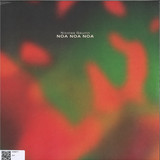
Matasuna Records starts the new year 2020 with a brilliant release, featuring two contemporary tracks by Paris based Afrobeat band Batunga & The Subprimes, available for the first time on vinyl.
Batunga & The Subprimes was founded in Paris in 2009 by musicians from different backgrounds, united by the will to mix traditional African music with other elements (Latin, Jazz, Second Line and even Rock) and to bring this explosive mix on the streets & on stage. After many shows all over Europe and beyond, their first official album Man in the Field was published in 2017, followed by their EP Let dem In in late 2019. Matasuna has chosen two extraordinary cuts of these self-released albums to release them on vinyl for the first time.
Gates Of Ouantou from their EP is a great tune that sets the bar for contemporary Afrobeat and has all the ingredients for a timeless classic: the arrangement, the instrumentation and the interplay of the seven musicians in the song are excellent and will immediately draw you into its spell. A real gem and great tune!
Man in the Field on flipside is a cut of their first official album. Unusual is the use of a banjo in an Afrobeat song but not surprising that this fits in very well and also shows that classical structures can be broken up and developed in a new approach/context. Another great piece of this extraordinary band that has been operating under the radar - until now!
out of Stock
Last delivered 6 years ago available to reorder, subject to availability
Pacific Express emerged from Cape Town, South Africa in the 1970s. The band were from the so called "Coloured" community and were ground breakers in both musical and political arenas. The founder members Paul Abrahams (Bass), Jack Momple (Drums) and Issy Ariefdien (Guitar) were joined by Chris Schilder (Piano), Vic Higgins (Pecussion), Barney Rachabane (Alto Sax), Stompie Manana (Trumpet) and Zayn Adams & Kitty Tshikana on vocals for their second album "On Time" in 1978.
On several occasions the group fell foul of Apartheid laws and discrimination by the state broadcaster, SABC. On one occasion they were asked to leave the stage of an international tour by Australian act John Paul Young, because the law forbade racially mixed performers on the same stage. The promoter, management and band members all resisted and once he incident made the Australian newspapers the authorities had little choice and turned a blind eye.
And so to the music. The most important thing. The LP opens up with the slick jazz-boogie funk of "We Got A Good Thing Going On", a perfect vehicle for the vocals of Zayn and the statement-of-intent, on-point musicianship of the band.
"I Hear Music" is the first of three smooth sweet string-laden ballads to feature on the LP. The majority of the songs on the LP were written by keyboard player Chris Schilder. As well as high-craft songwriting Chris also contributes layers of effortless musicality with his Rhodes and piano. "Good Old Days" (the only cover on the LP) is next and its smooth-rock grooves swing effortlessly to the fore. The A-Side of the vinyl closes with the instrumental jazz funk of "Saturday Night".
The flip side of the album opens with the bands biggest commercial success. A sweet soul ballad penned "Give a Little Love". Stepping outside their usual sound. This hit however was not without controversy as the video was removed from the TV airways after the South Africa Broadcasting Corp realised that the group were of mixed race, which was against rules for so called local artists in public performance at the time.
"Dream" follows on with the driving jazz rock and travelling keyboard solos. "Reaching Out For Love" is a power-pop boogie groover powered by guest vocalists Erica Lundy and Kitty.
"Say The Last Goodbye" is the last of the trio of ballads. A smooth style moment sounding all the bit like a 70's US TV drama closing theme. The LP features with a funky workout where the band show off their chops and slick level of musicianship.
Besides the success in southern Africa this album became a regional hit as a pirated music cassette in Nigeria. It was also released in France and Japan.
The band would go on to record one further LP in 1979 and a single in 1981. They carried on performing however well pass that. Throughout their years together the band acted as central hub for Jazz musicians within the Cape Town area. Players as Tony Cedras, Jonathan Butler and Alvin Dyers gaining experience alongside established names such as trumpeter Stompie Manana and alto saxman Barney Rachabane.
Here at World Seven we are ever so pleased to be re-releasing what we consider the bands finest album moment.
Rockets Audio starts the saga with 4 finest minimal house trackers by Matheiu, Denis Kaznacheev and the master trio Wareika. A rocket (from Italian rocchetto "bobbin" is a missile, spacecraft, aircraft or other vehicle that obtains thrust from a rocket engine. Rocket engine exhaust is formed entirely from propellant carried within the rocket before use. Rocket engines work by action and reaction and push rockets forward simply by expelling their exhaust in the opposite direction at high speed, and can therefore work in the vacuum of space.
In fact, rockets work more efficiently in space than in an atmosphere. Multistage rockets are capable of attaining escape velocity from Earth and therefore can achieve unlimited maximum altitude. Compared with airbreathing engines, rockets are lightweight and powerful and capable of generating large accelerations. To control their flight,
rockets rely on momentum, airfoils, auxiliary reaction engines, gimballed thrust, momentum wheels, deflection of the exhaust stream, propellant flow, spin, and/or gravity.
Rockets for military and recreational uses date back to at least 13th century China. Significant scientific, interplanetary and industrial use did not occur until the 20th century, when rocketry was the enabling technology for the Space Age, including setting foot on the Earth's moon. Rockets are now used for fireworks, weaponry, ejection seats, launch vehicles for artificial satellites, human spaceflight, and space exploration.
SOUND rockets are the most common type of high power rocket, typically creating a high speed pitch by the wave of rythm with an oxilator. The stored delay can be a simple pressurized detune or a single filter delay that disassociates in the presence of a curve (EQ + FILTER ), two hats that spontaneously react on contact (RANDOMIZER), two snares that must be ignited to react, a solid combination of effects with oxidizer (solid GROOVE), or solid fuel with liquid oxidizer (hybrid FILTER BAND DELAY). Chemical rockets store a large amount of energy in an easily released form, and can be very dangerous. However, careful design, testing, construction and use minimizes risks.
Cap'tain Créole - formerly known as Trenchtown Meditation - was a band formed in 1984 by Clément, José, Jean-Pierre and Serge.Cap'tain Créole was a pioneering creole-speaking French reggae band with the aim of exploring new musical horizons. With the help of 3 new members - among them a sax player and a trumpet player, both coming from the jazz scene, Cap'tain Créole recorded their unique outing, Ni Bel Jounin.
A single composed of 2 titles Fré Moin / Ni Bel Jounin, both sung in creole, using with great impact some subtle electronic elements.Both tracks are at the crossroads of many universes: Afro, Rock, Funk, Reggae. The result is quite unique and foremost, the spiritual vibe that oozes from the record is an obvious marker of their reggae roots.Privately pressed and self-distributed in small quantities at the time, BeauMonde is proud to make the one and only record of Cap'tain Créole available again
out of Stock
Last delivered 6 years ago available to reorder, subject to availability
"Space Echo - The mystery behind the "Cosmic Sound" of Cabo Verde finally revealed!" is the 20th release by the fabulous Analog Africa Label.
In the spring of 1968 a cargo ship was preparing to leave the port of Baltimore with an important shipment of musical instruments. Its final destination was Rio De Janeiro, where the EMSE Exhibition (Exposição Mundial Do Son Eletrônico) was going to be held.
It was the first expo of its kind to take place in the Southern Hemisphere and many of the leading companies in were all eager to present their newest synthesisers and other gadgets to a growing and promising South American market, spearheaded by Brazil and Colombia.
The ship with the goods set sail on the 20th of March on a calm morning and mysteriously disappeared from the radar on the very same day.
One can only imagine the surprise of the villagers of Cachaço, on the Sao Nicolau island of Cabo Verde, when a few months later they woke up and found a ship stranded in their fields, in the middle of nowhere, 8 km from any coastline.
After consulting with the village elders, the locals had decided to open the containers to see what was inside - however gossip as scintillating as this travels fast and colonial police had already arrived and secured the area.
Portuguese scientists and physicians were ordered to the scene and after weeks of thorough studies and research, it was concluded that the ship had fallen from the sky. One of the less plausible theories was that it might have fallen from a Russian military air carrier. The locals joked that again the government had wasted their tax money on a useless exercise, as a simple look at the crater generated by the impact could explain the phenomena. "No need for Portuguese rocket scientists to explain this!" they laughed.
What the villagers didn't know, was that traces of cosmic particles were discovered on the boat. The bow of the ship showed traces of extreme heat, very similar to traces found on meteors, suggesting that the ship had penetrated the hemisphere at high speed. That theory also didn't make sense as such an impact would have reduced the ship to dust. Mystery permeated the event.
Finally, a team of welders arrived to open the containers and the whole village waited impatiently.
The atmosphere, which had been filled with joy and excitement, quickly gave way to astonishment. Hundreds of boxes conjured, all containing keyboards and other instruments which they had never seen before: and all useless in an area devoid of electricity. Disappointment was palpable. The goods were temporarily stored in the local church and the women of the village had insisted a solution be found before Sunday mass.
It is said that charismatic anti-colonial leader Amílcar Cabral had ordered for the instruments to be distributed equally in places that had access to electricity, which placed them mainly in schools.
This distribution was best thing that could have happened - keyboards found fertile grounds in the hands of curious children, born with an innate sense of rhythm who picked up the ready-to-use instruments. This in turn facilitated the modernisation of local rhythms such as Mornas, Coladeras and the highly danceable music style called Funaná, which had been banned by the Portuguese colonial rulers until 1975 due to its sensuality!
The observation was made that the children who came into contact with the instruments found on the ship inherited prodigious capabilities to understand music and learn instruments. One of them was the musical genius Paulino Vieira, who by the end of the 70s would become the country´s most important music arranger. 8 out of the 15 songs presented in this compilation had been recorded with the backing of the band Voz de Cabo Verde, lead by Paulino Vieira, the mastermind behind the creation and promulgation of what is known today as "The Cosmic Sound of Cabo Verde".
The field of electronic music were involved. Rhodes, Moog, Farfisa, Hammond and Korg, just to name a few.
out of Stock
Last delivered 4 months ago available to reorder, subject to availability
In the mid-80's, an original form of music was discovered on the midi-capable little planet of Austin, Texas. At the age of 32, Charles Ditto would release his first solo album applying cutting edge computers and synthesizers of the era (Roland DX7, Roland MKS-20, Roland MKS-80, Sequential Circuits Profit 2000 along with a Macintosh SE), creating a unique and detailed world that was inspired by Cluster, Eno & The Residents.
In Human Terms bridges the gab between contemporary classical and minimal pop. Rhythmic but melodically abstract. Microtonal and organic. Often described as experimental electronics, tone poems or Cyber-delic-psychotropic-avante-garde.
In Human Terms, remains very emotion, deep and different. Ditto's music imparts a new listening experience that is still somewhat indescribable today, but remains approachable and relatable.
'What makes Ditto's music so strikingly different is his overt use of emotion, very descriptive melodies and deep atmosphere' Audio Magazine - August 1988 // 'If Erik Satie had midi gear' Keyboard Magazine - April 1988 // 'Brian Eno meets Seastones, but with more melody' Relix Magazine - August, 1988 // 'Ditto's choice of Synthesizer tones are at once both organic and unique' Electronic Musician - June 1988.
out of Stock
Last delivered 6 years ago available to reorder, subject to availability
“Beautiful, beautiful. Magnificent desolation.”
(Buzz Aldrin’s first words when he joined Armstrong on the surface of the moon) Now that the world has come to a standstill please let us guide your attention towards this special 12”. Round and ever-turning like the moon, it rests on the record player. Move the tonearm and the disc will ooze strangely comforting tones.
Exuberant, yet melancholic at the same time.
RSS Disco have created a psychedelic, blissful jam that moves currents & constantly changes shape. Meandering voices inhabit the sphere, a pumping bassline secures the foundation. The warp core is frail at this power level but seems to be holding up.
Frequencies unravel, the bridge heats up. This must be fairy dust made of moon rocks.
On the dark side of the moon, we find ?Aera (Permanent Vacation, Innervisions) ?with his signature arp-fest. Elevating the original track form the surface to the stars, we have left home and there is no intention of ever coming back.
out of Stock
Last delivered 6 years ago available to reorder, subject to availability
Sly Stone is a songwriter and record producer, mostly famous for his role as front man for Sly and the Family Stone. The band played a critical role in the development of soul, funk, rock, and psychedelics in the 1960s and '70s.
Sly Stone was identified as a musical prodigy at a young age. By the time he was seven, Sylvester had already become proficient on the keyboards and by the age of eleven he had mastered the guitar, bass, and drums as well. While still in high school, Sylvester had settled primarily on the guitar and joined a number of high school bands.
In 1993 he was inducted into the Rock and Roll Hall of Fame as a member of the group.
High On You (1975) is the first solo album by songwriter and multi-instrumentalist Sly Stone. For the most part Stone performed a large part of the instrumentation for each song on his own by using multi-tracking. The album prominently features vocalist Rudy Love and includes the singles I Get High on You', Le Lo Li' and Crossword Puzzle'.
out of Stock
Last delivered 6 years ago available to reorder, subject to availability
• Detroit blue-eyed soul from The Flaming Ember, a band who signed to the then newly created Hot Wax
Records (founded by the prolific hit making Motown team Holland Dozier Holland)
• Features the hit single ‘Westbound #9’ (24 US Billboard) alongside ‘Mind Body and Soul’ (26 on US
Billboard)
• Recognised for their contribution to music and inducted into the Rockabilly Hall of Fame in 1999
• The first reissue of this 1970 album on 180g heavyweight black vinyl with printed inner sleeve, and original
artwork
All Music Written & Recorded by David Drucker at The Skinny Apartment in Ridgewood, Queens, 2017
Featuring Mike Green (Mezzanine Swimmers) on guitars on "I Took Too Much Acid in 7th Grade," Cop Funeral on
electronics on "Seafood Special," Chris “Mr Transylvania” Shields on background vocals on "Massachusetts Is a Magical
Place," Eva “Nighttime” Goodman on violin & backing vocals on "The Ridgewood Ripper"
Painted Faces is the long (strange/trip) running voyage of weirdo David Drucker, began in Florida in 2009 and decamped
to NYC in 2011. It has sometimes been a loose band in the past with a revolving lineup of outsiders and interlopers
(known as The Freak Band), but is usually a solo endeavor, and the bulk of the recordings have been done as such. PF
has always been a home recording solo project, one-man-band style heavy on psychOdelic/outsider
folk/noise/experimental vibes. He started self releasing CD-Rs in the early days and quickly jumped to tapes on a variety
of labels including Already Dead, Lava Church, J&C, Null Zone, Tall Tapes. A "legendary" CD compilation on Gulcher
Records and an LP from Already Dead and Almost Halloween Time in Italy brings us to the here and now. Tales from the
Skinny Apartment is somewhere around the 20th or so Painted Faces release...he has long lost count.
Drucker runs/curates gigs (and records at) the Skinny Apartment, his dwelling place in Ridgewood Queens,
which some folks have called the "realest DIY zone in NYC." He also rips in Dead River Company, Big Hiatus, Shecky,
Canyon River Blues and countless other unknown subterranean improv zoner outfits. "Ripping" involves keeping it
freaky and weird and ripping sets wherever/whenever, i.e. always being down to perform whether in a kitchen or a
packed ballroom....no diva bullshit, just plugging in (or going sans electricity) and playing...always giving it your
all...Ridgewood Rippers are the crew of artists that populate Ridgewood and the loose "scene" around the Skinny
Apartment...much of it is in jest, a self-inflated mythology of nonsense which is pervasive in all rock and roll "scene"
histories. As a student of rock/pop history, Drucker is fascinated by the loose associations that connect folks from
various zones together...i.e. Miles Davis and The Grateful Dead...it's all the same though, the labels and genre
distinctions are completely arbitrary. We're all in this together, now more than ever...to be a "ripper" is simply to
"rip"...no nonsense!
Painted Faces has toured all over the USA and Canada numerous times, spreading the ripper gospels, and is
gearing up for their second European tour. He is known for falling apart on "stage," with performances heavy on humor,
horror, stoned digressions, and cathartic bouts of therapy, part performance art/part standup comedy, eradicating the
lines between performer, performance, and audience one show at a time
out of Stock
Last delivered 6 years ago available to reorder, subject to availability
This essential LP edition compiles 20 of Chuck Berry’s most emblematic and celebrated songs, taped by the Chess label between 1955 and 1961.
These recordings helped define the exact nature of early rock & roll. All-time classics such as Berry’s car songs (“Maybellene”), his calculated and carefully crafted instant smashes for the 1950s teenage market (“Reelin’ and Rockin’,” “Sweet Little Sixteen,” “School Days”), and his celebrations of the music itself (“Rock and Roll Music,” “Johnny B. Goode,” “Roll Over Beethoven”), are some of the greatest rock tunes ever written.
Take “Johnny B. Goode” specifically - the intro alone is arguably one of the most iconic pieces of music ever recorded, and the subsequent hand in hand energy of both the vocal and the instrumentation not only forms a brilliantly hook throughout the track, but also creates something uniquely Chuck Berry.
This material will convince even the sceptics of Berry’s brilliance. All of these original gems, which have been brilliantly remastered to achieve the most pristine sound, are simple two-and-a-half-minute songs that convey all the sheer power and emotion of rock & roll. Enjoy!
out of Stock
Last delivered 6 years ago available to reorder, subject to availability
"Kiska" is the lead single off Kedr's sophomore release, Your Need. The album is a celebration of life and rebirth. It's about a fighter's spirit, and if you will, a little audacity and courage. DJ'ing and early forms of dance music inspired a furious burst of creative energy after months of melancholy, sadness and reflection to record the album in only a matter of weeks. After her breakout album, Ariadna, which put her on the forefront of Russia's burgeoning electronic scene, Kedr felt lost with her identity and was searching for the direction of her next chapter. For a while she felt trapped by her own image and needed quite some time to resolve this internal dissonance - to grow, to evolve. DJ'ing was the main catalyst to pull her out of this rut. The art form shifted her inspiration to mainly old school styles of dance music: ghetto, house, breakbeat and UK garage. For the prior year and a half she was listening to ambient, kraut-rock and more experimental genres - one can hear the brighter, more energetic influence of early electronic music in the songs on Your Need. One day she was talking with her friend Flaty (Zhenya), a very talented artist from St. Petersburg who's signed to the GOST ZVUK label, and they decided to do a single together. He came to visit her in Moscow, but they ended up spending 10 whole days writing music together, from dawn to dusk. They vibed off each other's musical ideas perfectly and understood each other even without speaking. Zhenyais a beatmaster and pays attention to even the smallest details of a track. He brought incredible richness to the composition and Kedr considers him her teacher in this area. Kedr was in charge of the melodies and vibe of the tracks, and the vocal elements. Your Need is like a chapter of life. It's a story that illustrates different scenarios and moods that our mythical hero experiences, living in an urban jungle. From lost love to a bad trip on the dance floor, from euphoria to deep introspection. Our hero sometimes feels bold, lost or devastated, but also tender and full, like all of us at some point in life. The ending is joyful and bright. The last song gives hope and faith that a new day will come and wash away the old. You can feel like new every day. Your Need reflects an array of genres and a mix of cultures - a harmonious combination of differences. Everything Kedr loves about ghetto music, in the traditions of house, dub, breakbeat, 90s electronic music and modern sounds - she's embraced and expressed it all throughout. Your Need is Kedr's ode to music from different eras and changing periods.
out of Stock
Last delivered 6 years ago available to reorder, subject to availability
This is some serious top shelf material out of Baltimore and a certified masterclass in sweet symphonic soul. Optimistics was originally released in 1970 on Turbo and it’s every bit as essential as The Chi-Lites, The Delfonics and The Moments yet nowhere near as known. Those original copies are ridiculously rare and, of course, the prices are equally ridiculous.
Optimistics is a killer LP throughout, beloved of discerning hip-hop producers worldwide and routinely championed by the legendary Pete Rock. The genius George Kerr has handled the production on what is an album of beautiful, naïve soul for mind and body. It’s bursting with goodness and, like the best of its genre, it radiates a heart-breaking ambience that cuts right to the core.
The band of Billy, Harold, James, Charles and Jerome are described on the back cover as “five young, black knights who have embarked on a musical crusade and they're gonna slay a lot of dragons along the way”. We’re not entirely sure how many mythical serpents were dispatched during the making of this album but we can certainly attest to the sense of evangelical drive.
Evergreen opener “You Put Something New In My Life” is a heart-stopping ode to a transformative love. A ballad with spine-tingling chord changes and melodic switch-ups to spare, its sweeping strings and precise drums complement the falsetto delivery perfectly.
It’s followed by the equally beguiling “Let’s Love”. Another string-drenched harmony ballad, it revolves around delicate piano and distinctive guitar lines, crying out to be recontextualised by the best sampling technicians. Closing out the A side, the wonderfully restrained “Love Is God Almighty” is harp and horn-driven, barely-there soul from a higher plain. Heavenly.
Ushering in the flipside, “Should I Let Myself Go”, sampled recently by Knxwledge, is sensational guitar-soul with a yearning that could bring the most hardened soul to tears. It’s followed by the uptempo, Temptations-funk of “Man” and quietly-great “If I Could Influence Man”, where the competing vocals ride a chugging, funky breakbeat and delicious guitar licks. The refreshing, groovy “Say It Baby” is an appropriately positive, upward looking closer. Its sentiment and feel speaks directly to both the band name and the title of this, their only album. Truly optimistic.
The whole LP is a winning blend of slow, spine-tingling ballads and joyously upbeat tracks. It’s a case of A+ vocals, melodies and harmonies over beautiful playing and arrangements. It deserves to be canonical.
This fresh reissue has been mastered with the usual care by Simon Francis and cut by the legendary Pete Norman. The artwork has been lovingly reproduced by the Be With team.
Optimistics should be known to a much wider audience. We’ve hopefully gone some way towards rectifying that.
out of Stock
Last delivered 5 years ago available to reorder, subject to availability
Blaue Blume are a Danish alternative art pop band with a deep connection to the romanticism of the early 80s UK scene. Referencing artists such as Talk Talk, The Smiths and Cocteau Twins, it's clear their influences are with the more sensitive, magical aspects of music - and the eternal questions of love, life and death. Following two singles (Lovable and Vanilla) the album Bell of Wool is finally with us. It’s suitably enchanting from start to finish. Two themes dominate Blaue Blume’s new album Bell Of Wool, darkness and adventure. With the record mostly made before singer Jonas Smith slipped into a depressive episode, the album’s lyrics and moods draw pictures of the darkness, anxiety and tension that would mark Smith’s depression. Sonically, the album sounds a distance away from anything they’ve done before. Indie and electro pop and rock are out, and instead the album is crafted from soft, glowing synthscapes, dawns and skies transformed into sounds. Even on hints of their older work, like on the acoustics of “Rain Rain”, the synthwork comes into the picture and swells the song into something bigger and more majestic. Opener “Swimmer” introduces the listener to the softness and subtlety of the new sound, whereas songs like “Morgensol” and “Bombard” show it at its biggest and more grand.
out of Stock
Last delivered 3 years ago available to reorder, subject to availability
Sam went into an almost psychotic state when making music. He wasn’t himself. He was immersed in the creativity to such an extent that it was almost like a psychotic trance. Here’s an example. He found all this giant kelp down at Western Port bay and he would bathe himself in it for weeks. He would replenish the water and put salt in the bath, but leave the kelp in there. I used to ask Julie, his partner and wife, “How’s everything going?” and she’d say, “Just go and have a look at the bath.” - Tony Rogers
Sam Mallet could have pursued a career as a French literature professor in Paris, but decided his true calling was to remain in Australia, dedicate himself to his music and find the plateau; a word he used to describe the sensory worlds residing in music. Under the influence of Eno, Jon Hassell, Arvo Pärt, John Coltrane and Robert Fripp, Sam explored a wide variety of musical styles and put them to service soundtracking the time based works of his peers. He crafted spatial ambience, somber jazz, and drum computer driven rockers for short films and experimental video works, television shows (including the original Australian Wilfred series), feature films and live theatre. The avant garde Anthill Theatre, known for its departure from conventional staging practices and having a keen eye for talent, enlisted Mallet to provide soundtracks for approximately 40 productions throughout the 1980s and early 1990s.
Sadly, Sam passed away in 2014. A crucial piece of his legacy is undoubtedly the body of work he produced during his life, and the archive of recorded works is vast and deep. Sam seemingly saved everything, from fragments to finished pieces; and often repurposed previously released tracks by collaging them into new pieces. He self released a small number of cassettes and CDs from the mid 1980s onward, the contents of which were culled from soundtrack work and original pieces, but the majority of his music was experienced only within the ephemeral live performances.
Wetlands is the product of countless hours spent with this archive by Rowan Mason (Sanpo Disco/Recurring Dream) and Tony Remple (Musique Plastique), offering a dynamic survey of Sam’s work, and housed in a jacket evoking the minimal design and colour palette of his earliest cassette releases. Two selections of Sam Mallet’s music were featured on the compilation Midday Moon (also produced by Rowan), released last year by Bedroom Suck Records. Along with Left Ear Records’ Antipodean Anomalies, Midday Moon has served to highlight outlier musics and scenes from Australia and New Zealand, and Wetlands plunges deeper into the catalog of this obscure yet groundbreaking artist.
out of Stock
Last delivered 6 years ago available to reorder, subject to availability
Soul Jazz Records’ Nigeria Soul Power 70 album showcases the influence of funk, rock and disco on Nigerian music during the 1970s. Originally released as a now-long-out-of-print collectors’ 7” RSD box, this fully expanded album release now also includes extra tracks from Sonny Okosuns, Wings, Chief Kollington Ayinla and more. While for many people the fusion of funk and jazz music with Nigerian rhythms and aesthetics began with Fela Kuti and his afro-beat sound, in fact this can be traced further back to the phenomena of the 1960s Nigerian artists and house bands in nightclubs and hotels who interpreted US soul and pop music with a local flavour and none more so than Geraldo Pino, the ‘African James Brown’ who features heavily in this collection. Other similarly inspired Nigerian funk and soul artists featured here included Tony Grey and his Ozimba Messengers and Don Bruce and The Angels. Nigeria Soul Power 70 includes a number of tracks from the group Wings originally known as BAF (Biafran
Air Force) Wings, an army band formed during the Biafran civil war in Nigeria. The groups’ heavy mixture of funk, rock and African styles was popular among many Nigerian groups at the time.
Beneath the shadow of the few Nigerian artists who signed international recording deals in the 1970s – Fela Kuti, King Sunny Ade, Chief Ebenezer Obey – lies of vast wealth of largely undiscovered musical transmutation and cultural cross-pollination, and included here are heavy afro-funk/rock and disco tracks
from artists such as the legendary Sonny Okosuns as well as rare cuts from little-known outside of Nigeria - groups such as Colomach and MFB. Most of these obscure artists signed to major labels in Nigeria in the commercial slipstream that opened up as Philips, Decca and EMI tried to emulate the international
success of the big three international Nigerian artists. Finally featured here is Kollington Ayinla, one of the co-founders of Nigerian Fuji music, who gives us perhaps the heaviest of all tracks on this album. Ayinla is the great moderniser of the Fuji sound and in the late 1970s began adding Bata drums and synthesizers to his authentic music to create a powerful and heavy new fusion of traditional and modernist aesthetics, embracing both new technology and experimentation while rooted firmly in Nigerian historical lineage. Nigeria Soul Power 70 is released as a heavyweight gatefold double vinyl LP (+ free download code),
deluxe slipcase CD and digital album.
out of Stock
Last delivered 5 years ago available to reorder, subject to availability
Neurot Recordings are proud to reissue the landmark collaboration Neurosis & Jarboe, which was originally released in 2003. This latest version is fully remastered and with entirely new artwork from Aaron Turner.
Very limited silver metallic and black swirl 2LP - Non-Returnable
Steve Von Till explains the idea behind the remastering; "Bob Weston (Chicago Mastering Service, and member of Shellac) worked closely with Noah on making these new versions sound as good as the possibly can. Noah has the most trained critical ear for fidelity out of all of us being an engineer himself. We recorded this ourselves with consumer level Pro Tools back then, in order to be able to experiment at home in getting different sounds and writing spontaneously. The technology has come a long way since then and we thought we could run it through better digital to analog conversion and trusted Bob Weston to be able to bring out the best in it....This new mastered version is a bit more open, with a better stereo image, and better final eq treatment."
He continues about the original artwork..."Aaron felt he could create something that would unify the energy of both Jarboe and Neurosis in an elegant manner. We let him do his thing and I think it definitely adds to mystery of the album and sets it apart from the rest of our catalog."
When two independent and distinct spheres overlap, the resulting ellipse tends to emphasise the most striking and powerful characteristics of each body. Such is the case with this particular collaboration between heavy music pioneers Neurosis and the multi-faceted performer Jarboe (who performed in Swans and who has collaborated with an array of people from Blixa Bargeld, J.G. Thirlwell, Attila Csihar, Bill Laswell, Merzbow, Justin K. Broadrick, Helen Money, Father Murphy, the list goes on...) The musicians pull from one another some of the most harrowing and unusual sounds ever heard from either artist at the time - a sentiment which also rings true to some 15 years later.
Neurosis & Jarboe opens with a high-pitched whirring sound winding up as Jason Roeder's ominous tom-drum beat and Noah Landis' slinking synth line writhe in unison until Jarboe drops in, drawling in her characteristic, corrupted Southern belle voice, "I tell ya, if God wants to take me, He will." From there on in, the album is a series of abrupt shifts and cleverly juxtaposed themes that flows in a rhythm of its own. The sinister and ethereal sounds, vocal coos and electro-pulses of "His Last Words" seem like the perfect soundtrack to a David Lynch film. On "Erase," song parts are dissected and grafted one atop the other, continually building tension as Jarboe wails and yelps with Banshee fervor.
The project began with the artists working in seclusion, recording the elements that would best highlight their own characteristic integrity and personality, rather than either attempting to mimic one another's familiar elements. As recorded ideas were passed back and forth, the collaboration proved to bring out the most unhinged and urgent talents of all those involved.
Throughout the album, that signature "Neurosis note" - the sound of something simultaneously recoiling and erupting, the apocalyptic tone announcing the birth of a new world - reaches its apex and becomes evermore icy and eviscerating. Guitarists Steve Von Till and Scott Kelly trim their tones for cleaner, chorus-drenched effects layered between the thunderous distortion blasts of bassist Dave Edwardson. Likewise, Jarboe's operatic wail and other vocal contortions sound perfectly suited to the eruptive emotional fray of the music.
The collaboration is a deeply textured mosaic that is a culmination of merged aesthetics from two major influences on free-thinking sounds. It unlocked the hidden potential of electronic music as a new force in heavy rock. At a time when groups like Oneida, Wolf Eyes and Black Dice were beginning to experiment with technology in making mind-numbing leaden electro-drone freed from any essence of "dance music," Neurosis & Jarboe redefined all notions of their past - and outlined the course of heavy music to come. It's interesting to look back through the lens of this release, and think about these ideas and concepts in the present.
Neurosis & Jarboe remains the meeting point of all art that takes us beyond ourselves.
out of Stock
Last delivered 6 years ago available to reorder, subject to availability
We love pop music. You’ve probably noticed. Witness our vinyl love-ins with Kylie, Róisín and Cassie if this has somehow passed you by. So when Lou Hayter (London-based musician, style-DJ to the stars, one of our besties) asked us to put her sumptuous funk-lite hit “Cherry On Top” on vinyl it felt like a neat fit. But this isn’t just any old Be With record. We decided such a monumental track would make the perfect inaugural release on Be Pop, our new, most likely sporadically active, side-label.
For those not paying attention in 2005, Lou Hayter was the keyboardist in Mercury nominated electro-pop outfit New Young Pony Club (who were a really good band, beyond the hype, and arguably a little ahead of their time) and she is currently one half of electronic duo Tomorrow’s World, a project with Air’s Jean-Benoît Dunckel. Her comeback single “Cherry On Top” originally appeared in late October 2018, but as a digital only concern. Unsurprisingly it caused a blog stir (Gorilla vs Bear correctly gushed) and what seemed like 6 Music’s entire roster of DJs had it on repeat.
But it’s not a proper single unless you can buy it in a record shop. So accordingly we’ve issued it as a full picture sleeve 12", pressed on white vinyl. And just to make certain, the instrumental and a cappella are on the flip. This is our homage to the classic dance/pop 12" singles of the late 80s and early 90s.
Riding an infectious sample of Marc Jordan’s yacht-rock classic “Generalities”, it’s a glistening, sun-soaked daydreamy jam, perfect for convertibles, pool parties, and roller-discos. It’s quite delicious. Whilst it’s pop without question, it wouldn’t be a Lou Hayter track without ice-cool nods to other magical genres; with Italo flecks and dream-pop vocals, this is cherry coloured funk indeed.
“Cherry On Top” screams “Mighty Summer Pop Radio Anthem”. We might have just missed the end of Summer 2019, but this 12" comes out just in time for every summer from now until the end of time.
out of Stock
Last delivered 6 years ago available to reorder, subject to availability
Body Beat: Soca-Dub and Electronic Calypso (1979-98) comprises 17 obscure Soca B-side versions, dubs, instrumentals and edits as well as vocal tracks influenced by disco, boogie, house-music, soul and the more conscious lyrics of roots reggae. This compilation traces the soca genre from its explosion in the late 1970s right up to the period just before contemporary soca became established around the end of the 1990s. TIP!!
Compiled by Soundway Records label founder Miles Cleret and DJ/collector Jeremy Spellacey, Body Beat, as with many compilations on the label, explores the fringes of this often maligned (by outsiders) genre. Boiled down to the bare bones of the matter though: soca is party music.
Soca was originally a re-invention of Calypso music; a genre that in the 1970s was fast becoming usurped around the Caribbean by Jamaican reggae and American soul, funk and later disco. The originator of soca (or sokah as he called it), the calypsonian Lord Shorty, began experimenting and modernising on the formulation of calypso in the early 1970s. His first album featured a strong emphasis on East African rhythms and a punchier recording style that emphasised the beat, and introduced arrangements that often owed as much to American funk and soul as to calypso.
So here you go - seventeen slabs of soca crossover, rapso, electronic calypso, and Caribbean ‘soca-soul’ for your enjoyment - and bound to fit well into modern, open-minded DJ sets alongside the resurgence of burger-highlife, digi-reggae, soukous and zouk.
out of Stock
Last delivered 2 years ago available to reorder, subject to availability
"Nicolas Gaunin's surreal sound experiments lift you out of the everyday and transport you to an off-world Tiki lounge set high amongst the tree tops of a tropical rainforest, where you're surrounded by bizarre, colourful creatures and weird psychotropic plants. Noa Noa Noa is modern Dada, a neon soundtrack to your most outlandish fever dreams.
Nicolas Gaunin is the alter ego of Nicola Sanguin, part of the vibrant experimental music scene around Padua, Italy where he plays in outsider rock groups The Lay Llamas and Orange Car Crash. Nicolas Gaunin is his solo electronic project, a bright and playful cosmic mash-up that uses the rhythms of traditional African percussion groups and skews them slightly to create unsettling, off-kilter grooves. These drum machine experiments are laid over a teeming microscopic sound world of bird calls, insect chatter and weird jingles reminiscent of advertising earworms or video game soundtracks.
Noa Noa Noa takes its influences from music from around the world, and inspiration from high and low culture; from composer Gyorgy Ligeti to the cosmic sounds of Italian DJ Danielle Baldelli, from the experimental music of Moondog or Harry Partch to the playful sounds of Francis Bebey or the exotica of Martin Denny, from Iannis Xenakis to 8-bit video game music. Noa Noa Noa ends up sounding something like the imaginary soundtrack to the Nintendo Gameboy version of a lost William S. Burroughs novel.
Incredibly, most of the tracks on Noa Noa Noa were recorded live in one take with the express intention of creating music that is, in contrast to much of today's electronic music, bright, sunny, light-hearted and mischevious. The resulting album is both totally essential and also completely throwaway.
These tracks were originally released in 2018 by Artetetra Records (Italy) as Noa Noa (cassette & digital) and Danse de l'Oiseau (digital only). Hive Mind Records are proud to present Noa Noa Noa on vinyl for the first time."
out of Stock
Last delivered 6 years ago available to reorder, subject to availability
“This is my 1st solo rocket.
Tracks presented here were matured at the museum for few years and actually some of them came to
me at my very first attempt on solo music, being myself only involved with bands till then.
Everything was recorded at home exposed to machines i didn't know, using older and newer gear. At
some point midi samples were also used, taking advantage of my computer promises #anythingoes.
Turns out that cold meat lights no fire so attached to this music are ghosts of my life transcribing their
emotions into techno. First half of this rocket is more on a negative tip, the second half is more
positive, like we all should take it. Either way you should listen to both sides cause they complement
each other, so try to relax and enjoy the ride, or get off your ass and jam…"
Tiago’s (LUX/DFA) seminal solo album.
out of Stock
Last delivered 4 years ago available to reorder, subject to availability
With their 2013 debut single "Vintage Voudou," Conjunto Papa Upa cemented themselves as the torchbearers of a rare breed of Afro-Caribbean psychedelic soul, a clear delineation from the wonderful world of Venezuelan poly rhythms. That original song, named after the short lived but heavily influential Amsterdam brick and mortar record shop that band leader Alex Figueira founded, was a perfect clue into the deep exploration that Papa Upa would begin to take on their musical journey. Like the store itself, known for its solid connection to the musical footprints put down in relatively undiscovered places like Suriname, Curacao, Cabo Verde, Portugal and of course Figueira's native Venezuela, Papa Upa has captured a sound that is entirely unique, a new concoction of influences that at once sound strange, yet totally familiar. Perhaps because Venezuela shared such a rich & diverse mix of sounds from the Atlantic, Caribbean & US, a kindred spirit to their neighboring country, Colombia, an equal in terms of their industry output from the 60's & 70's, yet not nearly as publicized and compiled in recent years. Like many places in the greater Afro-Caribbean nexus, they were musically ahead of their time.
This futuristic mélange of sounds is reflective of Papa Upa itself, made up of musicians from Venezuela, Uruguay, Cuba & The Netherlands, all living, practicing & recording at Figueira's Amsterdam studio, Barracão Sound. With such a wide range of tropical influences, in a cosmopolitan and diverse city like Amsterdam, it's no wonder that Papa Upa's first extended project would find kinship in a collaboration with New York's Names You Can Trust.
Their lead single for the label, a preview of an upcoming full-length project in 2020, features "El Secreto Del Metalero" & the 45-only bonus B-side, "Chicharrón Pelúo." Metalero, or "The Metalhead's Secret" is a fitting anecdote for Papa Upa, with Figueira's synthesized vocals leading the way. It's an allegorical exorcism of a debauched headbanger on a discreet dance floor of a tropical rave. The shedding of a gruff & gothic exterior for the buckle-to-buckle bliss of the changa. Similarly in the music itself, under the cloak of vintage synths and a woofer exploding bassline, lies a frenetic fusion of afro-latin percussion that is highlighted by the intense rhythms of Angola's giantguacharaca (or scraper), thedikanza. At its heart is a sugary sweetness that is capable of converting the roughest of rockers into a tropicalista on the dance floor.
out of Stock
Last delivered 6 years ago available to reorder, subject to availability
The Melbourne show on June 17th was The Beatles's sixth and final date of their second Australian visit. Another incredible event that showed Beatlemania at one of its highest points- John, Paul, George and Ringo played their "usual" breathtaking set list in front of a wild and screaming crowd and after more than 50 years the whole thing still feels like pure Rock 'n' Roll.
out of Stock
Last delivered 7 years ago available to reorder, subject to availability
Brian Kage’s fourth release on Michigander Music “303 in the 313 EP” features 4 uniquely gritty and acid-soaked manifestations of mid 90’s Detroit. This exercise in analog monosynth mastery directly connects the grittiness of the urban landscape with the raw spirit of creative freedom.
Detroitasaurus starts the record off with a subtle prehistoric soundscape, steadily building rhythmic tension using hypnotic toms and melodic drum patterns. Razor sharp 909 hats hammer down there through the sonic mist as the journey continues to build. Shrieking jurassic trumpets cap off each of the peaking climbs to reveal metallic broken-down structures that are bound together with oscillating 303 threads and a grooving bassline.
Van Dyke Vessel features an atmosphere of textured percussion and metallic analog synths that wind around a deep square bass groove. Suddenly, truncated growling vocal samples start to collect into the catchy phrase “Let’s take this to outer space”. Swelling pads give way to squealing acid as this track transports dancers to a nostalgic melodic dimension.
Delray Dance undulates with thick bass slowly building into a body focused groove as it winds up and gives way to a rugged 303 saw with fluttering Spanish style synth stabs. Classic Detroit pads continue to swell, adding to the tension and leaving enough sonic space for melodic mixes in and out. This tune is the perfect tool to transition between genres.
Zonin breaks the mold by combining old-school electro vibes with a heavy dose of acid and freestyle hip hop. Heavy broken beats are combined with a rockin’ nostalgic bassline and layered party vocals that transports you to the center of the dancefloor on the best night you’ve ever had.
out of Stock
Last delivered 2 years ago available to reorder, subject to availability
50 years ago, a young Panamanian singer by the name of Ralph Weeks, who a few years prior had cut his teeth in the US music landscape with the group Johnny & The Expressions, self-produced and independently released a record with an absolute monster of a soul ballad called "Something Deep Inside." It was a song that Weeks had come up with on the spot during one of many gigs in the heart of Brooklyn's Prospect Heights, at the time a cultural hub and community for many Panamanians living in the borough. Along with his group, The Telecasters, Weeks often played at a Panamanian-owned club in the neighborhood called 4 Star's (STA4R's) which would independently sponsor the release of the tune on a 7-inch single.
Fast forward to 2019, where a serendipitous meeting between Ralph Weeks and Names You Can Trust turned into a solid formation of musical synchronicity, bonded over a shared belief in musical fusion, a weaving of musical threads that was similarly the foundation of that earlier era in Panama. It's a fusion that has become a constant theme throughout the Names You Can Trust catalog in the last 10 years, connecting the dots from NY, the Caribbean and Latin America. An immediate plan was put into motion: return Weeks to a studio atmosphere that had eluded him in the preceding decades, a vibe and live musical presence that would be reminiscent of his time recording with The Telecasters and The Exciters in Panama.
In the ultimate tribute to Weeks and that foundation, NYCT label mates Combo Lulo unpacked the 50-year old original tune and refashioned it into a timeless rocksteady ballad. It was an opportunity for Weeks to acquaint himself with a new band and a new generation of musical talent. Ultimately, it was an unexpected chance for Weeks to reconnect to the music he wrote one fateful evening in a Brooklyn club. For Combo Lulo, Names You Can Trust, and now the rest of his musical admirers, it's a chance to hear how gracefully Weeks' voice has aged, still silky smooth with those beloved falsetto runs, sweet and rounded like a barrel-aged añejo rum. It's a testament to the timelessness of Weeks' original music, and certainly another reminder of how far and wide even the smallest of musical blips can spread.
Presented as a double-sided bilingual 45 single, both versions of Weeks' classic tune, "Algo Muy Profundo" and "Something Deep Inside," have been formatted in the traditional Jamaican style, skillfully cut live and mixed under the guidance of NYCT and Combo Lulo's talented musicians. It's a tribute to a brilliant record and an unsung architect of Latin American sweet soul, but also a love letter to a very particular NY-Caribbean fusion that theoretically could have happened 50 years ago, depending on the borough you resided in. After all, there was always something deep inside. Comes with NYCT / STA4R'S Company Sleeve & Liner Notes.
out of Stock
Last delivered 6 years ago available to reorder, subject to availability
Mais Alors !!?... c’est à l’envers is the first release of new French Label ICI BIENTÔT (Here Soon ...), launched by Paris Fleamarket’s Record Shop, Geminicricket. On the Menu... Suspended Time,
Unsung Heroes, Hidden Records and Next Door Marvels.
In 1983, NEF released their first and only album, Mais Alors !!?... c’est à l’envers. At that point, the band already had a long history, interwoven with that of various musical trends and alternative
movements from the late sixties to the early eighties. That’s certainly what makes this record so special and able to conciliate such different worlds as Electronic Prog, Film Score, New Wave …
The band’s destiny was most certainly tied to their native region, the South of France, an idyllic environment that attracted a number of musicians during the 1970s, allowing the group to attend many
concerts or share the bill with several groups that have gone on to become well known: Can, Ash Ra Tempel, Magma, Catherine Ribeiro, Zao, Chêne Noir, Art Zoyd …
Founded in 1975 by Richard Lorenzi, NEF started as a kind of Free Rock band with multiple influences, going from Prog to Musique Concrete, in which any method of making sound, any way of
bringing out sounds was good … 2 musicians and a photographer, full member of the band who was projecting slides over the music and influenced their dreamlike universe. In 1978, Vincent Tronc came on board with his keyboards and synths. While the group had been influenced by electroacoustic techniques until then, Vincent broadened NEF’s horizons, bringing in a host of new influences: Ash Ra Tempel, Kraftwerk, Klaus Schulze … the beginnings of electronic music. When the album is recorded in 1983, new directions were taken and changed NEF’s usual sound.
First, the idea of playing the accordion, clearly not a common thing and a new Drum Machine, the Roland CJ-5000. Pressed the day a figure of French Chanson died, NEF’s pressing is botched up, a
good part of the records were unusable since the records came out totally warped. Then, at the end of the eighties the small stock of remaining records is lost in the sadly famous flood of Nîmes. 2000
records had been pressed, but very few survived! All the more reason to reissue Mais Alors !!?... c’est à l’envers, an unsung record, free and multifaceted, a quirky and daring musical ovni, transcending eras and genres, between synthetic
Krautrock and Film Score, reminiscent of NEU! (with a red nose), François de Roubaix and Pascal Comelade.
out of Stock
Last delivered 6 years ago available to reorder, subject to availability
Dies ist das vierte und bislang unveröffentlichte Album von Kapingbdi, einer sechsköpfigen Band aus Westafrika, die ihren Stil als "African Jazz-Funk-Rock from Liberia" bezeichnete. Es enthält eine exzellente Mischung aus afrikanischen und westlichen Elementen, mit spirituellem Herzen und dynamischen Grooves. Im Januar 1985 und unmittelbar vor ihrer Auflösung nahm die Gruppe neun Tracks für ein abgebrochenes LP-Projekt im Masterpiece-Studio in Detroit/ USA auf. Erst 2019 wurde die Musik sorgfältig vom Original-24-Track-Tape überspielt und remastered. Musik hat für Kapingbdi keinen eigenen Zweck, sondern dient zur Übermittlung einer Botschaft, geboren aus der Erfahrung und Perspektive Afrikas und für alle Menschen bestimmt.
out of Stock
Last delivered 6 years ago available to reorder, subject to availability
Johnny Clarke is one of the great vocalists that ruled the Jamaican Dancehall scene from the mid – 1970’s to the early 1980’s. While Bob Marley was out conquering the world, Dennis Brown, Gregory Issacs and Johnny Clarke were winning the hearts of the Jamaican people .Johnny Clarke’s use of the ‘Flying Cymbal‘ sound took the Island by storm and produced a run of hit singles few could match.
Johnny Clarke (b.1955, Jamaica, West Indies) cut his first record ‘God Made The Sea and Sun’, after winning a local singing contest in the Bull Bay area of Jamaica. Although the single was not a hit, it led to two follow up tracks for producer Rupie Edwards, ’Everyday Wandering’ and ‘Julie’ that fared much better, both on the island and oversees in England and Canada. These tracks also brought the singer to the attention of producer Bunny Lee and a working relationship that would go on to produce a prolific catalogue of music. Johnny Clarke’s Dread Conscious / Love Song style were to grace many hits around this time in 1974. Such tunes as ‘None Shall Escape The Judgement’, ‘Move Out of Babylon’, ‘Rock With Me Baby’, ‘Enter The Gates With Praise’ to name but a few. All new songs added to a host of cover tunes, recommended by Bunny Lee, many taken from the singer John Holt’s catalogue, that suited Clarke’s vocal style. The rhythms were cut at various studios around the Island. Randy’s Studio 17, Channel 1, Treasure Isle, Dynamic Sounds and Harry J’s, by a group of musicians loosely called the Aggrovators and some tunes incorporating the ‘Flying Cymbal’ sound again introduced by Bunny Lee, working the Hi-Hat in fine style. The tracks were then taken to King Tubby’s studio where Johnny Clarke’s vocals would be voiced.
Another phenomenon that was happening in the early 1970’s, was the version cuts to vocal tracks. This is when the tunes were cut back to the bass and drums and the vocals were dropped in and out in a dubbed style, and reverb and echo and various effects were added to these tracks. The main exponent to this style was King Tubby himself, and as was the fashion at the time, each vocal track would carry a version as its B-Side. Producer Bunny Lee lead this style working closely with King Tubby and all of his singles from then on would carry a Dub cut on its flipside. As Johnny Clarke was one of Bunny’s main singers at the time, we would hear a great selection of popular songs getting the dub treatment and in many cases the single was purchased for its more exciting dub cut, again made popular at the various dances where the dubplates were played out. We have compiled some of the best of these dubs from the time and put them together for this release, hope you enjoy the great voice of Johnny Clarke alongside the productions of Bunny Lee and the creative genius of King Tubby, a great combination we hope you will agree….
out of Stock
Last delivered 3 years ago available to reorder, subject to availability
Double vinyl LP pressing housed in gatefold sleeve. Includes digital download. Supernatural is the eighteenth studio album by Latin rock band Santana, released on June 15, 1999 on Arista Records. After the group found themselves without a label in the mid-1990s, founding member and guitarist Carlos Santana began talks with Arista president Clive Davis, who first signed the group in 1969, which led to a new record deal. The pair collaborated with A&R man Pete Ganbarg on the production of Supernatural as Santana wanted to focus his musical direction towards pop and radio friendly material and proceeded to do so by collaborating with various contemporary guest artists, including Eric Clapton, Rob Thomas, Eagle-Eye Cherry, Lauryn Hill, Dave Matthews, Maná, KC Porter and Cee-Lo Green. Supernatural became a significant commercial success worldwide. It reached # 1 in eleven countries, including the US for 12 non-consecutive weeks where it is certified 15× Platinum. The first of six singles from the album, "Smooth" featuring Matchbox Twenty singer Rob Thomas, was a number one success worldwide and topped the Billboard Hot 100 chart for 12 weeks.
out of Stock
Last delivered 7 years ago available to reorder, subject to availability
TThe melodically adventurous soul of Leon Ware continues its expression in his final opus Rainbow Deux, released on double vinyl on September 13th. The album features new songs recorded and performed by Leon before his health turned, leading to his transition on February 23rd 2017. Co-produced by Taylor Graves, it has stellar musical contributions from the likes of Kamasi Washington, Thundercat, Ronald Bruner Jr, Rob Bacon and Wayne Linsey.
Taylor Graves came into Leon’s musical family in 2002 when he, his brother Cameron and the Bruner brothers Ronald Jr and Stephen (Thundercat) were playing along with their schoolmate Kamasi at an L.A. jazz club. Taylor, Cameron, Ronald and Stephen became Leon’s band for his debut shows in Japan in 2002 and Taylor continued to work with Leon as his mentor and collaborator over the next 15 years.
“Leon was ALWAYS writing something or developing his musical palette” his wife Carol Ware tells us, so it’s impossible to pinpoint any single moment of Rainbow Deux’s genesis. Six of the songs go back to 2012/2013 and were released in 2014 as part of Sigh, a Japan-only CD collection heavy with Rob Bacon’s tasteful licks and Wayne Linsey’s piano vibes. The rest of the material comes from Leon’s sessions with Taylor.
Describing Leon’s and his process, here’s Taylor: “We’d start by having some great homemade food! Then a glass of wine ‘to slow down time’. After we’d have our fill and smoked our joints we’d go into his studio room to listen and create.”
The album was finished-up around August of 2016 in a back-and-forth between Leon and his go-to mastering engineer Toni Economides in the UK.
Leon worked on Rainbow Deux with life’s greatest challenge looming over him, yet it is one of his most focused and cohesive solo offerings since the 1980s. The entire record is a vibe: mellow, deep and smooth as silk. The lyrical themes are eternal, and the music is elegant, soulful and sensual.
The album opens with the hypnotic throb of “For The Rainbow”, coming on like a percussive, slow-mo house shuffle. Gilles Peterson is a fan. The exotic “Let Love In” follows, with its gradual-build Island Funk, intricate guitar picks and sassy female vocals. It explodes when it hits its stride. “Sigh” is the stylish slow jam close-out to side A. Serene guitars and polished drums create neck snapping funk, with a swaggering finger-snap strut.
Side B opens with the easy-burning broken-beaty “The Darkest Night”, the centrepiece of the album. Kamasi Washington’s lurking sax, restrained and beautiful, unfurls into the dank, sticky atmosphere of Thundercat’s signature creeping bass laid over his brother’s in-the-pocket drums. Leon’s vocals are perfect, a masterclass in seductive sax-soul.
“Surrender Now” conjures waves of vocals to swell and wash over the glossy piano, subtly bumping hip-hop drums and bubbling synth-bass stabs. It’s got the trademark Leon layers. “Summer Is Her Name” has Kamasi’s effortless, melancholic sunshine sax give way to rising tempos and propulsive rhythms.
“Are You Ready” is a total highlight (and we’ve been playing it out for ages). It’s a nimble groove of piano and synth rolling around Theo Croker’s sensual trumpet playing. Digi-soul at its finest. With lush G-Funk sensibilities “Streets (Keep Me Runnin’)” sounds like a lost Dam-Funk produced gem. All tough kicks and snares and street sounds. Leon’s hood pass will be forever intact.
“Samba Dreams” is the first of two tracks that bring a little Rio magic to Rainbow Deux. Leon created a whole body of work in partnership with Brazilian legend Marcos Valle that includes “Rockin’ You Eternally” - a hit for Leon - and “Estrelar” – a hit for Marcos. Leon channels his obvious love of Brazilian music here through more of Croker’s sumptuous trumpet, played over loose percussion. “Let’s Go Deep” is next up. A dreamy between-the-sheets quiet storm anthem and a real showcase for Leon’s vocals.
The dripping, honeyed harp-funk of “We Should Be Laughin’” marks the star turn of the brilliant Kimbra. Leon first met her on-stage to do an impromptu duet of “Inside My Love” during an open-air celebration of Minnie Riperton in July of 2014. Kimbra was working with Taylor on her music and he brought her to Leon’s house to do some writing. This was the result.
Warm synths radiate shuffling samba soul on “Wishful Thinking” as those Brazilian rhythms return to bring Rainbow Deux to a close.
During an apartment move Leon and Carol rediscovered some watercolours Leon had done years ago. One of these paintings had been dubbed “Deux Hearts” and Leon decided it should be on the cover of Rainbow Deux, getting as far as approving a draft concept for the artwork.
Carol has overseen developing that draft into the final gatefold sleeve. It brings together quotes, photographs and tributes in what is a reflection on the music, relationships and philosophy of the sensual minister.
Gerry “the gov” Brown, Leon’s long-time sound engineer, was by his side throughout the project, recording and mixing. The album was mastered by Toni Economides and Simon Francis’ additional sensitive work makes sure this double LP sounds like it should on vinyl.
Be With’s first ever release was Leon’s eponymous LP. Re-issuing that album planted the seed of a relationship that has grown to grant us the privilege of presenting his crowning achievement. We know that Leon’s fans all over the Earth will love Rainbow Deux. But we also hope that this album, the final entry in a phenomenal body of work, will reach new fans and find fresh conduits for the spirit of this oft-unsung hero of Soul.
Leon always said “they will get it when I'm gone.”
He also said that “the spirit never dies”…
out of Stock
Last delivered 6 years ago available to reorder, subject to availability
Vertigo Inc, the freeform house project of a veteran Canadian producer, returns to the Unfulfillment label with four tracks of kaleidoscopic psy-house, acrobatic acidic exotics, and modal boogie, coaxed from retro machines for a sophisticated, full-body buzz. Come to where the wild things are..
A DIY labour of love since its inception in 2014, Unfulfillment was founded in the US in 2013 to release dance music of an exploratory nature. Unfulfillment releases have been played and charted by Powder, Soft Rocks, Shireef Laffrey, Brian Not Brian, Jacques Renault, Mister Saturday Night, and Luke Solomon.
out of Stock
Last delivered 7 years ago available to reorder, subject to availability
After years of mythology, misinterpretation and procrastination Nurse With Wound’s Steven Stapleton finally chooses Finders Keepers Records as the ideal collaborators to release “the right tracks” from his uber-legendary psych/prog/punk peculiarity shopping list known as The Nurse With Wound List, commencing with a French specific Volume One of this authentically titled Strain Crack Break series. Featuring some Finders Keepers’ regulars amongst galactic Gallic rarities (previously presumed to be imaginary red herrings) this deluxe double vinyl dossier demystifies some of the essential French feee jazz and Parisian prog inclusions from the alphabetical “dedication” inventory as printed the anti-bands 1979 industrial milestone debut.
When Steven Stapleton, Heman Pathak and John Fothergill’s anti-band Nurse With Wound decided to include an alphabetical dedication to all their favourite bands on the back of their inaugural LP the notion of creating a future record dealers’ trophy list couldn’t have been further from their minds. By adding a list of untravelled European mythical musicians and noise makers to their own debut release of unchartered industrial art rock they were merely providing a suggestive support system of existing potential likeminded bands, establishing safety in numbers should anyone require sonic subtitles for Nurse With Wound’s own mutant musical language. Luckily for them, the record landed in record shops in the midst of 1979’s memorable summer of abject apathy and its sound became a hit amongst disillusioned agit-pop pickers and artsy post-punks, thus playing a key role in the bourgeoning “Industrial” genre that ensued. On the most part, however, the list , like most instruction manuals, remained unreadable, syntactic and suspiciously sarcastic... As potential “real musicians” Nurse WIth Wound became an Industrial music fan’s household name, but in contrast many of the names on The Nurse With Wound List were considered to be imaginary musicians, made-up bands or booby traps for hacks and smart-arses. It took a while for the rest of the record collecting community to catch on or finally catch u
Since then, many of the rare, obscure and unpronounceable genre-free records on The Nurse With Wound List have slowly found their own feet and stumbled in to the homes of open-minded outernational vinyl junkies, D’s and sample hungry producers, self-propelled and judged on their own merit, mostly without consultation of the enigmatic NWW map. But, to the inspective competitive collector’s chagrin, one resounding fact recurs, NWW got there first! Via vinyl vacations, on cheap flights and Interrail tickets, buying bargain bin LPs on a shoestring while oblivious to the pending pension worthy price tags after their 40 year vintage, Stapleton and Fothergill, even if you’ve never heard of them, were at the bottom of the pit before “digging” became paydirt. And NOW at huge international record fairs that occur in massive exhibition halls (or within the confines of your one-touch palm pilot) amongst jive talk acronyms such as SS, PP, BIN, DNAP and BCWHES the coded letters NWW have begun to appear on stickers in the corner of original copies of the same premium progressive records accompanied by a customary 50% price hike to titillate/coerce the initiated as dealers extort the taught. Like “psych” “PINA” or “Krautrock” did before, “NWW” has become a buzzword and in the passed decades since its first publication The List has been mythologised, misunderstood and misconstrued. It’s also been overlooked, overestimated and under-appreciated in equal measures, but with a growing interest it has also come to represent a maligned genre in itself, something that all members of the original line-up would have deemed sacrilegious. Bolstered by the subtitle “Categories strain, crack and sometimes break, under their burden,” all bands on the inventory (many chosen on the strength of just one track alone) were chosen for their genre-defying qualities... A check-list for the unchart
Forty years after Nurse With Wound’s first record, Finders Keepers Records, in close collaboration with Steve Stapleton remind fans of THIS kind of “lost” music, that there once existed a feint path which was worn away decades before major label pop property developers built over this psychedelic underground. As long-running fans and liberators of some of the same records, arriving at the same axis from different-but-the-same planets, Finders Keepers and Nurse WIth Wound finally sing from the same hymn sheet resulting in a collaborative attempt to officially, authentically and legally compile the best tracks from the list, succeeding where many overzealous nerds have deferred (or simply, got the wrong end of the stick). Naturally our lavish metallic gatefold double vinyl compendium would only scratch the surface of this DIY dossier of elongated punk-prog peculiarities hence out decision to release volume one in a series which, in accordance with Steve’s wishes, focusses exclusively on individual tracks of French origin, the country that unsurprisingly hosted the highest content of bands on the list. Comprising of musique concrète, free jazz, Rock In Opposition, Zeuhl School space rock, macabre ballet music, lo-fi sci-fi, and classic horror literature inspired prog, this first volume of the series entitled Strain Crack And Break throws us in at the deep end, where the Seine meets the in-sane, introducing the space cadets that found Mars in Marseilles.
Like the Swedish flat-pack record shelves that attempt to house the vast amounts of vintage vinyl that goes into a multi-volume compilation like this, its time to prepare your own musical penchants and preconceived ideas about DIY music and hear them slowly strain, crack and b
out of Stock
Last delivered 3 years ago available to reorder, subject to availability
It wasn’t really a movement, barely even a moment, but the Daisy Age was an ethos that permeated pop, R&B and hip hop at the turn of the 90s. Playfulness and good humour were central to De La Soul’s 1989 debut album, “3 Feet High And Rising”, which would go on to cast a long, multi-coloured shadow over rap.
In Britain, the timing for “3 Feet High And Rising” couldn’t have been better. The acid house explosion of 1988 would lead to a radical breaking down of musical barriers in 1989, and its associated look – loose clothing, dayglo colours, smiley faces – chimed with the positivity of De La Soul and rising New York rap acts the Jungle Brothers and A Tribe Called Quest, all at the heart of a growing collective called Native Tongues.
The Native Tongues’ charismatic, summery aura quickly spread west to the Bay Area’s similarly-minded Hieroglyphics crew (Del Tha Funky Homosapien’s ‘Mistadobalina’); Canada’s Dream Warriors (‘My Definition Of A Boombastic Jazz Style’) used “3 Feet High”’s colour palette and borrowed Count Basie and Quincy Jones riffs; Naughty By Nature (OPP) were mentored by Native Tongues heroine Queen Latifah, while Londoner Monie Love was also adopted by the collective, resulting in her Grammy-nominated ‘It’s A Shame (My Sister)’.
It wasn’t built to last, but the Daisy Age reintroduced Multiplication Rock, bubble writing and the gently psychedelic into the charts. It was a brief, but extraordinarily warm and optimistic moment. The songs on this collection promised that the 90s would be a lot more easy-going than the 80s.
Available on CD and double LP.
out of Stock
Last delivered 7 years ago available to reorder, subject to availability
Matasuna Records once again dug deep for its latest release and comes up with probably one of the best Latinfunk tunes. It was recorded by US band "Los Sobrinos del Juez" and released on their debut album in 1974. Matasuna Records is delighted to officially reissue two cuts from the album on 7inch single.
Founder, producer and singer of the band is Carlos Oliva, who was born in Cuba. He moved to Miami, Florida in 1961, where he had his first engagements. There he linked to other Cuban musicians and decided to move to New York with them to make music.
Some time later Oliva returned to Miami and founded his own band "Los Sobrinos del Juez (The Judge's Nephews)" in 1967. The group is regarded as one of the pioneers of musical fusion, which developed in Miami in the late 1960s and became known as the "Miami Sound". The music styles rock, blues, funk and soul that were popular at that time had an influence on their own compositions, which were enriched and spiced with Cuban/Latin American sounds. The band's first album was released in 1974 on an independent label in Miami and is a good example of this new sound. The album is much sought after and hard to find.
Oliva has released several albums with the band and toured Latin America and Europe. In the early eighties he also founded his own label. In the course of time he and his eight-man band got deeply rooted in the cultural life of Miami and enjoy attention and recognition. They are still on stage as "Los Sobrinos del Juez".
"Harina de Maiz" is the name of the song on the A-side - an uptempo latin funk monster driven by the characteristic wah wah guitar and a psychedelic sounding organ. Listening to it reveals why the song is one of the most funky Latinfunk tunes.
On the flip side it's quite different: "Corned Beef Hash" is a vibrant easy Latinjazz tune, where the talent of the musicians is audible. The perfect interaction of the piano player, the vibraphonist, the flute player and the rest of the band is a musical delicacy for its connoisseur.
a A1 Harina de Maiz clip
out of Stock
Last delivered 5 years ago available to reorder, subject to availability
Mekanik Kommando was a post punk / New Wave band from Nijmegen, the Netherlands founded in 1979 by Peter van Vliet and Laszlo Panyigay. The duo became a quartet with the addition of Simon van Vliet and Mirjam van Hout. The name Mekanik Kommando comes from the album ?Mekan?k Destrukt?w Kommand?h? by the French progressive rock band Magma. Inspired by a DIY ethos, Kraftwerk and Magma, the band began recording songs at home using two tape recorders. Their demo cassette was discovered by Wally van Middendorp of Minny Pops and owner of Plurex Records, who booked them for a gig at Paradiso in Amsterdam. In 1981 they were asked to contribute music on a flexidisc for the first issue of newly established magazine Vinyl. In the summer of that year the band recorded their debut album ?It Would Be Quiet In The Woods If Only A Few Birds Sing? released on Torso. In February 1982 the band secured five days of studio time at Salisbury Sound in Dordrecht. The end result was the mini-album ?Dancing Elephants? released on Torso later that year. Musically, the five songs are a mix between cold wave, experimental electronic and industrial pop. The band utilized two bass guitars plus a Korg 770, KR-55 drum machine, violin, effects, metals and plastics. Lyrics explore themes of decay and morality, hypnotically spoken on top of playfully metallic sounds. All songs have been mastered by George Horn at Fantasy Studios in Berkeley. Each EP is housed in a replica of the original jacket, which features artwork by the group members, and includes a 4-page booklet with lyrics and notes designed by Eloise Leigh.
out of Stock
Last delivered 7 years ago available to reorder, subject to availability
Charles Trees. Myth, tall tale, legend of a human being, one of those people who one minute you'll be scouring reddit for obscure content and the next, stepping on stage to casually DJ to thousands of people like “no big whoop” at a French music festival. Charles is unassuming, the kind of person who effortlessly mixes ghettotech into soul for lulz, who samples a speech (/rant) by Funkmaster Flex in an acid track, or rides BMG & Derek Plaslaiko’s “True Story of a Detroit Groove” with Velvet Underground’s “Sister Ray” for 8 minutes straight.
Charles' relationship with electronic music started early. In high school, Dave Shayman (Disco D) introduced Charles to DJing and he was a regular at Dubplate Pressure*– Todd Osborn's now-legendary record store in Ann Arbor. By 1998, he was already playing on raves in Detroit. A year later, he was the first person to show Zach Saginaw (Shigeto) to Ghostly International, arguably altering the course of our lives forever. In the late 2000s, they became label mates on Moodgadget, the record label of Jakub Alexander (Heathered Pearls).
Through out the years, Charles has been a musical mentor (whether DJing, producing or throwing shows) to many, danced at every weekly at every venue in Ann Arbor & Detroit, produced Hip Hop, and fronted a psych rock band. He has released music on Moodgadget (US), Musique Large (FR), Lovemonk (ES), Vanity Press (US) and JFX Lab (FR). Today, between DJing, hosting radio shows and producing new music, Charles regularly throws shows/parties/raves, and hosts a monthly at Deluxx Fluxx.
We love Charles Trees and we're proud to present "2019," the eighth record on Portage Garage Sounds.
*Additional reading: Dubplate Pressure: was the precursor to Technical Equipment Supply; how Todd Osborn was discovered by Richard D. James and signed to Rephlex Records; where Sam Valenti IV, the founder of Ghostly International, met Tadd Mullinix (Dabrye, JTC, Charles Manier, X-Altera); one of the reasons why we're all here
"Got No"
Hit the ground running.
Chopped up vocal stabs and a playful syncopated melody accompany this percussion heavy two-step shuffle as it speeds down the Lodge on a Friday night in Detroit.
"Think First"
Undeniable rhythm section pocket.
Acoustic bass and dirty ride symbols swing alongside lush keyboards and sprinkles of light melodicism in this psych house banger.
Think St. Germain with CAN playing a warped version of "Rose Rouge."
"In Arms"
Crave the rave. Whips crack and sizzle in this dubbed out techno slapper. A modern take on a classic sound. Trees conjures an era close to his heart: when the warehouse was church and service didn't stop until the sun came up.
"Acja feat. Marcus Elliot ("12 club mix)
Beautifully understated and triumphant.
This closer marks the return of Detroit Saxophonist Marcus Elliot (Detroit pt II - PGS 001). His notes dance and soar over a creeping acid line, while driving drums and warm pads effortlessly take you home in this powerful house anthem.
out of Stock
Last delivered 7 years ago available to reorder, subject to availability
When the Tramp Records crew read the internet-sweeping spam/story of Nigerian Astronaut and Air Force pilot Abacha Tunde, they knew that they had to spring into action to help this unfortunate fella out. Dr. Bakare Tunde, the cousin of Abacha Tunde explained the situation as follows: "My cousin was the first African in space when he made a secret flight to the Skylab Space Station in 1979, shortly before it crashed to Earth. 19 years later he was on his second spaceflight, this time to a secret Moon Base located on the far side of the Moon. In 1999 his crew members returned to earth, but his place was taken up by return cargo. There have been occasional supply flights to keep him going since that time. Although he is in good humor, he wants to come home, now, after 20 years in space."
After this hilarious story the idea of a compilation album was born - and "Trip To The Moon" is the result. The goal to raise three million dollars to cover the cost of Abacha Tunde's return flight may never be achieved. Nevertheless, a 41 year experience in the music business is the basis for a fantabulous track listing of 11 amazing and highly underrated Rare Grooves about the Moon!
The Swinging Astronauts open the set, followed by La La Wilson's equally great rhythm & blues rocker "The Moon Man Is Back". With The Moon-Dawgs, this album makes a slight turn into the 1960s garage rock era while Hase Cäsar (backed by none other than the famous Ingfried Hoffmann and his orchestra!) contributes one of two songs of german origin. Now it's time for some funk: Rev. Jamel & Bob Johnson's "Walking On The Moon (Men Are Starving)" criticizes the US government for spending millions of dollars for their space program instead of supporting their own people. "Mars in 75" is deepfunk at its best although some may lament the lack of production. Sidney Ownen's breakbeat-laden "Sputnik" is sought after in collector's circles and needs no justification as to why it is included on this album. Ernest & D.L. Rocco's "Moon Child" is our personal favourite, closely followed by the hypnotic groove of "Mondgesicht" by legendary german saxophonist Ambros Seelos. Scott Cunningham's name should ring a bell as he was featured on several Tramp compilations over the past few years. Finally, the album closes with a psychedelic folk track titled "Voyage To The Moon".
Tramp Records is absolutely convinced that this album will surely be the best way to shorten the wait for Abacha until a rescue space mission finally brings our African soul brother back home.
Key selling points:
- deluxe gatefold LP with detailed liner notes and unseen photographs
- the vinyl LP comes with a full album download code
- most of the songs appear on a 12" album for the very first-time
out of Stock
Last delivered 7 years ago available to reorder, subject to availability
To mark his second artist album on his own Millionhands label in July, Tee Mango teases with a fantastic second EP from it featuring remixes from Hidden Spheres (Lobster Theremin, NTS), Kiwi (Futureboogie, Optimo, Life & Death) and Hubie Davison (Regraded).
The fantastic full length finds the UK artist stretch himself and serve up a dazzling array of soul-drenched, vocal-laced songs featuring his own singing and influenced by the likes of Prince and Bon Iver, alongside awesome gyuest vox from Detroit funk legend and former Funkadelic member Amp Fiddler.
Opening up EP 2, Tee Mango serves up a fizzing and arpeggiated electronic disco track, ‘Woo Hoo’ which will undoubtedly be rocking festival tents this summer. Irishman and Leisure System man Hubie Davison then steps up to the plate with a heart-warming, tripped out and twinkling organic house mix of ‘Down Down Down’, featuring warm oaky melodies and Mango’s fragmented falsettos.
Then comes a dazzling techno-not-techno mix of ‘Woo Hoo’ from Londoner Kiwi, an associate for labels like Correspondent and Optimo Music. This superb version keeps the galloping arpeggiated feel of the original but swaps the broken beat for a straight four to dizzying effect. Following that is acclaimed Lobster Theremin, Rhythm Section and NTS regular Hidden Spheres with a hip house basement re-rub of ‘Down Down Down’ with more of Tee Mango’s fragmented falsetto over a beat Prince would be proud of.
Finally, Tee Mango himself then steps out with the excellent balearic skit ‘Don’t Worry About the Rain’ with deliciously soothing Rhodes and synth whines topped with Mango’s vocals imploring us to ignore the weather.
This is a top package that bristles with brilliant club sounds for a range of different settings and more than whets the whistle for the forthcoming album.
out of Stock
Last delivered 7 years ago available to reorder, subject to availability
canadian beatdown master “eddie c” is back with fourth full length on endless flight!
this new album is his unique mixture of laid back hip hop and lo-fi house sound which is inspired from late 80’s to early 90’s and much more darker than usual.
the album kick off by old school hip hop tracks of “carbondate”,in the park” then new wave disco sound of “way uptown” it reminds us nyc post punk/new wave artist “konk”,dubby brazilian percus-sive disco track “batucada”,”berlina” is early 90’s nyc house like pal joy, probably most club friendly track “bad words” is wired new wavy vocal house madness and the album close with dreamy down tempo track “an der wedding” heavy kraut rock influenced stuff.
hope you enjoy.
out of Stock
Last delivered 5 years ago available to reorder, subject to availability