"Scorched tales of Manifest Destiny from the best to do it…Montana Bar Rock of the highest order!" - Stephen Malkmus
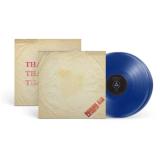
The question asked most frequently of us is: “When will you reissue Silkworm's Firewater?”
The answer is December 4th, 2026.
Firewater, the ambitious Matador Records debut for SKWM, released thirty years ago after the band condensed to a trio following the departure of Joel RL Phelps, is back in print on 2xLP with a bonus CD included courtesy Comedy Minus One containing nearly 20 minutes of additional material on top of the original hour's run. Some of which has never been heard previously. Like an alternate take of Don’t Make Plans This Friday with the original lyrics, for example.
Both records are housed in full-color Stoughton sleeves inside the record’s gorgeous jacket, highlighting the paintings of Hiroshi Kimura.
Existing between Moscow and Milan, Interchain is a group that has been a cornerstone in the Moscow scene through the years, appearing and disappearing as they see fit.
The duo now debuts on L.I.E.S. with their "In My Apartment" lp. This records steps into a world of total disjointed angular electronic no-wave madness, somewhere between Devo and Liasions Dangerous...sharp sequences, thumping dx basslines, freaked out, on the verge of snapping vocals and bugged out textures. This music pushes and pulls the listener around until something just goes off inside of you. These nine tracks are on the boiling point, absolute frantic no-wave energy that will rock the floor.
Das fünfte Studioalbum von Psychic Ills, ,Inner Journey Out", feiert sein zehnjähriges Jubiläum. Ursprünglich erschien es 2016 als erstes Album der Band seit ,One Track Mind" (2013) und gilt als Höhepunkt einer dreijährigen Odyssee des Songwritings, die die Psych-Rock-Landschaft durchquert, die Psychic Ills im Laufe ihrer Karriere geprägt haben, während sie inspirierte Ausflüge in Country, Blues, Gospel und Jazz unternahmen. ,Inner Journey Out" begann so, wie viele Alben von Psychic Ills: mit den Demos von Frontmann Tres Warren. Wie bei allen ihren Alben ist Elizabeth Harts Bass das Bindeglied, das alles zusammenhält. Eine ganze Reihe von Musikern und Sängern - darunter Hope Sandoval von Mazzy Star, die beim Duett der Lead-Single ,I Don't Mind" mitwirkt - begleiten die Band auf dieser Reise. Dies ist zudem das erste Album, auf dem der Tour-Keyboarder Brent Cordero zu hören ist; sein Spiel auf Farfisa und Wurlitzer zieht sich wie ein roter Faden durch das Album. Diese Musiker bilden den Rahmen, auf den Warren seine verträumte Gitarre und seinen Gesang legt. Eine endlose Reihe von Freunden und Gästen beteiligt sich am Geschehen und steuert Pedal-Steel-Gitarre, Blasinstrumente, Streicher und Hintergrundgesang bei, was in einem karriereprägenden Moment für die Ills gipfelt. Thematisch ist ,Inner Journey Out" eine detaillierte Erkundung des Inneren und des Äußeren sowie des Weges zwischen beiden. Das fokussierte Songwriting sorgt dafür, dass sich die stilistischen Abweichungen nahtlos in das vielseitige Ethos der Band einfügen. Die mitreißende Gospel-Psychedelia von ,Another Change" und ,Baby" sowie die abgedrehte Free-Jazz-Erkundung ,Ra Wah Wah" tragen dazu bei, ,Inner Journey Out" zu einem facettenreichen, umfassenden Albumerlebnis zu machen. Abgesehen von dieser Weite ist es auch das persönlichste Album der Psychic Ills, das verlockend auf Liebe und Verlust anspielt, dem Hörer aber keine Auflösung bietet - es stellt Fragen, gibt aber nie Antworten; es sucht, kommt aber nie zu einem endgültigen Schluss. Stell es neben andere ,Drop-out"-Symphonien wie ,Ladies and Gentlemen We Are Floating in Space" von Spiritualized, ,Pacific Ocean Blue" von Dennis Wilson und ,Born to Be With You" von Dion - und lass deine Reise beginnen.
DJ Support: Glenn Underground, Crazy P, Terry Farley, Aroop Roy, Chris Coco, Frank Tope, Greg Wilson, Dom Servini, Francois K, Max Essa, Oliver Dollar, Pete Herbert and many more
Danny Ward’s Balaphonic project, one of many the long-serving performer, producer, percussionist, drummer and DJ has utilised over a career spanning over three decades, has evolved considerably since his first release under the alias 11 years ago. Conceived as a platform to explore his love of Afro-Cuban and Brazilian musical culture, it gathered new impetus during lockdown and the recording of superb first album Resolution Revolutions, which fused these influences with nods to Balearica, dub, dancehall and deep house.
On the Organic Matters EP, Ward’s follow-up to that critically acclaimed set, the Balaphonic musical universe has expanded once more, with the Manchester native showcasing a wealth of eye-catching collaborations and an even more intricately layered and sonically detailed sound rich in live percussion and instrumentation. It’s an ambitious and widescreen musical vision wrapped in sun-soaked melodies, morning-fresh motifs and simmering, sunset-friendly soundscapes.
The dizzying new heights scaled by Ward on Organic Matters is evident from the opening bars of ‘Dew Drops’, a piece created in unison with internationally renowned composer and arranger Robin Dewhirst. Between them, the pair have conjured up a yearning, life-affirming samba shuffler where picturesque piano, xylophone and balafon melodies rise above Ward’s dense, layered Latin percussion and warming bass.
Next, Ward delivers a thrillingly different take on his 2005 composition ‘Switch’, featuring legendary Brazilian jazz vocalist Flora Purim and her equally talented daughter Diana Moreira Booker. Whereas that was a jazzy deep house workout, Ward’s Balaphonic re-make is a shuffling, gentle exploration in 7/4 time – a heartfelt tribute to the Brazilian records with which Purim first made her name in the 1960s and ‘70s.
‘Balaventurers’ sees Ward join forces with an old friend from the North-West scene, R.S.L founder Joe Botham AKA Baleardelica – a multi-instrumentalist and producer whose Flamenco-inspired acoustic guitar motifs provided the starting point for another vividly colourful exploration rich in layered vocalisations, twinkling keys and impeccably arranged percussion.
It’s followed by ‘Life of Strings’, a more up-tempo and dancefloor-leaning excursion written and recorded alongside Amsterdam-based violinist, and composer Katya Gabeli. While Ward’s percussion-rich groove provides propulsion and a rock-solid foundation, it’s Gabeli’s evocative string arrangement that provides the focal point and emotional resonance. It’s a genuinely brilliant collaboration.
To round off a second stunning Balaphonic release on NuNorthern Soul, Ward delivers two simmering, slow-motion delights: the Afro-Cuban rhythms, cascading melodies and melodic percussion motifs of ‘Boxfresh’, and stunning EP closer ‘Home’ – an almost overwhelmingly poignant and beautiful number that gently ebbs and flows on waves of tracked piano, dreamy chords and a comforting sense of closure. It’s a genuinely sublime conclusion to another wonderful Balaphonic release.
The man with the hat returns to where it all began. A lot of water has flowed down the Rhine since Rune Reilly Kölsch set out 16 years ago to conquer the raving planet with “Loreley.” But just as that rock stands firm against the floodwaters, so too is Kölsch’s instinct for great tracks, great emotions, and great moments. “Anti Promi Energie” is yet another track that generates incredible energy with astonishing ease. The B-side isn’t just a true standout within the Kölsch canon; it also opens a remarkable new chapter in the label’s history: “Verschwinden” can best be described as techno-folk—or simply as the ideal final track after a night of partying, before the dawn swallows up the happy souls.
Der Mann mit dem Hut kehrt dorthin zurück, wo alles begann. Seit Rune Reilly Kölsch sich vor 16 Jahren mit “Loreley” anschickte, den Rave-Planeten zu erobern, ist viel Wasser den Rhein hinuntergeflossen. Doch so unumstösslich wie jener Felsen den Fluten standhält, so stabil ist auch Kölsch’s Gespür für große Tracks, große Gefühle und große Momente. “Anti Promi Energie” ist wieder so ein Track, der mit erstaunlicher Leichtigkeit unglaubliche Energie erzeugt. Die B-Seite ist nicht nur innerhalb des Kölsch-Kanons eine echte Besonderheit, sondern schlägt auch in der Geschichte des Labels ein bemerkenswertes neues Kapitel auf: “Verschwinden” lässt sich am besten als Techno-Folk beschreiben – oder einfach als der ideale letzte Track nach durchfeierter Nacht, bevor der anbrechende Tag die glücklichen Seelen verschluckt.
After the worldwide techno hit that was Darc Marc's "Dirty Rocking Bass" comes the next Cluster X instalment from French legend GANEZ THE TERRIBLE. "The Rave..." is another prime time techno monster from the Acid Techno/Techno underground that is going to cause massive dancefloor mayhem with its cheeky 'The rave, the sound, the people, the party" sample and hard funky beats and 303 stabs. With pounding remixes from D.A.V.E. THE DRUMMER, and new kid-on-the-block SEON, and a kicking bonus track "Elevator" from Ganez himself this gives a nod to all areas of harder techno.
Please can someone please give me a better word for Sexy? Because the thesaurus is giving me ick...Send help because this is a SEXY record – and (football analogy incoming) – a sexy summer signing....
Yes, that’s right ODF’s summer transfer to the Shall Not Fade main label is complete. ‘The Rhythm Grooves’ makes a hat trick of 12”s for us after the UK OTW producer’s double sell out EPs ‘Deep Step’& ‘Rock With Me’ on our Time is Now imprint. The UKG and grooving breaks specialist has been developing his game and steps into House territory for something of a statement EP and we’re (hot and) here for it. Since launching his own On Da Floor label last year ODF has been on a tear and this record perfectly encapsulates why. Four double threat tracks that can be weaponised both as main stage WMDs or as deadly 3am tickets to another place....
This invisible dichotomy is most clearly on show in title track & A side opener ‘The Rhythm Grooves’ is equal parts hot under the collar and hands in the air. Deep and sexy house but with a stepping baseline and a big vocal. ‘Free Your Soul’ stays deep, a swung jacking house cut with big M1 stabs and piano riffs and cheeky breakbeat breakdowns. That palette is timeless and there’s every reason this track will be too.
The B-side leans more into sweaty room & heads down territory but just like before there’s that double threat and we’ve seen both these tracks go off in big rooms at peak time. ‘Back to Mine’ calls back to that sweet spot in the early 2000s with French Touch inspired tech house was dominating Ibiza...Sleazy and sunbaked? Check. But what we didn't realise was missing w as some Accieeeed. Big shout from ODF there.. ‘Do You Feel Me?’ closes out in celebratory style. A proper tech house tool complete
with chugging bassline and more sexy breathy vocals. It’s the after hours roller.
A serious note to close, because I don’t want the playfulness of this press release to make you overlook this (sexy) EP as it’s appeal is more than skin deep. Having sat with – and lusted over –these tracks for a while I can tell you that they just get better (and hotter) with every outing. The Rhythm Grooves is out 28th August 2026 on Shall Not Fade.
Often credited as the father of multi-media theatre, Alwin Nikolais (1910-1993) took complete creative control over his productions - including cutting-edge approaches to lighting and costume that transformed human bodies into shifting sculptural shapes, while also composing wildly innovative electro-acoustic and synth-based audio as accompaniment.
After initially experimenting with musique concrète and tape manipulation (as demonstrated on the 1959 LP Choreosonic Music of the New Dance Theatre of Alwin Nikolais) Nikolais became the first owner of Robert Moog's synthesizer at the Audio Engineering Society convention in New York in late 1964. Relying heavily on the Moog and later the Synclavier synth/sampler, these 21 tracks document Nikolais' highly-prescient compositions across the mid 1960s through to the late 1980s - existing not only as extensions of his other-worldly choreographic productions, but standalone pieces of foundational mid-century American electronic and experimental music.
"Born in Southington, Connecticut in 1910, Nikolais’s early years and early career were in acting, music and puppetry. It was not until the late 1930s that he began his work as dancer/choreographer in Hartford, Connecticut, where he was commissioned by the Avery Memorial Theatre, a part of the Wadsworth Atheneum, to create an evening-length work to the music of Ernst Krenek. Previously his work and study as a pianist-organist found him accompanying silent films. This sort of accompaniment required from the musician not only a playing skill but also a versatility in improvisation, matching movement to sound, and evoking mood to situation.
Nik was drawn initially to dance by his involvement with the percussion scores used by the illustrious early twentieth century German dancer Mary Wigman. In trying to learn more about percussion, he was lured into dance class and thus his career began. His development of music and dance occurred simultaneously. His introduction to the twelve-tone technique opened his mind to the expanding areas of atonal music, and his dealing with music as sound per se. In 1948, after being appointed director of the Henry Street Playhouse in New York, Nikolais formed the Playhouse Dance Company, later known as the Nikolais Dance Theater, and began his aesthetic orientation toward dance as a study of motion. By the 1950s, he had ceased creating literal dances and began his explorations and eventual milieu as an abstractionist.
Sound became an important part of his abstract theatre. For his first dances, which involved his new thinking of dance as both a visual and kinetic art, he used live percussion scores in which he directed his dancers to play instruments of all nature. There was a combination of children’s toy instruments as well as harsh and resonant automobile brake drums, and other pitched auto parts which he also used to accompany classes. Once he installed his own tape recording machines, he quickly used the limited range these instruments provided in a new way, slowing and increasing speed and reversing sound. He also made the sounds adhere to the choreographic structure (not the other way around), thereby giving the dance its independence from the musical phrasing. But the real need remained: the search for new sound. Nik made a sound library, recording noises and percussion and vocal sounds, which the French aptly called musique concrète. Needless to say, he became a master at splicing bits and pieces.
From 1956 to 1962 Nikolais composed eleven major scores for his theatre pieces using such techniques. In 1963, James Seawright, who at the time was assisting Nik in his productions and also working at the Columbia-Princeton Center for Electronic Music, recorded a sound bank for the production Imago (1963). With this material, Nikolais created his first synthesizer score. Imago won the Paris Grand Prix in 1968 and launched the Nikolais Dance Theatre towards its national and primarily international acclaim.
During the same period, Seawright came to Nik and told him of a young man who had invented and constructed a simplified synthesizer and insisted that Nik visit the electronic fair currently being held in New York. Nik did so and met Robert Moog. He was completely taken by the new machine and after making some suggestions to Moog, (which Moog made), Nik bought the inventor’s first machine with the aid of a Guggenheim Fellowship. Moog himself was astonished by what his machine could produce for Nik. This machine was later acquired by the Museum of Musical Instruments at the University of Michigan at Ann Arbor as the first Moog synthesizer. The Synclavier was Nik’s next source of sound and since the mid-1970s remained the major instrument in the Nikolais soundroom.
Alwin Nikolais has been honored and awarded throughout the world. He has received the French Legion of Honor, the Kennedy Center Honors, National Medal of the Arts, two Guggenheim Fellowships, as well as Mellon, Ford, and Rockefeller grants. He has been a recipient of NEA grants since 1966, been awarded five honorary doctorates, all for his remarkable achievements in Dance Theater. His genius has influenced several generations of artists."
—Murray Louis
HYPER PEARL'S ICONIC TRANCE ANTHEM "CAN YOU FEEL THE PAIN" RETURNS WITH NEW REMIXES BY BIESMANS AND ZZINO.
First released in the mid-1990s, Hyper Pearl's cult classic Can You Feel The Pain is set to make a powerful return. Released via Serious Beats Classics, the new package features brand-new remixes from Biesmans and Zzino, alongside remastered versions of the original mixes.
Biesmans: "I grew up with the Serious Beats compilations and started buying my first vinyls around the time "Can You Feel The Pain" got released. Remixing this project really felt like a full circle moment for me."
Joining the release is a brand-new remix from Zzino, one of the pioneers of the Belgian techno movement and a key figure behind Hyper Pearl. His version reconnects directly with the track's roots while bringing fresh energy and perspective.
Together, these remixes celebrate the enduring legacy of "Can You Feel The Pain" while introducing the track to a new generation of listeners. The release highlights the lasting influence of Belgian electronic music and demonstrates how truly great records continue to evolve across decades.
About Biesmans:
Biesmans is a Belgian producer residing in Berlin, composer, and DJ known for his cinematic approach to electronic music. Blending elements of house, techno, synth-pop, and ambient music, his work has earned support from tastemakers and audiences across Europe and beyond.
About Zzino:
Zzino is widely regarded as one of the founding figuresof Belgium's techno scene. As a DJ, producer, label owner, and creative force behind numerous influential projects, he has played a pivotal role in shaping the country's electronic music landscape for more than three decades.
The robots on late-night television kept saying the future was already here. We believed it. We promised the stars that we will visit. It felt impossible. But Dimi parked a rocket in front of our house, we got in. The stars were twice as bright as we launched the opposite way, towards the underground. A1 - Dimi Angelis - Mastodon A2 - Dimi Angelis - Hollow Earth B1 - Dimi Angelis - Tertiary B2 - Dimi Angelis - Habitable Zone C1 - Dimi Angelis - Subterranean River C2 - Dimi Angelis - Megatherium D1 - Dimi Angelis - Cataclysm D2 - Dimi Angelis - Cenozoic Digital 1 - Dimi Angelis - The Icy Web Digital 2 - Dimi Angelis - Volcanic Tubes Digital 3 - Dimi Angelis - Quaternary This is the main version of TAR-LP3, 2x12inch with a download code including 3 extra tracks. All tracks will be available digitally. including: free digital download code with 3 extra tunes, stickered outersleeve, printed innersleeves, printed labels.
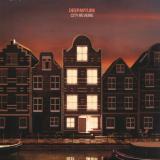
2026 has been the year of Deeparture as we have approached this milestone moment for the producer; quality releases from the Dutch artist have pathed the way to his debut album ‘City Reverie’.
‘City Reverie’ is all about Amsterdam – an album created, inspired and born in the great city. Deeparture finds home there but over the years it has been a place where his music has developed and grown into the stunning style he has created throughout this body of work. As an artist on Zerothree, he has been an important part of the label family and working on this album has really seen unique creative aspects, impressive themes and a work ethic that just inspires.
The album features collaborations alongside Lazarusman, Tim Morrison, Jantine, Yves La Rock and plenty of solo material that brings a retro proggy take on 2026 dance music. A real touch of genius and a great body of work that will be timeless.
For nearly 30 years, SUNN O))) – Stephen O’Malley and Greg Anderson – have pushed the boundaries of heavy music, straddling the worlds of the avant-garde and rock to forge a style instantly recognisable as their own. Now, SUNN O))) return with their first album of new material since 2019’s acclaimed Pyroclasts. Their tenth album – their debut for Sub Pop – demonstrates the duo’s mastery of time and space, light and dark, and their willingness to evolve their unmistakable sound into bold new forms.
The eponymously titled SUNN O))) was tracked at Bear Creek Studios, Woodinville, Washington with Brad Wood (HuM, Tar, Sunny Day Real Estate, Liz Phair). This location proved crucial to the recording process. “The vast tracking room had big windows looking out on trees,” says O’Malley. “We could go hiking and be out in the woods, spend time outdoors. That became a big part of it.”
SUNN O))) have long welcomed collaborators into their self-contained world: past work has featured, Attila Csihar (Mayhem), composer Hildur Guðnadóttir, multi-instrumentalist Steve Moore, polymath Mark Deutrom, Silkworm’s Tim Midyett and legendary singer-songwriter Scott Walker. But on this album O’Malley and Anderson found fresh possibilities in the primal territory of the duo format, performing all the instrumentation themselves. “What’s been happening with our performances over the last couple years with the two of us and no other collaborators has been really fresh and exciting,” says Anderson.
The compositions on SUNN O))) are expansive and panoramic yet finely detailed, reflecting the arboreal setting in which they were recorded. Amidst howling feedback and glacial crunch, one finds surprisingly delicate moments: a field recording of water trickles beneath, piano interludes lend a hushed, solemn feel. All while the duo attains fresh heights of telepathic intensity as they shape music that breathes the bracing, earthy air of the Pacific Northwest.
Framing the album visually are two paintings by the late American artist Mark Rothko. Liner notes are by award-winning British writer Robert Macfarlane, famed for his works concerning landscape and the relationship between humanity and nature. Through the work of the band, Macfarlane, and Rothko, sound, word and visual combine into a fully immersive experience that is undeniably, completely SUNN O))).
The debut release by Confusion on Incompetence Records documents an exercise in disciplined spontaneity, a jam session where organic interaction is rigorously shaped into form. Recorded live in Belgrade by Dmitrii Steinberg, Aleksei Siubaev, Viktor Volkovich, Evgenii Piankov, and Leonid Lipelis, the material was subsequently dissected and reassembled with a scalpel like precision reminiscent of Teo Macero’s landmark edits for Miles Davis. What emerges is not a loose improvisational document but a suite of cohesive constructed pieces: weightless structures suspended over a hypnotic pulse, steeped in cosmic vibes and soft psychedelia. There is a slo mo insistence to the grooves, a kosmiche drift that folds jazz funk rituals into something both intimate and expansive. For musicians previously orbiting rare groove, house, indie rock, and modern composition, Confusion expands their explorations into a terrain where genre dissolves into texture and intention. The record’s mesmerizing beauty lies in its restraint, motifs surface, dissolve, and return as if refracted through magnetic tape memory, each fragment locked into place yet breathing with human elasticity. Rather than presenting virtuosity, the quintet channels it into atmosphere, into a patient, glowing continuum that feels less like a jam and more like a carefully mapped inner cosmos, calibrated for deep listening and slow revelation.
Victoryland is the Brooklyn-based project of musician Julian McCamman and Dan Howard.. Their 2026 album, My Heart Is A Room With No Cameras In It, is a triumphant, despondent, and ultimately fun experimental pop-rock album. A year on, the record receives the deluxe treatment from new label home Dead Oceans. My Heart Is A Room With No Cameras In It (Deluxe) arrives December
11th 2026, on exclusive crystal clear vinyl, complete with new song “The Ugliest Girl On The Beach” and a new music video for album standout “I got god.” The sound of the album, recorded between Julian’s Bed-Stuy basement and Dan’s Williamsburg studio, is that of a bright and beaming collaboration. Blending lo-fi and hi-fi production, the songs have the glossiness of a radio-friendly hit mixed with the distortion and rough edges of a home demo. Every song keeps at least one element of the initial recording, while building around the loops and half-songs Julian scraped together. The lyrics on the record span from humorous self-aware popisms (“‘you and I’ will soon be, used to be ‘us’”) to crushing realities of bitterness (“i’ll never forgive you, that’s how I keep you close”) and abstract imagery (“mothers wave from doorways, in ostinato”), all delivered with such an immediacy and fervor that in the middle of singing along, you wonder if this guy slept much last night. Much to their surprise, My Heart’s release ushered Victoryland into a whirlwind of a year. Pitchfork praised the album’s “bright, madcap approach reminiscent of the New Pornographers’ Twin Cinema or Clap Your Hands Say Yeah’s Some Loud Thunder.” Stereogum named it their Album of the Week and proclaimed it “a surprisingly cohesive scrapbook of sounds from seemingly every corner of the indie pop umbrella.” The album also received support from Steve Lamacq at BBC 6 Music and Sian Eleri at Radio 1. After a string of sold-out shows in NYC, Victoryland later joined LCD Soundsystem on their North American tour and performed at Pitchfork London, Pitchfork Paris, among other festivals across Europe
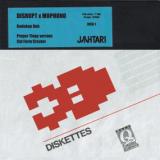
Hard-hitting limited 7” floppy disk by West Coast beat maestro Mophono, mashing up two 8bit mini epics by disrupt and shooting them into outer space.
“Budokan Dub” is the instrumental cut of Roger Robinson’s “Bristol Crystal” from the Jahtarian Dubbers Vol. 6 compilation: a bass heavy mutation of Rob Hubbard’s 1989 fighting game soundtrack, re-worked by disrupt on a DIY commodore synth, with added extra rocket fuel by Mophono, cranking the psychedelics up to eleven.
Made with the same DIY synth, “Proper Tings version” on B is based on the original riddim track for Tikiman’s “Who Goes There”. Mophono now sent it through the cosmic slice machine, turning it into a deadly sound system rattler, designed to take the roof off at those very special moments.
Coming with the additional beat tool “Dub Form Creator” and a nice’n’gritty floppy disc sleeve this crucial little data package is not to be missed!
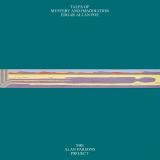
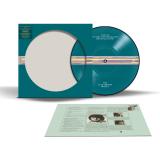
To celebrate the 50th anniversary, "Tales Of Mystery And Imagination Edgar Allan Poe" is re-issued in a variety of different formats including as a picture disc LP. The Alan Parsons Project debut studio album was originally released in June 1976. The lyrical and musical themes of the album are retellings of horror stories and poetry by Edgar Allan Poe.
Musicians featured on the album include vocalists Arthur Brown of The Crazy World of Arthur Brown on 'The Tell Tale Heart', John Miles on 'The Cask of Amontillado' and '(The System of) Dr. Tarr and Professor Fether', and Terry Sylvester of The Hollies on 'To One in Paradise'. The complete line-up of bands Ambrosia and Pilot play on the record, along with keyboardist Francis Monkman of Curved Air and Sky.
The album was a worldwide hit selling almost a million copies and achieving platinum status in a number of territories including Germany and Canada.
About The Alan Parsons Project
The Alan Parsons Project was a progressive rock music entity comprised of engineer/ producer Alan Parsons and songwriter, musician and manager Eric Woolfson. They released 10 concept albums which focused on subject matter such as science fiction, supernatural, literary and sociological themes between 1976 – 1987 and have sold in excess of 55 million albums world-wide.
To celebrate the 50th anniversary, "Tales Of Mystery And Imagination Edgar Allan Poe" is re-issued in a variety of different formats including as a picture disc LP. The Alan Parsons Project debut studio album was originally released in June 1976. The lyrical and musical themes of the album are retellings of horror stories and poetry by Edgar Allan Poe.
Musicians featured on the album include vocalists Arthur Brown of The Crazy World of Arthur Brown on 'The Tell Tale Heart', John Miles on 'The Cask of Amontillado' and '(The System of) Dr. Tarr and Professor Fether', and Terry Sylvester of The Hollies on 'To One in Paradise'. The complete line-up of bands Ambrosia and Pilot play on the record, along with keyboardist Francis Monkman of Curved Air and Sky.
The album was a worldwide hit selling almost a million copies and achieving platinum status in a number of territories including Germany and Canada.
About The Alan Parsons Project
The Alan Parsons Project was a progressive rock music entity comprised of engineer/ producer Alan Parsons and songwriter, musician and manager Eric Woolfson. They released 10 concept albums which focused on subject matter such as science fiction, supernatural, literary and sociological themes between 1976 – 1987 and have sold in excess of 55 million albums world-wide.
Erol Alkan returns to his vinyl Reworks series for ‘Part 6’ the first new pressing since 2017. A long-awaited addendum to a series that has previously encompassed artists including Daft Punk, Justice, Hot Chip and Tame Impala, Alkan delivers two club-friendly tracks from his own Phantasy Sound imprint, both previously only available digitally.
For a propulsive take on Josh Caffe’s emotionally defiant, warehouse-bound ‘You’, originally produced in collaboration with Quinn Whalley of Paranoid London, Alkan delves deep into a lifelong appreciation of Chicago house. Stripped, spacious and tough on the drums, Alkan keeps Caffe’s demands front and centre while riding out an irresistible bassline and conjuring a brooding, typically psychedelic atmosphere.
Flipping from minimal jack to maximal funk, Alkan pays a visit to the esoteric archives of Cowboy Rhythmbox, the partnership of much-loved London DJ Nathan Gregory Wilkins alongside pop-provocateur Richard X. ‘Rock Music’ arrives rescued from a dormant hard drive of demos, its frenetic collage of samples stitched back together and fully recharged for a circuit-frying electro workout by Alkan, operating here at full tilt for the dancefloor.
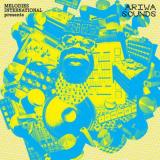
In 1979, Neil Fraser (artistically known as Mad Professor) founded Ariwa Sounds, the longest-serving and one of the most influential independently owned Reggae studios and record labels in the UK. From humble beginnings set up in the front room of Neil's home in South London recording on 4-track and homemade equipment, Ariwa would go on to record and release over 300 albums including works from some of the most impactful and storied artists of their time in the genres of Reggae, Dub, and Lovers Rock
Whilst our previous release in collaboration with Ariwa captured the label's early sound, a shared performance with Neil in Osaka and regular visits to his South London studio inspired us to assemble this 15-track compilation, showcasing the label's output across 45 years. Our release emphasizes some of the label's greatest vocalists: Johnny Clarke, Sandra Cross, Kofi, U Roy, Sister Nancy, Queen Omega, Aisha, Garnett Cross, Abel Miller, Horace Andy and more — presenting the Motown and Stax influences in the Lovers Rock, but also provides a glimpse into the dubbier and more experimental side of the label, showcasing Ariwa's commitment to quality but also their personality, philosophy and their humour. Love songs, break-up songs, socially engaged songs, dub experimentations — this compilation is not a "best of" Ariwa but a diverse and honest celebration of the label through the lens of Melodies International.
The compilation will be out in July in vinyl 2xLP, CD, digital formats, mastered from the original tapes by Frank Merritt (the Carvery), pressed at Optimal, artwork created by Jason Evans with design and assembly contributions from Nevil Bernard and Will Sweeney, animated teaser by Nevil Bernard and Melozine designed by Mafalda Meireles.
The highly prolific purveyor of acid electro funk, Acidulant has arrived on Analog Concept with a grand landing of an EP.
Straight to underground lights out business A1 - Run To Survive delivers a dark world of vocoder lyrical style, smoothly concentrated acid lines, and nocturnal melody in the pads for deeper submersion of your sonic attention.
Following up, is A2, “All I Want is Everything You Got” with strikes of melancholy waves, before manifesting a dystopian world of aggressive electro acid bass sure to rock the Place.
A3 - Chordzi takes a detour into lush, and beautiful electro territory, laid down with smooth sunny pads and cosmic acid lines, surely refreshing and satisfying for the body and mind.
On the flip, we shift into the remixes, 1st up with the high talents of EKATA providing an industrial aura and truly unique perspective of “Run To Survive” it's not playing games or taking prisoners with its heavy kicks and dense snares, dark atmospheres, and lysergic arpeggios that hypnotize and own your ears.
The track sees another revision through the hands of Mutex. Moody and warm chords serenade smooth acid basslines and breaks in this emotive number, that dances between IDM, Breaks, and Acid Electro, concluding an ep that is full of both energy and deep personality - This is Analog Concept number 20, Acidulant - Run To Survive….
This album marks a significant evolution for Dream Division, evolving from a solo project into a full band experience. Blending the rich sounds of Italian soundtracks with psychedelic rock, Tom McDowell, the band's core member and founder of Library of the Occult Records, has assembled an all-star lineup for this collaborative record. Featuring members of The Hologram People, Garden Gate, The Psychic Circle, Miles Brown and Men From S.P.E.C.T.R.E., the album navigates through genres while maintaining a cinematic essence. From the sinister melancholy tones of 'Black Rose' to the Giorgio Moroder-esque Giallo disco of 'Technicolor Terror,' ‘A Rose in the Garden of Winter’ unfolds like a lost soundtrack to a classic '70s Giallo film.
Highscore is one of the newest-and quite sensational-discoveries in funk of the 1980s out of Germany. Two tracks Breakin' Out and Girls So Fine, both recorded about 40 years ago and shelved ever since, are finally receiving a long-overdue 12" release.
Label founder DJ Scientist tells the story of how the tracks were uncovered:
"Several years ago, while researching the Crea label-after we had already licensed 'You're Not The One For Me' by Peter Patzer-I also wanted to find out more about another band on the label: Nuages, who had released the stunning jazz-funk/fusion album Cumulus.
Interestingly, a Discogs user had uploaded a hand written promo letter from one of the band members along with the LP. In it, drummer Mike Bach mentioned plans for a second album, as well as a single featuring a 'coloured singer'-which caught my attention. (A note on language: the original letter from 1985 uses the term 'coloured.' We've chosen to quote it directly as a historical document, but want to be clear that this reflects the terminology of the era and not language we would use today.)
Digging deeper, more information was found on Bach's own website, where a project called 'High Score' was mentioned. I immediately got in touch and asked if the recordings from that project still existed. Unfortunately, Bach couldn't locate any of the material at the time.
Years passed before we reconnected, when we featured 'Strange Weekend' by Nuages on our recent yacht rock compilation. I still had the Highscore project in mind and asked again. Once more, Mike had to deny-but he made another effort and reached out to former collaborators. A few weeks later, guitarist and composer Hermann Behrens discovered cassette tapes containing tracks from the Highscore project. I couldn't wait to hear them…"
To go back a bit: Nuages were a jazz-rock band from Bremerhaven, originally formed by guitarist Joachim "Fussy" Fuß in 1982. The lineup included Mike Bach (drums and percussion), Klaus Hinners (bass), and Frank Fischer (keyboards). In 1984, John Dillard, a U.S. GI stationed in Germany, joined Nuages for several live performances as a soul singer.
Around 1985/1986, Dillard and Bach then teamed up with Hermann Behrens with a new focus on electro funk and disco: Highscore was born.
When the three demo recordings were finally sent to us, they immediately blew us away. Breakin' Out stood out as an incredible electro-funk boogie gem-exactly what we had been looking for. What's more, it didn't sound like a rough demo at all, Breakin Out was a well-arranged and almost perfectly recorded track, driven by fresh, vibrant synths, drum machines and guitar. The cassette mix wasn't entirely final, but the remaining details could be refined during mastering.
The B-side, Girl So Fine, impressed just as much-equally strong and just as captivating as the A-side. Our reaction was immediate: this had to be released without delay!
Most importantly, there are a few more recordings from Highscore. However, these only exist as multi-track studio reels, which currently cannot be transferred. In the best case, more material from the band may surface soon-hopefully without another long wait.
The 12" release Breakin' Out / Girl So Fine" comes with a newly designed picture sleeve, featuring an original photo of the band members, including background singer Ruben Hopkins who does not appear on these two recordings.
This record was born as a tribute to two great classics of Latin music: “El Reloj” and “Lluvia con nieve”, two songs that have travelled through decades while keeping their popular and emotional power intact.
On the A side, “El Reloj”, composed by Roberto Cantoral, popularised by Trío Los Tres Caballeros and later covered by artists such as Los Panchos and Luis Miguel, is transformed into an elegant rocksteady version, preserving its romantic and melancholic character.
On the B side, “Lluvia con nieve”, a song associated with Mon Rivera, takes the form of an instrumental ska piece, full of bright and danceable energy, led by the horns, the rhythm and the melodic arrangements.
This release is part of Latin Goes Ska, a collaboration between Gatzara Records, Sotasons and STQBlack, together with The Jeggaes, Memi Sillah and Lenin “Güiroloco”. A meeting point between Latin music, rocksteady and ska, conceived as both a tribute and a celebration.
Bling bling akashics, the new EP “Bandido” is here. Five direct shots for the dancefloor by Demian aka Ariel Me Llamo.
Side A hits hard with raw, energetic rocker vibes while Side B drifts deeper into dreamy, hypnotic techno territory.
Two different sides, same late-night spirit — sweaty dances that slowly turn into full trance. Expect raw sounds, heavy basslines, and hypnotic patterns. heavy basslines, and hypnotic patterns.
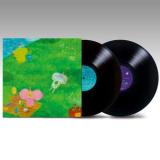
Katamari Damacy became a game beloved by fans across the world with its remarkable action mechanices of rolling your katamari and collecting items to become large enough to form a star for the cosmos. A vinyl pressing of Katamari Fortississimo Damacy, a collection of songs that brought the unique world of Katamari Damacy to life! Starting with "Katamari on the Rocks", and following up with "The Na-Na Song", you can feel the very soul of Katamari Damacy with every popular song. Plus, get a bonus track that was only featured in the trial version, "Katamari on the Rocks (Beta Version for Trial)"! Boasting a soundtrack that is packed with distinctive vocals and a broad range of musical styles, experience music that truly expounds on the feeling of Katamari Damacy at its best. Product shown is a luxurious gatefold sleeve housing two records inside. The outer packaging features an original illustration by Keita Takahashi, the creator of the Katamari Damacy series and art director for the first Katamari Damacy game! When you think of Katamari Damacy, you think of the colorfully chaotic artwork that comes hand in hand alongside it, and this packaging offers a high-quality, must-have item for a fan"s collection.
Kid Katana Records collaborated with the incredible teams at KOEI TECMO GAMES, Team NINJA, PlatinumGames and Xbox Games Studios to bring you the NINJA GAIDEN 4 OST on physical format for the first time.
This release is composed of three premium editions:
4LP Vinyl Slipcase - Limited Edition (No Repress) - no consignment, 25 units minimum order
Limited “blood splatter” vinyls with a unique “splatter” effect: handmade vinyl effect with transparent red base and white splatter. Each vinyl has a unique pattern that evokes Yakumo & Ryu combat style. This edition will not be repressed.
Handpicked curation of the game music, mastered for this specific vinyl edition. Includes “Infinite Gale“ DLC track as bonus.
Matte 4LP slipcase with a glossy effect on the game’s logo.
4 printed sleeves with “Bloodbath” design, alternating between Yakumo and Ryu execution animations.
4LP Vinyl Slipcase - Standard Edition
4 classic black vinyls.
Handpicked curation of the game music, mastered for this specific vinyl edition. Includes “Infinite Gale“ DLC track as bonus.
Matte 4LP slipcase with a glossy effect on the game’s logo.
4 printed sleeves with “Bloodbath” design, alternating between Yakumo and Ryu execution animations.
3CD Boxset
3 printed CDs with “Bloodbath” design, alternating between Yakumo and Ryu execution animations.
Handpicked curation of the game music, mastered for this specific CD edition. Includes 4 DLC tracks and 4 instrumental versions.
Crystal Jewelbox 3CD Boxset vintage packaging.
4-pages booklet featuring tracklist, credits and concept art from PlatinumGames Sound Team.
Kid Katana Record produced this album with supervision from NINJA GAIDEN4 Sound Team, who composed the original game music.
Kid Katana Records collaborated with the incredible teams at KOEI TECMO GAMES, Team NINJA, PlatinumGames and Xbox Games Studios to bring you the NINJA GAIDEN 4 OST on physical format for the first time.
This release is composed of three premium editions:
4LP Vinyl Slipcase - Limited Edition (No Repress) - no consignment, 25 units minimum order
Limited “blood splatter” vinyls with a unique “splatter” effect: handmade vinyl effect with transparent red base and white splatter. Each vinyl has a unique pattern that evokes Yakumo & Ryu combat style. This edition will not be repressed.
Handpicked curation of the game music, mastered for this specific vinyl edition. Includes “Infinite Gale“ DLC track as bonus.
Matte 4LP slipcase with a glossy effect on the game’s logo.
4 printed sleeves with “Bloodbath” design, alternating between Yakumo and Ryu execution animations.
4LP Vinyl Slipcase - Standard Edition
4 classic black vinyls.
Handpicked curation of the game music, mastered for this specific vinyl edition. Includes “Infinite Gale“ DLC track as bonus.
Matte 4LP slipcase with a glossy effect on the game’s logo.
4 printed sleeves with “Bloodbath” design, alternating between Yakumo and Ryu execution animations.
3CD Boxset
3 printed CDs with “Bloodbath” design, alternating between Yakumo and Ryu execution animations.
Handpicked curation of the game music, mastered for this specific CD edition. Includes 4 DLC tracks and 4 instrumental versions.
Crystal Jewelbox 3CD Boxset vintage packaging.
4-pages booklet featuring tracklist, credits and concept art from PlatinumGames Sound Team.
Kid Katana Record produced this album with supervision from NINJA GAIDEN4 Sound Team, who composed the original game music.
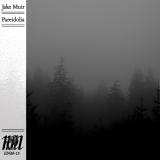
Named after the tendency to impose familiar likenesses, such as faces, on random - usually inanimate - objects, Pareidolia is Jake Muir's way of interpreting the consonances between so-called “ambient” music and extreme heavy metal. Extracting the headiest, most atmospheric sections from hundreds of death metal and black metal tracks, Muir plays the role of both DJ and electroacoustic composer, concocting a lysergic elixir of fractal distortions and prolonged, decelerated riffs that slowly evaporates into iridescent vapor. If there's any trace of the original sources left, Muir makes sure that residue is subtly bewildering, like clouds in the sky that form imposing, larger than life images, or trampled bracken that falls into the shape of “trve kvlt” insignia.
The idea for the album materialized when Muir was working on 2022's Talisman, his collaborative album with multi-instrumentalist Evan Caminiti. Processing guitar for the first time, Muir began to unpack his long relationship with rock music and its Escher-like maze of sub-genres, from the tech metal he obsessed over as a teenager to Loop and Main's drone-y, textured variants. Scraping the internet for unconventional contemporary metal albums, he stumbled across music that seemed to hover between different realms, merging its frenetic, noisy sections with psychedelic interludes that harmonize with classic industrial and avant-garde music, material like :zoviet*france:, Nocturnal Emissions and Z'EV.
Nippon Psychedelic Soul 1970-1979 is Time Capsule’s continuation of the deep dive into Japan’s rich history of folk and psychedelic soul music.
Vinyl LP with 4 page insert, original artwork and photos
The kaleidoscopic psychedelia of 1970s Japan captured a fragile and fertile moment as the country sought its future in funk grooves, heavy reverb and lyrical hallucinations.
The follow-up compilation to Time Capsule’s Nippon Acid Folk, Nippon Psychedelic Soul takes myriad pathways into the tripped-out undergrowth of 1970s Japan. Finding their feet at home and looking for inspiration abroad, the musicians featured here were engaged in the communal soul-searching that followed the breakdown of the 1960s protest movements. Some made it big, others drifted into oblivion. The music they left behind shimmers with intensity.
At the core was Happy End, the first project of YMO’s Haroumi Hosono, whose distortion-heavy guitar and crisp back-beat laid the foundations for Japanese lyrics that flipped the paradigm of Japanese rock music on its head. With it came a new found sonic ambition, such as in the bold Philly-soul style arrangements of producer Yuji Ohno, whose work with occult wandered Yoshiko Sai shares some of the bittersweet grandeur of Rotary Connection or David Axelrod.
Then there was Jun Fukamachi, a pioneer of Japanese synthesis, whose debut album was a carnival of orchestral funk, euphoric horn lines and rich production, complete with soaring guitar solos, psychedelic organ and a truly cinematic finale. The first and only time Fukamachi would sing on record, ‘Omae’ rips like the ultimate end-of-nighter.
Influenced by giants of the US soul scene, maverick composer Hiroshi “Monsieur” Kamayatsu (otherwise known as ‘the Brian Wilson of Japan’) went one step further, enlisting Tower of Power to play on ‘Have You Smoked Gauloises?’ The B-side to Monsieur’s biggest-selling single, it coasts with sophisticated cool - a liquid bassline and suave keys comping under a roaring trademark ToP sax solo. No surprise it found favour once more on the Acid Jazz dance floors of ‘90s London.
Such was the spirit of experimentation that big studio productions and private press releases sat side-by-side, with the likes of Momotaro Pink and Kazushi Inamura, taking their hopes of success into their own hands with the resources available to them. More reflective but no less robust, theirs was a heavy, fat-backed drum sound, soaked in dramatic, soulful psychedelia.
If some were dreamers and others space cadets, none were further out than sci-fi writer, musician, activist and self-made scientist Tadashi Goino, who transformed his own fantasy novel Messenger from the Seventh Dimension into an operatic prog odyssey with few discernible musical reference points – a majestic and completely bonkers outlier even among company as strange and brilliant as that which is collected here.
Less a compilation of a scene, as a compilation of a sentiment, Nippon Psychedelic Soul is a wild ride from start to finish, shattering the narratives of the Japanese folk and rock tradition into a million tiny pieces.
Phosphor returns with its fifth release and a new chapter for the label’s founders, Blue Vision. As their second EP on the imprint, Machines Will Transform Us (PHP005) confirms the project’s direction: a precise balance between club-driven tech house and more immersive, hypnotic electro textures.
Across the EP, Blue Vision asks a simple question: after spending our days connected to algorithms and modern machines, can repetitive rhythms and mechanical grooves on the dancefloor turn us into machines once again, or instead help us reconnect with ourselves?
Machines Will Transform Us (A1) opens the EP with a driving Italo bassline and tight, tech-driven drums. Melodic 80s synths contrast with sharper electro elements, gradually building tension before a final drop designed for peak-time impact. The track sets the tone for the release: machines transform us as much as we transform them.
Then comes Just a Game (A2), blending spacious 90s progressive and synthwave influences over a rock-solid club bassline and crisp drums. Playing with atmosphere and emotion, the track explores the feeling that we are never too far from a simulation, that maybe everything is just a game. Perfectly suited for introspective yet intense moments, it acts as an ideal bridge between harder tracks in a set.
On the flip side, I Love Acid (B1) is direct, hypnotic, and designed to lock the dancefloor into a steady flow. Stripped back to punchy drums and a raw acid line, it takes a minimal approach that works equally well in early hours or late-night sets. Behind the title lies the idea of acid as both machine energy and mental escape, where repetitive sequences blur the boundary between human emotion and mechanical movement.
As a final touch, Scan Your Brain (B2) shifts into deeper, more immersive territory. Analog pad textures create a drifting atmosphere over a hypnotic bassline and electro drums. With this closing track, Blue Vision answers their initial question by imagining the dancefloor as a space to disconnect from rigid thinking. The vocal serves as a reminder that the brain is constantly overloaded, and that dancing becomes a way to let go, reset, and reconnect.
Love On Vinyl is headed up by K.C. aka K Civ, an American with deep roots in the scene and a legendary Boston selector who has now assembled the first instalment in a new Soul Tickler Essentials compilation series. It's drenched in love and soul and features a ton of timeless artists, starting with Ralf GUM's sunny, Omar-featuring 'Love Core.' Elsewhere, the musicality flows through subtle jazzy keys and Afro drums on Don Kamares's 'Batie' then Moodymann drops one of his deep and dusty soul grinders with a remix of Ralf GUM's 'With Her Hand'. Further gems from Trinidadian Deep and Aaron K Gray & Conway Kasey make this one a faultless selection of grown-up grooves.
Looking back on her career in the early 90s, Stevie Nicks described the first track of Rock a Little as “the most exciting song that I had ever heard.” This coming from a superstar who was already closely affiliated with several bajillion-selling Fleetwood Mac albums — to say nothing of her own benchmark solo debut. Her remarks attest to the enthusiasm and effort she invested in her third record, a 1985 work that quickly furthered Nicks’ profile and cemented itself as a piece of 80s pop lore.
Mastered at MoFi’s California studio, pressed at Fidelity Record Pressing in California, strictly limited to 4,000 numbered copies, and housed in a Stoughton gatefold jacket, Mobile Fidelity’s 180g 45RPM 2LP set presents Rock a Little in audiophile sound for its 40th anniversary. Helmed by a cadre of producers and engineers, and recorded for a reported one million dollars, the platinum-certified album teems with a head-spinning array of colors, tones, dreamscapes, and accents. This reference-grade reissue marks the first time they are all brought to light and conveyed with proper balance, dimensionality, and positioning.
Though Rock a Little doubtlessly has period characteristics of a mid-80s LP, Nicks and company spare no expense when it comes to distinguishing the music with expansive sonics distinguished with lush melodies, high-tech percussion, echoing vocals, sampled keyboards, and layers of sophisticated accents. The degrees of spaciousness, headroom, and dynamics are nothing less than inspiring, while the newly enhanced detail, texture, and clarity make the songs sing like never before. As for Nicks’ voice? Wait ’til you experience the transparency and depth.
Those advantages extend, of course, to the aforementioned “I Can’t Wait,” a statement-making opener shot through with modulating synthesizers, splashy drums, metallic guitars, and serious drama. Holed up in a massive studio, Nicks required just one take to nail her part, which she called “magic and simply not able to beat.” The singer-songwriter also distilled the reverberating emotional essence of the Top 20 tune, stating “when I hear it on the radio, this incredible feeling comes over me, like something really incredible is about to happen.”
The same can be said for nearly all of Rock a Little. Crafted by the likes of Songwriters Hall of Fame multi-instrumentalist/producer Rick Nowels, Heartbreakers organist Benmont Tench, bassist Bob Glaub, jack-of-all-trades Greg Phillinganes, and session-pro guitarists Waddy Watchel, Les Dudek, and Danny Kortchmar — along with another two dozen or so participants — the record spills with diverse ideas, shapes, and moods. Everything is in the right place, as evidenced by the swirling glide and sensual undertow of the slightly funky title track to the snapping rhythmic pace and big hooks of “Imperial Hotel,” one of Nicks’ standout moments.
“What was it she wanted?” Nicks queries on “No Spoken Word,” continuing a theme of contemplation that runs through the narratives. Nicks never lands on a definite answer, but hearing her explore loneliness, love, and the secrets we keep to ourselves proves continuously rewarding. Take her passionate performance on a cover of Chas Sanford’s “Talk to Me,” a Top 5 smash furthered by tasteful saxophone lines and understated folk elements. Immersive yourself in the grand sonic corridors of “If I Were You,” laden with Nicks’ signature mysticism.
Moreover, surrender to the gravitas of the closing “Has Anyone Ever Written Anything for You,” a piano ballad composed about the death of Joe Walsh’s three-year-old daughter. As Nicks asserts earlier on the album, she sings for things money can’t buy.
So, rock a little, yes, but dare to feel even more.
Move in Stereo: The Cars’ Eponymous Debut Album Functions as a Greatest-Hits Set with Classics Such as "You're All I've Got Tonight," "Good Times Roll," and "Just What I Needed"
Experience the Six-Times-Platinum Record in Definitive Sound on
Mobile Fidelity’s UltraDisc One-Step 180g 45RPM 2LP Box Set:
Strictly Limited to 4,000 Numbered Copies,
It Plays with Reference Definition and Presence
1/4” / 15 IPS analogue master to DSD 256 to analogue console to lathe.
Among the most critically and commercially successful debuts in history, the Cars' eponymous album doubles as a greatest-hits collection. Not one song on it is widely unrecognized or unknown. Consider the list: "You're All I've Got Tonight." "Good Times Roll." "Just What I Needed." "Moving in Stereo." "My Best Friend's Girl." "Don't Cha Stop." “Bye Bye Love.” Just call The Cars the best new-wave rock album ever made. And a natural candidate for preservation on a Mobile Fidelity UltraDisc One-Step pressing.
Sourced from the original analog tapes, pressed at Fidelity Record Pressing in California, mastered by engineer Krieg Wunderlich, and strictly limited to 4,000 numbered copies, MoFi’s UD1S 180g 45RPM 2LP box set presents the six-time platinum record in the most vivid, wide-spanning, three-dimensional sound it has enjoyed on vinyl. Compared to the label’s outstanding and out-of-print 180g 33RPM version, this collectible edition features richer textures, broader openness, greater presence, and bigger dynamics.
Benefitting from the extra groove space on 45RPM by playing with enhanced definition, deep-black backgrounds, and ultra-quiet surfaces, this reissue portrays the band’s oscillating rhythms, futuristic keyboard passages, and panned images with stunning realism. Songs take on an absolutely surreal quality. The Cars and producer Roy Thomas Baker manipulate arrangements at will to mesmerize listeners' senses. The concept of "moving in stereo” has likely never been truer.
The industry-leading packaging of the UD1S set gives fans another reason to gravitate towards the 1978 album. A deluxe slipcase, two foil-stamped jackets, faithful-to-the-original graphics, and MoFi inner sleeves make for a premium tactile experience. It invites you to immerse yourself in everything about the record, including the now-familiar cover art depicting Nataliya Medvedeva behind the wheel. Enhanced by her glistening ruby-red lips, her face flashes an expression caught between surprise, ecstasy, and disbelief — an apropos way of responding to The Cars whether you’re hearing it for the first or 1,115th time.
Introduced in 2024 into the National Recording Registry for its significance, and ranked the 353rd Greatest Album of All Time by Rolling Stone, The Cars explodes with emotion, energy, and hooks. Its songs unite then-disparate styles: bubblegum melodies, art-rock angularity, progressive structuralism, terse minimalism, and power-pop sheen. The stylish arrangements also benefit from a laidback cool and understated irony that remain uncommon in the world of contemporary mainstream music.
Equally rare is the deep chemistry the members shared before they entered London’s AIR Studios and knocked out the record in less than a month. Benjamin Orr and Ric Ocasek began their first band together in the early ‘70s. A subsequent group with future Cars keyboardist Greg Hawke preceded Orr and Ocasek bonding further by temporarily performing as a duo. One final pre-Cars ensemble, Cap’n Swing, brought guitarist Elliot Easton into the fold. A decision by Ocasek to take the band in a rock direction, a crucial lineup shuffle, and a name change begat the Cars so many listeners know and love.
Already a going concern in Boston, the quintet cut its teeth and woodshopped songs for nearly a year and a half before signing with Elektra and partnering with Baker. The Cars enjoyed success right out of the gate, hitting No. 18 on the Billboard Top 200 chart and netting a pair of Top 40 singles in the form of “Just What I Needed” and deceptively happy “My Best Friend’s Girl.” The sarcastic “Good Times Roll” climbed to No. 41, but soon enough, almost every track on The Cars became a radio staple — an honor far more meaningful than chart positions.
Obsessed with incorporating the latest technologies and sounds into its palette, the band spiced tunes with delightful and quirky accents — country-tinged guitar fills, echoing Syndrums, reggae splashes, hard-rock tones, robotic pulses. Orr's low, nuanced deliveries and Ocasek's cool, detached vocals lend shades of doubt and double meaning to the lyrics, which are further counterbalanced by synthesizer flourishes and electronic beats.
Accessible and eccentric, edgy and catchy: The results comprise a landmark whose characters come to vivid life with nuclear boots, dry-drip gloves, ribbon-festooned coiffures, suede-blue eyes, and rock ‘n’ roll hair. It's practically impossible to avoid humming along to every song, all enhanced by Baker's stellar production. Best known for his work with Queen, he ensured the record packed a punchy midrange, opened up with instrumental and vocal separation, and breathed with airy harmonies.
Indeed, from the timeless music to the sleek production and sonic restoration, The Cars on UD1S is just what you needed.
Techno pioneer Thomas Schumacher celebrates 25 years of his groundbreaking track "When I Rock” with a stunning remix by trailblazing DJ and producer talent. A.D.H.S.In 1997 Thomas Schumacher broke new ground with the release of "When I Rock," a track that defied genre boundaries and captivated listeners across the globe.
With its unprecedented blend of raw Hip Hop energy, infectious Rap vocals and relentlessly driving Techno rhythms, "When I Rock" marked a watershed moment in electronic music history. By infusing the track with his signature touch, A.D.H.S. maintains the essence of the original while seamlessly integrating contemporary sounds and production techniques. The result is a remix that captures the essence of the past while propelling it into the present.
To top it off Thomas’ adds a fresh remix of the Uber-Classic that is “House Of House” by Cherrymoon Trax. Essential.
The Temptations Get High on Psychedelic Soul: Cloud Nine Soars with Ambitious Arrangements and Production, Features Standout Vocal Performances and Instrumentation by the Funk Brothers
The Temptations’ Cloud Nine announced that Motown — and “The Sound of Young America” — would never be the same. Influenced by the emergence of cutting-edge rock and pop currents, as well as increasing sociopolitical turmoil, the album broke down barriers between rock, psychedelia, and soul while heralding the arrival of visionary arrangements and production techniques. Bookended by traditional R&B numbers, the 1969 record sent the Temptations in bold new directions and signaled the advent of psychedelic soul.
Sourced from the original master tapes, strictly limited to 3,000 numbered copies, pressed at Fidelity Record Pressing, and housed in a Stoughton gatefold jacket, Mobile Fidelity’s 180g 45PM 2LP set presents Cloud Nine in audiophile sound for the first time on a domestic pressing. This collectible reissue bestows Norman Whitfield’s extraordinary production with the grand-scale dynamics, natural tonality, expansive openness, and low-end weight it deserves. The timbre of each of the five members’ voices is readily identifiable — even within the group harmonies — bestowing a realism never experienced outside the recording studio.
Making its debut on 45RPM, the album further benefits from the wide groove space by playing with greater separation and more realistic presence than prior editions. Everything from the brassiness of the horns to the dry snap of the snare comes across with reference-grade clarity and positioning. And since Motown’s renowned Funk Brothers backing band plays on many of the cuts, you’ll want to savor every note. The imaging, soundstaging, and organic bloom-and-decay of the notes make that possible.
Amid Cloud Nine, the instrumentation and architecture stand out as much as any element. Never before had a Motown album contained such ambitious patterns and complex passages. Seemingly conscientious of the departure from their past methods, the Temptations and Whitfield bunched together the tracks that mark a deep dive into psychedelic territory and counterbalance them with seven sterling soul cuts that dovetail with Motown tradition drenched with heartfelt vocals, swelling strings, and finger-snapping beats.
On the original 33RPM release, traditional Motown soul — laden with heartfelt vocals, swelling strings, and finger-snapping beats — occupies Side Two. These songs reveal an ensemble still very much on top of delivering pristine pop-soul material graced with romantic sweetness, persuasive insistent, and soaring highs. Re-energized after the departure of lead singer David Ruffin, who was fired for a variety of reasons in June 1968, the Temptations seamlessly meld with his replacement, Dennis Edwards, on one melodic gem after another.
The collective tackles five songs co-written by the legendary Motown team of Barrett Strong and Whitfield. Not the least of which are the smooth, shuffling “Why Did She Have to Leave Me (Why Did She Have to Go)” and deceptively simple, horn-spiked “Gonna Keep on Tryin’ till I Win Your Love.” On these tracks, as well as on a lush rendition of the ballad “Love Is a Hurtin’ Thing” and pleading, tender send-up of the Gerry Goffin-Carole King classic “Hey Girl,” Edwards and Paul Williams take turns on the lead with the estimable Eddie Kendricks, Melvin Franklin, and Otis Williams providing backing support.
All five vocalists trade-off leads on the simmering title track, a groundbreaking composition shot through with wah-wah-pedal effects, liquid funk, deep bass lines, Cuban percussion, saturated reverb, and gang choruses. Whitfield mines each member’s natural vocal range with spectacular results, keeps time with cymbals, and channels both the heated temperatures and escapist desires of a society embroiled in war, conflict, and experimental drugs.
Amazingly, the Temptations top themselves on the similarly revealing “Run Away Child, Running Wild.” Nearly 10 minutes in length, the song explodes R&B parameters and harbors a cinematic scope. Urgent pianos, distorted guitars, stripped-down percussion, steamy Hammond organs, minimal bass motifs, five distinct voices narrating the tale of a boy who fled home and now finds himself amid the scary, unforgiving external world: They combine to give the urgent tune a walls-closing-in atmosphere where fear and desperation reign. Bolstered by an extended instrumental section that precedes a climactic return of the singers’ voices, “Run Away Child, Running Wild” equaled the success of the record’s title track, with both reaching No. 6 on the pop charts.
The Doobie Brothers faced a serious predicament as they prepared to record Takin’ It to the Streets. That the group navigated a potentially serious personnel problem that would’ve tanked lesser bands and scored its fourth straight Top 10 album — while again expanding its range — speaks to the collective’s chemistry, broad-mindedness, and songwriting abilities. Known as the effort on which vocalist-keyboardist Michael McDonald makes his debut, the 1976 set stands as an all-encompassing representation of the various styles the Doobie Brothers explored during their heyday.
Sourced from the original analog master tapes, mastered by engineer Krieg Wunderlich, pressed at Fidelity Record Pressing in California, and housed in a Stoughton gatefold jacket, Mobile Fidelity’s numbered-edition 180g 45RPM 2LP presents Takin’ It to the Streets in definitive sound. Given the luxurious room of a 45RPM version for the first time and benefiting from the wider grooves, the music unfolds amid large soundstages replete with ultra-quiet backgrounds, big dynamics, and accurate imaging. By then a key component of the Doobie Brothers' success, Ted Templeman’s production is brought to light with stellar clarity and definition.
As is the case on Mobile Fidelity's four other acclaimed Doobie Brothers 45RPM reissues, myriad facets that help make Takin’ It to the Streets timeless, natural, and organic — minimal overdubs, voices that realistically rise and fall, notes that properly carry and decay, warm tones, bass lines that pop with color, well-placed percussive accents, defined separation between the players — emerge with incredible presence, openness, and fullness. Nothing is overdone or out of place. No small feat given Templeman and company didn't know how everything would unfold when they first met up in Southern California.
Confronted with a change in plans by co-founder Tom Johnston, whose contributions to the band up to that point in its career identified him as an indispensable member, the Doobie Brothers were thrown for a loop when he curtailed pre-planning work and retreated home to deal with ongoing health problems. Thankfully, Jeff "Skunk" Baxter, the group's newest full-time recruit, had a possible solution in his former fellow Steely Dan colleague McDonald. The singer-keyboardist had already sat in with the Doobie Brothers on their recent tour. So, why not give it a shot?
McDonald's prodigious talents notwithstanding, he couldn't technically replace Johnston. For starters: McDonald's soulful timbre bore little resemblance to Johnston's grittier voice. And McDonald played keyboards, not guitar. No wonder Templeman initially expressed reservations. He also knew the Doobie Brothers needed additional material before they could consider wrapping the record. Yet the skepticism began to dissipate on the first day of the sessions. Still waiting for second drummer Keith Knudsen, the band gathered in the studio with former roadie Bobby LaKind on congas and Little Feat drummer Richie Hayward for a live run through "Wheels of Fortune." The instrumental parts of that take landed on the record. Johnston would even return to share the lead vocal duties with Patrick Simmons.
Those magical results, and the experience of hearing McDonald woodshed the title track at the piano, turned Templeman into a believer and cheerleader. Spurred by their veteran producer's encouragement and McDonald's ideas for songs, the Doobie Brothers embraced new directions just as they did after their debut LP and on subsequent efforts with orchestral and horn treatments. The latter return on Takin’ It to the Streets courtesy of the five-piece Memphis Horns. Yet outside of viola accompaniment on "Losin' End," string elements step aside in favor of McDonald's pianos, synthesizers, and clavinet. And, on five cuts, lead singing.
As the new face of the band, McDonald ended up crafting all or portions of four tunes. His fingerprints are all over two of the singles, including the jazzy, blue-eyed-soul delight “It Keeps You Runnin’” and irresistibly melodic title track, which cracked the Top 15 and became one of the Doobie Brothers’ signature numbers. He and Baxter’s penchant for smoothness, and a precursor to the band’s coming transition into rhythmically oriented yacht rock, informs the brassy sway of “Carry Me Away.”
Further enriched by Tiran Porter’s gorgeous, time-signature-shifting ballad “For Someone Special,” Simmons’ peppy, spring-loaded “8th Avenue Shuffle,” and Johnston’s “Turn It Loose” — the move-your-feet boogie serving as kind of apt farewell to the band’s prior rock ‘n’ roll sound — Takin’ It to the Streets spun uncertainty into gold. Altered yet unbowed, the Doobie Brothers once again offered countless listeners “the best kind of remedy” with feel-good music that holds up amid any era.
Formed in 1969, Soul Media set out with a clear mission to fuse jazz and rock. That approach took a decisive next step with In The Groove, recorded in 1973. Here, the sharpness of jazz is brought to the forefront, rock elements are dissolved and refined to give a cutting edge, and funk is injected to add drive, elasticity, and physical force. The result is a body of music that transcends existing genre labels—jazz-rock, jazz-funk, or fusion—and stands instead as something simply, undeniably cool: strong yet sophisticated.
This album is often described as Soul Media’s response to The Crusaders, a band that saxophonist Jiro Inagaki was paying close attention to at the time. The aim hit its mark. With In The Groove, Soul Media acquired a “refined black feeling”, setting them firmly on the path toward their ultimate destination: Funky Stuff.
DJ Support: Fantastic Man, Sedef Adassi, Shanti Celeste, Tornado Wallace, OK Williams
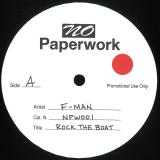
F-Man flips an early 00’s RnB classic into a haunting, West Coast–flavoured club edit with stripped drums, deep low end and sweeping strings. Summer festival favourite via Sedef Adasi & Shanti Celeste. Comes with Instrumental + a heads-down acid Bonus Bass Mix. White label, limited run.
Introducing the first reissue project on Rocky Hill with a compilation of Jozeph Sefian's hard to find tracks from the late 1970s into the early 1980s. A culmination of Armenian funk, soul, pop, and jazz. We're calling it "Melodies". Jozeph Sefian emerged as a distinctive voice in Armenian music, blending heritage with the evolving sounds of his generation. Beginning on drums and later embracing his voice, he crafted a versatile style rooted in Armenian, pop, jazz, and soul. Traditional melodies and emotional storytelling met familiar harmonies, expressive phrasing, and the rhythmic energy of funk, creating a sound that was both deeply Armenian and contemporary. During his years in Iran, Jozeph recorded with accomplished musicians and operated a music shop serving the Armenian musical community. Despite restrictions following the 1979 Iranian Revolution, he continued performing for Armenian audiences. His career took him across the Middle East, the United States, the UK, and Armenia, while writing his tracks in Iran and recording in LA. In 1977, Parseghian Records labeled him, "one of the most distinctive voices in Armenian music." We agree with Parseghian, as Jozeph's recordings continue to bridge generations, preserving Armenian culture through a uniquely soulful musical voice.
The moment the instantly recognizable intertwined guitar passage on the title track to the Eagles' Hotel California begins, the record's genius becomes obvious all over again. Ranked the 118th Greatest Album of All Time by Rolling Stone, certified by RIAA as the third best-selling LP in history, and considered the foundation on which the Golden State's mid-‘70s music scene was built, the 1976 landmark is a music staple immune to shifts in trends, eras, and styles. Fearlessly addressing the chaos and consequences of American life, its songs remain strikingly prescient and gain creedence with each passing day.
Mastered from the original analogue master tapes, pressed on MoFi SuperVinyl, and limited to 17,500 numbered copies, Mobile Fidelity's UltraDisc One-Step 180g 45RPM 2LP vinyl box set ensures you will want to permanently check into and never leave this particular Hotel California. Up to the herculean task of standing head and shoulders above all prior reissues, this collectible edition plays with extreme clarity, organic richness, tube-like warmth, massive dynamics, and microscopic levels of detail. You'll be able to practically smell the colitas and feel the breeze in your hair. Songs come across with an epic sweep and feature immersive, front-to-back soundstages that allow the music unprecedented air, roominess, and separation. As for the noise floor? It's basically as invisible as the spirits that waft in the corridors of the unforgettable title song.
Aesthetically, the premium packaging and presentation of the UD1S Hotel California pressing befit its esteemed status. Housed in a deluxe box, it features gorgeous foil-stamped jackets and faithful-to-the-original graphics that illuminate the splendour of the recording. From every angle, this UD1S reissue exists as a curatorial artefact meant to be preserved, touched, and examined. It is made for discerning listeners that prize sound quality and production, and who desire to fully immerse themselves in the art – and everything involved with the album, from the renowned cover art to the meticulous finishes.
Indeed, the opportunity to zero in on all the particulars of the 26-million-selling Eagles record dubbed "a legitimate rock masterpiece" by vaunted Los Angeles Times scribe Robert Hilburn has never been better. A global phenomenon that marked the band debut of guitarist-singer Joe Walsh, Hotel California continues to resonate and connect with listeners of all generations taken by its narrative depth, stark directness, picturesque melodies, daring majesty, and ardent emotionalism. Adorned with a breathtaking exterior photograph of the Beverly Hills Hotel that serves as the simultaneously haunting and alluring cover art, and rounded out by a rear-cover shot of the Lido Hotel lobby that reinforces a notion that teeters between permanence and transience, Hotel California is brilliantly tied to a specific place that functions as a universally understood metaphor for the American Dream.
Confronting the darker undercurrents and oft-ignored constructs attached to that romantic notion, the record's songs revolve around a host of shared themes: excess, mobility, stability, illusion, fame, destruction, and idealism included. Notably, Hotel California appeared at a crucial junction in American history: During the country's bicentennial and amid escalating controversies related to the Vietnam War, energy crisis, and governmental corruption. That the Eagles manage to channel such cultural, social, and economical matters into a cohesive, stately, big-picture statement is alone a stupendous feat. That the album's reach, boldness, vitality, accessibility, and understated intensity have never waned make it a marvel.
Reflecting on Hotel California 40 years after its original release, and indirectly explaining its enduring appeal and increasing relevance, singer-songwriter Don Henley confirmed the record pertains to the "loss of innocence, the cost of naiveté...the difficulties of balancing loving relationships and work, trying to square the conflicting relationship between business and art; the corruption in politics, the fading away of the Sixties dream of ‘peace, love and understanding.'"
It can be argued that Henley and company squarely hit on and drove home those ideas in the surreal title track, chart-topping "Life in the Fast Lane," and grand "The Last Resort" alone. But that would miss the forest for the trees. Experienced as an unbroken whole, complete with the pristinely shot imagery and physical grooves, Hotel California unfolds like a geography-conscious saga by James Michener and plays like colour-saturated movie shot on 70mm film by Martin Scorsese. It's about our collective and individual decisions – and the shape of our past, present, and future. And, just like that conjured by our imaginations, Hotel California continues to take on a life of its own.
More About Mobile Fidelity UltraDisc One-Step and Why It Is Superior
Mobile Fidelity Sound Lab's UltraDisc One-Step (UD1S) technique bypasses generational losses inherent to the traditional three-step plating process by removing two steps: the production of father and mother plates, which are created to yield numerous stampers from each lacquer that is cut. For UD1S plating, stampers (also called "converts") are made directly from the lacquers. Since each lacquer yields only one stamper, multiple lacquers need to be cut. Mobile Fidelity's UD1S process produces a final LP with the lowest-possible noise floor. The removal of two steps of the plating process also reveals musical details and dynamics that would otherwise be lost due to the standard multi-step process. With UD1S, every aspect of vinyl production is optimized to produce the best-sounding vinyl album available today.
MoFi SuperVinyl
Developed by NEOTECH and RTI, MoFi SuperVinyl is the most exacting-to-specification vinyl compound ever devised. Analogue lovers have never seen (or heard) anything like it. Extraordinarily expensive and extremely painstaking to produce, the special proprietary compound addresses two specific areas of improvement: noise floor reduction and enhanced groove definition. The vinyl composition features a new carbonless dye (hold the disc up to the light and see) and produces the world's quietest surfaces. This high-definition formula also allows for the creation of cleaner grooves that are indistinguishable from the original lacquer. MoFi SuperVinyl provides the closest approximation of what the label's engineers hear in the mastering lab.