Pressed on 140g Black Vinyl Including a signed print from Eddie Piller, limited to 750.
Demon are proud to release “Eddie Piller Presents British Mod Sounds Of the 1960s”, the follow up the “The
Mod Revival”. Featuring 100 original tracks across 6LPs, its a deep dive into the Mod scene in '60s Britain.
Including a selection of classic and rare tracks, tracing the scene from its R&B rootsto a soulful finale
Curated by Acid Jazz Records and Modcast founder Eddie Piller, and featuring new sleeve notes from
respected author and broadcaster Paul 'Smiler' Anderson.
As Eddie Piller points out in the forward to the extensive sleeve notes that accompany this collection, he
chose the word 'Sounds' carefully, reflecting the variety of talent contained here, from uncool session
musicians without an ounce of style in them, acts who saw an opportunity to jump on the Mod bandwagon
and bands who whole heartedly embraced Mod way of life.
And so this new collection mixes the Mod mainstays (Small Faces, The High Numbers The Action, The Fleur
De Lys), with a generous selection of future superstars (David Bowie, Rod Stewart, Elton John, Marc Bolan,
Jeff Beck and Graham Gouldman of 10cc are all represented here), and a few artists so obscure, so rare, that
they never got to release a record in the '60s, but Eddie has tracked down the tapes nonetheless.
"Be in with the In Crowd once more."
Every great youth cult deserves a great soundtrack, and when the '60s Mods adopted classic American R&B,
with a side order of hip Jazz, they undoubtedly found the right music for their exuberant and stylish way of
life. And yet, buying expensive imports, hoping for a local release or praying for a rare visit from overseas
talent was never going to be enough to satisfy British youth with a thirst for the latest sounds. Certainly not
those on the dancefloor and definitely not those with their own musical ambitions.
It was a music scene that began with imitation, before skill and imagination lead curious minds to innovation,
a scene that evolved from average (at best) copies of releases on the Chess, Motown and Stax labels, to
become something more sophisticated,something quite unique, something very British.
All formats are stylishly packaged (of course) and include new sleeve notes by Paul 'Smiler' Anderson, author
of the best-selling and highly regarded books'Mods: The New Religion' and 'Mod Art'.
Поиск:ron paul
Все
Many great Blue Note artists have hailed from the jazz hotbed of Detroit over the course of the label's history including Donald Byrd, Kenny Burrell, Paul Chambers, Thad Jones, Elvin Jones, Joe Hendreson, and many more. Perhaps the only instance on an entire band coming out of Detroit was with Kenny Cox and the Contemporary Jazz Quintet, a fantastic but unsung combo led by pianist Kenny Cox whihc featured Joe Henderson's brother Leon Henderson on tenor saxophone, Charles Moore on trumpet, Ron Brooks on bass, and Danny Spencer on drums. The quintet made two excellent albums in the late 1960s including their debut album Introducing Kenny Cox and The Contemporary Jazz Quintet, a hidden gem of the Blue Note catalog which was recorded in 1968. The band was certainly influenced by the post-bop explorations of the Miles Davis Quintet with Wayne Shorter, Herbie Hancock, Ron Carter, and Tony Williams, but the CJQ exhibited its own unique sensibilities on memorable originals like "Mystique", "trance Dance", "Diahn", and David Durrah's beautiful piece "You".
Between electro, hypnotizing break, minimal at the same time sophisticated and retro, this disc is aimed at amateurs of electro "retrogaming". It would be part of a series of various, "The Arcade Travelers", built around a story: the adventures of a gang of geek being absorbed by their Megadrive following a bug.
Since slipping out on Leng last year, Paul ‘Mudd’ Murphy’s first collaboration with singer/songwriter David Harks, ‘Susta’, has become a much-played modern Balearic classic, with DJs and listeners alike responding to the track’s attractive blend of sun-kissed nu-disco instrumentation, warming melodies and deliciously evocative lead vocals from Jaanika Leino AKA JaneLy. Now the track returns for 2021 in the shape of two superb new remixes from Chicagoan deep house legend Ron Trent, who four years ago delivered similarly ear-catching revisions of Mudd and Pollard’s ‘Far Away’ as part of the 10th anniversary celebrations for Murphy’s Claremont 56 label.
As you’d expect given Trent’s impeccable track record over the last three decades, both revisions are stunning. He begins by eking every last ounce of soul from Leino’s brilliant vocal on a remix that’s warming, deep and luscious. Combining elements of Murphy and Harks’ colourful, synth-heavy original mix – including the lusciously tactile bassline and boogie-style synth flourishes – with his own yearning chords, hand percussion sounds and a shuffling, samba-tinged house beat, Trent re-imagines ‘Susta’ as a future vocal deep house classic. Melodious, musically intricate, infectious and summery, it’s a remix for the ages. It comes accompanied by a Dub Mix that successfully shows off the intricacy of Trent’s production and additional instrumentation while keeping both eyes firmly on the dancefloor. Beginning with effects-laden synth sounds reminiscent of the mid-‘80s proto-house classics by Paul Simpson, Winston Jones and Boyd Jarvis, the mix sees Trent skilfully add selected snippets of Leino’s lead vocal to a backing track rich in delay-laden synthesizer sounds, reverb-rich chords, echoing percussion hits and chords so warming they feel like a late-night, loved-up bear hug for your ears. Like the A-side vocal version, Trent’s dub is breath-taking and spine-tingling in equal measure.
- A1: Bye Bye Bye
- A2: Tale Of My Lost Love
- A3: You Need Me
- A4: Peace Of Mind
- A5: Baby Buggy
- A6: Stop & Think It Over
- A7: I'm Gonna Make It
- A8: Explain Why
- A9: Tying The Leaves
- B1: Coast To Coast
- B2: There's A Rainbow
- B3: Sooner Or Later
- B4: Here Comes The Night
- B5: Till The Moon Don't Shine
- B6: In The Moonlight
- B7: Someone Lock Me Up
- B8: Chinchilla Hat
This is the story of two sisters who nurtured a dream for half a century and never let it die. Vicki and Ronni Gossett launched their musical career as teenagers in Whittier, California in 1966. They called themselves the Female Species. Members came and went; their base of operations moved to Las Vegas, back to LA, and over to Nashville. Along the way their sound transformed from garage rock to lounge to country pop, the only constant being an innate mastery of hooks and harmony.
These ladies had it. Along the way, they crossed paths with The Carpenters, Paul Revere & The Raiders, The Judds, and seemingly half of the industry’s power players, rebuffing all untoward advances, focused always on their craft. In the 1980s they became staff songwriters for music publishing companies in the hit-making business. Relentless pushing landed them a once in a lifetime audition before the court of RCA’s top executives — the kind of new talent showcase that almost never happens after 30.
Vicki and Ronni were by then in their 40s. Tale of My Lost Love is the whole story from beginning to end of two sisters who gave everything to their dream, yet never made a single record... until now. Sometimes great music just isn’t enough to break through — until it is. Numero Group is thrilled and proud, at long last, to introduce Female Species.
For number 89 in the Brazil45 series, we present a no-nonsense Brazilian funk / samba rock double-sider courtesy of the mighty Golden Boys and Silvio C sar. The Golden Boys were a quartet formed in 1958 by the Correa brothers; Renato, Roberto, Ronaldo, and their cousin Valdir Anuncia o. They enjoyed a stellar recording career, from the 50s through to the 90s, with members of the group still involved in music to this day. For this selection we headed to their self-titled 1975 album released on Odeon and cherry-picked one of the group’s funkiest moments, ‘Segura Na Cintura Dela (O Gavi o)’. By now performing as a trio, they enlisted Paulo Deb tio of Lemos E Deb tio 8206;fame as executive producer and, on the controls, producer Milton Miranda. Miranda was a silent figure behind so many of the much-loved classic Odeon / EMI releases of the 60s and 70s. ‘Beco Sem Sa da’ is another Odeon release, and another classic produced by Milton Miranda. Taken from Silvio C sar’s self-titled 1971 album, here the prolific singer and composer delivers a swinging samba rock / groove. With fantastic arrangements by Geraldo Vespar, this addictive swing was reconstructed in the 2000s when Drumagick sampled it for their track ‘Sambarock’. So here we have two slices of Brazilian dancefloor pressure just waiting to take centre stage again.
- Next installment in BRAZIL45 Series.
- Brazilian funk and samba rock double-sider.
- Both tracks produced by Milton Miranda.
When Glen Campbell walked onstage at the Troubadour on West Hollywood’s Sunset Strip on August, 19, 2008, he was even more iconic than the legendary venue that birthed The Byrds, Buffalo Springfield, Elton John, Jackson Browne, Linda Ronstadt and the Eagles. 'Performing a stunning mix of songs embedded in our DNA (“Rhinestone Cowboy,” “Galveston”) and unexpected jewels from Lou Reed (“Jesus”), Foo Fighters (“Times Like These”), Tom Petty (“Walls (Circus),” “Angel Dream”), Paul Westerberg (“Sadly Beautiful”) and Green Day (“Good Riddance (Time of Your Life)”), Campbell is in fine voice and demonstrates on more than one song his dexterity, tone and emotional transparency on guitar. With a band that includes four of his children, session and live veterans from Beck, Jellyfish, Jane’s Addiction, Murphy’s Law, D Generation and Danzig, it was a night of music that explored the commonalities of genres, country-tinged arrangements and how good live music feels. RADIO: BBC Radio 2 Play, Chris Country Premiere, Absolute Country, Downtown Country, Smooth Country PRESS: Country Music Publications TW: 19.7K, FB: 339K, IG: 12.5K Available as a standard CD jewelcase and 2-disc vinyl.
Ronnie Lane & The Band Slim Chance’s klassisches Album ”Anymore For Anymore” aus dem Jahr 1974
wird nun zum ersten Mal seit mehr als 30 Jahren auf Vinyl herausgebracht.
Das Album war Ronnies erstes Soloalbum nach seinem Ausstieg bei den Faces und wurde auf seiner Farm
in Wales aufgenommen, wobei Ronnies Musik einen eher pastoralen Ton annahm und Elemente der Folkund Country-Musik enthielt.
In der Band Slim Chance wirkten das schottische Duo Benny Gallagher und Graham Lyle, Bassist Steve
Bingham (The Foundations, Colin Blunstone) und Schlagzeuger Bruce Rowland (Joe Cocker, Fairport
Convention) mit.
Bewundert und geliebt von Eric Clapton, Steve Winwood, Pete Townsend, Liam und Noel Gallagher, Jimmy
Page, Paul Weller, The Pogues, Ronnie Wood und Charlie Watts, OCS und Rumer, werden Ronnies Songs
bis heute regelmäßig von neuen und etablierten Künstlern gleichermaßen gecovert.
”Anymore For Anymore” wurde in den Abbey Road Studios neu gemastert, auf 180gm Vinyl gepresst
und ist in einer Hülle mit dem unverwechselbaren Original-Artwork untergebracht. Eine neue Innenhülle
enthält seltene Fotos und die Texte von Ronnies Original-Songs, und das Paket enthält eine Reproduktion
des originalen Album-Promo-Posters. Außerdem liegt ein Sound of Vinyl Download-Code bei.
Das Album kommt als 1LP.
- A1: Love-In (December) 2:18
- A2: Freaky (January) 2:23
- A3: Flashes (February) 2:23
- A4: Kaleidoscope (March) 2:20
- A5: Hallucinations (April) 2:23
- A6: Flower Society (May) 2:27
- B1: Trippin' Out (June) 2:36
- B2: Tune In-Turn On (July) 2:14
- B3: Vibrations (August) 2:15
- B4: Soulful (September) 2:21
- B5: Inner-Space (October) 2:18
- B6: Wiggy (November) 2:12
Psychedelic Percussion definitely sticks to his title. With the help from Paul Beaver of Beaver & Krause (famous keyboard wizard and sound engineer for the likes of Stevie Wonder), vibe master Emil Richards (check is two fantastic album on Impulse! with The Microtonal Blues Band featuring Joe Porcaro, father of the famed Toto brothers) and Gary Coleman (percussionist in the famous Wrecking Crew), Blaine goes wild in the studio with drums, gong, xylophone, organ, bongos, congas and timpani. Unusual textures and tones lead the way to 12 instrumental exotic numbers similar in a way to Raymond Scott most visionary experiments. This is pure madness, a record full of breaks and still unsurpassed in many ways. Blaine was an American drummer and session musician, estimated to be among the most recorded studio drummers in the history of the music industry, claiming over 35,000 sessions and 6,000 singles. His drumming is featured on 150 US top 10 hits, 40 of which went to number one, as well as many film and television soundtracks. He became one of the regular players in Phil Spector's de facto house band, which Blaine nicknamed "the Wrecking Crew". Some of the records Blaine played on include the Ronettes' single "Be My Baby" (1963), which contained a drum beat that became widely imitated, as well as works by popular artists such as Frank Sinatra, Elvis Presley, the Beach Boys, Simon & Garfunkel, the Carpenters, Neil Diamond and the Byrds.
Another top notch Funky Spiritual Jazz release from Paul Murphy's Jazz Room Records. Featuring Strata-East stalwart Shamek Farrah on Saxes and an all star cast including Trumpet Legend Malachi Thompson.
The music is a Funky Spiritual Afro-Latin Soul mix with the Miriam Makeba influenced Cape Township Party title track and the Jazz Soul grooves of "Waiting For Marvin" both highlights..
Get down to the Worldwide Sound with the Latin Jazz grooves of "The White Lady" featuring Sonelius Smith on Piano and "Along Came Ron Rahsaan" with Vivian Chandler singing a wordless Spiritual Jazz Headspace Lullaby.
Totally obscure and his recordings fetching exhorbitant prices (a re-issue Japanese CD is 3 figures) Shamek Farrah ranks with the great unrecorded. Two releases on Strata East in the '70s, a couple for RA, a release in '95. The reissue of this 1978 recording for RA by Jazz Room Records reintroduces a roomful of rarely heard musicians, along with a young Malachi Thompson soon to become an Internationally renowned Jazz Heavyweight.
The album was intended as an experiment using musical styles Brubeck discovered abroad while on a United States Department of State sponsored tour of Eurasia, such as when he observed in Turkey a group of street musicians performing a traditional Turkish folk song that was played in 9/8 time, a rare meter for Western music. Columbia president Goddard Lieberson took a chance to underwrite and release Time Out. It received negative reviews by critics upon its release, but despite this, it became one of the best-known and biggest-selling jazz albums, charting highly on the popular albums chart when 50,000 units sold for a jazz album was impressive. It consequently produced a Top 40 hit single in "Take Five", composed by Paul Desmond, and the one track not written by Dave Brubeck. The cover art is just as important as the LP itself featuring specific artwork created by S. Neil Fujita best known for his covers for CBS Records, which introduced abstract art to jazz LP packaging.
This reissue of pianist Dave Brubeck’s classic 1959 album ‘Time Out’
features the classic quartet of Brubeck with Paul Desmond on alto sax, Eugene Wright on bass and drummer Joe Morello.
The bonus album is ‘Countdown - Time In Outer Space’ recorded in 1961 by the same line-up. The 20-page booklet contains complete information with specially prepared liner notes by Penguin Guide to Jazz’s writer Brian Morton and by France’s prestigious Jazz Magazine. “Time Out by the Dave Brubeck Quartet has never lost its power of fascination. On these unforgettable tunes, Dave Brubeck and his alter ego Paul Desmond seem to be painting a canvas. Every note is like a touch of colour, expertly distilled, subtly hypnotic, ideally thought. “ Jazz Magazine
Blues singer and harmonica player Brian Knight (1939-2001) is counted as one of the initial members of The Rolling Stones. Co-founder of Brian Jones first band together with Ian Stewart and Dick Taylor (later Pretty Things) among others. Musical disagreement with Jones, who fancied Bo Diddley and Chuck Berry while Knight was a Muddy Waters follower, led to his departure from the group - later to be replaced by Jagger and Richards. He formed his own "Blues By Six" band, frequently with Charlie Watts on drums, and spent the following years touring and playing London clubs. In the seventies he continued with Bradford-Knight Blues Band. Always a high profile act on the English blues circuit Knight has performed with many known artists through the decades, as Rick Wakeman, Peter Green, Paul Jones, Zoot Money, Ronnie Lane, Charie Watts, Chris Farlowe...and many more. After two successful decades of touring and performing he finally got to record his debut in 1981on the independent label PVK Records. The album is a mix of standard blues and rock numbers as traditional "white blues", sometimes reminding of early British R&B from Cyril Davies or Alexis Korner. It features Dick Heckstall-Smith (Colosseum) on sax, Peter Green on guitar and Stones own Charlie Watts on drums
- A1: Brian May - Too Much Love Will Kill You
- A2: Iggy Pop - Candy
- A3: Crowded House - Weather With You
- A4: Ub40 - Kingston Town
- A5: Manic Street Preachers - Motorcycle Emptiness
- A6: Elvis Costello - She
- B1: Lenny Kravitz - Are You Gonna Go My Way
- B2: Live - Lightning Crashes
- B3: The Cranberries - Linger
- B4: Jeff Buckley - Hallelujah
- B5: Portishead - Glory Box
- B6: Scorpions - Wind Of Change
- C1: Oasis - Wonderwall
- C2: Nick Cave & The Bad Seeds - Into My Arms
- C3: K's Choice - Not An Addict
- C4: Soundgarden - Black Hole Sun
- C5: Liquido - Narcotic
- C6: Paul Weller - You Do Something To Me
- D1: The Cure - Friday I'm In Love
- D2: Therapy? - Diane
- D3: Robbie Williams - Let Me Entertain You
- D4: Faithless - Insomnia
- D5: Ronan Keating - When You Say Nothing At All
- D6: Rem - Find The River
- A1: Blue Rondo A La Turk
- A2: Strange Meadow Lark
- A3: Take Five
- B1: Three To Get Ready
- B2: Far More Blue
- B3: Unsquare Dance
- B4: Countdown
- B5: Eleven Four
- C1: Audrey
- C2: Brother, Can You Square A Dime
- C3: Ode To A Cowboy
- C4: Nomad
- D1: When It S Sleepy Time Down South
- D2: Calcuta Blues - Part 1
- D3: Maria
- D4: Back To Earth
- D5: Bossa Nova Usa
Take Five is probably one of the jazz titles that is best-known to a mass audience. It was composed by Paul Desmond and it appeared on the album Time Out by the Dave Brubeck Quartet.
Pianist Brubeck had studied veterinary medicine before turning to music, and in 1949 he formed an octet, and then in 1951 his famous quartet with Paul Desmond playing saxophone. He signed with Columbia in 1954 and built up an excellent reputation, but in 1959 he became famous around the globe thanks to two titles, Take Five and Blue Rondo à la Turk.
In France, the singer Claude Nougaro made the quartet’s work popular when he wrote the French lyrics for versions of Three to get ready (adapted as Le jazz et la Java) and Blue Rondo a la Turk (with the title A bout de souffle). Dave Brubeck was “quiet man”, far from the legends and excess often linked with jazz: he would spend six decades in a world where life, and jazz, was “cool.”
- A1: L'aventurier (Feat Helena Noguerra & Louis Ronan Choisy)
- A2: Putain Putain (Feat Camille)
- A3: Marcia Balla (Feat Adrienne Pauly)
- A4: Sandy Sandy (Feat Soko)
- A5: Ou Veux-Tu Qu'je R'garde (Feat Emily Loizeau)
- A6: Two People In A Room (Feat Cocoon)
- A7: Dereglee (Feat Melanie Pain)
- A8: Oublions L'amerique (Feat Nadeah Miranda)
- B1: Voila Les Anges (Feat Coeur De Pirate)
- B2: Week-End A Rome (Feat Vanessa Paradis)
- B3: Mala Vida (Feat Olivia Ruiz)
- B4: Anne Cherchait L'amour (Feat Julien Dore)
- B5: Ophelie (Feat Yelle)
- B6: Amoureux Solitaires (Feat Hugh Coltman)
- B7: So Young But So Cold (Feat Charlie Winston)
- B8: Je Suis Deja Parti (Feat Coralie Clement)
The 80s owed everything to the punk revolution ... and betrayed it time and again.
ln 76-77, the incredible explosion of English-speaking bands focused the energies of a whole generation of Western youth - rebels ready to pick up a guitar and use it like a weapon. Yet more than punk music itself, it was the creative burst it triggered that radically shaped 80s pop and heralded an unending stream of inspired performers.
Although we often speak of the British and American golden age of post-punk from 78 to 84, with artists that included Talking Heads, Joy Division, PIL and Devo, France (together with Switzerland and Belgium) joined the movement too. Today, on a new album, the group Nouvelle Vague have paid tribute to this sumptuous "Frenchy" period clothed in the nihilism of punk, along with bitterness fuelled by the economic crisis and, paradoxically, the bewitching spirit of pop.
lts title, Couleurs sur Paris (Colours on Paris) is based on both a famous postcard collection and Oberkampf's 1981 punk anthem, and reflects the period, which oscillated between elation and despair. Written by artists sometimes known as "the modern young people" and including faux naïf electropop nursery rhymes by Elli & Jacno ("Anne cherchait l'amour", 1979), Lio ("Amoureux solitaires" , 1980)
and Etienne Daho ("Week-end à Rome", 1984), along with Lili Drop ("Sur ma mob", 1979) and Taxi Girl ("Je suis déjà parti", 1986), the songs clearly express the hopes and disappointments of the day.
The sense of melancholy suggested by the disenchanted lyrics of "Déréglée" - performed in 1977 by Marie-France, an icon of Paris nightlife - is even more noticeable on the 1981 hit by The Civils, who cynically sang, "Tonight, they're dying in Chad, but l'm buying my dream Walkman" before taking it to the chorus: "The economic crisis is fantastic, decadence is the right feel".
The punk shockwave con also be felt in the music of bands who radically shaped French culture and song. Like Rouen, with Les Dogs ("Sandy, Sandy", 1982), every provincial town and city in France began to produce bands at the end of the 70s and the start of the 80s. Wunderbach's 1983 punk pamphlet "Oublions l'Amérique" was a foretaste of what is now called alternative punk, a genre that won acclaim in 1988 with Mano Negra's "Mala Vida". Indochine, French pop legends for the last thirty years, also encouraged the trend in the summer of 1983 with "L'aventurier", after a first single brimming with the spirit of rebellion, "Dizzidence Politik".
Rita Mitsouko, the duo that emerged from the underground Parisian punk scene of the late 70s, rocketed to stardom in 1984 with "Marcia Baïla". Equally baroque, TC Matic - the first band fronted by Belgian singer Arno - released an ironic, political underground hit in 1983: "Putain, putain". Other artists fuelled a post-punk movement that explored the romanticism of machines and the darkness of new wave, including the cult, much-neglected duo from Nancy, Kas Product ("So Young but so Cold", 1982) and Switzerland's Stephan Eicher, whose "Two People ln A Room" (1985) followed on from "Eisbaer", a hit in a more underground style written with Grauzone in 1981. However, the genre's most influential practitioners were certainly Noir Désir. From their first single in 1987 ("Où veux-tu qu' je r'garde?"), they won mainstream success with their unique fusion of 80s gloom and power rock. Beyond from the meteoric success of Bordeaux's Gamine ("Voilà les anges", 1988) and the subversive spirit of Jad Wio ("Ophélie", 1989), French post-punk reached its climax with the success of Noir Désir, Rita Mitsouko, Stephan Eicher and Manu Chao, whose albums reigned supreme in the 90s French charts. From the underground scene to gold records: the eternal story of pop.
- A1: When Will You Be Mine 4.23
- A2: Please Don't Fall In Love 3.42
- A3: Walk On By 3.56
- A4: Feel No Fret 6.22
- B1: Stop The Rain 4.28
- B2: Atlantic Avenue 3.12
- B3: Ace Of Hearts 3.48
- B4: Too Late To Cry 3.40
- B5: Fire Burning 3.27
Widely and rightly regarded as one of the best ever soul and funk bands, the now legendary Average White Band tore-up the rule book and conquered the US, UK & International charts with a series of soul and disco hits between 1974 and 1980. AWB’s repertoire has been a source of inspiration and influence for many R&B acts and they are one of the most sampled bands in history, remaining relevant today, continuing to reach new generations of younger audiences. Snoop Dogg, Fatboy Slim, Ice Cube, Puff Daddy, TLC, Rick Ross, will.i.am and Mark Ronson amongst countless others, have all borrowed sections of their grooves. ‘Feel No Fret’ is the 8th album by AWB, originally released in 1979. The album reached #15 in the UK and #32 in the USA. ‘Feel No Fret’ includes the singles ‘Atlantic Avenue’, ‘Walk On By’ and ‘When Will You Be Mine’, as well as the much sampled ‘Stop The Rain’. ‘When Will You Be Mine’ reached #33 in the US
This was the Band’s final complete studio album for Atlantic Records, which they produced alongside Gene Paul.
Rare Brazilian spiritual jazz. Reissue for the first time worldwide from the original master tapes. Legendary sessions produced by Amado Maita. Deluxe Numbered Limited Edition with OBI and thick cover. Recorded Live at S. Paulo in 1982 it was originally issued on Amado Maita’s small indie label in the 80's called Poitou.
Featuring one of the best Brazilian Sax Players, the legendary Nestico and his sister composer, piano player Lilu. Nestico joined several Jazz ensembles in São Paulo, having participated in 1977 in the first Jazz festival held at the Municipal Theater, alongside the musicians Samuel (piano), Nilson (bass) and Caram (drums).
He performed several times in São Paulo with Syncro Jazz group. In 1982 released with the ensemble the LP “Syncro Jazz - Live”, along with the musicians Lilu Aguiar (piano), Peter Wooley (bass), Vidal (sax and flute), Dagmar (trumpet) and Ronny Machado ( drums).
In the repertoire, the songs “Pro César”, dedicated to pianist César Camargo Mariano, “Winter know” and “Black Cock”, all by Lilu Aguiar, “For Guzi” (Peter Wooley), “Cruzan” (M. Santamaria) and Revelation (S. Fortune). The LP contains amazing Fender Rhodes solos in a Heavy Modal Spiritual and Bossa Jazz a la Strata-East & Black Jazz Records.
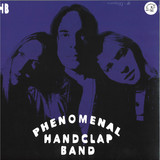
New York’s indie disco funk crew is back with a new album. And it’s the right moment: With new acts like Toro Y Moi, Sault, Parcels, The Internet around… the funky, disco, old school vibe is big in 2020. And The Phenomenal Handclap Band fits perfectly. Probably all these new artists are fans of the Phenomenals. Because The PHB popped up for the first time 10 years ago. Some top knotch musicians from NYC’s funk scene playing dirty discofunk. Some of the bandmembers played in Mark Ronson’s projects and in Amy Winehouse’s backing band. Head of the band: Daniel Collás. Their self-titled debut album on Gomma records 2010 made them many fans in the music scene. A nasty fusion of forward-thinking disco, psychedelic prog rock, and classic soul with a splash of yacht rock. Back then the band took the road, supporting Bryan Ferry and Franz Ferdinand, playing shows at Glastonbury, Wireless, and Latitude… as well as getting praise from Sir Paul McCartney about their album! After the album Collás began to produce other artists in Brooklyn. The band paused. Now they are back. With Daniel Collás in the centre, along with new members multi-instrumentalist Juliet Swango, and vocalist and synthesizer wizard Monika Heidemann. Their sound is still essentially analog dance music, with an emphasis on raw soul, vocal harmonies, African percussion, fuzzy guitars and analog synthesizers.