quête:rumba

Genres
Tout
J Paraguai - Rumba

J Paraguai

Rumba

12inchBAR001
BAR Musica
26.09.2023

Bar Musica is a brand new label that promises to inject plenty of charm and originality into the underground house and techno world. The first release kicked up quite a storm from label owner Bartolomeo, and the second release features a trio of great originals by J Paraguai, with a remix from long time electronic talent Bruno Pronsato.

Rumba is up first and is a full fat, corrugated house track with tribal percussion, punchy drums that swing down low and Afro vocals. It is a dynamite groove with roughshod tin pot hits that are carefully treated and bring a lovably wild side to the track. Thesoundsays founder and Berlin based New Yorker Bruno Pronsato has been on the fringes of the underground for more than a decade with inventive EPs and LPs on labels like Hello repeat and Bosconi. His remix is stripped back to a forceful and rubbery techno groove. Blistered synths rip up the middle and spooky voices, trippy effects and manic loops all make it a freaky late night or after-hours tune that will send floors wild.

Ble is then another J Paraguai, and this one is again unhinged and urgent, with intense synths exploding above shuffling, tightly knotted minimal drums and sweeping pads. It's pure WTF music for brave DJs and dancers and is a truly original production.

Then last original Atles is rugged and impactful in the way in combines house and techno into new ideas. It is stripped back to little chopped loops that bury deep in your brain and have you in a trance in no time. As such, it rounds out a fine EP and keeps this exciting new label going off in great style.

En stock

Disponible en stock et prêt pour l'expédition

9,03
GABRIELE DEIANA - GEORGINA’S RUMBA LP

Georgina's Rumba is a magnum opus in the field of latin music in the broadest sense. Gabriele Deiana Sardinian guitarist, composer, arranger, producer and lyricist brings together 36 musicians for this work, including the winners of the Latin Grammy 2021 Alain Perez and Ivan "Melon" Lewis. 15 Cubans, 12 Spanish gypsies, 5 Spanish and 3 Venezuelans give life to a musical biographical journey that ranges from latin jazz to bolero, salsa, flamenco-jazz, tropical, nordic
argentine style, son montuno and modern flamenco.

The record also features former members of the Paco de Lucia sextet including Jorge Pardo and Carles Benavent. The best of the best of each genre. The vinyl format is gatefold and contains a 6 pages insert 30cm x 30cm with photos and the history of the album.


A true and fascinating novel in that began in 1992. The cover is a hand-painted watercolor by the illustrator Gianluigi Concas and contains an encrypted rebus that can be solved by reading the novel in the insert.

En stock

Disponible en stock et prêt pour l'expédition

11,98
Various - Rumba Rules - Original Motion Picture Soundtrack

The official soundtrack of the 2021 'Rumba Rules, New genealogies' documentary movie by Congolese artist Sammy Baloji and Quebec filmmaker David Nadeau-Bernatchez. A deep dive into Kinshasa’s vibrant Rumba scene, including remastered classics by Brigade Sarbati, Werrason, Papa Wemba, Franco & le Tout Puissant O.K. Jazz

Rumba Rules, New genealogies is about contemporary rumba in Kinshasa, but this music has deep historical roots nevertheless. Born in the interstices of the colonial world and thriving during the three decades of the Mobutu era in Zaïre, Congolese rumba has been iconic and popular all over Africa for decades. The roots of Rumba are even deeper, and the many paths it evokes trigger the imagination. The story goes that this music came with the migration of the ‘Kumba’ drum and dance in previous centuries, African slaves having carried it all around the Americas and giving birth to Cuban ’Rumba’, Colombian ‘Kumbia’ and many others. With its varied rhythms, guitars and horns, through LPs and radio stations, Rumba came back to (re)conquer Africa throughout the 20th century, paving the way for new practices. One could say this music is a sort of palimpsest, a memory in itself of Atlantic migrations and histories.

Rumba is nowadays discussed all around the world, igniting many debates among the Congolese diaspora. Being the constant talk of the town sometimes overloads public debate, and many people get tired of this broken record. Thus, over the last decade, enterprising producers have worked hard to promote Kinshasa’s musical diversity and tried to emulate new sounds to reach worldwide attention. But Kin’ locals and urban dwellers will not be fooled : new shoots cannot hide the forest. Despite some difficulties to innovate, despite the pastoralist sermons and the diaspora fighters pushing for concert cancelations, rumba is still at the core of the Congo today. Talented artists such as Fally Ipupa, Ferré Gola, Brigade Sarbati and others are leading the fifth generation, and the religious world has also proven to be a nurturing environment for the cultural and economic dynamism of this music.

Focusing on the music of Brigade Sarbati and his Orchestra, this record offers a deep dive into Kinshasa’s rumba scene. Halfway between professional studios and Zoom H4 field recordings, the rumba herein is about today’s youth: dense, full of energy and breakdowns, insights and name-dropping. The cavacha rhythm, the solo and bass guitar’s playing style, the singing style and numerous dedications all resonate with the history of Rumba. In an era where digital sound is taking over, it is interesting to highlight the instrumental and live performance compositions of this music. Digital technology is indeed used during the recording and mixing phases, but Congolese rumba still relies strongly on instrumental playing. There is all that but also, many other things to hear on this record… It’s time to let it be. A big thanks to Étienne Tron for making it possible: it is on his initiative and through his patience that this album is in your hands today. (David Nadeau-Bernatchez, december 2021)

En stock

Disponible en stock et prêt pour l'expédition

17,23
Franco Et L'Orchestre O.K. Jazz - La Rumba De Mi Vida
  • Malata
  • Tika Kolela Chérie
  • Ba Mpangi Ya Matadi
  • Mosala Etindi
  • Casier Judiciare
  • La Mode Ya Pius Apiki Dalapo
  • Ngai Muana Na Weyi
  • Cha Cha Cha Erique
  • Baiser Na Litama
  • Lopango Ya Bana Na Ngai
  • Victoire De Bruxelles
  • Onzeteuna
  • Revolver
  • Baila Charanga
  • El Paso De Encarnacion
  • El Pinazo
  • Na Mokili Mibale Na Mibale
  • Ma Nkewa
  • Bandoki Kabasala Ye Nkenda Ko
  • Beno Bakongo Sika
  • Owawa
  • Camp Luka
  • Lokumu Ya Mwasi Mpo Na Mobali
pré-commande05.12.2025

il devrait être publié sur 05.12.2025

36,09
Various - Africa Shangazi: More Early 1980s Benga & Rumba from East Africa

This album is a compilation of hard-to-find 7" singles released in Kenya by the Audio Productions stable in the first half of the 1980s and most have never been released outside of East Africa.

Amongst others, it features artists such as Super Wanyika, led by the legendary vocalist Issa Juma, originally from Tanzania, who played a pivotal role in the Kenyan club scene in the late 1970s and early 1980s. Also featured is Orchestra Shika Shika, a Congolese band based in Nairobi, who recorded more than 70 singles for a host of labels. Their track included here, " Diana" is one of their very best and was the title track of their album released in 1983; featuring the sublime vocals of Jimmy Monimambo and Lovy Longomba.

We hope you enjoy this deep dive into these lost sounds from Kenya's rumba and benga scene!

(The LP also comes with a free CD featuring additional material)

pré-commande28.11.2025

il devrait être publié sur 28.11.2025

23,11
DIZZY MANDJEKU & ODEMBA OK ALLSTARS - ODEMBA NOSTALGIE - RUMBA CONGOLAISE LP

(180gr vinyl) Dizzy Mandjeku & Odemba OK Allstars, the esteemed Congolese musical ensemble, joyfully announces the forthcoming release of their latest masterpiece, "Odemba Nostalgie - Rumba Congolaise," on vinyl format.


Dizzy Mandjeku is considered a living guitar legend. The guitar riff from Stromae’s Papaoutai, ten years on tour with Zap Mama and besties with Baloji. Over the years he has built up an entire repertoire with the greats of Congolese rumba. Cuban rumba was vibrant in Congo and it didn’t take long before traditional elements started to blend with modern instruments. With Franco Luambo and his band T.P.O.K. Jazz at the forefront, the music evolved into a brand new style called Rumba Odemba. Dizzy, having been a member of the T.P.O.K. Jazz later founded the Odemba OK Allstars in Brussels in order to keep th unique ‘Rumba Odemba’ alive.


As an hommage to Franco Luambo, Dizzy took six of songs he used to play with him and interweaved them into two medleys: ‘Odemba #1’ and ‘Odemba #2’.


"Odemba Nostalgie - Rumba Congolaise" pays homage to the timeless tradition of Congolese rumba. Guided by the expertise of producer Toms Ntale and mixer Vincent Kenis (Crammed Discs) the album delivers an authentic listening experience that transports listeners to the heart of Congo's vibrant music scene.


"Dizzy Mandjeku & Odemba OK Allstars bring pure Franco OK Jazz rumba to the stage - brassy, funky, soukous heaven, with the enduring sound of the 60’s and 70’s getting everyone dancing and whooping." - Songlines (Anita Scott)

pas en stock

Commandez maintenant et nous commanderons l'article pour vous chez notre fournisseur.

20,80

Last In: 22 months ago
Ezéchiel Pailhès - Ventas Rumba LP

With his new instrumental album Ventas Rumba, the French composer (and singer) returns to his signature instrument, the piano, blending it with warm synth tones. This album represents a "return to his roots ", allowing Ezéchiel Pailhès to reinvent himself in a seamless way while still exploring ballads and ritornellos, halfway between light-heartedness and melancholy. Ezéchiel Pailhès has been meaning to write a solo piano album for as long as he can remember. Hardly surprising, of course, for this academically-trained pianist, brought up on classical music and then studied jazz. Yet, since his 2001 debut with the electro-pop duo Nôze, and his subsequent four albums, the artist had constantly postponed this project that was so close to his heart. Then in 2022, just as he was getting ready to start producing an album of new songs, this long-standing aim finally materialized.
The melodies he wrote seemed to stand on their own naturally, spurring him on to compose this series of fourteen tracks, recorded in sessions split between France and Latvia.
A new piano: the Una Corda
Ezéchiel wanted this project dedicated to the piano to begin a new narrative, to explore new instrumental terrain and new tones, something far removed from the familiar piano he has been playing all his life. He opted for the Una Corda piano, designed by David Klavins, a groundbreaking instrument builder renowned for his distinctive pianos with vertical shapes and frames.

The Una Corda, created in 2014, is an upright piano with a single string per note (unlike three strings on traditional pianos). Enticed by the "crystalline and unique" tones of this instrument, which is hard to find in France, Ezéchiel travelled to Kuldiga, Latvia (where David Klavins set up his workshops and studios), to record the first part of the album. Although the title of the album may initially conjure up images of a distant, sensual dance, the reality is quite different. Ventas Rumba indeed refers to the waterfall and rapids (in Latvian: rumba) of the river Ventas, which runs near this small village in the western part of the country. Ezéchiel chose to blur the lines, as the sound and musicality of the title likely evoke both his short stay in the Baltic country, and also a form of distant exotic imagery perfectly in tune with his own mischievous wit. Tracks as short stories

Back in France, Ezéchiel enhanced the first tracks recorded in Kuldiga with subtle synth tone layers, and added other tracks composed and recorded at his Montreuil studio. The album reflects a deliberate and sensitive orchestration of piano, synth keyboards and digital effects, as he puts it: "playing to erase the differences between the tones of the various instruments", as if each instrument's texture echoed the others. According to Ezéchiel, you can listen to Ventas Rumba as you would leaf through "a collection of short stories", through compositions that rarely exceed three minutes and evoke figures of movement, lightness, curves or modulation, such as "La ligne", "La valse des singes" or "Fly Finger". Others more seriously relate to a kind of spirituality, which quietly infuses such different tracks as "Ferveur", "Éclair" and "Louanges". Ezéchiel adds: “I’m by no means religious, but I like what God has managed to get musicians to achieve (laughs)". "Louanges", for instance, despite its electronic edge, "refers to Olivier Messiaen, a very devout composer who I greatly admire". Other tracks are directly inspired by the classical music he listens to on a daily basis. For example, Chopin's “8th Nocturne” formed the backdrop of “Pianovado”. Likewise, the harmonic structure of Beethoven's “Waldstein Sonata No. 21” inspired “Opus 53”. Aside from these multiple references and inspirations, which quickly recede behind a style that is uniquely his, Ezéchiel Pailhès keeps exploring ideas already found on his first solo albums, this time in an instrumental format, undoubtedly purer, fostering an imaginary world that evokes the shapes and themes of ballads, ritornellos, light-heartedness, passing time, reverie or a universal subdued melancholy.

pas en stock

Commandez maintenant et nous commanderons l'article pour vous chez notre fournisseur.

21,81

Last In: 23 months ago
Various - Crossroads Kenya: East African Benga and Rumba, 1980-1985

This compilation collects a number of 7" singles produced by Audio Productions Ltd. in Kenya's capital Nairobi in the first half of the 1980s and released on the Wendo, Lulus, Mlima and APL imprints. The bands featured on this release are the New Gatanga Boys, Ruwengo Bros Band, Banana Hill Band and Les Victoria 'C' Kings from Kenya, Les Moto Moto and Orch Les Volcano from Tanzania (the latter being led here by Charles Ray Kasembe after the death of the legendary Mbaraka Mwinshehe). The closing track is by Orch Zaituken Band, whose name is a contraction of the countries its members came from: Zaire (now Democratic Republic of the Congo), Tanzania, Uganda and Kenya. The group is emblematic of the Kenyan capital's role as a magnet for East African musicians seeking to earn a living by recording and playing live in the 1970s and 1980s.

No Wahala Sounds are proud to bring you this latest collection of rare 45s from the golden era of benga and rumba, which have never been released outside Kenya before.

pas en stock

Commandez maintenant et nous commanderons l'article pour vous chez notre fournisseur.

22,06

Last In: 3 years ago
Various - The Boys From Nairobi: Benga & Rumba from 1980s Kenya

This album is a celebration of benga and rumba music recorded in Nairobi, Kenya in the early 1980s. The five Kenyan groups chosen all feature "Boys" in their band names in one form or another; a common theme in Kenyan music at that time.

The tracks selected were all released as 7" vinyl singles on the Boxer, Lulus and Hit Parade labels, which were all part of Babu Shah's Audio Productions stable. This is the first time they have been released outside of Kenya.

No Wahala Sounds are proud to bring you these lost musical gems and would like to thank Doug Paterson for digital clean up from the original vinyl.

Due for release on 09 April 2021. Interest for airplay from Tom Ravenscroft and Gideon Coe from BBC 6 Music, DJ Ritu from Resonance FM/SOAS Radio, Roger Hill from BBC Merseyside, Steve Barker from BBC Lancashire, and DJ Debbie Golt from Resonance FM.

pré-commande09.04.2021

il devrait être publié sur 09.04.2021

20,71
Ashley Beedle, Art of Tones, Jeff The Fish, Raph Dumas, Antoine Tato Garcia - La rumba me va - remix

Catalan Gypsy singer from Perpignan France has been making waves in the Gypsy Rumba scene with his new album "El Mundo".. prompting the release of this 12" Vinyl EP of his tune "La Rumba Me Va" with Remixes from Ashley Beedle, Art of Tones, Raph Dumas and Jeff The Fish covering several different styles from classic House, New Disco, Soul and Latin Jazz. There's something a little different here for the DJs... Gypsy goes global!

pas en stock

Commandez maintenant et nous commanderons l'article pour vous chez notre fournisseur.

13,82

Last In: 4 years ago
October & Borai - Fatal Rumba

October&Borai

Fatal Rumba

12inchHAPSKL016
Happy Skull
28.05.2019

Bristol stalwarts October & Borai join forces once again for their second outing on Happy Skull. The pair join the dots between sleazy EBM and rugged, hardcore atmospherics.

Lead track 'Fatal Rumba' is a titanium plated slab of latin funk for freakier, late night dance floors. On the B-Side 'Swipe Left' drops the tempo but turns the pressure up to boiling point, a chugging drum machine workout complete with pulsating 303's and dub techno chords. To round things off, Conch bosses Bash & T give 'Swipe Left' the full UK treatment, flipping it to a mutant funky roller.

pas en stock

Commandez maintenant et nous commanderons l'article pour vous chez notre fournisseur.

7,94

Last In: 6 years ago
Various - Tani: Disco Rumba And Flamenco Boogie, 1976 - 1979

The Disco music fever was also present in the Rumba and Flamenco scene of Spain in the late '70s / early '80s. Producers, sound engineers and studio musicians, collaborated closely with flamenco / rumba singers and bands, highlighting the productions that genius Josep Llobell did for the Belter label in Barcelona. Here you got 12 disco-rumba-flamenco bombs, a time machine to the boites and discotheques of the late 70s and the perfect soundtrack to an imaginary Kinki' cinema soundtrack.

Featuring Sangre Gitana, Rumba 3, Tobago, Los Gachós, La Marelu, El Turronero...

Insert with liner notes by Txarly Brown and photos.

pas en stock

Commandez maintenant et nous commanderons l'article pour vous chez notre fournisseur.

25,84

Last In: 7 years ago
Verckys & Orchestre Veve - Congolese Funk, Afrobeat & Psychedelic Rumba 1969-1978

Analog Africa has now the privilege to present 11 tracks by Verckys et L'Orchestre Vévé at the height of their most funky capabilities.

Compiled over the course of many years in a land of hardship, we welcome you to the grooviest era of the Congo.

Congo's turbulent and exhilarating '70s: Nightclubs and dance floors were packed to the brim in the capital, Kinshasa. Exuberant crowds, still giddy from independence

a decade prior, grooved to the sounds of the country`s classics. In fact the whole continent was submerged into the Congolese Rumba craze. Encouraged by the fantastic

productions of the Ngoma label, vibrant radio waves had been spreading the Congo sound from Leopoldville all over the continent, becoming the countries' No.1 export.

pré-commande31.10.2016

il devrait être publié sur 31.10.2016

31,30
AFRO-CUBAN ALL STARS - A Toda Cuba Le Gusta
  • A1: Amor Verdadero
  • A2: Alto Songo
  • B1: Habana Del Este
  • B2: A Toda Cuba Le Gusta
  • C1: Fiesta De La Rumba
  • C2: Los Sito' Asere
  • C3: Pío Mentroso
  • D1: María Caracoles
  • D2: Clasiqueando Con Rubén
  • D3: Elube Changó

'A Toda Cuba le Gusta', the classic debut album by the Afro-Cuban All Stars. The frst in a trilogy of extraordinary albums recorded by World Circuit in a single two-week session
at Havana's EGREM studios, 1996. The other albums, which share many of the same personnel, were 'Buena Vista Social Club' and 'Introducing Rubén González'. Remastered by Bernie Grundman from the original analogue tapes and now available
for the frst tme on double 180gm heavyweight vinyl, housed in a gatefold sleeve and presented alongside a 32 page booklet as part of World Circuit's classic album series. Plays at 45rpm.

pas en stock

Commandez maintenant et nous commanderons l'article pour vous chez notre fournisseur.

33,57

Last In: 13 months ago
Various - Pacific Breeze: Japanese City Pop, AOR & Boogie 1976-1986

Pacific Breeze is a collection of choice cuts that range from silky smooth grooves to innovative techno pop bangers and everything in between.

Long-revered by crate diggers and adventurous music heads, this music has never been released outside of Japan until now. Including key artists like Taeko Ohnuki and Minako Yoshida, as well as cult favorites Hitomi Tohyama and Hiroshi Sato, the long-awaited release also features newly commissioned cover painting by Tokyo-based artist Hiroshi Nagai, whose iconic images of resort living have graced the covers of many classic City Pop albums of the 1980s.

Many of the key City Pop players evolved from the Japanese New Music scene of the early '70s, as heard on Light In The Attic's acclaimed Even a Tree Can Shed Tears: Japanese Folk & Rock 1969-1973, the first release of the ongoing Japan Archival Series. In fact, you could say City Pop set sail with a champagne smash from Happy End, the freakishly talented subversives who included amongst their ranks Haruomi Hosono and Shigeru Suzuki, both featured on this compilation. As Michael K. Bourdaghs noted in his book, Sayonara Amerika, Sayonara Nippon, this music was, 'Deconstructing the line between imitation and authenticity.' Some of the best City Pop teeters in this zone—easy listening with mutant exotica, tilted techno-pop, and steamy boogie bubbling beneath the gloss.

2xLP housed in a deluxe wide spine jacket with over sized fold-out booklet, full color printed inner sleeves, and custom die-cut obi card

pas en stock

Commandez maintenant et nous commanderons l'article pour vous chez notre fournisseur.

55,46

Last In: 3 years ago
Various - The Triple Threat LP

* This triple pack LP is the 100th release from Kniteforce Records, and is a showcase for the brand new 'old skool' styled hardcore. Containing a spread of big name artists from the originals, such as Liquid, Hyper On Experience, Luna-C, Alk-e-d, Dj Ham and Future Primitive, to newcomers such as Pete Cannon, Alex Jungle and Ant To Be, every track slams home the new old sound of today (yesterday) with the style and competence expected from the Kniteforce Family. Full of variety, and the very essence of the music from 1991 - 1996, this is not to be missed!

Club / DJ Support
Billy Bunter, the Fat Controller, Glowkid, Slipmatt, Dj Jedi, Dj Luna-C, Dj Brisk, Clayfighter, Jimni Cricket, Bustin, Sc@r, Doughboy, Saiyan, Dave Skywalker, Ponder and many others

pas en stock

Commandez maintenant et nous commanderons l'article pour vous chez notre fournisseur.

7,52

Last In: 5 years ago
Oswaldo Lares - Musica De Venezuela 1972-81

"After a concert of Kenyan singer Ogoya Nengo in Berlin in 2015 in a pleasant conversation Guillermo Lares told me about his father, Oswaldo Lares, a studied architect who, parallel with his professional activity, began to make field recordings of the traditional and indigenous Venezuelan music from the early 1960s onwards up until today.

His search and fascination for finding the musical roots of his country led Oswaldo Lares to visit the rural villages outside Caracas, investigating the many and varied musical cultures of the region and the complex relationship between Venezuelan folk music and its various origins, including the African (mu´sica afrodescendiente).

The vast amount of music documents in the form of sound recordings, photographs and videos accompanied by notes and studies reflect the scope of this entirely self- taught sound engineer's work and represent a passionate documentary, making his work today one of the most comprehensive and systematic that has ever been assembled by a single person in Venezuela. Oswaldo Lares as an ethnomusicologist remained an amateur in the most direct meaning of the word: amare. Whereas most studied ethnomusicologists travel around the world to explore far away continents and foreign cultures, Oswaldo began to devote much of his spare time to the generally overlooked folk traditions that existed right in his very neighbourhood.

Currently Guillermo Lares has started to promote his father's work through the Achivolares Foundation, turning it into a living archive that preserves an essential part of Venezuelan musical memory. It is a pleasure and honor of our label TAL to support the invaluable work of Oswaldo and Guillermo Lares with this album."

pas en stock

Commandez maintenant et nous commanderons l'article pour vous chez notre fournisseur.

20,97

Last In: 8 years ago
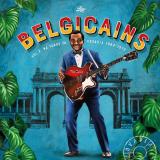
Les Belgicains - Na Tango Ya Covadia 1964-1970 Volume 2

Following the sold-out first volume, the Belgian label Covadia presents a second chapter of Les Belgicains, focusing on the European rumba created by Congolese students in Belgium during the 1960s.

Volume 2 includes 11 rare tracks originally issued on 45 rpm singles or never released before. Highlights include the dancefloor favourite “Guaracha Fredo” by LOS NICKELOS and previously unreleased recordings by the orchestra EBUKA EBUKA, like the swinging “Merengue Soucouss” and the emotional “Mpenzi Niambiye”. The songs unmistakably express a longing for recognition and for a rightful place for a new nation.

pré-commande17.04.2026

il devrait être publié sur 17.04.2026

23,95
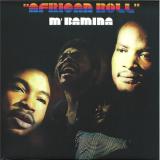
M’BAMINA - AFRICAN ROLL

Gatefold Sleeve

M’Bamina – African Roll (1975)
The story of an album born between Africa, Italy, and the nightclub culture of the 1970s
In the heart of 1970s Italy — a country undergoing profound social change and a music scene just beginning to open itself to distant sounds and cultures — an extraordinary, almost improbable story took shape. It is the story of a group of young African musicians who found their way to Europe, of a Turin nightclub that became a crossroads for communities and experimenters, and of an album which, released in small numbers and largely unnoticed at the time, is now considered a rare jewel of Afro-fusion.
The band called themselves M’Bamina — an ensemble of musicians from Congo, Cameroon, and Benin, who arrived in Italy in the early Seventies. Settling between northern Italy and the Pavia area, they began performing in small clubs and community events, bringing with them a vibrant rhythmic heritage: African polyrhythms, call-and-response vocals, funk-infused bass lines, and Caribbean or Afro-Latin colours absorbed along their musical journeys. Their raw, contagious energy on stage quickly drew attention.
Meanwhile, in Turin, another story was unfolding. There was a venue becoming almost legendary: Voom Voom, one of the city’s liveliest nightclubs, run by Ivo Lunardi. The club attracted an eclectic crowd — students, artists, foreigners, night owls — and Lunardi quickly understood that the dancefloor wasn’t just a place for music, but a melting pot for a new kind of cultural energy. Out of this vibrant atmosphere came his idea: to turn the club’s name into a small independent record label, Voom Voom Music, capable of capturing the spirit of those years and giving voice to unconventional projects.

When Lunardi heard M’Bamina, he immediately sensed that this was the sound he had been searching for: fresh, different from anything circulating in Italy at the time, and capable of blending African tradition with funk and European sensibility. He brought them into the studio.
Production was handled by Lunardi along with Christian Carbaza Michel, while the engineering was entrusted to Danilo Pennone, a young sound technician with a sharp, intuitive ear.
The recording sessions — held in Turin in 1975 — produced a remarkably warm and direct sound. The music feels almost live: grooves rooted in African tradition, but open to funk-rock structures and modern arrangements. It is a natural fusion, never forced. Tracks move between tribal rhythms, funk basslines, light electric guitars, congas and Afro-Latin percussion, with call-and-response vocals and melodies that echo both Congolese tradition and the lineage of Latin jazz. Not by chance, one of the album’s most striking tracks, Watchiwara, reinterprets a Latin standard through M’Bamina’s own rhythmic language.

The album was titled African Roll — a name that was already a statement of intention. It is African music that “rolls,” that moves, adapts, transforms within a new geographic and cultural setting. It is not strictly Afrobeat, nor Congolese rumba, nor Western funk: it is a spontaneous, hybrid blend, shaped more by lived experience than by any calculated aesthetic program.
When African Roll was released, the world around it barely noticed. Distribution was limited, and 1970s Italy had yet to develop a cultural framework for receiving such music. The national music press rarely paid attention to African or “world” productions. The album slipped into silence — though the band’s own story did not.

M’Bamina continued performing across Europe and Africa, even sharing a stage in Cameroon with none other than Manu Dibango. By the late Seventies, they moved to Paris, signed with Fiesta/Decca, and recorded a second LP, Experimental (1978). Meanwhile, the peculiar record they had made in Turin began to resurface quietly among vinyl collectors, Afro-funk enthusiasts, and DJs hunting for forgotten grooves.
That is when the album’s fate began to shift.

Over the decades, African Roll emerged as an almost unique document: a snapshot of an intercultural Italy before the word “intercultural” even existed, a fragment of migrant history, a spontaneous experiment in musical fusion born far from major industry circuits but rich in authenticity. Original copies began commanding high prices on the collector’s market, and the album became recognized as one of the hidden classics of European Afro-fusion from the 1970s.
Today, more than fifty years later, this reissue finally restores visibility and dignity to a project that deserves to be heard, studied, and celebrated. It is not simply an album: it is the testimony of a rare cultural encounter, born in an Italy unaware of how fertile such exchanges would one day become.

It is the story of a visionary producer, an extraordinary band, and a fleeting moment in which music, migration, and nightlife came together to create something genuinely new.
African Roll is — now more than ever — the sound of a bridge: between continents, between eras, between cultures. A record that, after rolling far and wide, has finally come home.

En stock

Disponible en stock et prêt pour l'expédition

23,49
Bertie Bassett - Big Bombs EP

Big Bombs EP marks the debut release on Bertie Bassett’s self-titled label, introducing a collection of groove-led house cuts rooted in classic influences and underground club culture.

Already gaining global support from DJs like Marco Carola and, Shaka Loves You and featured on Traxsource’s Essential Afro chart.

Across four tracks, Bertie Bassett delivers a mix of DJ-focused tools and edits, blending raw house rhythms, funk-driven elements and stripped-back arrangements designed for dancefloor use.

From the driving energy of Get House and Back To Underground to the reworked grooves of Man In Black (Edit Mix) and Finga Loop (Bertie Bassett Rumba Remix), the EP offers a versatile selection suited to both peak-time and deeper club sets.

With a long-standing background in house music and production, Bertie Bassett brings a seasoned approach to this first release, combining classic influences with a modern underground edge.

As the first release on the label, this EP sets the tone for the project moving forward, offering strong appeal for DJs looking for fresh, playable house cuts with a raw, groove-led feel.

A natural fit for fans of labels such as Razor-N-Tape, Toy Tonics, Bed Edits and Disco Express.

A DJ-friendly and versatile release for stores supporting underground house and edit-driven sounds.

pré-commande22.05.2026

il devrait être publié sur 22.05.2026

13,87
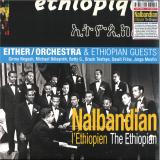
NALBANDIAN THE ETHIOPIAN & EITHER/ORCHESTRA - NALBANDIAN THE ETHIOPIAN (ETHIOPIQUES)

The Éthiopiques series returns! Essential archive recordings from an extremely fruitful period in Ethiopian music.

Before “Swinging Addis” took over the world, there was Moussié Nerses Nalbandian — the Armenian-born composer who shaped modern Ethiopian music. Mentor, arranger, and pioneer, he laid the foundations of Ethio-jazz.

This Éthiopiques volume revives his forgotten legacy, recorded live by Either/ Orchestra First issue ever with new exclusive photos and in depth liner 8-page insert.

“Ethiopian jazzmen are the best musicians that we have seen so far in Africa.
They really are promising handlers of jazz instruments.”

Wilbur De Paris
(1959, after a concert in Addis Ababa)

አዲስ፡ዘመን። *Addis zèmèn* **A new era.**
The time is the mid-1950s and early 1960s, just before "Swinging Addis" bloomed – or rather boomed – onto the scene. Brass instruments are still dominant, but the advent of the electric guitar, and the very first electronic organs, are just around the corner. Rock’n'Roll, R’n’B, Soul and the Twist have not yet barged their way in. Addis Ababa is steeped in the big band atmosphere of the post-war era, with Glenn Miller's *In the* *Mood* as its world-wide theme song, neck and neck with the Latin craze that was in vogue at the same period. Life has become enjoyable once again, with the return of peace after the terrible Italian Fascist invasion of Ethiopia (1935-1941). The redeployment of modern music is part and parcel of the postwar reconstruction. *Addis zèmèn* – a new era – is the watchword of the postwar period, just as it was all across war-torn Europe.
The generation who were the young parents of baby boomers** were the first to enjoy this musical renaissance, before the baby boomers themselves took over and forever super-charged the soundtrack of the final days of imperial reign. Music is Ethiopia's most popular art form, and very often serves as the best barometer for the upsurge of energy that is critical for reconstruction. Whether it be jazz in Saint-Germain-des-Prés or the *zazous* who revolutionised both jazz and French *chanson* after the *Libération*, be it Madrid's post-Franco Movida, or Dada, the Surrealists and *les années folles* that followed World War I, the periods just after mourning and hardship always give rise to brighter and more tuneful tomorrows. Addis Ababa, as the country's capital, and the epicentre of change, was no exception to this vital rule.

**Two generations of Nalbandian musicians**
Nersès Nalbandian belonged to a family of Armenian exiles, who had moved to Ethiopia in the mid-1920s. The uncle Kevork arrived along with the fabled "*Arba Lidjotch*", the** "*40 Kids*", young Armenian orphans and musicians that the Ras Tafari had recruited when he visited Jerusalem in 1924, intending to turn their brass band into the official imperial band. If Kevork Nalbandian was the one who first opened the way of modernism, pushing innovation so far as to invent musical theatre, it was his nephew Nersès who would go on to become, from the 1940s and until his death in 1977, a pivotal figure of modern Ethiopian music and of the heights it. Going all the way back to the 1950s. Nothing less. And it is Nersès who is largely to thank for the brassy colours that so greatly contributed to the international renown of Ethiopian groove. While the younger generations today venture timidly into the genealogy of their country's modern music, often losing their way amidst a distinctly xenophobic historiographical complacency, many survivors of the imperial period are still around to bear witness and pay tribute to the essential role that "Moussié Nersès" played in the rise of Abyssinia's musical modernity.
Given the year of his birth (15 March 1915), no one knows for sure if Nersès Nalbandian was born in Aintab, today Gaziantep (Turkiye/former Ottoman Empire) or on the other side of the border in Alep, Syria... What is certain is that his family, like the entire Armenian community, was amongst the victims of the genocide perpetrated by the Turks. Alep, the place of safety – today in ruins.
Before Nersès then, there was uncle Kevork (1887-1963). For a quarter of a century, he was a whirlwind of activity in music teaching and theatrical innovation. *Guèbrè Mariam le Gondaré* (የጎንደሬ ገብረ ማርያም አጥቶ ማግኘት, 1926 EC=1934) is his most famous creation. This play included "ten Ethiopian songs" — a totally innovative approach. According to his autobiographical notes, preserved by the Nalbandian family, Kevork indicates that he composed some 50 such pieces over the course of his career. This shows just how much he understood, very early on, the critical importance of song as Ethiopia's crowning artistic form. Indeed, for Ethiopian listeners, the most important thing is the lyrics, with all their multifarious mischief, far more than a strong melody, sophisticated arrangements or even an exceptional voice. (This is also why Ethiopians by and large, and beginning with the artists and producers themselves, believed for a long time — and wrongly — that their music could not possibly be exported, and could never win over audiences abroad, who did not speak the country's languages).

Last but not least, one of Kevork's major contributions remains composing Ethiopia's first national anthem – with lyrics by Yoftahé Negussié.
Nersès Nalbandian moved to Ethiopia at the end of the 1930s, at the behest of his ground-breaking uncle. Proficient in many instruments (pretty much everything but the drums), conductor, choir director, composer, arranger, adapter, creator, piano tuner, purveyor of rented pianos,... he was above all an energetic and influential teacher. From 1946 onwards, thanks to Kevork's connexion, Nersès was appointed musical director of the Addis Ababa Municipality Band. In just a few years, Nersès transformed it into the first truly modern ensemble, thanks to the quality of his teaching, his choice of repertoire, and the sophistication of his arrangements. It was this group that would go on to become the orchestra of the Haile Selassie Theatre shortly after its inauguration in 1955, which was a major celebration of the Emperor's jubilee, marking the 25th anniversary of his on-again-off-again reign.

At some point or other in his long career, Nersès Nalbandian had a hand in the creation of just about every institutional band (Municipality Band, Police Orchestra, Imperial Bodyguard Band, Army Band, Yared Music School…), but it was with the Haile Selassie Theatre – today the National Theatre – that his abilities were most on display, up until his death in 1977. To this must be added the development of choral singing in Ethiopia, hitherto unknown, and a sort of secret garden dedicated to the memory of Armenian sacred music, and brought together in two thick, unpublished volumes. Shortly before his death (November 13, 1977), he was appointed to lead the impressive Ethiopian delegation at Festac in Lagos, Nigeria (January-February 1977).

His status as a stateless foreigner regularly excluded him from the most senior positions, in spite of the respect he commanded (and commands to this day) from the musicians of his era. Naturally gifted and largely self-taught, Nerses was tirelessly curious about new musical developments, drawing inspiration from the very first imported records, and especially from listening intensely to the musical programmes broadcast over short-wave radio – BBC *First*. A prolific composer and arranger, he was constantly mindful of formalising and integrating Ethiopian parameters (specific “musical modes”, pentatonic scale, and the dominance of ternary rhythms) into his “modernisation” of the musical culture, rather than trying to over-westernise it. It even seems very probable that *Moussié* Nerses made a decisive contribution to the development of tighter music-teaching methods, in order to revitalise musical education during this period of prodigious cultural ferment. Flying in the face of all the historiographical and musicological evidence, it is taken as sacrosanct dogma that the four musical modes or chords officially recognised today, the *qǝñǝt* or *qiñit* (ቅኝት), are every bit as millennial as Ethiopia itself. It would appear however that some streamlining of these chords actually took place in around 1960. It was only from this time onward that music teaching was structured around these four fundamental musical modes and chords: *Ambassel*, *Bati*, *Tezeta* and *Antchi Hoyé*. A historical and musical “details” that is, apparently, difficult to swallow, especially if that should honour a *foreigner*. Modern Ethiopian music has Nersès to thank for many of its standards and, to this day, it is not unusual for the National Radio to broadcast thunderous oldies that bear unmistakable traces of his outrageously groovy touch.

En stock

Disponible en stock et prêt pour l'expédition

22,06
ROSALÍA - LUX LP 2x12"

ROSALÍA

LUX LP 2x12"

2x12inch19802943251
Epic Records Group
04.12.2025

Repress 2026

Born in Sant Cugat del Valles, Spain, Rosalia has spent the last decade reshaping the language of pop by folding flamenco's emotional gravity into experimental production. Her fourth studio record pushes that ambition further. Recorded at London's Studio 13 with the London Symphony Orchestra conducted by Daniel Bjarnason, Lux is conceived as a four-part suite exploring "feminine mysticism, transformation and transcendence". Across its eighteen tracks, she blends classical orchestration with industrial textures and devotional themes. The lead single 'Berghain' - featuring Bjork and Yves Tumor - fuses cathedral-scale electronics with liturgical chant while 'La Rumba Del Perdon' pairs Estrella Morente and Silvia Perez Cruz in a near-sacred lament. Sung in English, German and Spanish, it's Rosalia's boldest statement yet.

En stock

Disponible en stock et prêt pour l'expédition

40,29
A Vision of Panorama - Serene Architect

The magic of A Vision of Panorama returns with the new album Serene Architect — a meditative yet rhythmic journey through luminous musical structures. This is a record about space: physical, internal, emotional.

Known for his soft Balearic touch, coastal synths, and an almost telepathic sense of groove, A Vision of Panorama offers something more here — a designed world where every sound functions as a piece of sonic architecture.

The album features tracks previously released on the legendary Café del Mar — On Avance, Baby Konyawa, Rumbabuena, Golden Sand, Neon Whispers - now reimagined in exclusive versions created specifically for vinyl. These new interpretations sound deeper and more expansive, subtly reinforcing the album’s architectural concept: to renew the familiar without destroying its essence. Architecture of calm, harmony in motion - Serene Architect designs sound for open skies and slow dances beneath the sun.

En stock

Disponible en stock et prêt pour l'expédition

19,29
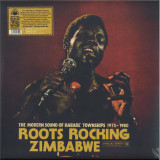
Various - Roots Rocking Zimbabwe: The Modern Sound Of Harare' Townships 1975-1980 LP 2x12"
 
25

Analog Africa doesn't do anything other than special releases really, but this one tracing the label's origins back to Zimbabwe over 20 years ago is a real standout. A carefully curated collection of 25 tracks with a fine booklet proving plenty of extra context, it captures the birth of the country's modern music scene and brims with the creative sound explosion of the 70s and 80s. Before genres were fully defined, artists blended rock, rumba, soul and traditional rhythms in bold, experimental ways that still stand up and get diggers and dancers excited in 2025. Included are never-before-released tracks from Thomas Mapfumo, Oliver Mtukudzi and more and they all add up to rich and dynamic snapshot of Zimbabwe's peerless musical evolution during what was a transformative era.

En stock

Disponible en stock et prêt pour l'expédition

29,62
Gipsy Power Band - La Quinqui / Llora

'La Quinqui' / 'Llora' is Gipsy Power Band's debut single, where they merge flamenco rumba, rock and funk astonishingly, evoking a unique era of Spanish music.

Formed in Madrid in 2022, Gipsy Power Band was originally conceived to pay live tribute to the music of the Spanish exploitation film genre known as "cine quinqui", performing tracks from those movies and many other foundational songs: hits, some flops and hidden gems released in Spain from the mid-70s to the early 80s. Rock, funk, disco and flamenco rumba productions by Los Chichos, Las Grecas, Los Chunguitos and Los Chorbos, among others.

After two years setting the Madrid stages on fire and making the public dance to this vintage repertoire, the time has come to move to the next level. The band has evolved and now they are releasing their first own songs: a dramatic love story told from two points of view worthy of a period "cine quinqui" movie, the spirit of which inspires the compositions.

En stock

Disponible en stock et prêt pour l'expédition

11,56
MARTÍN LOPEZ Y SUS ESTRELLAS - COCINANDO LP

In 1969, singer and police lieutenant Pedro Gregorio López started recording a series of instrumental tracks and songs on the MAG record label in Peru, ranging from guaracha to cumbia, all cooked with musical eclecticism and simmered to appeal to a wide audience. Many of these musical ingredients combined on the 1971 album entitled "Cocinando", in reference to the similarities between Peruvian cooking and tropical music. López began his career as a singer and orchestra conductor many years earlier, when he joined the backing singers for Lucho Macedo's Sonora. After completing his police training, he adopted the stage name Martín López, in order to preserve the anonymity his job required. Between 1969 and 1971 Martín López y sus Estrellas recorded all the tracks comprised on this album, including salsa, guarachas, rumbas, chichas and boleros, proving their knowledge and mastery of the tropical music lexicon. It is not surprising since the orchestra was made up of the most talented label’s session stars: including the double bassist Joe di Roma, singer Pablo Villanueva "Melcochita", percussionists Ñiko Estrada and Coco Lagos, and trumpeter Tito Chicoma. "Cocinando" is an epic historical treasure that captures the explosive impact of the tropical music movement on Peruvian culture.

En stock

Disponible en stock et prêt pour l'expédition

27,69
MERIDIAN BROTHERS - MI LATINOAMERICA SUFRE LP

Bogotá-based Colombian composer Eblis Álvarez, known as Meridian Brothers, has been concocting a unique blend of psychedelic sounds since 1998. With his latest project, "Mi Latinoamérica Sufre," Álvarez explores the untapped potential of the electric guitar in a tropical Latin context. Drawing inspiration from African highlife and soukous traditions, Álvarez crafts a fearless sonic experiment infused with invention, playfulness, and emotion. Unlike typical tropical guitar records, this album eschews distortion and clichés, opting for a pure, clean approach. Through intricate compositions blending cumbia, champeta, soukous, Brazilian tropicalia, and underground psychedelic rock, Álvarez pays homage to the golden era of Congolese rumba, Ghanaian highlife, and Nigerian afrobeat.

"Mi Latinoamérica Sufre" delves into the ego trip, presenting a humorous yet introspective journey of self-discovery and identity. The central character, Junior Maximiliano the Third, navigates through the complexities of self-discovery using psychedelic substances, political philosophy, and folklore. As he grapples with nostalgia, paranoia, and shared suffering, Álvarez showcases his vocal prowess, creating a sonic theater of the mind. Accompanied by visual narratives from Colombian artist Mateo Rivano, the album portrays various psychological states of disorientation, self-pity, enlightenment, and optimism. "Mi Latinoamérica Sufre" emerges as a worthy and innovative addition to the concept album tradition, offering a distinctive blend of bitter-sweet flavors inspired by Latinoamérica.

En stock

Disponible en stock et prêt pour l'expédition

22,90
Les Belgicains - Na Tango Ya Covadia 1964-1970 LP

The compilation ‘Les Belgicains – Na Tango Ya Covadia 1964-1970’ (‘Les Belgicains’ during the time of Covadia 1964-1970) tells the remarkable story of the first Congolese student orchestras in Belgium. During that time Congolese referred to countrymen living in Belgium as ‘Les Belgicains’. The Congolese Rumba presented on this compilation blew a new, fresh wind through the musical landscape of Congolese popular music under the supervision of the legendary editor and producer Nikiforos Cavvadias (Ngoma label).  

All tracks are remastered from the original tapes. This album is available in a deluxe vinyl edition with gatefold sleeve (1LP) + insert.

En stock

Disponible en stock et prêt pour l'expédition

23,95
Chipen - Volao

Chipen

Volao

12inchMISSYOU035
MISS YOU
14.06.2024

Two gypsies with pedigree backgrounds in Flamenco got together with a drum machine in a studio during the early 80's and the result was Chipen, a somewhat poppy chart oriented project featuring Peret Reyes the grandson of legendary Catalan Gitano musician Peret (aka "El Rey de la Rumba") and Johnny Tarradellas. "Volao" is a mid tempo effort to bridge Pop and Rumba, mixing catchy funk guitar riffs with elements of Flamenco in unprecedented ways. "Chiribiri" sounds like it could be the theme song to a Catalan morning show or even a Japanese 80's Toyota Camry ad, reeks of stereotype and cliche, except that Chipen is the real deal, as real as the darkness of the hair dye on the cover photo. Extended version of Volao on the B side. Remastered at Manmade Mastering in Berlin.

En stock

Disponible en stock et prêt pour l'expédition

17,27
Idrissa Soumaoro - Diré

Idrissa Soumaoro

Diré

12inchMRB-ML01-019
Mieruba Record Label
03.06.2024

‘Diré’, Idrissa Soumaoro new album, comes as a surprise to Malian and international audiences. Composer, singer, guitarist and master of the kamalen n’goni Idrissa Soumaoro presents here a beautiful collection of songs on his third album, Diré, named in honor of the town where he met his wife and where his first daughter, who is no longer with us, was born.
In 1971, after his studies at the INA in Bamako, Idrissa was transferred to Diré to teach music at the lPEG (Pedagogical Institute of General Education). He was 22 years old when he arrived in Diré. Idrissa has always been nostalgic for this beautiful place in the 333 Saints of Timbuktu region. As Idrissa sings in ‘Diré taga’ (Going to Diré), the track that opens the album, the city evokes deep emotions for the artist, as if it were a long-lost friend or lover. Celebrating the memory of the city of Diré leads the artist to retrace stories and lived situations that marked and animated him in years gone by: ‘I really miss the people, the colleagues, the friends and that period. Despite the time that has flown by, I would ardently wish to see Diré again’. Today, at the difficult time Mali is experiencing, remembering the city of Diré in the 1970s also means for the artist not giving up hope for peace: ‘The memory of Diré, a beautiful town in northern Mali, strengthens my hope for peace, union and real independence for the happiness of my people’; as he sings in ‘Sababou’, ‘Without hope, there is no life. Together we will succeed’.
The ten highly original compositions of the album are strongly based upon traditional music of Mali, but Idrissa’s life experiences, travels, education, collaborations and personal musical career have led him to compose and perform music with other influences. As Idrissa quotes: ‘My inspiration generally comes from the donso n'goni, a Bambara instrument played by and for hunters throughout Mali. This is a pentatonic instrument, similar to the blues exported to the USA by black African slaves. I've also spent so much time playing a variety of music that my music also reflects rumba, salsa (as well as Bamanan blues and a few derivatives: jazz, country, soul, rhythm and blues) etc. I have looked for and hope to have found my own form of expression from these influences’.
Throughout the album, his strong, clear voice sings in French, Bambara and English. It rides seamlessly upon a complex rhythmic sea of distinctly West African stringed instrumentation and percussion with accents of flute and balafon. There are keyboards in a few songs, but these, happily, do not dominate the music as we hear so often in today’s music. This album presents the music of a mature artist who has ‘been there, done that’ and returned to celebrate his country, his roots and his dreams in a flawlessly produced collection of songs of love, reassurance, fatherly advice and hope.
The album already has a long history: it was initiated in 2012 by Marc-Antoine ‘Marko’ Moreau, former producer and manager of Amadou and Mariam. Moreau had plans to produce the album and invited Idrissa Soumaoro to start recording in Manjul's studio in Bamako. When Moreau suddenly passed away, work on the album was still missing. The pandemic still added time for the production to continue. With the help of Climax Orchestra, arrangements and orchestrations were finalized in France. At the artist's behest, 'Diré' will finally be presented to the public by Mieruba, the independent label based in Ségou, the home of the blues in Mali. 'Let's stand together so that Mali can flourish': from conception to production and distribution, this is the message that 'Diré' carries.

En stock

Disponible en stock et prêt pour l'expédition

21,81
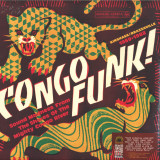
VARIOUS - CONGO FUNK! SOUND MADNESS FROM THE SHORES OF THE MIGHTY CONGO RIVER (KINSHASA/BRAZZAVILLE 1969-1982)

The making of Congo Funk!, our long-awaited journey to the musical heart of the African continent, took the Analog Africa Team on two journeys to Kinshasa and one to Brazzaville. Selected meticulously from around 2000 songs and boiled down to 14, this compilation aims to showcase the many facets of the funky, hypnotic and schizophrenic tunes emanating from the two Congolese capitals nestled on the banks of the Congo River.

On its south shore, the city of Kinshasa – capital of Democratic Republic of the Congo, the country formerly known as Zaïre – is often seen as Africa’s musical Mecca, the city that spawned such immortal bands as African Jazz, O.K. Jazz and African Fiesta, and the place to which aspiring musicians from throughout the continent would go to make a name for themselves.

But the city of Brazzaville on the north shore of the river – capital of the Congo Republic – played an equally important role in spreading Congolese sounds continentally. In addition to producing legendary bands such as Les Bantous de la Capital, it was the powerful transmitters of Radio Brazzaville that allowed the unmistakable groove of Congolese Rumba to be heard as far away as Nairobi, Yaoundé, Luanda and Lusaka thus turning the electric guitar into the continent’s most important instrument!

Although the musical landscape of these cities had been defined by a core group of bands in the late 1950s, the modernisation of Congolese music has been steadily evolving until the events surrounding the Muhammad Ali vs George Foreman boxing match marked a turning point. The promoter of that event known as “Rumble In The Jungle” was none other than the notorious Don King who needed 10 millions dollars to get Ali and Foreman into a boxing ring. The only candidate willing to put this kind of cash on the table was Mobutu Sese Seko, President of the Democratic Republic of the Congo.

Mobutu - the megalomaniac dictator who got to power with the support of the United States and Belgium in exchange for unlimited and affordable access to the riches of the country - had a soft spot for music and it doesn’t come as a surprise that he agreed to a three-day live music festival being organised prior to the “Rumble”. Zaïre 74 - as the festival was dubbed - was meant to hype the boxing match and many stars were invited.

Although a myriads of artists flocked in for the occasion, it was the performance of James Brown on Zairian soil that caused havoc among the younger generation, inspiring hundreds of would-be musicians to take up their electric guitars and reverbs cranked to the max in search of a new sound in which hyperactive Rumba was blended with elements of psych and funk. While the results were very different from the popular music of the three Musketeers - as Tabu Ley, Franco and Verckys were known - they weren’t a complete break with tradition.

These new sounds emerged at a time when the Congolese record industry – previously dominated by European major labels – was experiencing a period of decline due to rising production costs and needed a radical change. The void was filled by dozens of entrepreneurs willing to take chances on smaller scale releases. It was the beginning of a golden age for Congolese independent record labels, and the best of them – Cover N°1, Mondenge, Editions Moninga, Super Contact – preserved the work of some of the region’s finest artists, while launching a generation of younger musicians into the spotlight.

The movement was greatly helped by legendary radio shows but it was the dynamic productions of Télé-Zaïre that set the dynamite on fire. Legend has it that TV shows were so huge that president Mobutu himself ordered RTV du Zaïre to put on daily concerts since it halted criminal activities for the duration of the evening.

Congo Funk! is the story of these sounds and labels, but most of all it is the story of two cities, separated by water but united by an indestructible groove. The fourteen songs on this double LP showcase the many facets of the Congolese capitals, and highlight the bands and artists, famous and obscure, who pushed Rumba to new heights and ultimately influenced the musical landscape of the entire continent and beyond.

En stock

Disponible en stock et prêt pour l'expédition

28,36
Various - Ethiopian Modern Instrumental Hits LP

Reissue of the original ethiopian vinyl compilation. 180g vinyl + heavy cardboard cover.
"Ethiopians' deep-seated ethiocentrism, the legacy of a thousand years of history, has contributed in no small way to their music's strong national identity, particularly impervious to any African influences. Latin influences, so pervasive in the great musical centers of West Africa and the Congo, have been similarly rebuffed, despite the brilliant attempts of a musician like Mulatu Astatke. He was the first and for a long time the only Ethiopian to have studied music abroad (England and USA). In the late '60s, he brought back 'ethio-jazz', as well as a passion for Latin rhythms that was not readily shared by the Ethiopian audience. As early as 1966, he released a single and two LPs in the US entitled Afro-Latin Soul (and a third LP, Mulatu of Ethiopia in 1972), with his Ethiopian Quintet composed of American and Latin-American musicians (Worthy Records). That was three years before Fela's first American tour and six years prior to Manu Dibango's key breakthrough with the release of Soul Makossa in the Western 'pre-World music' market. All this goes to show how much the history of the African continent's musical modernity should be reconsidered in light of the Ethiopian adventure, even though this lone spark bore little relation, musically or ideologically to the musical revolutions initiated most notably by Ghanian highlife, South African jazz, Congolese rumba or, much later on, by Fela."

En stock

Disponible en stock et prêt pour l'expédition

20,59
MANU DIBANGO & EL CUARTETO PATRIA - CUBAFRICA LP

Limited translucent yellow vinyl LP

'Afro-cuban : that term which sets the world on fire, from rumba to boléro, mambo to cha-cha- cha, before salsa, that 70's spicy sauce, took over from the others. But to speak truly, since the mists of times (of slavery), both Africa and Cuba aim to vamp that umbilical cord. The most recent example, CubAfrica, a record born from the reunion of a master from Africa and this very living institution from Cuba, during a show around Albi (in the south of France) where they were both headlining in spring 1996. Manu Dibango's sax melted perfectly with the rural music of Eliadès Ochoa and his Cuarteto Patria, here's the beginning of an idea.

En stock

Disponible en stock et prêt pour l'expédition

14,50
FRUKO Y SUS TESOS - EL VIOLENTO LP

The 1973 album “El Violento” was the fifth full-length salsa LP led by Julio Ernesto Estrada Rincón, aka Fruko, and the second credited to Fruko Y Sus Tesos. Though it did not contain hits like ‘A la memoria del muerto’ or ‘El Preso’, it’s a collector’s item today in places like the US, Europe and Japan, perhaps precisely because it is obscure yet full to the brim with unrelentingly hard and heavy salsa bangers that never let up from start to finish (hence the title, which translates as “The Violent One”). A mix of originals and interesting covers, the LP is “all killer and no filler”, purposely designed to set the dance floor ablaze. It features Fruko’s two main vocalists that took over from the first pair of Humberto “Huango” Muriel and “Píper Pimienta” Díaz, namely the beloved duo of Álvaro “Joe” Arroyo and Wilson “Saoko” Manyoma. Los Tesos were a talented “wild bunch” who listened to their fearless leader, with Fruko holding down the bottom end on electric bass, Hernán Gutiérrez in the piano chair, the Villegas brothers on hand percussion (Jesús tickling the bongos and Fernando slapping the congas), augmented by Rafael Benítez on timbales and an ace horn section of Freddy Ferrer and Gonzálo Gómez (trombones) and Jorge Gaviria and Salvador Pasos (trumpets). The super aggressive sound comes directly from the South Bronx playbook of Willie Colón. The snarling trombones and soaring trumpet are somewhat sweetened by a nice little Puerto Rican cuatro guitar solo. Sonically lightening the mood somewhat, ‘Nadando’ (‘Swimming’) is a bouncy tune in the ‘Mercy’ genre (basically a hybrid of pop, funky soul, cumbia and salsa, in the style of Nelson y Sus Estrellas), gleefully sung by Joe Arroyo. The beats are complex and ever changing, with a little bit of mozambique, conga, bomba, jala jala and of course salsa thrown in for good measure. The side closes out with a brilliant, uptempo salsa reworking of the venerable ranchera chestnut, ‘Tú, sólo tú’. Side two explodes with the frenetic descarga jam session ‘Salsa na’ ma’—which is exactly that: nothing more than the hottest “sauce” to make the dancers go crazy. Fruko’s tune is dedicated to the Latin community in New York that listens to salsa from everywhere and dances to it so fervently on the weekend. The relentless percussion propels the listener along at breakneck speed as if hurtling down the Bronx Expressway, demonstrating that Fruko y Sus Tesos have mastered the ‘violent’ form of urban salsa that was having its transnational moment in the early 1970s. While “El Violento” may not be as well known as some Fruko records, it certainly deserves a new look and should be assessed on its own merits as a very powerful, confident entry in the historical evolution of Colombian salsa dura.Sleeve

En stock

Disponible en stock et prêt pour l'expédition

29,62
The Tikiyaki Orchestra - Tropika LP

Greetings from TROPIKA! The Tikiyaki Orchestra’s fifth album is a soundtrack with many interpretations. Sometimes, an idyllic paradise. Sometimes, a place of danger and intrigue. The jetsetter, the beachbum, the lounge lizard, the international man of mystery, the alluring wahine, the soldier, and the suave - they all co-exist in Tropika, represented by their own musical escape. Enjoy your stay!

En stock

Disponible en stock et prêt pour l'expédition

26,85
METAMAN - MATAIOSI LP

Metaman

MATAIOSI LP

12inchWNTN06
Won Ton Records
21.03.2023

The Athenian producer and co-founder of WonTon records made his debut in 2020, with the album "IRINA" and his collaboration with Lena Platonos on the eponymous track, putting him on the lists of the top domestic albums of the year.

His fixation with analog synths, endless synthetic sequences and world-weary narratives of urban everyday people continues in the second LP with the, representative of his sound, title "CANCELLATION" (ΜΑΤΑΙΩΣΗ).

En stock

Disponible en stock et prêt pour l'expédition

18,91
Articles par page:
N/ABPM
Vinyl