
12
pas en stock
Commandez maintenant et nous commanderons l'article pour vous chez notre fournisseur.
10,88 €
Last In: 23 months ago
Commandez maintenant et nous commanderons l'article pour vous chez notre fournisseur.

The vinyl edition of Klein's 2022 album: »STAR IN THE HOOD« plays like a cracked, tarnished mirror of contemporary numbing music, replacing long-form expression with tighter, more explosive and sometimes completely freeform transmissions that will wake you up from your overly comfortable environmental music slumber. Opening with cycling ghost drones, dialog and piano motifs that blur into heartfelt noise, »black star« is all loping, looping piano and chthonic vocals spiked with cheese-grater noise and chipmunked chirps. It’s Klein’s delirious vocal runs that push the album to the next level though; like her style-defining »Lagata« and the Hyperdub-released »Tommy,« she subverts the raw material that makes up R&B, turning memorable hooks into blurry impressions that will glue to your mind like a diva moment on a Suburban Bass cut.
She keels into longform on »schooled,« fogging organ drones into hazed clouds that gust into imposing shapes over a 10-minute duration, rekindling the dialog between contemporary noise and gospel music. Grandiose classical sounds receive a similar treatment on ‘Friend in the Mirror’, pulled into disorienting shapes that dispel any notions of class gatekeeping; in the final third, Klein’s voice interrupts the mood, before machine-gun percussion reminds us not to get too comfortable. If yr in search of beauty, »postcode wars« finds Klein fuzzing euphoric chords into an afterparty woosh of half-heard voices and dribbling synths. She simultaneously channels rapture and wrath, poignantly torching the contemporary societal skeleton without losing her near-at-hand community in the process.
Midway through the album there’s a thematic pivot signalled by the brief »shorty alert,« a trilling mass of carnivalesque vocal quirks that sound like spiders spitting DMT into yr eardrums. From here, things get darker and more unsettling: there’s doomed subterranean ambience on »signed and delivered«, Disney-esque piano motifs, blown-out lo-fi outsider rawk on »Swerve,« and speaker garbling free eccentric soul on »brand new day,« each struck through with that unmistakable high-vs-low culture posturing. It all brings us to the album’s unsettling one-two punch of ‘haha hehe business’, maybe the foamiest track we’ve heard from her this year, and the zonked »winter« - a piece that’s as crystal clear as Klein gets, an unprocessed heartstring-tugging vocal performance over acoustic guitar twangs.
il devrait être publié sur 26.01.2024

A tape with the rather factual title “Rosa Beton – Demo 83” gained currency in 1983, albeit among an inner circle, or as it says in a lexical note on the band: Rosa Beton “achieved beyond-regional fame in and around Berlin”. Unlike some other bands that were merely rumoured to exist, this name was widely recognized in the East Berlin punk scene and the demo tape was received with some delight. It had been made in the suburb of Hönow, or more precisely in music enthusiast Thomas Wagner’s childhood bedroom. The band was less a classic combo than a short-lived pro- ject run, for a brief underground season, by 16-yearold Wagner and Ronald Mausolf, who was known as “Mausi” and had just come of age. An old clunker of a four-track machine served as an impor- tant nutritional supplement for the duo, allowing bass and vocals to be overdubbed separately. For a project without a professional background, especially for an illegal punk band in the East, this conventional procedure was clearly exceptional. Punk bands would usually record vocals and instruments simultaneously and on a cassette recorder. Recording gear was not readily available in the GDR, and it was disproportionately or prohibitively expensive. The adversities that had to be overcome in starting up a punk band were certainly challenging for teenagers. Rooms for rehearsals were few and far between despite wide- spread vacancies, and public space was taboo thanks to the state. Concerts, whether in flats and studios or under the protection of the Protestant church, remained rare events and, moreover, risky; starting with the party-loyal neighbour alerting the People’s Police as if there were a war on, to the ever-present “digging activity” of the Stasi. The only planned appearance by Rosa Beton never materi- alised. Whether it was the goddesses of fate who averted a show or the Stasi who prevented it can no longer be reconstructed. In any case, Rosa Beton never played live and thus joined a long list of GDR punk bands that, in the early 1980s, did not make it out of illegality into a public sphere, not even into a conspiratorial one. ausi compensated for the band’s lack of live performances by at least distributing a few copies of the demo tape. Among others, at the Kult, the Kulturpark Plänterwald, which provided an initiation field for the Berlin punk scene and a hotspot with a pull beyond it. The punks adapted the Kulturpark to their understanding of an amusement park.
They would thrash about to Schlager music and pogo to third-rate Ostrock bands, make fun of overwhelmed provincials, hang out and exchange half-baked ideas as superior knowledge. In between, the punks liked to ride the chain carousel, there was a certain liking for chains. The Kulturpark management made quite a fuss about the riot the punks put on. Initially they were banned from the chain carousel, then, when the punks switched to bumper cars, they were banned from the bumper cars, then from the roller coaster, and finally from the ghost
il devrait être publié sur 26.01.2024

Karl-Marx-Stadt (now Chemnitz) was one of the GDR’s subcultural hubs in the late 1970s and 80s. The industrial city in Saxony produced an impressively wide informal cultural programme beyond state structures. Bands such as Die Gehirne, Knut Baltz Formation, Die Arroganten Sorben, Kartoffelschälmaschine, AG Geige or the projects of cassette label klangFarBe created a complex artistic environment, in which Tropenkoller ran its spiritual exercises from 1986 to 1989. The “introverted experiment” remained distinct yet was exemplary of a KarlMarx-Stadt sound that considered dissonance a non-ideological form of harmonics. A first and only tape appeared in 1988. The extravagant packaging illustrated the edition’s exclusive nature; no more than twenty-five copies were released by Tropenkoller into the limited coterie of its open circle. tapetopia is a series of vinyl releases based on cassettes from East Germany’s 80s underground, particularly from the East Berlin "Mauerstadt" music scene, featuring original layouts and track lists. For over 30 years after their initial “release” the music on these tapes was neither available on vinyl nor CD, but they were important statements in the canon of the GDR subculture. Contrary to the small print runs of the time, many of the bands were considered cult in the underground,but suspect in the higher floors.
il devrait être publié sur 26.01.2024

":Duett" - der Name ist Programm auf diesem Album, dem zweiten aus dem Hause ASP. Endlich kommen die Fans in den Genuss, auch dieses Werk als limitierte Picture-Vinyl ihr eigen nennen zu dürfen. Nicht nur verhalf das zweite Kapitel des Zyklus den Musikern zum finalen Durchbruch auf den Tanzflächen der Schwarzen Szene, es brachte damals auch viel Licht in die Geschichte rund um den Schwarzen Schmetterling. So wurde die Rahmenstory vor allem in der trancigen "Kleinen Ballade vom Schwarzen Schmetterling" erläutert (und von Pit Hammann im gleichnamigen Bilderbuch kongenial bebildert), und in "Versuchung" wohnt die Zuhörerschaft der Zwiesprache zwischen zwei Wesen bei, die nicht mit- und auch nicht ohne einander können. Eine Zerrissenheit, die vielen Hörern eine ebenso nachvollziehbare wie spannende Reise ins eigene Ich ermöglichte.
Auch das energetische "Kokon" - wie der Rest des Albums noch stark vom elektronischen Sound der Anfangstage geprägt - erhielt einen Ehrenplatz in den Herzen der Fans und stellt besonders im Live-Kontext einen veritablen Nackenbrecher dar. Weitere All-Time-Fan-Favourites wie das epische "Schwarz" oder das zornige "Besessen" runden das Gesamtkunstwerk ab und belegen schon zu Beginn ihrer Karriere die musikalische und textliche Vielseitigkeit des ASP'schen Œuvres.
il devrait être publié sur 26.01.2024

Murdock will release his second album in January 2024. The first was released in 2018, collected 20 million streams, and reached radio in Belgium and abroad with a number of strong singles, partly thanks to guest appearances from UK legend Jenna G and reggae hero Errol?Dunkley.?Studio Brussel chose 'Make Me Stronger' and 'Different Way' for daytime radio, George FM in New Zealand played 'Dollars Aren't Cheap' so much that the track made it into the top 10 of the national Shazam list, and in the UK it was 'Double Dutch' with?Roni Size that convinced BBC Radio 1.?
This time he once again brings Sena Dagadu on board, with whom he scored his biggest hit to date: Can't Keep Me Down has almost 12 million streams and the title is tattooed on loads of body parts worldwide.?She will provide goosebumps again on the upcoming album with 'Reign'.?Omar Perry (son of!) gets on board for 'Fire Burning', which will also be the anthem of the upcoming Rampage edition in the Sportpaleis, Ayah Marar helps the euphoric 'Lost In You' to a dose of soul, and new talents Emilie Rachel and Medyk?steal the show on 'Living In The Moment' and 'Runaway' respectively, on which Murdock combines drum & bass with their pure songwriting skills.?Advance single 'Cola' has already done extremely well: 600,000 streams in a few months, and a lot of radio play in Belgium, New Zealand and United Kingdom.?The album is called X-Ray as each track represents a piece of the identity that makes Murdock a whole.
Commandez maintenant et nous commanderons l'article pour vous chez notre fournisseur.

"Javelin" verbindet musikalischen Schwung mit emotionaler Weite. Manchmal hat man das Gefühl, dass das Album von einem großen Team produziert wurde - aber das ist es ganz und gar nicht: Fast jeder Sound hier ist das Ergebnis von Stevens zu Hause, der selbst etwas geschaffen hat, das sich manchmal wie ein Zeugnis der Studio-Opulenz der 70er Jahre in Los Angeles anfühlt. Die Beiträge stammen von einem engen Freundeskreis - Adrienne Maree Brown, Hannah Cohen, Pauline Delassus, Megan Lui und Nedelle Torrisi -, die bei vielen Songs Harmonien beisteuern, sowie von Bryce Dessner, der bei "Shit Talk" akustische und elektrische Gitarre spielt. Der zärtliche und mystische Abschluss des Albums, "There's A World", wurde von Neil Young geschrieben. Während "The Ascension", das von der New York Times als "ein Schrei der Verzweiflung und ein Gebet um Erlösung" gelobt wurde, eine kunstvolle, aber dringliche Elektronik verwendet, um sich dem Moment zu nähern, beginnt "Javelin" wie ein Selbstporträt, detailliert und doch schlicht. Dies ist Stevens' intimstes Werk, das an "Seven Swans" oder "Carrie & Lowell" erinnert und den Hörer in die Nähe seiner inneren Abrechnung ruft. "Javelin" wird von einem 48-seitigen Booklet mit Kunst und Essays begleitet, die alle von Stevens geschaffen wurden, darunter eine Reihe von akribischen Collagen, zerschnittenen Katalogfantasien, Puff-Paint-Wortwolken und sich wiederholenden Farbfeldern. Die 10 kurzen Essays - abwechselnd lustig, tragisch, ergreifend, stumpfsinnig und spezifisch - bieten kleine Einblicke in Lieben und Verluste, die ihn und diese Lieder geprägt haben.
Commandez maintenant et nous commanderons l'article pour vous chez notre fournisseur.

"Javelin" verbindet musikalischen Schwung mit emotionaler Weite. Manchmal hat man das Gefühl, dass das Album von einem großen Team produziert wurde - aber das ist es ganz und gar nicht: Fast jeder Sound hier ist das Ergebnis von Stevens zu Hause, der selbst etwas geschaffen hat, das sich manchmal wie ein Zeugnis der Studio-Opulenz der 70er Jahre in Los Angeles anfühlt. Die Beiträge stammen von einem engen Freundeskreis - Adrienne Maree Brown, Hannah Cohen, Pauline Delassus, Megan Lui und Nedelle Torrisi -, die bei vielen Songs Harmonien beisteuern, sowie von Bryce Dessner, der bei "Shit Talk" akustische und elektrische Gitarre spielt. Der zärtliche und mystische Abschluss des Albums, "There's A World", wurde von Neil Young geschrieben. Während "The Ascension", das von der New York Times als "ein Schrei der Verzweiflung und ein Gebet um Erlösung" gelobt wurde, eine kunstvolle, aber dringliche Elektronik verwendet, um sich dem Moment zu nähern, beginnt "Javelin" wie ein Selbstporträt, detailliert und doch schlicht. Dies ist Stevens' intimstes Werk, das an "Seven Swans" oder "Carrie & Lowell" erinnert und den Hörer in die Nähe seiner inneren Abrechnung ruft. "Javelin" wird von einem 48-seitigen Booklet mit Kunst und Essays begleitet, die alle von Stevens geschaffen wurden, darunter eine Reihe von akribischen Collagen, zerschnittenen Katalogfantasien, Puff-Paint-Wortwolken und sich wiederholenden Farbfeldern. Die 10 kurzen Essays - abwechselnd lustig, tragisch, ergreifend, stumpfsinnig und spezifisch - bieten kleine Einblicke in Lieben und Verluste, die ihn und diese Lieder geprägt haben.
Commandez maintenant et nous commanderons l'article pour vous chez notre fournisseur.

Analogical Force is kicking off 2024 with a stellar "all things Electronix" album from well known producer Vertical67 (who also runs the Vortex Traks label)! It's hard not to have heard of Thomas Pahl in the electro underwater depths after multiple appearances over the course of more than a decade and under a ton of aliases. With the illuminating title of 'Changes', Thomas gets rid of corsets and presents an entrancing voyage into post-euphoria, displaying a radiant and emotive side which the artist's new discordant sound emerges. A defiant cry in the face of existential angst. Navigating between breaks, dreamy melodies and reflective landscapes 'Changes' could be defined as a deep introspective journey into the machines. Cop while u can.
Commandez maintenant et nous commanderons l'article pour vous chez notre fournisseur.

19 songs to follow up “Recreation” released in 2020, and shortlisted for rap album of the year by Wordplay Magazine. This record is a showcase of styles, flavours, moods and emotions, directed through and narrated by Mosik Rhymes. Entirely self produced with stellar features from genre defining artists - George Fields, Alecs DeLarge, Grim Sickers and Soul Supreme. Available on a limited run of black
vinyl from Spinning Wheel Music.
il devrait être publié sur 24.01.2024

The concept of naught (Ø) has challenged Salvatore Mercatante throughout his musical career, specifically, trying to understand how the idea of ‘nothing’ fits into the realm of sound, and at the same time, exist in a world of influence at every turn. In the absence of everything, are we able to create something truly free?
As a lifelong New York-based musician, Mercatante’s influences and productions run a wide spectrum. Just as happy producing 80s-inspired horror soundtracks as he is refining acute drum patterns over and over again, Salvatore is the first to ask himself, where next? When a musician’s output can be influenced today by so much, and there is no self-defined or perceived artistic goal in mind, how do you start from a place of nothingness, again and again?
This approach has born many minimal and experimental albums of note in the past, but with Ø, Salvatore ended up with an almost controlled maximalist approach. Beginning with open spaces and allowing sonic textures to live and evolve past where you may expect, Ø allows the space between notes to become equally as important as the notes themselves. Walls of noise, soaring soundtracks, dense techno, glittering IDM, and minimal glitch, sit side-by-side to present an all-encompassing palette of sonic possibility.
Often, even without any intent, what can be born from nothing will somehow transpire back into something more recognizable. It’s human nature after all. A subtle fingerprint, as a sequence, melody, pattern, or drum kick. Whether Salvatore intended for this record to represent his defining sound or not, only time will tell.
Mastered by Giuseppe Tillieci @Enisslab, Rome, Italy.
Artwork by Brandon Locher
Written and produced by Salvatore Mercatante
Commandez maintenant et nous commanderons l'article pour vous chez notre fournisseur.

Repress!
Food Music welcomes A1 Bassline to the label to release his first LP - Technicality.
The album's title draws from the club night 'Technicality', a monthly Drum & Bass night at Herbal in East London, which is run by Chris Inperspective and continued the sound of early Reinforced and Metalheadz records as well as pushing new forward thinking music. The album is centred around growing up as a teenager discovering this jungle/drumfunk sound through his college friend Rahim (Lab Creation), where the likes on Fold, Ben UFO, Breakage would attend the club.
In addition to well received records on DirtyBird, Pets Recordings and his collaborative work with Leon Vynehall as Laszlo Dancehall, the album is a stamp on A1's sound and his influences from his teenage years to growing up and discovering House and Techno.
Commandez maintenant et nous commanderons l'article pour vous chez notre fournisseur.

Good things take time. What’s 17 years? Not even a quarter of Keith Richards! 17 years lay between Heiko Voss’ debut album “Call Me Killer” and the incredible follow-up “3:30 Minutes To Live”, which saw the light of day in 2022 on Michael Mayer’s “other label” IMARA. There are serious voices saying that the 80s were only really complete with the release of this album. Now it took the blink of an eye of a year for the remixes to be finished. And they turned out so well that Michael Mayer from KOMPAKT licensed the “3 Remixes for Heiko Voss” without further ado.
Running back guru GERD JANSON was an early adopter of the album. Highly motivated, he twirls “Follow Your Line” rhythmically somehow in the direction of Kate Bush’s “Running Up That Hill”. How did he do that? Never mind. It grooves like crazy and keeps even larger floors moving.
ADA, the Hamburg grand dame of techno pop, has taken on the in tongue speaking funk banger “Talking Man” and dipped it in fairy dust. The result is probably the most sensational, soulful club track ever. Honestly.
The package is rounded off with a powerful Dub Version of “Follow Your Line” by the IMARA and KOMPAKT boss himself. Because he can do it.
Open your heart, let the remixes in.
Gut Ding will Weile haben. Was sind schon 17 Jahre? Nicht mal ein Viertel Keith Richards! 17 Jahre lagen zwischen Heiko Voss’ Debutalbum “Call Me Killer” und dem unglaublichen Nachfolger “3:30 Minutes To Live”, der 2022 auf Michael Mayers “anderem Label” IMARA das Licht derWelt erblickte. Es gibt ernstzunehmende Stimmen, die besagen, dass die 80er Jahre eigentlich erst mit der Veröffentlichung dieses Albums vollendet waren. Nun hat es einen kurzen Wimpernschlag von einem Jahr gedauert, bis die Remixe fertig waren. Und die sind so gut geworden, dass Michael Mayer von KOMPAKT die “3 Remixe für Heiko Voss” kurzerhand lizenziert hat.
Ein “early adopter” des Albums war Running Back Obermotz GERD JANSON. Top motiviert zwirbelt er “Follow Your Line” rhythmisch irgendwie in Richtung Kate Bush’s “Running Up That Hill”. Wie hat er das nur gemacht? Egal. Es groovt wie Bolle und hält auch größere Floors in Bewegung.
ADA, die Hamburger Grand Dame des Techno Pop hat sich des in Zungen sprechenden Funk Kloppers “Talking Man” angenommen und ihn ordentlich in Feenstaub getunkt. Dabei entstand der wohl sensationellste, soulfulste Club Track ever. Ehrlich.
Abgerundet wird das Paket mit einer kräftigen Dub Version von “Follow Your Line” vom IMARA bzw. KOMPAKT Boss selbst. Weil er’s kann.
Herzklappen auf, Remixe rein.
Commandez maintenant et nous commanderons l'article pour vous chez notre fournisseur.

Vol[62,98 €]
il devrait être publié sur 19.01.2024

Vol 1[59,62 €]
il devrait être publié sur 19.01.2024

Part I[24,79 €]
It's the pair you've all been waiting for! FINALLY!
Alan Tew's Drama Suite Part II. What can we really say? Honestly? We guess the first thing that strikes you is how clean the drums are. Almost impossibly slick but dripping so, so heavy with the neck-snapping funk you'd expect from perhaps the most sought-after library funk set of them all! The cheapest on Discogs is, currently, £1300+. Now's your chance to remedy that. If you know, you know. And we think you know...
"The Rub" is a cool, low-slung heavy-funk roller with relaxed brass and alto flute phrases. Up next, "Money Runner" is another edgy funk glider, its easy-tempo moving in harmony with slinky rhythmic riffs and featuring a seemingly ad-libbed electric piano solo. Strutting along after, "White Elephant Walk" is another laconic, deeply stoned walking theme with electric piano and alto flutes. There follows a couple of brief "walking" links before the brilliantly tense "Master Plan" slowly builds. Expectancy grows to the main theme around a minute in and then a melodic theme builds slightly to the 3 minute mark before floating down gradually and elegantly to its climax. It's utterly fantastic. The smoky, after-hours "Night Watch" is a slow, cool gem featuring alto flutes and synths.
Now we're talking, "The Fence (a)" is just sensational and worth buying this album all on its own. It's likely the reason you're here, anyway. Another impossibly funky, slow and easy tempo with a bass riff to die for, dramatic guitar with gorgeous electric piano and alto flute phrases. It was sampled for "Action Satisfaction" by J5, way way back. "The Fence (b)" is a slower, more deliberate version of the previous heater, but it's no less essential. Indeed, it's absolutely jaw-drooping. Closing out this remarkable side, "Surveillance" is another horizontal masterpiece of relaxed yet dramatic jazz-funk. Vibes ad-lib in centre section and give you an idea of how Roy Ayers making library funk in the mid-late 70s might've sounded. Sensational.
Flip over for "Total Silence", a near-beatless and understated scene-setter featuring neat interplay of guitar and synthesizer themes over bass and hi-hats. The slow "Eyes" follows, a brief gem with subdued electric piano solo and a light climax. The fantastic "Drama Backcloth (1a)" is up next, a repetitive piano and bass refrain with guitar figures over the top. Its creeping crime-funk vibe was pilfered for "Outta Town Shit" by Ghostface Killah in 2006. "Drama Backcloth (1b)" is a short, subdued version without the guitar figure. "Drama Backcloth (2)" features an expectant, background marimba figure over light rhythm whilst the cool "Drama Backcloth (3)" centres around a relaxed riff and the angular "Drama Backcloth (4)" presents eerie progressions with piano interjections. It's decidedly non-rhythmic!
We're then onto 14 (!) different half-minute "Scenechanges", all jazzy and funky, some cool and dramatic, some slow and rhythmic. All ace and groove-fuelled. The aptly-titled "Final Statement" closes proceedings, a slow, pensive theme on guitar joined by cool brass and a solo trumpet to its climax.
As with all of our KPM re-issues, the audio for Drama Suite Part II comes from the original analogue tapes and has been remastered for vinyl by Be With regular Simon Francis. And as usual, the sleeve reproduction duties were handed over to Richard Robinson, the current custodian of KPM’s brand identity. We're not quite sure what else to say about this landmark record, other than, GET IT!
Commandez maintenant et nous commanderons l'article pour vous chez notre fournisseur.

- Newly Expanded Deluxe Double LP Edition! - Includes the original 1972 album, plus all of Larry Mark's acoustic demos and tracks from his unreleased 1970 LHI LP for the first time on vinyl - Previously unreleased session outtake of "Cold Hard Times" plus demos of obscure Hazlewood compositions "Drums," "The - Start," "Susie," "Miracle on 19th Street," and "Peppermint Morning" - 30 total tracks - Remastered by GRAMMYr-nominated mastering engineer John Baldwin - Liner notes by GRAMMYr-nominated reissue producer Hunter Lea including interviews with Larry Marks, Joe Cannon, Torbjörn Axelman & Suzi Jane Hokom - Lee Hazlewood comic strip, the story of 13 told through original artwork by Jess Rotter - Double LP housed in a gatefold jacket // DESCRIPTION "Pimps_ whores_ pushers_ dopers_ gangsters_ and bottom of the human chain shit-heels. Now you're probably thinking I'm writing about major record companies and their unscrupulous executives_ and lawyers. You could be right_ but this time_ YOU'RE WRONG! I'm describing the characters in my album `13' _Some I knew_ some I invented _ some are true_ some are false_ some I liked_ some I didn't. But they all had a story to tell and I told it_none of `em seem to care_ and I don't either_ have fun_" - Lee Hazlewood "He (Lee) took my voice off the album and put his voice on the album. Now don't forget these were in my keys, it was my charts, it was my everything. Lee Hazlewood was not even remotely going to be considered as an artist for this album and that's the way he wanted it." - Larry Marks The album 13 was never supposed to be a Lee Hazlewood album. It is perhaps the strangest record in one of the most varied discographies in music. The Bombastic brass heavy funk, deep blues and soul paired with Hazlewood's subterranean baritone would be best enjoyed with a tall Chivas in an off-strip seedy Vegas lounge. By 1972 Lee Hazlewood had settled in his new homeland of Sweden. His days were spent carousing, making movies with Torbjörn Axelman and releasing albums. To keep up his prolific recorded output, Lee began to mine the recently defunct LHI Records archives for material. One such gem, was an unreleased album by Larry Marks (LHI producer, artist and the voice of the first Scooby-Doo theme). Larry's concept was to take Hazlewood's strongest compositions and arrange them in a soul vibe. An album was completed, but with no distribution in America and no funding, Lee had no vehicle to release Larry's record. The tapes were taken to Sweden, Larry's voice was wiped and Hazlewood's was dubbed_ 13 was born.
il devrait être publié sur 19.01.2024

Erster Release der Light In The Attic Re-Issue Serie zu Ehren von LEE HAZLEWOOD mit Stücken von so essentiellen Alben wie ,Cowboy In Sweden". Mit Duetts mit Suzi Jane Hokom, Ann Margret und Nina Lizell. Extensive Linernotes und bisher ungesehene Photos. Mit seinem Schnurrbart und dem klingenden Bariton war LEE HAZLEWOOD einer der Stars der späten 60er Jahre. Obwohl er wahrscheinlich am bekanntesten wegen seiner Arbeit mit NANCY SINATRA ist (er schrieb ihren Megahit ,These Boots Are Made For Walking"), leistete HAZLEWOOD auch fernab dieser besonderen Glamourkönigin beachtliche Arbeit und fand später große Fans in BECK, SONIC YOUTH und JARVIS COCKER. Für den Record Store Day 2012 präsentiert Light In The Attic den Startpunkt einer Anthologie mit ,Singles, Nudes&Backsides", die LEEs beste Solosongs und Duetts seines Lee Hazlewood Industries Sublabels (LHI) versammelt. Die Serie wird sich Material von LHI widmen (das hier zum ersten Mal von den analogen Originaltapes neu gemastert wurde), zusammen mit LEEs Output bei anderen Labels, Raritäten, unveröffentlichten Schätzen und den Filmen von Torbjörn Axelman. Man muss nur das Cover anschauen: umringt von nackten Mädchen, die alle einen unechten Schnurrbart tragen, spielt HAZLEWOOD im Anzug leicht unsouverän den Playboy. Exakt wie dieses Photo zeigen auch die Songs einen gespaltenen Mann: er ist der zärtliche Romantiker, der gebrochene Loser und der zerfurchte Cowboy zugleich.
il devrait être publié sur 19.01.2024

This is the last album from Rico Puestel. After somehow three decades, Rico misses the cultural impact of Techno music as it has been and declares its spirits gone – at least personally. There's nothing more to tell. The self-consuming scene has reached its grotesque climax and left an empty shell of something once filled with so much passion, warmth, strength, heart and hope. The times just haven't changed – they lost their self-fulfilling purpose and authenticity.
Heavily influenced by prehistoric, tribal rhythms and trance-inducing dances within redundant structures, Techno music once had a natively true and unadulterated essence. A free spirit on the run. Rico found the right spot in time to gather all of his origins in Techno music for a last act of connecting to it. Being on an all-time high as a producer, he crafted the whole album on a course of twelve hours and relived all those deeply rooted moments and memories with Techno in fast motion. While the track titles are counting down from ten to zero in Esperanto, Rico clears up in peace and balance...
What once was, is now without form and void.
I left.
Everybody left.
Techno has left the building.
Farewell!
Commandez maintenant et nous commanderons l'article pour vous chez notre fournisseur.
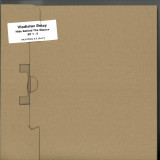
Vladislav Delay's complete "Hide Behind The Silence" series. Intuitive and raw music, momentary and reflective, released on Ripatti's own label Rajaton.
Stillness is a myth. Consider concepts such as ”still water”, or ”still air” for that matter. Go to a restaurant, ask them for a glass of still water, hold it against the light and see where we’re at. Even though the water itself has been captured and imprisoned in the glass, it never stops breathing. It’s filled with tiny particles, dancing. Everything can be explained on a molecular level, but since we’re not scientists – and even if you happen to be – it’s the natural world of perception that moves me.
Still air is very similar. A hot summer’s day with zero wind feels completely still. It’s the closest I have felt to complete stillness. Or for a more urban adaptation, imagine the same vibe inside a normal apartment. In those moments, revelations and mind- blowing experiences can be had with experiments in stillness.
Try this: Just sit down for a minute on a sunny day, making sure there’s enough natural light. Do absolutely nothing. Try not to breathe for a bit. (If you need a mental anchor, you can play Cage’s 4’33” in your head but nothing else.) Watch the tiny dots of dust dancing :..’ ̈.:; ́ ́*°.,’:,. ̈ ̈ ̈ ̈:,.’
The movement is crazy, but the feeling of stillness comes from witnessing how subtle it is. In (perceived) complete stillness, every act of microscopic mobility seems to speak volumes. Yet, it feels both reassuring and oddly threatening that the stillness is never complete. What if we would need absolute stillness? Or is it just enough that we can perceive something as such? Extremes attract, so for both water and air, extraordinary movement is equally fascinating. That is also a luxury item of sorts. For us to enjoy a very ”loud” body of water or air, we need to be safe, in enough control of the situation. So when you are, it’s worthwhile to pay attention and take it all in.
A rapid flowing free with extreme strength and just barely in control. Look at that water go! No still water on this one, only ”sparkling”. A windy day when birds seem surprised how hard it is to fly, but in the end they make it. Trees bend but don’t break. The wind shows you its movement but doesn’t hurt you. It feels friendly, like a big clumsy dog that doesn’t quite understand its size.
It’s beautiful to be a guest of the elements, but not at the mercy of them. A new kind of dialogue forms.
Q&A with Sasu Ripatti:
1) Tell us something about the EP series ”Hide Behind the Silence”, what’s the idea and what can we expect?
Exploration of inaction. Of many kinds. In arts and in personal life, or at bigger and more serious levels. Questioning myself as a human being as well as an artist. Acknowledging the growing activism all around, and the very clear need for it, and how it reflects my own inaction.
Musically speaking, after Rakka, Isoviha and Speed Demon, I finally found some relief, but more importantly lost the need to go musically ever more outward and intensive. I felt quite strongly certain periods/moods from the past and they made me revisit some musical ideas or states of mind I was exploring early on.
It’s about live moments being captured, not much premeditation or editing. More intuitive and raw, even though the end result (to me) feels and sounds quite introspective and calm. It’s not very ambitious. Momentary and reflective.
2) Your music doesn’t sound very silent. Does it come from somewhere behind the silence?
Oh, this time to me it sounds quite quiet and playing with space if not silence. I don’t know what’s actually behind silence, but I think silence is the source of everything. We just don’t understand it yet.
3) What kind of thoughts or experiences gave inspiration to this series?
Writing this in Nov ’22, it’s not a stretch to say the world has been really unwell. Sometimes, like Mika Vainio put it, the world eats you up. I feel a bit like that. And I try to hide in my studio and stay away from it all, but it’s getting harder by the day. I’ve been questioning myself and thinking if what us artists are doing is worth anything, and whether it’s just a selfish thing I’ve been doing for the past 25 years, running away from everything. I haven’t come to a conclusion yet.
4) Is it easy for you to be in silence, or around silence?
Absolutely. I not only hide behind silence but I also love silence. It’s only since I started going back to nature as a grown-up person that I sensed and was enveloped by silence, true silence. I have begun to appreciate it a lot. I think all the people should spend more time in silence.
All tracks composed and produced by Sasu Ripatti.
Artwork by Marc Hohmann, photography by Shinnosuke Yoshimori.
Mastering by Stephan Mathieu for Schwebung Mastering.
Vinyl cut by SST Brueggemann.
Publishing by WARP Music Ltd.
Commandez maintenant et nous commanderons l'article pour vous chez notre fournisseur.
