Robin Lee makes his most organic disco sounds as Andromeda Orchestra and Faze Action Records have tapped him up for more sonic treasure here. His signature sound is apparent from the off with the dancefloor dub vibes of EP opener 'Bad Girl.' It's bold bass, string stabs and robust pianos are all run through with a fine Moog solo. There is then plenty of cello and vocal delight to 'Twilight Lady' and a fiery dance floor cut 'Mozambique' as well as a full vocal mix of 'Bad Girll' to close out the EP.
quête:run x
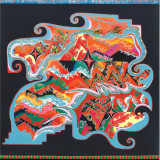
The next chapter of the Natural Information Society is here. Since Time Is Gravity, credited to Natural Information Society Community Ensemble with Ari Brown, presents a newly expanded manifestation of acclaimed composer & multi-instrumentalist Joshua Abrams nearly 15 year, 7 albums &-counting flagship ensemble. Joining the core NIS of Abrams (guimbri & bass), Lisa Alvarado (harmonium) Mikel Patrick Avery (drums) & Jason Stein (bass clarinet) are Hamid Drake (percussion), Josh Berman & Ben Lamar Gay (cornets), Nick Mazzarella & Mai Sugimoto (alto saxophones & flute), Kara Bershad (harp) & Chicago living legend of the tenor saxophone Ari Brown. Recorded live to tape at Electrical Audio & The Graham Foundation, cover painting Vibratory Cartography: Nepantla, by Lisa Alvarado. 2xLP on Eremite USA, 2xLP & CD on Aguirre/Eremite Europe. Out 14-04.
Since first developing Natural Information Society in 2010, Joshua Abrams has been gradually expanding the group’s conceptual underpinnings, its musical references & the sheer number of the group’s members. Its music is, in a sense, an expansive form of minimalism, based in repeated & overlaid rhythmic patterns, ostinatos & modality. Its roots, its scale & its meaning become clearer in time. If time is gravity, it also allows us to carry more. Having begun as fundamentally a rhythm section with Abrams’ guimbri at its core, the version here can stretch to a tentet, including six horns.
Abrams has been expanding his minimalism gradually, but he has long understood a key to minimalism’s potential: the breadth of its roots in the late 1950s & early 1960s, ranging from the dissatisfaction of young European-stream composers with the limitations of serialism to the simultaneous dissatisfaction of jazz musicians with the dense harmonic vocabulary of bop & hard bop. The former began exploring rhythmic complexity & narrow tonal palates in place of harmonic abstraction (Steve Reich’s Drumming, Philip Glass’ Music with Changing Parts; perhaps above all Terry Riley’s In C & his late ‘60s all-night organ & loop concerts); the later reduced dense chord changes to scales (signally with Miles Davis' Kind of Blue, but rapidly expanding with John Coltrane’s vast project). In the 1950s the LP record opened the world with documentation of Asian & African musics, key influences on both minimalists & jazz musicians. If John Coltrane’s soprano saxophone suggested the keening shehnai of Bismillah Khan, the instrument was rapidly taken up by two key minimalists, LaMonte Young & Riley, similarly appreciative of its flexible intonation, the same thing that kept it out of big bands.
If the guimbri, the North African hide-covered lute that Abrams plays with NIS, involves a rich tradition of hypnotic healing music associated with the Gnawa people, Abrams’ music also touches on other musics as well — other depths, memories & healings, different drones, rhythms & modes. As the group expands on Since Time Is Gravity, he has made certain jazz traditions in the same stream more explicit as well. If there is a mystical & elastic quality involved in the experience of time, both in direction & duration, you will catch it here. The parts for the choir of winds expand on the roles of Abrams’ guimbri, Mikel Patrick Avery & Hamid Drake’s percussion & Lisa Alvarado’s harmonium: at times, the winds are almost looping in the tentet version, each hitting a repeating note in turn, at once drone & distinct inflection on temporal sequence. The brilliance of the work resides in Abrams’ compositions, the NIS’ intuitive execution & in Ari Brown’s singular embodiment of the great tenor saxophone tradition, including the oracular genius of Eddie “Lockjaw” Davis, & Yusef Lateef. The three pieces by the expanded NIS featuring Brown —the opening “Moontide Chorus” & “Is” & the ultimate “Gravity”— have an immediate impact, & togther might be considered a kind of concerto for tenor saxophone. Here Brown presses almost indistinguishably from composed melody to improvised speech, getting so close to language that he might have a text. Everything here is a sign. Note the tap of the Rhythm Ace that links “Moontide Chorus” to “Is”, the attentive heart always present, even when signed by a machine. There’s a link here to the methodologies & meanings of dub music & the linear & vertical collage of beats, textures & tongues: treated with reverence, a sample of a beat-box can be as soulful, as hypnotic, as a mbira or a tamboura. If those pieces with Brown are heard as a suspended concerto, the three embrace & enfold the other works, like the sepals of a flower. That placement will also touch on the mysteries of our perception of time.
Particularly in “Is”, but elsewhere as well, a phenomenon of transcendence arises in which time appears to be tripartite, at once moving backwards & forwards & standing still. This is an act of technical brilliance certainly, but also an illumination of music’s ability to represent temporal consciousness through polymetrics. This particular listener has only heard it before in a few places, including the horn shouts & bowed basses of Coltrane’s Africa, in moments of Charles Mingus’ The Black Saint & the Sinner Lady, in certain pieces where tapes were literally running backwards, & earlier still in Dizzy Gillespie’s Cubana Be, Cubana Bop, in which the composer George Russell & conguero Chano Pozo found a music that spoke at once in the voices of Stravinsky’s Rite of Spring & the vestigial rites, rhythms & songs of the Yoruba language & Santeria religion of inland Cuba.
In Joshua Abrams’ compositions & the realization of them by the NIS, in the time of one’s close listening & memory thereof, distinctions between the “natural” & the “social”, the “quotidian” & the “transcendent” are erased, suspended or perhaps irrelevant. Consider two of the ensemble pieces, one named for nature, the other social science. In “Murmuration” the repeated wind figures of flute & alto saxophone combine with the interlocking patterns of harp, guimbri & frame drum (tar) to create a perfect moving stillness, not an imitation but a witness to the miracle of the starlings’ astonishing collective art, a surfeit of beauty that might be the ultimate defense tactic.
“Stigmergy” takes its name & concept from the Occupy movement’s Heather Marsh, who proposes a social system based on a cooperative rather than competitive models, one in which ideas are freely contributed & developed as ideas rather than an individual’s property. In its form, Abrams’ “Stigmergy” is the closes thing to traditional jazz, a series of accompanied solos by each of the wind players. However, the composed accompaniment is a radically collectivist notion: a repeated rhythmic figure, call it ostinato or riff, in which the different winds each play only a note or two of the figure, a concept both more collectivist & individualistic in its conception than any typical unison figure. It suggests another of the underlying recognitions that propel the Natural Information Society, the group as social organism, the teleology of hypnotic anarchy, all parts in place, functioning systematically, evolving & expressing itself, its nature & society, as a transformative organism.
George Lewis has described music as “a space for reflection on the human condition”. This suggests that, rather than a “distraction”, at least some music might serve as a distraction from distraction. It’s a focus, a clarity, a awareness, an external invitation to interiority, as if music itself is a model for form & contemplation, an organism contemplating for us or as us. If that is a possibility, & I am sure I have heard such musics, than this music is among them. How many of our rhythms, melodies & harmonies (cultural, historical, biological, psychic) might such music carry, translate & transform in the particulate ecstasy of our own murmuration? (Stuart Broomer, April 2022)
Snuff Trax is back on wax! After a loooooong forced break full of exhausting twists and turns, we finally can go on with our little label.
We are so grateful and glad that most artists kept waiting with us, even if it took some years to come back. Now we are super excited to bring you Snuff Trax 20, the „Twilight E.P.“ by our dear friend and long-time supporter Moralez, including dope remixes by the great Etcher.
Those 5 house music and acid house gems will be released on vinyl only, limited to 100 copies, distributed by Melting Pot Records from Madrid. Better be quick!
Ibiza legend and all round well respected industry man Chris Coco is back with more of his seaside sounds. This time his Mediterranean magic is cast over 'La Guitarra' which as the title hints has Flamenco style acoustics with tropical house drums and heartfelt synths. There is a pair backed and delicious dub also, and then modern disco don Rune Lindbaek comes through with a mesmeric take that is laidback and lush in its design. Last of all is Daniel Braca with a Deep In Brooklyn remix thing brings some fine Latin house styles.
Much anticipated debut album from this Leeds-based electronic duo, following high-profile UK festival slots, and shows alongside luminaries The Brian Jonestown Massacre, Warmduscher, Sea Power, Moonlandingz, The KVB, with multiple plays across BBC6/BBC Introducing and Amazing Radio, jellyskin are finally ready to unleash ‘In Brine’, their first full length release. The result of four years spent writing, recording, and refining the album between Leeds, Liverpool, Bristol, Palamos, and Berlin, ‘In Brine’ showcases the many talents of Will Ainsley and Zia Larty-Healy in a work straddling iridescent electronica, tungsten-tipped techno, art pop, and queasy, brown acid folk. The songs are pieced together with themes of longing, misadventure by the sea, desire and aquatic apparitions that showcase Larty-Healy’s warm but urgent vocal range, as at home around the campfire as it is in the club. The pair’s meticulous arrangement and rearrangement, sculpting, recording, and mixing was a glacially slow process of adaptation, mutation, cooperation, growth, and, yes, natural selection. First single ‘Bringer of Brine’ thumps from the speaker anthemically and forcefully, pitched somewhere beautiful and uncanny; Larty-Healy’s vocals soar and skim off the production like a smooth stone across choppy waves. The radio-ready pop electronica of ‘I Was The First Tetrapod’ bursts into the world with an urgency in line with the lyrics. An aquatic tale of crawling onto land for the first time, desperate to make new life forms, it’s also a positive, joyful rebuke to the despair of the world around us. “Growing my legs...”. The fuzzed-out psychedelic keys and forward-moving, Knife-like structure echo throughout while beautiful lyrics detail visions of where this would all lead life as we know it-“I can run freely, white horse behind me. Flexing my bones and artery twine, find human tone and reach for the vine.” ‘Fox Again’ opens with chopped alarm clocks segueing into a lurching rhythm, before exploding into skittering beats and a soaring chorus. The effect is like waking up drowsily, going over to the window in your room and yanking open the curtains to be blasted by searing sunshine. The pair brought in Berlin based co-producer, mixer and masterer Lewis D-t to help finesse the tracks into fat-free hunks of ecstasy and sonic exploration, their rich depths marking ‘In Brine’ as an album everyone should be talking about this summer and beyond-all nine tracks will have feet moving and hearts swelling in equal measure. As opening track ‘Lift (Come In)’ positively opines “Going up!/Just want to keep going up!”. It’s time to get in on the ground floor
Warmongers run the newspapers, the daily podcasts, the social media feeds. Capital creates and harvests our despair. Cultural heroes are as money-mad as bankers, standing on corpses, wearing diamonds. The songs of this age are hopeless. In this world of lies, Spider Bite celebrate truth: raw, ragged, and full of brave energy, bravely dreaming of possible futures in the immediate and active now, in this exact and ever active present: after the flood, in the ruins of love.
Spider Bite is the sound of Daniel Romano (The Outfit, Ancient Shapes, Attack In Black), Ian Romano (Daniel Romano’s Outfit, Career Suicide) and Steven Lambke (Constantines) returning to their roots in the thriving pit of DIY punk with a perspective, skill, and energy that can only be gained from long experience in music, art, and stubborn cultural creation. Spider Bite began in the depths of the first COVID-19 lockdown, a world poised between protests and rebellions, when a fearful silence held its breath, twitching the curtains, and strange imaginations ran unleashed through dark streets. Long-time collaborators Daniel Romano and Steven Lambke, who together established the artist run record label You’ve Changed Records in 2009, and monster drummer Ian Romano chose this moment to indulge their shared love of energetic street punk, releasing the self-titled debut as a Bandcamp-only release in May 2020. The album was enthusiastically embraced and even cracked the best of lists on some of the more adventurous independent music blogs.
But still. Time passes. More wars. More storms. More ruin caused by greed. Spider Bite reconvened in the spring of 2022, recording The Rainbow and The Dove, an album that assembles the wisdom teachings of punk elders into a passionate rejection of settler-colonialism, environmental racism, and the general exploitation of the world by monarchs and resource extraction companies. Every moment is historical. Spider Bite celebrate a continuity of protest and refusal, and the communal joy of loud energy. Animated by a surprising humor and immense instrumental power, Spider Bite create a vibrant portrait of living in violent times.
Jayda G, die Grammy nominierte Produzentin, DJ, Umwelttoxikologin und -aktivistin, meldet sich mit ihrem neuen Album, „Guy“, zurück. Das Album wurde gemeinsam mit Jack Peñate produziert (der bereits mit Künstler:innen wie Sault, David Byrne und Adele zusammengearbeitet hat), mit Beiträgen von Lisa-Kaindé Diaz (von Ibeyi), Ed Thomas (Stormzy, Nia Archives, Jorja Smith) und anderen.
Das Album erscheint nach ein paar ereignisreichen Jahren, in denen sie für einen Grammy nominiert wurde (für ihre Single mit Fred Again.., „Both Of Us“), eine Reihe hochkarätiger Remixe für Taylor Swift und Dua Lipa veröffentlichte, auf den größten Festivals und Bühnen der Welt spielte, darunter Glastonbury und Coachella, eine Compilation für die renommierte „DJ Kicks“-Reihe und eine hochgelobte Zusammenarbeit mit Aluna veröffentlichte, als Gastjurorin bei der BBC-Show „Glow Up“ auftrat, ihre Jugendliebe in ihrer kanadischen Heimatstadt Grand Forks heiratete und an der immersiven Installation „Undercurrent“ (New York, Juni '21) mitwirkte, die sich neben Künstler:innen wie Khruangbin, Nosaj Thing, Mount Kimbie und Bon Iver mit der Klimakrise befasste.
Das neue Album, „Guy“, stellt Jayda Gs eigene Stimme und ihre Lyrics stärker in den Mittelpunkt als je zuvor. Die 13 Tracks basieren auf ihren House-, Disco-, R&B- und Soul-Wurzeln und betonen gleichzeitig ihr Feingefühl als Pop-Songwriterin, durchsetzt mit Archivaufnahmen ihres verstorbenen Vaters, William Richard Guy. Trotz der manchmal traurigen Natur des Ausgangsmaterials erweist sich das Album letztendlich als eine erhebende und positive Erfahrung, sowohl musikalisch als auch von der Botschaft her, die es vermittelt.
Formate:
- Standard CD in FSC-certifiziertem Gatefold. Um die Produktion der CD zu kompensieren, wird der Erlös aus dem Verkauf des Albums an verschiedene Klimainitiativen gespendet, die Jayda während der Dreharbeiten zu dem Film Blue Carbon besucht hat.
- Farbiges*, limitiertes Standardvinyl in FSC-certifiziertem Gatefold inklusive Downloadcode. Um die Produktion des Vinyl zu kompensieren, wird der Erlös aus dem Verkauf des Albums an verschiedene Klimainitiativen gespendet, die Jayda während der Dreharbeiten zu dem Film Blue Carbon besucht hat. *Haftungsausschluss: die endgültige Farbe kann vom Mockup abweichen
Assured UK house producer Andy Ash takes care of the next EP on SAFTX while the equally esteemed Mark E steps up to remix.
For well over a decade now, Andy Ash has been turning out high-quality house music on a range of labels. Last year he served up a tasteful full-length on Quintessentials, the year before he dropped a double 12" on Still Music and he is also a regular at the likes of Delusions Of Grandeur. From deep and dusty to disco-tinged and dynamic, he has a stylish sound that is well-versed in the classics but always his own twist. He shows that again here with four fresh tunes which cannot fail to make you feel good.
Opener 'You:Me' features Faber and os brilliantly warm house groove. The drums and hi-hats are prefectly designed, the vamping chords bring a playful funk and swirling pads add diffuse late-night energy. It's timeless cut with nods to the US midwest and subtle vocal sounds.
Remixer and Merc label boss Mark E has a rich history of edits and originals on the likes of Running Back, Delusions Of Grandeur and Studio Barnhus. On this version, he lays down hazy, heavy kicks for a beatdown workout that comes alive with gorgeous synt work akin to all the best Detroit dons.
Ash's 'Momentary Days' is a slow and roomy, dubbed-out house swinger. Well-placed samples - vocal coos, guitar riffs, jazzy chords - all peel off the loose drums and can't fail to get you moving. 'Reach' is another humid house cut for cosy back rooms and basements. The Scruffy drums have frayed edges while dreamy melodies loop up top. It's a heartfelt sound that slowly turns you to deep inward reflection.
Last of all is 'Rico! Rico!', a downtempo jazz-funk jam with crisp broken beats, keys that take you to the Riviera and strings so lush you can almost feel the sun on your face.
This deep house music as it should be - raw, expressive and full of human soul.
Ruhig verlief die Karriere von Sieges Even nicht. Nach den ersten beiden Alben verzeichneten sie den ersten Besetzungswechsel auf der Sängerposition, auf den Album „Sophisticated“ (1995) und „Uneven“ (1997) betrieben die Holzwarth Brüder (Bass und Drums) die Band weiter.
Doch man fand sich wieder mit Gitarrist Markus Steffen zusammen
und rekrutierte den Ausnahmesänger Arno Menses, der zuvor als Schlagzeuger aktiv war. Mit diesem Line Up eroberte man die Herzen der Progfans, aber auch die von anspruchsvollen Metalheads. Erneut waren Sieges Even zum richtigen Zeitpunkt am richtigen Ort.
„The Art Of Navigating By The Stars“ wurde in dem Black Solaris Studio von Uwe Lulis (heute auch bekannt als Gitarrist von Accept) aufgenommen und erschien bei InsideOut Music, damals im SPV Vertrieb. Es folgten traumhafte Kritiken, auch für die im Anschluss stattfindende Tournee.
Natürlich war 2005 nicht an Vinyl zu denken, so dass diese Wiederveröffentlichung bereits von vielen Fans erwartet wird.
Aber auch die CD ist seit einigen Jahren „out of print“, so dass auch hier Handlungsbedarf bestand. Die Grafiken der Doppel-LP im Gatefold wurde vom Originalkünstler Thomas Ewerhard erstellt und das Audiomaterial getrennt für Vinyl und CD remastert.
Das Konzept rund um „The Art Of Navigating By The Stars“ begeistert heute noch ebenso wie die sowohl vertrackte und harte, aber eben auch gefühlvolle Musik. Hier waren Sieges Even einfach die deutschen Großmeister.
Sieges Even‘s career has not been quiet. After the first two albums, the band had its first change of singer. On the albums „Sophisticated“ (1995) and „Uneven“ (1997), the Holzwarth brothers (bass and drums) kept the band going. But they ended up with the guitarist Markus Steffen and recruited the outstanding singer Arno Menses, who was previously active as a drummer. With this line up, the band has won the hearts of prog fans, but also of demanding metalheads. Once again, Sieges Even was in the right place at the right time.
„The Art Of Navigating By The Stars“ was recorded in the Black Solaris studio by Uwe Lulis (also known today as Accept‘s guitarist) and released by InsideOut Music, then distributed by SPV. This was followed by dream reviews, also for the tour that followed.
Of course, there was no question of releasing a vinyl in 2005, so this reissue is already expected by many fans. But the CD has also been „out of print“ for a few years, so it was also necessary to act in this context. The graphics of the double LP in gatefold were made by the original artist Thomas Ewerhard and the audio material was remastered separately for the vinyl and the CD.
The concept of „The Art Of Navigating By The Stars“ is still exciting today, as is the music, which is both complicated and hard, but also full of emotion. In this sense, Sieges Even were simply the great German masters.
Following on from the Bergisch-Brandenburgisches Quartett’s anarchic Live ’82 (BT095), Black Truffle continues its deep dive into the archives of legendary drummer/accordionist/photographer/composer/conceptual prankster Sven-Åke Johansson with Scheisse ’71. Recorded in November 1971 during the Berliner Jazztage at a heavy-hitting concert that also included the Spontaneous Music Ensemble and groups led by Peter Brötzmann, Manfred Schoof, and Masahiko Sato, Scheisse ’71 is the only document of a wild, otherwise unrecorded quintet featuring Johansson on drums, accordion and oboe d’amore, legendary free jazz vocalist Jeanne Lee, her husband Gunter Hampel on vibes, flute and bass clarinet, live electronics pioneer Michael Waisvisz on modified Putney (VCS 3) synthesizer, and the unknown Freddy Gosseye on electric bass. Part of a festival centred on giants of jazz like Duke Ellignton and Dizzy Gillespie, the radical performance shocked its audience, who can be heard heckling and yelling abuse at points, including the titular exclamation of ‘Scheiße!’ Clocking at just over half an hour and recorded in raw but detailed stereo by Johansson himself, the music burns with intensity while also making room for spacious passages and frequent dynamic movement. Beginning with Lee’s voice, Hampel on flute and Johansson on oboe d’amore in a bird-like game of call and response, the unexpected entry of Waisvisz’s tortured, squelching synth bursts prompts the first of many changes in energy and instrumentation, as Gosseye’s busy, roving bass enters and Johansson moves to the kit, his swinging cymbal work and juddering toms extending the approach of Sunny Murray or early Milford Graves. The presence of synthesizer, electric bass, and Lee’s highly amplified voice moves the quintet away from conventional free jazz textures, at times pushing into zones of abstract free sound reminiscent of what groups like MEV, AMM or Johansson’s MND were exploring in the same years. But the energy and joyful melodicism of the music keep it rooted in the tradition of American fire music and its European inheritors. Capable of changing gears in an instant from ferocious blow outs to fragile tapestries of chiming vibes and fizzing synth, the music finds space for Lee’s post-bop free scat (which integrates shrieks and howls just as a post-Ayler saxophonist might), Gosseye’s virtuosic bass runs (a rare attempt to apply the classic free jazz style of players like Alan Silva or Henry Grimes to the electric instrument), Johansson’s folkish accordion interjections, and even a sustained passage of unison bass clarinet and electric bass riffing in its second half. Special mention should be made of Waisvisz’s Putney performance, one of the earliest documents of this under-recorded instrument inventor and player, here playing a major role in giving the music its wildly exploratory, primordial air, his buzzing glissandi and bubbling filter sweeps at times howling like a distressed monkey. Arriving in an austerely stylish sleeve with beautiful black and white photographs by Johansson, Scheisse ’71 is an essential recording that adds yet another layer to our appreciation of this golden era of radical free music.
- 1: Bluebirds
- 1: 2 Hard To Be A Girl
- 1: 3 Jessica
- 1: 4 Musical Ladders
- 1: 5 The Prince's Bed
- 1: 6 Bunnyranch
- 1: 7 Friends Of Mine
- 1: 8 Frozen In Time
- 1: 9 Broken Joystick
- 1: 0 I Wanna Die
- 1: Salty Candy
- 1: 2 No Legs
- 1: 3 We're Not Supposed To Be Lovers
- 1: 4 Secret Tongues
- 1: 5 Bungee
- 2: 1 I Wanna Die (Demo)
- 2: Friends Of Mine (Fragment 1)
- 2: 3 What A Waster
- 2: 4 Hard To Be A Girl (Demo)
- 2: 5 Eating Nod Demix
- 2: 6 The Prince's Bed (Demo)
- 2: 7 Kokomo (With Ben Kweller)
- 2: 8 Born To Run
- 2: 9 No Legs (Demo)
- 2: 10 Jessica (Demo)
- 2: 11 Salty Candy (Live)
- 2: 1 Bungee (Demo)
- 2: 13 Were Not Supposed To Be Lovers (Demo)
- 2: 14 Friends Of Mine (Demo)
- 2: 15 Jessica (Live)
- 2: 16 Frozen In Time (Demo)
- 2: 17 Bluebirds (Demo)
- 2: 18 Friends Of Mine (Fragment )
Colored Vinyl[24,79 €]
Am 9. Juni 2023 wird Capitane Records Adam Greens "Friends of Mine" anlässlich des 20-jährigen Jubiläums des Albums neu auflegen. Für Fans von Green und seiner Band The Moldy Peaches mag es schwer zu glauben sein, dass es schon zwanzig Jahre her ist, dass in den frühen 2000er Jahren eine neue Generation von Künstlern, Interpreten und Songwritern die Indie-Rock-Welt in Flammen setzte. Innerhalb von gefühlt nur wenigen Monaten versorgten Bands wie The Strokes, The White Stripes, The Libertines und The Moldy Peaches das Indie-Publikum mit neuen Versionen und Interpretationen des Rock'n'Roll-Kanons, Mit Einflüssen, die sowohl Standards wie The Velvet Underground, Television, The Stones, The Doors, The Stooges, Leonard Cohen, The Modern Lovers und Bob Dylan als auch neuere Künstler wie Beck, Daniel Johnston, Nirvana, Sonic Youth, Will Oldham, Pavement und The Silver Jews umfassten. Die Ergebnisse variierten zwischen geradlinigem Rock'n'Roll und Punk mit einem vom Folk inspirierten Songwriting-Bewusstsein. Vorbei waren die zerrissenen Jeans und Flanellhemden von einst. Enge Hosen und Lederjacken regierten den Tag...und die Nacht. Nach erstem Solo-Album und dem Erfolg seiner Band The Moldy Peaches (die 2001 zusammen mit The Strokes bei Rough Trade Records unterschrieben und anschließend mit ihnen auf Tournee gingen) schrieb und nahm Adam Green Friends of Mine auf, das bahnbrechende Album, das eine neue Richtung in seiner Karriere einschlagen sollte. In Abkehr von den selbst aufgenommenen 8-Spur-Analogaufnahmen seiner früheren Alben wandte sich Green einem Sound zu, der zu dieser Zeit eindeutig als Hi-Fidelity-Sound bezeichnet werden konnte, komplett mit Band und einer Streichergruppe (mit Arrangements von Jane Scarpantoni). Friends of Mine orientierte sich an den Werken von Serge Gainsbourg, Scott Walker und Frank Sinatra, während der lyrische Inhalt wie von der symbolistischen Poesie und dem Surrealismus von Brecht und Dylan abgeleitet schien. Das Ergebnis war etwas völlig Neues, eine Platte, die sowohl rührend traurig als auch sardonisch, satirisch, lässig und sogar laut lachend komisch sein konnte. Songs wie "Jessica" oder das Titelstück wurden zu Hymnen für eine neue Generation junger Indie-Rock-Fans in Europa, in Deutschland wurde Adam Green besonders gefeiert, von Indiekids, der Musikkritik, im Feuilleton und auch fast sogar in der Klatschpresse. Capitane ist stolz darauf, Friends of Mine nun als Doppel-LP bzw. 2CD und limitiert erstmals als farbige Einzel-LP wieder zu veröffentlichen. Die Deluxe-Edition enthält auf einer zweiten Disc Outtakes, B-Seiten und Live-Versionen und Linernotes zu den Songs von Green, die neue Einblicke in seine oft kryptische lyrische Methodik sowie Anekdoten aus der Entstehungszeit der Songs bieten. Ebenfalls gibt es Auszüge aus einem Gespräch zwischen Green und Dan Myers (Produzent), Steven Mertens (Bassist), Matt Ramono (Schlagzeuger) und Larissa Brown (Zeit). Die fünf alten Freunde tauchen tief in die Produktion von Friends of Mine ein und tauschen Geschichten über die vergangene Zeit aus. Die 2023er-Ausgabe von Friends of Mine ist ein Fenster zu einem wesentlichen Teil unserer jüngsten Vergangenheit und ein Zeugnis für einen Künstler, der den Test der Zeit bestanden hat. Adam Green ist immer noch dabei - genau so sleazy, weird & funny wie vor 20 Jahren!
Doppel-LP, zweite Platte mit B-Seiten, Demos, Outtakes und Liveversionen, klassisch schwarzes Vinyl im Klappcover, bedruckte Innenhüllen mit neuen Linernotes plus 4-seitigem Insert mit Interview! Definitiv Deluxe!
- 1: World’s End Fm
- 2: Telephones 4 Eyes
- 3: Watford’s Burning (Connie Constance Skit)
- 4: Doolally
- 5: Windrush Baby
- 6: Brotherhood
- 7: Luv U Bro (Big Zees Skit)
- 8: Collateral Cause
- 9: Dying To Live
- 10: Bricks In The Wall
- 11: Full On
- 12: Almost Lost London
- 13: The End Of The World
- 14: Babylon Must Fall (Mc Grindah Skit)
- 15: I Don't Know
- 16: Run
The debut album from London's finest, Hak Baker - 'Worlds End FM' represents the war in Hak's mind, the culture war on the streets of London and the individual battles of his community - from his mother to his brother to his best friends. In a year that will see Hak perform alongside Pete Doherty at The Royal Albert Hall, Jamie T at Finsbury Park & his own headline UK & Germany tours, the campaign has already garnered support from Rolling Stone, NME, Clara Amfo, Steve Lamacq, Jamz Supernova & partnerships with Dr Martens, Fred Perry, Fender, FIFA & Hugo Boss to name a few. Previous highlights include performing on Later with Jools, Glastonbury 2022 (Other Stage), the first artist ever to play at the BBC's new Eastbank site, selling out two Village Underground shows & been championed by the likes of Clara Amfo, Jack Saunders, Sian Eleri, Tom Ravenscroft, Jo Whiley, Huw Stephens & Charlie Sloth.
After recently releasing the critically-acclaimed Plains album (I Walked With You A Ways) with Katie Crutchfield of Waxahatchee, Jess Williamson’s Time Ain’t Accidental is the sound of a woman running into her life and art head-on. With a vocal dynamic kindred to Linda Ronstadt and Emmylou Harris, Williamson blends the emotional immediacy and story-telling of traditional country with the artful, wholly honest transmissions of songwriters like Townes Van Zandt and Terry Allen. The album's reckoning with loss, isolation, romance, and personal reclamation signals both a stylistic and tectonic shift for Williamson: from someone who once made herself small to an artist emboldened by her power as an individual.
Hard Rock/Melodic Metal pioneers Y&T have always been a LIVE metal machine and "Yesterday & Today Live" is the bedrock Y&T's legendary live shows are built upon. Recorded during what-was-then billed as the final date from Y&T's emotional farewell tour before the home town crowd in San Francisco, the inspired and energetic live set is a high octane set of the very best from the band's early catalog. The track listing is back-loaded with the classics fronted by the mighty Dave Meniketti. The majority of the songs are pulled from a powerful trio of early-eighties Y&T albums, the ground-pounding Earthshaker LP, plus the prowling Black Tiger and the hardened Mean Streak. Opening with a blinding version of the keepin'-up-with-the-Jones' "Meanstreak", and the fully-blown assault of "Hurricane", the spirited thirteen song performance adds "Struck Down", the sobering "Winds of Change", the growling "Black Tiger", the inspired "Midnight in Tokyo", the down 'n' out "Hard Times", the Bic-flickin' "I Believe in You" and set closer/fan favorite "Forever". New for 2023 is two additional bonus tracks not included on the original release in 1990; "Earthshaker" and "Rescue Me", making for a 15 track live concert experience from the legendary Bay Area sons; Y&T.