Cyphon Recordings continue their deep dive into the rich heritage of UK and Detroit electronic sounds with their second label release, this time from Danny Was A Drag King label boss DJ Rocca.
Active since the 90s, the Italian producer is a dedicated explorer of the Italo Disco-inspired sounds native to his home. He’s been plotting his sonic journey for decades, making pit stops at labels across Europe including Rekids,Toy Tonics, Slow Motion, Rotten City Records and Roam Recordings. On top of his solo outings, collaboration has played a big role in his production journey to date. He’s worked with artists like Howie B, Jazzanova and Zed Bias, as well as joining forces on ongoing projects with fellow Italian stalwart Daniele Baldelli and Dimitri From Paris, the latter under the name Erodiscotique.
Now back on his solo pursuits for Cyphon, Rocca proves he’s still very much at the top of his game. The four cuts on ‘Code 041’ explore all shades of electro, from raw, old school machine funk to futuristic cosmic sounds. It’s electro done the Rocca way.
The title track sets the tone. An eerie bass line crawls along, providing a bed for reflective pads to glide and mysterious synth sounds and echoing vocal samples to ricochet above. ‘No Gym’ greets us next, bringing that Italo flair Rocca’s mastered so well. It’s the most vibrant track on the release, matching colourful pinging synths and tropical-tinged melodies with a signature driving acid bass line.
On the flip, ‘The Bigger Lake’ takes the EP in a different direction, on a trip through dark glistening pads, tittering percussion and sub aquatic bass before the dusty breaks and moody, jazzy keys of ‘Omega’ bring the release to a close. Mirroring Cyphon’s label ethos, Rocca showcases the best of the past and present of a timeless sound.

quête:s project
DJ Support: Louie Vega, Kenny Dope, Dave Lee, Dj Spen, Terry Hunter, Jimpster, Kevin Yost, Brian Tappert and more.
For the true listeners who still value the art of the record.
This project pays homage to the funk-disco aesthetic that defined the 70s and 80s crime-thriller genre. Paolo Fedreghini’s personal, cinematic journey through the American cityscape: an atmospheric landscape of high-speed chases, corrupt lawmen, and V8-powered escapes. The narrative weaves through gritty criminal underworlds and shady dealings, always balanced by the allure of the disco era. Rather than a mere imitation, the album distills the essential Blaxploitation sound for a modern audience, blending jazz-funk and disco with subtle, sophisticated electronic layers.
Still compelled by the space they first opened, Gūsū returns with a second release, “Inhabiting Me”. What began as a shared approach, sprouted from intuition, has grown denser and more defined, holding on to that same fragility and openness. The duo continues to befriend with contrast, friction and proximity, shaping a language that inhabits their uncommon ground.
Vintage drum machines, tape delays and bass guitar widen the sonic ground, adding pulse, grain and instability, while the guzheng holds its place in full clarity. Each sound source becomes each other’s ornament, forming to gesture the next currents.
What emerges is less a fixed composition than a shifting form: precise in detail, impossible to contain. Listeners who have experienced Gūsū’s live performances will recognise this rare quality: a music of great sensitivity that expands with quiet force, drawing them inward rather than confronting them directly. The sound fades, re-enters, and leaves behind the trace of a lighthearted heaviness, echoing back in fragments, reappearing in memory with altered weight and colour.
Time bends inward and tones return altered. Between repetition and resonance, a tensile form begins to emerge. Neither nostalgic nor futuristic, neither static nor loose. Gūsū does not merge its materials into one smooth surface; it lets them stand close enough to sharpen one another.
Gūsū is a transcultural music project born from the confluence of two distinct artistic voices: Xueyan Chen and Nicolas Balmer. Together, they create a complex dialogue of sound that bridges the ancient and the modern, exploring the liminal spaces between tradition and experimentation. Gūsū’s inception was serendipitous, sparked by a shared stage in late 2022. What began as spontaneous improvisations has since evolved into a profound collaboration. The duo has performed under various monikers, finding their ultimate identity in the name Gūsū, a nod to both heritage and transformation.
Paradox finally returns to his main label after a 3-year hiatus with a 12” of Jungle and Breakbeat excursions.
The A side Drumline skips with ‘All I need is beats that Rhyme’ vocals, 90’s Reinforced records style pads and intricate loops. Another cut of B-boy culture
On the defence AA side Trident kicks back at 143 bpm with raw Funk breaks, wobbly subs, strings and vocal tricks.
The green artwork jacket projects Paradox Music in Blue & Yellow alongside traditional Ukrainian Vyshyvanka patterns.
Synaptic Cliffs proudly announces the birth of a new signal from the deep: THE LONE AQUANAUT.
Behind this project stands Lamont Norwood, a name that has delivered uncompromising Detroit quality for decades. With underground instinct and dedication to sharp drum programming, ocean-floor bass pressure and true Motor City futurism, he dives headfirst into classic, razor-edged Detroit electro DNA.
This four-track EP is engineered to move buildings. Every beat shifts the club inch by inch, until by the time the last track fades, Berghain may be standing on the Oberbaumbrücke.
Back in 2023, Bruce was approached by a band of young and ambitious lads, who wanted him to mix their debut album 'Nacre'. Being fans of his music, they hoped to utilise his renowned, club-informed and emotive sound design to add a shade of hypnotism and psychedelia to their singular strand of post-rock. The band of course were Quade, and the union proved to make perfect sense: Bruce excelled in gracefully fulfilling the band's vision, sealing their relationship for projects to come.
A couple years on, both Quade and Bruce had really proved the scope of their abilities: the sophomore album 'The Foel Tower' won the hearts of fans and critics across the board, who celebrated its "gorgeous" and "tender" sound to great acclaim. The world they had built clearly stood defined and dignified, though at the same time, Bruce couldn't help but wonder if there was more to be said. Besides, the sheer abundance of emotion and rich textures therein, suggested a great deal of potential for further exploring. So with the band’s blessing, he embarked on versioning the album.
Bruce was off the leash: total freedom leant him the ability to dub in wild style, weaving and wrestling with drum, bass et al, connecting to the arrangements' true feelings and expanding them to full frame. The "doomer sad boy, ambient-dub, folk, experimental post-rock" of the original, was blown into a whole new, hypnotic realm: through rattling analogue distortion and huge spaced out effects, Bruce's efforts stand as an exploding supernova of dub and noise, refracted through the band's themes of grief, beauty and the great British countryside.
To be released on his label Poorly Knit, this remix album once again proves Bruce's deft of touch and skill in reworking material. Maximising the sonic potential of such a promising and talented band he marks his personal contribution towards what will surely continue to be a fulfilling and illustrious musical journey for Quade.
Available digitally and on super limited cassette (50 copies)
With its fourteenth release, Barro continues cementing its identity as a techno label unafraid to take chances on fresh voices. This latest offering features Ari Jani —a multifaceted young producer whose unsettling soundscapes pull from a wide spectrum of influences, from EBM's mechanical pulse to harsh noise's abrasive textures.
Ari Jani's early work leaned toward rapid-fire, unrelenting techno, as heard on his SilentSøuls release. Beginning in 2022, his sound underwent a metamorphosis, shifting toward decelerated tempos laden with heavy atmospheres and industrial undertones—a transformation clearly audible in Reject Humanity, Embrace Nonexistence, his EP for Valhalla Records.
His Mass Memory project sees Ari navigating different sonic territories, centering on noise, ambience, and melody, yet never losing sight of the club's pulsing heart.
Includes Groof remix.
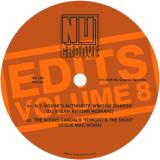
Nu Groove spotlights the artists that made this cult NYC label a favourite of crate diggers then and now with this special vinyl release of their vital tracks revisited by leading selectors of today. The label, born in 1988 by Frank and Karen Mendez as an outlet for the experimental works of the Burrell Brothers, quickly became a home for up-and-coming genre pioneers. ‘Nu Groove Edits, Vol. 8’ opens with DJ Steaw’s Autumn Reshape of ‘Window Guards’, originally by N.Y. House’n Authority - a moniker of Rheji Burrell. Next up is Steve Mac’s remix of NYC favourites The Sound Vandals’ ‘Tonight’s The Night’, followed by another seminal N.Y. House’n Authority record, ‘APT. 3B’ remixed by Dazzle Drums. A third track from the mind Rheji Burrell closes out this vinyl collection of future record box staples, with Seamus Haji reworking The Utopia Project’s ‘File #1’.
Looking back in hindsight to the activity and accomplishments of Axis is with much pride - to witness the relationship between the music and listener evolving to this point.
The Director's Cut reissue project is about manicuring detail. It?s about a rare opportunity to enhance what we've done so that the relationship strengthens for the long term''
- Jeff Mills
'The Director's Cut' series by Jeff Mills
2024 Repress !
"Looking back in hindsight to the activity and accomplishments of Axis is with much pride - to witness the relationship between the music and listener evolving to this point. The Director's Cut reissue project is about manicuring detail. It?s about a rare opportunity to enhance what we've done so that the relationship strengthens for the long term'' - Jeff Mills
- A1: Comdex
- A2: Ufo
- A3: Flying Machines (Commentary By Jeff Mills)
- B1: A-Set
- B2: Flying Machines
"Looking back in hindsight to the activity and accomplishments of Axis is with much pride - to witness the relationship between the music and listener evolving to this point.
The Director's Cut reissue project is about manicuring detail. It?s about a rare opportunity to enhance what we've done so that the relationship strengthens for the long term''
- Jeff Mills
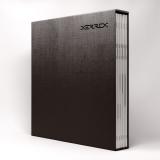
OTON releases limited edition vinyl and CD box set of Alva Noto's Xerrox series.
Pioneering in his approach to digital sound and its materiality, Alva Noto (Carsten Nicolai) began his ongoing exploration of sampling, degradation and recontextualisation with the Xerrox series in 2007. Over the years, the project has evolved into one of the most distinctive bodies of work in contemporary electronic music, situated between minimalism, experimental sound art and digital abstraction.
Across five albums, Xerrox Vol.1 (2007), Xerrox Vol.2 (2009), Xerrox Vol.3 (2015), Xerrox Vol.4 (2020), and Xerrox Vol.5 (2024), Nicolai's method evolves from sample-based work toward original composition as he deconstructs and reassembles source material into precise, sculpted sound worlds that are at once minimal and emotive.
Remastered in collaboration with Bo Kondren of Calyx Mastering, the Xerrox recordings of Volumes 1, 2, and 3 are made available alongside Volumes 4 and 5 on vinyl and CD under the title 'reMASTER', presented in a beautifully designed box featuring original artwork by Carsten Nicolai.
2026 Repress
Akusmi is the project moniker of French-born, London based composer, multi-instrumentalist and producer Pascal Bideau, who signs to the new Tonal Union imprint for the release of his album 'Fleeting Future.' With its hallucinatory, genre-defying blend of minimalism, cosmic jazz and Fourth World influences, and in its quest for optimism in the face of unknown and limitless possibility. 'Fleeting Future' stands apart as an inventive and inspirational debut.
The creation of the album's richly colourful and multi-layered sound world was originally inspired by Bideau's journey to Indonesia, where he immersed himself in traditional Gamelan and gong music. Many of the themes, motifs and melodies on 'Fleeting Future' seed from the 'Slendro' scale, one of the essential tuning systems used in Gamelan. However it is not musical scales, but scales as in the size or extent of things that most fascinates Bideau, specifically he explains; "the compelling way things dramatically change when you shift from any given scale to another."
The album connects directly to nature and the wider world in its evocation of perceptive shifts and transitions from microscopic to macro scale, as evidenced by the opening title track 'Fleeting Future', on which a simple dotted saxophone line morphs and billows into synths, brass and strings, indicating the musical voyage that lies ahead. Like the start of a journey or adventure it is full of anticipation, its arborescent growth conveying the optimism of the unknown and of limitless possibility. The album centrepiece 'Neo Tokyo' is a vibrating, ebullient mass of colliding elements which feels like zooming in to the electron level, as it teeters on the edge of chaos. The title is a reference to Katsuhiro Otomo's Akira, a dizzying work of art set in a sprawling futuristic metropolis.
'Yurikamome', meanwhile, is an imaginary soundtrack inspired by Bideau's yearning to visit Japan which he fuels by watching Youtube videos of drives and rides through Japanese landscapes and cities. "It's amazing" he adds, "that we have the ability to access almost anywhere in the world and see what it's like, that people document it and upload it. It's never going to be any replacement for the real thing, but with places that really touch you, it works." The track is named after a Japanese monorail train line which rides from Shinbashi to Toyosu, a last journey that feels like a new beginning.
'Fleeting Future' was composed and recorded by Bideau between 2017 and 2019 in his North London studio and features additional contributions recorded in Berlin by Florian Juncker (trombone), Ruth Velten (saxophone) and regular collaborator Daniel Brandt of Brandt Brauer Frick (drums / electronic percussion). Having been living through uncertain times, one thing that keeps spiralling into the unknown is the future, about which Bideau leaves us with a final thought:
"The future is fascinating: It is constantly readjusting to new events. I feel we left a linear approach to the future to enter an arborescent one where all the data and information we have about what could happen is exponentially ever-growing. Following a branch might allow you to glimpse into what it may become, but the evolution of the whole picture might very well render the prediction totally obsolete, and even meaningless. In that sense, there is not one future but innumerable ones all cancelling each other. That's what makes it fleeting."
Jim O'Rourke and Jos Smolders teamed up again after their first collaboration, Additive Inverse from 2021. Over a period of three years, both artists worked in sessions of a day, each in their own studio.
The result is sometimes like a warm cloud of sounds, suddenly breaking up into a rhythmic, irregular pattern, after which it dives into introverted mindsets. The music is in constant flux
The project followed the same workflow, but this time Jim took the lead and kicked off with a salvo of sounds that he extracted from his Kyma System. Both Jos and Jim were quite interested in the spectral character of sounds. Jim applied Kyma algorithms while Jos granulated his basic recordings. That way, textures are built, quite slowly moving from warm to gritty, from hard surfaces to deep sonic wells.
“It’s been on my wishlist for a while that the incredibly talented Julienne Dessagne does a techno EP for us,” Michael Mayer says. You can hear why, straight up, on Speicher 139, as Dessagne’s project Fantastic Twins is finally let loose on Kompakt’s storied series. The key words: psychedelic acid trax. “False Index” is peeled back to core: a fearsome rhythm, with an endlessly helixing synth pattern twisting around your skull, crinkling like cellophane and warping like burnt plastic, while Dessagne’s Sprechstimme floats above everything – detached but effortlessly perceptive. “New Systems” is a new kind of Europe Endless – hypnotic and lush, its deep drones pinpricked by sonar bleep. “Uninhibited” is catchy in a way that only Dessagne can make possible, its vocal tattoo burnt into your mind as it echoes through massive architectures, tones dropping from scaffold and splashing at your feet as glitch-work burrows its way up through the floor, directly into your earholes. Uninhibited? Everything here’s simultaneously under control, all under the watchful, guiding eye of Dessagne, and playfully, wildly out of control, little arrangements of phenomena let loose to build new worlds. Organised chaos, and chaotic organisation.
„Es stand schon seit einiger Zeit auf meiner Wunschliste, dass die unglaublich talentierte Julienne Dessagne eine Techno-EP für uns produziert“, sagt Michael Mayer. Auf Speicher 139 kann man sofort hören, warum, denn Dessagnes Projekt Fantastic Twins erscheint endlich in der legendären Serie von Kompakt. Die Schlüsselwörter: psychedelische Acid-Trax. „False Index“ ist auf das Wesentliche reduziert: ein furchteinflößender Rhythmus mit einem sich endlos windenden Synth-Pattern, das sich um den Schädel dreht, wie Zellophan knistert und sich wie verbranntes Plastik verzieht, während Dessagnes Sprechstimme über allem schwebt – distanziert, aber mühelos wahrnehmbar. „New Systems“ ist eine neue Art von Europa Endlos – hypnotisch und üppig, seine tiefen Drones von Sonar-Pieptönen durchbrochen. „Uninhibited“ ist eingängig auf eine Weise, wie es nur Dessagne möglich macht, ihre Stimme brennt sich in dein Gedächtnis ein, während sie durch massive Architekturen hallt, Töne fallen vom Gerüst und spritzen an deinen Füßen, während sich Glitch-Work seinen Weg durch den Boden bahnt, direkt in deine Ohren. Hemmungslos? Hier ist alles gleichzeitig unter Kontrolle, alles unter dem wachsamen, leitenden Blick von Dessagne, und spielerisch, wild außer Kontrolle, lassen sich kleine Arrangements von Phänomenen los, um neue Welten zu erschaffen. Organisiertes Chaos und chaotische Organisation.
This first-time reissue of Quinteplus’ 1971 album revives a key moment in Argentine jazz, featuring crisp trumpet and tenor sax, electric piano-driven funk and modal grooves, and a tight, spacious rhythm section. It showcases prominent figures like Jorge Anders and “Pocho” Lapouble.
==================================
Quinteplus was born in Buenos Aires at the end of the 1960s, emerging directly from the ideas and experiments of the legendary Agrupación Nuevo Jazz. Founded in the early ’60s, this collective brought together some of the most forward thinking figures in Argentine jazz functioned as a creative lab where musicians questioned where jazz could go next. Among the key ideas discussed was the fusion of jazz with Argentine folk styles such as zamba, chacarera, malambo, cueca, and candombe, as well as a deeper look into African rhythms as a bridge between musical worlds.
Two members of that collective, keyboardist Santiago Giacobbe and bassist Jorge “Negro” González, carried those ideas forward when they formed Quinteplus in 1969. The group came together naturally: all the musicians already knew each other and had played in different projects around the Buenos Aires scene. They shared a strong admiration for Julian “Cannonball” Adderley’s quintet, along with a clear goal—to develop a modern jazz language grounded in local Argentine rhythms.
From the start, Quinteplus stood out for its openness and adventurous spirit. Rhythm was central, and so was experimentation. The band belonged to a generation of Argentine jazz musicians eager to explore electric instruments and new textures, anticipating what would soon be known as jazz-rock. This was happening in Buenos Aires at the very same time Miles Davis was opening new doors with “In a Silent Way” and “Bitches Brew”. Giacobbe introduced one of the first Fender electric pianos in Argentina, while González pioneered the amplification of the upright bass and even developed a hybrid electric, boxless version of the instrument. Trumpeter Gustavo Bergalli, meanwhile, maintained close ties with the emerging Argentine rock scene, collaborating with Luis Alberto Spinetta and appearing on Almendra’s first album.
In 1971, Quinteplus recorded its first and only studio album for EMI. The original lineup featured Jorge Anders on tenor saxophone, Bergalli on trumpet, Giacobbe on keyboards, González on upright and electric bass, and Norberto “Pocho” Lapouble on drums and percussion—who also illustrated the album’s iconic sleeve. The record is a refined showcase of the band’s musical vision: original compositions, fluent jazz language, folk-derived rhythms, funky electric textures, tight ensemble playing, and standout brass solos. Though critically praised, the album received little label support and sold modestly, eventually becoming a sought-after collector’s item.
Quinteplus disbanded in 1973, their music was perhaps too bold and unconventional for its time.
The fifth release on SAMMLER is shaped by an intense year and a period of transformation. Created as a way of processing lived experiences, the EP pushes the sonic boundaries of the project further while staying rooted in its hypnotic foundation.
On the A-side, ""Obion"" is stripped down and direct. A weighty beat meets a sharp, distinctive lead, building tension through reduction. ""Seno"" unfolds through a constant interplay of elements. Shimmering percussion and spacious textures create a glistening, almost cosmic atmosphere.
The B-side dives deeper into mood and movement. ""Riba"" revolves around a looping chord sequence that evokes an underwater sensation while maintaining steady drive. ""Dana"" closes the record with depth and presence, combining atmospheric pads with a stomping beat designed for full dancefloor impact.
SAMMLER 05 captures a refined yet uncompromising sound - immersive, focused and forward-moving.
Valvula Records returns with its third EP, reinforcing its identity through a powerful release that brings together Swedish and Brazilian artists in a compelling convergence of contemporary Techno. The project highlights the creative strength of artists who are actively shaping Raw and Hypnotic Techno with personality, consistency, and a clear artistic vision.
Alexander Johansson and Mattias Fridell deliver an intense and precisely crafted collaboration, reflecting the maturity of a partnership built on deep, impactful productions. Brankelo continues to expand his international presence following recent releases on the renowned Planet Rhythm, contributing a track driven by raw energy and sonic intensity.
Sev Dah maintains his distinctive contemporary groove, offering an exclusive track that adds tension and movement to the EP. Alvinho L. Noise and Steel Force join forces on a hypnotic, driving track powered by a solid and immersive groove, reinforcing the EP's raw and uncompromising character.
Designed for the dancefloor, DJs, and true Techno enthusiasts, this release marks another strong step forward for Valvula Records in building an authentic and relevant catalog.