“My introduction to “noise” came from a record shop in Lake Worth, Florida ran by a musician named Kenny 5. Kenny had left Detroit sometime in the mid nineties and had begun selling used records and CD’s from the downtown strip of this tiny southern Florida city in a humble shop sandwiched between a deli and a dog grooming business. Kenny previously was on labels like Amphetamine Reptile and timeSTEREO, and the records and videotapes that would be on repeat at his shop were a vast sonic expanse that spoke to the eclecticism of his experience as a touring musician participating and adjacent to American noise culture through the early to late 90’s. In 1998, I was eleven years old and I would order a pizza with him and watch VHS tapes of Japanese noise and deathmatch bootlegs, as well as any other sonic and subcultural rarities that far outstripped my age to comprehend (notably the RRR “Journey Into Pain” compilation and various Vanilla Tapes videos). This widecast net of information formed an introduction to a reality that did not fall deaf on me, but it took many years later for me to reorient the specific freedoms of what this dense and cathartic sound culture had imparted on my life and would continue onward to.
What does this have to do with this selection of choice recordings from the Secret Boyfriend catalog for the enmossed label? For the uninitiated, Secret Boyfriend is the long running moniker of Ryan Martin, North Carolina musician and label proprietor of the Hot Releases imprint. For over a decade from this writing I have watched Secret Boyfriend, and Hot Releases by extension as a curatorial and archival effort, embodying the multiplanal capacity that noise loosely functions from as an umbrella ideology and formalist avenue for sound creation. For anecdotal purposes, from (before) 2006 until roughly 2023 the East Coast of the United States showcased a vibrant network of eclectic regional festivals that saw wide swaths of artists addressing and negotiating the notion of what qualified “noise” from a conceptual and ideological perspective. Some festivals honed in on particularities in aesthetics and tropes, and others had a kind of “catch-all” implementation that allowed for a salvation of the sort of alienated and singular artistry that was amassing throughout these territories. While clear guidelines had been set from regional predecessors as to how noise with a capital “N” should maneuver, Secret Boyfriend is emblematic in the spirit of fluidity that was either implicitly coupled to the notion of the genre, or grew to evolve towards or devolve from.
Within Secret Boyfriend performances, I have seen and admired a mirroring from a ravenous appreciator of this culture at large back towards itself. Typical of a Secret Boyfriend set is an interchangeable narrative arc wherein blistering feedback laden scrap metal improvisations are forayed into naive ambient or “pop” songs, or skipping CDs, or mixer feedback play, or delayed Roland 707 drum workouts all at once and in a unique hegemony. Secret Boyfriend's stylistic mastery of each endeavor is at once an homage to a history of loving listening and enacting, while a brave step into the realm of actualizing the unique fluidity of his own practice. In performance and the action of network engagement, Secret Boyfriend operates a survey of that which he sought to hear and that which he cultivates around his work. His operations are mirrors, and the project (alongside his other peers) is a reflection on the ethos of his time.
Conversely his recording practice narrows in on these moments and allows for a different kind of intimacy or alienation for the non live listener. This record of selected “pop songs” (let's call them that) is particularly poignant at a time when the culture Martin mirrors is at a strange crossroads with itself. The aforementioned festival networks necessarily change and shift. The onlookers become the artists, the artists find new horizons, and the spaces for these cycles fade into locales of a distant memory. It seems, from my perspective, that audiences currently yearn for a more bottlenecked experience, searching for some ontologically vetted manifestation of an idea, of a sound and less for an experience that functions in opposition to our collective banalities. This makes sense in the face of general global catastrophism that plagues us. We need certainty of what something is somewhere, don’t we? Noise as an idea has expanded and contracted to so many iterations of itself it is hard to tell what it even is, and it is particularly difficult to identify in the absence of solid network activations a moment to reflect on its own complexities and nuances. In the face of so much change, I argue that the language of noise culture at large has on one hand become increasingly didactic and predictable, and laughably inclusive and non linear on the other. Probably has always been this way, but now we are in the midst of a moment of extreme access and indexicality, which somehow cauterizes expansion and naivety and chance.
This record highlights the Secret Boyfriend that obscures didacticism by highlighting output that opens up for more challenging catharsis and emotive signal processing. It provides an entry to the materialism of a cultural field full of ecstatic complexity and beautiful inconsistency. In these muted moments Secret Boyfriend has given us over his career we have an argument for evolving languages that further challenge our notions of what is supposed to happen and how it is supposed to be presented. In his more song oriented expansiveness, we can punctuate the ability to think in new modalities. Listening to these recordings reminds me of the polarity of sitting in the record store as a kid and understanding that His Name Is Alive is on 4AD and (gasp!) timeSTEREO. This trite early impression that nothing is really as different as our imaginations might want them to be, and that we can do whatever we want mostly within the creative realms we work through is an important filter to look through Secret Boyfriend as a project and a vessel. If we can achieve abandon and vulnerability through our artistic endeavors, then we have a sound model for, maybe, new potentialities. If that’s too much projection, or just complete liberal bullshit, I am fine with that. Secret Boyfriend's oeuvre at best offers us moments of reprieve to ponder these complexities, or at least a moment to zone out on a drive through North Carolina Highway 54.
You have one pocket of life that you must do whatever you want to inside of. Secret Boyfriend does it affectionately, in a variety of forms, and always with deep sentimentality. These recordings are a wonderful set of songs to begin further investigation from. Thank you Ryan for allowing as many avenues as possible to continue a broad cultural exchange and conversation that intersect and refract while being the kind of artist that is brave enough to not phone in the effort.”
- Nick Klein , May 2024
Suche:sa ha ra
2024 feiern die Broilers ihren runden Geburtstag: 1994 - 2024, 30 Jahre Broilers. 30 gemeinsame Jahre bedeuten Wachsen und Zusammenwachsen. Auch miteinander streiten und zusammen streiten – für die gute Sache. Zusammen feiern und zusammenstehen, in den Besten aller Zeiten und den Schlechtesten aller Zeiten. Und weil es für jede gute Geburtstagsparty auch die passende Musik geben muss, hat die Band zum ersten Mal alle ihre Hits und Lieblingslieder auf einem Album versammelt. Und nicht nur das, die Broilers machen sich selbst ein Geschenk: Zehn der 22 enthaltenen Songs, nämlich alle, die vor 2011 eingespielt wurden, haben sie noch einmal komplett neu aufgenommen. So erstrahlen legendäre Broilers-Klassiker in zeitgemäßem Glanz, ohne ihre Wurzeln zu verleugnen. Die Broilers sind ein Phänomen: Seit über einem Jahrzehnt gehören sie konstant zu den erfolgreichsten Rockbands im deutschsprachigen Raum. Millionen verkaufter Konzertkarten, Nummer- 1-Charts-Platzierungen, Edelmetallauszeichnungen in Folge, kaum ein Superlativ, den die Gruppe sich noch nicht zu eigen gemacht hätte. Ein paar Schulfreunde aus den Vierteln am Stadtrand von Düsseldorf gründeten 1994 eine Band, die sich am ruppigen Sound einer Streetpunk-Variante orientierte, der schon Anfang der 80er-Jahre unter der Bezeichnung „Oi!“ auf der britischen Insel das Licht der Welt erblickte. Die bedingungslose Liebe, die ihnen bis heute von vielen ihrer Anhängerschaft entgegengebracht wird, hat ihren Ursprung in dieser Zeit. Neben den Liedern, mit denen sie über die Jahre ihren Hörern stets aufs Neue aus dem Herzen sprachen, führte aber auch die Kombination der individuellen Charaktere der einzelnen Musiker an die Spitze: Wie fünf Superhelden aus einer Comicserie bündeln sie als Team ihre Kräfte, begeistern so die Fans und können aus dieser Unterschiedlichkeit Kraft schöpfen und spenden. Die Broilers haben keine Angst vor Pathos, Emotionen und Kontrasten: In ihrer Musik sind wuchtige Bläsersätze, Offbeats, da ist Soul und Rocksteady, da sind Flirts mit Power-Pop und Kitsch und das alles, als wäre es das Logischste und Normalste auf der Welt. Diese eklektische Mischung trauen sich nicht viele. Die Broilers wollen es sich anders gar nicht mehr vorstellen. »Jolly Good Fellas – Best of Broilers 1994 - 2024« legt davon eindrucksvoll Zeugnis ab!
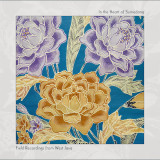
"We are delighted to be able to bring you these gorgeous field recordings from the Sumedang Province of West Java which, over their 50 minutes, present two distinct sides of Sundanese musical and devotional culture.
Although West Java is a Muslim country, these recordings highlight currents of pre-Islamic animist beliefs and practices that continue to flourish in the small towns and villages of the highlands of West Java. The recordings showcase two forms of trance music that are essential to the spiritual life of the Sundanese people in the highland regions.
Tarawangsa trance music is a traditional ceremonial genre known for its deep spiritual and hypnotic qualities. This music is made using only two instruments, the tarawangsa, a two-stringed fiddle, accompanied by the jentreng, a seven-stringed zither, creating a unique blend of resonant, droning sounds. Historically, tarawangsa music has been performed as part of sacred rituals and agricultural celebrations to honor local deities and ancestors, particularly associated with the Sunda culture. The minimalist, repetitive melodies gradually build, guiding participants and listeners into a meditative, trance-like state, during which dancers can be possessed by the spirits of ancestors or deities from the spirit realm, the music serving as a link between the two worlds.
In stark contrast to the calm, medititive sound of tarawangsa, we also present here two long pieces from Panca Buana Reak Group. Sundanese Reak trance music is like the punk rock of Sunda folk music, combining powerful and driving rhythms played on a number of hand drums and percussion instruments with the buzzing sound of the tarompet, a double reed wind instrument often amplified through whatever mobile speaker system might be at hand. Sometimes the group will play gamelan gongs, as heard on the first piece on the album, although this remains a music that is popular mainly with the working class youth of the rural villages, many of whom will also be fans of Indonesia's burgeoning metal and punk scenes. Reak performances are often wild, anarchic events that feature masked dancers, costumes, public trancing and spirit possession.
These recordings were made by Xenia At during her travels through West Java earlier this year. The tarawangsa recordings were made in a home in the village of Rancakalong on the evening of 17th January 2024, while Panca Buana Reak Group were recorded during rehersals in the village of Cinunuk on 19th and 20th January 2024."
Limited edition of 100 copies.
The musicians:
Overture (played by Panca Buana Reak Group, musicians: Rian Hidayat, Daffa, Rendi, Haswa, Doni, Aconk, Bayu, Zidan, Iwan Uwak, Mahadewa Sehu, Bebet, Adi, Bebet).
Reundeu - Master Yayat (kacapi), Tedi Kurniadi (tarawangsa).
Degung - Master Yayat (kacapi), Teguh Permana (tarawangsa).
Pamapag__Gelar Mataram__Panimang__Limbangan - Akbar Nendi (kacapi) & Tedi Kurniadi (tarawangsa).
Reak Lugay Pusaka Pajajaran (played by Panca Buana Reak Group, musicians: Aconk (tong), Rendi (brung), Hendrik (tarompet), Ade (kecrek), Riki (bedug), Doni (talingtit), Adi (badublag).
Xenia would like to extend gratitude to:
Master Yayat, Tedi Kurniadi, Akbar Nendi, and Teguh Permana for their incredible talent that turned this recording into a magical experience.
Ibrahim Adi Surya for technical support.
The Juarta Putra and Panca Buana Reak groups for explaining the cultural significance of local traditions.
Anggun Tresnasari for sharing her deep knowledge of regional music traditions.
Igor Moskalenko, Kate Snap, Stasya Frolova, Roman Gold, Misha Maltsev, Ilona Popychko, Galih Muhammad, Wildan Wiliansyah, Rizalu Ramadhan, Rahi Rahmat, Fahmi Solihin and Muhammad Ismael whose unwavering belief made this project possible.
Hive Mind would like to thank Luigi Monteanni (Artetetra) and Palmer Keen (Aural Archipelago) for their invaluable work and research in this region.
Special is the highly-anticipated upcoming album from global superstar & 3-time GRAMMY® winner Lizzo, which follows her multi-Platinum selling, top-10 debut album, CUZ I LOVE YOU, released in 2019. It will be released everywhere July 15th via Nice Life/Atlantic Records with the pre-order going live on April 14th. The album will feature her irresistible new single “About Damn Time,” out everywhere alongside the pre-order.
CUZ I LOVE YOU spent 24 consecutive weeks in the chart’s Top 10 whilst “Truth Hurts” also became the longest running #1 by a solo female rap artist in history after spending seven weeks atop the charts. In addition to gracing the cover of Rolling Stone, PEOPLE, Variety, Billboard’s GRAMMY® Preview Issue, British Vogue & Elle’s Women In Music Issue amongst others, her high-profile TV appearances include the opening performance at the 62nd Annual GRAMMY® Awards, 2019 American Music Awards, MTV Video Music Awards & BET Awards and she is set to return to Saturday Night Live, pulling double duty as host and musical guest. Most recently she has partnered with Logitech as the face of their 2022 “Defy Logic” campaign. Lizzo has also cemented herself as one of music’s most in-demand live performers with standout performances throughout her sold-out ‘CUZ I LOVE YOU’ & ‘CUZ I LOVE YOU TOO’ tours and a headline appearance at Lollapalooza.
- 01: Carnival Road March
- 02: No More Taxi
- 03: Mango Tree
- 04: Food From The West Indies
- 05: Alphonso In Town
- 06: Come Back In The Morning
- 07: Too Late Kitch
- 08: Drink-A-Rum
- 09: Constable Joe
- 10: Pirates Of Paria
- 11: Carnival In Town
- 12: Is Trouble
- 13: If You Brown
- 14: Life Begins At Forty
- 15: Manchester Football Double
- 16: The Denis Compton Calypso
- 17: Mistress Jacob
- 18: London Is The Place For Me
- 19: Tie Tongue Mopsie
- 20: Dora (Meet Me At The Pawnshop)
- 21: If You’re Not White You’re Black
- 22: Africa My Home
- 23: Nora
- 24: Kitch In The Jungle
part 7[26,01 €]
The genius of Lord Kitchener has been the mainstay of our series. In this volume devoted to his post-war London recordings, Kitch plays his many roles with signature aplomb and poised subtlety. First there is the hooligan chantwell, up for anything in the hurly-burly of carnival proper; and then the casual reporter, firing off postcards to Trinidad about taxis, flashy booze, fast women and football in Manchester, with homesickness and grievance nestled just behind the optimism, pride and tentative senses of belonging. There is the bearer of news from home, in detailed accounts of murders, tales of stupid local coppers, and reminiscences about food and particular mango trees; the political thinker, considering racism and Africa; and the diarist, with his vivid tales of infidelity, and disclosure of the break-up of his marriage, and his desire to get away. One foot in the UK, the other in Trinidad; but the man himself somewhere in-between. Kitch In The Jungle, nobody around. A ‘diasporic explorer’; a key twentieth-century witness, alongside such hallowed figures as Samuel Selvon and Edward Kamau Braithwaite. Though in frustration Kitch would sometimes take over double-bass duties himself, the musicianship of Rupert Nurse, Fitzroy Coleman and co is top-notch. The original glorious sound is down to Denys Preston, recording for Melodisc, often at Abbey Road Studios (where we transferred and restored the 78s compiled here). Presented in a lovely gatefold sleeve, with a full-size booklet containing superb, specially-commissioned sleevenotes by Kitch biographer Anthony Joseph, and fabulous, previously-unseen photographs.
"Sirene" is the second album of the duo composed by Stefano Ghittoni (TheDining Rooms, Le Petit) and Bruno Dorella (Ovo, Ronin, Sigillum S), following their 2019 release "Estatico."This composition explores a captivating territory where the artists has been working for many years, combining experimental techniques with inviting elements from different genres of popular and underground music.
The album starts with ethereal and ambient electroacoustic sounds, gradually incorporating subtle rhythms, arpeggiations, and slightly broken beats. It creates a moody and introspective sonic landscape that maintains a sense of abstraction. This is enhanced by the textural complexity derived from various sources such as samples, tape manipulations, field recordings, and unconventional sounds woven together with traditional instruments.
The album encompasses a range of electronic practices, psychedelic minimalism, and dense ambience, with a touch of shoegaze, resulting in a truly beautiful experience.
The Ghentian skyline has low peaks and hides its horrors in full view ~ walk streamside and you’ll quickly be confronted with façades that leer with their tales and secrets, the angels and demons that built this city holding up its mortar and stone in an inextricable embrace. It is within this incongruous backdrop that Benoît Monsieurs has fostered the Venediktos Tempelboom persona. Using the 12-string guitar as his main instrument, the self-taught musician creates passages that take fingerpicking Americana and Eastern transcendence into the Flanders fields, with winding compositions that distill the essence of giants like John Fahey, Robbie Basho and Jack Rose and folds them into the dark drone melancholia of Funeral Folk/KRAAK stalwarts like Silvester Anfang, Helvete and Ignatz. The results are ringing meditations of awe and terror, flamboyant and grotesque yet utterly mesmerizing in their unrooted sonic imagery.
In his debut LP, Syne Vuyle Hoeck, the Tempelboom amalgamates his influences - East, West and deep Flanders alike - into a flurry of acid-drenched tracks that spread out into a distinctive musical iconography. Each composition carries a facet, highlighting angel and demon in equal measure: the solemn opener “De woelige rit op een roze wolkje” is a threading of melodies that carry pensive heft and hopeful asides, as hints of ragtime buoyancy lead into sullen ruminations in a fully lucid change of course; “Ocharme Ochgod” is a sober penitence, slowly and almost imperceptibly building up into a tangle of lines that inexorably coil back into their brooding backbone; the echoing tape loop of “In Flock” reverberates and torments, steel sharpness and frayed magnetic disintegration finding improbable common ground; “El Contrario” swerves unforgivingly in an Eastern-infused openness reminiscent of Six Organs’ rawer days and unnervingly giving way to a forceful - dare we say upbeat - conclusion. And so one treks into the depths of the Tempelboomian universe, a place of high drama and low morals inhabited by a prankster creator who deploys euphoria and distress in equal measure. Just as the strings of his guitar are left to echo like sparkles in the dark, so his music lingers in the soil of our humanity, redolent of the kind of peace one can only make with the demons of the self.
- A1: No Love Dying
- A2: Liquid Spirit
- A3: Lonesome Lover
- A4: Water Under Bridges
- A5: Hey Laura
- B1: Musical Genocide
- B2: Wolfcry
- B3: Free
- B4: Brown Gras
- C1: Wind Song
- C2: The In Crowd
- C3: Movin’
- C4: Whenlove Was King
- D1: I Fall In Love Too Easily
- D2: Time Is Ticking
- D3: Water Under Bridges (Rubato Version)
- E1: Water Under Bridges (Featuring Laura Mvula)
- E2: Don't Let Me Be Misunderstood (Featuring Jamie Cullum)
- E3: Grandma's Hands (Featuring Ben L’oncle Soul)
- F1: Hey Laura (Rainer & Grimm Remix)
- F2: Liquid Spirit (Claptone Remix)
- F5: Liquid Spirit (Knuckle G Remix)
- F3: Liquid Spirit (20Syl Remix)
- F4: Musical Genocide (Ludovic Navarre Aka St Germain Version)
Original[35,25 €]
After two solid albums on Motema, both of which earned GRAMMY nominations, Gregory Porter made his Blue Note debut with Liquid Spirit in 2013. Recommencing with the water analogy that characterized his debut disc, Porter saw Liquid Spirit as a logical progression in his burgeoning discography as it touched on some of the same themes, particularly the highs and lows of romance, his childhood, and socio-political observations. The strength of Liquid Spirit lies in Porter's songs, based upon personal experiences with a relatable and emotional immediacy. Even more, his hooky melodies penetrate instantly.
Hailed by public and critics alike, Liquid Spirit won the Grammy Award for Best Jazz Vocal Album in 2014. Platinum in the UK and Germany, gold in France, the Netherlands and Austria, the album has sold over a million copies worldwide.
Marking the 10th anniversary of the album, Blue Note presents a special vinyl edition bringing together the original album on 2LP and a disc of bonus tracks and remixes, with 5 tracks available on vinyl for the first time.
Limited to 100 Copies!
Rawar ep is the 6th release of Macro Terra records, an Italian independent label founded in 2020 and focused on a blend of Electro, Techno and Experimental sounds stemming from Ambient, Industrial and Bass music.
This release features the italian based dj and producer Pomposo and Artizhan, and the collaboration with E8 Machines and Gianni Vittozzi, who come from the London underground scene.
The release is composed of 6 tracks with a dark electro style, perfectly fused with ambient sound carpets, voice samples, overwhelming bass and electronic drums coming from modular synthesis.
The main track Rawar by Pomposo and E8 Machines sees the remix of Artizhan that takes you back to all his productions, characterized by the drum'n'bass sound and killer break!
A beautiful interpretation of the original track that allows you to have the track you are missing in your bag for a dj set
6 Tunes of pure energy dance floor oriented!
A secret love letter concerning the new Bambounou and Priori collaboration has been delivered...
“Darling,
I’ve been thinking about how beautifully our love has come together, like a song crafted with care and passion. It reminds me of a melody written by Jeremy Guindo and Francis Latreille, every moment we share feels like it was meant to be, perfectly aligned, just like their music.
From the moment we met, you’ve been my crush, the one who makes my heart race and my world brighter. Our love is full of tenderness and understanding, much like the way each song was carefully mixed at Jump Source Studios. Every word we say, every look we exchange, blends together to create something truly special.
Like a song polished by Nik Kozub, our love has grown stronger and clearer with time, resonating in my heart with pure, unwavering devotion. And just like an art piece, our journey together has been beautifully designed, every detail carefully shaped by the hands of fate, much like the work of Dimitri Erhard and Janic Fotsch.
You are my melody, my rhythm, my everything. With you, life is a beautiful serenade, and I can’t wait to keep writing it. I love you more than words can express, and I always will.
Yours forever,
Crush"
Record includes 2 page insert and download
Flipping rhythms from Guadeloupe, Cuba, Senegal and Puerto Rico, Time Capsule founder Kay Suzuki releases an acid-soaked collection of remixes that transcends time and space.
From the blacked-out basement of Plastic People to the psychedelic dancefloor of Beauty and the Beat, Kay Suzuki’s musical world has been shaped by some of London’s most iconic sound systems. High quality audio, he says, can open portals to new universes. Rhythm is time made plastic and beauty is the space between the beats.
Spanning over fifteen years of music from the prolific DJ, producer, Time Capsule label boss and one time Brilliant Corners sushi chef, this collection of remixes is the logical conclusion of Kay Suzuki’s musical thinking. Drawn to unique percussive or syncopated rhythms, he describes remixes as conversations between the original artist’s sense of time and his own. Weaving broken beat, house and dub influences into rhythms from across the Black Atlantic, these four tracks find each other kinship on the dance floor.
The A-side begins with a dubbed-out rework of the Gwoka celebration rhythm ‘A Ka Titine’ by Guadeloupe’s Gaoulé Mizik that was originally released by Beauty and the Beat in 2022. Layering electronic flares, dub sirens and space echo reverb across the shuffling toumblak beat, Suzuki leans into the track’s creole heritage, turning the track into a sought-after dancefloor jam, played by everyone from Colleen Cosmo Murphy and John Gomez to Yu-Su and Bradley Zero.
Skipping to Puerto Rico, Broki’s ‘Es Que Lo Es’ emerged from a collaboration between Bugz in the Attic’s Afronaut and Seiji and local musicians. Here Suzuki reworks the Afro-Latin percussion into a subtle bruk, conjuring a third space between London and San Juan that remains both of and outside the era in which it was made.
Blackbush Orchestra’s ‘Sortez, Les Filles!’ opens the B-side, taking apart the original and kneading the Senegalese percussion into a chugging Balearic house track, buoyant and full of life. Also first released by Beauty and the Beat, the track features new synth and structural elements that bring out the innate dancefloor potential beneath the surface of the original.
The final track on the collection heads back to the Caribbean and the island of Cuba, where Sunlightsquare a.k.a. Claudio Passavanti worked with vocalist Rene Alvarez and expert in Afro-Cuban percussion, Giovanni Imparato, on ‘Oyelo’. Here, Suzuki strips out the kick completely, leaving an implied rhythm which he calls an “imaginary four-to-the-floor” - a groove that is felt rather than heard, leaving the listener floating in another universe entirely.
- 1: The Spanish Master
- 2: Cesca
- 3: Tigris
- 4: First Light
- 5: Village Of The Sun
- 6: Ted
Village Of The Sun return today with the announcement of their highly anticipated debut LP “First Light”. Due out 4th November on heavyweight vinyl via London analogue specialists Gearbox Records, the record follows their widely acclaimed double A-side single “Village Of The Sun / “Ted”. Village Of The Sun is an enigmatic collaboration between UK jazz virtuosos Binker Golding & Moses Boyd and electronic music legend Simon Ratcliffe of Basement Jaxx fame. Born out of a shared passion for improvised instrumental music, the new project sees all three of the artists steps into relatively new territory, combining their respective sensibilities to create something all at once atmospheric and danceable. Evocative of some of Simon’s inspirations such as Alice Coltrane, Airto Moreira and Masters at Work, Village Of The Sun embodies a hybrid of electronic beats, heady jazz improvisation, and sheer, raw energy, breaking ground between pseudo-Samba rhythms, dreamy ambient textures, and explosive sax and percussion. The new single “The Spanish Master” is a total embodiment of what Village Of The Sun is at it’s heart. Combining atmospheric synth lines with percussive electronics, which gently ebb around Boyd’s intricate drumming and Golding’s expressive sax. With tension building around every element the track careens into a movement of frenetic drumming, electronic idiosyncrasies, and fervent sax breakouts, which find the trio performing at their energetic, adrenaline-fuelled best. The album is truly a project of passion and exploration, and one that refuses to follow just one path. Tracks such as “Cesca” and “Tigris” emphasise Ratcliffe’s ability to weave shapeshifting keys and electronics around Golding and Boyd’s interplay, changing the mood and direction of the track at a moment’s notice. Whereas the title track “First Light” channels the sound of the current UK jazz scene with Ratcliffe imbuing a sense of dramatic tension and release with electronic atmospherics and keys that ferment alongside the almost shamanic, semi-free sax lines and uncomprimising drums. As part of one of British dance music’s biggest ever acts, Basement Jaxx, Ratcliffe and collaborator Felix Buxton led the progressive house sound in the 90s/00s with ground-breaking albums Remedy and Rooty, and by releasing a string of Top 10 singles including Red Alert, Rendez-Vu, Romeo, and Where’s Your Head At?. Ratcliffe’s own solo work includes the 1995 EP City Dreams and the 2011 EP Dorus Rijkers - both releases prove his musical versatility and virtuosity. Speaking about the Village of the Sun collaboration, Simon says, “I’ve always liked improvised instrumental music. It has this intensity and eccentricity that takes me places.
- The Same
- Chip On My Shoulder
- Beyond My Hands
- Chokito Bar
- Derelict Eyes
- No Turning Back
- Rock'n'roll Marie
- Feel Strung Out
- Drives Me Wild
- Help Yourself
- We're Not Like You
- Rock Action
For the first time on vinyl, a great Australian High Energy classic from Brother Brick, led by Stew Cunningham, one of the best guitarists to emerge from the antipodes. On the same level as other classics such as Bored!, Asteroid B612, New Christs... A gem of OZ rock. Attention all rock enthusiasts and vinyl collectors! The wait is finally over. For the first time ever, Brother Brick's legendary 1997 album A Portable Altamont is being released on vinyl, fully remastered to capture the raw power and energy that defined their high-octane sound. This release showcases the band's gritty fusion of blistering guitar riffs, pounding rhythms, and unforgettable melodies--reminiscent of Detroit's finest like The Stooges and MC5, but with that unmistakable Aussie edge. Led by the iconic Stewart Cunningham, known for his work with other influential projects like Proton Energy Pills, Leadfinger, Asteroid B612, and The Yes-Men, Brother Brick carved out their own space in the '90s Australian rock scene. A Portable Altamont is a testament to their uncompromising spirit, packed with all the attitude and authenticity that made them a standout in the Sydney underground. Originally only available on CD, A Portable Altamont is a high-energy masterpiece of Australian rock, packed with blistering guitars and melodies that have been screaming to be heard on the rich, warm tones of vinyl. This remastered edition brings new life to tracks that defined a generation of raw, unapologetic rock. If you're a fan of loud guitars, powerful melodies, and pure rock 'n' roll attitude, this is the vinyl you've been waiting for. Don't miss your chance to own a piece of rock history--A Portable Altamont is now available in a limited edition vinyl pressing! TRACKLIST SIDE A A1 The Same A2 Chip On My Shoulder A3 Beyond My Hands A4 Chokito Bar A5 Derelict Eyes A6 No Turning Back SIDE B B1 Rock'n'Roll Marie B2 Feel Strung Out B3 Drives Me wild B4 Help Yourself B5 We're Not Like You B6 Rock Action
INTEGRAL RECORDS—SEVENTEEN YEARS OF FORWARD THINKING D&B
London, August 2024 ––Integral Records, a leading independent record label synonymous with forward
thinking Drum & Bass music is announcing ‘Seventeen’ ––a new Various Artists LP in celebration of 17 years.
Fast approaching their second decade in the business of DNB, Integral Records has left an indelible mark on the underground scene, consistently delivering quality releases that continually push the boundaries of drum and bass music.
Since its inception in 2007, the label has been at the forefront of innovation within the underground scene globally, and is renowned for continually discovering, nurturing and developing exceptional talent; breaking a number of new artists through its 17-year journey.
Consistently delivering high-quality music with crossover radio appeal and with a consistent release schedule maintaining quality over quantity and dedicated to keeping the vinyl community alive.
Founded by the visionary Artificial Intelligence back in 2007 and with Emma G at the helm over the past decade, the label has remained dedicated to its core values of musical integrity, cutting edge sound
With a back catalogue of who’s who in the soulful world of the spectrum; the archive includes the likes of
Calibre, DRS, Alix Perez and Lenzman; more recently, Dawn Wall, Mohican Sun, Satl and currently the new
wave of D&B’s rising stars––Thread, TZ and Tatora to name a few.
Seventeen – the LP will showcase 8 tracks carefully curated from the label's impressive camp
of talent, capturing the essence of the Integral Records sound––featuring legendary artists and rising stars alike. Track features will include (in alphabetical order) Artificial Intelligence, Lenzman, Phil Tangent, Redeyes, Satl, Steo, Tatora, Thread, and Zero T and more.
From soulful liquid future classics to heavier-hitting tech rollers and everything in between, this compilation encapsulates the diverse and ever-evolving nature of Drum & Bass that will always remain dear and will certainly never die.
- A1: The Things That I Used To Do
- A2: Blues Music
- A3: Garbage Man
- A4: Eyes Have Miles
- B1: Baby's Got Sauce
- B2: Rhyme For The Summertime
- B3: Cold Beverage
- B4: Fatman
- B5: This Ain't Living
- C1: Walk To Slide
- C2: Shooting Hoops
- C3: Some Peoples Like That
- C4: Town To Town
- C5: I Love You
- D1: The Things That I Used To Do (Live)
- D2: Blues Music (Fast Version)
- D3: Lila (Original Version)
- D4: Just Like Trains (Live)
G. Love & Special Sauce’s legendary self-titled debut album has been remastered and newly expanded for its 30th anniversary. Along with the classic x14 trk original album, this expanded edition boasts a fourth side of rare versions & live tracks on Light Blue x2 LP Vinyl for the first time.
Twisted Records is delighted to announce a different kind of collaborative mini album by two musicians highly esteemed for decades in the electronic music scene, Simon Posford and Raja Ram.
‘Improvisations for Piano & Flute’ is, as the title suggests, a series of fully improvised compositions by the two legendary musicians. The 44-minute flow of this album is more contemplative and analog in nature than anything in the pair’s previous output in their three decades of collaborative work, yet equally mesmerising and consciousness-expanding.
In the early 1990s, Simon Posford was working as an engineer at Butterfly Studios when he first met Raja Ram, an Australian conservatory-trained jazz flautist who had been in the 60s/70s band Quintessence and who was at the time of their meeting part of the electronic music group known as The Infinity Project. After collaborating on many of the latter band’s productions, Posford and Raj (as he is affectionately known) in 1996 created the first track under the project name Shpongle, Rumours of Vapours.
Less dance-focused and more atmospheric than their previous electronica tracks, this was the first of many creations under the Shpongle moniker, included on their now iconic first album Are You Shpongled? in 1998. Since then, they have produced six albums and performed elaborate live sets with an 17-member band around the world, including three sold-out shows at the iconic Red Rocks theatre in Colorado and three sold-out appearances at The Roundhouse in London.
This album is a significant departure from their usual output in its focus on the interplay of Raj’s lyrical flute playing and Simon’s noodling at the piano, with almost imperceptible synthesized atmospheric support that seamlessly unites analog and digital realities.
These improvisations were recorded in Posford’s living room instead of the usual studio because the musicians found that it provided more of the desired ambience. With a synthesizer placed atop an antique Bluthner piano, either Raj or Simon would begin playing and the other would join in - nothing prepared, decided, or arranged: just live, in-the-moment inspiration. This spontaneity infuses each track with such magnetic energy that the listener is inevitably drawn into each note, phrase, and piece.
The whole album is supremely chill and introspective, with a grand arc to the storyline of 8 tracks that Shpongle fans will recognize from the dynamic duo’s internationally prized discography.
‘Improvisations for Piano & Flute’ is a salve for the soul, providing an atmospheric antidote to the relentless stress and fast pace of our increasingly complex world - a great way to kick back, tune in, and refresh.
The Last Wave (also known as Black Rain in the US) was the final chapter in a trilogy of films scripted and directed by the leading auteur of the Australian New Wave, Peter Weir. Beginning in 1974 with the absurdist black comedy-horror The Cars That Ate Paris, and followed a year later by the lush gothic mystery Picnic At Hanging Rock, The Last Wave was a landmark in existential horror. Sitting alongside other Australian eco-terror films (e.g. Long Weekend) the film featured a haunting electronic soundtrack that is as mysterious and beguiling as the spiritual themes of the film itself. With no LP issued after the films premiere in 1977, and together with the mystery surrounding the true identity of its enigmatic composer 'Charles Wain', the score is a largely unheard recording of pioneering experimental film electronics, easily compared to the music that contemporaries Klaus Schulze and Tangerine Dream were composing for Australian films during the same period or the electronic soundtracks of John Carpenter. Tense atonal electronics, synthesizer drones and manipulated Didjeridu all perfectly capture the film's ominous atmosphere, punctuating the slow hypnotic pace of this brooding supernatural thriller.
- On Old Broadway
- Toma Guajira
- Look To Me
- You Put A Hurt In My Heart
- Rhythm And Soul
- Mojo Shingaling
- Barbara With The Kooky Eyes
- Tell Her I Love Her
- Let Me Do My Thing
In 1969, producer and boogaloo godfather Bobby Marin conceived this undeservedly obscure funky, psychedelic Latin soul gem. Released on Ralph Lew’s short-lived Dorado label and engineered by Jon Fausty, Bobby was backed by a top-notch studio band that included Ricardo Marrero, Joey Pastrana, Bernard Purdie, Louie Ramirez, Orlando Marin and Ozzie Torrens. Includes liner notes by genre expert Pablo Yglesias telling the story behind the music. 180g vinyl. Generally, when discussing the first wave of Latin soul and boogaloo, it’s the bands and their leaders, the singers and the songs that get all the recognition. But what of the producers, composers, and arrangers? One of the top old-school New York Latin music producers, Bobby Marin, was behind the scenes for some of the best independently produced boogaloo and salsa of the ‘60s and ‘70s. “Saboreando - Pot Full Of Soul”, is the album Bobby created in 1969 for his friend Ralph Lew’s newly launched Dorado label. Fifty-five years later, Bobby confirms that he commemorated his humble Barrio beginnings playing stickball on West 107th Street and singing doo-wop while some kids played percussion on junkyard drums, by christening the band The 107th Street Stickball Team. The 107th Street Stickball Team was basically the same pool of friends as Ricardo Marrero’s group (Bernard Purdie on drums, Mike Viñas on guitar, Ricardo Marrero on vibes), with the addition of Louie Ramirez playing piano and organ, Orlando Marin, Joey Pastrana and Ozzie Torrens on percussion, Mike Viñas handling the electric bass, and Butch Johnson and Danny Agosto on lead vocals for a few numbers. At that time, soul music was seen by the present Latin generation, indeed the youth market in general, as something that was different, that broke with tradition. The record, with Bobby singing several of the best tunes including ‘Mojo Shingaling’ and ‘Rhythm and Soul’, highlights an affinity or connection between African American and Cuban music in a convincing blend that was emblematic of the scene and allowed the young generation to feel they had a fresh kind of music all their own. No wonder the LP notes boast The 107th Stickball Team is “a bunch of groovy youngsters.” We are now happy to make this undeservedly obscure funky, psychedelic Latin soul gem available again!
Repress!
Compilation of 80s Turkish-Swiss band Café Türk, featuring selected works from their discography as well as previously unreleased recordings!
Café Türk's unrestrained sonic palette explores new wave, psych, disco and reggae with influences from Anatolia and Azerbaijan.2xLP includes a 4-page booklet with extensive liner notes and photos.
Café Türk are an inimitable Turkish-Swiss band formed in the 1980s, whose genre-bending sonic palette draws from Anatolia, the Caucasus and Western Europe. The group’s frantic trajectory connects Switzerland and the Turkish city of Kars with a background story as rich and unexpected as their sound. After three decades since they disbanded, Zel Zele Records have collaborated with Turkish crate-digger Grup Ses to give the music of Café Türk a new lease of life. This eponym compilation features original album tracks, singles and previously unreleased takes that trace the outline of the group’s history. From the rolling disco of the group’s debut recording “Haydi Yallah”; to the previously unreleased kosmiche of “Yıldızlar”, “Ali Baba From Istanbul”s Azeri grooves and German language vocals, to the psyched-out interpretation of Causaccian folk tune “Şamil”, Café Türk showcases the endless stream of ideas the band had during their time together between 1983 and 1989. Tracks come with an unrestrained spirit, weaving in the crackling energy of new wave, rock, disco and reggae with influences from Turkey and Azerbaijan.
This fascination in pulling different worlds together goes right back to the formative days of Metin Demiral, founder of Café Türk. Metin grew up in Kars, a provincial town in the Northeastern part of Turkey. Kars was once known for its multicultural communities; where you could hear locals speaking a range of languages, from Turkish to Azeri, Russian and Kurdish. In 1983 Café Türk won a contest set for Turkish groups based in Europe, organised by the label Türküola, home to Turkish stars like Cem Karaca, Selda Bağcan and Barış Manço. The resultant recording sessions gave birth to his new band and debut LP, Pizza Funghi. But Metin turned down Türküola’s offer to put the record out and instead self-pressed 1000 copies on his own Sound Concept label - driving as far as Berlin to sell them face-to-face to record shops. The record was picked up by a member of the German city of Nuremburg’s Cultural Department and soon Café Türk were invited to play for the local workers’ unions, many of whom represented immigrants from Turkey. These events only grew in popularity, the group ultimately spending five years touring similar shows in Europe, alongside more conventional tours and festivals. Metin had hoped to bring his new record to audiences in Turkey again, however, he found it impossible to get any of his songs played on state-sponsored radio, something he attributed to the infamously strict supervisory board of TRT, Turkey’s state-funded broadcaster. TRT tended to not accept songs that blended both western and traditional Turkish music in order to avoid “degenerating” Turkish folk music. Cafe Türk tried to fight this conservative mindset, but progressively resigned themselves to the political restrictions of the time
Out of the murky, mystic world of Komodo Kolektif slides the Gamma Knife.
In the corner of a dank, dark mind, a nebulous notion condenses and solidifies, featureless and blind...and from that Komodo Klay a new kreature is hacked, molded and (mal)formed.
“The foundations of some of these pieces were laid almost a decade ago, others more recently. All of them came into being as sketches intended as Komodo Kolektif tracks to develop but for various reasons this didn't happen. The Seven Heavenly Elements was first presented to the group in 2019 but partly through personal differences in musical taste as well as COVID throwing a spanner in the works it was put aside and never worked on collectively. The two Disciple of the Drum 'dubs' are essentially rhythm tracks using the rhythm and percussion of Disciple Of The Drone, also from 2019, stripping away the drone, the gamelan melody and finally, even the bass line, which was initially intended to be the fundamental driving force of at least one of these dubs. In the end neither of these two tracks became anything like the idea that I had in mind, but that's how creativity works sometimes. The vocal parts in Cantation Dub were added most recently, just a few months ago. Fire Dub is just an exercise in me trying to rein in some insane delays and barely managing. The Ghost of Water is an anomaly because many of the fundamental parts are taken from the same jam session recorded in 2015 that led to Djakarta 3001 from the first EP. If you listen closely you'll hear Graeme Miller on guitar (back when guitar was still featured in our weekly jam sessions). I discovered this unedited hour-long jam session on an older hard drive in late 2023 and decided to fashion something from it until what became Ghost of Water materialised: the heavily delayed saron instruments, the jaw harp, the percussion and so on. What makes the track an anomaly is that it is in some ways both the oldest and newest piece of the five. The Seventh Element takes one of the seven elements of The Seven Heavenly Elements (in this case the Mopho synth tuned to the Indonesian pelog scale and ran through the Boss DE-200's depth modulator) to which I then added some gong parts and field recordings from Bali.
Once complete, I realised with an album's worth of material sitting there which was more “Komodo Kolektif” than anything I would normally produce solo, there came the problem of trying to work out what to do with this distinctly Komodo-esque, non-Komodo material. I came up with the idea of releasing it under the name Komodo Kuts...but a part of me felt I'd be cashing in on the Komodo name so ditched that part entirely...but the kuts remained, which seemed appropriate when used alongside my Gamma Knife moniker (which has a long story of its own...in a nutshell I had a benign brain tumour which only 1 in 10,000 people get and which is most frequently removed with a gamma knife (radiation). In medical parlance the device used in this treatment is often shortened to GK machine. I had been using the DJ name GK Machine, which came from my signature GK Mackinnon, since 1994, in other words long before this diagnosis. In the end I had brain surgery in Spain without use of gamma radiation...but the synchronicity of the name connection fascinated me nevertheless. Sometimes the world works in mysterious ways).
Lastly, now that I've sent these tracks out into the world, I feel somewhat liberated and can move on from this fairly niche and specific sound. The gamelan instruments have been returned to Gamelan Naga Mas, from who we'd borrowed them, and the masks hung up. This does not mean that Graeme Miller and I won't work together again in future...I'm sure we will...it just means we won't be tied to working within the constraints of gamelan, synths, percussion and dub that we became known for. So stay tuned...surely something lurks around the corner” GKM, November 2024