‘Cécile McLorin Salvant ... sings standards, show tunes and old novelties in a taut, flinty, elusively beautiful voice, erring toward material with difficult lyrics and tough places in history. Salvant wins over her audiences by tweaking them slightly: daring them to go there with her—not just into the archive, but toward the darkness of the past.’ – New York Times
‘Although Salvant is known as a jazz musician, her approach to music is defined by her instinct for experimentation ... Her music is beloved for ... embracing theatre and subverting classics with playful renditions.’ – Guardian
Salvant, who has performed with orchestras regularly over the last decade-and-a-half and intended to make an album with one sooner in her career, but logistics and her abundant creative ideas led to other new projects intervening. Having finally found time to make this album, With Every Breath I Take is a different sort of record than it might have been even ten years ago.
“It is a rare opportunity to be able to make an album at this scale, which has been a dream of mine for many years,” Salvant says. “Darcy James Argue wrote stunning arrangements and the Metropole Orkest, conducted by the extraordinary Jules Buckley, gave these stories a cinematic dimension. We overcame quite a few obstacles to even get into the recording studio for this project; it took almost four years for us to do so, and I am so incredibly proud to share it.
“I did not choose these songs because they are beautiful, but because they are crucial to me,” she adds.
Cécile McLorin Salvant, a 2020 MacArthur Fellow and three-time Grammy Award winner, is a singer and composer bringing historical perspective, a renewed sense of drama, and an enlightened musical understanding to both jazz standards and her own original compositions. Classically trained, steeped in jazz, blues, and folk, and drawing from musical theater and vaudeville, Salvant embraces a wide-ranging repertoire that broadens the possibilities for live performance.
Salvant’s performances range from spare duets for voice and piano to instrumental trios to orchestral ensembles. Her unreleased work Ogresse is an ambitious long-form musical fairy tale that is being made into a feature length animated film. She has performed at national and international venues and festivals such as the Newport Jazz Festival, the Monterey Jazz Festival, the Village Vanguard, and the North Sea Jazz Festival. Her previous Nonesuch albums, Ghost Song (2022) Mélusine (2023), and Oh Snap (2025) received critical accolades; the former two were both nominated for Grammy Awards. Salvant is also a visual artist, and Oh Snap was named a best album of 2025 by the Guardian, Jazzwise, JazzTimes, and the Francis Davis Jazz Critics Poll.
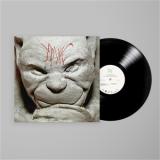
Random Color ReVINYL Edition. Never has a Songs: Ohia album's process been so integral to its overall feel as is the case with DIDN'T IT RAIN, the band's sixth proper full-length. The album, like the working class South Philadelphia neighborhood in which it was birthed, has a real used goods kinda feel to it. Engineer Edan Cohen employed what some may consider "old-fashioned" recording techniques -- the entire album was recorded live with no overdubs, the full band playing in one room with the players always within arms' reach of one another; singers Jason Molina, Jennie Benford and Jim Krewson (the latter two of Jim & Jennie And The Pinetops) sharing microphones singing live together, sometimes sitting in chairs, sometimes standing. The result is a sound which resembles the warmth and personality of the classic Muscle Shoals Sound recordings of the early- to mid-70s: Willie Nelson's PHASES & STAGES, the Rolling Stones' "Wild Horses", and others by Aretha Franklin, Boz Scaggs, Bob Seger, Lynyrd Skynyrd and Wilson Pickett.Inspired by the Mahalia Jackson song of the same name, the title track is a beautiful song about the shifting tides of life and the old cycle of "a lot of shit going down before shit clears up". It's a damn fine place to start an album that seems in no hurry whatsoever to make a universal statement, instead perfectly content to walk its own path toward resolution. And damn if Songs: Ohia principal songwriter Jason Molina hasn't gone and created a record that is even more intensely personal and healing than any of his previous works. Neil Young had his AFTER THE GOLDRUSH, this is Molina's DIDN'T IT RAIN. Indeed, this is the album with which Molina really leaves his mark as a serious songwriter and artist. On 1999's genre-bending Ghost Tropic full-length, Songs: Ohia made it clear that it could make a cohesive album that took its listener on a journey from front to back. Its dislocated feel set a haunting tone, and its largely instrumental and drone-like quality was the process of the Ohia eluding itself and its own tendencies, searching for the underside of its roots freshly yanked. With DIDN'T IT RAIN, Molina & Co. return to the beauty of the song form and offer up a startlingly soulful and introspective song cycle in which Molina -- accepting a comfortable degree of anonymity amongst the other players -- meditates on what it means to feel rooted again (in the city of Chicago, where he's called home for the past three years), sounding more sturdy at his core than ever.
Das fünfte Lemonheads-Album 'It's A Shame About Ray', wird zum 34.Jahrestag wieder als Single Vinyl auf grünem Vinyl mit der Original-Tracklist nachgepresst. Beschrieben von Musikjournalist und Autor Everett True als "Ein 30-minütiger Einblick in das, was es heißt, hart und schnell und locker und glücklich mit gleichgesinnten Kumpels zu leben, angetrieben von einer gemeinsamen Liebe zu ähnlichen Bands und Drogen und Alkohol und Freiheit". It's A Shame About Ray" hatte in jenen berauschenden, sorglosen Tagen des Jahres '92 eine beträchtliche Wirkung. Die Platte fängt perfekt Dandos Fähigkeit ein, die Sehnsucht und Lust der Teenager mühelos in einem zweiminütigen Popsong zu verpacken. Singles wie "My Drug Buddy" und der luftig-perfekte Pop des Titeltracks mögen herausstechen, aber die eigentliche Stärke des Albums liegt in den Tracks dazwischen; das wirklich fantastische 'Confetti' (über die Scheidung von Evans Eltern) und die atemberaubend lässige Akustik-Coverversion von 'Frank Mills' (aus dem Hippie-Musical Hair), eine Version, in der jedes Quäntchen Pathos und Gefühl für die verlorene Generation der 1960er mitzuschwingen scheint. Wenn Evan Dando Zeilen wie "I love him/but it embarrasses me/To walk down the street with him/He lives in Brooklyn somewhere/And he wears his white crash helmet" singt, weiß man erst richtig zu schätzen, wie wunderbar und verlockend Popmusik sein kann. Und dann gibt es da noch den Ansturm von Aufsässigkeit und Unverfrorenheit im wunderbar verkürzten 'Bit Part'; das aufgedrehte 'Ceiling Fan In My Spoon'... das war Jungs/Teenager-Popmusik mit Stil auf einem Niveau mit The Kinks, den frühen Undertones und den Wipers. "Ray sounds revelatory in its restlessness, mixing college pop with country flair and relocating Gus Van Sant's Portland atmosphere to New England." Pitchfork *****½
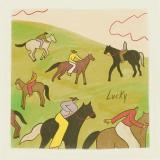
LUCKY is the self-titled debut album by the San Francisco band, born of a collaboration between songwriters Andrew St James (French Cassettes, Juan Wayne) and Peter Kegler (Half Stack). Now a full band featuring, the group combines anthemic indie-rock with y’allternative twang, the perfect soundtrack for long drives and late night revelries.
The story begins when St James booked Kegler’s band Half Stack for a show with Juan Wayne at the Rickshaw Stop in San Francisco. The two immediately recognized each other as kindred spirits and before long they were spending late nights at The Lucky Horseshoe in Bernal Heights, where they pledged to make an album together. Much like Lennon-McCartney or Jagger-Richards, St James and Kegler showed up with their own songs and helped each other dial them in, the songs becoming something totally unique in the process. Pretty soon they recruited Elsasser and headed into the studio with producer Joe Santarpia (Mac DeMarco), where they blazed through more than half a dozen songs in a few days, capturing first takes of raw energy.
Album opener “Falling Through”, written by Kegler on a long drive over HWY 17 to Santa Cruz, pairs talkin’ country vocals on the verse with a hard hitting chorus, eventually ramping up to a phased out guitar solo and a truly epic bridge with gang vocals and an ad lib from St James. Meanwhile, lead single “Traveler” was the first song written for the album, originally a folky shuffle, St James thought it was a goner but Kegler helped recast it as a mid-tempo rocker with a twangy alt-country edge. “Friends” is a true-to-life account of St James’ lifestyle as he shuttled between San Francisco and Los Angeles, paying homage to the City’s legendary House of Prime Rib with a propulsive beat that recalls Girls, Kings of Leon, and the grandiose energy of the E Street Band.
Highly anticipated debutalbum from LUCKY. Press coverage includes reviews and features in Various Small Flames, Glide Magazine, Broken Dreams Club, and more.
“...equal parts laidback swagger and earnest emotion…” - Various Small Flames
“LUCKY is becoming one of the most exciting figures to emerge in alt-country in some time.” - Glide Magazine.
Limited Silver Vinyl. The Rapture wurde im Frühjahr 1998 von Vito Roccoforte und Luke Jenner gegründet. Mit einem scharfen Ohr für Visionäre wie PIL, Television und Chrome erlangte die Band unter ,Kennern" im ganzen Land schnell einen Ruf für ihre energiegeladenen, oft chaotischen Live-Auftritte; wobei Jenner wie ein auf Steroiden stehender Trottel herumhüpfte, während die Rhythmusgruppe ihren patentierten ,sonic deathfuck groove" zum Besten gab. Im Herbst desselben Jahres wurden zwei Alben aufgenommen: eine LP mit acht Titeln, die auf dem wegweisenden Art-Punk-Label Gravity Records aus San Diego erschien, sowie eine Single, die bei Sonny Kayes Gold Standard Laboratories veröffentlicht wurde. Nach diesen beiden Veröffentlichungen nahm die Band ihre ,Make-it-fucked-up"-Philosophie mit auf Tour und tourte mit Sunny Day Real Estate, Gogogo Airheart und Nuzzle. Im Mai 1999 zog die Band nach New York City um. Matt Safer, der kurz zuvor aus Washington DC zugezogen war, übernahm den Bass. Mit einer solideren Besetzung als je zuvor stürzte sich die Band in die Erforschung von Dance- und Popmusik und erweiterte ihre bisherigen Einflüsse um Chic, The Byrds, The Happy Mondays und Timbaland. Auf der darauf folgenden EP - Out Of the Races and Onto the Tracks aus dem Jahr 2001 - festigte The Rapture ihren ikonoklastischen Stil wild-energetischen Rocks, der sich ebenso sehr an Dance-Musik wie am Post-Punk orientierte.
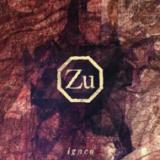
Recorded and mixed by Steve Albini at Electrical Audio in Chicago, the album captures Zu at their most raw and explosive -- where avant-jazz energy collides with the weight of experimental rock. Igneo (2002) by Zu is the band's debut studio album and marks the starting point of their distinctive sonic identity. Even at this early stage, many of the elements that would define their later work are already clearly present. The album emerges from a context deeply rooted in experimentation and exploration. Compared to their subsequent releases, the sound here feels more open and less tightly structured, with a stronger emphasis on improvisation and real- time interaction between the musicians. The trio--baritone sax, electric bass, and drums--develops a language that blends free jazz, noise, post- hardcore, and touches of contemporary composition.
Listening to Igneo, you can sense a balance between raw energy and expressive freedom. The baritone sax shifts between abrasive bursts and more spacious, stretched- out passages, while the bass moves from repetitive grooves into fragmented lines. The drums, in turn, alternate between tight rhythmic frameworks and looser, more fluid playing. There's a constant negotiation between control and release. Unlike the band's later, more disciplined records, the structures here feel more fluid and unpredictable. The tracks don't follow conventional forms; instead, they evolve like living organisms, marked by sudden changes, contrasting sections, and a persistent sense of instability. This gives the album a dynamic, almost volatile character. The title Igneo-- suggesting something fiery and primal-- captures the essence of the record quite well. The music feels warm, raw, and in continuous motion, as if it were constantly on the verge of erupting.
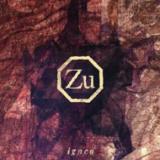
Recorded and mixed by Steve Albini at Electrical Audio in Chicago, the album captures Zu at their most raw and explosive -- where avant-jazz energy collides with the weight of experimental rock. Igneo (2002) by Zu is the band's debut studio album and marks the starting point of their distinctive sonic identity. Even at this early stage, many of the elements that would define their later work are already clearly present. The album emerges from a context deeply rooted in experimentation and exploration. Compared to their subsequent releases, the sound here feels more open and less tightly structured, with a stronger emphasis on improvisation and real- time interaction between the musicians. The trio--baritone sax, electric bass, and drums--develops a language that blends free jazz, noise, post- hardcore, and touches of contemporary composition.
Listening to Igneo, you can sense a balance between raw energy and expressive freedom. The baritone sax shifts between abrasive bursts and more spacious, stretched- out passages, while the bass moves from repetitive grooves into fragmented lines. The drums, in turn, alternate between tight rhythmic frameworks and looser, more fluid playing. There's a constant negotiation between control and release. Unlike the band's later, more disciplined records, the structures here feel more fluid and unpredictable. The tracks don't follow conventional forms; instead, they evolve like living organisms, marked by sudden changes, contrasting sections, and a persistent sense of instability. This gives the album a dynamic, almost volatile character. The title Igneo-- suggesting something fiery and primal-- captures the essence of the record quite well. The music feels warm, raw, and in continuous motion, as if it were constantly on the verge of erupting.
Antal, founder of the Amsterdam-based Rush Hour Records & Store and renowned for his global DJ touring and eclectic sets spanning house, techno, rare funk, soul, and jazz, curates a personal selection from the historic label Timeless Records.
For Timeless Presents From The Archives, he handpicked highlights from 1974–1994 by jazz luminaries such as Art Blakey and the Jazz Messengers, Pharoah Sanders, Carter Jefferson, Gary Bartz, Woody Shaw, and more. “I want to thank the Wigt family for allowing me to dig deeper into their catalog to compile a selection of personal jazz favorites. Their passion for jazz and independent labels has inspired me as a DJ and record store owner. A great song is a great song, no matter when or where it was made,” Antal reflects. For this double album, Antal shares his love for modal and spiritual jazz, celebrating a pivotal era in jazz and creating a must-have for collectors, selectors, and new explorers.
Timeless Presents From The Archives 1974-1994 is packed in a gatefold sleeve, featuring notes by Antal and artwork by Dirk-Jan Deckwitz. Affixed on the protective sleeve is the 50th Anniversary Timeless Jazz sticker.
Sad Daddy emerges straight out of the Ozark hills in 2026 with their fourth studio album, Ozark Shine, highlighting the band's songwriting and harmony vocals Their 2022 release, Way Up in the Hills, took the nation by storm with its down- toearth, raw old- time country and jug band vibes, paired with relevant subject matter. Carrying a similar sentiment and back-to-the-country message, Sad Daddy once again captures the pulse of America and proves they are ahead of their time with this new collection of original material. The songs range from stocking up for the next weather disaster, to buying a peaceful piece of land with a cabin, to playful tales of returning home to check if the stove was left on, and even digging a backyard hole to bury a lame partner--offering a diverse palette of stories that feel real and relatable today
Because It Happens dokumentiert ein außergewöhnliches Live-Treffen dreier Meister der freien Improvisation - aufgenommen im legendären Café OTO in London. Mikolaj Trzaska (Saxofon, Bassklarinette), John Edwards (Kontrabass) und Mark Sanders (Schlagzeug) begegnen sich nicht im klassischen Sinne des Jazzspiels, sondern verstehen ihre Musik als "Live-Komposition" - einen offenen Prozess, in dem Publikum und Raum Teil des musikalischen Geschehens werden. Zwischen eruptiver Energie und lyrischer Verdichtung entfaltet sich ein intensiver Dialog, der weit über Technik hinausgeht: Musik als unmittelbare Erzählung, als Risiko, als Entdeckung. Ein Album voller Spannung, Freiheit und bewegender Momente.
METLASR is an album for microtonal idiophones and modular synthesizer by composer/producer Tyler Friedman for Radicant_Editions.
Drawing on the legacies of downtown minimalism, METLASR connects avant-garde composition, aspects of global traditional musics and advanced synthesizer technique into an ambitious and singular hybrid. Animated by generative modular sequencing and grounded by undulating bass, the album focuses on an endless cascade of pirouetting geometric melodics, which are spread across a spectrally fused ensemble of crystalline FM and sampled pitched percussion – specifically gamelan orchestra, marimba, mbira, vibraphone and tingklik. The assemblage of voices interlace in fractal mirrors, aggregating into pointillist harmonizations heightened by multiple layers of dub processing. The use of alternative tunings — primarily 24-note per octave just intonation — infuses the poly-modal progressions with lush radiance, staging tension between the strange and the beautiful through neon inflections of subtle dissonance.
Entirely improvised, a fact belied by the contrapuntal complexity of it all, METLASR’s seven tracks were each recorded in a single pass and subject to minimal edits. Although the sound palette and...
You are Spring!" beginnt mit einer gewundenen Klangwand, A-cappella-Stimmen, die sich in üppiger Harmonie überlagern und den halb-titelsgebenden Frühling besingen. Sofort entführt uns Tasha aus dem tristen, grauen Winter in eine Welt voller Bilder und Empfindungen von neuem Leben. Stell dir vor: ein Feuerwerk aus glockenförmigen Blüten; Rosa, Citrin und Buttergelb; der Himmel klar, eine Lunge voll Blau; Wärme, überall, die die über den Winter geheilte Haut küsst und sich nach Berührung sehnt; Leichtigkeit nach dem Leiden; ein tiefer Atemzug nach dem Ersticken. "Don't die now / There's life to be found now,", beginnt sie. In Texten, die von Gwendolyn Brooks' Gedicht "To The Young Who Want To Die" inspiriert sind, formuliert Tasha die These dieses Albums mit exquisiter Präzision. Es gibt Jahreszeiten der Härte, Jahreszeiten der Schwierigkeit, ja. Aber hier, in diesem Album, meditieren wir über den Frühling über eine Zeit des Feierns, die umso süßer ist, weil wir wissen, was man ertragen muss, um dorthin zu gelangen. "Alive now / It's spring now / Alive now / You're spring now" schließt sie, getragen von den samtigen Stimmen von Jamila Woods und Taja Cheek von L'Rain, die auf diesem Track zu hören sind, und lädt uns in die paradiesische Schatzkiste ein, die sie hier geschaffen hat. Für Tasha ist der Frühling ein Ort, an dem wir ankommen, aber auch ein Zustand, in dem wir uns befinden, eine Art, wie wir geworden sind. Wenn sie darüber spricht, was das Album ihrer Hoffnung nach vermitteln soll, erläutert sie die Bedeutung von "You Are Spring!" weiter und sagt: Es ist eine Art zu sagen, dass du das bist, worauf sich andere Menschen freuen; du bist das, worauf wir warten; du bist das Schöne." Wenn es im vorherigen Album um Sehnsucht ging, darum, sich nach einer Fülle zu strecken, von der du weißt, dass sie kommt, dann ist "You are Spring!" eine Gelegenheit, innezuhalten und alles in dich aufzunehmen, sobald du in deine Fülle eingetreten bist. Das heißt, You Are Spring!" ist in seiner Aufmerksamkeit für die Glückseligkeit so eindringlich wie sein Ausrufezeichen, aber es hat auch einen klaren Blick auf die Welt um sich herum. Die zweite Hälfte des Albums bewegt sich auf diesem schmalen Grat zwischen Wonne und Untergang. Sieh dir zum Beispiel "Actor" an und seine Auseinandersetzung mit den Gesten, die wir in einer Liebe machen, die hohl geworden ist, gefolgt von Special" und seinem aufwendig arrangierten Klangteppich, komplett mit Tashas Klarinetten-Debüt. Im letzten Titel, Quick!", steigt Tashas Stimme in einer fast Stephen-Sondheim-artigen Tonfolge empor und drängt uns singend: "Quick! See how this beauty rushes by?" Es gibt Dissonanzen im Klimpern der Akkorde, das Keuchen ihrer Finger, die über den Gitarrenhals gleiten, eine raue, fast wie von einer Kassette klingende Qualität der Produktion, wieder von Gregory Uhlmann. Aber wir werden noch nicht aus dem Garten vertrieben; der Song klingt langsam aus, zurück in den Glockenblumenhain von Tashas sanftester Stimmlage. "You Are Spring!" fordert uns heraus, uns an unserer Gegenwart zu erfreuen, uns selbst als die lang ersehnte Jahreszeit des neuen Lebens und Wachstums zu sehen. Und wenn der Winter wiederkommt, wie er es immer tun muss, die Trauer sich einschleicht, Herzschmerz vor der Tür steht, gibt Tasha uns etwas, an dem wir uns festhalten können. Die Gewissheit, dass der Frühling wiederkommen wird, selbst dann. Dass die Schönheit und Fülle, die uns jetzt umgibt, uns wieder umgeben wird, noch einmal.
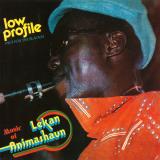
Strut Records proudly presents a new reissue of the original Afrobeat classic Low Profile (Not For The Blacks), recorded and composed by Afrika 70 saxophonist and bandleader Lekan Animashaun and produced by Fela Kuti. After years touring the world as Fela’s baritone saxophonist, Animashaun stepped forward to lead the legendary Egypt 80 band following Tony Allen’s departure, remaining the group’s musical director until Fela’s death in 1997. He continued on subsequent tours with Seun Kuti until 2016. Lekan began recording his only solo project, Low Profile, in 1977. The album was composed and recorded across sessions at home in Nigeria and on tour with Fela, who both produced the recordings and added keyboards to the album’s title track. ‘Low Profile (Not For The Blacks)’ referenced a government campaign during the country’s 1970s oil boom: “It was inspired by a speech by Olusegun Obasanjo, Nigeria’s military Head of State, when he urged black people to keep a low profile about their wealth and not to behave in a vulgar, arrogant way,” explains Lekan. “I argued that low profile is not just for the blacks, as everyone is human, regardless of race.” On the flip side, the simmering Afrobeat anthem ‘Se Rere’ (which translates as ‘Do Right’) delivers Animashaun’s message of living with integrity: do right, and you will reap what you sow.
The song later became the band’s opening number during Fela’s live performances both in Nigeria and internationally throughout the 1980s and ’90s. Despite recording beginning almost two decades earlier, Low Profile did not receive an official release until 1995, when it finally surfaced on Fela’s Kalakuta label. One of only a handful of albums led by core members of Kuti’s band, Low Profile captures a pivotal moment in Afrobeat history. Over time, the original has become a rare and highly sought-after record, and this new reissue places the spotlight back on a modest but influential Nigerian legend. Strut’s reissue features the complete original artwork, is fully remastered by The Carvery, and includes brand new liner notes by Lekan Animashaun himself.
Soul, jazz-rock, candombe and funk blend in the cocktail of La Banda's first and sole album. Often regarded as Argentina's first supergroup, the ensemble built a reputation on their explosive live performances during a time of political repression. Short-lived but unforgettable, the six-piece brought together top-tier jazz musicians—five Argentinians alongside Uruguayan icon Rubén Rada—to deliver a deep, hard-hitting sound that resonates far beyond its era.
Rada arrived in Buenos Aires bruised — a romantic disaster and a string of empty concert halls back in Montevideo had pushed him to start over at 35. Behind him lay a remarkable journey: from inventing candombe beat with El Kinto, to leading the Latin rock powerhouse Tótem, to recording cosmic jazz with Opa alongside the Fattoruso brothers. Trumpeter Benny Izaguirre, the band's architect, gathered around him a cast of heavyweights: pianist Jorge Navarro, an essential figure in the Buenos Aires jazz scene since the 1950s; saxophonist Bernardo Baraj, forged in Alma y Vida, Argentina's jazz-rock champions; and the irresistible rhythm section of bassist Ricardo Sanz and drummer Luis Ceravolo, both veterans of Astor Piazzolla's quintet. All three — Baraj, Sanz and Ceravolo — were simultaneously part of Banda Spinetta, the jazz-oriented project of Argentine legend Luis Alberto Spinetta.
The sessions also drew in two guests who needed no introduction: guitarist David Lebón — veteran of Pappo's Blues, Pescado Rabioso, Color Humano and Serú Girán, one of Argentine rock's true giants — and guitarist and producer Daniel Homer, a quietly indispensable figure across Buenos Aires' jazz and rock scenes.
Recorded in 1979 and gone almost as soon as it arrived — La Banda's brief existence and this sole album are what Buenos Aires sounded like when it was allowed to breathe. Between raids, between disappearances, in the stolen hours when music was louder than fear.
Vacation. A backpack trip through Australia, a campfire in the Schrebergarten. Cruising in the car with friends through the Lüneburger Heide or just a short holiday in the mind, during a rainy lunch break or with a glass of Sprizz on the balcony. And this all includes music, music, music! Grooves which roll like an intercity train into the horizon, Rhodes chords as soft as sand on the beach and synthesizers that sparkle like the reflections on the ocean. Music as colourful as a Hawaiian shirt and as warm as the morning sun.
Welcome to Erobique’s second album “Erobique No. 2”. Here even the song titles are in a holiday mood: “Ahoj!” greets the young “Springinsfeld”. The “Mantas” glide elegantly around the “Acquamarina”. “Salut Les Copines!” we shout to the yacht next to us. “Come on the ‘Ravedave!’” they echo cheerfully. “Riding Low” is the motto while the “Arpeggiator” beautifully condenses the “Synaesthesia” of our dazed senses. The “Italotape” in the cassette deck plays the “Hitsong Von uns Beiden”. It’s all so beautiful “Verkackt”, it sounds like “Zukunftsmusik”!
Carsten Meyer released his debut album “Erosound” in 1998 under the name “Erobique”. Exactly 25 years later, the now 50-year-old releases his second Erobique album on his own label A-sexy. Thirteen diverse tracks ranging from holiday disco to rhythm box rave, recorded and produced with many of his friends and companions. Twenty-five years, that's pretty much the time it took disco to evolve from the legendary loft parties of pioneer David Mancuso to the impressive mass spectacles of Daft Punk's performances, or from Meyer's birth to his first full-length record. So why only now a second album as “Erobique”?
For nearly four decades, since its founding during the mid 1980s, the Belgian imprint, Sub Rosa, has continuously plumbed the depths of numerous, radical creative histories, assembling a catalog of releases that has almost no equivalent, while remaining nearly impossible to nail down. That said, for most of its run, Sub Rosa has been primarily recognized for its rigorous explorations of the lesser explored shadows of experimental sound practice (sound-art, sound-poetry, early electronic and electroacoustic music, free-improvisation, etc.), delivering a remarkable body of artifacts that have collectively helped to rewrite history in their wake. While it's always been impossible to anticipate where the label might take us next, threading their catalog are plenty of releases that throw further wrenches in the cogs, expanding our understanding of what they pursue, as in the case of a handful of titles, appearing as early as the 1980s, dedicated to ethnographic field-recordings from various parts of the world. Among the most striking and celebrated of these was 2017's Ethiopian Urban And Tribal Music: Mindanoo Mistiru / Gold From Wax, comprising an astounding body of recordings made by Ragnar Johnson and Ralph Harrisson in Ethiopia during 1971, reissuing material originally released by Lyrichord the following year. Now, Sub Rosa returns to the incredible work embarked upon by the pair and captured on that same trip with Ethiopian Musics 1971, comprising the recordings originally released by Ocora shortly after their completion, expanded in this edition to include an entire disc of never before released music. Widely regarded as some of the most important field-recordings ever made of indigenous Ethiopian folk music (as captivating and intoxicating as they are revelatory: providing insights into the roots of the country's singular traditions of popular music and jazz that have come to be celebrated the world over), this incredible collection is issued by Sub Rosa in a beautifully produced 2LP edition, complemented by a four page insert providing detailed descriptions of each song, as well as notes by the ethnomusicologists and recordists, as well as a 2CD edition, with a twelve page booklet. Insanely good and absolutely essential for any fan of field-recording, ethnomusicology, the music of Ethiopia, or the label's mission at large. Once again, Sub Rosa has defied our expectations and delivered a remarkably important intervention in the history of recorded sound.
Located in the Horn of Africa region of East Africa, few cultures are distinctly singular, while being so diverse (containing 80 distinct ethnic groups who speak 70 languages and 200 dialects) as that of Ethiopia. The home to some of the oldest surviving sects of Judaism, Christianity, and Islam (each contributing important aspects of its collective cultural body), particularly the country's culinary and musical traditions have become celebrated the world over, and (generally speaking) feel entirely independent of those of its neighbors. Given this, it's unsurprising that, during the summer of 1971, the young ethnographer, Ragnar Johnson, accompanied by Ralph Harrisson, traveled to Ethiopia to begin his brief career as a field recording ethnomusicologist, capturing material on reels of magnetic tape that would be subsequently released across three LPs for Lyrichord and Ocora, respectively, coming to form a cornerstone of documentation and study of the country's many indigenous musical traditions, as well as providing wide, global access to them for the first time. While Johnson's recording career was relatively brief, ending toward the end of the decade when he began to focus more on teaching in UK universities, with a focus on the anthropology of art and social anthropology, his impact on the field was lasting. Between 1971 and 1979, in addition to those he made in Ethiopia, he made hugely significant recordings in Yemen (also issued by Lyrichord before being reissued by Sub Rosa) and Papua New Guinea, which were originally released by David Toop's Quartz Publications to wide celebration, before being revisited by Ideologic Organ in 2023.
While it's worth noting that commercial releases of ethnomusicological recordings by labels like Folkways, Lyrichord, and Ocora were still in their relatively early days when he entered the field, Johnson's recordings quickly stood apart for their vivid qualities and clarity of space, allowing them to stand the test of time. As he later stated: "I used a Uher Report L stereo tape recorder, BASF quarter inch tapes at a recording speed of seven and a half inches per second with two directional microphones mounted to record an isosceles triangle of stereo sound," he reveals. "The location of the microphones and musicians was critical. The musicians were fully informed of all aspects of the recording process."
Johnson's recordings are extremely vivid, there is a clear sense of space and the cries of the flutes exist across the entire stereo field. It's a reflection of Johnson's skill as a field recordist that his recordings continue to be reissued over forty years later. "I used a Uher Report L stereo tape recorder, BASF quarter inch tapes at a recording speed of seven and a half inches per second with two directional microphones mounted to record an isosceles triangle of stereo sound," he reveals. "The location of the microphones and musicians was critical. The musicians were fully informed of all aspects of the recording process… I used to enjoy being in the moment and hearing something wonderful despite the stress of the vigilance required to ensure that the recordings were accomplished according to plan. The responsibility is to record and document the music as effectively as possible so that it has been preserved for posterity. It is better to actually record music than to sit in a seminar room debating the ethics of recording music." It is this very ethos and sense of clarity that can be encountered across the length of Ethiopian Musics 1971.
For the sake of clarity, the two LPs of material that comprise Ethiopian Musics 1971 should be regarded as a single body of recordings alongside those made in Ethiopia by Ragnar Johnson and Ralph Harrisson during the summer of 1971 (previously issued by Lyrichord and reissued by Sub Rosa), and as two that have, until now, remained historically distinct. The first LP gathers that material released by Ocora during the early 1970s on Musiques Ethiopiennes, while the second comprises (as far as we can tell) twelve never before issued recordings, expanding the journey and making this the definitive edition of the release with its incredible total of 23 recordings of songs, allowing it ever greater scope to achieve the recordists' modus operandi of capturing the broadest and most diverse cross section of Ethiopia's many musical cultures, ranging from different forms of urban music captured in Addis Ababa, documenting largely orally transmitted idioms within which lyrical content is given greater emphasis than the instrumental components (played on masenko fiddles, craar and bagana lyres, washint flutes and kabaro drums), to folk idioms hailing from the Danakil desert and the border regions with Sudan and Kenya. There are songs sung and played in bars, divination chants, laments, dances, Christian songs, and Amharic sung poetry, to only begin to scratch the surface.
Ethiopian Musics 1971 is one of those rare albums where each musical moment is pure, intoxicating gold, while also being greater through the sum of its parts. There are the many songs, forming a rich tapestry of remarkable range across the respective two LPs/CDs (moments that wondrously flirt with sonic abstraction; hypnotic rhythms; pulsing chant; melodies that, in structural arrangement and tonal combination, help us reframe how such a thing might be understood, and a great deal more), each imbued with a remarkable directness and emotive sensibility, and there is the stunning quality of these recordings themselves, transporting each sound to our ears as though we intimately share its creator's space, while being imbued with the pure heart and remarkable spirit with which they were made. As we said before, it's little wonder, once heard, why these recordings and this music feels as fresh and relevant (enduring more than 50 years) today as when they were made. Once again, Sub Rosa has raised the bar with this essential addition to the incredible work that Ragnar Johnson and Ralph Harrisson did back in Ethiopia during 1971, radically expanding our access to the sounds that they captured with these stunning, beautifully produced 2LP and 2CD editions. Absolutely engrossing from the first sounding to the last, this one can't be missed.
Newly signed to indie heavyweights Heist or Hit (Westside Cowboy, Her’s) EP two: ‘Marionette’ has been produced by Daniel Fox (Sprints, Melts, Psychotic Monks, Naked Lungs, Nerves, Ronan Group) and it’s set to be seminal. A set text for future musicians with aspirations of innovation. “The theme of the marionette is present throughout each song, involving some aspect of a power struggle and a lack of control within oneself.” Opener ‘Chocolate’ bounces in on a synth line as slippery and hyperactive as anything Aphex Twin ever cooked up. Crispy offbeat electronic cymbals play counterpoint to atonal guitars and pugilistic drumming before the track dry-wretches its way into a nauseating cacophony of euphoria. It’s a tale of crippling social anxiety and a preference for an unflattering, lonely reality. The muted guitar pluck in the intro to ‘Crows’ is the sonic equivalent of biting one’s nails. An anxious, involuntary tic that speaks to the theme of guilt, especially surrounding digital culture: “children can watch what they please, just with viewer discretion.” The track lurches between textures, weaving themselves in and out of focus. Guitars blare like sirens, interrupting paranoid urban centres at 2am, while the bass sounds like the inside of an insomniac’s head on day four of a REM drought.
The metallic intent of ‘Discipline’ squats on the chest as though Steve Albini is your sleep paralysis demon. The pain of accountability spews from the industrial regularity of the beat, apt to the narrative of a soldier coming to terms with the lies that made him commit atrocious, violent acts. EP closer ‘Servant’ starts like a Spectrum loading screen. Dial-up modem-coded, it pauses for moments of white-noise-vomit and existential bloops. Fitting for a more abstract take on the idea of the power struggle filtered through religious imagery and self-awareness of one’s own actions, coupled with an inability to exert control over them. The band pile on the textures with sadistic glee until the evil is exorcized and the modem melts. Connection severed. Across the EP, vocalist Joseph has a tendency to hyper-fixate on themes of control and unhappiness. Creating rooms in which doom and isolation ricochet. Not that it’s all bad news “we like to think that by shedding light on the negative, it commands a sense of hope.” Influenced as much by the liminal-space horror and uncanny dread of Silent Hill as the existentialist theatre of The Twilight Zone or the absurdity of Twin Peaks, they occupy a space between unease and impulse. Makeshift Art Bar are not a band interested in being liked. They’re a band interested in being necessary. There’s so much eating and drinking in their work that multiple listens simply don’t satisfy; something new reveals itself on each return visit. Audacious. Idiosyncratic. Vital. A young band carrying identity, defiance and an uncompromising vision as if it isn’t a rare cargo.
Newly signed to indie heavyweights Heist or Hit (Westside Cowboy, Her’s) EP two: ‘Marionette’ has been produced by Daniel Fox (Sprints, Melts, Psychotic Monks, Naked Lungs, Nerves, Ronan Group) and it’s set to be seminal. A set text for future musicians with aspirations of innovation. “The theme of the marionette is present throughout each song, involving some aspect of a power struggle and a lack of control within oneself.” Opener ‘Chocolate’ bounces in on a synth line as slippery and hyperactive as anything Aphex Twin ever cooked up. Crispy offbeat electronic cymbals play counterpoint to atonal guitars and pugilistic drumming before the track dry-wretches its way into a nauseating cacophony of euphoria. It’s a tale of crippling social anxiety and a preference for an unflattering, lonely reality. The muted guitar pluck in the intro to ‘Crows’ is the sonic equivalent of biting one’s nails. An anxious, involuntary tic that speaks to the theme of guilt, especially surrounding digital culture: “children can watch what they please, just with viewer discretion.” The track lurches between textures, weaving themselves in and out of focus. Guitars blare like sirens, interrupting paranoid urban centres at 2am, while the bass sounds like the inside of an insomniac’s head on day four of a REM drought.
The metallic intent of ‘Discipline’ squats on the chest as though Steve Albini is your sleep paralysis demon. The pain of accountability spews from the industrial regularity of the beat, apt to the narrative of a soldier coming to terms with the lies that made him commit atrocious, violent acts. EP closer ‘Servant’ starts like a Spectrum loading screen. Dial-up modem-coded, it pauses for moments of white-noise-vomit and existential bloops. Fitting for a more abstract take on the idea of the power struggle filtered through religious imagery and self-awareness of one’s own actions, coupled with an inability to exert control over them. The band pile on the textures with sadistic glee until the evil is exorcized and the modem melts. Connection severed. Across the EP, vocalist Joseph has a tendency to hyper-fixate on themes of control and unhappiness. Creating rooms in which doom and isolation ricochet. Not that it’s all bad news “we like to think that by shedding light on the negative, it commands a sense of hope.” Influenced as much by the liminal-space horror and uncanny dread of Silent Hill as the existentialist theatre of The Twilight Zone or the absurdity of Twin Peaks, they occupy a space between unease and impulse. Makeshift Art Bar are not a band interested in being liked. They’re a band interested in being necessary. There’s so much eating and drinking in their work that multiple listens simply don’t satisfy; something new reveals itself on each return visit. Audacious. Idiosyncratic. Vital. A young band carrying identity, defiance and an uncompromising vision as if it isn’t a rare cargo.
Originally released in 2012. A long-in-the-making soundtrack to acclaimed filmmaker Grant Gee's documentary about German writer WG Sebald. »Patience (After Sebald)« is a multi-layered film essay on landscape, art, history, life and loss - an exploration of the work and influence of German writer WG Sebald (1944-2001), told via a long walk through coastal East Anglia tracking his most famous book »The Rings Of Saturn«. Much like The Caretaker's oeuvre, Sebald's works are particularly focused on themes of memory, both personal and collective, making Kirby the ideal candidate for this score.
Grant tasked him with soundtracking responsibilities, but rather than thrift shop shellac, the source material for »Patience« was sourced from Franz Schubert's 1827 piece 'Winterreise' and subjected to his perplexing processes, smudging and rubbing isolated fragments into a dust-caked haze of plangent keys, strangely resolved loops and de-pitched vocals which recede from view as eerily as they appear. Mastered by Lupo at D&M, the album is adorned with another specially commissioned painting by Ivan Seal.
out of Stock
Last delivered 3 months ago available to reorder, subject to availability
‘Falling Backwards’ is the debut album from Him & Earl via Wah Wah 45s, serving up a mystic brew of desert blues, English folk, Americana and stirring southern soul, with tentacles stretching out into psychedelia and prog, across 11 hot and hazy tracks.
Singer-songwriter Olly Him and DJ, producer and composer Wyndham Earl both have deeply-dug roots in the south coast of England, with the former making his name as a solo artist before exploring his soulful folk/prog sound with a number of live acts, and the latter collaborating on albums and sharing stages with Bonobo, Khruangbin, Alice Russell and TM Juke, having remixes released by Tru Thoughts and Mr Bongo Records and releasing his solo projects on his Time Spun imprint.
The pair first met in 2015 when Wyndham produced some songs for now defunct hypnotic Afro-folk outfit Creatures Of The Deep, of which Olly was a founder member. They instantly clicked, but after the group broke up it was a few years before serendipity brought them back together; a chance encounter at a gig saw them begin hatching plans to make a full album under the name Him & Earl with Olly writing the songs and Wyndham arranging and producing the project.
After so long floating in the creative ether, the connective power of these songs has been strikingly immediate. The debut Him & Earl live show in early 2026, before any tracks had even come out, blew Olly and Wyndham’s expectations out of the water as their five-piece band found themselves toe-to-toe with a sellout crowd – a sweaty room full of happy music fans, on an otherwise bleak January night, throwing shapes to live percussion showdowns, losing themselves in psychedelic guitar and bass wig-outs, and singing along to choruses they’d never heard a note of before.
Since then, the first two singles “Bottled Up” and “Away” have had high profile airplay from the likes of BBC 6 Music’s Huw Stephens and Cerys Matthews, and Radio X’s John Kennedy, adding to widespread tastemaker and specialist support around the world, as excitement builds for the album.The LP’s introspective and philosophical lyrics are brought to life by a sonorous yet strangely uplifting sound palette that morphs by stealth into a darkly propulsive, psychedelic and bluesy trip.
Opening song “Away” taps straight into a key theme of the record – journeying, in both a physical and mental sense, and the quest to move on and embrace the unknown – and its sunny guitars, trumpet and violin barely even hint at the tumultuous sonic adventure that’s set to unfold. A stronger indication comes in the title track,“Falling Backwards”, as its elegant web of staccato finger-picked hook, fluid piano melodies and strings unfurls into a six-minute exploration of what Olly describes as “going through every day normality while feeling close to chaos and like things could fall apart at any moment… when there is a myriad of different things holding everything together and if one thing goes wrong everything can fall apart around it.”
“Better Days” swiftly restores a sense of upbeat calm, with lively Kora and Afrobeat-inspired guitar licks, atmospheric trumpet and a harmony-clad mantra of hope on the horizon; the folky “Bottled Up” continues that blissful notion with undulating finger-picked guitar, earthy clarinet counter-melodies and celestial murmurations of delicately plucked strings. The magnetic pull toward more mysterious horizons comes via the dusty twang of Wild West-esque guitars on “Open Road”, a nomadic journey of self-discovery through spacious sonic plains embellished with eerie flickers of flute and clarinet. This leftward turn gathers pace in the trancelike
psych-prog depths of “Preside”, an instrumental cut at the album’s pivotal halfway point. Hypnotic, guttural desert blues-infused riffs on “Inside” channel the feeling of a psychedelic or spiritual trip where, in Olly’s words, “something clicks and you understand things on a different level – it makes you see inside yourself and see things in a different way.” “Shadow overhead” brings a lighter touch to a darker subject – the feeling of paranoia and being locked away from the world – drawn from Olly’s own experience and also his years of working in and around mental health.
Exuberant horns lend hope to loosely looping suspense on “Blindside” (about being caught out by the unexpected, and searching for something to see or hear to pick you up again) and then mesh with urgent strings, low-slung guitars and subterranean bass on “Around Again”, which explores the modern fight to stay afloat amid the endless churn of information and distractions. Still plumbing the bassy, bluesy depths of this journey into the psyche, “You Can Only Know” is a dreamlike revelation about finding someone or something that helps to make sense of the world. Luminescent synths duck and weave, while a rock-solid bass riff is tracked by a soul-soothing four-part “hey hey” harmony, reassuring as a glowing lamp in the window at the end of a life-changing trip.
Faellesskab reveals their most critical and emotionally charged work to date, a deeply personal voyage into the heart of Nordic black metal, where raw emotion and melodic depth keep reveling in sorrow and longing beauty. Translating to "Community", Faellesskab's six tracks weave a strong musical oeuvre within the Afsky canon; their walls of haunting melancholia, interwoven with vital intensity, have never been more powerful. Yet, this new work also sees the band at its sharpest in social criticism, as Ole Luk of Afsky notes: Faellesskab - Overture to the Downfall. Here, community is praised like herd animals fleeing responsibility.
A parade of moral superiority, where truth is trampled in the name of consensus. Where unity means silence, and doubt is a crime. Six songs of shame disguised as care, of freedom suffocated, and of the solitary few who still dare to question. A chorus of hollow words, where silence screams the loudest. Welcome to the celebration - the curtain hasn't just risen, it's been torn away! Afsky will mark the release with a special show in Copenhagen on October 17, graced by a full European album release tour kicking off the following week. Two singles are set to be unveiled in the lead-up to the release. While Afsky continues to refine their signature sound, this release is set to be another landmark in the band's uncompromising discography.
This is joy beyond expectation the arrival of a new Ryo Fukui recording. Captured on June 26, 2004, this live session documents the ninth anniversary concert of Slowboat, the jazz club Fukui founded and considered his musical home. The trio features Ryo Fukui on piano, Benisuke Sakai on bass, and Yoshihito Eto on drums. Fukui was 56 years old at the time, and his playing is powerful and expansive, yet still marked by delicacy and razor sharp precision. In terms of energy, stamina, and technique, he was entering a true period of artistic maturity. He delivers the music of his beloved Phineas Newborn Jr. and Tommy Flanagan with depth and elegance, and approaches the works of Wayne Shorter—an early-life influence—with thrilling intensity. The performance captures Fukui at a moment of profound fulfillment, offering a truly compelling glimpse into his late career brilliance.
Post-Hardcore nach Philly-Art. Unzufrieden mit dem metallischen Youth-Crew-Format, verfolgte Frail die wilde, lärmende Wut der Generation X gegen alles und jeden im rasanten Tempo von San Diego. ,No Indus Try" - die erste und einzige Vinyl-Compilation des Quintetts - enthält wichtige Singles für die Labels Yuletide, Bloodlink und Kidney Room sowie seltene Compilation-Tracks aus ihrer Zeit von 1993 bis 1995. Kommt mit 24-seitigen Zine, das die Band in Notizen, Zitaten, Fotos, Flyern und revolutionärer Literatur dokumentiert. Make Your Own Noise.
Time spent drifting from the northwest to Mexico to New Orleans and now to Montana has kept her off of the industry's radar until recently. Now, following her Newport Folk Fest appearance, she opened concerts for Big Thief and the Deslondes. Her performances on the Western AF have combined to garner over 200k views with the tastemaker site calling her "the GOAT." Cavazos' fans include Esther Rose, Benjamin Todd (Lost Dog Street Band), Riley Downing, Chris Acker, and Luke Bell. She collaborated as a member of a band (called Sundown) with Alynda Lee Segarra (of Hurray For the Riff Raff) and Sam Doores (of The Deslondes), the latter of whom produced this album.
Capturing the full scope of the Straw Hat Crew’s journey into the Grand Line, this collection brings together the massive, high energy score by award winning composers Sonya Belousova and Giona Ostinelli. From the shores of Loguetown to the snowy peaks of Drum Island, every moment of the voyage is brought to life through soaring orchestral arrangements and unforgettable pirate anthems.
2LP Audiophile Black Vinyl: Two 12 inch records pressed on high quality black vinyl for a classic look and superior sound fidelity, delivering every orchestral swell with crystal clear precision.
Double CD Set: Two discs featuring the complete original score and songs, presented in a premium compact format.
Premium Packaging: A double gatefold jacket for the vinyl edition and a three fold digipack for the CD, both showcasing vibrant cinematic artwork of Luffy and the Straw Hat Crew.
Complete Soundtrack: Over 40 tracks spanning the entire second season, including character themes, emotional moments and epic battle motifs.
Whether at home or on your own journey, this release is the perfect way to keep the spirit of adventure alive, immersing you fully in the world of One Piece.
Netflix’s epic high seas pirate adventure, ONE PIECE, returns for Season 2, unleashing fiercer adversaries and the most perilous quests yet. Luffy and the Straw Hats set sail for the extraordinary Grand Line, a legendary stretch of sea where danger and wonder await at every turn. As they journey through this unpredictable realm in search of the world’s greatest treasure, they will encounter bizarre islands and a host of formidable new enemies
Zuerst das Wichtigste: Ja, Your Day Will Come an, das zweite Album von Chanel Beads trägt denselben Namen wie sein Debüt aus dem Jahr 2024. Aber es handelt sich um ein völlig neues Werk, nicht um einen zweiten Teil oder eine Neuauflage. Der Titel des neuen Albums ist derselbe wie der des Vorgängers - eine perfekte Zusammenfassung der Zweideutigkeit von Chanel Beads: zu gleichen Teilen ein augenzwinkernder Scherz und eine zutiefst ernste Aussage. Während sich die Songs entwickelten, entdeckte Lavers, dass der Satz eine tiefere Nuance hatte und eine Spannung zwischen Gewissheit und Zweifel hervorrief, die seine Psyche beschäftigte. Wird dein Tag kommen? Wie wird er sein? Wie kannst du dir sicher sein? Während er das Album schrieb, hatten Lavers' Gedanken mehr Raum, um in seinem Kopf herumzuschwirren und sich zu verdrehen, und er fühlte sich oft abgestumpft von einer Welt, die sich absurd grausam anfühlen kann. Die zweite Inkarnation von Your Day Will Come dokumentiert eine klangliche Verschiebung und Weiterentwicklung des Chanel-Beads-Sounds. Dieses Mal ist alles stärker geschichtet, mit mehr eigenständigen Parts und Mitwirkenden. Es entstand in seinem kleinen, spärlich eingerichteten Studio in Brooklyn, wo die Lautsprecher so nah an seinem Gesicht standen, dass er bei jedem Schlag der Bassdrum die Luftwelle spüren konnte. Geiger Zachary Paul tritt präsenter in Erscheinung, während Lavers weiterhin mit der semiotischen Bedeutung von Plug-ins spielt. Auch die ätherische Stimme von Maya McGrory ist erneut auf dem Album zu hören; sie schrieb zudem am majestätischen ,Silver Cup" mit. Die 14 Songs sind ausgearbeiteter und strukturierter - Ergebnis eines kollaborativeren Ansatzes, der Spontaneität und Unvollkommenheit bewusst zulässt. Er folgt der Devise "Wenn es funktioniert, lass es so", nimmt einfach mit dem Mikrofon auf, das gerade zur Hand ist, und baut den Song auf dieser Aufnahme auf. Aus lockeren Treffen ergaben sich Beiträge von Freund*innen wie Tchad Cousins (Urika's Bedroom), Mari Maurice (More Eaze), Anastasia Coope und Bella Litsa. "Dust in the Wind" entstand gemeinsam mit Isaac Eiger von Strange Ranger und Threshold und markiert die erste Co-Autorenschaft außerhalb des Kerntrios aus Lavers, McGrory und Paul. Lavers' fragmentierte Texte sind voller offener Fragen. Er war besonders von der Koexistenz von Nihilismus und Liebe eingenommen und sagte: "Es fühlt sich an, als müsste das eine das andere auslöschen, aber das tut es nicht." Emotionale Sublimierung steht im Mittelpunkt von Chanel Beads, als könne man etwas so fest umklammern, dass es transzendent wird. Your Day Will Come nutzt Traumlogik, um sich mit Liminalität und prekären Erinnerungen auseinanderzusetzen. Es ist geprägt von den Schatten bestimmter Verluste, aber auch davon, wie man sich selbst heimsuchen kann, indem man in alte Gewohnheiten zurückfällt.
Zuerst das Wichtigste: Ja, Your Day Will Come an, das zweite Album von Chanel Beads trägt denselben Namen wie sein Debüt aus dem Jahr 2024. Aber es handelt sich um ein völlig neues Werk, nicht um einen zweiten Teil oder eine Neuauflage. Der Titel des neuen Albums ist derselbe wie der des Vorgängers - eine perfekte Zusammenfassung der Zweideutigkeit von Chanel Beads: zu gleichen Teilen ein augenzwinkernder Scherz und eine zutiefst ernste Aussage. Während sich die Songs entwickelten, entdeckte Lavers, dass der Satz eine tiefere Nuance hatte und eine Spannung zwischen Gewissheit und Zweifel hervorrief, die seine Psyche beschäftigte. Wird dein Tag kommen? Wie wird er sein? Wie kannst du dir sicher sein? Während er das Album schrieb, hatten Lavers' Gedanken mehr Raum, um in seinem Kopf herumzuschwirren und sich zu verdrehen, und er fühlte sich oft abgestumpft von einer Welt, die sich absurd grausam anfühlen kann. Die zweite Inkarnation von Your Day Will Come dokumentiert eine klangliche Verschiebung und Weiterentwicklung des Chanel-Beads-Sounds. Dieses Mal ist alles stärker geschichtet, mit mehr eigenständigen Parts und Mitwirkenden. Es entstand in seinem kleinen, spärlich eingerichteten Studio in Brooklyn, wo die Lautsprecher so nah an seinem Gesicht standen, dass er bei jedem Schlag der Bassdrum die Luftwelle spüren konnte. Geiger Zachary Paul tritt präsenter in Erscheinung, während Lavers weiterhin mit der semiotischen Bedeutung von Plug-ins spielt. Auch die ätherische Stimme von Maya McGrory ist erneut auf dem Album zu hören; sie schrieb zudem am majestätischen ,Silver Cup" mit. Die 14 Songs sind ausgearbeiteter und strukturierter - Ergebnis eines kollaborativeren Ansatzes, der Spontaneität und Unvollkommenheit bewusst zulässt. Er folgt der Devise "Wenn es funktioniert, lass es so", nimmt einfach mit dem Mikrofon auf, das gerade zur Hand ist, und baut den Song auf dieser Aufnahme auf. Aus lockeren Treffen ergaben sich Beiträge von Freund*innen wie Tchad Cousins (Urika's Bedroom), Mari Maurice (More Eaze), Anastasia Coope und Bella Litsa. "Dust in the Wind" entstand gemeinsam mit Isaac Eiger von Strange Ranger und Threshold und markiert die erste Co-Autorenschaft außerhalb des Kerntrios aus Lavers, McGrory und Paul. Lavers' fragmentierte Texte sind voller offener Fragen. Er war besonders von der Koexistenz von Nihilismus und Liebe eingenommen und sagte: "Es fühlt sich an, als müsste das eine das andere auslöschen, aber das tut es nicht." Emotionale Sublimierung steht im Mittelpunkt von Chanel Beads, als könne man etwas so fest umklammern, dass es transzendent wird. Your Day Will Come nutzt Traumlogik, um sich mit Liminalität und prekären Erinnerungen auseinanderzusetzen. Es ist geprägt von den Schatten bestimmter Verluste, aber auch davon, wie man sich selbst heimsuchen kann, indem man in alte Gewohnheiten zurückfällt.
180gm marble vinyl.
Baratro was born when Fede (Council of Rats) and Dave (Unsane) met at a show in legendary Milan squat Cox18 and started to trade riffs and song ideas. After a while they decided to shape these experiments into a proper band and got Luca (Marnero) behind the drumkit to complete the line up.
After a few months of practice and a couple of shows in Italy, the band recorded their very first six songs in the empty concert hall of Cox18, which were later released as the “Terms and conditions” EP via Sangue Dischi records (July 2021).
Given the worldwide shutdown of live performances through 2020/2021 the band focused on writing new music, and in August 2021 they started tracking down their first full length effort, “The Sweet Smell of Unrest”, which was released February 2024 via Improved Sequence.
In 2024 Baratro joined forces with cellist Matteo Bennici to experiment as a quartet, both for composition and live. With this new formation and new found chemistry, the band simply let the dynamics and trust in each other shape the outcome of the music.This new creative process led, about a year later, to the recording sessions of their second full-length “No comply”, to be released by Supernatural Cat.
Fenomenon are a trio hailing from Stavanger, on the west coast of Norway. Throughout their career they have released four full-length records, effortlessly moving between future jazz, downtempo, soul, and broken beat.
Their lush debut 12" Pacific Memories on Nuphonic made considerate waves and made the ears of many DJs perk up. As a result, the tracks "Pacific Memories" and "Solara" were featured on many big-name compilations and mix CDs such as Tom Middleton's The Sound Of The Cosmos, Hed Kandi, and MTV Summer Lounge. The latter was also featured in Michael Bay's sci-fi thriller The Island, featuring Scarlett Johansson. The follow-up single visjon.nord was only released as a white label promo due to the unfortunate demise of Nuphonic in 2002.
Pacific Memories: The Early Tapes collects tunes from both these EPs complemented by songs recorded around the same time. Originally released on CD only in 2006 by the Norwegian label Beatservice, it's now available on vinyl for the first time for its 20th anniversary. If you're a fan of Jazzanova, The Cinematic Orchestra, Kinobe, and Blue States, you can't miss this.
Pacific Memories: The Early Tapes is available as a 20th anniversary edition of 250 copies on turquoise and yellow vinyl.
ReVINYL Random Color Edition. Concrete is a bracing jolt of a song, racing forward on a tightly wound post-punk riff, its call-and-response vocals capturing the turmoil and schizophrenic internal dialogue of the song's subject matter."It's about someone who's trapped in a relationship and they're being pummelled into surrender," says singer and lyricist Charlie Steen. "It's not about a physically abusive relationship - more an emotionally and psychologically draining one. The call-and-response vocals between Steen and bassist Josh Finerty is the central figure's own internal dialogue. They are dealing with two different things that they don't want to address."The band cite The Fall, Country Teasers, Television Personalities and Wire among their biggest influences, and the icily claustrophobic sound of Concrete sets it in a lineage with Magazine, Joy Division. As a lyricist, Steen is a modern flâneur, forensically observing the lives of others around him as they unspool and fracture, with Hubert Selby Jr and Irvine Welsh his primary literary influences. "That graphic and harsh style of writing always interested me," he explains. "It's not about the shock factor; it's about the fact they are talking about these things in such great detail without stripping anything back."The London five piece have swiftly earned a reputation as one of the most visceral and exhilarating live bands in the UK, their combustible shows being honed through a heavy touring schedule in the UK and across Europe. Cutting their teeth on the squat-punk scene in the Queen's Head in Brixton in 2015, where they were taken under the wing of Fat White Family, the white heat of their gigs quickly landed them support slots with Slaves and Warpaint. They were also personally invited by Billy Bragg to play the Left Field stage at Glastonbury this year.Following two singles - the AA single The Lick/Gold Hole and Tasteless on Fnord Communications as well as the digital-only Theresa May-baiting Visa Vulture (described by Steen as "the worst love song ever") - Concrete is the first track to be released as part of their record deal with Dead Oceans."We started this band as a joke that went too far," deadpans Steen. "What we do is quite strange and quite weird, but I get to meet a lot of people and I get to hear a lot of things. I am interested in the surrealism of reality."
Random ReVINYL Edition. Black Mountain, the front-line soldiers for the Black Mountain Army, an arts collective from Vancouver, British Columbia, write, perform and record music that speaks (and sings) to this realization: that solutions are rarely simple, that the world is as complex as it is ambiguous, and that music sprinkled with an inoculating dose of madness may well be the Pied Piper that takes us all back into the primordial mountain, where our hearts can be made steady and our minds can be set free. Their debut self-titled record, like a space probe built of erector set parts and transmitting secret and arcane messages to earth by string, charts territories unknown yet remains grounded by the roots of classic rock and roll. It is easy to discern these roots: Black Sabbath, Animals-era Pink Floyd, Blue Cheer, Led Zeppelin and Can. Principal songwriter Stephen McBean's vocals are a smoother, bluesier amalgam of the voices of Neil Young, Mick Jagger and perhaps a James Brown loaded on cough syrup. And when Amber Webber's voice joins Stephen's, the combination brings to mind the potency and chemistry of Richard and Linda Thompson singing together on Shoot Out The Lights, or of Meat Loaf and Ellen Foley howling together on Bat Out Of Hell. Musical comparisons aside, the Black Mountain full-length is one part protest song, one part pop-cultural commentary, and one part sick-groove-rock casserole peppered with mesmerizing ballads and intoxicating ditties. "Modern Music" is the lead-off hitter and counts its way to the imposing and riff-rife "Don't Run Our Hearts Around". Immediately thereafter, the sludge-rock masterpiece "Druganaut" establishes the fecund heart and tone of the record. Black Mountain have also just recently released a 12-inch single (on Jagjaguwar), including an extended mix of "Druganaut" on the A-side. And the band's currently sexploitative counterpart The Pink Mountaintops, a band that also pipes into the prolific well-spring of Stephen McBean's mind, released their self-titled debut record (on Jagjaguwar as well) this past summer. A video by Heather Trawick of the song "Druganaut" is included on the CD version of the Black Mountain self-titled record.
A two-headed, four-handed groove-and-space-based understanding & alignment of purpose laid out in pure BCMC DNA. Cooper Crain and Bill MacKay"s keyboard and guitar duo make unbridled electro-ecstatic, intuitive assembly of deep and wide trans-hemispheric sounds. Even if you only like Ummagumma, Nino Rota, King Crimson, Sandy Bull, Crystal Silence/Hotel Hello, you will still want to dig deep into BCMC"s Stash.
A two-headed, four-handed groove-and-space-based understanding & alignment of purpose laid out in pure BCMC DNA. Cooper Crain and Bill MacKay"s keyboard and guitar duo make unbridled electro-ecstatic, intuitive assembly of deep and wide trans-hemispheric sounds. Even if you only like Ummagumma, Nino Rota, King Crimson, Sandy Bull, Crystal Silence/Hotel Hello, you will still want to dig deep into BCMC"s Stash.
The 18th Parallel strikes hard once again with its new riddim series called ‘BONANZA CHARGE’. Carefully produced in its Geneva studio, the collective of musicians presents two vocal cuts and one horns instrumental released as three 7” singles with dubs mixed by Roberto Sánchez. This is heavyweight roots reggae tailor-made for the heaviest sound systems!
Three months only after the release of the hit song ‘More Work To Be Done’, Young Kulcha – the rising star of European sound systems – returns with a second single on Fruits Records! In stark contrast to the heavy stepper riddim of The 18th Parallel, Young Kulcha’s high-pitched voice tackles the classic rasta theme of mystical revelation. This ‘Mystic Revelation’ is spiritual music designed to be danced to at sound system community gatherings. Scorcher!
Odysee’s vinyl release schedule for 2026 kicks off with this superb 3-track E.P. from none other than the labels founder, T-Mirage. Following up from his 2024 release Dark Rhodes, this E.P. is an embodiment of the raw Mirage sound; a melting pot of Atmospheric D&B with hard hitting dance-floor sensibilities, where 70's OST & Film Noire sounds are blended with deep Techno and electronica elements.
From the blistering amens and deep textures of 'Expressive Thoughts', to the dreamy atmosphere of 'Dawnbreaker' and the dystopian menace of the breakbeat-driven 'Machines Of London', this E.P. is an absolute must for all true Odysee fans!
In 1994, Tilla was just 17 years old, and an integral part of the original St Albans collective that comprised Jim Baker & Phil Aslett (Source Direct) and Rupert Parkes (Photek), when he set up the Odysee imprint and released the first Source Direct record (Future London/Shimmer). With a follow-up release from Photek (Phaze 1/Try A Style) and a second from Source Direct, the profile of the label began to grow exponentially.
It was the 3 Mirage releases however that really put the label on the map. These tracks were engineered by Jim Baker but heavily co-produced by Tilla himself with a major focus on his keen ear for dark 70’s Noire samples and eerie abstract electronica pitted against soulful R&B vocals. In hindsight, the impact of this rather different soundscape on the Source Direct material that followed is unmistakable.
„A Toda Cuba Le Gusta“ (1997) ist das Debütalbum der Afro-Cuban All Stars, einem Projekt unter der
Leitung von Juan de Marcos González, das die goldene Ära der kubanischen Musik feiert. Aufgenommen
wurde es 1996 in den EGREM Studios in Havanna, denselben Studios, in denen auch „Buena Vista Social
Club“ entstand. Das Album vereint legendäre Veteranen wie Rubén González und Raúl Planas mit jüngeren
Musikern zu einer mitreißenden Darbietung von Son, Danzón, Rumba und Mambo.
Die Platte sprüht vor Energie und wurde live aufgenommen, um die Atmosphäre eines Havannaer Tanzsaals
einzufangen. Sie erntete internationale Anerkennung und wurde für einen Grammy in der Kategorie „Best
Tropical Latin Performance“ nominiert. Als Hommage an Kubas musikalisches Erbe und zugleich als Auslöser für dessen weltweite Wiederbelebung gilt „A Toda Cuba Le Gusta“ als Meilenstein der kubanischen
Musikrenaissance der 1990er Jahre.
Zur Feier des anhaltenden Erfolgs des Albums veröffentlicht WorldCircuitRecords eine spezielle SplatterVinyl-Edition von ATodaCubaLeGusta, die an den 30. Jahrestag der Aufnahmen von 1996 erinnert. Diese
limitierte Sammleredition besticht durch ein auffälliges Vinyl-Design in den Farben der kubanischen Flagge
und eine Jubiläumsverpackung und bietet langjährigen Fans wie neuen Hörern gleichermaßen ein hochwertiges Format, um dieses Meilenstein-Album erneut zu entdecken.
"En tu recto" is the second live album La Polla Records publish and the second with the new shortend name La Polla. This album was recorded in four concerts held in the Chancellor-s Hall in 1997 and reviews the band-s trajectory from "Salve" to "Carne para la picadora". Powerful sound, for many the best live album of the band. It was originally published by GOR in 1998. Black double vinyl.
The dogs bark and the heavy-metal caravan tears through everything in its path. What lies ahead is a twisting, high-voltage journey for anyone with a taste for contemporary sound, and this record offers no lukewarm sightseeing, no pre-retirement indie pop-rock playlist drift. You'll have to learn to dance off-beat, wringing out every neuron before the final rinse. Drink your sweat, not your tears, and burn off the bitterness: that's the intended destination of the trip. This monstrous album has a computer where its heart should be. Three humans are wired into it: Michel Cloup, Manon Labry and Julien Rufié. Layer after layer, they've fed this sandpaper-and-digital-custard mille-feuille. On the menu, heaped and hurtling by the wagonload, the beast is stuffed with screams, laughter, melodies, noise: a frantic feast. It even leaves you wondering who's driving whom. Who seized control? The flesh? The printed circuits? Michel as a Titanic-'n'-Roll conductor? Julien and Manon as demolition apostles? Doesn't matter. For now, it rips, it saws, it strafes, it smashes, without pause. Rock debris_post or not_grumbling Parmentier-pop mash, white-hot hip hop spinning out, electro-disco-kraut fissuring, furious new French chanson: everything shoves its way into the blender. The real free world is here. Michel veers between naïve chants of dwindling hope, barking tsunamis of black fury and other delights, recounting the world in full 360 degrees as well as the twenty metres outside his front door. As ever, he speaks of himself, of us, speaks a lot, speaks too much. The intensity barely drops below the danger line; even the lows are stratospheric. Foot to the floor, calmly. In the thick of it, you'll wander room to room through the small theatre of France's grand political tragicomedy (David, Goliath and Godzilla), the consultation chamber of our disappointments (2027), the community repair shop of our hopes (Catharsis), the literary gym (The Poison, The Antidote), the torture room (H&M, with old Toulousain comrade Fredo Nonstop), the nightclub in flames (Shame, RIP), the electronic shooting gallery (Maria, Background Noise), the XXL confessional (For Whom? For What?) before ending in the Munch Room, the chamber of the primal scream (SISRAHTAC). "In the end, there are no words left. It howls, it howls, and it doesn't stop."
Somewhere between krautrock, noise rock, decaying psychedelia, and pagan proto-punk, Dééfait makes music like one performs a ritual: in trance, on repeat, and without a safety net. From the chaotic arteries of Mexico City to the basement venues of the Paris suburbs, Dééfait sculpts noise rock in apnea. Their self-titled debut EP is a noise rite: a wall of guitars, incantatory percussion, and possessed voices. With Dééfait, sound twists, repeats, stretches, until exhaustion and ecstasy. Formed in 2023, Dééfait brings together the Valero brothers (Lucas on guitar / Pablo, ex-Pays P, on drums), Enir Da (bass - Temir Alcy, Dali Muru & the Polyphonic Swarm), Grégoire Couvert (guitar), and Riki Lara, a Mexican-born vocalist and performer whose lyrics _ chanted, whispered, shouted _ alternate in three languages: English, Spanish, and French. Active on the Paris underground scene since 2024 (La Mécanique Ondulatoire, Le Cirque Électrique, Nouveaux Sauvages_), Dééfait imposes a ritual tension, physical, almost hallucinatory. No choruses to hum along to, no comforting melodies _ just a dense sonic flow that seeps and vibrates. This debut EP, set for release in December 2025 on Ici, d'ailleurs (Zëro, Matt Elliott, Bruit Noir_), lines up six long tracks resembling pagan litanies. Six extended pieces forming a possessed monologue, as if a camera had been slipped inside a burning body. Everything pants. Everything overflows. From We Love Each Other So Much That We Won't Belong To Any Species Anymore, love exceeds expected forms and becomes an organic pact, a ritual of species departure: "Cut me like you want, in bloom your fire," "We scratch consanguinity / We don't belong to any species anymore." It quickly suggests a call to ecstasy, to trance. The EP as a whole navigates unstable zones where desire, sacrifice, and alienation entwine like serpents on acid. Molokh 8 chants an offering to a carnivorous deity, between severed tongue and chemical body. In Bondbondbond, voices entangle, seek each other in a delirious, sensual chiaroscuro where pleasure derails into compulsion. It's a dogma-free ceremony, a game of inverted masks. Alether _ a live-explosive track and perhaps the most powerful of this first project _ shatters frameworks: convulsive dancing, possessed rhythms drowned by waves of guitar. Finally, Ferreri, cook for us closes the EP as a dark farce: a deviant homage to Italian filmmaker Marco Ferreri, the track chews and regurgitates words as if digesting an overfed world. Recorded in the chaos of DIY and mixed as a raw work, the record captures Dééfait's electric discharge in its purest state. The sound is dirty, visceral, possessed. Think Terminal Cheesecake, Boredoms, Nick Cave-era Birthday Party on acid, but also CAN impaled on an autopsy table, or a Giallo under a strobe light_ Yet it emerges as a singular work.
Neues, viertes, Solo-Album vom dänischen Psych-Rock-Zauberer Uffe Lorenzen aka Lorenzo Woodrose aka... Seit zehn Jahren interpretiert Uffe Lorenzen (bekannt von u.a Baby Woodrose und Spids Nogenhat) auf allen seinen Alben ein altes dänisches Lied. Das gilt für seine drei Soloalben und die beiden Alben seiner aktuellen Rockband Lydsyn. Auf seinem neuen Soloalbum Glemte Spor ("Vergessene Spuren") hat er ein komplettes Album mit 10 Interpretationen von Liedern aus den Jahren 1967 bis 1999 aufgenommen. Einige davon sind dänische Klassiker, andere sind eher unbekannte Lieder, die er sich zu eigen gemacht hat. Viele davon können als Protestsongs betrachtet werden oder haben einen anti-war Charakter. ,Ich habe festgestellt, dass ich die Herausforderung, Songs anderer Leute zu interpretieren und sie zu meinen eigenen zu machen, wirklich mag. Sie zu verändern, zu interpretieren und vielleicht sogar zu verbessern. Viele der Songs werden den meisten Menschen unbekannt sein, während andere dänische Klassiker sind. Was sie gemeinsam haben, ist, dass sie mich irgendwie zu dem gemacht haben, der ich bin", sagt Uffe Lorenzen. Das Album wurde zusammen mit Morten Hart Grabowski in einem kleinen Studio in Kopenhagen aufgenommen. In mehr als 20 Sessions haben sie zusammen eine Liste von 50 Songs auf die zehn reduziert, die schließlich auf dem Album gelandet sind. Laut Lorenzen fanden die Aufnahmen in einer sehr entspannten Atmosphäre statt: ,Wir haben etwas Gras geraucht und Rotwein getrunken, was den Prozess sehr entspannt gemacht hat, und ich glaube, das hört man dem Endergebnis auch an." Später übernahm Flemming Rasmussen den Mix und das Mastering in seinem berühmten Sweet Silence Studio. Glemte Spor erscheint am 24. April bei Bad Afro Records und die erste Auflage ist auf 1000 Exemplare auf schwarzem Vinyl limitiert.