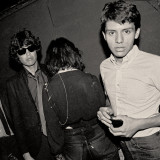
Auf dieser limitierten Vinyl präsentiert Lang Lang Saint-Saëns’ Karneval der Tiere. Die humorvollen Verse,
die der amerikanische Dichter Ogden Nash (1902-1971) zu jedem Satz der Orchestersuite schrieb, werden
von Jimmy Fallon auf Englisch rezitiert, dem Komiker und Moderator der Tonight Show. Eingespielt
wurde der Karneval der Tiere, die »Große zoologische Fantasie« für zwei Klaviere und Orchester, in einer
Starbesetzung mit dem Gewandhausorchester und Andris Nelsons und das Projekt bot zudem eine schöne
Gelegenheit, mit seiner Frau, der Pianistin Gina Alice, zusammenzuarbeiten. »Viele von uns kennen den
berühmten Karneval der Tiere noch aus ihrer Kindheit. Hinter all dem Spaß stecken viele kluge Einfälle.«,
sagt der Pianist.
Search:sai
Area Silenzio is eat-girls" debut record and it is both haunted and haunting. For the past four years, the French trio have been crafting their songs into little self-contained worlds with the patience of entomologists, taking them out all over the country and Europe to confront them with the wilderness of a live audience. The ten resulting tracks are a collection of electronic madrigals, groove-driven songs played on a mischievous multi-speed Victrola, ranging from languid dub drips to full-on drum machine cavalcades. Their live performances have that same ghostly, ephemeral quality. There is something other-worldy about the three of them, a suggestion of telepathy, their three voices blending together or going their separate ways like a flock of starlings. They secured opening slots with artists as different as Thalia Zedek, Exek and The Young Gods, just to name a few. It is the elusive essence of their music that allows them to feel at ease pretty much anywhere they find themselves: part no-wave disco rhythms, part post-punk throbbing basses, folk tunes and synthesizers in equal measures, with a perpetual attention to hooks and melodies. The album was self-recorded, a necessary measure to protect the delicate nature of the inner landscapes painted by the band. In this case "delicate" does not mean "soft" by any means: the industrial disco inferno of "A Kin", the ritualistic kraut stampede of "Para Los Pies Cansados" and the bubbly post-funk rhythms of "Trauschaft" will leave you gasping for air once you come out on the other side. "On a Crooked Swing", the opener, is all arpeggiated bass and stumbling kicks. "Unison" will dip you into a hallucinatory river where nothing is what it seems to be and rescue you at the very last second. "Canine", the first single off the record, will gently but firmly reach for your jugular with its vulpine Farfisa and deceptively nonchalant drum beat. The vocal polyphonies on "3 Omens" sound like a field recording of traditional music from a tiny country that has yet to be discovered. eat-girls exist on a slightly different plane from ours, where everything is teeming with secrets and hidden life. Area Silenzio is a precious polaroid shot from that world, or, as Tom Verlaine would have it, "a souvenir from a dream".
The Outer Edge is excited to announce the release of an intense and previously undiscovered funk rap / boogie single, featuring two tracks recorded in 1986.
While researching for his book on 80s funk music in Germany, DJ Scientist explored bands from Bavaria that collaborated with GIs. One of these bands is Grand Slam, a group that remains active to this day. The band’s leader, Toby Mayerl, lived near a US Army base in Amberg, where he fell in love with funk after hearing Roger Troutman and Zapp. He soon became part of two groups: Total Control and Grand Slam.
Originally led by guitarist Harry Zawrel, Grand Slam had a “European” funk sound similar to Talking Heads or Level 42. However, in 1985, Mayerl took over the band and merged it with Total Control, a mixed group that included African-American soldiers. From that point on, they shifted towards a heavier funk and soul sound, continuing to work with musicians from the GI community. By late 1986, they had enough material to record their debut album, Make My Day. Although published by the independent label Kerston, the album was only available on cassette, primarily sold at their concerts in early 1987.
DJ Scientist managed to track down an original copy of this ultra-rare tape in the MUZ archive in Nuremberg. "What I heard blew my mind," he said. "The cassette featured seven raw, well-produced funk and soul jams with fantastic arrangements and vocals." As an old-school funk and disco rap collector, he was immediately captivated by the track "Goin' Out," which features GI rapper Calvin E. Flagg. This song evokes the energy of early recorded rap singles from labels like Enjoy or Sugar Hill Records.
On Side B, the second track from the unheard debut album, ‘Don’t Let You Down,’ offers another glimpse of what we've been missing. This uptempo boogie-funk track features lead vocals by Aletha Mcbryde, Calvin E. Flagg, and Oliver Allwardt, along with thrilling synths and a lively brass section - perfect for turning up the volume.
Both tracks have been remastered from the original master tapes, which Toby Mayerl fortunately still had in his archive. The artwork for the release is inspired by original band posters, with the Grand Slam logo taking cues from Bootsy's Rubber Band’s Body Slam! cover from 1982. This limited vinyl pressing is capped at just 350 copies.
TCF Music Group founder and Rochester's own 38 Spesh is back with his brand new offering, 'Gunsmoke', featuring 9 bangers with guest appearances by the late great Fred The Godson (RIP), Ransom, Flee Lord, Che Noir and Klass Murda, as well as productions by Harry Fraud, Rain 910, Tricky Trippz and 38 Spesh himself, all topped up with outstanding artwork by Laz.
Comparing Miracle Debt to bands like the Replacements or Husker Du is a cheap shortcut. It’s not totally wrong; the three piece are a band making melodic punk and their songs do have distinct hardcore influences. But it's mostly just a geographically reference since Miracle Debt are from Minneapolis. The songs on their new LP, Under the Shadow are at their core short, DIY punk songs with riffs and twang that bleed through each and every one of the thirteen tracks.
Since forming in 2019, the band played locally, and toured regularly. By the time they were ready to record their second LP, Under the Shadow. In those years since the band started, Minneapolis and its punk scene have endured profound tragedy. As singer and guitarist Forrest Jedediah said of the record, “It's about moving forward, to keep some love in the face of horrible odds and traumatic loss. Holding on to what's good despite a spinning compass.”
Since its release in 2013, Nick Lowe’s holiday album Quality Street: A Seasonal Selection for All the Family has been critically lauded for “the retro-reinvention of the Christmas album” (Uncut) and was heralded by TIME and Rolling Stone as one of the greatest holiday records of all time. Featuring original tunes by St. Nick himself, such as the witty “Christmas at the Airport” and tender “I Was Born in Bethlehem,” to reimagined covers like an ironically bombastic, swinging rendition of “Silent Night” and the rearranging of Wizzard’s “I Wish It Could Be Christmas Every Day” and Roger Miller’s “Old Toy Trains.”
Some of Lowe’s collaborators and admirers make songwriting appearances on the album as well, including the Ron Sexsmith-penned “Hooves on the Roof” and Lowe’s co-write with his former Little Village bandmate Ry Cooder on “A Dollar Short of Happy.” Rolling Stone said it best that an album like Quality Street is “worthy of your holiday bonus.”
This green vinyl pressing of the album is limited to 500 copies worldwide!
Clothilde’s new album sounds like a constant departure from almost everything. Up until now, her music pieces seemed uncontrolled, a total commitment to the machines. She was, somehow, in between us - listener, audience - and the idea of a machine producing sounds she doesn’t seem to control. Of course, none of this was entirely true, she was mostly in control, but the fantasy, the orchestration of it was beautiful. It was sci-fi-ish, Metropolis-magnificent.
In “Cross Sections” everything is purposely under control. We feel, without being told, that Clothilde is directing the narrative, inviting us to partake of this raw and austere electronic sound, forcing us to learn to enjoy it. This is new. Whereas before she would expect you to stay put and listen, eventually you would understand and give in. Or your body would. Now she is telling you to be there, she doesn’t want to be alone, she wants us to feel this subterranean urgency at all costs.
The real eureka moment comes with “Medullary Rays”, when we start cohabiting with the sounds, when they feel familiar. The darkness becomes real; it is palpable how she is stretching each sound and making them come to life at every moment. It is violent, brutal. Like every track, it's a relief when it ends, it's like coming out of a car crash alive. Much of the A side of is Clothilde pushing the boundaries of her sound. She is not testing but finding new ground and sharing it with us. She is exorcising, demolishing and building over and over again, she is crying and screaming, dozing off with the demential levels of bass, making us constantly listen to alarm bells. She is scaring the shit out of us.
The B side keeps the levels of anxiety high up, especially on the 13-minute “Ring”. Surrealistic drones come and go, every second sounds like the end of something, the accumulation of tension is torrential and it never, never stops. We hope there is a conclusion to this. But there is not. “Cross Sections” builds and feeds on this darkness but, in a way, it is self-contained. Never explodes, never releases itself from itself. It is a continuous process of catharsis that it is never over. It never aims to be. Like, you know, life itself.
We've all been there. It feels familiar. Now it has a sound, or sounds. It can be heard and it is outer dimensional. “Cross Sections” is a tremendous effort from an artist trying to survive something. You never know what is. You don’t need to know what it is. It is just there. Cliché but it has to be said: highest possible volume on this one.
Mac DeMarco's breakthrough sophomore album, Salad Days - released on April Fools', 2014 - garnered widespread critical acclaim, landing on over 30 Year End lists. It was the album that catapulted DeMarco from "loveable slacker" to "mature songwriter with a gaptoothed grin," all at the tender age of 23. DeMarco's demos for Salad Days, originally included in an expanded edition of the album only available on Captured Tracks Mail Order site, peel back the curtain of said artist, who, up until then, may have been more known for his raucous live shows than his genuine talent as a songwriter and craftsman. This collection of demos and sketches as well as previously unreleased instrumental demos offer a rare insight into Mac's world and process.
- Trouble - Mike Viola
- Cold, Cold, Cold - Joachim Cooder
- Long Distance Love - Elvis Costello
- Heartache - Bedouine
- I've Been The One - Bhi Bhiman
- Rock 'N' Roll Doctor - Miles Tackett
- Be One Now - Lady Blackbird
- Love Needs A Heart - Madison Cunningham
- Easy To Slip - Jonah Tolchin
- Dixie Chicken - Eleni Mandell And Milo Jones
- Roll 'Um Easy - Ben Harper
- Lafayette Railroad - Larry Goldings
- 6: Feet Of Snow - Jack Shit
- Cheek To Cheek - Gaby Moreno
- Two Trains Running - Chris Seefried
- China White - Chris Stills
- A Apolitical Blues - Dave Alvin
- Feats Don't Fail Me Now - Sugaray Rayford
- Sailin' Shoes - Taylor Goldsmith
- Spanish Moon - Inara George
- Rocket In My Pocket - Sam Morrow
- Willin' - Jonathan Wilson
- Teenage Nervous Breakdown - The Bird And The Bee
- Crazy Captain Gunboat Willie - Andras Jones
- 20: Million Things To Do - Gus Seyffert
Mit der neuen Doppel-LP 'Long Distance Love - A Sweet Relief Tribute to Lowell George' hat Sweet Relief, die Organisation, die alle Arten von Berufsmusikern und Beschäftigten der Musikindustrie finanziell unterstützt, die mit körperlichen oder geistigen Problemen, Behinderungen oder altersbedingten Problemen zu kämpfen haben, ein Juwel vorgelegt.
Lowell George war der Gitarrenvirtuose, Sänger und Songschreiber von Little Feat. In dieser Sammlung von 25 Liedern interpretieren und spielen Künstler wie Elvis Costello, Ben Harper und Dave Alvin seinen vielfältigen Katalog. Der in Hollywood, Kalifornien, geborene George war Mitglied von Frank Zappas Mothers of Inventions, bevor er diese Band verließ und mit Bill Payne Little Feat gründete. Lowell gehörte der Band 7 Jahre lang bis zu seinem Tod an und veröffentlichte in dieser Zeit acht Alben. Obwohl George 1979 starb, lebt sein Vermächtnis durch dieses Album weiter.
The Zeros is a pioneer punk rock band formed in 1976 in Chula Vista, California. Comparisons with The Ramones are often made when describing the energetic and fierce guitar driven sound of the group. The first singles recorded by the band instantly catapulted The Zeros into a top draw on the local scene and have become legendary. Unfortunately, the band never cut an album during these days. Their debut single was released in 1977 on Greg Shaw's very own Bomp! Records. It included 'Don't Push Me Around' and 'Wimp', two of the greatest punk rock songs of all time, both written by Javier Escovedo. It was followed by another single in 1978, "Wild Weekend" and a third one in 1980, "They Say That (Everything's Alright)". This release compiles all their early singles, some rare tracks (including the previously unreleased 'Left to Right') and songs taken from a 1978 live show. Munste is thrilled to reissue this essential '80s power pop gem as part of a series of releases celebrating Bomp! 50th anniversary.
Matter-of-factly, Lycox exclaims "Yaaahh" right at the beginning. That's an affirmation but in times of distress it can also mean resignation, something like "Yeah, whatever". Lycox says he was only freestyling though. Then the bassline appears. Elastic, expressive, full-bodied. And it's not even present the whole time. He was "trying to develop a new formula for the Kuduro beat."
Songs for the club? Most certainly. Different sensibilities, one same focused mind. Lycox evolves within tradition, he has mastered the groove, the ambience, the right tones. Simply called "Energia", the last track circles above wistfully, menacing but maybe just promising some sort of action. With a few drops one could almost switch over to a parallel universe of old school Trance, a reference that feels as alien here as maybe this track feels to someone for whom the standard Afro House sound represents modern African music.
These songs pile up in a threshold balanced between styles, sensations, maybe in the middle of life itself. Such a concentration of energy is bound to need release and that comes figuratively through details in the music reaching out to receptive ears. "To Bem Loko" explicitly tries to "literally drive everyone crazy on the dancefloor." Once again Lycox provides vocals, as in "Edson no Uige", about a friend who embarked on a trip to the Angolan province of Uige and came back speaking only the local dialect known as lingala. A nod to tradition, very emotional, without compromising complex arrangements. Consequently, we the listeners are kept believing there is still enough space for a bright future. To ears accustomed to Lycox productions the title "Contemporaneo" (opening of side B) reads like a redundancy, then.
Maybe this music can never be quite as massive as other Afro styles. Without sounding pretentious, it avoids simplistic patterns, it demands a bit more mental processing while it certainly aims to loosen the limbs. Universal in vocation, underground at the core, Lycox definitely calls it Batida but for some it is still Ghetto Music. Like DJ Veiga said when describing a previous release for Príncipe, Ghetto is home, though. Lycox adds it is a foundation of personality. "Few in our community will recognize your work when you come from the same environment, but once you establish your reputation outside of the neighbourhood and even outside of the country, people will look at you differently, as if you were a star."
- A1: Clarence G's Club
- A2: Turbine
- B1: Cause I Said It Right
- B2: Data Transfer
A/B[13,24 €]
Open minded freely executed tracks from a juvenile soul(s) with unlimited creativity. Music with the rare beauty of uncalculated expressions of the inner mind, still fresh and unconscious and unaware of the effects and the possibilities coming out of these outings. Powerful pureness!
LIMITED RED COLOURED VERSION! Veteran electrohead and former artist on the Rephlex Records roseter DMX Krew's Ed DMX takes the well-known story by Jorge Luis Borges of The Library of Babel, said to contain all the different languages of the earth. Some deep philosophical thought has gone into the album's concept, but we'll leave that to Ed to explain. Instead, we'll tell you that from beginning to end there's plenty of the kind of trademark 80s synth playfulness in evidence, with a generally more mellow and soundtrack-related rather than frenetic and dancefloor-filling vibe in evidence, even on faster tracks like 'The Combed Thunderclap'. Still, Ed knows what he's doing when it comes to this kind of leftfield electro gear, and it's a rewarding, never boring listen.
Pique is the sensational debut solo album from Dora Morelenbaum, one of the key talents spearheading Brazil’s new musical wave. A member of the Latin Grammy award-winning band, Bala Desejo, Dora showcases a new side to her solo productions on this special LP. Whereas Dora’s first solo EP, Vento de Beirada, was a leap of faith, Pique sees her soaring as one of Brazil’s standout stars, emboldened, emphatic but ever elegant. Building bridges between past and present, it’s a funkier, more groove-based affair, weaved together with those signature, slower, celestial tracks. Touching on disco, MPB, soul, R&B and jazz, the album is enriched with an indie pop aesthetic courtesy of fellow Brazilian star and co-producer, Ana Frango Elétrico.
With an ethereal, enveloping air few can match, Dora’s gift shines through both the serene and the spirited songs contained within. The blissful, sun-soaked ‘Não Vou Te Esquecer’ opens, before the funk-fuelled, feel-good ‘Venha Comigo’ and ‘Sim, Não.’ give a glimpse of the creativity bursting from the production partnership between Dora and Ana Frango Elétrico. Elsewhere, the album reclines into hazy lean-back realms via ‘A Melhor Saída’ and ‘Petricor’, virtuoso jazz funk in the form of ‘VW Blue’ and radiant MPB through the album’s title track ‘Pique’.
The drumming is tight, fresh and swung, the horns and strings deftly arranged, as funk-driven basslines and strutting guitars mesh with playful production touches that give an added vibrancy to the record. It is an album that exhibits every side of Dora and one she has been involved in from the ground up, from the songwriting, singing, arrangement and production to booking the studio time and sourcing the artwork designer, Maria Cau Levy.
An exchange of musical ideas powers every great scene and Rio’s contemporary landscape is no different - a family of interconnected musicians and friends that collaborate on each other’s productions. Pique is graced by a wealth of these leading Brazilian lights including her Bala Desejo bandmates Lucas Nunes, Julia Mestre and Zé Ibarra, as well as Guilherme Lirio, Alberto Continentino and Tom Veloso to name just a handful. This exchange crosses generations merging tradition with modernity. In a full circle moment, Dora’s parents Paula and Jaques Morelenbaum, who featured in countless recordings from Tom Jobim's Nova Banda and Ryuichi Sakamoto to Gal Costa and Gilberto Gil, join on the album through backing vocals and arrangement.
Pique sees Dora embrace a freedom through fresh forms, showcasing the depth and diversity of her creative artistry. An infinitely listenable release that nods to Brazilian greats like Gal Costa, Banda Black Rio and Lincoln Olivetti, fused with the indie pop edge of Ana’s production. The result is truly unique and sure to be a future Brazilian classic.
Following the cult success of the first 2 EPs, Common Saints presents
the debut album "Cinema 3000". The theme continues, blending soul,
funk, and psychedelic influences, with the organic sound and rich
instrumentation that Common Saints has become known for.
Conceived in 2020 by writer/producer Charlie J Perry the production approach
for Commons Saints consists of him playing and recording real instruments in his
London home studio. One mike for the drums, his beloved piano and amps up
loud!
The album encapsulates the old school recording approach and musicianship the
discerning ear craves but with a more modern punch - a true sonic bath for all the
connoisseurs out there. Think, UK's equivalent to Tame Impala and Khruangbin.
The first EP "Idol Eyes" (2020) has seen 3 re-presses to date and is now selling at
multiples on Discogs. "Cinema 3000" is set to surpass expectations and is highly
anticipated within the Commons Saints community. The first LP pressing is on a
' blue meteorite splatter’ effect colour vinyl and will be limited to 2000 units
globally. Also available on CD, presented in a 6-panel digipak.
Shir Khan marks the 37th release on his infamous Black Jukebox imprint with an all-killer balearic house record courtesy of mysterious Cécille-affiliated Cabin Luv Affair hot on the heels of his debut album which has seen support from Fouk, Laurent Garnier, Jamie Jones, Mr. V and Archie Hamilton.
Here, the masked master lays out 4 convivial cuts that sit in a particular pocket between House and Disco; one that has historically been occupied by the likes of Pepe Bradock, Damiano Von Eckert and Andrés. A spot classically characterised by beautifully imperfect, sample-heavy productions that are shot through with palpable depth and soul.
The record sets sail with ’Te Siento’. Polyrhythmic percussion bubbles across the surface of a deep sonic pool that forms a bed for vivacious drums, romantic vocals and a spine-tingling strings riff. A hazy opening clears out before the backbone of recording shines through; an uplifting 90s piano motif that's later picked up by Xylophone tones while a tight, truncated bass line punches away at the track's core.
'Dance With Us' then rolls out a beautifully seductive mood. Softly shifting synth chords, a loose-limbed drum break and hedonic vocals whip up a hot and heavy vibe that shines with a distinctly Chicago-tinged elegance.
'Time Is Killing Us' follows up with an immaculately executed, 'last tune' House groove. A gentle but powerful euphoria is generated with swooning strings, more giddy piano riffs and another robust drum track that all gather momentum as progress rolls on. An ecstasy-crescendo forms before it crashes and fizzles before the lights go on.
'My Head Like Shibuya Crossing' then follows up with a tightly-knitted Deep House cut. Buttery melodies adorn an effortlessly kinetic bass groove before a delicate Japanese vocal bleeds into focus. As is the case with much of the record, the track graciously segues through its chapters with melody at the fore-front before bringing the record to a conclusion.
Fresh rhythms. Gorgeous melodies. A powerful yet full touch that pleasantly stirs the emotions of the listener. The origins of the great pianist Masaru Imada are here.
Masaru Imada has been active as a professional since the 1950s and now has a career spanning 70 years. He has been at the forefront of music from hard bop to fusion, and has released over 30 titles as a leader. He is one of Japan's leading pianists in both name and reality. His powerful yet full touch creates a sound that pleasantly stirs the emotions of the listener. His first album, "Maki," can be said to be the origin of this. The performances by the trio or one horn quartet are so fresh and beautiful. The carefully woven "Autumn Leaves," the dynamic "On Green Dolphin Street," the ambitious "Gad," the ballad "Maki" dedicated to his beloved daughter, and the hot and cool "Sea Horse."
From standards to originals, his talent is fully displayed throughout the album. Released as part of the Victor "Japanese Jazz" series, this is an undoubted masterpiece. - Yusuke Ogawa (UNIVERSOUNDS / DEEP JAZZ REALITY)
Camelot, the legendary seat of King Arthur's court in Early Middle Ages Britain, was probably not a real place. A corruption of the name of a real Romano-Briton city, the word "Camelot" accumulated symbolic, mythic resonances over centuries, until achieving its present usage as a near-synonym of "utopia." In the mid-20th century alone, Camelot inspired an explosion of representations and appropriations, among them the violent, affectless Arthurian court of Robert Bresson's 1974 film Lancelot du Lac and the absurdist iteration of Monty Python's 1975 Holy Grail, both of which feature armored knights erupting into fountains of blood; the mystical Welsh world of novelist John Cowper Powys's profoundly weird 1951 novel Porius, with its Roman cults, wizards and witches, and wanton giants; and the nationalist nostalgia of President John F. Kennedy's White House. Unsurprisingly there are fewer Camelots in more recent memory. Camelot, Canadian songwriter Jennifer Castle's extraordinary, moving 2024 chronicle of the artist in early middle age, charts a realer, more rooted, and more metaphorical place than the fabled Camelot of the Early Middle Ages (or its myriad depictions), but it too is a space more psychic than physical. In Castle's Camelot, the fantastic interpenetrates the mundane, and the Grail, if there is one, distills everyday experience into art and art into faith, subliming terrestrial concerns into sublime celestial prayers to Mother Nature, and to the unfolding process of perfecting imperfection in one's own nature. Co-produced by Jennifer and longtime collaborator Jeff McMurrich, her seventh record is at once her most monumental and unguarded to date, demonstrating a mastery of rendering her verse and melodies alike with crisply poignant economy. For all their pointedly plainspoken lyrical detail and exhilarating full-band musical flourishes, these songs sound inevitable, eternal as morning devotions. "Back in Camelot," she sings on the lilting, vulnerable title track, "I really learned a lot / circles in the crops and / sky-high geometry." The album opens with a candid admission of sleeping "in the unfinished basement," an embarrassing joke that comes true. But the dreamer is redeemed by dreaming, setting sail in her airborne bed above "sirens and desert deities." If she questions her own agency_whether she is "wishing stones were standing" or just "pissing in the wind"_it does not diminish the ineffable existential jolt of such signs and wonders. This abiding tension between belief and doubt, magic and pragmatism, self and other, sacred and profane, and even, arguably, paganism and monotheism, suffuses these ten songs, which limn an interior landscape shot through with sunstriped shadows of "multi-felt dimensions" both mystical and quotidian. The epic scale and transport of "Camelot," with its swooning strings, gives way dramatically to "Some Friends," an acoustic-guitar-and-vocals meditation in miniature on Janus-faced friends and the lunar and solar temperatures of their promises_"bright and beaming verses" versus hot curses_which recalls her minimalist last album, 2020's achingly intimate Monarch Season. (In a symmetrical sequencing gesture, the penultimate track, the incantatory "Earthsong," bookends the central six with a similarly spare solo performance and coiled chord progression, this time an ambiguous appeal to _ a wounded lover? a wounded saint? our wounded planet?) Those whom "Trust" accuses of treacherous oaths spit through "gilded and golden tooth"_cynics, critics, hypocrites, gurus, scientists, doctors, lovers, government, the so-called entertainment industry_sow uncertainty that can infect the artist, as in "Louis": "What's that dance / and can it be done? What's that song / and can it be sung?" Answering affirmatively are "Lucky #8," an irrepressible ode to dancing as a bulwark against the "tidal pools of pain" and the "theory of collapse," and "Full Moon in Leo," which finds the narrator dancing around the house with a broom, wearing nothing but her underwear and "big hair." But the central question remains: who can we trust, and at what cost faith, in art or angels or otherwise? Castle's confidence in her collaborators is the cornerstone of Camelot. Carl Didur (piano and keys), Evan Cartwright (drums and percussion), and steadfast sideman Mike Smith (bass) comprise a rhythm section of exquisite delicacy and depth. This fundamental trio anchors the airiness of regular backing vocalists Victoria Cheong and Isla Craig and frames the guitars of Castle, McMurrich, and Paul Mortimer (and on "Lucky #8," special guest Cass McCombs). Reprising his decennial role on Castle's beloved 2014 Pink City, Owen Pallett arranged the strings for Estonia's FAMES Skopje Studio Orchestra. On the ravishing country-soul ballad "Blowing Kisses"_Pallett's crowning achievement here, which can be heard in its entirety in the penultimate episode of the third season of FX's The Bear_Jennifer contemplates time and presence, love and prayer_and how songwriting and poetry both manifest and limit all four dimensions: "No words to fumble with / I'm not a beggar to language any longer." Such rare moments of speechlessness_"I'm so fucking honoured," she bluntly proclaims_suggest a state "only a god could come up with." (If Camelot affirms Castle as one of the great song-poets of her generation, she is not immune to the despairing linguistic beggary that plagues all writers.) Camelot evinces a thoroughgoing faith not only in the natural world_including human bodies, which can, miraculously, dance and swim and bleed and embrace and birth_but also in our interpretations of and interventions in it: the "charts and diagrams" of "Lucky #8," a daydreamt billboard on Fairfax Ave. in LA in "Full Moon in Leo," the bloody invocations of the organ-stained "Mary Miracle," and all manner of water worship, rivers in particular. (Notably, Jennifer has worked as a farmer and a doula.) The album ends with "Fractal Canyon"'s repeated, exalted insistence that she's "not alone here." But where is here? The word "utopia" itself constitutes a pun, indicating in its ambiguous first syllable both the Greek "eutopia," or "good-place"_the facet most remembered today_and "outopia," or "no-place," a negative, impossible geography of the mind. Utopia, like its metonym Camelot, is imaginary. Or as fellow Canadian songwriter Neil Young once sang, "Everyone knows this is nowhere." "Can you see how I'd be tempted," Castle asks out of nowhere, held in the mystery, "to pretend I'm not alone and let the memory bend?"
Now on our sixth release & going strong, Brooklyn Sway returns with a heady combination of local producers, further-afield figures and scene-setting interludes to get that real Bucktown mood, accompanied by bold new artwork from NYC "Grafstract" muralist Fumero.
After words of wisdom from originator David Morales, St. Xose, patron saint of afterhours, re-rubs his own entry from BKS-01 into an electro flip with a forceful but smooth strut, Nathan Nothing's ephemeral vocals vanishing in spaces between steady bass pulses and broken beats. Those looking for late-night addresses check Noha's 'Madison Street 932', where the PanickPanick! label head proves his local cred with a funky, vocal sample-driven house jam equally at home on its eponymous street corner or somewhere later, darker, and preferably inside.
Label regulars DeWinter & Emma return with 'Unity', the spoken word Spanish vocals interweaving with choppy snare patterns and a room-filling reverberating bass roar that hits paydirt when English vox and a kick hit late in its second half. C&K are local legends Connie & Karina, and while that may not be some punters' first guess for their moniker's meaning, the track is an exercise in restraint and class, jaunty house swathed in dub echoes and hand drums that positively sways when the trombone lead swings in to carry the tune.