Meg Baird’s songs are rarely made up of tidy stories. In fact, for Meg, mystery itself is often the
medium. With ‘Furling’, Meg’s fourth album under her own name, she explores the breadth of
her musical fascinations and the environments around them - the edges of memory,
daydreams spanning years, loose ends, loss, divergent paths, and secret conversations under
stars. ‘Furling’ moves through these varied spaces with the slippery, misty cohesiveness of a
dream - guided by an ageless, stirring voice that remains singular and unmistakable.
Since co-founding the beguiling and beautiful Espers in the mid-aughts amid Philadelphia’s
fertile underground music community, Meg’s solo recordings have constituted just a fraction of
her work.
Her first solo LP, the disarmingly out-of-time ‘Dear Companion’ (2007), saw her carve a quiet,
sunlit space away from the flickering swirl of Espers. Since her last solo releases, ‘Seasons on
Earth’ (2011) and ‘Don’t Weigh Down the Light’ (2015), Meg has lent thunderous drumming,
lead vocal, and poetry to Heron Oblivion (Sub Pop) on an album that garnered praise from the
New York Times and made Mojo’s Top Ten Albums Of 2016 list. She collaborated with harpist
Mary Lattimore on the mesmerizingly hazy ‘Ghost Forests’ (2018). She’s played drums with
Philadelphia scuzz-punks Watery Love (In The Red, Richie Records) and explored her deep
familial folk roots in the Baird Sisters (Grapefruit Records). She also contributed her vocal
arrangements to albums from Sharon Van Etten, Kurt Vile, Will Oldham and Steve Gunn, and
toured with Angel Olson, Dinosaur Jr., Bill Callahan, Thurston Moore and Bert Jansch, among
others.
Yet ‘Furling’ is the album that most irreverently explores the span of her work and musical
touchstones. It showcases her natural tether to 1960s English folk traditions. But it also reveals
her deep love for soul balladry, the solitary musings of Flying Saucer Attack and Neil Young
shackled to his piano deep in the foggy pre-dawn, dubby Bristol atmospherics, the melancholy
memory collage of DJ Shadow’s ‘Endtroducing’, and the delicious, Saturday night promise of
St. Etienne.
‘Furling’ was primarily recorded at Louder Studios by Tim Green (Bikini Kill, Nation of Ulysses,
Melvins, Wooden Shjips). Additional piano and vocal recording were captured at Panoramic
Studios in Stinson Beach, CA with Jason Quever (Papercuts). It was mastered in Brooklyn by
Heba Kadry, who mixed Bjork’s ‘Utopia’ and mastered albums for Slowdive, Cass McCombs
and Beach House.
For all its adornments, ‘Furling’ remains deeply intimate. The entire album was performed by
Meg and her long-time collaborator, partner, and Heron Oblivion bandmate Charlie Saufley.
While her prior solo work hinted at more expansive horizons, ‘Furling’ explores the idea of Meg
Baird as a band much more freely. Venturing beyond the musical confines of fingerstyle guitar,
she plays drums, mellotron, organs, synths, and vibraphone over her piano and guitar
foundations. Her distinctive, simultaneously elegiac and uplifting vocals, meanwhile, connect
surreal dream montages, graft sunshine sonics to swooning mediations on romantic solidarity
in trying times, and weave odes to the simple gestures of friendship - and the loss of family and
friends.
This rich sound world makes the songs a varied bunch: ‘Twelve Saints’ mates Pacific sunset
ambience and Pink Floyd pastoral to a meditation on mortality and escape. The infectious and
kinetic ‘Will You Follow Me Home’ contemplates hope and longing through the looking glass of
a Jimmy Miller-era-Stones strut. And in the closing piece, ‘Wreathing Days’, language
disintegrates over tone clusters that feel somewhere between falling and flying.
‘Wreathing Days’ also reveals much about Meg’s mastery of contrast - situating the dear and
delicate adjacent to chaos. And while it’s true that some songs on ‘Furling’ grapple with
humanity’s existential unknowns in stark terms, they primarily revel in the mysteries that hide in
nature and humanity at their most ordinary. ‘Furling’ lives in the notion that whole universes of
experience, enlightenment, elation and ecstasy can bloom in these corners.
Single-LP edit of Piñata lacquered at half speed master by Metropolis Mastering in London for the highest fidelity.
After the original release Freddie Gibbs & Madlib's Piñata in 2014, cover artist Jeff Jank made a new sleeve for the album in the style of a 1964 Blue Note album.
Featuring Danny Brown, Mac Miller, Earl Sweatshirt, Raekwon, Scarface, Domo Genesis, Ab-Soul, Polyester the Saint, BJ The Chicago Kid, Big Time Watts, G-Wiz, Casey Veggies, Sulaiman, Meechy Darko & Freddie Kane.
Freddie Gibbs is the product of violent, drug-laden streets but unlike most rappers with similar resumes, he brings the block to the booth without inhibition or an exaggerated rap persona. Piñata, a 17 track collaboration with producer Madlib, is the best distillation yet of his transparent approach to making music, combining an at times stark honesty with electrifying talent as a lyricist and performer.
Piñata is a gangster Blaxploitation film on wax, says Gibbs, who came up on the streets of Gary, Indiana, the disregarded city previously best known for producing Michael Jackson. Here he is joined by Mac Miller, Earl Sweatshirt, Raekwon, Scarface, Domo Genesis, Ab-Soul and a host of others in setting his soliloquies of the streets alongside film snippets and dusted funk, soul and prog musical tapestries. While this is the latest in a series of single-artist collaborations for Madlib, after Jaylib (J Dilla), Madvillainy (MF Doom) and the street-centric O.J. Simpson with Detroits Guilty Simpson, the pairing is unique as it is the first time for Gibbs working with just one producer.
On Piñata, where Gibbs can shift from textbook lessons in robbing and drugging on trackslike Scarface and Knicks, to perhaps the albums most personal song, Broken, a collaboration with Scarface, who, along with Tupac, DMX and 50 Cent, make up the rappers own Mount Rushmore of MCs (Youre getting a hurricane of all those motherfuckers hitting you at once when you listen to Freddie Gibbs, he says). Deeper, a Gibbs favorite and the third single from the album after Thuggin (2012) and Shame, (2013) is an ode to hip-hop in the mold of Commons I Used to Love H.E.R.; High, featuring Danny Brown, is self-explanatory and just what you would expect from Gibbs, Madlib and one of Detroits finest; while on Real, Gibbs addresses an old score just as Michael Corleone settled all family business on baptism day.
As a producer, Madlib, quite simply, is music, and ten years into his career-a time when other artists become comfortable-Gibbs remains restless, focused, with an eye on the competition and their position relative to his ascent. This is because mentally, hes still on the corner hustling, which would be the downfall of the average rapper. With Piñata, Gibbs confirms that he is anything but average.
out of Stock
Last delivered 3 years ago available to reorder, subject to availability
Personnel: "Ascenseur pour l'échafaud" - Miles Davis (tp); Barney Wilen (ts); René Urtreger (p); Pierre Michelot (b); Kenny Clarke (dr
In 1957, Miles Davis is in Paris for an engagement at the Club Saint-Germain and a wonderful concert at the Olympia Theatre. Once in Paris, Miles came into contact with many members of the modern existentialist cultural environment in the neighborhood of Saint-Germain-des-Près. These include the director Louis Malle who had just finished his first movie : "Ascenseur Pour L'échafaud".
Jean-Paul Rappeneau, a Jazz fan and Louis Malle's assistant at the time, suggested asking Miles Davis to create the film's soundtrack. A private sceening has been organized.
On December 4 1957, Miles Davis brought three French Jazzmen - Barney Wilen on tenor saxophone, René Urtreger on piano, Pierre Michelot on bass and his american compatriot Kenny Clarke on drums - to the recording studio Le Poste Parisien without having them prepare anything. Miles Davis only gave the musicians a few rudimentary harmonic sequences he had assembled in his hotel room.
This recording was made at night in a most informal atmosphere.
The soundtrack was not released on it's own in the USA but ten songs from this soundtrack were released as one side of the album "Jazz Track" which received a 1960 Grammy nomination for Best Jazz Performance, Solo or Small Group.
"Ascenseur Pour L'échafaud" has become a great achievement of artistic excellence.
re-release Typische Weihnachtslieder wie "Stille Nacht" haben die Meisten wahrscheinlich schon so oft gehört, dass sie zu beiden Ohren raushängen. Deswegen muss man in der Adventszeit trotzdem nicht auf die bewährten Weihnachtsklassiker verzichten. Denn mit "Noël Gospel" bringt das französische Label Wagram eine Kompilation heraus, die 15 ergreifende Gospelversionen bekannter, und auch einiger weniger bekannter Weihnachtstitel versammelt, zum Beispiel "Oh Happy Day", "Silent Night" oder "White Christmas". So ist für besinnliche Stimmung und ein aufregend neues Hörerlebnis gesorgt. Mit auf der LP vertreten sind die Superstars des Gospels wie Aretha Franklin, Mahalia Jackson, The Edwin Hawkins Singers, Elvis Presley, The Staple Singers, Johnny Cash und The Golden Gate Quartet. Hinzu kommen mit Louis Armstrong, Nat "King" Cole und Little Richard stimmgewaltige Sänger, die man auch unterm Tannenbaum immer wieder gerne hören mag.
Second Editions presents a new collaborative work by Marja Ahti and Judith Hamann.
After their distinguished duet ‘Portals’ for Cafe Oto's Takuroku label, ‘A coincidence is perfect, intimate attunement’ is a wonderful sophomore collaborative work pieced together over two years of changing seasons, ideas, moods, and feelings. The release is formed from a shifting field of sound correspondence that pivots on moments of coincidence, of a tuning in.
What are we opening ourselves to when we tune in to sound? How can one be truly open to a sound? How can the activity of recording move beyond notions of capture and release into more generative frames? Rather than a tool purposed for preservation or ‘conservation’ of memory, of time and place, can recording sound instead form new vibrant or vibratory spaces of attunement?
‘A coincidence..’ is an LP length composition of multiple interlocking parts, created through exchange, alignment, unpredictability: the title borrowed from poet Fanny Howe falling right into place, a flock of birds in flight, pitches matched and moved across different geographies and temporal frames. Marja & Judith have created an intuitive, lyrical longform piece that considers the idea of attunement itself as, in some sense, the smallest form of measure or denominator connecting their respective practices: across field recording, just intonation, electronic sonorities and instrumental bodies. ‘A coincidence..’ reflects a sense of a willingness to tune in to impulses given, or gifted to the other, a position that embraces an intimate synchronicity.
Recordings & correspondances between 2020-2022. Mixed by Marja Ahti & Judith Hamann. Mastered and cut by Anne Taegert at Dubplates & Mastering in Berlin, 2022. Title quotation from Night Philosophy by Fanny Howe, Divided Publishing, 2020. Photogrpahy by Joshua Bonnetta. Thanks to Nino Bulling, Niko-Matti Ahti and leo. The work was supported by Kone Foundation, Akademie Schloss Solitude and NEUSTART KULTUR.
Marja Ahti (b. 1981) is a Swedish-Finnish composer and sound artist based in Turku, Finland. Ahti works with field recordings and other acoustic sound material combined with synthesizers and electronic feedback in order to find the space where these sounds start to communicate. She makes music that rides on waves of slowly warping harmonies and mutating textures – rough edged, yet precise compositions, rich in detail. Ahti has presented her music in many different contexts around Europe, in Japan and the United States. She is currently active in the duo Ahti & Ahti with her partner Niko-Matti Ahti and in the artist/organizer collective Himera.
Judith Hamann is a cellist and performer/composer from Narrm/Melbourne in so-called Australia, currently based in Berlin. Their work encompasses performance, improvisation, electro-acoustic composition, field recording, electronics, site specific generative work, and micro-tonal systems in a deeply considered process based approach to creative practice. Currently Judith’s work is focused on an examination of expressions and manifestations of 'shaking’ in solo performance practice, a collection of works for cello and humming, as well as ongoing research surrounding ‘collapse’ as a generative imaginary surface, and the ‘de-mastering’ of bodies (human and non-human) in European settler-colonial heritage instrumental practice and pedagogy. Judith likes working with and thinking-with other artists which sometimes includes people like Joshua Bonnetta, Dennis Cooper, Charles Curtis, Golden Fur (with James Rushford and Sam Dunscombe), Lori Goldston, the Harmonic Space Orchestra, Sarah Hennies, Yvette Janine Jackson, and Anike Joyce Sadiq.
Knucks takes the Hip Hop world by storm as he gears for the release of his highly anticipated new project "Alpha Place"'.Following the release of his unorthodox visuals, Knucks delivers heartfelt messages through addictive rap compositions
A dynamic new face to the genre, "Alpha Place" focuses on the feelings and thoughts that the artist and producer has been experiencing growing up in London, channeled through the stirring essence of music. Highlighting important narratives and revitalising the Hip Hop genre, with a composition which is both soulful, moving, and memorable, the rising new artist is changing the rules of the
game.Knucks is taking his artistry to new heights in Alpha Place, with soulful samples and distinctive production styles paired with some of the UK's biggest names in the rap game. The project is more than just an ode to the neighbourhood Knucks grew up in Alpha House but a representation of life and culture on all sides of the capital. Giving a voice to many experiences shared by young people growing up. Knucks makes his mark on the industry with this new body of work pushing boundaries and channelling his authentic flow and flair.
From selling out headline shows and opening for the likes of Wretch 32, Knuck's approach and unorthodox style has garnered over 150 million streams across all platforms independently as well as earning critical acclaim from outlets such as GQ Style, Wonderland, Notion and many more. Boasting a range of noteworthy features including contributing show-stealing verses on collaborations like "Beg To Differ" with Emil, "Ting Tun Up, Pt. II '' with Montreal's Skiifall.
out of Stock
Last delivered 4 years ago available to reorder, subject to availability
Mit ihrem Berlin-Umzug Mitte der 1970er Jahre wollten David Bowie und Iggy Pop nicht nur für einige Jahre den Lebensmittelpunkt ins Zentrum Europas verlegen, sondern auch musikalisches Neuland erkunden. Auf ihren Trips nach Paris oder Warschau ließen sie sich von neuer, europäischer Musik inspirieren die so ganz konträr zu der grassierenden Disco-Welle in den USA war. 16 dieser Tracks sind nun von St. Etienne's Bob Stanley und Jason Wood (u.a. 'English Weather') zu einer Compilation zusammengestellt worden, die einen Einblick in die europäische Elektronik- und Krautrock-Szene gibt, von der sich vor allem Bowie inspirieren ließ. Passend benannt nach einem von Bowie's Liebelings-Bars in Berlin, kommt 'Cafe' Exil' mit Tracks von Amon Düül II, Faust, Michael Rother, Brian Eno, Soft Machine, Cluster oder auch der Jan Hammer Group! Die Doppel-Vinyl kommt mit dem Edgar Froese-Bonustrack 'Epsilon In Malaysian Pale'! Natürlich mit umfangreichen, sehr informativen Liner Notes zu allen Tracks!
out of Stock
Last delivered 3 years ago available to reorder, subject to availability
After the worldwide success of her debut album ‘Believer’, LAU’s long awaited sophomore album ‘Circumstance’ is finally here.
LAU (AKA Laura Fares), a prominent figure in the Synthwave and Retrowave scenes has finally gone solo after over a decade of writing Synthwave hits for other artists.
What is it like to fall in love in these crazy pandemic times? What about falling for someone miles away that we’ve never met? Is it real love or just a fantasy?
In this new album, LAU talks about the challenges, the uncertainty, the crazy circumstance she has found herself in, the ups and downs of “virtual romancing” in the distance, and falling in love with a complete stranger that she’s never met (yet). LAU explores the bittersweet feelings of happiness (to finally fall in love again), mixed with the anxiety and the uncertainty of longing for someone that we’ve only seen on a screen, added to the frustration of not being able to travel to meet them in person.
LAU recorded most of this album in her new home in Barcelona (Spain) throughout 2021 and finished recording the album in her hometown (Buenos Aires, Argentina), creating ten fantastic Synthpop / Retrowave tracks (and a couple of Disco-Pop songs) produced by international producers like Brian Skeel (USA), Zak Vortex (UK), Ends 84 (France), Saint Innocent (France), Popcorn Kid (India), Adam Siana (Sweden) and TAKTA (Norway).
Alien Transistor present Alien Parade Japan, a joyous double-album compilation of groups from Japan’s indie-pop and avant-garde undergrounds, all of which feature brass or woodwind instruments as part of their line-up. Compiled by Markus Acher (Alien Transistor, The Notwist, Hochzeitskapelle) with plenty of support and help from his Spirit Fest bandmate, Saya (also of Tenniscoats), it features some familiar names – Tenniscoats, naturally, but also Zayaendo, Tori Kudo’s Maher Shalal Hash Baz – alongside lesser-known groups like Biobiopatata, Mitamurakandadan?, Kourakuen, sekifu, and Noah Lewis Mahlon’ Taits, amongst many others.
The collection of songs here rests upon a simple question, and an interesting parallel: Why do so many groups from Japan include brass and woodwind, and how closely does this echo the scene that Acher is involved with in Munich? The idea was formulated in Acher’s mind after one of his groups, Hochzeitskapelle, had been invited by Saya to Japan in 2019, to take part in the Alien Parade Japan tour. “Saya and her friends recommended a lot of music to me that I didn’t know of,” Acher recalls, “and I was surprised and excited to find so many Japanese bands who use brass and woodwind instruments.”
This approach was something Acher had been familiar with for a while, thanks to his experiences in Munich: “Until then I thought of the Munich scene, where Hochzeitskapelle come from, as being quite unique in having ex-punk and still-indie musicians form loud acoustic bands with many brass instruments and play a wild mixture of styles.” And indeed, that variety is reflected in the twenty-two songs on Alien Parade Japan, which flits from the pastoral melody of Maher Shalal Hash Baz’s “Crossin The Tama River”, through the tenderness of various sighhorns’s “people have called them flowers”, to the folksy lament of Gratin Carnival’s “Just Watching”.
Alien Parade Japan reaches further afield, too, drawing in some groups, like HOSE, Fuigo, and popo, that feature musicians like Toshihiro Koike, Masafumi Ezaki and Taku Unami, who may be better known for their experimental and improvised releases on labels like ftarri and Erstwhile. It also looks back to material recorded in the 1990s - the swinging slide guitars and sax/tuba duet of Strada’s “Swamp”, from 1998, and Compostela’s energetic, rousing “ghhgh”, from 1990. Both pieces were written by, and feature, saxophonist Kanji Nakao; Compostela’s membership also included late saxophonist Masami Shinoda, who was also part of such storied Japanese groups as Pungo, A-Musik, Orquestra Del Viento, Ché-SHIZU, and the fiery free jazz outfit, Seikatsu Kōjyō Iinkai.
Groups like Compostela help to draw some through-lines to the aesthetics of chindon’ya, a type of Japanese marching band made up of costumed street performers who advertise businesses; the music made by these bands is brash, spirited, and full of energy. Alien Parade Japan weaves all of this together – chindon’ya; jazz; indie-pop; psych-folk; big band – into one beautiful, big tapestry of gorgeous melody, sweetness, and melancholy, with plenty of creative fraying at its edges. “The collection is a very personal view of Japanese bands using brass and woodwind instruments,” Acher concludes: “it’s not a representative anthology, it’s mainly held together by my personal taste, experiences, and friendships.” But it’s also a wonderfully coherent collection of some of the most playful and elated music you’re likely to hear this year. As musician and writer David Grubbs says:
„Now it is confirmed: my favorite genre of music is Alien Parade Japan. Hopefully now people will know what I’m talking about when I gush about the unassailable brilliance of longtime favorites like Maher Shalal Hash Baz, Popo, Mitamurakandadan?, Hose, and Tenniscoats, presented here alongside others whose music I have only begun to search out. Please share in my gratitude and enjoyment of this lovingly assembled collection, one that I welcome into my home as I would a long-anticipated guest.“
out of Stock
Last delivered 4 years ago available to reorder, subject to availability
Two years after the release of their last album "Wolves Among The Ashes", Svart Crown comes back with a sixth and new opus. The EP, called "Les Terres Brûlées" will be released as a coproduction between the band's label Nova Lux Production and Les Acteurs de l'Ombre Productions.
Just like a return to the basics, the five tracks that compose this EP form up a sulfuric halo between rage and transcendance. Recorded in several Southern France places and once again mixed by Francis Caste at Saint-Marthe studio, the organic, made for live production gives a suffocating warmth to the album's five pieces. Like a kind of epitaph, "Les Terres Brûlées" is a true abstract of
the band's 18 years of experience.
The first track to be revealed, "Digitalis Purpurea" is an astral journey through the inconscience limbo. A chaotic vision of its own death warrant, between dream and reality, where fire, opiates and sulfur smell coexist.
Évariste is one of the rare specimens of artist-cum-scientists. Among his kind stand others like Pierre Schaeffer, a Polytechnique graduate (an engineer but also the father of musique concrète) and the eccentric Boby Lapointe (graduate of the École centrale and inventor of the Bibi-binaire system, patented in 1968). Évariste's songwriting, joyful and full of energy (albeit extremely critical), shrouds an original tragedy: born in 1943 among résistants, Joël Sternheimer (aka Évariste) grew up without a father, lost to Auschwitz. Although he makes little reference to Jewish culture in his music, his origins leave their mark: in 1974, he sings a Hebrew song on television. In 1966, the young Joël sports Princeton's colourful paraphernalia - that's because he's freshly returning from the US, where he was sent to pursue his research on "particle mass and the interpretation of observed regularities, such as the effects of a wave" (will understand who may). When he gets there the country's in the midst of the Vietnam War. With McNamara keen to find an alternative to the nuclear weapon and calling upon the country's biggest brains to undertake the task, there's a "fund shift" within the university - a diplomatic way to give notice to whoever may not be disposed to follow the government's scheme. Joël, who's under the supervision of a rebellious physician, is dismissed. He regardless keeps following the prestigious seminaries of the Institute for Advanced Study, chaired by Oppenheimer, inventor of the atomic bomb. Likely inspired by the hippie movement and music, Joël buys a guitar and starts playing in Washington Square - after all, Bob Dylan himself started there. He blithely skips Oppenheimer and receives a warm (though surprised) welcome from a crowd thoroughly unfamiliar with French. When the ageing physicist questions him about his decreasing attendance, Joël explains how drawn he is to music, and how he thinks it could help him in self-financing his research. Évariste recalls seeing the sickened man, his face torn by remorse, lighten up to his words and say: "What's keeping you - go for it! If I was still young that's exactly what I'd do." The student takes these words as a testimony from his professor - and it's enough to convince him . And so he takes the leap during the Christmas vacations he spends in Paris. A journalist friend he often sees around the Sorbonne introduces him to the artistic director of Disques AZ. The latter passes the tapes on to the label's boss, Lucien Morisse, also program manager on Europe N°1. Morisse is blown away - and signs him onto the label right away. Michel Colombier, arranger for Serge Gainsbourg and co-author of "Psyché Rock", with Pierre Henry, contributes some of his original ideas to the 7 inch "E=mc2": Évariste's preoccupation with the percussion sound on the track "Le calcul intégral" is that it goes "poom poom" and not "tock tock" - Colombier is aware of the issue and records Évariste's guitar like a percussion in an isolated booth. The organist Eddy Louis, who is to participate, in 1969, to the success of Claude Nougaro's "Paris mai", also appears on the record. It's 1966 and the Antoine phenomenon (signed on Vogue) storms through France. The two singers share similarities: Antoine is an engineer of the École centrale, gifted with a great originality in his song-writing. A godsend for the two labels who turn this resemblance into a commercial strategy, setting them out as rivals. To this day though, Évariste still denies what was little more than slushy tabloïd gossip. Success comes around swiftly and in 1967 Évariste launches into a second 7 inch, "Wo I nee", again arranged by Michel Colombier. Quantum mechanics fans finally get their anthem with "La Chasse Au Boson Intermédiaire" (or the "Intermediary Boson Pursuit"). To sum up what's a boson, say he's a close pal of the meson, photon and other gluons. A few months later, it's May 68 and everything's turned upside down. Évariste writes a series of songs inspired by the events, which he immediately submits to Lucien Morisse. When the man behind "Salut les copains", once married to Dalida, hears the song "La révolution" - a father and son dialogue - he can't take any more: AZ simply cannot release this. But there and then Lucien Morisse makes a gesture which will remain engraved in French music's history: sorry to be unable to officially stand by the singer, he encourages him to self-produce the record, but with his tacit support. He calls the pressing factory and asks they apply the same rate for Évariste as they would for AZ. The singer and his musicians use the same studio as for the previous record, all of them playing for free awaiting a return on investment. Évariste keeps singing at the Sorbonne with "Jussieu's gang" and "the young Renaud" he nicknames "le p'tit gavroche" (or "street urchin"). Renaud volunteers to type the lyrics of the song "La révolution" so that the chorus can be sung and recorded. A boy in the group is related to Wolinski and introduces them. The two get along so well that Wolinski ends up drawing the cover for the record "La révolution", for free. The self-released 7 inch "La révolution / La faute à Nanterre" is sold under the table and door-to-door for half the price of a standard record, on and around the boulevard Saint-Michel; and it runs out fast. In the end, there will be 6 releases of the record, and 25000 copies sold. When the theatre director Claude Confortès decides to adapt Wolinski's drawing series titled "Je ne veux pas mourir idiot" ("I don't want to die a fool"), he asks Évariste to write the original soundtrack. His friend, now cartoonist for Hara-Kiri Hebdo, often promotes him in accordance with a principle dear to him by virtue of which he gives a special place to his friends. Dominique Grange (writer of the song "Nous sommes les nouveaux partisans") soon joins the team. After 150 performances, Évariste leaves his place to Dominique Maurin (brother of Patrick Dewaere). Évariste composes the songs for Claude Confortès' next play, "Je ne pense qu'à ça" ("That's all I think about"), co-wrote with Wolinski in 1969. The comedians of the play record the songs on a 7 inch, with a cover signed, again, by Wolinski. In 1971, French television produces the documentary "Évariste et les 7 dimensions", but doesn't air it. Indeed, the scientific sub-comity of the programming comity (sic) censors the show. The given justification is that "Évariste dangerously mixed science with science-fiction, numerology and other non-scientific disciplines". The underlying motive might have been a will to censor the singer-mathematician's political discourse. In the documentary and among other things, Évariste discusses hierarchy, alienation and revolution. Half a century later the documentary remains invisible, though some excerpts resurfaced in 1992 in the cult show "L'oeil du cyclone", on Canal +. Though flourishing, Évariste's career is nearing its end. 1970 is the beginning of a decade in the course of which he is to make a decisive discovery in the musical and scientific domains. Following this breakthrough, he moves away from self-produced music and gaucho magazines to focus on science. He keeps Oppenheimer's encouraging words in mind, now freely pursuing his research thanks to the sales of his records. Joël realises that when decoding protein sequences, one finds musical sequences recognisable to humans. He names them "proteodies". If, when listening to a proteody, one responds by being so sensitive as to finding it beautiful, then it reveals a deficiency of the related protein - and this peculiar music may be the cure. We could trace back the music history in light of proteins lacking in a given artist, or within a public's majority. You always thought these hysterical groupies who'd throw their underwear with passion and faint in the pit had miraculously appeared because they had never heard anything as wonderful as the Beatles? Make no mistake! For Évariste, it all boils down to an intro's protein content. Indeed, the beginning of their first hit "Love Me Do" corresponds to dopamine, the neurotransmitter linked to compulsive buying. An intro like this could only unleash the fervour of groupies, victims of fashion and biology. Évariste's success is such that the income from his sales gives him the autonomy to which he had aspired when confiding to Oppenheimer. It made it possible for him to pursue his research without any institutional constraints. He now devotes himself to his proteodies, sat in the offices of the European University for Research, just around the corner from the Sorbonne he knew so well. Évariste is no more. Joël regained control of this strange and comical beast.
Far Out Recordings proudly presents Milton Nascimento's Maria Maria. Recorded in 1974 and unreleased until almost thirty years later, the album was written as the soundtrack to a ballet which dealt with the legacy of slavery in Brazil. Raw, atmospheric and emotionally charged, Maria Maria reveals one of Brazil's greatest ever songwriters at his creative peak. Featuring an all-star cast of fellow Brazilian legends including Nana Vasconcelos, Joao Donato, Paulinho Jobim, and members of Som Imaginario, Maria Maria holds what Milton considers to be the definitive versions of some of his classic songs, including 'Os Escravos De Jó' and 'Maria Maria'.
Originally released in 2003 as a double CD package, with Milton Nascimento's 1984 follow up ballet soundtrack Ultimo Trem, Maria Maria will be available on vinyl for the very first time from December 2019, with Ultimo Trem set for vinyl release early 2020.
Milton Nascimento possesses one of the most immediately recognizable voices in Brazilian music: high and sweet and as breathtakingly sublime as that of any soul singer. It was this voice that the legendary Brazilian singer Elis Regina fell in love with back in 1964, having heard Milton perform his song 'Canção do Sal (Sultry Song)' at a private party in Sao Paulo. Ellis went on to record the song in 1967 -giving Milton his first hit in Brazil and beginning a career that has spanned over 50 years.
Born in Rio on the 26th October 1942, Milton moved with his adoptive parents at the age of 18 months to Tres Pontas, a rural town in the state of Minas Gerais, 500 miles north of Rio. He began his musical career as a young teenager, singing in a crooner style he learnt from listening to Brazilian singers and US groups such as The Platters on the radio. Hungry for more opportunities to perform, Milton moved to Belo Horizonte, the capital of Minas Gerais, at the age of twenty. By the beginning of the 60s Milton had made a name for himself both as an accomplished singer and guitarist.
Milton became part of a local network of musicians, film makers, dancers, theatre directors and writers that included the journalist and song writer Fernando Brant as well as lyricist Marcio Borges and his younger brother Lo Borges. Together these four wrote and produced what would become Milton's milestone album, 'Clube da Esquina (Club on the Corner)'. The originality of 'Club da Esquina' shaped the local scene, and it reflects the essence of 'the Nascimento Sound'. Milton's religious upbringing as an Afro-Brazilian Catholic saw him exposed to church choral music from an early age. His love of this genre of music is apparent in both his celestial falsetto and vocal choral arrangements. This collection also displays his early fascination with evocative, non-verbal, scat-style singing, spare, harmonic guitar work and local folk music, jazz and rock.
In 1976, Milton and Fernando Brant teamed up with a new contemporary dance company called Grupo Corpo, whose Argentinian choreographer Oscar Araiz, would become a collaborator with the two musicians. Together, they conceived a show based on the composite life story of the daughter of a black slave called Maria. Nascimento wrote music to Brant's lyrics and "Maria Maria" was premiered in the main theatre of the Belo Horizonte Palacio das Artes that year. "Fernando wrote the lyrics for the ballet, but there were originally no lyrics for the theme song, "Maria Maria'". Milton and Fernando worked on the lyrics together, basing them on folk stories about black women of the countryside. Adds Milton "These memories are mostly things that we witnessed – Fernando and I – rather than what we experienced ourselves.
Milton's music is impressionistic, emotional and romantic. Relying on songs without lyrics as well as evocative vocalizing and choruses, Milton experimented heavily with Afro-Brazilian percussion and taped jungle sounds. His composing method for these recordings was highly unconventional: "I wrote the music for 'Maria Maria' in a tiny Rio apartment with friends and their kids running around and having fun! I love to be in noisy places, surrounded by people", he says.
The music on 'Maria Maria' was performed by an impressive group of young musicians who are today household names in Brazilian music, including Naná Vasconcelos (percussion and effects), Toninho Horta (guitars) and Paulo Moura (sax). Several vocalist including Naná Caymmi, Fafá de Belém, Beto Guedes, and Milton himself, had hits in years to come with reworkings of these songs.
Milton says his compositions follow his visions "like a movie", and he believes that reflects his long love affair with cinema. "I only began composing because of enjoying the movies so much," he says. "I wrote my first song "Peace for the Coming Love" after seeing 'Jules et Jim' (the cult 60s French film directed by François Truffaut), with my friend Marcio Borges. We went early in the morning and watched it four or five times in a row, then went to Márcio's home and wrote the song."
The songs also include solo spoken passages set to music, clearly influenced by this style of French art cinema. On the title track, Maria's story is narrated and translated to music through the use of African Percussion, drums and metal signifying the field slave tools of the day. 'Trabalhos (Works)' runs to work rhythms and whipcracks: no words, just pain. 'Lília' documents the beating of the slave woman. After 'A Chamada (The call)' and the triumphant 'Era Rei e Sou Escravo (I was a king now I am a slave' things begin to turn and Milton employs tropical jungle cries to symbolize freedom. 'Santos Catholicos x Candomble (Catholic Saints vs Candomble)' represents the battle between African and European religions through the music of both sides. Milton's heavenly falsetto pours into 'Francisco' and 'Pai Grande (Great Father)' and the outstanding 'Eu Sou Uma Preta Velha Aqui Sentada no Sol (I'm an old black lady, sitting under the sun)' conjures images of an old woman sitting deep in the forest, her memories painted in drums, piano and voices.
out of Stock
Last delivered 6 years ago available to reorder, subject to availability
"The album features the two sides of Mingus' compositional genius: the beautiful balladry that I always feel has a bit of a film-noir feel to it, alongside those joyous upbeat numbers that are filled with an organized chaos that categorizes much of the bassist's best work. ... Throw in the fact that it also features Jaki Byard (who is just phenomenal on this recording and remains criminally underrated), Booker Ervin, Dannie Richmond and Eric Dolphy and you have some of Mingus' finest sidemen driving his compositions to the fantastical places they seemed preordained to go. ... Mingus, Mingus, Mingus, Mingus, Mingus is a record that has more than stood the test of time and is an everlasting testament to the talents of Mingus and the players who had the ability to follow his musical vision." — The Jazz Record
Mingus, Mingus, Mingus, Mingus, Mingus was Charles Mingus' last major studio recording of the 1960s (the solo Mingus Plays Piano would also be released the same year in 1964) and it's a real treasure in the great jazz bassist's discography
Two of the tracks ("Celia" and "I X Love") were recorded at the sessions for The Black Saint And The Sinner Lady, while the rest were laid down eight months later with a group that included Booker Ervin, Eric Dolphy and Jaki Byard (Byard also played on the two earlier tracks). Both sessions featured groups of 11 players, all of whom were in top form in performing Mingus' notoriously complex compositions, writes jazzrecord.
All but two tracks on Mingus, Mingus, Mingus, Mingus, Mingus were re-interpretations of songs from the bassist's earlier catalogue, only "Celia" rates as a new original number, and "Mood Indigo" is a cover of the famous tune by Mingus's hero Duke Ellington. If you happen to have lost your Mingus decoder ring, the remaining tracks correlate to their past counterparts as such:
For Mingus, Mingus, Mingus, Mingus, Mingus Mingus collaborated with arranger/orchestrator Bob Hammer to score the music for the large ensemble of brass and saxophones. Recorded January 20 and September 20, 1963 in New York City.
Without a brutal evaluation of their own becoming, TV Priest might have never made their second album. Heralded as the next big thing in post-punk, they were established as a bolshy, sharp-witted outfit, the kind that starts movements with their political ire. There was of course truth in that, but it was a suit that quickly felt heavy on its wearer's shoulders, leaving little room for true vulnerability. "A lot of it did feel like I was being really careful and a bit at arm's length," says vocalist Charlie Drinkwater. "I think maybe I was not fully aware of the role I was taking. I had to take a step back and realize that what we were presenting was quite far away from the opinion of myself that I had. Now, I just want to be honest." Having made music together since their teenage years, the London four-piece piqued press attention in late 2019 with their first gig as a newly solidified group, a raucous outing in the warehouse district of Hackney Wick. Debut single "House of York" followed with a blistering critique of monarchist patriotism, and they were signed to Sub Pop for their debut album. When Uppers arrived in the height of a global pandemic, it reaped praise from critics and fans alike for its "dystopian doublespeak," but the band - Drinkwater, guitarist Alex Sprogis, producer, bass and keys player Nic Bueth and drummer Ed Kelland - were at home like the rest of us, drinking cups of tea and marking time via government-sanctioned daily exercise. As such, the personal and professional landmark of its release felt "both colossal and minuscule" dampened by the inability to share it live. "It was a real gratification and really cathartic, but on the other hand, it was really strange, and not great for my mental health" admits Drinkwater. "I wasn't prepared, and I hadn't necessarily expected it to reach as many people as it did." As such, My Other People maintains a strong sense of earth-rooted emotion, taking advantage of the opportunity to physically connect. Using "Saintless" (the closing song from Uppers) as something of a starting point, Drinkwater set about crafting lyrics that allowed him to articulate a deeper sense of personal truth, using music as a vessel to communicate with his bandmates about his depleting mental health. "Speaking very candidly, it was written at a time and a place where I was not, I would say, particularly well," he says. "There was a lot of things that had happened to myself and my family that were quite troubling moments.Despite that I do think the record has our most hopeful moments too; a lot of me trying to set myself reminders for living, just everyday sentiments to try and get myself out of the space I was in." "It was a bit of a moment for all of us where we realised that we can make something that, to us at least, feels truly beautiful," agrees Bueth. "Brutality and frustration are only a part of that puzzle, and despite a lot of us feeling quite disconnected at the time, overwhelmingly beautiful things were also still happening." This tension between existential fear born from the constant uncertainties of life, and an affirmative, cathartic urge to seize the moment, is central to My Other People, a record that heals by providing space for recognition, a ground zero in which you're welcome to stay awhile but which ultimately only leads up and out. For TV Priest, it is a follow-up that feels truly, properly them; free of bravado, unnecessary bluster or any audience pressure to commit solely to their original sound.
Without a brutal evaluation of their own becoming, TV Priest might have never made their second album. Heralded as the next big thing in post-punk, they were established as a bolshy, sharp-witted outfit, the kind that starts movements with their political ire. There was of course truth in that, but it was a suit that quickly felt heavy on its wearer's shoulders, leaving little room for true vulnerability. "A lot of it did feel like I was being really careful and a bit at arm's length," says vocalist Charlie Drinkwater. "I think maybe I was not fully aware of the role I was taking. I had to take a step back and realize that what we were presenting was quite far away from the opinion of myself that I had. Now, I just want to be honest." Having made music together since their teenage years, the London four-piece piqued press attention in late 2019 with their first gig as a newly solidified group, a raucous outing in the warehouse district of Hackney Wick. Debut single "House of York" followed with a blistering critique of monarchist patriotism, and they were signed to Sub Pop for their debut album. When Uppers arrived in the height of a global pandemic, it reaped praise from critics and fans alike for its "dystopian doublespeak," but the band - Drinkwater, guitarist Alex Sprogis, producer, bass and keys player Nic Bueth and drummer Ed Kelland - were at home like the rest of us, drinking cups of tea and marking time via government-sanctioned daily exercise. As such, the personal and professional landmark of its release felt "both colossal and minuscule" dampened by the inability to share it live. "It was a real gratification and really cathartic, but on the other hand, it was really strange, and not great for my mental health" admits Drinkwater. "I wasn't prepared, and I hadn't necessarily expected it to reach as many people as it did." As such, My Other People maintains a strong sense of earth-rooted emotion, taking advantage of the opportunity to physically connect. Using "Saintless" (the closing song from Uppers) as something of a starting point, Drinkwater set about crafting lyrics that allowed him to articulate a deeper sense of personal truth, using music as a vessel to communicate with his bandmates about his depleting mental health. "Speaking very candidly, it was written at a time and a place where I was not, I would say, particularly well," he says. "There was a lot of things that had happened to myself and my family that were quite troubling moments.Despite that I do think the record has our most hopeful moments too; a lot of me trying to set myself reminders for living, just everyday sentiments to try and get myself out of the space I was in." "It was a bit of a moment for all of us where we realised that we can make something that, to us at least, feels truly beautiful," agrees Bueth. "Brutality and frustration are only a part of that puzzle, and despite a lot of us feeling quite disconnected at the time, overwhelmingly beautiful things were also still happening." This tension between existential fear born from the constant uncertainties of life, and an affirmative, cathartic urge to seize the moment, is central to My Other People, a record that heals by providing space for recognition, a ground zero in which you're welcome to stay awhile but which ultimately only leads up and out. For TV Priest, it is a follow-up that feels truly, properly them; free of bravado, unnecessary bluster or any audience pressure to commit solely to their original sound.
Second Sub Pop album by acclaimed UK act TV Priest finds them building on the
post-punk of their early material and maturing into a powerhouse of tense, politically
caustic, and thoughtful rock music.
Without a brutal evaluation of their own becoming, TV Priest might have never made
their second album. Heralded as the next big thing in post-punk, they were
established as a bolshy, sharp-witted outfit, the kind that starts movements with their
political ire. There was of course truth in that, but it was a suit that quickly felt heavy
on its wearer’s shoulders, leaving little room for true vulnerability. “A lot of it did feel
like I was being really careful and a bit at arm's length,” says vocalist Charlie
Drinkwater. “I think maybe I was not fully aware of the role I was taking. I had to take
a step back and realize that what we were presenting was quite far away from the
opinion of myself that I had. Now, I just want to be honest.”
Having made music together since their teenage years, the London four-piece piqued
press attention in late 2019 with their first gig as a newly solidified group, a raucous
outing in the warehouse district of Hackney Wick. Debut single ‘House of York’
followed with a blistering critique of monarchist patriotism, and they were signed to
Sub Pop for their debut album. When ‘Uppers’ arrived in the height of a global
pandemic, it reaped praise from critics and fans alike for its “dystopian doublespeak,”
but the band - Drinkwater, guitarist Alex Sprogis, producer, bass and keys player Nic
Bueth and drummer Ed Kelland - were at home like the rest of us, drinking cups of
tea and marking time via government-sanctioned daily exercise. As such, the
personal and professional landmark of its release felt “both colossal and minuscule”
dampened by the inability to share it live. “It was a real gratification and really
cathartic, but on the other hand, it was really strange, and not great for my mental
health,” admits Drinkwater. “I wasn’t prepared, and I hadn’t necessarily expected it to
reach as many people as it did.”
As such, ‘My Other People’ maintains a strong sense of earth-rooted emotion, taking
advantage of the opportunity to physically connect. Using ‘Saintless’ (the closing
song from ‘Uppers’) as something of a starting point, Drinkwater set about crafting
lyrics that allowed him to articulate a deeper sense of personal truth, using music as
a vessel to communicate with his bandmates about his depleting mental health.
“Speaking very candidly, it was written at a time and a place where I was not, I would
say, particularly well,” he says. “There was a lot of things that had happened to
myself and my family that were quite troubling moments. Despite that I do think the
record has our most hopeful moments too; a lot of me trying to set myself reminders
for living, just everyday sentiments to try and get myself out of the space I was in.”
“It was a bit of a moment for all of us where we realised that we can make something
that, to us at least, feels truly beautiful,” agrees Bueth. “Brutality and frustration are
only a part of that puzzle, and despite a lot of us feeling quite disconnected at the
time, overwhelmingly beautiful things were also still happening.”
This tension between existential fear born from the constant uncertainties of life, and
an affirmative, cathartic urge to seize the moment, is central to ‘My Other People’, a
record that heals by providing space for recognition, a ground zero in which you’re
welcome to stay awhile but which ultimately only leads up and out. For TV Priest, it is
a follow-up that feels truly, properly them; free of bravado, unnecessary bluster or
any audience pressure to commit solely to their original sound.
"bit by bit" is the first full-length release from Toronto-based singer-songwriter Evan J Cartwright. This self produced album from the go-to drummer/collaborator (The Weather Station, U.S. Girls, Brodie West) presents a highly singular songwriting vision that combines existential lyrics with masterful musicianship. Steeped in jazz melodicism, Cartwright’s trumpet-like phrasing mixed with contemporary composition presents an eclectic art song performed by an artist that could perhaps be best described as a post-modern Chet Baker. Deep poetic observations on love and time paint an affecting picture of an artist reflecting on life’s universal truths. Visual in nature, "bit by bit" places its audience within a world of musical leitmotifs extracted from field recordings of bells and birdsong. Collected during years of touring, these sounds evoke extant spaces beyond that which the music inhabits. The use of this source material in its unaltered form evokes the feeling of a technicolour European film at one moment and then, as the extrapolated melodies are meticulously translated into electronic tone bank sequences, a modernist setting the next. One carillon melody is used as the basis for a wealth of the album’s musical material before its origin is finally revealed by the chiming of bells in the last seconds of the album. The result is a fragment of space between the constructed world of the musical compositions and the candid world of documentation, inviting the listener to ponder whether those two worlds are distinct or whether the songs and music are not simply “field recordings” themselves. Throughout "bit by bit" Cartwright drops staggering revelations hiding in plain prose that often involve the contemplation of time. In I Don’t Know he states “if I only trusted time / then I would wish it all away” and nearing the album’s end he opens impossibly blue with the phrase “the impossible truth of time”, playfully inserting a pregnant pause before the word time. A drummer’s fixation, to be certain, the album’s recurring theme of time is eclipsed only by Cartwright’s contemplation of human relationships. Here he elaborates on some of the album’s subjects: “Many of the lyrics circle, and try to give a name to the illegible space between human beings. “i DON’t know” celebrates the fact that we will never truly understand what love is. Its message is one of assurance. It says that we can never really touch love, and that is ok. “and you’ve got nobuddy” refers to life’s great tragedy: that we are unable to read each others’ experiences, and in reaction to this, we separate ourselves.” The entirety of "bit by bit" is a continuous work. There is seldom a clear demarcation of where one piece ends and another begins and when this does occur, it is done crudely, as if someone is flipping through a series of broadcasted channels. At times words are sliced right out of their lines and replaced by pure tones. This is both a comical interpretation of censorship and a reminder that there are things in life that will forever remain unseen and illegible. In fact, this statement lies at the centre of the LP and although hidden beauty does reveal itself through repeated listenings, "bit by bit’s" eccentric world remains just out of reach — an imaginary second story room viewed from a crowded city street.
Solo bedroom-pop project of Michael Ramos (Flowertown, April Magazine, Hectorine). Mostly recorded between last Christmas and New Year's during a window of isolation at home, “Hey There Flower” preserves Tony Jay’s prowess at making beautifully eerie lo-fi pop; like a hazy memory where your favorite Sixties girl-group melody is perpetually slowed down. Without a band to practice with, Tony Jay recorded the music alone, but recruited a slew of friends to remotely record backing vocals: Karina Gill (Cindy), Griffin Jones (Galore), Kati Mashikian (Mister Baby), Alexis Harper (Al Harper), & Hannah Lew (Cold Beat). "Hey There Flower", the most recent release from the prolific and mysterious Tony Jay delivers real melodies -- both lacey with vocal harmonies and dusty with layered guitars -- as fans have come to expect. This release also carries forward and elaborates on Tony Jay's tradition of songs that express a kind of naked honesty about things we all know -- love and loneliness and all that -- while communicating at the same time a wry edge of skepticism, so that the songs are like coins spinning on edge before landing heads, tails, or lost under the couch. Tony Jay brings us into a nostalgia where we recognize moods from music of the past -- Marc Boland definitely comes to mind, as well as Velvet Underground of the Nico era, and Tony Jay even covers Francoise Hardy on this collection -- but the songs create a three dimensional space with what feels like a thousand layers so that instead of being thrown back in time, it's like stepping into a little world with its own laws of nature, of which the listener gets just a few hints. - Karina Gill, Cindy/Flowertown. “Hey There Flower” is introduced by thudding snare beats eliciting reverb-stained tattered noisy guitar scrapes, to weave abrasive shimmery emotive vibrations, imbued with shattered nostalgic dreams, lit by brittle yet dazzling forsaken keyboard flows, over submerged and distorted male vocal’s whispery deluge of obsessive longing, lonely melancholy, and dark desire to exude a hazy gritty concoction of awkward sadness and brooding unrest.” White Light // White Heat // “What Tony sketches are concise commentaries on love, loneliness and a few things in between. His mode of expression is sparse, intense, and captivating. The arrangements are invariably lo-fi and slow tempo, blanketed with a fuzzy hiss. And it only took one listen to decide that it is a very special album. It has a '60s feel, albeit washed in an eerie slowcore machine. An ace example is "September Skies", which could be the 1965 'last dance' at the prom for the introverted students.” - When You Motor Away
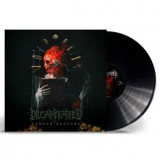
Across eight studio albums, DECAPITATED grew from the adolescent dream of teenagers from a small Central European town to one of the leaders of the metal genre. Each successive album further expands the band’s sound with genre-bending authenticity and integrity. As Metal Injection rightfully observed, “any self-respecting death metalhead knows the name well.”
DECAPITATED’s music is a weapon forged by four young men from a historic medieval-fortified town in Poland, which catapulted them to the top of a worldwide subculture. Like a rose in the devil’s garden, the DECAPITATED story builds triumph from tragedy. The gleeful grotesquery of extreme metal imagery and rifftastic bludgeoning beckons listeners to uncover broader truths.Upon the release of 2017’s Anticult, Metal Hammer declared DECAPITATED “a serious successor to the likes of Pantera and Lamb Of God – a band who can draw new legions into the metal world as its new champions.” Their diverse follow-up, 2022’s Cancer Culture, delivers on that promise.
Instantly recognizable devastation and deceptively sinister hooks abound. Freshly minted DECAPITATED anthems like “Last Supper,” “Hello Death,” “Just Cigarette,” “No Cure,” “Iconoclast,” and “Cancer Culture” shimmer with sonically sharp production and unrelenting bombast. There’s also a newly increased emphasis on melody, even venturing into darkly romantic territory. Wacław "Vogg" Kiełtyka (guitar), Rafał "Rasta" Piotrowski (vocals), Paweł Pasek (bass), and James Stewart (drums) are at the top of their game, delivering the goods at peak performance. Jinjer vocalist Tatiana Shmayluk and Machine Head frontman Robb Flynn make guest appearances.
Set on the descending plains of a mountain range amid a dense forest, Krosno boasts a 14th-century Gothic church, a Subcarpathian museum, and stunning artisan glassware. In this Polish town, teenage music student Wacław "Vogg" Kiełtyka discovered records from bands like Morbid Angel, Cannibal Corpse, Metallica, and Machine Head. The guitarist and his younger brother, drummer Witold “Vitek” Kiełtyka, cofounded DECAPITATED in 1996, inspired by a wide range of technical death, blackened thrash, and local heroes, like KAT and the world-renowned Vader. Death and black metal reigned supreme in the Polish scene of the 1990s, where Behemoth originated as well. In fact, a Vader song called “Decapitated Saints” inspired the band’s moniker.
The organic musical chemistry between the Kiełtykas was akin to the brotherly connectivity and vibe driving Pantera, Gojira, and the classic era of Sepultura. In 2006, Kerrang! praised the first three DECAPITATED albums - Winds of Creation (2000), Nihility (2002), and The Negation (2004) – as “superbly conceived and executed eruptions of technical brilliance and razor-sharp songwriting that turned these youthful Poles into one of the genre’s most widely respected bands.” That year’s Organic Hallucinosis further perfected Vogg’s penchant for blending extremity with catchy hooks.
The rule-breaking ferocity and invention of the first four albums reinvigorated death metal, as DECAPITATED inspired a new generation of bands who followed suit. Sadly, this era came to a shocking end in late 2007. While touring Russia, the band’s bus collided with a large truck near the border with Belarus. Both Vitak and then-singer Adrian “Covan” Kowanek sustained severe head injuries. Tragically, Vitak passed away in a Russian hospital a few days later. He was just 23.Vogg summoned the courage to continue, in honor of his brother and what they created, and returned with a new incarnation of DECAPITATED and the fiercely adventurous comeback album, Carnival is Forever (2011) featuring new vocalist Rafał "Rasta" Piotrowski. Blood Mantra (2014) introduced bassist, Paweł Pasek. Blabbermouth declared it “perhaps the most poised and gutsy” DECAPITATED album, adding “its courageous bends make it a turbulent but pleasurable ride.”
Cancer Culture sounds brilliant, modern, and tasty. “There is no place for any fake, plastic, bullshit drum machine or anything like that,” Vogg insists. “It’s all organic, pure, and clear, showing the true face of the band. Vogg and company entrusted the Cancer Culture mix to David Castillo at Sweden’s Fascination Street Studios / Studio Gröndahl (Sepultura, Carcass, Opeth, Katatonia), and legendary American producer Ted Jensen (Metallica, Slipknot, Pantera, Machine Head, Korn).
The devoted supporters who traveled to see DECAPITATED on international tours with the likes of Lamb Of God, Meshuggah, Soulfly, Fear Factory, and Suffocation over the years will recognize the ever-present pummeling backbone. Longtime fans and newcomers alike will connect to the variety of atmospheric depth throughout Cancer Culture’s ten boundlessly energetic and creative tracks.
“If you told me 25 years ago, in my neighborhood in the South of Poland, that I would be in Machine Head, sharing riffs with Robb Flynn,” Vogg marvels. “It’s simply incredible. It means that everything is possible in your life. That gives me the faith to believe that I can achieve even more in my career. The dreams we have when we are kids, things we can barely imagine, can happen.” Flynn contributes a hauntingly beautiful vocal to the Cancer Culture track “Iconoclast.” “Clean vocal singing is a really new thing in DECAPITATED,” Vogg notes. “It’s really unique and amazing.”
Driven by Vogg’s passion and integrity, the dual emphasis on creative invention and technical prowess maintains DECAPITATED’s stature as genre-leaders in 2022 and beyond. The band’s supporters continually demonstrate confidence and absolute certainty DECAPITATED will deliver.
Across eight studio albums, DECAPITATED grew from the adolescent dream of teenagers from a small Central European town to one of the leaders of the metal genre. Each successive album further expands the band’s sound with genre-bending authenticity and integrity. As Metal Injection rightfully observed, “any self-respecting death metalhead knows the name well.”
DECAPITATED’s music is a weapon forged by four young men from a historic medieval-fortified town in Poland, which catapulted them to the top of a worldwide subculture. Like a rose in the devil’s garden, the DECAPITATED story builds triumph from tragedy. The gleeful grotesquery of extreme metal imagery and rifftastic bludgeoning beckons listeners to uncover broader truths.Upon the release of 2017’s Anticult, Metal Hammer declared DECAPITATED “a serious successor to the likes of Pantera and Lamb Of God – a band who can draw new legions into the metal world as its new champions.” Their diverse follow-up, 2022’s Cancer Culture, delivers on that promise.
Instantly recognizable devastation and deceptively sinister hooks abound. Freshly minted DECAPITATED anthems like “Last Supper,” “Hello Death,” “Just Cigarette,” “No Cure,” “Iconoclast,” and “Cancer Culture” shimmer with sonically sharp production and unrelenting bombast. There’s also a newly increased emphasis on melody, even venturing into darkly romantic territory. Wacław "Vogg" Kiełtyka (guitar), Rafał "Rasta" Piotrowski (vocals), Paweł Pasek (bass), and James Stewart (drums) are at the top of their game, delivering the goods at peak performance. Jinjer vocalist Tatiana Shmayluk and Machine Head frontman Robb Flynn make guest appearances.
Set on the descending plains of a mountain range amid a dense forest, Krosno boasts a 14th-century Gothic church, a Subcarpathian museum, and stunning artisan glassware. In this Polish town, teenage music student Wacław "Vogg" Kiełtyka discovered records from bands like Morbid Angel, Cannibal Corpse, Metallica, and Machine Head. The guitarist and his younger brother, drummer Witold “Vitek” Kiełtyka, cofounded DECAPITATED in 1996, inspired by a wide range of technical death, blackened thrash, and local heroes, like KAT and the world-renowned Vader. Death and black metal reigned supreme in the Polish scene of the 1990s, where Behemoth originated as well. In fact, a Vader song called “Decapitated Saints” inspired the band’s moniker.
The organic musical chemistry between the Kiełtykas was akin to the brotherly connectivity and vibe driving Pantera, Gojira, and the classic era of Sepultura. In 2006, Kerrang! praised the first three DECAPITATED albums - Winds of Creation (2000), Nihility (2002), and The Negation (2004) – as “superbly conceived and executed eruptions of technical brilliance and razor-sharp songwriting that turned these youthful Poles into one of the genre’s most widely respected bands.” That year’s Organic Hallucinosis further perfected Vogg’s penchant for blending extremity with catchy hooks.
The rule-breaking ferocity and invention of the first four albums reinvigorated death metal, as DECAPITATED inspired a new generation of bands who followed suit. Sadly, this era came to a shocking end in late 2007. While touring Russia, the band’s bus collided with a large truck near the border with Belarus. Both Vitak and then-singer Adrian “Covan” Kowanek sustained severe head injuries. Tragically, Vitak passed away in a Russian hospital a few days later. He was just 23.Vogg summoned the courage to continue, in honor of his brother and what they created, and returned with a new incarnation of DECAPITATED and the fiercely adventurous comeback album, Carnival is Forever (2011) featuring new vocalist Rafał "Rasta" Piotrowski. Blood Mantra (2014) introduced bassist, Paweł Pasek. Blabbermouth declared it “perhaps the most poised and gutsy” DECAPITATED album, adding “its courageous bends make it a turbulent but pleasurable ride.”
Cancer Culture sounds brilliant, modern, and tasty. “There is no place for any fake, plastic, bullshit drum machine or anything like that,” Vogg insists. “It’s all organic, pure, and clear, showing the true face of the band. Vogg and company entrusted the Cancer Culture mix to David Castillo at Sweden’s Fascination Street Studios / Studio Gröndahl (Sepultura, Carcass, Opeth, Katatonia), and legendary American producer Ted Jensen (Metallica, Slipknot, Pantera, Machine Head, Korn).
The devoted supporters who traveled to see DECAPITATED on international tours with the likes of Lamb Of God, Meshuggah, Soulfly, Fear Factory, and Suffocation over the years will recognize the ever-present pummeling backbone. Longtime fans and newcomers alike will connect to the variety of atmospheric depth throughout Cancer Culture’s ten boundlessly energetic and creative tracks.
“If you told me 25 years ago, in my neighborhood in the South of Poland, that I would be in Machine Head, sharing riffs with Robb Flynn,” Vogg marvels. “It’s simply incredible. It means that everything is possible in your life. That gives me the faith to believe that I can achieve even more in my career. The dreams we have when we are kids, things we can barely imagine, can happen.” Flynn contributes a hauntingly beautiful vocal to the Cancer Culture track “Iconoclast.” “Clean vocal singing is a really new thing in DECAPITATED,” Vogg notes. “It’s really unique and amazing.”
Driven by Vogg’s passion and integrity, the dual emphasis on creative invention and technical prowess maintains DECAPITATED’s stature as genre-leaders in 2022 and beyond. The band’s supporters continually demonstrate confidence and absolute certainty DECAPITATED will deliver.
Following years of international touring and a lengthy list of critically-acclaimed collaborations with Brian Jonestown Massacre's Anton Newcombe in recent years (most recently the duo's self-titled 2018 LP), the new album will be Parks' first full-length solo offering since her debut, 'Blood Hot', was released back in 2013 on Alan McGee's 359 Music label. "In my mind, this album is like hopscotch", Parks says: "These songs were pieced together over time in London, Toronto and Los Angeles with friends and family between August 2019 and March 2021. So many other versions of these songs exist. The recording and final completion of this album took over two years and wow - the lesson I have learned the most is that words are spells. If I didn't know it before, I know it now for sure. I only want to put good out into the universe." A growing disillusionment with the state of the world paired with an injury that stopped Parks from being able to play guitar and piano for months meant the album was nearly shelved. "I really felt discouraged to complete this album", she recalls: "I stopped listening to music for honestly about a year altogether and turned to painting instead. I really had to convince myself again that it's important to just share whatever good we can - having faith in ourselves to know that our lights can shine on and on through other people and for other people. The thought of anyone not sharing their art or being shy of anything they create seems like a real tragedy to me. Even if it's not perfect, you're capturing a moment." Recorded over a two year period but with songs, lyrics and ideas dating back over a decade in some form, 'And Those Who Were Seen Dancing' is an album full of such moments, people and places. Col LP is on 180g ultra-clear vinyl, standard sleeve.
Following years of international touring and a lengthy list of critically-acclaimed collaborations with Brian Jonestown Massacre's Anton Newcombe in recent years (most recently the duo's self-titled 2018 LP), the new album will be Parks' first full-length solo offering since her debut, 'Blood Hot', was released back in 2013 on Alan McGee's 359 Music label. "In my mind, this album is like hopscotch", Parks says: "These songs were pieced together over time in London, Toronto and Los Angeles with friends and family between August 2019 and March 2021. So many other versions of these songs exist. The recording and final completion of this album took over two years and wow - the lesson I have learned the most is that words are spells. If I didn't know it before, I know it now for sure. I only want to put good out into the universe." A growing disillusionment with the state of the world paired with an injury that stopped Parks from being able to play guitar and piano for months meant the album was nearly shelved. "I really felt discouraged to complete this album", she recalls: "I stopped listening to music for honestly about a year altogether and turned to painting instead. I really had to convince myself again that it's important to just share whatever good we can - having faith in ourselves to know that our lights can shine on and on through other people and for other people. The thought of anyone not sharing their art or being shy of anything they create seems like a real tragedy to me. Even if it's not perfect, you're capturing a moment." Recorded over a two year period but with songs, lyrics and ideas dating back over a decade in some form, 'And Those Who Were Seen Dancing' is an album full of such moments, people and places. Col LP is on 180g ultra-clear vinyl, standard sleeve.
Part of IF Music founder Jean-Claude’s ever expanding ‘YOU NEED THIS!’ series of compilation albums, the London record shop impresario and DJ takes us on another scintillating musical journey, this time exploring the catalogue of German jazz imprint, Enja Records. Like Jean-Claude’s ‘Journey Into Deep Jazz’ series on BBE Music and his 2017 exploration of Black Saint & Soul Note Records before it, ‘IF MUSIC PRESENTS YOU NEED THIS!: AN INTRODUCTION TO ENJA RECORDS’ provides another impeccably curated and programmed selection of music, assembled by simply one of the most knowledgeable and passionate vinyl specialists in the business. Featuring performances by John Stubblefield, Bobby Hutcherson, Harold Land, Don Cherry, Cecil McBee and Pharoah Sanders collaborator Marvin Hannibal Peterson to name but a few, this collection provides a great jumping-off point for Enja’s rich and diverse back catalogue. Founded in 1971 by Munich natives and jazz obsessives Matthias Winckelmann and Horst Weber, in its heyday Enja released albums by Eric Dolphy, Charles Mingus, Tommy Flanagan and John Scofield, as well as Kenny Barron, Chet Baker, Abbey Lincoln, Bea Benjamin, Freddie Hubbard, to name but a few. Having firmly established itself as “a bastion of all things deep in jazz” as Jean-Claude neatly sums up, Enja also went on to issue early World Music projects from Abdullah Ibrahim, Rabih Abou-Khalil, Mahmoud Turkmani and many others, and it remains active to this day. “There is no doubt that to the uninitiated, a compilation introducing such an esteemed archive is well overdue” says Jean-Claude. “As with previous albums curated by us, this is just a soupçon of this label’s vast back catalogue, which we hope will lead the listener to discover new music and to search out more from this criminally underrated, class act.”
20 years ago, US heavy and hard rock titans Mos
Generator took the heavy (stoner) rock music scene by
storm with the release of their first self-titled album. To
celebrate this special anniversary in style, the band’s
charismatic frontman Tony Reed himself has revised and
remastered this vinyl reissue of their pathbreaking debut
album.
Mos Generator - who formed in 2000 in Port Orchard,
Washington from the ashes of a ten year off and on
collaboration between its three members, all of which
are long time veterans of road and studio - have inspired
the heavy music scene since decades. The band have
released nine full length studio albums, two live albums
as well as several singles and split albums over their
impressive career by labels as Stickman, Ripple, Heavy
Psych Sounds, Roadburn, Small Stone and Listenable.
Touring has been just as important to the profile of the
band as making records has. Over the years Mos
Generator has shared the stage with many big heavy
rock names across Europe and North America including
extensive tours with Saint Vitus, Fu Manchu, Melvins,
Pentagram, Elder, Spirit Caravan and Atomic Bitchwax.
They have also played prestigious festivals throughout
the world, fusing soul with doom metal into a great loud,
funky and psychedelic concoction of heavy rock.
Their 2002 debut album was the starting point, and this
hand-numbered clear vinyl 20th Anniversary edition of
‘The Mos Generator’ release is a must have for fans old
and new.
For fans of Orange Goblin, Fu Manchu, Sheavy, Mind
Funk, Kyuss, Mountain, Nebula, Black Sabbath and
Monster Magnet.
Friends Of Hell draws from the most seminal of doom sources, saluting the great works of Pentagram, Candlemass, Saint Vitus and Cathedral along the way. But something nastier and grubbier lurks within the Friends Of Hell sound: a viscous, blackened streak that owes its leathery scars to Venom, Bathory and Hellhammer. The resultant hybrid makes perfect, horrifying sense, as songs like rampaging opener Out With The Wolves and the harrowing crawl of Gateless Gate conjure devilry, disgust and riff-driven destruction in equal measure. Heavy as hell but defiantly gritty and underground in spirit, Friends Of Hell avows that the old school is the only school. Not just one of the finest and fiercest doom metal records in recent memory, but also a subtly subversive twist on that arcane formula, Friends Of Hell once again confirms the timeless nature and the unerring, infernal power of The Riff.
"The Beast Within" is the new album by Brazilian artist, Diego Garcia; exploring gender identities within contemporary electronic music. The artist uses two of their distinguished artistic identities: The Princess of Death, her feminine identity - where there is an exploration of a more introspective and corrosive textures commonly associated with patriarchal values; and Projekt Gestalten, his masculine identity - where melodic and hypnotic sounds, often associated with matriarchy, are emphasized.
In this project, Diego's aim is to dichotomize their gender identities inspired by a point-and-click adventure game from the 90's called "Gabriel Knight 2 - The Beast Within". The story was written by American game designer, Jane Jensen with original music composed by her husband, Robert Holmes. The protagonist is on the trail of a strange wolf, murderer of a little girl. Gabriel was asked to take care of this evil and suspects that this case is paranormal in nature. Together with his assistant, Grace Nakimura, he discovers the dark truth behind the history of Bavaria. The gameplay alternates between Gabriel and Grace and its storyline is only explored indirectly by Diego - as it is deeply connected with their childhood and formative years and still remains as one of their all-time favorite games.
Just like in the gameplay, Diego alternates between both of their feminine and masculine identities in order to create original pieces of music. As Projekt Gestalten, an array of dance tracks are functionally presented; ranging from melodic and trippy to club-ready driving techno; dissecting a more rational aspect of the game's storyline. In contrast, The Princess of Death goes into an ambient and experimental approach; exploring liturgical themes that includes a dark and dystopian cover of the traditional gospel song "When The Saints Go Marching In", a song that is featured throughout the whole franchise of the game in many different versions. In the end, the gender polarizing concept is extrapolated and both aliases are finally merged into one another; leading to the Gestalt principle, alluded to in Diego's main alias, being fully applied as a whole.
The project's ultimate goal is to challenge preconceived notions of how a specific gender should sound/behave and to explore light/dark, sacred/secular, good/evil, male/female using, as the blueprint, a gender-neutral game where the player is forced to assume a feminine and a masculine role in order to navigate through the story. All of these ideas are perfectly aligned with Diego's own trajectory as an artist and their distinct artistic identities featuring distorted gender values - which comes full circle in this project.
out of Stock
Last delivered 4 years ago available to reorder, subject to availability
Heavenly Recordings announce the release of ‘Heavenly remixes 3&4 - Andrew Weatherall volume 1&2’, a brace of compilation albums collecting together some of the finest remixes from the label’s long-time friend, collaborator and go-to remixer. These compilations follow ‘Heavenly remixes 1 & 2’, which showcases some of the label’s other great remixes.
By the time Heavenly was born in the spring of 1990, Andrew Weatherall was already an inspirational sounding board, as well as a fellow traveller on the bright new road that stretched out ahead, thanks to the massive cultural liberation of acid house. Back then every energised meeting could be turned into a fortuitous opportunity in this burgeoning new underground economy. Bored of your job? Start playing records out! Start a club night! Get in the studio!
Start a label! Just don’t stand still. Commandments Andrew would follow for the rest of his life.
At the start of things, Andrew was a regular visitor to Capersville - the pre-Heavenly press office run by label founder Jeff Barrett (soon to become Andrew’s manager). It was there that he famously picked up a copy of Primal Scream’s unloved second album and singled out a
track that would later become ‘Loaded’, after being given an instruction to “fucking destroy” it by the band’s Andrew Innes; it was there too that the idea to remix the first Heavenly release
came about.
Andrew’s mix of that first Heavenly record is very much a product of its time. ‘The World According To Sly and Lovechild’ is a swirling bass punch topped with a hypnotic marimba line and the kind of ecstatic diva vocal that you’d hear coming out of the speakers all night at postShoom clubs like Yellow Book.
His take on the label’s next release - Saint Etienne’s ‘Only Love Can Break Your Heart (A Mix of Two Halves’) - would set the template for his next three decades of audio exploration. A drawn-out imperial dub, the track builds and builds with a moody intensity (partly down to the
melodica played by Weather Prophets legend Pete Astor) that’s far more Kingston JA at dusk than Kingston-upon-Thames at kicking out time. It’s both a dancefloor record to get lost in and
headphone psychedelia of the highest order - a perfect example of what he did better than anyone else.
Between 1990 and his untimely death in 2020, Andrew fed more Heavenly bands through the mixing desk than those of any other label. Consistently, he returned visionary music to the
office, often in person for (at least) one ceremonial playback - a ritual that would involve the volume cranked up high and Andrew rocking back on his heels, eyes closed, lost in the alchemy of it all.
Each time, he would warp and twist originals into beautiful new shapes - elasticated club records that might evoke Detroit techno one second and Throbbing Gristle the next, before wheel-spinning into something akin to The Fall produced by King Tubby.
Andrew’s studio adventures would always be guided by that early advice to destroy the source material. It’s why he was the first name that came up when remixes were discussed; the first number on the speed dial. Listening back to these remixes now - to thirty years of glorious outsider sounds - it bangs home again just how fucking good Andrew was.
out of Stock
Last delivered 4 years ago available to reorder, subject to availability
It’s incredibly easy to get a remix wrong — as the back catalogues of far too many major labels, whose slapdash commissioning of the latest hot remixer half-guarantees an unsympathetic mangling of the song, can attest. At their best, remixes can make you look at an artist as though positioned from a different angle or using a different camera; sometimes hearing a song in a different context gives it a completely new meaning. “So you take a piece of a vocal…blah” says master remixer David Morales. “That’s a remix? That represents the artist? That doesn’t represent the artist, it represents you.” In the hands of the insensitive a remix is like chucking a song into the washing machine for a 100 extra spins.
In the hands of a master, things are a little more complex. Heavenly was all but founded on the art of the remix; our departed friend Andrew Weatherall remixed the first ever release, and the label has built up an immense catalogue in the intervening years that demonstrates all that is good about the art form.
Assembled on this compilation are twelve sterling examples of the remix, from Hanspeter Lindstrøm’s reading of Doves’ ‘Jetstream’, which turns their glistening pop into Lieutenant Pigeon meets Italo-disco (in a good way), to Andy Votel’s gentle folk-funk version of Halo Maud’s délicieuse ‘Des Bras’. We delve deep into the vaults for Saint Etienne’s ‘Filthy’, Monkey Mafia turning it into a rump-shaking groove perfectly suited to Q-Tee’s rap, while more recently, Flying Mojito Bros, purveyors of Tex-Mex house groove, reimagine Katy J. Pearson as a lonesome Lone Star lover.
Though not purposely themed, beyond being judiciously chosen as the catalogue’s finest gems, there’s a tiny hint of psychedelia about this set that is hard to ignore. Firstly, there are the acid contributions from Gabe Gurnsey, who knows his way around a coruscating bassline, and from Graham Massey, whose impeccable credentials in 808 State are brought to bear on ‘Valleys’, by young turks Working Men’s Club (acid house being modern psychedelia, whether the rock press approves or not).
Jono Ma, meanwhile, flips Night Beats’ amazing ‘Sunday Mourning’ into ‘Warm Leatherette’ on benzos, creating a disorienting glimpse of a dystopian Sunday that most definitely doesn’t include a genteel read of the papers and a nice cup of tea. On the other side of the miasma is Beyond The Wizard’s Sleeve’s redemptive re-interpretation of M. Craft’s ‘Chemical Trails’, which, alongside Boy Azooga’s ‘Face Behind Her Cigarette’ (Mikey Young remix), Gwenno’s ‘Chwlydro’ (R. Seiliog remix) and and Katy J. Pearson’s ‘Take Back The Radio’ (Flying Mojito Bros Refrito Dub), is issued on vinyl for the very first time.
This dozen tracks — each one curated, remixed and delivered with love (and a teensy bit of impertinence) — is just a glimpse into the catalogue of one the UK’s finest indie labels.
In the alternative reality in which I’d prefer to exist, this what Top of the Pops might sound like; or, at the very least, the jukebox in the Korova Milk Bar. Pop disruption at its best.
out of Stock
Last delivered 4 years ago available to reorder, subject to availability
In most any Dungeons & Dragons adventure worth
completing, the hero must come face-to-face with
themselves in some form - a cursed, mystical mirror that
reveals all that our hero is and is not; a reflection in some
Blood River that displays for our hero the monster they
have become; a doppelganger that reveals how much our
hero has changed since the beginning of the adventure.
So, as their year-long 25th Anniversary campaign enters
its final chapter, Jagjaguwar must also confront their
former self. They’re going all the way back to the
basement of the sushi joint in Charlottesville; all the way
back to when they were just a haphazardly made zine; all
the way back to the original mantra which served at
Jagjaguwar’s early guiding force. The Sentimental Noise
echoing through the caverns of self-discovery is tender
and deafening.
The label have uncovered new and unreleased work from
some of their earliest friends like Drunk, Manishevitz and
Bevel. They’ve called upon necromancers like Norway’s
Jenny Hval, Jagjaguwar legends Wilderness and
Bloomington post-rock heroes Tammar. Mysterious noise
mongers like Canada’s Wold and Oslo’s Some Nerve have
delivered on their promise to absolutely split skulls open.
There are two loving tributes to Patron Saint of Jagjaguwar
John Prine. And they have unearthed two songs from
Atsushi Miura, who once upon a time allowed founder
Darius Van Arman to book shows in the basement of the
sushi restaurant he ran. He dedicates one song to Darius
and in the other, humorously lambasts the college town he
called home for all those years. Today Jagjaguwar dies;
tomorrow Jagjaguwar is reborn.
Double LP on metallic silver vinyl.
By now you’re probably familiar with our wildly popular Brown Acid series of rare, lost and unreleased proto-metal and stoner rock singles from the 60s-70s. In the endless pursuit of those glorious gems, we often uncover equally brilliant rarities from the late-70s to late-80s Golden Age of Heavy Metal that also just must be heard, but they don’t fit the series’ aesthetic. Scrap Metal, Volume 1 collects some of the greatest unknown and lost Heavy Metal tracks, long buried beneath the avalanche of the era’s classic output.
We all know the old adage that history is told by the winners. But sometimes the losers tell the best stories. And while none of these bands found fame and fortune, this artifact and the volumes to come are testament to the enduring power of heavy music. You can hear the blood, sweat and beers that went into each of these singles. The recordings may be low budget, but the inspiration and talent is immutable. Not only are the amps turned up to 11, the boyish sexual innuendo is cranked to 69. You can hear the convergence of influences — NWOBHM, thrash, glam metal, doom, etc — colliding at once as the era birthed a wellspring of subgenres.
Many of these singles are self-released and were thus limited to a small run of copies. Those that remain are hoarded by collectors and sold for exorbitant amounts. We’ve collected the best of the best for you here. As with Brown Acid, all of these tracks are licensed legitimately and the artists all get paid. Because it’s the right thing to do.
LINER NOTES:
Rapid Tears launch this series with the perfect christening. The Toronto, ON quintet’s 1981 single “Headbang” is such the pinnacle of heavy metal madness that it almost sounds like a spoof. There’s also enough of the rapid-fire sputum that inspired Metallica to bang the head that doesn’t, as such, engage in said practice, to be found on the band’s sole full length Honestly. But “Headbang” is a straightforward glammy anthem for the ages.
Air Raid’s “69 In A 55” may be lyrically so sophomoric that it’s actually pretty clever, but this 1983 Bay Area power metal single is loaded with sleek Judas Priest riffs and interwoven melodies that are downright sublime. The band’s sole release, the 2-song Rock Force 7” features a curious band photo in which 3 band members — dolled up in Crüe makeup and leather — are sexually menacing the lead singer/guitarist tied to a bed. Another low budget highlight is when singer/guitarist Tommy “Thrasher” Merry imitates a delay effect on his vocals as he sings, “tonight!...tonight...night.”
Hades’ “Girls Will Be Girls” has a real demo cassette feel to its vastly uneven mix, but the energy to the performance makes this an undeniable keeper. The long running Paramus, NJ quintet’s 1982 2- song debut 7” titled Deliver Us From Evil features this blistering thrasher dominated by shimmering leads and confident vocals that show why the band went on to near-fame on Metal Blade Records.
Resless don’t need no T to prove that they’ve got “The Power” with this 1984 driving mid-tempo rocker in the vein of Mötley Crüe and Ratt. The River Vale, NJ quartet’s tight crunch wails all over Bon Jovi posers but it’s the band’s unique and subtle deployment of background vocals that gives this rager its staying power.
Pittsburgh, the Steel City, is home to Don Cappa, a band that pays tribute to the burgh, the metal, and the awesomeness of both with “Steel City Metal.” Their lone single, issued in 1987 with only 300 copies released, sounds like the work of some serious steel driving men, with a drummer who might’ve forgotten to wear a hard hat one too many times on the construction site.
The Beast has more of a punk feel to their aggressive “Enemy Ace” track from the 4-song Power Metal EP from 1983 — something like Dr. Know meets D.O.A. But their look, artwork and lyrics all prove that Heavy Metal is where their hearts lie. And this hook filled monster delivers repeated lines like, “I command them all in my lofty realm,” with commendable conviction.
Dead Silence from Denver, Colorado, debuting in 1984 is not to be confused with Dead Silence from Denver, Colorado, who also debuted in 1984. The former a workman’s hard rock bar band, the latter a political peace punk band and neither knowing of the other’s existence throughout their tenure. The pre-internet days were a marvel, indeed.This Dead Silence spits out a slick, Nugent tinged rocker called “Can’t Stop” about life on the road.
The Danger Zone is, by all accounts, not the place to be. And, Hazardous Waste of Boston, MA saw fit to add their two cents on the matter with this 1986 single that combines Van Halen’s flashy musicianship with NWOBHM aggression that sounds so awesome it teeters on itself entering the “Danger Zone.”
Czar’s heavy, doomy “Iron Curtain” single from 1982 hearkens to the sleazy sounds of Saint Vitus and Pentagram with its cranked up DOD Distortion pedal in a Peavey combo amp guitar tone and meaty, barking vocals. The upstate NY quintet only issued this 2-song single, but its driving rhythm, nosedive whammy-bar guitar solos and comparatively mature Cold War subject matter show they had real potential.
Not much is known about Real Steel’s majestic “Viking Queen” from 1987, other than it rocks hard and the 7” 45 sells for upwards of a grand on the collectors market. The Flint, Michigan band recorded at the home studio of local radio personality Bill Lamb, who primarily released Christian Gospel recordings. So, perhaps the band was struck down by a bolt of lightning shortly after this rare single’s release. Whatever the case may be, it’s a must have for fans of classic metal mayhem.
This is a special one. Very much indeed. I was on a train on my way to Galicia earlier this year when my phone started off. It was Mike. Me and him exchange a call every now and then, so I thought it was the classic how-you-doing thing, which of course was. Only that this time the call ended with him saying “I’ve emailed you something, a couple of vocal takes plus the only music line that survived that session which is some great drumming by Gad”. Nothing more. Gad (scratches head)? Who the hell is Gad? When I arrived at destination and found some steady wifi connection I downloaded the stuff and found out “who the hell” Gad was. Nothing less than the “most recorded drummer in the history of soul music” aka James “Big Foot” Gadson who, beside the Kirklands, in his career has been drumming for the likes of Marvin Gaye, Charles Wright, Bill Withers, The Temptations, Martha Reeves, Quincy Jones, you name a Soul Star or a famous album, or a legendary recording session, he was there beating snares and kicks. Having been much satisfied by our work on the “Love Scenario” release Mike wanted us, and I quote him literally, “to do our magic”. We did our best of course, but you just can imagine the pressure. This time we went the extra mile though because at some point, listening again and again to the verses and choruses I figured out it would have been a great experiment to give an ultra retro feel to an original recording of 1980. So, while we were doing our thing I’ve asked my mate Paul from Blue Lotus Recordings in Saint Louis, if they could “do their magic” themselves. They gladly accepted the challenge, I handed them over the vocal takes and Gad’s drumming and the result is this 4 tracks 7”/33 rpm biscuit which we hope you will enjoy as much as we all have enjoyed producing it.
Love Wash opens with “Across the Flats” and closes with its title track, both upbeat ballads that build from scorched drones into momentous sprawling pop songs that help ease in and out of the album, which features contributions from co-PC Worship collaborators (LEYA’s Adam Markiewicz on violin and NYC drum shredder Greg Fox).
The second and third tracks “Drive” and “Saints” carry the subtle intensity that opens the album, with unpredictable instrumentation, chord changes and arrangements. This vibe is revisited later in the album on “Dune House” and “Hidden Away”, all of which are sonically rich, unraveling, dark, introspective and powerfully optimistic.
The rest of Love Wash is comprised of catchy, borderline alt-country hits with a twisted Nashville tele vibe (“December Sun”, “New Thing” & “East Side Walk”), featuring pedal steel and vocal contributions from fellow Dougie Poole band members Tristan Shepherd and Francesca Caruso. Love Wash has a natural flow throughout, however the one real outlier is the well placed and hyper paced middle child of the album “Dredging Up Old Blues,” a schitzo-synth-pop Mountain Dew Rock jam that feels like buying trucker speed at a digital gas station in Middle-America.
Love Wash has echoes of a post-Beatles solo record, recorded in the Northwest in the mid-90s; transient in its influences yet tied together with the aesthetic of its approach. Sequenced like the best, most damaged early K / Kill Rock Stars records and driven by fingerpicked acoustic guitar, sweeping drones, euphoric synths, lush vocals and soaring Dead Man leads, Love Wash is a beautifully rich pop record at its core and an ambitious journey of an album that started as bedroom demos and evolved into a layered studio exploration.
-- Justin Frye (PC Worship
A decade on from their first record, Iceage continue to harness their lives together through music. This journey, in music and life, has never progressed in a linear fashion. Seek Shelter — Iceage’s fifth LP and first for Mexican Summer — is proof that their lives are still happening through their music, and that they remain determined to harness it. Enrolling Sonic Boom (Pete Kember of Spacemen 3) to produce, Seek Shelter sees Iceage’s propulsive momentum pushing them in new, expansive, ecstatic directions. The sound of an emotional core unwound, Seek Shelter radiates warmth and a profound desire for salvation in a world that’s spinning further and further out of control. In an extraordinary and unexpected run following the release of their debut LP, Iceage went from the fertile hyperlocal Copenhagen scene to stages all over the world. Their recordings reflect their journey: 2012’s You’re Nothing was hard, fast and raw, a bold doubling-down on the aggression of youth in the first record as well as the weight of expectation. Plowing Into the Field of Love (2014) and Beyondless (2018) saw a softening of the band’s hardest edges and the arrival of a certain world-weary vaudeville in the Iceage sound. The band’s past two records — all filtered twangy guitar riffs, sparse piano arrangements, and slinky, slow-moving rhythms — ventured into an intoxicated but knowing swirl, surveying the party at the end of the night. They’d seen it all, at least once, and their music rode the crest of that chaos. Seek Shelter, the band’s first record made with an outside producer, is the place they have been called to next. The LP was recorded at Namouche, a dilapidated wood-paneled Lisbon radio studio of 1960s vintage where the band set up for 12 days. It is the longest time they have spent recording a record. Steady rain dripped through the ceiling; they had to arrange their equipment around puddles and slowly-filling buckets covered in cloth so that the sound of droplets wouldn’t reach the mics. Sonic Boom arranged garden lamps from a nearby party store for mood lighting in the high-ceiling space. A choir, the Lisboa Gospel Collective, joined the band for two tracks on the final day in the studio providing a new scale to Rønnenfelt’s incantations. Singer and primary songwriter Elias Rønnenfelt casts their new producer as a sparring partner, another wayward mind to bounce ideas off of. “We wanted a partner that had some noise that we didn’t have, more a wizard than a producer. “When we started, I think we were just lashing out, completely blindfolded with no idea as to why and how we were doing anything. For Seek Shelter, we had a definite vision of how we wanted the album to be carved out, yet still the end result came as a surprise in terms of where we sonically were able to push our boundaries.” He’s speaking of the new record and also of their entire existence as a band, a travelogue that has catapulted these four friends far past the horizons of punk. “Some of that we wanted to remain intact. We try to keep the mystery. If there's no sense of mystery in it for us, then it's not fun.” Seek Shelter is a record that now exists at a moment of a collective unknown, when every beating heart wonders what will happens next.
On August 20, 2020 the world lost an amazing
light with the passing of Justin Townes Earle.
Justin was a vibrant songwriter who could play the
blues, country and rock ‘n’ roll all in the same
song. In his short career, Justin released eight
albums and one EP that all manage to sound
classic and yet inventive.
Justin’s father, Steve Earle, pays tribute to his son
by recording ‘J.T.’, an album of songs written by
Justin. The album consists of ten Justin Townes
Earle songs as well as one song written by Mr.
Earle shortly after Justin’s passing.
‘J.T.’ features fan favourites such as ‘Harlem River
Blues’, ‘Far Away In Another Town’ and
‘Champagne Corolla’, along with lyrically heavy
songs like ‘The Saint of Lost Causes’ and ‘Turn Out
My Lights’.
‘J.T.’ is a loving tribute to a loved son and beautiful
songsmith who left this Earth too early. But in his
wake, Justin left a wealth of beauty.
New Pagans create music that's not only vivid and engaging but also home to massive riffs and rare dynamics. The bands audible influences range from PJ Harvey to Sonic Youth while lyrically the band deliver protest songs, songs about women, songs about mothers and songs about conversations overheard on Belfast's public transport systems. Their live shows are also something to behold and have just been the recipients of the best live act at The Northern Island Music Prize 2020. Music is the focus and an important vehicle for the healthy message the band promotes. New Pagans is a proud advocate for women’s rights, visibility and inclusion in the global music industry – an industry dogged with a history of stark gender inequality. The arts community and media have responded to the bands refreshing social and historical lyrical stance which includes protest songs, songs of suffrage and an ode to Lily Yeats, the often overlooked sister of Jack and William B and a key mover in the world of Irish arts and crafts back in the day along with her younger sister, Elizabeth. New Pagans have headlined events as part of Women’s Work and Lyndsey McDougall has proudly embraced the demands of live performance and recording whilst pregnant twice!. The band are committed to promoting honest inclusion, demonstrating the female force and showing that you can be born as or identify as female, raise a family and have your place as a career musician. Young women, young mothers see Lyndsey as a symbol of strength and hope in her fearless and forthright attitude to motherhood whilst fronting a band. A lot of young mothers feel the need to hide that aspect of their personal life for fear of how people may perceive it as a limit in achieving creative breakthroughs. New Pagans are that breakthrough, a visible work in motion
Like so many other disenfranchised kids in the heady days of mid-eighties United
Kingdom, Magic Roundabout came armed with leather jackets, charity shop instruments, singles
by The Fall and Buzzcocks, good haircuts, a healthy VU obsession and a little psychedelic
inspiration. Influenced into existence at early gigs by The Jesus and Mary Chain and Shop
Assistants, The Roundies wanted to change the world or at the very least make some noise,
shake things up and be a part of the happening.
The gang established a clubhouse in early 1986 and began rehearsing, recording and
gigging. Playing a ton of legendary shows with the likes of The Pastels, The Blue Aeroplanes,
Spacemen 3, Loop , My Bloody Valentine, Inspiral Carpets and picking up a bunch of fans along
the way. Rumor has it that Noel Gallagher roadied their final show.
There was one song released - She’s a Waterfall Parts 1 and 2 on Mark Webber’s
(Pulp) Oozing Through The Ozone Layer cassette compilation - and that’s it. There were also
talks of a flexi-disc that, for whatever reason, never saw the light of day. But by the end of the
80s, the gang had all gone their separate ways and the recordings along with so many other
things were thought to be lost forever…
Now, these 1987 recordings recently unearthed by Ian Masters (Pale Saints) and Third
Man Records and given the “treatment” by Warren Defever are presented to you lucky ones as
the debut single by Magic Roundabout. 34 years too late or perfectly steeped and presented at
just the right moment in history? Tune in, turn on and make up your own mind. Enjoy the trip.
• 180 GRAM AUDIOPHILE VINYL
• GATEFOLD SLEEVE
• INSERT
• 2-LP SET FEATURING REMIXES OF THEIR CLASSIC
HITS “FOOLS GOLD”, “ELEPHANT STONE”, “ONE
LOVE”, “SHE BANGS THE DRUMS” & MORE
• REMIXED BY A GUY CALLED GERALD, PAUL OAKENFOLD, JUSTIN ROBERTSON, UTAH SAINTS,
GROOVERIDER & OTHERS
• BLACK VINYL
The Remixes is a compilation album by The Stone Roses, which features remixes by various producers including Utah Saints and Paul Oakenfold. Various techno luminaries ply their skills reworking some of those early classic songs, and it is immediately clear that the Roses, even beyond the genius of their songs, were a preeminent dance band.
The Remixes on black vinyl includes an insert.
out of Stock
Last delivered 5 years ago available to reorder, subject to availability