Deconstructed techno-dub classical piano, by exploratory composer Richard Pike. A suite of pieces for piano and texture loops, focused on real-time composition & an exploration of cassette sound sources, minimalism, harmony and the ghostly acoustic ephemera that emerges from the loop material. Intimate, granular and dust-covered.
After the passing of the late great Ryuchi Sakamoto during winter in early 2023 Richard Pike gravitated towards the piano as a daily ritual of improvisation, or what he prefers to call ‘real-time composition’.
Pike’s initial approach was an interest in a repeated practice, finding earthly textural tape loops against a daily commune with the piano. Very quickly a suite of pieces formed.
The process of collecting loops and beds in his studio the morning, then moving downstairs to a 1950s Eavestaff Minipiano in the living room, to record melodic and harmonic expressions over the bed of textures, with and against the flow. This process was pure and impulsive, leaving editing and scrutiny until later.
The textures are inspired by the likes of Romeo Poirier, Deepchord, early music concrete and a nostalgia for the ‘clicks and pops’ era that inspired Pike’s early experiments in his Warp Records-affiliated band PVT.
Suche:sak dub i
- 1
the debut solo album by henrik raabe, guitarist of the german trio wareika, who rose to prominence in the 2000s with their minimal deep house sound. departing from the cool, jazzy deep house he was known for, raabe delivers a uniquely crafted downtempo album that feels like a seamless blend of jazz, afro, dub, new age, and postmodern influences. it evokes the spirit of an imagined encounter between the durutti column and dennis bovell, with virginia astley joining in—reminiscent of the uk sound of the 1980s—yet rendered more minimal and refined, in a distinctly german way. with each listen, the album draws you deeper in. it is poised to become a defining release for mule musiq in 2026
Balancing dub techno depth, Detroit spirit and peak-time functionality with class and precision. Parallel 41 Records returns with P41005, a powerful statement built for the darker edges of the dancefloor. On Sakura EP, Manuel Di Martino lays the foundation with two hypnotic originals and remixes that move between stripped-back pressure, dub-soaked depth and raw Detroit-inspired drive.
A heavyweight library record delivered straight from the Gods; truly, we are all blessed: Dubmaster Dennis Bovell presents cLOUD mUsIc. A miraculous set of loose limbed, slinky funk-forward dub on the A-Side with totally blunted, spaced out trippiness on the grooving versions gracing the flipside.
A pioneer of dub and progenitor of lovers rock, genius producer-arranger Dennis 'Blackbeard' Bovell's prolific and eclectic career encompasses a huge range of music: from dub poetry to lovers rock, afro-beat to post-punk, disco to pop and beyond.
His production work encompasses such diverse figures as Ryuichi Sakamoto, The Slits, Fela Kuti, Linton Kwesi Johnson, The Pop Group, Janet Kay, Saada Bonaire, Orange Juice, Golden Teacher, I Roy, Maximum Joy, Steel Pulse and more.
cLOUD mUsIc features 8 new, deep, never-heard heaters, initially created for upstart UK library label FOLD. Dennis had written some music under the influence of Cloud-watching and presented it to FOLD with a view to them presenting it as Library Music to be utilised by anyone interested in having music for incidentals, films, TV and advertising etc.
cLOUD mUsIc represents Dennis expressing himself freely and inviting others to join and express themselves. As Dennis explains: "Library music is what makes the difference between creating for specific reasons and creating for your own individual enjoyment. cLOUD mUsIc was created whenever I felt the urge to create music that I wanted to, with no pressure. It was recorded at various times and in various studios around the world with various musicians’ assistance. Much sonic indulgence with many different recording devices."
Who doesn't like the sound of that?
Continuing the release series on our town of multicultural multimedia hub called Sakskøbing, which has been named after a lovely place in Denmark. This time a true veteran of electronic music DJ Honesty steps up under his moniker Honeydrop. Delivering four cuts of honest house music infused with elements of dub and break this release is guaranteed to cause the turntables feeling good and appreciated, they will be asking you for more. Hans has been producing music fanatically for long time with first official releases dating back to 1995 so it is a true honour to welcome him to the label 30 years later, now in 2025. The release is an intergalactic warm blanket with music on it that is completely ready for different moods and settings of the events/parties/listening sessions one might find itself in. Starting with “Penha de Franca” right until the last track named after the release’s title “Free at Last” a smooth ride can be felt which hopefully by the end of it will set the listener free, if it needs to do so. Free at last dear listener, free at last.
When you’re running a label, a demo occasionally comes across your desk that makes you reconsider everything you thought your label was all about. For Balmat, such was the case with this stunning album from Stephen Vitiello, Brendan Canty, and Hahn Rowe. It sounds like nothing we’ve released so far—and that very otherness opened up a whole new world of possibilities for us.
Fans of ambient, experimental electronic music, and sound art will be familiar with Vitiello, a New York native, long based in Virginia, who has collaborated with a cross-generational list of greats: Taylor Deupree, Steve Roden, Lawrence English, Tetsu Inoue, Nam June Paik, Ryuichi Sakamoto, Pauline Oliveros, and many more. On labels like 12k, Room40, and Sub Rosa, he has explored a wide range of minimalism, microsound, lowercase, ambient, improv, and other styles. But this album is something different. It may begin in ambient-adjacent territory, but it quickly veers off, and it just keeps zigzagging, taking on elements of krautrock, post-punk, dub, and the groove-heavy interplay of groups like Natural Information Society and 75 Dollar Bill.
This stylistic turn is thanks in large part to Vitiello’s choice of collaborators. “We’re coming from three different schools,” Vitiello says: “sound art, art rock, and punk rock.”
Active since the early 1980s, Rowe—a violinist, guitarist, and producer/engineer—has played with, or manned the boards for, a frankly jaw-dropping list of musicians: Herbie Hancock, Gil Scott-Heron, the Last Poets, Roy Ayers, John Zorn, Glenn Branca, Swans, Live Skull, Brian Eno, David Byrne, Anohni, R.E.M., Yoko Ono, and many more. But he might be most closely associated with Hugo Largo, a one-of-a-kind New York quartet—two basses, vocals, and Rowe’s violin—that in the late 1980s helped lay the groundwork for what would eventually become known as post-rock.
Canty, of course, is the legendary drummer of Fugazi, the visionary DC post-hardcore group, as well as Rites of Spring before them, and, currently, the Messthetics, a Dischord-signed instrumental trio with guitarist Anthony Pirog and Fugazi bassist Joe Lally.
Vitiello’s trio first collaborated on First, a 17-minute piece released on the Longform Editions label in 2023. Second picks up where the freeform drift of First left off, channeling the trio’s exploratory energies into more intentionally structured tracks and—in a real first for Balmat—some almost shockingly muscular grooves. “Sometimes my projects are more conceptually driven,” Vitiello says, “but I think this was more musically geared. I just wanted to open up the references and bring in an incredible drummer, bring in some melodies, and I’m sort of the center.” But his collaborators, he stresses, are “vastly creative in making anything I might suggest better.”
Like its predecessor, Second took shape in phases, shifting between improvisation and collage. Vitiello laid down the skeleton of the music at home, sketching out initial ideas on Rhodes keyboard and acoustic and electric guitar; he then fed the parts through samplers and his modular system, recording 10- or 20-minute jams. Once he had edited them into more structured forms, he hit the studio with Canty, who added not just drums but also bass and piano; finally, Vitiello took the results of those sessions to Rowe, who played violin, viola, electric bass, and 12-string acoustic and bowed electric guitar, and assisted in some of the final structuring and mixdown.
A few more surprises along the way: Reanimator’s Don Godwin, the studio engineer where Vitiello recorded with Canty, contributed what he calls “resonant dustpan”; and none other than Animal Collective’s Geologist, who just happened to be in the studio that day, sits in on hurdy gurdy on “Mrphgtrs1,” the album’s gorgeous, stunningly atmospheric drone closer. “I love these chance encounters,” Vitiello says. “Somebody I admire, a group I admire—that was an unexpected gift.”
An unexpected gift is a great way of describing Second as a whole: three veteran musicians venturing outside their usual zones and finding a new collaborative language together. The results can’t be neatly slotted into any given genre; they belong not to any given category, but to the spirit of conversation itself.
- A1: Raz Fresco– Who Mapped The Earth
- A2: Romderful– Maybe With You
- A3: Dowker– Call Me
- A4: Speak– Sakuraba
- A5: Cookin' Soul, Ovrkast– Flying
- A6: Monster Rally, Demahjiae– Clooney
- A7: Mr Scruff– Flute Boom
- A8: 645Ar– Shooting Star
- B1: Peanut Butter Wolf, Waragainstgod?, Mikah 9– Organic A I
- B2: Chuck Strangers, Graymatter– Marigold
- B3: La Jay, Pigeon John– Thank You
- B4: Dj Harrison– Applechopchutney
- B5: Monster Rally, Homeboy Sandman– I Love You
- B6: Low Leaf– Faerie Function
- B7: Pouya, Boobie Lootaveli– Bitch, Park Backwards
- C1: Eddie Chacon, John Carroll Kirby– Comes And Goes (Live At Isc)
- C2: Devin Morrison– Givin Up
- C3: Suzi Analogue– King
- C4: Lee Perry– Morning Star
- C5: Dayytona Fox– Woooaaah
- C6: Bombay , Rvyo– Kflex
- C7: Crimeapple, Don Leisure– Vic Damone
- C8: Eyebriss– Don't Clap When I Win
- D1: Ncy Milky Band, Quelle Chris– High Speed Clouds
- D2: Mr Mumblz, Daniel Son – Snake Eyes
- D3: Girl Talk, Freeway, Waka Flocka Flame– Tolerated
- D4: Swum, Big Lordy– Shinto
- D5: Xavier Wulf– 2 Can Wulf
- D6: Tommy Wright Iii– Chrome Thang
- D7: Tjil– Metta
Cassette[13,87 €]
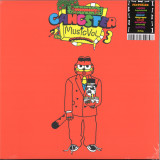
**Gangster Music Vol.3: The Most Gangster Music Trilogy of All Time Comes to a Triumphant Close**
Imagine curating a dream lineup of MCs and producers from every corner of the rap world—sounds impossible, right? Not for artist and illustrator Gangster Doodles, who has been bringing this vision to life for the past decade. Now, with “Gangster Music Vol.3”, the trilogy reaches its grand finale, and it’s bigger, bolder, and more unpredictable than ever before.
Gangster Doodles himself puts it best:
"It’s hard to believe that I’ve been actively working on this Gangster Music series for the past 10 years. The most gangster music trilogy of ALL TIME is almost complete!! And in my humble opinion Vol.3 is the most exciting out of the 3, both from a music standpoint (special shout-out to all my music heroes on Vol.3) and artistically speaking this is the most fun I’ve had in years”
Since launching Volume 1 in 2019 and following up with the second volume in 2022, Gangster Doodles has been shaping the Gangster Music series into a one-of-a-kind sonic universe—an unfiltered mix of underground titans, unsung legends, and rising stars. Volume 3 is the biggest installment yet, boasting a staggering 30 tracks that traverse the entire spectrum of rap and beat culture.
This time around, the lineup is as eclectic as ever. From legendary pioneers like Lee Perry and Tommy Wright III, to veteran producers such as Mr. Scruff and Peanut Butter Wolf, the album pays homage to hip-hop’s roots while pushing forward into fresh territory. The roster also includes established up-and-comers like Devin Morrison, Low Leaf, DJ Harrison, Quelle Chris, Homeboy Sandman, and Suzi Analogue, ensuring a mix of classic flavors and new-school innovation. The bubbling underground is well represented too, with artists like Raz Fresco, Atlanta’s 645AR, and Pro Era’s Chuck Strangers bringing their own distinct heat.
From pioneering SoundCloud rappers like Pouya to genre-bending composer John Carroll Kirby, from Birmingham’s Romderful to Chile’s RVYO, the album encapsulates a truly global soundscape, proving once again that Gangster Doodles’ ear for cutting-edge talent is second to none.
As always, the cover art is a vital piece of the puzzle. This time, Bootleg Garfield & Friends take center stage, bringing the same playful irreverence that has defined Gangster Doodles’ artwork for years. Fans are encouraged to engage, remix, and make the cover their own, staying true to the spirit of interactive creativity that has always fueled the series.
After years of meticulous curation, countless DMs, emails, and behind-the-scenes wrangling, Gangster Music Vol.3 is here to complete the trilogy in legendary fashion. Expect boundary-pushing beats, next-level lyricism, and a lineup that celebrates hip-hop in all its many forms.
“Thanks to everyone who’s actively supported and continues to tap-in. Believe & trust when I say I've got more dope stuff cookin’. STAY TUNED!! GANGSTER DOODLES 4EVER. 1LUV."
Gangster Music Vol.3 is out April 7th on All City. Stay tuned, stay tapped in, and get ready for the most gangster music experience yet.
The multi-talented global traveller Shawn Lee starts the new year 2025 with "Lost", the first album by Shawn Lee's GPS Band. The story behind the album is best told by the artist himself: "Inspiration can come from the most unlikely places. In this case…Italy. While on tour there in 2024, I found that I never knew where I was or where I was going. For that matter, I affectionately dubbed it 'The Lost in Italy Tour'!"
Shawn Lee continues: "While listening to music in the car barreling down the open road, GPS voice directions kept barking instructions over the tunes. Suddenly, the full musical concept of the 'Lost' album smacked me right between my ears. Instrumental tracks equipped with GPS voices on top robotically guiding me to my various destinations. Sometimes it was a venue like the Parasdiso in Amsterdam. or record label like Légére in Hamburg - and for goodness' sake, even a pizza restaurant in Italy! The possibilities were infinite.
"I lovingly explored the sounds of the late 70s & early 80s delicious brew of Post-Punk, Post-Disco, Krautrock, Punk-Funk, old school HipHop and No Wave. Armed with a P bass,Madcat Telecaster, a handful of synths and a few choice effects, the album was both a minimal and focused affair. Sometimes less is more… The world on the other hand, is way more than less and a very big place to get 'Lost'. So this is just the beginning of a long journey and with my GPS Band, I will always arrive at my destination."
- A1: Genji Sawai - Hikobae
- A2: Today's Latin Project - Danza Lucumi
- A3: Shigeru Suzuki - On The Coast
- B1: Air Suspension Club Band - In The Hot City
- B2: Yasunori Soryo&Jim Rocks - So Long America
- B3: Jugando - Twisty
- C1: Kingkong Paradise - Samarkand
- C2: Katsutoshi Morizono With Bird's Eye View - Imagery
- C3: Om - Windmill
- D1: Parachute - Mystery Of Asian Port
- D2: Yuji Toriyama - Bay/Sky Provincetown 1977
- D3: Keiichi Oku - Heat Wave
- D4: Safari - Day Dream At The Bob's Beach
2025 Repress
Midnight In Tokyo 2, the second installment to the compilation series that rounds up hidden gems by Japanese artists that's perfect for listening at night in Tokyo, is here. This time the collection brings together some tasty electric jazz fusion from the '80s , compiled by Dubby, the man behind the online record store Ondas.
The compilation begins with "Hikobae," a dark and slow cosmic jazz by saxophonist Genji Sawai, followed by "Danza Lucumi," an odd Caribbean-style jam by Today's Latin Project, a band fronted by Tadaaki Misago of Tokyo Cuban Boys, with arrangements by Yasuaki Shimizu. "On The Coast" is a soulful and mellow vocal track arranged by Ryuichi Sakamoto, from guitarist Shigeru Suzuki's album White Heat, and fusion boogie cut "In The Hot City" is by Mr. Theodore, which was a one-off project by a mysterious artist.
The melancholic soul jazz number "So Long America" is the title track from the album Yasunori Soryo released in '82, following a stint in America with the band Brown Rice. "Twisty" is a tropical reggae tune from the album Samba Kathy, an underrated classic by Jugando which was released on Trash, a sublabel of one of Japan's finest jazz labels, Trio. "Samarkand" is an electric Latin jazz jam that sounds like something Miles Davis and Santana could have played on, performed by a Latin funk band from Fussa. "Imagery" is a primal African fusion track by Katsutoshi Morizono, a member of the prog rock band Yoninbayashi.
"Windmill" is the most acoustic sounding tune on this compilation, a breezy Brazilian affair with a Hermeto Pascoal feel. "Mystery Of Asian Port" is by the band Parachute, which consisted of Japa-nese fusion giants like Akira Inoue, Tatsuo Hayashi and Masaki Matsubara. The cosmic jazz record sounds like something Daniele Baldelli would play in his sets. "Bay Sky Provincetown 1977" is a classic Japanese fusion tune by guitarist Yuji Toriyama.
The set also features the mellow but danceable "Heatwave" by keyboardist Keiichi Oku, featuring a female vocalist (which some have identified as Rie Ida), and last but not least, closing out the 13 track compilation is "Day Dream At The Bob's Beach," a wonderful urban fusion with a beautiful vibraphone melody, from the Japanese fusion classic album that was a one-off project by studio musicians
Born out of a summer (and time) most sadly lost forever - this new release on Souvenirs From Imaginary Cities will break your skull open most tenderly, so it's fine particles of audio-dust can mingle with the last rays of sunshine and the bitter storm of this autumn. Track after track, this LP draws you in with a natural flow and a deep-felt pulse - reminiscent of classic slices of raw and sample- based ambient like Susumu Yakota's 'Sakura' and 'Everyone Alive Wants Answers' by Colleen. These tunes are heartfelt and channelling tons of real emotions and other melancholia.
It's a very personal and unique blend of almost nineties chill out zoning with a dubby undertone, rich textured loops, mixing a whole range of crazy acoustic and electronic flavours - stuff that shouldn't work together but are dancing all the way to heaven anyways - with slow burning dusty slabs of melody and yes those deep choral pads ( some Rachmaninov vesper magic in the air ), everything rough around the edges and low slung but so damn precise. A subtle mélange between abstract and more concrete sonic territories, but delivered in an upfront, improvised manner with great intuition and a quite ruff but poetic touch.
Name of this piece of swampy, chopped up but most nicely selected ambient work is La Ho, by Purpurny Dyadya aka Purple Uncle aka Sergey Demitriev, originally residing in St-Petersburg but living now for obvious reasons in Armenia. Sergey has been busy on labels like Echotourist, Hair Del, Nazlo and most recently with fellow traveler Nikita Chepurnoi as Amkarahoi on Patience/Impatience. Using a bunch of old tapes from his childhood times, filled with all kinds of sonic memories and Russian underground hip-hop as sample ground, he loaded up his MPC with magic dust and jammed out the basis of this LP during a summer fest near St-Petersburg before current hell broke loose.
It's the kind of a record that needs some time to really let loose his inherent power, give it some air, let it hop along a bit and those sounds will bloom wide open.
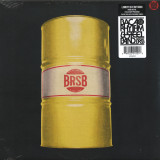
Steel Drum covers of Drake, Snoop Dogg & Dr Dre, Claudja Barry, The Game & 50 Cent, A$AP Rocky, Stranger Things Theme, and more. Bacao Rhythm & Steel Band, the mysterious steel pan outfit hailing from Hamburg, Germany have amassed a cult following around the globe. With a slew of classic 7”s and three critically acclaimed full length albums, they set a high bar for themselves, one they clearly intend on pushing even higher with this new offering. On their fourth album BRSB, Bacao are back with more of the same, but more of the same with them is inherently different. Covering songs that span genres and range from mega hits to underground album cuts, they make them their own with their unique approach to the traditional steel pans of Trinidad and Tobago. While part of the allure of a new Bacao Rhythm & Steel Band album is finding out what covers they do it is equally intriguing to see what original tunes they cooked upland this record is foul of standout originals. The album opener, “In The Crosshairs” is a rough and tough mid-tempo head nodder while both “Grilled” & “Treasure Quest” pick up the tempo with heavy African Funk in‑fluences on both. Bacao goes deep with “Hazy Memories”, a bass heavy slow burner that walks a line between hypnotic and hype. All these originals stand as testament that the term “cover band” is a shoe that could never fit Bacao. However, in the tradition of steel pan music, they do a heavy amount of covers. This time around there is a big West Coast Hip Hop influence with covers of Game & 50 Cent’s “How We Do”, Dr Dre & Snoop Dogg’s “Nuthin But A G Thang”, and Tupac’s “Got My Mind Made Up” all of which take on new energy and lend themselves to the BRSB steel treatment. Bacao puts another certified dance‑floor filler on their resume with their cover of Claudja Barry’s uber Disco classic “Love For The Sake Of Love” which they flip into a dubbed-out affair aptly changing even the title to “Love For The Sake Of Dub”. Pulling from the contemporary smash hit section of Hip Hop they cover Drake’s “Hotline Bling” and “Love$ick” by Mura Masa & A$AP Rocky. Then they go very unexpected with “Stranger Things Theme” where they take the synth heavy theme song to the hit show and give it a more hypnotizing tone than the original. By the time BRSB is through, Bacao has taken the listener on a journey spanning a myriad of energies, tempos, and moods while keeping it all under one umbrella. For all that, these songs are alive, and they will be taken out of the context of this album and sewn into the fabric of DJ sets around the globe for many years to come. Bacao Rhythm & Steel Band continues building their legacy and pushing the boundaries of steel pan music forward with another rock solid musical offering. Enjoy
- A1: Ryuichi Sakamoto - The End Of Asia
- A2: Mariah - Shinzo No Tobira
- A3: Chika Asamoto - Self Control
- A4: Jun Fukamachi - Treasure Hunter
- B1: Yumi Murata - Watashi No Bus
- B2: Hitomi 'Penny' Tohyama - Rainy Driver
- B3: Yumi Seino - La Maison Est En Ruine
- B4: Kyoko Furuya - Tokyo
- C1: Kazue Itoh - Chinatown Rose
- C2: Kazumi Watanabe - Tokyo Joe
- C3: Juicy Fruits - Jenie Gets Amgry
- C4: Haruo Chikada & Vibra-Tones - Soul Life
- D1: Colored Music - Heartbeat
- D2: Akira Sakata - Room
- D3: Yasuaki Shimizu - Semi Tori No Hi
- D4: Shigeo Sekito - The Word Ii
Repress!
A MAJOR EXPLORATION OF TOKYO'S CUTTING EDGE 80S SOUND THROUGH THE MUSIC OF CULT JAPANESE LABEL NIPPON COLUMBIA AND ITS BETTER DAYS IMPRINT, SELECTED BY BRITISH RADIO PRESENTER AND DJ NICK LUSCOMBE.
‘Tokyo Dreaming’ is a superb selection picked from the highly collectible Nippon Columbia label and its Better Days sub-label. For the occasion, we’ve teamed up with journalist and Japanese music expert Nick Luscombe who was granted rare access to the much-guarded Nippon Columbia's vaults for a masterful selection encapsulating the fascinating sound of Tokyo in the late 70s and 80s. The selection mixes electro, synth-pop, funk and ambient and features such artists as Ryuichi Sakamoto, Mariah, Shigeo Sekito, Juicy Fruits, Hitomi "Penny" Tohyama and Yumi Murata. The tracklist includes many sought-after rarities and hidden gems which have never been released outside of Japan and the set has been newly remastered by Nippon Columbia. The album has been designed by famed London-based designer Optigram and is annotated by Nick.
Nippon Columbia, one of Japan's oldest music labels is also one of its most collectible thanks to its sub-label Better Days which, in the late 70s, became a hotbed for Tokyo's new generation of pop artists eager to experiment with ambient, electro and funk. Armed with a string of new Japanese-made synthesizers and drum machines that would soon take the world by storm, they made cutting-edge music, which has since become highly sought-after by a new generation of Japanese music lovers. Nick Luscombe, who has long been a leading advocate of Japanese music from this era, has handpicked a selection of some of the sharpest music released on these labels at the time.
According to Nick, “Tokyo Dreaming is a look back to an incredible era of Japanese music, that still sounds and feels like the future. It was a moment when brand-new music tech from Japan helped forge new ideas and experiments that permeated pop, soul and jazz and helped create new forms of music including electro and techno. The perfect meeting point that would help create a new soundtrack for modern living.“
?The selection starts with "The End of Asia" by Ryuichi Sakamoto from his 1978 ground-breaking debut "Thousand Knives Of" (reissued last year by Wewantsounds). The track became a staple of Sakamoto's and YMO's live shows and was even re-recorded by the group for their 1980 album 'X Multiplies'. The track is followed by Mariah's cult Armenian folk flavoured synth pop classic "Shinzo No Tobira" (1983), which first spread outside of Japan when the Scottish DJ duo Optimo started playing the track regularly at their shows.
?Chika Asamoto's "Self Control" (1988) and Jun Fukamachi's "Treasure Hunter" (1985) are perfect songs in the synth-pop canon, while Yumi Murata's rendition of Akiko Yano's "Watashi No Bus" and Hitomi "Penny" Tohyama's "Rainy Driver" both from 1981, move closer towards the slicker, funkier sound of City Pop.
?'Tokyo Dreaming' superbly showcases the breadth of 80s Japanese music and the way electro pop was a playing ground for musicians to experiment with many styles, as showcased by Akira Sakata's dub-enfused "Room" from 1980, Kazumi Watanabe's discoid "Tokyo Joe" (1980) and Juicy Fruits' "kawai" robotic Techno pop song "Jenie Gets Angry".
?The selection flows effortlessly between many shades of synth and ends with two cult classics in the form of Yasuaki Shimizu's "Semi Tori No Hi" and Shigeo Sekito's ambient-jazz masterpiece "The Word II" from his highly sought-after album "Kareinaru Electone (The Word) Vol.2" which, although recorded in 1975, perfectly announces the synth revolution to come. Tokyo Dreaming showcases the groundbreaking sounds of a city turned giant sonic lab which was restlessly inventing the music of the future.
Nick Luscombe is a highly respected and in-demand music influencer who discovers great music from all over the world and shares it internationally through his many radio shows and DJ sets. He has been in charge of music selection for various radio programs since 1999, and from 2010 - 2019, was the DJ for the popular BBC Radio music program "Late Junction”. He has also curated and presented music shows for Monocle and British Airways radio stations. He has worked as both Chief Music Editor at iTunes and Director of Music at London’s Institute of Contemporary Art, and is the founder of MSCTY.
Saxophonist, producer and composer Brian Allen Simon explores darker hues, transposing waking and altered states under his studio veil Anenon. On the deeply evocative new album 'Dream Temperature', he shifts electronic processing to the foreground, introducing digitized wind instruments and unworldly atmospherics, not heard since his innovating mid-late 2010s output.
A longtime Los Angeles resident, born and raised, Brian Allen Simon has expressively operated under the moniker Anenon, releasing the highly revered 'Petrol' (2016), 'Tongue' (2018) and the viscerally beautiful 'Moons Melt Milk Light' (2023), in a line of unwavering musical dialogues. While the penultimate album was a deliberate, reductive, entirely acoustic detour that was born out of a want to unplug, 'Dream Temperature' sees Brian primed with a newly discovered wind synthesizer as his central compositional tool, alongside acoustic piano and tenor saxophone. The entirety of the album's electronics are triggered by Brian's lungs, generating otherworldly synths modulated by expressive breath control, channelled through the laptop as the core processing chamber for added textural components and field recordings.
A free floating and heavy emotional resonance marks 'Dream Temperature' from beginning to end, invoking the feeling of waking up, still heavy from a night of half-remembered dreams, and continuing one's day in this state. Simon maps out the album's spatial voice early on the statement title track, a deep, yet compact cut, generated from digital saxophone rasps that whistle by in close proximity, along with haze filled textures and sub bass. There is a sonic oscillation of urban grit and pastoral drift throughout as tracks pass by like introspective thoughts, fueling both a tense and ethereal quality that underpins the album. Interluding solo and part-solo piano improvisations 'Last Sun 1' and '2' are positioned adjacent to the buffering digital soundscapes. Their softer, still processed timbres pierce the melancholic exterior, offering a contrasting tenderness that could echo the grace of Ry?ichi Sakamoto, the spiritualist rigor of ECM's Keith Jarrett and a touch akin to Aphex Twin's piano miniatures. 'Nulle Part 1+2' signals the first appearance of an acoustic wind instrument, as tenor saxophone flourishes are juxtaposed against noisy drones, all shouting at the void, with notes resurfacing like lost digital data.
The album was recorded at home during either sunset or nocturnal hours between September of 2024 and October of 2025, a period in which Brian found himself craving more lengthy and intimate studio time as he searched for more pronounced textural qualities amidst his new sonic ambitions. 'When The Light Appears, Boy' shows further evidence of this deeper universe, revealing a grittier edge as the album's essential blueprint is sonically inked. A sprawling expanse of wind synths rhythmically encircle the listener before a dreamy, ghostly ambience blankets 'Toyama'. The sound is evocative of the productions of post dubstep era luminaries such as Burial or the productions of HTRK's Nigel Yang. More isolating and enveloping than the previous all acoustic record, this is music both disorienting and yet warmly inviting all at once. A sonic diarist at heart, personal field recordings were also taken from Sardinia, Japan, Big Sur and LA which intersect at unexpected moments throughout the album's 31-minute play time.
'Dream Temperature' is a vital coalescence of both Simon's electronic and acoustic practices with repositioned electronics akin to earlier works, both haunting and elegant, yet still profoundly personal. Simon continuously resonates as an experimental outlier treading an enthralling, non-linear musical path. This music resolutely glows with an unknowing aura, like an untapped energy source waiting to be discharged.
Formed by singer SAKKO from tokyo and quickly booked by the hippest clubs in TOKYO nite life area SHIBUYA.
From the same label (FLOWER RECORDS) as JAZZ ROOM hit makers "CRUISIC" (JAZZ CARNIVAL/PACIFIC 707).
The super funky version of the KRAFTWERK mega hit "TRANS EUROPE EXPRESS" with it's freaked out sax and supercool vocals is a special mix by DJ KOCO aka SHIMOKITA who amazed audiences with his turntable skills recently on a UK TOUR.
"AEO" the flipside is a longtime DAVID MANCUSO LOFT CLASSIC and this version has been given the seal of approval by ITALIAN AFROCOSMIC FOUNDER & DJ LEGEND DANIELE BALDELLI.
If there is a year zero for the introduction of reggae music to Japan, you’d be forgiven for thinking it was 1979 when Bob Marley and the Wailers toured the country, trailed by an entourage of journalists, photographers and fans ready to spread the message of the music into all corners of Japanese society.
But the story of Japanese reggae is not a linear one, and the music that is collected on Tokyo Riddim 1976-1985 captures the moment J-reggae entered the broader public consciousness, merging commercial city pop style with an infectious backbeat, that has drawn comparisons with the emergence of Lovers Rock in the UK.
Rather than look directly to Jamaica, many producers and artists in Japan were inspired instead by the more approachable sounds of The Police and UB40, their reggae fix arriving pre-filtered through the lens of new wave pop from the UK. Playful and groovy, these album deep cuts have been overlooked for too long.
Among them are Miki Hirayama, the idol singer who borrowed the bassline from Bob Marley’s Natural Mystic on ‘Denshi Lenzi’, Chu Kosaka, who headed to Hawaii to cut the Jimmy Cliff-inspired ‘Music’ and Marlene, the Philippine songstress whose cover of Roberta Flack’s ‘Hittin’ Me Wear It Hurts’ owed much to her producer’s obsession with Sly & Robbie’s Compass Point sound.
Then there was Izumi “Mimi” Kobayashi, who enlisted the Babylon Warriors to perform on a dubbed-out version of her own track ‘Lazy Love’, the city pop-meets-new wave reggae sound of Miharu Koshi’s ‘Coffee Break’, Junko Yagami’s anti-apartheid deep cut ‘Johannesburg’ and Lily, whose ‘Tenkini Naare’ was produced by Ryuichi Sakamoto and closes out the compilation with a flourish.
While these stories may not always conform to neat narratives, they do provide a more accurate reflection of the indirect ways in which styles infiltrate one another and, in their naivety, have the potential to create something beautifully strange and entirely new. Previously only available in Japan, the tracks on this compilation are a testament to that curious alchemy.
Tokyo Riddim 1976-1985 is released on vinyl and as a full album download (no streaming), featuring original artwork by Japanese Fukuoka-based artist Noncheleee, whose cover pays homage to the iconic dancehall album art of Wilfred Limonious.
Released on 1st September, Tokyo Riddim 1976-1985 is part of Time Capsule's Nippon Series, a loose series of compilations exploring different musical scenes from Japan between the 1960s and 2010s.
- A1: Drumline
- A2: Mágica Feat Rogê
- A3: 24 Hr Sports Theme No 1
- A4: Say Goodbye Feat Florence Adooni
- A5: Oakley's Car Wash Feat Dave Guy
- A6: Anticipate Feat Clairo
- A7: Eastside
- A8: Clean The Line
- B1: Cortex
- B2: Shining
- B3: 24 Hr Sports Theme No 2
- B4: Indifference Feat Shintaro Sakamoto
- B5: Carry Me Away Feat Norah Jones
- B6: Take My Hand Feat Rahsaan Roland Kirk
- B7: Open Season
- B8: Victory Lap
Leon Michels ist still und leise zu einem der gefragtesten Produzenten der Musikszene geworden.Sein unverwechselbarer Sound hat die Aufmerksamkeit des Mainstreams auf sich gezogen und inspiriert gleichzeitig weiterhin die Underground-Szene. Seit dem 2023 erschienenen Album Glorious Game von El Michels Affair & Black Thought war Michels als Produzent für andere Künstler aktiv - darunter Norah Jones' Grammy-prämiertes Visions, Clairos Grammy-nominiertes Charm, Kali Uchis' ,Moonlight" sowie Alben für seine Labelkollegen Brainstory, Derya Yildirim & Grup Simsek, Thee Heart Tones und Liam Bailey. Sein neues Album 24 Hr Sports markiert die langersehnte Rückkehr unter seinem eigenen Namen: El Michels Affair.24 Hr Sports wurde inspiriert von Mode und Grafikdesign der Sports-Illustrated-Magazine der 80er- und 90er-Jahre, MF DOOMs Special Herbs-Alben, den dort verwendeten Sample-Quellen und Gospelmusik à la Pastor T.L. Barrett. Die Summe dieser Einflüsse, gepaart mit Michels' unfehlbarem kreativen Gespür, ergibt ein Rezept für einen Instant-Klassiker - ein Werk, das zweifellos zu den meistgefeierten Veröffentlichungen des Jahres 2025 zählen wird.Der Album-Opener ,Drum Line" ist ein hymnischer, mitreißender Track mit Marschband-Schlagzeug und donnernden Bläserarrangements, die sofort alle Aufmerksamkeit auf sich ziehen und den Ton für das folgende Album setzen. 24 Hr Sports bedeutet eine deutliche Abkehr von der bisher überwiegend instrumentalen Musik im Katalog von El Michels Affair. Mit einer Vielzahl von Gesangsfeatures spiegelt das Album das schwer einzuordnende Genre seiner Musik wider.Das erste dieser Features ist ,Mágica" mit dem brasilianischen Künstler Rogê, der die ohnehin energiegeladene Nummer mit seinen fußballinspirierten Lyrics auf ein neues Level hebt. Weiter geht es von Brasilien nach Ghana: In ,Say Goodbye" feiert Florence Adooni ihre Individualität mit lässigem Selbstbewusstsein und wechselt mühelos zwischen Frafra und Englisch, besonders eingängig im Refrain: ,never gonna find a girl like me_".Labelkollege und weltbekannter Trompeter von The Roots, Dave Guy, veredelt den 70er-Jahre-Groove von ,Oakley's Car Wash" mit seinen charakteristischen Bläserlinien, bevor der Track in ein Dub-artiges Outro übergeht. Vom wilden zum sanften Klang: ,Anticipate" mit Clairo knüpft an die musikalische Chemie an, die das 2024er-Album Charm hervorgebracht hat. Clairo gleitet über die typischen EMA-Arrangements, während sie sich nach unerreichbarer Liebe sehnt - getragen von einer perfekt eingespielten Band.,Eastside" ist ein Stück, das einen Sonnenaufgang am Meer vertonen könnte - Leon Michels' Sinn für Raum und Arrangement wird hier besonders deutlich. Aus Japan ist der Suginami Children's Choir auf dem üppigen Track ,Clean The Line" zu hören - sie singen ein Lied über den Mond, die Sonne und Vögel. Danach reißt ,Cortex" mit verzerrten Gitarren und donnernden Drums die Tür auf - ein Moment purer, filmreifer Intensität in der Mitte des Albums.Leon Michels übernimmt selbst den Lead-Gesang auf ,Shining", einem Song über die Suche nach einem Freund, mit dem man die Freude eines sonnigen Tages teilen kann. Der international gefeierte Shintaro Sakamoto ist auf ,Indifference" zu hören - ein lässiger Song mit federnden Basslinien und gefühlvollen Flöten, in dem Sakamoto zwischen Gesang und gesprochener Poesie über eine vergängliche Liebe reflektiert.Das Grammy-prämierte Duo Norah Jones und Michels kommt auf ,Carry Me Away" erneut zusammen: Jones' honigsüße Stimme schwebt über einem schwer einzuordnenden, aber sofort liebenswerten Track. Michels lehnt sich hier wieder mehr in Richtung El Michels Affair-Stil, der sich klar von seinen bisherigen Produktionen für Norah Jones abhebt. ,Take My Hand" stellt den Gospel-Einfluss in den Vordergrund - mit dem Fabulous Rainbow Singers Choir im Refrain und einem Saxophon-Solo der verstorbenen Jazzlegende Rahsaan Roland Kirk.,Open Season", ein Piano-getriebener Midtempo-Track mit Gruppenrufen wie ,we want the gold, we want the gold_", könnte den perfekten Soundtrack für eine Slow-Motion-Highlight-Reel liefern. Der treffend betitelte Albumabschluss ,Victory Lap" schließlich ist ein traumhafter, euphorischer Ausklang, der dem gesamten Werk würdig ist.Am Ende spricht die Trophäe auf dem Albumcover Bände: El Michels Affair ist Champion Sound - und 24 Hr Sports macht das unmissverständlich klar.
- A1: Drumline
- A2: Mágica Feat Rogê
- A3: 24 Hr Sports Theme No 1
- A4: Say Goodbye Feat Florence Adooni
- A5: Oakley's Car Wash Feat Dave Guy
- A6: Anticipate Feat Clairo
- A7: Eastside
- A8: Clean The Line
- B1: Cortex
- B2: Shining
- B3: 24 Hr Sports Theme No 2
- B4: Indifference Feat Shintaro Sakamoto
- B5: Carry Me Away Feat Norah Jones
- B6: Take My Hand Feat Rahsaan Roland Kirk
- B7: Open Season
- B8: Victory Lap
Leon Michels ist still und leise zu einem der gefragtesten Produzenten der Musikszene geworden. Sein unverwechselbarer Sound hat die Aufmerksamkeit des Mainstreams auf sich gezogen und inspiriert gleichzeitig weiterhin die Underground-Szene. Seit dem 2023 erschienenen Album Glorious Game von El Michels Affair & Black Thought war Michels als Produzent für andere Künstler aktiv - darunter Norah Jones' Grammy-prämiertes Visions, Clairos Grammy-nominiertes Charm, Kali Uchis' ,Moonlight" sowie Alben für seine Labelkollegen Brainstory, Derya Yildirim & Grup Simsek, Thee Heart Tones und Liam Bailey. Sein neues Album 24 Hr Sports markiert die langersehnte Rückkehr unter seinem eigenen Namen: El Michels Affair.24 Hr Sports wurde inspiriert von Mode und Grafikdesign der Sports-Illustrated-Magazine der 80er- und 90er-Jahre, MF DOOMs Special Herbs-Alben, den dort verwendeten Sample-Quellen und Gospelmusik à la Pastor T.L. Barrett. Die Summe dieser Einflüsse, gepaart mit Michels' unfehlbarem kreativen Gespür, ergibt ein Rezept für einen Instant-Klassiker - ein Werk, das zweifellos zu den meistgefeierten Veröffentlichungen des Jahres 2025 zählen wird.Der Album-Opener ,Drum Line" ist ein hymnischer, mitreißender Track mit Marschband-Schlagzeug und donnernden Bläserarrangements, die sofort alle Aufmerksamkeit auf sich ziehen und den Ton für das folgende Album setzen. 24 Hr Sports bedeutet eine deutliche Abkehr von der bisher überwiegend instrumentalen Musik im Katalog von El Michels Affair. Mit einer Vielzahl von Gesangsfeatures spiegelt das Album das schwer einzuordnende Genre seiner Musik wider.Das erste dieser Features ist ,Mágica" mit dem brasilianischen Künstler Rogê, der die ohnehin energiegeladene Nummer mit seinen fußballinspirierten Lyrics auf ein neues Level hebt. Weiter geht es von Brasilien nach Ghana: In ,Say Goodbye" feiert Florence Adooni ihre Individualität mit lässigem Selbstbewusstsein und wechselt mühelos zwischen Frafra und Englisch, besonders eingängig im Refrain: ,never gonna find a girl like me_".Labelkollege und weltbekannter Trompeter von The Roots, Dave Guy, veredelt den 70er-Jahre-Groove von ,Oakley's Car Wash" mit seinen charakteristischen Bläserlinien, bevor der Track in ein Dub-artiges Outro übergeht. Vom wilden zum sanften Klang: ,Anticipate" mit Clairo knüpft an die musikalische Chemie an, die das 2024er-Album Charm hervorgebracht hat. Clairo gleitet über die typischen EMA-Arrangements, während sie sich nach unerreichbarer Liebe sehnt - getragen von einer perfekt eingespielten Band.,Eastside" ist ein Stück, das einen Sonnenaufgang am Meer vertonen könnte - Leon Michels' Sinn für Raum und Arrangement wird hier besonders deutlich. Aus Japan ist der Suginami Children's Choir auf dem üppigen Track ,Clean The Line" zu hören - sie singen ein Lied über den Mond, die Sonne und Vögel. Danach reißt ,Cortex" mit verzerrten Gitarren und donnernden Drums die Tür auf - ein Moment purer, filmreifer Intensität in der Mitte des Albums.Leon Michels übernimmt selbst den Lead-Gesang auf ,Shining", einem Song über die Suche nach einem Freund, mit dem man die Freude eines sonnigen Tages teilen kann. Der international gefeierte Shintaro Sakamoto ist auf ,Indifference" zu hören - ein lässiger Song mit federnden Basslinien und gefühlvollen Flöten, in dem Sakamoto zwischen Gesang und gesprochener Poesie über eine vergängliche Liebe reflektiert.Das Grammy-prämierte Duo Norah Jones und Michels kommt auf ,Carry Me Away" erneut zusammen: Jones' honigsüße Stimme schwebt über einem schwer einzuordnenden, aber sofort liebenswerten Track. Michels lehnt sich hier wieder mehr in Richtung El Michels Affair-Stil, der sich klar von seinen bisherigen Produktionen für Norah Jones abhebt. ,Take My Hand" stellt den Gospel-Einfluss in den Vordergrund - mit dem Fabulous Rainbow Singers Choir im Refrain und einem Saxophon-Solo der verstorbenen Jazzlegende Rahsaan Roland Kirk.,Open Season", ein Piano-getriebener Midtempo-Track mit Gruppenrufen wie ,we want the gold, we want the gold_", könnte den perfekten Soundtrack für eine Slow-Motion-Highlight-Reel liefern. Der treffend betitelte Albumabschluss ,Victory Lap" schließlich ist ein traumhafter, euphorischer Ausklang, der dem gesamten Werk würdig ist.Am Ende spricht die Trophäe auf dem Albumcover Bände: El Michels Affair ist Champion Sound - und 24 Hr Sports macht das unmissverständlich klar.
- Drumline
- Mágica Feat Rogê
- 24: Hr Sports Theme No 1
- Say Goodbye Feat Florence Adooni
- Oakley's Car Wash Feat Dave Guy
- Anticipate Feat Clairo
- Eastside
- Clean The Line
- Cortex
- Shining
- 24: Hr Sports Theme No 2
- Indifference Feat Shintaro Sakamoto
- Carry Me Away Feat Norah Jones
- Take My Hand Feat Rahsaan Roland Kirk
- Open Season
- Victory Lap
Leon Michels ist still und leise zu einem der gefragtesten Produzenten der Musikszene geworden.Sein unverwechselbarer Sound hat die Aufmerksamkeit des Mainstreams auf sich gezogen und inspiriert gleichzeitig weiterhin die Underground-Szene. Seit dem 2023 erschienenen Album Glorious Game von El Michels Affair & Black Thought war Michels als Produzent für andere Künstler aktiv - darunter Norah Jones' Grammy-prämiertes Visions, Clairos Grammy-nominiertes Charm, Kali Uchis' ,Moonlight" sowie Alben für seine Labelkollegen Brainstory, Derya Yildirim & Grup Simsek, Thee Heart Tones und Liam Bailey. Sein neues Album 24 Hr Sports markiert die langersehnte Rückkehr unter seinem eigenen Namen: El Michels Affair.24 Hr Sports wurde inspiriert von Mode und Grafikdesign der Sports-Illustrated-Magazine der 80er- und 90er-Jahre, MF DOOMs Special Herbs-Alben, den dort verwendeten Sample-Quellen und Gospelmusik à la Pastor T.L. Barrett. Die Summe dieser Einflüsse, gepaart mit Michels' unfehlbarem kreativen Gespür, ergibt ein Rezept für einen Instant-Klassiker - ein Werk, das zweifellos zu den meistgefeierten Veröffentlichungen des Jahres 2025 zählen wird.Der Album-Opener ,Drum Line" ist ein hymnischer, mitreißender Track mit Marschband-Schlagzeug und donnernden Bläserarrangements, die sofort alle Aufmerksamkeit auf sich ziehen und den Ton für das folgende Album setzen. 24 Hr Sports bedeutet eine deutliche Abkehr von der bisher überwiegend instrumentalen Musik im Katalog von El Michels Affair. Mit einer Vielzahl von Gesangsfeatures spiegelt das Album das schwer einzuordnende Genre seiner Musik wider.Das erste dieser Features ist ,Mágica" mit dem brasilianischen Künstler Rogê, der die ohnehin energiegeladene Nummer mit seinen fußballinspirierten Lyrics auf ein neues Level hebt. Weiter geht es von Brasilien nach Ghana: In ,Say Goodbye" feiert Florence Adooni ihre Individualität mit lässigem Selbstbewusstsein und wechselt mühelos zwischen Frafra und Englisch, besonders eingängig im Refrain: ,never gonna find a girl like me_".Labelkollege und weltbekannter Trompeter von The Roots, Dave Guy, veredelt den 70er-Jahre-Groove von ,Oakley's Car Wash" mit seinen charakteristischen Bläserlinien, bevor der Track in ein Dub-artiges Outro übergeht. Vom wilden zum sanften Klang: ,Anticipate" mit Clairo knüpft an die musikalische Chemie an, die das 2024er-Album Charm hervorgebracht hat. Clairo gleitet über die typischen EMA-Arrangements, während sie sich nach unerreichbarer Liebe sehnt - getragen von einer perfekt eingespielten Band.,Eastside" ist ein Stück, das einen Sonnenaufgang am Meer vertonen könnte - Leon Michels' Sinn für Raum und Arrangement wird hier besonders deutlich. Aus Japan ist der Suginami Children's Choir auf dem üppigen Track ,Clean The Line" zu hören - sie singen ein Lied über den Mond, die Sonne und Vögel. Danach reißt ,Cortex" mit verzerrten Gitarren und donnernden Drums die Tür auf - ein Moment purer, filmreifer Intensität in der Mitte des Albums.Leon Michels übernimmt selbst den Lead-Gesang auf ,Shining", einem Song über die Suche nach einem Freund, mit dem man die Freude eines sonnigen Tages teilen kann. Der international gefeierte Shintaro Sakamoto ist auf ,Indifference" zu hören - ein lässiger Song mit federnden Basslinien und gefühlvollen Flöten, in dem Sakamoto zwischen Gesang und gesprochener Poesie über eine vergängliche Liebe reflektiert.Das Grammy-prämierte Duo Norah Jones und Michels kommt auf ,Carry Me Away" erneut zusammen: Jones' honigsüße Stimme schwebt über einem schwer einzuordnenden, aber sofort liebenswerten Track. Michels lehnt sich hier wieder mehr in Richtung El Michels Affair-Stil, der sich klar von seinen bisherigen Produktionen für Norah Jones abhebt. ,Take My Hand" stellt den Gospel-Einfluss in den Vordergrund - mit dem Fabulous Rainbow Singers Choir im Refrain und einem Saxophon-Solo der verstorbenen Jazzlegende Rahsaan Roland Kirk.,Open Season", ein Piano-getriebener Midtempo-Track mit Gruppenrufen wie ,we want the gold, we want the gold_", könnte den perfekten Soundtrack für eine Slow-Motion-Highlight-Reel liefern. Der treffend betitelte Albumabschluss ,Victory Lap" schließlich ist ein traumhafter, euphorischer Ausklang, der dem gesamten Werk würdig ist.Am Ende spricht die Trophäe auf dem Albumcover Bände: El Michels Affair ist Champion Sound - und 24 Hr Sports macht das unmissverständlich klar.
- A1: Drumline
- A2: Mágica Feat Rogê
- A3: 24 Hr Sports Theme No 1
- A4: Say Goodbye Feat Florence Adooni
- A5: Oakley's Car Wash Feat Dave Guy
- A6: Anticipate Feat Clairo
- A7: Eastside
- A8: Clean The Line
- B1: Cortex
- B2: Shining
- B3: 24 Hr Sports Theme No 2
- B4: Indifference Feat Shintaro Sakamoto
- B5: Carry Me Away Feat Norah Jones
- B6: Take My Hand Feat Rahsaan Roland Kirk
- B7: Open Season
- B8: Victory Lap
Leon Michels ist still und leise zu einem der gefragtesten Produzenten der Musikszene geworden.Sein unverwechselbarer Sound hat die Aufmerksamkeit des Mainstreams auf sich gezogen und inspiriert gleichzeitig weiterhin die Underground-Szene. Seit dem 2023 erschienenen Album Glorious Game von El Michels Affair & Black Thought war Michels als Produzent für andere Künstler aktiv - darunter Norah Jones' Grammy-prämiertes Visions, Clairos Grammy-nominiertes Charm, Kali Uchis' ,Moonlight" sowie Alben für seine Labelkollegen Brainstory, Derya Yildirim & Grup Simsek, Thee Heart Tones und Liam Bailey. Sein neues Album 24 Hr Sports markiert die langersehnte Rückkehr unter seinem eigenen Namen: El Michels Affair.24 Hr Sports wurde inspiriert von Mode und Grafikdesign der Sports-Illustrated-Magazine der 80er- und 90er-Jahre, MF DOOMs Special Herbs-Alben, den dort verwendeten Sample-Quellen und Gospelmusik à la Pastor T.L. Barrett. Die Summe dieser Einflüsse, gepaart mit Michels' unfehlbarem kreativen Gespür, ergibt ein Rezept für einen Instant-Klassiker - ein Werk, das zweifellos zu den meistgefeierten Veröffentlichungen des Jahres 2025 zählen wird.Der Album-Opener ,Drum Line" ist ein hymnischer, mitreißender Track mit Marschband-Schlagzeug und donnernden Bläserarrangements, die sofort alle Aufmerksamkeit auf sich ziehen und den Ton für das folgende Album setzen. 24 Hr Sports bedeutet eine deutliche Abkehr von der bisher überwiegend instrumentalen Musik im Katalog von El Michels Affair. Mit einer Vielzahl von Gesangsfeatures spiegelt das Album das schwer einzuordnende Genre seiner Musik wider.Das erste dieser Features ist ,Mágica" mit dem brasilianischen Künstler Rogê, der die ohnehin energiegeladene Nummer mit seinen fußballinspirierten Lyrics auf ein neues Level hebt. Weiter geht es von Brasilien nach Ghana: In ,Say Goodbye" feiert Florence Adooni ihre Individualität mit lässigem Selbstbewusstsein und wechselt mühelos zwischen Frafra und Englisch, besonders eingängig im Refrain: ,never gonna find a girl like me_".Labelkollege und weltbekannter Trompeter von The Roots, Dave Guy, veredelt den 70er-Jahre-Groove von ,Oakley's Car Wash" mit seinen charakteristischen Bläserlinien, bevor der Track in ein Dub-artiges Outro übergeht. Vom wilden zum sanften Klang: ,Anticipate" mit Clairo knüpft an die musikalische Chemie an, die das 2024er-Album Charm hervorgebracht hat. Clairo gleitet über die typischen EMA-Arrangements, während sie sich nach unerreichbarer Liebe sehnt - getragen von einer perfekt eingespielten Band.,Eastside" ist ein Stück, das einen Sonnenaufgang am Meer vertonen könnte - Leon Michels' Sinn für Raum und Arrangement wird hier besonders deutlich. Aus Japan ist der Suginami Children's Choir auf dem üppigen Track ,Clean The Line" zu hören - sie singen ein Lied über den Mond, die Sonne und Vögel. Danach reißt ,Cortex" mit verzerrten Gitarren und donnernden Drums die Tür auf - ein Moment purer, filmreifer Intensität in der Mitte des Albums.Leon Michels übernimmt selbst den Lead-Gesang auf ,Shining", einem Song über die Suche nach einem Freund, mit dem man die Freude eines sonnigen Tages teilen kann. Der international gefeierte Shintaro Sakamoto ist auf ,Indifference" zu hören - ein lässiger Song mit federnden Basslinien und gefühlvollen Flöten, in dem Sakamoto zwischen Gesang und gesprochener Poesie über eine vergängliche Liebe reflektiert.Das Grammy-prämierte Duo Norah Jones und Michels kommt auf ,Carry Me Away" erneut zusammen: Jones' honigsüße Stimme schwebt über einem schwer einzuordnenden, aber sofort liebenswerten Track. Michels lehnt sich hier wieder mehr in Richtung El Michels Affair-Stil, der sich klar von seinen bisherigen Produktionen für Norah Jones abhebt. ,Take My Hand" stellt den Gospel-Einfluss in den Vordergrund - mit dem Fabulous Rainbow Singers Choir im Refrain und einem Saxophon-Solo der verstorbenen Jazzlegende Rahsaan Roland Kirk.,Open Season", ein Piano-getriebener Midtempo-Track mit Gruppenrufen wie ,we want the gold, we want the gold_", könnte den perfekten Soundtrack für eine Slow-Motion-Highlight-Reel liefern. Der treffend betitelte Albumabschluss ,Victory Lap" schließlich ist ein traumhafter, euphorischer Ausklang, der dem gesamten Werk würdig ist.Am Ende spricht die Trophäe auf dem Albumcover Bände: El Michels Affair ist Champion Sound - und 24 Hr Sports macht das unmissverständlich klar.
COMPUMA's new new album “horizons”now available on vinyl via his own label Something About!
The album “horizons” is a further development of COMPUMA's “horizons EP”, which was released in July 2023 as a digital-only EP on his Bandcamp. The songs are inspired by the scenery and environment of Lake Ezu, Kumamoto, where the artist's roots lie, and by his walks in various places around Japan.
Horizons 1”, in which the undulations of electronic sounds seem to represent a leisurely walk across a clear expanse of sky and lake scenery, and the vocoder voice somewhat reminds us of people's activities, and the piece changes to a more minimalistic play of rhythms and electronic sounds, as if focusing on introspection in the midst of walking. The album also includes “horizons 2,” which changes with exquisite salinity, “horizons 3,” which pays homage to early electronic music, and “horizons 4,” a more stoic minimal electro-dubwise piece that seems to be immersed in the act of walking, The last track on the album, “horizons 5,” is a non-beat ambient track with a hint of the waterfront, as if the artist is gazing at the vast sky, as if the steps of the first half of the album are expanding into a faint memory, and is accompanied by a field recording. The album includes “horizons 5”, a non-beating ambient taste that is covered by field recordings and depicts the atmosphere of a wandering waterfront, and five versions of “horizons” that remind us of the days of “walking”, sometimes immersed in the scenery and walking, sometimes lost in thought, with “horizons interlude” in between, which reminds us of the surface of a bobbing lake, and is a self-titled version of “View 2” from the previous album, “A View”. The album contains seven songs in total, including a self-remix of “View 2” and an electro version of “view 2 electro”, reminiscent of the shimmering surface of a lake.
Personally speaking, this work reminds me somewhat of Kraftwerk's “Autobahn,” which depicted the countryside of West Germany with minimal electronic sounds, and this work also seems to depict a scene of a “walk” with electronic sounds. However, what is different from “Autobahn” is that there is an element in the middle part of the album that seems to go into introspection in the midst of walking, and it is a work that shows various views (including feelings) throughout the album. From a macro perspective, this album is a new response to the recent environmental music revival and generalization of ambient music, which he has introduced as a DJ and record buyer for a long time.
The album was co-produced by hacchi, who also works with Deavid Soul, Urban Volcano Sound, and as a recording/mastering engineer, and mastered by Nakamura Soichiro of Peace Music, a studio that has produced many masterpieces, including Shintaro Sakamoto's solo work. The package artwork is by designer Seiichiro Suzuki. The package artwork is by designer Sei Suzuki. (The package artwork was designed by designer Sei Suzuki.)
******
Compuma is a Tokyo-based log-serving DJ whose extensive knowledge of obscure and left-field music across so many genres and different regions of the world established himself as one of the most respected record buyers in Japan,
a country well known as record collectors’ paradise. While he built his career in record business over decades, he has also been sharing his expertise in music as a DJ just as long. Not only the breath and the depth of where his selection derives are hard to compete, the way he blends them all together is also a state of art. Often intricately layered and collaged, Compuma is capable of sculpting something entirely new with bits and pieces of existing tracks in various forms such as ambient soundscapes to dubbed out club sets. In 2017, his unique ability caught the attention of Berlin Atonal directors and he was invited to play at the festival in Berlin.
He extends his skills into remixing which can be heard on the released from EM Records - “Compuma meets Haku” (2015) and “Bangkok Nights” (2017.) In June 2022, he released his first solo album, A View.
He is also an active member of a DJ trio called Akuma No Numa (which translates to “devil’s swamp”) in which he explores darker and more psychedelic periphery of dance music.
Little Foot is a 120bpm to 140bpm version of Shelflife. A collection of 20 Calibre tracks made over the last 20 years.
This 500 copy limited edition boxset comes with 5 x 12" Vinyl in full colour sleeves. Plus a free download code of all tracks.
Please note the artwork labels on sides I&J are reversed.
- A1: Raz Fresco– Who Mapped The Earth
- A2: Romderful– Maybe With You
- A3: Dowker– Call Me
- A4: Speak– Sakuraba
- A5: Cookin' Soul, Ovrkast– Flying
- A6: Monster Rally, Demahjiae– Clooney
- A7: Mr Scruff– Flute Boom
- A8: 645Ar– Shooting Star
- B1: Peanut Butter Wolf, Waragainstgod?, Mikah 9– Organic A I
- B2: Chuck Strangers, Graymatter– Marigold
- B3: La Jay, Pigeon John– Thank You
- B4: Dj Harrison– Applechopchutney
- B5: Monster Rally, Homeboy Sandman– I Love You
- B6: Low Leaf– Faerie Function
- B7: Pouya, Boobie Lootaveli– Bitch, Park Backwards
- C1: Eddie Chacon, John Carroll Kirby– Comes And Goes (Live At Isc)
- C2: Devin Morrison– Givin Up
- C3: Suzi Analogue– King
- C4: Lee Perry– Morning Star
- C5: Dayytona Fox– Woooaaah
- C6: Bombay , Rvyo– Kflex
- C7: Crimeapple, Don Leisure– Vic Damone
- C8: Eyebriss– Don't Clap When I Win
- D1: Ncy Milky Band, Quelle Chris– High Speed Clouds
- D4: Swum, Big Lordy– Shinto
- D5: Xavier Wulf– 2 Can Wulf
- D6: Tommy Wright Iii– Chrome Thang
- D7: Tjil– Metta
- D2: Mr Mumblz, Daniel Son – Snake Eyes
- D3: Girl Talk, Freeway, Waka Flocka Flame– Tolerated
Vinyl[22,90 €]
**Gangster Music Vol.3: The Most Gangster Music Trilogy of All Time Comes to a Triumphant Close**
Imagine curating a dream lineup of MCs and producers from every corner of the rap world—sounds impossible, right? Not for artist and illustrator Gangster Doodles, who has been bringing this vision to life for the past decade. Now, with “Gangster Music Vol.3”, the trilogy reaches its grand finale, and it’s bigger, bolder, and more unpredictable than ever before.
Gangster Doodles himself puts it best:
"It’s hard to believe that I’ve been actively working on this Gangster Music series for the past 10 years. The most gangster music trilogy of ALL TIME is almost complete!! And in my humble opinion Vol.3 is the most exciting out of the 3, both from a music standpoint (special shout-out to all my music heroes on Vol.3) and artistically speaking this is the most fun I’ve had in years”
Since launching Volume 1 in 2019 and following up with the second volume in 2022, Gangster Doodles has been shaping the Gangster Music series into a one-of-a-kind sonic universe—an unfiltered mix of underground titans, unsung legends, and rising stars. Volume 3 is the biggest installment yet, boasting a staggering 30 tracks that traverse the entire spectrum of rap and beat culture.
This time around, the lineup is as eclectic as ever. From legendary pioneers like Lee Perry and Tommy Wright III, to veteran producers such as Mr. Scruff and Peanut Butter Wolf, the album pays homage to hip-hop’s roots while pushing forward into fresh territory. The roster also includes established up-and-comers like Devin Morrison, Low Leaf, DJ Harrison, Quelle Chris, Homeboy Sandman, and Suzi Analogue, ensuring a mix of classic flavors and new-school innovation. The bubbling underground is well represented too, with artists like Raz Fresco, Atlanta’s 645AR, and Pro Era’s Chuck Strangers bringing their own distinct heat.
From pioneering SoundCloud rappers like Pouya to genre-bending composer John Carroll Kirby, from Birmingham’s Romderful to Chile’s RVYO, the album encapsulates a truly global soundscape, proving once again that Gangster Doodles’ ear for cutting-edge talent is second to none.
As always, the cover art is a vital piece of the puzzle. This time, Bootleg Garfield & Friends take center stage, bringing the same playful irreverence that has defined Gangster Doodles’ artwork for years. Fans are encouraged to engage, remix, and make the cover their own, staying true to the spirit of interactive creativity that has always fueled the series.
After years of meticulous curation, countless DMs, emails, and behind-the-scenes wrangling, Gangster Music Vol.3 is here to complete the trilogy in legendary fashion. Expect boundary-pushing beats, next-level lyricism, and a lineup that celebrates hip-hop in all its many forms.
“Thanks to everyone who’s actively supported and continues to tap-in. Believe & trust when I say I've got more dope stuff cookin’. STAY TUNED!! GANGSTER DOODLES 4EVER. 1LUV."
Gangster Music Vol.3 is out April 7th on All City. Stay tuned, stay tapped in, and get ready for the most gangster music experience yet.
2025 Repress
Berlin-based Frenchman Alexkid lands on Rawax with ‘Wake Up’, a fantastic new album that explores acid from many different angles.
As an early protagonist in the 90s Parisian electronic music culture, Alexkid has been paving his own path for over two decades. Obsessed with drum-machines since his teens, he is a skilled producer and sound engineer who imbues his productions with real soul and warmth, even releasing his own lauded Ableton Live Plugins. He is a Rex club resident, released albums on Laurent Garnier's legendary F Communications and has also appeared on labels like FUSE London, Rekids, Ovum, Freerange, and
Underground Quality. With this new album he proves once again why he is so well respected by presenting eight acid laced beauties on the infamous Rawax, following appearances from iO (Mulen), Shonky, Enzo Siragusa, Julian Perez, and Diego Krause. 'Kick It' is a bristling, in your face and pricking acid banger with restless 303 lines spraying about above
punchy kicks, the mood switches up for the headier and dubbed out, but still acid laced, 'Le Manteau d'Argent', and 'Tribute' then takes you down a deeper, more shadowy and sparse late night path with a warm, bubbly acid bassline leading the way. Sublime atmospherics characterise the spacious, deeply cosmic 'Revolutions' which has contorted drums and bass making you move, followed by the physical force of acid head wrecker 'No Hiss'. The
excellent 'Idle' strips things back to a propulsive drum groove and a molten sub pattern, 'Yussuf Is In Control' is led by the sort of prying, freaky lead synth that is perfect for the afters, 'Your Love Is Fading' is a masterful track of suspensory synths and soulful vocal sounds all fused to a brightly airy house groove making this another fantastically accomplished album from one of the best in the game.
Support by:
Delano Smith, Seth Troxler, Radio Slave, Dan Curtin, Butane, Ian Pooley, Spacetravel, Satoshie Tomiie, Posthuman, Diego Krause, Samuel Deep, Sonja Moonear, Traumer, Akufen, Sakro, Italojohnson, Enzo Siragusa, Laurent Garnier, Dirian Paic, Ryan Crosson, Reiss, Roger Gerresen, Sebo K, Vinyl Speed Adjust, Franck Roger, Mihai Popoviciu, Fabe, Jamie Jones, Raresh
- A1: Yousui Inoue - Umi He Kinasai 5 29
- A2: Keiko Nosaka / George Murasaki - Oritatamu Umi 5 17
- A3: Higurashi - Natsuno Kowareru Koro 3 56
- B1: Blue - Mangrove 6 45
- B2: Rehabilual - Yaponesia Sakura 5 07
- B3: Sachiko Kanenobu - Asano Hitoshizuku 4 36
- C1: E S.island - Yumefurin 3 47
- C2: Akiko Kanazawa - Esashi Oiwake(Maeuta) (Virtual Reality Mix) 5 53
- C3: Voice From Asia - Sweet Ong Choh 4 43
- D1: Nami Hotatsu - Asa Hikari Ame Yume 1 53
- D2: Nav Katza - Heaven Electric 5 26
- D3: Naomi Akimoto - Tennessee Waltz 3 01
compiled by tsunaki kadowaki
artwork by yoshirotten
mastering by kuniyuki takahashi
Tsunaki Kadowaki, a staff member at Kyoto’s record store Meditations, the supervisor of "New Age Music Disc Guide", and the founder of Sad Disco, curates the fourth installment of "Midnight in Tokyo" themed around Ambient Kayō.
The Midnight in Tokyo series by Studio Mule focuses on Japanese music, serving as a soundtrack for Tokyo nights—whether for home listening, club play, or as a driving BGM, transcending location and space. After a six-year hiatus, the fourth volume takes "Ambient Kayō" as its new perspective, compiling genre-defying tracks released between 1977 and 1999 to explore the intersection of Japanese ambient and pop music.
For this long-awaited fourth installment, selections were made regardless of record label status (major or independent), era, format (vinyl or CD), original release price, or prior reissues. Instead, the focus was on music that deeply moves the listener, is open-minded and evocative, brims with inspiration and spiritual insight, and embodies the "utagokoro" (singing heart) of Japanese artists.
Opening the compilation is "Umi e Kinasai" by Yōsui Inoue, a legendary Japanese singer-songwriter whose works have recently gained renewed interest as hidden gems of Walearic and ambient pop
Composed and arranged by Katsu Hoshi—who is also known for his arrangements on Inoue’s masterpiece Ice World—the track features renowned players such as Masayoshi Takanaka, Hiroki Inui, and Shigeru Inoue. The song embodies a yearning for Balearic horizons, tinged with youthful vibrancy and sentimentality.
Next, "Oritatamu Umi", compiled from Keiko Nosaka, a 20-string koto player, and George Murasaki, a pioneer of Okinawan rock, is an instrumental track from their album "Niraikanai Requiem 1945". As the title suggests, it carries themes of requiem and remembrance, conveying poetic lyricism even without words. Blending Ryukyuan/Okinawan harmonies and indigenous elements, it unfolds as an intimate and nostalgic piece of progressive rock.
Also featured is "Natsu no Kowareru Koro" by Higurashi, a folk-rock band led by Seiichi Takeda, formerly a guitarist of The Remainders of The Clover, the predecessor of RC Succession. Like the opening track "Umi e Kinasai", this song was also produced by Katsu Hoshi. It stands as a folk/new music piece that takes a step into an "otherworldly" realm, recommended for fans of Twin Cosmos and Masumi Hara.
From the enigmatic Blue, the only work left by the mysterious composer S.R. Kinoshita, comes "Mangrove", a hidden treasure of Japan's ambient/new age scene from the CD era. With an oriental and enigmatic atmosphere, the track evokes a mystical world of deep, uncharted jungles, unfolding as an otherworldly New Age Kayō.
"Yaponesia Sakura", selected from Rehabilual’s sole album New Child, is a masterpiece of Japanese new age music. Produced by Swami Dhyan Akamo, a disciple of Indian meditation teacher Osho and a renowned balafon player, the track features Michio Ogawa (Chakra) and Atsuo Fujimoto (Colored Music). Their collective artistry creates an exquisite spiritual ambient pop sound.
"Asa no Hitoshizuku", the opening folk song from Sachiko Kanenobu’s album Sachiko, is also included. Known for her legendary folk album Misora, produced by Haruomi Hosono, Kanenobu’s fourth album after resuming her career was inspired by her experiences living in San Francisco and revolves around the theme of "love." This track carries the same intimate poetic world as Misora, imbued with a pure, crystalline innocence.
From the synth-pop band E.S. Island, known for the Haruomi Hosono-produced *Teku Teku Mami", comes "Yume Fūrin ", selected from their long-lost new age classic Nanpū from Hachijo. Created while the band’s core duo was living in Hachijō Island, the album aimed to sonically capture "the high and happy vibrations of everyday island life." This track offers a dynamic, tribal-infused New Age Kayō experience.
Dubbed "the world's first Min’yō House Mix" "Esashi Oiwake (Maeuta) " comes from Kanazawa Akiko HOUSE MIX Ⅰ, a collaboration between Japanese house music pioneer Soichi Terada and Akiko Kanazawa, a renowned min’yō singer. Through the prism of club music, Hokkaido's Esashi Oiwake, one of Japan’s most iconic folk songs, is transformed into a futuristic ambient pop piece with intricate sound design.
The compilation also includes "Sweet Ong Choh", a track from Voice From Asia, a group active between 1989 and 1992 featuring vocal artist Shizuru Ohtaka. Taken from their imaginative minimal work Voice From Asia, released under Aoyama Spiral’s music label Newsic, the song presents a tranquil, tribal-minimal soundscape enriched by ethnic instruments.
Hailed by Haruomi Hosono as having “a shaman residing in her voice,” singer-songwriter Nami Hōdatsu also appears in the selection. Known for her collaborations with Henry Kawahara, her debut album featured "Asa-Hikari-Ame-Yume", a track that now stands as a precursor to modern vocaloid/synthesized vocal music—a hidden gem of post-choir aesthetics that deserves rediscovery.
Likewise, "Tennessee Waltz", from Naomi Akimoto’s album One Night Stand, supported by members of Mariah, serves as another early prototype of vocaloid/synthesized vocal music. The track weaves fragmented vocal samples, pastoral yet sweetly minimal synth sounds, and mechanical beats into a strikingly unconventional piece in the history of Japanese music.
Closing the compilation is "Heaven Electric", a track from Nav Katze’s album Gentle & Elegance, which featured remixes by Autechre, Seefeel, and Sun Electric. Merging elements of IDM, ambient techno, and chillout, the song embodies an optimism reminiscent of space music while seamlessly blending a mystical Japanese aesthetic—an ambient pop masterpiece.
---
The album presents 12 exquisite pop tracks infused with an ambient feeling, resonating deeply with the evolving landscape of the mid-2020s—a time of post-hyperpop and Y2K revival.
Tsunaki Kadowaki (Compiler)
Born in 1993 in Yonago, Tottori, Tsunaki Kadowaki is a staff member and buyer at Kyoto’s Meditations record store. He is the editor of New Age Music Disc Guide (DU BOOKS) and a contributor to Music Magazine, Record Collectors' Magazine, ele-king, and more. Kadowaki has written liner notes for multiple Japanese releases (Brian Eno, Masahiro Sugaya etc.) and runs the Sad Disco music label under Disk Union. He also curates Spotify’s official New Age Music playlist and performed as a DJ at YCAM’s Audio Base Camp #3 in 2024.
In late 2023, Tokyo-based musician, Daigo Sakuragi, temporarily relocated to London, where he revisited material recorded with fellow Japanese musicians in Tokyo, drawing inspiration from the city’s energy, music, and atmosphere. This new perspective culminated in Togenkyo, a 28-minute work blending early 2000s folktronica and contemporary ambient styles. Sakuragi crafts immersive sonic textures with synthesisers and spatial production, while the organic groove of drums and bass anchors the piece, subtly inviting physical movement. Floating above this foundation, the saxophone weaves through the soundscape, leading the music with an elegant yet exploratory presence.
The session took place at aLive recording studio in Tokyo, with the following personnel:
Daigo Sakuragi: synthesiser, guitar, post-production
Jinya Ichikawa: bass
Shoei Ikeda: saxophone
Kazuya Ooi: drums
The lineup reflects a network of notable Japanese artists: Ichikawa, Sakuragi’s longtime collaborator in D.A.N.; Ikeda, known for his work with Maya Ongaku; and Ooi, a drummer for yahyel.
Sakuragi is best known for his band project D.A.N., where he contributes vocals, guitar, and production alongside bassist Jinya Ichikawa and drummer Teru Kawakami. Since its formation in 2014, D.A.N. has gained recognition for their unique fusion of indie rock/pop, dub, and electronic music. Under his solo moniker Daigos, Sakuragi explores electronic dance music through DJing and production, experimenting with Eurorack modules and samples in a refined, microscopic aesthetic. Recently, his creative output has expanded into diverse fields, including advertisements, artist collaborations, and films.
The term Togenkyo resonates with the concept of utopia, yet it diverges—it does not symbolise a flawless paradise but rather an attainable state of peace within oneself. Sakuragi reflects on finding his own Togenkyo in London, far from his hometown of Tokyo. The EP brings a sense of comfort and calm, reminding listeners that such a space exists not far from reach.
Efficient Space honours the memory of producer and MC Ali Omar with Hashish Hits, a posthumous selection from the dub rebel’s self-released discography.
One of ten children in working-class Liverpool, Omar drew deep influence from his father's Arabic heritage—a thread central to his identity and sample origins. After art school and a spell clubbing during Manchester's halcyon days, he relocated to Sydney, where he cofounded the blunted downbeat duo Atone with fellow British expatriate Andy Fitzgerald. As an MC, he infiltrated the city’s house, dub, jungle, and bass circuits, becoming a regular fixture at the Bentley Bar, where he commanded the mic with his versatile, rumbling baritone and charisma.
Freakishly talented in the studio, Omar was a pioneer of the Akai sampler and Atari, deftly recording live sessions straight to DAT. Drawing on industry insights from his sister, Merseybeat firebrand Beryl Marsden—who supported The Beatles on their final UK tour and was signed to Decca and Columbia—the non-conformist sought to build a self-sufficient business model. Between 1998 and 2004, he independently issued four albums on CD through his Hashish Studios imprint, hustling copies directly to local record stores and live shows for instant returns, even hand-sewing screen-printed hessian sleeves for his final release.
Uncompromising in his principles and refusing to suffer fools or charlatans, Omar relished the opportunity to collaborate with those who embodied the same spirit. Hashish Hits offers a snapshot of his inner sanctum—Fitzgerald on the opening track's billowing smoke stacks, the serpentine vocals of Gina Mitchell and the magic hands of mixer Louis Mitchell on 'On Release,' and Wicked Beat Sound System’s Kye on 'Poor Man Beggar Man Thief'. Meanwhile, 'Suicide Bomber' smoulders with the tension of a lost Muslimgauze relic, as the instructional 'Roll Up' and 'The Last Straw' spiral deeper into Omar’s signature production vortex— where space stretches in slow motion and walls reverberate with ricocheting delay.
A true icon of Sydney’s underground scene, the larger-than-life Omar passed away on 23 June 2009 after a valiant battle with cancer. He is remembered for his assertive spirit, larrikin humour, wild anarchic personality, and enduring mantra: “Love and live your life”.1
Diving deeper into the story of Japanese reggae pop, Tokyo Riddim Vol. 2 explores an electronic, new wave and often experimental sound unlike anything Japan or Jamaica had ever heard before.
The first time Ryuichi Sakamoto left Japan, he did not go to the United States or Europe - he went to Jamaica. It was 1978, YMO were about to release their debut album, but Sakamoto was in Kingston, invited to play synths for Japanese idol singer Teresa Noda at Dynamic Sound Studios in a band alongside Neville Hinds and none other than Rita Marley. It’s not a story many know, but one which would spark Sakamoto’s fascination with dub and mark a new chapter in the ongoing Japanese love affair with reggae.
The Teresa Noda tracks they cut - ‘Tropical Love’ and ‘Yellow Moon’ - bookend this second volume of Time Capsule’s Tokyo Riddim compilation, which tells the wider story of how a fascination with Jamrock swept Japan, adding a dash of lime to that sweet city pop sound, embracing a globalised musical palette and creating a whole new genre in the process.
For some, like Sakamoto, a diversion into reggae was part of broader fascination with new sounds and styles, tipped into the global disco of homage and appropriation that made Japanese music of the late ‘70s and early ‘80s some of the most creative and undefinable in the world.
You had iconic shape-shifter Yosui Inoue, who toyed with reggae, afro-beat and electro-Balearic, (and whose For Life Records released several tracks on this comp), and Kay Ishiguro, who enlisted J-reggae originator Pecker on the ambitious Stevie Wonder-esque ‘Red Drip’.
Then there were the Compass Point devotees - producers and musicians alike who were enthralled by the sound of the Bahamas studio and drew on the detached cool of Grace Jones - as heard in the music of Juicy Fruits, and the disco noir of Casablanca-signed femme fatale Yuki Nakayamate. Sometimes, as was the case with Risa Minami, the J-reggae influence said more about Japan than it did about Jamaica.
But where Tokyo Riddim Vol. 1 focused on the city pop sound, this compilation goes further, digging out the more experimental collaborations and hybrids exemplified by Tomoko Aran, who in working with Yusuaki Shimizu and Mariah emphasised just how far reggae had travelled to be recast into something entirely new on the other side of the world.
Perhaps more than anything, in connecting the dots between Tokyo and Kingston, between Jamaica and Japan, the Japanese reggae was building a musical language that existed outside of the paradigms of US and European cultural hegemony - an encounter shaped by commerce, capital and creativity that is now being recognised more broadly for the first time.
'Liberosis', ein Album in drei Kapiteln, markiert einen bedeutenden Meilenstein in Canblasters künstlerischer Reise. Es präsentiert eine introspektive Odyssee durch 18 Tracks, fachmännisch gemischt von Steve Dub, bekannt für seine Arbeit als Tontechniker für die Chemical Brothers. Diese Platte navigiert geschickt durch die Bereiche Pop, Club, Drum'n'Bass, 2-Step und Dubstep, untergräbt ihre narrativen und stilistischen Konventionen und untersucht gleichzeitig die Natur des "Drops" und die Mensch-Maschine-Dynamik. Da es in einem Zwischenbereich operiert, dient es weder rein funktionalen Zwecken noch vertieft es sich in konzeptionelle Abstraktion. Stattdessen beschwört es Landschaften herauf, die Themen wie Apokalypse und Erneuerung, Hoffnung und Unvermeidlichkeit hervorrufen. Stimmfragmente in einer rätselhaften, aber beschwörenden Sprache unterstreichen die Klanglandschaft und erinnern an die ätherische Atmosphäre, die in Videospiel-Soundtracks wie z.B. 'Final Fantasy' zu finden ist. Es ist eine Welt, die sowohl von menschlichen Emotionen als auch von technischem Können angetrieben wird und den Geist des Yellow Magic Orchestra und des verstorbenen Ryuichi Sakamoto heraufbeschwört, wenn auch mehr in ihrer Essenz als in ihrem direkten musikalischen Einfluss. Vinyl only Release und als Gatefold 2LP-Set (Black Vinyl) erhältlich.
Civilistjävel! returns with »Brödföda«, the successor to 2022’s »Järnnätter« and his fourth release for FELT. The record features collaborations with Laila Sakini, Mayssa Jallad, Thommy Wahlström, ELDON, and Withdrawn.
Tomas Bodén is a revered figure of the aural murk, known primarily for his work as Civilistjävel. It’s an alias that has spawned a catalogue of self-released peculiarities, featuring music that scorns traditional form, instead opting for unfussed symphonies of ice-hued minimalism; soft murmurs that emanate from his studio in the High Coast of Sweden.
On »Brödföda«, his latest album for Fergus Jones’s FELT imprint, subtle new developments in mood prevail. Across its 75 minutes, Civilistjävel! unveils a breadth of emotions that on previous releases seemed distant. He also invites collaborators on record for the first time: Beirut-based singer Mayssa Jallad mournfully croons on »IV«, »VIII« hosts Coldlight’s ELDON & Withdrawn for an abstracted session of dub-hop murk, Laila Sakini offers a hallucinogenic monologue amidst melodica, sticks & bells playing on »IX« and Thommy Wahlström floats scant acid dub stylings on »VI«. These additions and developments bring a forlorn intimacy to the music, and suggest an ambition that few artists of his ilk strive for.
FELT’s (un)reliable cast of audio ghouls routinely summon the odd, with Civilistjävel! often its primary culprit; »Brödföda« gently modifies this path to pursue some of his and the label’s most quaintly beautiful music yet.
Love Wonderland - The Best Twilights of Love Wonderland (CAM027)
Formed in 2018 by Takujuro Iwade, film director and drummer Kaya Koike and Mayumi Sakurai with the theme of " Lovers Rock from the other side," Love Wonderland performs reggae with a unique interpretation influenced by psychedelia and synth-pop.
The Best Twilights LP compiles tracks from three demos released between 2019 and 2024 and reflects their full spectrum from electronic dub to pop tinted reinterpretation of their peers.
Considered as the best kept secret of the Japanese dub scene, they continue to grow at each live performance with faith and passion.
Love Wonderland's main aspiration is to keep their motto alive.
Mastered by Krikor Kouchain and limited to 400 copies.
A deep, zouk/electronic dancehall crossover track from Cameroonian artist Maréchal Papillon, including a brand new dub version from Canadian producer Poirier Ferdinand ‘Maréchal’ Papillon was part of the makossa wave that moved from Cameroon to France and across the African diaspora in the 80s and 90s, bringing the sounds of rhythms of Douala and Yaoundé to the clubs and dancefloors of Paris. Although best known for his Sakissa style - his own uptempo take on the makossa of Cameroon - Papillon also regularly featured zouk and reggae influenced tracks on his albums, combining Caribbean and African influences into a unique sound that has stood the test of time. ‘Moulongo’ originally appeared on Papillon’s highly sought after 1995 album “Homme fort….je suis sérieux” and was recorded at Studio de la Madeleine in Paris. The Moulongo session features a who’s who of the Paris scene of the time - Aladji Touré and Toto Guillaume from Cameroon as well as Congolese guitar greats Ngoma Lokito and Nene Tchacou - and combines dancehall, zouk and makossa elements for a pan-African dancefloor sureshot.
- A1: Honkaya - Boat Rowing Song
- A2: Etukuma Kara - Dance Practice On Ice
- A3: Uekap - Greeting Song
- A4: Cikap - Dance For The Crane
- A5: Sonkayno - Game Song
- A6: Haw Sa - King Of Round Singing
- A7: Hetono He Karakara - Sake Ritual
- A8: Yaykatekara - Wedding Song
- A9: Tacuro - Birds
- B1: Sikata Kuykuy - Snow Falling From A Tree
- B2: Horippa - Dance Song
- B3: Hunpe Yan Na - A Whale Ashore
- B4: Hunpe Pa Wa - From The Whale Head
- B5: Pon Repun Kamuy - Little Orca Sea God
- B6: Orouru Roahun - Lullaby
- B7: Kanerenren - Bear Ceremony Song
Marewrew (pronounced: Ma-leoo-leoo / mɑleːul̯ eːu)̯ is a female vocal group that sings traditional Ainu songs. The music of the long-suppressed people from northern Japan has been a particular focus of Pingipung's output in recent years, together with Oki Kano who recorded and produced many Ainu artists. Following various re-releases by Umeko Ando, the late grande dame of traditional Ainu music, the spotlight is now on the a cappella music of Marewrew, which by the way means ‘butterfly’ in Ainu. Attentive listeners will recognise the voices, as some of the band have already performed as backing singers on recordings by Umeko Ando. Their a cappella versions of traditional Ainu music shed a whole new light on the fascinating songs that have been passed down through generations exclusively through song. 'Ukouk' means 'round singing', which refers to the form in which Marewrew perform and record. Many of the songs are set as tightly interwoven canons: one starts, the others join in, but slightly out of phase: Almost like dub echoes, except that they are sung and not created in post-production. The short songs sometimes unfold into a wondrous trance ('Sikata Kuykuy', 'Honkaya') that seems to spin round and round - if singing can actually dance, then this is how. Nature sounds and woodpeckers can be heard ('Hawsa’), and there is a funny miniature in which the ladies imitate birdsong ('Takuro'). Things get hypnotic with an evocative song about stranded whales ('Hunpe Yan Na’) or an ode to the Orca as ‘Little Sea God’ (‘Pon Repun Kamuy’). The album culminates in unexpected pop ('Yaykatekara') or cumbia moments ('Kanerenren') with a band line-up including percussions and Oki Kano on the famous Tonkori harp. Marewrew are Rekpo, Hisae and Mayunkiki. Rim-Rim was a member of the group until 2022. Mayunkiki reflects on the ambivalence of performing traditional music as a contemporary band: "When we first started performing, we all thought we had to perform in an Ainu way. But over time we have become more and more open to new ways of singing. I think if our way of singing is seen as the only, correct way of our tradition, then it won't spread, it's not alive. We like it when it's traditional, but it changes, just like our voices have changed over time.” * 'Ukouk' is a selection of Marewrew's work from the last 13 years, compiled from CD releases by Pingipung's Andi Otto. Oki Kano has contributed unreleased material and added new versions of the songs which had only been released in Japan. The album has been remastered by Kassian Troyer and is now available on LP for the first time.
Yellow Vinyl
Bacao Rhythm & Steel Band, die mysteriöse Steel Pan Band aus Hamburg, hat sich weltweit einen Kultstatus erspielt. Mit einer Reihe von klassischen 7" Singles und drei hochgelobten Alben haben sie die Messlatte für sich selbst hoch gelegt, die sie mit diesem neuen Werk noch weiter nach oben schieben wollen. Auf ihrem vierten Album BRSB sind Bacao zurück mit mehr vom Gleichen, aber mehr vom Gleichen ist bei ihnen von Natur aus anders. Sie covern Songs aus verschiedenen Genres, von Megahits bis hin zu Underground-Songs, und machen sie sich mit ihrer einzigartigen Herangehensweise an die traditionellen Steel Pans aus Trinidad und Tobago zu eigen. Während ein Teil des Reizes eines neuen Bacao Rhythm & Steel Band-Albums darin besteht, herauszufinden, welche Songs sie covern, ist es ebenso faszinierend zu sehen, welche originellen Melodien sie ausgeheckt haben – denn dieses Album ist ebenso voller herausragender Originale. Der Opener des Albums, "In The Crosshairs", ist ein rauer und harter Midtempo-Kopfnicker, während "Grilled" und "Treasure Quest" das Tempo mit starken afrikanischen Funk-Einflüssen anziehen. Bacao geht mit "Hazy Memories", einem basslastigen Slowburner, der zwischen Hypnose und Hype wandelt, in die Tiefe. Diese Originale sind ein Beweis dafür, dass der Begriff "Coverband" ein Schuh ist, der niemals zu Bacao passen könnte. Und doch gibt es auch dieses Mal in der Tradition der Steel-Pan-Musik eine Reihe Coverversionen. Der große West Coast Hip Hop Einfluss wird offenbar mit Covers von Game & 50 Cent's "How We Do", Dr. Dre & Snoop Dogg's "Nuthin But A G Thang" und Tupac's "Got My Mind Made Up”, die alle eine neue Energie bekommen und sich für die BRSB Stahlbehandlung eignen. Mit ihrem Covern von Claudja Barrys Disco-Klassiker "Love For The Sake Of Love", die sie in eine synchronisierte Version umwandeln und sogar den Titel in "Love For The Sake Of Dub" ändern, fügen Bacao ihrem Lebenslauf einen weiteren zertifizierten Dance-Floor-Filler hinzu. Aus dem Bereich der zeitgenössischen Smash-Hits covern sie Drakes "Hotline Bling" und "Love$ick" von Mura Masa & A$AP Rocky. Dann gehen sie mit dem "Stranger Things Theme" einen sehr unerwarteten Weg, indem sie den Synthie-lastigen Titelsong der Hit-Show nehmen und ihm einen hypnotischeren Ton geben als dem Original. Wenn BRSB fertig ist, hat die Bacao Rhythm & Steel Band den Hörer auf eine Reise mitgenommen, die eine Vielzahl von Energien, Tempi und Stimmungen umfasst, aber alles unter einem Dach hält.
Japanese sound artist Saskia hits it out of the park with her debut LP, showcasing stunning textures & provoking moods.
Saki Yamada aka Saskia hails from Tokyo but has resided in Bristol for the last two years, this is where she has been crafting her debut album, which is mixed & mastered by Miles Whittaker of Demdike Stare.
It's a deep listen, an ever changing and challenging mood, with sub aquatic ambience and dub-techno textures glistening throughout. The combination of Saskia's sound palette and Whittaker's touch contrasts perfectly, finishing in a beautiful and sometimes haunting listen.
Matt Tolfrey’s Leftroom imprint makes a triumphant return here with a remix package featuring Mathew Jonson, Silverlining, Maher Daniel and Sakro, all reworking cuts from his 2020 ‘All Shapes And Different Sizes’ LP. Across the past two decades the UK’s Matt Tolfrey has been at the forefront of the underground House and Techno scene, releasing material on many seminal labels in the industry such as REKIDS, Cocoon, Music For Freaks, Crosstown Rebels, mix compilations for fabric and Classic, and of course his very own Leftroom which returns here following its last vinyl release back in 2020 from Detroit’s Norm Talley and Ataxia.
Up first on remix duties is Canadian machine maestro Mathew Jonson who remixes ‘How It’s Gonna Be’ featuring Tim Fuller, offering up his signature twitchy synth work, robust analogue drums and cinematic leads running alongside the original’s hooky vocal lines. Maher Daniel steps up next to remix ‘Feel The Same’, opting for an intricate electro tinged drum workout, wavey subs and hypnotic vocal chants.
London’s Silverlining then reworks ‘Fantasy’ featuring Shaun J. Wright next, diving deeper via a skippy, swinging drum groove, airy dubbed out chords, snaking bass groove and soulful, intricately processed vocal licks. Lastly to round things out, Sakro remixes ‘Under The Skin' featuring Lil Mark, the Mexican artist reshapes the original with his unique drum-led, groove driven style, fusing crisp snares and shuffled percussion, alongside an amalgamation of choppy bass hits, bleepy synths and sweeping atmospherics.
"Acts of Light" ist eine Fuge, die aus neun langsamen, hypnotischen Klageliedern besteht. Auf ihrem dritten Album lehnen sich Woods' Experimentalismus und Klangforschungen an die Intimität und Zärtlichkeit dieser intuitiven Komposition an. Nach ihren Erkundungen von Gefühlen und Körperlichkeit durch Klang, die in ihrer 2021 erschienenen EP "Feral Hymns" gipfelten, ist "Acts of Light" ein beunruhigendes, persönliches Angebot an Wildnis, Verlust, Abwesenheit, Mysterien und höchste Liebe. Verletzlichkeit, Erhabenheit und Offenheit, hervorgerufen durch Drone, Noise, Synthesizer, Kontrabass, Field Recordings und sakralen Chorgesang, bilden das private Ritual. "Acts of Light" ist ein klangvolles, reichhaltiges und gewichtiges Lamento, das sowohl unterirdisch als auch abgründig ist, während gleichzeitig seine detaillierten Ranken verborgene Formen erwecken, die bei jedem Hören aus dem Schatten hervortreten. Texturaler Staub und gesprenkeltes Licht bewegen sich hier langsam und ausladend durch einen klanglichen und sensorischen Übergangsritus, bei dem Woods' bewegende Kompositionen uns das Gefühl vermitteln, mit dem ganzen Körper empfangen zu werden. Geschrieben, aufgenommen, gemischt und produziert über einen Zeitraum von zwei Jahren zwischen der Westküste Irlands und Dublin, nahm Woods die Chorsänger des Palestrina-Chores in der Pro Cathedral Dublin auf, zusammen mit den Stimmen des Galway City Chamber Choir. Die Streicher wurden von Jo Berger Myhre in Oslo aufgenommen, während die Feldaufnahmen nomadisch auf ihren Reisen durch den Nordwesten Spaniens entstanden.
- A1: Drawing Future Life - 1969
- A2: Ruutu Poiss - Ihatsin
- A3: Digital Distortion - Mellow Bug
- B1: French Audacity - The Final One (Feat. Valerie)
- B2: Dj Spike - Gaps In Space
- B3: Interdance - Kurz
- C1: Bad Behaviour - Living On Smoke (Edgware Mx)
- C2: Frequency - Systematic Input
- C3: Diffusion - Lushes
- D1: M.f.a. - Blue To Be Happy
- D2: R.i.p. - E.o.pan
- D3: Mad Professor - Oh Hell
Orpheu the Wizard has a magic touch at finding records that fall between the gaps in music - oddities, curios, the weird, the wonderful. But that's just half the trick. It takes a sensitive and selective ear to construct a coherent, accessible narrative from them. So you get DJs who can play for the crowd and "selectors" adept at mining the black gold. In Orpheu, you've got yourself someone who can do both. On a festival main stage, he can keep it weird enough for the heads. In an audiophile setting, he'll keep the flow.
These skill sets come into play on the fifth The Sound of Love International compilation. Jumping between genres, decades, continents, the truly rare, and many B-side cuts that passed you by. But never eclecticism for its own sake; this collection makes sense. Orpheu never loses sight of the listener - he's a friendly and knowledgeable guide to the cosmic outer reaches.
He opens his account with the warm, psychedelic electronics of Drawing Future Life, with ‘1969’. Tucked away on the B-side of an LP of ambient/trance hailing from Fukuoka, this is a very pretty piece of music on a truly rare piece of wax. Then, leapfrogging a couple of decades and timezones, we have Rutuu Poiss' "IHATSIN." Off-kilter, experimental sounds with an endearing melodic hook, followed up by the with lethargic ambient breakbeat of Digital Distortion's "Mellow Bug".
On the B-side, things start to get lively. French Audacity featuring Valerie's "That Fine One" is Gallic garage that has simultaneously got it hugely wrong and massively right. Owing as much to new wave as New York house, this is propulsive and quirky dance music at its finest. Next, we're on a ferry over the channel for DJ Spike and "Gaps In Space." Up-tempo electro with a fondness for sampled vocal cut-ups, like its predecessor.
lnterdance's "Kurz" (another B-side) is the perfect segway - house from 1990 with that sweet, slightly goofy naivete. Things move toward the gnarly with Bad Behaviour and "Living on Smoke," a lesser-known cut on the legendary Atmosphere records. The tempo edges upward on "Systematic Input" by Frequency, hectic hardcore techno that still retains a lightness of touch.
"Lushes" by Diffusion spins us off into space, filigree techno with an emotive trance edge. The chiming intro of "Blue to Be Happy" by MFA lulls us into a sense of false security before massively putting the boot in with a pounding kick drum, bassline, and arpeggiation. From there, it's a sharp left turn into the urban psychedelic dub of R.I.P's "E.O Pan" on cult label Digi Dub.
Sticking with UK sound system music but taking it down a notch, Orpheu closes proceedings with a leftfield reggae excursion from the master of the mixing desk, Mad Professor’s"Oh Hell".
It's a compilation as varied as the many moods and grooves of Love International itself - from sun-dappled olive groves to moments deep in the strobes. This is serious music for party freaks or party music for serious freaks. Tisno is calling.
- 1: Bewitched (Are You Leaving Soon)
- 2: Tonkachi
- 3: Heartbeat
- 4: Scandal Night
- 5: Shirakechimauze
- 6: Tropical Love
- 7: Business Man Pt. 1
- 8: Ah! Soka
- 9: Suiyoubi Madeni Shinitaino
- 10: Kowloon Daily
- 11: Tropical Exposition (Who Done It? Version)
- 12: Boy Meets Girl
- 13: Love Sick
- 14: Cosmic Love
- 15: Pub Casablanca
- 16: Untotooku
Pink Vinyl[67,19 €]
- The third chapter in the acclaimed Pacific Breeze series! - Artwork by renowned illustrator Hiroshi Nagai - Compiled by Yosuke Kitazawa and Mark "Frosty" McNeill (dublab) - Newly remastered audio - 2xLP housed in a deluxe wide spine jacket with full color inner sleeves and custom die-cut OBI - Extensive artist bios by Yosuke Kitazawa // Light in the Attic's Pacific Breeze series has supplied the world's growing legions of Japanese music fans with an expertly curated selection of the most sought-after City Pop recordings-the mesmerizing and nebulous genre of Japanese bubble-era music of the '70s-'80s that encompasses AOR, R&B, jazz fusion, funk, boogie and disco. These familiar sounds are spun through the unique lens of optimistic, cosmopolitan fantasy colored by Japan's affluence at the time. Much of the music has previously been nearly impossible to acquire outside of Japan and continues to captivate listeners with its unique blend of groove-laden escapism, even birthing wholly new genres such as Vaporwave. Pacific Breeze 3: Japanese City Pop, AOR & Boogie 1975-1987 marks the latest chapter in the famed series and features holy grails plus under-the-radar rarities. The collection bursts at the seams to reveal some of the greatest Japanese tracks ever laid to tape, pushing towards the edge of City Pop to reveal glimmers of the next waves of styles to spring forth from the country's creative minds. The appearance of Pizzicato Five hint at the emergence of Shibuya-kei while the influence of hip hop and electro as an emerging global trend are also evident here through the prevalence of heavier programmed drum beats on tracks such as "Heartbeat" by Miho Fujiwara. This volume of Pacific Breeze, like its predecessors, is a female-forward offering with many tracks being voiced by women who would become household names in Japan as actresses and pop idols. Their songs here subvert the norm and brim with an innovative spirit that shatters gender roles in favor of sonic transcendence. Techno-pop classics from Susan, Miharu Koshi and Chiemi Manabe sit alongside sublime funk from Atsuko Nina and Naomi Akimoto while Teresa Noda slides into the mix with a sultry reggae jam. The genre span is stretched wider with hypnotic jazz fusion by Parachute and Hiroyuki Namba, a synthesizer fantasy from Osamu Shoji, and magnetic pop by Makoto Matsushita and Chu Kosaka. Although not front and center, the visionary members of Yellow Magic Orchestra are still very present on Pacific Breeze 3, with Haruomi Hosono, Ryuichi Sakamoto, and Yukihiro Takahashi taking up producer and musician roles on many of these tracks. Pacific Breeze 3 serves up a captivating musical journey that adds an essential chapter to the iconic compilation series.
- 1: Bewitched (Are You Leaving Soon)
- 2: Tonkachi
- 3: Heartbeat
- 4: Scandal Night
- 5: Shirakechimauze
- 6: Tropical Love
- 7: Business Man Pt. 1
- 8: Ah! Soka
- 9: Suiyoubi Madeni Shinitaino
- 10: Kowloon Daily
- 11: Tropical Exposition (Who Done It? Version)
- 12: Boy Meets Girl
- 13: Love Sick
- 14: Cosmic Love
- 15: Pub Casablanca
- 16: Untotooku
Black Vinyl[63,82 €]
- The third chapter in the acclaimed Pacific Breeze series! - Artwork by renowned illustrator Hiroshi Nagai - Compiled by Yosuke Kitazawa and Mark "Frosty" McNeill (dublab) - Newly remastered audio - 2xLP housed in a deluxe wide spine jacket with full color inner sleeves and custom die-cut OBI - Extensive artist bios by Yosuke Kitazawa // Light in the Attic's Pacific Breeze series has supplied the world's growing legions of Japanese music fans with an expertly curated selection of the most sought-after City Pop recordings-the mesmerizing and nebulous genre of Japanese bubble-era music of the '70s-'80s that encompasses AOR, R&B, jazz fusion, funk, boogie and disco. These familiar sounds are spun through the unique lens of optimistic, cosmopolitan fantasy colored by Japan's affluence at the time. Much of the music has previously been nearly impossible to acquire outside of Japan and continues to captivate listeners with its unique blend of groove-laden escapism, even birthing wholly new genres such as Vaporwave. Pacific Breeze 3: Japanese City Pop, AOR & Boogie 1975-1987 marks the latest chapter in the famed series and features holy grails plus under-the-radar rarities. The collection bursts at the seams to reveal some of the greatest Japanese tracks ever laid to tape, pushing towards the edge of City Pop to reveal glimmers of the next waves of styles to spring forth from the country's creative minds. The appearance of Pizzicato Five hint at the emergence of Shibuya-kei while the influence of hip hop and electro as an emerging global trend are also evident here through the prevalence of heavier programmed drum beats on tracks such as "Heartbeat" by Miho Fujiwara. This volume of Pacific Breeze, like its predecessors, is a female-forward offering with many tracks being voiced by women who would become household names in Japan as actresses and pop idols. Their songs here subvert the norm and brim with an innovative spirit that shatters gender roles in favor of sonic transcendence. Techno-pop classics from Susan, Miharu Koshi and Chiemi Manabe sit alongside sublime funk from Atsuko Nina and Naomi Akimoto while Teresa Noda slides into the mix with a sultry reggae jam. The genre span is stretched wider with hypnotic jazz fusion by Parachute and Hiroyuki Namba, a synthesizer fantasy from Osamu Shoji, and magnetic pop by Makoto Matsushita and Chu Kosaka. Although not front and center, the visionary members of Yellow Magic Orchestra are still very present on Pacific Breeze 3, with Haruomi Hosono, Ryuichi Sakamoto, and Yukihiro Takahashi taking up producer and musician roles on many of these tracks. Pacific Breeze 3 serves up a captivating musical journey that adds an essential chapter to the iconic compilation series.
Welcome in!
WEȽ∝KER's 'ENHANCER' offers a high dive into the soggy hands and lands of Dujat & Beedles.
Having planted their flag firmly at the forefront of modern computer music, WEȽ∝KER return with 'ENHANCER', an astonishingly dynamic display of technique and form. This isn't sound for sound's sake; the duo's playful approach to composition ties many discrete events together to weave a warm-bath narrative. A tug at the skittering top layer reveals something so rare: there's real musicality under there, aching chords snaking through the crunchy boot-up sequence of "Gator" and underpinning the pneumatic drift of "Ohmbase".
ENHANCER's tracks unfurl with an instinctive flow, pulling/pushing in all the right places and guiding the listener through aural aqueducts. WEȽ∝KER are just truly properly at it again. Dive in, isn't it?
ENHANCER's artwork is the result of an all-Mancunian collaboration with sculptural artist and dead-powder virtuoso Nicola Ellis. Photographed by Glen Cutwerk and Bazz Patel, shot in the spleen of Salford's The White Hotel. Drippy, oily notes with a hint of flesh.
---
Mastered by Giuseppe Ielasi.
Available on pad-printed solid white cassette housed in a clear double case w/ exclusive gloss laminated cover-art. Pro dubbed by Headlesstapes Includes free download code Limited Edition of 50.
- A1: Somyot Tassanphan - It's Not Raining All Over The Sky
- A2: Wongchan Pairot - Deceived
- A3: Ruangthong Thonglantom - Wedding Tomorrow
- A4: Wongchan Pairot - Begging The Moon
- A5: Songphan Kwanphoon - Touch
- A6: Komin Nilwong - Majesty Above The Sky
- A7: Poonsak Pattayakosol - Look
- A8: Phongsri Woranuch - Sorry Letter
- B1: Phon Pornphakdee - Frightening
- B2: Thanongsak Phakdithewa - One Love
- B3: Wongchan Pairot - Lonely
- B4: Ruangthong Thonglantom & Winai Chulabusapa - Swan & Crow
- B5: Phongsri Woranuch - The Farmstead Awaits You
- B6: Chen Yenkhae - Poor Homeless People
- B7: Nanta Pitanilapalin & Naris Aree - Love Me For A Long Time
- B8: Suwanna Seneewong - Beyond Desire
Begging the Moon is a collection focused upon an early-to-mid 20th century style of Thai popular song, commonly named Phleng Thai sakon (meaning "song which is both Thai and universal"). With recordings taken from the end of WWII until the start of the 1960s, many of these tracks may also be referred to as Luk krung (meaning "child of the city") a more urbanised style of popular song that is in contrast to the Thai country music known as Luk thung ("child of the field").
Following the Thai cultural revolution of the 1930s and the following reign of west-leaning premier Plaek Phibunsongkhram, Thai culture began to adopt more and more western influences - with Thai traditional and classical music starting to incorporate western notation and particularly Jazz-orientated themes. Thai folk melodies were also adapted to create "ramwong" - a merging of popular western dance music styles such as the tango or rumba, spear-headed at the time by the pioneering Suntaraporn band.
In the years following the end of WWII, the Phleng Thai sakon began to gradually develop sub-genres such as phleng talad (market songs) or phleng chiwit (life songs) focused on rural topics, and sung with rural accents. A little while later this would lead to a formal demarcation in the music - with the polished and western ballad-orientated music known as Luk krung, and the more traditional/country style now dubbed Luk thung. The gap between the two would then widen, both musically and culturally, right up to the present day.
The recordings compiled here can broadly be categorised as being in the former Luk krung style, though some tracks may touch on rural subjects and motifs. However that is not to say they are overpowered by western musical influence - many of these tracks display potent aspects of traditional Thai music within their beguiling and romantic arrangements.
Thanks to Peter Doolan/Monrakplengthai.
Low Company presents Yuta Matsumura’s Red Ribbon, a sequence of introspective, lavishly melodic dream-songs and amphibian atmospheres recorded in scattered periods over 2018-21. Having played in bands like Low Life, M.O.B. and Orion, and the duo Jay & Yuta (with Jay Cruikshank), Red Ribbon is Matsumura’s first solo outing, and represents a conscious effort to move away from guitar-based songwriting. He composed its nine tracks mostly on piano - layering vocals, bass, keyboards, flute (courtesy of Maeve Parker), violin/cello (Laurence Quinn) and clacking drumbox rhythms into dynamic, dubwise avant-pop structures which are supple and spacious but fizzing with detail and vivid inner life. The laconic 4/4 pulse, heat-warped synth-tones and haunting vaporous melodica of opener ‘Box Garden’ set the tone: its surreal psychedelic patternings barely concealing a deep sting of longing and regret. The cryptic lyrics suggest chance encounters, hidden logic, missed opportunities, fatalism, serendipity. A city submerged: everyone else paused mid-movement, while you’re allowed to swim free and fish-like through the streets, over the rooftops...‘Tangled Orchid’ is a tense night-drive through dry desert heat and into the unknown, running away from your old life, chased down by dust-devils of half-baked schemes and abandoned plans, while ‘Myth Machine’ drops the tempo and something mind-altering, guiding us on a tripped-out dub-disco scuba among alien flora and fauna, a world of impossible shapes and sensations. At which point, the mood of the album decisively shifts, firstly with ‘Sake No Otoh’, sung in Japanese by Haruka Sato: an instant-classic, breathtakingly intimate lover's lament that sounds like it got lost on its way to heaven and is now doomed to orbit the earth forever. The songs that follow continue in this more confessional, imploring mode. As if the travelling's done, the baggage has been cast off, and we’ve arrived at our destination, where the real process of rebirth and repair can begin. The music’s textures become less overtly dubby and electronic, with more of an organic, earthy, chamber-pop/avant-folk feel, at once sad and hopeful-sounding. Three songs in particular bear the influence of Eno’s 70s work (and its mutant bedsit offspring Lifetones, Flaming Tunes, etc): ‘‘E. Potential’, where baroquely chorused vocals - half-agonised, half-beatific - teeter on top of simple oscillating piano loops, and the stately, dawntreading ballads ‘Tabula Rasa’ and ‘No Sleep For Birds’. The bulk of the album was made prior to lockdowns and all of that; its themes of reset, self-examination, the need to f**k it all off and take spiritual stock, are timeless. Though they perhaps have a more bittersweet resonance now the world has returned pretty much to how it was, only worse. Track list: 1. Box Garden 2. Tangled Orchid 3. Myth Machine 4. Red Ribbon 5. Soko No Ato 6. Tabula Rasa 7. E. Potential 8. No Sleep For Birds 9. Zookeeper's Trial
RAW SPACE" is rooted in chaos and chance, sensuality and intensity - it's an album that's able to sound alarmingly freeform and tightly controlled simultaneously. Already established as a genre-disrupting DJ, and even dubbed "demon of the Nile" by Ugandan politicians after an exuberant performance at Nyege Nyege festival in September 2019, Kampala-based sonic hypnotist Authentically Plastic brings a digger's literacy, an activist's intent, and an artist's playfulness to their jagged debut album. As both a DJ and a producer, Authentically Plastic is drawn to the idea of chance as a creative tool - to push against the idea of the all-knowing genius, and approach artistry instead as a facilitator, unraveling parallel mismatched rhythmic events. Their musical process is to start with chaos, then attempt to mold those fleshy structures into polyrhythmic mutations, pulling influence from East Africa's innovative musical landscape and augmenting it with an exploratory sense of surrealism. On opening track 'Aesthetic Terrorism', rough-hewn industrial rhythms chug mechanically against course, dissonant synth blasts and acidic arpeggios. There's a faint sparkle of Detroit's chrome-plated Afro-futurism, but bathed in neon light, reflecting Africa's contemporary electronic revolution. Authentically Plastic's productions have a sense of thematic coherence, but their myriad influences are torched into cinders, leaving inverse impressions and ghost rhythms: the tuned overdriven clatter of 'Anti-Fun' echoes Ugandan kadodi modes, yet simultaneously mirrors the rugged out-zone grit of Container or Speaker Music; standout centerpiece 'Buul Okyelo' meanwhile is as rhythmically cross-eyed as Slikback or Nazar, but juxtaposes kinetic dancefloor thumps with chaotic microtonal ritual cycles. Writing "RAW SPACE", Authentically Plastic found themselves fascinated by sonic flatness. They realized that in Western art, there's an obsession with depth of field that carries into music, robbing it of intensity. The album is an example of the power that can be reclaimed when you let go of depth, letting sounds rub together carnally and spawn something fresh and unexpected.
Clear Vinyl
Laila Sakini and Lucy Van’s sought after 2017 EP Figures resurfaces on a newly expanded and remastered edition, deploying taut poetry and creeping electro-pulses for an alchemical suite of slowly encroaching trip hop x dub-pop.
Long before releasing her slow-burn classic ‘Vivienne’ and last year’s compelling Princess Diana of Wales album, Laila Sakini was at work with acclaimed poet Lucy Van for an impromptu session for a local noise and spoken word night in Naarm, Australia. Those initial ideas marinated and eventually resulted in ‘Figures’ - an EP that was originally released on tape via Purely Physical Teeny Tapes, offseting Sakini’s minimal production against Van’s text, spoken in a carefully enunciated dialect lifted and wrapped around Sakini’s nocturnes. It’s the sort of thing that reminds us of Tin Man & Rashad Becker’s ‘Wasteland’ sessions, fused with the spirit of the contemporary Naarm/Melbourne scene.
For all those references, Sakini and Van’s songs are displaced from the contemporary wellspring too. The dusky blue waltz of opener ‘Those Who See’ comes off like a lighter Leslie Winer or melodic, early AFX, as Van dryly intones “...all my enemies in an orgy, of IQ to body ratio,” while ‘Deep End’ sees them nudge into more claustrophobic introspection, before shoring up a dank sort of trip hop sleaze with the title song, slithering with a similar energy to early 90’s Autechre as the narration echoes to a blur.
The three previously unreleased songs flesh out the release into the full album it always should have been, cut of equally rare, hand-spun fabric. With its post-Sleng Teng B-line and noctilucent chords, ‘What You Need’ feels like an Eski rhythmic bump accompanied by sub-aquatic synth bass, and the opalescent, gumtree-shaking shimmer ‘Rough Desires’ secretes its intimations with an absorbingly hypnagogic slow-burn that pools into the perfect curtain closer; ‘Trees Make Me High’.
- A1: Laboratorija - Jugoton Express
- A2: Laboratorija - Devica 69
- A3: D'boys - Zaba
- A4: Beograd - Sanjas Li U Boji
- A5: Data - Neka Ti Se Dese Prave Stvari
- A6: Brazil - Gdje Nema Te
- B1: Denis & Denis - Jugoton Express
- B2: Denis & Denis - Ti I Ja
- B3: Du Du A - Romance
- B4: The Master Scratch Band - Pocket
- B5: U Skripcu - Noc Ca, Ca, Ca
- B6: Parlament - Kad Je Kraj Blizu
- C1: Dorian Gray - Jugoton Express
- C2: Dorian Gray - Tonemo U Mrak
- C3: Hc Andersen - Palcica
- C4: Sladana & Neutral Design - Neko Je Tu (Sa Mnom U Sobi) (Sa Mnom U Sobi)
- C5: Amila - Vodi Me Iz Ovog Grada
- C6: Tuzne Usi - Ti Me Uci
- C7: Zana - On
- D1: Oliver Mandic - Jugoton Express
- D2: Oliver Mandic - Dode Mi Da Vrisnem Tvoje Ime
- D3: Hc Andersen - Snjezna Kraljica
- D4: Dubravka - Harakiri
- D5: Milka Lenac - Ponocni Express
- D6: Nicky - Radio Video
- D7: Mladen Kusec - Tonkica Palonkica Frrrrrrr
Synthetic Music From Yugoslavia 1980-1989
"The galloping technical progress in the second half of the last century dominated all spheres of daily life, art and culture. In the music industry machines took over the role of classical instruments and did not stop at RnR, punk nor industrial music. No one could resist the challenge, but also the prevailing trends in the 80s. The music industry was influenced by the electronic virus globally, not sparing even the remotest corners of the planet, producing bands like Depeche Mode, New Order, Soft Cell or lesser known ones like Liquid Liquid, Section 25, The Wake as well as the pioneers of the electronic music Silver Apples, Pierre Henry,etc .
What was going on in the music industry of former Yugoslavia and at Jugoton, the biggest YU music label at that time? The all over answer is given by a new release of Everland Music: Electronic Jugoton - Synthetic music from Yugoslavia 1964. - 1989. Vol. 1
Electronic Jugoton is the first part of two double albums, where the second part will even go back to pre-electronic music from 1964. Both double albums were initially released by Croatia Records (ex-Jugoton) in 2014 on a 2CD set with no less than two and a half hours of material (47 songs, 35 performers), showing the contemporary trend of Jugoton at that time towards avant-garde and provocative directions in electronic music. This untimely compilation is released for the first time on vinyl now on two double LPs, housed in gatefold sleeves by Everland Music, where part 2 will be released in 2023.
The brave and insightful creators of the compilation Electronic Jugoton, veteran crate diggers Višeslav Laboš and Zeljko Luketić, have excelled at reconstructing the musical past of electronic music in Yugoslavia from 1964 – 1989. Jugoton's extensive research included the most exciting and progressive moments of pop and disco music, early rap, electronic responses of new wave, RnR, post punk and industrial bands to the current trend of the 80s, but also pioneers of avant-garde electronic music.
Electronic Jugoton part 1 is officially opened by the band Laboratorija with the song Devica 69, which opens a window to a completely new and experimental world in former Yugoslavia.Laboš and Luketić have boldly chosen the material without reservations, suggesting that for the first time in one place we have a section of forgotten, unique underground bands like Beograd, Data, Brazil, The Master Scratch band, DU DU A and beyond.
Besides the excellent underground bands, we find popular performers of the time performing less well-known songs: Denis & Denis, Oliver Mandić, Slađana & Neutral Design.
Electronic Jugoton part 2 is partly dedicated to unique electronic music in the performance of important Yugoslav punk, new wave, RnR and industrial bands: Zana, Pekinška patka, Električni orgazam and Borghesia, while the second part of the material is focused on avant-garde early electronic music in Yugoslavia, where the works of composers Igor Savin, Branimir Sakac, Igor Kuljerić and Miroslav Miletić were presented. Luketić and Laboš rescued the obscure electronic tune Elektra by Zdenka Kovačiček, who was at that time Jugoslovska Soul and funk diva.
The uniqueness and quality of this compilation are also audio stories for children, which were extremely fertile ground for an experimentation with electronic sounds, as they should be highly imaginative to attract the attention of the childrens. Electronic Jugoton is also the first compilation in which the listener will find fragments of interviews with actors from the time gave for Jugoton Express. This was a series of promo vinyls printed in extremely small quantities in the 80's and intended to be exclusively for radio stations. An average of 30 minutes of promotion material and interviews with musicians were available for the first time through this compilation.
The value of this compilation is time and priceless. The only question is whether you will be fast enough to catch your copy of the limited double vinyl editions!"
Princess Diana of Wales, by London-based Australian Laila Sakini, is A Colourful Storm's latest and most curious project. Someone, no one, a notion, a feeling... Sakini offers clues but no simple answers. Vocal-led pieces 'Still Beach' and 'Fragments of Blue' are brittle and intoxicating, contemplating recklessness and unfulfillment of a past life: "Watching the future wash away / Giving it up to have this day". She studies closeness and, incredulous of the feelings that emerge, wonders if detachment is impermanent. She catalogues these emotions as a series of memories, colours and images. 'Evaporate', sedated and hushed, is a secret confession and ode to resolution, albeit, fatally, only a temporary one: "Take some form / Later on when I can do this / When we can do this / Together".
Behind the album is a stage of dubwise disorientations evoking in-between states of the everyday. 'Swing' and 'Closer' are woozy and dreamlike, their voices summoning ghosts of fortunes past while 'Exhaust' finds an aperture in our protagonist's daydream. A perilous foreshadowing of the incantatory 'Choir Chant', whose spell pacifies her inquisition, submerging both self and feeling into the deep blue sea. RIYL: Grouper, Kali Malone, Drew McDowall.
The album encompasses some of Loess' most expressive and melodic yet otherworldly works to date. The opening cut blaen pulsates in odd forms yet is propelled by a micro garage beat that sounds as if alien AI might have constructed it.
On the flip side, Totems is not about experimentation for experimentation's sake. For instance, the album's midpoint track, bentalls, might be Loess' most melodious work to date, warmly catchy but firmly set in the world of Loess.
The duo has been quietly creating their style of electronic music for two decades in placing ambi- ent, dub, garage, and IDM into their aural blender. Totems is an excellent example of Loess' adeptness at genre contorting.
MAT is proud to announce the forthcoming release of ‘The Side I Never See’, by Hugh Small & Brian Allen Simon. Hugh forms half of Scottish post-punk duo Vazz, whose work was the subject of a recent retrospective by Belgian label Stroom. Brian is known best for his solo project Anenon, under which name he has released four full length albums and multiple remixes for artists including Ryuichi Sakamoto.
An improvised recording of Brian playing over the Vazz piece ‘Kazimierz’ catalysed this long-distance collaboration; 2000 feet up a mountain in Andalucia, Hugh heard the recording on a broadcast of Brian’s dublab LA radio show. Immediately taken in by Brian’s playing, the pair soon established contact and began discussing the possibility of working to create something new together.
The rest, as they say, is history: the results are fully realised in ‘The Side I Never See’, a shimmering suite of ten compositions for piano, soprano saxophone, synthesizer and guitar. In Hughs words… ‘so, what is it? It’s Ambient-Punk, Abstract-Jazz, Disaffected-Classical, it’s whatever the fuck you want it to be!’ :-)
‘The Side I Never See’ will be released on Melody As Truth in early August 2021, as always on vinyl and digital. Mastered by Stephan Mathieu, Artwork by Michael Willis.
File Under: Jazz / Contemporary Jazz - For fans of Ryuichi Sakamoto, Boards of Canada, Linda May Han Oh, Supersilent, Nels Cline, Makaya McCraven, and Haruka Nakamura! Born in Pinsk, Belarus in 1984 and immigrating to Canada in 1992 with the collapse of the USSR; Alexei Orechin has been actively shaping musical environments with his current projects No Seas, a solo project for guitar and tape, and leading his own ensemble incorporating jazz, chamber, and experimental elements into his compositional work. A diverse talent that is reflected in the company he has shared the stage with: Nas, Akae Beka, Rana Mansour, Shad, Yaadcore, and Sina Bathaie. He has played in USA, Mexico, Europe, and Russia. Performances include the TD and Montreal Jazz Festivals, Caribana, Irie Music Festival, Tirgan Festival, and Pride Toronto. His music for film has been featured at TIFF, CFC, NFB and the Warsaw Jewish Film Festival. He has been featured on CBC, Noisey, Global News, The Star, Dub Rockers, Huffpost, Afropunk, and Relix magazine. 2020 saw the premier of '1992 Ambient', a 45-minute long composition that is a 'therapeutic experiment in slowly melting sound and colour; representing the acculturation and restructuring oneself through emigrating from Russia to Canada in 1992'. 2021 will also see the release of his debut full length album Mirages; an album that showcases his diverse and ever evolving style of composition, ranging from moments of melodic solitude to fractal experimentalism.
Rickard Jäverlings music can deservedly be described as playful and searching but for that sake not fumbling or too loose around the edges. On Album 4, the second album release from Jäverling on Höga Nord Rekords, he dwells more in dub than on his prior album release, and Jäverlings skillful songwriting is carried smoothly by the soft and fluffy production: the rhythm section sounds as if resting upon a sun warm bed of moss and elements flows in and out of the production like a freshly rippling stream of water deep in the summer forest. Echoes shoots through the pines, the hills and the valleys and makes the album a premium dub experience which dominates large parts of the album.
Aside the obvious references to nature that comes in mind listening to Jäverlings music, this album is more than a romantic view on the Swedish wilderness. It flirts, like all quality dub from the seventies and eighties with science fiction and space with broad synthesizer sweeps and delay drenched clouds like imploding and exploding stars somewhere in the outskirts of the Milky way, spreading dust over the Swedish forest. On the final three tracks, Ganjaman_72 takes the album out of the galaxy with spaced out-remixes on some of the songs.
With his feet steadily grounded in jamaican music tradition whit a non sentimental and curious view on production, Rickard Jäverling have together with Johan Holmegård (Dungen, Goran Kajfes), Andreas Söderström (ASS, Goran Kajfes) och Ganjaman_72 created the natural follow up to Album 3.
Samuel Rohrer CONTINUAL DECENTERING With his Arjunamusic label and a growing catalog of categorydefying releases, Samuel Rohrer continues to quietly, yet confidently, make a name for himself as a genuinely unique Gigure within the European electronic music realm. In the current era, talk of blurring boundaries between musical genres and attitudes is more the rule than the exception, but not always something done with any degree of success. Rohrer is one of those rare alchemical explorers to have truly created a hybrid which is all his own, one that does not just exist to melt distinctions for its own sake, but is a natural result of years of experimentation with both the determination of electronic music and the ludic spirit of ‘free improvisation.’ On his newest offering, Continual Decentering, this vision is applied to a set of mostly in real time (live) performed explorations. In keeping with his many years’ worth of fruitful collaborations, the tonal palette on this new record is one that is expectedly rich for those familiar with his work, yet still surprising in terms of how exactly the differing tonal colors come together. Representative tracks like Spondee and The Fringe are brimming with dub pulses, noir shivers and blooming timbral variations that are in many places carefully isolated / focused and in other places blended together in vivid fusions. In terms of the emotional atmosphere created here, the pensive and questioning tone hearkens back to the ‘wide open’ state of electronic music in the mid-late 1990s, yet with a greater clarity and maturity of vision that makes this music feel like a possible answer to aesthetic questions being raised at that time. As with Rohrer’s most recent solo work, like the Range of Regularity LP, Continual Decentering showcases the artist’s skill in turning the drum kit into a lead instrument. While the term “lead instrument” denotes a kind of exuberant “Glash,” or a clear separation from the rest of the voices in an ensemble, we can take the term to mean something different throughout this listening program of 13 short vignettes: that is to say, everything else within the audible environment exists to complement the character of the percussive playing rather than to stand apart from it. It helps that Rohrer has, in fact, developed a unique and complex hybrid system in which drum hits trigger modular synthesizer processes, the use of which makes for an incredibly fluid response time between distinct sonic events. In contrast to the previous Range... LP, this new offering is propelled less by interlacing threads of intensity and more by a shared sense of deep listening. As displayed on pieces like All Too Human, there is a profound sense of attention to silences or thoughtful pauses that maybe hints at another crucial aspect of Rohrer’s style: over the course of this program, we tend to hear the player not only playing but listening, an activity which makes perfect sense given the sense of instrumental dialogue already mentioned. All of the above come together to give Continual Decentering a “live”-ness that will easily translate from recorded document to dynamic performance.
- A1: Yoko Hatanaka - More Sexy
- A2: Masumi Hara - Kimi No Yume
- A3: Yuki Nakayamate - Silhouette Call
- B1: Mari Kaneko - Get To Paradise
- A4: Atsuo Fujimoto - Theme Of High School Student
- B2: Tomoko Aran - Hannya
- B3: Masako Miyazaki - Fantasy
- C1: Junko Sakurada - Watashi No Koukoku
- C2: Kangaroo - Sunshine Bright On Me
- C3: Maiko Okamoto - Stranger's Night
- C4: The Fad - Singing Lady
- D1: The Eastern Gang - Magic Eyes
- D2: Rinda Yamamoto - Crazy Baby
- D3: Tomoko Aran - I'm In Love
2024 Repress
midnight in tokyo is a compilation series that aims to be the perfect companion to nights in tokyo, collecting tracks by japanese artists that sound best at night. while vol.2 focused more on '80s jazz fusion, the latest installment, vol.3, picks up where vol.1 left off, bringing together forgotten soul, disco, and new wave gems. the compilation opens with japanese rare groove classic 'more sexy,' a provocative song by 'the queen of sexy songs,' yoko hatanaka. 'kimi no yume,' from the album yume no yonbai by the wandering poet masumi hara, is one of the best balearic acid folk song to come out of japan. 'silhouette call' is an electric bossa nova track—in the vein of antena—taken from a rare album called octopussy by yuki nakayamate, a singer songwriter who also worked as a backing vocalist for motoharu sano. 'theme of high school student' is a dubby cut featured on the soundtrack to the japanese '80s film kougen ni ressha ga hashitta, written by atsuo fujimoto of colored music—one of the key artists in the recent wave of global interest in japanese music. 'get to paradise' is a stone cold funk jam by mari kaneko, who was known as the janis joplin of shimokitazawa in her heyday, and is now known as the mother of the drummer and the bassist of popular rock band rize. following that is one of japan's greatest new wave disco track, 'hannya,' taken from tomoko aran's popular third album fuyu-kukan—produced by masatoshi nishimura who was part of the friends of earth project with haruomi hosono. masako miyazaki—whose rendition of seawind's 'he loves you' is a fan favorite—puts her own spin on the earth, wind & fire classic, 'fantasy,' singing in her accent-heavy english which gives the song an undeniable character. 'watashi no koukoku' is a certified disco boogie classic by popular singer junko sakurada. the brazilian-esque jazz fusion, 'sunshine bright on me' is by a fusion group called kangaroo, who were often billed as 'the japanese shakatak.' 'stranger's night' is a synth-pop number by pop idol maiko okamoto, which bears a suspicious resemblance to rah band's 'the shadow of your love.' electro-pop disco 'singing lady'—off the sole album released by the one-off project the fad—sounds like something giorgio moroder could've cooked up. 'magic eyes' is a disco anthem recorded by songwriter tetsuji hayashi's disco project, the eastern gang. following that is japanese soul gem 'crazy baby,' found on a rare 7 inch entitled minato no soul by rinda yamamoto—also composed and arranged by tetsuji hayashi. and last but not least, closing out this collection of 14 japanese rare groove goodies is 'i'm in love', a bittersweet mellow dance number by tomoko aran.
Neville Watson returns to DBA with The Midnight Orchard, his first full-length in five years. Watson is a key figure on the electronic music scene at large and has made regular appearances on Don't Be Afraid, as well as on celebrated imprints such as Crème Organization, Clone and Rush Hour, where he released some of his best-known work alongside Kink.
In a crowded landscape of factory-line jack trax and synthesis for the sake-of-it, it's little surprise that Watson's physical, arresting takes on house and techno have been such a staple in the record bags of the world's leading DJs for the past twenty years. Throughout The Midnight Orchard, Watson seamlessly bridges his futurist leanings gleaned from a lifelong commitment to electronic music with the anarchic spirit of his acid-house heritage.
The record still finds catharsis in the relentless pulse that has defined Watson's life since his early residencies where he peddled ecstatic escapism to towns on the commuter belts of London, notably via his involvement in seminal Reading party Checkpoint Charlie. However, there's a more somber, arguably introspective and perhaps even somewhat wistful tone at play throughout. This might surprise those who've invested their feet and hearts in tracks with titles like Night Of The Inflatable Muscleheads and Everything I Know About House (I Learned on Facebook).
In a move away from his previous musical leanings, The Midnight Orchard embraces a distinctly more UK sound, unapologetically chronicling the paranoia that can be found skirting the euphoria of rave. And while Watson has avoided the eyebrow-arching pitfalls of the self-serious DJ full-length, it must be noted that the rhythms here are more skittering, the atmosphere less jubilant and the signature lo-fi hiss, fully popularised and bastardised since Watson's last album, has taken on a more fore-boding tone.
Meanwhile, the atmosphere elsewhere harks to a more idealistic world, particularly on the cascading and subdued Eine Kleine Emusik, and the euphoric We Own The Night. Twin Tub and Reet Dux provide dubby, sensual moments of escapism. There's uncompromising, hard-nosed rhythms on Dee Sides, and cosmic electro throughout 4am in the Trees. The album then concludes in a bold fashion with Displays of Brotherly Love and the resolutely hopeful atmosphere of Phosphorescent.
Reflecting decades of immersion in club culture and taking inspiration from wider-found sounds, The Midnight Orchard is loaded with thrilling parallels and a sense of genuine unpredictability. Tracks like Come On In and Anarcho Midnight are layered with unease, utilising pitch dark arpeggios and skittish, growling electronics to devastating effect.
Having dedicated the last eighteen months of his life to the studio, Watson has rec-orded what is undeniably the most unexpected music of his career. Amid the dark-ness, The Midnight Orchard has borne fruit.
The new album from Danish electronic trio System is a special kind of collaborative effort with piano magician Nils Frahm. His purpose-built improvisations on synth, organ and piano served as source material for the members of System (Thomas Knak, Anders Remmer & Jesper Skaaning), who merged his warm acoustic tones with their minimalist digitalism and set out to translate their distinctive clicks 'n' cuts electronics into vivid soundscapes. Over two years in the making, the resulting nine tracks are as sonically intriguing as they are touching. Ranging from the mellow bliss of the title track to echoes of 90's and 2000's electronica and ambient sequences frequented by mesmerizing movements and sounds. The blending of piano and digital tones and noises into emotive pieces might instantly recall the work of Alva Noto and Ryuichi Sakamoto, though System and Frahm come to quite different results.
Thomas Knak met Nils Frahm at one of his concerts in Copenhagen. They stayed in touch, exchanging thoughts and ideas. Two years later, Anders Remmer was also introduced to Nils. From then serious ideas for a collaboration formed. As Nils was a fan of System's self-titled debut album (released in 2002 via Pole's Scape label) their talks centred around Dub and minimalism, elements that constitute most of System's music as well as their side and solo projects. This in mind, System began producing sketches and brought them to Nils´ Durton Studio in Berlin in December 2015, where they recorded ten hours of him playing keys and effects to their drafts. Back in Copenhagen, they decided to change direction. - As Nils had told us about his fascination with our debut album, we tried to rediscover this minimal clicks 'n' cuts era. But hearing Nils playing to our rhythmic beds, we felt the need to scrap those beats and instead head in a more cinematic direction.'
So they started building new pieces from the Durton recordings, maintaining some of the minimal and static quality while new layers of synth sounds and noises created a richer and more organic quality compared to older System albums. The solo projects of Thomas (Opiate), Anders (Dub Tractor) and Jesper (Acustic) always relied on steady beats or rhythmic material, so the productions of 'Plus' with their focus on acoustic and melodic elements, ambient layers and cinematic moods, sees them pushing forward into new areas.
This way, the trio avoided copying what they had already done years ago, when they built a reputation as Denmark's prime originators within electronic music in the 90's and 2000's. 'Plus' is a triumphant example of collaborative experimentation and may be the dawn of a new era for System: - For us it was really satisfying to focus more on actual sound rather than rhythmic aspects. There is a lot of potential in this field, so it would only be natural for us to pursue this, maybe as a series of collaborations with other people who's music we admire.'
"phantom Dancehall" Is The Exploration Of The Greensleeves / Vp Records Catalogue By Dj Spooky Aka Paul Miller. The Musical Tapestry Is Built On Samples From Familiar (and Not So Familiar) Reggae Tracks Over Electronic Beats And Melodies Produced By Miller And Protégé Stephen Levitin (stage Name Apple Juice Kid). Selected Tracks Include The Keyboard Work Of Alex Thompson Aka Fourth Shift. Guest Vocals From Walshy Fire (major Lazer) And Dancehall Newcomer Sanjay Added To Vocal Samples Of Busy Signal, Lady Saw And Garnett Silk Give The Project An Eclectic, Modern Dancehall Flavor!
Paul Miller, Better Known By His Stage Name Dj Spooky Is A Music Producer, Arranger, Dj, Author And Performance Artist. His Unique Brand Of Experimental Hip-hop, Dubbed 'illbient' Has Resulted In Collaborations With A Diverse Range Of Artists Including Ryuichi Sakamoto, Kronos Quartet, Lee "scratch" Perry And Killa Priest. With Remix Projects For Trojan Records, Manifold Records And Six Degrees Among Others To His Credit, Miller Created "phantom Dancehall" For His Exploration Of The Greensleeves/ Vp Records Reggae Catalogue.
For Fans Of: Major Lazer, Dj Shadow, Kevin Yost
The Make Mistakes ethos is one of diversity and evolution, and that is showcased in full on our newest vinyl release Need Your Luvin'. House, Acid, Techno, Roy England, Jarvi, Fredy Grogan. One track, three styles, all dance floor bounders.
Roy England's original mix is a jackin' house jam with a timeless vibe. A classic house sound propelled forward by the titular vocal sample, England manages to deliver a track that would work equally in the lounge, as well as late night in the big room.
On the B side Jarvi's Acid Workout strips the original down even further, and fills it back up, with a wandering, hypnotic acid line to stitch it all together. An old school party sound, both familiar and fresh. Fredy Grogan deconstructs the original into its component parts, building it back up into his dark, and driving dub techno remix. Drawing it out over nearly 8 minutes, this'll have the heads bouncing off the walls.
House, Acid, Techno, pillars of dance music, mixed together, given the ol' razzle dazzle, and served up hot and ready for mind, body, and soul. Grab Need Your Luvin', stick it in the crate, and never worry, because you'll always have the Luvin' you need.
'Beware the irrational, however seductive. Shun the 'transcendent' and all who invite you to subordinate or annihilate yourself. Distrust compassion; prefer dignity for yourself and others. Don't be afraid to be thought arrogant or selfish. Picture all experts as if they were mammals. Never be a spectator of unfairness or stupidity. Seek out argument and disputation for their own sake; the grave will supply plenty of time for silence. Suspect your own motives, and all excuses. Do not live for others any more than you would expect others to live for you.'
---Christopher Hitchens, Letters to a Young Contrarian
A kind of intimate scrapbook of the startling collaboration between the techno maestro and this long-standing musical collective based in Bishkek, devoted to the roots music of Kyrgyzstan. Loose-leaved but balanced, lucid and intimate, it sets out from stunning a cappella and virtuosic komuz and kylak, mouth harp and traditional percussion: not field, but expert studio recordings, using marvellous vintage microphones, made over several days in Berlin. Further, a few of these are deftly treated by Moritz, using Reichian de-synced double-tracking, and discreet effects. Also two ten-minute dubs: a deadly, signature Berlin steppers, plus its version; and an echoing, mystical drum session, recorded live on stage in Bishkek. And a side-long, dream-like summation: the locomotive, oceanic, clangorous, dread Facets. Ravishing, rooted, searching music; beautifully presented.
What A decade deep into its ongoing investigations, documenting and pushing the sonic frisson and fusion between science and technology, SCI+TEC remain at the very forefront of electronic music. Its feet firmly on the dancefloor, its spirit deep inside the machines, its sights set on the future: Dubfire's label has continuously forged its own deep furrow and has been doing so from day one. With breakthrough Dubfire releases such as 'Roadkill' and 'I Feel Speed' SCI+TEC has managed to create a whole new framework for 21st century techno. All the while SCI+TEC has consistently championed and encouraged new and unsung talent from around the world, amplifying legions of rising names; Davide Squillace, Paul Ritch, SHADED, Simi, Delete, Harvard Bass, Joop Junior and countless more include SCI+TEC releases in their rich histories. This precision balance of stark sonic signature, technical ideology and nurturing new ideas and talent has led to SCI+TEC's perpetual momentum into every house and techno DJ's playlists and sets for the last 10 years. Be it the label's penchant for deep, undulating subby grooves or its passion for warehouse-razing thunder-powered techno, the SCI+TEC sound covers every corner of the floor and every chapter of the night; as proved by the label's many world tours. And proved once again by this fittingly stacked anniversary album. 10 tracks to celebrate 10 years from 10 of the label's most exciting artists, every track brings home the SCI+TEC message: The breath-taking atmospheres of Alex Mine's album scene-setter
Vinyl Only
Stan Yaroslavsky BerlinTel - Aviv based producer with past releases on label like Sakadat , Kina Music , Sleep is commercial and more is proud to present you his new project , Small Things Records
Label based in Tel Aviv Berlin which trying to bring you the same atmosphere of summer and winter with combination of small elements and space sounds .
On his first release Forward EP together with brilliant remix from Martinez (Martin Swanstein) the boss of Concealed Sounds , Stan and Martinez bringing you the perfect combination of minimal house music with new sounds and and new vibe , deep chords and fat bassline with a lot of small details throw the journey
so we can feel the summer on the way , And more to come .
Panorama Bar resident Nick Ho¨ppner gets to Work on his second solo album on Ostgut Ton, connecting the territories of House music with the ease of Alt-Pop.
Work as in labor. An axiom that fuels the capitalist system just as the Techno/House scene economy says that one needs to keep oneself busy to make a living. As a musician, things are complicated of course. It's a long way from the romantic idea of creating music simply for the sake of art to becoming a full time musician. Those who have accomplished this feat often find themselves in a professional loop of writing the music, producing it, promoting it (with an info text like this), releasing it and then hopefully selling it. After leaving his full time job as Ostgut Ton's label manager in 2012, Nick Ho¨ppner went fully freelance, focusing on his musically diverse, deep and dynamic DJing in and outside Berghain's Panorama Bar, but more importantly spending more time in the studio. The result was his critically acclaimed debut album Folk (Ostgut Ton, 2015), various 12' releases and remixes, and now his sophomore LP, Work, which, more than ever, lays out his refined production skills and his talent to work the machines until they reveal their inner ghosts: nine new songs that now dodge the dance floor, then fully embrace it.
Work as in body of work. A record is more than the sum of clocked up hours at the studio, but the result of an artistic-creative process. On Work, Ho¨ppner shows his everlasting lust for musical detail, his increasing technical skills and compositional finesse. Work is a very personal, soulful and deep record that breaks through the usual club/dancefloor narrative by documenting Nick's interest for hybrid sounds and combining elements from varying musical genres. Work's lead single 'All By Themselves (My Belle)' is a very atmospheric, intimate and steadily unfurling IDM piece with ethereal synth and vocal pads; on the album it's contrasted by 'Clean Living' with Tram 78, a modern Ho¨ppner club classic: powerful, kick-heavy, muscular, cheerful and uplifting. It's a very personal track resulting from a recent reencounter with an old friend. Having spent countless hours together in Berlin's clubs in ever changing states of mind a decade ago or longer, things have since changed for both towards a more - clean living'. Connecting to this musical vibe 'In My Mind' follows with a slightly darker tone putting emphasis on bassline, percussion and squeaky sound detailing. 'Hole Head' pays tongue-in-cheek homage to Nick's love for UK club music, when a dashing melody of synths and vibraphone is matched with clattering breaks and syncopation. The dubby, mesmerizing 'The Dark Segment' not only impresses with its hypnotic synth figurines, but also by morphing to a shuffling Jazz rhythm towards it's middle part; 'Forced Resonance' uses Oberheim synth brass stabs to dramatic effect; the percussion- and clap-laden 'Fly Your Colours' comes with an irresistible piano melody atop an energetic kick; and finally the album-closing, shuffling but rhythmic, noisy yet bluesy 'Three Is A Charm' featuring the duo Randweg on clarinet, cajo´n and acoustic guitar is a coherent departure heading towards Indie Pop territory. It sees Nick collaborating with acoustic instrumentalists for the first time in his ten-year- spanning Ostgut Ton release catalogue.
Work as in artwork. Staying in line with the Folk album, the visual companion for this record comes from German collage artist Frank Bubenzer. As with the artwork at hand, Bankentsunami, and his other works, Bubenzer cuts up print magazine advertisements and recontextualizes them into new motifs, removing all human depiction from the source material, here as a commentary on the world of business, big money and the banking crisis.
Work as in work it. As a slogan 'work' has always been one of the genre's most utilized paroles, coined and put on wax by pioneers like LNR, Blake Baxter or Steve Poindexter, to name a few. Not only calling for the crowds to get moving on the floor but also to fully express themselves and their unique individuality inside an all embracing environment. A mindset rooted in House Music that has been an integral part of Nick Ho¨ppner's identity as a DJ and producer from the beginning and all through his decade-spanning residency at Panorama Bar. Work it!
Nach ihrem ersten generationsübergreifenden Zusammenarbeit, "Late Night Endless" (2015), begeben sich die beiden Protagonisten zu spannenden, neuen Soundexkursionen in eine Vielzahl von Subgenres wie nervösem Funk, Industrial-Drone, Jungle-Rave, Cosmic (zu gesprochenen Weisheiten von Dub-Meister Lee "Scratch" Perry), furiosem Synth-Grime und trägem Breakbeat (im Cover von Ryuichi Sakamotos "Merry Christmas Mr. Lawrence"). Neben Lee Perry begrüssen Sherwood & Pinch auf "Man Vs. Sofa" weitere illustre Gäste wie Martin Duffy (Primal Scream), Taz (Dizzee Rascal) und Skip McDonald (Sugarhill Gang, Tackhead, Little Axe).
- 1