Suche:sam hell

Styles
Alle
Lincoln - A Constant State of Ohio

Hailing from Cincinnati, Ohio, Lincoln's music is equal parts pretentious and angsty. One day Sam Means (previously of The Format) tweeted a link to one of Lincoln’s Youtube covers, catching the attention of I Surrender Records. In a moment of sheer enthusiasm, the label couldn’t resist reaching out and signing him. Lincoln released his debut EP A Constant State of Ohio on I Surrender Records in early 2017. The single Saint Bernard is a TikTok smash having been used in over 100k user generated videos. The song went on to stream over 200,000,000 times between YouTube, Spotify, and Apple Music.

vorbestellen14.10.2022

erscheint voraussichtlich am 14.10.2022

17,61
Various - Broken Hearts & Dirty Windows: Songs of John Prine, Vol. 2

Broken Hearts and Dirty Windows: Songs of John Prine, Vol.2, the follow up to the original 2010 tribute record, is set for an October 8th release. With tracks from Sturgill Simpson & Brandi Carlile revealed so far, the release adds to an esteemed legacy for Oh Boy Records, which is celebrating its 40th anniversary this year.

vorbestellen07.10.2022

erscheint voraussichtlich am 07.10.2022

22,98
Olli Hänninen and Sami Hynninen - Chambers LP (2x12")

Greetings from Buddhist synth pop hell - Sami "Albert Witchfinder" Hynninen joins forces with Finnish hip hop maverick Olli Hänninen A chance meeting in Hell? No! It was destined to happen: Hip hop maverick Olli Hänninen (Ronskibiitti, Hammaspeikko) teaming up with Doom Metal eccentric Sami Hynninen (Opium Warlords, Reverend Bizarre) to create alternative rhythm music unlike anything that has existed before. Hänninen and Hynninen take a trip to eighteen chambers of Buddhist Hell to reflect on the cold and violent world that surrounds us every day. The music stretches from experimental drones through jazz and marching music to bona fide synth pop, but do not try to label this album. It is impossible. It follows only its own laws. It can caress you or hit you in the head, but it never loses its intensity. Imagine a sober but psychotic COIL, or DAF with a shotgun, and you are not even close. The ambient elements and rhythm tracks defining the tone of each chamber morph together everything from weird crackle boxes, self-made anti-instruments and field recordings of a malfunctioning supermarket wicket or unorthodox paving block structures under a luggage trolley, to noisiest distortion and analogue delay effects on a mindlessly abused electric guitar. It is NOT Rock, it is NOT Metal it is just Alternative

vorbestellen30.09.2022

erscheint voraussichtlich am 30.09.2022

27,27
Titus Andronicus - The Will to Live

LP comes with a Side D etching in triple gatefold jacket + full album download. The Will to Live was produced by Titus Andronicus singer-songwriter Patrick Stickles and Canadian icon Howard Bilerman (Arcade Fire, Leonard Cohen, The Whole Nine Yards) at the latter’s Hotel 2 Tango recording studio in Montreal. Drawing on maximalist rock epics from Who’s Next to Hysteria, Bilerman and Stickles have crafted the richest, densest, and hardest hitting sound for Titus Andronicus yet. All at once, the record matches the sprawl and scope of the band’s most celebrated work, while also honing their ambitious attack to greater effect than ever before. “It may strike some as ironic we had to go to Canada to record our equivalent to Born in the USA,” quips Stickles, “but the pursuit of Ultimate Rock knows no borders. ”For his recent stretch of personal stability, he credits a newfound domestic bliss and steadfast mental health regimen (“Lamictal is a hell of a drug”) as well as the endurance of what has become the longest-running consistent lineup of Titus Andronicus—Liam Betson on guitar, R.J. Gordon on bass, and Chris Wilson on drums. On the crueler side of the coin, however, The Will to Live was created in large part as an attempt to process the untimely 2021 death of Matt “Money” Miller, the founding keyboardist of the band and Stickles’ closest cousin. Stickles explains: “The passing of my dearest friend forced me to recognize not only the precious and fragile nature of life, but also the interconnectivity of all life. Loved ones we have lost are really not lost at all, as they, and we still living, are all component pieces of a far larger continuous organism, which both precedes and succeeds our illusory individual selves, united through time by (you guessed it) the will to live.” “Naturally, though, our long-suffering narrator can only arrive at this conclusion through a painful and arduous odyssey through Hell itself,” he qualifies. “This is a Titus Andronicus record, after all.” When Titus Andronicus made their long-awaited return to the stage in 2021, it was to celebrate the anniversary of their landmark breakthrough The Monitor, and the act of playing that material before an ecstatic audience left the band determined to deliver an album that would reach for those same lofty heights, relying this time less on the reckless fire of youth and more on the experience and perspective at which a band only arrives with a thousand shows under their belt. Through this golden ratio, Titus Andronicus have arrived at the peak of their creative powers. From its adrenalizing opening instrumental “My Mother Is Going to Kill Me” to its wistful closing benediction “69 Stones,” The Will to Live conjures a vast landscape and sends the listener on a rocket ride from peak to vertiginous peak. Rock fans will find themselves a feast, whether they crave barn-burning rock anthems such as “(I’m) Screwed” and “All Through the Night,” rapid-fire lyrical gymnastics (“Baby Crazy”), symphonic punk throwdowns (“Dead Meat”), or an adventurous excursion into the darkness that delivers thrills as it breezes boldly past the 7 minute mark, “An Anomaly.” As if that wasn’t enough gas for the tank, The Will to Live features sterling contributions from members of the Hold Steady, Arcade Fire, and the E Street Band, as well as duets with the aforementioned Betson, former Titus Andronicus drummer Eric Harm, and Josée Caron of the Canadian rock band Partner. The album comes packaged with gorgeous triple-gatefold artwork by illustrious illustrator Nicole Rifkin, a Hieronymus Bosch–inspired triptych which mirrors the three-part structure of the narrator’s perilous voyage across the corresponding three sides of vinyl. All together, this esteemed ensemble, with Stickles and Bilerman determined and defiant at the helm, have found The Will to Live—now, the question is… will you?

SIDE A 1. My Mother is Going to Kill Me 2. (I’m) Screwed 3. I Can Not Be Satisfied 4. Bridge and Tunnel SIDE B 5. Grey Goo 6. Dead Meat 7. An Anomaly SIDE C 8. Give Me Grief 9. Baby Crazy 10. All Through the Night 11. We’re Coming Back 12. 69 Stones SIDE D Etching

vorbestellen30.09.2022

erscheint voraussichtlich am 30.09.2022

28,99
The Allergies - Hypnotise

The Allergies

Hypnotise

7"-VinylJAL383V
Jalapeno
30.09.2022

'Hypnotise' is the spellbinding new single from sampler slayers, The Allergies. Who, once again, build funky new worlds out of dope beats and loops from their wild and wonderful record collections.

Here, the Bristol-based duo break new ground, sampling the incredible Deli Sosimi and heading out on the housier side of things, working a deadly dancefloor 4/4 around their signature soulful stylings.

Pulsing kicks and playful percussion keep the pace, as euphoric Afrobeat horns and insistent vocal lines build the energy in the room.

It's a captivating cut, made for discerning DJs and discos. But, as soon as you let the infectious double bass-led groove hit you, you'll mesmerised by the music.

'Vamonos' on the flip laces old school boogaloo and salsa samples with sizzling hi-hats, claps, and club-ready breaks. It's an anthem for beach bodies, holiday heroes, and sun-seekers, hell bent on escaping the rat race.

nicht am Lager

Bestelle jetzt und wir bestellen den Artikel für dich beim Lieferanten.

15,08

Last In: vor 20 Monaten
Poison Ruin - Poison Ruin

Poison Ruin

Poison Ruin

12inchDRUNKENSAILOR150
Drunken Sailor
29.09.2022

A huge, booming sound prevails across these ten songs, riddled with hooks and accessible in its own odd way: you might catch shards of WIPERS,INSTITUTE"Philadelphia death rock/dungeon punk band Poison Ruïn consolidate their two EPs into one ten-song, self-titled album. Brained, fleshed, and recorded by Mac Kennedy, this effort is one of a personal nature. The sonic nature of the album has a human looseness, apparent like a cassette tape warbling from being wound and rewound. At times the songs sound thin and brittle, as though they are breaking apart simply by being played. The lyrics walk the same path and describe a world of cosmic horrors and environmental disaster. With their soft, eerie, medieval-hall introductions, each song transports the listener to a world of runes and swords, but staves off dorkiness with the relevance of a chewy post-punk center. Rife with sweetly stark guitar hooks and drums that flail like a death march, this self-titled LP gives off black metal at first glance. On further inspection, there is a gradation of inspirations ranging from pond-hopping blues guitar solos, heavy-handed punk drumming, gothic ambiance, and progressive song structures."

TRACKLIST: 1.Carrion 2.Crucifix 3.Demon Wind 4.Sacorsanct 5.Fog of War 6.Paladin's Wrath 7.Doppelganger 8.Morning Star 9.Exiles/ Hell Hounds

vorbestellen29.09.2022

erscheint voraussichtlich am 29.09.2022

22,31
Lee Tracy & Isaac Manning - Is it What You Want LP

As the sun sets on a quaint East Nashville house, a young man bares a piece of his soul. Facing the camera, sporting a silky suit jacket/shirt/slacks/fingerless gloves ensemble that announces "singer" before he's even opened his mouth, Lee Tracy Johnson settles onto his stage, the front yard. He sways to the dirge-like drum machine pulse of a synth-soaked slow jam, extends his arms as if gaining his balance, and croons in affecting, fragile earnest, "I need your love… oh baby…"

Dogs in the yard next door begin barking. A mysterious cardboard robot figure, beamed in from galaxies unknown and affixed to a tree, is less vocal. Lee doesn't acknowledge either's presence. He's busy feeling it, arms and hands gesticulating. His voice rises in falsetto over the now-quiet dogs, over the ambient noise from the street that seeps into the handheld camcorder's microphone, over the recording of his own voice played back from a boombox off-camera. After six minutes the single, continuous shot ends. In this intimate creative universe there are no re-takes. There are many more music videos to shoot, and as Lee later puts it, "The first time you do it is actually the best. Because you can never get that again. You expressing yourself from within."

"I Need Your Love" dates from a lost heyday. From some time in the '80s or early '90s, when Lee Tracy (as he was known in performance) and his music partner/producer/manager Isaac Manning committed hours upon hours of their sonic and visual ideas to tape. Embracing drum machines and synthesizers – electronics that made their personal futurism palpable – they recorded exclusively at home, live in a room into a simple cassette deck. Soul, funk, electro and new wave informed their songs, yet Lee and Isaac eschewed the confinement of conventional categories and genres, preferring to let experimentation guide them.

"Anytime somebody put out a new record they had the same instruments or the same sound," explains Isaac. "So I basically wanted to find something that's really gonna stand out away from all of the rest of 'em." Their ethos meant that every idea they came up with was at least worth trying: echoed out half-rapped exhortations over frantic techno-style beats, gospel synth soul, modal electro-funk, oddball pop reinterpretations, emo AOR balladry, nods to Prince and the Fat Boys, or arrangements that might collapse mid-song into a mess of arcade game-ish blips before rallying to reach the finish line. All of it conjoined by consistent tape hiss, and most vitally, Lee's chameleonic voice, which managed to wildly shape shift and still evoke something sincere – whether toggling between falsetto and tenor exalting Jesus's return, or punctuating a melismatic romantic adlib with a succinct, "We all know how it feels to be alone."

"People think we went to a studio," says Isaac derisively. "We never went to no studio. We didn't have the money to go to no studio! We did this stuff at home. I shot videos in my front yard with whatever we could to get things together." Sometimes Isaac would just put on an instrumental record, be it "Planet Rock" or "Don't Cry For Me Argentina" (from Evita), press "record," and let Lee improvise over it, yielding peculiar love songs, would-be patriotic anthems, or Elvis Presley or Marilyn Monroe tributes. Technical limitations and a lack of professional polish never dissuaded them. They believed they were onto something.

"That struggle," Isaac says, "made that sound sound good to me."

In the parlance of modern music criticism Lee and Isaac's dizzying DIY efforts would inevitably be described as "outsider." But "outsider" carries the burden of untold additional layers of meaning if you're Black and from the South, creating on a budget, and trying to get someone, anyone within the country music capital of the world to take your vision seriously. "What category should we put it in?" Isaac asks rhetorically. "I don't know. All I know is feeling. I ain't gonna name it nothing. It's music. If it grabs your soul and touch your heart that's what it basically is supposed to do."

=

Born in 1963, the baby boy of nine siblings, Lee Tracy spent his earliest years living amidst the shotgun houses on Nashville's south side. "We was poor, man!" he says, recalling the outhouse his family used for a bathroom and the blocks of ice they kept in the kitchen to chill perishables. "But I actually don't think I really realized I was in poverty until I got grown and started thinking about it." Lee's mom worked at the Holiday Inn; his dad did whatever he had to do, from selling fruit from a horse drawn cart to bootlegging. "We didn't have much," Lee continues, "but my mother and my father got us the things we needed, the clothes on our back." By the end of the decade with the city's urban renewal programs razing entire neighborhoods to accommodate construction of the Interstate, the family moved to Edgehill Projects. Lee remembers music and art as a constant source of inspiration for he and his brothers and sisters – especially after seeing the Jackson 5 perform on Ed Sullivan. "As a small child I just knew that was what I wanted to do."

His older brother Don began musically mentoring him, introducing Lee to a variety of instruments and sounds. "He would never play one particular type of music, like R&B," says Lee. "I was surrounded by jazz, hard rock and roll, easy listening, gospel, reggae, country music; I mean I was a sponge absorbing all of that." Lee taught himself to play drums by beating on cardboard boxes, gaining a rep around the way for his timekeeping, and his singing voice. Emulating his favorites, Earth Wind & Fire and Cameo, he formed groups with other kids with era-evocative band names like Concept and TNT Connection, and emerged as the leader of disciplined rehearsals. "I made them practice," says Lee. "We practiced and practiced and practiced. Because I wanted that perfection." By high school the most accomplished of these bands would take top prize in a prominent local talent show. It was a big moment for Lee, and he felt ready to take things to the next level. But his band-mates had other ideas.

"I don't know what happened," he says, still miffed at the memory. "It must have blew they mind after we won and people started showing notice, because it's like everybody quit! I was like, where the hell did everybody go?" Lee had always made a point of interrogating prospective musicians about their intentions before joining his groups: were they really serious or just looking for a way to pick up girls? Now he understood even more the importance of finding a collaborator just as committed to the music as he was.

=

Isaac Manning had spent much of his life immersed in music and the arts – singing in the church choir with his family on Nashville's north side, writing, painting, dancing, and working various gigs within the entertainment industry. After serving in the armed forces, in the early '70s he ran The Teenage Place, a music and performance venue that catered to the local youth. But he was forced out of town when word of one of his recreational routines created a stir beyond the safe haven of his bohemian circles.

"I was growing marijuana," Isaac explains. "It wasn't no business, I was smoking it myself… I would put marijuana in scrambled eggs, cornbread and stuff." His weed use originated as a form of self-medication to combat severe tooth pain. But when he began sharing it with some of the other young people he hung out with, some of who just so happened to be the kids of Nashville politicians, the cops came calling. "When I got busted," he remembers, "they were talking about how they were gonna get rid of me because they didn't want me saying nothing about they children because of the politics and stuff. So I got my family, took two raggedy cars, and left Nashville and went to Vegas."

Out in the desert, Isaac happened to meet Chubby Checker of "The Twist" fame while the singer was gigging at The Flamingo. Impressed by Isaac's zeal, Checker invited him to go on the road with him as his tour manager/roadie/valet. The experience gave Isaac a window into a part of the entertainment world he'd never encountered – a glimpse of what a true pop act's audience looked like. "Chubby Checker, none of his shows were played for Black folks," he remembers. "All his gigs were done at high-class white people areas." Returning home after a few years with Chubby, Isaac was properly motivated to make it in Music City. He began writing songs and scouting around Nashville for local talent anywhere he could find it with an expressed goal: "Find someone who can deliver your songs the way you want 'em delivered and make people feel what you want them to feel."

One day while walking through Edgehill Projects Isaac heard someone playing the drums in a way that made him stop and take notice. "The music was so tight, just the drums made me feel like, oh I'm-a find this person," he recalls. "So I circled through the projects until I found who it was.

"That's how I met him – Lee Tracy. When I found him and he started singing and stuff, I said, ohhh, this is somebody different."

=

Theirs was a true complementary partnership: young Lee possessed the raw talent, the older Isaac the belief. "He's really the only one besides my brother and my family that really seen the potential in me," says Lee. "He made me see that I could do it."

Isaac long being a night owl, his house also made for a fertile collaborative environment – a space where there always seemed to be a new piece of his visual art on display: paintings, illustrations, and dolls and figures (including an enigmatic cardboard robot). Lee and Issac would hang out together and talk, listen to music, conjure ideas, and smoke the herb Isaac had resumed growing in his yard. "It got to where I could trust him, he could trust me," Isaac says of their bond. They also worked together for hours on drawings, spreading larges rolls of paper on the walls and sketching faces with abstract patterns and imagery: alien-like beings, tri-horned horse heads, inverted Janus-like characters where one visage blurred into the other.

Soon it became apparent that they didn't need other collaborators; self-sufficiency was the natural way forward. At Isaac's behest Lee, already fed up with dealing with band musicians, began playing around with a poly-sonic Yamaha keyboard at the local music store. "It had everything on it – trumpet, bass, drums, organ," remembers Lee. "And that's when I started recording my own stuff."

The technology afforded Lee the flexibility and independence he craved, setting him on a path other bedroom musicians and producers around the world were simultaneously following through the '80s into the early '90s. Saving up money from day jobs, he eventually supplemented the Yamaha Isaac had gotten him with Roland and Casio drum machines and a Moog. Lee was living in an apartment in Hillside at that point caring for his dad, who'd been partially paralyzed since early in life. In the evenings up in his second floor room, the music put him in a zone where he could tune out everything and lose himself in his ideas.

"Oh I loved it," he recalls. "I would really experiment with the instruments and use a lot of different sound effects. I was looking for something nobody else had. I wanted something totally different. And once I found the sound I was looking for, I would just smoke me a good joint and just let it go, hit the record button." More potent a creative stimulant than even Isaac's weed was the holistic flow and spontaneity of recording. Between sessions at Isaac's place and Lee's apartment, their volume of output quickly ballooned.

"We was always recording," says Lee. "That's why we have so much music. Even when I went to Isaac's and we start creating, I get home, my mind is racing, I gotta start creating, creating, creating. I remember there were times when I took a 90-minute tape from front to back and just filled it up."

"We never practiced," says Isaac. "See, that was just so odd about the whole thing. I could relate to him, and tell him about the songs I had ideas for and everything and stuff. And then he would bring it back or whatever, and we'd get together and put it down." Once the taskmaster hell bent on rehearsing, Lee had flipped a full 180. Perfection was no longer an aspiration, but the enemy of inspiration.

"I seen where practicing and practicing got me," says Lee. "A lot of musicians you get to playing and they gotta stop, they have to analyze the music. But while you analyzing you losing a lot of the greatness of what you creating. Stop analyzing what you play, just play! And it'll all take shape."

=

"I hope you understood the beginning of the record because this was invented from a dream I had today… (You tell me, I'll tell you, we'll figure it out together)" – Lee Tracy and Isaac Manning, "Hope You Understand"

Lee lets loose a maniacal cackle when he acknowledges that the material that he and Isaac recorded was by anyone's estimation pretty out there. It's the same laugh that commences "Hope You Understand" – a chaotic transmission that encapsulates the duality at the heart of their music: a stated desire to reach people and a compulsion to go as leftfield as they saw fit.

"We just did it," says Lee. "We cut the music on and cut loose. I don't sit around and write. I do it by listening, get a feeling, play the music, and the lyrics and stuff just come out of me."

The approach proved adaptable to interpreting other artists' material. While recording a cover of Whitney Houston's pop ballad "Saving All My Love For You," Lee played Whitney's version in his headphones as he laid down his own vocals – partially following the lyrics, partially using them as a departure point. The end result is barely recognizable compared with the original, Lee and Isaac having switched up the time signature and reinvented the melody along the way towards morphing a slick mainstream radio standard into something that sounds solely their own.

"I really used that song to get me started," says Lee. "Then I said, well I need something else, something is missing. Something just came over me. That's when I came up with 'Is It What You Want.'"

The song would become the centerpiece of Lee and Isaac's repertoire. Pushed along by a percolating metronomic Rhythm King style beat somewhere between a military march and a samba, "Is It What You Want" finds Lee pleading the sincerity of his commitment to a potential love interest embellished by vocal tics and hiccups subtlely reminiscent of his childhood hero MJ. Absent chord changes, only synth riffs gliding in and out like apparitions, the song achieves a lingering lo-fi power that leaves you feeling like it's still playing, somewhere, even after the fade out.

"I don't know, it's like a real spiritual song," Lee reflects. "But it's not just spiritual. To me the more I listen to it it's like about everything that you do in your everyday life, period. Is it what you want? Do you want a car or you don't want a car? Do you want Jesus or do you want the Devil? It's basically asking you the question. Can't nobody answer the question but you yourself."

In 1989 Lee won a lawsuit stemming from injuries sustained from a fight he'd gotten into. He took part of the settlement money and with Isaac pressed up "Saving All My Love For You" b/w "Is It What You Want" as a 45 single. Isaac christened the label One Chance Records. "Because that's all we wanted," he says with a laugh, "one chance."

Isaac sent the record out to radio stations and major labels, hoping for it to make enough noise to get picked up nationally. But the response he and Lee were hoping for never materialized. According to Isaac the closest the single got to getting played on the radio is when a disk jock from a local station made a highly unusual announcement on air: "The dude said on the radio, 107.5 – 'We are not gonna play 'Is It What You Want.' We cracked up! Wow, that's deep.

"It was a whole racist thing that was going on," he reflects. "So we just looked over and kept on going. That was it. That was about the way it goes… If you were Black and you were living in Nashville and stuff, that's the way you got treated." Isaac already knew as much from all the times he'd brought he and Lee's tapes (even their cache of country music tunes) over to Music Row to try to drum up interest to no avail.

"Isaac, he really worked his ass off," says Lee. "He probably been to every record place down on Music Row." Nashville's famed recording and music business corridor wasn't but a few blocks from where Lee grew up. Close enough, he remembers, for him to ride his bike along its back alleys and stumble upon the occasional random treasure, like a discarded box of harmonicas. Getting in through the front door, however, still felt a world away.

"I just don't think at the time our music fell into a category for them," he concedes. "It was before its time."

=

Lee stopped making music some time in the latter part of the '90s, around the time his mom passed away and life became increasingly tough to manage. "When my mother died I had a nervous breakdown," he says, "So I shut down for a long time. I was in such a sadness frame of mind. That's why nobody seen me. I had just disappeared off the map." He fell out of touch with Isaac, and in an indication of just how bad things had gotten for him, lost track of all the recordings they'd made together. Music became a distant memory.

Fortunately, Isaac kept the faith. In a self-published collection of his poetry – paeans to some of his favorite entertainment and public figures entitled Friends and Dick Clark – he'd written that he believed "music has a life of its own." But his prescience and presence of mind were truly manifested in the fact that he kept an archive of he and Lee's work. As perfectly imperfect as "Is It What You Want" now sounds in a post-Personal Space world, Lee and Isaac's lone official release was in fact just a taste. The bulk of the Is It What You Want album is culled from the pair's essentially unheard home recordings – complete songs, half-realized experiments, Isaac's blue monologues and pronouncements et al – compiled, mixed and programmed in the loose and impulsive creative spirit of their regular get-togethers from decades ago. The rest of us, it seems, may have finally caught up to them.

On the prospect of at long last reaching a wider audience, Isaac says simply, "I been trying for a long time, it feels good." Ever the survivor, he adds, "The only way I know how to make it to the top is to keep climbing. If one leg break on the ladder, hey, you gotta fix it and keep on going… That's where I be at. I'll kill death to make it out there."

For Lee it all feels akin to a personal resurrection: "It's like I was in a tomb and the tomb was opened and I'm back… Man, it feels so great. I feel like I'm gonna jump out of my skin." Success at this stage of his life, he realizes, probably means something different than what it did back when he was singing and dancing in Isaac's front yard. "What I really mean by 'making it,'" he explains isn't just the music being heard but, "the story being told."

Occasionally Lee will pull up "Is It What You Want" on YouTube on his phone, put on his headphones, and listen. He remembers the first time he heard his recorded voice. How surreal it was, how he thought to himself, "Is that really me?" What would he say to that younger version of himself now?

"I would probably tell myself, hang in there, don't give up. Keep striving for the goal. And everything will work out."

Despite what's printed on the record label, sometimes you do get more than one chance.

nicht am Lager

Bestelle jetzt und wir bestellen den Artikel für dich beim Lieferanten.

23,49

Last In: vor 3 Jahren
This Ending - Garden Of Death LP

Re-Release des Debutalbums 'Garden Of Death' (2016) der schwedischen Melodic-Death-Metal-Formation This Ending. Klingt wie Hypocrisy, At the gates, A canorous quintet, Amon Amarth oder Wolfheart!

vorbestellen23.09.2022

erscheint voraussichtlich am 23.09.2022

19,29
Zanshin - In Any Case By Any Chance LP 2x12"

"What took you so long?" might be a valid question concerning the ten year gap between Zanshin's new album "In Any Case By Any Chance" and his first album "Rain Are In Clouds".

Of course it is a question that the Viennese musician has asked himself quite startled in his usual self-critical manner, just to realize at a closer look that it has not been a lack of creativity or laziness at least. He used the Zanshin moniker on four EP releases and several remixes, plus a game soundtrack. Not to forget all his output as one half of producer duo Ogris Debris (the album "Constant Spring" from 2016 and roughly two dozen singles and remixes) and the many, partly award-winning audiovisual installations and performances with Leonhard Lass as DEPART (depart.at). Furthermore he has also built two sound installations in 2021, "I Gong" at Elevate Festival and "Cymatic Sands" at Ars Electronica. In addition, Zanshin performs with the Max-Brand-Synthesizer from time to time as part of the compositions by Elisabeth Schimana, and together with label mate Dorian Concept he has also composed and performed the piece "Half Chance/Music for Moogtonium" for this unique instrument, built by Bob Moog himself.

Not spared by certain global developments of recent years, but rather invigorated by exploring his own resilience, Zanshin had a talk with Affine Records Operator Jamal in the beginning of 2021, speaking of future ideas and releases. And what was initially a single release spawned into a whole album in seemingly no time. An old skit ("Polar Polychrome") on the Roland MC-505 groove-box that had never really been forgotten, but was rather waiting patiently somewhere in the back of his mind, suddenly proved to be the initial spark for the album.

The term "Zanshin", roughly translated as un-focussed attention, is in fact more than just a pseudonym but rather a directive in the artists life. Zanshin really likes to go in several directions at once, kind of according to Wittgenstein's claim that "The world is everything that is the case.", to find out where his love for music might lead him this time. He also somehow went back to his roots with this album. Not necessarily in the sense of certain musical influences or genres, because then the album would be even more eclectic than it already is. More like a focus on the core values in the fabrication process of the music itself, the freedom to rather follow the structures and sounds than to shape them in a completely predetermined way. Somebody once called it, "to weave what the music demands."

In this regard, Zanshin often feels more like a sculptor and tries not toadhereto strongly to the rules of specific sub-genres of electronic music. Searching for sounds and designing them is one of the energies that fuels his interest the most, thus at the beginning of a lot of tracks there are small skits and ideas that have the freedom to grow in whatever direction.

Hence this album has no elaborate story to tell, there is no extensive "narrative" or big time "storytelling" at work. "In Any Case By Any Chance" is not a novel but rather a collection of short stories (which are certainly dense and have complex plots nonetheless). The result is a long-player where playful electronica, skillful songwriting, extrovert dance music and symphonic film music enter into a symbiotic relationship. Returning to another Wittgenstein quote, "Whereof one cannot speak, thereof one must be silent", the emotional impact of music is the main focus and the results can be quite solemn at times, but around the corner always lurks the next bone-breaking rhythm pattern and gnarly sound design.

The infamous saying, "writing about music is like dancing about architecture", is another brick in the wall of sound in Zanshin's approach to music. He rarely roots himself in traditions or uses them too overtly, he really likes to agglomerate sounds, to challenge the listeners. It seems like he tries to avoid classification on purpose, because he knows that everyone has their own perception anyway. The only thing that this music demands implicitly is a willingness to listen attentively.

Very dense, at times really heavy and massive, then again airy and playful. "Music for clubs that don't exist.", might be another fitting caption to describe this album, which lasts for a little more than an hour.

The opener "Heatseeker" rushes to a sudden head start with its steel pan extravaganza, tropical vibes meet a bass line drenched in electro funk, and electrified synth stabs support the declaration of love in the lyrics. Kind of Jamie XX meets Electro meets Diva House. The monster that is "Bronteroc Brawl" is up next, a serious test for the speakers and a wild ride with metallic, growling sounds. The aggressive sound design reminds of suspense ridden shark chases, vicious dogs and cunning dinosaurs, in any case a track for people who love a proper bass stomper.

A new approach for the "indie discotheque" brings the emotional roller-coaster "In Gloom" with snappy drums and hypnotic synth motives á la Alessandro Cortini, creating an epic atmosphere together with the multi-layered vocals. A psycho-acoustic treat is position 4, the crisp instrumental "Polar Polychrome", you could even go as far as calling this a Zanshin signature track. Like mentioned before, the roots of this track go back to 2002 and you can hear the unmistakable influence of beat wizards like Photek, a piercing bass line is supported by poly-rhythmic drums, while dense pads try to escape the claustrophobic lockdown mood of winter 2020/21.

Another round of intense pathos waits for the listeners in the ensuing track "In Search Of". Moderat say "Hello", a melancholy piano melody is rushed to a climax by a wild bass arpeggio and forceful drums, the desire for a perfect sunrise at the next after-hour to the max. Initially just an appendix to the preceding track, "Time After Thought" swiftly developed from a mere improvisation to an ambient epic with a croaking alien piano, as if Keith Jarrett were on his way to Alpha Centauri.

Up next is the first single "Because Why", a breakbeat driven, synth-heavy track with winged vocals and a popular film quote. The title refers to the movie "Alphaville" by Jean-Luc Godard, a dystopian science fiction film noir, in which an omniscient computer system named Alpha 60 is ruling society and humans can only say "because" but never "why". As if the gears of a galactic mechanism were spinning into motion sounds "Identity Slices". A raspy chord structure finds its counterbalance in a kind of stumbling, wonky beat, and Zanshin would never deny the huge influence that Autechre's sounds and structures always have had on his music. Micro- and macrocosm meet on the same level and this friction is also a metaphor for questions of identity and self-awareness, without using voices or lyrics.

Off we go into the IDM bubble bath of "Enzyme Enigma", the bass drum is stomping and a fizzy acid-line is twisting in all directions behind rolling dub-techno chords. "Corrosion Creak" is a kind of acoustic degradation process, the rave dogs are finally let loose and everything happens at once, funky synths shred, string sounds wail and then there is this bass that sounds like smashing a rusty metal plate in the junk yard with a vengeance.

Towards the end everything slows down a bit, the beat in "Whatever Words" is Warp school cerebral hop at its best and therefore loads of glittery, creaky sounds swarm out until the synapses are overloaded, cumulating in a mighty bass ending. Last but never least, "Rebus Redux" guides us into the limitless night sky, with long indulgent pads dotted by an aimlessly wandering piano, while a compact net of tamed resonances and meandering sub frequencies unfolds in the background, enticing navel-gazing imagination.

nicht am Lager

Bestelle jetzt und wir bestellen den Artikel für dich beim Lieferanten.

25,17

Last In: vor 3 Jahren
VARIOUS - Heavy Metal Things LP

Various

Heavy Metal Things LP

12inchGCR550831
GCR Zyx
02.09.2022

-Heavy Metal Sampler mit Underground-Hits und Kultsongs
-umfasst die „goldenen Achtziger“ mit Stücken von 1981 bis 1988
-Vinyl only (keine digitale Version)!
-EYECATCHER: attraktives Cover mit Hommage an die Serie
„Stranger Things“
-bedruckte Innenhülle mit Essay über den 80s Metal und viele Fotos
-mit einem neuen Vinyl-Remaster des Manilla Road Klassikers
„Necropolis“
Trotz dem Vinylboom, der in szenestarken Musikrichtungen
noch deutlicher ist als in der Popmusik, gab es in den letzten
Jahren bisher wenige Compilations auf LP. Dabei waren
Zusammenstellungen ein ebenso wichtiger Teil der Siebziger und
Achtziger, eben in der Zeit, als die Schallplatte das gängige Medium
war und ein Mixtape eben nur ein Tape war.
„Heavy Metal Things“ spielt natürlich auf die erfolgreiche TVSerie „Stranger Things“ an, die in den Achtzigern spielt und bei
den Jugendlichen einen ganz eigenen Lifestylewunsch erzeugt hat.
Trotz der spannenden Handlung erlebt man eine Zeit, die in einigen
Punkten doch einfacher und entspannter war – trotz dem Kalten
Krieg und unsicheren Atomkraftwerken. Die Schallplatte (und
erstaunlicherweise sogar die Kassette) gehört in diese Zeit, die sich
mit der Hochphase des Heavy Metal überschneidet. In Szenekreisen
taucht daher oft die Floskel „goldene Achtziger“ auf, denn so
ziemlich jedes Metal-Subgenre wurde hier erfunden oder klang
wenigstens bereits an. Ein ruppiger, teils noch von der Gesellschaft
geächteter Stil wurde zu einem kommerziellen Erfolg. Auch die
Neunziger, gespickt mit Grunge und Crossover, konnten die Rückkeh
des traditionellen Heavy Metal in den 2000ern nicht verhindert. Und
durch die Serie „Stranger Things“ werden Jugendliche auf Songs un
Bands aufmerksam, die in Folge nach über 30 Jahren wieder in die
Charts schiessen.
Trotzdem ist die LP „Heavy Metal Things“ keine Compilation mit
den großen Hits der Mega-Acts in diesem Segment. Im Gegenteil!
Hier wird gezeigt, welche spannenden Acts aus den USA und
Europa zunächst nicht mit dem Massenerfolg gesegnet waren,
allerdings von neugierigen und interessieren Genrefans mittlerweile
entdeckt wurden. So konnte man auch in den letzten Jahren Bands
wie Manilla Road bei Festivals wie dem Hellfest, Sweden Rock
oder Maryland Death Fest sehen. Kultgruppen wie Griffin (USA),
Witchfynde, Malleus oder Dark Wizard kehrten auch zu den
Bühnen zurück. Der Underground ist im Heavy Metal in der Tat
eine größere Sache, als man bei dem Begriff zunächst annehmen
müsste.

vorbestellen02.09.2022

erscheint voraussichtlich am 02.09.2022

17,23
SHIT AND SHINE - Ladybird

ShitandShine

Ladybird

12inchREPOSELP112
Riot Season
19.08.2022

LIMITED EDITION DIRTY WHITE VINYL REMASTER.
FIRST TIME AVAILABLE ON VINYL FOR 15 YEARS. 300 COPIES.

17th anniversary remaster. New sleeve artwork with photos by Steve Gullick and pressed on dirty white vinyl.
Ladybird ... one perfect heavy as fuck hypnotic riff played over and over and over and over across 2 sides of an LP.
Back when Shit And Shine formed, the idea was basically to sound like their heroes DRUNKS WITH GUNS and STRANGULATED BEATOFFS, using that same basic formula. A big dumb ass catchy riff played over and over until the joke gets old ... then keep going.
Recorded live at Southern Studios, London (fun fact: the same room where BAUHAUS recorded 'Bela Lugosi's Dead'!) in 2004 with just two basses, a snare drum, a huge cardboard box and a tiny toy Casio sa-1 keyboard (using the "airplane" sound hitting the same key over and over for 41 minutes)
Some still say it's the best thing shit and shine has ever done. I'm not arguing.
Originally released on CD, and super limited vinyl waaay back in 2005. This was Shit And Shine's second release and it sold out REAL quick.
Remastered and beefed the hell up by Craig Clouse at Shit And Shine Ranch 2022.
Don't sleep on it.

vorbestellen19.08.2022

erscheint voraussichtlich am 19.08.2022

20,63
Infuso Giallo - Ocular Soda Remixes

Collins Dictionary Example sentence: „Other ocular signs include involuntary rhythmic movement of the eyeball.“ Someone in the editorial department wasn‘t paying attention and involuntarily spoke a deeply buried truth: The movement from the eye to rhythm and from there to sound is sometimes a small, puny one.

Now Infuso Giallo provides the proof at the same time and implements his live show for last year‘s debut album „Ocular Soda“ as an audio-visual show, as intertwined senses. Visible sound, audible images. Such ideas only last when they are put to the test and scrutinised by several experts.

The duo Globus, which consists of 2/5 of the post-hardcore band PTTRNS, examines the synth hook of the second part of the double-opener „Every Waking Hour Pt.2“ by playing it, varying it, letting it sway.

In contrast, Anatolian Weapons from Athens can‘t help but immerse the ambient, Soft Machine-production-like first minutes of „Every Waking Hour Pt.1“ in a sinister black light. Staggering into a basement club filled with nocturnal shadow people and indulge in carousing. Cautiously at first, then more and more determinedly.

From Hamburg and Berlin, the „Mole Gaze“ gets a special treatment. The trio Love-Songs drags the number off to Hamburg harbour, packs it onto a steamer, deep into the bow and lets it operate the sonar there. Conrad Schnitzler would have been delighted.
Infuso Giallo, meanwhile, realises that there is nothing more boring than standing still, so he revamps „Hello World“ and gives it a rear spoiler that keeps this number in lane even at club speed.
Speaking of „keeping in lane“: Niklas Wandt, the magician, doesn‘t even try such tricks. He simply throws an acid bolt on the closer „Ocular Soda“ and waits to see what happens. Alongside breakbeats from nowhere, Albert Hoffmann himself appears on a bicycle.
„Ocular Soda Remixes“ is the first tape on the Kame House label, so there‘s only one thing to do: open your eyes and listen!

nicht am Lager

Bestelle jetzt und wir bestellen den Artikel für dich beim Lieferanten.

10,46

Last In: vor 3 Jahren
Arch Enemy - Deceivers

Arch Enemy

Deceivers

Pict-Vinyl19439950321
Century Media Records
12.08.2022

Picture Vinyl

Das Warten hat ein Ende: Arch Enemy sind zurück mit dem Nachfolger von 'Will To Power' aus dem Jahr 2017, und sie haben noch nie so hungrig geklungen. 'Deceivers' ist eine Sammlung des straffsten, stromlinienförmigsten und vor allem extremsten Metals und besteht aus 11 Tracks, die ihre Fans zum Schwärmen bringen werden. Jeder Track ist erbarmungslos eingängig und gnadenlos brutal, und mit Titeln wie 'Deceiver, Deceiver', 'House Of Mirrors', 'Handshake With Hell' oder 'Poisoned Arrow' hat das schwedische Quintett noch nie besser geklungen

vorbestellen12.08.2022

erscheint voraussichtlich am 12.08.2022

24,33
Arch Enemy - Deceivers 2x12" + Cd

Handnummerierte Ltd. Deluxe 2LP + CD Artbook, das eine mehrfarbige Vinyl (jedes Design ist einzigartig), eine Zoetrope/Picture Vinyl, eine CD, zwei Bonustracks, einen Kunstdruck und ein 36-seitiges Booklet im LP-Format mit Liner-Notes enthält. Das Warten hat ein Ende: Arch Enemy sind zurück mit dem Nachfolger von 'Will To Power' aus dem Jahr 2017, und sie haben noch nie so hungrig geklungen. 'Deceivers' ist eine Sammlung des straffsten, stromlinienförmigsten und vor allem extremsten Metals und besteht aus 11 Tracks, die ihre Fans zum Schwärmen bringen werden. Jeder Track ist erbarmungslos eingängig und gnadenlos brutal, und mit Titeln wie 'Deceiver, Deceiver', 'House Of Mirrors', 'Handshake With Hell' oder 'Poisoned Arrow' hat das schwedische Quintett noch nie besser geklungen

vorbestellen12.08.2022

erscheint voraussichtlich am 12.08.2022

67,69
Sam Sanders - Mirror, Mirror

Sam Sanders

Mirror, Mirror

12inchBBE686ALP
BBE
29.07.2022

In association with DJ Amir’s 180 Proof Records, BBE Music continues its exploration of rare gems from the Strata Records catalogue, with previously unreleased Sam Sanders album ‘Mirror Mirror’. A collector’s dream come true, this is musical treasure is so rare that the recordings on this album have never before seen a proper release and even the cover art had to be created from scratch. An almost unbelievable fact, given that it ranks as one of the strongest releases in the already air-tight era of Strata’s Detroit. Although he’s been compared to John Coltrane, Ornette Coleman and Joe Henderson, saxophonist Sam Sanders stands out as one of the most unique phenomena to come from the Motor City. Sanders’ approach to life was so 'out there' that one might say his relative obscurity was a personal choice. Sanders caught glimpses of fame early on performing with several internationally known acts and subsequently, he also learned a bit about what the Record Industry’s primary goals were. Realizing that he did not share them, Sanders chose instead to walk his own path. This drive for artistic freedom turned out to be a double-edged sword: while it allowed Sanders to produce some of the most electric jazz, funk, and soul to come from Detroit, it also meant that most of his recordings were never widely released, if they were released at all. Drawing on his experience with Motown acts like Stevie Wonder and Smokey Robinson, Sanders incorporated a fresh soul sound into recordings that would have otherwise been categorised as jazz. As such, 'Mirror Mirror' moves seamlessly between spirit and style: The album starts on the street with “Inner City Player,” a superfly breakdown of a Detroit hustler’s life, before moving into distinctly abstract territory with the melancholy “Face At My Window.” The experience is held together by a no-nonsense rhythm section featuring the aggressive drumming of Jimmy Allen and the intensely focused bass playing of Ed Pickens. Perhaps the most straightforward jazz song on the album, “Lover’s Gain” showcases Sanders at his freewheelin’ best. And if there was to be any doubt that 'Mirror Mirror' can get funky as hell, look no further than the wah-wah guitar and early synth sounds of “Funk’ed Up,” easily the greasiest cut on the album. 'Mirror Mirror' is remastered from the original reel to reel master tapes.

vorbestellen29.07.2022

erscheint voraussichtlich am 29.07.2022

35,50
Wormrot - Hiss

Wormrot

Hiss

12inchMOSH655LP
Earache Records
11.07.2022

Wormrot return with their most stunning work to date! Following on from
2016's critically acclaimed album 'Voices', Wormrot's 4th studio album
'Hiss' is released 24th June 2022 on Earache Records
The Singaporean trio features the same line up as 2016's Voices with Arif
(Vocals) Rasyid (Guitar) and Vijesh (Drums) and is without doubt their most
ambitious and creative work to date. Having already made their mark as one of
Grindcore's biggest names, Wormrot are intent on bringing Grindcore back to the
masses with a sonically stunning record of wildly unhinged and downright feral
noise..

vorbestellen11.07.2022

erscheint voraussichtlich am 11.07.2022

33,19
GENE PITNEY - THE BEST OF GENE PITNEY

Gene Pitney was a musician’s musician. Having begun his career as a songwriter, he was not content merely being the faceless pen behind his peers’ success, becoming a singing star in his own right. He did this during a time when America’s shores were being invaded by a wave of British talent led by The Rolling Stones and The Beatles. Pitney turned the tables by finding success in the UK and went on to enjoy a 45- year career. 1962 was Pitney’s breakout year in the US. He shot to Number 4 in April with the Burt Bacharach and Hal Davidpenned hit (The Man Who Shot) Liberty Valance, intended as the theme for the John Wayne
flick of the same name. He followed that up with his highest-charting US single, Only Love Can
Break A Heart. It would go on to be covered by numerous artists, Dionne Warwick attempting
her own version in the late Seventies. He left behind a four-decade career that saw him notch
up 16 US Top 40 singles and 22 in the UK. His legacy is also evident in the hits of others, like
Orbison, Bobby Vee and Ricky Nelson. This collection showcases the best of Pitney’s early
work, and gives an insight into one of America’s most gifted musicians, a man who found his
own voice.

vorbestellen30.06.2022

erscheint voraussichtlich am 30.06.2022

13,24
Cabaret Voltaire - ‘The Covenant, the Sword and the Arm of the Lord’

Cabaret Voltaire’s ‘The Covenant, The Sword and The Arm of The Lord’, as originally remastered in 2013, now reissued on White vinyl. Known for being the harder, more experimental album of their “Pop” period, ‘The Covenant, The Sword and The Arm of The Lord’ was originally released in 1985 and includes the classic ‘I Want You’. The album embodys Cabaret Voltaire’s industrial electro-funk sound and their punk ethos.

Cabaret Voltaire were very much ahead of their time, harmonising dance music, techno, dub, house and experimental electronics, making them, without a doubt, one of the most influential acts in electronic music.

“...The Covenant, the Sword and the Arm of the Lord is an exercise in paranoia with anxiety coded into the jittery sample-heavy structures of the music itself.” - Spectrum Culture

nicht am Lager

Bestelle jetzt und wir bestellen den Artikel für dich beim Lieferanten.

28,53

Last In: vor 3 Jahren
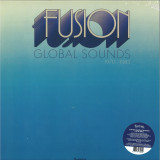
Various - Fusion Global Sounds (1970-1983)

As a fine collector of Jazz-Funk and Fusion for many years, Charles Maurice selected some of his favorite forgotten productions, as he previously did for the AOR Global Sounds, French and Brazilian Disco Boogie Sounds compilations series.

This time, recordings come from Sweden, Switzerland, South Africa, New Zealand, Uruguay, Spain and France, from artists and bands mostly known in their local scenes. You'll hear here the best elements of the Fusion and Jazz-Funk genre: breezy vocal arrangements reminding Flora Purim in Return To Forever or George Duke's albums, sweet and virtuosic Fender Rhodes (kind of common thread of the comp), melodic spiral-shaped fuzzy synthesizers leads, or irresistible basslines, altogether bringing a unique groove to life.

nicht am Lager

Bestelle jetzt und wir bestellen den Artikel für dich beim Lieferanten.

22,65

Last In: vor 3 Jahren
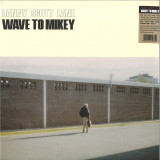
Danny Scott Lane - Wave to Mikey LP

Danny Scott Lane

Wave to Mikey LP

12inchGLOSSY011
Glossy
24.06.2022

Wave to Mikey, the fourth album from the Los Angeles-based actor, musician and photographer Danny Lane is a nocturnal, neon-lit ode to the friendships that shape us. “I made this album for my friend Mikey from back home,” Danny explains. “We were pretty much inseparable for a large part of our lives, and our musical and social minds were always in sync in a special way. Then with age, we drifted apart, especially since I moved to Los Angeles. This album is just a little wave hello to an old friend and a kindred spirit.”

Equal parts avant-garde composition, instrumental city-pop, ambient, Kankyō Ongaku (environmental music) and Fourth World music, Wave to Mikey is an impressionistic and reflective cycle of eleven richly detailed memory portraits. Throughout the album, the influence of Jon Hassell, Arthur Russell, Hiroshi Yoshimura and Yellow Magic Orchestra hangs in the air like late-night mist, adding character but never overshadowing the rhythmic ambience of Danny’s musical visions.

Wave To Mikey began as a series of sketches on analog synthesisers, guitar, sample and found percussion sketches, initially recorded in Danny’s home studio. Once he’d located the vibe, Danny called on his friends E Talley II, Solange collaborator John Carroll Kirby and Destroyer session musician Joseph Shabason, who respectively added flute, spiritual synth textures and saxophone to the record.

For Glossy Mistakes founder Mario G.R., who originally discovered Danny through his photography, Wave To Mikey captures a vivid feeling of melancholy and peace. “He's able to encapsulate emotions in a very straightforward way, either in his portrait or songs,” Mario says. “I think that's a kind of virtue or skill given to talented artists, no matter the field.”

Born and raised in Staten Island, New York, Danny began playing music with his friends when he was thirteen, before putting that passion on pause to study Fine Arts (Theatre) at Rider University in Lawrence Township in pursuit of an acting career. Acting led him to photography, after playing a photographer in a film, he was inspired to pursue the medium. Danny began shooting photos on film for magazines and lifestyle brands, spent a stint living in New York’s Chinatown neighbourhood, and eventually relocated to Los Angeles in 2017.

Four years ago, Danny started recording and releasing music under his own name, leading to the trilogy of releases that preceded Wave To Mikey, How To Empty A Cup (2019), Memory Record (2019) and CAPUT (2021). Over the course of these releases, he’s revealed himself to be a sophisticated composer and producer with a studied ear from years spent digging through record bins for ambient, experimental, new age, jazz and electronica records from around the globe, with a particular emphasis on Japan.

“Music is something that’s always been involuntary for me,” Danny reflects. “It’s unconditional, always there. It’s something I just have to do. I’ve taken breaks and it’s always gloomy when I’m not playing. I just want to get better and better and understand more and more.”

Here at Glossy Mistakes, Wave To Mikey marks our second contemporary album release, following on from Evenings by Japanese composer Metoronori. We’re proud to be able to present Danny, Metoronori and other modern musicians' work alongside reissues of classic works from Stevia aka Susumu Yokota, Akira Ito, Yuji Toriyama & Ken Morimura, and Takashi Kokubo.

Mastered by Damian Schwartz, Wave To Mikey will be released on Vinyl LP Glossy Mistakes on June 27 2022. Besides the regular black vinyl, a limited clear vinyl will be available in an edition of 100 copies. Both editions come packaged with original cover art photography shot by Danny.

nicht am Lager

Bestelle jetzt und wir bestellen den Artikel für dich beim Lieferanten.

24,33

Last In: vor 2 Jahren
Artikel pro Seite:
N/ABPM
Vinyl