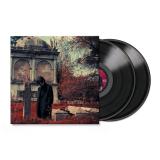
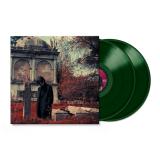
After continuing to refine the space between House and Techno across a string of acclaimed releases, Portuguese producer Alfonsvs returns to his own imprint Kokölò with his most dancefloor-focused statement yet. Ready for the summer and with the festival season in full swing, Need Your Love EP sees the Porto-based artist embrace classic house influences without losing the energy and depth that have become his signature.
Opening with the title track, 'Need Your Love' wastes no time setting the tone as driving analogue drums, uplifting old-school piano chords and soulful vocal samples combine into an infectious peak-time cut built for hands-in-the-air moments. ‘In There' is a collaboration between Alfonsvs and RR, that shifts into darker territory, balancing the EP’s author intensity and eye for trippy vocal fragments with René Raabe’s spacious synth work to create an immersive late-night journey.
On remix duties, kicking-off the B-side, Amsterdam favourite Elias Mazian delivers his reinterpretation of 'Need Your Love', transforming the original into a deep rolling house workout driven by swinging drums, his soft voice and a warped, rubbery bassline that effortlessly bridges classic and contemporary club sounds.
Continuing to blur genre boundaries, 'Everybody' pairs deep, driving grooves with sharp progressive-inspired synth stabs, while closing track '6AM Liberation' rounds out the EP with hypnotic rhythms, subtle acid flourishes and the unmistakable feeling of sunrise after a long night on the dance floor.
“Carl layers willowy guitar arpeggios, foggy keyboards, and chimes over Windy’s murmured intonations and rippling basswork. Everything sounds fresh and unaffected in the careful hands of these two gentle souls. Pick it up, lie back, and allow it to lull you into an undisturbed reverie.” Big Takeover
At the time of original release it was written that the album "will transport the listener to other plains of reality.” (Acid Test). Meanwhile, Alternative Press called it “alluring and addictive.” and CMJ called it "expansive, daydream enhancing music.”
The pair have also recently released their collaborative album with Optigan Conservatory, which can be revisited here. A beautiful and hermetic energy larger than the sum of its parts was captured in the collaborative process of making this album. There are echoes of the earliest releases from Windy & Carl as well as refractions of the same opacity that surfaced in the early kranky catalog.
A fine time to be shining a light on these label stalwarts as the dark Autumn evenings roll in
Mit „Best Of Argentina“ erscheint eine unverzichtbare Sammlung der beliebtesten Songs einer der markantesten Stimmen der Italo-Disco-Ära. Die farbige Vinyl vereint die größten Erfolge der Kultkünstlerin und bringt das einzigartige Lebensgefühl der 80er Jahre zurück.
Freuen Sie sich auf zeitlose Dancefloor-Klassiker und unvergessliche Melodien, darunter die legendären Hits:
Baby Don‘t You Break My Heart
Let‘s Play Sexy Games
Mit ihrer unverwechselbaren Stimme, eingängigen Melodien und den typischen Synthesizer-Sounds der goldenen ItaloDisco-Zeit begeisterte Argentina Fans auf der ganzen Welt.
Diese Best-Of-Zusammenstellung bietet die schönsten Momente ihrer Karriere auf einer LP
Every coastline develops its own rhythm. The Adriatic is no exception.
For decades, Italy’s eastern coast has been shaped by funk, Cosmic Disco, Balearic sounds, Italo Disco, House, Latin rhythms, Brazilian music and countless other influences. Rather than blending into a single style, these musical worlds have lived side by side, constantly inspiring new generations of DJs, musicians and dancers. For more than fifteen years, Soul Fingers and Funk Rimini have explored that landscape from different perspectives. Founded by Claudio Cavallaro in 2013, Soul Fingers grew into a vinyl-driven community where groove matters more than genre. Its philosophy has always been simple: if the groove is right, genres stop mattering. Brothers Ricky and Francesco Cardelli developed Funk Rimini into a project rooted in funk, disco, live performance and electronic production. Anima Adriatica is where these two journeys meet.
The project didn’t begin with the ambition of making an album. It began behind the turntables. As DJs, Claudio Cavallaro and Ricky Cardelli found themselves constantly searching for records capable of connecting distant musical worlds inside their sets; from Afrobeat into disco, from hip hop into Latin, from Brazilian grooves into boogie, from cosmic electronics into deep funk. Sometimes those records existed. More often, they didn’t. So they stopped searching and started writing them. Not records designed to belong to one genre, but records designed to travel between genres. That space between musical worlds became Anima Adriatica.
The music grew through spontaneous jam sessions with Ricky and Francesco Cardelli, drummer Enrico Mao Bocchini and, gradually, a wider circle of musicians, singers and longtime friends, making Anima Adriatica less a traditional band than the beginning of an open collective. Recorded at SynthPosio Studio, founded by Ricky and Francesco Cardelli inside Rimini’s iconic skyscraper, the project also carries a symbolic connection to the building itself, where many Italo Disco classics (including records by Betty Miranda, The Creatures and many others) were recorded decades earlier.
Betty Miranda returns not as a nostalgic guest, but as a bridge between generations. On the title track she performs a spoken-word text written by Claudio Cavallaro, reflecting on the invisible thread connecting the Adriatic dancefloor across time. From Baia degli Angeli to Cocoricò, from the legendary clubs of Riccione to today’s independent communities gathered around projects such as Soul Fingers and Funk Rimini, the places have changed, but the dancefloor continues to tell the same story. Much like Pier Vittorio Tondelli’s Rimini captured the Adriatic through literature, Anima Adriatica imagines its soundtrack.
Brazilian musician Daniel Plentz (Selton) expands that vision on Açúcar and Alegria, bringing another coastline into the story. Across its four tracks, the EP moves naturally between analogue funk, boogie, Brazilian music, underground disco, cosmic textures and the wider Black musical tradition, with All Down The Line paying tribute to the Paradise Garage era.
Released by Bordello A Parigi, the project found its natural home through a shared love of adventurous dance music, records and club culture. More than the title of an EP, Anima Adriatica marks the beginning of an open collective; a meeting point where musicians, DJs, producers and friends continue building bridges between genres, generations and communities.
Because Anima Adriatica doesn’t live inside a genre. It lives between genres. If soul music has always reflected the places where it was born, Anima Adriatica is simply our own Adriatic Soul.
We are very glad to present this masterpiece of contemporary leftfield music by Pieter Kock and Nate Davis under their project ‘Sports Café’. If you liked the previous 2xLP of Pieter (The End ll), you will love this new one pairing with Nate. The 2 buddies deliver the perfect soundtrack for lazy afternoons and kinky listening session: put the record on the turntable, play ON, first pop, the feelings is good, you want to chill, you go in the fridge, you open a can of beer, sit on the sofa, start to roll your cigarette, the guitars (Vini Reilly style) are playing, the acid lines show up, nice melodies are coming, nice synths too, little vocals here and there that can remind some sort of PMU’s cafe rooms vibe (it’s from where the name of the project is coming from)… it’s cool, yeah baby, you enjoy, you feel good!!, the more you listen to it the more you love it… A proper shroomy excursion if you are into the trip. Trust us this album is a must have, big TIP ;)
Sometimes things go quickly. After meeting Canadian artist Pascale Project early this year (twice in one month) on the same dancefloor of a crusty underground club in Neukolln, we sent this Berlin-based DJ and producer a short appreciation email to show curiosity and interest in her unreleased music. Our hope was to listen to it and maybe just maybe start a record-release project. Pascale sent back quickly, and she shared some fantastic club music with us. We had separate listens to the full playlist, and, funnily/coincidentally, we chose the same 4 tracks as highlights from the big playlist. One week later, Pascale emailed us back, mentioning the tracks she would feel/see/love to be released on the label, and they were the exact same ones we had naturally and unanimously chosen. Stars aligned for sure. Having long been active in the Montreal music scene, Pascale absorbed the essence of all her different experiences and years of training and creating, and then let it all start Sparkling into the 22nd Basic Moves release entitled "Watch EP". The record is based on the concept of losing and breaking things up, and eventually finding it all back. Reflecting hope in between the fog of life. It is clever modern underground club music rooted in the textures and energies of the golden days of progressive house, breakbeats and (real!) tech-house. These 4 tracks reflect an artist who expresses herself honestly, fully understands how to creatively arrange and produce club music, and never loses sight of the dancefloor, as she is often found on that dancefloor herself. Dive in and let us know what you think of it. We are stoked to play out and vibe on these tunes for real!
2027 marks two decades since musician and producer Paul ‘Mudd’ Murphy struck out on his own and launched Claremont 56, a label initially dedicated to “music by Mudd and friends” and named after the house he grew up in. To celebrate its 20th anniversary, Murphy has assembled the label’s first ever decades-spanning vinyl retrospective: a six-LP re-mastered collection bringing together key cuts, cult classics, personal favourites, hard-to-find gems and inspired remixes from across the catalogue.
Unlike the label’s previous 10th anniversary box set, which focused on unreleased material and never-before-heard remixes, 20 Years of Claremont 56 traces the musical story of the imprint to date. Across six records, it showcases the distinctive Claremont 56 sound in all its many forms: acoustic, electric and electronic instrumentation, Balearic sunshine, krautrock grooves, folk-inflected psychedelia, slow-burning chuggers and deeply considered dancefloor music.
The set comes housed in a custom box featuring cover art by long-term label illustrator Mark Warrington. Inside are six slabs of vinyl across three gatefold sleeves, accompanied by liner notes from music journalist and author Matt Anniss, Murphy himself, and many of the artists whose music features in the collection.
The journey begins with a selection of formative late-noughties releases, including Mudd & Pollard’s chugging, picturesque ‘Villa Stavros’, the folksy beauty of Smith & Mudd’s ‘Shulme’ and Murphy’s exotic reworking of Ahmed Fakroun’s ‘Drago’. From there, the collection moves freely through deep cuts, overlooked gems, album highlights and some of the most inspired remixes in the label’s catalogue.
Among those remixes is Murphy’s own über-Balearic rework of Zee Erf’s cover of ‘Southern Freeez’, a mix dedicated to his partner Emma; an extraordinary 22-minute, Manuel Göttsching-meets-ambient-dub revision of Smith & Mudd’s ‘Vegetable Square’ by friends-of-the-family Idjut Boys; Larry Heard’s typically deep and immersive house treatment of Jack Cutter’s ‘Serpent Strut’; and Quiet Village’s ambient-house ‘deep space dub’ of Mudd’s ‘Spielplatz’. Also included are lesser-celebrated but no less rewarding reworks by Recloose, Jex Opolis, Felix Dickinson and Deep88.
The collection represents every corner of Claremont 56’s self-contained musical universe, from the Murphy-assembled in-house collectives Hillside, Paqua and Bison - whose members famously included the late Holger Czukay and his life partner Ursula, to long-serving label artists such as Almunia and Hear & Now, as well as later additions and artists who took some of their first steps on the label through its much-loved Claremont Editions compilations.
That means the deeply cosmic krautrock of Bambi Davidson, the folk-meets-Americana of Torn Sail and the samba-electrofunk of Jpye sit alongside baggy Balearic sing-alongs such as Bel’s ‘Ready To Die’ and Sillyboy’s Ghost Relatives’ ‘In a Small Place’, recent high-profile guest releases such as Chaz Jankel’s ‘Rhumba Jam’, and string-laden ambient pieces such as Four Hands’ wonderful ‘Hizou’.
Packed with classic cuts, formative gems and overlooked treats, 20 Years of Claremont 56 is not only a fabulous label retrospective, but also an essential collection of timeless music from a label whose output has remained distinctive and unique for two decades.
Mysticisms’ explores the previously unknown Dub House, Digidub and electronic Street Soul of Manchester émigré Andrew Fitzgerald aka Atone on a 6 track EP, shape shifting from dark basements to summer fields, the music is wide-screen dreams, mixing psychedelic temperaments with ecstatic memories.
Dub Dats is a compendium of a life around or making music, beats, dubs; menageries of sound that encompass a love of reggae mixed with the influences of youth. Growing up in Thatcher’s then declining Manchester housing estates, Fitzgerald found escape first as a young roadie, just aged 15, sorting ‘cigarettes and alcohol’ for visiting bands. Rubbing shoulders with the likes of The Buzzcocks, Ian Dury and The Slits, was a great way to learn the ropes, while avoiding becoming another juvenile delinquent.
A love of Bowie, Kraftwerk, Motown, film scores and the emerging electronic and industrial bands like Throbbing Gristle led to a first studio, featuring the unique and faithful DR-55 Dr. Rhythm, soon followed by Sequential Circuits Pro One, Juno 60, Roland 303 (x 2), Roland 808 and Space Echo.
Working on music solidly, a release finally appearing on Robs Records, before losing all the equipment in a robbery. Manchester was shifting, gangs and “Gunchester” meant it was time to move on and when ‘an out’ appeared, Fitzgerald was landing in Sydney and settling into a new life.
Hooking up with Ali Omar, who he’d met while doing a stint in Brixton, London; the two worked solidly on music, gigging continuously, hanging with the likes Severed Heads and living a good life of that post acid-house party era. The loss of Ali to cancer, still young, hit hard and period “quite liked the madness” ensued. Rehab and starting again, Atone has been gaining some interest.
With 2 EPs of early works recently released on Tonal Oceans, Dub Dats looks deeper, with the dubbed house grooves of title cut, Dats and, the intriguingly named, Somewhere In France With Eric Random. Complimented by the electronic dub of Keep On, the soulful, slow breaks torch song, I Be There, the sample heavy Sound Of Soul and closing, trippy Unlike You, this is a multi-genre producer of considerable capability and talents.
Finally getting his due, Dub Dats perfectly fits the Dubplate Series, broadening its soundscape, while also standing out as its own, sonic release.
Space Ghost returns with Back From Reality, his first solo album since 2022. Blending ambient, downtempo and house, the LP explores themes of escapism, introspection and the search for moments of calm in an increasingly overwhelming world. Out October 9th, 2026 via Space Ghost’s own Peace World Records.
Drawing influence from late '90s and early 2000s ambient and electronic music, the record channels the nostalgic atmosphere of PS2-era video game soundtracks, console startup screens, and save menus. “I used to play games like Spyro, Crash, Ape Escape, Gran Turismo. It's fun for me to reimagine songs that could have lived in games from that era. ” The project reveals Space Ghost's interest in writing music for video games, with tracks such as "System Reset" reimagining an alternate PS2 startup screen or “VGM” visualizing a stage selection screen for an imaginary game.
Visually, the project emulates the minimalist design trends of album artwork from the same era: sparse industrial landscapes paired with minimal type. Space Ghost took the cover photo himself while driving around the quiet, empty Oakland ports at night. Tracks like “Sugar Cube” and “Back From Reality” mimic these late night environments and create a downtempo zone for listeners to get lost in. “One of my favorite things to do after writing songs, is to drive around Oakland listening to them. It's almost like the final test for the songs, to see if their emotion holds up.
”
Written over the course of five years, Back From Reality reflects Space Ghost’s experience of balancing everyday life with the desire to be creative. “This album is me coming home from my day job and returning back to the place where I feel the joy and freedom in making my music. If I could, I would work on my music full time, but for now it's part time and often a form of escapism. ” Beneath its calming surface, the LP quietly wrestles with larger questions. Against the backdrop of global conflict, environmental decline, and economic uncertainty, the album searches for small moments of optimism through creativity and introspection. Back From Reality holds a moment of space away from these overwhelming times, allowing listeners to pause and recharge.
Back From Reality releases on Peace World Records October 9th, 2026
Music from Tokyo / New York serves as the 2024 sequel to his previous release, Music for Joshua Tree. This conceptual album is divided into Side A (Tokyo) and Side B (New York), utilizing field recordings captured in each location. The ceramic images featured on LP jacket is the work of Namiko Ishikawa (NamipotNYC).
On this record, he incorporates Ambient, Downtempo, Trip-hop, and Dub—bringing to life the specific sounds currently resonating in his mind and his original roots.
Since the pandemic, he has been traveling and capturing "environmental sounds" through field recordings, which served as the primary inspiration for this record. Side A features tracks inspired by the atmosphere of Tokyo, including recordings from streets, parks near his home in Japan. Side B explores New York, incorporating the sounds of Brooklyn and Manhattan, as well as the chirping of insects recorded in the New York mountains.
While the album remains centered on analog synthesizers and vinyl samples, he has introduced analog drum machines and glitch noise to craft the groove. Unlike his previous work, this release brings prominent bass lines and added more Dub elements to the forefront. His primary focus for this project was expressing a sense of "space" and "air" through the meticulous use of reverb and delay.
Throughout the album, he invites the listener to imagine the unique "local atmosphere" he experienced during his travels.
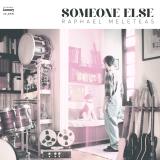
Athens-based multi-instrumentalist, songwriter and producer Raphael Meleteas presents "Someone Else", the title track and first single from his forthcoming debut album of the same name.
Written, arranged, performed, recorded and mixed entirely by Meleteas, the recording reflects an organic approach to songwriting, where warm analogue textures, cinematic arrangements and carefully layered instrumentation take precedence over studio polish. Every instrument heard on the track is performed by Meleteas himself.
Drawing from the rich tradition of orchestral pop, cinematic music and library recordings of the late 1960s and 1970s, Someone Else balances intimate songwriting with understated orchestration, creating a sound that feels timeless while remaining unmistakably personal.
Recorded in Athens, Greece, the single introduces the atmosphere that defines the forthcoming album: melodic, reflective and rich in subtle detail, unfolding naturally through live performance rather than digital construction.
"Someone Else" offers the first glimpse of Raphael Meleteas' debut album, also titled Someone Else, which will be released by Veego Records in September 2026.
In collaborating with iconic vocalists Matthew K. Heafy (Trivium), Josh Middleton (Sylosis) and Anthony Lucero (Cult Leader), Burner take a striking step forward to claim new territory while consolidating their extreme and unique sound into the heaviest and bleakest incarnation of their craft yet. Vocalist Harry Nott elaborates on the themes behind the new album: "If It All Returns To Nothing looked outwards to the world's chaos throughout history, No One Is Coming To Save Us instead looks inwards at its proposed cause; humanity's violent, animalistic nature, begging us for change. This is an album about human behaviour: that people create endless cycles of violence by repeating the mistakes of the past, forging a brutal history that we fail to learn from. But, at the same time, the album is about questioning whether we can ever get past those sins and repetitions. This is a record that is mournful as much as it is angry and engaged. It longs to bitterly recall the moments of greatness and sacrifice in our shared history that created the better world we currently destroy. It longs to look back at these moments for inspiration and optimism, at a time where it feels like hope is running thin. The album is also a struggle for hope, not just that humanity can overcome hatred and violence, but that we can look back on our greatest moments and take courage to build a better world. No One Is Coming To Save Us reflects this duality in its title: that no one will come to save us from the violence and tragedy we create as part of our humanity. But it also proposes that it's up to us to change - to overcome a violent human nature and usher in a better tomorrow."
The annual Bonkers Music compilation is back with another dose of high-energy bangers. For its seventh anniversary, the series takes a fresh step forward, exploring a slightly evolved musical direction while keeping the distinctive sound that defines it. “Year VII” lands on 12” vinyl.
A1 David Meyer & Ludviq – Mandanga 2.0 (Feat Nick Hanzo)
The collaboration between Ludviq and David Meyer strikes a compelling balance between tension and movement. Drawing from underground electronic influences, Mandanga 2.0 evolves through hypnotic layers, acid-driven momentum, and a powerful groove, resulting in a distinctive cut that feels both immersive and uncompromising. Mandanga 2.0 is a dark, hypnotic electronic track built around squelching acid sequences, deep rolling grooves, and haunting vocal elements from Nick Hanzo. Atmospheric textures and a relentless rhythmic drive create a tense, immersive journey through shadowy soundscapes, blending raw energy with a refined sense of space.
A2 Neskeh – Liquid Sky
A raw trip built entirely around samples from Liquid Sky, Neskeh’s one of all-time favorite films. Crunchy saturated highs, basement-shaking low end, heroin-soaked wonky vocals, and freaky alien leads drifting through the mix. A warped tribute to an iconic soundtrack. Welcome to the space trippy club
A3 Your Reference – Afterparty
Julia Konor aka “Your Reference” one of the hidden gems of Barcelona’s underground scene, lands for the first time on the label with “Afterparty”
”Afterparty” draws inspiration from abandoned industrial spaces, empty warehouses, and nights where the only thing that mattered was the music. No rules, no expectations. Just raw energy, dusty air, concrete, and people completely immersed in the moment. The track is a personal postcard from that world.
B1 Lebollet & Mar Bravo – Aleta
“Aleta” is one of those Colombian words that somehow made its way into our shared language. We use it for raw, intense, dark tracks. Hard to translate. Makes sense when you feel it.
B2 Funboys – Skin In The Game
“Against the persistent ebb and flow of a breaking heart’s pulse, echoes of half-faded memories tease your attention… On the edge of forgetting, you can almost remember. And then it hits you – the coalescence of feeling into colour and form, warm in its familiarity, powerful in its simplicity. Uncanny, because it was right there all along. Don’t hold your breath… Listen!”
B3 Milla Campollo – Brote Psicodélico
“Brote Psicodélico” emerges from a hypnotic intersection of acid rhythms, psychedelic textures and raw downtempo energy. The track slowly unfolds through repetition and movement, creating a constantly evolving state between tension and release. Dark, trippy and physical, it is built around a groove that pulls you deeper with every layer. Distorted elements and acidic patterns weave in and out of the rhythm, giving the track an organic yet alien character. A journey designed for listening, less about following a linear narrative and more about entering a state of mind, where the boundaries between rhythm, body and psychedelia begin to blur.
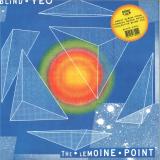
Based in Cornwall, Blind Yeo emerged from the isolation of lockdown. Built as an open collective, the project brings together musicians, visual artists and performers, developing a practice rooted in improvisation, live energy and shared creation. The Lemoine Point, their debut album, was recorded on a disused airfield near St Agnes. The title refers to a hidden geometric centre where lines converge, a metaphor that runs through the record as past, present and future meet within a single moment. Much of the album was captured live by a core ensemble including Sam Pert, Phil Self, Henry Greenham, Philippa Blum, Jake Sheridan, Will Greenham and Anouska Helm. These recordings are balanced by more intimate sessions, shaping a sound that moves between reworked folk traditions, electronic textures and raw, organic energy. Across the album, fragments of stories and emotions intertwine, exploring themes of love, duality and disorientation in time. Rooted in the Cornish landscape yet open in form, The Lemoine Point unfolds as a space where place, people and memory converge into a fluid and immersive whole.
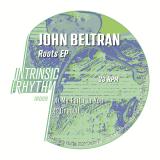
"John Beltran joins forces with Ireland’s Intrinsic Rhythm for a masterclass in emotional Detroit Techno with his "Roots EP" featuring a deep & soulful remix from Fireground.
Few names command the same reverence in electronic music as John Beltran. Since pioneering the more melodic, ambient-soaked textures of Detroit techno in the 1990s and 00s, the Michigan producer has spent over three decades crafting electronic music with an unmistakable human soul.
For his latest outing, Beltran links up with Irish imprint Intrinsic Rhythm for a physical and digital release after previously providing a remix for IR004 . The A1 "My Faith In You" is a perfect distillation of his signature sound: lush, cinematic chord progressions, propulsive rhythm arrangements, and that deep-running emotive warmth that makes his catalog timeless and this continues on the A2 with "Gratiot" a timeless piece of Deep Detroit Techno with a shuffling groove and precise tones and textures.
Sharpening the edge of the package is a stellar remix from dynamic Italian duo Fireground. Known for their driving, soulful and rich sound on labels like Tresor and Ilian Tape, Fireground adds a deeper more textured version of "Gratiot" and reconstructs it into a sun drenched musically rich remix. Together, the release forms a beautiful bridge between the two artists. "
A collection by Peruvian visual artist Jonathan Castro between 2024-26 at home studios while living in Amsterdam, then Rotterdam, NL. The compositions were made using various synthesizers, samplers, electronic percussion, congas, and an array of effects pedals. Knackered out salsas, looped up and chucked down into a custom dub chamber.
Intervals of waiting, in the in-between mind, strumming a keyboard as if for the first time. From sample to simple, child to child, womblike cocoon when awake, the world crumbling at night. They "dream the dream forward", these lullabies.
Ed Nine hails from the birthplace of house and brings plenty of Windy City magic to this EP on Spanish label MATE. It's deliciously emotive tackle drenched in meaningful pads and, in the case of opener 'Feel It In Your Soul', an aching vocal sample that really sets it alight as the organic drums jack down low. 'Free Acid' is a stomping workout with prickly 303 lines defining the peak time vibe, then 'Out Of Line' cuts back into a more sunny sound with synths rising up through the mix and bringing joy. Closer 'The Drum Tool 3' is just that - a raw jam to help you get the floor locked in while moving through the gears.
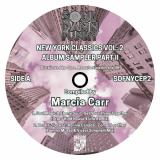
Bassline brings together Russell Ruckman and Marcia Carr for a 12", which was originally part of a 2025 digital album, but now drops on wax and has been remastered for extra punch. Side A opens with the vinyl debut of Rani G & Raul Riena's 'Feels So Right' (World-Life-music Raw Teaser remix), which will soon transfix the floor while the driving groove of Hot Issue's 'Motion 96' is a cool vibe with wet clasp and dusty drums brought to life by cute little melodies and plenty of snap. Side B leans into deeper territory with Mercedes' Living For The Moment (Booker T remix)' and the uplifting dub energy of Never Gonna Give Up. If you like soulful house with a classic New York edge, this one bangs.
London mainstays Half Baked push beyond a quarter of a century here with Romanian house favourite Dan Andrei debuting on the label. He offers the beautifully clean and serene ambient, minimal and tech fusion that is 'Orange Sunshine' - the sort of 5am gem that soundtracks deep immersion in an alternative world, complete with real beauty in the chords. Sticky' has a more pronounced rhythm and bubbly blend of rubbery drums and bass, while spacecraft-life synths circle the groove and neat melodic patterns unfold with a curious nature. London duo Brainsurfers aka Harry McCanna and Sam Bangura add more drive but keep things deep and crank up the cerebral details.
UK Garage has ridden a new wave of hype and exposure over the last few years. Artists like Sammy Virji and Interplanetary Criminal have crossed over to the mainstream, while dancefloors across the world have shaken to a switched-up version of the sound that defined the UK underground either side of the millenium.
Hidden beneath a pink balaclava, the mysterious DJ Jackum has lurked this rejuvenated scene while dropping some of the most defining bangers of the period. Often surfacing in the form of moody edits released on Soundcloud, Jackum productions inevitably demolish dancefloors whenever dropped, as they frequently are in the sets of Virji and the other big guns.
Landing on Hotflush, a storied label of UK underground music, ‘Context’ is his most substantial work to date. Six tracks covering the full spectrum of the Jackum sound, from 4/4 heaters to dubstep-adjacent eyes-down bass pressure.
And in the form of opening track ‘Floo’, Jackum spreads his wings into a place that transcends the narrow confines of genre definition. From the UKG building blocks of bass, drive, cut-up vocals, and melody, the track emerges as something both familiar and wholly unexpected - the mark of a producer at the peak of their powers.
‘Clip Empty’ is another highlight of this standout EP. Showing a flair for the cinematic, a breakdown of militaristic snares gives way to a trademark rolling bassline and earworm vocals.
Away from the 4/4 bangers, ‘Take Your Body Higher’ is a guaranteed half-step rewind, while ‘Step Up’ recalls memories of smokey Plastic People sessions of the mid-2000s.
Forty years of cassette releases, pressed for the first time on vinyl
First of two instalments exploring the previously unreleased sonic archives of one of Poland’s most enigmatic
living artists - with its first volume focused on his deep listening practice and spiritual reverie (recorded 1990–2013)
The last time Andrzej Dudek-Dürer took a banknote bearing the face of the Polish anarchist Jarosław Dąbrowski from his pocket to trade it for a pair of shoes was in 1969. He bought them for 120zł - the equivalent of 100€ today - and never replaced them since then. Only rebuilt them, year after year, drawing a needle and thread through the leather each time it split, closing one wound before the next one opened. It became a ritual of precision, stitching a record of another year into their soles.
That same year, in Wrocław, he arrived at a conclusion that would recalibrate everything that followed. Convinced he was the reincarnation of Albrecht Dürer, he adopted the surname Dudek-Dürer, stopped cutting his hair and began wearing the same garments every day. It was the first ritual of many, though he wouldn't have called it that yet. Look closely enough, over the decades, and it is always the same gesture, returning in different material: hair growing in a single unbroken strand, a needle drawing thread through leather, sitar strings pulled taut across a neck he built with his own hands and magnetic tape spooling forward inside the cassette boxes stacked against his walls.
None of this began in a vacuum. Dudek-Dürer emerged from the Wrocław neo-avant-garde, in a Polish art world where an exhibition could be cancelled overnight by the stroke of a censor's pen. In 1973, his exhibition Auto-crucifixion was shut down by the state, and for a time he found himself blocked from exhibiting his own art at all - the one force in his life that ever came close to cutting the thread.
He seemed to experience it differently. In 1974, after long, patient research into sitar craftsmanship, he built his first prototype with his brother, a knowledgeable luthier. In 1978, in a smoked-out jazz club, he took his first steps into sound recording with the unreleased album Jazz From Underground with his first band. By 1979, recognition started to travel further than he could.
Turning toward Far-Eastern philosophy, meditation and the idea of reincarnation was another language of freedom for him. It was a way of claiming an inner territory the state could not reach, a border it could not close. Mail Art served a parallel function, reaching further out: in a country that restricted travel and expression, sending and receiving art through the postal system became an act of quiet rebellion.
The body, in his understanding, is only an envelope readied for constant transformation. From this came Metaphysical Telepathy: during the years he could not leave Poland, he treated that confinement as a rehearsal room, sending his mind out ahead on the same thread his body would later follow. Living Sculpture grew from the same root with performances of stillness beside static art objects, until the boundary between the object and the man beside it simply dissolved. Camera Meditation extended the same instinct into photography: a shutter click flattening three dimensions into two so that a single instant could be held forever. Inspired by the pioneers of self-portrait photography like Robert Cornelius, he used it to document time itself, and kept explaining to me: "You know. This is not about vanity. This is about observing time passing.”
The isolation did not end suddenly. It ended the way his own philosophy had already predicted it would, from the inside first. Mail Art quietly solved the problem politics couldn't. Correspondence built during years of confinement slowly worked its way through doors the state itself had kept locked. Contacts made through folded paper and stamps became invitations. Ultimately, invitations became passports.
In 1983 he made his first trip outside Poland, to Germany, in search of the audio technology he couldn’t get his hands on before. In 1985, he was invited by the Indian embassy in Poland to give a sitar concert on an instrument he had spent a decade patiently stringing together - half sitar, half tanpura, built from patience and determination. After the collapse of the People's Republic of Poland, the travels kept unspooling: South Korea, then Mexico, then Australia, Canada, New Zealand, Singapore, Japan and the United States - each stop leaving behind its own small knot of tape, tied off and carried home.
In the decades since, recognition arrived at the same unhurried pace: he conducted workshops at UC Berkeley, served as vice-president for artistic affairs of the Union of Polish Art Photographers and the Union of Polish Visual Artists between 2010 and 2014 and received the Bronze Medal for Merit to Culture - Gloria Artis. His visual work gradually entered collections including the National Museums of Warsaw, the Stedelijk Museum, Tate Modern, MoMA and the Venice Biennale. His musical practice, by contrast, never found that kind of room - left to circulate quietly, sharing his cassette tapes directly, waiting for someone willing to follow it further.
It took months before I could find a way to reach Andrzej Dudek-Dürer - his presence online is very close to nonexistent. Surprisingly, LinkedIn turned out to be the only door still open, a faintly absurd irony given everything else about him. I packed the strict minimum for a three-day trip and an empty notebook and made my way to Wrocław. His headquarters sits in the neighbourhood of Grabyszyn: a two-storey pre-war house that has belonged to his family for generations. The man who opened the door was long-haired, long-bearded, in his trademark leather shoes and patched jeans. We sat in his living room, in front of a computer where decades of recordings sat organised in cryptically named files, surrounded by books and objects that had arrived one layer at a time, leaving room for only two chairs in the middle. His shoes sat by the door, rebuilt so many times they had become their own quiet sculpture. Cassette tapes filled boxes against the walls, almost unlabelled, each one a spool of thread holding decades of sound that had never once been asked for, until now.
I listened for hours: meditating in front of strangers on the porch of a Seoul temple until the tourists stopped taking photos and simply waited with him; a stand-off with border guards at the US–Mexico crossing over an instrument they couldn't identify and didn't trust; a session with the Stockhausen family that he still, decades later, describes like it happened last week. All of it interrupted, occasionally, by the smell of soup boiling and fresh bread warming on the ceramic stove. After two days, it felt like being handed the end of a very long thread and asked, gently, to keep following it. I left with a USB drive holding his full discography, signed with his unmistakable signature.
Astral Meditations From A Living Statue is a length of that thread, drawn out from the boxes stacked against his walls - recordings gathered from different rooms, different countries, different decades. This first record breathes slowly: incense-thick, meditative, built for stillness. A cutting-edge séance in outer space where machines learn how to dream.
It begins with the neo-classical improvisations of Andrzej, space-delayed, recorded at Klub Muzyki i Literatury in Wrocław in 2002. 'When..So' opens the curtains with a deep-rooted meditation accompanied by slow-decaying piano figures illuminated by a candle-lit spirit gathering.
Los Angeles, 1990: a dormant villa, a grand piano, the voice of Bonnie Barnett. 'Exception' is captured in a single room, in a single afternoon - voice and keys circling each other, neither one leading, until the silence between the notes starts to feel like the instrument.
'The Meta...' and 'Tired Of...', recorded at Studio Morandi in Ponte Nossa, Italy, in 1992, settle into a sitar drone built entirely from patience - overtones stacking and beating against each other, strung by a man who never once set foot in India. 'Mastery Of...' follows, recorded the same year at Studio Suski in Łomianki, pushing that same hum further still, until pitch dissolves into a spectral reverie. 'Transcendental Sound', from 2000, closes the first record in a slow bath of celestial frequency - better heard beside the shores of the Odra river.
More than fifty years after deciding that a life could become an artwork, Andrzej Dudek-Dürer continues to inhabit that decision. His shoes keep wearing thin against the earth's crust. His hair keeps growing, one strand at a time. His cassette tapes keep spooling in the dark of their boxes.
Now the thread finds its last shape: a single unbroken groove, spiralling inward from the outer edge to the label at the centre. Never cut - the way nothing else in his life ever was. Drop the needle and it will find that groove and follow it, the same way a needle once followed leather, once followed a border it couldn't cross, once followed string into an instrument that didn't exist until he built it. This record is the other end of a thread that has been travelling for fifty years. For the length of both sides, it rests here, in your hands. This is a timeless proof that the Lord of the New Age was never lost."
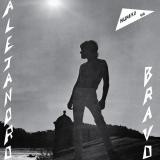
Private Mexican lounge that still burns long after the cruise ship disembarks. Armed with a single nylon string guitar , a toy chest of rudimentary percussion, and the emotional microtones of the Spanish tongue, Alejandro Bravo’s lone LP blends bossanova, samba, and the Brill Building into a horny margarita for the tourist class. Recorded at home in Acapulco in 1971, Bravo’s self-released LP slaps and thrills with its taps and trills. Pair with a pregnancy test for best results.
„I Thought We Were The Same“ ist das neue Studioalbum der gefeierten norwegisch-schwedischen Sängerin, Songwriterin, Produzentin und Independent-Künstlerin Ane Brun.
Mit ihrem bislang persönlichsten und fesselndsten Album – und ihrer ersten neuen Musik seit sechs Jahren –
kehrt Brun zurück: „I Thought We Were The Same“ ist eine kraftvolle Sammlung von Songs, die Themen
wie Vertrauen, Identität, Verrat und die bemerkenswerte menschliche Fähigkeit zum Neuanfang beleuchten.
Musikalisch zählt das Album zu Bruns experimentierfreudigsten Werken. Entstanden im Laufe von drei
lebensverändernden Jahren, markiert es ein eindrucksvolles neues künstlerisches Kapitel für die skandinavische Musikerin. Brun erweitert die Klangwelt ihres gefeierten Albums „After the Great Storm“ (2020) und
wagt sich in eine noch mutigere Electronic-Pop-Landschaft vor; dabei verbindet sie zutiefst intimes Songwriting zu einer Musik, die zu den unmittelbarsten und emotional berührendsten Stücken ihrer erfolgreichen
Karriere gehört.
Faitiche presents the debut solo album by cellist, sound artist, and composer Topu Lyo: “quiet scenes from tokyo” brings together sixteen miniatures for solo cello and tape echo that oscillate between abstracts drones and rhythmic pizzicato sketches – all recorded at Topu’s Tokyo apartment. The constant traffic noise from a nearby highway has become an accompanying soundtrack for his compositions and can be heard on the recordings. Topu’s playing is marked by a distinctive idiom oriented more towards abstract electronic studio effects than classical technique.
The artist spoke to Jan Jelinek about his work:
JJ: A solo cello album may seem like an odd fit for a label that has to date released only music that is electronic in the broadest sense. But I think “quiet scenes from tokyo” complements the Faitiche repertoire exceptionally well. Its sixteen miniatures showcase the cello in all its complexity: the bowed passages sometimes recall a tape feedback drone; the pizzicato playing conjures up the percussion recordings of Moondog; and the abstract textures might be mistaken for the product of a granular sampler rather than rapid finger work on the cello. I’m constantly surprised by just how rich and varied this album is – without ever losing the charm of its sketch-like quality. Could you say a few words about the making of your album – first of all, from a rather technical perspective: what production tools did you use, and why?
TL: My production tools were very sparse. Just a solo cello and my Roland 301 Space Echo, which I only used at the end, running everything through it during mixing, tape only. After years of working with electronics, pedals, and synthesizers, moving to Tokyo pushed me toward minimizing my setup. But my aesthetics shifted too, toward simplicity. I wanted to strip everything back to just the acoustic cello and see how far I could push it — replicating some of my favorite electronic effects through extended technique: slow portamento, LFOs, filters, detune, noise. I’d also been listening to a cassette of ocean sounds for years. When I moved to Tokyo I was horrified to find myself living directly across from a freeway. Eventually the freeway started sounding almost identical to the ocean — and that ended up playing a prominent part in the recording.
JJ: That’s super interesting: mimicking electronic production as a compositional idea for the cello! You say the sound of the freeway is crucial to the album: I, too, tend to interpret steady traffic noise as a positive soundscape – do we hear the freeway on the album? I can also hear other field recordings, for example on “a street car with announcements”. Can you say a bit about how these field recordings influence your playing?
TL: Yes, you can hear the freeway on the album! The freeway is most prominent in “old trees in lonely spring”, “yuyake koyake”, and “the moon” (you can clearly hear individual cars). When I first began recording I had my balcony door shut tightly, but after a while I began leaning into the highway sound and slowly opening the door little by little to control the amount of noise. “streetcar with announcements” was a moment I was recording and a car passed by making announcements in the background. I loved how it sounded! Same thing with “yuyake koyake”, and later I realized that every day at 5pm the same song plays to mark sunset, telling children it’s time to go home. Having this bedrock of sound puts less pressure on me to put music on top or to play more notes.
JJ: It’s astonishing how much this differs from what I’d imagined: I’d been picturing peaceful landscape recordings, but had never thought of a freeway. Which goes to show how open to interpretation traffic noises are. So the room by the freeway had a major influence on the album – how are you going to perform it live?
TL: The contrast between the freeway and the beautiful landscape in my head couldn’t have been starker. I too was imagining a beautiful landscape in which to create the album, but somehow it still worked out. I've been going back and forth a lot on live shows and I think the most honest way is to have it the most stripped down. I was thinking of using traffic samples etc., but I think the duet really comes from the background sounds from every unique venue/environment. So as it stands, I’ll just be doing acoustic solo cello.
Keni Burke's signature hit 'Risin' To The Top' gets an official remastered, reissue alongside the 12 inch mix of his '81 killer jam 'You're The Best'.
'Risin' To The Top' quickly became a clear favourite of the soul crowd back in the '80s, with Keni's sensuous vocals, a timeless bassline of epic proportions and those dreamy, sunshine chords proving a winning combination. Since then countless producers, from the likes of Doug E Fresh and Slum Village, to LL Cool J and Mary J Blige, have utilised 'Risin' To The Top' as a choice sample for their own productions. A quick glance at this seemingly endless list, just goes to show how much of an impact this record ended up having.
On the flip, 'You're The Best', takes a more boogie paved path, filled with an undeniably groove laden bass synth, cosmic keys and Keni's infectiously soulful vocals. It's early eighties synth boogie at it's best, placing the electronic elements at the forefront whilst holding onto that unquestionable funk at its core.
Two Keni Burke classics for soul heads, sample spotters and anyone with a keen ear for a gem.
Futurismo präsentiert das legendäre Debütalbum "Only Theatre Of Pain" (1982) der Gothic-Legenden Christian Death in neuen limitierten Deluxe-Formaten - remastert und erweitert um frühe Demos und rarem Material, samt Poster. "Only Theatre Of Pain" gilt als Meisterwerk und Ursprung des Deathrock - ein wegweisendes Epos von unheiliger Kraft und tiefschwarzer Emotionalität. Obwohl seine Wurzeln im Punk liegen – die Ursprünge der Christian Death-Originalbesetzung liegen in der Früh-1980er Hardcore-Explosion in Südkalifornien –, kann die Bedeutung dieses Werks für die nachfolgende Musiklandschaft nicht hoch genug eingeschätzt werden. Wie ein Adrenalinstoß ins Herz der Finsternis entspringt diese ungezügelte und geheimnisvolle Aufnahme bis heute jeder Kategorisierung. Mit dem visionären Rozz Williams (damals noch Teenager) sowie Punk-Legende Rikk Agnew (Adolescents), James McGearty und George Belanger präsentiert "Only Theatre Of Pain" eine musikalische Erkundung, geprägt von psychosexueller Lyrik und einem tiefen Glaubenskampf, aufgenommen innerhalb weniger Tage mit Produzentenlegende Thom Wilson. Klanglich und visuell seiner Zeit voraus, ist dieses Stück sakrilegischer US-Punk ein absolutes Muss für alle, die sich für Gothic begeistern, für Fans von The Misfits, Bauhaus und The Cramps.
MIO: Memories in Orbit is one of 2026 best games so far. With a synthwave-induced melody, blissful choir voices echoing the main theme of the game, buzzing electronic noises and a hint of groovy patterns, this track captures the very essence of the game. Reminiscent of other iconic OST like Power Glove’s Far Cry 3: Blood Dragon and Ben Prunty’s FTL: Faster Than Light.
*Originally pressed in 2021 - this is a brand new master and cut.**
In partnership with Analogue Foundation, Oshu Records is proud to present the exclusive vinyl repress of "Laroyê" in a thick cardboard tip-on gatefold jacket on 2x 180g vinyl.
Acclaimed Hungarian, Berlin-based producer, composer and pianist Àbáse (AKA Szabolcs Bognár) returns, sharing a special, 5 anniversary remaster of his breakthrough project 'Laroyê'. Releasing on Friday 1 May via Bridge The Gap & Oshu Records, this sensitive exploration of Afro-Brazilian culture originally began as an audio diary, documenting Szabolcs’ travels and collaborations in Brazil through a collection of voice memos, fragmented beats, sketches and field recordings. As his journey progressed, and his collaborations and research deepened, the music project started to take on its own life:
"Laroyê evolved through weeks and months of research and collaborations into the album that it is now. That means that all the sessions were done in different apartments, small studios, often with borrowed equipment, which all adds to the character, but makes the creation of a coherent sound a challenge. Benjamin Tierney, Erik Breuer and Analogue Foundation did an incredible job with the mixes and with this new remaster. I truly believe that we are able to hear the tracks in a new light, with even more depth and clarity."
Coming from the West African Yoruban language, Àbáse stands for "collaboration" – a key element of the music perfectly encapsulated on 'Laroyê'. Recorded in Rio de Janeiro and Salvador, Àbáse spent five months working with diverse artists, from young talents to veterans of the Brazilian scene including Letieres Leite, Luciane Dom, Dofono d'Omolu, Afrojazz and more. The album explores the rich heritage of afro-brasilian culture through samba, MPB and Candomblé, mixing these with broken beat, hip hop and afrobeat, creating a contemporary homage to the classic Brazilian sound. Szabolcs shares:
"Despite already leading and managing musical projects that are close to my hearth, I always felt that one day I would like to start a solo project, where I could take full responsibility for the artistic direction and the music would reflect a truly personal vision. In 2017, I decided to take five months to fulfil a childhood dream and travel to Brazil to expand my creative horizon and expose myself to new influences."
An album standout is the bass-heavy, afro-brazilian ‘Agangatolú, which Àbáse describes as "best exemplifying the story and concept of Laroye as a collaborative effort - a research project exploring the rich heritage of Afro Brazilian culture through my own lens." The track features singers and percussion players Jadson Xabla and Gabriel Santana - two artists based out of one of the oldest terreiros (houses of worship) in Bahia, whilst drummer Jorge Dubman is an integral part of one of the most famous afrobeat bands from Salvador IFA. The contributions of one of Szabolcsoldest collaborators - Hungarian flautist Fanni Zahar - also made the track a full-circle moment.
On a quest for cosmic grooves of unity, Àbáses music pulls from an eclectic blend of global reference points, including modal jazz, Hungarian folk, West African, Brazilian, hiphop and underground electronic music. His work has drawn widespread critical acclaim from the likes of MOJO, Songlines, Soulection and The Guardian, and been supported by key tastemakers including Gilles Peterson, Jamz Supernova and BAMBII. As a keyboard player, Szabolcs has also collaborated with the likes of Wayne Snow, Dele Sosimi, Patti Smith, Emmanuel Wilkins, Gulty Simpson and Zeitgeist Freedom Energy Exchange.
'Laroyê' (2026 Remaster) will release on Friday 1st May via Bridge The Gap & Oshu Records.
"The Word II" became known worldwide after Mac DeMarco referenced it in "Chamber of Reflection" and HUNCHO JACK, the unit formed by Travis Scott and Quavo, sampled it in "How U Feel." This reissue on color vinyl presents one of Shigeo Sekito’s representative works, including that track. It is one of the world’s most listened-to Electone works, attracting attention from a wide range of listeners across hip-hop, Balearic, dream pop, and beyond.
A torrent of brilliance released from the fingertips. The art of the piano trio by a giant of arrangement.
In 1968, Norio Maeda, the genius arranger once described as being able to “write different scores with his right and left hands at the same time,” welcomed his close musical allies Takeshi Inomata and Tatsuro Takimoto and took on the piano head-on in his first piano trio work as a pianist. This album brings together the refined melodies of the new mainstream style that led the jazz scene at the time, experimental elements using prepared piano, and even a strikingly inventive recording approach in which as many as seven microphones were placed inside the piano. With the outstanding structural power of a composer and arranger and the sharp instincts of a performer woven together at a high level, this is an important work that deserves to be engraved in the history of Japanese jazz.
California-based couple Allie Schulz and Alex Pasternak are Florecer, a producer and vocalist combo who draw on the energy that having their daughters gave them. 'Babies' and 'energy giving' are not often heard in the same sentence together, given the demands newly born small people often have on parents' time and sleep, but judging by these sounds, this pair have been fully inspired. The title cut is tropical and dub and kosmiche all collide into an undulating rhythm that's bright and demanding of your attention. Coyote dubs it into a more smooth affair and then 'What I Knew' rides world dub with steel drums. 'Running Behind' slows to a deep, soft plod with whimsical vocals this time, and Chris Coco turns up the reverb for a lovely, sleepy dub of his own.
Scott Fagan’s new album Soon, 55 years in the making, revives songs from his lost 1971 Broadway rock opera.
Alongside songwriting partner Joe Kookoolis, Fagan conceived and wrote the rock opera, an age-old story of an artist forced to make a devil’s bargain between their principles and success, intending it to be the follow-up to his classic 1968 debut, South Atlantic Blues. But fate intervened. The production (which starred Fagan and a young Richard Gere) closed early, the album was shelved, never to be recorded or heard. Until now.
Recorded over seven days in July 2025 at the hallowed Sam Phillips Recording Service in Memphis with a crack rhythm section, the thirteen songs on Soon illustrate Fagan’s extraordinary facility and range as a singer and songwriter of great sensitivity, passion, and humour.
From its rousing gospel opener (“Let The World Begin Again”), through fiery, protest songs (“Faces Names and Places”, “Straight”), and tender-hearted ballads (“Child of Sympathy”, “To Touch the Sky”), the album is by turns, uplifting, mournful, righteous, giddy, soulful (title track, “Soon), and anthemic (closer, “Please Be Well”). This feels like an album of lost classics waiting to be rediscovered.
Scott Fagan has been waiting a long time for the world to hear these songs. The long, long wait is over, Soon.
- 2026 Edition, gepresst auf apricotfarbenem Vinyl - Erweitertes Gatefold-Cover - Enthält ein 20-seitiges Booklet mit seltenen Fotos und Liner Notes von Lenny Kaye sowie Beiträgen von Nick Cave und Devendra Banhart. Karen Daltons Album ,In My Own Time" aus dem Jahr 1971 gilt als wahres Meisterwerk einer der geheimnisvollsten, rätselhaftesten und nachhaltig einflussreichsten Künstlerinnen der Musikgeschichte. Das neu erweiterte, 20-seitige LP-Booklet mit selten gezeigten Fotos, Liner Notes des Musikers und Autors Lenny Kaye sowie Beiträgen von Nick Cave und Devendra Banhart rundet das Paket ab. Die in Oklahoma aufgewachsene Karen Dalton (1937-1993) brachte eine Vielzahl von Einflüssen in ihr Werk ein. Wie Lenny Kaye in den Liner Notes schreibt, hört man den Jazz von Ella Fitzgerald und Billie Holiday, die Intensität von Nina Simone, den Appalachen-Gesang von Jean Ritchie sowie den R&B und Country, die auf ihrem Weg nach New York unweigerlich in ihre Musik einflossen. Ausgestattet mit einem Langhalsbanjo und einer 12-saitigen Gitarre hob sich Dalton durch ihren unverwechselbaren, lebensmüden Gesang von ihren Kollegen ab. In den frühen 60er Jahren wurde sie zu einer festen Größe in der Folk-Szene von Greenwich Village, wo sie traditionelles Material, Blues-Standards und die Songs ihrer Zeitgenossen interpretierte, darunter Tim Hardin, Fred Neil und Richard Tucker, den sie später heiratete. Bob Dylan war unterdessen sofort von ihrer Kunst begeistert. ,Meine Lieblingssängerin dort war Karen Dalton", erinnerte er sich in *Chronicles: Volume One* (Simon & Schuster, 2004). ,Karen hatte eine Stimme wie Billie Holiday und spielte Gitarre wie Jimmy Reed." Wer Dalton kannte, wusste, dass sie kein Interesse daran hatte, sich den Launen der Plattenindustrie zu beugen. Auf der Bühne interagierte sie kaum mit dem Publikum. Im Studio fühlte sie sich beim Aufnahmeprozess ebenso unwohl. Ihr Debütalbum von 1969, *It's So Hard to Tell Who's Going To Love You The Best*, das 2009 von Light in the Attic neu aufgelegt wurde, entstand heimlich, als Dalton dachte, sie würde nur Songs proben. Als Michael Lang, Mitveranstalter von Woodstock, Dalton ansprach, ob sie ein Folgealbum für sein neues Label ,Just Sunshine" aufnehmen wolle, war sie, gelinde gesagt, skeptisch. Das Album musste nach ihren eigenen Bedingungen und in ihrem eigenen Tempo entstehen. Daraus wurde ein sechsmonatiger Aufenthalt in den Bearsville Studios in Woodstock, New York. Produziert wurde das Album von dem Bassisten Harvey Brooks, der bereits auf ,It's So Hard to Tell Who's Going To Love You The Best" an Daltons Seite gespielt hatte. Brooks, der stolz darauf war, unkompliziert, zuverlässig und unterstützend zu sein, verstand Daltons Arbeitsweise, war aber auch bereit, sie sanft zu ermutigen und die Künstlerin dazu herauszufordern, ihre kreativen Grenzen zu erweitern. ,Ich habe versucht, ihr einen flexiblen Rahmen zu bieten", erzählte er Kaye. ,Ich habe die Entscheidungen ihr überlassen - das Tempo, das Feeling festzulegen." Sie war sehr zurückhaltend, und ich habe ihr alles vorgelegt; wenn sie mehr brauchte, habe ich ihr Optionen angeboten. Alle gingen einfühlsam auf sie ein. Sie war die Anführerin. Dalton, die selten ihre eigenen Kompositionen aufführte, wählte eine Reihe von Stücken zur Interpretation aus - von traditionellen Liedern wie ,Katie Cruel" und ,Same Old Man" bis hin zu Paul Butterfields ,In My Own Dream" und Richard Tuckers ,Are You Leaving For The Country". Außerdem erweiterte sie ihr übliches Repertoire und fügte R&B-Hits wie ,When a Man Loves a Woman" und ,How Sweet It Is" hinzu. Im Gegensatz zu ihrer vorherigen LP bot Daltons neue Aufnahme vollere, poporientiertere Arrangements, an denen eine ganze Reihe talentierter Studiomusiker mitwirkte. Auch wenn das Publikum der 70er Jahre vielleicht noch nicht bereit für Daltons Musik war, stand eine neue Generation kurz davor, ihr Werk zu entdecken. In den Jahrzehnten nach ihrem Tod nannten viele Künstler Karen Dalton als Einfluss, darunter Lucinda Williams, Joanna Newsom, Nick Cave, Angel Olsen, Devendra Banhart, Sharon Van Etten, Courtney Barnett und Adele. In dem kürzlich gefeierten Dokumentarfilm ,Karen Dalton: In My Own Time" sinniert Cave über Daltons einzigartige Anziehungskraft: ,Es wird eine Art Anspruch an den Zuhörer gestellt", erklärt er. Ob man es mag oder nicht, man muss in ihre Welt eintauchen. Und es ist eine Welt voller Verzweiflung. Peter Walker, der ebenfalls im Film zu sehen ist, führt diesen Gedanken weiter aus: ,Wenn sie in ihrer Musik ein bestimmtes Gefühl empfinden und es so rüberbringen kann, dass man dieses Gefühl auch spürt, dann ist das wirklich das Magischste, was man tun kann." Er fügt hinzu: ,Sie hatte eine tiefe, tiefgründige und liebevolle Seele - das hört man in ihrer Musik."
Ramjac Corporation, aka Paul Chivers, emerged from the UK's late-'80s rave underground, performing live at parties like Sunrise, Energy, Back to the Future, Fun-da-Mental and Synergy. Building tracks with an Atari computer and an E-MU 12-bit sampler, turning severe technical limitations into raw, elastic club music, 88-92: It is What it Was gathers music born in bedrooms then tested in front of crowds at warehouse raves, while the culture was still inventing itself without boundaries, completelyfree.
Ramjac was the original artist on Irdial Discs, following label founder Akin Fernandez's Aqua Regia, and introduced Lee Purkis' In Sync and Neuropolitique to the label, shaping the singular catalogue of that extraordinary imprint alongside Luke Slater's Morganistic, Thee J Johanz and Anthony Manning.
That legacy is now revisited by Musique Pour La Danse, with the release of a limited edition vinyl and digital edition featuring extended liner notes by Nick Halkes of XL Recordings, Positiva and Kicks Like A Mule fame, who witnessed the early Ramjac period first-hand. The release is illustrated by Grant Fulton, who created the visual identity for The Shamen's Synergy events and Orbital albums.
This album presents music written exclusively between 1988-92 and forms the foundation of Ramjac Corporation's ongoing live performances. Restored from the original floppy discs, the recordings preserve the uniquerelationship between early digital technology, sampling culture and live improvisation that defines the Ramjac approach.
Mixed for release for the first time by Trevor Lancaster-Smith, whose 90s engineering work encompassed Leftfield, Faithless and Roni Size, the album brings these compositions into sharp focus while preserving the character of the original instruments and performances. Not just a historical document, 88-92: It is What it Was is a living body of work: music created then, realised now, and continuing to surprise and evolve.
Power Ballads and The Wash is the sophomore album from London-based multi instrumentalist James Howard, due for release on 6th November 2026 via boutique
label Faith & Industry. James is known as founder of critically acclaimed 2010’s band Blue House and collaborator with luminaries such as Rozi Plain, Dana Gavanski, Kate Bollinger and Alabaster Deplume.
For Power Ballads and The Wash James has worked with producer Mike Lindsay, co-founder of folktronica group Tunng. Power Ballads and The Wash follows James's debut solo album Peek-A-Boo, released to great acclaim in April 2023.
All eight songs of Power Ballads and The Wash began life as intimate live takes of
guitar or piano and voice, recorded at Howard’s studio in Deptford, south London.
Steeped in the energy of the local environment, each session was preceded by a visit to the Thames to ask for its muddy blessing, with the DLR rumbling by. The sessions at Lindsay’s Margate studio built a widescreen world around Howard’s original performances, from the restless Eventide vocal treatments on Seven Seconds to the Hollywood string samples of The Moon In The Movies and the Moog bass that quietly anchors the record throughout. Howard also praises violinist Magdalena MacClean's (Caroline) contributions.
Beneath this gentle absurdity, though, lies something quietly powerful. Howard’s
song-writing explores the notion that, despite our ever-shortening attention spans,
there is still the possibility of quiet reflection and the discovery therein of revelations hidden in plain sight. The world of these lucid dream-esque reveries is unmistakably London. The record began with a wing-and-a-prayer visit to the Thames, and ends there too: the wash from the Thames Clipper / nearly breaks through your shoe / like some feelings sometimes do.
A haunting, cinematic journey into a village that exists beyond time and place, Requiem For A Village is Steven Wilson’s most intimate and imaginative work yet. Blending dark folk, rock and electronica, the album unfolds as a continuous 54-minute “film for the ears,” populated by strange archetypes and eerie folklore. The album is narrated by David Tennant and written with Andy Partridge (XTC).
A haunting, cinematic journey into a village that exists beyond time and place, Requiem For A Village is Steven Wilson’s most intimate and imaginative work yet. Blending dark folk, rock and electronica, the album unfolds as a continuous 54-minute “film for the ears,” populated by strange archetypes and eerie folklore. The album is narrated by David Tennant and written with Andy Partridge (XTC).
Although nearly two decades after its release the legendary album Eksel by D'Arcangelo has achieved cult status, it is worth remembering that it all started in the early 90s in Rome. The twin brothers Fabrizio and Marco D'Arcangelo sculpted this electronic IDM treasure with a minimalist arsenal of hardware and analog synthesizers, achieving a raw though sophisticated sound that immediately caught the attention of Aphex Twin & Grant Wilson Claridge, Rephlex record label heads themselves.
While in 1993 and 1994 a large part of the European scene was carried away by the faster, more commercial rhythms of hardcore or eurodance, the D'Arcangelo brothers preferred to look toward the mental landscapes and abstract textures coming out of Detroit and Warp Records. By fusing the machine-like coldness of electro with melancholic melodies and complex rhythm structures, the Italian duo became one of the undisputed pioneers of braindance music in Mediterranean Europe.
Looking back, Eksel—released on Rephlex in 2007—stood as a challenge to the listening habits of its time. Positioned between mental experimentation and dancefloor functionality, the album moves effortlessly between hypnotic club contexts and intimate, detail-rich home listening. Now twenty years later, its legacy continues to resonate among collectors and lovers of analog sound. Eksel stands as proof that electronic innovation extended far beyond the major hubs of London or Berlin, strengthening the dialogue between British IDM and the Italian school, and establishing D'Arcangelo as architects of a distinctive sound.
Marco D'Arcangelo looks back on the album's origins with characteristic wit: "Eksel was conceived to celebrate our 40th Birthday. At Rephlex, they thought we should include a Roman attribute, just to remind people of our so-called 'ancestry'—which isn't really anything, but being born in Rome did sound cool. The XL in Roman numerals is 40, spelled 'Eksel'. And funnily enough, this year we are turning 60 (oh my god!), and 60 in Roman numerals is LX, spelled 'Leks'."
For this release, the partnership brings together a range of elements into a cohesive and refined sonic language. D'Arcangelo seamlessly blend leftfield electronica, avant-garde techno, and glitch, shaping a forward-thinking sound. Vintage synthesizers intertwine with crisp programmed percussion, while melodic structures interact with classic 808 rhythms. This deluxe reissue also exclusively includes RFLX1902 and Electronic Lounge, two tracks from the same era never before pressed on vinyl. The result is a warm and reflective body of work, deeply rooted in electro's legacy, yet unmistakably oriented toward the future.