We are glad to introduce you to our new full length album, sound designed and arranged by Spanish duo Crime as Service. Their musical output has always been solid and consistent, always offering diverse visions on techno sound.
For this particular work they have explored the deepest side of their sound palette, starting with the beatless intro Unlocked, made of subtle drones and field recordings.
Next track is Altered Circuits, a bass heavy groove on the first bars soon followed by mechanical components colliding with atmospheres and micro drone. A combination of pressure and deepness.
Shadow Crew follows with a continuous sequence over a shuffled beat, the usual textures appear on top of the main synth line spicing the mood, until bleeps and asymmetrical components complete the equation.
Zombie Botnet changes the mood drastically, adrenaline goes up and new sonic components add hypnosis to the overall feel as the track goes by.
Second slice of plastic opens with Lazarus Group, intense and dark with super effected synth lines running through the stereo field wisely.
Darknet Operation, as the title suggests, is opaque and gray but also liquid with water samples appearing randomly along the arrangement. The groove behind is relentless and effective, one more time mixing intensity with mindfulness.
Unknown Exploits shares similar feelings as the previous one, a combination of tension and sonic details.
Closing the release, Deconstructed Blockchain, aimed directly for the dancefloor with a psychedelic approach on the main sound, constantly mutating and evolving as the minutes go.
A solid collection of well-crafted techno tunes, aside from tendencies and hype, made to last.
Suche:sam u l
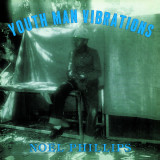
Erstmalige Wiederveröffentlichung seit 1981! Noel Phillips, der bis dato ausschließlich in Sammlerkreisen einen Namen hat, war seinerzeit 17 Jahre alt, als er für den Produzenten Prince Jammy dieses Juwel des Roots Reggae eingesungen hat, das es ab sofort zu entdecken gilt. Mit den Musikern Bass: Robbie Shakespeare, Drums: Sly Dunbar, Guitar: Boo Peep, Dougie, Horns: Deadly Headley, Bobby, Organ: Ansel, Winston Wright, Percussion: Scully, Sticky, Piano: Gladdy. Als CD exklusiv in der Box "Rootsman Vibration At King Jammy's" (VPGSCD7000) - Tipp!
- A1: Progetto Tribale - The Sweep
- A2: Onirico - Echo Giomini
- A3: Open Spaces - Artist In Wonderland
- B1: Alex Neri – The Wizard (Hot Funky Version)
- B2: M C.j. Feat. Sima - To Yourself Be Free - Instrumental Mix Energy Prod
- B3: Mato Grosso - Titanic Expande
- C1: Dreamatic - I Can Feel It (Part 1)
- C2: Carol Bailey - Understand Me Free Your Mind (Dream Piano Remix)
- C3: The True Underground Sound Of Rome - Secret Doctrine
- D1: Don Carlos - Boy
- D2: Lazy Bird – Jazzy Doll (Odyssey Dub)
Vol 2[28,99 €]
Volume 1 of this expertly curated project of 90s Italian House - put together by Don Carlos.
If Paradise was half as nice… by Fabio De Luca.
Googling “paradise house”, the first results to pop up are an endless list of European b&b’s with whitewashed lime façades, all of them promising “…an unmatched travel experience a few steps from the sea”. Next, a little further down, are the institutional websites of a few select semi-luxury retirement homes (no photos shown, but lots of stock images of smiling nurses with reassuring looks). To find the “paradise house” we’re after, we have to scroll even further down. Much further down.
It feels like yesterday, and at the same time it seems like a million years ago. The Eighties had just ended, and it was still unclear what to expect from the Nineties. Mobile phones that were not the size of a briefcase and did not cost as much as a car? A frightening economic crisis? The guitar-rock revival?! Certainly, the best place to observe that moment of transition was the dancefloor. Truly epochal transformations were happening there. From America, within a short distance one from the other, two revolutionary new musical styles had arrived: the first one sounded a bit like an “on a budget” version of the best Seventies disco-music – Philly sound made with a set of piano-bar keyboards! – the other was even more sparse, futuristic and extraterrestrial. It was a music with a quite distinct “physical” component, which at the same time, to be fully grasped, seemed to call for the knotty theories of certain French post-modern philosophers: Gilles Deleuze, Félix Guattari, Paul Virilio... Both those genres – we would learn shortly after – were born in the black communities of Chicago and Detroit, although listening to those vinyl 12” (often wrapped in generic white covers, and with little indication in the label) you could not easily guess whether behind them there was a black boy from somewhere in the Usa, or a girl from Berlin, or a pale kid from a Cornish coastal town.
Quickly, similar sounds began to show up from all corners of Europe. A thousand variations of the same intuition: leaner, less lean, happier, slightly less intoxicated, more broken, slower, faster, much faster... Boom! From the dancefloors – the London ones at least, whose chronicles we eagerly read every month in the pages of The Face and i-D – came tales of a new generation of clubbers who had completely stopped “dressing up” to go dancing; of hot tempered hooligans bursting into tears and hugging everyone under the strobe lights as the notes of Strings of Life rose up through the fumes of dry ice (certain “smiling” pills were also involved, sure). At this point, however, we must move on to Switzerland.
In Switzerland, in the quiet and diligent town of Lugano, between the 1980s and 1990s there was a club called “Morandi”. Its hot night was on Wednesdays, when the audience also came from Milan, Como, Varese and Zurich. Legend goes that, one night, none less than Prince and Sheila E were spotted hiding among the sofas, on a day-off of the Italian dates of the Nude Tour… The Wednesday resident and superstar was an Italian dj with an exotic name: Don Carlos. The soundtrack he devised was a mixture of Chicago, Detroit, the most progressive R&B and certain forgotten classics of old disco music: practically, what the Paradise Garage in New York might have sounded like had it not closed in 1987. In between, Don Carlos also managed to squeeze in some tracks he had worked on in his studio on Lago Maggiore. One in particular: a track that was rather slow compared to the BPM in fashion at the time, but which was a perfect bridge between house and R&B. The title was Alone: Don Carlos would explain years later that it had to be intended both in the English meaning of “by itself” and like the Italian word meaning “halo”. That wasn’t the only double entendre about the song, anyway. Its own very deep nature was, indeed, double. On the one hand, Alone was built around an angelic keyboard pattern and a romantic piano riff that took you straight to heaven; on the other, it showcased enough electronic squelches (plus a sax part that sounded like it had been dissolved by acid rain) to pigeonhole the tune into the “junk modernity” section, aka the hallmark of all the most innovative sounds of the time: music that sounded like it was hand-crafted from the scraps of glittering overground pop.
No one knows who was the first to call it “paradise house”, nor when it happened. Alternative definitions on the same topic one happened to hear included “ambient house”, “dream house”, “Mediterranean progressive”… but of course none were as good (and alluring) as “paradise house”. What is certain is that such inclination for sounds that were in equal measure angelic and neurotic, romantic and unaffective, quickly became the trademark of the second generation of Italian house. Music that seemed shyly equidistant from all the rhythmic and electronic revolutions that had happened up to that moment (“Music perfectly adept at going nowhere slowly” as noted by English journalist Craig McLean in a legendary field report for Blah Blah Blah magazine). Music that to a inattentive ear might have sounded as anonymous as a snapshot of a random group of passers-by at 10AM in the centre of any major city, but perfectly described the (slow) awakening in the real world after the universal love binge of the so-called Second Summer of Love.
For a brief but unforgettable season, in Italy “paradise house” was the official soundtrack of interminable weekends spent inside the car, darting from one club to another, cutting the peninsula from North to centre, from East to West coast in pursuit of the latest after-hours disco, trading kilometres per hour with beats per minute: practically, a new New Year’s Eve every Friday and Saturday night. This too was no small transformation, as well as a shock for an adult Italy that was encountering for the first time – thanks to its sons and daughters – the wild side of industrial modernity. The clubbers of the so-called “fuoriorario” scene were the balls gone mad in the pinball machine most feared by newspapers, magazines and TV pundits. What they did each and every weekend, apart from going crazy to the sound of the current white labels, was linking distant geographical points and non-places (thank you Marc Augé!) – old dance halls, farmhouses and business centres – transformed for one night into house music heaven. As Marco D’Eramo wrote in his 1995 essay on Chicago, Il maiale e il grattacielo: “Four-wheeled capitalism distorts our age-old image of the city, it allows the suburbs to be connected to each other, whereas before they were connected only by the centre (…) It makes possible a metropolitan area without a metropolis, without a city centre, without downtown. The periphery is no longer a periphery of any centre, but is self-centred”.
“Paradise house” perfectly understood all of this and turned it into a sort of cyber-blues that didn’t even need words, and unexpectedly brought back a drop of melancholic (post?)-humanity within a world that by then – as we would wholly realise in the decades to come – was fully inhuman and heartless. A world where we were all alone, and surrounded by a sinister yellowish halo, like a neon at the end of its life cycle. But, for one night at least, happy.
DJ Support: Mousse T, Michael Gray, Sam Divine, Black Legend, Sgt Slick, CASSIMM, Grant Nelson, Steve Angello, Mark Knight and Carl Cox
Another 4 tracks from Toolroom’s House imprint; Fool’s Paradise. Includes the number one hits ‘Do It Ya’ll’ from Grant Nelson & Mark Knight alongside Richard Earnshaw’s reimagining of Fonda Rae’s classic ‘Touch Me’
Back in stock due to popular demand, the 23rd release in our signature Brazil 45’s series served up a double header of classics from Sonia Santos and João Donato.
First up, 'Poema Ritmico Do Malandro (Balanço Do Crioulo)' is a beautiful track from the instantly recognisable Sonia Santos. A song that drifts from classic to psychedelic samba, laden with strings, horns and crowd noise. First released on 7” by Copacabana in 1971, but never on an album, originals fetch up to £100 per copy. A different version of this song also appears on the truly excellent Zito Righi Alucinolandia LP.
On the B side, 'Cala Boca Menino' is taken from João Donato’s much sought after and requested Quem É Quem LP. Quirky percussion, bubbling keys, horns and a hypnotic vocal. Donato is a hugely prolific force in Brazilian music and worked with the likes of including Tom Jobim, Astrud Gilberto, Cal Tjader, Dom Um Romao and Gilberto Gil amongst others. ‘Cala Boca Menino’ was released on a 7” in 1973 in Brazil, but is very difficult to find at a reasonable price and in good condition these days.
Mit "Nobody Loves You More" veröffentlicht Kim Deal am 22.11.24 auf 4AD ihr erstes Soloalbum. Die elf Songs umfassende Sammlung ist das erste Album der in Dayton, Ohio lebenden Künstlerin unter ihrem eigenen Namen. "Nobody Loves You More" ist Kim Deals Debütalbum, obwohl es nicht das erste Mal ist, dass sie einen Alleingang unternimmt - 2013 veröffentlichte sie im Eigenverlag eine fünfteilige Reihe von zehn Songs, die limitiert als 7" erschienen. Im Einklang mit Deals akribischer Herangehensweise an ihre Kunst, wurde das Album über mehrere Jahre hinweg verfeinert. Die ältesten Songs, "Are You Mine?" und "Wish I Was", wurden 2011 geschrieben und aufgenommen, kurz nachdem Deal von der "Lost Cities Tour" der Pixies zurückkam und nach Los Angeles umzog (frühe Versionen dieser Songs waren in der besagten Vinyl-Serie enthalten). Die letzten Aufnahmen für "Nobody Loves You More" fanden im November 2022 mit dem legendären Tontechniker und engen Freund Steve Albini statt, der den letzten Track "A Good Time Pushed" in seinem Electrical Audio Studio in Chicago einspielte. Auf dem Weg dorthin hat sie eine Vielzahl von Mitstreitern aus der Vergangenheit und Gegenwart hinzugezogen, von den Breeders (Mando Lopez, Zwillingsschwester Kelley Deal, Jim Macpherson, Britt Walford) oder auch Raymond McGinley (Teenage Fanclub), Jack Lawrence (Raconteurs) sowie Fay Milton und Ayse Hassan von den Savages. "Nobody Loves You More" wurde von Marta Salogni gemischt und von Heba Kadry gemastert. Zu jedem Song gibt es eine persönliche Geschichte. Sie handeln von den Winterferien mit ihren Eltern auf den Florida Keys ("Summerland"), einem Hochzeitsband-Cover von "Margaritaville" ("Coast") oder auch der Demenz ihrer Mutter ("Are You Mine?"). Die Platte zelebriert Deals unvergleichliche Kunstfertigkeit, die nicht nur auf die Höhepunkte ihrer Karriere mit gefeierten Bands der Alternative-Landschaft (Pixies, The Amps, The Breeders) verweist, sondern auch auf ihr unverrückbares kulturelles Gewicht, das über Generationen hinweg Musiker und Musikerinnen wie Kurt Cobain und Olivia Rodrigo beeinflusst hat.
LINEAR LABS: Sao Paulo läutet eine neue goldene Ära musikalischer Genialität ein, die durch den Maestro Adrian Younge definiert wird. Eine außergewöhnliche psychedelische und gefühlvolle Erfahrung bietet "Adrian Younge presents Linear Labs: Sao Paulo", eine Zusammenstellung von neuen Songs, die die musikalische Brillanz von Adrian Younge mit Künstlern aus der ganzen Welt präsentiert. Im Wesentlichen enthält das Album jeweils einen unveröffentlichten Song aus einer Reihe von bevorstehenden Alben, die Younge für Linear Labs produziert hat, darunter "Something About April Ill", der dritte Teil von Younge's Meisterwerk-Trilogie, und ein neues Blaxploitation-Abenteuer von Hip-Hop-Legende Snoop Dogg, mit dem Titel "Don't Cry For the Devil".
2 x black LP + LP Booklet
Die GRAMMY®-gekrönten Progressive-Music-Titanen Dream Theater melden sich mit ihrem 16. Studioalbum "Parasomnia" zurück - eine Ankündigung, die satte 15 Jahre auf sich warten ließ. Es ist das erste Album mit der legendären Besetzung Sänger James LaBrie, Gitarrist John Petrucci, Bassist John Myung, Keyboarder Jordan Rudess und Schlagzeuger Mike Portnoy seit "Black Clouds & Silver Linings" von 2009. "Parasomnia" wurde von Petrucci produziert, von James 'Jimmy T' Meslin aufgenom-men und von Andy Sneap abgemischt. Hugh Syme hat erneut seine kreative Vision für das Cover-Artwork beigesteuert. Vom Opener "In The Arms Of Morpheus" bis zum abschließenden "The Shadow Man Incident" kehren Dream Theater mit einer Samm-lung von Songs zurück, die zeigen, weshalb die Band seit vier Jahrzehnten eine treue Fangemeinde hat. Mit einer Spielzeit von 71 Minuten nimmt "Parasomnia" den Hörer mit auf eine musikalische Reise, die seit Beginn der Karriere zum Synonym für die Band geworden ist
ltd 2 x ultra-clear 2 LP + LP Booklet
Die GRAMMY®-gekrönten Progressive-Music-Titanen Dream Theater melden sich mit ihrem 16. Studioalbum "Parasomnia" zurück - eine Ankündigung, die satte 15 Jahre auf sich warten ließ. Es ist das erste Album mit der legendären Besetzung Sänger James LaBrie, Gitarrist John Petrucci, Bassist John Myung, Keyboarder Jordan Rudess und Schlagzeuger Mike Portnoy seit "Black Clouds & Silver Linings" von 2009. "Parasomnia" wurde von Petrucci produziert, von James 'Jimmy T' Meslin aufgenom-men und von Andy Sneap abgemischt. Hugh Syme hat erneut seine kreative Vision für das Cover-Artwork beigesteuert. Vom Opener "In The Arms Of Morpheus" bis zum abschließenden "The Shadow Man Incident" kehren Dream Theater mit einer Samm-lung von Songs zurück, die zeigen, weshalb die Band seit vier Jahrzehnten eine treue Fangemeinde hat. Mit einer Spielzeit von 71 Minuten nimmt "Parasomnia" den Hörer mit auf eine musikalische Reise, die seit Beginn der Karriere zum Synonym für die Band geworden ist.
- A1: Turned To Dust (Rolling On)
- A2: London May
- A3: Tonight With The Dogs I'm Sleeping
- A4: Boise, Idaho
- A5: The Water's Fine
- A6: Sometimes It's Hard To Breathe
- B1: New Water
- B2: Guns Are For Cowards
- B3: Downstream
- B4: One Of These Days (I'm Gonna Spend The Whole Night With You)
- B5: Is My Living In Vain?
- B6: Our Home
Black Vinyl[22,65 €]
Ltd Edition!
Bonnie "Prince" Billy - Alias des Musikers Will Oldham - wird am 31. Januar 2025 sein neues Studioalbum mit dem Titel "The Purple Bird" veröffentlichen. "The Purple Bird" wurde in Nashville mit dem Produzenten David "Ferg" Ferguson und einem Ensemble erstklassiger Session-Musiker aufgenommen. Es könnte als "eine richtige Nashville-Platte" bezeichnet werden, die aus einer Sammlung von Songs besteht, die hauptsächlich am Küchentisch von Ferg entstanden sind.
Auf "The Purple Bird" arbeitet Bonnie "Prince" Billy erst zum zweiten Mal in seiner illustren Karriere mit einem Produzenten zusammen. Seine Beziehung zu Ferg reicht mehr als zwei Jahrzehnte zurück bis zu den Sessions für das Johnny Cash-Album American III mit Rick Rubin, bei denen Ferg als Tontechniker fungierte und bei denen Cash eine Coverversion des BPB-Tracks "I See A Darkness" aufnahm. Die beiden haben im Laufe der Jahre an zahlreichen Projekten zusammengearbeitet, aber an keinem so intensiv wie an "The Purple Bird". Was bedeutet "eine richtige Nashville"-Platte für den rätselhaften Bonnie "Prince" Billy? Zu Beginn der Sessions hatte Ferg zu Oldham gesagt : "Ich will keine Country-Platte machen, mach einfach deinen Scheiß, Will."
Und in der Tat haben Oldham und Ferg, zusammen mit ihren Mitstreitern, ein beeindruckendes Album eingespielt und somit einen neuen Höhepunkt im umfangreichen Katalog von Bonnie 'Prince' Billy geschaffen.
Retrofuturism, outer space and limitless exploration are the central themes of Cesar Quinn's second album, "HELO".They incorporate influences from contemporary hip-hop experimentalists like The Alchemist and Armand Hammer, while also revisiting the space jazz of Sun Ra and the ambient probings of Terry Riley.
"HELO" was self-produced by Frederik Daelemans, with co-production contributions from Aram Santy and Youniss. LA-based mixing and mastering engineer Zeroh (associated with Injury Reserve, Liv.e, Pink Siifu) added his hip-hop flair, enhancing the band's sound into a cohesive, sample-inspired experience.
Features play a significant role in "HELO". The first vocal feature is Antwerp artist Youniss on "SMOKE," followed by New York vocalist Semiratruth, who energises "QUASAR." The collaboration with Belgian jazz saxophonist Mattias De Craene, long discussed but never realised on the debut album, finally materialises on "MARS," where he explores a range of saxophones, creating a rich tapestry of sound. The standout feature is undoubtedly Detroit rapper Zelooperz, whose verse and chorus on the title track "HELO" fulfilled a long-held aspiration for the band, given their admiration for his work with The Alchemist and Earl Sweatshirt. Finally, Zeroh lent his deep vocals to the ambient track "BOOTES," further uniting the album.
Rauelsson's third solo album for Sonic Pieces focuses on simplicity and minimalism. It recalibrates his love for ambient with an austere approach that conjures an atmosphere of silence and solitude. On Niu, the artist has traded his craft for shimmering layers of sound clusters and electronic editing in favor of a predominantly raw and acoustic recording.
Recorded primarily in Sofia and Berlin and mixed at Saal 3 of Funkhaus Berlin, Niu presents a 9-song journey that includes orchestral compositions, delicate synth miniatures, and sparse brass and woodwind drones with room for spoken word and a hint of psychedelic noir fable. The result is an album that, despite the eclectic choice of instrumentation, paints a landscape of spiritual clarity; an album that without being typically classical, still feels like a classical album. Three themes vary across the 9 pieces, starting with the purely orchestral "Prelude No. 7" before moving on to airy synth bass arpeggio and pedal steel. With more changing instruments, Raúl next takes us into a fairytale flute composition with guest flutist Heather Woods Broderick and brass vibrations by the trio Zinc & Copper. Finally, Katrine Grarup Elbo recites a poem by Raúl, ending the piece on a somber but beautiful note. The rest of the album continues in this vein, creating a unique sound that surprises the listener at every turn. Niu is a real departure from the artist's previous works in both scope and musicality. Everything was recorded without overdubs and with only minimal editing, trying to preserve the feeling of music coming from a room where musicians play live. Overall, this is music that finds comfort in movement as much as in pause and silence; music in which tenderness and tension exist in the same gesture.
The album also follows a certain mysticism with its poetic interludes, alternate track lists and titles like "Podium Of Riddles", "A Keyhole-Shaped Island" and "Ceramic Swallows, Set Of 3". Perhaps, given enough time, a hidden meaning or a new perception will be revealed. Niu is also set to be expanded into an art book, containing poems and photographs by Raúl, as well as an exhibition. Perhaps the key lies somewhere in there.
- A1: 3Rd Street Blues
- A2: Never Never Land
- A3: Incognito
- B1: Seven Minds
- B2: Clockwise
- B3: Firm Roots
Eastern Rebellion 3 was recorded in 1979 at the Sound Ideas Studio in New York City, USA. Musicians include Cedar Walton on piano, Curtis Fuller on trombone, Bob Berg on tenor saxophone, Sam Jones on bass and Billy Higgins on drums. The renowned jazz musicians deliver 6 solid jazz tracks all written by Cedar Walton, except their jazz interpration of the standard “Never Never Land” which was written by Jule Styne, Adolph Green and Betty Comden.
Eastern Rebellion 3 is available on black vinyl.
Efficient Space honours the memory of producer and MC Ali Omar with Hashish Hits, a posthumous selection from the dub rebel’s self-released discography.
One of ten children in working-class Liverpool, Omar drew deep influence from his father's Arabic heritage—a thread central to his identity and sample origins. After art school and a spell clubbing during Manchester's halcyon days, he relocated to Sydney, where he cofounded the blunted downbeat duo Atone with fellow British expatriate Andy Fitzgerald. As an MC, he infiltrated the city’s house, dub, jungle, and bass circuits, becoming a regular fixture at the Bentley Bar, where he commanded the mic with his versatile, rumbling baritone and charisma.
Freakishly talented in the studio, Omar was a pioneer of the Akai sampler and Atari, deftly recording live sessions straight to DAT. Drawing on industry insights from his sister, Merseybeat firebrand Beryl Marsden—who supported The Beatles on their final UK tour and was signed to Decca and Columbia—the non-conformist sought to build a self-sufficient business model. Between 1998 and 2004, he independently issued four albums on CD through his Hashish Studios imprint, hustling copies directly to local record stores and live shows for instant returns, even hand-sewing screen-printed hessian sleeves for his final release.
Uncompromising in his principles and refusing to suffer fools or charlatans, Omar relished the opportunity to collaborate with those who embodied the same spirit. Hashish Hits offers a snapshot of his inner sanctum—Fitzgerald on the opening track's billowing smoke stacks, the serpentine vocals of Gina Mitchell and the magic hands of mixer Louis Mitchell on 'On Release,' and Wicked Beat Sound System’s Kye on 'Poor Man Beggar Man Thief'. Meanwhile, 'Suicide Bomber' smoulders with the tension of a lost Muslimgauze relic, as the instructional 'Roll Up' and 'The Last Straw' spiral deeper into Omar’s signature production vortex— where space stretches in slow motion and walls reverberate with ricocheting delay.
A true icon of Sydney’s underground scene, the larger-than-life Omar passed away on 23 June 2009 after a valiant battle with cancer. He is remembered for his assertive spirit, larrikin humour, wild anarchic personality, and enduring mantra: “Love and live your life”.1
- Sick Of You
- Centre Of Lies
- The American In Me
- Cranked Up Really High
- Raggare
- Vital Hours
- I Need Nothing
- Here I Go And Here I Am
- Silver Son Johnnie
- First Time Is The Best Time
- Dark Yellow Easy Flow
- Samma Sak
- Shitty Shitty Bang Bang
- Bye Bye Hey Hey Hey
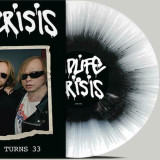
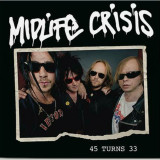
MIDLIFE CRISIS! - Something as unusual as a Swedish "supergroup" in the genre of '77 Punk Rock.
Urrke (Maryslim, Bizex-B), Dregen (Backyard Babies, The Hellacopters, Mike Monroe Band), Robban Eriksson (The Hellacopters, Strindbergs, Winnerbäck, Syl Sylvain), and Måns P Månsson (Crimson Shadows, Wrecks, Maggots).
In 2004, they first put their wild heads together and recorded three old punk classics, released on a vinyl EP. The band went on to release three more EPs (the latest one in 2018). Now, everything is being released on ONE fantastic collection via Wild Kingdom Records. By the way, Dregen is currently making waves on Swedish national TV with the popular series "Så Mycket Bättre".
Hold on to your hats folks!
Sound Like: Heartbreakers, Slaughter & The Dogs, PF Commando, early Damned, The Saints, UK Subs, Dictators, etc oldschool Punkrock.
MIDLIFE CRISIS! - Something as unusual as a Swedish "supergroup" in the genre of '77 Punk Rock.
Urrke (Maryslim, Bizex-B), Dregen (Backyard Babies, The Hellacopters, Mike Monroe Band), Robban Eriksson (The Hellacopters, Strindbergs, Winnerbäck, Syl Sylvain), and Måns P Månsson (Crimson Shadows, Wrecks, Maggots).
In 2004, they first put their wild heads together and recorded three old punk classics, released on a vinyl EP. The band went on to release three more EPs (the latest one in 2018). Now, everything is being released on ONE fantastic collection via Wild Kingdom Records. By the way, Dregen is currently making waves on Swedish national TV with the popular series "Så Mycket Bättre".
Hold on to your hats folks!
Sound Like: Heartbreakers, Slaughter & The Dogs, PF Commando, early Damned, The Saints, UK Subs, Dictators, etc oldschool Punkrock.
MIDLIFE CRISIS! - Something as unusual as a Swedish "supergroup" in the genre of '77 Punk Rock.
Urrke (Maryslim, Bizex-B), Dregen (Backyard Babies, The Hellacopters, Mike Monroe Band), Robban Eriksson (The Hellacopters, Strindbergs, Winnerbäck, Syl Sylvain), and Måns P Månsson (Crimson Shadows, Wrecks, Maggots).
In 2004, they first put their wild heads together and recorded three old punk classics, released on a vinyl EP. The band went on to release three more EPs (the latest one in 2018). Now, everything is being released on ONE fantastic collection via Wild Kingdom Records. By the way, Dregen is currently making waves on Swedish national TV with the popular series "Så Mycket Bättre".
Hold on to your hats folks!
Sound Like: Heartbreakers, Slaughter & The Dogs, PF Commando, early Damned, The Saints, UK Subs, Dictators, etc oldschool Punkrock.
Imaginary friends Akka & BeepBeep share the third release on their label: Floral Ancestors by Raduns. The 12” offers blooming ambient rooted in dub, lush drone and hand-picked cosmic that’s all grown deep in Detroit.
Spacious sonic arrangements vividly swell yet keep grounded within a sculptural rhythmic core. Raduns sows synth basslines and wispy pads next to harmonious guitars and muted field recordings. Grooving propulsion drives throughout. Rhythms appear, in negative space, like outlines between leaves. Recorded with machines direct to SD card, the compositions represent ephemeral blessings of experience. As if strolling into a verdant conservatory, the layered and diverse sensations blend into one cohesive revelatory experience.
On their first record, Raduns draws an ancestral line in Detroit as inspiration. A time when you could ride a streetcar from Dexter-Linwood to Belle Isle. A time before freeway expansion demolished vibrant Black neighborhoods. A time before the rebellion, motown and white flight. A time when Raduns’ great-grandparents were florists in the city, serving the community in times of celebration and times of grief. This melancholic circle shapes the project in which Raduns summons these Floral Ancestors, stretching upward from the darkness of the earth into the light of the world back down once more.
AKKA’s Side: “Grass Boulevard” exhales a luscious soundscape that develops through wave-crashing synths and circulated guitars to a transplanted acid lead. “Spread” lays out a decoration of blended sample and hold synth with kosmische styled guitar licks. Tracked as a single take in a Detroit community studio, the tune intuitively reseeds the symbiotic sprout between krautrock and Detroit techno.
BEEP’s Side: “Metrograde Bouquet” submerges you into the bulb of a handcrafted vase. Dub techno roots grow out into murky water with energy that is subtle yet profound. “Oldest of Arrangements” textures breaths of misty air cascading ventilating in on itself. The track’s time seems to stretch and disappear within a dark and deep undercurrent. A harmonic and reverberant resonance closes the record in a flowering of beauty and peace.
“You’re a flower child. Put this music out.” - Someone Important in Detroit
Ginnels never let up. Though it has been, staggeringly, eight long years since the last irresistible jangle pop transmission under the Ginnels moniker, nothing much has changed in Mark Chester's approach when it comes to the practice of music making, even if much everything else for Chester has seen considerable flux – he's now a father of two, and most shockingly of all for an indie popster of his ilk, gainfully employed. "It definitely started the same way all Ginnels stuff starts," Chester explains, "which is just me looking through five years of phone demos and going 'that's a decent song' and 'that's a decent song', and if you keep that up then you have a full album."
The man himself might be coyly committed to making his process sound as pedestrian as possible, but from the moment the delicate chiming introduction of album opener 'The Body Was Gone' goes widescreen – revealing an expanded sonic palette richer in timbre and exponentially wider in scope than anything Chester has let out into the world thus far – it is apparent that "The Picturesque" is poised to be less than parochial in its sonic purview.
From here, "The Picturesque" plays like a gauzy road trip Super 8 footage cutting between scenes of sunset at Monument Valley and B-roll from around middle-Ireland, entirely soundtracked by some enchanted mixtape of heretofore unheard B sides from REM, XTC and The Go-Betweens, unexpected guest appearances from the surprisingly together-sounding ghost of Johnny Thunders and snippets from your coolest friends' unreleased instrumental experiments. All liberally rippled with Chester's unique ear for melody and appetite for the unexpected when it comes to crafting guitar parts. And this, by design, feels like a Guitar Record, above all else.
For all its effortlessly sticky lyrical and melodic twists, "The Picturesque" separates itself within the mighty Ginnels catalogue in both the dexterity in playing and diversity in tone on show across these 12 tracks. And 12, of course as we know, being the optimum number of tracks for any LP to have, so bonus points for that too.