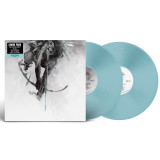
The Hunting Party wurde im Juni 2014 veröffentlicht und ist das sechste Studioalbum von Linkin Park. Das 12-Track-Album enthält die Singles „Final Masquerade“, „Until It's Gone“ und „Guilty All The Same“. Auf diesem Album sind mehrere Gastmusiker von Linkin Park zu hören: Daron Malakian (System of a Down), Page Hamilton (Helmet), Tom Morello (Rage Against The Machine / Audioslave) und Rakim. Diese limitierte Auflage ist auf blauem, durchscheinendem Vinyl gepresst.
quête:sam u l
Keshavara tragen prächtige Schnurrbärte, verwegene Kopfbedeckungen und sprechen ein abenteuerliches Patois aus Englisch, Hindi, Deutsch und Gibberish. Auf ihrem neuen Album "III" kreieren die Kölner um den deutsch-indischen Musiker Keshav Purushotham Klänge, wie andere Leute Drinks mixen, nachdem sie schon drei genossen haben: Verwaschener Kraut-Pop und diasporische Dub-not-Dub-Exkursionen werden nach Augenmaß miteinander kombiniert und wild geschüttelt. Zuckersüß mäandernde Melodien, entlehnt einem fantastischen Niemandsland in der Grenzregion zwischen exotischen Library-Kompositionen und psychedelischen Soundtracks, verschmelzen mit den Grooves einer Rhythmusgruppe, die sich auch in den Tonstudios des funky Beirut der Mittsiebziger Zuhause gefühlt hätte. Das Ergebnis sind mit surrealistischem Zuckerrand gekrönte Cocktails mit der Wirkung einer halluzinogenen Götterspeise. Musik, die schillert und flirrt, wie eine Fata Morgana in der Wüste. Keshavara klingen in einem Moment, als hätte Ennio Morricone einen Bollywood-Film vertont, und im nächsten wie ein von Curt Boettcher produzierter Eden-Ahbez-Song, oder - nicht ganz so spinös aber nichts desto weniger fantastisch - als hätten Khruangbin und Sven Wunder endlich ein gemeinsames Album aufgenommen. In den glanzvollsten Momenten fügt sich das alles wie von magischer Hand zusammen und kulminiert dann in Songs wie "Spiegelmann" und "Tableau Vivant" - fantasmorgiastischen Partys voller transkultureller Clashes, die uns Hörer dazu einladen, sie in farbenprächtige Gruppenchoreografien zu überführen.
War das Debüt von Keshavara noch ein Solo- und der Nachfolger "Kabinett der Fantasie" im Kern ein Duo-Album, so sind Keshav Purushotham, Niklas Schneider, Benedikt Filleböck und Christopher Martin mit ihrem selbstproduzierten, schlicht "III" betitelten dritten Album endgültig zu einer vierköpfigen Band zusammengewachsen … und zwar um eine alte Farfisa-Orgel herum, die eines Tages als Geschenk im Proberaum gelandet ist: Ein, auf sämtlichen Songs mal mehr, mal weniger präsentes UFO aus einer Zeit der Slow-Jams, Live-Takes und des exzessiven Space-Echo-Einsatzes. Sein analoges Blubbern und sein wabernder Funk rollt dem warmen, organischen Bandsound den roten Teppich aus, und verpasst ihm einen zärtlichen Schubs Richtung 70er. Erfrischenderweise kommt er dort niemals so richtig an, sondern bleibt immer im Fluss. Denn das eigentliche Ziel der halldurchtränkten Korridore dieses Albums ist stets der Weg, genau genommen der kunstvoll gezimmerte Holzweg, der phantastische Irrpfad. "III" ist eine Reise, auf der Zeiten und Orte keine Fixpunkte sind, sondern austauschbare Koordinaten eines augenzwinkernden Vexierspiels. Da ist es nur folgerichtig über "Indische Götter im Sauerland" zu singen. Dass ungeachtet der Nostalgie, die alle neun Songs durchweht wie ein warmer Mittelmeerwind, niemals Sentimentalität aufkommt, ist nicht zuletzt diesem Humor geschuldet.
Die ätherischen Drones, sanft nuschelnden Akkorde und geisterhaft seufzenden Soundschwaden, die Keyboarder Benedikt Filleböck seiner altersschwachen Farfisa bevorzugt in den ruhigeren Momenten und den Instrumentalnummern des Albums entlockt, bilden einen stimmungsvollen Kontrast zu den beiden anderen Säulen des Keshavara-Sounds: Christopher Martins leichtfüßig hüpfenden Bass-Dreiecken und Keshavs sonnendurchfluteten Gitarren-Ornamenten. Im Zusammenspiel mit Niklas Schneiders crispen Drumbeats entsteht ein Fundament, mit dem die kaleidoskopischen Texturen und Melodien vollständig verschmelzen.
Das Ergebnis ist das bisher homogenste Album des Quartetts. Mit "III" erweisen sich Keshavara als gewiefte Soundalchemisten und Weltenwanderer, als eine softe Macht, deren Stärke sich aus ihrer enormen Musikalität, ihrer Fabulierlust und ihrem surrealistischen Witz speist.
«Memory doesn't age, it always remains the same.
"Memoria" is an album about my memories, my hometown, the scent and flavours of my childhood, things I've read, movies I've watched at the cinema and my love for music. It's about going back home, re-establishing a link with the past and recalling cheerful and happy memories.
"Memoria" refers specifically to the regions of Minais Gerais and the Brazilian northeast, its hot climate, the religiousness of the people and its faith in miracles, calling to mind images of mysterious and surreal popular tales, where time flows slowly in an intimate dimension.»
This self-titled LP marks the fifth release of Scottish artist Murray Collier’s Dip Friso project, his longest running alias and the solitary vanguard of his own Real Landscape imprint. Across the six tracks he delivers another collection of warped percussive loops, heavily manipulated guitar work and psychedelic sound experiments that drift between popular music forms ('I’ll Get to Hiding') and whittled down takes on electric blues and shoegaze ('Another Country’). The former features the instantly recognisable croon of Still House Plants vocalist Jess HK embellishing a backdrop of tape loop alchemy, an inspired pairing given the shared history of Glasgow dwelling. ‘Thin Ayrshire’ (written with Hannan Jones) treads a similar path with Collier’s own beyond-unrecognisable voice featuring, broken suddenly by a brief flash of 12th Isle’s Loris S. Sarid & Innis Chonnel’s ‘Spalted Water Portal’ thanks to a recycled tape spool. ‘A Sorry Business’ takes on avant-jazz inspired puddle skronk, a stunted casio bleep propelling forward guitar dirge and cymbal crashes, whilst Australian minimal wave heroes The Systematics are paid homage via a farewell cover of their track ‘Midnight on Balancing Day’ (here ‘Midnight’).
All in, the album sees the project incorporating more instrumentation and a full use of vocalists, leaning less heavily on gauzy sample collage styles and providing a more introspective look at the hazy, dubwise world Collier has been building for the past half a decade.
Introducing ‘SONGS ABOUT THE SUN’ by ELWD. The London-based producer, commonly known for his signature sample style blended with live instrumentation, presents six new beats. Inspired by how the sun has always been a constant throughout his life and the nostalgia of a time when life seemed carefree, he unveils a new powerful and vitamin D-infused sound. ‘COSMIC CHAMELEON’ is a house gem that blends Balearic vibes with jazzy instrumentation, making it the perfect song to accompany a sunny, carefree day.
The Smile haben ihr neues Album "Cutouts" für den 04.10.2024 angekündigt. Mit "Foreign Spies" und "Zero Sum" sind zugleich zwei neue Tracks erschienen, wobei der Künstler Weirdcore zu letzterem auch ein Video kreiert hat. Bereits erschienen sind "Don"t Get Me Started" und "The Slip", zwei Stücke, die Anfang des Monats als limitierte 12"-Single kurzzeitig weltweit in Plattenläden auftauchten. Thom Yorke, Jonny Greenwood und Tom Skinner haben einige der Songs von "Cutouts" erstmals auf der März-Tour in UK gespielt. Insgesamt enthält das von Sam Petts-Davies produzierte Album, das auf "Wall of Eyes" aus dem Januar und das 2022er-Debüt "A Light For Attracting Attention" folgt, zehn neue Tracks. "Cutouts" wurde zur gleichen Phase wie "Wall Of Eyes" in Oxford und den Abbey Road Studios aufgenommen und enthält String-Arrangements vom London Contemporary Orchestra. Das Artwork von Stanley Donwood und Thom Yorke entstand während der Aufnahmen. "Cutouts" ist bereits das zweite Studioalbum der Band in weniger als einem Jahr. Sein Vorgänger erreichte Platz 4 der deutschen Albumcharts und die Nummer 3 in UK. Thom Yorke veröffentlichte im April außerdem den Score zu Daniele Luchettis Film "Confidenza" und kündigte eine Solotour für Neuseeland, Australien, Singapur und Japan an. Jonny Greenwood arbeitet aktuell am Score zu Paul Thomas Andersons kommenden Film "The Battle of Baktan Cross". Tom Skinner hat das Album "Voices of Bishara Live at mu" veröffentlicht und tourt mit seinen Soloarbeiten im Rahmen internationaler Jazz-Festivals.
Forging his own path into the future... With roots in the U.K. club and hip-hop scenes, drummer Richard Spaven brings a fresh approach to the instrument that's at once modern and traditional. Combining machine-like accuracy with jazz-influenced improvisational sensibilities, Spaven's drumming has landed him gigs with vastly varied artists such as UK rapper Loyle Carner, Guru of hip-hop duo Gang Starr, producer Flying Lotus, vocalist José James and Brainfeeder artist Jameszoo. Spaven's brilliance is evident beyond his world-class performance abilities; he's equally impressive in production and compositional territories.
Sole Subject, a captivating crossover of electronica, hip hop, and jazz, explores the nuanced relationship between live drumming and electronic elements, a theme intricately woven throughout Spaven's sixth solo record. Originating from deep, rhythmic ideas, each track is a testament to intense experimentation and precision. At the core of the album are the drums, captured as full live takes which often blur the lines, appearing as if they were programmed or sampled. Dive into Sole Subject and experience a musical journey where innovation meets tradition, and where each beat tells a story of relentless creativity and dedication. The release of the record will be celebrated with a headline show at Jazz Café October 30th.
Gi Gi returns to Quiet Time with a new album, Dreamliner. His last full-length for Quiet Time, Lumino Pleco, was built on familiar samples, melted into a skunky sludge. It evoked a heat-warped meditation cassette unearthed from a Goodwill located in a black hole. The Texas producer’s latest, Dreamliner, is comparably immediate and propulsive. Here, Gi Gi explores spacey, kosmische-laced trip-hop. At first, these eight tracks come across placid and twinkly — calling to mind glitter stars twinkling atop a navy canvas, or tropical sun beams cutting through crystal water. But a jaggedness becomes apparent when lended a focused ear. Beneath slow motion arpeggiations and lullaby melodies, dubby percussion and sound effects gnash and quiver.
"No Input" is the debut eponymous EP by the electronic duo composed by the Palestinian modular synthesis artist Karim Atari, and the Italian electronic music producer and co-founder of Abu Recordings, boyjayne.
The 20-minute EP features an eclectic mix of acid, electro and downtempo dub techno inspired by the likes of Drexciya, Filmmaker, and E.R.P. With this EP, No Input sought out to make distinctive high-energy tracks for the dance floor. Their approach combines modular synthesis and sample manipulation techniques, creating a sound that is at once reminiscent of classic techno and electro and unpredictable in its novel reinterpretation.
The 2nd EP from producers and DJ duo Housecall, "Transmissions" is full of irresistible energy, influenced as much by American disco as by German and French house.
Sprinkled with samples illustrating a dreamlike and colorful universe, these 5 tracks are made for the dancefloor: between the effervescence of 'Planeta Za', the power of 'Transmissions', the groove of 'Liquid' and the euphoria of '2 Nuits, 3 Jours'.
William Kiss lands on Rekids with the ‘The Beat’ EP this November, hot on the heels of a remix for Mathias Kaden’s ‘Circulate’ EP on the label in September.
The A-side starts with title track ‘The Beat’, bodied toms footing the rhythm while high-pitched percussion keeps an irresistible groove above. With an expertly sampled, playful vocal, Kiss’ ‘The Beat’ is another unmistakable club hit that will effortlessly find its way into the peak time. The B-side hosts ‘Midnight Club’, which features more organic drums mixed with a classic House vocal and zippy strobe-light-inducing synths, closing out William Kiss’ debut on Radio Slave’s flagship label in his signature drummy style.
Having won support from Laurent Garnier, HAAi, Call Super, Robert Hood, and more, William Kiss has been going from strength to strength. He previously appeared on Radio Slave’s labels via his ‘Clap For Me’ EP on Rekids sibling label RSPX, with further releases on labels like GUDU, Bush Records and Three Six Zero alongside the launch of his collaborative project, Not Without Friends, with Luke Alessi and Jordan Brando on RÜFÜS DU SOL’s Rose Avenue.
- A1: Tanuki, Let's Play
- A2: Main Title
- A3: Life Of A Tanuki
- A4: Revival Of The Art Of Transformation
- A5: Musical Accompaniment To Ses-Ses-Se
- A6: Musical Accompaniment To Toryanse
- A7: Wind And Clouds, Dance Of Urgency
- A8: Tan-Tan Tanuki
- A9: Inviting Cat's Samba
- A10: Twin Stars "Song Of Going Around The Stars”
- A11: Hibernation
- A12: Joys Of Spring
- A13: Homesickness: Awa - Tokyo - Sado
- A14: Tanuki's Mambo
- A15: Happy Hanagasa
- A16: Going Into Battle
- A17: Subtle And Profound Mysterious Music
- B1: Pom Poko Tanuki Music
- B2: Whirlwind Shamisen
- B3: Rengeso - Gonta's Death Of Honor
- B4: Elegy
- B5: Undercurrent
- B6: The Tanukis Now... (Epilogue)
- B7: Pom Poko Main Theme "Genki Song”
- B8: Ending Theme『Itsudemo Dareka Ga』Shang Shang Typhoon
Recorded using various traditional musical instruments, the album includes Japanese-style music, samba, mambo, and more, featuring songs like "Itsudemo Dareka ga".
All 8 of the Mad Professor remixes included here are previously unreleased and include his dub mixes of 2 tracks not originally featured on Mezzanine but from the same period – Metal Banshee – a dub version of Superpredators which was a cover of Siouxie and the Banshee’s Metal Postcard – and Wire, a track they recorded for the soundtrack of the film Welcome to Sarajevo.
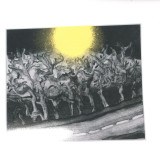
Jawad Nawfal and Mazen El Sayed, better known by their stage names of MUNMA and EL RASS, met for the first time in Beirut, during the summer of 2011. A common friend told Jawad wonders about an MC who rapped and slammed in the classical Arabic language, as opposed to the vernacular Lebanese dialect. The two musicians met in a small café in Beirut’s Hamra neighborhood, spoke of music, argued about politics, and decided to collaborate at once. They began working on tracks the following day. A month later, they had already produced a dozen sketches, instrumental beds and accapella vocal tracks. These demos eventually landed in the hands of Ziad Nawfal and Fadi Tabbal, who set out to bring to life the duo’s first recorded album. “Kachf el Mahjoub” (the title is from a Sufi master-work penned some 900 years ago) was eventually released as a limited edition of 500 CD’s, during a launch event at then-budding alternative venue Metro al Madina in Hamra, on the 22nd of February 2012. These CDs went out of print in record time, as can be expected, and the album’s mythical status became reinforced over time – El Rass & Munma collaborated sporadically during the next ten years, but never fully grasped the level of musical intensity and explosive tension attained on this first outing. It has been a longstanding dream of ours, here at Ruptured, to produce a vinyl version of this album, and we are thrilled to say this moment has finally come. Artist ALI RAFEI’s original artworks have been painstakingly reproduced, the music has been dutifully remastered for vinyl by CEDRIK FERMONT, and the records were pressed by our friends at Mother Tongue in Verona. We added bonus track "Fi Kala'at Tarablus" to this 10th anniversary reissue for good measure – recorded during the same sessions that yielded “Kachf el Mahjoub”, it appears on the digital version of the album. “Kachf el Mahjoub” is a landmark album in Lebanon’s alternative music scene, and the MENA region’s hiphop and indie scenes writ large. At the time of their collaboration, El Sayed was a prolific writer and musician, at ease with a variety of instruments, notorious for his masterful flow in the classical Arabic language, with lyrics tackling both social and political sensitive subjects; Nawfal has previously released an impressive number of albums and EPs, exploring downtempo electronica and ambient dubstep, for a number of Lebanese and international labels. The collision of the former’s brazen, slammed vocals and the latter’s harsh beats works wonders on “Kachf el Mahjoub”, Munma’s sound-world perfectly fitting El Rass’s agitated discourse, alternating between broken beats, elaborate percussion, and ambient layers of synths. At times reminiscent of mutant hiphop outfit Shabazz Palaces, at others of the collaboration between dubstep producer Kode9 and the late vocalist The SpaceApe, this album is an uncanny meeting of Arabic hip-hop and electronica, an exceptional event in the realm of contemporary Lebanese alternative music.
It's been a while, but after some significant restructuring behind the scenes, Soul Flip is back in the groove, with a fresh new look, and more sweet, soulful sounds.
Chapter 16 of the Soul Flip story sees Del Gazeebo breathe fresh life into a couple of absolute classics, steering them directly at the dancefloor.
First up for the Soul Flip treatment is Sam & Dave's "Soul Man", Del somehow making an already big tune even bigger, and very much more DJ-friendly.
On the flip, Del takes the O'Jays original version of "Now That We Found Love" & injects it with fresh energy. It also retains the glorious strings from the album version that was edited out from the original 7" (UK only) release.
Having spent their formative years in São Paulo Brazil, as a teenager, Lau Ro found themself uprooted from their home. Moving with their family to Europe in search of a better quality of life, their story was like that of many immigrants in the same position. Lau Ro's parents found work in factories and cleaning jobs, for the first few years in the North of Italy and then in Brighton on England's Southern coast. "We never managed to visit back home, so my connection to Brazil became largely made up of childhood memories and my fascination with all the 60s and 70s music I could find from there."
In Brighton, the young non-binary singer and composer would immerse themself amongst the city's vanguard of free-thinking artists and musicians. Lau Ro formed Wax Machine whose prefigurative, psychedelic community provided a glimmer of countercultural hope amid a backdrop of national political decline. From 2020-23, Wax Machine birthed three cult-favourite albums in as many years; indebted in part to their British psychedelic forebears from progressive folk, rock and jazz yore. But the kernel of Lau's Brazilian sound was already beginning to blossom across Wax Machine's releases. Now, taking root deeper still, Lau Ro steps forward with their debut album: Cabana.
Named after the small wood cabin at the bottom of their garden where the album was recorded, Cabana is a deeply personal record of memory, self-discovery and imagination. Melancholy and hope combine across ten tracks of dreamy bossa, ambient folk, fuzzy tropicalia and majestic MPB. The music is swathed in masterful string arrangements and trippy electronics in equal part, while Lau Ro's delicate, yet quietly confident voice takes acerbic aim (in both English and Portuguese) at polluted city life, while dreaming of a utopia, rich with nature and wildlife.
Like the musical equivalent of semantic drift, Lau Ro's displacement led to the creation of another Brazil. A mythic place in Lau's soul, as they put it, "where the sunshine and joy of my childhood remained untapped." Lau continues: "It's music that might sound as if it came out of a parallel universe Brazil, rather than its modern day landscape. I am nowadays rediscovering Brazil, going back as often as I can and trying to stay connected to these different parts of the world and myself."
Back in 2022, James Burnham aka Burnski started a White sub-series of his much-hyped Instinct label and the first one sold out as quick as a flash. Now he is finally back with a follow-up that will likely do the same. This limited one-sided 12" slab of sonic filth features just one tune, but what a tune it is. '02' is a house cut with elements of garage percussion, old-school dirty bass, and even some trance-infused chords that chime with what's going on in the dance world right now. Some return horns at the breakdown really send it into overdrive and it's not hard seeing this one blow the roof off many a club this summer.
The small but already well-formed Stereo:type label has got a trip of new EPs all dropping this summer. UK producer Risk Assessment is behind them all and each one explores a classic disco sound with some modern dance floor weight. 'She's On The Floor' is a celebrity and feel-good jam with heart-swelling strings. 'Rhyme' cuts up a classic vocal sample and layers it over some house-leaning beats while 'Delicious' is a wig-out lead by its shimmering synth stabs. Last but not least is the breezy and sunny 'Let's Do It'.
Shir Khan marks the 37th release on his infamous Black Jukebox imprint with an all-killer balearic house record courtesy of mysterious Cécille-affiliated Cabin Luv Affair hot on the heels of his debut album which has seen support from Fouk, Laurent Garnier, Jamie Jones, Mr. V and Archie Hamilton.
Here, the masked master lays out 4 convivial cuts that sit in a particular pocket between House and Disco; one that has historically been occupied by the likes of Pepe Bradock, Damiano Von Eckert and Andrés. A spot classically characterised by beautifully imperfect, sample-heavy productions that are shot through with palpable depth and soul.
The record sets sail with ’Te Siento’. Polyrhythmic percussion bubbles across the surface of a deep sonic pool that forms a bed for vivacious drums, romantic vocals and a spine-tingling strings riff. A hazy opening clears out before the backbone of recording shines through; an uplifting 90s piano motif that's later picked up by Xylophone tones while a tight, truncated bass line punches away at the track's core.
'Dance With Us' then rolls out a beautifully seductive mood. Softly shifting synth chords, a loose-limbed drum break and hedonic vocals whip up a hot and heavy vibe that shines with a distinctly Chicago-tinged elegance.
'Time Is Killing Us' follows up with an immaculately executed, 'last tune' House groove. A gentle but powerful euphoria is generated with swooning strings, more giddy piano riffs and another robust drum track that all gather momentum as progress rolls on. An ecstasy-crescendo forms before it crashes and fizzles before the lights go on.
'My Head Like Shibuya Crossing' then follows up with a tightly-knitted Deep House cut. Buttery melodies adorn an effortlessly kinetic bass groove before a delicate Japanese vocal bleeds into focus. As is the case with much of the record, the track graciously segues through its chapters with melody at the fore-front before bringing the record to a conclusion.
No one has lived a life quite like Marcos Valle. He became an overnight international sensation, fled a military dictatorship, dodged the Vietnam war draft, had his music sung by Homer Simpson, made enemies with Marlon Brando, and became an unsuspecting fitness guru for multiple generations. But to truly understand the great Brazilian composer, arranger, singer and multi instrumentalist, one must listen to his music.
Lead Single (Life Is What It Is) : Between the release of his first album in 1962 and today, Marcos Valle has released twenty-two studio albums traversing definitive bossa nova, classic samba, iconic disco pop, psychedelic rock, nineties dance and orchestral music. He has also had his songs recorded by some of the all time greats, including Frank Sinatra, Sarah Vaughn, Sergio Mendes, Elis Regina, and (last but not least), Emma Button of the Spice Girls. He has also had his music sampled by Jay-Z, Kanye West, Pusha T and many more.
With his twenty-third studio album Túnel Acustico, Valle set out to bring it all together.
“I believe my music is many things. It goes in different directions. I have many different ways of writing music, sometimes it’s melodies and harmony, sometimes the groove is the focus. But all the music I have made over my sixty year career is unified. It is all natural and it is all sincere. And this is what I wanted to bring to my new album.”
A prominent feature of Valle’s career has been his dual residence between Brazil and the USA. Originally moving over in the mid-sixties on the back of bossa nova’s international proliferation, Valle toured with Sergio Mendes and became hugely in demand as a composer and arranger. But the Vietnam War loomed and the threat of being drafted saw him return to Brazil. He spent the following years in Rio writing music for TV and film, as well as four cult favourite albums in collaboration with some of Brazil’s most groundbreaking musicians including Milton Nascimento, Azymuth, Som Imaginario and O Terco.
By 1975, Brazil's military dictatorship was at its most oppressive, making living and working increasingly difficult. Valle moved back to the US where he would reside in LA, writing songs for, and collaborating with the likes of Eumir Deodato, Airto Moreira, Chicago, Sarah Vaughn and Leon Ware, amongst others.
Túnel Acústico features two songs originally conceived during Valle’s time on the West Coast: “Feels So Good”, a stirring two-step soul triumph written in 1979 with soul icon Leon Ware, and the sublime AOR disco track “Life Is What It Is”, composed around the same time, with percussionist Laudir De Oliveira from the group Chicago.
Built around an unfinished demo Marcos found on a shelf in his house 44 years after it was made, the “Feels So Good” demo was restored with the help of producer Daniel Maunick, who also utilised AI stem-separation to remove the placeholder vocal ad-libs. Valle added Portuguese lyrics to sit alongside Ware’s vocal hook, as well as extra keyboards and percussion.
Also written in late seventies LA, “Life Is What Is It” was co-penned by Laudir De Oliveira from the band Chicago and first released on the bands’ Chicago 13 album with lyrics by Robert Lamb. Another nod to his good times in LA, Valle recorded his own version for Túnel Acústico, upping the tempo and deepening the groove for a blast of irresistible summer soul.
On Túnel Acústico, Valle's core band features two members of the renowned Brazilian jazz-funk group Azymuth: Alex Malheiros on bass and Renato Massa on drums. The rhythm section is completed by percussionist Ian Moreira, with additional contributions from guitarist Paulinho Guitarra and trumpeter Jesse Sadoc.
The contemporarily composed music on Túnel Acústico features an impressive lineup of guest lyricists, including renowned Brazilian artists: Joyce Moreno (Bora Meu Vem), Céu (Nao Sei), and Moreno Veloso (Palavras Tão Gentis) as well as Valle's brother Paulo Sergio Valle (Tem Que Ser Feliz).
The album closes with "Thank You Burt (For Bacharach)", a tribute to the legendary composer who passed away in 2023.
Túnel Acústico will be released on 20th September 2024 via Far Out Recordings. Valle is set to tour Europe and America in support of the album.






![El Rass & Munma - Kachf el Mahjoub / Unveiling the Hidden [10th Anniversary Reissue]](https://www.deejay.de/images/l/7/0/997770.jpg)