First Word Records is extremely proud to welcome aboard Takuya Kuroda.
A highly-respected trumpeter born in Kobe, Japan, Takuya is a forward-thinking musician that has developed a unique hybrid sound, blending soulful jazz, funk, post-bop, fusion and hip hop music.
After following the footsteps of his trombonist brother playing in big bands, he relocated to New York to study jazz & contemporary music at The New School in Union Square; a course he graduated from in the mid-noughties. It was here that Takuya met vocalist José James, with whom he worked on the 'Blackmagic' and 'No Beginning No End' projects.
Following graduation, Takuya established himself further in the NYC jazz scene, performing with the likes of Akoya Afrobeat and in recent years with DJ Premier's BADDER band (also including acclaimed bass player, Brady Watt). Premier said "The BADDER Band project was put together by my manager, and an agent I've known since the beginning of my Gang Starr career. He said, 'What if you put a band together that revolved around a trumpet player from Japan named Takuya Kuroda? He's got a hip-hop perspective and respect in the jazz field…"
Takuya Kuroda is already incredibly prolific, releasing five albums in the past decade and fortifying a solid reputation in the global jazz scene. 2011 saw the release of Takuya's independently-produced debut album, 'Edge', followed by 'Bitter and High' the following year and 'Six Aces' on P-Vine in 2013. Takuya was signed to the legendary Blue Note Records in 2014 for his album 'Rising Son', as well as appearing on their 2019 cover versions project, 'Blue Note Voyage'. He released his 5th album 'Zigzagger' on Concord in 2016, which also featured Antibalas on a reimagining of the Donald Byrd classic 'Think Twice'.
Late Summer 2020, Takuya Kuroda returns with his sixth album 'Fly Moon Die Soon'.
In his words, "this album is about the irony between the greatness of nature and the beautiful obsceneness of humanity. Melodies and grooves fly back and forth from being spiritual to being vulgar."
It took two years to make this album. In 2018, I decided I just couldn't make albums the same way I had been in the past anymore. As a birthday treat to myself, I booked a studio in Brooklyn for two days, with only myself and an engineer, Todd Carder. I brought along some tracks I'd been building at home to see if we could complete them within that time. We began replacing sounds and adding texture, sampling noises from all over the studio; me sipping coffee, hitting a 26" kick drum, speeding up snares. At the end of the two days we were like "wow, I didn't know we could make tracks this good in this way". This is how the process of the full album started. Everything was based on my beats I made at home, inviting musicians in one by one, adding or replacing parts. I was very careful when developing these tracks; just note by note, part by part. I wanted to make the music effectively from a blend of two different recording methods; one very slickly produced part and one very organic part played by live musicians. I remember mixtapes from when I was kid, and wanted to make an album that wasn't just a bunch of flashy singles, trying to catch people's attention in the first 30 seconds, or full of guest features. Instead, I'm essentially just trying to let the grooves breath."
The album consists of nine tracks of excellence. The uptempo jazz-funk of 'ABC' and 'Moody' sit alongside soulful jazz cuts like 'Fade' and 'CHANGE', also featuring Corey King on vocals. The title track is a downtempo groove lead by a heavy Moog bassline, whilst 'Do No Why' contains an infectious piano riff throughout. Aside from Takuya's original compositions, he revisits two classics from Ohio Players ('Sweet Sticky Thing' featuring Alina Engibaryan on vocals) and Herbie Hancock ('Tell Me A Bedtime Story') whilst the album closes with the epic 'TKBK'.
Takuya adds "this special cover was inspired by the Golden Moon I saw during a photoshoot in Death Valley with my homie Hiroyuki Seo".
Takuya Kuroda is a truly unique talent, and this album is a realisation of the evolution of his sound.
'Fly Moon Die Soon' is released on Worldwide Award-winning UK label First Word Records on vinyl & digital in September 2020.
out of Stock
Last delivered 18 months ago available to reorder, subject to availability
From day one, Linkin Park built the band upon the premise of fusing all of their favourite styles of music-as disparate as they might be-into one signature sound. Fast-forward 12 years to LIVING THINGS and the same six players have not only developed new tools to make that philosophy a reality, but they're finally comfortable embracing-and coalescing-every aspect of their career. OK, maybe not the XXL work shirts and neon hair dye of the early days. But in their music, the band has spent the past year reinventing how to tastefully bridge the gap between all the musical destinations they've visited, and how to marry all the ideas they've accumulated. And as LIVING THINGS began taking shape, for the first time Linkin Park was eager to use every tool in their toolbox. With each song, they flexed their expertise with both cutting-edge and classic gear, and they infused their vocals with an honest, thrilling enthusiasm; they picked apart their own ideas of what defines a song, and what defines Linkin Park. LIVING THINGS is a personal album, centered on human emotions and relationships implied by the title. It is informed by and built upon all previous Linkin Park albums, while still pushing the band's sound into new territory. It's spirited, energetic, daring and unafraid to hybridize the past, present and future. It's absolute proof to a radical theory six musicians have devoted their lives to testing.
"This is the time that we, who have benefitted from the Last Poets shouldbe able to say, 'it's the Last Poets. It's them we should be honouring, because we did not honour them for so many years_"
KRS One wasn't just addressing the hip hop fraternity when he uttered
those words by way of introducing the video for Invocation - a poem
written thirty years ago, around the time of the Last Poets' last significant comeback. He was speaking to everyone who's been affected by the word, sound and power issuing from the most revolutionary poetry ever witnessed, and that the Last Poets had introduced to the world outside of Harlem at the dawn of the seventies.
In 2018 the two remaining Last Poets, Abiodun Oyewole and Umar Bin
Hassan, embarked on another memorable return with an album -
Understand What Black Is - that earned favourable comparison with theirseminal works of the past, whilst showcasing their undimmed passion andlyrical brilliance in an entirely new setting - that of reggae music. Trackslike Rain Of Terror ("America is a terrorist") and How Many Bullets demonstrated that they'd lost none of their fire or anger, and their essential raison d'etre remained the same.
"The Last Poets' mission was to pull the people out of the rubble o f their lives," wrote their biographer Kim Green. "They knew, deep down that poetry could save the people - that if black people could see and hear themselves and their struggles through the spoken word, they would be moved to change."
Several years later and the follow-up is now with us. The project started when Tony Allen, the Nigerian master drummer whose unique polyrhythms had driven much of Fela Kuti's best work, dropped by Prince Fatty's Brighton studio and laid down a selection of drum patterns to die for. That was back in 2019, but then the pandemic struck. Once it had passed, the label booked a studio in Brooklyn, where the two Poets voiced four tracks apiece and breathed fresh energy, fire and outrage into some of the most enduring landmarks of their career. Abiodun, who was one of the original Last Poets who'd gathered in East Harlem's Mount Morris Park to celebrate Malcolm X's birthday in May 1968, chose four poems that first appeared on the group's 1970 debut album, called simply The Last Poets. He'd written When The Revolution Comes aged twenty, whilst living in Jamaica, Queens. "We were getting ready for a revolution," he told Green. "There wasn't any question about whether there was going to be one or not. The truth was many of us still saw ourselves as "niggers" and slaves. This was a mindset that had to change if there was ever to be Black Power." He and writer Amiri Baraka were deep in conversation one day when Baraka became distracted by a pretty girl walking by. "You're a gash man," Abiodun told him. The poem inspired by that incident, Gash Man, is revisited on the new album, and exposes the heartless nature of sexual acts shorn of intimacy or affection. "Instead of the vagina being the entrance to heaven," he says, "it too often becomes a gash, an injury, a wound_" Two Little Boys meanwhile, was inspired after seeing two young boys aged around 11 or 12 "stuffing chicken and cornbread down their tasteless mouths, trying to revive shrinking lungs and a wasted mind." They'd walked into Sylvia's soul food restaurant in Harlem, ordered big meals, then bolted them down and run out the door. No one chased after them, knowing that they probably hadn't eaten in days. Fifty years later and children are still going hungry in major cities across America and elsewhere. Abiodun's poem hasn't lost any relevance at all, and neither has New York, New York, The Big Apple. "Although this was written in 1968, New York hasn't changed a bit," he admits, except "today, people just mistake her sickness for fashion." Umar is originally from Akron, Ohio, but had arrived in Harlem in early 1969 after seeing Abiodun and the other Last Poets at a Black Arts Festival in Cleveland. That's where he first witnessed what Amiri Baraka once called "the rhythmic animation of word, poem, image as word- music" - a creative force that redefined the concept of performance poetry and stripped it bare until it became a howl of rage, hurt and anger, saved from destruction by mockery and love for humanity. When Umar's father, who was a musician, was jailed for armed robbery he took to the streets from an early age where he shined shoes and raised whatever money he could to help feed his eight brothers and sisters. By the time he saw the Last Poets he'd joined the Black United Front and was ready to join the struggle. Once in Harlem, Abiodun asked him what he'd learnt in the few weeks since he'd got there. "Niggers are scared of revolution," Umar replied. "Write it down" urged Abiodun. That poem still gives off searing heat more than fifty years later. In Umar's own words, "it became a prayer, a call to arms, a spiritual pond to bathe and cleanse in because niggers are not just vile and disgusting and shiftless. Niggers are human beings lost in someone else's system of values and morals." And there you have it. It's not just race or religion that hold us back, but an economic system that keeps millions in poverty and living in fear - a system born from political choice and that's now become so entrenched, so bloated on its own success that it's put mankind in mortal danger. It was many black people's acceptance of the status quo that inspired Just Because, which like Niggers Are Scared Of Revolution, was included on that seminal first album. Along with their revolutionary rhetoric, it was the Last Poets' use of the "n word" that proved so shocking, but it would be wrong to suggest that they reclaimed it, since it never belonged to black people in the first place. There's never any hiding place when it comes to the Last Poets. They use words like weapons, and that force all who listen to decide who they are and where they stand. Umar's two remaining tracks find him revisiting poems first unleashed on the Poets' second album This Is Madness! Abiodun had left for North Carolina by then where he became more deeply enmeshed in revolutionary activities and spent almost four years in jail for armed robbery after attempting to seize funds related to the Klu Klux Klan. Meanwhile, the 21 year old Umar was squatting in Brooklyn and had developed close ties with the Dar-ul Islam Movement. A longing for purity and time-honoured spiritual values underpins Related to What, whilst This Is Madness is a call for freedom "by any means necessary," and that paints a feverish landscape peopled by prominent black leaders but that quickly descends into chaos. "All my dreams have been turned into psychedelic nightmares," he wails, over a groove now powered by Tony Allen's ferocious drumming. Those sessions lasted just two days, and we can only imagine the atmosphere in that room as the hip hop godfathers exchanged the conga drums of Harlem for the explosive sounds of authentic Afrobeat. Once they'd finished, the recordings and momentum returned to Prince Fatty's studio, since relocated from Brighton to SE London. This was stage three of the project, and who better to fill out the rhythm tracks than two key musicians from Seun Anikulapo Kuti's band Egypt 80? Enter guitarist Akinola Adio Oyebola and bassist Kunle Justice, who upon hearing Allen's trademark grooves exclaimed, "oh, the Father_ we are home!" Such joy and enthusiasm resulted in the perfect fusion of Nigerian Afrobeat and revolutionary poetry, but the vision for the album wasn't yet complete. He wanted to create a new kind of soundscape - one that reunited the Poets with the progressive jazz movement they'd once shared with musicians like Sun Ra and Pharoah Sanders. It was at that point they recruited exciting jazz talents based in the UK like Joe Armon Jones from Mercury Prize winners Ezra Collective, also widely acclaimed producer/remixer and keyboard player Kaidi Tatham, who's been likened to Herbie Hancock, and British jazz legend Courtney Pine, whose genius on the saxophone and influence on the UK's now vibrant jazz scene is beyond question. The instrumental tracks on Africanism are in many ways as revelatory and exciting as the Last Poets' own. It's important to remember that the kaleidoscope of styles and influences we're presented with here aren't the result of sampling but were played "live" by musicians responding to sounds made by other musicians. That's where the magic comes from, aided by Prince Fatty's peerless mixing which allows us to hear everything with such clarity. Music fans today have grown accustomed to listening to all kinds of different genres. Their tastes have never been so broad or all- encompassing, and so the music on this new Last Poets' album is as groundbreaking as their lyrics, and perfectly suited to the era that we're now living in. John Masouri
Lara Sarkissian’s long-awaited debut full-length, ‘Remnants’ is an ornate patchwork of ancient and modern sonic shapes that uses the vernacular of electronic music to reformulate Armenian traditions and memories. Taking digitally modeled instruments (such as the kanun, a large zither, and the duduk, an ancient double reed woodwind instrument), vocals, davul and dhol drums, tenor saxophone (from acclaimed Paris-based player Adrien Soleiman) and myriad electronic elements and techniques, Sarkissian tangles the old and the new, creating an immersive, narrative-driven experience that’s powered by history, mythology and her own familial connection to the West Asian landscape. It’s an album that’s best absorbed like a film; only multiple encounters can reveal its layered themes and references to industrial music, noise, various club styles, ambient and traditional folk.
Born and raised in San Francisco and currently based in Los Angeles, Sarkissian has developed her unique approach to composition over years of relentless experimentation across various disciplines. Her interest in music production initially stemmed from her filmmaking and video editing work, when she began to sculpt her own sound collages and scores to accompany the visuals. Since then, she’s constantly blurred the boundary between dance and experimental music, DJing around the world, producing AV installations and scoring film and video projects that have been exhibited in Berlin’s Gropius Bau, Montréal’s Musée d’art contemporain, the Music Center Los Angeles and other prestigious institutions, and releasing music with labels such as Tresor, Knekelhuis, All Centre, Silva Electronics and CLUB CHAI, the label and event series she co-founded. In recent years, she’s also been able to advance the theory behind her art, publishing a conversation with ethnomusicologist Sylvia Alajaji in the Journal of the Society of Armenian Studies in 2021, and unveiling her methodology in Norient’s ‘This Track Contains Politics – The Culture of Sampling in Experimental Electronica’ a year later.
‘Remnants’ is a new stage in Sarkissian’s evolution as an artist; not only is it her first proper album, but it’s the inaugural release on her new platform btwn Earth+Sky. She sees the label as a place to encourage collaborations between musicians and producers and prioritize sound in visual arts realms, and ‘Remnants’ is the ideal proof of concept. It opens with ‘Heaven, or Paradise; and Hell’, a track that’s inspired by the layout of the Armenian sharakan (or hymn) ‘Aravot Luso’. Sarkissian imagines the original piece’s harmonies and melodies as parts of a dreamy electronic opera, using digital kanun sounds to punctuate her woozy, evocative synths. Soleimen joins on tenor sax in the third act, while Sarkissian repeats the chant and Jace Akira adds ghostly traces of electric guitar and bass. And on the rousing ‘Our Dead Can’t Rest (Old Jugha Flute Dance)’, Sarkissian chops urgent davul and dhol drum rhythms with spine-chilling shvi woodwind sounds lifted from a documentary about Old Jugha. The title is a reference to the moving of graves by Armenian families; the area initially housed over 10,000 elaborately carved khachkars (cross stones), one of which is pictured on the album’s cover, provided by historian Argam Aivazian’s archive.
On ‘Miracle’, Sarkissian samples atmospheres from the post-Soviet Armenian comedy film ‘Կիսանդրի’ (Kisandri). She takes this opportunity to lighten the mood a little, powdering her smudged samples with tightly edited breaks and bass thumps. It’s not until the album’s middle section that the duduk, perhaps Armenia’s best-known instrument, makes its appearance. Its familiar reedy tones, popularized by Djivan Gasparyan on his many Hollywood soundtrack appearances, emerge on ‘Unraveling (Interlude)’, weaving through the acidic ‘Zephyr’ and ‘Far from the eye far from the Heart’, a post-punk inspired stomper. Sarkissian mutates the instrument almost beyond recognition, pitching and layering it into a voice-like wail that creeps between her woody, dancefloor-primed percussion on the former, and turning it into a gentle, ghostly moan on the latter. And she brings ‘Remnants’ to a close with two of her most cryptic tracks, marrying digital kanun strings with Soleiman’s resonant tenor hums on ‘What Solace Can I Give’, and looping the same saxophone sounds until they dissolve into the air on the beatless closer ‘…nothing matters more than touching you although i haven’t touched you yet’.
It’s an album that ties up Sarkissian’s various interests and experiences, finding a romantic, poetic glimmer of light in history’s darkness. But most of all, ‘Remnants’ is about the optimism of starting anew, and rebuilding a life from the pieces of everything that’s been left behind.
out of Stock
Last delivered 84 days ago available to reorder, subject to availability
All Traps on Earth is the name chosen by Änglagård’s founding member and bassist Johan Brand for this project of his, involving keyboard player Thomas Johnson and drummer / percussionist Erik Hammarström from the same ‘source band’.
They are joined by Johan’s talented daughter, Miranda Brand on vocals, as well as a plethora of guests from the Swedish scene.
Fans of King Crimson, Goblin, Magma, the Canterbury scene and even of Ennio Morricone, whose sounds are frequently recalled during the record, will enjoy this album for sure, but we have no doubt that any prog-lover will appreciate this unexpected, fantastic album.
Alternative Jazz. This is a 5 track EP of brand new, previously unreleased material from The Near Jazz Experience (Terry Edwards, Mark Bedford and Simon Charterton). Whilst recording the new album Terry asked pianist Mike Garson (best known for his work with David Bowie, Nine Inch Nails, Smashing Pumpkins) - whom Terry has toured with if he'd like to play on a track. Mike said yes, recorded a stupendous solo for Character Actor at his home studio and sent it over. All in the space of 24 hours! On hearing the piano part NJE bassist Mark Bedford came up with the idea of having the piano mixed with the original track (as intended) but also using it as the basis for a completely new recording with the piano leading rather than complementing the band. Side 1 of the EP has these two very different versions from the same seed. Unidentical twins indeed. Side 2 of the EP contains 4 outliers from the album sessions. These aren't out-takes or unfinished pieces. They simply couldn't find a place for themselves within the album - along the lines of the tunes Tom Waits put together for his Orphans compilation of 2006. They are standalone tunes which have found a home together on this EP because in some way they all have filmic qualities. Side 1 contains 2 takes on Character Actor (the title being a nod to Cracked Actor, a tune on Aladdin Sane, the album that introduced Bowie fans to Mike Garson), and Side 2 has The Loping Four; Projector; MacGuffin and Lockstep, all titles which contain strong cinematic elements, MacGuffin in particular. It was Alfred Hitchcock's favourite word for a red herring in the plot. The musical cast on this release has a remarkable pedigree. The NJE consists of Terry Edwards (solo artist and session player with PJ Harvey, Franz Ferdinand, Siouxsie, Jimi Tenor, Piroshka, Tindersticks etc); Mark Bedford (Madness, Robert Wyatt, Robyn Hitchcock, Nightingales etc); Simon Charterton (The Higsons, Alex Harvey, Zook, Serious Drinking etc). Alongside featured guest Mike Garson there is an appearance by Oliver Cherer (Aircooled, Miki Berenyi Band) on keys and synth. This is an RSD exclusive, 500 copies on black vinyl in full colour sleeve which reflects the filmic quality of the recorded material. No download. The title track will appear on the next Near Jazz Experience studio album. The 4 additional tracks, however, will remain exclusive to Record Store Day.
“Friends, they are my ticket out of this place I am in… feels like nothing more than a dirt bike vacation stop between Phoenix and San Diego.” Dirt Bike Vacation—for Worried Songs Records—explores the sonic world of the late amateur guitar player, Charles ‘Poppy Bob’ Walker, through a captivating set of instrumental songs made in the mid-1980s. Recorded on a single-track, Marantz field recorder, the project is a transportive document of Walker’s days spent as a meatpacking employee in Yuma, Arizona and the dailiness of that existence: driving to work, sitting in his backyard, walking around drunkenly, unwinding on the couch with a friend. These sketches, showing an experimental tendency, are surprisingly ahead of their time; some exhibit ad hoc tape delay (“Granite Bluffs,” “Goodbye YMCA”), while others make use of primitive overdubbing (“Continuation to Moon Doctor”). Not dissimilar to works such as Bruce Langhorne’s The Hired Hand soundtrack, Walker’s guitar playing is melodic, texturally rich and beautifully sober. On a musical tour from Nashville to Los Angeles, musician-archivist, Cameron Knowler, uncovered these songs from a series of dusty cassette tapes housed at a branch of the Yuma County Library. Originally tipped off by cryptic metadata entries found through an online finding aid, Knowler requested a sound sample and was immediately drawn in by their eerie, yet hopeful nature: “I didn’t care what they sounded like at first, but once I heard just a few seconds, I had to find out everything I could about Charles, who he was, and if he was still alive.” As it turns out, the two had miraculously crossed paths over 20 years prior when Cameron was a young boy accompanying his mother, a gem trader, on a biyearly sojourn to Quartzsite, a town 80 miles north of Yuma: “Charles, sitting down and smoking in a recliner, withdrawn, held what I now understand to be a mid-1990s Martin D-28 guitar. Unlike other old-timers, his instrument was sharply tuned and had a nice sound, even to my young and uncalibrated ears. Though his left hand showed signs of highly developed arthritis, his musical ideas were animated by a palpably deep understanding of fretboard anatomy, arrangement and harmony.” Sorting through the index cards associated with these tapes, Knowler was able to gain a detailed sense of most recording’s provenance, whereabouts and time: Walker’s Datsun pickup truck chugging along boiling hot Interstate 80, the Marine Corps Air Station parking lot, the Eastern Wetlands on the banks of the Colorado River, a fishing trip to Martinez Lake. Trying to reduce the amount of his own subjectivities coloring the work, Cameron constructed titles and track sequences by borrowing information gleaned from Charles’ handwritten notes: “I tried to organize everything by time of day, giving the listener the sense of how a Yuma day might sound and feel like, and each song title—even the record itself—is borrowed from his own words.” This proved no small task, as many notecards had to be deciphered and then coupled with their native tapes which needed extensive restoration treatments. The result is a project very much out of the blue, and one that is intensely personal to Knowler, having grown up in the same town under similar circumstances. “It feels like a part of my own journey as a guitarist reckoning with the defining marks of a gothic border town,” he remarks. “At the time I would’ve met Walker, I didn’t have much outside influence, but he has been in there all the while.” In their current form, the tracks combine to create a sonic journey that boldly contributes to the traditions of acoustic guitar soli, archival digs and field recordings all the same; most importantly, it is a creative document which shows a day-in-the-life of a man grappling with the human experience under a ubiquitous Yuma sun.
In 2007 an Italian film festival invites Mouse on Mars to score a film of their choice. The organizers claim to be able to clear the rights for any movie the band chooses. Werner Herzog’s fictional documentary Fata Morgana, which merges footage of several desert explorations by Herzog and his team into one continuous association, has long been a band’s favorite. The film comes with a soundtrack by Mozart, Leonard Cohen, Third Ear Band and field recordings. Andi Toma and Jan St. Werner are sent a DVD to Düsseldorf and start working. The idea is to score the film in real time so instrumentation has to be readily at hand: guitar, percussion, electronics, mouth harp, pedals, software, tapes, samplers. Once the arrangement for the three-part film is sorted Mouse on Mars bring their score to stage. Herzog Sessions is performed twice: first when the band still thought the rights had been cleared, and a second time at London’s Southbank Center knowing that Herzog would have never approved a new score.
--
Mouse On Mars – London Queen Elizabeth Hall soundtracking Werner Herzog.
By Mike Diver, 24.04.2009
Filmed in 1971, Fata Morgana is perhaps not one of Herzog’s best-known works (think Grizzly Man, Rescue Dawn, et cetera…), but then Mouse on Mars have never been ones to embrace the mainstream, quietly letting their modern, experimental take on krautrock do the talking over the years, thus producing some quietly brilliant electronica that far outweighs their modest profile.
The film itself is not altogether dissimilar to the wonderful, Phillip Glass-scored Koyaanisqatsi, with sweeping landscape shots and no obvious plot or narrative, though Fata is concentrated purely in one place – in and around the Sahara Desert, switching from images of barren wasteland to desert tribes and dead, skeletal cattle.
The obvious thing to do when soundtracking such powerful imagery is to vie for dreamy electronic soundscapes which can be sustained for a long period, and whilst this ambient shoegaze approach was present and correct (also carefully constructed and highly effective), Mouse on Mars added a human element to the performance, incorporating a live dimension by using and looping guitars, harmonicas, processed vocals and even a live horn player (quite possibly a flugelhorn. Look it up if you don’t believe me) for the final section of the film.
Some of the most interesting points arose when the duo suddenly switched from solemn, ambient tones to glitchy, bouncing electro (reminiscent of their more upbeat work) whilst on the same film shot – causing the audience mood to flick from tripped-out bliss to attentive semi-wired, utterly subverting any idea of a narrative the film may have possessed. Clever stuff.
Ranging from sinister to surreal to humorous, all the moods portrayed in Fata Morgana were successfully matched by Mouse on Mars’ live rescore – no mean feat. The duo also went above and beyond the call of duty with their own soundtrack, adding a fascinating personal signature to an already unique film.
out of Stock
Last delivered 23 months ago available to reorder, subject to availability
15 years onwards from the original release in October 2009, "This Is …" by Gizelle Smith & The Mighty Mocambos remains a classic in its genre. Upfront, raw and melodic, this super sister funk album has not aged at all. Now, in 2024, it is time for a proper re-release with unreleased bonus tracks, rare remixes and a limited edition double vinyl album. Welcome to the deluxe version of "This Is …" by Gizelle Smith & The Mighty Mocambos.
Read here what the original release sheet said about the album:
"Strong album – packs a serious punch" Craig Charles Funk and Soul Show, BBC 6 Music
"A breath of fresh air" Keb Darge
"Really amazing stuff, full of killers" Nick / Record Kicks
"Definitely recommended" Peter Wermelinger, Funky & Groovy Music Records Lexicon
"What a fantastic album – this is proper funk" Tobias Kirmayer, Tramp Records
Ever since their first collaboration on the "Mocambo Funk Forty Fives" compilation, things have gained momentum for Gizelle Smith, the "Golden Girl of Funk", and the much respected Hamburg-based label and live band The Mighty Mocambos. Their first single "Working Woman" became an overnight smash and a prime-time club favourite of funk & soul DJs from all over the world. Initially released on the Finnish private press label Old Capital, producer legend and Grammy nominee Kenny Dope (Masters at Work, Bucketheads) picked up and remixed the song for his own label Kay Dee Records. Gizelle Smith & Mocambo now step up with a full-length album of bonafide sister funk. In the days of digital recording and Pro Tools editing, they show true exception to modern techniques and create their highly regarded, unique and raw soul sound, by making use of simple dynamic microphones and reel-to-reel tape machines. In a genre which is often littered with overused clichés of the past, the charismatic Gizelle Smith adds a lot of her own flavour rather than slavishly copying icons of bygone decades. The result is a refreshing alternative to post-millenium plastic pop without being a mere retro rip-off. From the heavy and determined "Gonna Get You" to vulnerable, gospel-tinged laments such as "Coffee High", "This Is Gizelle Smith & The Mighty Mocambos" is just as deeply rooted in the music from the golden era of soul as it is a modern masterpiece in its own right. Blazing horns, soulful guitars, driving drums and basslines combined with Gizelle's gripping and powerful voice all weave together to create a long player that is varied and coherent at the same time.
out of Stock
Last delivered 22 months ago available to reorder, subject to availability
It is summer dawn . . . and you are alone. Here is music for your strange mood. The piano starts the first track, slow tempo beat, a strict beat, a swinging beat. Lillemor—here minor harmonies give the tune a rural, romantic feeling of some place in Spain or France. The tempo changes to medium fast—the flute solos. Light phrasing contrasts beautifully to the earthy, swinging beat of the rhythm section and the repeating piano figures. The trombone adds a new color, a counterpoint of sound and phrasing, backed by the pulsating beat of this wonderful rhythm and the driving piano. Summer dawn . . . This music has more to offer, because it shows the personality of Sahib Shihab at its best. Sahib is a universal musician who reflects musical experiences in jazz since the end of the thirties. He lived through the important periods of modern jazz with his heart and mind wide open toward everything that was good music, regardless of being termed "Mainstream", "Bop", "Cool", "Westcoast", "Eastcoast", "Hard Bop'', et cetera. When you listen closely to his music, you will find traces of all these, but they are immersed in his deep musicianship and his true jazz personality. Sahib Shihab's background reads like the record of a master of advanced studies. Furthermore he played and collaborated with the coolest jazz musician of that period. Above all let's name Budd Johnson, Theolonius Monk, Tadd Dameron, Milt Jackson, Dizzy Gillespie, Illinois Jaquet, Elmer Snowden, Luther Henderson, Larry Noble, Fletcher Henderson, Roy Eldridge. In his early professional years, Sahib was heard mostly on alto sax; later, more often on baritone sax and flute. Today, his name is inseparably connected with these two instruments. The unity of his jazz performances is not alone bound up with the com¬positions and the arrangements of Sahib Shihab, though in their understated simplicity they have a melodic beauty that is seldom found in jazz of today. The rhythmical subtleties add to the overall qualities of being relaxed vehicles for free-blowing, but there is an immediacy that you hear and feel every moment when listening which defies analysis. The playing of the rhythm section helps greatly to promote the sense of flux and contrasting constant renewal that makes listening to this record so invigorating an experience. Well, this is no surprise, with Kenny Clarke as the nucleus of the rhythm group. Kenny 'Klook' Clarke is a major figure and contributor in jazz, one of the founders of modern jazz, and is ranked as one of the all-time great drummers. He influenced a whole generation of musicians with his playing, though living in Paris since the middle of the fifties somewhat dimmed his name to the general American public. Nevertheless, his name alone will assure a connoisseur to expect top class musical experiences. Talking of the rhythm section we have to name Jimmy Woode's bass, which together with Kenny's drumming, is the driving force for the group and the reliable harmonic anchor for the improvisors. By the way, Jimmy has been with the Duke quite a while, and this alone is an award for extraordinary craftsmanship and artistry. The good sounding rhythm with its full-bodied color is also a result of the added bongos of Joe Harris, who manages to stay out of the way of the players—a quality not often found with drummers—but his playing is felt through the set. There are two members of the group not yet mentioned. Two Europeans, pianist-composer-arranger Francy Boland from Belgium, and trombonist Ake Persson from Sweden. Francy Boland this time is a sideman, though normally he is a leader of recording sessions, both as composer-arranger and as musical director of the band. In the fifties he was in the States writing arrangements for different name-bands, such as Basie and Goodman. In Europe, he is famous for his swinging modern big band arrangements; and his inventiveness as a writer is reflected in his piano playing. He has the talent of using the right dynamic approach every moment, thus making his playing helpful to soloists and interesting for listeners as well. Ake Persson has been Scandinavia's out-standing trombone player for about ten years. There are only a few trombonists in Europe who might match his talents at times, but they lack the consistency of his playing. He is impressive, whether playing in a big band, or whether main soloist in his own small groups. American musicians love the sound of his slide trombone and his easily flowing romantic improvisations, so he often joins American name-bands as they travel in Europe. The music speaks alone . . . , we said it before. You have your soul to feel the beauty, to follow lines and structure, and to enjoy the spiritual excitement. Whether you enjoy the flowing, easy sounding theme of "Please Don't Leave Me", or the climaxing piano solo in the same piece—the bass solo in "Waltz For Seth" or the swinging baritone sax—listen to the first bars of this solo and pay attention to Kenny. Whether you listen to "Campi's Idea", (named after Gigi Campi, the well known Cologne jazz enthusiast who organized this recording) with the romantic flute solo of Sahib, the interesting tempo changes, the piano comping, the moving trombone solo; or to the up-tempo "Herr Fixit", with the cooking Kenny and humorous, driving flute solo, you know that these six musicians where in the right mood, in the right stimulating surroundings to feel what we all feel when it's: SUMMER DAWN.
Tamil Rogeon, the Melbourne based multifaceted jazz, classical and electronic violin & viola player firmly cemented his reputation with the critical success of his 2021 album Son Of Nyx which was released on Soul Bank Music, Impressive Collective head honcho Greg Boraman's previous label. Lauded as a modal and spiritual jazz fusion opus, Son Of Nyx found favour with Gilles Peterson, Laurent Garnier, Rebecca Vasmant, BBC6 Music's' Cerys Matthews and Deb Grant, was a Jazz FM’ Album of the Week. Building upon that highly original sound concept, Wave Theory draws from the jazz fusion movements of the 70s and 80s and conjures up textured soundscapes rich with cosmic synths, soaring vocals and deep jazz funk, and sees Tamil once again joining forces with Son of Nyx contributors Rita Satch and Daniel Mougerman, plus new collaborators and special guests including Lance Ferguson and celebrated trumpeter, friend Audrey Powne. Listeners can expect the same modal experiments, driving percussion and cosmic synths of Son of Nyx as well as new and exhilarating experiments in electric string instrumentation. Across all 6 tracks the highlights are numerous, but of particular note are the album opener "Ascend it!"; a fusion masterpiece that seamlessly blends psychedelic elements, funk grooves, intricate melodies, and improvisation. When "Doom Date" takes flight we are transported to Mahavishnu Orchestra-like territory, before finishing with an angular melody that is pure jazz-fusion inventiveness. The irresistibly funky 'Gift Of The Gab” is built upon a hypnotic bass line over drum and percussion. Laden with synth and retro keyboards reminiscent of the deep funk of Herbie Hancock’s late 70s period. "Mountain Bug' alternates between minor and major keys, a hallucinatory violin solo is followed by a dazzling trumpet improvisation. A restatement of the melody accompanied by the gunfire of the drum set and percussion. Tamil says of Wave Theory “Sometimes themes reveal themselves through creative encounters and through life experience. I wrote and recorded the album in six months. A lot happened to me and my friends during that time so, for me, ‘Wave Theory’ is like a musical snapshot of life’s relentless ebbs and flows. It’s about the sadness and thrills of endless transformation and the power of creative connection".
Italy's tastiest jazz-funk band is back to what they do best, sharing dreamy summer vibes with this new 2-tracker.
Cannelé is a smooth, sun-drenched tribute to this sweet product of the Bordeaux terroir, that doublebass player and former Saint-Émilion employee Fabio Bordignon knows so well. Beautiful string arrangements come to sublimate the track with a highly cinematic feel.
On the other side is the final studio version of QMQS (Quando mai, quando sempre), which is an old italian expression to qualify people that only appear rarely, and always at the same specific occasions. This uplifting disco tune first appeared in its demo and live versions on previous releases Gusto di Luce and Live at Bolle Nardini, and has finally been re-recorded in a clean and groovy dress to be pressed on this 7inch record.
out of Stock
Last delivered 5 months ago available to reorder, subject to availability
Being Punk and Hippie at the same time.
Les Rythmes Ruban experiment with the idea by doing absolutely what they want, but with love. Moving forward with enthusiastic trial and error has the double advantage of enjoying the scenery and easily crossing paths with people we love.
The first encounter between Marina P and Blundetto took place in 2014 with their collaboration on the track "Last Broken Bones" from the album "World Of". Marina, who had just created her label Homeys Records, continues to multiply experiences on stage and in the studio, solo or always well accompanied (Mungo's Hi-Fi, Stand High Patrol, Woman Hi-Fi with Biga*Ranx, Jahtari...).
But Marina's spectrum of influences goes far beyond reggae, drawing from the jazz sound of her parent's record player, her cello practice, and the discovery of great voices of Soul and Jazz like Nina Simone, Billie Holiday, Chet Baker...
The track "Eugenio", written and composed by Marina, embodies all of this; it belongs to no particular style. It's primarily the evident essence of the song, its lyrics, and its emotion that inspired Blundetto to "set it to music", available to your ears in two different arrangements
out of Stock
Last delivered 2 years ago available to reorder, subject to availability
"Moon Mirror, Nada Surf’s new record, has everything fans love and expect from them. Bittersweet anthems that begin quiet but explode into soaring harmonies? Check. Songs that are play-on-repeat heart punches? Check. Songs that are poetic and thought-provoking while also being absolute belt-at-the-top-of-your-voice-with-the-windows-down masterpieces? Check. It’s all here.
For the past 30 years, Nada Surf has had the same core lineup: Matthew Caws, Daniel Lorca, and Ira Elliot. Moon Mirror, their first for New West Records, was produced by the band and Ian Laughton at Rockfield Studios in Wales. For the recording, Matthew, Daniel, and Ira were joined by their friend and longtime keyboard player Louie Lino.
Moon Mirror is a thrilling and moving leap forward for Nada Surf. The songs on the album are true to the human experience—as meaningful and mysterious and sometimes absurd as it is. There’s love, yes, but also grief, deep loneliness, doubt, wonder, and hope. These are not the songs of a band in their 20s. There is hard-won wisdom here, and hard-won belief in possibility—the kind that comes from falling down and getting back up."
On their seventh long player The Breaks - their second for Joyful Noise Recordings - SUUNS are lost in limbo. For some artists, being caught in flux may result in songs that are either naive, out of touch or both, simply as a consequence of being cut off from human civilization. But for SUUNS, a band who have grown more than comfortable in the oblique and the intermediate, it actually had the opposite effect. The Breaks marks the Montreal experimental rock outfit's most emotionally resonant and tonally rich collection of music to date. The trio of Ben Shemie, Joseph Yarmush and Liam O' Neill leans more zealously than ever into their pop instincts. Yet remarkably enough, with that same dauntless abandon, SUUNS have mined a more extreme sonic palette this time around, one that stretches far beyond their core fundamentals as a band. The Breaks finds Shemie, O'Neill and Yarmush gleefully experimenting with loops, synths, samples and MIDI-instruments like a post-millennial Tangerine Dream messing with downtempo triphop beats. O' Neill took point in the producer's chair for The Breaks, arranging, structuring and editing many of Shemie and Yarmush's ideas from sporadic rehearsal sessions into Pro Tools, reimagining the songs over and over during a two-year time frame. Forged between countless plane rides, road trips, van tours and text threads, The Breaks became a product of endurance and a lot of trial-and-error. It's a record forged in tight fissions of freedom, where spells of whispered intimacy - like on the stunning ballad "Doreen" - are allowed to branch out into the vast glacial dreamscapes of the album's majestic title track. It captures SUUNS at their most panoramic, curious and exuberant: a constant relay of being adrift and enlightened anew, geared up to eleven. And guess what: the wheels keep on spinning.
PM Warson returns with the new album "A Little More Time". Having established himself as "one of the leading lights on the modern-day R&B scene" (Shindig! magazine UK), his third long-player represents an expansion of his mid-century vision. Less a departure, more an arrival, the album moves beyond the R&B revivalism of his previous work, taking in a breadth of styles and moods within its distinctly '60s sonics.
Recorded at Lightship 95, London's floating analogue studio, the 10 original tracks combine the direct feel of live performance, alongside a developed songwriting and production approach. The album is led by the second single (following "Right Here, Last night") and title track "A Little More Time" setting the tone with a dose of sweeping vintage pop and uptown soul. "For this record I wanted to channel the sound I'd developed playing live with a band, while at the same time further exploring my songwriting. I allowed my wider influences to permeate a bit more and placed the vocal and lyric more forward in the songs" PM Warson says.
PM Warson is a UK musician, songwriter and producer. He emerged in 2021 with the album "True Story", after a series of DIY vinyl releases. Breakout single "(Don't) Hold Me Down" surfaced initially among soul collectors (with the original release clocking in at over $200 on collector sites), before finding a wider audience on European radio and streaming platforms.
With touring opportunities limited due to the ongoing pandemic travel restrictions, he turned his attention to a quick-fire follow-up. The lean, brooding "Dig Deep Repeat" was released in May 2022, led by the single "Leaving Here". Extensive tour and festival dates throughout Europe followed, where he gained a reputation as an impressive live act, performing alongside the likes of Cedric Burnside, Robert Finley, Nick Waterhouse and GA20.
After a run of dates in France, and an appearance at the legendary 100 Club in London, he set about working on new music during 2023. Having released the single "Right Here, Last Night" as a 7inch vinyl on his own Acid Jazz-distributed FYND marque, he teams up again with Légère Recordings for his third album, the expansive "A Little More Time".
Milky Clear Vinyl. Aprender a Ser: Extended is an EP by Mexico City band Mint Field. It was recorded in the same sessions as Mint Field's latest album, Aprender A Ser. Mint Field decided to split the work into an album and an EP as they felt it was too dense for a double album and wanted these songs to co-exist in another space and have its own time to shine. As with Aprender A Ser, the EP incorporates influences from shoegaze, trip-hop, dream pop and electronic music. The final track includes longtime friend and cello player Mabe Fratti to play Cello. Time. It's something we tend to cherish. As a band, you're typically thrown into more than usual stressful scenarios when recording albums and rushing decisions becomes the norm. Mexico City's Mint Field knows this all too well. Rewind to the spring of 2020 (yes, Covid). The band started fleshing out their new album Aprender a Ser (meaning Learn To Be in English), the follow up to 2020's minimalist psych/ shoegaze album, Sentimiento Mundial. For the first time, the band was not under any time constraints in the recording process. They wrote, recorded, produced and mixed the album in isolation. They had time to slow things down and think more obsessively about the sound, environment and vibe they wanted to create. Aprender a Ser became really intimate, every single detail was meticulously worked on. Mint Field recorded take after take, but at the same time tried to keep the soul of the demos intact. Some of the guitar and drums are first takes in the final versions. The band would let a recording sit, leave it and come back to it. The songs evolved a lot doing so, but at the same time didn't lose the essence of its original intention. Thematically, Aprender a Ser talks about opening our perspective of the reality that we live every day, acknowledging each moment that we witness in life. Learning to recognize what we are, what we live, what we see, what we feel. Whether it's seeing ourselves in the past and observing how we have evolved in the present. Or the lifetime of a butterfly from its formation within a cocoon to how it lives its short life in five days. Or seeing how an orchid slowly opens every day, never forgetting the essence of what we are and will be. Nothing in life should be taken for granted. Living in the present is a gift. Learning to be (Aprender a ser) is learning to recognize our emotions, not repress them, not turn them off and feel them.
If Los Bitchos’ electrifying 2022 debut album Let the Festivities Begin! was the rowdy build up to the big night out, then Talkie Talkie is the Technicolor explosion of the dancefloor. Made up of lead guitarist Serra, who carries both Australian and Turkish heritage, Uruguayan synth and keytar player Agustina Ruiz, Swedish bassist Josefine Jonsson and British drummer Nic Crawshaw, the group are united by a commitment to having fun. It’s a contagious energy they’ve had no problem transmitting to the world: since the band officially arrived in 2019 with two sell-out 7" singles, they marked themselves as one of London’s brightest bands to watch. Since then, they’ve found a home in beloved indie label City Slang, ripped stages across the most coveted stages the globe over (such as Glastonbury and Coachella, as well as supporting Pavement and King Gizzard & the Lizard Wizard), and radiated the verve of their personalities and cultures through their exploratory take on rock’n’roll. The London-based quartet’s new album is glistening with charisma, sonic experimentation and a puckish spirit. Named after a fictional club of the same name Talkie Talkie is a late-night paradise brimming with freedom and possibility; a place where partygoers can escape reality in the dance or daydream along to the invigorating soundscapes.
Los Bitchos promise to turn the global indie rock scene upside down in 2024!
Ltd Edtion
If Los Bitchos’ electrifying 2022 debut album Let the Festivities Begin! was the rowdy build up to the big night out, then Talkie Talkie is the Technicolor explosion of the dancefloor. Made up of lead guitarist Serra, who carries both Australian and Turkish heritage, Uruguayan synth and keytar player Agustina Ruiz, Swedish bassist Josefine Jonsson and British drummer Nic Crawshaw, the group are united by a commitment to having fun. It’s a contagious energy they’ve had no problem transmitting to the world: since the band officially arrived in 2019 with two sell-out 7" singles, they marked themselves as one of London’s brightest bands to watch. Since then, they’ve found a home in beloved indie label City Slang, ripped stages across the most coveted stages the globe over (such as Glastonbury and Coachella, as well as supporting Pavement and King Gizzard & the Lizard Wizard), and radiated the verve of their personalities and cultures through their exploratory take on rock’n’roll. The London-based quartet’s new album is glistening with charisma, sonic experimentation and a puckish spirit. Named after a fictional club of the same name Talkie Talkie is a late-night paradise brimming with freedom and possibility; a place where partygoers can escape reality in the dance or daydream along to the invigorating soundscapes.
Human Worth are proud to present the stunning new full-length from the ferocious noise rock duo Modern Technology, with a portion of proceeds donated to charity. How two players can make this much racket just has to be heard to be believed. The bass guitar and drums duo Modern Technology sound deceptively larger, louder and noisier than one could expect. The duo of Chris Clarke and Owen Gildersleeve (Old Mayor) present their second full length album 'Conditions of Worth' through rising leftfield heavy label Human Worth. Encapsulating influences of ‘90s Touch & Go era noise rock, the grubby grit of sludge metal, and the ferociousness of post-hardcore, Modern Technology hit you with the same energy and volume as their lauded live shows – which for those who caught them on their recent UK tour with Chat Pile will be able to attest to!
Marching forwards as thoughtful as they are sonically unhinged, ‘Conditions Of Worth’ takes the duo’s voiced concerns and socially conscious outlooks further and louder, tackling issues including mental health, the effects of austerity, societal degradation, and the ever increasing climate emergency. ‘Conditions Of Worth’ is available as a limited edition heavyweight 180g Transparent “Utility Yellow” Vinyl in a stunning package designed by Chris Clarke. 10% of all sales proceeds will be donated to charity Choose Love, helping to provide humanitarian aid, search, rescue and legal advice to refugees and displaced people across the globe.
The records is released in two options. Both hvae 180g vinyl records. The first version has two black vinyls and the second limited edition (numbered 100 pieces) has one turquoise vinyl and the other red.
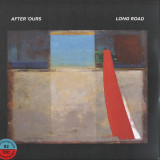
Over the last three decades, Auckland, New Zealand, has given birth to several generations of musicians, DJs, and producers who operated within the interzone between jazz, blues, soul, funk, Latin music, hip-hop, house, boogie, and broken beat. Across two slow-cooked albums that sit at the intersection of machine funk and vivid live instrumentation, Odyssey (2016) and their forthcoming sophomore release Long Road (2024), After 'Ours - the group project of pianist and composer Michal Martyniuk and drummer, guitarist and producer Nick Williams - have comfortably located themselves within this antipodean tradition.
Born and raised in Auckland, Nick Williams grew up surrounded by music from a young age. At home, his mother, Mary Anne, a record collector and DJ with deep, diverse vinyl crates, kept his ear sharp. By the time he was eight years old, he was regularly joining his musician father on stages across Australia in his blues rock band Slippery Sam. In his early twenties, Nick began leading the eleven-piece Auckland Latin-dub-funk fusion big band Tangent, who performed regularly until the late 2000s.
Michal Martyniuk, on the other hand, grew up on the opposite side of the world in Szczecin, Poland. After playing classical music for twelve years and attending jazz school, he relocated to New Zealand with his family in his teens. While studying at Auckland University Jazz school, Michal came into the orbit of the legendary New Zealand saxophonist, composer, producer, and band leader Nathan Haines, who brought him into the same world as future collaborators like Tama Waipara, Batacada Sound Machine, Sola Rosa and Nick.
Inspired by the rich stories of jazz, neo-soul, electronica, and dance music from both sides of the Atlantic Ocean and the open-eared Auckland scene they emerged from, After 'Ours formed in 2011. Born out of a friendship cultivated through playing together at bars and nightclubs around town and home studio sessions. "Nick had family and work, so I had to wait all day," Michal says. "We'd come to the studio at 10 PM and go till 3 AM. That's how we came up with the name.
Session by session, After 'Ours revealed itself to be a creatively fertile meeting of minds. "We both have our angles, but it works well in the end," Nick reflects. "It takes the music to a place we can't get to by ourselves."
Between 2011 and 2016, they wrote and recorded Odyssey with a cast of musical collaborators that included KP, Sharlene Hector & Kevin Mark Trail (UK), Matt Nanai, Nathan Haines, Jakub Skowronski, Nick's partner Ange Williams (nee Saunders) and British producer Mike Patto from the lauded UK future jazz group Reel People. Influenced by the smooth yacht rock of Steely Dan and Donald Fagan, the warm midtempo bounce of A Tribe Called Quest and J Dilla, and the complex jazz/RnB bop of Robert Glasper, Odyssey was a labour of love that emphasised community, warm-hearted hospitality, and care.
Seven years on, they're finally ready to return with Long Road, an album that contains some of their best work yet. As well as reconnecting with past collaborators Kevin Mark Trail and Ange Williams, Long Road sees After 'Ours calling on assistance from Louis Baker, Jakarta-based saxophone player Kuba Skowroński, bassist Dan Antunovich, Los Angeles-based drummer Chris Bailey and the journeyman British soul artist Omar Lyefook.
Across ten songs that plot a stargazed course through their antipodean spin on UK broken beat, jazz, modern soul, and blues rock, Nick and Michal build on everything they learned while writing and recording Odyssey. In the process, they take their joyful musical visions to sublime new heights.
out of Stock
Last delivered 23 months ago available to reorder, subject to availability
The records is released in two options. Both hvae 180g vinyl records. The first version has two black vinyls and the second limited edition (numbered 100 pieces) has one turquoise vinyl and the other red.
Over the last three decades, Auckland, New Zealand, has given birth to several generations of musicians, DJs, and producers who operated within the interzone between jazz, blues, soul, funk, Latin music, hip-hop, house, boogie, and broken beat. Across two slow-cooked albums that sit at the intersection of machine funk and vivid live instrumentation, Odyssey (2016) and their forthcoming sophomore release Long Road (2024), After 'Ours - the group project of pianist and composer Michal Martyniuk and drummer, guitarist and producer Nick Williams - have comfortably located themselves within this antipodean tradition.
Born and raised in Auckland, Nick Williams grew up surrounded by music from a young age. At home, his mother, Mary Anne, a record collector and DJ with deep, diverse vinyl crates, kept his ear sharp. By the time he was eight years old, he was regularly joining his musician father on stages across Australia in his blues rock band Slippery Sam. In his early twenties, Nick began leading the eleven-piece Auckland Latin-dub-funk fusion big band Tangent, who performed regularly until the late 2000s.
Michal Martyniuk, on the other hand, grew up on the opposite side of the world in Szczecin, Poland. After playing classical music for twelve years and attending jazz school, he relocated to New Zealand with his family in his teens. While studying at Auckland University Jazz school, Michal came into the orbit of the legendary New Zealand saxophonist, composer, producer, and band leader Nathan Haines, who brought him into the same world as future collaborators like Tama Waipara, Batacada Sound Machine, Sola Rosa and Nick.
Inspired by the rich stories of jazz, neo-soul, electronica, and dance music from both sides of the Atlantic Ocean and the open-eared Auckland scene they emerged from, After 'Ours formed in 2011. Born out of a friendship cultivated through playing together at bars and nightclubs around town and home studio sessions. "Nick had family and work, so I had to wait all day," Michal says. "We'd come to the studio at 10 PM and go till 3 AM. That's how we came up with the name.
Session by session, After 'Ours revealed itself to be a creatively fertile meeting of minds. "We both have our angles, but it works well in the end," Nick reflects. "It takes the music to a place we can't get to by ourselves."
Between 2011 and 2016, they wrote and recorded Odyssey with a cast of musical collaborators that included KP, Sharlene Hector & Kevin Mark Trail (UK), Matt Nanai, Nathan Haines, Jakub Skowronski, Nick's partner Ange Williams (nee Saunders) and British producer Mike Patto from the lauded UK future jazz group Reel People. Influenced by the smooth yacht rock of Steely Dan and Donald Fagan, the warm midtempo bounce of A Tribe Called Quest and J Dilla, and the complex jazz/RnB bop of Robert Glasper, Odyssey was a labour of love that emphasised community, warm-hearted hospitality, and care.
Seven years on, they're finally ready to return with Long Road, an album that contains some of their best work yet. As well as reconnecting with past collaborators Kevin Mark Trail and Ange Williams, Long Road sees After 'Ours calling on assistance from Louis Baker, Jakarta-based saxophone player Kuba Skowroński, bassist Dan Antunovich, Los Angeles-based drummer Chris Bailey and the journeyman British soul artist Omar Lyefook.
Across ten songs that plot a stargazed course through their antipodean spin on UK broken beat, jazz, modern soul, and blues rock, Nick and Michal build on everything they learned while writing and recording Odyssey. In the process, they take their joyful musical visions to sublime new heights.
out of Stock
Last delivered 2 years ago available to reorder, subject to availability
Søren Skov Orbit's debut album, "Adrift," is at once subtle and profound. The saxophonist and his collaborators have created something quite special and consistently deep. This record may not easily be classifiable, but the most interesting music creeps between the lines
Danish tenor and soprano saxophonist Søren Skov (Debre Damo Dining Orchestra) and keyboardist Peder Vind co-founded the trippy quintet Søren Skov Orbit in 2016 to explore “more jazzy ideas,” as the saxophonist puts it. Joined by a rhythm section steeped in contemporary improvisation and psychedelia, bassist Casper Nyvang Rask, drummer Rune Lohse and percussionist Ayi Solomon of the legendary 80's Ghanaian roots/highlife band Classique Vibes, the Orbit belts out a richly focused helping of broadly African-inspired modern jazz with a hazy sheen.
On the opening “Notifications of Nothingness,” Skov digs in his heels, a steely but languid unspooling of burnished tenor lines atop condensed, quavering piano and the thick footfalls of bass and percussion. As a tenor player, Skov has done his homework and has a kinship with Albert Ayler, Archie Shepp, J.R. Monterose, and the Dutchman Hans Dulfer, but he clearly has got his own robust phraseology and expressiveness. He also cites multi-reedists John Gilmore, Yusef Lateef, and Bilal Abdurahman as, “some of the players I’ve been listening to the most for the last 10-15 years.”
A healthy dose of reverb is present throughout the album, echoing Alton Abraham’s studio wizardry with the Sun Ra Arkestra or the trance-inducing and compressed fidelity of certain Ethio-jazz and Mystic Revelations of Rastafari sessions. Skov notes that, “everything is recorded live at the same time in the same room. I wanted to do it that way in order to catch the dynamics and authenticity of the music.” There is, in fact, a complex teeter- totter between crisp and hazy execution, achieved by a delicately balanced mix that keeps the group’s sound simultaneously advancing and receding. Vind’s phrasing is terse and introspective, a vibrating echo that nudges and reflects on Skov’s brusque tenor in a dance of sonic displacement.
“Orbiting” pits a chunky backbeat and the teetering, taut hand-rhythms of Solomon against an infectious, almost microtonal piano riff, while Skov’s arpeggios are clean and florid as he patiently rises up from under a carpet of funky loops. Following the freer “Reflections of Rif,” “Naration” lilts with a wink at “Footprints” and tugs between up-tempo polyrhythmic drive, clanging keyboard accents, and the innately steadfast keenness of the bandleader. The coupling of Solomon and Lohse is a big part of the group’s detailed energy; as the leader puts it, “Ayi knows everything about regional differences in drum patterns. He is always listening and super responsive, and his and Rune’s dynamics are amazing.” The music both presents a “vibe” and keeps the door open for engaging well under the surface as repeated listens will be extremely rewarding.
LOS ANGELES—To celebrate the 40th anniversary of the celebrated Talking Heads and Jonathan Demme’s concert film Stop Making Sense, the set will be re-released as a 2LP and 2CD/Blu-ray set this summer.
Released last year, the sold-out Deluxe Edition of the soundtrack will return as a 2-LP black vinyl on Rhino and 2-LP crystal clear vinyl at retail. Both variants feature a 12-page booklet with liner notes from all four band members –Tina Weymouth, David Byrne, Chris Frantz, and Jerry Harrison—and band photos. The 2CD/Blu-ray version includes the entire 28-page booklet from last year’s Deluxe Edition and a Dolby Atmos mix of the complete concert, mixed by Jerry Harrison and E.T. Thorngren, who also mixed the original release. Both will be available on July 26. Pre-order now.
The band appeared together for a sold-out screening and Q&A last night at the Pantages Theater, the same theater at which Stop Making Sense was recorded. They were joined by Blondshell, who performed “Thank You For Sending Me an Angel.” Another special screening with the band will occur in Brooklyn at the King’s Theater on June 13, with the Q&A hosted by Questlove and The Linda Linda’s performing “Found a Job.” The two events cap off a banner year of celebrations for what many consider to be the best concert film of all time.
The inspiration for Stop Making Sense came when director Jonathan Demme saw Talking Heads perform during the band’s 1983 tour for Speaking in Tongues. Afterward, he approached them with the idea of making the show into a concert film. They agreed and worked together over the next few months to finalize the details. Ultimately, Demme filmed three shows at Hollywood’s Pantages Theater in December 1983 to create Stop Making Sense.
The concert film presents a retrospective of the band up to that point, with a performance that weaves together songs from all six of its studio albums. The show progresses methodically, opening with Byrne onstage performing “Psycho Killer” alone with a drum machine. After each song, he’s joined by a new band member until Weymouth, Frantz, and Harrison are all on stage with him. The group continues to grow throughout the concert as members of the stellar touring band are added: keyboardist Bernie Worrell, percussionist Steve Scales, guitarist Alex Weir, and backup singers Lynn Mabry and Ednah Holt.
The band performs 18 songs in Stop Making Sense, including its recent single at the time, “Burning Down The House.” That summer, the song was in heavy rotation on radio and MTV, helping the song become the band’s first top 10 hit in America. It was, however, a different song from Speaking in Tongues that was destined to deliver one of the film’s signature moments. Talking Heads would perform “Girlfriend Is Better” wearing the now iconic, oversized suit inspired by costumes worn in traditional Japanese theater. For good measure, a picture of David Byrne in the suit also graces the album cover.
Stop Making Sense focuses mainly on music by Talking Heads but does include a few songs recorded outside the band: “Genius Of Love” by Tom Tom Club, “What A Day That Was” and “Big Business” from Byrne’s 1981 album, The Catherine Wheel. Limited edition vinyl versions of both of these albums, along with Harrison’s The Red And The Black, were released for this year’s Record Store Day.
When it arrived in September 1984, Stop Making Sense was an artistic and commercial triumph. The film had people dancing in theatre aisles, and the soundtrack sold over two million copies. Just last year, the Library of Congress added Stop Making Sense to the National Film Registry in recognition of its cultural, historical, and aesthetic significance.
Weymouth praises Demme as a collaborator: “…Jonathan was a very enthusiastic, highly adaptive, and imaginative guy who was just as good a listener as he was a talker and collaborator. From the get-go you just got the impression he was as flexible as he was disciplined. Being team players, that boded well for a great relationship and a great film!”
Harrison says the film still holds up today: “To me, Stop Making Sense has remained relevant because the staging and lighting techniques could have been created in a much earlier time period. For example, Vari-Lights, lights with motors to re-aim them, had just come into vogue. Had we used them, there would have been a timestamp on the film, and it eventually would have felt dated...The absence of interviews, combined with the elegant and timeless lighting, created a film that can be watched over and over.”
Byrne says it’s interesting that this album was – for many people – an introduction to Talking Heads. “We had done a live album before this, but coupled with the film, and with the improved mixes and sound quality, this record reached a whole new audience. As often happens, the songs got an added energy when we performed them live and were inspired by having an audience. In many ways, these versions are more exciting than the studio recordings, so maybe that’s why a lot of folks discovered us via this record.”
Frantz recalls the sheer joy surrounding the entire Stop Making Sense experience. “I’m talking about real, conscious, transcendent joy… I’m talking about what the Southern gospel people call ‘getting happy,’ which means ‘to be filled with the Spirit.’ That is what happened to us onstage every night, and from my seat behind the drums, I recognized that this was happening to the audience too. Joy was visible in front of me and all around me every night.”
out of Stock
Last delivered 2 years ago available to reorder, subject to availability
This is the first release from "Wenha", the successor label of "Tribe", which was established by Wendel Harrison in the 70's. This album is full of spirituality and blackness, and it retains the philosophy of "Tribe", but it also incorporates the smooth feeling of the early 80's. This is the first release from "Wenha", the successor label of "Tribe". This is the first release from Wendel Harrison's "Wenha" label, the successor to "Tribe" and a collector's item that has always fetched high prices for its original version, but it has been highly acclaimed not only for its rarity but also for its content, which has made many experts in the industry gasp in delight. This is a superb gem that has made many pundits roar not only in terms of rarity but also in terms of content! The players on the side include Phil Ranelin (Trombone), Harold McKinney (Keyboards), Roy Brooks (Percussion), and many other Detroit heavyweights, including Phil Ranelin (Trombone), who founded the Tribe together. The album starts with "Take Time Out" (A1) featuring soulful vocals, followed by the spiritual jazz "Pink Snowballs And Violet Skies" (A3) with its exhilarating bellow, and then the jet-black groove-filled jazz funk number "Where Am I?" (B1) is a truly historical document that beautifully captures the transition from the '70s to the '80s!
For this reissue, the 7inch "No Turnin' Back / Rocket Love" released at the same time on "Wenha" has been added to VINYL as a BONUS DISC, and a bonus track "Patrina's Dance" (B3) has been added to the LP. This is the latest reissue of the album in a completely new guise!
[h] C1. No Turnin' Back [7-inch]
[i] D1. Rocket Love [7-inch]
Da Best Riddim Eternal Action Krew ! Here is the mission that DA BREAK has given itself for this 3rd album : To drop a new
opus of great quality, which will remain eternally engraved in the memories of Soul Music... BOOM! As simple as that! ;)
Jennifer "Hawa" Zonou & Rémy Kaprielan, founding members of the group, have decided to tighten the ranks and clarify
the content of their music: an aesthetic still anchored in their dear 90's Soul Hip Hop culture, but also with a sharpened ear,
attentive to today's world and sounds, always searching for federating grooves and warm vibes.
DA BREAK has entrusted the production of the LP to Pierre Vadon (also the band's Live keyboard player) who has already
proved the quality of his compositions and arrangements on the second album LET IT SHINE. The mission remains
unchanged: to gather, in the line of the social values defended in the 90s urban music, crib of their inspiration. Grounded,
conscious, questioning, celebrating, comforting, staying open to the world and to each other. Each song is a painting, a
story, a reflection...
Composed during an intense period on the emotional level, this album is a subtile mixture of musical influences: from the
most old school Hip Hop beat to the most contemporary flow, going from West Coast vibes to Caribbean colors. DA BREAK
IS BACK and its key word remains the same: GROOVE.
out of Stock
Last delivered 3 years ago available to reorder, subject to availability
We can"t really say that Japanese jazzmen benefit (not justify in fact) from a great international fame. However, trumpet player Terumasa Hino is an exception, undoubtedly because since the 70s he has collaborated with numerous Americanmusicians : Gary Burton, Roy Haynes, Herbie Hancock ... On Into the Heaven, which was released in 1970, Terumasa Hino is surrounded by the same musicians as on Hi- Nology, released a year earlier : his brother Motohiko Hino on drums, Hiromasa Suzuki on electric piano, Kunimitsu Inaba on electric bass and Takeru Muraoka on tenor sax. The eponymous piece, which lasts more than 20 minutes, is a jazz fusion giving room to choruses and which is reminiscent of the music that Miles Davis then offered, in what we will call his "electric period". B side opens with "Love More Train", a brilliant and long hard bop song, while the album closes melancholy with the peaceful"Feeling Blues As YouAre Feeling".
out of Stock
Last delivered 2 years ago available to reorder, subject to availability
1993 Chick Corea - the venerated 27-time Grammy winner and National Endowment for the Arts Jazz Master - unveiled the second incarnation of the Elektric Band. With the brand new lineup of guitarist Mike Miller, bassist Jimmy Earl and drummer Gary Novak, and saxophonist Eric Marienthtal (the lone holder over from the first iteration of the Elektric Band,) Corea, approached this ambitious outing in the same way he had done everything throughout his career, by pushing the boundaries of what modern jazz is.
With material written with these specific players in mind, Corea gathered this group of remarkably flexible musicians into Mad Hatter Studios in Los Angeles. Recorded almost entirely live in first takes, the album is notable for its “less is more” approach to Corea’s particular style of genre bending composition. Though the focus may have been more on acoustic piano than synths, the same proficiency, spontaneity, impeccable execution and jaw-dropping display of chops that characterize the five first Elektric Band albums applies.
Of special note here is the inclusion of the track “Final Frontier”, originally released exclusively on the Japanese and European editions. This all out burner is the lone tune on the record featuring Corea on a synthesizer.
Written as an answer to “Got A Match” from 1986’s The Chick Corea Elektric Band album, it’s an uptempo showcase for the players to stretch out and the kind of track that exemplifies the jazz fusion that Corea and his groups came to define."
We can't really say that Japanese jazzmen benefit (not justify in fact) from a great international fame. However, trumpet player Terumasa Hino is an exception, undoubtedly because since the 70s he has collaborated with numerous American musicians : Gary Burton, Roy Haynes, Herbie Hancock … On Into the Heaven, which was released in 1970, Terumasa Hino is surrounded by the same musicians as on Hi- Nology, released a year earlier : his brother Motohiko Hino on drums, Hiromasa Suzuki on electric piano, Kunimitsu Inaba on electric bass and Takeru Muraoka on tenor sax. The eponymous piece, which lasts more than 20 minutes, is a jazz fusion giving room to choruses and which is reminiscent of the music that Miles Davis then offered, in what we will call his "electric period". B side opens with "Love More Train", a brilliant and long hard bop song, while the album closes melancholy with the peaceful "Feeling Blues As You Are Feeling".
Recorded in 1961 and released by Contemporary Records the same year, Maggie's Back in Town!! Is the second album released on the label by jazz trumpeter Howard McGhee. Also featured are the players Phineas Newborn Jr, Leroy Vinnegar and Shelly Manne. This new edition, released as part of the Acoustic Sounds Series, features (AAA) lacquers cut from the original master tapes by Bernie Grundman and is pressed on 180-gram vinyl at QRP, and presented in a tip-on jacket.
"Pretenders ‘Learning To Crawl’ is to be reissued on standard black vinyl and clear vinyl for RSD Stores & HMV on 7th June 2024. Celebrating the album's 40th anniversary, this reissue is true to the original 1984 release with the artwork and tracklisting remaining the same. This pressing of ‘Learning To Crawl’ features 2018 remastered audio by the album’s original producer, Chris Thomas, on vinyl for the first time.
‘Learning To Crawl’ is Pretenders’ third album, released after a band hiatus which saw in this time the sad passing of guitarist James Honeyman-Scott and bassist Pete Farndon before recording started. It sees an assortment of guitar and bass players on the record before Robbie McIntosh and Malcolm Foster joined Chrissie Hynde and Martin Chambers making the band a four piece.
The 1984 album is certified Gold and Platinum in the UK and US respectively and reached #11 on the UK albums chart and #5 in Billboard 200, featuring some of their most loved songs including ‘2000 Miles’, 'Back on the Chain Gang' both singles securing spots in the UK top 20 singles chart."
-Debut full-length album from Miami-based soul jazz trio Fat Produce. -Featuring musicians who played with The White Blinds, Scone Cash Players, Jungle Fire, War, The Bombillas. Featured in Relix Magazine’s April/May new artist spotlight to over 250k subscribers.
-Upcoming shows in California and Florida. F-Spot Records proudly presents the debut LP "Fresh Squeeze" from Miami-based soul jazz trio Fat Produce. Led by guitarist Addison Rifkind (The Soul Vaccinators) and drummer Michael Duffy (The White Blinds, Jungle Fire), this duo is joined by world-renowned bass player Rene Camacho (Poncho Sanchez, War) to bring you 14 all-new and original soul jazz instrumental cuts that's a guaranteed head-nodder from start to finish. When Rifkind and Duffy first met on a gig with organist Adam Scone (Scone Cash Players), both felt an instant chemistry musically, and the seeds of Fat Produce were born. In sharing their passion for classic soul jazz, in addition to funk and hip-hop, Rifkind and Duffy started to dive in, taking the idea of a guitar trio to new heights unlike anything you've heard before. After a year of playing gigs and honing their craft, both descended back to their hometown of Los Angeles, CA, to meet up with Rene Camacho and spend two days recording at The F-Spot HQ under the helm of producer and label owner David M Celia. Recording all live in one room to 1/2" tape, the resulting sessions truly captured the essence of Fat Produce's sound. Forced to be in the moment tracking live with no overdubs, "Fresh Squeeze" highlights the authentic tone and feeling from those two special days spent breathing new life into the guitar trio format. From the more straight-ahead soul jazz tunes like "Sticky Beets" and "Slick" to more outside-the-box cuts like "SON!" and the afrobeat-inspired "Afrenetic," rounded out with groove-focused compositions such as "Cadillac Converter," Grease on the Range," and "818 Don't Hate," this LP brings a variety of styles and feels, while all keeping it under the same umbrella of guitar, upright bass, and drums. Highlighting the chordal and melodic stylings of Addison Rifkind, the signature drum tone and feel of Michael Duffy, and tastefully executed playing from bassist Rene Camacho, "Fresh Squeeze" is the perfect sonic experience. From the first note on side A to the last hit on side B, it's a full sound, a timeless listen, and one slated to be on repeat for decades to come
Throw the gauntlet: Fast Castle is back with Gent1e $oul’s “Shoals”-EP, our furthest excursion into the unexplored depths of mind-bending bassweight! Having perfected his build order on his recent “Block Printing'' and “Silk Armor”-EPs, Gent1e $oul continues to infuse his productions with sonic bass strategies over five versatile tracks.
“Dark Age” provides an aggressive opening, immediately applying pressure with nasty bass wobbles, dembow echoes and a 4x4 switch that might catch distracted players off guard. Tried and tested in many settings, this is an essential option for the incoming dancefloor rush!
With its heavy neo-stepper energy, ”Bad Neighbor” lays siege to dancefloor resistance with a piercing lead, breathing drums and powerful waves of sub wubs. Just like the AoE2’s legendary trebuchet of the same name, “Bad Neighbor” – paired with the right Soundsystem – will make the walls shake.
“Dusty Acer” is a homage to Gent1e $oul’s dear but aging AoE2 gaming machine, capable of producing similar noises to this dark UKG cuts’ central bassline.
Deep dubstep cut “Illumination” takes us to the for a wholesome mana refill: Mystic ambiences make you pull down your cowl, before diving into a fully blown sub massage.
The standout self-titled cut “Shoals” concludes the release: A deep-yet-powerful half-stepping perc grower at 160bpm, operating on subdued rhythmic shifts and layers.
As a special tribute to the AoE2 community, all tunes are flavored with the game's original sound effects. Thanks for keeping us inspired, Nili_Aoe for NAC5 and T90 for HC5!
out of Stock
Last delivered 2 years ago available to reorder, subject to availability
Introducing the next release in Names You Can Trust's long-running collaboration with the prolific and symbiotic musical universe of Bogotá, Colombia. Mau Gatiyo y Los Años Maravillosos formed in 2021, arising from the very same fertile ground of the Teusaquillo neighborhood that has spawned many records and musical mischievousness. At the heart of this experimental movement is what can only be described asTropicanibalismo, where a deep hunger for the roots of Colombian tropical music are only satiated by dissecting it, consuming it and ultimately creating something new again as some kind of untraditional, unholy, and yet referential form of musical sustenance.
Within this concept, there's a clear lineage of inspired and visionary artists that have been featured throughout NYCT's record catalog for the last 15 years that includes luminaries Frente Cumbiero, Meridian Brothers, and Romperayo. Each of these artists' tentacles have touched several parallel projects from their talented neighbors and friends, and whether through production, playing, engineering, or mixing, these collaborations have heavily contributed to a very fruitful and colorful scene that could only exist within Colombia's capital, while also gaining notoriety in the nooks and crannies of northern latitudes like New York, Chicago, and Los Angeles.
Mau Gatiyo, a talented accordian player and vocalist, together with his group (translated as The Wonder Years), is precisely one of these projects, a collective that has found their calling in the echoes of thevallenatosandcumbiasthat once populated the nation's airwaves throughout the 20th century. It's a traditional format that has always lent itself to storytelling, whether it be anecdotes about daily life, or using one's voice to raise uncomfortable questions in protest against the system. This is where Mau Gatiyo's poetic, almostnew wavetimbre finds a lane of its own, straddling a 2020s societal landscape under the guise of ostensibly old-time accordion music.
The debut 7-inch from the group, an excerpt from their recently released album Baño Unisex, was recorded at Mambo Negro studios by Ivan Medellin (La Sonora Mazurén) and mixed by Eblis Alvarez of Meridian Brothers, both familiar names and contributors to the NYCT catalog. Alvarez himself, who has emerged in recent years as an international beacon of this new tropical avant-garde, is no stranger to flipping traditional styles on their head, or at least respectfully off-kilter. Mau Gatiyo y sus Años Maravillosos proves to be another great vessel for this veryBogotano expression, draping the classical playing of its group members in a modern day cosmopolitan expression of righteousness, both outwardly in their dashing, performative fashion sense, and lyrically with their cheeky "420, Reloj"ganja-tune promotion – or even their outward dissenter objections to paramilitary and firearm power in "Poder Militar."
Ultimately, these songs lie at the crossroads where two cultural eras connect and become something unique, a protestation one with performance, dance, and artistic expression. This cathartic ritual of protest has a storied history in music, and these two new entries into the NYCT catalog will hopefully find their place amongst a modern day canon, or at the very least, have your feet moving and your head nodding in just approval.
‘Hardcore Jollies’ was Funkadelic’s ninth studio album and their debut on Warner Bros Records. Released in October 1976 and dedicated to “the guitar players of the world”, it showed Funkadelic was the heaviest black rock band since Jimi Hendrix’s Band Of Gypsies (even featuring Buddy Miles on one track). With lead guitarists Michael Hampton and Eddie Hazel dazzling, the personification of funk Bootsy Collins on bass, Bernie Worrell’s keyboard wizardry and many more, the album was helmed by the genius of George Clinton. Reaching no.12 on the US R&B chart, the album spawned singles ‘Comin’ Round The Mountain’ (US R&B No.54) and ‘Smokey’ (US R&B No.96) and a live remake of 1973’s ‘Cosmic Slop’ from the album of the same name. Recorded during rehearsals for 1976’s P-Funk Earth Tour, this version features a vocal introduction dropped from the 1973 studio cut. Over 45 years since its original release, ‘Hardcore Jollies’ is among Funkadelic and George Clinton’s best-ever albums and remains a masterful example of their creative genius. FUNKADELIC Masterminded by the larger-than-life figure of George Clinton, Funkadelic was a key component of his influential P-Funk empire. Funkadelic’s unique combination of Rock, Psychedelia, R&B & Soul led to the band crossing over to the pop mainstream & gaining a vast international following, becoming one of the most important & influential groups in music. On 6 May 1997, Parliament / Funkadelic were inducted into the Rock & Roll Hall Of Fame by Prince. To commemorate six decades of thrilling & delighting fans, George Clinton returned to the stage in 2022 for a series of concerts. To celebrate, Charly have reissued Funkadelic’s classic four albums ‘Hardcore Jollies’; ‘One Nation Under A Groove’; ‘Uncle Jam Wants You’; & ‘The Electric Spanking Of War Babies’ (originally released by Warner Bros during a golden period for the band between 1976-1981). Each album will be available as deluxe gatefold Digi-Sleeve CDs in PVC wallets + obi-strip & facsimile-edition gatefold LPs on 180-gram black vinyl & limited edition 180-gram coloured vinyl + 1970s-style obi-strip in a protective PVC sleeve. “They played a HUGE role in creating the future of music.” PRINCE
DJ Support: Danny Krivit, Craig Charles (BBC Radio 6 Music), Hallex M, Jazzanova, Delite Radio, Mi Soul, Pointblank, Totally Wired Radio, XFM, Radio Solar, Tony Minvielle, Simon Phillips, Chris Phillips (Jazz FM), KCRW DJs, Ian Friday, Aroop Roy, Samantha Badd (Café Del Mar), Mr. V, Simon Harrison (Basic Soul), Greame Park, Mike Fossati, Timo Mass, Deli G, Servino (Horse Meat Disco), Hyenah.
‘Badly Written Songs’ is, of course, a tongue-in-cheek title. It comprises a carefully structured and well-produced array of songwriting, topped and tailed with live instrumentation, commanding vocal performances and high-end production: the result of years of sound engineering and music production experience. Since the last album, Ross Hillard has continually honed his skills whilst earnestly crafting this sophomore long player. As well as developing a range of audio plugins, Ross also manages recording sessions at his own Paddocks Recording Studios: huge live spaces boast cutting-edge technology, integrated with distinguished analogue kit. The studio is complemented by a collection of prized microphones, together with a fully-restored vintage Raindirk mixing desk.
The opening track and first single from this album is the positively-anthemic gem entitled ‘Good Morning Sunshine’. It tells a forward-looking story promoting the merits of getting back into the driving seat of life. It’s propelled further by superb jazz-inspired drums and live horns that build up to an exhilarating crescendo. Featuring the vocal talents of Sophia Marshall, the story she paints is supported by a wonderful, darkly humorous cartoon video. An animated cadaver hilariously acts out her notions of positive living.
Other tracks also destined for a single release include: ‘Loving You’. It’s a song written around love lost. A bouncing house composition lays the foundations for Sophia Marshall's beautiful vocal that narrates the many facets to be found in loving another person. ‘Better’ again echoes jazz-inspired drums behind Sophia's vocals, drawing attention to how so many people are lost on their devices, missing out on the awesome world around them. A catchy chorus chants the notion behind this song, i.e., that you ‘could be better!’ This single is also supported by another fantastic video featuring the same comical, deceased character introduced through the ‘Good Morning Sunshine’ video.
out of Stock
Last delivered 2 years ago available to reorder, subject to availability
Proudly presenting a new series of Mr Bongo reissues exploring the incredible back catalogue of Sonny Lester’s iconic Groove Merchant record label. First up, the spellbinding funk-fuelled, soul jazz album ‘Simba’, by guitar maestro O'Donel Levy.
Baltimore-born, Levy was already well regarded as one of the best up-and-coming jazz guitarists at the time of Simba’s release. Having toured with George Benson and Jimmy McGriff, as well as featuring on McGriff’s Black Pearl album on Blue Note, he went on to sign with Sonny Lester’s Groove Merchant. Produced by Lester himself and recorded over two back-to-back days of sessions in 1973, Simba features a who's who of ‘70s session players. The album features the legendary studio drummer Steve Gadd, Cecil Bridgewater on Flugelhorn, bass by Tony Levin and arrangements by Manny Albam.
A masterclass in tight yet effortlessly funk-driven rhythms, the tracks showcase these musicians at their zenith. Album opener 'Bad, Bad, Simba' wouldn’t have been out of place on a Lalo Schifrin ‘70s car chase soundtrack. Levy's playing is brilliant, bright and slick, with an infectiously exuberant energy that is complimented perfectly by Gadd's supreme drumming. ‘Playhouse' serves up another vibrant offering, Wah Wah guitars, horns and flutes duelling it out in a fast-paced fashion.
The cinematic thread continues throughout, yet with the tempo taken down a notch. 'Sierra Lonely' and ‘Sad, Sad, Simba’ head into lush ballad territory, with superb arrangements by Albam and beautiful playing by Collins and Bridgewater on Flugelhorn. Here Levy shines without taking any limelight, as the players synergize to a relaxed perfection. ‘Nigerian Knights’ closes the album flawlessly, showcasing once more Levy’s understated yet magnetic flow on the guitar.
Every track on ‘Simba’ is a winner. As with CTI Recordings of the same era, the feel and textures of Sonny Lester's productions have that pre-emptive, hip-hop aesthetic, which later producers would rework and reimagine. This album is expertly balanced, deftly arranged and magically executed, ebbing and flowing with a cool buoyancy that just grooves and grooves.
out of Stock
Last delivered 2 years ago available to reorder, subject to availability
Locked Down And Stripped Back Volume Two features home recordings of Wedding Present classics along with a previously unreleased song: 'That Would Only Happen In A Movie'. The first volume in the series came about when David Gedge's annual festival At The Edge Of The Sea went 'virtual' in 2020 and the band recorded semi-acoustic versions of songs to be streamed. An album of the tracks was compiled and released due to popular demand. The same thing happened the following year and so Volume Two features tracks initially recorded for 2021's online festival. There's a bevy of guest stars on this second album! Jon Stewart of Platinum-album-selling Sleeper fame reprises his new role as Wedding Present guitarist but is joined here by some Wedding Present members of old. Peter Solowka, from the band's first line-up appears on 'Nobody's Twisting Your Arm' playing his second instrument, the accordion, while Hit Parade guitarist Paul Dorrington contributes to a re-working of the Top 30 single 'Blue Eyes'. Long-time Wedding Present bass player Terry de Castro returns to infuse the album with her own unique style, while current Wedding Present bass player Melanie Howard takes over the lead vocal duties on a beautiful version of 1986's 'At The Edge Of The Sea'. Last, but certainly not least, Amelia Fletcher - backing vocalist on George Best and Bizarro - also returns to the party! As on the first volume, each musician recorded and filmed their parts at home and, as before, it is fascinating to see how stripped-back arrangements bring out different aspects of these brilliant songs.
The debut EP from Groove Arcade Records has landed. This various artist release perfectly encapsulates the sound of their parties and all of the players have been specially selected for sharing the same vision when it comes to music. Lungo and Mostly James take charge of the A side with 2 party bangers sure to do damage anywhere, anytime. In control of the B side is Emi Omar and Hanfry Martinez delivering the goods again with a couple of slick nugs, last but by no means least with these boys.
DJ Support From: Voigtmann, Liquid Earth, Jack Ling, Will & Batty, Average Joe
out of Stock
Last delivered 12 months ago available to reorder, subject to availability