
4
Obscurity is giving way to visibility.
Amidst the human dissonance, those who hear will follow the beckoning sounds of Theresiopolis.
Obscurity denotes that what is generally unknown is withdrawn to the centers of activity.
Obscurity is giving way to visibility.
Amidst the human dissonance, those who hear will follow the beckoning sounds of Theresiopolis.
Obscurity denotes that what is generally unknown is withdrawn to the centers of activity.

Eccentric soundscapes, cryptic atmospheres, unexpected rhythms – with the second episode of the Intelliance series, the concept label Augmented Research once again holds up a mirror to the progressive present and provides various perspectives on the innovative electronic club sound of a new generation.
A1
Raär's music manages to draw the masses beneath the surface of common perception. The blend of deep, organic atmospheres, liquid sound design and supersonic drums awakens a deeply rooted but rarely accessible state of mind. "Riparian Zone" is a tool for transcendental experiences.
A2
There are only a handful of artists like Nebuchadnezzar who have made a name for themselves and demonstrate that rules in electronic music are meant to be broken. "Fidget" is a good example of the obsolescence of obsessive genre categorization. Unpredictable rhythms and glitchy, whipping drums feel like a race against time (extended to almost nine minutes).
B1
With "Sea And Bunkers", Sukkube proves her virtuoso and versatile handling of modular sound synthesis. The rapid, loopy beat, accompanied by a serious and simultaneously playful melody and hissing atmospheres, generates a mysterious, fresh mood. Influences from different eras form an interesting symbiosis of futuristic, uplifting techno and nuances of classic styles.
B2
If an artist were given the task of dealing with vintage drums in the most innovative way possible, while at the same time retaining a sense of nostalgia, "Pragma" would be the clear result. Edict has broken the rules of classic techno styles, pushing polyrhythm and distortion to their limits.

2024 Repress
Straight in the wake of their eponymous debut LP released on the label back in 2016, Weval return to Kompakt this year with their sophomore album, 'The Weight', breaking their pop-mellow, nostalgia-friendly facet further out in the open as they arrive "at this place again were everything felt spontaneous, new and exciting, like we had in the beginning". Orbiting around that ever luminous yet wistful melodic halo that surrounds their music, this second full-length effort sweeps an extra-wide and languidly woven palette of emotions and moods, making for a uniquely ambitious and generously coloured mosaic of sound. If the recording sessions "often started grumpy and emotionless" by Harm and Merijn's own admission, the pair was "surprised by the joy it gave us, which can be compared to the emotions we felt back in the first days of making music together"; subsequently reconnecting with that fresh, naïve feeling of "absolute creative freedom" they were after. The album is also the fruit of a whole new working process for them - more playful and unpredictable - which saw them switch from "guitars lying around to piano, onto our own synths and the most cheap quirky toys synths you can imagine", and involved "recording all of our own samples, voice and almost every instrument out of the box - which for us was a totally new way of working". "We've always wanted a narrative for the album, and finding the right order perhaps took the most effort" they explain; "we felt anxious, felt insanely positive, felt heartbroken again, felt in love again, and there was death, and even suicide around us. It was quite chaotic. As a whole, 'The Weight' breathes with that transformative richness, free of limits and rules, except perhaps to "do quick and not think too much". Amidst this collection of songs and instrumentals that live by Weval's singularly positive take on music - one that can "lift you up, and make you feel hopeful without being necessarily straight out 'happy'" as they define it, the title-track and lead single stays true to the duo's dynamic approach, putting on a fine balance of floor and dream inducing adaptability that sound engineer David Wrench (Frank Ocean, The XX, FKA Twigs, Caribou… etc.) subtly made palpable. There's heavy showers of funk drops pouring from endless bars of thunderstorm clouds and laid-back riffs beating a restrained poolside-party kind of pulse, but also sensual vocals rising from beneath the sheets and rueful polaroid-filtered ambiences to soundtrack all possible moments in life - from the most euphoric to those when music seems the only viable healing potion. More on the post-KLF, BoC-inflected electronica side of things, 'Are You Even Real' takes its listener for a round-trip across the star-studded dome and beyond, before songs like 'Someday' and 'Same Little Thing' head back down to a state of pulsating, earthly organicity, tense and mercurial as get. An arpeggiated slice of piano-strewn kosmische, 'Heaven' is another invitation to an epic-scale odyssey from the inner-spheres into the distant fringes of the outer-world. Weightless and airy, yet texturally dense and widely magnetic overall, Weval second LP is a synthesis of the duo's multi-angle take on electronics: blissed-out, heartening and infinitely free.
Nur zweieinhalb Jahre nach der Veröffentlichung ihres selbstbetitelten Debutalbums finden sich WEVAL zurück "an jenem Ort, an dem sich alles spontan, neu und aufregend anfühlt - so wie als wir anfingen zusammen Musik zu schreiben". An diesem Ort entstand "The Weight", ihr zweiter Longplayer, auf dem Weval sich ganz den Pop-verliebten, Nostalgie-freundlichen Facetten ihres Sounds öffnen. Stetig um den sehnsuchtsvollen Strahlenkranz ihrer Melodien tanzend, legt diese Platte noch vielschichtigere, mit feinster Präzision gewobene Gefühlswelten frei.
Obwohl die Aufnahmesessions nach eigenem Bekunden oftmals "miesepetrig und emotionsarm" begannen, so war das Duo überrascht darüber, wie schnell sich bei der Arbeit jene Freude einstellte, die sie aus ihren künstlerischen Anfangstagen kannten, eine Woge des frischen, naiven Gefühls der "absoluten kreativen Freiheit". Dieses Album ist die Frucht eines verspielteren und unvorhersehbareren Arbeitsprozesses innerhalb der Band, in welchem alles zum Einsatz kam, was ihnen in die Finger kam - von der ollen Gitarre, die in der Studioecke stand, über ein Piano und den bandeigenen Sythesizern und den sonderbarsten Spielzeuginstrumenten, die man sich vorstellen kann. All dies sowie zahlreiche Vocalaufnahmen dienten als alleinige Samplequelle - "was für uns eine völlig neue Arbeitsweise war". "Es war uns wichtig für das Album den perfekten Erzählbogen zu spannen. Die richtige Reihenfolge zu finden war ein extrem aufwendiger Vorgang", erklären Harm und Merjin. "Uns war bange, wir fühlten uns total selbstsicher, uns zerbrach das Herz und wir verliebten uns erneut. Wir waren sogar von Tod und Selbstmord umgeben. Alles war Chaos. Insgesamt atmet "The Weight" die Reichhaltigkeit dieser sich ständig verändernden Gefühlslagen, frei von Einschränkungen und Regeln - außer vielleicht "mach es schnell und zerdenke die Dinge nicht." Inmitten dieser Ansammlung von Songs und Instrumentals, die aus Wevals einzigartiger, von Zuversicht geprägter Herangehensweise entstanden sind - "Musik, die dich hochzieht und Hoffnung spendet, ohne dich notwendigerweise happy zu machen. Der Titeltrack "The Weight" steht exemplarisch für Wevals ambivalenten Ansatz, die feine Balance zwischen Dancefloor und Traumzuständen, perfekt in Szene gesetzt von Soundengineer David Wrench (Frank Ocean, The XX, FKA Twigs, Caribou… etc.).
Der schwer aus gewaltigen Gewitterwolken tropfende Funk, die eine verhaltene Poolparty suggerierenden Riffs, die sinnlichen, geisterhaften Vocals und ein verwaschenes Ambiente, das wie ein Album alter Polaroidaufnahmen alle erdenklichen Momente des Lebens festhält - von den euphorischsten bis hin zu jenen, in denen Musik der einzige Trank ist, der Linderung verheißt. Das post-KLF und Boards of Canada evozierende "Are You Even Real" führt den Hörer auf einen imaginären Flug ins Sternenzelt, während organisch-klingende Songs wie "Someday" oder "Same Little Thing" wie Quecksilber am Boden haften. "Heaven" ist eines jener "kosmische" Stücke mit wilden Arpeggios und Pianosprengseln, die Weval in den vergangenen zwei Jahren zu einer Live-Sensation werden liessen. Wevals Musik ist schwerelos und luftig, aber gleichermassen von dichter Struktur und von einer magnetischen Anziehungskraft. Ihr zweites Album "The Weight" ist eine Synthese aus dem multi-perspektivischem, kaleidoskopischen Verständnis von elektronischer Musik: Herzerwärmend, alles umschmeichelnd und unendlich frei.

Glasgow based Seated Records return with more 1980s Scottish Post-Punk / New Wave material. In this 8-track mini compilation the label introduces the work of Stirling band 22 Beaches, offering a deep dive into music recorded between 1980-1984 - the majority of which has never seen the light of day!
22 Beaches formed in Stirling in the late 1970s as an evolution of the short lived group ‘Alone at Last’ - drummer Fred Parson’s and guitarist Stephen Hunter being the two who spanned the divide. Out of the six members of 22 Beaches, many were school friends, and the rest naturally fell together. The band toured extensively and played at a truly diverse set of venues across the UK: from a local swimming pool boiler room, to small nightclubs and university parties, to several fundraisers for the miners strike. Maybe most notably of all, drummer Fred Parsons described playing at what he calls “the Grangemouth International”, organised by local promoter Brian Guthrie and which featured an all-star lineup of 22 Beaches, The Exploited and the first incarnation of The Cocteau Twins. A coach was hired to ship the audience to Grangemouth from Stirling, the cost of which was included in the ticket. The gig then paused halfway through for a 'help yourself' buffet. Young promoters take heed. This is how it's done!
Over the course of the 80s the band released music on three different, and now sought after, various artists compilation cassettes. “What Day Is It?” and “Sadie When She Died” were released on a compilation of local Stirling artists 'The A.N.K.L.E File'. The track from which the current record takes its namesake - “Dust” - was initially released on a compilation-tape for the fanzine 'Another Spark'. And ‘‘Zoo” (also featured on this record) was first released on Glasgow label Pleasantly Surprised via compilation, 'An Hour Of Eloquent Sounds', where 22 Beaches rubbed shoulders with early music from Scottish names Primal Scream, Cocteau Twins, The Wake and Sunset Gun. Unfortunately, 22 Beaches never met the same level of commercial success as these others and decided to retire the project in 1984 - leaving their recordings and demos to gather dust (hehe)…until now!
This compilation, “Dust: recordings 1980-1984” follows the band's journey and the changes in their sound over the years. It moves from the raw, punk energy of early DIY recordings through to the A Certain Ratio style Balearica of their later pieces. The record's opener and title track “Dust” is perhaps the most shining example of the latter. Characterised by the plenitude of sonic space in the mix, “Dust” has an almost dub sensibility that is communicated through centrality of Parsons’ drums, McChord’s percussion, and Fildes’ Bass while the harmonising vocals of Sharkey and McGregor chant over the top to give the track its distinctive psychedelic edge. This is an atmosphere only exacerbated by the lofi quality of the recording which sits the vocals in the same aural realm as much 1960s psych-folk. On “Cartoon Boy”, the band strips things down further. A droning bass line persists through the tape fuzz and is accompanied by the sounds of a sole looping guitar chord sequence and McGregor and Sharkey’s vocals - respectively and carefully dancing around one another before harmonising in the most beautiful way. The result is a haunting and abstract Marine Girls style heartbreaker. ‘That Girl’ again delivers a dub adjacent rhythm section similar to that of “Dust”. However, on this instance crisp guitar chords, a distant, phased organ and blue-eyed soul vocal delivery, produce a track that could easily have been a lost Orange Juice recording from their sessions with Dennis Bovel. On “Somebody Got It Wrong” and “One Of Us” the band employ a more macro approach where a jangling guitar with an almost highlife-influenced tone, vocal ad-libs and syncopated percussion give the music a Talking Heads-esque swagger.
Taken together these tracks illustrate a clear trajectory in the band's sound, moving from from the high energy no-wave quality of early recordings towards a more dub influenced, and stripped-back sound - a sonic trajectory followed by so many bands of the time, not least those emerging from the diaspora of Manchester’s Factory Records.
On “Breathing’’ we hear the beginning of this transition, with the strong influence of the oddball NYC disco styles of Was (Not Was) and ZE records. All of this is meshed together with the residual punk rock energy of 1980s UK. This combination is employed to excellent effect with the addition of the distinctly Scottish (and what the band confirmed to me to be spontaneous) vocal delivery of: “Do you love me? Do you want me?” “Aye!” “Do you love me? Do you need me?” “Naw!”.
On the record’s closing tracks, “Zoo” and “Talent Show”, we hear early examples of the band’s work, playing with their rawest all-in-one-take live energy where Hunter’s spiralling guitar riffs and McGregor's distorted vocal exclamations lead the charge. The band recalls that these initial-forays did not always translate so well into multitrack recording and overdubbing: “the deconstruction took away some of the band's natural feel”. On “Talent Show” the record ends with Sharkey delivering an almost unintelligible spoken word section over the top of the track, making for one final, disorientating, almost manic slice of post-punk.
These tracks from 1980-1984 chart the progress of a unique contribution to the world of Scottish Post-Punk and New Wave, encapsulating not only the musical trajectory of 22 Beaches but also echoing the broader sonic landscape of 1980s UK, a testament to the adaptability and creativity of the UK’s underground music of the time.
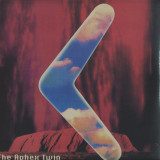
“It’s just too easy to make a standard dance track,” Aphex Twin said of his mindset back in 1992. “You’ve got to put a bit of thought into it to get something a bit different.”
‘Didgeridoo’ was released on the Belgian R&S Records label in 1992, and originally peaked at #55 in the UK singles chart in May of that year. Over the last 32 years the track has become one of the essential Aphex Twin tracks in a gargantuan catalogue that continues to amaze and inspire.
“I wanted to have some tracks to play to finish the raves I used to play in Cornwall, to really kill everybody off so they couldn’t dance,” Richard D James, AKA Aphex, told Select magazine back in the 90s. “Digeridoo came out of that.”
Released as a 4 track EP that also included early Aphex productions (now classics) including the industrial, acidic clang of ‘Flap Head’ and hyperbolic futurism of ‘Isopropanol’, the release cemented a relationship with the R&S label that went on to release the ‘Xylem Tube’ EP and the pivotal album ‘Selected Ambient Works 85-92’ in the same year. The label’s owner & A&R Renaat Vandepapeliere reflected “When I first heard Aphex Twin’s music I said, ‘This is it!’, and everybody else said, ‘You’re crazy!’ …a lot of the hardcore R&S fans dropped us. To them it wasn’t music.”
‘Didgeridoo’ (Expanded Edition) is the first time the EP has been re-issued with extra material. Whilst digging in his DAT archive (allegedly stored in an airtight military ammo box), Richard James revisited the recordings, encoding them through a Nakamichi CR7e cassette deck, using the customised deck with vari-speed to encode at speeds “felt right at the time”. Alongside these CR7e versions, the original mixes have been remastered by Beau Thomas at Ten Eight Seven Mastering, offering a dilated insight into one of electronic music’s most endearing releases.
‘Digeridoo’ (Expanded Edition) by Aphex Twin is available on R&S Records from 31st May 2024.

The Mental Groove Classic series returns with a treasure trove of rare and hard to find tracks plucked from the personal collection of label founder Olivier Ducret, a pivotal figure in Switzerland's acid house and rave-era party scene.
On Volumes Two and Three of the series - the first installment hit stores in 2017 - the Mental Groove and Musique Pour La Danse label founder takes us back to the turn of the '90s, a time he spent promoting parties in fields, squats, forests, warehouses and former factories in and around Geneva and behind the counter of a record shopof the same name. While others in Switzerland's emerging dance music scene gravitated towards US house and garage, Olivier and his crew opted for a bass, breaks and techno-focused sound inspired by regular trips to clubs, raves and record shops in the UK.
Drawing directly from his own record box and a memory bank full of snapshots of euphoric dancefloor moments, Mental Groove Classics volumes Two and Three sees Olivier reaching for cuts of near-mythical rarity, genuinely overlooked gems, and undeniably brilliant tracks that have left a long-lasting impression on the local raving landscape. It's an autobiographical audio document, historical archive and personal musical statement all rolled into one, inspired by a moment in time where musical boundaries were being redrawn in a wave of carefree optimism and freedom inspired new rave scenes across Europe and far beyond.
Matt Anniss
Original artwork by Soho's Brain Club co-owner and artist of early British club culture Mark Wigan.
File under house, breakbeat, techno and warehouse rave music

The Mental Groove Classic series returns with a treasure trove of rare and hard to find tracks plucked from the personal collection of label founder Olivier Ducret, a pivotal figure in Switzerland's acid house and rave-era party scene.
On Volumes Two and Three of the series - the first installment hit stores in 2017 - the Mental Groove and Musique Pour La Danse label founder takes us back to the turn of the '90s, a time he spent promoting parties in fields, squats, forests, warehouses and former factories in and around Geneva and behind the counter of a record shop of the same name. While others in Switzerland's emerging dance music scene gravitated towards US house and garage, Olivier and his crew opted for a bass, breaks and techno-focused sound inspired by regular trips to clubs, raves and record shops in the UK.
Drawing directly from his own record box and a memory bank full of snapshots of euphoric dancefloor moments, Mental Groove Classics volumes Two and Three sees Olivier reaching for cuts of near-mythical rarity, genuinely overlooked gems, and undeniably brilliant tracks that have left a long-lasting impression on the local raving landscape. It's an autobiographical audio document, historical archive and personal musical statement all rolled into one, inspired by a moment in time where musical boundaries were being redrawn in a wave of carefree optimism and freedom inspired new rave scenes across Europe and far beyond.
Matt Anniss
Original artwork by Soho's Brain Club co-owner and artist of early British club culture Mark Wigan.
File under house, breakbeat, techno and warehouse rave music

Altars is the debut EP from Detroit's own Deon Jamar.
This album kicks off the catalog of his newly founded record label, Black Music.
Black Music was originally an art exhibit, concert, and party series founded by Deon and Brian Oscar (Wrckles). Inspired by the legacy of those before and the work of peers today, these events were made to honor the lineage while also demonstrating the golden cord that connects all of our music throughout genre and era.
Fusing these worlds together informs the DJ as well as the producer.
A radical objection to industry standards, leaning more into the energy and depth of sound.
Black Music, the label, will carry this same tradition.

Commissioned and curated by Flora Yin Wong for her label and publishing house Doyenne, ‘Venus Rising From The Sea’ is a collection of love-themed cover versions featuring Teresa Winter, Susu Laroche, Alex Zhang Hungtai, aya, Maria Minerva, Christina Vantzou, Spivak, Salamanda, clare rousay, Wild Terrier Orchestra, Dania and Flora Yin Wong herself covering songs by The Cure, Robert Wyatt, Mariah Carey, The Cranberries, Pentangle, The Carter Family, Spiritualized, Debussy and more.
‘Venus Rising From The Sea’ takes its cues from the classical deity Aphrodite - whose name literally means “sea foam” - for an ever necessary expression of love in the modern age. The label asked friends and collaborators to interpret “love” in whichever way they saw fit, be it obsession, self-love, unrequited, unconditional, whatever. But despite the open brief, and the vastly different modes of execution, all the artists involved somehow ended up linking hands with a shared determination to smudge the original songs into bleary-eyed, uncanny traces of the originals.
To open, Pentangle's jaunty 'No Love is Sorrow' is puffed into stormy clouds by Teresa Winter, who retains the original’s unmistakable bass twang and teases Jacqui McShee's siren song into a saturated buzz of layered, obfuscated words. Verses twist into verses, lines into echoed-out lines, capturing the song’s boundless yearning, rather than tracing its exact contours. Next, Susu Laroche yields one of the set’s highlights on a brilliantly nuanced, highly impactful version of Nina Simone’s take on folk standard ‘Black is the Colour of My True Love’s Hair’, turning the original’s multi-faceted Appalachian/Scottish routes into a heart-stopping, Nico-esque fuzz we haven’t stopped playing for weeks. Christina Vantzou (the CV ov CV & JAB) is joined by pianist Ezra Fieremans in the absorbingly filmic scenes of ‘Hot Springs’, while Maria Spivak's interpretation of Robert Wyatt's 'Just as You Are' finds her singing Brazilian vocalist Mônica Vasconcelos' words with reverence, smearing them into a hypnagogic fantasy.
Flora Yin Wong takes an inconspicuous approach on her love-letter to Mariah Carey's 'The Roof (Back in Time)', itself a melodramatic interpolation of Mobb Deep's Herbie Hancock-sampling 'Shook Ones, Part II'. The unmistakable piano line is frayed into a granulated gurgle, fleshed out by gauzy cries; Mariah's ecstatic diva logic haunts the edges like a furtive glance, hanging beautifully behind Wong's dense soundscapes. Alex Zhang Hungtai's take on the 1927 standard 'Me and My Shadow' is even more atomised, reduced to a disembodied vocal that oozes around a clattering woodblock.
Always a standout, aya's tribute to The Cure's 'Lovesong' infuses the 1989 classic with the same self-investigatory charm she exhibited on 'im hole', slowing it down to a giddy, infatuated lurch, and replacing the guitars with eerily-tuned oscillations and drums with hollowed-out, electrically charged thuds. "I will always love you," she moans through a wall of static, like some lost “Pop Artificielle” addendum. The album’s biggest surprise is saved for last, however, a cover of The Cranberries' 'No Need To Argue' from Paralaxe Editions boss Dania Shihab. Already a poignant memory of a faded romance, Dania's version is even more glacial, her tender voice gusting over inverted guitars and looping, wordless moans, guiding us ever so gracefully into the nether-world.
‘Venus Rising From The Sea’ is a gooey, emotionally raw set of recollections and affirmations from some of the scene's most open-hearted operatives. In the end, the love that's most evident is the love each of the artists has for their source material, somehow binding loose threads into a rich tapestry that will leave you gasping, perhaps a little tearful too.

The discography of the phantom Gruppo Sound exceeds over thirty titles published in an undefined time frame between the Eighties and the Nineties. However, there is very little information about this curious pseudonym. it is possible to find a library music album by Gruppo Sound inside the Canopo, Deneb, Flower, Monosound Records and Teams catalogues, all managed by Flipper Music publishing group, but both the creators and the musicians have never been the same. Gruppo Sound is only a collective name, maybe to identify a certain number of 'new' productions characterized by an electronic background And, not by chance, the author of “New York City” is a single artist, the multi-instrumentalist Gabriele Ducros. Son of the prolific composer Remigio Ducros, he first followed his footsteps in the field of music libraries and soundtracks and then become the author of many tracks for television commercials of a certain relevance, winning some international awards.
“Some of these tracks may have been associated with a pornographic film. Others were, however, made as brief comments for a theatrical show, perhaps never made”, remembers Gabriele Ducros. What unites the thirteen pieces is the same musical language, which derives from a widespread funk and jazz matrix. Both genres are thus declined through a different approach and taste, in line with the fusion trends of the time, when the early synthesizers were used by few artists. A handful of electric guitar notes for a 'urban' mood, the acoustic ones from a dreamy morning awakening. Electronic keyboards to arouse a sense of nostalgia in the listener, while flute and saxophone always punctuate different atmospheres. A computer melody, a theme for children and a sophisticated ode to the fusion sound of the Big Apple, perhaps true source of ispiration of the work. “New York City” is not a concept album, but one of the best cross-sections of Gabriele Ducros' great creativity.
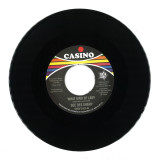
Repress!
DEE DEE SHARP was born Dionne LaRue in Philadelphia in 1945 and broke the Billboard Hot 100 while still a teenager with Slow Twistin'' (performed with Chubby Checker) in 1963. Follow-up hits included Mashed Potato Time' and Ride' which both earned her Gold discs. In 1967 she married Philadelphia producer Kenny Gamble who signed her to his fledgling Gamble label, co-owned by his writer/producer partner Leon Huff.
Ms. Gamble (nee Sharp) is no stranger to the UK Northern and Rare Soul scene having enjoyed over 40 years of DJ action with Comin' Home Baby', Deep Dark Secret', Standing In The Need Of Love' and in more recent times with The Bottle Or Me' and Happy 'Bout The Whole Thing'. She was also a featured vocalist on the Philadelphia International All Stars hit Let's Clean Up The Ghetto' alongside Lou Rawls, Billy Paul, Teddy Pendergrass, The O'Jays and Archie Bell. BUT, without doubt, it is her 1968 recording What Kind Of Lady' that continues to pack dance floors across the country. First played at the legendary Golden Torch in Stoke-on-Trent, almost as a new release at the time, heralding the seventies and Northern Soul's golden years. The song was penned and produced by Gamble and Huff and released in September '68 while the duo were still hot from their million-selling Cowboys To Girls' by the Intruders, released in March of the same year. What Kind Of Lady' has remained a firm club favourite and is reissued here, for the first time, coupled with the aforementioned The Bottle Or Me'.

Their newest release “For Barney, Who Was A Bad Dog, But A Good Boy, And Very Much Loved” comes from Brooklyn-based Dekalb Works (debut ‘Duologue’ on Where To Now? Records), the collaborative project of Austin Peru (Vision Fortune) & Daniel Creahan (Sweat Equity / Alien D).
The release summarizes a series of experimentations between live performance contexts and sample-heavy collage work. Since starting their residency on Radio alHara, Dekalb Works found themselves drawn to the act of performing, whether as a live act or DJing, and the space between these two often overly rigid modes.
“For Barney…” draws heavily on the sonic palette of American country and western music, treated through the lens of heavy studio processing and the production techniques of dub, ambient, and trip-hop. Recording hours-long live improvisations with guitar, piano, or drum machines and samplers, they pillaged these sessions as source material. Whereas previous work focused on the voice and the interaction of text, voice and music, these recordings pulled from the sounds of musicians playing together in a room. The arrangement process remains the same, chopping and manipulating small samples and momentary gestures into dense, rhythmic collages.

Unavailable for over 20 years, In The Beginning There Was Rhythm was Soul Jazz Records first foray into post-punk and punk-funk in the UK and captures the groundbreaking and seminal groups that crossed the divide of punk and dance music for the first time.
" In the Beginning is essential missing-link history – and body-rockin' fun" The Guardian
" In the Beginning doesn't have a single limp tune. It'll amaze new listeners and give old ones some hard-to-find tracks. Buy it." Pitchfork
"There's no denying that In the Beginning There Was Rhythm is a great gateway into this expansive, fruitful, trailblazing era." All Music
First released in 2001, this album is fully remastered, remade and presented once more in its entirety and features A Certain Ratio, Cabaret Voltaire, Throbbing Gristle, The Human League, The Pop Group, Gang of Four, The Slits, 23 Skidoo and This Heat.
This album comes as a limited-edition one-off pressing double coloured vinyl (red and blue) complete with two bespoke inner bags containing extensive sleevenotes and original photography.
As Muzik magazine noted on its initial release 'In The Beginning' is a choice selection from the fertile post-punk period when bands thought nothing of combining politics and philosophy with imported dance rhythms and edgy industrial angst.
The bands featured come (mostly) from the then bleak post-industrial North of England - Manchester, Sheffield, Leeds as well as Bristol and London, and yet all show a fascination with black American rhythms and an experimentation in sound that was completely unique at the time.
The title of the album comes from The Slits track of the same name.
This album is produced with all the original photos and full extensive sleevenotes.

Italian born and Berlin based DJ, producer, label and record store owner Deluka kicks things off for Futuristic Architecture, System Error's newest offshoot for all things strictly Techno.
Deluka has long been a secret tip among vinyl and techno heads in Berlin and afar, having been a resident for several years at Berlin's infamously wild Same Bitches Party and the founder of No Signal Records, recently opening a record store of the same name.
With his Heroes EP, he commits 4 timeless techno tracks to wax, paying homage to his musical heroes with tunes that honour the sensibilities of the genre.
Deluka almost single-handedly reminds us of how much we love techno and we couldn't think of a better artist to begin this new story for System Error.
All tracks written and produced by Francesco De Luca.
Mastered by Alberto Pretto.
System Error MM GmbH, Berlin, Germany, Earth © 2024.

The story of Ultrasonic Grand Prix is one of two vintage 60s guitars and their owners. I love my 1967 Vox Grand Prix guitar,” declares multi-instrumentalist/producer Shawn Lee - creator, among other feats, of the soundtrack for Rockstar video game classic Bully, and one half of Ultrasonic Grand Prix. “It is a serious beast and an important part of my arsenal. Every tone you need…’For guitar maestro Barrie Cadogan - of Nottingham Freakbeaters Little Barrie, best known for the main title theme of ‘Better Call Saul’, The The, Liam Gallagher and playing on the soundtrack for Baz Luhrmann’s ‘Elvis’ - it was the Vox Ultrasonic, also from the same period, that caught his eye. “I first became interested in Vox guitars because of people who used them like Spacemen 3 and the James Brown band of the late 60’s”, he explains, “but it was when I was part of a recording session at Anton Newcombe’s studio in Berlin that I had chance to get to know the Vox gear better. I was borrowing an Ultrasonic from a friend for a while and Shawn already had his Grand Prix. I thought it would be a good name for our project whenever we got it going.’ It was with this shared passion for these weapons of vintage, psychedelic gold that the suave, velvety, and off-kilter cool of INSTAFUZZ was born. While a project born of recent times, the flames of INSTAFUZZ were first ignited all the way back in 2010, where the two met during mixing sessions for Little Barrie’s 2011 LP King of the Waves. Snap forward a decade and we find Cadogan ripping guitar licks on Instagram, the workaholic Lee using these as inspiration to lay down rhythm tracks on analogue drum machines. And not long after that, cut to the two trading files back and forth furiously online, birthing music together in ever more completed forms. And the music that did emerge was weird, startling, and insatiably groovy. With one foot dipped in the organ-warbling garage of 60s psych, and the other vibrating in the mind-expanding fractals of the British Acid House boom, INSTAFUZZ plies the earthly quintessence’s of blues, rock, soul and jazz, against the preternatural discomforts of programmed drums and unhinged synthesisers to produce something distinctly and nostalgically futuristic

In spring,
Again.
But it's true this time.
In Spring is the second record by Tara Clerkin Trio, a Bristol-based group who appeared to emerge from below the radar of near-all in early 2020 and in the presence of one of the most captivating records of that year. This latest 23 minute, four song collection, recorded in various stages and locations over the last twelve months, does nothing to detract from those first impressions, refining the woozy and shimmering oddness of their debut into an avant-pop sensibility that is increasingly their own.
If the group did arrive fully formed, what that form was did feel supple and hard to grasp. They were, in a sense, essentially new sounding, or at least ghosts between the established lines, and with this new record have doubled-down on their inherently Delphian instinct. At its heart, In Spring is a record of subtle contrasts, experimental yet familiar in its intimacy, obviously modern though tied to certain lineages, and driven by a pop logic which is also free-form and seemingly improvised. Their approach to sound is perhaps the guiding principle here, less concerned with genre as it is texture and feeling, drawing from jazz, folk, modern composition, trip hop and downtempo electronica, yet evading all of those categorisations. Tara Clerkin Trio are too generous of heart to be ripping up any rulebook, they simply seem oblivious to its need.
Their geography does provide some context. Bristol's progressive sonic heritage inescapably bleeds into these four tracks, the enclave of open-minded artists around Planet Records in the mid 90s perhaps the closest point of comparison. There's that same magpie spirit which is both futuregazing and aware of its past, though is mostly set on finding its own path. This is in essence what defines Tara Clerkin Trio, feeling their way through freedom of instinct and curiosity, forging their own desire lines. Not so much taking the road less trodden, just walked at their own winding pace.
"Done before,
And I'll do it again"
Ringing in my head
While I try
To feel

Bs As deep brings us his latest work, where the sounds he uses in the three tracks are the faithful expression of achieving music that transcends time.
In this album of three original tracks BS AS DEEP clearly goes through a range of very classic house sounds, and at the same time it presents us with a fresh sound.
As an extra track, Maxi Iborquiza participates, who presents us with one of the tracks included in his digital album Delayed, released on compact disc by Omward Recordings.

Series 4 of the TELUM sub label, AURUM has arrived!
A different chapter with a similar story to be told - 4 dance floor weapons from good friend of the label, Swoy.
Each track has been making noise around the world with heavy support from some of the biggest names in the industry!
Grab a copy whilst you can!

To describe an album as "electronic music" has long been an understatement. "Romanticismo siempre" is a good example. Recorded mainly using synthesizers, the album travels a territory that borders on the experimental and the dancefloor, entering at times in both fields.
Andrés Téllez, Delone, states in its title a clear commitment: "an ode to life, to never lose that passion that is the engine that pushes everything, no matter how many obstacles there are along the way, such as love, madness or death". The need to express this is at the origin of the record.
His musical language is rich and varied. Among synthesizers, analog experimentation, drones and psychedelia, many of the subcultures that have shaped what was once called "electronic music" appear. Flashes of trip hop, new age and proto-electronics are amalgamated throughout the album, together with hints of mutant house, breakbeats, IDM and trance. Other genres peripheral to club sounds, such as post-rock or kraut, also appear.
The idea of creating something that could almost be considered a soundtrack is present, but Delone's singularity has taken the album down a different path, using his own musical vocabulary to articulate a narrative that leads him towards his desired destination, keeping experimentation and dance culture, constants in his career, very much in mind.
In 2014 and together with his partner and friend Carlos Trujillo, Andrés created Riverette, a record label that became a record store in the center of Madrid, with his studio in the basement. From there he unleashed his productions as Dos Attack and his first works as Delone. Riverette quickly became a key creative pole in the Spanish electronic underground, and the label has released records by Legowelt, Kornel Kovacs or HAAi.
Throughout the eleven tracks of "Romanticismo siempre", a story materializes in which the protagonism falls on the adrenaline of passion. Through a very personal sound, with a certain introspective vocation, Andrés tells us a wonderful tale with the help of exquisite arrangements and a rich expressiveness.
"Romanticismo siempre" is a polyhedral album that can change with every listen, with every track, and reinterpret itself almost with every playback. It is a complex record, delicate and full of nuances, at the same time charged with a powerful and primitive energy.

The package, posted from Inglewood in California, dropped through my letter box…
I was looking forward to seeing this, the VHS of the then relatively ‘unknown’ but now legendary live show at the Saenger Theatre in New Orleans by Maze featuring Frankie Beverly. But when I fed it into my VHS player, I was disappointed. I could not quite figure out why. The band were tight, each musician sounded great, the product of being on the road, year after year, club after club in the States, sometimes playing five shows a night, all propped up by one of the best soulful voices we had ever heard, the maestro Frankie Beverly.
It took a second play of the VHS to realise what was missing. It was ‘too comfortable’ an atmosphere. A few wealthy customers sat around coffee tables quaffing champagne. It seemed to me that this audience, somehow, did not fit the band.
Paul Fenn at Asgard promotions received the contract from the band to appear live in London and Manchester. I became more and more convinced that his UK fans were going to be a lot more responsive than those from New Orleans.
We put the word out with just a couple of exclusive ‘shout outs’ by Robbie Vincent on his Radio London Soul programme. Those two plugs were enough to sell out all four shows at London’s premier music venue, the Hammersmith Odeon. The ticket office was rammed and the queue six deep, stretched halfway down Queen Caroline Street.
“I have never seen anything like it” expressed the manager of the theatre as he rolled down the shutters and turned on the “Sorry, SOLD OUT” notice above the theatre box office.
I was curious, so I went up and stood in the wings of the Hammersmith stage on that first show. Frankie, introduced to the stage by his sound engineer, Greg Blockman, sauntered past me, strumming his rhythm guitar, dressed in a casual dark green towelling suit, a brown leather visor and flip flops…and then five seconds later, he suddenly stopped. He seemed suddenly to be aware of the thunderous ’Welcome to London Maze’ roar, circling around the theatre about to engulf him. He slapped every black and white hand offered up to him that night, with a huge smile as he circled the edge of that stage. We wanted to get next to him, even if it meant climbing over rows of seats in front of us to do so.
That was the beginning of our love affair with Maze and Frankie Beverly. It certainly wasn’t New Orleans comfort; it was more like a crazy, but friendly, London riot.
Five albums on from the “Live in New Orleans” LP, Frankie sauntered into the California recording studio, probably with the same swagger as in London, to cut the delightful A-side here, “Somebody Else’s Arms”, from his aptly named ‘Silky Soul’ album. Along with the B-side, ‘Love is’ (from the “Back To Basics” CD, 1993) both are so delicious you might want to relax and pour yourself that London glass of champagne, 1983 vintage. Tell your mates your Maze/Hammersmith story too. You deserve it.
