Hinter CoreLeoni verbirgt sich Namensgeber und Saitenhexer Leo Leoni, Hauptamtlich in Lohn und Brot bei den Schweizer Hard Rock Giganten von Gotthard.
»Core« steht dabei für dessen musikalischen Wurzeln, seine Leidenschaft für kraftvollen Hard Rock sowie den frühen Sound von Gotthard auf deren ersten drei Studioalben. Speziell dem Debüt aus dem Jahre 1992 wollte der Tessiner Tribut zollen und rief mit befreundeten Musiker, wie Igor Gianola (ex-U.D.O.) sowie Frontmann Ronnie Romero (Rainbow, MSG) eben Coreleoni ins Leben, die auf den ersten beiden Alben »The Greatest Hits Part 1« sowie »II« vor allem den härteren Gotthard Klassikern neues Leben einhauchten.
Auf ihrem kommenden, dritten Album stehen vorwiegend brandneue Eigenkompositionen im Vordergrund und sollen Coreleoni endgültig als eigenständige Rockformation etablieren. Sein Debüt darauf gibt der gebürtige Albanier Eugent Bushpepa (exˇSunrise, Darkology), der Leoni anno 2018 als Teilnehmer beim Eurovision Song Contest in Lissabon (Song »Mila«) auffiel, wo er den siebten Platz belegte.
»Er ist ein großartiger Sänger und ein wahnsinnig toller Mensch. Er hat unfassbar viel Seele und Emotion in seiner Stimme und seiner Weise, Musik zu machen. Das fasziniert mich sehr und ich hoffe, euch da draußen ebenso«, adelt Leoni seinen neuen Vokalisten.
quête:san dee
Hinter CoreLeoni verbirgt sich Namensgeber und Saitenhexer Leo Leoni, Hauptamtlich in Lohn und Brot bei den Schweizer Hard Rock Giganten von Gotthard.
»Core« steht dabei für dessen musikalischen Wurzeln, seine Leidenschaft für kraftvollen Hard Rock sowie den frühen Sound von Gotthard auf deren ersten drei Studioalben. Speziell dem Debüt aus dem Jahre 1992 wollte der Tessiner Tribut zollen und rief mit befreundeten Musiker, wie Igor Gianola (ex-U.D.O.) sowie Frontmann Ronnie Romero (Rainbow, MSG) eben Coreleoni ins Leben, die auf den ersten beiden Alben »The Greatest Hits Part 1« sowie »II« vor allem den härteren Gotthard Klassikern neues Leben einhauchten.
Auf ihrem kommenden, dritten Album stehen vorwiegend brandneue Eigenkompositionen im Vordergrund und sollen Coreleoni endgültig als eigenständige Rockformation etablieren. Sein Debüt darauf gibt der gebürtige Albanier Eugent Bushpepa (exˇSunrise, Darkology), der Leoni anno 2018 als Teilnehmer beim Eurovision Song Contest in Lissabon (Song »Mila«) auffiel, wo er den siebten Platz belegte.
»Er ist ein großartiger Sänger und ein wahnsinnig toller Mensch. Er hat unfassbar viel Seele und Emotion in seiner Stimme und seiner Weise, Musik zu machen. Das fasziniert mich sehr und ich hoffe, euch da draußen ebenso«, adelt Leoni seinen neuen Vokalisten.
Hinter CoreLeoni verbirgt sich Namensgeber und Saitenhexer Leo Leoni, Hauptamtlich in Lohn und Brot bei den Schweizer Hard Rock Giganten von Gotthard.
»Core« steht dabei für dessen musikalischen Wurzeln, seine Leidenschaft für kraftvollen Hard Rock sowie den frühen Sound von Gotthard auf deren ersten drei Studioalben. Speziell dem Debüt aus dem Jahre 1992 wollte der Tessiner Tribut zollen und rief mit befreundeten Musiker, wie Igor Gianola (ex-U.D.O.) sowie Frontmann Ronnie Romero (Rainbow, MSG) eben Coreleoni ins Leben, die auf den ersten beiden Alben »The Greatest Hits Part 1« sowie »II« vor allem den härteren Gotthard Klassikern neues Leben einhauchten.
Auf ihrem kommenden, dritten Album stehen vorwiegend brandneue Eigenkompositionen im Vordergrund und sollen Coreleoni endgültig als eigenständige Rockformation etablieren. Sein Debüt darauf gibt der gebürtige Albanier Eugent Bushpepa (exˇSunrise, Darkology), der Leoni anno 2018 als Teilnehmer beim Eurovision Song Contest in Lissabon (Song »Mila«) auffiel, wo er den siebten Platz belegte.
»Er ist ein großartiger Sänger und ein wahnsinnig toller Mensch. Er hat unfassbar viel Seele und Emotion in seiner Stimme und seiner Weise, Musik zu machen. Das fasziniert mich sehr und ich hoffe, euch da draußen ebenso«, adelt Leoni seinen neuen Vokalisten.
- A1: Three King Fishers
- A2: Love Is Blue
- A3: Theme From Valley Of The Dolls
- A4: Bacchanal
- A5: Sunshine Superman
- B1: Some Velvet Morning
- B2: The Look Of Love
- B3: Divided City
- B4: Theme From Valley Of The Dolls (Single Version)
- B5: Sunshine Superman (Single Version)
- B6: The Look Of Love (Single Version)
- B7: Bacchanal (Single Version)
The long-awaited reissue of this rare Eastern and psychedelic Jazz LP by the famous Hungarian guitarist, originally
released in 1968. For the first time and as extended Edition with four bonus tracks: radio version from 1968/69 7”
singles 7”. Deluxe 6-sided Digipak CD with 20 page booklet and Gatefold Vinyl comes with long, exclusively written
inner notes by the famous researcher and biographer Douglas Payne.
“The performances on this LP have a restrained, introspective quality. Szabo’s work is lyrical, rather economical, and
somewhat angular, and his tone is warm and glowing.” – Harvey Pekar, DownBeat
“Gabor Szabo is at the musical zenith of his career. This album could rank as his best to date.” - Billboard
“But for sheer lyrical beauty, few players are in Szabo’s class. His startling use of dissonance is a delight, too, and
time and again he will alter a final phrase just slightly, totally reorienting a familiar tune.” – Alan Heineman, DownBeat
“This is definitely one of my ‘go to’ Gabor albums.” Mike Stax, Ugly Things
"Gabor Szabo’s Bacchanal documents one of the earliest and finest examples of what was then known as “jazz rock.”
Years before this new jazz style evolved – or devolved, according to some – into “fusion,” jazz rock was mostly
fashioned by younger jazz players whose ears were open to the emerging sounds coming out of rock and roll,
especially those of the Beatles and, later, Jimi Hendrix. " - Douglas Payne
After recording four albums for Impulse in 1967, the distinctive guitarist Gabor Szabo cut three strongest records for
the Skye label in 1968-1969: "1969", "Dreams" and "Bacchanal" all of them became a legendary classic. This time
EBALUNGA!!! are rediscovers "Bacchanal". Szabo's regular group of the era is heard on record for the last time:
guitarist Jimmy Stewart, bassist Louis Kabok, drummer Jim Keltner and percussionist Hal Gordon. With the exception
of two Szabo originals, the material is comprised of current pop tunes including two songs by Donovan, "Love Is Blue,"
"The Look of Love" and "Theme from the Valley of the Dolls."
Gabor Szabo was one of the most original guitarists to emerge in the 1960s, mixing his Hungarian folk music heritage
with a deep love of jazz and creating a distinctive, largely self-taught sound.
Born in Budapest, on March 8, 1936, Szabo was inspired by a Roy Rogers cowboy movie to begin playing guitar when
he was 14 and often played in dinner clubs and covert jam sessions while still living in his hometown. He escaped
from his country at age 20 on the eve of the Communist uprising and eventually made his way to America, settling
with his family in California.
He attended Berklee College (1958-1960) and in 1961 joined Chico Hamilton's innovative quintet featuring Charles
Lloyd. Urged by Hamilton, Szabo crafted a most distinctive sound; as agile on intricate, nearly-free runs as he was
able to sound inspired during melodic passages. Szabo left the Hamilton group in 1965 to leave his mark on the popjazz of the Gary McFarland quintet and the energy music of Charles Lloyd's fiery and underrated quartet featuring Ron
Carter and Tony Williams.Szabo initiated a solo career in 1966, recording the exceptional album, Spellbinder, which yielded many inspired
moments and "Gypsy Queen," the song Santana turned into a huge hit in 1970. Szabo formed an innovative quintet
(1967-1969) featuring the brilliant, classically trained guitarist Jimmy Stewart and recorded many notable albums
during the late '60s. The emergence of rock music (especially George Harrison, Eric Clapton, and Jimi Hendrix) found
Szabo experimenting with feedback and more commercially oriented forms of jazz.
During the '70s, Szabo regularly performed along the West Coast, hypnotizing audiences with his enchanting,
spellbinding style. From 1970, he locked into a commercial groove, even though records like Mizrab occasionally
revealed his seamless jazz, pop, Gypsy, Indian, and Asian fusions. Szabo had revisited his homeland several times
during the '70s, finding opportunities to perform brilliantly with native talents. He was hospitalized during his final visit
and died in 1982, just short of his 46th birthday.
- 1: Ponor Naviše – Uplifting Abyss
- 2: Prolećna Groznica – Spring Fever
- 3: Hej Krčmarice – Hey Waitress Mama
- 4: Blue Kum – Blue Best Man
- 5: Dan Za Danom – Day By Day
- 6: Uspomena - Memento
- 7: Ne Dolaziš Više U Moju Ulicu – You Don’t Come By My Street No More
- 8: Moja Soba – My Room
- 9: Sećanje Na Prošlo Leto – Remembering Last Summer
- 10: Balada - Ballad
What would you do if a never before released jazz funk album from 70s Yugoslavia had dropped suddenly into your arms? An album which sounds like a crate diggers holy grail!? Album full of heavy drum breaks, repetitive bass grooves, superb sax solos and world class jazz arrangements finely intertwined with Yugoslavian folk music elements?! - “PRESS IT!” ~ That’s what we said always striving to present the future of unheard sound of Yugoslavia! With the help from Mr. Cosmic himself (Željko Kerleta), Jovan Maljoković and his wife Nevenka and, of course, Radio Belgrade who provided the recordings buried deep in their library, here we present Jovan’s first vinyl release since 1989 and his album nr. zero. If this LP was released in 1976, sounding this clear and impressive as it sounds today, it would be up on the pedestal with cult Yugo jazz-funk releases such as Sećanja by Miša Blam (also released on Everland) – and believe me – it would burn a whole through your wallet. Don’t allow me to get started on the Jovan’s ensemble personnel here, represening the crème de la crème of jazz and funk instrumentalists of Yugoslavian Jazz (Goce Dimitrovski, Miloš Krstić, Kire Mitrev, Miodrag Maljoković, Aleksandar Sanja Ilić, Miša Blam, Uroš Šećerov...). The raw execution, top recording and compositions resembling but not imitating the greatest contemporary western jazz-funk ides of the time, that sound like something that could have been easily released on Mainstream, Columbia, MPS or even be an authentic Kudu hit record if it had been released at the time by Creed Taylor. Just listen to the track A1 Ponor Naviše with a whirlwind of big band arrangement turnovers or track B1- Uspomena (hint: Sećanje...) where Jovan takes on the ‘Lame donkey’ in a strong downbeat rearrangement released just two years after Volker Kriegel published it on his album Lift! (MPS/BASF 1973.). You’ll be blown away by the instrumental prowess of the ensemble and Jovan’s ideas! ~ Dr. Smeđi Šećer
Marta Sanchez's creative voice is strikingly original - circling rhythms,
elaborate forms and criss-crossing counterpoint distinguishes her sonic signature on the crowded New York contemporary music scene
Following three critically acclaimed quintet releases, the Madrid- born pianistcomposer presents 'SAAM (Spanish American Art Museum)' on Whirlwind Recordings, an album driven by emotional candour and boundary- pushing compositions. A talented cast realises her knotty, technical writing - frontline partners Alex Lore and Roman Filiu meet Sanchez, Rashaan Carter and Allan Mednard on backline duties.'SAAM' riffs on the Smithsonian American Art Museum, on an album that's an exhibition of Sanchez's life in musical form: "It's made up of all the elements of society from both countries Spain and America that impact my life and make me who I am." Matters internal and external are realised in musical expositions of complex feelings. The pieces took shape in lockdown, as Sanchez exchanged fortnightly composition tasks with a pen- pal.
"Those compositions express all the phases I was going through at that time. I was reflecting super deeply on what's important, and how we might give some sense to life."
- A1: 1St Movement The Legend Of Ashitaka
- A2: 2Nd Movement Ta Ta Ri Gami (The Demon God) (The Demon God)
- A3: 3Rd Movement The Journey To The West
- A4: 4Th Movement Mononoke Hime
- B1: 5Th Movement The Forest Of The Deer God
- B2: 6Th Movement Requiem - The Demon Power
- B3: 7Th Movement The World Of The Dead - Adagio Of Life & Death
- B4: 8Th Movement Ashitaka & San
"TJJA10026" Vinyl, Symphonic Suite Album which Joe Hisaishi, newly recorded “Princess Mononoke” as suite with 'Czech Philharmonic', the year after Movie-Release! The "TJJA10025" Vinyl!
LDI Records serves up a celebration of The Hague's famous electro sound with native Cliff Dalton aka Sander Evers behind four originals and fellow West Coast legends Legowelt and Rude66 both remixing. Cliff Dalton is a relatively new project from a long-time Dutch music great. Sander Evers is the drummer in psychedelic stoner rock band Monomyth and has played with other notable groups including 35007 and Gomer Pyle. Next to those projects, he has always had his ear tuned into the region's enduring techno and electro scene and now offers up his own fresh take on it. The EP's title refers to the fact that all these artists are bound by geography, but is also a nod to the fact that The Hague is the largest Dutch city by the sea. The opener 'We Are The Little Ones' is about an evil robot factory in a futuristic dystopian city. It is a coruscated electro-funk workout with crisp analogue drums and nimble bass overlaid with withering sci-fi melodies. 'We Don't Need A Real World' is a superbly cinematic eight-minute excursion with widescreen synth work taking you to the stars as you ride an elastic bassline. The majestic 'City Under The Sea' then layers up neck-snapping snares with cosmic arps and plunging bass and 'Cleopatra's Matrix' soundtracks an ancient Egyptian city with its mystic leads and eerie pads luring you into a late-night electro trance. West Coast pin-up and hugely prolific electronic innovator Legowelt remixes 'We Are the Little Ones'. His version has plenty of his textbook intrigue, lo-fi texture and magical synth charm, and finally key Bunker Records associate Rude 66 flips 'City Under The Sea' into a snaking dub rhythm with hypnotic acid lines and seductive vocal whispers woven in deep. The Blue City EP is a timeless package of West Coast electro direct from the source.
“They were so solid. They meant what they said, they did what they did… here’s two guys, a guitar player and a harmonica player, and they could make it sound like a whole orchestra.” – Taj Mahal
“It was perfect. What else can you say?” – Ry Cooder
Nearly sixty years after they first played together, Ry Cooder and Taj Mahal, longtime friends and collaborators, reunite with an album of music from two Piedmont blues masters who have inspired them all their lives: GET ON BOARD: THE SONGS OF SONNY TERRY & BROWNIE MCGHEE, on Nonesuch Records.
With Taj Mahal on vocals, harmonica, guitar, and piano and Cooder on vocals, guitar, mandolin, and banjo – joined by Joachim Cooder on drums and bass – the duo recorded eleven songs drawn from recordings and live performances by Terry and McGhee, who they both first heard as teenagers in California.
Explaining where Terry and McGhee took him musically, Cooder says, “Down the road, away from Santa Monica. Where everything was good. ‘I have got to get out of here,’ was all I could think. What do you do, fourteen, eighteen years old? I was trapped. But that first record, Get on Board, the 10” on Folkways, was so wonderful, I could understand the guitar playing.”
Taj Mahal adds, “I started hearing them when I was about nineteen, and I wanted to go to these coffee houses, ‘cause I heard that these old guys were playing. I knew that there was a river out there somewhere that I could get into, and once I got in it, I’d be all right. They brought the whole package for me.”
Taj Mahal and Ry Cooder originally joined forces in 1965, forming The Rising Sons when Cooder was just seventeen. The band was signed to Columbia Records but an album was not released and the group disbanded a year later. The 1960s recording sessions, widely bootlegged, were finally issued officially in 1992. GET ON BOARD is Taj Mahal and Ry Cooder’s first recording together since then.
Harmonica player Sonny Terry and guitarist Brownie McGhee, both originally from the southeastern United States, had active solo careers as well as collaborating with some of the most celebrated musicians of their time. But they were best known for their forty-five-year partnership, which began in 1939 and included mesmerising live performances around the world and numerous acclaimed recordings.
Their Piedmont blues style became popular during the folk music revival of the 1940s and ’50s, centered in New York City’s flourishing club scene for jazz, boogie-woogie, blues and folk music. Terry and McGhee traveled in the same circles as Woody Guthrie, Pete Seeger, Leadbelly, and Josh White, among others in a rich mix of writers, actors and musicians. As a new generation emerging in the 1960’s drew inspiration from folk and blues, Terry and McGhee toured the world as the foremost exponents of the acoustic music of the Piedmont. They were named National Heritage Fellows in 1982 in recognition of their distinctive musical contributions and accomplishments.
“You got the south on steroids, when you got the music of the south, the culture of the south, the beauty of the south, through Brownie and Sonny,” Taj Mahal says. He describes McGhee as a “solid rhythm player. To really play behind the harp like that. He would set stuff up. He wasn’t making many notes. Sonny had all the notes, running around. But Brownie, he laid it down.” Cooder adds: “This thing of squeezing the thumb and first finger and a little bit of the second finger, which I still do. I’d forgotten where it came from. That’s what Brownie did. I saw him do that and said, ‘I think I can do that.’”
Taj Mahal calls Terry “a wizard harmonica player”. Cooder says, “Sonny had incredible rhythm for one thing. Making sounds with his voice and the harmonica so you couldn’t tell quite which was which. He was good at that.”
“We’ve been doing this a while,” Cooder says. “Perhaps we’ve earned the right to bring it back. Taj Mahal concludes. “We’re now the guys that we aspired toward when we were starting out. Here we are now… old timers. What a great opportunity, to really come full circle.”
- A1: Sampuesana - Los Dinners
- A2: La Borrachita - Junior Y Su Equipo
- A3: Paga La Cuenta Sinverguenza - Manzanita
- A4: Infinito - Hugo Blanco Y Su Arpa Viajera
- B1: El Jardinero - Manzanita Y Su Conjunto
- B2: Feito Parrandero - Los Feos
- B3: Bien Bailadido - Junior Y Su Equipo
- B4: Saturno 2000 - Los Santos
- C1: La Danza Del Mono - Lucho Gavilanes
- C2: Capricho Egipcio - Conjunto Tiupico Contreras
- C3: El Chacarero - Los Gatos Blancos
- C4: Pa Oriente Me Voy - Los Atomos De Paramonga
- D1: Alegrate - Junior Y Su Equipo
- D2: Todo Lo Tengo De Ti Menos Tu Amor - Grupo Celeste
- D3: La Fuga Del Bandido - Los Ecos
Analog Africa delves deep into the scene of the Mexican's sonideros (sound-system operators) to present the "Rebajada" movement they've created using locally made pitch controls, speakers and sound effects.
"In 2010, I had asked Eamon Ore-Giron - aka DJ Lengua - if he would be interested in compiling a Latin project for Analog Africa, and if so, if he had a theme in mind. He replied, “Have you ever heard of rebajada?“ The question mark above my head, together with the wall of China, must have been the only other object visible from out of space because Eamon, probably noticing I got paralysed, continued, “Rebajada in Spanish means “to reduce, to lower”. It’s basically Mexican sonideros (soundsystem operators) slowing down the beat of a Cumbia to create a much more tangible music to dance to. I’ll send you a mix I made last year and let me know what you think.“ And so he did.
That mix was called Rebajada Mota Mix and I began listening to it on a loop. Although I was not immediately hooked it was intriguing from the get-go, and so I kept listening until magic began unfolding. Slowed down music allows you enough time to hear right through it, revealing itself in ways I had rarely experienced before. Everything became more transparent and I was noticing sounds normally only perceptible by bats. A near psychedelic experience. That mysterious mix included a few Ecuadorian songs by Junior y su Equipo - aka Polibio Mayorga (a cult figure in the sonidero scene), a couple of Mexican tunes, one Colombian, and various Peruvian songs, undoubtedly the driving force behind this project.
The sonidero who brought Peruvian and Ecuadorian music to Mexico was the legendary Pablo Perea from Sonido Arco-Iris, and although his fingerprints are all over the compilation Saturno 2000, this selection of songs in rebajada is exclusive to DJ Lengua. With the exception of a few classics from Polibio Mayorga and La Sampuesana – the queen of all rebajadas – most of these songs were probably never performed as such before, let alone released.
So how did rebajada come to be? In a nutshell; Rebajada started with two families of brothers – the Pereas and the Ortegas – who travelled all over Latin America and returned to Mexico with heavy loads of records which they would sell to the various sonideros always on the lookout for new tunes. Colombian beats especially seemed to fit almost perfectly with the Mexican dance steps – but they were just a bit too fast. As a result some sonideros began experimenting with equipment, and Marco Antonio Cedillo of Sonido Imperial created a revolutionary pitching system that could slow records down to an extent other players could only dream about. And so rebajada was born . . . or so we thought.
At the same time in north of the country, in Monterrey, sonidero Gabriel Dueñez almost got electrocuted by a short circuit that nearly set his record player on fire. As a result the platter started spinning in slow motion for the rest of the party, turning Cumbia into a different affair altogether. The youngsters went crazy for it and started harassing the sonidero with requests to record cassettes for them. Reluctant at first, Dueñez finally began recording a series of pirated cassettes called “Rebajada” which included mainly Colombian cumbia and porro in slow-mo exclusively. Those tapes took the city by storm and turned rebajada into a celebrated and defiant movement of the youth.
Of course it would not be a Mexican urban legend if it didn’t include dramaturgical elements, and so for nearly 30 years, until this day and probably for ever, both cities have been arguing and claiming ownership the creation of rebajada for themselves. But sonidera Joyce Musicolor, who never has time for such trivial arguments, got straight to the point: “Rebajada, and the equipment to perform it, is from here Mexico City but it was Monterrey that popularised it.“
Having been previously released digitally and on CD back in 2009. We decided RSD 2022 was a great opportunity to release this seminal album on Red Transparent vinyl for the first time.
‘Don’t You Remember The Future’ is the debut artist album from Jamie Jones, peering into the coming apocalypse with a body-shaking, teeth-grinding, tripped out fusion of sound on Crosstown Rebels.
There are some talents that remain inconspicuous and then there are some you can’t ignore. Jamie Jones is the latter, quickly rising to superstar status in underground dance circles over recent years. Releases on Crosstown Rebels Hot Creations, Defected, Cocoon, Get Physical and BPitch have catapulted him to become a cult figure and he is widely admired for his true originality. From his debut single ‘Amazon’, to his albums' anthem ‘Summertime’, his unique sound has won him worldwide audiences and this album has been widely anticipated as one to change the face of current house music.
With ‘Don’t You Remember The Future’ Jamie Jones delivers an album of “intergalactic techno house, where old school prince meets cybertron.” A seamlessly blended up-tempo mix filled with eerie and energetic moments. Featuring ten brand new tracks from Jamie Jones, alongside this years dance floor anthem ‘Summertime’ and the current ‘Galactic Space Bar’ - which features the vocals of Egyptian Lover - the album’s twelve tracks are stitched together in an entangled web of beats and bleeps, available digitally as separate edits.
Cosmic cuts such as ‘Mars’ and ‘Deep In The Ghetto’ create a new dimension through soaring synths and idiosyncratic samples while the sonic dance floor weapons ‘Half Human’ and ‘This Is How’ release the lethal disco master within Jamie Jones. The jacking, peak time moments of ‘Summertime’ and ‘Sand Dunes’ produce a current take on the early acid house sound and each step of this peculiar story solidifies the strange notion of being within an undiscovered time and place. ‘Don’t You Remember The Future’ features the guest vocals of a variety of musical souls, checking off some of Jones’ remote influences and revealing the greater versatility of this skillful artist. Norwegian oddball duo Ost & Kjex feature on the anthem, ‘Summertime’.
The seductively charged ‘Absolute Zero’ unmasks the talent of London based DJ, producer and vocalist Alison Mars (AKA Alison Marks), resulting in a beautifully epic and mysterious after hours track, and the toxic ‘Galactic Space Bar’ features live vocals from one of the creators of the electro scene, The Egyptian Lover, an old hero to Jamie Jones through early rap cuts like ‘Egypt, Egypt’ and ‘I Need a Freak .’ ‘Don’t You Remember The Future’ vinyl release is the album that brought the future into the present."
Combining machine-like accuracy with jazz-influenced improvisational sensibilities, Richard Spaven's
drumming has landed him gigs with vastly varied artists such as Flying Lotus, José James and
Mala, as well as recent recordings with Jordan Rakei, Alfa Mist and Sandunes. Unveiling his
forthcoming EP 'Spirit Beats', Spaven's musical talent is further demonstrated beyond his world-class
performance abilities, weaving his incredible technical skills into unique textured productions and powerful
compositions.
First single 'Hoodie Beats' begins amidst instant urgency. Atmospheric in mood, whilst relentless with its
accuracy, sub-bass locking into place with tight drums for a euphoric dance floor drop. Second single
'Nova' sees a continuation of the collaboration between Spaven and Jordan Rakei. Soul and substance
abound. Jordan delivers a delicate performance over the captivating harmony. Spaven says 'this is a
crazy beat to play. If you want to get technical - call it micro timing. If you don't - just call it hip hop'. 'Icarus
'88' brings a MC Barney Artist into the mix. Barney flows effortlessly over the micro shifted groove as
the tale unfolds. - synonymous with previous Spaven records, this ancestral drum beat of 'Spirit Beat'
soundtracks the sonic journey through this spiritual piece the harmony takes form, carrying the listener to
higher ground.
Spaven Will Release "Spirit Beats" Via Fineline Records On 25th of March 2022
PR Handled by Josh Byrne (DeepMatter, First Word, Gondwana...)
Dear is Pauwel's big step forward. His debut album on Unday (due April 2020) is a mature collection of songs about loss in all its different facets. Pauwel openly confronts his demons, without ever losing sight of the essence: rock-solid and captivating folk songs between hope and despair, comforting and disquieting at the same time. Dear turns out a record to cherish and completely disappear into.
Shortly after Pauwel finished his previous EP, his mother passed away. A few weeks later, Europe went into lockdown for a second time. Pauwel wanted to cope with this turbulent episode on his debut on Unday Records, but the isolation during the pandemic only cast more doubts. During the darkest winter months, the 31-year-old songwriter realized that loss comes in many guises: lovers come to leave, suddenly leave or turn out to have become strangers. "Dear" is the account of this dark period in Pauwel's life. A reckoning with all the bad that happened to him and his peers. It is also a bridge to whatever comes next, a hopeful glance at the future.
On 'Dear', Pauwel expands his musical universe considerably, without losing his characteristic melancholy and distinctive voice. With the help of musicians Sander Smeets, Koen De Gendt and David Broeders - his new backing band - the rough folk diamonds were polished into mature songs. The stunning voice of Catherine Smet (aka Bluai) serves as a comforting echo on a handful of songs.
"Dear" was recorded at three different locations by producer Bert Vliegen (Whispering Sons, Sophia). The opening track "Murderer" and the haunting "Bones" were created in a hut in Walcourt. The bulk of the record was recorded during an intense week at the GAM Studio in Waimes. While the TV news showed apocalyptic images of the floods in the province of Liège around the clock, Pauwel and his band finished the songs. Rich, spacy arrangements ("Lazy"), rambling country-rockers ("Deer" & "Sister") or a tearful one-taker on Fender Rhodes ("Mother"): during this session "Dear" finally came together.
Growing up in the Californian sprawl and the vast suburbs of Phoenix, Arizona, Caleb Dailey largely dismissed the country and western music that surrounded him. Instead, he was drawn to independent rock, experimental zones, and other genre-defying forms, which led him to create skewed rock music with Bear State and establish the “minimal art label” Moone Records with his brother Micah Dailey in 2013. But in the early half of the 2010s, Dailey began to hear things differently. Drawn into the left-of-center works of artists like Gram Parsons and Blaze Foley, a more idiosyncratic take on country, folk, and roots music began to swirl in his imagination.
Wandering into the form’s cowboy chords and lonesome scenes, Dailey found himself wondering what his own country album might sound like. The result is his debut solo album, a collection of covers called Warm Evenings, Pale Mornings; Beside You Then. Produced by John Dieterich of Deerhoof, Keiko Beers, and Dailey himself, it’s a melancholy charmer, rooted in traditional ideas but free roaming in its scope. Laced with synths, pedal steel, acoustic guitars, and commanded by Dailey’s full and woozy voice, it owes as much to the busted waltzes of Lambchop and the homespun lo-fi folk of Little Wings (whose Kyle Field appears on the album via a spoken intermission) as it does to the songwriters and performers who provide its source material, which include Parsons, Foley, Elvis Presley associate Chips Moman, steel guitarist Buddy Emmons, and others.
“The subversive nature of country music isn’t as much at the surface as some other genres,” Dailey says. “But the deeper down the ‘country hole’ I went, the more I wanted to be part of it. It is truly a strange world.”
The hands of Dailey and his collaborators, which includes a wide roster of DIY experimentalists like James Fella of art punks Soft Shoulder, Jay Hufman (Gene Tripp), Lonna Kelley of Giant Sand, Japanese DIY hero’s Koji Shibuya and Tori Kudo, Nicholas Krgovich, Markus Acher of The Notwist, and more, that strangeness is accentuated. Dailey doesn't aspire to retro Nashville fetishism or sanctioned notions of “realness” so much as a genuine outsider authenticity. Take his version of Gordon Lightfoot’s “If You Could Read My Mind” for example: a highlight of the record, it pairs familiar genre signifiers like pedal steel and guitar strums with warbled synths. Then there’s his read of “Dreaming My Dreams,” originally made famous by Waylon Jennings (who also did time in the Arizona desert), which morphs from a mournful ballad into a wash of far-off sonic noise.
The attention here is on the songcraft itself, with Dailey inhabiting these songs and turning them inside out to reveal unexpected tenderness and playfulness.
Recorded at home with an acoustic guitar and 4-track, Dailey began open correspondences with his collaborators, who fleshed out ideas and added touches, often working with skeletal frames before Dieterich and Dailey shaped it into a cohesive whole. “John is the reason this album exists,” Dailey says. “He sculpted all these parts together in such an otherworldly way. He is truly a magician.” Deeply allergic to insincerity, Dailey avoids any trace of irony. He’s created a cohesive gem out of disparate parts, uniting Americana songcraft with experimental disassemblage. From this bric-à-brac, he’s made something touching and beautifully strange.
- A1: Janai̚na Cesar Da Silva Reads Fernando Anto̚nio Nogueira Pessoa - Nuvens (Part One)
- A2: Sergio Fernandez Pan, Lebison, Aznar - Si Conociera Brasil
- A3: Faraualla - Masciare (Eraldo Bernocchi Mix)
- A4: Dj Pippi Ft. Antonio Jimenez Mun╠Âoz - Ibiza World Inspiration (Dub Version)
- B1: Infradisco Ft. Giovanni Santucci - Mother Earth
- B2: Djale - World Tour (O Mundo Inteiro)
- B3: Jose̚ Soberanes - Espo̚ra
Sounds move across the limits of space and time to leave imprinted in the mind an album of memories full of colors and emotions, a travel journal that from the farthest corners of the world burns every kind of distance and returns through warm and strongly evocative sounds the colors, scents, rhythms, the atmospheres of distant lands. The result is a rich and evocative soundscape, where images become sounds and sounds images, where the elements of nature echo voices of different places and cultures, distant in space but deeply similar and intimately connected.
Imaginária Records has commissioned the refined experience of Giovanni Santucci and LucaEffeSunset a journey through the sounds of the world, which from the enveloping wave motion of the warm Iberian beaches carry us to the crystalline dripping of waters and voices of the Mexican jungle, crossing Balearic rhythms and Brazilian brilliance, letting ourselves be captured by the persuasive voices and the chasing rhythm of the magical formulas of the masciare, ancient mysterious witches of southern Italy. In this journey, which represents the first stage of a wide-ranging project (a trilogy that will take the shape of new musical experiences gathered around the themes of the places first and then of the return), an exciting centrifugal movement that attracts towards a single center: the beating heart of a single Mother Earth; voices, suggestions, rhythms, emotions from the far/near, in order to confirm, together with Raymond Murray Schafer, that in the end "the whole world is sound".
Gondwana Records sign LA bassist and composer Seth Ford-Young's Phi-Psonics project and announce a remastered deluxe-edition of The Cradle featuring bonus material
Phi-Psonics is a meditative, immersive instrumental group from Los Angeles, led by bassist Seth Ford-Young and featuring Sylvain Carton on woodwinds, Mitchell Yoshida on electric piano, and Josh Collazo on drums. Their deeply soulfulmusic draws on jazz and classical influences together with Ford-Young's own musical experiences, relationships, and his introduction to spirituality, yoga and philosophy at a young age, to create something uniquely its own. Phi-Psonics' name and ultimate aim is to find 'Phi' – the golden mean – in art, nature and self. Ford-Young explains:
"It's a bit of a cliché, but music saved my life many times and instilled in me a belief in the great power of healing through art. It is my hope and intention that this music provides healing to someone somewhere."
Originally from Washington DC area, Ford-Young moved to California in the early 90s and fell in love with the deep sounds of the upright bass and the music of Charles Mingus, John and Alice Coltrane, and Duke Ellington along with Bach, Chopin, Pärt, and Satie. He immersed himself deeply in music and keen to learn combinedintense personal study with collaborations, tours, and recordings with artists such as Tom Waits, Beats Antique, and John Vanderslice. In 2010 he moved from the San-Francisco Bay area to the Los Angeles hills and continued his explorations. But great music is rarely just about music and Ford-Young's meditative, soulful music draws on more than just the twin wellsprings of jazz and classical music:
"My mother was a yoga teacher from the early 70's until recently and taught me yoga and meditation at an early age, my stepfather is an Aikido instructor and student of the teachings of Gurdjieff. Those were all early areas of study that I came back to many times throughout my life. Phi-Psonics has been a project that unapologetically synthesizes some of these ideas into our music".
It's this mixture of influences, musical and extramusical, that gives the music of Phi-Psonics it's immersive quality and quiet power. Revealingly the music that would becomeThe Cradle, wasn't written specifically for an album, originally Ford-Young was just writing down what was coming through. As time went by and the album began to take shape, the world situation seemed to be getting darker and his compositions aim to offer hope as a response to the negative influences that abound today. Remarkably for such a beautiful sounding record, it was recorded at the composer's home, rather than in a studio, but the relaxed nature of this process gives the music an airy lightness that propels the music to some magical spaces.
Originally self-released on vinyl in a limited run just as the world went into lockdown, The Cradle reached Matthew Halsall (founder of Gondwana Records) when he aws looking for music for his Worldwide FM show and he was blown away, hearing a kindred spirit at work. Halsall explains:
"Phi-Psonics make beautiful, humble and honest music, it's not showy, but it has a deep vibe that will elevate your mind and soul if you let it. When we heard The Cradle we reached out and are really super delighted to welcome Seth and his band to our label". Whereas for Ford Young: "Connecting with Matthew and the Gondwana records family has been a light in the darkness of the last years - to have my music make connections even as we are more isolated."
Ford-Young is currently putting the finishing touches to the second Phi-Psonics record, but aware that only a select few had heard The Cradle, let alone had the chance to buy a copy, and entranced by its deceptive simplicity and elevating energy, Halsall suggested that Gondwana present the album as a remastered 'deluxe edition' with an extended running time featuring extra tracks and new artwork from Daniel Halsall.
The Cradle starts with First Step, perfectly setting the tone for the whole album, it is a beautiful, soulful slice of musical calm gently propelled by Ford-Young's resonant bass and elevated by sublime flute and Wurlitzer electric piano solos. The seductive title track The Cradle was written way back in 2011 during a time of great personal change that led the composer to a feeling of newness and nurture. The magical, winsome Desert Ride is inspired by many rides through the grandly cinematic Mojave Desert. You can experience how incredibly full of life it's harsh landscape is if you slow down to its tempo. The gentle, sublime Mama is a tribute to mothers of all kinds, beautiful and heroic. Drum Talk was largely improvised, Ford-Young and the band agreed on a topic and recorded their conversation. Choosing their notes based on how Josh's drums were tuned. Like Glass is named for the special properties of Glass. Like some music, glass is delicate, yet has structure. The first of the two bonus tracks Still Dancing was written during the early days of 2020 in response to the challenges we all were facing then. It's a reminder that the figurative dance continues and that real dancing is essential. And the second, The Searcher, also written as a response to 2020, is a gently hypnotic song about the introspection and growth that can spring from a difficult situation.
This then is The Cradle, a quiet self-contained masterpiece, life-affirming and elevating in equal measure and the first offering from a wonderful new voice in spiritual jazz and the latest members of the global Gondwana Records family.
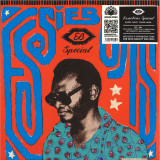
- A1: Ernest Honny - Kofi Psych (Interlude 1)
- A2: Joe Meah - Dee Mmaa Pe
- A3: Ck Mann & His Carousel 7 - Yeaba
- B1: Santrofi-Ansa - Shakabula
- B2: Seaboy & Nyame Bekyere - Tinitini
- B3: Joe Meah - Ahwene Pa Nkasa
- B4: Ernest Honny - Ernest Special (Interlude 2)
- C1: Seaboy - Africa
- C2: Nyame Bekyere - Broken Heart/Aunty Yaa/Omo Yaba (Nzema) (Nzema)
- C3: Ernest Honny - Say The Truth (Interlude 3)
- D1: Black Masters Band - Wonnin A Bisa
- D2: Sawaaba Soundz - Egye Tu Gbe
- D3: Ck Mann Big Band - Fa W'akoma Ma Me
- D4: Ernest Honny - Odo Mframa (Interlude 4)
American blackened Electro-Industrial Act 6th Circle is back with new LP "The Idle Construct", another masterful forty-minute crucible of insurgent post-industrial darkness laced with haunting atmospheres and seismic, disorienting beats. Officially licensed from Sonic Groove Records, "The Idle Construct" is 6th Circle's most tenebrous and atmospheric release to date, seeing its first ever proper release on a physical format worldwide via Sentient Ruin as a limited edition black vinyl pressing, after its initial and so far digital-only release in 2021. "The Idle Construct" sees 6th Circle further evolve and deconstruct its dark sonic canvas, pushing its foreboding atmospheres and anachronistic grooves deeper into lightless realms, and taking the listener further into a dark future dystopia of bitter disillusionment and grim alienation. The dark flame of defining acts like Skinny Puppy, Front Line Assembly, and :Wumpscut:, burns more vigorously than ever within these ten caustic tracks of industrial insurrection, but what defines 6th Circle's unrivaled approach to the craft is not so much its masterful evocation of an unrivaled past glory, rather the fearless exploration of its still unaccomplished and uncharted possibilities in the present. Facing us is a dark electro-industrial beast levitating from the void and pulsing with the wrath of a dark age lurking ahead. A work which projects the genre into the future with spasms of sheer experimentalism and exploration, fusing themes and visions of the occult, magick, evil, darkness, political unrest, violence, chaos and the supernatural into a monstrous synthetic labyrinth of sound
Berlin’s Pure Hate drops it’s first release for 2022 from California’s EAS. The ‘Step Beyond EP’ consists of 3 original tracks plus 2 remixes from Keepsakes & Slave To Society. EAS is a Southern California based Techno producer and co-owner of Tympanum Records. Involved in the ever-growing Los Angeles Techno scene, Emmanuel Andreas Santamarina is an artist that experiments with a multitudinous array of styles. Having featured on the Perc Trax Remixes EP in 2021 with his huge remix of Perc’s ‘Dumpster’ his productions are fast becoming in demand. On remix duty this time are Haven label boss Keepsakes who strips back lead track ‘Step Beyond’ into a more Jackin groove aimed squarely at the dance floor, while Slave To Society heads deep into the realm of Industrial Jungle & Breakcore territory with his remix of ‘Take Your Position’
Gondwana Records sign LA bassist and composer Seth Ford-Young's Phi-Psonics project and announce a remastered deluxe-edition of The Cradle featuring bonus material
Phi-Psonics is a meditative, immersive instrumental group from Los Angeles, led by bassist Seth Ford-Young and featuring Sylvain Carton on woodwinds, Mitchell Yoshida on electric piano, and Josh Collazo on drums. Their deeply soulfulmusic draws on jazz and classical influences together with Ford-Young's own musical experiences, relationships, and his introduction to spirituality, yoga and philosophy at a young age, to create something uniquely its own. Phi-Psonics' name and ultimate aim is to find 'Phi' – the golden mean – in art, nature and self. Ford-Young explains:
"It's a bit of a cliché, but music saved my life many times and instilled in me a belief in the great power of healing through art. It is my hope and intention that this music provides healing to someone somewhere."
Originally from Washington DC area, Ford-Young moved to California in the early 90s and fell in love with the deep sounds of the upright bass and the music of Charles Mingus, John and Alice Coltrane, and Duke Ellington along with Bach, Chopin, Pärt, and Satie. He immersed himself deeply in music and keen to learn combinedintense personal study with collaborations, tours, and recordings with artists such as Tom Waits, Beats Antique, and John Vanderslice. In 2010 he moved from the San-Francisco Bay area to the Los Angeles hills and continued his explorations. But great music is rarely just about music and Ford-Young's meditative, soulful music draws on more than just the twin wellsprings of jazz and classical music:
"My mother was a yoga teacher from the early 70's until recently and taught me yoga and meditation at an early age, my stepfather is an Aikido instructor and student of the teachings of Gurdjieff. Those were all early areas of study that I came back to many times throughout my life. Phi-Psonics has been a project that unapologetically synthesizes some of these ideas into our music".
It's this mixture of influences, musical and extramusical, that gives the music of Phi-Psonics it's immersive quality and quiet power. Revealingly the music that would becomeThe Cradle, wasn't written specifically for an album, originally Ford-Young was just writing down what was coming through. As time went by and the album began to take shape, the world situation seemed to be getting darker and his compositions aim to offer hope as a response to the negative influences that abound today. Remarkably for such a beautiful sounding record, it was recorded at the composer's home, rather than in a studio, but the relaxed nature of this process gives the music an airy lightness that propels the music to some magical spaces.
Originally self-released on vinyl in a limited run just as the world went into lockdown, The Cradle reached Matthew Halsall (founder of Gondwana Records) when he aws looking for music for his Worldwide FM show and he was blown away, hearing a kindred spirit at work. Halsall explains:
"Phi-Psonics make beautiful, humble and honest music, it's not showy, but it has a deep vibe that will elevate your mind and soul if you let it. When we heard The Cradle we reached out and are really super delighted to welcome Seth and his band to our label". Whereas for Ford Young: "Connecting with Matthew and the Gondwana records family has been a light in the darkness of the last years - to have my music make connections even as we are more isolated."
Ford-Young is currently putting the finishing touches to the second Phi-Psonics record, but aware that only a select few had heard The Cradle, let alone had the chance to buy a copy, and entranced by its deceptive simplicity and elevating energy, Halsall suggested that Gondwana present the album as a remastered 'deluxe edition' with an extended running time featuring extra tracks and new artwork from Daniel Halsall.
The Cradle starts with First Step, perfectly setting the tone for the whole album, it is a beautiful, soulful slice of musical calm gently propelled by Ford-Young's resonant bass and elevated by sublime flute and Wurlitzer electric piano solos. The seductive title track The Cradle was written way back in 2011 during a time of great personal change that led the composer to a feeling of newness and nurture. The magical, winsome Desert Ride is inspired by many rides through the grandly cinematic Mojave Desert. You can experience how incredibly full of life it's harsh landscape is if you slow down to its tempo. The gentle, sublime Mama is a tribute to mothers of all kinds, beautiful and heroic. Drum Talk was largely improvised, Ford-Young and the band agreed on a topic and recorded their conversation. Choosing their notes based on how Josh's drums were tuned. Like Glass is named for the special properties of Glass. Like some music, glass is delicate, yet has structure. The first of the two bonus tracks Still Dancing was written during the early days of 2020 in response to the challenges we all were facing then. It's a reminder that the figurative dance continues and that real dancing is essential. And the second, The Searcher, also written as a response to 2020, is a gently hypnotic song about the introspection and growth that can spring from a difficult situation.
This then is The Cradle, a quiet self-contained masterpiece, life-affirming and elevating in equal measure and the first offering from a wonderful new voice in spiritual jazz and the latest members of the global Gondwana Records family.