This is the story of how a tiny label from New Jersey changed the course of music history not once but twice.
Cheri Records was established in 1974 in New Jersey and run by one Boo Frazier. Cheri's output was limited, producing a catalogue of just eleven releases between the years 1974 and 1982. On the face of it, this appears to be insubstantial output. However, if you dig a little deeper, the quality released on Cheri Records reveals an exceptional legacy of groundbreaking music.
A dark horse in the world of record labels, a true unsung legend that would go on to alter the course of musical history and intersect with a remarkable array of talented artists, bands and DJs. From Rare Pleasure; Sandy Barber; Julius Brockington; Boo Frazier; Patrick Adams; Tom Moulton; Larry Levan and MF Doom: Cheri Records has directly impacted their artistry in significant ways. Cheri's influence even extends into the present, with DJ icons like David Morales, Dave Lee, Danny Krivit, and Colin Curtis continuing to champion its contributions.
This compilation brings together the most compelling tracks from the Cheri Records catalogue, shedding light on the label's extraordinary story and underscoring the idea that music, no matter how unassuming its origins, can transcend boundaries and reshape, influence and inform music to come for future generations.
This collection also represents the start of a new series here on Miles Away, a series that will delve into the labels and studios that were responsible for leaving a lasting imprint on the musical world. We've named this seriesEchoes From,and this compilation will be the first of many.
The vinyl package comes in a gatefold sleeve with in-depth liner notes and features interviews with Colin Curtis and David Morales. Also available on CD and digitally.
The first ASFON release has been a year-long labour of love that has come into being from what felt like a lucid dream, off in the distance, too crazy to believe was real. From our first meeting in the Freerotation yurt to late-night exchanges in Bristol, Winkles (Jamie Slater) has been sharing tracks that lingered long after the party ended. Their raw textures and warped sense of time found a natural home in our sets, eventually leading to the emergence of ‘The Unavoidable EP’, a collection of four diverse tracks which form a singular, immersive experience.
On A1 journey, The Unavoidable Consequence Of Familiarity, a knocking kick opens the door to this new sound world, introducing us to the granular clicks, crazed telephony and vocoded grunts which populate the deep space of Winkles’ imagination. Machines whir and perception shifts in the space between distant synth stabs, while a pulsating bassline battles to break through the filter and create a throbbing low end. Hallucinatory and deep, this is the perfect introduction to both the EP and the ASFON outlook.
Semi Stretches sees Winkles pick up a signal from beyond the outer rim, fire up the hyperdrive and lock into the rolling hum of intergalactic techno. Juggernaut bass forms the perfect counterpoint to the rapid fire rim shots trembling away up top as this Venusian club craft battles static, drives through the milky cosmic and transports the dancing bodies to a Multicoloured Plasticine Universe.
Cutting the engines and switching to suspended animation, Winkles lets us drift through a hazy dream-space where there’s no up or down, where twinkling arps, insectile electronics and hazy sirens coalesce into a psychotropic swirl.
Out of this multicoloured mirage comes Osaka-based astral traveller Erik Luebs, who translates that peak-time ambient bubbler into a Balearic chugger which emerges from the ether to add another dimension to the EP. Rubberised bass, velvet pads and nuanced percussion ensure this is perfect for poolside play in a land of pink sand and sideways tides.
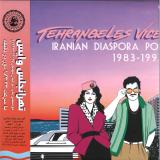
Discotchari is delighted to release a first-of-its-kind various artists compilation: Tehrangeles Vice (Iranian
Diaspora Pop 1983–1993), fully licensed from Taraneh Enterprises. The album is a groundbreaking exposé of
the vibrant subcultural hub of Tehrangeles (portmanteau of Tehran + Los Angeles), and the action–packed, true
story of the Iranian diaspora music industry. Featuring 12 tracks remastered by award–winning Osiris Studio,
lyrics and translations to all featured songs, original cassette covers, a 20+ page album note booklet by Dr.
Farzaneh Hemmasi and more! Sprawling from Westwood to Glendale across the San Fernando Valley, the
Tehrangeles scene was cultivated by the same producers and artists who industrialized the “golden age” of
entertainment in pre–revolution Iran and fled from the 1979 Islamic Revolution along with millions of Iranian
citizens. Through music and visual media, Iranian producers and artists working out of Tehrangeles have
engaged in what the Iranian government calls a “cultural attack” against the Islamic Republic for over 40 years.
The album title Tehrangeles Vice underscores the illicit nature and daring circumstances from which
Tehrangeles pop music was born and compares its legacy within Persian media to one of the most significant
crime–drama TV shows of all time. In the same manner that Miami Vice and its aesthetics had a dynamic
impact on sonic, visual and cultural trends in the United States and around the world, Tehrangeles media was a
shock to the systems of Islamic Republic ideology and Iranian expatriate communities. Listening to these songs
in hindsight, the contribution of Tehrangeles can be better understood as a triumphant effort to preserve Iranian
identity by realizing it in conjunction with prevailing music genres of the ‘80s and ‘90s, and to rebel against the
oppressive regime of the Islamic Republic of Iran through the most seductive of means: dance music.
Originally released in 1995, Message From Home is a captivating fusion of hip-hop grooves, African rhythms, and spiritual depth, showcasing the unparalleled artistry of jazz saxophonist Pharoah Sanders. Produced by the legendary Bill Laswell, this album brings together a remarkable ensemble of musicians, including kora virtuoso Foday Musa Suso, keyboardist and vocalist Bernie Worrell, acoustic bassist Charnett Moffett, electric pianist and vocalist William Henderson, guitarist Dominic Kanza, and keyboardist Jeff Bova. Tracks include the mystical jazz hypnotic groove “Our Roots (Began in Africa)” plus five more mesmerizing soundscapes.
Now, for the first time since its original 1995 release, Message From Home is reissued on Music On Vinyl.
Este nuevo lanzamiento de BAOX marca una pauta que creemos fundamental: continuar luchando
para comunicar nuestras ideas.
En un mundo tan saturado de propuestas genéricas, copias y grandes corporaciones, tanto privadas como gubernamentales, llenando el cyber-espacio y lo tangible con propaganda y silenciando ciertos temas actuales y queriendo controlar nuestra información, nos refugiamos en la música para intentar movernos sigilosos pero efectivos.
Todos sabemos el reto de seguir lanzando música en formatos físicos, tanto de producción como
económicos, pero esperamos que los sellos y artistas independientes no se den por vencidos y
sepan que no están solos, muchos seguimos intentando conservar esta cultura tan pura del disco,
desde las fábricas, las tiendas, distribuidores, los ingenieros de audio, los artistas e incluso
nuestras familias y amigos que nos apoyan.
Born-and-raised Detroit staple DJ Holographic unveils her album, House In The Dark LP via her newly launched label, Through The Veil.
The LP taps into the core of Afrofuturism that defined the foundation of Detroit techno but reimagines it in a femme, queer, and conscious way. The project draws from her deep-rooted relationship with astrology and shadow work—a therapeutic practice used to explore and heal repressed parts of the self. These transformative inner journeys serve as the creative bedrock for the album, which navigates themes of self-discovery, healing, and empowerment.
“Through healing practices like shadow work, astrology, and more, I’ve found a profound sense of arrival while writing House In The Dark. I’ve stepped into who I’ve always wanted to be as a creative and so much more. ‘Pisces’ is a journey through the depths of illusion, where the home becomes both a sanctuary and a mirror for our inner world, revealing what’s real and what we choose to believe.” — DJ Holographic
A celebrated DJ whose talents have taken her to Berlin’s Panorama Bar to Pitchfork Music Festival in Mexico City, Holographic has upcoming stops at London’s fabric, New York’s Public Records, Circoloco’s opening Ibiza party, and more. Her work has been covered by PBS, CRACK Magazine, Ransom Note, Billboard, DJ Mag, Resident Advisor, and more.
Berlin’s Tal Fussman returns to Rekids with the ‘Walking on Mars’ EP, releasing 7th November 2025. It follows the Survival Tactics boss’ recent album on Binh’s Time Passages, as well as his ‘Definition’ (2024) and ‘I Feel’ (2025) EPs on Rekids, with Fussman’s fresh spin on classic House and Techno winning support from the likes of Raresh, Cromby, DVS1, Saoirse, Carista, Honey Dijon, and many more.
The ‘Walking on Mars’ EP opens with ‘Crystallized’, a cavernous cut exclusive to 12”, where Tal Fussman pares back his signature percussive style in favour of a rolling groove set against a deep, atmospheric backdrop. ‘Who’s Who?’ follows, its wild sequences and skewed drumlines colliding in restless motion. The title track, ‘Walking on Mars’, drives forward on hard-hitting drums that gradually unfold into a soulful house melody, setting the stage for ‘Knowledge < Machine’, a razor-sharp electro finale of snaking synths and an apt robotic vocal. Fussman’s versatility shines throughout, with the EP already winning support from Antal, Rene Wise, Marcel Dettmann, and Fred P. Founded in 2006, Radio Slave’s Rekids has since launched the Techno-focused Rekids Special Projects in 2017 and its latest sublabel, REK’D, in 2024. With Matt Edwards as the sole A&R, Rekids has been instrumental in developing emerging artists and remains a trusted home for House and adjacent sounds, recently featuring names such as Hilit Kolet, Frankey & Sandrino, Mathias Kaden, Huxley, and many more.
Born-and-raised Detroit staple DJ Holographic unveils her album, House In The Dark LP via her newly launched label, Through The Veil.
The LP taps into the core of Afrofuturism that defined the foundation of Detroit techno but reimagines it in a femme, queer, and conscious way. The project draws from her deep-rooted relationship with astrology and shadow work—a therapeutic practice used to explore and heal repressed parts of the self. These transformative inner journeys serve as the creative bedrock for the album, which navigates themes of self-discovery, healing, and empowerment.
“Through healing practices like shadow work, astrology, and more, I’ve found a profound sense of arrival while writing House In The Dark. I’ve stepped into who I’ve always wanted to be as a creative and so much more. ‘Pisces’ is a journey through the depths of illusion, where the home becomes both a sanctuary and a mirror for our inner world, revealing what’s real and what we choose to believe.” — DJ Holographic
A celebrated DJ whose talents have taken her to Berlin’s Panorama Bar to Pitchfork Music Festival in Mexico City, Holographic has upcoming stops at London’s fabric, New York’s Public Records, Circoloco’s opening Ibiza party, and more. Her work has been covered by PBS, CRACK Magazine, Ransom Note, Billboard, DJ Mag, Resident Advisor, and more.
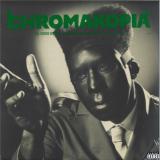
Los Angeles polymath Tyler, the Creator turns his past into vivid technicolour here on his latest offering. Narrated by his mother, the album unfolds like a scrapbook of childhood memories and adult reckonings, moving between swagger and nostalgia. Tyler's production - lush with horns, strings and jazz-inflected chords - recalls the warmth of Flower Boy but with the unpredictability of Cherry Bomb. 'Noid' wrestles with fame's paranoia while 'Hey Jane' confronts moral conflict with startling candour. 'Darling, I' and 'Like Him' offer soulful reprieves amid the chaos. Guest spots from Lil Wayne, Santigold and Lola Young expand the palette without distracting from Tyler's emotional centre. Messy but self-aware, this captures an artist still discovering who he is.
Triple Five Sol drop 75 Racks on Dark Entries, an EP featuring 5 cuts of raw and jacking house music. San Francisco-based producers/DJs Johnny Five and Vin Sol linked up during a trip to New Orleans, and they began hatching plans to collaborate. After setting up a new home studio in Vin Sol’s abode, jam sessions ensued, and soon the duo had cemented their sound. Their analog house tracks harken back to the roughshod and unembellished vibes on 80s Chicago and New York labels like Nu Groove or Gherkin Records, influences they wear with pride. “Boxxx that Rocks,” “Just a Freak,” and “Everybody Loves Triple Five Sol” deploy chunky beats with sprees of minimalist bleeps, sounding like Chip E retuned for the 22nd century. It’s not all jagged drums and acidic squelch on 75 Racks, though; “Gonna Get Out” and “Halfway Home” saunter with the confidence of a New Dance Show participant, soulful and grooving with a dash of garage. 75 Racks comes in a sleeve designed by Primo Pitino featuring bold retro primary colors. Triple Five Sol brings us timeless dance music: deep, real, and weird.
Brown Angel descends upon Dark Entries with Pure Brown Energy, an EP featuring 6 tracks of gloom-laced electro-funk and retro house. Pure Brown Energy was born when San Francisco-based producer and Hard French collective member Brown Angel was faced with a gift and a loss: an original Roland TR-808 was given to them around the same time that their father passed away. To process their grief, they set about making an album that showcased the many facets of their being, in their words: “my gay tío side, my Latin goth side, my cruising down the boulevard side, and most of all my soft vulnerable side.” From slamming vogue/ballroom house to cumbia-inflected freestyle, Pure Brown Energy channels club sounds both contemporary and timeless, while centering the most eternal electronic instrument of all: the TR-808. Opener “Miel” grooves with the effortlessness of peak-era Masters at Work or vintage Kevin Saunderson, while “Dame Más” dials up the energy even further. The influences of Miami bass and West Coast electro shine through on “Maya” and “Love Me Right,” which pair razor-sharp beats with a flurry of samples culled from Brown Angel’s record collection. “PBE” and “En Movimiento” take the Planet Rock vibes to another level, combining influences from contemporary cumbia and reggaeton sounds with Brown Angel’s Latin goth flair. Each copy comes in a sleeve designed by Ricardo Diseño featuring illustrations inspired by Teen Angels, a popular 1980’s Chicano magazine. Pure Brown Energy brings a sense of urgency to the dancefloor, unreluctantly examining the crossover between creation and loss, between celebration and sorrow. But don’t forget: these cuts also slap.
Pioneer of the electronic scene and co-creator of iconic projects like Age Of Love and BBE, Bruno Sanchioni returns with the fourth installment of his acclaimed series: Capture EP 4.
This new chapter delivers four powerful and hypnotic tracks, each crafted with the precision and flair that define Sanchioni’s legacy. With deep grooves, acid-tinged lines, and a finely tuned sense of progression, the EP invites listeners into an immersive and energetic sonic journey.
Capture EP 4 further cements Sanchioni’s reputation as a master of electronic storytelling—pushing boundaries while staying true to the spirit of the underground. A compelling addition to his ever-evolving discography, and a must-have for those who seek depth and intensity on the dancefloor.
French:
Pionnier de la scène électronique et co-créateur de projets emblématiques tels que Age Of Love et BBE, Bruno Sanchioni revient avec le quatrième volet de sa série acclamée : Capture EP 4.
Ce nouvel opus dévoile quatre titres percutants et hypnotiques, façonnés avec la précision et la sensibilité sonore qui font la marque de Sanchioni. Entre grooves profonds, lignes acidulées et constructions immersives, cet EP embarque l’auditeur dans un voyage aussi intense qu’élégant.
Avec Capture EP 4, Bruno Sanchioni confirme une fois de plus son statut de maître de la narration électronique — explorant de nouveaux territoires tout en restant fidèle à l’ADN de l’underground. Un disque incontournable pour les amateurs de sons authentiques, profonds et puissants.
Bringing together the elder statesman of the Zulu guitar Madala Kunene and internationally acclaimed Sibusile Xaba, kwaNTU pulls two generations of South African guitar mastery into a single point of focus. Under-represented on recordings outside of South Africa, Madala Kunene (b. 1951), the ‘King of the Zulu Guitar’, is revered as the greatest living master of the Zulu guitar tradition. Sibusile Xaba, whose collaboration with Mushroom Hour Half Hour reaches back to his first recording in 2017 (Open Letter To Adoniah/Unlearning), has garnered international acclaim for his unique voice and virtuoso guitar stylings, which bring together multiple South African guitar lineages in an original, spiritualised fusion. Collaborating with Mushroom Hour and New Soil for kwaNTU, the two players come together to weave a filigree sonic fabric which reaches down to the heartwood of Zulu guitar music but moves resolutely outward, building on the past to create a deeply rooted statement about present conditions and future travels. kwaNTU – which can be roughly translated ‘the place of the life-spirit’ – is also conclave of teacher and student, as Xaba has been taught by Kunene for the last decade. Meditative, rich and sonically sui generis, kwaNTU finds these two musicians linking up within the inimitable space of sound and spirit that they share through Kunene’s teaching.
The great masters of South African music have not all had equal exposure. For many years the generation of musicians who were exiled during apartheid took centre stage, as the regime made it very difficult for those at home to be heard. More recently, a new cohort of important voices, especially in jazz, has broken through to international consciousness. But for the generation of musicians in between – those who shone like beacons in the most difficult final years of apartheid and immediately afterward – international recognition has been slow in coming.
Madala Kunene, ‘the King of the Zulu Guitar’, is among this number. A revered figure for current generations of South African musicians, Kunene began his recording career in 1990, at the bitter end of apartheid, with a now classic self-titled LP for David Marks’ storied Third Ear imprint. Born in 1951 in Cato Manor, near Durban, he had determined to be a musician from early childhood, and by the time he first entered a recording studio he had already had a long career as a popular performer. His virtuoso absorption and transformation of the venerable Zulu maskanda guitar tradition and his richly spiritualised approach to music immediately marked him out as someone special, and in the years that followed, Kunene cemented his position as one of South Africa’s musical elders. He is without doubt the grand master of the Zulu guitar tradition, but his sound and sensibility ranges far beyond it into varied sonic terrain, and he has collaborated with a wide range of musicians both at home and abroad. Now in his mid-seventies, he remains a shining light for those that are making music in contemporary South Africa.
‘He is really an amazing person,’ says the guitarist Sibusile Xaba, who has been mentored by Kunene for over a decade, and now invites a collaboration with him on kwaNTU. ‘As a mentor, he's really powerful in showing us the way. For us to have this opportunity to make music together and have a project together is really a blessing to me.’
Xaba himself grew up in Newcastle, KwaZulu-Natal, where his mother had been in a band and his father sang in a church choir, and from early childhood Xaba played homemade tin guitars. He only later realised that music was his calling. ‘I just loved music. I was fortunate. My parents loved music. And when it was time for me to leave home and go to study outside Newcastle, I knew that music was what I wanted to do. There was no second option. It was just music.’ Moving to Pretoria to study music formally, Xaba committed himself to his craft, developing a unique style that draws on both US jazz masters such as Wes Montgomery and Jim Hall, and the rich and varied heritage of the South African guitar, from inspirational jazz players such as Allen Kwela and Enoch Mthalane, to the music of the Malombo groups and Dr. Philip Tabane (Xaba has previously collaborated with Dr. Tabane’s late son, Thabang), and the Zulu guitar tradition embodied by Kunene.
‘I was really in love with the jazz guitar, I really admired it, and I was digging a lot in that direction,’ says Xaba, recalling his first encounter with Kunene’s music, over a decade ago. ‘And then one day on my timeline, Kunene popped up, and I was like – “What's this sound?” I was so connected to it. It really touched me deep. I started checking out his records, and then I found out he's from the same region as I am, which is Zululand.’ After Kunene played a show at the Afrikan Freedom Station in Johannesburg, Xaba make contact with him, and visited him at home in Durban. They struck up a friendship, and Xaba became the elder’s student, as Kunene began to pass on his knowledge and his inimitable way of playing.
kwaNTU is a tribute to this relationship and the deep learning that has defined it. The album was recorded in Zululand in the town of Utrecht, at a cultural centre called Kwantu Village, which gives its name to the album. ‘It's such a broad word,’ Xaba says, ‘but the elders teach us that Ntu is basically an energy, almost chi, an energy, a force that all living beings have within them. It's a living energy, so kwaNTU is like, almost the place of this energy.’ The two men sequestered themselves for five days of jamming, improvising and planning, and then the session was recorded in one take over a single night, with Gontse Makhene joining on percussion and backing vocals and Fakazile on vocals. Other voices and overdubs were later added in the studio in Johannesburg.
The result is a rich and meditative recording that finds two generations in a deeply engaged dialogue. Teaching and passing on his knowledge, the elder Kunene has brought Xaba into a space of sound and knowledge that they now share; Xaba’s own practice of deep communion with nature and his dedication to his musical craft make him the perfect interlocutor for Kunene. The result is an album that foregrounds the two musicians engaged at the highest levels of responsive listening, sympathetic unity, and collaborative concentration. Bringing an elder statesman of South African music to an international listening audience for the first time in decades by pairing him with one of South Africa’s most important new voices, kwaNTU is a meeting of generations and a powerful demonstration of musical lineage and continuity.
‘Before music, there is sound,’ Xaba observes, speaking of Kunene’s unique approach to music. ‘And sound is like a common compartment…it's not restricted to particular people or particular geographic places, you know what I mean? It's sound. Everybody can hear it. So when he constructs that sound into music, I think everybody resonates with the energy behind his construction of sound into song. Here at home, we really love him for preserving our history through the guitar, through his stories as well the music, the songs that he writes. We really, really admire him.’
Klur (Patrik Kindvall) has quickly become one of the most exciting names in melodic and progressive house. Since his breakout debut, Summit / Odysée, the Swedish producer has captivated listeners with his signature blend of organic textures, meticulously crafted synths, and evolving melodies, garnering over 100 million streams across DSPs and a loyal fanbase of over 1 million monthly listeners on Spotify.
His music across labels including Colorize, Anjunadeep and This Never Happened, has found global resonance, earning radio support from SiriusXM Chill, where he is one of the most-played artists in the last few years, and DJ endorsements from Lane 8, Madeon, Tritonal, Above & Beyond, Black Coffee, Sultan + Shepard, and more. Recognised as one of Sweden’s fastest-rising songwriters (+100! by STIM), Klur continues to push boundaries, proving that electronic music can be both deeply emotional and sonically cutting-edge.
Beyond the studio, Klur has taken his immersive sound to stages worldwide, with performances in New York City, ADE, London, L.A., San Francisco, Seattle, Phoenix, Denver, Austin, Toronto, Montreal and beyond. His music is more than just sound—it’s an invitation to explore a world where the digital and natural coexist in harmony, stirring emotions and inspiring connection.
Klur drops his sophomore album ‘After The Rain’ on Colorize this October, followed by an album tour across Q4 and into 2026.
Der Grammy-nominierte Schlagzeuger, Produzent, MC und Sänger KASSA OVERALL definiert die Grenzen zwischen Jazz und Hip-Hop neu. Verehrt von lebenden Ikonen und Underground-Trendsettern, begann er seine Karriere hinter dem Schlagzeug. Seine bahnbrechenden Soloprojekte haben ihn zu einer treibenden Kraft in der US-Jazzszene und darüber hinaus gemacht und ihn mit Unterstützung von Visionären wie Thom Yorke, Iggy Pop, Virgil Abloh, u.a. belohnt. Mit dem renommierten Doris Duke Artist Award 2025 hat Kassa seinen Status als führende Stimme des zeitgenössischen Jazz gefestigt.
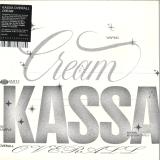
Auf CREAM, seinem vierten Solo-Studioalbum, zollt Kassa seinen beiden Leidenschaften seiner Jugend Tribut – Hip-Hop und Jazz-Schlagzeug. Mit diesen Instrumentals verwandelt der visionäre Schlagzeuger und Produzent klassische Rap-Songs in zeitlose Standards, indem er das Kontinuum zwischen Jazz und Hip-Hop aus jedem Blickwinkel und ohne Abkürzungen erkundet und eine neue Interpretation des "Great American Songbook" bietet – eine Hommage an das reiche Erbe der afroamerikanischen Musik.
CREAM unterstreicht Kassas künstlerisches Können durch meisterhafte Arrangements, eine durchdachte Songauswahl und einen Sound, der seine Entwicklung nachzeichnet. Unterstützt von einer herausragenden Band mit generationsübergreifender Jazztradition verkörpert das Projekt seinen genreübergreifenden Ansatz und sein Engagement, den Jazz voranzutreiben.
Von Newport bis North Sea hat seine Band für ihre Live-Auftritte, die Gilles Peterson als "völlig surreal" bezeichnete, große Anerkennung erhalten. Er trat in der Tiny Desk Concert-Reihe von NPR auf und veröffentlichte mehrere von der Kritik gefeierte Mixtapes, die von der New York Times, NPR Music, The Guardian, Afropunk und anderen gelobt wurden.
"Waxwork Records is proud to announce the deluxe vinyl release of FRIDAY THE 13th PART 2 Original Motion Picture Soundtrack by Harry Manfredini! Released in 1981, FRIDAY THE 13TH PART 2 is the follow up to the 1980 seminal slasher horror film, FRIDAY THE 13TH. Horror fans meet Jason Voorhees as the masked slasher for the very first time in this sequel, and it's the first and only time we see him donning a burlap sack over his head, later followed by the classic hockey mask in Part 3 and beyond.
Waxwork worked closely with composer Harry Manfredini to bring horror fans a very special and quality soundtrack experience. We're stoked to present the complete soundtrack sourced from the original 1981 master tapes as a deluxe package featuring artwork by Rich Kelly, 180-gram colored vinyl, and high quality packaging!"
Solo Jøns' new work for Musex Industries, scheduled for release on vinyl on 8 October, comes with eight tracks that explore the pulse of contemporary electronic music with a unique perspective and solid production. Between the raw rhythms, urban textures and a direct approach to the dance floor, the producer unfurls a repertoire that connects influences from the past with a fresh and forceful vision of the present. This LP moves between raw techno roots, industrial nods and moments of melodic exploration, consolidating Solo Jøns as a unique voice on the national scene.
DJ Support: CamelPhat, Blond:ish, Eli & Fur, David Penn, Arielle Free, Bibi Seck Sam Divine
Armada Music and King Street Sounds team up again to celebrate the 20th anniversary of “Most Precious Love” by Blaze presents UDAUFL feat. Barbara Tucker. This release is a timeless classic captivating anyone who encounters it.
This 20th anniversary special includes the Bonafide classic remix by Dennis Ferrer, Michael Gray’s take and two brand new remixes for 2025 all presented in a beautifully designed record sleeve featuring the star herself on the cover.
Kicking things off on the A side is the “DF’s Future 3000 Mix” that has been championed time and time again by DJ’s from across the world. Next up is Michael Gray, a DJ and producer who needs little to no introduction his version breathes new life into the original by taking it down a couple notches and giving it more of a mellow feel. The first of the two brand new remixes is Nico de Andrea, an Afro-house maestro who sports his signature sound once again by bringing his rhythms and melancholic pop melodies presenting the classic in a whole new way. Rounding off is Sam Divine the first lady of Defected who has held residencies at clubs such as Pacha, Amnesia, Sankeys, Ushuaïa, Eden, among others. She sinks her teeth into this remix by building up the vocal into a drop which is sure to keep the dancefloor going for the late nights that need that boost of energy.
Whether this is the first time you’re hearing this anthem or the one hundredth, here’s your chance to own a slice of house music history.
In the heart of a post-apocalyptic city, Spacelunch was making his way through the ruins, wearing a heavy armour of metal plates and flickering circuitry. Cat settled on his shoulder, listening intently to every sound. This time, they weren't just looking for an artefact — their target was the Singularity Echo, a mysterious device created right before the catastrophe. Legend had it that the scientists of the past, sensing the impending collapse, had put all their accumulated experience and knowledge together to create it. It was said that one day “Echo” would awaken and allow descendants to touch the wisdom of the ancients, learn the secrets of forgotten technologies and, perhaps, avoid the fatal mistakes of the past.
— We’ve been wandering around for how long? — muttered Cat, looking around warily. — And nothing.
— Sitting up there complaining, aren’t you? — Spacelunch grinned, deftly bypassing the debris and intertwined roots that poked out from under the asphalt.
Suddenly, a glow flashed before them, gradually taking the form of a palm-sized transparent crystal. It floated in the air, surrounded by silver lining that wove into intricate patterns, like a network of ancient runes. The symbols on its facets, flickering, cast soft reflections on the debris around them. As the professor slowly reached out his hand, the crystal shone brighter, and the low whisper of distant voices cut through the silence. Their minds were enveloped by the echoes of past events, filling their minds with images of the vanished world.
The friends froze for a moment, overwhelmed by shock and a sense of profound change.
— Well, — said Cat, not hiding his surprise. — It seems we've gotten a little smarter.
— A little? Now we have what has been lost for an era.
— So, we have a new adventure ahead of us. Where do we start?
The ghost town, once seemingly lifeless, now seemed to come to life: every collapsed building and every corner sparked with traces and clues as if the world itself was holding its breath, waiting for a sign.
The occasion of possibility runs through Ben Bertrand's new album Relic Radiation. It is all backdrops and layers. Hints of the emotive and the distant. Confronting the classical with what is new, looking for an expressive space. Melancholy, not melancholy. Contemplation on a midnight blizzard. Dust motes in a sunbeam. Sand dunes and microwaves.
Ever since 2018 and the release of his first solo album, Ben Bertrand has been working up his own interpretation of the bass clarinet as an instrument of the avant-garde. Touching upon ambient and cosmic as well as earthy sceneries, his is a gentle musical paradox come to life. Let go of explicit pleasantries, Relic Radiation is the polymathic interpretation of a frozen intercom, of a subdued intent of contact. The music is competent and familiar, distant without being distant. There is no predefined form or context here. It is a different kind of colour.
As musical moments and modi become enormous, things break down into exploration. On the crystal shores of perception, Relic Radiation leaves a lot of space for interpretation. It is never loud, although it works loud. An at times almost sequenced feel to treated and overdubbed bass clarinet and clarinet notes adds to a feeling of paradox. Every voice, every gesture indicates a way in. The electron is now an immeasurable wave."
ULURU is a large sandstone rock formation in Australia. It's sacred to the Anangu, the local Indigenous of the area. For many years it had been deprived of its spiritual significance, due to mass tourism, capitalism, as well as greedy and selfishness of people who just want to make money out of it. However, as a result of the Anangu’s resilience, care and staunchness, huge changes took place in the national park around Uluru as well as in the broader public's consciousness, giving again to the Uluru the sacred identity that had been lost.
You might be reading and thinking now: so what's the point? Actually, there's no real point. I would rather say, there’s hope. The hope of seeing humans all around the world following the example of the Anangu. The hope of seeing humans finally stopping to treat the earth and all what’s part of it, what’s on and what’s in it, as a slave without soul. The hope of changing today, and if not today at latest by tomorrow. This system is failing. It's no longer sustainable, and there's no much time left. So everybody, don't sleep, be critical.
What makes チトチック/クラクラ (CHITOTIHC/KULA-kura) so fascinating is that, in some weird way, it’s a meeting of minds and musical language of disparate artists at the forefront of a new kind of groove. There might be no “L” in the Japanese language but that doesn’t stop it from trying to find a working substitute. Similarly, Chito enlisted members from his Asiabeat and East Pulse, others from Mu-Project, K2, and Adi, and brought in Haruomi Hosono to play mercurial bass. In the great expanse of experimental Japanese-made pop music all of them might have gone in “out-there” in separate directions but on this record it was Chito who pointed their focus all on the same track.
“Bayou (バイヨー)” presents this floating idea of dance music with beats and rhythms that hover among the ethereal. Other like “Scribble Dance (らくがき)” use Harry’s acid bass lines to dig cavernous grooves that only come up for air via adrenaline-fueled jumps by Haruo Kubota’s quite Adrian Belew-esque guitar lines. Perhaps, Discipline-era King Crimson is an apt comparison to what Chito and his crew pull off here.
Where Discipline signaled a way to reconcile the most out-there polymeter music of prog with the more satisfying parts of post-punk and the new electronic wave, so to do I think チトチック/クラクラ (CHITOTIHC/KULA-kura) has that bit of heart/spirit in mind. This is the out-there of Japanese experimental music satisfying the best parts of the, then, new electronic wave. It takes a certain degree of proficiency and sheer chutzpah to go from “11” to the wonderfully impressionistic, ambient minimalism of a track like “Sanghyang (サンヤン)”.
It’s the joy of not knowing what each new track will hold and just letting yourself follow the hard-working hands of such learned musicians that brings the most out of Chito’s vision. It’s this very liquid music that keeps you on your toes on tracks like “Astral Lamp (無影灯)”. Tracks like “Jagg-chagg (ジャグチャグ)” and “Filament (フィラメント)” present a fourth world music bifurcated in exponential parts by the glitch of newer, modern, electronic modalities, intersected by expressions by differing voices. Every track you switch to presents a new way to get lost in the many phases and places Chito wants you to travel to.
In the end, as always, it’s not the destination but the journey through it that plants this album in your memory. – Diego Olivas
With their musical roots deeply immersed in the fertile soil of Afro-American music, the Buttshakers have found a new direction for their nostalgia-heavy soul music. With Lessons In Love, their third album on Underdog Records, their early heartaches and furies have faded in favor of a more composed harmony – a sound enveloped in love and soaked in the blues. Guided by their singer Ciara Thompson, the Buttshakers have taken a more intimate path, whose compass, in the chaos of emotions and the modern world, points only in one direction: the light.
Seen from the sky, the view appears limitless. Accentuated by the sun, the ochre and sandy hues of the open road only reinforce this feeling of immensity. The sky stretches and the green stands out in striking contrast. In lighter tones, a road is drawn -- without bends or contours. This is the worn and weary road of soul music, which The Buttshakers explore on each album in new and unique ways. Soul music – a rare place to find a French band.
Vast, the musical direction could have taken them to lighter pastures. Yet the Buttshakers chose to evolve in a different way; to take a heavier load. Two paths – one sparked by social unrest, the other purely sentimental, Lessons In Love explores the deep roots of soul music, in the steps of Curtis Mayfield or Al Green. It is here that the heart and mind cross paths, merge, and become one. A weary road -- that brings together the agitation of a world where good intentions never rise above the level of digital outrage, and a faith in love which, however it manifests and expresses itself, remains the only truth that never loses its power.
Less rage and more compassion, it is through the haunting words and now tempered inflection of Ciara Thompson's voice, which opens to distinct emotions and perspectives, that the listener is guided. With its gaze fixed on the horizon, the acoustic guitar of Gotta Believe invites us on an intimate stroll through the open plains, while Dream On carries us away with a clavinet riff and a possessed saxophone; reconnecting the electric heat and neurosis of a city full of dreams. The senses are moved by the conjuring potion of the guitar which distills throughout Troubled Waters; the body is brought back into a visceral dance by the keys and brass section that are put to the test by Sure As Sin and its irrepressible rhythm. Passing through clouds of dust and sand has left a bluesy imprint on their groove: the miles travelled became hundreds, then thousands.
All of this leaves the listener bewitched by the halo of resilience that now surrounds Ciara's performance, as the ten tracks let the light fade. But certainly not hope in a better day. Like the sunflower that always lifts its head towards the sun’s rays, the Buttshakers continue to resource their sounds in the deep roots of soul music. Into the rich layers of African-American music of the 60s and 70s, The Buttshakers capture the spirit as much as the musical aesthetics of the epoch. A sound that reaches into the meanderings of the soul, bringing light to dark places and hope for all. A sound for the most parched of hearts, living in a damaged world, Lessons In Love confirms that even the tiniest beam of light can illuminate one’s path.
Flash Atkins has pulled together a crack team of musicians for Sanza Mibale Ya Bo Pemi.
It is a tribute to the golden age of Afro-Disco, when the sounds of 70's New York found their way to the continent and fused with local musical styles and rhythms.
Felix Ngindu sings in his native Lingala language from the DRC over a locked bass, congas, keys, percussion, rhythm guitar and a brass section from Haggis Horn's Atholl Ransome and Malcolm Strachan.
Funk, disco, soul and jazz all blend for a peak time jam.
The Flash Dub strips things back to the rhythm section for heads down, dubby action and a tracky take that still packs a dance floor punch.
The incomparable Bosq steps up for remix duties and knocks it out of the park. Layered drums and percussion give things a more Latin swing before the beats break, piano enters the fray, and it's a tropical-funk party-starter all the way. The dub does the beat thing, rocking a hard groove for the dancers.
A cafe in Paris, a cocktail lounge in Palm Springs, a beachside bar in Rio De Janeiro, a lokanta in Istanbul. Jill Barber’s French repertoire is played around the world and has earned her a following that transcends language barriers. Her music has become the soundtrack to an experience. It is a surprising achievement for an anglophone artist who only began her affair with the French language in her late twenties, following a moment during the Montreal Jazz Festival, where she sang a few notes of French to an enraptured crowd. Inspired by their reaction, Jill enrolled herself in an immersive French school in the South of France, eventually emerging with her own recordings of the songs and poets that inspired her most: Piaf, Gainsbourg, Aznavour. The album "Chansons" was released in 2013 and has since become Jill's most globally successful record to date, having been streamed over 120 million times - with more than 35 million listens in the past year alone. A full decade later, Jill has reunited with Grammy Award-nominated producer Drew Jurecka and the musicians that accompanied her on "Chansons" to produce "ENCORE!", its long-awaited sequel. "ENCORE!" is a delightfully arranged and lushly orchestrated album, featuring all new interpretations of classic songs by Edith Piaf, Charles Trenet, Blossom Dearie, Django Reinhardt, Robert Charlebois, Josephine Baker, and Barbara. “For me, singing in French is an embodied, sensual experience… it’s a new language in which to explore and express myself artistically- and be vulnerable.” The French have a saying for a particularly pleasurable sensation that is so unique, it’s difficult to put into words- when Jill Barber sings in French, there is a pleasing quality, a “Je ne sais quoi” that is hard to describe, but easy to enjoy. And now she’s done it again - ENCORE!
The Danish/Norwegian duo of Ida Urd and Ingri Høyland believe that music is an extension of one’s immediate sensory environment. Duvet, their collaborative full-length debut, explores the way that creating sounds together is intertwined with various quotidian actions: establishing surroundings, rearranging furniture, moving towards the light, collecting flowers or other objects for aesthetic and sensuous impulses. Through a quiet and attentive process, music becomes a way of nurturing space: a soft architecture for play, writing, care, or simply rest.
Sonically, Duvet feels like an extension of Høyland’s last album, 2023’s Ode to Stone, which also featured Urd along with ambient musician Sofie Birch and visual artist Lea Guldditte Hestelund. But where that album, created in response to an open call for work themed around Denmark’s national parks, suggested rolling landscapes and endless horizons, Duvet turns inward, countering chill winds with glowing warmth. Its eight tracks seek a balance between abstraction and melody, intention and happenstance.
“We had a truly inspiring and rewarding process working with Birk Gjerlufsen Nielsen from Vanessa Amara, who co-produced and mixed the album with us,” Ingri adds. “He approached the material with great care and sensitivity, while also bringing his own distinct presence and creativity into the sound.”
Høyland and Urd both studied at the Rhythmic Music Conservatory in Copenhagen, which has turned out many acclaimed artists over the past few years, including Erica de Casier, Astrid Sonne, and Smerz. Over many years, the two composers have developed a collaborative method based on connection and trust. A practice, they write, “where composing, or rather suggesting, sounds and melodies for one another is a way of carefully talking, mending emotions and obstacles. Saying yes to one another. The compositional space becomes a nest for entangling whatever emotions, thoughts, or barriers one of the composers brings to the given day or moment.”
Quiet and contemplative, Duvet is simple on the surface but rich in timbral, textural, and emotional complexity. Høyland and Urd sourced their sounds from an array of instruments and techniques—electronic devices, modules, pedals, and also electroacoustic treatments of various wind instruments.
Mixing primarily through analog tape units added further mystery and depth, weaving together wordless voices and unknown sounds—breathing, rustling, perhaps the coppery gleam of Urd’s electric bass—into a dynamic matrix. Like a nest, pull one twig and the whole thing unravels.
In the winter of 2023, Ingri Høyland and Ida Urd retreated to a summer house along the coast to create the album. Picture the scene: an abiding quiet all around. Gardens carpeted by snow; beach grass silvery against the silvery sky; a tendril of smoke rising from the chimney. Not another soul in earshot. This sanctuary was the perfect setting to yield this meditation on shelter, trust, and communication. The two composers hope the album can be a similar space for others—a temporary space of residence, it can represent a summerhouse, a cabin in the woods, your favorite bench or wherever you need to go. “The album also works really well when picking out apples in the supermarket” Urd laughs.
HAAi kehrt mit ihrem kühnen und brillanten zweiten Album 'HUMANiSE' zurück und erkundet den Sweet Spot zwischen maschinengesteuerter Dystopie und emotionsgeladener Utopie.
Mit all ihren Veröffentlichungen hat HAAi (bürgerlich Teneil Throssell) immer versucht, neue Grenzen in der elektronischen Musik zu erkunden, und auf dem neuen Album bohrt sie noch mal tiefer in diese Richtung. 'HUMANiSE' setzt sich mit der Frage auseinander, was es bedeutet, in einer zunehmend digitalen Welt ein Mensch zu sein, in der KI alles in den Schatten zu stellen droht und unsere Bildschirme uns voneinander trennen. Das Ergebnis ist ein ehrgeiziges und aufregendes Epos: ein klanglicher Sprung nach oben und eine deutliche Weiterentwicklung ihres 2022er Debüts 'Baby, We're Ascending'.
Stimmen - sowohl reale als auch digitalisierte - spielen auf 'HUMANiSE' eine große Rolle, ebenso wie Ideen von Gemeinschaft und Zugehörigkeitsgefühl. Sie ist zurückgekehrt, um mit Freunden wie Jon Hopkins, Alexis Taylor von Hot Chip, dem Sänger Obi Franky, dem Rapper KAM-BU, dem Künstler Kaiden Ford und dem Dichter James Massiah sowie mit zwei Chören zu arbeiten: Trans Voices mit Chorleiter ILA und ein Gospelchor unter der Leitung von Wendi Rose. Nachdem sie jahrelang hinter den Decks verbracht hat, bringt HAAi nun auch ihre eigene Stimme in den Vordergrund, mit der sie sich verletzlich und selbstbewusst ausdrückt. Ihre Stimme ist umwerfend zart und verleiht ihren kinetischen Produktionen eine neue Dimension.
Das Konzept des Albums wurde klar, als HAAi mit Jon Hopkins im Studio war. Die beiden spielten mit einem Vocal-Harmonizer-Plug-in mit einer Funktion namens 'Humanize'. Für HAAi ging ein Licht auf: „Die Vorstellung, dass etwas völlig Synthetisches versucht, eine echte Person menschlicher klingen zu lassen, ist verrückt“, sagt sie. HAAi lässt diese Extreme im Laufe des Albums verschwimmen: Sie digitalisiert Stimmen, überlagert sie zu einem verschwommenen Effekt und verwendet sogar eine KI-Text-to-Speech, um ihre Stimme zu erzeugen. Letztendlich kommt sie jedoch zu dem Schluss, dass Erfahrung und Erinnerung - das, was uns wirklich menschlich macht - nicht ersetzt werden können.
Vom euphorischen Opener 'Satellite' über UK-Radiohit 'Can't Stand To Lose' bis hin zu genreübergreifenden Stücken wie 'Shapeshift' ist das Album voll von aufregenden klanglichen Wendungen und zutiefst persönlichen Texten. 'HUMANiSE' ist ein kraftvoller, emotionsgeladener Sprung nach vorn: eine Feier der Gemeinschaft, des Selbstausdrucks und der Menschlichkeit.
On his sixth studio release Roulette, the prolific producer, songwriter, pianist and MC Alfa Mist has created his own sci-fi universe - a vast dystopia where themes of revenge, forgiveness and redemption loom large.
Alfa Mist’s albums have always tackled big themes. This time, however, he explores an imagined near-future in which reincarnation is discovered to be a potent tool linking dreams and past lives. But with this discovery comes consequences: ethical, moral and philosophical. “If reincarnation is real, how does that shape society?” he explains. “If reincarnation means accumulation of knowledge, would you share it and enable everyone to understand more about the world? Or do you struggle for power? And do some people want to stop others from remembering who they were?”
Over 15 tracks, Alfa explores these ideas with heady potency. Each song is a spin of the wheel – a different song and character. The musician’s signature is still there – lambent keys, intuitive groove, free-flowing jazz improvisation – but Roulette is imbued with a smoky psychedelia. An immersive listen, this album is designed “to feel” on every level, says Alfa. It also contains some of his most impressive arrangements yet - see the eight-minute title track that effortlessly flips through time signatures – “because life’s like that,” says Mist; it’s not always linear.
Roulette underlines Alfa Mist as one of the most forward-thinking composers in UK music, with poignant, plaintive melodies that lodge deep in your psyche. “I’m exploring different parts of myself,” he says. “But obviously, as I grow, all of those parts change. Music is a constant; it’s my state of mind that I constantly chisel and work on and make sure that’s always growing and staying interested in new things. As long as I do that, it’ll come out in the music.”
This is the fourth volume in the collection dedicated to the Arlecchino nightclub in Santa Maria Codifiume, in the province of Ferrara. It's once again a double-vinyl set that gathers the best of Afro, Funky, Rare Groove, and Black Music, as played at the club by resident DJs Giancarlo Lelli, DJ Ghello, and DJ Frank.
Hard Times and DJ Spen go back decades. The Baltimore house veteran has long been a fixture at the label’s parties, on the remixes, and now under his Muthafunkaz alias he cements the bond with a set that’s as much a time capsule as it is a renewal. The Muthafunking Hard Times EP revisits a clutch of Spen’s early-to-mid-2000s jams that, till now, have never been committed to wax. True to form, Spen hasn’t simply dusted them off: he’s remastered, refreshed, and imbued them with a 2025 gleam, bridging past and present in one irresistible sweep.
The A-side opens with the Funkee Kole Cappin’ Mix of 2008’s “(You Make Me Say) Woah!”, a gospel-fired stormer whose call-and-response vocals climb skyward while a cheeky Fab Four nod keeps things buoyant. “Holy Ghost” follows in its Holy Spirit incarnation, wringing church-floor catharsis from tribal percussion and sanctified chants - a blast of kinetic, almost Faya Combo-like fervor.
Flip the record and you’re hit with the swing and strut of 2010’s “Gotta Hold On Me,” Spen’s Vocal Mix turning horns and jazzy drums into a pure adrenaline surge. The closer, “Doin’ The Best I Can,” is a tonal shift: harmonica and guitar sketches circling loose-limbed beats, equal parts after-hours reverie and Sunday-morning balm.
Too vibrant, too joyous, too Spen not to press - The Muthafunking Hard Times EP isn’t just archival housekeeping. It’s an affirmation of what house music does best: uplift, electrify, and remind you that, even decades on, the spirit still moves.
DJ Support: Fred P, Mark Farina, Harvey Sutherland and more
When two underground icons like James Curd and Fred P join forces, the result is more than just acollaboration-it's a cross-continental meeting of deep house minds. The track was born in James Curd's Adelaide studio while Fred P was in Australia, capturing a rare and organic creative moment between two respected figures in house music. James Curd, known for his work with Greenskeepers and his extensive catalog across labels like Classic, Defected, and DFA, brings a playful yet precise groove, while Fred P, the introspective deep house pioneer behind Black Jazz Consortium, adds soulful depth and hypnotic finesse. The remix package elevates things even further. Harvey Sutherland, a staple in Australia's modern funk and electronic scene, brings his analog synth wizardry-his remix credentials include Disclosure and Jamiroquai. Austin Ato, a UK house innovator with a DFTD remix for Groove Armada, injects vibrant dancefloor energy. And Junior Sanchez, a long-time figure in New York's club culture, rounds it out with a heavyweight version - he's flipped everyone from A-Trak to Madonna. This is a lineup that speaks volumes before you even hit play.
Vick Lavender's four-track EP, "SuperHero," is a testament to Chicago House Music's enduring power. It's a journey through vibrant, classic, and futuristic soundscapes, all crafted with masterful purpose. Don’t Sleep on this Future Classic.