ŽUR (‘Zhure’, party) is absolute cult and one of the most rare Yugoslavian disco funk albums, originally recorded in 1981, reissued on Everland Music for the first time since the original vinyl came out more than 40 years ago. The album was carefully and brilliantly remastered by grammy nominated sound engineer Jessica Thomson.
Boban Petrović is a legend of Belgrade's sophisticated disco funk scene from the late 70s and early 80s.
Back in the second half of the 70s Boban started one of the first disco clubs in Belgrade and he was one of the biggest organizers of private house parties.
The finest balance between Boban Petrović's big-hearted party-maker-turned-philanthropist personality and his hustler one was achieved on Žur.
On Žur, he is at home, in his safe place, since the parties, the music and the people are the first out of many things he had completely figured out in his life. He is at the top of his game, occasionally bothered by a casual heartbreak, but always feeling himself, coming out playful and fundamentally peaceful, satisfied and ready to transcend himself in order to put the rest of the world in the limelight. In fact, Žur isn’t about the party, music, lyrics or its, hands down, beautifully balanced sonics. It’s about Boban and the funk he lived thoroughly. The funk before, but the funk he lived after this album even more so. All the ups and downs that he faced since the moment the first needle dropped on a Žur record to this very day are on this album as the unwritten destiny of that lighthearted character he played.
In short, ŽUR represents the essence of underground club life in Belgrade from the late 70s, when the album was recorded.
The quality of this trust is confirmed by the fact that Boban Petrovic's music is still actively listened to today, not just anywhere, but at the finest club events.
High end production and extremely authentic arrangements outside the mold of classic disco music, and lyrics that literally convey the vibe of his already jet-set lifestyle in Belgrade at the time.
Shortly after his musical career, Boban Petrovic became a businessman of the conscious class. He was living in Spain on his own luxury yacht for years, he had a private airplane, a car park. But all this time living on highest class level he never lost his identity. In all his offices, yacht, airplane and everywhere was playing loud funk music and he was dressed like a musician who just finished or need to start a gig.
Along the way Boban also wrote two books: Rokanje 1 & 2 describing the time when the album ŽUR was created.
The ŽUR album is one of the the holy grails of disco funk music releases on a global level.
Buscar:sat r day
Poet, novelist, musician and academic, Anthony Joseph teams up with legendary UK producer Dave Okumu for forthcoming album, ‘Rowing Up River To Get Our Names Back’
Dave Okumu, known perhaps best as frontman for The Invisible, though digging deeper into his production credits, huge names emerge such as; Grace Jones, Amy Winehouse, Jesse Ware, Rosie Lowe and Eska. On this album, the magic and alchemy of Dave’s production style showcase subtle sonics and deep layering resulting in a contemporary sound to carry Anthony’s afrofuturistic metrical meanings.
Anthony and Dave first came across each other when working with Shabaka Hutchings during Covid broadcasts, and then after Anthony performed some poems on Dave’s 2023 album ‘I Came From Love’, the seeds of collaboration were sown.
With a little more psychedelia, a little more experimentation, Dave’s eclectic vision focuses on the actual sounds on these pieces. Anthony stated that “The best producers guide you, not push you” now add to that the fact that both these humans were born on the same day, a concoction of laid back attitudes in people with strong purpose, some real magic can happen, naturally.
Early writing sessions for this record took place in 2022, around Mount Blanc in France. Anthony was away touring with long-time collaborator, Jason Yarde. Ideas were a little thin and they found themselves somewhat repeating previous work resulting in Anthony rethinking things a little, and so entered Dave Okumu.
LP opener ‘Satellite’ is a fine example of how this new partnership pans out. New musicians have been enlisted; Dan See (Drums), Aviram Barath (Synths), Nick Ramm on Fender Rhodes and Byron Wallen (Trumpet). Add to that the mighty vocal power house of Eska and we have a whole new dimension of soul and depth, to carry Anthony’s statements. “You build a wall, we go under, you build it higher, we go higher, like a satellite” .
On the album's second single, ‘Tony’ - there’s a nod to all drummers and creators of African rhythms, from the point of view of Afrobeat legend Tony Allen. Highlighting this is drummer’s drummer Richard Spaven as Dave’s choice of skin beater. He successfully reminds us that Tony was someone who understood the real power of rhythm and how it is used to unite people.
As well as the new musicians on this LP, Dave Okumu played all the guitars and used the studio as his tool. On ‘A Juba for Janet’ - a poem to Joseph’s mother, and a track so bass heavy that it feels as though it could sit in a deep dubstep set in Plastic People days, - Anthony’s voice reaches straight down your ear canals next to dark drums, huge synths and delayed saxophone stabs from Colin Webster. Slightly more introspective verses on ‘An Afrofuturist Poem’ see Dave’s beats show off the real future sound of this record, kalimba, moog bass and guitars all played by the man himself.
Mellower and deeper moments are also present, Anthony’s cryptic yet informative storytelling is at its absolute best on ‘Churches Of Sound (The Benetiz-Rojo)’ - Caribbean and Windrush history reeled off alongside a linear musical timeline of Black music in the diaspora.
A reminder that this body of work is first of 2 volumes, ‘Rowing Up River To Get Our Names Back’ is not a follow up to Anthony’s previous album, but more a development of his 2006 novel, ‘The African Origins of UFOs’ a book where experimental elements of afro-futurism, metafiction, science fiction, surrealism, mythology are rewritten in Anthony’s innovative language. Look out for Volume 2 also coming in 2025.
Anthony Joseph releases, ‘Rowing Up River To Get Our Names Back’ (Vol. 1) via Heavenly Sweetness 7th February 2025 and he will play live at Ronnie Scotts in London on 14th March 2025, with Dave Okumu as a special guest.
CREDITS:
Vocals - Anthony Joseph
Additional vocals, vocal arrangements - Eska Mtungwazi
Producer - Guitars, Bass, Moog, Synthesisers, Programming, Percussion - Dave Okumu
Drums - Dan See
Drums on ‘Tony’ - Richard Spaven
Synthesiser - Aviram Barath
Fender Rhodes, Synthesisers, Nick Ramm
Trumpet - Byron Wallen
Saxophones - Colin Webster
Trombones - James Wade Sired
Jesse Hackett returns with another unclassifiable co-mingling of genres, this time made in collaboration with Durban-based gqom trio Phelimuncasi. The group met up in Nyege Nyege's Kampala studio last year, spending three days engineering a sequence of tracks that turned the acts' respective sounds inside out, stretching urgent vocals over mutating backdrops of time stretched electronic drums, saturated noise and unstable synths.We last heard from Hackett on last year's chilling 'Shadow Swamps', a chilly, surrealist blast of disembodied folk and vintage electronics that added a cinematic twist to industrial music. Phelimuncasi meanwhile followed their acclaimed debut with the enormous 'Ama Gogela', asserting their dominance with tight, dancefloor-fwd, hook-led jams produced by some of the scene's most important beatmakers. In collaboration, both Metal Preyers and Phelimuncasi materialized a few worlds outside their comfort zones, with the Durban trio's words frothing from Hackett's marshy productions like echoes from another universe.Opening track 'Gidigidi ka Makhelwane' erupts in a fizz of beatbox percussion that loops noisily alongside Makan Nana, Khera and Malathon's stirring vocals, delivered in their local isiZulu tongue. Hackett's process is relatively restrained, offering Phelimuncasi the space to work their rousing magic unimpeded and adding punctuation where necessary. But when he takes more of a destructive role, it's just as impressive: on 'Gqom slowgen Chant', he corrupts his rhythm into a ritualistic pulse, letting the trio's words melt into metallic clicks and nauseous atmospheres.Elsewhere on 'Mgiligi wableka', Phelimuncasi's words create a rousing rhythm against a low-n-slow gqom thud from Hackett, and on 'Coffin Roller' he brings to mind '80s video nasty soundtracks, toying with analog synth sequences against Makan Nana, Khera and Malathon's distant chants. 'Like A Corpse' might be the album's most hollowed-out banger, turning the beat into a chopped 'n screwed drag that scrapes clamorously against Phelimuncasi's gurgling raps. Needless to say, there's nothing else like this.Jesse Hackett returns with another unclassifiable co-mingling of genres, this time made in collaboration with Durban-based gqom trio Phelimuncasi. The group met up in Nyege Nyege's Kampala studio last year, spending three days engineering a sequence of tracks that turned the acts' respective sounds inside out, stretching urgent vocals over mutating backdrops of time stretched electronic drums, saturated noise and unstable synths.We last heard from Hackett on last year's chilling 'Shadow Swamps', a chilly, surrealist blast of disembodied folk and vintage electronics that added a cinematic twist to industrial music. Phelimuncasi meanwhile followed their acclaimed debut with the enormous 'Ama Gogela', asserting their dominance with tight, dancefloor-fwd, hook-led jams produced by some of the scene's most important beatmakers. In collaboration, both Metal Preyers and Phelimuncasi materialized a few worlds outside their comfort zones, with the Durban trio's words frothing from Hackett's marshy productions like echoes from another universe.Opening track 'Gidigidi ka Makhelwane' erupts in a fizz of beatbox percussion that loops noisily alongside Makan Nana, Khera and Malathon's stirring vocals, delivered in their local isiZulu tongue. Hackett's process is relatively restrained, offering Phelimuncasi the space to work their rousing magic unimpeded and adding punctuation where necessary. But when he takes more of a destructive role, it's just as impressive: on 'Gqom slowgen Chant', he corrupts his rhythm into a ritualistic pulse, letting the trio's words melt into metallic clicks and nauseous atmospheres.Elsewhere on 'Mgiligi wableka', Phelimuncasi's words create a rousing rhythm against a low-n-slow gqom thud from Hackett, and on 'Coffin Roller' he brings to mind '80s video nasty soundtracks, toying with analog synth sequences against Makan Nana, Khera and Malathon's distant chants. 'Like A Corpse' might be the album's most hollowed-out banger, turning the beat into a chopped 'n screwed drag that scrapes clamorously against Phelimuncasi's gurgling raps. Needless to say, there's nothing else like this.
- A1: Progetto Tribale - The Sweep
- A2: Onirico - Echo Giomini
- A3: Open Spaces - Artist In Wonderland
- B1: Alex Neri – The Wizard (Hot Funky Version)
- B2: M C.j. Feat. Sima - To Yourself Be Free - Instrumental Mix Energy Prod
- B3: Mato Grosso - Titanic Expande
- C1: Dreamatic - I Can Feel It (Part 1)
- C2: Carol Bailey - Understand Me Free Your Mind (Dream Piano Remix)
- C3: The True Underground Sound Of Rome - Secret Doctrine
- D1: Don Carlos - Boy
- D2: Lazy Bird – Jazzy Doll (Odyssey Dub)
Vol 2[28,99 €]
Volume 1 of this expertly curated project of 90s Italian House - put together by Don Carlos.
If Paradise was half as nice… by Fabio De Luca.
Googling “paradise house”, the first results to pop up are an endless list of European b&b’s with whitewashed lime façades, all of them promising “…an unmatched travel experience a few steps from the sea”. Next, a little further down, are the institutional websites of a few select semi-luxury retirement homes (no photos shown, but lots of stock images of smiling nurses with reassuring looks). To find the “paradise house” we’re after, we have to scroll even further down. Much further down.
It feels like yesterday, and at the same time it seems like a million years ago. The Eighties had just ended, and it was still unclear what to expect from the Nineties. Mobile phones that were not the size of a briefcase and did not cost as much as a car? A frightening economic crisis? The guitar-rock revival?! Certainly, the best place to observe that moment of transition was the dancefloor. Truly epochal transformations were happening there. From America, within a short distance one from the other, two revolutionary new musical styles had arrived: the first one sounded a bit like an “on a budget” version of the best Seventies disco-music – Philly sound made with a set of piano-bar keyboards! – the other was even more sparse, futuristic and extraterrestrial. It was a music with a quite distinct “physical” component, which at the same time, to be fully grasped, seemed to call for the knotty theories of certain French post-modern philosophers: Gilles Deleuze, Félix Guattari, Paul Virilio... Both those genres – we would learn shortly after – were born in the black communities of Chicago and Detroit, although listening to those vinyl 12” (often wrapped in generic white covers, and with little indication in the label) you could not easily guess whether behind them there was a black boy from somewhere in the Usa, or a girl from Berlin, or a pale kid from a Cornish coastal town.
Quickly, similar sounds began to show up from all corners of Europe. A thousand variations of the same intuition: leaner, less lean, happier, slightly less intoxicated, more broken, slower, faster, much faster... Boom! From the dancefloors – the London ones at least, whose chronicles we eagerly read every month in the pages of The Face and i-D – came tales of a new generation of clubbers who had completely stopped “dressing up” to go dancing; of hot tempered hooligans bursting into tears and hugging everyone under the strobe lights as the notes of Strings of Life rose up through the fumes of dry ice (certain “smiling” pills were also involved, sure). At this point, however, we must move on to Switzerland.
In Switzerland, in the quiet and diligent town of Lugano, between the 1980s and 1990s there was a club called “Morandi”. Its hot night was on Wednesdays, when the audience also came from Milan, Como, Varese and Zurich. Legend goes that, one night, none less than Prince and Sheila E were spotted hiding among the sofas, on a day-off of the Italian dates of the Nude Tour… The Wednesday resident and superstar was an Italian dj with an exotic name: Don Carlos. The soundtrack he devised was a mixture of Chicago, Detroit, the most progressive R&B and certain forgotten classics of old disco music: practically, what the Paradise Garage in New York might have sounded like had it not closed in 1987. In between, Don Carlos also managed to squeeze in some tracks he had worked on in his studio on Lago Maggiore. One in particular: a track that was rather slow compared to the BPM in fashion at the time, but which was a perfect bridge between house and R&B. The title was Alone: Don Carlos would explain years later that it had to be intended both in the English meaning of “by itself” and like the Italian word meaning “halo”. That wasn’t the only double entendre about the song, anyway. Its own very deep nature was, indeed, double. On the one hand, Alone was built around an angelic keyboard pattern and a romantic piano riff that took you straight to heaven; on the other, it showcased enough electronic squelches (plus a sax part that sounded like it had been dissolved by acid rain) to pigeonhole the tune into the “junk modernity” section, aka the hallmark of all the most innovative sounds of the time: music that sounded like it was hand-crafted from the scraps of glittering overground pop.
No one knows who was the first to call it “paradise house”, nor when it happened. Alternative definitions on the same topic one happened to hear included “ambient house”, “dream house”, “Mediterranean progressive”… but of course none were as good (and alluring) as “paradise house”. What is certain is that such inclination for sounds that were in equal measure angelic and neurotic, romantic and unaffective, quickly became the trademark of the second generation of Italian house. Music that seemed shyly equidistant from all the rhythmic and electronic revolutions that had happened up to that moment (“Music perfectly adept at going nowhere slowly” as noted by English journalist Craig McLean in a legendary field report for Blah Blah Blah magazine). Music that to a inattentive ear might have sounded as anonymous as a snapshot of a random group of passers-by at 10AM in the centre of any major city, but perfectly described the (slow) awakening in the real world after the universal love binge of the so-called Second Summer of Love.
For a brief but unforgettable season, in Italy “paradise house” was the official soundtrack of interminable weekends spent inside the car, darting from one club to another, cutting the peninsula from North to centre, from East to West coast in pursuit of the latest after-hours disco, trading kilometres per hour with beats per minute: practically, a new New Year’s Eve every Friday and Saturday night. This too was no small transformation, as well as a shock for an adult Italy that was encountering for the first time – thanks to its sons and daughters – the wild side of industrial modernity. The clubbers of the so-called “fuoriorario” scene were the balls gone mad in the pinball machine most feared by newspapers, magazines and TV pundits. What they did each and every weekend, apart from going crazy to the sound of the current white labels, was linking distant geographical points and non-places (thank you Marc Augé!) – old dance halls, farmhouses and business centres – transformed for one night into house music heaven. As Marco D’Eramo wrote in his 1995 essay on Chicago, Il maiale e il grattacielo: “Four-wheeled capitalism distorts our age-old image of the city, it allows the suburbs to be connected to each other, whereas before they were connected only by the centre (…) It makes possible a metropolitan area without a metropolis, without a city centre, without downtown. The periphery is no longer a periphery of any centre, but is self-centred”.
“Paradise house” perfectly understood all of this and turned it into a sort of cyber-blues that didn’t even need words, and unexpectedly brought back a drop of melancholic (post?)-humanity within a world that by then – as we would wholly realise in the decades to come – was fully inhuman and heartless. A world where we were all alone, and surrounded by a sinister yellowish halo, like a neon at the end of its life cycle. But, for one night at least, happy.
- A1: My Funny Valentine
- A2: I Get A Kick Out Of You
- A3: All Of Me
- A4: Love & Marriage
- A5: You Make Me Feel So Young
- A6: Night & Day
- A7: The Lady Is A Tramp
- A8: Come Fly With Me
- A9: April In Paris
- B1: Saturday Night (Is The Loneliest Night Of The Week)
- B2: A Fine Romance
- B3: I've Got You Under My Skin
- B4: Bewitched
- B5: Swinging On A Star
- B6: Fly Me To The Moon (In Other Words) (With Count Basie)
- B7: It Was A Very Good Year
- B8: That's Life
- C1: Strangers In The Night
- C2: All Or Nothing At All
- C3: Somethin' Stupid (With Nancy Sinatra)
- C4: Sunny (Feat Duke Ellington)
- C5: The Girl From Ipanema (With Antonio Carlos Jobim)
- C6: Both Sides Now
- C7: My Way
- D1: For A While
- D2: Send In The Clowns
- D3: Bad, Bad Leroy Brown
- D4: Theme From New York, New York
- D5: It Had To Be You
- D6: La Is My Lady (With Quincy Jones)
- D7: Mack The Knife (With Quincy Jones)
Frank Sinatra was one of the greatest performers and first musical superstar of the last century. His voice, timing and performance created the standards for vocalists ever since. Even today’s performers like Michael Bubble, Jamie Cullum and Robbie Williams are highly inspired by “Ol’ Blue Eyes.”
On Frank Sinatra Collected, his career and musical legacy is celebrated on 2 LPs, spanning over 5 decades. In association with Frank Sinatra Enterprises, the 31 recordings on Collected include not just his most famous songs, but also delves into some of his best album tracks and collaborations with Count Basie, Quincy Jones and his daughter Nancy, all showcasing the versatile artist he was.
Frank Sinatra Collected is available as a 2LP, housed in a deluxe gatefold sleeve with liner notes inside. 10.000 numbered copies are pressed on “Sinatra Ol’ Blue Eyes” translucent blue coloured vinyl.
The next chapter in Axis Expressionist Series, A collection of vinyl and limited digital releases, curated by Millsart, an alias of Jeff Mills, of his most eclectic and transcendent compositions that derive from his Every Dog Has Its Day project aswell as new unreleased works.
Imperfections are a natural part of the world, and they can make us beautiful and unique:
Nothing and everything is perfect.
We can be contorted, bent in weird ways, and still we're beautiful.".
A Star Child is the idea that a person can be incomplete and not self-aware, yet accept their imperfections. still direct their influence despite the arrangements of periodic and trending consequence.
It can also mean that imperfections can make admirable qualities stand out more clearly.
The Star Child reveals.
- A1: Recycled
- A2: Luna Square
- A3: Diamonds And Loving Arms
- A4: Red Chips
- A5: Trigger Track (7″ Version)
- B1: You
- B2: (I Want To Live) In Harmony
- B3: My Baby Lost It’s Way
- B4: You're The One Who Stays
- B5: At Last
- C1: You (Extended Version)
- C2: You (Dub Remixed Version)
- C3: Diamonds And Loving Arms (Special Front-Mix)
- D1: Trigger Track (12″ Version)
- D2: Bryllyant
- D3: Trigger Track (Special Remix ‘89)
Boytronic was founded in the early 80’s in Hamburg by Holger Wobker (aka Bryllyant Berger) and Peter Sawatzki. At the beginning, under the moniker of Kapitän Sehnsucht, they were in charge of making the soundtrack for some seedy sex shows on Hamburg’s famous ‘Mile of Sin’. After a while, the boys found that not so satisfying and, through it was a well-paid job, they decided to leave hoping to break into the world of pop music as Boytronic. They already had some demo songs that got the attention of Mercury Records. The first single “You” was recorded highly influenced by the sound of New Order and Patrick Cowley. It didn’t go very well at the beginning. It was just a moderate club hit, but soon after they got lucky and performed “You” on a German TV Show. Just after this, sales reached 80,000 copies in the first week and had a major hit in the German charts reaching position 10. This sudden success was followed by the recordings of the debut album “The Working Model” that was finished in only fourteen days and released at the end of 1983. “The Working Model” is considered as one of the best techno-pop releases coming from Germany in the 80’s. An album more than 40 years old and still sounding so fresh and authentic.
Limited edition of 400 copies on black vinyl with gatefold sleeve, A2 poster and sticker. Includes all tracks from the original album plus some classic remixes of “You”, “Diamonds and Loving Arms”, “Trigger Track” and “Bryllyant”.
- A1: Can't We Be Friends
- A2: Isn't This A Lovely Day
- A3: Moonlight In Vermont
- A4: They Can't Take That Away From Me
- A5: Under A Blanket Of Blue
- A6: Tenderly
- B1: A Foggy Day
- B2: Stars Fell On Alabama
- B3: Cheek To Cheek
- B4: The Nearness Of You
- B5: April In Paris
- C1: Don't Be That Way
- C2: Makin' Whoopee
- C3: They All Laughed
- C4: Comes Love
- C5: Autumn In New York
- C6: It Ain't Necessarily So
- D1: Let's Do It (Let's Fall In Love)
- D2: Stompin' At The Savoy
- D3: I Won't Dance
- D4: Gee, Baby, Ain't I Good To You
- D5: Summertime
- E1: Let's Call The Whole Thing Off
- E2: These Foolish Things (Remind Me Of You)
- E5: I'm Putting All My Eggs In One Basket
- E6: Dream A Little Dream Of Me
- F1: A Fine Romance
- F2: Ill Wind
- F3: Love Is Here To Stay
- F4: I Get A Kick Out Of You
- F5: Learnin' The Blues
- E3: I've Got My Love To Keep Me Warm
- E4: Willow Weep For Me
The Queen of Jazz and 'Satchmo' had duetted earlier in their illustrious
careers. But it wasn't until Producer Norman Granz came up with the
idea of putting them together for specific albums that their true
chemistry was revealed. The Platinum Collection features two iconic
albums Ella & Louis and Ella & Louis Again. Both albums feature Jazz
At The Phil regulars Oscar Peterson (Piano), Herb Ellis (Guitar), Ray
Brown (Bass) and Buddy Rich (Drums) with the exception of Louis
Bellson replacing Buddy Rich on Ella & Louis Again recording. Now it's
time for Fitzgerald to 'take it Ella - swing it'....
- 1: Alan Vega, Bobby Gillespie, Andy Mackay - Blood On The Moon (Mekon Rebuild)
- 2: Renegade Soundwave - A.d.i.d.a.s
- 3: Bobby Gillespie - I Put A Spell On You
- 4: Robert Ames & Ben Corrigan - Chrome Ocean (Mekon Mix)
- 5: Rema-Rema - Rema-Rema (Mekon Mix)
- 6: Leslie Winer - When I Was Walt Whitman (Mekon Remix)
- 7: Hbar - Hendy
- 8: Mekon & Schooly D - Saturday Night (Hit By A Rock - Fucked Up Mix)
- 9: Mona Mur - Tied (Mekon Vs Hit By A Rock Mix)
- 10: Jiz - I Am The Moon
- 11: Zos Kia & Isabelle De Jour - May Day
John Gosling (aka Mekon) the English big beat/industrial musician and electronica producer, is set to launch his new label Hua Hua (pronounced wah wah) with an 11-track compilation album this July. A quick scan at some of the featured artists showcases a line up of legends - eighties rap sensation Schooly D sitting alongside Primal Scream mainstay Bobby Gillespie and John’s recently departed punk hero Alan Vega - even Roxy Music’s saxophonist and founder member Andy Mackay makes an appearance. And while John’s electronic alter ego Mekon is always on hand to remix and arrange, he’s far from the only producer behind the proverbial wheel.
“It’s stuff I had lying around and now I am finding ways to get it out of my system,” he says. “It’s all been brought to the world with brilliant new artwork by Isabelle de Jour, who also features on various tracks.”
Gosling is well known as a member of both Psychic TV and Coil (for the album Transparent). Gosling founded the groups Zos Kia with John Balance and Bass-o-Matic with William Orbit before recording as Mekon. He has also remixed under the name Sugar J. And that’s before we get to the fact that he has soundtracked some of the most forward-thinking fashion shows in the world - crafting the soundscapes for Alexander McQueen shows since the show Dante in 1996. Firstly working hand in hand with the late great Lee “Alexander” McQueen, then with his successor Sarah Burton. In the mid-to-late-nineties he was a core member of the group Agent Provocateur along with Matthew Ashman (originally of Bow Wow Wow), Dan Peppe, Danny Saber (of Black Grape) and Cleo Torez. He has also worked with artists such as Roxanne Shanté ('Yes Yes Y'All'), Marc Almond ('Delirious'), and Afrika Bambaataa. His third album “Something Came Up” featured artwork by Alexander McQueen.
John is as passionate about Suicide and Alan Vega and what he describes as “the new stuff”. Besides, he says, “that’s how people listen to music now. I think kids – my kids anyway – listen right across the board. People don’t see genres anymore. So it’s my definition of good music.” It’s safe to say that this is very much Volume 1. “Yes, it doesn’t cover everything and Volume 2 will be completely different.”
BACK IN PRINT ON BLACK VINYL
“To understand the significance of the word ‘featuring’ on Featuring Pharoah Sanders And Black Harold, consider how infrequently Sun Ra used it and the exact way it had been used.
“The October Revolution in Jazz, organized by Bill Dixon in the West Village in 1964, presented a vivid cross section of approaches to the new music, including a sextet led by Ra. For the October Revolution’s continuation, titled Four Days in December, held at nearby Judson Hall on the last days of 1964, the Arkestra performance presented Pharoah Sanders as well as a flautist (who was and remained obscure thereafter) named Harold Murray, nicknamed Black Harold.
“It wasn’t until long after Sanders had achieved worldwide acclaim with John Coltrane that Ra and manager Alton Abraham decided to issue the music they’d recorded at Judson Hall. After its first release in plain or hand-decorated covers in 1976, Featuring Pharoah Sanders And Black Harold remained an exceptionally rare item in the El Saturn discography, known to a few lucky collectors.
“We’re lucky to have this glimpse of what Sanders sounded like in such a different context, galvanizing the large group and in turn being inspired to make his first significant contribution on record.”
—John Corbett (excerpt from the liner notes)
The prolific, virtuosic original Bjarki Sigurðarson returns to the concept album format, with ‘A Guide To Hellthier Lifestyle’. It’s the first LP to be released on Differance.
‘A Guide To Hellthier Lifestyle’ explores the psychological landscape of contemporary social issues, offering a sideways rumination on lifestyle dilemmas and wellness obsessions, presenting itself as a response to the modern condition. It combines storytelling with innovative sound textures – encouraging listeners to pause and contemplate the absurdities of contemporary life. Neither a critique nor an endorsement, it represents an honest exploration of our world through Bjarki’s sonic lens, gleaming a heart of darkness, but eventually finding light.
The album utilises hyper-stereo techniques, soothing melodies, complex audio structures, AIgenerated voices and sampled vocals – influenced by Coil, Genesis P- Orridge, and Paul Lansky. Bjarki investigates how specific frequencies can impact consciousness, awareness, mood, and mental state, thereby influencing our perception of reality. His vaporous sound design provides a listening experience that bridges the physical and imaginative realms; sometimes placing the listener in contemplative sanctuary, and at others making them lost – somewhere strange, uneasy, disconnected.
Bjarki on his Guide To Hellthier Lifestyle
“This new album has been two years in the works. It’s sort of my take on all the social weirdness and wellness obsessions happening right now. It kicked off with a track I started in California – the story of a soul that got born into the wrong womb. During that time, I was noticing more and more of this whole ‘wellness religion’ everywhere – people trying to sell you ‘good vibes’ and random people offering you life coaching sessions on Instagram who maybe have less life experience than a houseplant. All these apps that track our every move; it’s like they’re repackaging control and calling it ‘self care’. Capitalism in yoga pants. Thats when I started putting ‘A Guide To Hellthier Lifestyle’ concept together. A never ending, self improvement rabbit hole. We are all being sold this idea that we are not quite enough and we need to buy our way out to being better.
At one point, I took a break from the album and started working on another album full of satirical speeches, AI generated voices, where I create my own voices and type in some ideas of speeches, taking the piss out of wellness gurus and life coaches. I messed a lot with these AI voice generators, creating these deep, faux serious monologues. Proper weird stuff, but it cracked me up. Reminded me of the early days, when I was 13, making tracks on Fruity Loops, mucking around with text-to- speech generators. After the break I came back to finish ‘The Guide’ on a much deeper level.
I moved part of my studio to Latvia and continued in the countryside for few months. I realised that I just wanted something beautiful. So, yeah, this album is all of that. It’s spiritual, bits and pieces from the past, all these weird cultural moments, and whatever strange places my head goes. It’s a reflection, a rebellion, a bit of a piss take. But mostly, it’s just me, doing what I do.” - Duncan Clark
The album will be released only in its entirety, December 13th digi, with no advance singles.
- A1: My Funny Valentine
- A2: I Get A Kick Out Of You
- A3: All Of Me
- A4: Love & Marriage
- A5: You Make Me Feel So Young
- A6: Night & Day
- A7: The Lady Is A Tramp
- A8: Come Fly With Me
- A9: April In Paris
- B1: Saturday Night (Is The Loneliest Night Of The Week)
- B2: A Fine Romance
- B3: I've Got You Under My Skin
- B4: Bewitched
- B5: Swinging On A Star
- B6: Fly Me To The Moon (In Other Words) (With Count Basie)
- B7: It Was A Very Good Year
- B8: That's Life
- C1: Strangers In The Night
- C2: All Or Nothing At All
- C3: Somethin' Stupid (With Nancy Sinatra)
- C4: Sunny Feat Duke Ellington
- C5: The Girl From Ipanema (With Antonio Carlos Jobim)
- C6: Both Sides Now
- C7: My Way
- D3: Bad, Bad Leroy Brown
- D4: Theme From New York, New York
- D5: It Had To Be You
- D6: La Is My Lady (With Quincy Jones)
- D7: Mack The Knife (With Quincy Jones)
- D1: For A While
- D2: Send In The Clowns
Frank Sinatra was one of the greatest performers and first musical superstar of the last century. His voice, timing and performance created the standards for vocalists ever since. Even today’s performers like Michael Bubble, Jamie Cullum and Robbie Williams are highly inspired by ""Ol' Blue Eyes."" On Frank Sinatra Collected, his career and musical legacy is celebrated on 2 LPs, spanning over 5 decades. In association with Frank Sinatra Enterprises, the 31 recordings on Collected include not just his most famous songs, but also delves into some of his best album tracks and collaborations with Count Basie, Quincy Jones and his daughter Nancy, all showcasing the versatile artist he was. Frank Sinatra Collected is available as a 2LP, housed in a deluxe gatefold sleeve with liner notes inside. 10.000 numbered copies are pressed on “Sinatra Ol' Blue Eyes"" translucent blue coloured vinyl."
Denovali presents the new album of the prestigious Swedish pianist and composer Matti Bye. Matti is well-known for his regular performances at various silent film festivals and screenings worldwide, where you can see him perform solo and with artists such as Lau Nau. Bye has been involved in several collaborations, including Hydras Dream, where he recorded and released an album with Anna von Hausswolff. Additionally, Matti is recognized for his scores in projects like ”Young Royals," ”Tove," „The Hundred-Year-Old Man Who Climbed Out of the Window and Disappeared,“ and "A Traves de tu Mirada” among many others.
Matti Bye's third album, "Capri Clouds", moves through the element of the air and further into space. A lone piano sounds, echoes - sometimes like a waltz. We have the sound of the wind with us and the sound of the sea below us as we fly, and above we hear the stars and planets spinning. A piano from the past, as if Satie met space - as if Spiritualized and Satie talked to each other across timeand space.These songs go straight to the heart and to the senses, and create images in your head. Stories from your own memory bank, as well as new visions – music to lean into, meditatively and hopefully longing. But there is also an undertone of something dark and desolate. Musically, Matti Bye moves within the realm of neo-classicism, but he is also approaching romanticism. References to composers suchas Schubert and Beethoven are to be found here, as well as to post-romantic bands such as Kraftwerk and The Cure. In this third album of a trilogy – the first was "Bethanien", the second "The Forgotten Land" – Bye continues his musical journey. Here we encounter a brighter and lighter production. Anders af Klintberg has brought "Capri Clouds" up from the underworld and the dreamscape, towards clouds and skies.
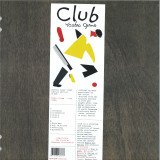
WRWTFWW Records is honored to announce the first ever vinyl release for esteemed Japanese producer, composer, and environmental music luminary Yoshio Ojima’s rare forgotten album Club, previously only released as a limited edition of 50 cassettes back in 1983. The electronica/proto-techno/experimental gem is available as an LP reissue supervised by the artist, sourced from the original masters and housed in a heavy 350gsm sleeve. Only 500 copies were made.
A precious and sought-after item among collectors and enthusiasts of early Japanese electronic music, Club is a stunning and timeless collection of avant-garde electronica, proto-techno, mecha-ambient, and ear-pleasing experimentations from Yoshio Ojima, the ambient/environmental master behind the pivotal Music for Spiral albums released in 1988 (aka Une Collection Des Chaînons I and II reissued on WRWTFWW), and producer of Hiroshi Yoshimura’s Pier & Loft, Motohiko Hamase’s #Notes of Forestry, and Satsuki Shibano's iconic Rendez-Vous.
Filled with quirky minimalist acid-synth-and-drum-machine-handiwork, bouncy collages of beautifully childlike techno and pre-IDM, and the irresistible DIY charm of humble beginnings, the 8-track album is a fun, adventurous and risqué-but-catchy-in-the-most-peculiar-way piece of Japanese electronic music history neatly capturing the incredible creative energy boiling through the country’s scene in the 1980s.
Experience the roots of Japanese electronica!
- 1: Vox Populi
- 2: Our Nightmares Call
- 3: Last December
- 4: Eyes Of A Dawn
- 5: Vox Dei
- 6: Lobbies
- 7: Judas Had A Friend
- 8: Heraclitus
- 9: Bound For Ruin
The mood is dark to melancholic, but also majestic and epic. Hailing from Rome, THE FORESHADOWING are something like the musical equivalent of the city they come from. Founded in 2005, the group can look back on a successful and eventful history. Listeners of gothic, doom and dark metal are very familiar with the quartet's work. THE FORESHADOWING gained popularity in the international scene with four acclaimed albums released between 2007 and 2016: "Days of Nothing" (2007), "Oionos" (2010), "Second World" (2012) and "Seven Heads, Ten Horns" (2016). In 2023, THE FORESHADOWING ended a forced break of several years with the EP "Forsaken Songs" and a European tour with Saturnus and In The Woods. Now, "New Wave Order" is the group's fifth full length album and their debut on LIFEFORCE RECORDS. The formation from Rome emphasizes its strengths on the album and offers cinematic tracks of dark music that is nevertheless immensely catchy and mood-enhancing. While listening to "New Wave Order", you are whisked away into a world full of secrets and allusions. The path is THE FORESHADOWING's goal, which manifests itself in all-encompassing, organically developed musicality. The Italians are outstanding songwriters who create captivating arcs of suspense and also keep an eye on the overarching strands. Nothing else can be expected from this eternal band.
- Chris Goss; Alain Johannes - Aqualung
- The Well - Cross-Eyed Mary
- Osi And The Jupiter - Cheap Day Return
- Huntsmen - Mother Goose
- The Otolith - Wond'ring Aloud
- Motorpsycho - Up To Me
- Big Scenic Nowhere - My God
- Saturna - Hymn 43
- Mammoth Volume - Slipstream
- The Sword - Locomotive Breath
- Domkraft; Arvid Hällagård - Wind-Up
Oxblood Vinyl[33,57 €]
JETHRO TULL sind musikalische Riesen mit einem einzigartigen Sound - oder besser gesagt Sounds, die im Kanon der Rockmusik unvergleichbar geblieben sind. Die 1967 in Blackpool, Lancashire, von dem Schotten Ian Anderson gegründete Band hat im Laufe ihrer jahrzehntelangen Karriere immer wieder stilistische Veränderungen und Imagewechsel durch- und überlebt. Vor allem die charakteristische Stimme ihres Frontmanns und die Einbeziehung der Querflöte als wesentliches Instrument haben JETHRO TULL dennoch mit einem unverkennbaren klanglichen Fingerabdruck versehen.
"Aqualung Redux" präsentiert neue Versionen aller elf Titel des 1971 erschienenen Bestseller-Albums, von dem JETHRO TULL mittlerweile weltweit mehr als 7 Millionen Exemplare verkaufen konnten. Mit "Aqualung" feierten die Briten ihren Durchbruch als Rockband sowohl in Radio und TV als auch auf weltweiten Tourneen. "Aqualung" handelt in erster Linie vom Glauben und von Religion, beschäftigt sich aber auch mit anderen Themen wie der Obdachlosigkeit. Laut Ian Anderson handelt es sich bei "Aqualung" keineswegs um ein Konzeptalbum, für das es dennoch oft gehalten wird. Während die Band wie auf früheren Werken nach wie vor auf Blues, Hard Rock und der Psychedelia setzte, fügte sie auf "Aqualung " vermehrt akustische Folk-Momente hinzu. Bei der Singleauskopplung 'Locomotive Breath' handelt es sich um den vermutlich bekanntesten und am meisten gecoverten JETHRO TULL Song.
Zusammen mit "Aqualung Redux" präsentieren wir auch das Begleitalbum "Best of Jethro Tull Redux", das weitere Klassiker und Raritäten aus dem ebenso umfangreichen wie einzigartigen Katalog der britischen Rocklegende enthält.
Die Magnetic Eye Redux- Reihe lässt ausgewählte Künstler handverlesene klassische Alben aus der Geschichte des Rock und Metal komplett neu interpretieren und respektvoll in das neue Jahrtausend übertragen. Bisher hat das Label solche Meilensteine wie PINK FLOYDs "The Wall", HELMETs "Meantime", BLACK SABBATHs "Vol. 4", JIMMY HENDRIX' "Electric Ladyland", "Dirt" von ALICE IN CHAINS, AC/DCs "Back in Black" und den SOUNDGARDEN-Klassiker "Superunknown" in Redux-Versionen veröffentlicht. Unter vielen anderen haben sich solch herausragende Künstler wie MATT PIKE, PALLBEARER, THE MELVINS, ALL THEM WITCHES, KHEMMIS, ASG, ZAKK WYLDE, MARK LANEGAN, SCOTT REEDER an diversen Redux-Projekten beteiligt.
Angeschnallt und zugestiegen bei Magnetic Eyes achter Expedition ins Redux-Abenteuer, mit dem wir den einzigartigen britischen Rock-Erneuern JETHRO TULL die gebührende Ehre erweisen!
- Chris Goss; Alain Johannes - Aqualung
- The Well - Cross-Eyed Mary
- Osi And The Jupiter - Cheap Day Return
- Huntsmen - Mother Goose
- The Otolith - Wond'ring Aloud
- Motorpsycho - Up To Me
- Big Scenic Nowhere - My God
- Saturna - Hymn 43
- Mammoth Volume - Slipstream
- The Sword - Locomotive Breath
- Domkraft; Arvid Hällagård - Wind-Up
Black Vinyl[30,88 €]
JETHRO TULL sind musikalische Riesen mit einem einzigartigen Sound - oder besser gesagt Sounds, die im Kanon der Rockmusik unvergleichbar geblieben sind. Die 1967 in Blackpool, Lancashire, von dem Schotten Ian Anderson gegründete Band hat im Laufe ihrer jahrzehntelangen Karriere immer wieder stilistische Veränderungen und Imagewechsel durch- und überlebt. Vor allem die charakteristische Stimme ihres Frontmanns und die Einbeziehung der Querflöte als wesentliches Instrument haben JETHRO TULL dennoch mit einem unverkennbaren klanglichen Fingerabdruck versehen.
"Aqualung Redux" präsentiert neue Versionen aller elf Titel des 1971 erschienenen Bestseller-Albums, von dem JETHRO TULL mittlerweile weltweit mehr als 7 Millionen Exemplare verkaufen konnten. Mit "Aqualung" feierten die Briten ihren Durchbruch als Rockband sowohl in Radio und TV als auch auf weltweiten Tourneen. "Aqualung" handelt in erster Linie vom Glauben und von Religion, beschäftigt sich aber auch mit anderen Themen wie der Obdachlosigkeit. Laut Ian Anderson handelt es sich bei "Aqualung" keineswegs um ein Konzeptalbum, für das es dennoch oft gehalten wird. Während die Band wie auf früheren Werken nach wie vor auf Blues, Hard Rock und der Psychedelia setzte, fügte sie auf "Aqualung " vermehrt akustische Folk-Momente hinzu. Bei der Singleauskopplung 'Locomotive Breath' handelt es sich um den vermutlich bekanntesten und am meisten gecoverten JETHRO TULL Song.
Zusammen mit "Aqualung Redux" präsentieren wir auch das Begleitalbum "Best of Jethro Tull Redux", das weitere Klassiker und Raritäten aus dem ebenso umfangreichen wie einzigartigen Katalog der britischen Rocklegende enthält.
Die Magnetic Eye Redux- Reihe lässt ausgewählte Künstler handverlesene klassische Alben aus der Geschichte des Rock und Metal komplett neu interpretieren und respektvoll in das neue Jahrtausend übertragen. Bisher hat das Label solche Meilensteine wie PINK FLOYDs "The Wall", HELMETs "Meantime", BLACK SABBATHs "Vol. 4", JIMMY HENDRIX' "Electric Ladyland", "Dirt" von ALICE IN CHAINS, AC/DCs "Back in Black" und den SOUNDGARDEN-Klassiker "Superunknown" in Redux-Versionen veröffentlicht. Unter vielen anderen haben sich solch herausragende Künstler wie MATT PIKE, PALLBEARER, THE MELVINS, ALL THEM WITCHES, KHEMMIS, ASG, ZAKK WYLDE, MARK LANEGAN, SCOTT REEDER an diversen Redux-Projekten beteiligt.
Angeschnallt und zugestiegen bei Magnetic Eyes achter Expedition ins Redux-Abenteuer, mit dem wir den einzigartigen britischen Rock-Erneuern JETHRO TULL die gebührende Ehre erweisen!
- Sonores
- Brushstrokes
- Moonfall
- Lifted
- Embrace Before We Forget
- Flutterings
- Encore Elektrik
- Paris-Berlin
- Giving Thanks
- Breve
Black Vinyl[24,58 €]
Breve is the new album by Stefan Paul Goetsch aka Hainbach.
"After a ceaseless amount of work and family struggles, 2023 had left me empty and tired. Instead of the many hats I usually wear, I shifted my focus exclusively on my music. For two weeks every day I sat down behind a few modular synths, a toy piano and an Ondioline, recording tape after tape. I did not lock myself in though - my kids were playing around me, commenting, touching knobs, adding oscillations. What in „deadline times“ can be disrupting, became restorative. I was with my family, just drifting on waveforms. I hope some of that atmosphere shines through, and the album can help you to find peace as it did for me.
Thanks to Forgotten Futures for the loan of the Ondioline and technician Daniel Kitzig for the beautiful restoration work." - Hainbach
Based out of Berlin, Germany, electronic music composer and performer Hainbach creates shifting audio landscapes THE WIRE called "One hell of a trip". His music has been released on Opal Tapes, Seil Records, Spring Break Tapes, Limited Interest and Marionette. He has been fascinated with sine tones, noise and FM since he discovered the dial on the radio. Never losing his childhood wonder, he still searches for the sounds in between on modular synths and other devices.
We end the year with the second in our series of The Coin EP featuring a different artist on each side. In case you missed Volume 1 - TLM033 it featured Cumulative Collective and Re:Fill in September 2023. This time on side A we have Italian brothers The Robinson who have previously released their track Song 1 on TLM034. They are back once again with two superb jazz infused house tracks, Passion Is The Key and A Satisfying Day. Both ideal for the dancefloor.
Moving onto the AA side and someone who has become a TLM regular, namely Japanese artist Takahiro Fuchigami who supplies us with three amazing tracks; Jazzing Bird, How’s That Sound? and In Motion. Fantastic broken beat from one of Japan’s rising stars. If you missed his two tracks that we previously released on TLM034 - Strange Acquaintance and TLM035 - Outer Heaven, you need to check them out.
‘Leon’ is the highly anticipated fourth album from Grammy Award-winning recording artist, songwriter, and producer Leon Bridges. With 13 tracks featuring Leon’s signature storytelling and a unique blend of organic genre alchemy, ‘Leon’ is his most poignant, powerful, and personal work to date. He takes fans on a trip through the heart of Ft. Worth he knows best, the things he holds dear, and the people and places that shaped him. Featuring production by Ian Fitchuk (Beyonce, Noah Kahan), Daniel Tashian (Kacey Musgraves), and Tyler Johnson (Harry Styles, Miley Cyrus), Leon describes the album as “somewhat of a self-portrait… I’m excited to share these stories about my home, about nostalgia, about my upbringing, about where I’m from, with all of you. I hope this music brings you back to your roots and your journey.”
Quote from Leon:
“‘Leon’ has been a long-time coming. I started writing pieces of it as far back as ‘Gold-Diggers Sound.’ They didn’t fit what I was trying to do with that album and I tried moving on. But I couldn’t shake them because they’re part of me. And, if I’m honest, also because I think this is some of my most excellent work yet.In many ways, Leon has been in the works since my childhood. This record is about simpler days. It’s about time spent in my beloved Fort Worth and the experiences that made me the man I am today. It’s soulful music in the truest sense - it’s imbued with my soul.I’m excited to share these stories about my home, about nostalgia, about my upbringing, about where I’m from, with all of you. I hope this music brings you back to your roots and your journey.”