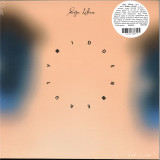
- Also available on black vinyl - First ever official reissue - Produced in full cooperation with Hiroshi Yoshimura's estate - Liner notes by contemporary music writer and professor Junichi Konuma - Remastered from original sources by John Baldwin - First time on vinyl, cassette, and streaming - 2xLP vinyl housed in gatefold jacket - Discs cut at 45 rpm for optimal sound quality // Following their 2024 reissue of Hiroshi Yoshimura's classic album, Surround, Temporal Drift proudly presents the first-ever reissue of FLORA, Yoshimura's underappreciated ambient classic. FLORA was originally recorded and completed in 1987, and remained unreleased until 2006, nearly three years after Yoshimura's passing in 2003. The album is chronologically and stylistically a follow-up to his acclaimed 1986 works GREEN and SURROUND, wherein Yoshimura continues to play with the ambience of sound and the sound of ambience, underscoring his mastery in the field of environmental music. Yoshimura's other recorded works include Music For Nine Post Cards (1982), originally produced to be played back inside a museum space, and Pier & Loft (1983), commissioned as accompaniment to a contemporary fashion show.
Cerca:satie
Chris Gall, bekannt für seine Arbeit mit der mehrfach ausgezeichneten Formation Quadro Nuevo sowie für seine genreübergreifenden Projekte, widmet sich in "Impressionists Improvised" den Meisterwerken von Komponisten wie Claude Debussy, Maurice Ravel und Erik Satie. Doch statt sich auf historische Reproduktionen zu beschränken, interpretiert er diese ikonischen Stücke auf unkonventionelle und erfrischende Weise neu und lotet die Gemeinsamkeiten zwischen der impressionistischen Musik und dem Jazz aus.
- LITA Exclusive pressed on Sky Blue colored vinyl - First ever official reissue - Produced in full cooperation with Hiroshi Yoshimura's estate - Liner notes by contemporary music writer and professor Junichi Konuma - Remastered from original sources by John Baldwin - First time on vinyl, cassette, and streaming - 2xLP vinyl housed in gatefold jacket - Discs cut at 45 rpm for optimal sound quality // Following their 2024 reissue of Hiroshi Yoshimura's classic album, Surround, Temporal Drift proudly presents the first-ever reissue of FLORA, Yoshimura's underappreciated ambient classic. FLORA was originally recorded and completed in 1987, and remained unreleased until 2006, nearly three years after Yoshimura's passing in 2003. The album is chronologically and stylistically a follow-up to his acclaimed 1986 works GREEN and SURROUND, wherein Yoshimura continues to play with the ambience of sound and the sound of ambience, underscoring his mastery in the field of environmental music. Yoshimura's other recorded works include Music For Nine Post Cards (1982), originally produced to be played back inside a museum space, and Pier & Loft (1983), commissioned as accompaniment to a contemporary fashion show.
- 1: Lucifer, Bringer Of Light
- 2: Laird Of Heimly
- 3: Stanley (Tonight's The Night)
- 4: The Comeback
- 5: Kip Satie
- 6: Balthazaar
- 7: Bed Of Roses
- 8: Neotzar (The Second Coming)
- 9: Core Memory Corrupt
- 10: Three Frightened Monkeys
- 11: Dead Of Winter
After two pandemically conditioned ‘reaction’ albums - Yay! (2023) and Neigh!! (2024) - a few non-album singles and a compilation album, a downsized and sleek Motorpsycho is back where we all know and love them, with an epic, sprawling double album, filled to the brim with inventive, organic and ecstatic rock-based music. Rejoyce Psychonaut! This eponymously titled, 11 song work, has exactly as much variety & diversity, accord and discord, as one expects from a band that has released a few albums before, and that these days must be regarded as an institution in European rock. From concise 3min-something pop-rockers, to 20mins plus progressive epics, via acoustic intimacies and psychedelic wig-outs, this is concentrated Motorpsychosis: commenced Rebis, countdown initiated. Ever closer. Ever sharper... Since the traditional 3 or 4 piece rock band seems to be a dying breed these days, and MP always was a band in flux anyway, a new pragmatic era has begun in the Psychoverse. The band has, in what one might call alchemical terms, been ‘dissolved and purified’, and is by now again reduced to the core two founding members HMR & BS. This is nothing new, it has happened a few times before, but these days they are also the owners and creators of the record company NFGS, which is now the hub of all recorded band activity, and Motorpsycho marks the final severance of existing ties to other labels for the first time in 35 years. If ‘freedom is free of the need to be free’, this is it. Yikes! The minimalist title of the album is then not just easy to remember, it’s also a statement: a new era has begun in the Psychoverse, a state of affairs reflected in execution and details as well as title, if not perhaps, in ambition or size: “Senex psittacus negligit ferulam” *. This is a time of new beginnings for a band that has spent two years consolidating and reseting before charging ahead anew on a new path, trumpets blaring (...and trumpets don’t come much more blaring in the Psychoverse than with this grandiloquent hyperbole. Good fun! ). New day rising indeed. The core band was adroitly helped by a gaggle of greats from all over the Scandinavian musical landscape on these recordings: drummers Ingvald Vassbø and Olaf Olsen, string arranger/violinist Mari Persen, vocalist Thea Grant, and - as usual - honorary psycho, brother Reine Fiske, were all fellow travellers on this musical journey. Motorpsycho was co-produced by the band and Deathprod, and mixed by Andrew Scheps. Motorpsycho are not the best at what they do, they’re the only ones that do what they do. NFGS2025 *: “Senex psittacus negligit ferulam,” or “An old parrot doesn’t mind the stick.”
An ingenious musician with a harmonious sense of melody, French pianist and composer Maxence Cyrin releases Passenger, his 9th album, composed and performed entirely on the piano. With influences ranging from Ryuichi Sakamoto and Brian Eno to Philip Glass and composers such as Erik Satie and Frédéric Chopin, this album weaves together ambient, minimalism and neo- classical music. This time around, the artist has sought to convey his emotions and ideas in a more intuitive and spontaneous way, even keeping improvisations such as "Under A Glass Bell" and "Dive" recorded during a residency in Brittany. Maxence Cyrin is one of France's most internationally acclaimed pianists.
This is another vital instalment of Get Physical Music's classic reissue series, which is now scheduled for a vinyl release. It features a track first released in 1994 and was also part of DJ Pierre's Wild Pitch: The Story album back in 2017. It comes with an Emmanuel Satie edit of the Ricardo Villalobos Dub and a stellar remix from South Africa's Jazzuelle, first released in 2017.
DJ Pierre's name is forever synonymous with house music, particularly the acid sound he pioneered in the' 80s. Staying true to the underground since then, he's consistently released vital tracks, innovated with his Wild Pitch style and now his Afro Acid label. Pierre continues to push boundaries with each new outing while this reissue proves that his earliest works are still some of house music's best ever.
'What is House Muzik' is an almost 10-minute masterpiece that's perfectly designed for gritty warehouse spaces and comes complete with an anthemic vocal monologue. It's dark and distorted with monstrous kicks and oversized hi-hats, a frazzled lead synth line and a marching groove that is lit up with strobe-lit details to get hands in the air. The original also comes alongside an acapella version.
Next up, we have an edit from melodic master Emmanuel Satie, who takes Fellow Ricardo Villalobos's epic 36-minute 'What Is Dub' version and splices it into a floor-friendly and perfectly paced 7-and-a-half-minute edit. Originally dropping in 2015, it now sees its way onto vinyl for the first time. Finally, South Africa electronic production don Jazzuelle drops a remix that lives up to its name with a dive into the deeper realms of acid.
- Belt Of Orion
- Vestiges
Belt of Orion by Stockholm-based Isak Edberg is the composer's second solo release on XKatedral, and his first to focus solely on instrumental music in the form of two pieces of extended duration for solo piano. Isak Edberg is a composer of electronic and acoustic music as exemplified by Ondulations from 2017 and Lamé written in 2010 and released in 2022, both on XKatedral. Edberg was also a member of Golden Offense Orchestra, active from 2012 to 2014. Edberg writes that his music is informed by an enchantment of being and a search for holiness, rapture and transcendence through stillness, contemplation, dreaming and an attempt to uphold the present. Edberg regards his music to be an adornment of time. The two works presented here were composed in the south of France and in Stockholm during a period spanning the years 2016-2018. The music was inspired by the cold winds, starry nights and desolate, palely bright landscape of the provençal autumn, as well as reflections during a time of escapism and isolation in the life of the composer. More concretely, this music grew out of hours of improvised playing on an old piano while living alone on the countryside, during which harmonic structures and gestures were slowly worked out by means of performing and listening, assessing and balancing sounds and silences. Stylistically, the music draws on a range of sources, such as Feldman's use of space and resonance as projected through both harmonic and temporal distance, the ritualistic gestural repetitions of Satie, as well as Messiaen's resonant harmony, together with some of the harmonic lushness of Scriabin's late work. Belt of Orion is a piece that explores the contrast of two musical textures, the one being fluid, airy and progressive, the other being static, steady and repetitive. The music sequences through a series of harmonic tensions in search of a place of peace, exposing a rift in the weave of time where everything momentarily stands still. In Vestiges repetitive and rhythmic materials form a major part of the musical structure, while sections of sparse, floating harmonies temporarily interrupt with reflective pauses of stillness. The music thus employs two different and contrasting kinds of musical hypnosis, with the aim of cradling the listener into a dark and perhaps unsettling sleep. The music on this recording was performed by the renowned Swedish pianist Mats Persson, who has for many decades been a legend in the art music scene of Stockholm. Through his languid yet distinct interpretations the delicacy and intimacy of these works are elegantly brought to the fore. The recordings heard here were made over the course of two evenings at Fylkingen in Stockholm. Isak Edberg's music moves slowly through the seemingly endless world that is harmonic sound. In his practice he uses heavily reduced and carefully controlled materials to create states of maximum clarity.
- A1: Spring Frost
- A2: Burnt Umber
- A3: Celeste
- A4: Wintergreen
- B1: Obsidian
- B2: Blonde
- B3: Dark Sienna
- B4: Verdigris
- C1: Snow
- C2: Rose Quartz
- C3: Quicksilver
- C4: Ultramarine
- C5: Iris
- D1: Cinnabar
- D2: Desert Sand
- D3: Deep Saffron
- D4: Cerulean Blue
- D5: Slow Movement: Sand
Roger & Brian Eno have revolutionized many concepts of music production and performance, from Brian Eno's groundbreaking treatment of pop music to younger brother Roger Eno's Erik Satie-esque ambient synth/piano recordings. These qualities resonate on this release. Each brings their unerring sense of place and mood to the album. The timbre in each track deepens and opens up with each listen. Concrete yet abstract tracks guide the listener through the collection, which was created over several years in a unique collaboration between the two artists.
Denovali presents the new album of the prestigious Swedish pianist and composer Matti Bye. Matti is well-known for his regular performances at various silent film festivals and screenings worldwide, where you can see him perform solo and with artists such as Lau Nau. Bye has been involved in several collaborations, including Hydras Dream, where he recorded and released an album with Anna von Hausswolff. Additionally, Matti is recognized for his scores in projects like ”Young Royals," ”Tove," „The Hundred-Year-Old Man Who Climbed Out of the Window and Disappeared,“ and "A Traves de tu Mirada” among many others.
Matti Bye's third album, "Capri Clouds", moves through the element of the air and further into space. A lone piano sounds, echoes - sometimes like a waltz. We have the sound of the wind with us and the sound of the sea below us as we fly, and above we hear the stars and planets spinning. A piano from the past, as if Satie met space - as if Spiritualized and Satie talked to each other across timeand space.These songs go straight to the heart and to the senses, and create images in your head. Stories from your own memory bank, as well as new visions – music to lean into, meditatively and hopefully longing. But there is also an undertone of something dark and desolate. Musically, Matti Bye moves within the realm of neo-classicism, but he is also approaching romanticism. References to composers suchas Schubert and Beethoven are to be found here, as well as to post-romantic bands such as Kraftwerk and The Cure. In this third album of a trilogy – the first was "Bethanien", the second "The Forgotten Land" – Bye continues his musical journey. Here we encounter a brighter and lighter production. Anders af Klintberg has brought "Capri Clouds" up from the underworld and the dreamscape, towards clouds and skies.
Nachdem Schiller mit den Releases von Sonne und Sonne (Chillout Edition) bereits sämtliche Fans begeistern konnte, machte Christopher von Deylen mit seinem im August 2013 erschienenen achten Studioalbum
Opus es sich zur Aufgabe, auf kunstvolle Weise klassische Melodien mit elektronischen Klängen zu verweben. So interpretiert er beispielsweise gemeinsam mit der renommierten Pianistin Hélène Grimaud, deren
Erfolgsweg von internationalen Triumphen gesäumt ist, Erik Saties „Gymnopädie No.1“, während die legendäre Sopranistin Anna Netrebko zum ersten Mal auf elektronische Musik trifft und meisterhaft Edvard
Griegs „Solveig‘s Song“ in die einladende, akustische Landschaft von Schiller hineinlegt.
Hinzu kommen altbekannte Melodien wie etwa die von Rachmaninoffs „Rhapsody On A Theme Of Paganini
op. 43“ oder Debussys „Reverie“.
NEW 2024 ALBUM, LP, 180G, HiGH QUALITY VINYL HAND MADE IN DENMARK IN AN ARTISANAL PROCESS (in a an Audiophile Quality approach where EVERY 75th COPY IS QUALITY CHECKED IN FULL).
For their 45th Band Anniversary the Iconic duo is still grooving and back with FOREVERGREEN
With Laid Back's 12 favourite songs of all time in a brand new recorded Laid Back cover version,
incl. "All You Need is Love", "House of The Rising Sun", "My Generation", "Gloria". "Whiter Shade Of Pale"
and so many more.
HQ Vinyl LP Handmade in Denmark in Artisanal Process
Formed in the 1979, the duo is still grooving at their studio in Vesterbro, Copenhagen.
Laid Back gained their first international major break through in the 80's with Sunshine Reggae and White Horse. The dualism and originality of the two songs has left a worldwide and everlasting reputation of their music. The 3rd evergreen from their hand was made in 1990 named Bakerman altogether with a music video by Lars Von Trier.
More recently, the two members have co-founded their own record company, Brother Music, which has released Laid Back Albums "Cosyland", the chill out album "Cosmic Vibes" and the recent two Studio Albums "Uptimistic Music" and "Road to Fame".
For their 45th Band Anniversary the Iconic duo is back with FOREVERGREEN! A stunning, simply Irresistable album meeting again the Band and (more than) 45 Year of music history. With Laid Back's favourite songs of all time in a Laid Back cover version!!
GENRE/S: Cover songs, reggae, Pop, chill out, classic, evergreens
Der isländische Komponist Snorri Hallgrímsson veröffentlicht «Longer Shadows, Softer Stones», sein Debüt
bei der Deutschen Grammophon. Die EP erscheint als 180g Vinyl und enthält sechs von ihm geschriebene
und produzierte Stücke. Der Multiinstrumentalist Hallgrímsson, der bereits mit gekonnten Neuinterpretationen von Werken Saties, Schumanns und Boulangers beeindruckte, übernimmt den Gesang und spielt
Klavier sowie elektronische Elemente. Unterstützt wird er von Streichern des Reykjavík Orchestra unter
der Leitung von Viktor Orri Árnason. »Snorri Hallgrímsson gelingt es, mit seinem tiefen Verständnis von
Raum und Stille ein Statement zu setzen«- Higher Plain Music
REPRESS
The second LP compendium of Emahoy Tsege Mariam Gebru's early solo piano works, recorded throughout the 1960s - finally available again. Emahoy Tsege Mariam Gebru is a true original - her compositions and unique playing style live somewhere between Erik Satie, Debussy, liturgical music of the Coptic Ethiopian Church, and Ethiopian traditional music. It is some of the most moving piano music you will ever hear! These original compositions, performed by Emahoy Tsege Mariam Gebru herself on solo piano, were originally self-released in Germany in small editions as fundraisers for orphanages, support organizations for widows of war victims, and other philanthropic causes. We are humbled and proud to present this album in collaboration with the EMAHOY TSEGE MARIAM MUSIC PUBLISHER and Foundation, and to assist in continuing her life-long mission of using music as a vessel to care for those who have been abandoned by society, or harmed by strife. Black vinyl LP comes in black inner-sleeves and heavy cardstock jacket with color printing and gold-foil stamping, and song notes by the composer herself. Restored and remastered by Timothy Stollenwerk.
After Prince Istari finished the Dub Encounter with Erik Satie, he
immediately set to work on expelling the evil curse of artificial intelligence. While the encounter with Satie was guided by the original
compositions, this album delves deeper into dub science.
The opening track is "Curse Of Machine Learning," a grinding cumbia dub track that sucks you into the curse of machine learning. It's followed by "Artificial Neural Network," arguably the album's most nerve-wracking track, with wild snare rolls colliding with offbeat echoed riddim sections. "Large Language Models" offers a more relaxed, arabesque one-drop riddim with speech synthesis vocals. "Fake Image" closes the first side with a full trombone solo contributed by Eugene Rosebud.
Side B starts with the one-drop killer tune "Haunted By Delusion,"
featuring an organ solo by Prince Istari. Drum and bass in your face.
"Evil Forces," on the other hand, is a fusion of jazz and dub; after the
brass section breakdown, it rolls into a crazy synth solo. Then next „I
Want Your Data" pulls your data into the AI's guts with a vibraphone.
This is maybe the ambitious tune on the record speaking of chord
progressions. The final track sees Eugene Rosebud return with a double trombone solo in "Transhuman Feedback Rock" assisted by a saz cooling the blues pattern with a hookline. Here we have beautifull springreverb and harmonizer dub effects on the snare twirrling around the trombone solos.
All tunes composed, arranged, conducted and engineered by Prince Istari and played by his house band The Virtualistics. Trombone Solos by Eugene Rosebud. Packaged in a nice cover drawn by Markus Schäfer and frequency shift and cut by LXC.
Repress!
Today – Friday 9th July – artist, producer, DJ and club culture icon Peggy Gou releases the second of a pair of summer singles. Released via Gou’s own Gudu Records, “I Go” is an incredible piece of club-focused electronic music and showcases a very different sound to previous single “Nabi”.
Described by The FADER as “the kind of dazzlement you get from light dancing off of ocean water on a hot day: pure dopamine activating bliss” and Resident Advisor as “a refreshingly low-key jam”, “Nabi” was an evocative piece of slow-burning, 98bpm electronic pop, inspired by 80s synth classics, the piano pieces of renowned composer Erik Satie and the 80s and 90s Korean songs Gou's mother used to play at home during her childhood.
“I Go” takes inspiration from a similar era but this time the energy comes from Gou’s love of 90’s dance anthems, many of which she revisited during lockdown and an enforced break from touring. Both retain the hallmarks of Peggy Gou’s unique take on electronic music; at once both nostalgic and totally modern. But on “I Go”, the tempo, 808s and 909s are dialled right up for a self-motivating anthem that is set to soundtrack a summer when we can all hopefully dance together in our thousands again.
Talking about “I Go”, Peggy says:
“When I was a teenager in Korea, we didn’t have rave culture like there was in the UK. “I Go” is a tribute to that era, my own reimagination of the sounds I grew up loving. The lyrics are inspired by a note I wrote on my phone in 2019, staring at myself in the mirror of an airport toilet – I looked so exhausted but there was no way I wasn’t going to keep going! “I Go” is basically me motivating myself, finding courage and returning to a feeling of innocence. I hope people feel the same sense of positivity when they hear it”
Meanwhile, Peggy Gou is set to make a handful of DJ appearances in Europe over the summer. These include a huge sold out London event in August in the form of The Pleasure Gardens; an outdoor party in Finsbury Park created and curated by Gou herself and featuring a stellar supporting line up including DJ Harvey, Anz and Spencer.
Track List:
On 'Be Am' (now available only vinyl), Norwegian pianist, composer and
producer Bugge Wesseltoft has allowed his creative impulses to wander
where they may - no pre-set rules to govern the composition and
production, no obligations to (not) use electronics, not even a will to be
totally alone: this is pure playing and composition, where the music
speaks freely by whatever means it will
In the 25 years since Wesseltoft founded Jazzland Recordings, he has engaged in
numerous group projects and collaborations such as New Conception of Jazz,
duos with the likes of Sidsel Endresen, Henning Kraggerud and Henrik Schwarz,
one- off projects such as Trialogue, Bugge and Friends, and OKWorld! And of
course, the super- trio Rymden. However, it is in his solo material that we can
glimpse the true soul behind the effervescent and mercurial mind of one of the
most influential and important Norwegian musicians of an entire generation.
Many of the pieces here have the feeling of being wordless songs - indeed, no
words are needed when the notes convey all that is needed on tracks like "Tide"
or "State". The arrival of Håkon Kornstad on the track pairing of "Emergence" and
"Roads" shifts the mood from one of peace within solitude to peace within
company, the latter track being an understated dialogue, a musical soundtrack for
watching the world hustling and bustling, or sleeping its way towards a new day.
Tracks such as "Messenger", "Green" and "Be Am" throw more angular shapes,
musical shadow-play where unexpected progressions shift to moments of gospel
uplift before taking unanticipated shifts towards unexpected harmony. With "Life",
kalimba accompanied by birdsong loops, carrying us into a piece that takes
tentative but exact steps between positions, like tai chi in musical form.
"Sunbeams through leaves softly rustling" closes the album with that beautiful
Satie-like melodic simplicity that Bugge has made his own.
- A1: Fantasia For Nausicaä
- A2: The Road To The Valley
- A3: Confessions In The Moonlight
- A4: The Lost Paradise
- A5: The Wind Forest
- A6: My Neighbor Totoro
- B1: Kiki’s Delivery Service
- B2: Starting The Job
- B3: Heartbroken Kiki
- B4: Porco E Bella
- B5: Madness
- B6: Ashitaka And San
- C1: Kodamas
- C2: Princess Mononoke
- C3: One Summer’s Day
- C4: Sootballs
- C5: The Sixth Station
- C6: Merry-Go-Round Of Life
- D1: Mother Sea
- D2: Ponyo On The Cliff By The Sea
- D3: A Journey (A Dream Of Flight)
- D4: Nahoko (An Unexpected Meeting
- D5: The Procession Of Celestial Beings
- D6: When I Remember This Life
2024 Repress
Performed by Nicolas Horvath.
Discover all the beauty of the music from Hayao Miyazaki and Isao Takahata's Studio Ghibli films in this new original production for solo piano!
Based on the official piano scores of the original composer of the Studio Ghibli films, Joe Hisaishi, this album is an initiatory and virtuoso journey into the worlds of Miyazaki and Takahata, performed by pianist Nicolas Horvath, Steinway and Sons Artist, famous for being a first-class interpreter of composers such as Philip Glass, Franz Liszt, Claude Debussy and Eric Satie.
The album contains tracks from all Studio Ghibli films composed by Joe Hisaishi, a complete horizon of the immortal work of the cult animation studio.
The vinyl edition includes 24 tracks on two discs inserted in a sumptuous gatefold sleeve.
- A1: Mon Dié Sénié 4 29
- A2: Walking With Satie 4 03
- A3: Père Lachaise 3 43
- A4: Miles And Miles Of Miles Davis 2 04
- A5: Jazz Is Paris 5 16

- B1: Rue Dauphine 3 25
- B2: Paris Paris With Catherine Deneuve 5 23
- B3: Je T'aime .. Moi Non Plus 4 36
- B4: Club Le Narcisse 3 20
- B5: La Main Parisienne With Amina 5 01
- C1: Driving Into Delirium 2 33
- C2: Revenge Of The Flowers With Françoise Hardy 404
- C3: In The Absence Of The Parisienne 4 26
- C4: Anthem 3 52
- C5: Who The Hell Is Sonia Rykiel? 6 18
- D1: Paris Un 4 39
- D2: Paris Deux 4 02
- D3: Paris Trois 9 42
- D4: Paris Quatre 3 35
Malcolm McLaren, New York Dolls and Sex Pistols’ manager, writer, musician, fashion designer, marked the history of pop culture. His album “Paris” released in 1994 on the French Vogue label was produced by Robin Millar (Sade, The Style Council, Everything But The Girl). This is the first time the album has been available on vinyl and arrives a few weeks before the opening of Paris Olympic Games which should see lead track ‘Paris Paris’ with Catherine Devenue on vocals widely referenced. Also features Francoise Hardy & Amina. This is a x19 trk double Black LP Vinyl in gatefold sleeve. Promo & marketing activity..
Aufbruch in die Grenzbereiche der Musik: Bertrand Chamayou spielt John Cage Schon auf seinem Vorgängeralbum "Letter(s) to Satie" hatte der französische Spitzenpianist Bertrand Chamayou die faszinierende Klangwelt von John Cage erkundet. "Cage2" vertieft diese Erfahrung: Das Frühwerk von Amerikas originellstem Avantgarde-Musiker, komponiert für "präpariertes Klavier", führt in die Grenzbereiche von Musik und Bewegung. Neben einem Pianisten, einer imaginären Tänzerin und einem Klavier befinden sich Schrauben, Gummiteile, Bolzen, Münzen, und im Reisegepäck - Utensilien, die den Charakter des Instruments verändern, erweitern und es wie eine Gruppe von Schlaginstrumenten klingen lässt.
NAKID presents the first album in years from Max Loderbauer (Sun Electric) and Tobias Freund’s cult Non Standard Institute. Delving deep into the aether with a double LP - almost an hour and a half in length - featuring ruined, vaporous and engrossing ambient variations on a theme.
Planing axes between iridescent new age ambient, sublime folk and avant-classical, to miasmic drone and plangent shoegaze; ‘A Day or Two’ charts the Non Standard Institute’s first actions in 6 years and serves as a compelling reminder of their intuitive work in abundance. Expanding and contracting their sound across 18 parts, they arc from heaving, oddly-tuned drones to smoggy, surreal soundscapes, bringing a wealth of fine-tuned instincts to the table. With Max Loderbauer’s 35+ years as Berlin ambient pioneer with Sun Electric, jams with Villalobos, and roles in Vladislav Delay Quintet and the Moritz von Oswald Trio, he’s matched by Freund’s 40 years of deep engineering expertise embedded in the experimental industrial and techno trenches.
The melancholy, Satie-laced piano meditations that grounded 2018's '5863' are gone, and the human touch that's been present since their very first collaborations is placed under the microscope, enhanced by their use of the Haken Continuum Fingerboard, a gestural synth that was developed to open up new modes of playing. Loderbauer's experience with the piano helps him make the most of the instrument's touch-sensitive 3D surface, while Freund uses two multi-channel loopers, piping the sounds through his arsenal of pedals.
The 18 tracks are billed as "unplanned atmospheres" that arc from sombre, drone-heavy material to humid, tape-saturated imaginary-island jams such as 'Listening To Cells' and 'Are You One Of Them'. On the latter, the duo work patiently, letting dusted string plucks tumble across each other while warbling pads hum below, bending like flutes. On 'Unlikely Events', anxious didgeridoo-like wails are ruptured by environmental rattles, before ominous voices lead us into a pocket of industrialised resonance. In time, the skies open up and the sounds morph into pastoral song, the drone blurring into hopeful pads almost as lucid and eloquent as AFX's 'SAW Vol. II', with sonorous synths that float over formless strings. Reflective, cinematic arrangements for flute and silvery ambient give way to diffusions of denser, resonant polychromatics and pucker up in outernational, alien ambient impulses recalling Connor Camburn jamming with dirashe folk pipes.
2024 Reissue
Transparent grünes Vinyl! Wieder lieferbar! Zum ersten Mal überhaupt seit der digital-only Veröffentlichung 2011 erscheint nun der erste "Minecraft"-Soundtrack in physischer Form. Die Vinylversion enthält zwölf Tracks! "Minecraft - Volume Alpha" ist das Werk des deutschen Komponisten und Musikers Daniel Rosenfeld. Unter seinem Künstlernamen C418 erschuf Rosenfeld den weitreichenden Soundtrack und das lebendige Sounddesign, das das auf Voxel aufgebaute Universum von "Minecraft" zum Leben erweckte. Fans und Kritiker waren durch die Bank weg begeistert von seinen beatlosen, ausgewogenen Electro-Stücken. Die bekannte Gaming Seite "Kotaku" führte den Soundtrack unter der "Best Game Music" 2011 und nannte die Musik "beeindruckend beruhigend", während The Guardian die zerbrechlichen Stücke Rosenfelds aus Klavier und minimalistischem Ambient mit den legendären Künstlern ERIK SATIE und BRIAN ENO. In einem Interview destillierte Polygon "Volume Alpha" auf seine Essenz hinuntern: "Der Soundtrack ist nicht gebunden an die Retro-Ästhetik der Minecraft Graphik. Der Soundtrack setzt sich über sie hinweg. Das Album ist ein Versuch, die kombinierte Game/Music Erfahrung in etwas Himmlisches zu übersetzen."
Fire-splattered vinyl is opaque red vinyl with yellow & orange starburst. As C418, composer and producer Daniel Rosenfeld designs sounds to resonate in both physical and pixelated realms. Best known for his original soundtracks to Minecraft, the single best-selling video game of all time, he's developed a discography of instrumental music over the last decade that traverses electronic pop patterns, neo-classical dreamscapes, and sparse ambient motifs. The latter element has broken from the "8-bit" pigeonholing of game music and earned him accolades that reference artists like Erik Satie (The Guardian) and Brian Eno (VICE). In 2015, after quietly self-releasing Minecraft Volume Alpha and Minecraft Volume Beta, Rosenfeld partnered with Ghostly International to reissue Minecraft Volume Alpha on vinyl and CD. The release garnered attention from proper music critics and the gaming community alike, becoming one of the most sought after records in the Ghostly catalog. Now, following several restocks of Alpha to fervent fan response, it is time for the soundtrack's second installment to shine. For the legion of listeners and players to, at long last, have Minecraft Volume Beta in tangible formats. Originally self-released in 2013, Minecraft Volume Beta was C418's longest batch of music to date at nearly 140 minutes. The collection features tracks that were "silently" added to Minecraft during its music updates and a few that never officially entered the game. The run time is now adapted to fit the double LP format, while digital downloads include the full set Rosenfeld's unmistakable abilities are on display; he creates a sweeping variety of musical ideas that mirror the limitless universe of Minecraft. Ghostly International is thrilled to give this unique collaboration its due treatment and hopes to see the creative inspiration which drives Minecraft and Rosenfeld continue to disperse by virtue of this unexpectedly universal music.
Michel Moers, the legendary Telex artist, makes a grand return with "As Is," his second solo album, released 33 years after his debut. This 2024 album features a unique blend of thoughtful electronic music and surrealism, marking a significant evolution in Moers' artistic journey. "As Is" includes collaborations with Claudia Brücken and Belgian singer Daan Stuyven, adding depth and variety to its sound. The album, reminiscent of diary entries and influenced by Erik Satie, was recorded largely in transit. It revisits and updates Moers’ classics, reflecting on modern individualism. Moers' involvement in remastering Telex's catalogue has sharpened his auditory skills, enriching this album. "As Is" is not just a comeback but a testament to Moers’ enduring creativity and relevance in the contemporary music scene
A most unusual & stunning album. Tsege Mariam Gebru is an Ethiopian nun who has dedicated her life to helping others. She has been composing & playing music on the piano since the 1960's. Her music is a unique mix of Western classical music in the vein of Erik Satie, Ethiopian music & Religious Christian meditation music. On this reissue of her first LP, originally released in Germany in a very small pressing, we find Tsege Mariam Gebru playing her own compositions solo on piano. She plays with restrained grace & purity. The record invites repeated listening well and is filled with spiritual warmth.
Loup Vert is the first jazz album of French pianist Julien Grassen Barbe, joined for the occasion by double bassist Sébastien Bacquias and drummer Fabien Duscombs. Conceived and composed in the Pyrenees mountains, recorded around Paris, it is an album of twelve tracks that came as a response to the proposal of Julien Galner (producer, founder of HIDD label). Loup Vert is the name of a fetish, a creature that breathes inspiration. Informed by many influences, from Frédéric Chopin to Morton Feldman, from Erik Satie to Herbie Hancock, through Keith Jarrett, Madlib and Naftule Brandwein, Julien Grassen Barbe's music opens a space dedicated to improvisation, melody, and the exploration of textures. Trained in classical music, graduate of the conservatory of the Hautes-Pyrénées region, where he is originally from, Julien Grassen Barbe is a songwriter and a musician, but also an ethnomusicologist, specialist in Jewish music, and a published author. A trip to New-York, land of Thelonious Monk, had a deep impact on him. He used it as a time for jam sessions, lessons with some of his favorite musicians, Aaron Parks, Aaron Goldberg, Barry Harris. Between 2014 and 2016, he explored pop, invited by Chateau-Marmont and Exotica to collaborate on two records as a keyboardist. It is on this occasion that he got closer to Julien Galner, producer, founder of the HIDD record label who asked him to record a jazz record. They entered the studio to record Loup Vert, a project that is a cross between impressionism, cinema, be-bop, mathematics and improvised music. Most of the pieces were written by Julien Grassen Barbe, mixing acoustic and electric/electronic worlds.
Passacaglia ist ein vielfarbiger musikalischer Dialog zwischen zwei einzigartigen Charakteren, die führende Persönlichkeiten des europäischen Jazz und der zeitgenössischen Musik sind: Adam Bałdych and Leszek Możdżer. Das Repertoire reicht von freien Improvisationen über von den Musikern selbst mitgeschriebene Werke bis hin zu Ihren ganz persönlichen Interpretationen von Themen von Erik Satie, Josquin des Prez und anderen.
Sign Libra's third album Hidden Beauty is an intimate voyage through feminine nature, guided by the arts of subtext, musical collage, and mysterious allusions. Elegantly arranged, enigmatic, and mischievous, Hidden Beauty seeks to "release the invisible and bring fragility to the surface." From the rainforests of Closer to the Equator (Sounds of the Dawn, 2016 / Antinote, 2018) to the surreal lunar landscape of Sea to Sea (RVNG Intl., 2020), Agata Melnikova, the Latvian musician behind the Sign Libra symbol, has developed a signature blend of evocative composition with lyricless, ethereal vocalizing. Hidden Beauty attends to a closer space than her first two albums, a playfully layered pastiche of refined references, drawing musical inspiration from the assortment of Erik Satie, the early work of Mylène Farmer and Laurent Boutonnat, and 90s R&B. The first inklings of Hidden Beauty arrived in 2019, with the basic contours of the album sculpted in 2020 and early 2021. Like Sea to Sea, Hidden Beauty was invented as a solitary creative effort, but this time under uniquely hermetic impositions. Tethered to the world only by screen, the artist sought inspiration from an unlikely array of activities: new, unorthodox approaches at composing, learning French, a virtual pedagogical practice, and plenty of jubilant dancing in her flat, sunglasses on, to 90s dance music. Hidden Beauty moves inward from the distant spaciousness of Sea to Sea in favor of a "chamber-like" sound, reflecting the intimate environs of its creation. Balancing the New Age balletic resonance of Closer to the Equator and the cosmic-dancerly tracks of Sea to Sea, Hidden Beauty combines deft, postmodern arrangements with popular, contemporary suggestions. The reverb drenching her previous recordings is sponged up in the songs of Hidden Beauty, giving the exercises contained within a feeling of presence, and closeness. And always Agata's crystalline vocal furnishings, less a lead vocal than a first instrument, the ever-returning counterpoint in a beatific swirl. The other hidden elements of this work are plenty, and perhaps best left concealed for the listener's enjoyment. Or perhaps they are hidden in plain sight and sound, depending on what the puzzle pieces reveal to your imagination. Sign Libra's Hidden Beauty will be released in vinyl, Japanese import CD, and digital editions on November 3, 2023. A portion of the proceeds from this release will benefit Coral Guardian, a non-governmental organization working internationally and with local communities to protect coral ecosystems.
Giovanni Di Domenico has now achieved a personal and unmistakable style within contemporary minimalism. His music always expresses a state of concentration, of recollection and contemplation toward a focal node. Repetition is experienced as alchemical state, as truth contained in the small nuances of change, in a crescendo that never reaches a climax. The atmosphere is intuition and is made up of a few compositional touches. To compose is to make synthesis, to unearth purity, simplicity and exactness. This new work for solo piano is almost an imaginary novel…the notes seem to tell of deserted streets, lonely walks in the night or runs down stairs. In this sense the musician is the writer of silence and the fleeting moment. And so, amid slow chords like Chopin or Satie, moods oscillate between brio and allegro, evoking the lightness of love, greater sadness and melancholy, as well as more restless and agitated ostinatos, the product of a more cathartic worldview.
- A1: Azuma's Theme (Gnossienne No. 1 - Erik Satie)
- A2: Sono Otoko Kyobo Ni Tsuki (Violent Cop) (End Title)
- A3: Kiyohiro's Theme
- A4: Kiyohiro's Theme Ii
- B1: Sono Otoko Kyobo Ni Tsuki (Violent Cop) (Main Title)
- B2: Fear (Gnossienne No. 1 - Erik Satie)
- B3: Intorno All'idol Mio (Antonio Cesti)
- B4: Sono Otoko Kyobo Ni Tsuki (Violent Cop) (Main Title - Saxophone Version)
WRWTFWW Records is thrilled to announce the official reissue of Daisaku Kume's original soundtrack for the highly acclaimed 1989 Japanese crime/drama movie Violent Cop. Available for the first time outside of Japan, the album comes in a limited edition of 500 copies worldwide with a 45 rpm cut providing full audio pleasure and an iconic record sleeve featuring the movie director and star: the one and only "Beat" Takeshi Kitano!
Violent Cop marks Kitano's directorial debut - a gritty neo-noir in which he stars as a rogue detective fighting a sadistic crime syndicate, only to discover widespread internal corruption in the police force. Poetic, minimalistic, with a superb balance between small soothing moments of beauty and vertiginous sudden violence, the film spearheaded a superb international career for the multi-talented filmmaker, actor, and comedian, which includes works such as Sonatine, Hana-Bi, and Battle Royale. The release of the soundtrack on vinyl presents an excellent opportunity for fans to explore the musical underpinnings of one of Kitano's earliest creations.
Daisaku Kume, known for his work as the keyboardist for late 70s fusion bands T-Square and Prism, showcases versatile musical prowess on the soundtrack, taking listeners on a sonic journey through a blend of genres including magnificent Erik Satie re-interpretations, melancholic smooth jazz sometimes reminiscent of Taxi Driver, ambient-classical, and modern Western atmospherics. It's the perfect setting for Kitano's stoic but tormented lonesome urban cowboy character. Raw power mixed with timeless elegance.
Violent Cop (Original Soundtrack) by Daisaku Kume follows the recent release of the soundtrack from another groundbreaking Japanese movie, Shin'ya Tsukamoto's Tokyo Fist (1995), with music by industrial visionaries Chu Ishikawa & Der Eisenrost, also currently available on WRWTFWW Records.
- A1: Main Title
- A2: Ghoulies Flambé
- A3: Sneaking
- A4: Ghoulieboppin’
- A5: An Old Tomato
- A6: Patty Gets It
- A7: For The Benefit Of Mr. Satie
- A8: Ghouliepalooza
- A9: Help Him
- A10: Montage
- A11: Organus Maximus
- A12: Sex Critters
- A13: Slice ‘Em, Dice ‘Em
- A14: Merle’s Mummy
- A15: Yuppie Agenda
- A16: Ned Discovers
- A17: Larry Sees
- B1: They’re Real
- B2: Interlude
- B3: Ned’s Showdown
- B4: Ned Is Gone
- B5: Nigel
- B6: Studio Chatter
- B7: Nicole’s Story
- B10: Fighting
- B11: Gang’s All Here
- B12: Clown’s Jaws
- B13: Froggy
- B14: Cuteness
- B15: Hell Breaks Loose
- B16: Ghoulies Jazz
- B17: Danger Zone (Studio Chatter)
- B18: Slate 9M2 (Studio Chatter)
- B19: Gastroburgers From Hell
- B20: Mazel Tov, Molotov
- B21: Baroque Indigestion
- B22: Ghoulies Ii Finale
- B8: Prepping The Carnival
- B9: Larry In Satan’s Den
WRWTFWW Records is proud to announce the first ever release of the long-lost original motion picture soundtrack from the 1988 cult horror comedy sensation Ghoulies II by the incomparable Fuzzbee Morse. Digging deep to uncover a true gem of the VHS era, this limited-edition vinyl release (500 copies worldwide) marks history in the making as a piece of film score lore is resurrected from the depths of oblivion. The LP is packed with 39 tracks and features an exclusive artwork by French illustrator Pierre Thyss, as well an obi and composer notes.
The captivating melodies that once played hauntingly in the background of Ghoulies II were long believed to be lost forever. It took over 30 years and Fuzzbee Morse's unwavering determination to dig out the legendary recordings – and restore them for full audio pleasure!
The superb soundscape of Ghoulies II perfectly captures the chilling and wacky essence of the cult movie, as well as its creepy carnival setting. Morse, citing influences such as Bernard Hermann, Frank Zappa, and Igor Stravinsky, flexes his multi-instrumentalist skills, flowing with ease between magical fairground elements (with brilliant use of calliope, tuba, flutes and sparkly sounding synthesizers), dark atmospheres and frightening attacks (tribal percussion, strings, along with dissonant, atonal gongs, bowed cymbals), and goofy moods (bassoon, bass clarinet, glockenspiel, trumpet, clarinet). It’s big cinematic horror movie music with a lighter comedic touch – the 80s live again!
To complete this collector's edition, French illustrator Pierre Thyss (the man behind the WRWTFWW Records logo) lends his (immense) talent to provide awe-inspiring visuals that flawlessly encapsulate the juxtaposition of horror and comedy.
Ghoulies II follows the release of the full uncut soundtrack of Ghoulies (1985) which was released on vinyl for the first time ever by WRWTFWW Records in 2020 alongside soundtracks for other Richard Band-composed, Empire Pictures-produced classics: TerrorVision and Troll. All these 80s horror favorites are still available – complete the collection now!
Black Truffle is pleased to announce its first release from celebrated London-based Canadian composer Cassandra Miller. Though her body of mature work stretches back almost twenty years, many listeners were introduced to Miller through the success of her astonishing 2015 Duet for Cello and Orchestra, which sets an imperturbable two-note cello part against a series of increasingly dense orchestrations of an Italian folk melody; in 2019, it was selected by The Guardian as one of the ‘best classical music works of the 21st century’. Traveller Song / Thanksong, the first release of her music on vinyl, presents a pair of compositions for voice and ensemble that exemplify Miller’s gently absurd, strikingly beautiful, and utterly unique work.
Like many of Miller’s compositions, these pieces originate in existing music. Traveller Song (2016/2018) begins from a 1950s song of an anonymous Sicilian cart driver recorded by Alan Lomax and Diego Carpitella, which Miller recorded herself singing along to, going on to then record herself singing to her own layered voices. Miller’s untutored voice is an unsteady, wavering wail that has, in her words, ‘more in common with a quasi-shamanistic keening than anything Sicilian’. Heard sometimes alone, sometimes layered, her pre-recorded voice is accompanied by a chamber sextet drawn from London’s Plus-Minus Ensemble. In the first section, Miller’s exposed warble is set to a spare piano accompaniment, somehow both faintly preposterous and magisterial. Following the voice note for note, the piano part often makes use of almost mechanical sequences of parallel chords, reminiscent both of Satie’s Rosicrucian period and the abrupt harmonic movements of a chord organ. The orchestration then opens up to guitar, clarinet, and sliding strings, a delicate environment for Miller’s voice, which, especially when it begins to be layered, generates a powerful sense of intimacy. In its concluding minutes, the folk roots of the original melody return in the form of a glorious full ensemble setting dominated by accordion, clarinet, and strummed guitar. Thanksong begins from recordings of Miller singing along to the third movement of Beethoven’s late quartet in A minor (Op. 132), the ‘holy song of thanks’ the composer wrote to express his gratitude for (temporarily) recovering from illness. Recording herself singing along repeatedly to each of the individual parts of the quartet, Miller created an aural score where each member of the string quartet listens to their own part on headphones, playing by ear. Performed on this recording by Montreal's Quatuor Bozzini, with whom Miller has a decades-long relationship, they are joined by the British soprano Juliet Fraser, who sings material from the Beethoven quartet ‘as slowly and quietly as possible’. The atmosphere of the opening of Beethoven’s Dankgesang, of hushed reawakening and thoughtful reflection, is sustained throughout the fourteen minutes of Miller’s piece, building at points almost to sentimentality before the five individual parts again fall back into a gentle burble of unsynchronised melodic gestures. Like Traveller Song, here the use of the voice is a long way from the mannered performance of much contemporary music, reaching for a human and bodily presence more connected to the reality of the everyday, albeit suffused with wonder. Presented in a stylish sleeve adorned with photography by Lasse Marhaug and liner notes by Cassandra Miller, this is a key release from a major contemporary composer whose work challenges and dazzles in equal measure. .
Dutch multi-instrumentalist Felbm returns with the conceptual album "cycli infini" : a 38-minute composition of metamorphosing tape loops, musical patterns and instrumental sketches. Further exploring the concept is the vinyl release which features the track spread over both sides and cut to the end of each locked groove - creating an essentially never-ending piece that challenges the idea of the traditional listening process. The idea came to fruition by way of a lifelong interest and growing awareness of the cyclical nature of the world around him - be it through observing nature, or the mathematical and mind-bending works of Dutch artist MC Escher, or minimalist composers such as Erik Satie, Laraaji and Melaine Dalibert.
"The openness of Laraaji"s and Satie"s music have also been an influence to create a certain softness and feeling of comfort, as I like this piece to be a place you want to revisit", says Felbm, real name Eelco Topper. While Topper"s previous releases on Soundway Records comprised series of short, individual sketches, on cycli infini the tapestry is sewn seamlessly together using a step-like progression through the circle of fifths, which as the name suggests, brings the listener back to the musical key and soundscape at which they started. Should the full track be on repeat, it begins anew without being noticed. The piece began life with a layer of drone loops using tapes and delay pedals, over which acoustic instruments such as flute, saxophone and bass trumpet would playfully but gently interpret a melody - toying with jazz, ambient, fourth world and percussive sounds. As the music evolves through the key progression, organic elements such as birdsong and wind chimes ground the piece in nature. Says Topper: "the never-ending metamorphosis of matter has always fascinated me, the idea that nothing ever really disappears and everything has already been here... just in different shapes."
This excellent 1965 album from the always versatile Yusef Lateef runs the gamut musically, from the Coltrane influenced “Semi-Octo” to soulful reads of standards from Hammerstein/Kern, Fats Waller and Erik Satie, and a beautifully rendered original ‘Bamboo Flute Blues’.
This Verve By Request title is pressed on 180-gram vinyl at Third Man in Detroit.
Phi-Psonics is a meditative, deeply soulful immersive jazz group from
Los Angeles, led by bassist Seth Ford-Young and featuring Sylvain
Carton on woodwinds, Mitchell Yoshida on electric piano, and Josh
Collazo on drums. Their deeply soulful music draws on jazz and
classical influences together with Ford-Young’s own musical
experiences, relationships, and his introduction to spirituality, yoga and philosophy at a young age, along the way they create something
uniquely their own, beautiful landscapes for your thoughts to roam
within.
Octava is their second album and like the Cradle before it’s emotional,
introspective, and unusual approach to spiritual jazz offers us a
beautiful space for uplifting contemplation and wields a quiet power to create a spiritually inspiring world of timeless, warm melodies and
instrumental exploration for the deep listener. Originally from
Washington DC area, Ford-Young moved to California in the early 90s
and fell in love with the deep sounds of the upright bass and the music of Charles Mingus, John and Alice Coltrane, and Duke Ellington along with Bach, Chopin, Pärt, and Satie. He immersed himself deeply in music and keen to learn combined intense personal study with
collaborations, tours, and recordings with artists such as Tom Waits,
Beats Antique, and John Vanderslice. In 2010 he moved from the SanFrancisco Bay area to the Los Angeles hills and continued his
explorations and although Phi-Psonics music has been described as
spiritual jazz, or deep immersive listening music but this is music for
fans of Radiohead and The Invisible as well as fans of Alice Coltrane
and Pharaoh Sanders.
The album opens with Invocation as we embark on our journey. The
repeated melody at the end feels ancient but also contains an energy
that is driving forward. An Offering is a humble but beautiful tune full of texture and colour. We Walk in the Gardens of Our Ancestors shows clear eyed reverence for those who came before us as we walk through their gardens. Green Dreams is a tender, gentle love song to Seth’s wife.Where We've Been Is a group improvisation centered around the drums. Lunar Reflections is a romantic ode to nature that draws inspiration from where Seth lives a green oasis within the sprawling cityscapes of LA. Becoming draws on memories of the dark days of 2020 but this was a period that was also full of beauty and light and this song elevates and uplifts us. Finally New You offers hope of change
Phi-Psonics is a meditative, deeply soulful immersive jazz group from
Los Angeles, led by bassist Seth Ford-Young and featuring Sylvain
Carton on woodwinds, Mitchell Yoshida on electric piano, and Josh
Collazo on drums. Their deeply soulful music draws on jazz and
classical influences together with Ford-Young’s own musical
experiences, relationships, and his introduction to spirituality, yoga and philosophy at a young age, along the way they create something
uniquely their own, beautiful landscapes for your thoughts to roam
within.
Octava is their second album and like the Cradle before it’s emotional,
introspective, and unusual approach to spiritual jazz offers us a
beautiful space for uplifting contemplation and wields a quiet power to create a spiritually inspiring world of timeless, warm melodies and
instrumental exploration for the deep listener. Originally from
Washington DC area, Ford-Young moved to California in the early 90s
and fell in love with the deep sounds of the upright bass and the music of Charles Mingus, John and Alice Coltrane, and Duke Ellington along with Bach, Chopin, Pärt, and Satie. He immersed himself deeply in music and keen to learn combined intense personal study with
collaborations, tours, and recordings with artists such as Tom Waits,
Beats Antique, and John Vanderslice. In 2010 he moved from the SanFrancisco Bay area to the Los Angeles hills and continued his
explorations and although Phi-Psonics music has been described as
spiritual jazz, or deep immersive listening music but this is music for
fans of Radiohead and The Invisible as well as fans of Alice Coltrane
and Pharaoh Sanders.
The album opens with Invocation as we embark on our journey. The
repeated melody at the end feels ancient but also contains an energy
that is driving forward. An Offering is a humble but beautiful tune full of texture and colour. We Walk in the Gardens of Our Ancestors shows clear eyed reverence for those who came before us as we walk through their gardens. Green Dreams is a tender, gentle love song to Seth’s wife.Where We've Been Is a group improvisation centered around the drums. Lunar Reflections is a romantic ode to nature that draws inspiration from where Seth lives a green oasis within the sprawling cityscapes of LA. Becoming draws on memories of the dark days of 2020 but this was a period that was also full of beauty and light and this song elevates and uplifts us. Finally New You offers hope of change
Zunächst nannte Gia Margaret ihr neues Album Romantic Piano, um ein wenig frech zu sein. Denn die sparsamen, sanften Klavierstücke haben mehr mit Erik Satie, Emahoy Tsegué-Maryam Guébrou und den "Marginalia"-Veröffentlichungen von Masakatsu Takagi gemeinsam als mit einem gemütlichen Date-Abend bei Kerzenschein. Doch in dieser Frechheit liegt eine verborgene Absicht: In dem wunderschönen Set wird "Romantik" in einem eher klassischen Sinne suggeriert, was die Deutschen als Waldeinsamkeit bezeichnen. Die Kompositionen beschwören die erhabenen Themen der romantischen Dichter herauf: Einsamkeit in der Natur, die Fähigkeit der Natur zu heilen und zu lehren, ein Gefühl von zufriedener Melancholie. "Ich wollte Musik machen, die nützlich ist", sagt Margaret und untertreibt damit gewaltig die Kraft der Platte. Romantic Piano ist neugierig, beruhigend, geduldig und unglaublich bewegend - aber es verweilt nicht länger als eine Sekunde. Margarets Debütalbum There's Always Glimmer war ein lyrisches Wunderwerk, aber als sie wegen einer Krankheit auf Tournee nicht mehr singen konnte, nahm sie ihr Ambient-Album "Mia Gargaret" (ein weiterer frecher Titel!) auf, das ein feines Gespür für Arrangement und Komposition zeigte, das bei den lyrischen Songs von There's Always Glimmer nicht voll zum Tragen kam. Auch Romantic Piano kommt fast ganz ohne Worte aus. "Das Schreiben von Instrumentalmusik ist im Allgemeinen ein viel freudigerer Prozess als das Schreiben von Lyrics und wirkt sich letztlich auf mein Songwriting aus.", sagt sie. Romantic Piano festigt sie als kompositorische Kraft. Ursprünglich hatte Margaret einen Abschluss in Komposition angestrebt, brach die Musikschule aber auf halbem Weg ab. "Ich wollte wirklich nicht in einem Orchester spielen", sagt sie über ihre Entscheidung, "ich wollte eigentlich nur Filmmusik schreiben. Dann begann ich, mich mehr und mehr darauf zu konzentrieren, eine Songschreiberin zu sein." Romantic Piano berührt in der Tat ein seltenes Gefühl in der Kunst, das oft nur dem Kino vorbehalten ist - die gleichzeitige Ehrfurcht vor dem Dasein mit der großen Linse und der intime innere Monolog nach der Sprache, wenn wir in unseren Schädeln festsitzen. Und das ist sehr romantisch!
Das neue Album "THRIVE" von RIOPY besteht aus insgesamt 17 Tracks, darunter seine neue Kompositionen und Neubearbeitungen von Werken berühmter Komponisten wie Chopin, Pachelbel, Satie, Debussy, Brahms, Beethoven und Fauré.
Die Stücke sind teils mit dem Solo-Piano eingespielt, teils begleitet durch ein bis zu 18-köpfiges Streicherensemble. Gemeinsam haben die Stücke, dass sie einen beim Hören mit auf eine Reise von herausragender Schönheit nehmen, mal cineastisch groß, dann wieder eindringlich und nuanciert, beeindruckend vielschichtig und dabei doch träumerisch leicht, fast schwerelos.
Hinter RIOPY liegen aufregende Jahre: Sein 2019 veröffentlichtes Album "Tree of Light" bescherte ihm den internationalen Durchbruch, u.a. eroberte es in den USA Platz 1 der Billboard Classical Album Charts, wo es sich insgesamt zwei Jahre in den Top 10 hielt. Mit seinem letzten, während der pandemischen Monate geschriebenen Album "Bliss" (2021) spendete er unzähligen Menschen Trost in einer Zeit voller Herausforderungen.
Jeugdbrand is the voice (Dennis Tyfus) and the beat (Jeroen Stevens) of Antwerp. They perform a sparkling drama, a theatrical tragedy, marinated in our classic Antwerp anarchic sense of humor. Recorded at Joris Caluwaerts’ Finster Studios - a landmark in Belgian music.
Inside the multiverse that is Dennis Tyfus’ oeuvre there exists this body of detailed pencil drawings of various sizes. In these drawings the artist puts himself in many tragic situations. Like vomiting on his way home after a long night at the bar. Boiling right wing idiots. Telling sweet little lies on your Tinder profile. Or, you know, taking out the garbage on a Sunday evening. The horror. These seemingly hermetic pencil drawings show a deceivingly simple world. But you’re often stuck with a bitter aftertaste when you understand a bit more what is actually happening behind the colorful masque.
When it comes to his music - and in contrast to aforementioned drawings - Dennis pencils a more piecemeal picture. His recordings and performances often feel like spliced excerpts. Strange sentences and funny remarks waiver by and interconnect. Musical symbols are casually thrown on the table. Instead of a clear picture, we now have the feeling of looking at a bunch of different doodles. Like… sometimes I have the feeling compared to how focussed Dennis works on his drawings, how unfocussed and sketchy he treats his music. We are simply thrown from emotion to emotion. From laughter to tears. It’s a bumpy ride.
I’d like to imagine that Dennis constantly notates all the shards of conversation he picks up during his regular walks in the centre of Antwerp - a wormhole congested with characters, the one more tragic than the other. In a kind of R. Murray Schafer way, Dennis takes in every sentence very un-arbitrary… and that’s the soundscape. Dramatic, normal, boasted, silly, urgent…
Enter Jeroen Stevens. Antwerp’s number one percussionist. If I would have to list all the bands he performs in this text, well, we would be truly wasting data and printers. Jeroen is the grand gift of the wellschooled session musician. But thank the heavens of white improv, he is also sweet and creative. Jeugdbrand is his second entry in the Edições CN catalogue, after taking care of some of the percussive fragments on the “KAGIROI" LP with Sugai Ken (2021). Recently Jeroen has been performing very lengthy - thus correct - performances of Satie’s Vexations for midi instrumentation; Christmas music; and his famed De Stoeltjes project, where he covers Stooges songs on a camping chair. Apparently much to the confusion of Iggy himself. This might all feel like a big joke to you, but when you dare to listen, you will have to admit that Steven’s adventurous music is very rewarding. Special stuff.
The music of Jeugdbrand reminds me a bit of the music of the late Ghédalia Tazartès - especially when it comes to reinterpreting and combining musical idioms - but trying to put a direct reference on this album does it a bit short. Most important, this is music how it could be: incomprehensible, hilarious, serious, ludicrous, well crafted, sloppy, non-genre. With a strong sense of personality. You know, a fragmented beam for your own overstimulated temple. To shake things up a little … “They told us, they told her. I told everybody.”The albums comes with a drawing by German artist Albert Oehlen and with a text by Angela Sawyer of Weirdo Records, Boston.