
Reservar01.11.2024
debe ser publicado en 01.11.2024
44,12 €
debe ser publicado en 01.11.2024

First new album in five years from the legendary Say Anything "...Is Committed" via Canadian indie powerhouse Dine Alone Records. preceded by several singles and pinpointed US touring, this release will be supported by a headline 20th anniversary tour of "Is A Real Boy" (April-June), where they will play their landmark album in its entirety, as well as focusing on the new album.
debe ser publicado en 14.06.2024

Say Anything's 'Baseball' is the band's first full length album, originally self released and never before pressed to vinyl. Baseball is the predecessor to seminal album 'Is a Real Boy' and features 15 rare and hard to find tracks.
debe ser publicado en 22.09.2023

"The anger and depression got to me, and I couldn't hold it in anymore
So, I got into a room with my demons and we just hit record," shares indie singersongwriter Leslie Mendelson. The resulting album, playfully titled, ' If You Can't
Say Anything Nice' ,' is viscerally themed, imaginatively arranged, cinematically
dynamic and textured, oozing raw elegance. " I deal with depression and anxiety,
and I've never really sang about it before. It also felt like what was going on with
society was also affecting me, in terms of gun violence, the opioid crisis, and the
all hatred in the news and media. It felt like it was time to speak out," Leslie
explains. Leslie has released two prior albums, including her Grammy Awardnominated debut, 'Swan Feathers,' one EP, and three singles. Her first album
exhibited a production sheen she opted to strip away on her sophomore album, '
Love & Murder.' Her latest, ' If You Can't Say Anything Nice ' ,' is a gutsy album that
splits the difference between her previous albums in terms of production, but
also features some garage- rock bluster. " The best time to make a rock n' roll
record is when you're broke and pissed off, " she says, with a good-natured laugh.
For the album, Leslie worked with longtime co-writer and guitarist Steve McEwan
who co-produced the album alongside bassist and engineer Lorenzo Wolff.
debe ser publicado en 14.10.2022

Mondo and Vinyl Films are proud to present the premiere, expanded edition of the soundtrack to Cameron Crowe's essential, genre defining 1989 debut film SAY ANYTHING…
Containing the original soundtrack album, plus an entire additional disc of music - featuring demos written and recorded for the film, previously unreleased in any form - including long-lost demo recordings of the "Joe Lies" songs, as performed by Nancy Wilson for Lili Taylor.
Featuring a 16-page booklet, containing never before seen photos and liner notes with the film's writer/director Cameron Crowe, stars John Cusack, Ione Skye, Lili Taylor and composer Nancy Wilson and more!
debe ser publicado en 28.05.2021

Eliot Sumner präsentiert ihr erstes Solo-Album "Information"! Nach vier Jahren des Schreibens, Tourens und Erwachsenwerdens meldet sich die ehemalige I Blame Coco-Frontfrau jetzt als
Solokünstlerin unter ihrem bürgerlichen Namen Eliot Sumner zurück. - Ich bin stolz auf die Musik, die ich mache, und jetzt ist es an der Zeit, auch mit meinem echten Namen dafür zu stehen so Eliot. Die Tochter von Sting hat sich für ihr erstes Solo-Album - Information" genug Zeit gelassen um erwachsen
zu werden, zu experimentieren und ihren eigenen Sound zu finden. Fündig wurde Eliot im Lake District, dorthin zog sie sich für fünf Monate zurück und arbeitete in totaler Isolation an ihrem neuen Album - Information . Die neuen Songs sind viel organischer, frisch und voller Energie. Beeinflussen
ließ sich die Sängerin u.a. auch von ihrer Lieblings-Band aus Teenagerzeiten den Bad Seeds. Die erste Single - Information ist ein Song mit Synthesizern und Strings der von Duncan Mills (The
Vaccines, Spector, Crocodiles) produziert und in den Strongroom-Studios in London aufgenommen wurde. Zusammen mit ihrer Band I Blame Coco veröffentlichte sie 2010 ihr Debütalbum - The Constant . Das Album verkaufte sich in Deutschland rund 40.000 Mal.
Haga su pedido ahora y le encargaremos el artículo en nuestro proveedor.

Orange Vinyl[15,17 €]
Haga su pedido ahora y le encargaremos el artículo en nuestro proveedor.

This Is The Second Installment Of Deep Roots Rastafarian Reggae At Studio One And Features Classic Music From Some Of The Most Important Figures In Reggae Music - Alton Ellis, The Heptones, Jackie Mittoo, The Gladiators - Alongside A Host Of Rarities And Little-known Recordings, Such As A Truly Rare Mystic Revelation Of Rastafari Seven-inch Single, Willie William's First Ever Recording 'calling' And Horace Andy's Righteous (and Equally Rare) Masterpiece 'illiteracy. Black Man's Pride 2 Extends The Legacy Of Studio One's Ground-breaking Path In Roots Reggae Which Began At The End Of The 1960s And Continued Throughout The 1970s. The Album Tells The Story Of How The Rise Of Studio One Records And The Rastafari Movement Were Interconnected, Through The Adoption Of The Rastafari Faith By Key Reggae Artists - Everyone From The Skatalites And Wailers In The 1960s, Major Singers Such As Alton Ellis And Horace Andy At The End Of The Decade, Through To Major Roots Artists Such As The Gladiators In The 1970s - And How Clement Dodd Consistently Recorded This Heavyweight Roots Music Throughout Studio One's History.
The Sleeve-notes To This Album Also Discuss The Links Between Rastafari And Studio One In Time And Place, Noting How Both The Religion And Clement Dodd's Musical Empire Had Their Roots In The Intense Period Of Pre-independence Jamaica In Kingston, Expanded In The 1960s Following The Visit Of Haile Selassie In 1966, And How Roots Music Then Came To Dominate Reggae Music In The Early 1970s. Also Discussed Is How The Outsider Stance Of Both Reggae Music And The Rastafari Movement Relate Back Many Hundreds Of Years To The Original Rebel Stance Of The Maroons, Escaped Slaves Who Set Up Self-sufficient Enclaves In The Hills Of The Jamaican Countryside.
Haga su pedido ahora y le encargaremos el artículo en nuestro proveedor.

Album includes the singles Drew Barrymore' and Love Galore' featuring Travis Scott.
The recent release of the Love Galore' single and video were met with rave reviews from fans and critics alike, including Pitchfork, Stereogum, Billboard, Vibe and more. The Fader calls the track a smooth collaboration... SZA and Travis Scott display a magnetic chemistry (in the video)...,' while Paper summarizes the song as a perfect breezy springtime jam for your Carrie-Bradshaw-at-her-MacBook moods, and if you haven't caught major feelings for SZA by the time the song is over then we really have nothing further to discuss.'
SZA, one of the redefining voices of today's contemporary music era, entered the music scene in 2012 with her first critically acclaimed EP, See.SZA.Run. Following that, she released S in 2013 and Z in 2014, both to rave reviews. In 2013, SZA signed to Top Dawg Entertainment, being the first female artist to join the label. SZA wrote and performed on Rihanna's Anti Single Consideration' in 2016 and helped write Nicki Minaj and Beyonce's Feelin Myself' in 2014.
Born in Maplewood, New Jersey as Solána Rowe, SZA grew up listening to classic and avant-garde jazz, alternative, and rap. She renamed herself finding inspiration within the Supreme Alphabet: the 'S' stands for savior or sovereign, the 'Z' for zig-zag, and the 'A' for Allah.
Haga su pedido ahora y le encargaremos el artículo en nuestro proveedor.

“One day, I’ll be a ghost, a spirit, that moves with you along the winds,” pines Twin Atlantic’s Sam McTrusty on the beautiful and cinematic ballad ‘Your, The End’, the fitting opener to the Scottish alt-rockers’ eighth album ‘Separation From The Animals’. “It’s about the responsibility I feel around being a parent,” he says, revealing that he cried while recording his vocal over bandmate Ross McNae’s tender Beatles-y piano part. If the album says anything, it’s ‘All You Need Is Love’, told with maturity and reckoning with the past to make sense of the present. ‘Separation From The Animals’ is an album born of two tales of triumph and perseverance – one of McTrusty grappling with his own ghosts, and the other of their finest album to date coming after a time when band morale was at an all time low. When their friends’ bands and peers were all calling it quits, words of wisdom from those close to the band were urging them to take time off. The album started out as a McTrusty solo effort, isolated in his new home. The day the band finished work on their last album, 2024’s ‘Meltdown’, was also the day McTrusty packed up his entire life and studio to start a new life in Toronto with wife and two kids, unaware of the rich seam of songwriting that it would inspire.
debe ser publicado en 02.10.2026
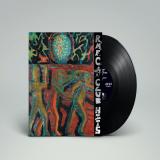
Brown Vinyl[23,11 €]
R.M.F.C. sound like? Let’s stay with the overused descriptors – I think R.M.F.C. is rock music band, more specifically a post-punk band. Indulge me. If you could say anything about post punk it means post-Wire, who were past punk before punk had an opportunity to codify and become everything brilliant and stupid that we’ve spent 40 years unpacking. Wire’s opening Pink Flag jab – Chairs Missing straight – and 154 hook knockout has haunted the mixing desks of ambitious post-punk bands since, and every major city in the western world has at least one Pink Flag band, one Chairs Missing band, one 154 band. Few bands manage to sound like all 3 records, but R.M.F.C. are a Rock Music Fan Club...
Anyone paying attention to underground Australian guitar overdose would relate: the R.M.F.C. Club Hits LP has been the culmination of five years of work, patience and discipline. If you’ve heard these songs live at any of their shows over the past couple of years you’ll understand – the wait is over and the result is exhilarating.
‘Bands like Devo, The Fall, and The Birthday Party have set the way for this type of post-punk rock (all in their own way). Surely, also, the rock scenes of the past fifteen years in Australia have also been influential. Thinking of bands like Royal Headache, Dick Diver, and Eddy Current Suppression Ring, there’s even been a fairly recent tradition of expanding styles of rock and roll (let alone the bigger, famous rock-centered acts). The Sydney based R.M.F.C., and the scene (or friend circle) from which it’s emerging, is carrying a torch of rock music which has the potential of a wider appeal.’ - POST-TRASH
debe ser publicado en 02.10.2026

R.M.F.C. sound like? Let’s stay with the overused descriptors – I think R.M.F.C. is rock music band, more specifically a post-punk band. Indulge me. If you could say anything about post punk it means post-Wire, who were past punk before punk had an opportunity to codify and become everything brilliant and stupid that we’ve spent 40 years unpacking. Wire’s opening Pink Flag jab – Chairs Missing straight – and 154 hook knockout has haunted the mixing desks of ambitious post-punk bands since, and every major city in the western world has at least one Pink Flag band, one Chairs Missing band, one 154 band. Few bands manage to sound like all 3 records, but R.M.F.C. are a Rock Music Fan Club...
Anyone paying attention to underground Australian guitar overdose would relate: the R.M.F.C. Club Hits LP has been the culmination of five years of work, patience and discipline. If you’ve heard these songs live at any of their shows over the past couple of years you’ll understand – the wait is over and the result is exhilarating.
‘Bands like Devo, The Fall, and The Birthday Party have set the way for this type of post-punk rock (all in their own way). Surely, also, the rock scenes of the past fifteen years in Australia have also been influential. Thinking of bands like Royal Headache, Dick Diver, and Eddy Current Suppression Ring, there’s even been a fairly recent tradition of expanding styles of rock and roll (let alone the bigger, famous rock-centered acts). The Sydney based R.M.F.C., and the scene (or friend circle) from which it’s emerging, is carrying a torch of rock music which has the potential of a wider appeal.’ - POST-TRASH
debe ser publicado en 02.10.2026
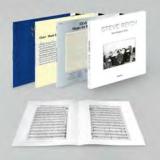
Recordings on ECM vereint, wie Pitchfork es formuliert hat, „einige der herausragendsten Werke des
Minimalismus-Komponisten Steve Reich, darunter die maßgebliche Aufnahme seines unbestrittenen Meisterwerks Music for 18 Musicians“. Die Sammlung umfasst die drei Steve-Reich-Alben, die zwischen 1978
und 1982 auf dem Label veröffentlicht wurden. Sie erscheinen als originalgetreue Faksimile-Ausgaben in
einem hochwertigen Kartonschuber mit einem Booklet, das Fotos aus dem Archiv sowie Manuskriptseiten
und Liner Notes von Paul Griffths enthält. Direkt von den originalen analogen Masterbändern gefertigt
(AAA) lassen die drei Vinyl-Ausgaben diese wegweisenden Aufnahmen, die längst zum Kanon der zeitgenössischen Musik gehören, in ihrer ursprünglichen Klangqualität neu strahlen. Die drei Alben enthalten
die Werke Music for 18 Musicians, Octet, Music for a Large Ensemble, Violin Phase und Tehillim und
dokumentieren somit die einflussreiche frühe Schaffensphase des Komponisten sowie seine künstlerische
Entwicklung über einen Zeitraum von fünfzehn Jahren. Die Box erscheint anlässlich des 90. Geburtstags
von Steve Reich im Oktober 2026.
“About the famed ECM Recordings, much has already been written. Suffce to say that they confirm
that Reich could convey the pulse and spirit of American urban life as brilliantly as Gershwin did 30 years
earlier. Even the unity that arises from out of phase quasi-chaos is revelatory. Recorded 1976–1981, the
works’ emphasis on percussive sounds makes for anything but soothing background listening. It’s all fabulous stuff. Although listening to multiple works in one sitting could possibly induce numbness – taken one
at a time, they are as exhilarating as they are essential.” – Jason Victor Serinus, Stereophile Magazine
debe ser publicado en 02.10.2026

Avril Lavigne - LET GO (20th ANNIVERSARY EDITION) - Let Go celebrates 20 years as one of the most influential pop punk albums of the early 2000's. Originally released in June of 2002, Let Go became an instant sensation with hits such as "Complicated," and "Sk8ter Boi" dominating the charts and airwaves. Certified 7X Platinum, the album has cemented it's lasting legacy in the pop punk world and beyond. To commemorate it's 20th anniversary, an expanded edition of the original album will be released featuring 6 bonus tracks, including a brand-new recording of "Breakaway" by Avril, reimagined 20 years later.
debe ser publicado en 05.10.2026

Beneath the sleek, confident guitar line that powers “Overdrive,” the lead single of All Over You, another guitar marks the time more impatiently, as if the groove its locked into is the timebomb- tightness of a pre-hookup heartbeat. Its energy isn’t nervous — after all, it’s hard to be nervous with Will Schwartz cooing come-ons like “I just wanna get you in the bed / Light you up like a cigarette” in your ear — but it is urgent. Excited. Titillated.
That’s the word that best describes the prospect of a new Imperial Teen record: titillating. They come out every five or six years, each new album acting as, to quote Roddy Bottum, “an episodic piece of where we are now, where the world is now, who we have become, and the geography of our collective consciousness.” There is considerable distance between Imperial Teen, its members — Bottum (guitars, keyboards, vocals), Schwartz (vocals, guitars, keyboards), Jone Stebbins (bass, vocals), and Lynn Truell (drums, vocals) — having made lives for themselves in different cities, but the collective consciousness that exists between them makes distance and time seem immaterial to the listener.
Time, especially time together, is not immaterial to Imperial Teen: it is precious. “For the last few records,” Stebbins explains, “the process has been similar. We live great distances away from each other, so initially, we get together to collaborate, write, and create. When we have enough material, we reconvene to record. Both scenarios, creating and recording, take multiple trips, sometimes with big lapses of time in between due to our various schedules.” Bottum concurs: “The biggest challenge in writing and recording is the distance between us, but the longing and desire and the ultimate coming together becomes more potent as a result.”
All Over You is a triumph of maximized moments together, four people bringing the force of their personalities to bear on years of built-up ideas. Title track “All Over You,” initially built over the computer, gained its charming sneer in the studio, where Stebbins’ buoyant, fuzzed out bassline added bounce to the song’s punchy, sloganeering lyrics, a perfect set-up for Truell to drive the song home, screaming the last line of the chorus, “We’ve got nothing to do,” like a rallying cry for a generation that’s been given nothing and told to deny themselves everything. “In my head,” Truell says, “I just went back to punk, to that feeling of prowling around looking for anything to do and being so mad about how boring everything is that you just have to yell.” The track had an attitude, it had an unexpected texture thanks to Truell’s playing improvised percussion, but her scream is what took it to the next level, transforming it into a signature Imperial Teen song.
One of Imperial Teen’s less magical concerns on All Over You is the effect capitalism has on the creation of art. This expresses itself in the headspinning rush of music industry success and disappointment that plays out in “Hands All Up,” and also in Imperial Teen’s sound. All Over You features the band’s most expansive, textured palette to date, and much of it’s steeped in — bubblegum music and boy/girl harmonies, electro beats and grungy distortion, power pop mall anthems and kiss-off lyricism — has been dismissed, at one point or another, as a fad. Time, of course, has proven otherwise, and All Over You makes a case for Imperial Teen as four of that time’s architects, inheriting, preserving, and pushing the boundaries of what pop music can be from one song to the next.
“We want to make people dance and think and feel,” says Schwartz. In all of those ambitions, All Over You crushes, brought to life by four musicians who found each other in the clubs of San Francisco over three decades ago and have remained family ever since. It is less a return from hiatus than a broadcast from the sonic utopia Imperial Teen has long ruled over, where the music is bratty and sexy and the parties don’t stop until everyone’s found euphoria. A raveup for mind, body, and soul, best enjoyed in a dark room packed with as many sweaty bodies as possible
debe ser publicado en 09.10.2026
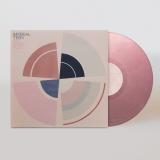
Black Vinyl[22,48 €]
Beneath the sleek, confident guitar line that powers “Overdrive,” the lead single of All Over You, another guitar marks the time more impatiently, as if the groove its locked into is the timebomb- tightness of a pre-hookup heartbeat. Its energy isn’t nervous — after all, it’s hard to be nervous with Will Schwartz cooing come-ons like “I just wanna get you in the bed / Light you up like a cigarette” in your ear — but it is urgent. Excited. Titillated.
That’s the word that best describes the prospect of a new Imperial Teen record: titillating. They come out every five or six years, each new album acting as, to quote Roddy Bottum, “an episodic piece of where we are now, where the world is now, who we have become, and the geography of our collective consciousness.” There is considerable distance between Imperial Teen, its members — Bottum (guitars, keyboards, vocals), Schwartz (vocals, guitars, keyboards), Jone Stebbins (bass, vocals), and Lynn Truell (drums, vocals) — having made lives for themselves in different cities, but the collective consciousness that exists between them makes distance and time seem immaterial to the listener.
Time, especially time together, is not immaterial to Imperial Teen: it is precious. “For the last few records,” Stebbins explains, “the process has been similar. We live great distances away from each other, so initially, we get together to collaborate, write, and create. When we have enough material, we reconvene to record. Both scenarios, creating and recording, take multiple trips, sometimes with big lapses of time in between due to our various schedules.” Bottum concurs: “The biggest challenge in writing and recording is the distance between us, but the longing and desire and the ultimate coming together becomes more potent as a result.”
All Over You is a triumph of maximized moments together, four people bringing the force of their personalities to bear on years of built-up ideas. Title track “All Over You,” initially built over the computer, gained its charming sneer in the studio, where Stebbins’ buoyant, fuzzed out bassline added bounce to the song’s punchy, sloganeering lyrics, a perfect set-up for Truell to drive the song home, screaming the last line of the chorus, “We’ve got nothing to do,” like a rallying cry for a generation that’s been given nothing and told to deny themselves everything. “In my head,” Truell says, “I just went back to punk, to that feeling of prowling around looking for anything to do and being so mad about how boring everything is that you just have to yell.” The track had an attitude, it had an unexpected texture thanks to Truell’s playing improvised percussion, but her scream is what took it to the next level, transforming it into a signature Imperial Teen song.
One of Imperial Teen’s less magical concerns on All Over You is the effect capitalism has on the creation of art. This expresses itself in the headspinning rush of music industry success and disappointment that plays out in “Hands All Up,” and also in Imperial Teen’s sound. All Over You features the band’s most expansive, textured palette to date, and much of it’s steeped in — bubblegum music and boy/girl harmonies, electro beats and grungy distortion, power pop mall anthems and kiss-off lyricism — has been dismissed, at one point or another, as a fad. Time, of course, has proven otherwise, and All Over You makes a case for Imperial Teen as four of that time’s architects, inheriting, preserving, and pushing the boundaries of what pop music can be from one song to the next.
“We want to make people dance and think and feel,” says Schwartz. In all of those ambitions, All Over You crushes, brought to life by four musicians who found each other in the clubs of San Francisco over three decades ago and have remained family ever since. It is less a return from hiatus than a broadcast from the sonic utopia Imperial Teen has long ruled over, where the music is bratty and sexy and the parties don’t stop until everyone’s found euphoria. A raveup for mind, body, and soul, best enjoyed in a dark room packed with as many sweaty bodies as possible
debe ser publicado en 09.10.2026
David Norland is an Emmy-nominated English composer, known for his scores for drama and documentary, alongside his experimental choral and electronic music. Bringing stories to life through sound, he received critical acclaim for his debut solo album ‘Glam Tear Stain’ (2019) and is set to release follow-up album ‘La Source’ in June 2026 via Denovali Records.
Relocated back to his London home after many years in Los Angeles, and free from years of drug and alcohol problems, recent commissions for two choral works allowed Norland to return to the innocent origin of his musical world, and his experience as a parent prompted a lot of outward reflection. What kind of world are we leaving to our children?
Inspired by his score to the forthcoming silent black and white film ‘Carousel’ (2026), Norland found other music emerging that refused to be ignored. The film’s director opened the door to an entirely free scoring process – no temp music, no expectation, no guidelines, just pure intuitive expression. ‘La Source’ draws on this experience, alongside his childhood as a touring chorister, the honkytonk upright piano in the north-east London bedroom of his early 20s, his early recording experiments with a TASCAM 4-track cassette recorder, and his intense preoccupation with bells, flutes, stone architecture, and mysticism.
From the haunting, choral beauty of ‘E-Car Soul’ to the breezy album title track, Norland blends minimalist classical structures with electronics. A unified tapestry of blended voices, harmonies and textures, ‘La Source’ is a deeply emotional and melancholic journey for Norland. “In the end, I’m looking to find meaning through the music, like when I was a kid singing in choirs. But I get the most sense of meaning through transcendent experiences, rather than anything intellectual or dogmatic. I have to feel it, not think it. I’m trying to make work that’s luminous, wondrous, shimmering and strange, so I can keep having those experiences,” says Norland.
On his inspiration for the album, Norland adds, “I love making patterns in things and finding patterns. That’s why minimalism was so enticing to me, the patterns are so explicit. I love word play and anagrams. The big sadness coming through as I was making the record is this clarity over the future of my kids. Everything else is a complete distraction. This incredible nurturing planet and its ecosystem are being rapidly destroyed, and the forces destroying it are relentless and punitive. And they seem to be fine with consigning our children to live in an ever-more-hostile wasteland. You can’t pretend that’s not coming, if you do I think you’re lying to yourself. And perhaps eventually it will be the fact that people love their kids that will stir wider fear and action. It’s hard to think of anything more connected to the idea of spirit.” The result is the reflective, ecstatic, mystical and sad world of ‘La Source.’
Norland’s screen work includes the award-winning documentary Anvil! The Story Of Anvil (2008), directed by Sacha Gervasi, and since 2010, he has composed much of the music for US broadcasting giant ABC’s primetime news documentaries. His work for ABC is broadcast in the US and around the world on a daily basis.
In 2012, he was the music supervisor for Hitchcock (2012) featuring Anthony Hopkins, Helen Mirren & Scarlett Johansson and in 2017, he teamed up once again with Gervasi for the score to November Criminals starring Chloe Moretz and Ansel Elgort. The following year, he composed the score for the Emmy-nominated HBO film My Dinner With Herve, starring Peter Dinklage and Jamie Dornan.
Norland will be performing the score of Carousel later this year, and the score itself will be a forthcoming release on Denovali. 2026 will also see the release of documentary All Permits Secured, a valentine to the history of EDM, featuring Norland’s score.
debe ser publicado en 16.10.2026

We don’t know much about Ariane Bonzini. Her age, perhaps. Her first name, certainly – but it’s confusing, as you’d expect. The rest, he keeps to himself, tucked away somewhere between Villeneuve-Saint-Georges and the Landes in the off-season.
What we do know is that at 16 he left everything behind to try his hand at rap. That six years later he left everything behind, again, without really saying why. That he taught himself sound engineering as one might learn a dead language.
And then came Magenta. In 2025, for three months, Bonzini set himself a challenge bordering on the absurd: to produce one track a day, write it, record it, mix it, master it, film himself doing it, and post it on social media. Without planning, without taking a step back, working until 3 am behind the screen. His monthly listeners went from 35 to 100,000.
For ‘Mec Normal’, something changed. Bonzini headed to the Rue Boyer studio – a space steeped in analogue charm, where some of the synths had once belonged to Christophe – and surrounded himself with a team for the first time: Crayon on production, Renaud Letang on mixing.
Chilly Gonzales spotted him, and from their meeting came ‘Gonzini’.
Thirteen tracks suspended between gentle melancholy and a willing detachment. Soaring synths. Recurring, obsessive ‘you’s’. A voice that whispers where others would shout.
Ariane Bonzini is unlike anything we’ve heard before. That is undoubtedly what makes her so unforgettable.
debe ser publicado en 06.11.2026

Straddling an intriguing intersection of Drum & Bass, Jazz, Fusion and unidentifiable electronica, ‘You Won't Find Your Way From Here’ is the debut album from Jhauk.
An extremely talented multi-instrumentalist from Sheffield, UK, Jhauk came to Blu Mar Ten’s attention when, in 2017, he created a wild prog-rock inflected remix of BMT’s track ‘Titans’
Further conversations with Jhauk revealed the depth of his unorthodox approach to electronic music and unearthed a treasure trove of production skills, culminating in the album before you.
Oscillating between the late-night, moody calm of late 50s Miles Davis, John Coltrane & Bill Evans, the riotous 70s instrumentation of Weather Report, the modern cool stylings of Matthew Halsall and the gritty edges of modern D&B production, it’s scarcely believable that this collection of tracks came from one person working alone in their studio. With tempos and time signatures skittering all over the place, Jhauk uses genres as catalysts rather than containers, he finds the interesting stuff in the hinterlands of their structural relationships and tensions.
Talking about the album, Jhauk has strong opinions:
“Drum & Bass emerged as club music, and club music comes with its own logic. Specific structures, specific build-ups, a formula that supports that context.
That's fair enough, but almost 40 years later, why is 99% of D&B still made the exact same way when 99% of the time it's never heard in a club? The same structure, the same formula, barely any development beyond the core idea. Tracks where you can hear 10 seconds of the drop and know almost beat-for-beat how the next 5 minutes sound. No real musical depth or exploration. People regurgitating the same material ad-nauseum but never actually saying anything for themselves.
This period of composition for me was about taking what I love about D&B, the rhythmic energy and potential for creative freedom it presents and really stretching it to its limits. Of taking drum & bass as a starting point and seeing where it ends up without an idea of what that destination might be. Most people would probably never call a lot of the results D&B, but that's okay because it was never the point.”
Dripping with melancholy, euphoria, longing and pure urgency ‘You Won't Find Your Way From Here’ is unlike anything else you’ll hear this year. The sound of an artist entirely unconcerned with impressing peers or performing on ‘socials’; you're hearing a true musician at work, expressing ideas through the skill of his hands, mind and ears. The album’s secrets aren’t revealed with a single play-through, but bears (or even requires) multiple listens to expose its layers.
In previous times, they called this ‘art'.
En el almacen y preparando para el envío

Straddling an intriguing intersection of Drum & Bass, Jazz, Fusion and unidentifiable electronica, ‘You Won't Find Your Way From Here’ is the debut album from Jhauk.
An extremely talented multi-instrumentalist from Sheffield, UK, Jhauk came to Blu Mar Ten’s attention when, in 2017, he created a wild prog-rock inflected remix of BMT’s track ‘Titans’
Further conversations with Jhauk revealed the depth of his unorthodox approach to electronic music and unearthed a treasure trove of production skills, culminating in the album before you.
Oscillating between the late-night, moody calm of late 50s Miles Davis, John Coltrane & Bill Evans, the riotous 70s instrumentation of Weather Report, the modern cool stylings of Matthew Halsall and the gritty edges of modern D&B production, it’s scarcely believable that this collection of tracks came from one person working alone in their studio. With tempos and time signatures skittering all over the place, Jhauk uses genres as catalysts rather than containers, he finds the interesting stuff in the hinterlands of their structural relationships and tensions.
Talking about the album, Jhauk has strong opinions:
“Drum & Bass emerged as club music, and club music comes with its own logic. Specific structures, specific build-ups, a formula that supports that context.
That's fair enough, but almost 40 years later, why is 99% of D&B still made the exact same way when 99% of the time it's never heard in a club? The same structure, the same formula, barely any development beyond the core idea. Tracks where you can hear 10 seconds of the drop and know almost beat-for-beat how the next 5 minutes sound. No real musical depth or exploration. People regurgitating the same material ad-nauseum but never actually saying anything for themselves.
This period of composition for me was about taking what I love about D&B, the rhythmic energy and potential for creative freedom it presents and really stretching it to its limits. Of taking drum & bass as a starting point and seeing where it ends up without an idea of what that destination might be. Most people would probably never call a lot of the results D&B, but that's okay because it was never the point.”
Dripping with melancholy, euphoria, longing and pure urgency ‘You Won't Find Your Way From Here’ is unlike anything else you’ll hear this year. The sound of an artist entirely unconcerned with impressing peers or performing on ‘socials’; you're hearing a true musician at work, expressing ideas through the skill of his hands, mind and ears. The album’s secrets aren’t revealed with a single play-through, but bears (or even requires) multiple listens to expose its layers.
In previous times, they called this ‘art'.
En el almacen y preparando para el envío

There was a regrettable time in Turbo's history when our email filters would prevent anything called Groovedeep from reaching our senior A&R braintrust. We felt we needed to shield their sensibilities and sanity from demos by acts like The Rhythm Pilgrims and Loop Addict, but it ended up costing us potential stars like SonicVisions and Beatweaver. Someone had to stand up and say no more.
With this benighted era behind us, Turbo is proud of itself for presenting you with this pair of decidedly modern bangers from international supergroup Groovedeep, comprised of Toronto's Ciel and DC's James Bangura and Jackson Ryland.
"Funk Solo" packs 145 beats into each and every minute of a delirious techno mindbeast, with remixes from icons such as Shed, Batu, and Mark Broom taking the vibe in all the right various directions. Meanwhile, the bottom of the B-side is a "Big Bass Mix" for those of us who are compelled to slather ourselves in bass-boost ultrasound gel and nestle into the club sub-woofer where the low frequencies massage our kidneys and sacrum and the twinned demons of treble and vision cannot touch us I mean not even close brother.
En el almacen y preparando para el envío

First Word Records proudly present ‘One 4 Detroit’; the third single from Above The Clouds (aka kidkanevil & Magic Manfred), complete with a remix by 14KT.
This 7" vinyl release follows on from last Summer's MF DOOM cover 'Arrow Root', which received strong support from the likes of Japan's DJ Koco and Philadelphia's DJ Jazzy Jeff, and their recent cover of ‘Change’ which was originally by Shadez of Brooklyn, most notably appearing on DJ Premier's 1997 mix album 'New York Reality Check 101.
One of the original First Word roster, UK Producer/DJ and all-round laptop music geek kidkanevil has developed a distinctive and progressive sound over the years, gleefully exploring the beats and bleeps of the electronic music universe to international recognition. Leeds born, sound system bred and raised on a (un)healthy diet of video games and anime, his solo work inhabits the curious space between bass frequencies and otaku culture. But as a devoted teenage backpack rap nerd, somewhere in the back of kid's mind was a lingering desire to reconnect with his first love, hip hop.
Not long after moving to Berlin he joined a studio space in graffiti plastered Kreuzberg, where he met multi instrumentalist wizard Magic Manfred; a disciple of all things boogie, disco, funk and soul. Born and raised in Berlin, and currently a touring musician for many an act, Manfred's musical map joins the dots from piano lessons at four, to starting a band with his teenage friends, leading him to his true calling - the bass - via the club vibrations of his hometown, which introduced him to the world of DJing and production, and a stint studying in the explosive London jazz scene to finalise his Jedi training.
Bonding over their mutual love of '90s hip hop, a friendship and musical kinship developed, coupled with a desire to honour past eras but push things forward, Above The Clouds was born; named after their joint favourite Primo beat, with a touch of irony regarding their basement based studio of a windowless variety.
kidkanevil explains that “after we made a bunch of piano joints it felt like time for a switch up, I had these raw drums looped and Manfred started playing this simple synth line on the Prophet - it kind of happened in an instant. This one was really a case of capture a moment and let it be. It had this cold, industrial bounce to it that really felt ‘Detroit’ somehow, so it became something of a tribute to that sound. Obviously there’s a rich musical history there that’s beyond anything we could encapsulate, but I hope the respect comes across. From Berlin to the D with love!
We felt pretty strongly that if we’re gonna nod to Detroit, we needed a remix from someone who reps there directly. I’ve been a fan of 14KT since the early 2000s beat scene, and as he’d previously released music on First Word, it made perfect sense to approach him. We asked and did he oblige!! I’m very comfortable saying we got schooled! He really blessed us with an amazing remix that brought a life and soul to what was originally a pretty stark beat, we’re super honoured to have this as our first ever remix.
‘U3P1’ (named after a synth preset so we didn’t forget!) is on the flip - this also came about pretty fast. I was thinking Ummah-era Tribe with the drums, and Manfred once again put down this super nice riff and it grew from there. It kinda felt like it needed some trumpet and it's always nice to highlight some of the amazing musicianship lurking beyond the club systems here in Berlin, so we called up Berlin based trumpeter and composer Paolo de Jesus, who blessed us with a beautiful performance and arrangement. And that was that; we hope you enjoy!”
‘One 4 Detroit / U3P1’ is released on limited 7" vinyl & digital platforms, June 12th 2026.
b 02: One For Detroit (14KT Remix) feat. 14KT
b 02: One For Detroit (14KT Remix) feat. 14KT
[b] 02: One For Detroit (14KT Remix) [feat. 14KT]
[b] 02: One For Detroit (14KT Remix) [feat. 14KT]
[b] A2 | One For Detroit (14KT Remix) [feat 14KT]
En el almacen y preparando para el envío

This is not a Ben Vida, Booker Stardrum, and Will Epstein record; it’s a Play Time record. That’s a subtle but important distinction, for a couple reasons. One, the sound of Magic Object—a polymetric blend of improv and pulse minimalism for saxophone, drums, and Moog—doesn’t really sound anything like any of their many other ensembles or respective solo projects. And two, it was only while making Magic Object, their debut album, that Play Time realized they were a band at all.
Let’s back up. The roots of the trio date to 2020-21, when Will and then Booker moved to the Hudson Valley, where Ben was already living. The three got into the habit of playing together at Ben’s house, and they soon realized that their hang sessions felt fundamentally different from making music in some falling-down studio in Bushwick. Where those experiences were rushed and cramped, a new sense of time and space now suggested itself. Where once they rat-raced the music, now they relaxed into it.
Early gigs yielded similar revelations. A booking at Tubby’s, the beloved Kingston venue, evolved into a kind of residency. Tubby’s is a small space, fitting around 100 people, with a bar in the front room and a stage in the back. Play Time decided that they didn’t want to play on the stage; they wanted to play in front, among the people in the bar. Rather than hogging the spotlight and overpowering the other voices in the room, they blended with the energy of their surroundings and emerged as a sort of minimalist-jazz-krautrock bar band.
Gradually, they discovered a newfound “elasticity”—Ben’s word—that reshaped the music from inside. “It’s this communal thing,” he says. “It’s vibes. And it’s embedded in the community up here, which feels really vital and nourishing.” They were jamming, but it wasn’t just a free-for-all; they found themselves listening to each other in new ways. “Ben and Booker joke that they’re always playing in different time signatures,” Will says. “We’re all going forward with our own ideas, but we’re open to each others’ as well, and they’re all sort of dancing together.”
“We all have our painterly solo projects,” Will says—where, Booker adds, “we do a lot of studio arranging and thinking and composition that takes shape over a period of time.” Play Time, on the other hand, is all about being in the moment. That spontaneity was key to the process of recording the album. They booked two days in their friend Joey’s studio, a converted wooden barn. “It’s just a live room,” Booker says. “There’s no separation or anything. So we’re all in the space together and it’s got this beautiful, woody sound, and that’s very much the sound of the record.” For two days, they just jammed, for seven or eight hours each day. When it was over, they went through, edited down the portions they liked, and added very judicious overdubs designed to enhance the original recordings without fundamentally altering them, staying true to the spirit of the sessions.
The result is something like a snapshot and a mission statement all rolled into one. “You’re hearing us discover the voice of the band in real time,” Ben says. “We finished those sessions and we were like, ‘Oh, that’s what our band sounds like now.’”
Now, with Magic Object, the rest of us get to find out too.
—
Balmat is a label with a cloudy outline. Jointly shepherded by Albert Salinas and Philip Sherburne, two friends living in Cardedeu, Catalonia, and on the Balearic island of Menorca, Balmat grew out of Lapsus Radio, a weekly show born almost ten years ago. Balmat’s mission is simple: to foster new ideas, expand upon personal obsessions, and put enveloping sounds out into the world.
“Balmat” means “empty” or “void” in Catalan. But quite apart from any negative connotations, we prefer to think of it in terms of possibility: a space waiting to be filled.
En el almacen y preparando para el envío

Looking back on her career in the early 90s, Stevie Nicks described the first track of Rock a Little as “the most exciting song that I had ever heard.” This coming from a superstar who was already closely affiliated with several bajillion-selling Fleetwood Mac albums — to say nothing of her own benchmark solo debut. Her remarks attest to the enthusiasm and effort she invested in her third record, a 1985 work that quickly furthered Nicks’ profile and cemented itself as a piece of 80s pop lore.
Mastered at MoFi’s California studio, pressed at Fidelity Record Pressing in California, strictly limited to 4,000 numbered copies, and housed in a Stoughton gatefold jacket, Mobile Fidelity’s 180g 45RPM 2LP set presents Rock a Little in audiophile sound for its 40th anniversary. Helmed by a cadre of producers and engineers, and recorded for a reported one million dollars, the platinum-certified album teems with a head-spinning array of colors, tones, dreamscapes, and accents. This reference-grade reissue marks the first time they are all brought to light and conveyed with proper balance, dimensionality, and positioning.
Though Rock a Little doubtlessly has period characteristics of a mid-80s LP, Nicks and company spare no expense when it comes to distinguishing the music with expansive sonics distinguished with lush melodies, high-tech percussion, echoing vocals, sampled keyboards, and layers of sophisticated accents. The degrees of spaciousness, headroom, and dynamics are nothing less than inspiring, while the newly enhanced detail, texture, and clarity make the songs sing like never before. As for Nicks’ voice? Wait ’til you experience the transparency and depth.
Those advantages extend, of course, to the aforementioned “I Can’t Wait,” a statement-making opener shot through with modulating synthesizers, splashy drums, metallic guitars, and serious drama. Holed up in a massive studio, Nicks required just one take to nail her part, which she called “magic and simply not able to beat.” The singer-songwriter also distilled the reverberating emotional essence of the Top 20 tune, stating “when I hear it on the radio, this incredible feeling comes over me, like something really incredible is about to happen.”
The same can be said for nearly all of Rock a Little. Crafted by the likes of Songwriters Hall of Fame multi-instrumentalist/producer Rick Nowels, Heartbreakers organist Benmont Tench, bassist Bob Glaub, jack-of-all-trades Greg Phillinganes, and session-pro guitarists Waddy Watchel, Les Dudek, and Danny Kortchmar — along with another two dozen or so participants — the record spills with diverse ideas, shapes, and moods. Everything is in the right place, as evidenced by the swirling glide and sensual undertow of the slightly funky title track to the snapping rhythmic pace and big hooks of “Imperial Hotel,” one of Nicks’ standout moments.
“What was it she wanted?” Nicks queries on “No Spoken Word,” continuing a theme of contemplation that runs through the narratives. Nicks never lands on a definite answer, but hearing her explore loneliness, love, and the secrets we keep to ourselves proves continuously rewarding. Take her passionate performance on a cover of Chas Sanford’s “Talk to Me,” a Top 5 smash furthered by tasteful saxophone lines and understated folk elements. Immersive yourself in the grand sonic corridors of “If I Were You,” laden with Nicks’ signature mysticism.
Moreover, surrender to the gravitas of the closing “Has Anyone Ever Written Anything for You,” a piano ballad composed about the death of Joe Walsh’s three-year-old daughter. As Nicks asserts earlier on the album, she sings for things money can’t buy.
So, rock a little, yes, but dare to feel even more.
El artículo no se ha publicado. Tú puedes reservar ahora el artículo y después de ser pagado se te será enviado.

Following Parnell March’s Back Bar Grooves EP in February and November’s release of the Dust Tears (lead song from Sarah/Shaun’s debut) remixes, Edinburgh’s Hobbes Music label returns with a second EP of dream pop from husband-and-wife duo Sarah/Shaun (pronounced simply Sarah Shaun), alias Sarah and Shaun McLachlan (pronounced McLochlun), who wooed hearts and wowed critics with debut EP ‘It’s True What They Say?’ last year.
‘It’s True What They Say?’ attracted fans across the board: Artist Of The Week in The Scotsman, rapturous reviews from The Skinny and Tokyo's Ban Ban Ton Ton blog, BBC 6Music airplay courtesy of Nemone (Mary Anne Hobbs' Morning Show), more radio play from Radio Scotland's Roddy Hart & Vic Galloway, plus Simone Butler (Primal Scream) and Jim Sclavunos (Bad Seeds) via their respective Soho Radio shows, not forgetting ringing endorsements from the likes of David Holmes, Youth, Kevin Bales (Spiritualized), Brent Rademaker (Beachwood Sparks) and Julian Corrie (Franz Ferdinand).
They played gigs supporting Glasgow's huge Glasvegas, at festivals (Kendall Calling, Dunbar Music, Hidden Door), plus a slew of venues across the Scottish capital, ending the year with a trio of shows supporting Glaswegian 80s pop legends The Bluebells at Aberdeen’s Tunnels, Dunfermline’s PJ Molloys and Edinburgh’s Liquid Rooms, while The List magazine tipped them among their Ones To Watch For 2025, with journalist Fiona Shepherd suggesting they were “blending the starry-eyed pop of Sonny & Cher with the electronic experimentation of Chris & Cosey.”
Very much the companion piece to the debut EP but arriving a full twelve months later, Someone’s Ghost is emblematic of the duo’s desire not to rush things or release anything half-baked.
“I’ve always wanted to create the perfect pop record and I do really feel that we’ve achieved that with this one,” says Shaun. And he’s clearly not the only person who thinks so.
REVIEWS, FEEDBACK ETC:
"I LOVE that! Dreamy dreamy pop." ROY MOLLOY (Marvellous Crane/Alex Cameron) on BLAST RADIO, Sydney
“the Scottish music scene’s cream of the cool... buzzy drum beats, high, distant chimes, and heavenly electronics…. very ethereal.” THE SKINNY
"Listening to Sarah/Shaun is like eavesdropping on a noir dreampop, long-distance phone call between them both, across two separate sonic locations. On this stunning 4-song EP, Sarah’s voice, effortlessly mesmerising, draws you into these big beautiful and haunting passages of perfect dream-pop. All beautifully produced in a multi-layered-scape of low-fi analogue textures, epic cinematic crescendos, intense electro-pulse grooves and warped psycho-pop guitar riffs. Within the songs lurk a sense of unresolved emotions, longing and pathos. There are shades of classic Lee Hazelwood & Nancy Sinatra but also Post-Punk Electronica and Beach House. But what a unique sound they’ve created of their own. I love it" DAVID MCCLUSKEY (The Bluebells)
"Absolutely beautiful" SEAN JOHNSTON (A Love From Outer Space)
"Lovely stuff here! Total quality." MARTYN 'MASH' HENDERSON
"Ooooh. Everything the last record promised is here. Well done" GEORGE T aka George Demure (Accident Machine)
"Vince clark Era Depeche Mode in places" KEVIN BALES (Spiritualized)
"Sounds cool. Well done" PETE KEMBER (Sonic Boom, Spacemen 3)
"Glorious, it (Debbie Harry) grabs hold of you and doesn't let go." IAIN DAWSON aka RAVECHILD (Everyone Wants To Play The Hits Podcast)
SOMEONE’S GHOST
Born out of an incredibly anxious, stressful time, the songwriting process for these recordings has been something of a personal tonic for Shaun…
“There was a period when I was having nightmares,” he reveals. “Apparently I was saying there was someone in the room, I was talking to that person and Sarah was seeing all this while I was still asleep.
So, I was thinking that this was my ghost. I started writing songs because I was going through something and I was dealing with something and writing songs was a comfort. My ghost was a comfort, whether it was real or not. The idea of it was a comfort.”
“I firmly believe that everyone has someone who watches over them but all of the songs are essentially about being there for someone,” he says. “Everybody needs someone but also everyone needs to stay real and keep what you have, keep it close, never let it go. If you don’t have it, continue to tell people you’re there for them. It’s about loving and hoping people will be good to you in return.”
While Shaun took the songwriting lead on Filter Of Love and EP closer The Sound Which Stresses The Sound Of My Ears, Debbie Harry was originally instrumentally conceived by producer Jaguar Eyes, alias Ali Chisholm, later lyrically completed by Shaun, and the EP’s lead track, Anhedonia, and one of its stand-outs (much like Starbed on the debut) was conceived by Sarah, as a result of experiencing a bit of a spiritual epiphany of her own.
“When I first heard the word Anhedonia, I didn't know what it meant but when I found out I thought about it quite a bit. How sad it would be to have no enjoyment in anything,” she explains. “This song is really about my own personal beliefs. When I have been down, that's one of the things that helps me the most. It talks about trying to make amends but realising, for some things, you can't. But I think with any kind of faith comes hope… which is always a good thing.”
A record about hope, truth, honesty, a belief in something bigger than oneself… and all set to a soundtrack that wouldn’t feel out of place in a David Lynch or Eighties feature film. What more could anyone ask for, really?
There’s equally a desire to offer something universal and positive to anyone who tunes in. The labels for the 12” edition reveal the dual mantras “Who just wants to survive?” and “It’s about time to live a little”, with both messages also engraved in each record’s run-out grooves. T-shirts accompanying debut EP It’s True What They Say? bore the slogan “Kill Them With Kindness” - leading caps intentional. Shaun carries the acronym KTWK everywhere he plays, as a reminder: it’s stitched into his guitar strap. And this particular wee pebble has already caused a few ripples: people have been approaching him at gigs to acknowledge their appreciation and respect for it.
"We feel we have made an honest, open, colourful, body of work,” say the duo. “We hope to go out and play the songs with the guys (our band) and then potentially make more records. We are taking things as they come. Everything has been organic so far, after all. We are looking forward to whatever this brings."
En el almacen y preparando para el envío

You may be excused if, seeing the dazzling China Moses on stage, online, or on-air, you thought that she, fabulous and French, an orchestra trailing her, with one of those light-up-a-room smiles you only hear about in myth, was someone who might only be singing cheery songs about her glamorous musical life. Not so. It’s complicated… vibrates with the joy, wistfulness, ambivalence, and wisdom of a woman who’s been on many journeys, down many paths, and landed here, in your ears, on purpose, with something to say.
Through these songs, China captures the many hues of grown Black womandom: her choices, her regrets; her place in society as both citizen and observer. Her voice is girlish and playful; gritty and growly; truly prismatic, as Anthony Peyton Young’s cover art suggests, to reflect the many lives she’s lived. And she does all this with vulnerability, a quality that transcends and supersedes genre, taste, or ability. Of all the tools a singer-songwriter could possess, it might be the most important one. Though there is bravado here (“I can be happy”, the song and the video, are the best example), this is an album that taps into the full, resplendent spectrum of human experience, its many facets hewn into these 10 gems before you.
It’s complicated… and it’s complex. How could it be anything else?
— Kyla Marshell
En el almacen y preparando para el envío

A rising artist of the French electronic scene, Naajet asserts her identity with The Night Starts Now, a four-track EP that celebrates the freedom and intensity of the night. Co-founder of the Bande de Filles collective and known for her explosive universe blending House, Hardgroove and Breaks, as well as for the unique energy inherited from her dance background, Naajet delivers here a sonic manifesto conceived as an ode to club culture and to the present moment.
“I imagined this EP as an anthem to the world of the night. The night offers us unparalleled freedom, an outlet that allows us to be ourselves, to create, to love. The Night Starts Now captures this celebration of the present moment and this declaration of independence.” Naajet Opening the EP, “Ready To Shine” unfolds radiant House nourished by Pop and 90’s sounds. With a clear and ascending rhythm, the track combines euphoria and introspection. “I composed this track as a joyful and introspective journey that prepares us to embrace the night. For me, it is a call to accept our wounds, to transform them into light and strength, so that we may shine brighter when we enter the club,” explains Naajet. Between ethereal vocal lines and shimmering pads, the track acts as a ritual of entering the night, inviting us to turn wounds into strength and to shine on the dancefloor. The second track of the EP, “Sugar”, embodies the effervescence of the club. Carried by a hypnotic voice and an effervescent rhythm, the track celebrates the communion of bodies and the liberating energy of dance. “It is an ode to dance and to bodies coming together. This track speaks of those moments when, on the dancefloor, boundaries fall: we sweat together, we free ourselves together, and energy flows from one body to another,” says Naajet. A true concentrate of intensity, “Sugar” captures the moment when sweat, rhythm and abandon merge into a collective movement towards freedom.
With “I Can Be Anything”, Naajet changes register and flirts with deeper, even techno textures. Built on a throbbing pulse and sharp synths, this track is meant as a manifesto of identity. “I really wanted to propose a track that claims our right to free and plural expression and sexuality. I Can Be Anything is about our multiple identities, our ability to reinvent ourselves and to refuse any form of formatting,” she says. Between club intensity and political resonance, “I Can Be Anything” questions our multiple facets and embodies the assertion of an elusive and free self. Closing the EP on an euphoric note, “May It Never End” stands out with its broken rhythms and powerful synths. The track conveys the transcendent energy of the end of the night, when dawn arrives but we refuse to leave the collective trance. “I wanted to put into music this feeling of infinite energy, when time is suspended and the party seems to never have to stop. It is this euphoric vertigo that connects us all in the same breath, this utopia of a night that would never end,” says Naajet. A true apotheosis, this track embodies the utopia of an eternal night.
DJ, producer and co-founder of the Bande de Filles collective, Naajet has established herself with a singular universe where House, Hardgroove and Breaks blend, nourished by her background as a dancer and an instinctive sense of groove. For the past three years, she has performed on French and European stages – from Berlin to Amsterdam, via Geneva and Oslo – and has made her mark in clubs such as Rex Club, Le Sucre and Badaboum, as well as festivals like Nuits Sonores and Kolorz. On the production side, she has released several acclaimed EPs on renowned labels such as Shall Not Fade and Monki & Friends. In 2025, she takes a new step with the launch of her label SWEAT Records and a residency at Le Sacré in Paris, affirming her role as an ambassador of a free and intense club culture. She also collaborates with the waacking company MADOKI, for which she composes and mixes projects at the crossroads of dance and music. With The Night Starts Now, Naajet confirms her status as an essential artist of the new electronic generation1
En el almacen y preparando para el envío

Isa Gordon and Tony Morris were first brought together through their individual releases on Optimo Music, which established mutual respect within the label’s community. While they had not previously performed live together, they were invited to take part in a fundraiser hosted by Queen’s Park Arena in support of Glasgow NW Foodbank and later for JD Twitch’s end-of-life care. Tony asked Isa to contribute guitar and backing vocals to his set, including a track then called Last Night I Had a Dream. That performance became the seed for their collaboration.
The first phase of fleshing it out, recalls Tony: “Somebody said Isa sang like Shania Twain. That got me thinking about country music and call and response, prompting me to come up with alternative lyrics.” Isa remembers: “I cycled over to Tony’s house with my guitar, and we spoke about what the tune meant. It was about him being wrapped up in dreamland, luxuriating in his subconscious, while my character — impatient and trapped in her own routines — barely had time to remember her own dreams.” Tony continues: “Brilliantly I realised that I could never collaborate with anyone in situ and so I sat in the garden for two hours watching my wife tend to plants. Every now and again I would creep up the stairs and put my ear to the door. I could hear Isa warbling away and so would resume my garden watch. After two hours I went back upstairs to see how she was getting on, only to find that she had written one of the greatest songs I’d ever heard. I still think that.” Tony adds: “My overwhelming sentiment about Wake Up Baby is pride. I can honestly say that I’m more proud of it than anything else I have done. It ticks a whole load of boxes. Isa’s singing in various Scottish modes is unique. The way her electric guitar adorns the dance beat makes it a rock song as well as a dance and a C&W song — truly multi-genre.”
The B-side of the 12” release, Syringe Moustache, is a surreal, darkly playful counterpart to Wake Up Baby. The track was inspired by a dream Tony had: “I was in a shopping mall, in a two-level shoe shop, and my attention was taken by a little girl with a syringe taped beneath her nose like a moustache. She went about her business trying on shoes, confident and wise beyond her years. In the dream, I imagined her as the daughter of cultured, intelligent parents determined to raise her independently. I was struck by my own feelings of inadequacy — I knew I could never have coped with such a contraption myself.” Isa’s take on the meaning of this song somewhat differs: “Tony sent me the tune over Instagram months before I met him, and I was spooked — as far as I knew, he didn’t know anything about me, but the story felt like it was written about me as a little girl, growing up around heroin addiction. The syringe beneath the girl’s nose became a symbol of the inescapable constraints of that environment, literally written on her face, yet something you just have to carry on through. On a buzz from the serendipity, I added a full instrumental backing to this most bizarre of works.”
The result is absurd, unsettling, and strangely empowering, staking out its own surreal, cinematic space. The 12” dance single is a format Tony had long wanted to explore — a tangible artefact to leave for family, a medium that celebrates the physicality of sound and the ritual of listening. It allowed the artists to maximise the format’s potential: a strong, multi-genre A-side, a surreal B-side, and remixes that expanded the record’s sonic world. Glasgow music staples Auntie Flo and 100% Positive Feedback were invited to reinterpret the tracks, bringing their distinctive touch — Auntie Flo transforming the A-side into a luscious, dancefloor-ready meditation, and 100% Positive Feedback twisting Syringe Moustache into absurd, playful shapes with false-start drops and over-the-top vocal editing.
The cover photograph, taken at the University Café by Harrison Reid, captures Isa and Tony embodying the characters they brought to life in the songs — a visual reflection of the record’s narrative and emotional stakes. The Café also holds personal significance: it’s where all of Isa’s meetings with Keith McIvor took place, where she first remembers visiting Glasgow as a child, and a place Tony fondly likes to go to drip egg yolk down his tie and watch the world go by. Together, the 12” format, the remixes, and the artwork create a cohesive, tactile experience, amplifying the duality, theatricality, and emotional breadth of the collaboration.
En el almacen y preparando para el envío
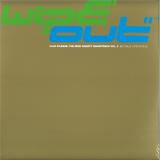
The legacy of wipE′out′′ has transcended time and cemented itself as a true transgenerational phenomenon. Launched in 1995, it didn’t just revolutionise the gaming industry, it created a bridge between the gaming ecosystem and the raver community. Its futuristic aesthetics and forward-thinking sound left a mark not only on mainstream audiences but also on the most demanding corners of the underground.
Decades later, the game’s impact is still alive. The release in 2023 of The Zero Gravity Soundtrack on Lapsus Records proved once again that wipE′out′′’s accompanying audio will go down in history as much more than just an anti-gravity racing game soundtrack.
This is why we decided to go deeper into the slipstream and build the second volume you’re now holding in your hands. Drawn from the original archives of Tim Wright, aka CoLD SToRAGE, this new collection surfaces unreleased cuts, pieces that couldn’t fit on the first edition, and a suite of self-authored ambient reworks that translate pure velocity into wide-screen atmospherics engineered for the long straights, the drone of airbrakes, the blue hour between checkpoints. It also reconnects the circuit, gathering selections and variants tied to later chapters of the saga — wipE′out′′ HD and wipE′out′′ Pure — plus alternative mixes that, until now, only existed in the Sega Saturn dimension of the franchise.
Finally, the material takes a leap into the future in the hands of four remixers especially chosen for this release: Tim Reaper, SHERELLE, Mantra, and NikNak, who collectively forge links between CoLD SToRAGE’s pioneering musical vision, the sound world of the game, and the contemporary breakbeats and drum & bass vanguard.
Expect the DNA you remember — accelerated breaks, trance-vector synths, jungle influences, sub-bass rumbling neatly beneath the craft’s hull, and at times even echoes of classic hardstyle — now revealed with new angles and air. The previously unheard material carries the same aerodynamic design sense that made these tracks feel faster than the track map itself, while the ambient versions open the field of view with melodies hovering at the lip of overdrive. Without a doubt, here you’ll find a strong sense of nostalgia. But this isn’t just nostalgia; it’s also proof that this sound world continues to evolve when you ease off the throttle.
For the faithful — crate-digging ravers, speed-run obsessives, and design nerds — this is an essential expansion pack: compiling rarities, restoring context, and reframing the emotional core of wipE′out′′ for late nights and early mornings alike. Bridging memory and momentum, club and console, rush and afterglow. Strap in.
Detailed tracklist, with annotations by Tim Wright aka CoLD SToRAGE
· Scratch Pad 1: “This track was composed using incomplete tracks that were developed around the time of the first wipE′out′′. It’s so long because it was used for a marathon-length Psygnosis promotional video.”
· Messij Received: “Messij was a firm favourite with wipE′out′′ fans, so it made sense that there’d be more where that came from — this was one of those re-workings.”
· God’s Gift: “I was always very fond of Erasure’s track Love to Hate You with the canned crowd FX sounds. God’s Gift was a tongue-in-cheek reference to how some musicians think they are just that. This was way before I even played live as CoLD SToRAGE.”
· Tentative: “I wasn’t sure about introducing some wacky beats and distorted sounds into one of the tracks, because it was kinda heading away from the other tracks, hence Tentative — but it turned out OK.”
· Canada 2048: “When wipE′out′′ 2048 was launched I decided to re-make Canada as a kind of tribute, but in a slightly new-tech, laid-back way, using Propellerhead Reason and all software synths.”
· Wiped Out: “Based on a few riffs from a MIDI file unused at the time of the original wipE′out′′ game compositions, this featured on my debut album MELT.”
· Body in Motion (Body Plus Mix): “A more trippy interpretation of Body in Motion that featured on non PlayStation versions of the game e.g. Sega Saturn.”
· Onyx (“Dark Side of the Moon”): “Onyx was my sole contribution to wipE′out′′ Pure on the Sony PSP handheld gaming console. This version was something I developed in a darker style, that eventually erupts into a crescendo.”
· Messij Received (WSTWGBE Mix): “Like I say, Messij was a hit with most wipE′out′′ fans, so when I was asked to compose more music for non-PlayStation versions, I adapted this tune into a parallel-universe version for PC and Sega Saturn. By the way, WSTWGBE refers to Who Said This Was Going To Be Easy?”
· Canada (Drunken Ausländer Mix): “In early 2018 I released a fresh album called Ch'illout′′, a re-working of many of my wipE′out′′ tracks in an ambient, Sunday-morning vibe style — it was a few years’ work, here and there.”
· Tentative (Woffenfum Mix): “Another chilled re-working of one of my wipE′out′′ tracks, the mix named with a nod to a good friend of mine, Carl Woffenden — someone who I've worked with for many years in the games industry.”
· Messij (Bobbing Boat Mix): “A nice cheesy computer blip-blop start belies its deep and upbeat chilled-out melodic finale.”
· Body in Motion (Timeless Techno Mix): “Another classic track given the chilled-out vibe mix, as featured originally on my Ch'illout′′ album. This one’s a really trippy, deep-space take on the original.”
· DOH-T (AM / FM Mix): “The idea with this chilled-out mix was to imagine all the melodic parts of this varied track being broadcast on terrestrial radio, so each theme drifts in and out through the radio static.”
· ’95 Future Echoes: “Originally developed as a companion album for wipE′out′′ HD, this track actually has its roots in a tiny loop of a song that never progressed to anything special back in the mid-’90s when I was composing for the original game.”
· Turbine: “Also from my wipE′out′′ HD album, it leans heavily into the upbeat, uplifting tunes from the original game, but also steals a bit of vibe and energy from The Prodigy, with those distorted flute sounds.”
· Pencil Neck: “This excerpt from my wipE′out′′ HD album features lots of sounds centre-stage and forward from Propellerhead Reason’s Subtractor virtual synth. I learned to love this more than my JD-800!”
· Messij 2005 (New Science Mix): “Yet another take on the track that still raises a smile, this time through a mix of samples from the original and Propellerhead Reason — the ‘new science’ when compared to an Amiga 1200 running Bars and Pipes.”
En el almacen y preparando para el envío

Looking back more than four years later at Haram, it is easier to see the forest for the trees. At the time, much of the attention fell on how this outsider duo would fare under the bright lights- which was fair, Armand Hammer had never done a single producer record before- and here they were working with a living legend. Now, with a little distance, it’s easier to see how Alchemist stepped out of his comfort zone to meet them where they were, and how all three artists then absconded for parts unknown. The flashbulb energy of “Bring The Stars Out”, asymmetric drone of “Chicharrones”, fugue-bounce of “God’s Feet”, and good luck finding analogues for “Peppertree” or “Stonefruit”. Haram doesn’t sound like anything else in the ALC discography, nor in Armand Hammer’s, for that matter. Haram was a one-shot kill that somehow contained some of the most accessible work ELUCID and billy woods had ever done, as well as some of their most experimental, and it all sounded cohesive.
Needless to say, they didn’t do this alone; KAYANA’s golden voice upps the wattage on “Black Sunlight,” while Fielded’s sultry alto gets chopped and screwed on “Aubergine”. Earl Sweatshirt’s cameo on the sun-soaked “Falling Out the Sky” is already a classic. Curly Castro, Amani, and Quelle Chris all turn up the heat when called upon.
But since we are talking about retrospect here, the thing about Haram isn’t that it still sounds as good as it did when it came out. The amazing thing is that it actually sounds even better than it did then. You don’t have to take our word for it either, run it up one time, with the lights low and something on ice, see if it doesn’t take you somewhere new, again.
En el almacen y preparando para el envío

Unearthed from the Crammed Discs vaults after nearly four decades (Originally recorded in 1987), a hidden gem finally sees the light. Maurice Poto Doudongo’s The Lost Album arrives on vinyl for the first time—limited to 500 copies, with printed inner sleeve featuring release notes and photographs.
Back in the hazy margins of late-’80s Brussels, where boundary-blurring sounds were seeping through the cracks of pop music, a young autodidact named Maurice Poto Doudongo was crafting music that didn’t quite belong to any scene. Born in Kinshasa and growing up in Belgium, Maurice was a sonic nomad—raised on Franco, Miriam Makeba, and Tabu Ley Rochereau, transfixed by James Brown and Prince, and shaped by the fertile collision between African music and experimental electronics occurring all around him.
Leaving school at 16 to concentrate on music full-time, he began recording on borrowed 4-tracks, using cardboard boxes for percussion, and absorbing whatever sounds the airwaves served him: “Music has no frontier,” he says. “You take what you like. Prince, Fela, Papa Wemba—there is no contradiction. It’s all part of the sound.”
The result? A record that’s equal parts analog drum machine funk, homegrown Afro-pop futurism, and new wave R&B-informed synth poetry. Marc Hollander, founder of Crammed Discs, met Maurice through his friend and associate, musician/producer Vincent Kenis and quickly recognized the spark. The two began working in earnest, preparing tracks intended for a full-length release that, for reasons lost to time and memory, never materialized—until now.
Marc remembers: “The album was never completely finished. “Bolingo” was the only track that came out on a Crammed compilation at that time… and the rest sat on the shelf for decades until we started opening the Crammed vaults.”
Maurice recalls the session as being, “like an unstoppable current”. Listening now, the Lost Album feels both of its time and well beyond it. While tracks like “Momo” sound not a million miles away from the slinky and sophisticated Balearic pop ambience of Wally Badarou’s Echoes album, "Passport Train" shakes itself loose of any genre boundaries, veering into free-form Afro-electronica and tough electronic rhythm. Others pulse with a sweet and soulful groove that suggests dance floors dreamed of but never reached.
In decades hence, Maurice never left music, and the music never left him. Now working mainly as an arranger, he describes his job as being like that of a musical psychologist: “Someone comes to me with their sound, and before anything I have to understand their mind and heart,” he explains. That same intuitive fluency can be heard across this entire album—music that listens before it speaks, that absorbs before it asserts.
This reissue is more than a remastering. It’s a second breath. Sourced from cassette roughs and 24-track demos, carefully restored with Maurice’s blessing, and released as a complete album on vinyl for the very first time, The Lost Album isn’t lost anymore.
It just took nearly 40 years to find its way to you. - Editions de Lux
En el almacen y preparando para el envío
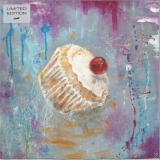
On his sixth studio release Roulette, the prolific producer, songwriter, pianist and MC Alfa Mist has created his own sci-fi universe - a vast dystopia where themes of revenge, forgiveness and redemption loom large.
Alfa Mist’s albums have always tackled big themes. This time, however, he explores an imagined near-future in which reincarnation is discovered to be a potent tool linking dreams and past lives. But with this discovery comes consequences: ethical, moral and philosophical. “If reincarnation is real, how does that shape society?” he explains. “If reincarnation means accumulation of knowledge, would you share it and enable everyone to understand more about the world? Or do you struggle for power? And do some people want to stop others from remembering who they were?”
Over 15 tracks, Alfa explores these ideas with heady potency. Each song is a spin of the wheel – a different song and character. The musician’s signature is still there – lambent keys, intuitive groove, free-flowing jazz improvisation – but Roulette is imbued with a smoky psychedelia. An immersive listen, this album is designed “to feel” on every level, says Alfa. It also contains some of his most impressive arrangements yet - see the eight-minute title track that effortlessly flips through time signatures – “because life’s like that,” says Mist; it’s not always linear.
Roulette underlines Alfa Mist as one of the most forward-thinking composers in UK music, with poignant, plaintive melodies that lodge deep in your psyche. “I’m exploring different parts of myself,” he says. “But obviously, as I grow, all of those parts change. Music is a constant; it’s my state of mind that I constantly chisel and work on and make sure that’s always growing and staying interested in new things. As long as I do that, it’ll come out in the music.”
En el almacen y preparando para el envío

MY NAME IS DJ K-1 (Original Mix)
Keith Tucker Aka DJ K-1 comes back with his original minimalistic electro style with vocals and vocoder loveliness. The ep harkens back to his original K-1 Agenda ep days of the classic Direct Beat label which spawned the first of Tuckers many aliases. Tucker takes this first original mix into a more Kraftwerking style with his infections and Unforgettable vocoder work.
MY NAME IS DJ K-1 (DMX Krew Mix)
DMX Krew’s Ed Upton takes his stab at a more sample bass mix in step with Tuckers seminal work In the Detroit Techno Bass group Aux88. The DMX Krew never disappoint Upton’s bassline ads a dark menacing mix.
MY NAME IS DJ K-1 (Beat Mix)
A Loop bass mix of straight funk and vocal to blend and create that funky Detroit funk that mixes with anything.
MY NAME IS DJ K-1 (Detroit Jit Mix)
Detroit Jit mix has full vocal rap track with a message. Detroit Jitters and DJ’s will eat this up.
MY NAME IS DJ K-1 (SPOCK Mix)
Spacey minimal bassline with that eerie string that makes the floor move as SPOCK would say it’s logical…
MY NAME IS DJ K-1 (NAVI Mix)K-1’s takes this mix more in a bonus beat montage of echoes from the ever-present synth bassline that moves the beat in a hypnotic state with the help of NAVI
En el almacen y preparando para el envío

CHAPTER 1[26,26 €]
"Throughout all my time as a musician and producer, ever since Jack the Tab, I've been focused on developing a single idea: Blending psychedelic sounds and effects with rhythm." Richard Norris, Strange Things Are Happening White Rabbit 2024
Over the past few years Eskimo Recordings have invited some of thebest crate diggers around to curate compilations that don't just reveal the hidden contents of their record bags but something about themselves too. Now, following in the footsteps of the likes of Bill Brewster and Psychemagik, producer, musician, DJ, writer and more, Richard Norris, takes us on a globetrotting psychedelic journey with the epic 42 track collection, Mr Norris Changes Brains.
For over forty years Richard has played a part in many of the UK's most important music subcultures. Whether sharing stages with the likes of Tracey Thorn as a pubescent punk in St. Albans, or running freakbeat nights in Liverpool and working at the pioneering psychedelic label Bam Caruso, co-producing the UK's first acid house inspired LP with Throbbing Gristle's Genesis P. Orridge or riding the wave of creativity that the second summer of love unleashed all the way to the Top of the Pop studios as The Grid, Richard's career has continually seen him work to expand both his own and the public's musical horizons.
With Mr Norris Changes Brains it's the most recent part of his mercurial career that he's focused on. Drawing inspiration from his post 2006 adventures as one half of Beyond the Wizard's Sleeve, alongside Trash's Erol Alkan, this compilation shows how a more connected world has blown the dust off a paradoxically sometimes straightjacketed scene. The result is a dizzyingly wide-ranging collection that explores the further out there reaches of worldwide psychedelia and dancefloor mayhem.
"A lot of these tracks are fairly recent discoveries, things that I've discovered from around the time I started working with Erol and going right up to today," Richard explains. "Whether that's from going out to play and finding new records in places like Istanbul or just connecting with people online from all around the world. Psych can sometimes be a sort of narrow-minded field, with everything having to sit in its specific niche, but more and more people are open to new sounds and that's allowed for a much broader selection."
Despite their disparate origins what does unite these tracks is that they aren't just there to zone out to on a bean bag as projections of swirling coloured oils and psychedelic patterns wash over you. Mr Norris may change brains but his DJ sets also move feet, and whether it's their killer guitar riffs, oscillating synths floor shaking drums or soulful Hammond organs these are all cuts that from festival tents to underground clubs have proven time and time again to get people dancing.
"With a lot of these tracks there's a kind of fun element in them," says Richard. "It's still psychedelia, but they've also got these solid, funky grooves. They sound phenomenal on the dancefloor and as much as these records might excite old psych heads, this compilation is also for a new generation out there who might have never heard anything like this before and, just like when I was 18 and heard The 13th Floor Elevators for the first time, think 'Oh, my God, what on earth is this and more importantly what else is out there?'"
En el almacen y preparando para el envío
When you’re running a label, a demo occasionally comes across your desk that makes you reconsider everything you thought your label was all about. For Balmat, such was the case with this stunning album from Stephen Vitiello, Brendan Canty, and Hahn Rowe. It sounds like nothing we’ve released so far—and that very otherness opened up a whole new world of possibilities for us.
Fans of ambient, experimental electronic music, and sound art will be familiar with Vitiello, a New York native, long based in Virginia, who has collaborated with a cross-generational list of greats: Taylor Deupree, Steve Roden, Lawrence English, Tetsu Inoue, Nam June Paik, Ryuichi Sakamoto, Pauline Oliveros, and many more. On labels like 12k, Room40, and Sub Rosa, he has explored a wide range of minimalism, microsound, lowercase, ambient, improv, and other styles. But this album is something different. It may begin in ambient-adjacent territory, but it quickly veers off, and it just keeps zigzagging, taking on elements of krautrock, post-punk, dub, and the groove-heavy interplay of groups like Natural Information Society and 75 Dollar Bill.
This stylistic turn is thanks in large part to Vitiello’s choice of collaborators. “We’re coming from three different schools,” Vitiello says: “sound art, art rock, and punk rock.”
Active since the early 1980s, Rowe—a violinist, guitarist, and producer/engineer—has played with, or manned the boards for, a frankly jaw-dropping list of musicians: Herbie Hancock, Gil Scott-Heron, the Last Poets, Roy Ayers, John Zorn, Glenn Branca, Swans, Live Skull, Brian Eno, David Byrne, Anohni, R.E.M., Yoko Ono, and many more. But he might be most closely associated with Hugo Largo, a one-of-a-kind New York quartet—two basses, vocals, and Rowe’s violin—that in the late 1980s helped lay the groundwork for what would eventually become known as post-rock.
Canty, of course, is the legendary drummer of Fugazi, the visionary DC post-hardcore group, as well as Rites of Spring before them, and, currently, the Messthetics, a Dischord-signed instrumental trio with guitarist Anthony Pirog and Fugazi bassist Joe Lally.
Vitiello’s trio first collaborated on First, a 17-minute piece released on the Longform Editions label in 2023. Second picks up where the freeform drift of First left off, channeling the trio’s exploratory energies into more intentionally structured tracks and—in a real first for Balmat—some almost shockingly muscular grooves. “Sometimes my projects are more conceptually driven,” Vitiello says, “but I think this was more musically geared. I just wanted to open up the references and bring in an incredible drummer, bring in some melodies, and I’m sort of the center.” But his collaborators, he stresses, are “vastly creative in making anything I might suggest better.”
Like its predecessor, Second took shape in phases, shifting between improvisation and collage. Vitiello laid down the skeleton of the music at home, sketching out initial ideas on Rhodes keyboard and acoustic and electric guitar; he then fed the parts through samplers and his modular system, recording 10- or 20-minute jams. Once he had edited them into more structured forms, he hit the studio with Canty, who added not just drums but also bass and piano; finally, Vitiello took the results of those sessions to Rowe, who played violin, viola, electric bass, and 12-string acoustic and bowed electric guitar, and assisted in some of the final structuring and mixdown.
A few more surprises along the way: Reanimator’s Don Godwin, the studio engineer where Vitiello recorded with Canty, contributed what he calls “resonant dustpan”; and none other than Animal Collective’s Geologist, who just happened to be in the studio that day, sits in on hurdy gurdy on “Mrphgtrs1,” the album’s gorgeous, stunningly atmospheric drone closer. “I love these chance encounters,” Vitiello says. “Somebody I admire, a group I admire—that was an unexpected gift.”
An unexpected gift is a great way of describing Second as a whole: three veteran musicians venturing outside their usual zones and finding a new collaborative language together. The results can’t be neatly slotted into any given genre; they belong not to any given category, but to the spirit of conversation itself.
En el almacen y preparando para el envío

En el almacen y preparando para el envío

Cassette[15,08 €]
Studio, the influential project of Swedish musicians Dan Lissvik and Rasmus Hägg, presents their legendary 2006 debut in remastered form, in partnership with Ghostly International. Available in limited edition "Fog Machine Vinyl", CD, and cassette. "One of the finest pieces of electronic music you'll hear this year.” - The Guardian (2006). Included in year-end best-of write-ups by Pitchfork, FACT Magazine, and Rough Trade. Physical copies have long been out of print for West Coast, and the album has also been notably absent from most streaming services until now.
“Somehow, I knew I wanted to make a conceptual record that, although only imaginary at that point, could represent or define how our city sounded,” says Lissvik of Gothenburg's influence on West Coast. Some called Studio, the project of Swedish musicians Dan Lissvik and Rasmus Hägg, “the missing link between The Cure and Lindstrøm,” Pitchfork heard Durutti Column and Can, as the duo’s story became swept up in a loosely developing scene — adjacent first to the label Service (Jens Lekman, The Whitest Boy Alive) and later Sincerely Yours (The Tough Alliance, jj) — and a precursor to the 2010s boom at the axis of electronic and psychedelic music guided by indie greats like Caribou, Four Tet, and Darkside.
West Coast, their seminal 2006 debut, captured a faraway romanticism of Balearic brushed up against Krautrock, disco, dub, and afrobeat, with pop lyricism lifted from new wave, all made modern by two art school grads in Gothenburg. First pressed in a small vinyl-only run via their own Information label, the album has been notably absent from most streaming services, and the internet’s record of its initial impact is all but fossilized from a bygone blog era, while its sound is simply untraceable to any one moment in music.
Outside of three 7” releases, they’d keep the music to themselves for several more years. In 2005, Hägg remembers, “We got our degrees and were kicked out of our studio spaces so all these recordings were just piled up. A year later we dusted them off and started to deconstruct and assemble them in a more drawn-out fashion.” In the same breadth, they cite DJ Screw, J Dilla, and Joy Division, along with early ‘80s European live DJ sets from the likes of Beppe Loda, Dj Mozart, and Baldelli as reference points.
“The anything-goes mentality was very encouraging and was a big cornerstone to the Studio sound,” says Hägg. “But there’s so much more to the picture, we were not that young then and had lots of musical baggage in our suitcases, the new thing was that we finally let it all come through, not bound by any borders that was often the case with music identity in Sweden during the 90s.” In the afterglow of the record’s 2007 reception, Studio receded from view, clouded behind a mountain of remix requests (including one for Kylie Minogue that saw release) and label bureaucracy. “It’s easy to wish we would have done some proper recordings of our own instead,” Hägg reflects. But both artists, now well into respective careers beyond Studio, have come to peace with West Coast as their most enduring effort together. Lissvik adds, “It serves as a good reminder for me to keep to that decision and promise and to continue exploring and growing
En el almacen y preparando para el envío

Music From Memory is thrilled to introduce Dead Sound, the collaborative project of Marco Sterk (aka Young Marco) and Berlin-based pop-auteur John Moods. Both artists are no strangers to the label; Sterk forms one third of the trio Gaussian Curve, while Moods released the 2022 album ‘Hidden Gem’ with The Zenmenn.
Their collaboration was both planned and spontaneous; Sterk initially reached out in 2022 expressing his desire to work with Moods. The pair finally got together in 2024 to produce ‘Into The Void’, an album that burst into life over the course of a few creatively charged days in each other’s company.
Moods’ dream-like, emotionally charged music wears its heart on its sleeve; its very human vulnerability makes it a perfect match for Sterk’s strong sense of melody and textural sonic visions.
‘Into The Void’ carries these psychedelic traits in its DNA, but they exist layered deep amongst the shadows. Painting on a wide canvas that effortlessly skips between genres, the pair weave anything that inspires them into a truly unique tapestry; a bold attempt to touch at the beyond.
Exploring the space between perception (level of the mind) and the nature of the universe (actual level of reality) seems traditionally like an impossible task. But there’s gotta be a time and a space for the profound and this album invites the listener to go deep, letting go of concepts such as love and opening oneself up to one’s own authentic journey. This transformative force of healing is a central theme of ‘Into The Void’, a path that is lined with light and darkness in equal measure. But, as Moods says, “do not skip the darkness, let that door open and swallow you. And maybe you’ll find, it's not as dark as you perceived at first."
Sleeve art by Michael Willis.
En el almacen y preparando para el envío

Celebrating thirty years of collaboration, Loren Connors and Alan Licht performed for two nights at OTO on May 5 and 6th, 2023. The shows celebrated a new release titled “At The Top of the Stairs”; a document of the pair's reunion in 2018 after a period of 8 years not playing together. It’s a dark, swirling two-sided spectral noir session, put out by the duo’s home label, Family Vineyard, and we expected a similar kind of atonal abyss to appear at the OTO residency. On the second night however, with the stage lit in blue, Connors took up a seat on the piano stool whilst Licht picked up the guitar. What followed was the duo’s first ever set with Connors on piano - one of only a few times Connors has played piano live at all - here captured and issued as The Blue Hour. Its spacious warmth came as a total surprise live, but makes complete sense for a duo whose dedicated expressionism takes inspiration from a vast spectrum of emotion. Both opening with single notes to start, it doesn't take long before a surface rises and begins to shimmer between the pair. A run up the keys, the drop of a feedback layer on a sustained and bent note. When the two begin to exchange notes in tandem, brief touches of melody and chord hover and the hush of the room is palpapale. After a while, Connors picks up the guitar, stands it in his lap and sweeps a wash of colour across Licht’s melody. Sharp, glassy edges begin to form, open strings and barred frets darkening the space. When his two pedals begin to merge, Licht finds a dramatic organ-like feedback and it’s hard not to imagine Rothko’s Chapel, its varying shades of blue black ascending and descending in the room. When Connors goes back to the piano for the second side, the pair quickly lock into a refrain and light pours in. It’s a kind of sound that Licht says reminds him of what he and Connors would do when the duo first started playing together 30 years ago. It’s certainly more melodic than some of their more recent shows, and the atonal shards of At The Top of the Stairs seem to totally dissolve. What is always remarkable about Licht is that his enormous frame of reference doesn't seem to weigh him down, and instead here he is able to delicately place fractures of a Jackson C Frank song (“Just Like Anything”,) amongst the vast sea of Connors’ blues. Perhaps it's the pleasure of playing two nights in a row together, or the nature of Connor’s piano playing combined with Licht’s careful listening, but the improvisation on The Blue Hour feels remarkably calm and unafraid. There’s nothing to prove and no agenda except the joy of sounding colour together. Totally beautiful.
En el almacen y preparando para el envío

On his new album always centered at night, moby has once again conjured into reality a collection of heartachingly beautiful, tender-yet-defiant songs, made in collaboration with uniquely talented, soulfully aware, other-worldly vocalists. All the songs are love letters to the unrestricted and enchanting music scene of late ‘70s, early ‘80s New York that shaped Moby as a musician. The featured vocalists were given the same assignment: “Please don’t write anything commercial. Let it be weird. Let it be personal. It doesn’t have to make sense.”
“Because of that randomized freedom, I’ve been on the receiving end of so much genius work,” says moby. “And the result has been one of the most exciting, surprising things I’ve ever done as a musician, and it’s one of the most worthwhile things a human being can do: make tender, gentle, vulnerable music that’s a clarion call to act.”
Featured on this album are some of the most exciting vocalists of our time. Some are well-known - such as serpentwithfeet on the breathless daydream of a song ‘on air’, the jazzy soulstress Lady Blackbird on the haunting ‘dark days’, or the astounding poet and activist Benjamin Zephaniah on ‘where is your pride?’. Other contributors have been found in relative obscurity - such as friend and vocalist Brie O’Banion on the Cream cover ‘we’re going wrong’, or Sheffield poet laureate Danaé Wellington on the powerful ‘wild flame’.
“The goal for always centered at night is to do something uncompromising,” says Moby. “To make music that is emotional, atmospheric and potentially beautiful. And what better use of this weird privilege I have than trying to foster creative expression that has uncompromising integrity?”
En el almacen y preparando para el envío
