Twenty-eight Years Ago, Pissed-off Twelve-year-olds Around The Universe Discovered A New Planet, A Black Planet. Public Enemy's Aggressive, Benihana Beats And Incendiary Lyrics Instilled Fear Among Parents And Teachers Everywhere, Even In The Border Town Of Laredo, Texas, Home Of The Future Founders Of The Latin-funk-soul-breaks Super Group, Brownout. The Band's Sixth Full-length Album (out May 25th) Fear Of A Brown Planet Is A Musical Manifesto Inspired By Public Enemy's Music And Revolutionary Spirit.
Chuck D., The Bomb Squad, Flava Flav And The Rest Of The P.e. Posse Couldn't Possibly Have Expected That Their Golden-era Hip Hop Albums Would Sow The Seeds For Countless Public Enemy Sleeper Cells, One That Would Emerge Nearly Three Decades Later In Austin, Texas. Greg Gonzalez (bass) Remembers A Kid Back In Junior High Hipped Him To The Fact That Public Enemy's bring The Noise' Is Built On James Brown Samples, While A Teenaged Beto Martinez (guitar) Alternated Between Metal And Hip-hop In His Walk-man, And Adrian Quesada (guitar/keys) Remembers Falling In Love With Public Enemy's Sound At An Early Age. when I Got Into Hip Hop, I Was Looking For This Aggressive Outlet . . . And I Didn't Even Understand What They Were Pissed Off About, Because I Was Twelve And Lived In Laredo . . . But I Loved It And I Felt Angry Along With Them.'
Joseph Abajian (fat Beats' Owner) Must Have Sensed The Deep Hip-hop Well Lying Beneath The Versatile Band's Latin-funk Veneer. i Thought Their Sound Would Work Covering Public Enemy Songs,' Abajian Says, And, it Was Good To Know They Were P.e. Fans . . . We Came Up With A Track Listing And They Went To Work.' Despite The Band's Eagerness To Work On New Original Material (an Album Of Original Songs Is Slated For Next Year), They Couldn't Pass Up The Opportunity To Pay Homage To This Iconic And Influential Posse.
Translating Sample-based Music To A Live Band Turned Out To Be More Of A Challenge Than They Anticipated. Adrian Tried To Get Inside The Bomb Squad's (public Enemy's Producers/beat-making Team) Head In Order To Find The Inspiration To Reinterpret P.e.'s Songs: imagine The Bomb Squad Going Back In Time And Getting The J.b.s (james Brown's Funky Backing Band) In The Studio And Setting Up A Couple Analog Synths And Then Playing Those Songs.' While Some Songs Closely Follow The Original Musical Blueprint, Others Use The Source Breakbeats As Jumping-off Points Later Sweetened By Trombonist Mark speedy' Gonzales' Horn Arrangements, Synth Wizardry Courtesy Of Friend-of-the-band Peter Stopschinski, And Dj Trackstar's Turntable Scratches. But Don't Listen Expecting To Hear Paint-by-numbers Recreations Of Classic Public Enemy Jams. our Approach Is Never In The Tribute Sense,' Adrian Explains. we've Always Taken It And Made It Our Own, Whether It's The Brown Sabbath Thing Or This Public Enemy Thing.' Coming Off Numerous Tours As Brown Sabbath And Even A Stint Backing The Late Legend Prince, Brownout Is Arguably The Tightest And Funkiest Band On The Road Today And They're Psyched To Bring This Revolutionary Music To The People. For A Band Without An Overt Political Agenda, They Collectively Couldn't Resist The Opportunity To Play This Music Live, Especially Now. if There's Any Way That We Can Use The Already Political And Protest Nature (of P.e.'s Music), We Would Like To Try,' Beto Says. the Album's Title, Fear Of Brown Planet Is Definitely A Relevant Idea Today And We're Not Afraid To Put It Out There, Because We Want To Speak Out.' By Reinterpreting These Hip Hop Classics In Their Unique Style And Channeling The Spirit Of Public Enemy That First Echoed Around The World And Captured Their Imaginations All Those Years Ago, Brownout Is Doing Exactly That.
Search:say lou lou
Nubian Quadrant EP sees Dutch producer Philou reaching for that sweet spot between Afro and Electro to produce three pulsing new tracks for Byrd Out. As Philou says, "All good music ultimately comes from Africa", and true to his African roots, the EP was part recorded in Malawi. With his tracks being picked up by the likes of Erol Alkan and Eats Everything, this EP is sure to provide the rhythmic backdrop to the summer. If you imagine the driving force of Fela Kuti matched with the acid sqwelch of Phuture, you're part of the way there. It's dancefloor sunshine on vinyl. Mastered by the legendary Noel Summerville, artwork by G.S-L Studio.
Biog: Philou Louzolo, a vibrant human being showcasing a diverse sound: born and raised in between the forests and the salty ocean breeze of Southern Zeeland (The Netherlands). Blessed with deeply rooted ties to the townships of Sierra Leone, the jungle surrounding the Congo river and Nigeria - where the birth of Fela Kuti's Afrobeat took place - his music sounds like Pan-African propaganda packed with sounds from urbanized cities, the Sahara and Africa's many jungles. He's been making waves with a Mixtape for the Feel My Bicep guys (it's #84), and getting airtime on BBC Radio 6 with Erol Alkan, and on BBC Radio 1 with Eats Everything, and playing Resident Advisor's GAIN stage at DGTL in Amsterdam in March, and playing at Morocco's boundary-pushing Altas Electronic festival later this year.
"The kind of melancholia I'm talking about, by contrast, consists not in giving up on desire, but in refusing to yield. It consists, that is to say, in a refusal to adjust to what current conditions call 'reality' - even if the cost of that refusal is that you feel like an outcast in your own time." (Mark Fisher, Ghosts Of My Life, Zero Books 2014, p. 24) In Ghosts of My Life: Writings on Depression, Hauntology and Lost Futures', the author Mark Fisher outlines - to put it in a big way - a resistant melancholy. This stands in contrast to leftist melancholy resignation', as well as something which Fisher does not talk about: its common masculine counterpart, habitual post-left cynicism - as in seen it all before'. Fisher calls this hauntological melancholy. Haunting, spooks, ghosts and apparitions are an almost constant presence on I Started Wearing Black', the second album by the Cologne-based artist Sonae (pronounced so-nah'). The term hauntology shares a fate with retro-futurism when it comes to inflationary overuse and abuse. It's a conceptual container that looks good and can hold a lot, indeed, too much. Furthermore, hauntology has its peak season behind it, a term on the threshold of its expiration date. Nevertheless, I would like to rehabilitate hauntology and use it properly to characterize I Started Wearing Black', because the term is rarely as compelling to describe music as is the case here. The most recent other example could be Asiatisch' by Fatma Al Qadiri, but with a completely different frame of reference. What are the ghosts of this music It rustles, crackles, ruffles, crunches, rattles, scrapes, sometimes a beat emerges from the constant noise, sometimes an obscure voice mumbles incomprehensibly, sometimes a melancholy piano figure is prevented by this noise from coming too much to the foreground. It definitely is eerie - to bring into play another term used by Fisher in the title of his latest book, The Weird and the Eerie'. In British pop-jargon, eerie first occurred to me more often when referring to particularly leftfield, spooky and... well... ghostly dub, a bass-heavy, echoing noise, from Augustus Pablo to Creation Rebel to Burial. Unlike the Wald & Wagner records by Wolfgang Voigt, Sonae is not a kind of neo-romantic veiling with a tendency for escapist nebula. It is more a noise of latency. The noise signals a latent - not necessarily acute - threat, a latent uneasiness about... yes... about what About a System Immanent Value Defect' That's the name of a track on I Started Wearing Black' where something that sounds like a French Horn (or a foghorn) battles for attention through or against the background noise. An email from Sonae: The piece 'System Immanent Value Defect' should actually be called 'I See Turkey'. I wrote it for my fellow student Elif - she is a pianist and Gezi Park activist from Istanbul. Through her I witnessed the inner conflict and agitation that political circumstances can create: her feelings of guilt when there was an attack, with her safe in Germany as a student, watching the events from afar. It was horrible. When her mother begged her not to come home because she feared for her safety, I felt a cold shiver run down my spine. I started with the piece from this mood, beginning with the piano, then the noise (modulated sinusoidal curves), which reminded me of waves and the then heatedly discussed Mediterranean sea: atmospheric, melancholy motifs. In contrast is the anger, the pressure, represented in corresponding sounds - hopefully audible! - During this time I started to think about world views as they can be found around the globe, in how far they held by societies and their political representation. I realized that I know of no political system that is actually about the people and what would do them good. It's always about positions, power, money. I thought that was a lot more frightening on a global scale than merely viewing Turkey in isolation. That's why the piece is called "System Immanent Value Defect", because our world suffers from precisely that. Everywhere, it's all about the wrong things.' Between the wrong things there are happy moments. In the title track, after 184 seconds of rattling and hissing, a beat is unleashed, like an arrow released from a spanned bow, a beatific relief, if there is such a thing. White Trash Rouge Noir' first meanders along spookily, then after 144 seconds it transforms itself into a distant cousin of Einstu¨rzende Neubauten's Yu¨ Gung', but there is no Big Male Ego to be fed here, and the black in the album title is a completely different type of black from that of the Neubauten. Furthermore, I Started Wearing Black' was finished long before the black dresses were worn at the Golden Globes as a sign of protest against sexual violence. Sonae writes that she herself started wearing black some time ago. Her reasons are so-called personal ones: ... resulting from an individual situation (lovesickness), I started to wear black (gaining weight and feeling ugly).' The political dimension of gaining weight, feeling ugly and therefore dressing in black in I Started Wearing Black' lurks within the noise and never becomes explicit and only rarely manifest - or a manifesto. Sonae writes about the track We Are Here': A piece for minorities... in this case, considering the current pop-feminist discourse, explicitly for women. Female artists have long been saying loud and clear that 'we are here' and 'electronic music is not a boys club!' But this pop-feminist moment should only be seen as one part of the dedication of the piece. It is for minorities, for the oppressed, who didn't belong enough.'
Klaus Walter
'A Part Of Me' is the debut album by Ivan Arlaud alias 1954, a young musician from Lyon, France. It's an immersive journey between nostalgic and synthetic sounds, melancholia and hope, fears and confidence. He contrived to describe all the bright, warm, cold and dark moments of his restless imagination in rhythms without being intrusive. As the title says, it's his personal disclosure.
Driven by a vicious and visceral soul, The Buttshakers are known for their fierce and fiery music: turntables steam from the heat of their records, dance floor buckle under the blistering pressure of their infectious grooves, a group with a burning Midas' Touch.
Yet after nearly a decade of touring and recording, it was with a different musical vision that they approached Sweet Rewards, their first collaboration with Underdogs Records.
Accustomed to the raw, primitive sounds of 60s garage rock and the crude sexuality of pre-Motown soul music, the Buttshakers have created a reputation as a must see live band perfectly aligning loud rock riffs and lustful desires. A sound they could have continued to dig into again and again. Instead they decide to take another route. A creative shift, a return to a style of soul music that no longer has to rely on pure energy alone, a sound that concentrates on the quality of writing composition and interpretation rather than pure virility.
Blue fabric-covered deluxe replica gatefold with circle cut on the front and white hot stamp, printed paper inner-sleeve and black vinyl. includes CD (inserted in a clear pvc wallet) the new album! vinyl tracklisting : Side A: Sous le sable, Lasso, Fontaine de lait, Seeds, Les loups, Je ne mâche pas mes mots Side B : Twix, Nuit debout, Piscine, Fille à papa, Langue The internationally celebrated artist, award winning singer and composer Camille releases 'OUÏ' her fifth studio album and first for Because Music on June 2nd. Recorded over a year in La Chartreuse, a 14th century monastery-turned-artist's residence in Avignon, France 'OUÏ' is a cornucopia thrumming with folk, hymns, ballads, pop, lullabies and breathtaking a cappella. 'The story of the album is like this, moving from the arcane drums' - percussion is used throughout as the bedrock - 'to the treble and harmonics and light in my voice.' An instrument of exhilarating range and phenomenal power, Camille's voice provides all the vocal parts on 'OUÏ'. 'All the voices are telling a story,' she says, 'and I am all the voices. Co-produced by Camille with two of her longtime collaborators, composer and multi-instrumentalist Clement Ducol and sound and mixing engineer Maxime Leguil, and featuring the versatile Moog analogue synthesiser, 'OUÏ' is a work with a pulse. 'It really resonates,' says Camille, 'On some songs there are no drums, just this sub-bass like a kick drum, which leads the way and gives it a beat.' While she sets out to write politically charged songs inspired by drum-driven French traditional dances, that reflect upon the country's recent, tragic events, she was equally led to something peaceful, vowel-oriented and vibrational in her exploration of sound. The latter explains the album's title, 'Oui' - ooo...eee - a playfulness with sounds and language, a breaking free from its oft imposed restrictions.
Third solo studio album by American musician Lou Reed, released in July 1973 by RCA Records. The album is a tragic rock opera about a doomed couple, Jim and Caroline, the concept was created when producer Bob Ezrin mentioned to Lou Reed that although the stories told by Reed's songs had great beginnings - they never really had an ending. Specifically, Ezrin wanted
to know what happened to the couple from Berlin - a song from Reed's first solo album. Pressed on standard black vinyl.
We welcome back long-time First Word family, Souleance, with 'Bamboule', fresh from their respective cut-ups for our sister label, Excursions, and their recent 'Raw Funk' set, we have a 5-track EP containing something for all the family, crafted with love once again by France's Fulgeance & DJ Soulist. A truly eclectic collection, comprised of afro grooves, tropical vibes, b-boy rhymes, head-nodding shakers and intensely hype floor-fillers. A seriously fun selection.
It kicks off with 'Partay', a mid-tempo slice of bouncy tropical boogie that does exactly what it says on the tin. An effervescent synth-bassline rides on top of a delectable disco shuffle, complete with classic reggae chants.
Title track 'Bamboule' is a seriously energetic afro-funk beast. A truly infectious percussive rhythm track, laced with an immense bassline, vocal chops and synth rides, this one is 100% guaranteed to entice any dancefloor into a trance-like state of bugged-out body moves.
'That Guy' is some uptempo piano-rolling hip hop business, enlisting the help of Brooklyn MC, Von Pea, from the crew Tanya Morgan, who've been making noise on the independent hip hop scene for over a decade, as well as recently collaborating with GUTS.
We dip down to around the 85BPM mark for 'J'aime Marcher', a lounging boom bap bumper with sloppy drums, jazzy rhodes and vivacious horns.
Closing the EP is 'Brown Bags', an almost Dilla-esque cut-up, complete with rolling neck-breaking drums, sweet soul samples and stabs of prog rock. An abundance of variety, we think you'll agree.
For those that don't know, the Parisian duo hooked up just over a decade ago, and haven't stopped to rock & shock parties, clubs and festivals globally since, building a fan-base of solid party people and revered selectors along the way. As always, the wonderful Alice Dufay provides the artwork, making this an essential package for you and yours.
the label say: What is soul really The answer to that is a various as the music that claims it. We here at WPH HQ do not know the answer either, but we do know an exceptional piece of music when we hear it. Enter Fabrice Lig, Belgian techno legend with his roots in our little country and his ears definitely in that place called Detroit.
Respected by his techno peers and his Detroit inspirations alike, Fabrice's music is always full of funk and emotion. These two qualities are very much in demand in WPH circles, so it was only a matter of time before Fabrice joined the family.
On 'Border 2 Border' Fabrice brings us two tracks, the title track funkin' and swingin' like nothing else and with a big dose of Motor City chords, making for a true mental dancefloor anthem. Word has it that label boss Red D wrote lyrics on the spot when he heard this one out loud...so who knows what's coming in the near future... On the flip side 'Ocean Rising' goes for arpegiatted bliss and a bass line to rumble you out of your bras or pants. Welcome to WPH Mr Lig!
Orbis X is a sublabel of Orbis Records and will be mainly focusing on softer yet often usable as DJ material for the broader mass interested in Electronic music. This sublabel is an extension of Orbis Records softer, more melodical and experimental side. Music will be ranging from house, dub, chicago over melodic acid and even breaks. Not any track makes it to this sublabel if it can't stand on its own and stand the test of time!
Aleksander Zekovski might not ring a bell but it should ring a bell within a few months.
We warmly welcome Moda on OrbisX with his very special and pure analog feel to sound.
Unique, funky, very good arrangements and multi-talented. Nothing more, nothing less.
Someone who deserves to be discovered or at least get a bigger audience.
We re taking the leap of faith with Moda, serving him a full EP to experiment.
The Roots EP was born.
The full EP is a mixture of funky beats with some housy touches with, in some phases, gentle and experimental dirty glitches.
Something to add to your collection. This EP can be played in quirky eclectic DJ sets, lounge bars or just at home with a nice glass of red wine.
Background music while having dinner with friends and you want to serve something special This is one of those special EP s!
Something To Talk About is funky, dreamy and sparks that twitchy leg movement when you doubt if you should be dancing or be slightly head banging to that tune.
That kinda track. Serves well with candles, wine and late night talks.
Under Her Skin might take off on a weird bit quirky dirty start, but when that lead kicks in, ... we were sold.
Extremely funky. Be aware: you can t hold yourself from clapping to this song.
On the B-side, "Winter Tale" counts as the second A track on the EP. Deep! Gentle and yet so snappy in it's own dirty way.
We fell in love from the first note, or should we say that filthy deep baseline, those dirty well mixed-in toms and snappy rude claps!
"Running Man". Well... if you like dreamy catchy house. This is for you.
A nice extra track, making this EP a brilliant pressing.
We can't emphasize the talent Alexander has.
We hope he gets more attention with this EP.
Full support for you Alex.
- mau
Virginia-born singer/songwriter Nicole Wray has everything you'd want in a singer: an infectious Jackson-5-family-member flare, a range like Aretha's, and a church upbringing that's brought a pure, healing texture to her voice. But the struggle she's been through has made her more than a singer. Nicole Wray is an artist. When talking about Queen Alone, her first solo album in some time, Nicole explains, It's a reflection of my soul. It's who I am today.' And aptly so. Nicole is writing and singing songs about her life. And yet to even start to know her soul, you have to go back to the beginning. Growing up in Portsmouth was tough at times for Nicole. However, at the age of fifteen, life opened up quickly when Missy Elliot paid a visit to Nicole's family home to audition her on the spot. Missy was there on the rumored strength and quality of her voice. Instantly blowing her away, she signed and left with Missy that night. Two years later, at age 17, she had a hit gold single off a solid debut album (Make It Hot). Suddenly she was part of a team that included late '90s R&B and rap royalty: Missy, Aaliyah, Ginuwine, Playa, Timbaland and Magoo. She made it, and fast. However, as rapidly as she achieved success, Nicole then found herself needing to re-make it. By late 2001, her time with Missy and company had run its course. They amicably parted ways and Nicole, once on top of the R&B world, was unsure of what was next. It was a very low, but important, point in her life. While neck-deep in this struggle, Damon Dash and Roc-A-Fella Records called. They signed an album deal and by 2004, in what was starting to be a pattern, just as things were looking up Roc-A-Fella suddenly (famously) split. Nicole found herself in a familiar situation. In 2013, Nicole paired up with London vocalist Terri Walker and released the album Lady. Once again, Nicole was tested. Terri parted ways with the group to pursue her own projects shortly after the album's release. Fast forward to now-the transformation from singer-for-hire to pure artist is evident in this new full-length solo release, Queen Alone. The record was written and recorded in 10 days at the legendary Diamond Mine Studios, in Queens NY with Leon Michels and Tom Brenneck handling production. Nicole says she is Singing out loud now-singing from the stomach.' Back in 1998 she was coached how to sing, and told to stay in a pocket that never let her show her range, power, and passion. Today, after stutter-stepping in and out of the industry, there is a new soul and substance to her songs-all of it from her life. They Don't Hang Around", tells the story of her post Roc-a-Fella days, Guilty", is about her brother's incarceration, Make Me Over" tells the relatable story of being broke with expensive taste, and 'Let It Go', a perfect way to end the record, is about the simple act of letting go and moving on. Almost echoing her new record, Nicole says, You have to go through something for it to be real.' She has been living with one foot in fame and the other in real life. The result is clear: she's feeling something real in her music again. And it's hard for us as listeners not to follow suit.
Repress
Peter Zummo (born 1948) is an American composer and musician. He plays the trombone, valve trombone, euphonium, synthesizer, other electronic instruments, and also sings. He is associated with the postminimalist and Downtown aesthetics, and he describes his music as "minimalism plus a whole lot more." He's well-known for his work with Arthur Russell.
"In this project for Optimo, the listener can hear that my musical food pyramid has musicians at top, or maybe they are at the bottom. In any case, they are important. That is why, from track to track, I selected
segments in which one player or another is featured in the take. Some may think that we musicians do multiple takes to get the perfect performance, but I like to find the special interactions lurking in each excursion. Different players came forward in each of the takes, which were recorded in the studios Seaside Lounge and Headroom, in Brooklyn, and live in performances at Cube Cinema, in Bristol, U.K., as well as in Long Island City and on Staten Island, New York.
In order to escape the tyranny of the lyric, I am exploring in this release the possibilities of nonsensical and non-emotional lyrics. These kinds of lyrics bring the singing voices into the mix without an overweening message. The tracks include open-form compositions in which the duration was not specified."
- A1: Pastor T. L. Barrett - After The Rain
- A2: Camille Doughty - Elijah Rock
- A3: The Howard Lemon Singers - For The Children
- A4: The Fantastic Family Aires - Tell Me
- A5: Jean Austin & Company - Spirit Free
- B1: The Jordan Singers - Will You Save Me
- B2: The Phillipians - Never Say What You Want
- B3: The Fabulous Luckett Brothers - Help Me To Carry On
- B4: Bright Clouds - I've Got To Make A Change
- C1: The Fantastic Family Aires - Troubled Mind
- C2: The O'neal Twins - Wake Up Everybody
- C3: Rev. T.l. Barrett - Said It Long Time Ago
- C4: The Fantastic Family Aires - The Color Of God
- C5: The Brooklyn All Stars - Blessed Be The Name Of God
- D1: The Original Sunset Travelers - On Jesus' Program
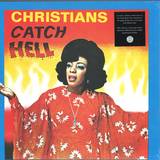
- D2: Reverend Edna Isaac And The Greene Sisters - Christians Catch Hell
- D3: The Fountain Of Life Joy Choir - Thank You
- D4: The Fantastic Family Aires - Glory
Utterly magnificent, sublimely soulful survey of the Gospel Roots label, subsidiary of the mighty TK Records at the height of the Miami Sound. Beautifully presented... the LPs with a 12"-square, full-colour, sixteen-page album of photos and original artwork. Check!!
A&R was co-ordinated by Gospel legends Ira Tucker — from the Dixie Hummingbirds — and Ralph Bass, veteran producer with Savoy, King and Chess. The label was run by Timmy Thomas, who had recently smashed with Why Can't We Live Together, for another TK spin-off, Glades. Operations were overseen by Henry Stone himself, unlikely King of Disco, who had recorded a young Ray Charles, and pushed forward James Brown. They drew in artists from all over the US, from St. Louis, Columbus, Memphis, Brooklyn, Cabrini Green in Chicago: unknowns like Camille Doughty, reluctant to jeopardise her job at GM ('Generous Motors') in Detroit, and huge-sellers like the revered Brooklyn All Stars, who started out on Peacock in 1958.
Choral belters, deep ballads, harmony quartets, epic city-blues, gritty funk, powerhouse female soul... Killer-diller Philly like a scorching version of Harold Melvin & The Blue Notes' Wake Up Everybody, and Jean Austin's raw Spirit Free, co-written by Ronnie Dyson, produced by Jesse James at Future Gold. Chicago Sound like The Fantastic Family Aires — named after the family's furniture store on North Cicero, but reminiscent of the Staple Singers at their best — through to the full-blown glory of The Fountain Of Life Joy Choir, led by Marvin Yancy from The Independents, and featuring Natalie Cole... Singers like Versie Mae Gibson, from the Jordans, by rights up there with Irma, Etta and Ree... Bangers 100%-guaranteed to find their way into Theo Parrish sets, and mortal delirium for the prissiest of soul and gospel purists.
The Viennese duo, otherwise known as Tosca, confound expectations on their new album, 'Outta Here'. The sonic collages and smooth downbeat jams with which they made their name are replaced with a soul/jazz/blues confection that's closer to a band like Brand New Heavies than anything else. 'It's called 'Outta Here' for a reason,' explains Rupert Huber. 'The title stands for change, a change to the concept we've had so far. It refers to a change in energy and dynamic. We've been know for an almost ambient sounds. The new songs are much more beatoriented and direct. Basically, it's just a lot more energetic.' it certainly is that. See tracks such as 'Crazy Love' for evidence. Built on a muscular bassline, it sees Rob Gallagher (ex-Galliano) doing his slinky, soulful thing, while keyboards and muted sound effects flare in the background. The rare groove revival starts here. 'Swimswimswim' reworks the same elements, with the addition of Cath Coffey (Stereo MCs) into a irresistible pulse of feel good vibes. Meanwhile, the title track, 'Outta Here', sounds like a lost gem from the early '90s acid jazz era. 'It was a natural evolution,' says Richard Dorfmeister. 'In the past, we were very focussed internally because we were in a studio on our own, working slowly making sonic collages. This time, because we were working more with singers the process was naturally quicker and the results more instant and upbeat. In that sense the title 'Outta Here' literally means that we got out of our studio.'
Do Tosca think the new sound will wrong foot their fans 'It's not completely different. It's still our style and mood, it's just more direct,' says Richard Dorfmeister. 'People always have a picture of you and it can take a long time to change that. You stand for something and that's how they see you. I think people see us in that laid-back and chilled kind of way. Over the last 20 years we've been described as lounge, chill out, downbeat. We always ignored it because we felt it was more about the music. We've always seen ourselves more in terms of being an alternative to commercial music. That's still what we're doing, just in a different, more direct kind of way.'
Kenny Gino and Big Mike a.k.a. the Solid Gold Playaz both started playing records in the late 70's/early 80's. Having family from Chicago, who were DJ's and down with some of the big guys at the time, "heavily influenced our music and production styles" both say. "Living so close to the city, we could go down to all the legendary night spots. The Rainbow and the Warehouse, the Box, the Shelter... places where you could just feel the vibe. And you could hear guys like Farley Funkin' Keith, Ron Hardy, and Jammin' Gerald (the Chicago DJ/producer who is Kenny's cousin) play these incredible records". They both were hooked on the house sound, and would bring it back to their home, a small city named Racine, Wisconsin, located about an hour and half north of Chicago. They continued to develop their DJ and production skills into the 90's, but musically, weren't taking things very seriously until they met Chicago producer Louis Bell. He introduced them to many of the people who were building the mid-90's Chicago sound. "Louis gave us access... access to places we hadn't been before. He took us into the offices of Cajual/Relief Records and Underground Construction, and suddenly we were face to face with guys who were doing what we wanted to do... Cajmere, Paul Johnson, Glenn Underground... showing us that we could do this too. We did a few releases just to get our name out, and soon we had some pretty big named DJ's playing our music. We had DJ's actually looking for our records, and telling us how much they liked our sounds... that just blew us away, especially with very little promotion and in the limited numbers we were pressing... our music just started to build a name for itself."