Kerri Chandler’s Kaoz Theory kicks off 2022 with Mr. ID’s Language Of Jazz EP, featuring two remixes from the label boss himself alongside two original cuts.
2021 saw Kerri Chandler’s Kaoz Theory continue to move from strength to strength, unveiling material from the likes of Dutch rising star Chris Stussy and of course Kerri himself, here we see the imprint wrap things up with a new addition to the roster, Casablanca, Morocco-based artist Mr. ID.
Up first on the release is ‘Track ID1’, a collaboration between Mr. ID and Youssef Grirane featuring Rita Mdn. It’s a unique six-minute journey through jazzy pianos and organ licks, intricate organic percussion and mesmeric, textural atmospheres. Kerri gives it the remix treatment in style extracting all of the jazziness of the original and retwisting things with the classic Chandler authentic house feel. Next, Chandler employs his revered 623 alias for the ‘623 Again Mix’ version which strips things back to low-slung drums, bumpy stabs and emotive piano lines.
The flip side houses ‘Track ID1’ in all its original glory before ‘Track ID2’ closes out proceedings seeing Mr. ID join forces with Younes Akhraz, rhythmically shifting to a jazzy 4/4 drum groove while wandering keys and warm subs fuel the mystical vibe.
DJ Feedback:
Sasha – Tasty
Laurent Garnier – Love the whole EP
Jimpster – Jazzed up piano house heaven! Love It!
Lea Lisa – Lovely remix by Kerri
Mr. V – Kerri delivers the goods once again!!!
Anja Schneider – Great. Love It.
Archie Hamilton – Nice
Andrew Treagust - Man that's some crazy production – really like it!
Mike W - absolutely classic release. how on earth could you go wrong? the world needs more piano!
Fish Go Deep - All tracks sounding great here. ID1 is a lovely warm groove and Kerri's remixes inject a little dancefloor bump to proceedings.
Daniel Troberg – incredible music
Kiki Navarro – excellent single, loving all the mixes special ID1 and the Kerri Chandler Main Remix
Ben Lovett – Remix mastery from Chandler – wonderful meeting of piano and drum – fire.
Sergio – Excellent example of classic house with personality
Hector Samper – Amazing EP!!!
quête:schneider
- A1: Chasing Shadows
- A2: God Knows We Tried
- A3: If You Dare (Feat Zun)
- B1: Omnipotent Love Energy
- B2: Skin On Skin
- B3: Fast Lane
- B4: Different People
- C1: Cosmological Horizon Entropy
- C2: Losing Sleep
- C3: Matter Of Time
- D1: Space 2 Breath
- D2: Outer Space Jam
- D3: Unpowered Descent
- D4: Beyond Completely Gone (Feat Judas Mordache)
DJ Support
Nathan Micay, Madam X, Ben UFO, Extrawelt, Answer Code Request, Mosca, Foul Play, Crazy P (Hot Toddy), Lauer, Ben Sims, Om Unit, Martyn Bootyspoon, hrdvsion, Nick Craddock, Kikelomo, Laurent Garnier, Carl Craig, Addison Groove, My Nu Leng, Anja Schneider, Ame, Kassian, Orde Meikle (Slam), Richie Hawtin, DJ Autumn (Banoffee Pies), Henry Greenleaf, Rhyw, Fault Lines, Bake, Sly-One, Mak & Pasteman, Littlefoot + more
Following the release of a number of EPs on Swiss, German, British and Australian labels, Trinidad will release their debut album ‘Palm Trees & Thirty Degrees’ on October 16th 2020.
The album draws on the Swiss-based trio’s experience of sustaining the energy of festival and club shows, while also providing the perfect background to a relaxed summer evening with friends.
The project provides an opportunity for the trio to indulge in a range of musical influences, blending together a mix of synthesizers with the haunting tones of a church organ, the warmth of a string quartet and regality of an opera singer. The album grew organically, with inspiration taking hold beyond the confines of the studio: the bonus track recorded with a Jamaican reggae singer in the back of a VW bus in Greece. Soundscapes from Colombia to India were captured and embedded.
With "Palm Trees & Thirty Degrees" Trinidad guide listeners on a journey to a tropical paradise; to a wonderful, perhaps peculiar place of confidence, created and shaped by the mental theatre of the moment.
The soft kiss of a warm breeze hits you as you adjust to your new surroundings ("Desembarco"); leaving the static chatter of your thoughts behind in the "Lobby" (feat. MonoAbe) of your mind; you allow yourself to imagine what the evening holds in store (“Kopfkino”); But first, there’s a drink in the “Sunset Bar”, a refreshing cocktail "Luciola" that serves as a gateway for you to plunge into the night. A night of unlimited possibilities, the first instances a blur ("Sagrada"), as time starts to lose its meaning ("Tempus Fugit"); everything spins, everything is possible, everything is ("Elevate"). Suddenly, hours (or is it days?) have passed – it doesn’t matter; what matters is the first sign of dawn, the unmistakable warmth dissolving the darkness (“Alma”); the beat slows, and you feel the "Libération" of the new day; looking around you see the moments you’ve shared etched on the faces of your friends ("Fleeting" feat. Julia Portmann); It is not goodbye, it is only "Au Revoir".
The album was produced by Trinidad in their own studios in Bern and Zurich. It features collaborations with a number of artists: Cornelia Aeschbacher Firmin (Hang), MonoAbe (Mallets & Percussion), Jack Williams (text of "Fleeting"), Julia Portmann (vocals), Zenyth (vocals) and Michael Meier (electric bass). The songs were mixed by Marcel Schneider, mastered by Benjamin Fay. Raïssa Lara Lütolf was responsible for the graphic design.
repressed !
From Another Mind, originally known as a series of eclectic dance events in Southern Germany, now released its debut EP 'Nachtblende'. With the four hypnotic and atmospheric tracks, SHDW & Obscure Shape transfer the energy of the nights onto vinyl. The record pays homage to Romy Schneider - vinyl only.
“Tectonic” is a concise portrait of SIMON BERZ’s geological sound explorations across continents over the last 15 years: drums, electronics, and a set of electronically manipulated basalt stones from Iceland.
SIMON BERZ is a transdisciplinary drummer, sound artist, and music educator based in Switzerland and Berlin. Working at the intersection of improvised music, sound art, and performance, and deliberately crossing boundaries between disciplines, his aesthetics are shaped by a sustained engagement with natural materials, particularly stone, and their sonic transformation through electronic manipulation. Beyond his performance work, BERZ founded BADABUM as an art label and a music school.
For the last 30 years, BERZ has been performing in Japan, China, Russia, the USA, Cuba, Iceland, Turkey, and across Europe. He has collaborated with artists including BILL LASWELL,BABY SOMMER, DAMO SUZUKI (CAN), JAMES TURRELL, JIMI TENOR, JOHN SINGLAIR, JOJO MAYER (NERVE), KONDO TOSHINORI, KIDD JORDAN, LAUREN NEWTON, LEE “SCRATCH“ PERRY, MAURO PAWLOWSKI (dEUS), NILS PETTER MOLVÆR, NIKI GLASPIE, NORBERT MÖSLANG, PAUL LOWENS, PFADFINDEREI, ROB MAZUREK, SKÚLI SVERRISSON, and he was the live drummer for APPARAT. As BERZ understands artistic practice as energy emerging from nature and through dialogue with people, his recorded output is intentionally selective, with one highlight being “Beats versus Breath” with KONDO and LASWELL (2023). Alongside a regular drumkit and electronics, he has developed his own instruments such as the “Lithophon” in which resonating stones are turned into amplified sound through water drops, and “Tectonic”, a set of Icelandic basalt stones shaped through electronic manipulation. These self- built instruments form the material basis for his performances, installations, and sound recordings.
“Tectonic” is also the title of BERZ’s latest work: a summary of his geological sound explorations across continents. From Iceland to Indonesia and Bali, from New Orleans to China, in caves and at shores, BERZ carried his millions-of-years-old basalt stones as both instrument and collaborator. On Java, he met Baron, a builder of stone gamelan instruments. At the Pacitan Tabuhan Cave (Indonesia) he performed with MISBACH BILOK and WUKIR SURYADI (SENYAWA) who work with corals as instruments. BERZ brought these encounters and “field recordings” to the Stöðvarfjörður studio in Iceland, where he recorded with his “Tectonic” set-up, drums, and electronics. The music was later mixed in Berlin by DIRK DRESSELHAUS (SCHNEIDER TM). The resulting album moves from club-driven tracks to ambient passages, from gamelan-inspired textures to HipHop-like beat patterns. It resists easy categorization while staying direct and physical in its impact.
Mathias Kaden returns to Rekids with ‘Fyutr’, featuring Zoë Xenia and a remix from Dennis Ferrer. The single is a preview of Kaden’s upcoming album. Mathias Kaden returns to Rekids with ‘Fyutr’, following his previous four releases on the label and once again linking up with DJ, producer, and vocalist Zoë Xenia, who also featured on his 2022 ‘Blackbird’ EP on the label. Set for release on 27th February 2026, the single offers an early glimpse into Kaden’s forthcoming album on Radio Slave’s flagship imprint, and comes with a remix from New York House legend, Dennis Ferrer.
A slow-burner with real progression, Mathias Kaden’s ‘Fyutr’ unfolds as a mind-melting journey. Dub chords creep in gently before stretching and mutating, while Zoë Xenia’s spoken-word vocal drifts through the mix, and sweeping strings give it a deep, timeless feel. The single is complemented by a remix from Dennis Ferrer, who flips the original into a beefy, pared-back House cut, warping Xenia’s vocals and locking into a rolling groove before resolving in lush chord work.
Active since the mid-90s, Kaden first appeared on Rekids in 2019 and has since built a wide-ranging catalogue across labels such as Cocoon and Vakant, alongside remix work for DJ Koze, KiNK, Monika Kruse, and Trentemøller. ‘Fyutr’ marks his fifth release on the label, following last year’s ‘Freedom’ remix EP, which received support from Ben Sims, Anja Schneider, Kölsch, Honey Dijon, and more.
- 1: Bc March (The Return)
- 2: The Dignity Of Labour
- 3: Down Into Hell
- 4: D.i.s.c.i.p.l.e.b.c
- 5: The Hammer Comes Crashing Down
- 6: The Troubled Troubadours Of Tomorrow
- 7: Catch Me If You Can
- 8: Whole In The Scene/The Nordic Light
ON LTD GREY SPLATTER VINYL W/ HAND SCREENED 12" PRINT Creepy Crawl kicks off the 2026 in a suitable way…unleashing the new LP by Disciple BC. Titled 'The Homecoming' this really is music for the world as it is today - Continuing the blood soaked saga, The Homecoming documents the bands return to the UK, with 9 tracks of the finest horror crust punk, each one telling tales of crime, punishment, revenge and retribution. Is this the end, or a new dawn? Featuring members of SORE THROAT, DOOM & AGNOSY and featuring the enigmatic and mysterious Rev Schneider on vocals and faith healing. Disciple B.C. has been described as “Jello Biafra fronting Motorhead” & like “Dave Vanian singing with Bathory playing Anti Cimex songs”. Coming at you wrapped in a deluxe gatefold sleeve, grey splatter vinyl and a hand screened 12” print done inhouse here at Creepy Crawl and limited to 300 copies. Join us. Support the underground.
- Multiphonic I
- Gurgle
- Air Hand Whistle
- Inhale Exhale
- Birds
- Multiphonic Ii
- Mouth Synthesizer
- Multiphonic Iii
- One Pitch
- Throat
- Whistle Pitch
Un-easy listening from »anti-singer« and improviser Sofia Jernberg, a celebration of the voice in its rawest, most malleable form. Jernberg was born in Ethiopia and grew up in Vietnam and Sweden, so one can only imagine these diverse languages opened up a wealth of phonetic possibilities before she entered academia to study jazz and composition. If you dive into her catalogue you’ll clock her startling range – working as a jazz soprano and as an improviser, collaborating with everyone from Stefan Schneider to Mats Gustafsson, as well as appearances on the stage and screen, most notably in Matthew Barney, Erna Ómarsdóttir, and Valdimar Jóhannsson’s »Union of the North«.
On »Voice«, Jernberg provides a ground-level entry point to her work, meticulously running through a litany of unconventional techniques (non-verbal vocalisation, split tones, toneless singing, and distortion) without any effects, just pure batshit sonics designed to show off the voice’s scope as an experimental instrument. On »Mouth Synthesizer« she purses her lips to make ratcheting pops like some analog oscillator, hoarsely mimicking the sort of blustery, Merzbow-coded distortions you might get if you patched a RAT pedal into a broken guitar amp. It isn’t an act of caricature, it’s Jernberg’s way of demonstrating that expensive modular rigs aren’t an essential tool for experimental music, before throwing a side-eye to the field recording industrial complex on »Birds«, transforming her vocal chords into a nightmare aviary. But it’s Jernberg’s startling »multiphonic« experiments that hit hardest. The album opens on »Multiphonic I«, and it’s difficult to tell that you’re listening to a human voice at first – you could just as well be on Colin Stetson’s overblown sax airstreams. Jernberg creates a captivating spiral of crooked, phased tones and hoarse, guttural croaks that she develops over three movements. On »Multiphonic II«, her voice is turned into a storm of pained shrieks, and on the third and final segment, it almost resembles Arve Henriksen or Jon Hassell’s muted brass curlicues. Each track pulls a different musical muscle, whether it’s »One Pitch« with its unsettling yodel-like quivering drones or »Gurgle«, sounding like a close mic-ed recording of a small pot gently simmering.
- 1: Nart Shabatynoqo - Tizhin Gup
- 2: Ritmik Improvizasiya - Kamran Kərimov, Yusif Əzizov
- 3: Sivrin Dun - Tatiana Dordzhieva, Maria Beltsykova
- 4: Qartuli Dance - Arkady Kagramyan, Arseniy Kagramyan
- 5: Abredj Nuh - Mutat And Ilyas From Ulyap
- 6: Barkhallal Dawdi - Balkhar Ensemble
- 7: Nart Shabatynoqo - Zamudin Guchev
- 8: Zazu Daxe - Tizhin Gup
- 9: Arazbari - Şirzad Fətəliyev, Arazbarı Balaban Qrupu
- 10: Perizada - Bagdagyul Ramazanova
- 11: Cəngi - Şirzad Fətəliyev, Arazbarı Balaban Qrupu
- 12: Yali - Bagdagyul Ramazanova
- 13: Hüseyni - Aşıq Altay
- 14: Humayun - Mirjavid Cəfərov
- 15: Si Woreyda - Nayil Quoshi
The label ORED Recordings was founded in 2013 by Circassian friends and fellow musicians Bulat Khalilov and Timur Kodzoko, in order to start an activity which is dedicated to documenting and preserving the traditional and post-traditional music of the North Caucasus. Khalilov and Kodzoko, were just as excited about this music as it sounded like a force that transcends borders and in which time dissolves and community becomes the only compass.
Through hundreds of field recordings, which have been made at communal gatherings, local festivities or family meetings, the label has captured a wide range of individual voices and their unique acoustic manifestations. All recordings on this album capture the raw expressiveness of the mountainside villages. Music performances being played by people who dedicate their love to music and an additional willingness to share intimate emotions.
Whereas most academic ethnomusicologists travel around the world in order to study foreign cultures, Bulat Khalilov and Timur Kodzoko were fascinated by what they just heard in the familiar regions of their then home town Nalchik. In resolute contrast to Russian academic circles, they soon developed a DIY Punk ethos for their far reaching work, beginning to formulate their own language in the field of ethnomusicology and to push the traditions forward.
However, the label’s work goes far beyond mere preservation. »We started traveling around the North Caucasus and did recordings with people from many different ethnic groups. In the North Caucasus, our work had a political dimension because there used to be (and still are) a lot of conflicts between different ethnic groups. We quickly understood that our work is not just about music and art,« states Bulat Khalilov.
The work of the label aims to reflect not only the great music of the Caucasus and its various communities but also to tell the stories behind it. They are stories of struggle, of independence, of working with historical memory in the present times of the 21st century.
Since Bulat Khalilov and Timur Kodzoko are now based at the University of Göttingen, we were able to meet each other many times and to eventually exchange ideas which resulted in the release of this collection of recordings. The compilation »Music from the Caucasus« provides a first introduction to the comprehensive work of ORED Recordings. For this collaborative release on TAL the recordings are being made accessible for the first time ever on vinyl, CD and various digital formats, all coming with extensive liner notes and yet unpublished photographs.
Bulat Khalilov and Stefan Schneider, November 2025
Mathias Kaden returns to Rekids with the 'Circulate' EP, featuring a William Kiss Remix.
Mathias Kaden is back on Rekids after 2022’s ‘Blackbird’ EP, this time with the four-track ‘Circulate’ EP featuring a remix from the hotly tipped William Kiss. Kaden’s ‘Freedom’ kicks things off with stripped-back machine rhythm, tasteful stab melodies and a deeply satisfying low-end groove before an iconic gospel vocal joins in. Title track ‘Circulate’ is another infectious low-slung crawler with crunchy synth hits and a hypnotic and classy vibe that will get the dancefloor moving.
On the flip, William Kiss remixes Mathias Kaden’s ‘Freedom’ following his recent EP on Rekids' sibling label RSPX and the release of his collaborative project, Not Without Friends, with Luke Alessi and Jordan Brando on RÜFÜS DU SOL’s Rose Avenue. Kiss turns the track into a pumping peak-time cut with additional percussion and plenty of his signature Jackin’
flavour. Closing out the record, Kaden’s ‘Twisting Shadows’ introduces an acidic bassline and warped, dubbed-out vocals before dropping into an energetic trip.
Active since the mid-90s, Mathias Kaden appeared on Radio Slave’s Rekids for the first time in 2019 for ‘Liberate Drums’. He now returns to the label with the ‘Circulate’ EP, adding to his versatile discography on labels like Dyinamic and Vakant while also remixing work by Matthias Tanzmann, Onur Özer, Anja Schneider, and Trentemöller.
- A1: Western Roll Call
- A2: The Next Time I Saw Elvis
- A3: Cinema, C’est La Vie
- A4: On The Set Of The Last Movie
- A5: Alejandro Jodorovsky's Arrival In Taos
- A6: Crystal Morning, New Mexico
- A7: Funkout At The Mud Palace
- A8: Cowboy Bill, Guy Grand And Texas
- B1: Still Raging On
- B2: Flipside Of The American Dream
- B3: Thank You Mr. Schneider
- B4: The Counterculture Holdout
- B5: Stanley In I Love The Movies
- B6: Dennis In Ameridreams
- B7: A Few Words About Dennis Hopper
- B8: Golf, They Say (James Version)
- A1: I Could Sleep All Day Ft Beachpeople
- A2: The Night (Bad Moves)
- A3: Flames Rise High
- A4: Dreams Are My Reality
- A5: That Liminal Moment Between Dreaming And Waking
- A6: Sleepless Ft Barking Continues
- B1: Run
- B2: I Hope My Dreams Don't Come Tru Ft Matt Mendo
- B3: I See All My Girls
- B4: Hide & Seek Ft Lambert & Torky Tork
- B5: Sober Ft Greedo
- B6: You Have A Drug Problem Ft Philo Tsoungui
- B7: Freakshow
Josi Miller aus Leipzig-Connewitz macht parallel zu ihrem Studium an der Bauhaus-Universität Weimar erste DJ-Erfahrungen in der ostdeutschen Subkultur. 2017 zieht sie - längst Protagonistin des Homegirls-Podcasts - nach Berlin. Sie begleitet Trettmann jahrelang als Tour-DJ und ist solo ständig auf Achse - von Kapstadt bis London, vom about:blank bis zum Institut für Zukunft, vom MELT bis zur Fusion. Mit KLAN-Musiker Stefan Heinrich gründet Josi das Elektropop-Duo Import Export, veranstaltet unzählige Workshops für Flinta* und beaufsichtigt Produktionen für befreundete Künstler*innen à la Jolle oder Zugezogen Maskulin. Seit etwa zwei Jahren hostet Josi das ARTE-Format "Chat with a DJ", in dem sie regelmäßig Künstler*innen wie Marlon Hoffstadt, Anja Schneider oder Acid Pauli empfängt. Im Herbst 2023 beschließt Josi während eines Kreativcamps in Frankreich ein Soloalbum in Angriff zu nehmen. Im Kreis vertrauter Musiker*innen wie Fatoni, Aywing, Lambert, Torky Tork und BEACHPEOPLE entstehen die ersten Fragmente. 2024 zieht Josi im Rahmen eines Förderprogramms für mehrere Wochen zu Post-Punk-Ikone Gudrun Gut in die Uckermark, wo sich ihr Vorhaben konkretisiert. Am Ende einer intensiven Auseinandersetzung mit der eigenen Psyche und unzähligen Stunden zwischen Synthesizern und Beat-Software steht "4 Stages Of Sleep" - ein Debütalbum, das Breakbeat, Pop und Electronica miteinander fusioniert.
- A1: Harm Rochel
- A2: Der Frosch Hat's Versaut
- A3: Haubentaucherwelpen
- A4: Insel
- A5: Schalenka Hase
- A6: Ja, Roducheln!!
- B1: Hau Ab Die Schildkröte
- B2: Bei Fugbaums
- B3: Am Ende Einer Reise
- B4: Nach Fest Kommt Ab
- B5: Vormann Leiss
Turbostaat - Role Model für eine ganze Generation deutschsprachiger Post-Punk-Bands - feiert das 25-jährige Bandbestehen mit der Wiederveröffentlichung ihres Katalogs über das bandeigene Label 18Null9. 'Vormann Leiss', mit dem 2007 die enge Zusammenarbeit mit Stammproduzent Moses Schneider begann, erscheint auf 180g schwerem Vinyl mit großem Textheft im Orginal-Artwork.
Oliver Dollar presents part four of his Contemporary series on Rekids. The EP precedes his upcoming album on the label, enlisting Seven ‘Sev’ Davis Jr. and Nils Ohrmann, alongside dub reinterpretations by La Boix and Sev.
Germany’s Oliver Dollar returns to Radio Slave’s Rekids with Contemporary Part Four, Parts one through three featured collaborations with Austin Ato, Brillstein, Harvard Bass, Hazmat Live, Boogs, and many more, winning support from the likes of Nightmares on Wax, Anja Schneider, Laurent Garnier, Carista, Jennifer Cardini, Dam Swindle, and others.
For this next chapter of Oliver Dollar’s ‘Contemporary’, elements of Dub serve as the unifying thread, opening part four with ‘Speakers Bleed’, a jazz-inflected House cut from Oliver and Classic Music Company and Ninja Tune artist Seven ‘Sev’ Davis Jr. Hypnotic vocals swirl through deep, groove-laden rhythms, setting the tone for the EP’s fluid, atmospheric feel before Oliver reunites with Golden Gate club resident and long-time collaborator Nils Ohrmann for the Hallelujah Dub of ‘The New Is Here’. The track features the soulful voice of Detroit songwriter and Contemporary series regular APROPOS while gospel-tinged background vocals and rich textures sit over an infectious percussive rhythm. On the flip, Oliver Dollar & Brillstein’s ‘Pill Popper’ from Contemporary Part Two is reworked by La Boix, the duo of LA”s Thee Mike B (aka Brillstein) and producer Salva, whose credits include work with RL Grime, Kurupt, E-40, and the Grammy-nominated album of ScHoolboy Q, as well as remixes for Rihanna, Boys Noize and Nelly Furtado. Their version is a late-night, low-slung trip, with echoing keys and vocals drifting through deep basslines. Closing the EP, Seven Davis Jr. returns for a dub of ‘Before You’, Oliver’s collaboration with ADMN from Contemporary Part One. Retaining APROPOS’ heartfelt vocal from the original, Sev layers bright, soul-drenched synths over rolling drums, delivering an irresistible, feel-good finale.
- IN 10: Jahren
- Pas De Deux
Siebdruckcover, gedruckt in der Küche des Labelbosses. Plus Sticker. Nach 4 Livekonzerten Anfang des Jahres als Gästeband der Antilopengang fassen "Die Benjamins" die ihnen eigene Live-Energie in zwei neue Songs: "Wer liebt dich in 10 Jahren" und "Pas de deux". Folgerichtig wurde im Proberaum alles live eingespielt, aufgenommen von Moses Schneider. "Wer liebt dich in 10 Jahren" Annette Benjamin, ehemalige Sängerin der legendären Punkband "Hans-A-Plast", fragt: Wer liebt dich in 10 Jahren? In einer Gesellschaft, in der viele eine nicht enden wollende Jugend anstreben. Was bleibt? Mit Zeilen wie "heute underground - morgen schlecht gelaunt" stellt sie die Halbwertszeit der Szene infrage. "Deine Freundin ist jung, küss ihren Mund, kauf einen Hund". Dass solche Textzeilen nicht ins schlagerartige Abrutschen, sondern extrem bissig funktionieren, ist Verdienst des Zusammenspiels aller Bandmitglieder. Thomas Götz und Julian Knoth zurren den Song auf eine postpunkige Art zurecht, Max Grubers geschmackvolle Knochenbrechergitarre setzt die Akzente, und Charlotte Brandis 80's-Synthesizer rundet ab - fertig ist der Sound von DIE BENJAMINS. "Pas de deux" ist eine Hetzjagd.Durch die fest verzahnten Riffs pflügt Annette Benjamins helle Stimme, die von Gewalt, von Dominanz und wahrscheinlich auch von Liebe erzählt: "Schnell bist du ihm zuwider / dein König zwingt dich nieder". Ein Männerchor, der "pas de deux" brüllt, die souveräne Aufteilung der einzelnen Bandmitglieder zu einem knurrenden Ganzen - das ist Punk in Bestform. Mitglieder: Annette Benjamin, Max Gruber (Drangsal), Julian Knoth (Die Nerven), Thomas Götz (Beatsteaks), Charlotte Brandi
- Mary Mary
- I'm Not Your Steppin' Stone
Mit nur 14 Jahren begann Trelane als Backgroundsängerin bei Billy Childish und CTMF und sprang bei einer BBC6 Session als Leadsängerin für einen Ramones-Song ein. Als die Band Trelanes großartige Stimme hörte, beschloss sie, ihn bei einigen Monkees-Covers als Leadsängerin auszuprobieren. Trelane kam auf die Idee für den Bandnamen. Weitere Aufnahmen sind geplant. Der folgende Text steht in englischer Originalsprache auf der Rückseite der ersten 7"-Single der Band... "Wir trafen Trelane zum ersten Mal im Jahr 2267 n. Chr. während einer Versorgungsmission zur Kolonie Beta VI. Trelane war jung, mutig, trug knielange Mokassins - angeblich aus dem Besitz eines gewissen Peter Tork - eine Cowboyjacke mit idiotisch langen Fransen und ,hippe" Hosen. ,Steht ihr auf die Monkees?", fragte Trelane. ,Natürlich", antworteten wir. ,Groovy", lachte Trelane, ,ich taufe euch auf den Namen The Squires of Gothos. Habt ihr ein Cembalo?" ,Nein, tut mir leid." ,Keine Sorge, ich zaubern eins her - und hier ist ein Studio. Jetzt hört auf, rumzualbern, und lasst uns aufnehmen!" Und so kam es, und hier ist das Ergebnis. Dig!!!" - Mister Schneider: The Vincent van Gogh-Gogh, Malibu, LA Lead-Gesang - Trelane The Squires of Gothos: Bass / Backing-Gesang - Jableeta Schlagzeug - Ginger Chunks Gitarre - Sir Quentin Gaydish - eine Childish Produktion!
Oliver Dollar presents Contemporary Part Three on Rekids The third instalment features collaborations with Ben Silver, Boogs, and Hazmat, and features Apropos and Boog Brown.
Berlin’s Oliver Dollar unveils part three of his ‘Contemporary’ series, releasing on Radio Slave’s Rekids 4th April 2025 and following up last year’s parts one and two, which featured the likes of Harvard Bass, Brillstein, ADMN, and Austin Ato, and won support from the likes of Nightmares On Wax, Anja Schneider, Laurent Garnier, Carista, Jennifer Cardini, Dam Swindle, and more.
Part three of Contemporary sees Oliver Dollar invite another cast of hotly tipped collaborators, kicking offthe EP with Melbourne DJ and producers Ben Silver and Boogs - both resident DJs at Revolver Upstairs - for ‘Cosmic Weapon’. Their track features lush, poignant chords underpinned by a rolling groove, with vocal samples warped, chopped, and sliced above for a mind-melting trip. Up next, ‘What Cha’ Gonna Do?’ sees Dollar team up with Apropos, whose inimitable voice previously featured on ‘Contemporary Part One’, and talented Detroit vocalist and Dilla’s Delights’ Boog Brown for a soulful duet. Last up is another Motor City link-up featuring Hazmat Live on production alongside Oliver Dollar for the infectious House energy of ‘Ought To Be Love’, joined by the earworm vocals of Members of the House front vocalist William Beaver, aka Billy Love, known for his work bringing Motown-style gospel vocals to Techno and House with notable Detroit artists like JeffMills, Theo Parrish, Moodymann, Kevin Saunderson, and many more.
drum work. Closing out the ‘I Feel’ EP, Tal Fussman works with fellow producer 8-AN to drop the dream-like strings of ‘Life Itself’, another deep track that is as club-ready as it is introspective.
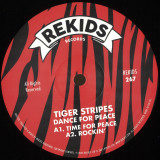
Sweden’s Tiger Stripes returns to Rekids with the ‘Dance For Peace’ EP, following on from February’s ‘All Night Long’ and 2024’s ‘I Heard It Through The Bassline’ EPs. Across four warm and funk-fuelled cuts, he delivers another essential selection of House grooves primed for peak-time moments and deep, late-night sessions alike, already supported by Oliver Dollar, Riva Starr, Anja Schneider, and more.
The opening track, ‘Time For Peace,’ is a brilliantly loopy roller, featuring bouncy drums, muted synth motifs, and a vocal swirl of soulful cries that ramp up the energy. It’s a stylish tension-builder, paving the way for ‘Rockin’, a chunky jam with funky melodic riffs buried in the beat and wordless ad libs teasing out the soul. ‘The Street’ keeps the vibe flowing with swinging drums, knotted guitar licks, and subtly filtered vocals worked into a steamy, party-starting groove. Closing things out is ‘A Dance’, a deeper cut drenched in lush chords and hazy vocals—perfect for blissed-out dancefloor moments.
Founder of the Strange Idols label, Tiger Stripes has spent over two decades forging his own path with standout releases on Hot Creations, Get Physical, Kwench Records, and Rekids. After stepping back to focus on his indie-rock project Little Lies, he made a full return in 2024 and quickly recaptured the form that’s made him an international favourite.
The Crippled Flower was a post-punk band from Düsseldorf - and they arrived late. However, unlike many young, unsuspecting, hairsprayed hopefuls from that time, in 1985 they could sense that the end of their era was approaching. They knew too much to want to take the world by storm. They were four individualists searching their own way. Each of the band members only found their calling after the time that they had spent together – but that's exactly what makes The Crippled Flower still seem really interesting today, this static energy that does not discharge, but is simply there.
Searching dreamers should sound like that and that's what they were. Singer Phil Elston, for example, had brought his love of Kraftwerk from England to Düsseldorf. Even his bandmates found this strange, but they were also entangled in their own longings. This is because the times were still so crazy and these searchers were "on fire". A fire that glows in the band's recordings.
Listening to the songs today, The Crippled Flower sound like they are hugely at the height of their game; think of Wire, Felt, Scritti Politti or Minimal Compact. The variety of musical themes, as well as different soundscapes, which the band created can only be listened to in amazement. Often, it is only Phil Elston's Sprechgesang that confirms that this is really the same band. However, it was back in 1985 when, importantly, the catalyst that brought the musicians together - the short lived eclectic record store "Heartbeat" in Düsseldorf Bilk - occured. It was there where post-industrial and pop, melodic minimal music and sound attacks awaited those who wanted to discover music by artists and bands they did not yet know.
Cassette releases. All recorded on 4-Track. The Crippled Flower succeeded in this medium. Firstly, with a cassette just entited The Crippled Flower, working from project-like studio recorded sketches. Four more tracks from the short-lived band appeared in 1986 on "A Heartbeat Rendezvous“. A demo tape submitted to Les Disques du Crépuscule, however, did not lead to a worldwide career and so, unfortunately, it was soon over.
Stefan Krausen moved on to the follow-up project Deux Baleines Blanches with Stefan Schneider, which, in 1994, gave rise to the band Kreidler. Krausen was already drumming with the I-Burnettes on AtaTak and much later he studied painting in Munich. Nina Ahlers moved from Düsseldorf to Paris to study art, because in the 80s it was still the case that Paris was the destination of choice for those really wanting to become an artist – and that's what she did. Her work is characterized by a non-academic minimalism focusing on everyday objects. Stefan Schneider remained connected to music. Only Phil Elston, who helped sabotage fox hunts in England and wrote these observant lyrics about environmental destruction and time travel, seems to have escaped the social-media world. Whether he found Kraftwerk-fulfilment in Düsseldorf or moved on disillusioned remains a mystery to us. And somehow this also fits in with that peculiar, special band. - Oliver Tepel, Köln 2025 (Translation by Philipp Elston)
- 01: The Stone, Part I (Live)
- 02: The Stone, Part Ii (Live)
- 03: The Stone, Part Iii (Live)
- 04: The Stone, Part Iv (Live)
- 05: The Stone, Part V (Live)
- 06: The Stone, Part Vii (Live)
PURPLE TRAP, the powerful trio of KEIJI HAINO (voice, guitar), BILL LASWELL on bass and RASHIED ALI (drums), recorded live on stage at The Stone.
Recorded in december 2005, this furious live album by what can easily be called a super group remained unreleased till in 2023 BILL LASWELL made it accessible in a rough-mixed digital version for his bandcamp subscribers program exclusively. For this vinyl version, the music has been newly mixed by DIRK DRESSELHAUS (SchneiderTM) and mastered / cut by RUY MARINÉ at Dubplates & Mastering Berlin.
PURPLE TRAP, the trio of LASWELL / HAINO / ALI, reunited for this one-off gig as part of a 5-day-HAINO-festival at John Zorn's venue "The Stone", seven years after its only album Decided ... Already The Motionless Heart Of Tranquility, Tangling The Prayer Called "I" had been recorded (released on Tzadik in 1999).
The six untitled tracks (+ one as digital bonus) deliver what can be expected from such musical masters:
RASHIED ALI, iconic free jazz drummer who played with JOHN and ALICE COLTRANE, PHAROAH SANDERS, SONNY ROLLINS, JAMES BLOOD ULMER and countless more, is all drums, from quiet tiny sounds to high-energy rhythm patterns.
KEIJI HAINO, one of the most prolific artists of the Japanese experimental / noise scene for almost 50 years now, switches between truculent guitar splatters and full-on psychedelic outbursts.
BILL LASWELL, who as producer and musician created a massive body of work in fiields as diverse as ambient, world music, funk, jazz (and often hybrids of these), has proven his mastery in improvisation in projects like MASSACRE, PAINKILLER or (early) MATERIAL and provides the low-end grounding with his signicature bass sound, or adds effect-laden ornaments to the whole.
An overdue addition to a very small body of work by a clearly under-documented supergroup!
Credits:
KEIJI HAINO: voice, guitar BILL LASWELL: bass RASHIED ALI: drums
Recorded at The Stone, New York, december 15th, 2005. Edited by James Dellatacoma at Orange Music, West Orange, NJ. Mixed by Dirk Dresselhaus at the Zone, Berlin. Mastered & cut by Ruy Mariné at D&M, Berlin.
Layout & design by kaidoh. Cover photography by Jasmin Bär.
Es ist ein Fall von popkultureller Archäologie. Eine Spurensuche der elektronischen Musik. Nach über 30 Jahren tauchen verschollene Tapes von Holger Czukay wieder auf, die er einst "zur freien Verfügung" eingespielt hatte. Eine Sound-Meditation von 1997, die nun erstmals neu gemastert im Original und in einer "Version" von die ANGEL (Ilpo Väisänen / Dirk Dresselhaus) und Zappi W. Diermaier von der Krautrock-Legende Faust vorliegt.
Die Arbeiten aus dem Czukay-Studio sind eigenwillige Klangstrukturen, die Mastering-Ingenieur Dresselhaus alias Schneider TM einschätzt als "futuristisches Kleinod, das für seine Entstehungszeit musikalisch weit vorne ist." Für ein abstraktes Klanggebilde "tief und emotional" wie er sagt. Eine Komposition, die mit Avantgarde oder Neue Musik nur unzureichend beschrieben ist. Ein echter Czukay eben. Die Genese dieser Aufnahmen führt in die freigeistigen 1990er, als Holger Czukay in Köln mit jüngeren Techno-Kollegen wie Dr. Walker von Air Liquide mit Beats experimentierte und sich ansonsten sehr für die leise Explosion der digitalen Medien interessierte.
Es war der Tech-Pionier und Medienkünstler Arthur Schmidt alias Gvoon, der ihn in langen Gesprächen auf die (damals futuristische) Data-Maschine "RealityEngine" brachte, mit der sich virtuelle Welten erschaffen ließen. Vom Full-Body-Tracking-System bis zum gemeinsamen Prototyp eines "Internet-TV-Senders". Darauf liefen experimentelle Czukay-Videos, die er mit neuen Samples und Klangfragmenten ausstattete. Später wurde eine kontemporäre Show namens "Czukay/Gvoon:Magazine" daraus und auch die "Can-Live-Soloprojekts" im März 1999, ausgestattet mit der Body-Tracker-Technik von Gvoon. Die DDR-Vergangenheit seines Tech-Sparringspartners Schmidt, der ihm von seiner Zeit in Stasi-Haftanstalten erzählte, setzte in Czukay einen kreativen Prozess frei. Er setzte dieses Trauma in Töne um und machte ihm ein musikalisches Geschenk. "Gvoon-Brennung 1", eine Gabe, die Schmidt "irgendwann" einmal verwenden könne. Einfach so. Ein Soundtrack, der ganz profan auf Digital Audio Tape übergeben wurde.
Über 20 Jahre später brachte Schmidt das "Czukay-Geschenk" für eine zum Kunstwerk umfunktionierte Verhörzelle des Ministeriums für Staatssicherheit (MfS) wieder zum Einsatz. Als Installation für einen stockfinsteren, bedrückenden Raum mit Gummiwänden. Hier stieß wiederum Dresselhaus auf das Material. Ihm wurde klar, dass er dort mehr hörte als irgendwelche 1990er-Fragmente: "Es ist irgendwie Blues-mäßig, auf eine kybernetische und abstrakte Art." "Mit einem sehr langsamen Groove, der einen die gesamte Strecke aufmerksam hält", sagt Dresselhaus. Er beschreibt den Mastering-Prozess sowie die Neubearbeitung in Form der "Gvoon-Version 1" als Balanceakt zwischen Respekt vor dem historischen Material und einer zeitgemäßen Studio-Bearbeitung.
Eine respektvolle Verbeugung zum 87sten Geburtstag von Holger Czukay im März 2025.
- Highway Road
- Living In My Hometown
- When I Remember
- Reflections
- Under The Sun
- Under The Sun
- Devil Song
- Game To Play
- Annabell Lee
- Abc
Bis ins Jahr 1973 reicht die Historie von Mass zurück, als Günther V. Radny (das V. steht für Viktor) mit Sänger Josef Hartl, Gitarrist Walter Speck und dem Schweizer Drummer Charles Frey (heute als Akron bekannter Autor) die Formation Black Mass startete. Nachdem Speck wegen psychischer Probleme mit tödlichen Folgen ausfiel, ersetzte ihn der Saarbrücker Gitarrist Gerd Schneider, der zuvor mit ScorpionsSchlagzeuger Hermann Erbel alias Herman Rarebell bei RS Rindfleisch gespielt hatte. Schneider musste allerdings nach einem Jahr wegen massiver Drogenproblemen wieder gehen und wurde durch den englischen Gitarristen Mick Thackeray (The Merseys), der in der Schweiz mit den Slaves und Countdowns, und in München mit Abi Ofarim spielte, ersetzt. Zur gleichen Zeit ersetzte Johannes Eder, von der englischen Band I Drive kommend, Drummer Frey, der sich laut Radny auf den Büchertripp begeben hatte. Zudem wurde der Bandname auf Mass verkürzt.
In dieser Besetzung nahm MASS im April 1975 im Studio 7o in München mit Dave Siddle am Mischpult, der unter anderen mit den Beatles, Jimy Hendrix, Jeff Beck, Animals und Deep Purple arbeitete ein Album auf. Aufgrund der Drogenprobleme von Sänger Josef Hartl wurde dieses Album nie veröffentlicht. Leider sind diese Bänder bis heute verschollen. Doch damit nicht genug der unruhigen Zeiten: Ein Jahr später mussten Hartl (Drogenprobleme, verstorben 1998) und Thackeray (Übermäßiger Alkoholkonsum), gehen.
Mit dem aus Berlin gekommenen Detlef „Dave“ Schreiber als neuem Gitarristen war die Formation als Trio 1976 erst einmal stabilisiert. 1977 entstand das Album Back To The Musicâl, welches bei United Artists Records (Hawkwind, ELO, Don McLean) erschien. In Folge wurden Mass als teils boogieorientierte Hardrockgruppe, anschließend als Heavy Metal Band bekannt und genießen heute ähnlich wie Accept, Scorpions, Trance oder Fargo Pionierstatus. Nach einer zeitweisen Umbenennung in Monsters kehrte Bandboss Günther V Radny kürzlich mit Mass zurück und lieferte eine gefeierte Reunion-CD. Die Band wurde auch kürzlich von Golden Core/ZYX geehrt, da je ein Track von Mass und Monsters auf der Compilation Sound & ActionGerman Hardrock & Heavy Metal Rarities Vol. 1 zu finden ist. Im Zuge dieses Kontaktes kam es zu der längst überfälligen Idee, das Debütalbum von Mass erstmals auf CD (und erneut auf Vinyl) zu bieten. Dieses Gesamtpaket gibt es jetzt als Bundle und ist somit ein absolutes Sammlerstück.
The Crystal Hum is the debut vinyl release by Taiwan-based artist Yuching Huang and her first release for Night School.
A beguiling dreamscape of crackles, spluttering, love-struck Casios presided over by the the spectral vocal and guitar work of Huang, Yuching sings love songs at the end of this world and the beginning of the next. Recorded during a hiatus from her group Aemong (a duo with artist Henrique Uba) in Berlin, these songs elevate Huang’s unique vocal style and grasp of atmospherics. The Crystal Hum deconstructs balladry, Garage, guitar music and reforms it into a
unified ghostly otherworld version of these languages.
The Crystal Hum thrums with buried desire, trails of nocturnal reverb seeping out of apartment windows, diaristic vocal performances and deeply emotive, evocative Western-style strings. Formulated by Yuching Huang after periods of frustration and experimentation, the album is an exercise in minimalism and paring back, with some tracks like JohnJohn featuring little else than an elastic bass, spring reverb trails, an interjecting vocal and swelling, dislocated synths. The effect is spellbinding, the soundtrack to getting lost in the labyrinthine, closed streets of Venice, Taipei, Hong Kong, or mirror versions of them in the imagination.
On opener Fly! Little Black Thing, a subterranean funk bassline roots Huang’s singing, a rudimentary, unreliable beat floundering in whimsy underneath. Demure, dream Dance music, Huang references classic lo fi experimenters Suicide and Arthur Russell as well as Night School label mates The Space Lady and Ela Orleans. In fact, after the release of Aemong’s third album Crimson, Huang credits the direction of The Crystal Hum to being enchanted by The Space Lady’s Greatest Hits,
the landmark lo-fi recording made by Susan Dietrich Schneider in 1990. The new, minimalist approach to her sound world reveals and shrouds in equal measure. On the heart-melter Love, a sultry mid-tempo Casio + bass backing drops into the ether with Huang’s vocal swimming in preternatural void before emerging anew, in awe at the world. Every chord change heralds new perspectives, every guitar flurry swells and drips emotion, nothing is wasted and space billows out from between the grooves.
Huang never reveals more than necessary, making this an in-between love album: the right amount of mystery and darkened mirror shines wanely on The Crystal Hum while remaining fragile and vulnerable in the sweet spots. Turning over in pillowing smoke and night in the dark corners, Huang sings in both Mandarin and English. The songs speak of earthly matters seemingly at the edge of dissipating into nothing. Distorted, beguiling Sambas warble like sweating dancehalls in an imagined Lynchian 60s, as on Thoughts. Closer You, An Illusion warps a classic 60s Girlgroup bassline beloved of the likes of Les Rallizes
Denudes into a slight ballad on the edge of the void, held back by the teary-eyed, wistful and enveloping vocal cooed by Huang. Each song feels like a love song dedicated to the bits between worlds, between beats, the negative space between people where desires, feelings and loss hangs in the air, resolute and unresolved.
Repress on Limited Crystal Clear Vinyl and Black Vinyl to coincide with new album ‘Daylight’ release
The album was recorded at the top of an East London tower block, mixed in a beach hut on Camber Sands and gilded by Bollywood strings is already setting its sights hide and wide, but when the sound and vision encompasses panoramic electronic soul laced with a viscerally personal reaction to the mad times we’re living through, we’re in the presence of something special
Our two British protagonists are Sean Dickson, a former indie star who reinvented himself as an electronic adventurist - musician, DJ, producer – whose last album Ft. featured a stellar line-up of guest vocalists, including Yoko Ono, Fred Schneider (B- 52’s), Alan Vega, Crystal Waters (fronting ‘Testify’, which topped the US Billboard dance chart) and David McAlmont - the last, a thrilling singing sensation with an illustrious history, from indie-soul pioneers Thieves and the legendary McAlmont & Butler to purer soul and jazz recordings and a striking collaboration with minimalist composer Michael Nyman.
Limited SILVER Vinyl[29,62 €]
If the sanguine cedar scent of Cosmic Americana and the bright jingle jangle of Neo-Psych Rock has led you through the last couple of years, then chances are good you’ve had a brush with Silver Synthetic. The members of the New Orleans band ditched the dirtier riffs of their past projects (Jeff The Brotherhood, Bottomfeeders) for a West Coast curl that balanced country twang and honeyed harmonies with a rhythmic stomp that fishtailed through the speakers with glee.
An eponymous full length on Third Man fully distilled the scope of their sound, turning stage-battered ballads and barroom burners into one of 2021’s most promising debuts. They return for a second salvo, honed with a tour-tight symbiosis and some ace drop-ins from southern slingers Luke Schneider (pedal steel) and Rex Gregory (sax, flute). Rosalie finds Silver Synthetic refining their sound, softening their approach, and letting a breeze of ‘70s AOR weave among the country swagger. Between the tanned riffs, the band also balances societal burnout with sunshine, transforming scoffs and sneers into smoke-curled sighs draped in a windows-down aura.
They make their way to Curation Records for the new outing, a welcome home for the band’s sun-streaked Americana, turning ‘Preflyte’ Byrds, JJ grooves, beach-bound Neil, and ‘Water of Love’-era Dire Straits into an album that smooths the seams and steers the listener towards new horizons.
Black Vinyl[29,62 €]
If the sanguine cedar scent of Cosmic Americana and the bright jingle jangle of Neo-Psych Rock has led you through the last couple of years, then chances are good you’ve had a brush with Silver Synthetic. The members of the New Orleans band ditched the dirtier riffs of their past projects (Jeff The Brotherhood, Bottomfeeders) for a West Coast curl that balanced country twang and honeyed harmonies with a rhythmic stomp that fishtailed through the speakers with glee.
An eponymous full length on Third Man fully distilled the scope of their sound, turning stage-battered ballads and barroom burners into one of 2021’s most promising debuts. They return for a second salvo, honed with a tour-tight symbiosis and some ace drop-ins from southern slingers Luke Schneider (pedal steel) and Rex Gregory (sax, flute). Rosalie finds Silver Synthetic refining their sound, softening their approach, and letting a breeze of ‘70s AOR weave among the country swagger. Between the tanned riffs, the band also balances societal burnout with sunshine, transforming scoffs and sneers into smoke-curled sighs draped in a windows-down aura.
They make their way to Curation Records for the new outing, a welcome home for the band’s sun-streaked Americana, turning ‘Preflyte’ Byrds, JJ grooves, beach-bound Neil, and ‘Water of Love’-era Dire Straits into an album that smooths the seams and steers the listener towards new horizons.
- A1: Hallo Wie Gehts
- A2: Otto Hahn In Stahlgewittern
- A3: Ab Nach Indien
- A4: Frau Mit Stiel
- A5: In Mogadischu
- A6: Das Finde Ich Gut
- A7: Liebe Tut Weh
- A8: Lesezirkel Melodie
- A9: Ostblock Girl
- A10: Tu Den Hammelsprung
- B1: Verbotene Früchte
- B2: Wir Gehen In Den Zoo
- B3: Was Kostet Die Welt
- B4: Kinderparty
- B5: Gesundheit (Anspieltip)
- B6: Kleiner Polizist
- B7: Ich Habe Migräne
- B8: Mein Erster Freund
- B9: Ein Kind Für Helmut
2019 Repress of one of the most outstanding records in the history of german avantpop/punk. Originally released 1981 on the legendary ZickZack label, the debut LP by Freiwillige Selbstkontrolle soon reached cult status and became one of the most important NDW / german postpunk releases ever. Active since today (and right now working on their 13th longplayer) F.S.K. were one of John Peel's all time favourites and actually did more Peel Sessions than any other band - besides The Fall, of course. Comes with extensive liner notes by NDW-historiograph Frank Apunkt Schneider (in german).
- 01: Dynamo Dance
- 02: Cosmic Warmup (Causeway Version)
- 03: Dub-Chugger (Jarle Bråthen Version)
- 04: Nautilus Experience (Lovelock Version)
- 05: A Tribute To Florian Schneider
- 06: Phase Induction (Seahawks Version)
- 07: Dilating Departure (Dr Atmo Version)
- 08: Overnight Vision (Mary Yalex Version)
- 09: Decompressed System (One Million Eyes Version)
- 10: Deep Dream (Patricia Wolf Version)
‘Dynamic Movements - Music for Exercise & Relaxation’ is the new album by the Swedish electronic music producer/remix duo of Johan Agebjörn and Mikael Ögren, lovingly released on Ltd. cassette via Lo Recordings.
Back in the 1980’s there was an exercise craze, people wore lycra bodysuits and headbands. All over the world people were making ‘Dynamic Movements’, determined to change the flow, turn their lives around and step into a bright new future. At the same time the New Age movement was blossoming and meditation was the way forward. Meditation and deep relaxation with maybe some crystals and Unicorns, just for fun.
Inspired by these exercise tapes of the 70s/80s and in tribute to those times and movements, Johan and Mikael worked with producers from around the world to create an album of diverse interpretations, bringing us an album of deep sonic nourishment. Sometimes throbbing and at other times gently lapping at your toes, the result is a lavish cassette contrasting ‘music for exercise’ on side A and ‘music for relaxation’ on side B.
Kicking off side one is the duo’s own ‘Dynamo Dance’, a resonant, pulsating slice of electronic pleasure, which gives way to tracks by acclaimed collaborators like the crisp, cruise control groove of Causeway, the dub chug delight of Jarle Brathen and the irrepressible majesty of ‘Lovelock’ (Steve Moore), before Johan and Mikael return with a tribute to the late great Florian Schneider of Kraftwerk.
Side two’s sumptuous drift into a world of soft pads, rippling arpeggios and sultry saxophone (all the saxophone on the album is by the aforementioned Steve Moore) is initiated by Seahawks, with their lysergic ‘Phase Induction’ leading to the extended Cafe Del Mar beach bar ambience of the legendary Fax records maestro Dr Atmo, continuing with the impossibly lush shimmer of Mary Yalex, the gravity defying drift of One Million Eyes and the divine dream world of Patricia Wolf.
Das achte Album der Punkrock-Gruppe Turbostaat: Wo sonst Möwen und Wattenmeer waren, sind jetzt Tauben und Beton
Junger Punk steht breit lächelnd in kahler Raumecke vor zerschlissener Tonbandmaschine; kurzgeschorene, blondierte Haare, schnittige Sonnenbrille mit dünnen Metallbügeln, angejahrte Lederjacke über buntem Flanellhemd; Trainspotting-Ästhetik. Beschriebenes Foto ist gewiss kein typisches Albumcover-Motiv - und doch ziert es das Cover vom neuen, achten Studioalbum der Husumer, Hamburger, Berliner Band Turbostaat. Der Mann im Zentrum des angegilbten Schnappschusses? Turbostaat-Stammproduzent und Toningenieur Moses Schneider in seinen späten Zwanzigern; oder in seinen frühen Dreißigern - jedenfalls in einem Lebensabschnitt vor Kamillentee und Hochglanz-Equipment. Dreck, Wut, Tatendrang, Aufbruchsstimmung, rotziger Pessimismus, unverhohlen grantiger Punk-Geist - das sind die Parallelen zwischen jenem Foto und der Platte, die es bebildert. Sie hört mit Fug und Recht auf den Namen 'Alter Zorn', klingt mehr nach Stunde null als nach Spätwerk-LP und probt - anstatt friedfertig zu umarmen - den unsanft aufrüttelnden Würgegriff.
Okay, geschenkt: Friedfertig umarmt haben Turbostaat ihre Hörer*innen auf musikalischer Ebene Zeit ihres Bestehens ohnehin nie. Da war immer mehr Understatement und nordfriesische Nüchternheit als Charmeoffensive oder Frohmut, immer mehr Sehnsucht als Wohlbehagen, immer mehr Krach, wirre Worte und bärbeißige Mine zum bösen Spiel als gut gelaunter Humbug. Turbostaat-Musik, das ist Punkrock, dem Wattenmeer-Nebel in den Lungen hängt - seitdem sich die Band 1999 in der schleswig-holsteinischen Provinz formiert hat und auch ein Vierteljahrhundert später.
Wo sonst Möwen, Wattenmeer-Nebel und graue Weiten waren, verdecken nun Taubenschwärme, endzeitlich versmogte Betonburgen und eine gottverdammte Bismarck-Statue, die dem Szeneviertel ihren metergroßen Arsch entgegenstreckt, die Sicht auf alles Schöne. 'Alter Zorn' blickt auf die »Affenstraße«, auf verwahrloste Eckkneipen, in der sich düstere Schatten stapeln, auf »Ruinen zwischen Glas und Stahl«, auf Metropolen voll »greller Sommerkotze« und Spiegelscherben, die immer enger werden - und nur selten starr auf’s offene Meer. Was den schwammigen Protagonist*innen des Turbostaat-Universums dennoch geblieben ist, ist die bohrende Einsamkeit - dieses wütend-resignierte Gefühl, es nicht zustandezubringen, »hier mitzumarschieren«. 'Alter Zorn' zeichnet eine Dystopie - eine Welt zwischen Novembergicht und Hitzestau, in der sich tote Schwäne im Graben stapeln, Panzer rollen, die Luft knapp wird, Obdachlose die Straße umarmen, alle alles mit Karte bezahlen, in Ledersitzen zittern, die Laune im Arsch und überhaupt »wirklich Sense« ist.
Das achte Album der Punkrock-Gruppe Turbostaat: Wo sonst Möwen und Wattenmeer waren, sind jetzt Tauben und Beton
Junger Punk steht breit lächelnd in kahler Raumecke vor zerschlissener Tonbandmaschine; kurzgeschorene, blondierte Haare, schnittige Sonnenbrille mit dünnen Metallbügeln, angejahrte Lederjacke über buntem Flanellhemd; Trainspotting-Ästhetik. Beschriebenes Foto ist gewiss kein typisches Albumcover-Motiv - und doch ziert es das Cover vom neuen, achten Studioalbum der Husumer, Hamburger, Berliner Band Turbostaat. Der Mann im Zentrum des angegilbten Schnappschusses? Turbostaat-Stammproduzent und Toningenieur Moses Schneider in seinen späten Zwanzigern; oder in seinen frühen Dreißigern - jedenfalls in einem Lebensabschnitt vor Kamillentee und Hochglanz-Equipment. Dreck, Wut, Tatendrang, Aufbruchsstimmung, rotziger Pessimismus, unverhohlen grantiger Punk-Geist - das sind die Parallelen zwischen jenem Foto und der Platte, die es bebildert. Sie hört mit Fug und Recht auf den Namen 'Alter Zorn', klingt mehr nach Stunde null als nach Spätwerk-LP und probt - anstatt friedfertig zu umarmen - den unsanft aufrüttelnden Würgegriff.
Okay, geschenkt: Friedfertig umarmt haben Turbostaat ihre Hörer*innen auf musikalischer Ebene Zeit ihres Bestehens ohnehin nie. Da war immer mehr Understatement und nordfriesische Nüchternheit als Charmeoffensive oder Frohmut, immer mehr Sehnsucht als Wohlbehagen, immer mehr Krach, wirre Worte und bärbeißige Mine zum bösen Spiel als gut gelaunter Humbug. Turbostaat-Musik, das ist Punkrock, dem Wattenmeer-Nebel in den Lungen hängt - seitdem sich die Band 1999 in der schleswig-holsteinischen Provinz formiert hat und auch ein Vierteljahrhundert später.
Wo sonst Möwen, Wattenmeer-Nebel und graue Weiten waren, verdecken nun Taubenschwärme, endzeitlich versmogte Betonburgen und eine gottverdammte Bismarck-Statue, die dem Szeneviertel ihren metergroßen Arsch entgegenstreckt, die Sicht auf alles Schöne. 'Alter Zorn' blickt auf die »Affenstraße«, auf verwahrloste Eckkneipen, in der sich düstere Schatten stapeln, auf »Ruinen zwischen Glas und Stahl«, auf Metropolen voll »greller Sommerkotze« und Spiegelscherben, die immer enger werden - und nur selten starr auf’s offene Meer. Was den schwammigen Protagonist*innen des Turbostaat-Universums dennoch geblieben ist, ist die bohrende Einsamkeit - dieses wütend-resignierte Gefühl, es nicht zustandezubringen, »hier mitzumarschieren«. 'Alter Zorn' zeichnet eine Dystopie - eine Welt zwischen Novembergicht und Hitzestau, in der sich tote Schwäne im Graben stapeln, Panzer rollen, die Luft knapp wird, Obdachlose die Straße umarmen, alle alles mit Karte bezahlen, in Ledersitzen zittern, die Laune im Arsch und überhaupt »wirklich Sense« ist.
Das achte Album der Punkrock-Gruppe Turbostaat: Wo sonst Möwen und Wattenmeer waren, sind jetzt Tauben und Beton
Junger Punk steht breit lächelnd in kahler Raumecke vor zerschlissener Tonbandmaschine; kurzgeschorene, blondierte Haare, schnittige Sonnenbrille mit dünnen Metallbügeln, angejahrte Lederjacke über buntem Flanellhemd; Trainspotting-Ästhetik. Beschriebenes Foto ist gewiss kein typisches Albumcover-Motiv - und doch ziert es das Cover vom neuen, achten Studioalbum der Husumer, Hamburger, Berliner Band Turbostaat. Der Mann im Zentrum des angegilbten Schnappschusses? Turbostaat-Stammproduzent und Toningenieur Moses Schneider in seinen späten Zwanzigern; oder in seinen frühen Dreißigern - jedenfalls in einem Lebensabschnitt vor Kamillentee und Hochglanz-Equipment. Dreck, Wut, Tatendrang, Aufbruchsstimmung, rotziger Pessimismus, unverhohlen grantiger Punk-Geist - das sind die Parallelen zwischen jenem Foto und der Platte, die es bebildert. Sie hört mit Fug und Recht auf den Namen 'Alter Zorn', klingt mehr nach Stunde null als nach Spätwerk-LP und probt - anstatt friedfertig zu umarmen - den unsanft aufrüttelnden Würgegriff.
Okay, geschenkt: Friedfertig umarmt haben Turbostaat ihre Hörer*innen auf musikalischer Ebene Zeit ihres Bestehens ohnehin nie. Da war immer mehr Understatement und nordfriesische Nüchternheit als Charmeoffensive oder Frohmut, immer mehr Sehnsucht als Wohlbehagen, immer mehr Krach, wirre Worte und bärbeißige Mine zum bösen Spiel als gut gelaunter Humbug. Turbostaat-Musik, das ist Punkrock, dem Wattenmeer-Nebel in den Lungen hängt - seitdem sich die Band 1999 in der schleswig-holsteinischen Provinz formiert hat und auch ein Vierteljahrhundert später.
Wo sonst Möwen, Wattenmeer-Nebel und graue Weiten waren, verdecken nun Taubenschwärme, endzeitlich versmogte Betonburgen und eine gottverdammte Bismarck-Statue, die dem Szeneviertel ihren metergroßen Arsch entgegenstreckt, die Sicht auf alles Schöne. 'Alter Zorn' blickt auf die »Affenstraße«, auf verwahrloste Eckkneipen, in der sich düstere Schatten stapeln, auf »Ruinen zwischen Glas und Stahl«, auf Metropolen voll »greller Sommerkotze« und Spiegelscherben, die immer enger werden - und nur selten starr auf’s offene Meer. Was den schwammigen Protagonist*innen des Turbostaat-Universums dennoch geblieben ist, ist die bohrende Einsamkeit - dieses wütend-resignierte Gefühl, es nicht zustandezubringen, »hier mitzumarschieren«. 'Alter Zorn' zeichnet eine Dystopie - eine Welt zwischen Novembergicht und Hitzestau, in der sich tote Schwäne im Graben stapeln, Panzer rollen, die Luft knapp wird, Obdachlose die Straße umarmen, alle alles mit Karte bezahlen, in Ledersitzen zittern, die Laune im Arsch und überhaupt »wirklich Sense« ist.
- A1: Tycho - Spectre (Bibio Remix)
- A2: Casino Versus Japan - It's Very Sunny
- A3: Lancaster - Last Sunset
- A4: Nate Mercereau - Of Course That's Happening
- A5: Craft Spells - Our Park By Night
- B1: Panama - Destroyer
- B2: Muddy Monk - Divine
- B3: Schneider Tm - Frogtoise
- B4: Luke Abbott - Modern Driveway
- C1: Little Dragon - Little Man (Tycho Remix)
- C2: Weval - You Made It (Part Ii)
- C3: Tourist - Elixir
- C4: Octo Octa - Beam Me Up (Please Take Me Away Mix)
- D1: Tycho - Local
- D2: Ulrich Schnauss - In All The Wrong Places
- D3: Tycho - Pbs (Live Edit)
- D4: Slowdive - Sugar For The Pill (Radio Edit)
Tropical Pearl Vinyl[31,05 €]
It has been twenty years since the first Back To Mine release but still the series is going strong. These personal after-hours soundtracks have never sounded more relevant than now, and next up is GRAMMYr Award-nominated, San Francisco-based artist Tycho. It finds him going deeper than one of his famous Burning Man sets as he heads into otherworldly, cinematic headphone territory with tunes from Lancaster, Little Dragon, Octo Octa, Ulrich Schnauss and many more across four fantastic sides of vinyl.
When dub and dope beats entered into an open relationship in the mid-nineties and created a casual hybrid with trip hop, Jean-Yves Prieur aka Kid Loco was one of the first French people to be there. With singles like "She"s My Lover" and "Love Me Sweet" and the album A Grand Love Story, the producer proved himself to be a loverman indeed, with a knack for bedroom moods, charming little melodies and a comforting balance between minimalism and lush arrangements . As a keyboard all-rounder, Guillaume Méténier aka Soul Sugar has been featured on numerous Kid Loco productions for more than twenty years. From the synthesizer to the clavinet, from the Fender Rhodes to the Leslie organ, the "Funky Frenchman" is no stranger to any keyboard instrument. The Hamburg label Echo Beach, which has already issued dub commissions for a number of pop and new wave classics, thought it was time to change that. Dub masters such as Rob Smith, Noiseshaper, Dubmatix, Paolo Baldini and many others remixed for the label. Songs by Martha & The Muffins, The Police, David Bowie, Grace Jones and Robert Palmer, among others. In order to honor the music of Florian Schneider, Ralf Hütter and their respective fellow Kraftwerkers with a dub set, they turned to Kid Loco, who has now established himself as a musical all-rounder, and who immediately invited his long-time accomplice Soul Sugar brought on board. The calculation really worked out.
- A1: Once In A Lifetime
- A2: Belong (Extended Mix)
- B1: Le Meilleur Est À Venir Feat Laurent Garnier
- B2: Agents Of Light Feat Sven Väth (Vinyl Edit)
- B3: False Gods (Vinyl Edit)
- C1: The Downside Feat Rromance
- C2: Distant Observer Feat Josh Wink
- D1: Ursa Minor Feat Petar Dundov
- D2: Homesick Feat Anja Schneider
- D3: Acid Black Feat Black Asteroid
Der Frankfurter DJ und Produzent Gregor Tresher veröffentlicht am 29. November sein mit Spannung erwartetes neues Album 'False Gods' mit 16 Titeln über PIAS Électronique und präsentiert mit seinem ersten LP-Projekt seit acht Jahren seinen vielfältigen und umfassenden Sound in seiner ganzen Fülle.
Tresher gilt weithin als seltene Ausnahme in der trendgetriebenen EDM-Szene. Von den Anfängen in den 90er Jahren in seiner Heimatstadt Frankfurt hat er sich bis heute einen beachtlichen Status erarbeitet, ob mit Remixes für Größen wie Depeche Mode, Moby oder Extrawelt, seiner Freundschaft und wiederholten Zusammenarbeit mit Sven Väth, oder mit seinen eigenen Alben - sowohl unter seinem richtigen Namen als auch unter seinem Pseudonym Sniper Mode.
Nun erscheint sein bislang umfangreichstes Projekt - Eine introspektive Reise in einen der aufregendsten Köpfe der modernen elektronischen Musik. Auf diese Reise nimmt er auch einige Freunde mit: Von u.a. Sven Väth, über Anja Schneider bis zum französischen Pionier Laurent Garnier.
- Part 1 - Creamcheese Düsseldorf - 1968
- Part 2 - Creamcheese Düsseldorf - 1968
The experimental project Pissoff was founded in the late 60s by multimedia-artist Eberhard Kranemann and some friends who studied together at the Düsseldorf Academy Of Fine Arts. The chaotic, loud and soundwise undisciplined band took part in various events at this location and other places. Due to the intense fluctuation of band-members the performances by Pissoff were characterized by continously changing participants and variations of the involved equipment: cello, violin, clarinet, tenor saxophone, flute, vocals, electric guitar, electric bass guitar, organ and drums. In 1968 Pissoff performed together with Joseph Beuys who was professor of sculpture at the Art Academy at that time. During this incomparable audiovisual interaction Joseph Beuys staged his Hndaktion: in concentrated manner he moved his hands in front of his head while listening and visually reacting to the very loud and abstract staccato-rhythms by Pissoff. The event was recorded by Eberhard Kranemann on a Telefunken mono-tape-recorder and remains the only existing audio-material by Pissoff until today. On that night Eberhard played cello, clarinet and tenor saxophone while the other members added sounds by electric guitar, electric bass and drums. Earliest musical experimentations that can be defined as the origins of the band Kraftwerk already started in 1967 by Eberhard Kranemann and Florian Schneider-Esleben. Sometimes Kranemann invited Florian Schneider-Esleben to join Pissoff.
»Nuts of Ay«, the thirteenth album by the Berlin-based electronic pop duo Tarwater (Ronald Lippok and Bernd Jestram), is their first in a decade, since 2014’s »Adrift«. Beautifully poised and smartly dressed, it's an album that draws Tarwater’s various pasts into a high-definition present, while bringing the duo, yet again, into productive dialogue with all kinds of fellow travellers.
Tarwater’s music has always been marked by a hypnotic pop-ness, but that’s particularly evident on »Nuts of Ay«, where a song like »Hideous Kiss« weaves together jangling guitar, pastoral flute, and flittering electronics into a gem-like construction. While the lyrics of »Hideous Kiss« are written by the duo, »Nuts of Ay« also continues a longstanding Tarwater tradition of recasting the words of others in their own mould. This time, their remit is broad: poetry from Derek Jarman (»All Nuns«) and Millner Place (»Trapdoor Spider«); lyrics from Jean Kenbrovin (»I’m Forever Blowing Bubbles«), the late Shane MacGowan (»USA«) and, again, John Lennon (»Everybody Had a Hard Year«).
This cast of found and borrowed lyricists also finds collaborative echo in the guest musicians dotted throughout »Nuts of Ay«. Schneider TM turns up on the lovely, Felt-like »Spirit of Flux«, where guitars channel the tangled reveries of Vini Reilly and Maurice Deebank into lush pop. Carsten Nicolai joins, as Alva Noto, dappling »On Waves and Years« with intimate glitching textures; he also provides the album cover art. Elsewhere, Masha Qrella appears on »Down Comes the Goose«, and actor Lars Rudolph pitches in for »USA«.
It may have been ten years since the album's predecessor, but Lippok and Jestram have kept active with other projects. They’ve collaborated with Masha Qrella, Immersion, and Iggy Pop; worked on radio plays with Kai Grehn, some based on the writing of Nick Cave (»The Sick Bag Song«, featuring Tilda Swinton, Paula Beer and Alexander Fehling) and William S. Burroughs (»The Cat Inside«); and made music for several radio-tatorts (radio plays based on »Tatort«, a long-running German police TV series) by playwright Tom Peuckert.
Both voracious and committed in their creative energies, Jestram and Lippok report back from these experiments with »Nuts of Ay«, one of their most compelling, deeply lustrous, dreamlike albums yet. They say there was no concept for the album, which is surprising, perhaps, given its holistic mood, explaining it »grew together like a coral reef in the studio over a period of several years«. There’s something to be said for letting an album gather and mutate naturally, without an overarching framework in place, and »Nuts of Ay« certainly feels like an unforced collection of material that nonetheless inhabits a similar space, one where guitars twist like driftwood next to amorphous, aqueous electronics, Lippok’s droll yet completely convincing vocal delivery riding songs that pulse and plume with curious, unpredictable rhythms.
But you can also hear elements – submerged but still present – of other music that’s inspired the duo: they’ve drawn some connections for us with psychedelic folk, Bowie in Berlin, Burial, and the film music of Popol Vuh and Krzysztof Komeda. This music shares a strong sense of place – whether in the world, or the mind – and the twelve songs on »Nuts of Ay« have such similar presence; a shared mood, a shared world, a shared sense of the possibilities of what electronic pop music could, and should, be. A bold and brave pop experiment.
Artwork by Carsten Nicolai
Mastering by Bo Kondren, Calyx Berlin
»Trapdoor Spider«, »On Waves and Years« & »Breaking Day«: lyrics by Milner Place
»All Nuns«: lyrics by Derek Jarman
»USA«: lyrics by Shane MacGowan
»Down Comes the Goose«: lyrics from a traditional song
»Forever Blowing Bubbles«: lyrics by Jaan Kenbrovin
»Everybody Had a Hard Year«: lyrics by John Lennon
SAFI ist laut und intensiv. Ein furioses Statement wie Punk auch definiert werden kann. Ambivalenz und Zerrissenheit sind Ausgangspunkt, die kombinierte Virtuosität aus viereinhalb Oktaven Stimmumfang und dem Kunstdiplom sind das Fundament. SAFI zeigt ihr Gesicht mit schnörkelloser Geradlinigkeit, pur, groß. Umarmt von einer gewaltigen Klangmauer. Krachsituation. SAFIs drittes Studioalbum wurde vom Berliner Soundkreateur Moses Schneider produziert (Tocotronic, Ätna, u. v. m.). Gäste sind u.a. Dennis Lyxzén (Refused), Sebastian Madsen (Madsen) und Rummelsnuff.
Keshavara tragen prächtige Schnurrbärte, verwegene Kopfbedeckungen und sprechen ein abenteuerliches Patois aus Englisch, Hindi, Deutsch und Gibberish. Auf ihrem neuen Album "III" kreieren die Kölner um den deutsch-indischen Musiker Keshav Purushotham Klänge, wie andere Leute Drinks mixen, nachdem sie schon drei genossen haben: Verwaschener Kraut-Pop und diasporische Dub-not-Dub-Exkursionen werden nach Augenmaß miteinander kombiniert und wild geschüttelt. Zuckersüß mäandernde Melodien, entlehnt einem fantastischen Niemandsland in der Grenzregion zwischen exotischen Library-Kompositionen und psychedelischen Soundtracks, verschmelzen mit den Grooves einer Rhythmusgruppe, die sich auch in den Tonstudios des funky Beirut der Mittsiebziger Zuhause gefühlt hätte. Das Ergebnis sind mit surrealistischem Zuckerrand gekrönte Cocktails mit der Wirkung einer halluzinogenen Götterspeise. Musik, die schillert und flirrt, wie eine Fata Morgana in der Wüste. Keshavara klingen in einem Moment, als hätte Ennio Morricone einen Bollywood-Film vertont, und im nächsten wie ein von Curt Boettcher produzierter Eden-Ahbez-Song, oder - nicht ganz so spinös aber nichts desto weniger fantastisch - als hätten Khruangbin und Sven Wunder endlich ein gemeinsames Album aufgenommen. In den glanzvollsten Momenten fügt sich das alles wie von magischer Hand zusammen und kulminiert dann in Songs wie "Spiegelmann" und "Tableau Vivant" - fantasmorgiastischen Partys voller transkultureller Clashes, die uns Hörer dazu einladen, sie in farbenprächtige Gruppenchoreografien zu überführen.
War das Debüt von Keshavara noch ein Solo- und der Nachfolger "Kabinett der Fantasie" im Kern ein Duo-Album, so sind Keshav Purushotham, Niklas Schneider, Benedikt Filleböck und Christopher Martin mit ihrem selbstproduzierten, schlicht "III" betitelten dritten Album endgültig zu einer vierköpfigen Band zusammengewachsen … und zwar um eine alte Farfisa-Orgel herum, die eines Tages als Geschenk im Proberaum gelandet ist: Ein, auf sämtlichen Songs mal mehr, mal weniger präsentes UFO aus einer Zeit der Slow-Jams, Live-Takes und des exzessiven Space-Echo-Einsatzes. Sein analoges Blubbern und sein wabernder Funk rollt dem warmen, organischen Bandsound den roten Teppich aus, und verpasst ihm einen zärtlichen Schubs Richtung 70er. Erfrischenderweise kommt er dort niemals so richtig an, sondern bleibt immer im Fluss. Denn das eigentliche Ziel der halldurchtränkten Korridore dieses Albums ist stets der Weg, genau genommen der kunstvoll gezimmerte Holzweg, der phantastische Irrpfad. "III" ist eine Reise, auf der Zeiten und Orte keine Fixpunkte sind, sondern austauschbare Koordinaten eines augenzwinkernden Vexierspiels. Da ist es nur folgerichtig über "Indische Götter im Sauerland" zu singen. Dass ungeachtet der Nostalgie, die alle neun Songs durchweht wie ein warmer Mittelmeerwind, niemals Sentimentalität aufkommt, ist nicht zuletzt diesem Humor geschuldet.
Die ätherischen Drones, sanft nuschelnden Akkorde und geisterhaft seufzenden Soundschwaden, die Keyboarder Benedikt Filleböck seiner altersschwachen Farfisa bevorzugt in den ruhigeren Momenten und den Instrumentalnummern des Albums entlockt, bilden einen stimmungsvollen Kontrast zu den beiden anderen Säulen des Keshavara-Sounds: Christopher Martins leichtfüßig hüpfenden Bass-Dreiecken und Keshavs sonnendurchfluteten Gitarren-Ornamenten. Im Zusammenspiel mit Niklas Schneiders crispen Drumbeats entsteht ein Fundament, mit dem die kaleidoskopischen Texturen und Melodien vollständig verschmelzen.
Das Ergebnis ist das bisher homogenste Album des Quartetts. Mit "III" erweisen sich Keshavara als gewiefte Soundalchemisten und Weltenwanderer, als eine softe Macht, deren Stärke sich aus ihrer enormen Musikalität, ihrer Fabulierlust und ihrem surrealistischen Witz speist.
The Well is the second album by the duo So Sner, composed of Susanna Gartmayer (bass clarinet) and Stefan Schneider (electronics). Recorded over nearly two years in various studios and spaces, the album reflects So Sner's extensive touring across Europe. The final mixing took place in Vienna at the studio of Martin Siewert, who served as both co-producer and mastering engineer. Known for his meticulous attention to sonic detail, Siewert brings his unique techniques and distinctive sound enhancements to the album, resulting in a work that is both stylistically cohesive and daringly uncompromising.
So Sner’s critically acclaimed debut album REIME (TAL26, 2021) was celebrated for its innovative fusion of bass clarinet and electronic sounds in unexpected and surprising ways. With The Well, the duo explores both fluid and dissonant sonic landscapes, embracing different structural and sonic challenges. The result is a quieter, more introspective set of compositions than many might have anticipated. The album is a statement of two confident collaborators crafting complex, spatial musical moments in their own distinct manner.
The music on The Well generates a multiplicity of effects that transcend conventional oppositions such as hand-played versus programmed, composition versus improvisation, or analog versus digital. The album suggests a re-articulation of these categories, allowing the ten tracks to gradually blend one musical idea into another, and one musician into another, in a circular and complementary fashion. The polymetric permutations and exploratory reed components create a soundscape where all elements coexist harmoniously, without compromising or diminishing each other’s presence.
With its sparse sound architecture, The Well invites listeners into a space of effective emptiness, offering room for the mind and body to explore—a sonic island where one can develop sensuality through patient movement.
For So Sner, live performance is a passion of the mind, and since they began working together in 2020, their music has taken them to many different places. The live experience has deeply influenced the recorded music on this album, with the interplay between live performance and studio work informing their creative process. The Well captures the genuine act of exploring new territories, serving as a storage place for the time and space shared by the duo, re-filtering their experiences of performing and traveling together.
The Well is a lucidly playful and ambitious album by two contemporary musicians who are continually learning to create and respond to the subtle and significant changes in their music, maintaining momentum throughout the entire work.
In addition to her work with So Sner, Susanna Gartmayer has recently collaborated with artists such as Joe McPhee and Maria Portugal, and remains a member of her long-running band, the Vegetable Orchestra. Stefan Schneider, founder of the label TAL, has recently performed with Garth Erasmus from Cape Town and fine art luminary Katharina Grosse.
Turbostaat - Role Model für eine ganze Generation deutschsprachiger Post-Punk-Bands - feiert das 25-jährige Bandbestehen mit der Wiederveröffentlichung ihres Katalogs über das bandeigene Label 18Null9. 'Vormann Leiss', mit dem 2007 die enge Zusammenarbeit mit Stammproduzent Moses Schneider begann, erscheint auf 180g schwerem Vinyl mit großem Textheft im Orginal-Artwork.
- Ltd LP: (180g, inkl. Textheft im 7" Format)