The writer Max Sebald often pondered over the nature of human memory, specifically, how our thoughts and desires - and their results - overlap and mutate over time. In A Place in the Country, he writes of the significance of what see as “similarities, overlaps and coincidences”. Are they the “delusions” of the self and senses, or manifestations of “an order underlying the chaos of human relationships, ... which lies beyond our comprehension”?
Song of the Night Mists, the new album by post-classical composer Stefan Wesołowski, often feels it draws on Sebald’s premise.
On a simpler plane, the one where the market dictates the neatly ordered information we consume, Song of the Night Mists can be described thus: recorded in the main by Stefan Wesołowski in Gdańsk, both in his studio and in Saint Nicholas' Basilica, the album incorporates acoustic instruments - piano, violin, double bass - and classic synthesizers such as the Roland Jupiter-8, the Soviet Polivoks. A Roland Space Echo RE-150 tape delay was also pressed into service as an instrument. We also hear the basillica’s organ and field recordings from the Tatra Mountains. Other musicians were Maja Miro, who played the flute parts on ‘Glacial Troughs’ and brother Piotr Wesołowski, who played the organ on ‘Wilhelm Tombeau’. Sound engineer was Marcin Nenko, who was also on hand to record the basilica organ parts. The album was mixed in New York by Al Carlson (Oneohtrix Point Never, Jessica Pratt, Zola Jesus, Lady Gaga, and Liturgy) and Rafael Anton Irisarri handled the mastering.
Ostensibly, Song of the Night Mists is the last in a trilogy, following on from albums Liebestod (2013) and Rite of the End (2017). All three deal with existential matters such as love, death, decay and “an ultimate end”; apocalyptic and Promethean in spirit, and betraying very human conceits. The Sebaldian nature of the new record starts to make itself felt when Wesołowski talks of how he used sampling. One element is unexpected, that of sampling himself: “I go back to dozens of my own unused sketches and recordings, treating them as raw material to cut, slow down, reverse, and transform in every possible way.” Memory as sound, to be reemployed by the listener through their own imaginings.
Another set of samples made by Wesołowski plays another role. These are field recordings, originally created for an audio illustration of the formation of the Tatra Mountains, and used in a film by sound designer Michał Fojcik. Wesołowski: “You can hear cracking ice, streams, footsteps in the snow and the wind, and a real avalanche, recorded from the inside.” The “Tatra connection” on the album is also found in samples referencing composer Karol Szymanowski. The album’s title alludes to a poem about the mountains by Polish poet, Kazimierz Przerwa-Tetmajer.
Wesołowski’s Tatra recordings are “about a world without humans - about the fact that the world existed, was beautiful, and had meaning long before people arrived, and for the vast majority of its history, it was a place without us.” Wesołowski, using one iteration of the natural world, plays out in sound Sebald’s idea of another order, underlying the chaos of human relationships lying beyond human comprehension.
These feelings play themselves out on the five album tracks. Sonorous and rich, they illustrate tectonic shifts we have no control over. Wesołowski hints that the overall sound is a “meditation on the metaphysics of the non-human set against the spirituality that human presence has brought into it.” In that light, the opening number, ‘Core’, with its slow build, and crackling and straining sound effects, create an effect of the earth groaning into life in a creation myth. Once the piano part raps out a simple melody and modulated tonguing trumpet samples add to the overall atmosphere, the listener can certainly find a cue in the “spiritual”, or “human” side of the story. Human versus nature: from the strains and harmonic muscle stretches of the second number, ‘Glacial Troughs’, through to the powerful and filmic ‘Stalagmite’ and heart-on-sleeve romance expressed in closer, ‘Wilhelm Tombeau’, we listeners are cast as Friedrich’s wanderer, looking out over a landscape that will appear only if we engage with it.
Formations of melody appear incrementally, almost appearing by chance - like hidden footings in the rock shelves to give us something to grasp onto. Rhythms are used sparsely: the prolonged percussive taps on ‘Glacial Troughs’ are an anomaly and maybe there to give pace to the album to come; essentially to keep the listener strapped in. Elsewhere, percussion is used as an aid to mood, the two thudding, timpani-style passages on ‘Peak’ there to offset the short, beautiful, kosmische passage that splits them.
Elements of the borderline religious spirit that drove German electronic music in the late 1960s and 1970s also find a place on Song of the Night Mists. The swells and recessions of the organ find their emotional climax on ‘Wilhelm Tombeau’, a track which summons up echoes of the “mountain magic” vistas created by Popol Vuh or Tangerine Dream, especially with the slightly atonal wobble of the Mellotron that counters it.
This is a dramatic album, but it does feel a strangely short, or curtailed listen on ending, evoking the feeling one gets when waking from a dream, and, for all its incipient grandeur, a track like ‘Stalagmite’, for instance, ends on a minor note. Wesołowski admits that Song of the Night Mists is born of the all too human process of temptation, doubt and recalibration - Sebaldian overlaps and coincidences forming something that must live another life, away from its creator. In Wesołowski’s words, the album is “a newborn foal must stand up and walk right after birth.” Now it is yours to ponder.
Search:second effect
Second of two new bass-infected dub EP's with a hint of techno by the Japanese Mystica Tribe. Titletrack ''Stars Are Mine'' and ''His Temple'' immediately set off to deep dub and bass territories in these two typical Mystica Tribe excursions: grooving, but dark with lots of effects and tribal influences. ''Prayer'' evolves around a catchy melodica that won't leave your head for days or maybe even weeks and ''Zen Stone'' tops it off perfectly with this gloomy scifi dubtrip.
Aiko Takahashi is a Nova Gorica-based musician, a spirit that has released albums on various labels. Just like the line that separates the two cities where Aiko lives, Gorizia and Nova Gorica, divided between two countries yet united as one, Aiko’s music exists on a boundary. A line that separates silence from peculiar, almost imperceptible sounds. Too quiet to be Ambient, too Ambient to be Sound Art.
Two years ago, after a first complete release on IIKKI with "It Could Have Been A Beautiful", Aiko Takahashi comes back with a second complete album, this time, on LAAPS.
"This album is a delicate, meditative collection recorded between March and November 2024 in Aiko's former studio, a secluded spot near the River Isonzo, between Gorizia and Nova Gorica in Slovenia. The Grass Harp was made specifically for LAAPS, who asked Aiko to create a new complete piece of sounds. As always, it was largely recorded using dense layers of manipulated loops that weave in and out of the recordings, shaping them in a singular way through effects pedals, tape decks, and tape loops. The Grass Harp is a meditation on decay and silence, blending warm soundscapes with soft, playful melodies. That’s Aiko’s signature sound."
- A1: Delenz & Zeitstill – Place To Be
- B1: Superpitcher – Dream B
- C1: Patrice Bäumel – Nat
- D1: Sawlin – Der Jasager
- E1: Dc Salas – Escapism
- F1: Tal Fussman – Eyes
- G1: Ken Ishii & Yuada – Split Second
- H1: Marcel Fengler – Aura
- I1: Impérieux – Kala
- J1: Joe Metzenmacher – Da Freak
- K1: Joseph Capriati – Cosmopop
- L1: Matthias Schildger – Distorter
Limited Vinyl Box Set including 6x olive 12” vinyl & download code
Cocoon Recordings presents: Cocoon Compilation V
Back for the summer season, Cocoon Recordings proudly unveils the next chapter in its iconic compilation series. With its 22nd edition, Cocoon Compilation V once again bridges past and future, showcasing the essence of electronic music’s constant evolution. True to the spirit of the label, this handpicked collection delivers a diverse, emotional, and forward-thinking selection that drifts through shimmering currents, pulsating machinery, and moments of pure release.
Delenz & Zeitstill set the tone with “Place To Be”, a smooth and warm opener that invites the listener into a meditative microcosm. What starts as dreamy minimalism steadily unfolds into deep, shimmering depth. A sublime invitation to get lost in sound. Superpitcher takes us further into the mist with “Dream B”, an ethereal and cinematic dreamscape that floats between melancholy and magic. Its stretched textures and hypnotic pacing form a gentle passage into inner space.
The energy intensifies with Patrice Bäumel’s “Nat”, a sophisticated tension-builder with a subtle pulse and haunting atmospheres. Sound waves that breathe, evolve, and subtly command movement. Sawlin switches gears with “Der Jasager”, a deep technoid beast that hits with low-end pressure, modulated percussions, and gritty textures and spooky features. Raw, physical, and unrelenting.
A bright contrast comes from DC Salas and his track “Escapism.” Psychedelic, synth-heavy, and effortlessly groovy, it channels the playful side of electronic storytelling. It channels a trancy 90s flair with its vibrant energy, brilliant use of choir bits, and irresistible vibe that transports you back to a golden era. With Tal Fussman’s “Eyes”, we’re taken into euphoric territory. This stomper is a conversation between piano and strings, rising above crisp grooves, weaving emotion and momentum with finesse.
On the second half of the journey, legendary Ken Ishii teams up with Yuada to deliver “Split Second,” a bold, wild and crazy techno excursion full of mechanical grace and Japanese precision. An ode to organized chaos. Marcel Fengler’s “Aura” follows, powerful and deep, pushing air like an engine through tunnels of tension and light. The blend of rhythm and sentiments is a masterclass in functional elegance and states of mind.
Impérieux brings us “Kala,” a track both twisted and beautiful. Its detuned hypnotic melodies and skewed harmonics are unsettling in the best way while the unconventional rhythms cloak the entire track in a mysterious aura. It creaks and twists toward transcendence, underscored by primordial flute sounds. A fractured lullaby for the club. Joe Metzenmacher injects wildness and attitude into the mix with “Da Freak.” Fuzzy, distorted synths collide with a funky bassline, sharp guitar stabs, and mad bleep effects, bringing the raw groove and dancefloor chaos of a bygone funk era into a futuristic setting.
Joseph Capriati debuts on Cocoon with “Cosmopop” and surprises with an unexpected stylistic shift. Capriati explores a more melodic, emotionally driven sound. Subtle harmonies meet a warm, rolling groove. It’s a bold and personal statement, showing a new side of an artist who continues to evolve beyond expectations. To close, Matthias Schildger offers “Distorter,” a raw and emotional cut that leaves room to breathe while keeping the mind spinning. It begins with beautiful pads, before distorted kicks drop in, yet the track retains a certain tenderness, like the feeling of sitting at a tranquil, untouched nature spot, surrounded by the beauty of the world. A grand finale to a compilation that refuses to settle.
From sunrise moments to peak-time madness, Cocoon Compilation V captures the full spectrum of what dance music can be. Transcendent, visceral and endlessly evolving. This isn’t just a collection of tracks. It’s a curated experience for the body, the mind and the soul.
No Drama, the label helmed by Roy Rosenfeld, reflects his musical vision and personal philosophy, showcasing artists whom Roy respects not only as innovators of new sonic landscapes but also as individuals of character. The imprint proudly introduces its third release: a two-track offering by Khen.
Known for his groovy and melodic house sound, Khen has earned international recognition for his unique style.
The opening track, Back in the Days, introduces modulated deep vocals that stamp the composition with a signature sound. Intelligent, percussive, and hypnotically repetitive, the piece maintains a poised charm, deliberately breaking rhythmic expectations through carefully crafted and precisely timed shifts.
The second track, Usual Madness, stretches the emotional range, layering buoyant basslines with arpeggiated melodies and textured and evocative background elements that enrich the arrangement with thoughtful sonic choices. As the piece unfolds, sound effects and an evolving sense of joy coalesce into a meditative structure that seamlessly weaves musical elements with emotional nuance. After a brief moment of calm, the track builds into a commanding crescendo, delivering a final, cathartic release.
Together, these two works represent an essential addition to any discerning playlist.
The AMTK+ series on Amotik's self-titled imprint gives room for friends and admired artists to present their futuristic take on techno. For the fifth edition, Italian producer D-Leria joins the team and presents two highly effective, booming techno trips. The first track, 'Filterbank' sets the tone with its punching kick-drums mangled in between buzzing bass lines. His second track, 'Let It Be' shows a rare side from D-Leria where he uses mesmerising vocal chops to create an immersive, driving techno tool. On the flip side, Argentinian artist Translate comes in with some excellent bleepy hypnotism on 'Notation', followed by the darker, pulsating 'Shifted Communication'.
2026 Repress
Deetron is a venerated veteran who has been crafting sublime house and techno for three decades on a range of influential labels. 2025 brought another busy year for him, with another standout EP on Ilian Tape followed by his latest album which landed via Running Back in October. Back in 2024, he dropped his 'Translate Rhythms' EP on Mutual Rytm's X series and now takes charge of the second release on SHDW's new sub-label Mutual Rytm Raw - following the first 12" 'You And Me', which was a true summer anthem courtesy of KiNK & Raredub.
In its original form, the bright, expressive 'Flow' is a fulsome techno cut that pairs a driving rhythm with sophisticated synths. It sparkles with cosmic energy, while a textured, screwy lead winds through the mix and euphoric female vocals burst out to big emotional reactions. The 'Chord Dub' is a tight, bouncy rework with vamping chords lighting up the drums with real warmth and soul, while the 'Breakbeat Mix' fizzes with rich, old school energy. The dusty breakbeats demand physical reactions, while the pads bring a grand sense of scale and the vocals tug at the heart. All three are classy, effective and offer yet more timeless sounds.
The Messier Objects returns with the second release on their label containing ten new tracks from the new TMO alter ego ‘Messier One.’ The work combines nostalgic IDM, eerie ambient and dreamy dub techno into one mini-album, inspired by the brute forces of nature and the power of healing and regeneration.
Expect to feel the force of nature on the A-side, where tracks such as ‘Earth’s Signal 04’ and ‘The Greatest Ebb Current’ contain distorted and fuzzy pads, eerie and vague echoing vocals, and whitenoise patterns that somehow feel strangely calming. Together with the broken drum patterns on tracks such as ‘Who Do You Worship?’, and the distorted kicks on ‘Kaalo Asmi Loka Kshaya Kritpraviddho’, the A-side manages to create crude IDM and ambient patterns – resembling historic natural events as if you were there yourself.
On the B-side. the noisy and broken patterns from the previous six tracks are replaced with warm and meditative sounds. ‘Two Tides’ is filled with soothing arpeggiated soundscapes and echoing voices, and the organic jungle chants and mythical vocals in ‘Rebuilding Temples’ further continue the process of regeneration. The B-side is accompanied with two remixes from Messier808 (known from the first release), who brings his typical meditative 4x4 patterns to the table, accompanied by dreamy textures, cyclical melodies and illusive effects from a now ‘healed’ society.
This thoughtful release brings a complete story told in only ten chapters. As always, their releases are backed by breathtaking artworks using vibrant and organic colours, completing an intriguing mini-album.
- A1: Banchee - Evolmia
- A2: The Dirty Filthy Mud - Forest Of Black
- A3: Wool - Love, Love, Love, Love, Love
- A4: Spencer Mac - Ka-Ka Baya Mow-Mow (Sing A Little Love Song)
- B1: Trifle - One Way Glass
- B2: Brainticket - Black Sand
- B3: Emma De Angelis - Trip
- B4: Blonde On Blonde - Castles In The Sky
- C1: The Braen's Machine - Fall Out
- C2: Eddie Warner & Roger Roger - Shut Up
- C3: Köy Karde?Ler - Shürük
- C4: The Children - Beautiful
- D1: Moebius & Beerbohm - Doppelschnitt (Richard Norris Edit)
- D2: Demon Fuzz - Past, Present & Future
"Throughout all my time as a musician and producer, ever since Jack the Tab, I've been focused on developing a single idea: Blending psychedelic sounds and effects with rhythm." Richard Norris, Strange Things Are Happening White Rabbit 2024
Over the past few years Eskimo Recordings have invited some of the best crate diggers around to curate compilations that don't just reveal the hidden contents of their record bags but something about themselves too. Now, following in the footsteps of the likes of Bill Brewster and Psychemagik, producer, musician, DJ, writer and more, Richard Norris, takes us on a globetrotting psychedelic journey with the epic 42 track collection, Mr Norris Changes Brains.
For over forty years Richard has played a part in many of the UK's most important music subcultures. Whether sharing stages with the likes of Tracey Thorn as a pubescent punk in St. Albans, or running freakbeat nights in Liverpool and working at the pioneering psychedelic label Bam Caruso, co-producing the UK's first acid house inspired LP with Throbbing Gristle's Genesis P. Orridge or riding the wave of creativity that the second summer of love unleashed all the way to the Top of the Pop studios as The Grid, Richard's career has continually seen him work to expand both his own and the public's musical horizons.
With Mr Norris Changes Brains it's the most recent part of his mercurial career that he's focused on. Drawing inspiration from his post 2006 adventures as one half of Beyond the Wizard's Sleeve, alongside Trash's Erol Alkan, this compilation shows how a more connected world has blown the dust off a paradoxically sometimes straightjacketed scene. The result is a dizzyingly wide-ranging collection that explores the further out there reaches of worldwide psychedelia and dancefloor mayhem.
"A lot of these tracks are fairly recent discoveries, things that I've discovered from around the time I started working with Erol and going right up to today," Richard explains. "Whether that's from going out to play and finding new records in places like Istanbul or just connecting with people online from all around the world. Psych can sometimes be a sort of narrow-minded field, with everything having to sit in its specific niche, but more and more people are open to new sounds and that's allowed for a much broader selection."
Despite their disparate origins what does unite these tracks is that they aren't just there to zone out to on a bean bag as projections of swirling coloured oils and psychedelic patterns wash over you. Mr Norris may change brains but his DJ sets also move feet, and whether it's their killer guitar riffs, oscillating synths floor shaking drums or soulful Hammond organs these are all cuts that from festival tents to underground clubs have proven time and time again to get people dancing.
"With a lot of these tracks there's a kind of fun element in them," says Richard. "It's still psychedelia, but they've also got these solid, funky grooves. They sound phenomenal on the dancefloor and as much as these records might excite old psych heads, this compilation is also for a new generation out there who might have never heard anything like this before and, just like when I was 18 and heard The 13th Floor Elevators for the first time, think 'Oh, my God, what on earth is this and more importantly what else is out there?'"
- A1: Iron Butterfly - Iron Butterfly Theme
- A2: Rare Bird - Devil's High Concern
- A3: Paul St. John - Flying Saucers Have Landed
- A4: Chris Hodge - We're On Our Way (2010 Remaster)
- B1: Juantrip - Shadows
- B2: 62 Miles From Space - Time Shifts
- B3: White Trash - Road To Nowhere
- C1: Blue Phantom - Diodo
- C2: The Mannheim Rock Ensemble - Hungarian Dances
- C3: Limousine - Barriers
- D1: Ugo Busoni - Rullio
- D2: Bernard Estardy - Cha Tatch Ka
- D3: Kate - Shout It
- D4: Dyna-Might - Need You
- D5: La Metamorfosi - Scusa, Eh!
"Throughout all my time as a musician and producer, ever since Jack the Tab, I've been focused on developing a single idea: Blending psychedelic sounds and effects with rhythm." Richard Norris, Strange Things Are Happening White Rabbit 2024
Over the past few years Eskimo Recordings have invited some of thebest crate diggers around to curate compilations that don't just reveal the hidden contents of their record bags but something about themselves too. Now, following in the footsteps of the likes of Bill Brewster and Psychemagik, producer, musician, DJ, writer and more, Richard Norris, takes us on a globetrotting psychedelic journey with the epic 42 track collection, Mr Norris Changes Brains.
For over forty years Richard has played a part in many of the UK's most important music subcultures. Whether sharing stages with the likes of Tracey Thorn as a pubescent punk in St. Albans, or running freakbeat nights in Liverpool and working at the pioneering psychedelic label Bam Caruso, co-producing the UK's first acid house inspired LP with Throbbing Gristle's Genesis P. Orridge or riding the wave of creativity that the second summer of love unleashed all the way to the Top of the Pop studios as The Grid, Richard's career has continually seen him work to expand both his own and the public's musical horizons.
With Mr Norris Changes Brains it's the most recent part of his mercurial career that he's focused on. Drawing inspiration from his post 2006 adventures as one half of Beyond the Wizard's Sleeve, alongside Trash's Erol Alkan, this compilation shows how a more connected world has blown the dust off a paradoxically sometimes straightjacketed scene. The result is a dizzyingly wide-ranging collection that explores the further out there reaches of worldwide psychedelia and dancefloor mayhem.
"A lot of these tracks are fairly recent discoveries, things that I've discovered from around the time I started working with Erol and going right up to today," Richard explains. "Whether that's from going out to play and finding new records in places like Istanbul or just connecting with people online from all around the world. Psych can sometimes be a sort of narrow-minded field, with everything having to sit in its specific niche, but more and more people are open to new sounds and that's allowed for a much broader selection."
Despite their disparate origins what does unite these tracks is that they aren't just there to zone out to on a bean bag as projections of swirling coloured oils and psychedelic patterns wash over you. Mr Norris may change brains but his DJ sets also move feet, and whether it's their killer guitar riffs, oscillating synths floor shaking drums or soulful Hammond organs these are all cuts that from festival tents to underground clubs have proven time and time again to get people dancing.
"With a lot of these tracks there's a kind of fun element in them," says Richard. "It's still psychedelia, but they've also got these solid, funky grooves. They sound phenomenal on the dancefloor and as much as these records might excite old psych heads, this compilation is also for a new generation out there who might have never heard anything like this before and, just like when I was 18 and heard The 13th Floor Elevators for the first time, think 'Oh, my God, what on earth is this and more importantly what else is out there?'"
- A1: André Brasseur - Saturnus
- A2: Contessa Vittoria - Can We Stay Together
- A3: Klaus Weiss - Time Signals
- A4: Brainstorm - You Are Whats Gonna Make It Last
- B1: Paladin - The Fakir
- B2: A To Austr - Thumbquake & Earthscrew
- B3: Dave - In My Mind
- C1: Relatively Clean Rivers - Journey Through The Valley Of O
- C2: The Advancement - Stone Folk
- C3: The Pretty Things - The Sun
- C4: Poll - Psachno Na Vro To Filo Mou
- D1: Higamos Hogamos - Moto Neurono
- D2: The Invisible Girls - Huddersfield Wastes
"Throughout all my time as a musician and producer, ever since Jack the Tab, I've been focused on developing a single idea: Blending psychedelic sounds and effects with rhythm." Richard Norris, Strange Things Are Happening White Rabbit 2024
Over the past few years Eskimo Recordings have invited some of the best crate diggers aroundto curate compilations that don't just reveal the hidden contents of their record bags but something about themselves too. Now, following in the footsteps of the likes of Bill Brewster and Psychemagik, producer, musician, DJ, writer and more, Richard Norris, takes us on a globetrotting psychedelic journey with the epic 42 track collection, Mr Norris Changes Brains.
For over forty years Richard has played a part in many of the UK's most important music subcultures. Whether sharing stages with the likes of Tracey Thorn as a pubescent punk in St. Albans, or running freakbeat nights in Liverpool and working at the pioneering psychedelic label Bam Caruso, co-producing the UK's first acid house inspired LP with Throbbing Gristle's Genesis P. Orridge or riding the wave of creativity that the second summer of love unleashed all the way to the Top of the Pop studios as The Grid, Richard's career has continually seen him work to expand both hisown and the public's musical horizons.
With Mr Norris Changes Brains it's the most recent part of his mercurial career that he's focused on. Drawing inspiration from his post 2006 adventures as one half of Beyond the Wizard's Sleeve, alongside Trash's Erol Alkan, this compilation shows how a more connected world has blown the dust off a paradoxically sometimes straightjacketed scene. The result is a dizzyingly wide-ranging collection that explores the further out there reaches of worldwide psychedelia and dancefloor mayhem.
"A lot of these tracks are fairly recent discoveries, things that I've discovered from around the time I started working with Erol and going right up to today," Richard explains. "Whether that's from going out to play and finding new records in places like Istanbul or just connecting with people online from all around the world. Psych can sometimes be a sort of narrow-minded field, with everything havingto sit in its specific niche, but more and more people are open to new sounds and that's allowed for a much broader selection."
Despite their disparate origins what does unite these tracks is that they aren't just there to zone out to on a bean bag as projections of swirling coloured oils and psychedelic patterns wash over you. Mr Norris may change brains but his DJ sets also move feet, and whether it's their killer guitar riffs, oscillating synths floor shaking drums or soulful Hammond organs these are all cuts that from festival tents to underground clubs have proven time and time again to get people dancing.
"With a lot of these tracks there's a kind of fun element in them," says Richard. "It's still psychedelia, but they've also got these solid, funky grooves. They sound phenomenal on the dancefloor and as much as these records might excite old psych heads, this compilation is also for a new generation out there who might have never heard anything like this before and, just like when I was 18 and heard The 13th Floor Elevators for the first time, think 'Oh, my God, what on earth is this and more importantly what else is out there?'"
"ADN", High Tone's second album, is energy packed, much like their debut album. The ingredients remain the same, but this time, the record is bursting with breaks, loops and samples of voices, electro and even hip-hop sounds. High Tone are incorporating all sorts of influences to create their own personal ground breaking massive dub style, a subtle mixture of an unbeatable energy, an undeniable sense of arrangement and a great desire to surprise. Just first-class dub.
- A1: Yves Deruyter - The Rebel (40 Years Yves Deruyter Rework)
- A2: F.u.s.e. Vs Lfo - Loop
- B1: Two Pieces - Magic Bells (Final Mix)
- B2: Channel X - Rave The Rhythm
- B3: Master Techno - My Noise
- C1: Circuit Breaker - Overkill
- C2: Dj Misjah - Karin's Paradox
- D1: Technicida - Purgatorio
- D2: Meng Syndicate - Sonar System
- D3: Epilepsia - Epilepsia
- E1: Insider - Destiny
- E2: Symphony Of Love - Quantum Leap
- F1: Ramin Feat. 2 Stripes - Brainticket
- F2: Peyote - Alcatraz
- G1: A.paul - Juice
- G2: The Effect - Green Angel (Angel Mix)
- H1: Cybersonik - Technarchy
- H2: Dna - La Serenissima
- H3: Tronikhouse - The Savage & Beyond (Savage Reese Mix)
- I1: Yves Deruyter - Back To Earth (40 Years Yves Deruyter Rework)
- I2: Dream Concept - Shy Kid (In Rhythm Mix)
- I3: All In One - Mama's Kick
- J1: F.u.s.e. - Substance Abuse
- J2: Dj Bountyhunter - The Bountyhunter
- L2: The Wavecatcher - Flight Dh2126
- M1: Yves Deruyter - Feel Free (40 Years Yves Deruyter Rework)
- M2: Methadon - Synthetic Fruits
- N1: Edge Of Motion - Set Up 707
- N2: Reese & Santonio - Rock To The Beat
- N3: Mechanical Soul Saloon - Punos
- O1: Plastikman - Panikattack
- O2: Reese - Funky Funk Funk
- P1: The Prodigy - Charly (Alley Cat Mix)
- P2: Phantasia - Inner Light
- P3: Second Chance - In Paradise
- Q1: Final Exposure - Vortex
- Q2: Quazar - Dragonfighters
- R1: Ecstasy Club - Jesus Loves The Acid
- R2: Quadrophonia - Quadrophonia
- S1: Illuminatae - Tremora Del Terra
- S2: Josh Wink - Higher State Of Consciousness (Tweekin Acid Funk Mix)
- T1: Phuture - Rise From Your Grave (Wild Pitch Mix)
- T2: Black Scorpion Aka Steve Rachmad - Empyrion
- J3: Cybersonik - Backlash
- K1: Robert Armani - Circus Bells (Full Length Original Mix)
- K2: Photon Inc. Feat. Paula Brion - Generate Power (Wild Pitch Mix)
- L1: L.s.g. - Netherworld (Dj Randy's Smoke Free Remix)
Celebrating 40th anniversary of Yves Deruyter's musical career with this 10 x 12" Vinyl Box Set. Including tracks from F.U.S.E. vs LFO, Tronikhouse, Robert Armani, L.S.G., Edge Of Motion, Plastikman, The Prodigy, Ecstasy Club, and the master himselfYves Deruyter.
Yves Deruyter - 40 Years at the Pinnacle of the Night
Forty years. A rollercoaster of a musical career, meandering through five decades, leaving timeless marks on the collective dancefloor memory. Yves Deruyter is the exception that proves the rule. An icon behind the decks, celebrated far beyond national borders for his legendary sets, impeccable musical choices, and the anthems released under his name. The result of collective effort, where Yves, with his vision and unique touch, consistently left his mark-transforming good tracks into inescapable bombs that still resonate through time.
If you've spent forty years living to the pulse of music, the night is in your DNA. Yves Deruyter, a DJ to the core-the real deal. The man who bent the night to his will, dragging weekend vibes into the workweek like a warrior, a true master behind the turntables who made his people dance. His beats: the oxygen that generations lived on.
Yves sharpened his musical weapons in the early '90s within the iconic afterparty scene of Barocci and The Globe-places that became sanctuaries in Belgium's endless night. Here, die-hard dancefloor warriors, cutting-edge music lovers, and night owls from the four corners of the globe gathered. They willingly followed Yves' masterful mixing and his razor-sharp set construction. Clubs with a more conventional timeframe were the next step, with the iconic Cherrymoon as his home base for years-alongside endless guest DJ spots and global gigs. From there, the underground pulsed through Yves' hands and crates, reaching ever-larger crowds-without ever compromising for commercial or crossover sounds. Yves stayed true to his choices, lifting his audience to euphoric heights like a craftsman, armed with his hits, hidden gems, and freshly unearthed nuggets.
From the pounding energy of Rave City to the flippy, epic flashes of Calling Earth-tracks that not only captured the spirit of the times but conquered dancefloors worldwide. This isn't just music; it's a time capsule-a connection between generations and a reminder of the energy from a golden era.
With musical partners like Roel Butzen, Frederico Santini, M.I.K.E. Push, and more recently, Insider, Yves forged a sound that etched its place into rave and dance history. From The Rebel to The House of House, parts of Yves' musical taste have become immortal pillars of dance music heritage. In the early rave days, he topped Belgium's DJ rankings year after year, elevating every club he played to the highest echelons of popularity. The same held true for the records where his name appeared like a badge of honor.
From The Globe to the globe itself-it seemed almost written in the stars. Yves, thestar DJ, became one of the instigators of the electronic music storm that put Belgium on the global map-a storm that never subsided. Festivals like Love Parade, Mayday, I Love Techno, Nature One, and Tomorrowland saw Yves as a trusted force, effortlessly commanding crowds and turning dancefloors inside out. Forty years later, that storm still ignites partygoers, vibrates through dancefloors, and keeps entire generations moving.
Even today, Yves still holds a steady residency with Yves Deruyter and Friends at Club Moustache, where his concept always sells out. Here, both fresh talent and seasoned DJs deliver a killer blend of modern electronic dance music and timeless classics, creating an atmosphere that hooks the crowd every single time.
Because partying doesn't need an excuse. But forty years? That deserves the spotlight-not as a mere milestone, but as a showcase of timelessness. Music mutates, reinvents itself for new generations, yet retains the same impact as that very first time. Yves proves that forty is just a number, and relevance isn't about trends-it's about vision, energy, and an unmistakable touch. His sets? Indestructible. His sound? A heartbeat echoing through time.
And Yves? He doesn't live in the past. Today, Yves distills those four decades into a compilation capturing the essence of his career. Belgian beats, interpreted and refined into a sound that powered raves around the world. Ten vinyls featuring not just a fiercely curated selection that contextualizes the magic of his early days, but also new versions of three unbeatable anthems-potent hits designed to turn dancefloors upside down in wonder, without losing a shred of their soul. Yves remains a beacon in the night, a searchlight for that one perfect beat-always relevant, always chasing that magical moment.
Yves Deruyter-a name spoken in the same breath as the greats of the scene. A ten-vinyl compilation is more than a celebration; it's a well-earned trophy. As unique, indestructible, and uncompromising as the man himself.
Techno legend Cari Lekebusch debuts on Mind Medizin with an 8-track double pack of underground Techno.
Stockholm-based sound architect Cari Lekebusch has helped to shape the sound of the underground over the last two-plus decades. He has long been at the heart of his native scene alongside peers such as Adam Beyer and Joel Mull and heads up his own H. Productions label while also serving up his timeless sounds on cultured outlets such as Drumcode and Planet Rhythm.
Opener 'Mind and Matter' opens with quick, compelling drum programming and trippy synth details peeling off thebeats. Muttered vocals bring a dark intensity as the percussion also adds layers of tension. The fantastic 'Freakout' isanother classically inclined and linear techno banger with thudding kicks and futuristic synth lines weaving in and outof the beats. There is no let-up in the pressure with the excellent 'Ninguno es Uno' keeping it deep, driving and late night, this time with squelchy acid lines adding character. 'Heritage' shuts down with a hypnotic blend of shimmering
cosmic synth lines and pulsing deep techno drums that keep the mind and body fully locked in.
This second half kicks off with 'Cause and Effect', a bustling blend of scuffed-up kicks and snares, glitchy hits and jangling synth sounds that bring great looseness to the driving grooves. The funky 'Handkante' delivers flailing percussive patterns and wisps of synths that spit out of the mix next to a drunken synth lead. 'Strulgubbe' keeps the pressure on with more muscular drums, this time underpinned by darker bass and unsettling synth twangs. The fantastic closer 'Tuli Taivaalla' offers up a serene sound that is backed with sustained chords and marbled with edgy vocals.
Somewhere between techno, early 90s Italian progressive, and goa trance, the debut EP by Astral Renegades is difficult to pigeonhole, but works wonders on a saucer-eyed dancefloor.
The brainchild of a mysterious but established producer, Astral Renegades takes things in a whole new headspinning direction.
EP opener Planetarium sets out its stall early, getting straight into trippy, trancey territory within the first few seconds, an acid bassline underpinning the swirl to devastating effect.
Wunderland goes even deeper, with a mind-bendingly detuned melody and that ever-present acid bass.
Pluto FM on the B-side pushes the repetition to the limit with pulsing synth loops, while EP closer Milchstr brings an element of funk to the bassline.
Insolate unveils the 'Full Disclosure' album, arriving 7th March 2025 on her Out Of Place Records, released on digital and double record vinyl. It's the Croatian artist's second full-length release, already supported by the likes of Rodhad, Stephanie Sykes, and Nastia, following 2019's 'Order Is Chaos' on the label and its subsequent remix album, which featured reworks by Ben Sims, Pfirter, Sev Dah, Amotik, Under Black Helmet, Volster, ASEC, and Flamina.
"'Full Disclosure' is a reflection of who I am today. It represents the music I love to play, featuring high-energy bangers alongside functional tracks while experimenting with chords, vocals and melodies. As the title suggests, Full Disclosure is about openness, transparency, and revealing the full truth of who I am as an artist" - Insolate
'On Your Knees' starts Insolate's 'Full Disclosure' LP with rolling dub-infused rhythm drenched in a subtle but potent 303, an otherwordly vocal providing a tripped-out vibe. Closing out the A-side is 'Stand Strong', a pacey groove with an effective vocal sample and well-swung drums shot through with razor-sharp stabs.
On the flip, Insolate teams up with Croatian guitarist PEP for 'The Proof', a real banger that marks his debut in Techno production featuring mind-melting arpeggio sequences and a shadowy atmosphere. This is before 'Survival Symphony' strips things back via minimal drum work and electrifying synthlines that build in intensity.
The title track of Insolate's 'Full Disclosure' album, perfect peak-time cut 'Full Disclosure', continues with glitchy sequences, a bass bin-shaking groove, and another high-impact vocal sample. The aptly named 'Playground' then picks up speed with racing drums and rattling percussion while synths wriggle around playfully, followed by 'Big City', which features hauntingly enchanting melodies laid over bubbling arps and a steady beat. Insolate's 'The Biggest Fan' is another rave-ready trip with carefully crafted polyrhythms which won't fail to hypnotise the dancefloor before 'Ocean of Tears' closes out Insolate's stellar long-player via a captivating vocal harmony and acid-soaked 909s.
Since 1997, Insolate has become synonymous with the Croatian Techno scene via her HUSH! and TRAUM event series and her Osijek-based Out Of Place record label that's spotlighted artists like Anne, Francois X, and many more. She has built an impressive international career that's led her play at Berghain, Rex, and Tomorrowland, while her productions have seen her win the support of titans like Laurent Garnier and Ben Klock and join labels such as Luke Slater's Mote-Evolver and Bpitch.
'Full Disclosure' is a masterful body of work that shows the complete wealth of Insolate's talent and two-decade-long experience in Techno.
- A1: E Nun Ce Voio Sta
- A2: Squadra Antifurto (Suspense)
- A3: Squadra Antifurto (Azione E Mistero)
- A4: Squadra Antifurto (Azione)
- A5: Squadra Antifurto (Nico A New York)
- A6: E Nun Ce Voio Sta (Versione Fisarmonica E Chitarra)
- B1: Squadra Antifurto (Nico A New York #2)
- B2: Squadra Antifurto (Azione #2)
- B3: Squadra Antifurto (Suspense #2)
- B4: Squadra Antifurto (Azione #3)
- B5: E Nun Ce Voio Sta (Versione Chitarra)
- B6: Squadra Antifurto (Azione E Mistero #2)
- B7: Squadra Antifurto (Azione E Mistero #3)
- B8: E Nun Ce Voio Sta (Titoli Di Coda)
Transparent Amber[31,51 €]
Here at Four Flies, we kind of feel we need a bigger word than 'proud', this time, to present, in collaboration with Beat Records, the first-ever release of the original soundtrack written in 1976 by Guido & Maurizio De Angelis for the legendary Squadra Antifurto, the second chapter of the comedy-infused crime saga directed by Bruno Corbucci and starring Tomas Milian as the iconic Italian Police Marshal Nico Giraldi.
The excitement in this case is nothing short of gigantic, difficult to rein in for those who, like ourselves, grew up adoring the character played by Milian as one of our cult heroes, and dreaming that the soundtracks of the first three films in the saga – the only ones composed by the De Angelis brothers – would one day be released.
Since the launch of our label, Squadra Antifurto has been at the top of the list of film scores we most wanted to release. Until a few months ago, this dream of ours seemed destined to remain just that, so strong was the conviction in all of us that the master tapes were definitively lost, that they had forever vanished into thin air. That's why their recovery, made possible by Maurizio De Angelis himself and the persistence of our friends at Beat Records, is an extraordinary feat.
Nearly 50 years after it was first heard in cinemas, the soundtrack penned by the De Angelis brothers is resurrected in its entirety and can finally shine its incredible power all over us.
Beautifully seeping through this score – like many others composed by the golden duo in the 1970s – are elements from the Italian, and especially Roman, folk tradition, for instance in the warm, heartfelt ballad sung by Alberto Griso, "E nun ce voio sta," which first plays in the opening credit sequence and is then reprised in various forms throughout the film, culminating with the soul-stirring orchestral version that closes the album's tracklist.
But as in any Italian crime film worthy of that name, a different soundscapetakes centre stage: it's the music that accompanies the countless scenes of tension, action, and pursuit that punctuate the film, and which has made us fall madly in love with this score.
The main theme is a prog-funk joyride, drawing inspiration from the traditional tarantella but elevated to irresistible energy thanks to a rock orchestration featuring psychedelic flutes, wild percussion, distorted electric guitars, piano chords, and various feedback and delay effects.
The resulting groove is just mind-blowing, and we almost can't believe it's finally available on a record, completely remastered for vinyl.
We really couldn't be prouder, and dedicate this release to all passionate fans of Italian crime films, the De Angelis brothers, and Tomas Milian aka Nico Giraldi.
Available starting April 12th on standard black vinyl and limited coloured vinyl (transparent amber, limited to 300 copies).
The record captures an expansive performance in Poitiers, France in November 2023. First working together in an unpredictable trio with minimalist legend and eccentric extraordinaire Charlemagne Palestine, Ambarchi and Thielemans quickly established a remarkable musical chemistry that led to an ongoing series of duo concerts, including the performance documented on their LP Double Consciousness (Matière Mémorie, 2023).
Kind Regards finds the duo refining their shared language while continuing to take risks, allowing the music’s gravitational pull to lead them from meditative calm to unexpectedly expressive passages of melodic invention and rhythmic drive.
Recorded in sparkling fidelity and carefully mixed by Ambarchi’s longtime collaborator Joe Talia, the LP contains a single unbroken performance, stretching out for over 45 minutes. Guitar and drums weave together into a symbiotic whole that nevertheless affords us ample opportunity to marvel at the highly personal approaches these two musicians have developed to their chosen instruments through decades of diverse collaboration and prolific performance. The set begins with Thielemans’ hypnotic tom patterns, around which Ambarchi’s wavering, shimmering guitar tones—achieved with the help of the rotating speaker of a Leslie cabinet—flurry and swirl. Thielemans’ drums play subtle tricks with time and perception, adding and dropping beats within repeated patterns to create an effect at once rhythmically insistent and liquified. Growing at first into a rapidly pulsing texture of brushed drums and flickering harmonics, the music builds momentum into an irregular groove over which Ambarchi’s guitar is transformed into haunting, monumental electric organ chords, strikingly recalling the Wurlitzer work of Alice Coltrane, before settling into a section of gentle portamento melody embedded into the tactile clicks and clangs of Thielemans’ percussion.
When Thielemans adopts a more traditional jazz approach to the kit in some of the set’s second half, the results are stunning, demonstrating a feel for shifting accents and sensibility to the touch of the stick on the drum or cymbal that recalls greats like Jack DeJohnette or Billy Hart (one of Thielemans’ mentors). And when Ambarchi turns up the heat, he does so in an unexpected and delightful way, letting loose a swarm of jittering delayed tones straight out of Henry Kaiser’s classic It’s a Wonderful Life, with a more active use of the guitar’s fretboard than his usual approach to the instrument allows. As the performance draws to a close after a climactic episode of distorted harmonic groans and crashing cymbals that manages to be at once thunderous and carefully attuned to detail, it is clearer than ever that, for these two serial collaborators, this is a very special pairing.
Kind Regards shows us the kind of magic that can happen when two masters who have dedicated decades to reimagining their instruments simply begin to play, following the music wherever it goes.
RHZ005 Duc In Altum:
Midnight Sun
Release Notes
The Brazilian-Serbian duo Duc In Altum returns to Rhizome following their 2020 digital mini-album As Above So Below. Our fifth vinyl EP on the label, Midnight Sun, finds Duc In Altum experimenting with dance floor acid rhythms and breakbeat-house grooves. The relentless remixes come from two other music friends, the Romanian icons Priku and Sepp.
“Midnight Sun” demonstrates the duo's acidy reflexes. Clever chords both center and accent the melody. The 303 line expands into the seething bass beneath as the track progresses into a deep dance floor burner.
Priku remixes “Midnight Sun” with his signature groovy, breezy style. Light chords drift above transformed 303, now a monster tech house bassline. The sun beckons.
The second side begins with “Yanomamis” and a journey through the inner worlds of Duc In Altum. The track begins with winding pads, effects, and an initial silvery breakbeat. The center of the track shifts perspectives to unveil a dreamy house groove before the breakbeat returns to call us back.
A remix of “Yanomamis”by Sepp closes out the record as the dance floor psychic yet again crafts the perfect rolling groove. It's a fitting Sunwaves-savvy party track and only gets better each time that glorious groove breaks the tension.
Tracklisting
A1: “Midnight Sun”
A2: “Midnight Sun (Priku Remix)”
B1: “Yanomamis”
B2: “Yanomamis (Sepp Remix)”
written and produced by Eric Frizzo Jonsson and Arjana Vrhovac Jonsson in São Paulo, Brazil;
remixes by Priku and Sepp
mastering by Ednner Soares
Scanning Backwards, Phase Fatale’s second full-length album originally released on Berghain’s in-house label Ostgut Ton in 2020 is now reissued via his label BITE on limited edition pink marble vinyl after being long sold out and sought after. Using the connection between weaponized sound and psychological manipulation as a conceptual foundation, Hayden Payne explores the ways in which music – and sub frequencies in particular – are used to influence thinking and to synchronize emotions and behavior: from military technology to sound systems and the physicality and sexuality of queer techno culture.
Known for his innovative post-punk takes of dance music as featured on EPs for unterton and Ostgut Ton, the Berghain resident draws on his background as both a guitarist and sound engineer to create a heady mix of broken rhythms, noise-, and shoegaze-inflected techno, often at slower tempos. The result is music with space and pace to expand, highlighting the intense rushes of frequencies found in both sonic warfare and functional dance music. Over eight tracks named after a combination of historical and fictional narratives from literature and science fiction, Payne’s rhythmic excursions explore different manifestations of sound as power – specifically within the context of seeing Berghain as an instrument itself. This is also reflected in the album artwork, taken from an early flyer for the SNAX party series and an obvious ode to the fetishization of power dynamics.
In his own words: “All tracks on the album, no matter the style, were tailored to sound a certain way in Berghain – something I figured out through years of dancing in the middle of the floor, DJing as a resident and investigating what frequencies really penetrate the body. This includes speech and high-frequency, brain-penetrating instrumentation and drilling textures that I had not utilized so often before, but which I think also have an effect on thought and memory. It’s especially true in a space where gay and fetish roots combine with music in unexpected ways, almost in a cultish manner. A musical and physical deprogramming and reprogramming, psychic driving and de-patterning, the erasing and replacing of memories.”
Ultimately, Scanning Backwards surveys not only the manipulative properties of electronic music (mantras, loops, subliminal messages) but also how rhythm facilitates both moving and thinking in synchrony; a pulse of coordinated sound- and brainwaves.
“Okie Dokie It´s The Orb On Kompakt“ is already the 13th album of one of Britian's most prized cult bands. We feel it's better that way, because the music of The Orb only has an intensive effect when taken in as a long playing full length. And it proves with this lovingly conjured collection of songs brought together like a collage. The first half of Okie Dokie showcase The Orb´s love for minimal Techno and Schaffel/Shuffle as it is so obviously present in the foreground, while the second half is only reserved to the classic Orb-ish ancestral domain. There are wonderful guest appearances by Schneider TM and Kompakt´s ambient-guru Ulf Lohmann. As many of you know, there is so much history about The Orb you could write a book. Since Jimmy Cauty and Alex Paterson, in the flush of euphoria invented Chill Out and Ambient House in the first summer of love 1988, an incredible amount of things have occurred. The following timeline should give you a rough idea. - Alex Paterson gives up his job as roadie for Killing Joke. - “A Huge Ever Growing Pulsating Brain That Rules From The Centre Of The Ultraworld” is not only the record with the longest title of the world, but it also marks the departure into the new sonic worlds of post-Rave Ambient. - While Cauty goes different ways with The KLF, The Orb re-form themselves and have a big hit with Little Fluffy Clouds in 1990. - The debut album “The Orb´s Adventures Beyond The Ultraworld“ hits the Top 30 in England. - The Orb produce “Higher Than the Sun“ for Primal Scream. - The Orb perform “Blue Room“ as chess-playing aliens at Top Of The Pops. Everything goes. - “Blue Room“ clocking in at 39:58 minutes goes into music-history as the longest time for a chart single ever. - The Orb achieve great success in Glastonbury '92 + '93. - The Copenhagen double concert “to the sunrise and sunset” is eternalized on record: “Live 93“ - Previously a floating member of The Orb, Thomas Felmann becomes a fix member in 1997 - No joke: Robbie Williams takes part of The Orb for a short time. The collaboration “I started A Joke“ is released on a benefit compilation - After 2002 The Orb found with Kompakt a new ambient-loving partner and release a row of singles and play live, as the trimmed-down version as Le Petit Orb. And one more for the extra hush-hush: The Orbs first album “A Huge Ever Growing Pulsating Brain...” was actually a Kompakt release. You can check it out. Besides the actual label Wau! Mr. Modo you can read... Kompakt Discos. Ha!!
Mit „Okie Dokie It´s The Orb On Kompakt“ liegt nun das circa 13. Album der britischen Kultband vor. Das ist gut so, denn The Orb's Musik wirkt eigentlich erst im Longplay-Format so richtig intensiv. Die Stücke sind, wie man das von ihnen kennt, liebevoll collagenhaft miteinander verwoben. In der ersten Hälfte tritt The Orb's Liebe zu Minimaltechno und Schaffel in den Vordergrund, während die zweite Hälfte ausschliesslich der Orbschen Ur-Domäne Ambient vorbehalten ist. Es gibt wunderbare Gastauftritte, wie etwa Schneider TM und Kompakt's Ambient-Guru Ulf Lohmann. Zur Geschichte von The Orb könnte man ganze Bücher schreiben, denn seit Jimmy Cauty und Alex Paterson im Rausch der Euphorie des ersten Summer of Love anno 1988 Chill Out und Ambient House erfunden haben ist viel passiert. Extrem viel. Die folgende Auflistung soll einen ungefähren Eindruck davon vermitteln. -Paterson hängt seinen Job als Roadie für Killing Joke an den Nagel -„A Huge Ever Growing Pulsating Brain That Rules From The Centre Of The Ultraworld“ ist nicht nur bis dato die Platte mit dem längsten Titel der Welt sondern markiert den Aufbruch in die neuen sonischen Welten des Post-Rave Ambient. - Während Cauty mit The KLF andere Wege geht, reformieren sich The Orb und landen 1990 mit “Little Fluffy Clouds“ einen Riesenhit. -Das Albumdebut “The Orb's Adventures Beyond The Ultraworld“ geht Top30 in England -The Orb produzieren „Higher Than The Sun“ für Primal Scream -The Orb performen „Blue Room“ als schachspielende Aliens verkleidet bei Top Of The Pops. Alles geht. -“Blue Room“ geht mit 39.58 Minuten als längste Chart-Single ever in die Musikgeschichte ein - The Orb legen 92 + 93 Glastonbury flach - Ein Copenhagener Doppelkonzert zum Sonnenauf- und Untergang wird auf Platte verewigt: „Live 93“ - Bisheriges „floating member“ Thomas Fehlmann wird 1997 festes Mitglied - Ohne Scheiss: Robbie Williams wird für kurze Zeit The Orb-Bestandteil. Die Kollaboration „I Started A Joke“ erscheint auf einer Benefiz-Kompilation. - Ab 2002 finden The Orb mit Kompakt einen neuen ambientverliebten Partner und veröffentlichen eine Reihe wunderbarer Maxis und treten live, vornehmlich in abgespeckter Form als Le Petit Orb in aller Herren Länder auf. Ein kleiner Treppenwitz am Rande für Erbsenzähler : Schon The Orb's erste Platte („A Huge Ever Growing Pulsating Brain...“) war eigentlich eine Kompakt-Veröffentlichung. Ihr könnt nachschauen. Neben dem eigentlichen Label Wau! Mr. Modo stand nämlich folgendes ...Kompakt Discos. Ha!
ReKaB drops another strong four-track EP, rooted firmly in the Detroit sound with a nod to the soulful techno styles that shaped the UK underground in the 90s. His second EP for Cologne's YORE Records. The production, as always, is spot on—sharp, detailed, and endlessly listenable. While the tracks carry the weight of tradition, they’re not stuck in it. There’s a fresh, forward-facing energy here that keeps things exciting.
My Inspiration opens with classic metallic strings and a tight, robotic square bass that locks you in straight away. Just when you think you know where it’s going, the vocal drops—a bold touch that shifts the track into more human territory, giving it an emotional pull without losing its edge.
Soul Brother is a late-night cruiser. Rhodes chords, rolling bass, and lush strings set the scene for a proper cityscape vibe. It’s smooth, it’s warm, and it glides effortlessly, all while keeping enough groove to move.
Future Times kicks things up a gear with more tempo and bite. Acidic basslines and a writhing lead sit alongside deep chords, making it equal parts hypnotic and urgent. It’s the kind of track that turns heads in the club—direct and effective without being predictable.
Wrapping it up, Random Fragments pulls things back into a more reflective, dubby space. The layers are rich but restrained, with chirps and analogue echoes drifting through a hazy atmosphere. It’s introspective but not sleepy, the perfect comedown to round off the EP.
ReKaB’s consistency is something else—each release feels like it’s levelling up, pushing his sound forward without losing its roots. This EP is no different. It’s a tight package of ideas, all executed with precision and style. One for the heads, no question.
Phooka also known as Francesco Maddalena, is the co-founder of Concrete with Maurizio Cascella and is a respected producer who has released on his own label as well as listing appearances on Diffuse Reality, Warok Music and Blackwater
Remix duty welcomes Sweden's Anthony Linell, the renowned Northern Electronics label boss that features most of his original music, but he can also be found collaborating with Adiel on Danza Tribale, or remixing Tensal to Amotik for example. Under the significant Abdulla Rashim moniker, his tracks have also been released on top projects such as Prologue to Svreca's Semantica.
The second remixer included in the release is Plants Army Revolver, a notable duo from Italy who have released on Shifted's Avian, Mental Modern, Sense Code and HomeMadeZucchero.
The first track is Anthony Linell's remix of "False Flag" that uses a stuttering kick drum to create an abstract vibe and is met haunting tones and metallic percussion.
The "False Flag" original has a patient yet regimented rhythm from a thundering kick and warm, pulsing sub bass to showcase an interesting dystopian aesthetic.
Remixing "The Rug Pull," Plants Army Revolver harness a throwback, looping, tribal sound with dub techno influences and mesmerising hypnotic elements.
Track four sees "The Rug Pull" and its original abstract idea. Using sparse beats with congas and shakers amidst harmonic drones and other shimmering effects, it creates a unique sound tapestry experience.
The second volume in the "Lisztogrooves" series from Igor Gonya's label Lisztomania is packed with both heavy hitters and emerging talents. Across both sides of the vinyl, you'll find some exceptional tracks, starting with Manuel Sahagun's slick deep house groove "Get Yourself." There's also a taste of US house from Human By Nature, enriched with a rich atmosphere and 90's piano riffs. The A-side concludes with a high-energy, uptempo jackin' filter workout from Serbian mainstay and the MTV Europe Music Awards winner Gramophonedzie. The B-side offers a more stripped-back yet deep and solid groove. French producer Naux builds his arrangement around chord stabs, which serve as the foundation of the track. Stogov delivers a soul-drenched, late-night cruiser with "Walking Wide," while JR From Dallas and Justnique close out the EP with a perfectly seductive slice of deep house, complete with smooth chord work and warm, sneaky vibes. This is another hugely effective and stylish release.
- A1: Flore
- B1: John Iii
- B2: Us
- C1: Just-Test
- D1: We The Blessed
- E1: Mother Africa
- F1: Sweet Evil Miss" Kisianga
- F2: Virginia
- G1: C Marianne Alicia
- G2: Dr Oliver W. Lancaster
- H1: Palm Sunday
- H2: Prima - Mr A.a
- I1: Keno - Exactement
- I2: Providence Baptiste Church
- J1: Just Test
- J2: Work And Pray
- J3: Rib Crib I
- K1: Rib Crib Ii
- K2: Loving Kindness
- K3: Dogtown
- L1: Love Always
Souffle Continu records presents Byard Lancaster – The Complete Palm Recordings 1973-1974, the definitive package of Philadelphia-born jazz wizard Byard Lancaster including his 4 legendary albums released on Jef Gilson’s Palm Records in the 1970s, Us, Mother Africa, Exactement and Funny Funky Rib Crib, along with the first ever standalone edition of Love Always, a fifteen minute modal jazz beauty plus a 20 page booklet with rare photos and in-depth article about Byard Lancaster’s Parisian years by Pierre Crépon.
At the beginning of the 1960s, at the Berklee College of Music, Byard Lancaster met some feisty friends: Sonny Sharrock, Dave Burrell and Ted Daniel. It is easy to see why he rapidly became involved in free jazz. Once he was settled in New York, he appeared on Sunny Murray Quintet, recorded under the leadership of the drum crazy colleague of Albert Ayler.
In 1968, the saxophonist and flutist recorded his first album under his own name: It’s Not Up To Us. The following year he came to Paris in the wake of... Sunny Murray. He would come back to France in 1971 (again with Murray) and in 1973 (without Murray for a change). This is when he met Jef Gilson, the pianist and producer who encouraged him to record under his own name again. On Palm Records (Gilson’s label), he would release four albums: Us, Mother Africa, Exactement and Funny Funky Rib Crib.
“Us”, the first of the four records was recorded on November 24th, 1973 with Sylvin Marc on electric bass (a Fender... Lancaster?) and the evergreen Steve McCall on drums.
On the album, the trio works from the John Coltrane model; free jazz shook up by the timely contributions of the bassist, followed by a mesmerizing atmospheric music. Then, Lancaster delivers a sinuous solo path, which is a reminder of his unique tone. On the album’s companion single, the trio launches into great black music of a different genre which would lead the clairvoyant François Tusques to claim that Byard Lancaster is an “authentic representative of soul/free jazz”, to sum up this is Great Black Music! A few months after recording “Us”, Lancaster recorded “Mother Africa” along with Clint Jackson III, a trumpeter, partner of Khan Jamal or Noah Howard on other recordings.
On march 8th, 1974, Lancaster and Jackson headed up a group composed of Jean-François Catoire (electric and double bass), Keno Speller (percussion) and Jonathan Dickinson (drums). Together, they create an immediate impression. From the first seconds of “We The Blessed”, they develop a free jazz which rapidly abandons any virulence under the effect of blues and soul based interventions. When Gilson’s composition “Mother Africa” begins, listeners are transported into the studio, listening to the musicians setting up: chatting and joking... Then comes the melody: a dozen or so notes of a repeated theme which is accelerated and deformed according to their whims... The jazz played by the association Byard Lancaster / Clint Jackson III is rare: creative AND recreational. “We the blessed”, is apt listening to this again today!
The recording of “Exactement” required two sessions in the studio: February 1st and May 18th 1974 – in between the two dates, Lancaster recorded, alongside Clint Jackson, the excellent Mother Africa.
Two names appear on the cover of “Exactement”: Lancaster (Byard) and Speller (Keno). Byard Lancaster wanted to be precise, moving regularly from one instrument to another: first on piano, which was the first instrument he learned. On “Sweet Evil Miss Kisianga”, his inspiration is first and foremost Coltrane (even if leaning more towards Alice than John), this announces the storm to follow.
It is Lancaster’s horn-playing which really stands out: on alto (the sound of which is transformed by an octavoice on one track, "Dr. Oliver W. Lancaster") or soprano saxophones, as well as on flute or bass clarinet, the musician walks a tightrope making the most of all the risks he takes. Using the full register of his instruments, he has fun with the possibilities.
Then, Lancaster invokes or evokes Ornette Coleman, Eric Dolphy and even Prokofiev, before going into a danse alongside Keno Speller on percussion. Above all, he has a unique sound. Byard Lancaster, on whatever instrument he plays and by continually seeking, always ends up hitting the right note... ends up by playing exactement the note he had to play.
“Funny Funky Rib Crib” is an unforgettable recording (made up of several sessions dating from the middle of 1974) of creative jazz overwhelmed by funk and soul. If Lancaster had already made successful albums in the same genre – notably New Horizons, under the name Sounds Of Liberation which he co-led with Khan Jamal –, this one is an homage to James Brown and Sammy Davis enjoying the company of a host of guests including François Tusques (electric piano), Clint Jackson III (trumpet), François Nyombo (guitar), Joseph Traindl (trombone)...
Funny Funky Rib Crib’s cover is a three-quarter profile portrait of the saxophonist (who can also be heard on flute, piano and even vocals), however, on the record, it is the whole group, inspired and frenetic, that tests the melodies of “Just Test”, “Dogtown” or “Rib Crib” – the two versions of which display leader Lancaster’s art of nuance. On both sides of the album, the group also moves into a calmer groove, infused by blues and soul, “Work And Pray” and “Loving Kindness” are meditative tracks where listeners can lay back and relax before asking for more: Funny Funky Rib Crib!
The magnificent “Love Always” was originally released on the fourth (and last) volume of the Jef Gilson Anthology series released in 1975.
Recorded on 8th March 1974, it is a beautiful 15-minute-long modal jazz piece. Four notes from the bass (the relentless Jean-François Catoire, who makes up the rhythm section alongside drummer Jonathan Dickinson and percussionist Keno Speller), and the group is up and running!
On piano, Gilson shows the subtle tact of a sideman, leaving the lions’ share of the place to the horns. This allows us to hear the trumpet of Clint Jackson III and the alto (which sometimes sounds almost flute-like) of Byard Lancaster each staking their claim in a long hallucinatory march which moves from moments of direct exaltation to profoundly sensitive collective playing. And if further proof was required of the confidence that Byard Lancaster and Jef Gilson inspire, “Love Always” provides it on this one sided release exclusive to the box set.
Powerful duo Henri Bergmann and Wennink make their Crosstown Rebels debut with ‘Guardian Angel’. Stimming and Hardt Antoine take the single to darker territories on their remixes.
Magnetic husband-and-wife duo Henri Bergmann and Wennink blend Bergmann’s taste for melodic realms with Wennink’s etherealv vocals and experimental left-leaning sound. Focusing on supporting up-and-coming talent via her label Automatik, Bergmann has also recruited some of the most notable producers in melodic house and techno for remixes, including The Element, Hernan Cattaneo, and Betical, while the duo's compelling collaborative work has caught the attention of heavyweights like Afterlife - featuring on the label’s ‘Realm Of Consciousness Pt.VI’ VA. Now, following Bergmann’s recent Hï Ibiza appearance and ahead of forthcoming sets at the likes of Zamna Mexico City, KOKO and Amsterdam Dance Event, the London-based couple bring their talents to Damian Lazarus’ Crosstown Rebels with ‘Guardian Angel’. Set to captivate audiences, the enchanting vocal single lands this September with remixes from German house DJ/producer Stimming and fellow London-based eclectic talent Hardt Antoine.
Melancholic yet uplifting ‘Guardian Angel’ opens with richly textured choric percussion that rises to meet Wennink's angelic vocals to powerful emotive effect. Stimming’s remix enters second, reaching for intensity over a stripped-back rendition through the driving rhythm and ethereal SFX. Closing out the record, Hard Antoine's remix pulsates with darker basslines and sharper synths, leaning into the otherworldly and stretching the melody into satisfyingly strange sci-fi-esque planes.
Heavyweight special-effect 12" vinyl (three colors, marbled) with two-sided printed information insert about the album. Mastered and lacquer cut by Stefan Betke (Scape Mastering).
Taevalaotus delivers his second album "Ringlus" ("Circulation") as the second release from Estonian based Taevas Records label, comprised of five original tracks plus a remix from Octal Industries.
In a way, everything eventually returns to its starting point. With everything in constant movement, departure and arrival are nothing more than the beginning and the end of a circle. "Ringlus" as an album wanders along the path of its creator's fantasy. No third-party samples are used, the music's fabric is woven from original, natural sounds such as analog oscillators, vibrations of bass guitar strings, sonic echoes of nature, and cracking of the ice recorded underwater. The tracks contain sound and field recordings from the years 2013 to 2017 that were almost forgotten but then rediscovered from Studio Master 468 archive tapes. The aim was to circulate without taking notice of time and to create soundscapes with original resonance, structure and flow that serve as an antidote to contemporary rushed consumerism.
Hardware used: Alesis A6 Andromeda, Dave Smith Instruments Evolver, Elektron Analog Rytm, Yamaha electric bass, Tibetan singing bowls, wooden drum, Otari MTR-12, Drawmer 1974. 1973 & 1978, various analog effect pedals, scientific hydrophone in ice lake, Konka hand made ("organ-pipes") long distance microphone and portable Sony pcm-d50 in the field recordings.
Announcing Icon Roller's Debut Vinyl and Digital Release: "Anytime EP"
Following the success of Icon Roller's two digital-only releases, we are thrilled to announce the of his debut vinyl EP titled "Anytime EP." This highly anticipated release features four exceptional tracks that have garnered rave reviews and support from some of the most respected DJs and producers in the Jungle scene.
Tracklist Overview
A1. Anytime. The title track, "Anytime," is a masterful blend of influences from Source Direct and Total Science. It features filtered pads, dubbed-out effects, and intricately chopped-up Apache and amen breaks.
This track has received significant praise from Double O, who featured an early version in his Juno Daily mix. Jungle originator Bizzy B has also highly praised this track.
A2. Peaceful & Orderly. "Peaceful & Orderly" starts with a pulsing beep and filtered-down pad, as the filters rise, so does the track's energy, transforming it into a true dancefloor banger.
This track has received significant acclaim from the Bristol Jungle scene and has been played on radio shows by Amy Kisnobo (SWU/RinseFM), Leftarm (Eruption), and Aftershock (Afterdark Radio).
B1. Personal Riddem. Kicking off the B side, "Personal Riddem" is a dark roller featuring a warped, time-stretched melody.
This track has been played by Double O on his Rinse FM show and was featured in Bizzy B's YouTube show "Dubplate Wars," where it won the popular vote against nine other contenders.
B2. For The Listeners. "For The Listeners" is a chilled track that begins with a 2-step flow break and sampled Rhodes. In the second half, it transitions into more jungle territory with a syncopated and pitched break, offering a unique blend of styles that cater to both casual listeners and jungle enthusiasts.
Mastering and Production
The "Anytime EP" has been mastered and cut by Beau Thomas at Ten Eight Seven Mastering, renowned as one of the best in the industry. His expertise ensures that each track is delivered with pristine sound quality, providing an exceptional listening experience.
Stay tuned for the release of "Anytime EP" and join us in celebrating Icon Roller's debut vinyl release.
DJ support: Tim Sweeney, Make A Dance, Parris, Pleasure Voyage, Camillo Miranda
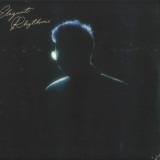
Back yard - Back yard is the first single from the new Teen Daze album, Elegant rhythms, and features singer-songwriter Andy Shauf on drums, and LA jazz staple, Sam Wilkes, on bass. This is a stark change in sound for Teen Daze, who’s last album Interior was an exploration of neon-lit House music. Back yard is a mellow groover, conjuring up images of Laurel Canyon in the 70s, yet still with its flourishes of contemporary sounds.
We’re out of phase again - We’re out of phase again is another vulnerable glimpse into the inner world of Teen Daze, and marks the release of his most personal album to date, Elegant rhythms. In contrast to the synthesized, digital world of his prior album, Interior, here we’ve been brought into a lush, organic arrangement, brought to you in large part to the stunning bass playing by Sam Wilkes. While the verses pulse forward, the chorus slows things down, and evokes the sophisti-pop sounds of The Blue Nile. This track is a stunning showcase of the world of Elegant rhythms.
Nothing’s gonna change my love - Teen Daze returns with his second single of the year, Nothing’s gonna change my love. The stark change in sound, as heard on previous single Back yard, is on display here again: a smouldering, 2 and a half minutes of slow jazz-pop, indebted to the great Sade, or perhaps the feeling of leaving downtown LA at 2 AM. Lyrically, we hear a story of a love, challenged by the unpredictable nature of our lives. This may be Teen Daze’s smoothest song to date.
Neighbourhood - Neighbourhood is the third single from the recently announced LP from Teen Daze, Elegant Rhythms. Along with Andy Shauf on the drums, and Sam Wilkes on the bass, Teen Daze gives us a languid tour of his quiet neighbourhood. The sun has set on the pleasant, tree-lined streets, and a stranger, more surreal environment presents itself. The song plods forward at an extremely comfortable pace, held down by the paradoxically loose-yet-tight rhythm section. Lyrically, we walk around the Neighbourhood at night, and while the chorus reveals a type of sobriety, the vibe of the song makes it easy to feel a little…effected.
Fade away - Fade away sets the tone for Elegant Rhythm’s side B: a deeply personal, though somewhat veiled, confession of loss. How does it feel to grieve something that was never really here? A smouldering, slowly progressing first half erupts in synthetic noise, and then fades into the ether with it’s repeating refrain, “I can feel you / feel you fade away / when there’s nothing / nothing left to say”.
Fall ahead - A sweet piano tune which serves as a quiet break in the record, intended to help the listener reflect and take a moment of pause before we reach the final two songs on the album.
HST underwater - The penultimate track on the record tells a story where the narrator finds themself in an alien, yet oddly familiar place. Arpeggios soaked in crystal blue water flow through the stereo field, while the narrator, vocoded and drenched in autotune, searches for meaning and purpose in a confusing world. This is one of Teen Daze’s most cinematic, emotional songs yet.
In the rain - It’s never really made explicitly clear on this record, but a lot of these songs find Teen Daze wrestling with life as a new father, and this song, the final on the album, expresses the fears of generational trauma. A touching, tender ode to his children, we hear Teen Daze at his most personal and vulnerable. The falling rain surrounds some absolutely breathtaking bass playing from Sam Wilkes, and Teen Daze’s signature ambient keyboard sounds.
Radio Support: Ruf Dug (Soup To Nuts on NTS)
Slush Records are back for their second outing, remastering and rereleasing Sedona’s highly sought-after 1995 track, ‘Pulsation’. A portal to the underground of the ‘90s, Sedona’s original mixes and the remix from Robert Vaughan, fuse progressive house, trance and breakbeat, each oscillating to their own unique frequency. Not stopping there, Slush Records enlist the expertise of Seoul-born, Amsterdam-based Naone for a mesmerising new remix that harnesses all of that early ‘90s energy, with a fresh dynamism.
The story of Sedona begins with Dale Charles and Benny Blanco. As a touring DJ and buyer at Boston Beat Records in the mid ‘90s, Dale Charles was in diggers paradise. Freestyle was big business at the time and as a progressive house and breaks DJ, Dale couldn’t help but notice how good the drum programming was on some of the tracks. He spent endless hours trawling through the shops near 10,000 freestyle records, hoping to find that elusive secret weapon.
One day Dale found the break he was searching for and took it to Benny’s studio. Benny was an aspiring DJ and, more crucially, a producer with a conveniently concreted basement apartment he was slowly filling with synths, samplers and drum machines. Sampling and chopping up this gem of a break, utilising two TB-303’s that Benny recorded live for the acid lines and creating that signature throbbing arp on a Roland JD-800, the basis of ‘Pulsation’ was born.
The duo created a series of different mixes to tweak the feeling of the track. The ‘Ascending Mix’ and ‘Sinister Mix’ bookend this reissue. The former, a club-focussed cut with subtle to squelching 303 lines, rumbling sub bass frequencies and pulsating arps that anchor the track, as the sacred drum break fires your brain into trance-infused euphoria. The latter, an ominous slice of teleportational ambient electronica, sucking you into a wormhole of galactic synthesis and dream-state harps.
The first of the remixes sees Slush draft in the progressive wizardry of Naone to provide a fresh new take on the track. Leaning into the otherworldly ‘90s atmosphere of the original, Naone radiates the pulsating theme through swelling synth stabs and a driving acid bassline. Switching up the feel with an electro-tinged drum beat, she distorts the acid dials till the track explodes into a dystopian realm of twisted techno.
The second is Robert Vaughan’s ‘Test Tube’ mix from the original 12 Inch. A no-nonsense prog headspinner, that garnered plays from the likes of Sasha and Digweed. An acclaimed DJ and producer across the ‘90s, with releases on the likes of Space Records and Metropolis, Vaughan injected the track with added breakbeat energy and swirling, tripped-out breakdowns to masterful effect.
A timeless dancefloor classic, expertly remastered and reissued with a remix that both honours and updates the original.
The second instalment from London Odense Ensemble digs deeper into the group's vision of what modern psychedelic jazz should sound like. Cut from the same sessions as Jaiyede Sessions vol. 1, released last summer, vol. 2 presents a more nuanced approach to the material. On this set the ensemble focuses on shorter, layered pieces - travelling from deep spiritual jazz grooves to gorgeous free-flowing minimalism to full-on acid jazz. There's echo-drenched flutes being absorbed into layers of analog synth pads and guitars, bossa beats and double bass sequences merging with electronics. It’s an intoxicating mélange of sounds and styles, spanning wide temporal and geographical distances. London Odense Ensemble came together when two of the finest exponents of London's flourishing jazz scene, flautist and saxofonist Tamar Osborn and keyboard specialist Al MacSween, came over to Denmark to explore new sounds with Causa Sui's Jakob Skøtt and Jonas Munk, as well as local bass player Martin Rude. For two days the group laid down grooves and ideas and experimented in the studio, and later the best segments were edited and mixed by Jonas Munk, who took a somewhat liberal approach to the mixing process, often dyeing the material with external effects and synthesizers. Jaiyede Sessions are the kinds of records that defy genre-terms, yet have its own instantly recognizable fingerprint. It carries a unique shared vision between the players of what modern psychedelic jazz sounds like. bios: Tamar Osborn: Saxophonist, composer and multi-wind instrumentalist is the creative force behind modal jazz ensemble Collocutor (On The Corner Records). She is a member of the Dele Sosimi Afrobeat Orchestra, performs and collaborates regularly with Sarathy Korwar, Jessica Lauren, Emanative, Ill Considered and DJ Khalab. Al MacSween: Keyboard player & founding member of Kefaya. Collaborations include American jazz legend Gary Bartz, Syrian qanun master Maya Youseff, London Community Gospel Choir, Palestinian jazz singer Reem Kelani & kora player Kadialy Kouyate. Martin Rude: Multi-string instrumentalist & lead singer in Sun River & Edena Gardens with members of Papir & Causa Sui. Jakob Skøtt: Drummer in Causa Sui with a slew of side projects on El Paraiso, including Chicago Odense Ensemble, as well as being responsible for the label’s visuals. Jonas Munk: Guitarist in Causa Sui & studio wizard on most releases on El Paraiso. Also works with a wide palette of electronic music.
Scratch Came, Scratch Saw, Scratch Conquered is the 2008 album by Lee ""Scratch"" Perry (born Rainford Hugh Perry), who was a Jamaican record producer, composer and singer noted for his innovative studio techniques and production style. Perry was a pioneer in the 1970s development of dub music with his early adoption of remixing and the use of studio effects to create new instrumental or vocal versions of existing tracks. From his Black Ark Studio in Kingston Jamaica, he worked with and produced a wide variety of artists, including Bob Marley and the Wailers, Junior Murvin, Susan Cadogan, The Congos, and Max Romeo. Later, he moved to Switzerland and reinvented himself as a performance and visual artist but continued to produce innovative music – collaborations include The Beastie Boys, The Clash, Keith Richards, George Clinton, and Adrian Sherwood. Scratch Came Scratch Saw Scratch Conquered is the second in a series of three albums he made with English musician and producer Steve Marshall a.k.a. John Saxon. It features guest appearances by none other than George Clinton & Keith Richards. The 2LP Scratch Came, Scratch Saw, Scratch Conquered is available as a limited edition of 1500 individually numbered copies on translucent green coloured vinyl, housed in a gatefold sleeve.
"Following on from May's "ECHOES Part 1 & 2" this is the second single of three to be released as an introduction to the next album project of Ulrich Troyer - TRANSIT TRIBE - to be released later this year.
This time it's one for the reggae fans and dubheads with contributions from Diggory Kenrick who has been busy over the last few years adding the distinctive sound of his flute to many new reggae productions. He is also an associate of the U.K. reggae label Pressure Sounds that specialises in reviving classic sounds from the roots and dancehall eras of the genre. Also joining the production is Takafumi Noda aka Mystica Tribe, a Japanese producer and musician who has specialised in a new form of dub techno and is known for adding the signature sound of his melodica to productions of dub friends from around the world.
The subject of travel, especially along modern, fast routes has long been subject to fascinate musicians, from the days of Kraftwerk's "Autobahn" and now the whole genre of dub techno seems to be one built for listening on long journeys. The Autostrada Del Brennero / Brennerautobahn is one of the most important motorways in Italy, as it connects the Po Valley with Austria through the Brenner Pass and features many modern bridges and overpasses that are ready built illustrations for the covers of dub techno albums! On this release this major European truck route is celebrated musically by Ulrich Troyer with inputs from Diggory and Taka to create two modern dub classics."
Steve Barker (DJ, Radio Presenter - On the Wire, BBC 1984 – 2023,
now Slack City Radio & reggae/dub columnist and contributor to The Wire)
Credits:
Diggory Kenrick: flute
Taka Noda: melodica
Didi Kern: drums
Ulrich Troyer: analog synthesizers, analog drum-machines, sampler, dub effects
A written by Diggory Kenrick & Ulrich Troyer
B written by Taka Noda & Ulrich Troyer
Recorded by Ulrich Troyer at 4Bit Studio & 4Bit Bungalow, Vienna - except flute recorded by Diggory Kenrick at Holloway Studio, London / melodica recorded by Taka Noda at Mystica Sound Studio, Tokio
Mixed & arranged by Ulrich Troyer at 4Bit Bungalow, Vienna
Produced by Osman Murat Ertel & Ulrich Troyer
Mastering & Lacquer Cut by Kassian Troyer at Dubplates & Mastering, Berlin
Cover Drawing by Ulrich Troyer
Special thanks to Steve Barker, Osman Murat Ertel, Diggory Kenrick, Eva Kelety and Takafumi Noda
Kindly supported by the City of Vienna (MA7 - Kultur), Federal Ministry Republic of Austria (Arts, Culture, Civil Service & Sport), SKE-FONDS (AT) & Amt für Kultur, Bozen (IT)
2024 Repress
After appearing on the label's recent 'Federation of Rytm II' release alongside some of the industry's most iconic artists, Steve Redhead is back on Mutual Rytm, taking over the label from SHDW & Obscure Shape with a 6-track solo EP delivering driving, furious and old-school influenced techno.
The eleventh installment of Mutual Rytm opens with the rolling grooves and choppy vocals of 'Blokhut', which flows smoothly into the highly effective drums and strings of 'Sea Choy', while 'Bruusk' closes the first side of the vinyl with a hypnotic, well-crafted 90s influenced techno anthem. On the flip side, the title track 'Eastbook Isle' is all about its rolling bassline, retro/electro influences and a mesmerizing melody, while on the B2 'Planet Phatt' closes the record perfectly with a classic old-school sounding cut, made to be the last track of the set or those early morning moments. Last but not least is the digital bonus track 'Monster Madness' and as the name implies it is the hardest of the bunch, with aggressive late night grooves wrapped in deep, repetitive and
evocative chords.
Undoubtedly one of his best works to date, the Belgian producer keeps up the good work with his second appearance on the label in the form of his Eastbook Isle EP.
One of melodic techno’s biggest breakout stars, Massano steps up for his Drumcode EP debut. The emerging DJ/producer from Liverpool already gave us a taste of his elite studio capabilities via the fantastic ‘Betrayal’, his contribution to last year’s Drumcode A-Sides Vol.12 release – one of the highlights of the compilation. Massano’s sound hits with a fantastic punch, characterised by super charged sound design and powerful melodic riffs with key releases on Afterlife and his own Simulate to date. His ‘Telepathic’ EP reinforces why we’re rightly so excited to have him on Drumcode. The title track is a juicy psy-laced stomper, propelled by a menacing low-end vocal that adds plenty of atmosphere to the cut. ‘Destructure’ is formed around rattling percussive effects, before euphoric melodic layers build in intensity throughout the second half. When the two elements coalesce, we’re treated to a track with immense peak-time power, that never loses its unique edge. ‘The Method’ is a melodic ace, shifting between laser-kisser dynamism and full throttle bass-driven energy.
"Deep Dancefloor Jams of African Disco, Funk, Boogie, Reggae & Proto Electro Music 1977-1986reggWhen a passionate DJ and crate digger intuitively selects music for a DJ compilation, without artistic compromise and without the burden of trends, AfroMagic vol.1 emerges from the depths of his soul. Herewith we present the new favorite phonomancer’s tool for all the DJs who experience the dance floor as a sanctuary and a source of freedom and love.
The most fundamental thing that defines African music is that it was created for dancing. In African dance, there is often no clear distinction between ritual celebration and social recreational entertainment – one can seemlessly merge with the other. Because dance and rhythm have more power than gesture and more richness than words, and because they express the deepest experiences of human beings, dance is in itself a complete and self-sufficient language. It is truly an expression of life with all of its emotions – joy, love, sadness and hope – without which there is no African music and dance. For the African people, dance and music are integral parts of the body and soul, thus depicting the expression of life, current emotional states, visions or dreams. Through hypnotic repetitive music and dance, people communicate with each other and with the souls of the dead, the animals, the plants, the stars, the Gods… They free the body and the spirit through ecstatic states, reaching a healing sense of freedom, happiness, and satisfaction.
Throughout history, this transcendental perception of rhythm and dance originating from Africa, influenced popular music worldwide, thus creating new living and breathing forms of musical genres – freeing them from their industrial mold. Funk, disco, soul, boogie, reggae, dancefloor jazz etc., developed in parallel all over the world. It is foolish to perpetually discuss where they originated from and who were the creators of all these fiery dance floor genres – being obvious that they directly or indirectly originate from the African continent and its people who were as well, over the centuries, influenced by disturbing socio-cultural factors of colonialism. However, no one can enslave the soul. The seeds of free and uninhibited dance and rhythm, true to their original form, initially first sprouted onto the USA’s fertile fields of clubbing and popular music while later evolving in other parts of the world.
The disco funk club culture manifested itself as a phenomenal explosion of artists and grooves in the second half of the 70s in the USA. Shortly it spread around the world continually reigning over charts in its various forms – to this day. Clubs emerged where the DJ is an almighty shaman and the dancers are a tribe united under one roof. This urban ritual had and still has a single goal: togetherness, freedom, and love. Clubs have evolved into temples where we free ourselves from the burden of a consumerist lifestyle and suppressed emotions – a place where we receive love and give love – to be who we really are.
Disco funk clubbing was such an influential global phenomenon that its influence can be observed in various other genres from the disco funk era i.e. progressive rock, which mutated by layering complex rock arrangements with a disco funk groove resulting in hybrids, highly sought by today’s diggers, producers and collectors. The profit-hungry music industry of the 80s very quickly commercialized the original disco funk sound by amputating of its original Afro groove to be able to easily ‘sell’ it globally. So, the original disco funk groove became underground again, and it has remained so until this day. Today, for a DJ to unearth that ravishing groove that will lead the dancers to the stars, he must dig passionately like a true musical archaeologist in search of that groove that picks you up after just a few initial beats. That groove which forces the atoms in your body to vibrate, that groove which unites the body and releases the burden.
The AfroMagic compilation series is created as a tool for real DJs who stick to the aesthetics and essence of clubbing.
This continuation of the Afromagic compilation by DJ Borovich was created in a private jam session which served as an escape route from intense and complex love problems.
Unconsciously driven by intuition and emotion and following a live mix tape framework where many tunes are arranged instantaneously, Borovich narrates his story with a strong rhythm that cuts loose even the most blocked off energy nodes and restores happiness to the spirit and the body.
The musical experience of the groove is completed by the lyrics of the songs, which symbolically give DJ Borovich universal answers to his questions arising from questioning the boundaries, nuances and other forms of love.
When considering that Borovich’s selection was created to facilitate an escape from the burdens of reality through rhythm and dance, we can be sure that Afromagic Vol. 2 will have a 100% uplifting, energized and spaced-out effect on the listeners.
The intro to A1, “Feeling Happy” by the Apostles, introduces us to an experienced and slow, cool and irregularly tight groove containing a confidently sung chorus that instantly gives a sense of freedom and hints at the remainder of Afromagic Vol. 2: “I’m gonna feel happy, ´cause I know I’m gonna be myself.” After the anthemic song mantra of the Apostles, Aigbe Lebarty uncompromisingly continues with a dirty disco rhythm. Acidified by accented synths that elevate it to shamanic levels and held together by a female tribal choir, we embark on an uncompromising ritual disco journey. Without a moment to take a breather the prog funk band Mighty Flames and their Road Man launch a highly vicious and raw, thick funk groove spiced with acid synths and dirty RnR breaks, raising the bar for the A side. Jimi Hendrix himself would surely praise it given the ultimate freedom and virtuosity in the solo sections. With the last tune on A side DJ Borovich decides to burn the floor with Geraldo Pino’s psychedelic, acid furious groove and lyrics which describe this HEAVY part of love problems: “The way she walk, the way she talk, the way she does a funky dances, she is really really heavy – that woman”.
While the A side represents a compact intoxicating afro groove machine that separates us from reality and lifts us up to the stars in over 23 minutes, the B side is a treasure trove of proto sub-genres gems. This selection represents the mission of the Afromagic: to find singular events in African recorded discography of popular music from the 70s and 80s that give evidence to the birth of new modern genres on the Dark Continent even before they emerged in the U.S.A. or Europe. The beginnings of electronic music influenced genres are represented back to back with 80s synth jazzy pop, all painted in African colours.
The B side opens big with Jake Sollo and a huge reggae blues number singing about the humiliation of a man – goosebumps guaranteed! “You think I’m nobody that’s why, you don’t know the way for me, I’m somebody I know, I found myself at last”. Adolf Ahanotu then enters the scene with a hard sliding tackle at B2 and an exotic rare disco funk dancefloor napalm. A ‘Sensation’ that would ignite even the coldest of introverts. While we approach the end of the compilation the narrative revolves again and takes a different turn. No less and no more than to the proto-electro that Baad John Cross serves us in “Give Me Some Lovin´”. The fat and repetitive broken electro synth groove, championing many early 90s electro tracks, is presented here without hesitation and with constant tension accompanied by a mantric chorus “Gimme some, gimme some, gimme some looooovin’, EVERBODY!!!”. Finally, we’re guided to the end of Afromagic Vol. 2 by Eji Oyevole’s 80s synth pop style presented in an authentic afro manner, giving us a glimpse at yet another released Afromagic edition, as well as giving an answer to DJ Borovich’s love problems. A smoothly broken electronic rhythm resembling electrified highlife sounds, carried on the wings of a virtuoso dreamy saxophone on top of which Eji presents the most intimate parts of himself. Finalizing the track with a symbolic chorus, on the surface referring to the dancefloor and simply having fun, but in actuality referring to the skill and happiness of living: “I´m a dancer, I can dance”. So, get up and dance among the stars with DJ Borovich and Afromagic.
Fierce and forlorn, Swarm Intelligence’s “The Shattered Self” delves into the complexities of human existence in an era dominated by technological advancements. In this thought-provoking exploration, the artist challenges listeners to confront the consequences of a near future where physical and mental augmentation are commonplace. In a world where limbs can be upgraded, where consciousness can be uploaded, where memories can be digitally archived and shared on social media, where our AI clones can liberate us from menial tasks… What remains of our selves? Who is our self?
Swarm Intelligence draws influences from black metal, industrial-tinged dub and post rock, splicing these with his distinctive take on techno to devastating effect. "Dejected," the inaugural track, unleashes grinding walls of feedback against a relentless broken beat, its foreboding atmosphere heightened by a menacing low growl of distorted bass that permeates the unease. It's a disquieting overture that sets the stage for the tumultuous journey ahead.
The second track, “Eros” envelops the listener in a visceral soundscape, where haunting atmospheres intertwine with grinding feedback and pounding percussion. Initially tense, the track evolves into an unexpected and almost euphoric climax, adding an unforeseen emotional depth to the sonic narrative. Yet, beneath the surface, an undercurrent of tension remains—an ever-present reminder of the fragility of our self.
On the flip side, "Inciter" channels inner fury through a guttural chant punctuating a Birmingham-styled broken beat, marching forth with unyielding force.
Finally, "Portal" offers a moment of quiet introspection, as haunting pads echo a mournful refrain while micro recordings of whirring machinery are assembled into the percussion section. It serves as a poignant curtain-closer.
Through "The Shattered Self," Swarm Intelligence challenges listeners to reconsider their perceptions of identity, consciousness, and agency in an age where the machine and the human converge. It's a haunting and profound journey—one that invites introspection and contemplation long after the final reverb tails fade into silence.
Ukrainian vinyl label ARTREFORM significantly raises the stakes as its important anniversary (a soon-to-be-released 50th record) is gradually approaching. ARR048 is a double record, including three original tracks by Romanian producer Funky Trip and four Barac, Petit Batou, Lorgu, and Lukea remixes. ARTREFORM's founder, Kyiv DJ and sound producer JOSS, obviously trusts and bets on Funky Trip's talents, and this bet looks set to play out big time. Nicolae Catalin Cimpoier (Funky Trip's actual name) is a notable representative of the new
wave of the Romanian electronic scene that catapulted many stars to global fame. Thanks to a series of successful releases on Rawax Music and Stamp Records Paris, this Bucharest musician perfected his recognizable sound of crystal-clear minimal house, embellished with warm emotions and exquisite, shimmering melodies. Now it's high time Funky Trip transitioned to vinyl!
The second part of ARTREFORM's latest double vinyl release captures a new Romanian electronic scene star, Funky Trip, presenting a track called "Magic Woman." Just like femme fatale encounters often tend to, this occasion leaves one too many questions unanswered. Funky Trip's signature minimal house maintains tension through a looped leitmotif while the rhythm section and spacious ambient pads gradually trick the listener in. "Magic Woman" has the appeal of an ideal "second track" in the mix, the one intriguing enough yet leaving space for further narrative development. Funky Trip's delivery is delightfully contrasted by a beautiful remix by Lorgu that brings to the table an atmospheric, groovy house with many small nuances. The next track, "Les Voix," is another collaboration with Mia Zedan and a perfect specimen of ARTREFORM's sound pedigree: a powerful bass line coupled with an energetic and inventive tech house beat. However, its full depth of immersion takes effect via a remix by Lucas Morello, known as Lukea. His sci-fi-infused vibes of cosmic alienation and observation elevate this remix to the adornment of this Romanian-French-Ukrainian fruitful
creative collaboration.
Early support: Barac, NTFO, Lukea, Sam Farsio.
microCastle’s first offering of 2024 welcomes Adrian Roman back to the label for his second artist showcase. Hailing from Spain, Adrian Roman first rose to prominence in 2021 with a string of superlative releases which redefined his sound, resulting in an aesthetic that was both cutting edge and effortlessly cool. F, nmully formed within the creative confines of his Castello studio, Adrian’s first microCastle project, 2022’s‘ Disturbing the Perception’ succeeded in showcasing his inventive approach to composition, while remaining club-effective, and in turn earning play from Aera, Fideles and Jimi Jules, amongst others. Moving forward the next eighteen months have proved to be impactful for the young Spaniard, recording standout projects for AZZUR and Sum Over Histories, releases which continued to build on his creative acumen, while remaining in the playlists of underground tastemakers Ame and Dixon. With 2024 beginning with Adrian’s latest Sum Over Histories vehicle ‘Oratorical Ability’, the Spaniard now makes a welcome return to microCastle with a six-track showcase entitled ‘This Is What I Was For A Moment’.
From the opening monochromes of ‘Le Sabbat’ Adrian’s craftsmanship reveals itself across this slow-burning piece, one where grating growls, granular flares and panoramic arps ultimately set the pace for the groove-centric ‘Customized Reality’. It’s here where Adrian puts a greater focus on the dancefloor, marrying hopeful vocal phrasing and silky chord stabs for a rejuvenating experience, while a drum-driven drop ultimately charts the course for a finale of deconstructed sonics and post-rave bliss. The haywire electricity of ‘Faces of Belmez’ finds the Spaniard once again flexing his creative muscles, as corrugated bleeps and cataclysmic rhythms provide a vast sense of space, creating the ultimate backdrop for distorted synths to propel choppy rhythms into dark underground passages, and perhaps onto some of the world’s most adventurous dancefloors.
The collection’s midway point is marked by the hypno-architecture of ‘Mind Design’. Trickling reverberations and long sighs of tonal tension wade through its pulsating framework, with frayed effects and thumping rhythms submerged beneath a buzzing panoramic glow. Played by Ame and sitting as one of the project's most enigmatic tracks is ‘TAGDI’ (They Are Gonna Do It). Tinted with contemplative synths and guttural vocals, Adrian’s unique emotionality peaks here, as he crafts a low-slung, slow-building dystopian romance, all while weaving in cerebral manipulations for an unforgettable ride. The mist breaks instantly on the collection’s final piece, as your thrusted into the muscular grooves of ‘Fear Track’. Horrifying vocal stabs strike, leaving the gauzy purple skies of ‘TAGDI’ behind for a more robust romp, one where anabolic bassline, retro-arps and off kilter percussion bring the release to a feverish peak. A fitting conclusion to a diverse collection of music, one where Adrian creates a journey that speaks to the complexities of life against an immersive and challenging backdrop.
Artwork: Maurcio Seidel
Kaiserdisco share their first Drumcode EP in eight years. With a knack for clever vocal hooks and crisp production, Kaiserdisco are never far from Adam Beyer’s thinking when it comes scheduling Drumcode releases. With this in mind, it feels almost unbelievable to think ‘Error in the System’ will be the duo’s first EP on Drumcode since 2016.
In recent times the pair has contributed tracks to the label, highlighted last year’s ‘Get on the Dancefloor’ on A – Sides Vol.12 and their popular single ‘Together One Time’ from 2022. ‘Error in the System’ marks their return to the EP format and is an absolute treat. Lead track ‘In the Music’ is a trippy roller that lures you into a dancefloor trance via an addictive vocal hook, before morphing into an acid - drenched stomper in the second half. The title track is a peak - time head spinner, characterised by muted tones and industrial effects, it’s an eerie and powerful slice of club machinery crafted for maximum impact.