
nicht am Lager
Bestelle jetzt und wir bestellen den Artikel für dich beim Lieferanten.
12,40 €
Last In: vor 10 Monaten
Bestelle jetzt und wir bestellen den Artikel für dich beim Lieferanten.

Divine Dances. In plural form.
The fourth album from DjeuhDjoah & Lieutenant Nicholson couldn't have a more explicit title.
Masters of emotions and feelings, the duo has always known how to express melancholy and nostalgia with precision. Yet this time, all their efforts have concentrated on a single goal: taking listeners by the hand—no, by the ear, obviously!—to bring everyone back to the dance floor and explore a variety of atmospheres together.
And naturally, a variety of styles. Funk, ndombolo, electro, hip hop or zouk, each new vibration discovered carries away the previous one to form a dancefloor where all eventually come together.
Divinely light.
The body, surrendered to this call to dance in all its forms, has been so caught up in the whirlwind of groove that the mind has fallen in behind it to continue as one. Words explode into syllables that metamorphose into notes, then perfectly align with those from the score.
One second. A bit of attention. Caught by an irrepressible groove, then comes the moment to slalom through melodies to discover, at the turn of a rhyme, a new meaning. Approached head-on, certain overly serious themes would empty the room and bring the atmosphere down to lead levels. The diagonal approach, humor, and apparent nonchalance of the two men are the best weapons at their disposal. Their Trojan horse to put substance into their form(s). To evoke transidentity, consent, economic malaise as well as the spiritual, or to tell little stories of frustrated loves, seemingly insoluble but which will end well.
Anthony Hilaire for Creole words, Sarah Solo for hip-swiveling soukous, Patrick Bebey for pygmy flute notes, and Grégoire Mahé to bring electricity to DjeuhDjoah & Lieutenant Nicholson's songs; styles blend in a musicality worked into its smallest interstices.
Gathered on this dance floor illuminated with 80s disco brilliance, you observe brassy notes slithering under the electronic veneer, synthesizer keys splashed by furious hip movements. To raise your eyes to connect with the spiritual is to watch the sky become constellated with crystalline Fender Rhodes notes, destined to fall like rain on the heavy bass of afrobeat groove.
Smiles attached to faces, no one should think they can get through the ten tracks of Divine Dances while remaining seated : he's doomed to fail.
OUT MAY 2025 DELUXE WHITE VINYL 180 G /CD / DIGITAL
Bestelle jetzt und wir bestellen den Artikel für dich beim Lieferanten.

Originally released in 1996 on Quarterstick Records, Music for Egon Schiele is the soundtrack to a piece of dance and theater that was debuted by the Itinerant Theater Guild, May 18, 1995, in Chicago. Based on the life of the romantic and controversial Viennese painter, Egon Schiele was written and directed by Stephan Mazurek, who headed the group of performing artists. Rachel Grimes composed this music and performed it with two string musicians during the run of the performance. The Rachel's began recording in April of 1991 in Baltimore, MD, under the direction of Christian Frederickson and Jason Noble (Rodan, Shipping News). Subsequently, they met and became close friends with Rachel Grimes. In September of 1994 after a few more city moves, band break-ups, and general melancholy they decided to become a full time band and complete their first record for Quarterstick Records, Handwriting. Music for Egon Schiele is their second LP and contains a more stripped down and immediate musical focus. These songs are not sparse, they're beautiful. They build, they crash, and they make you wish you knew more about life and they mysteries its holds.
erscheint voraussichtlich am 30.05.2025
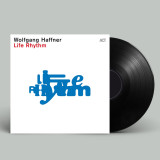
»Ich denke immer wieder aufs Neue darüber nach, wie ich mich als Schlagzeug-spielender Bandleader so positionieren kann, dass das Instrument eine tragende Funktion einnimmt, dies aber auf eine musikalische Weise geschieht und auf keinen Fall als Zurschaustellung von Virtuosität«, sagt Wolfgang Haffner. Diese Haltung zieht sich als roter Faden durch seine gesamte Karriere - und auch durch »Life Rhythm«, sein zehntes Album auf ACT.
Und obwohl Haffners Musik gängigen Vorstellungen virtuoser Schlagzeug-Leader ganz bewusst widerspricht, steht das Instrument diesmal besonders im Fokus. Ausgangspunkt dafür war Wolfgang Haffners allererstes Solokonzert im Jahr 2022 auf Schloss Elmau. Er erinnert sich: »Das war eine Wahnsinns-Herausforderung bei der ich auch vor der Entscheidung stand: Spiele ich jetzt eine Stunde Schlagzeugsolo? Natürlich nicht! Also habe ich habe eine Menge melodisch klingender Perkussionsinstrumente eingebaut, Passagen live geloopt, mit Echos und Delays gearbeitet – im Grunde wie im Studio, nur eben auf der Bühne.« All dies brachte Haffner dazu, sich noch einmal auf ganz intensive Art mit dem Thema mit dem Instrument zu beschäftigen, welches ihn sein Leben lang begleitet. Und so haben alle Stücke auf »Life Rhythm« diesmal ihren Ursprung, nicht wie sonst bei Haffner, am Piano, sondern am Schlagzeug.
Das Ergebnis dieses Prozesses kann man gleich zum Auftakt von »Life Rhythm« auf dem Titeltrack erleben: Das Stück basiert auf einem hypnotischen Groove, bei dem nicht die Becken, wie sonst im Jazz üblich, die Time angeben, sondern vor allem die Trommeln. Das dieser Groove direkt Phil Collins und besonders an dessen Stück »Take Me Home« erinnert, ist kein Zufall: Collins' Art, Drum-Parts zu elementaren Teilen des Songwritings zu machen, ist bis heute eine von Haffners größten Inspirationen. Und auch jedes weitere der elf sehr kompakten, Song-haften Stücke auf »Life Rhythm« öffnet eine eigene Welt des musikalischen Schlagzeugspiels: Mal mal trocken-reduziert mit Besen wie auf »Balance«, poppig bei »Joy of Life«, mit filigranen Becken-Grooves, dezenter Elektronik und Percussion auf »Eternity« oder minimalis-tisch bis kurz vor der Stille in »Silence and Sound«.
Das aus all diesen Stilistiken ein so stimmiges Ganzes ent-steht liegt daran, das Wolfgang Haffner diese im Laufe seiner Karriere bis in die Tiefe durchdrungen hat - an der Seite von stilbildenden Charakteren wie Al Jarreau, Chaka Khan, Pat Metheny, Jan Garbarek, Esbjörn Svensson, Nils Petter Molvaer, Albert Mangelsdorff, Ricardo Villalobos und vielen, vielen mehr. All diese Kollaborationen haben Wolfgang Haffners Voka-bular am Instrument und auch als Komponist geprägt und die da-mit verbundenen, unterschiedlichsten Stile sind gleichermaßen Teil seiner musikalischen Persönlichkeit.
Vielseitigkeit und höchste Musikalität sind auch die Eigen-schaften, die Wolfgang Haffner und seine Mitmusiker auf »Life Rhythm« verbinden. Die Basis bildet ein bestens einges-pieltes Trio zusammen mit Keyboarder Simon Oslender, selbst auch Drummer und Bandleader, und Thomas Stieger, einem der gefragtesten deutschen Bassisten in Pop wie Jazz. Dazu kommen Trompeter Sebastian Studnitzky, Mitstreiter Haffners seit seinem ACT-Debüt »Shapes« und der Finne Arto Mikälä, eine echte Entdeckung in Sachen Klangvielfalt an der Gitarre. Diese Band herausragender Allrounder erweitert Haffner um eine Reihe musikalischer Charaktere, die der Musik ihre ganz eigene Farbe verleihen: Nils Landgren, Freund und Weggefährte seit mehr als 20 Jahren, Saxofon-Ikone Bill Evans, Sting-Gitarrist Dominic Miller, Balkan-Beat-Star Shantel, Bass-Feingeist Nicolas Fiszman, Oud-Virtuose Thomas Konstantinou und Bruno Müller, einer der besten deutschen Jazzgitarristen.
»Life Rhythm«, sagt Wolfgang Haffner, »ist für mich eine Fortsetzung, keine Wiederholung«. Die Musik trägt mit ihrer Wärme, Kraft und Klarheit die charakteristische Handschrift, die Haffner mit seinen Alben und auf tausenden von Konzerten in mehr als 100 Ländern zum wohl populärsten Schlagzeug-spielenden Leader Europas gemacht hat. Und gleichzeitig ist es eine Evolution seiner Musik. Gut möglich, dass Haffners Erfolg genau darin begründet ist, dass seine Musik immer etwas Ver-trautes und etwas Neues beinhaltet und dass Haffner sein Publikum so immer »mitnimmt« im Fluss seiner Ideen - und in einem gemeinsamen »Lebensrhythmus«
erscheint voraussichtlich am 30.05.2025

Mia Zapata was the greatest rock singer of her time. She may have likely been the greatest blues singer in punk rock history, the woman who married the 78 and the '78. Tragedy did not make this true. Mia Zapata made this true, and the ferocious, spring-loaded shrapnel frame that was built around her by Andy Kessler (guitar: metronomic and furious), Matt Dresdner (bass: fluid, punching, beat-addicted and melodic), and Steve Moriarty (drums: martial and explosive) - who, with Mia, combined to form The Gits - made it true. The Gits were formed at Antioch College in Yellow Springs, Ohio in mid-1986, grabbing and swapping pieces of art, thrash, noise, punk rock, classic rock, and all the sorts of magical silly and bookish jingle bells that an old-school liberal arts education handed you; for the next few years they worked on turning it all into something tough, sensitive, both brutal and kind. Andy, Matt, Mia, and Steve moved to Seattle in middish 1989, landing in a house on Capitol Hill where they (and fellow travelers) wood-shedded and rehearsed for the next few years. The Gits put out three EPs in 1990 and '91 before signing with C/Z Records and releasing their first full-length album, Frenching the Bully. Seattle quickly claimed the quartet as their own and embraced the Gits blend of ferocious fangs and soft heart, the slug/slap of the guitars, and the gorgeous, soft underbelly of the poetic emotions. These qualities not only fit in with the doe-eyed/sharp-clawed grunge ethos but earned the Gits the respect of their peers, including Nirvana, who tapped them to open a major local show in 1990. Then other stuff happened, and their frantic, confessional barbed-heart snowball began rolling up hill very, very fast; the Gits "quickly" (hah! After half a decade learning to implode and explode hearts and stomping their boots on manifold beer-softened, Marlboro-weeded wood stages!) inspired rapture, awe, and the levitation that happened when peak emotion meets peak grindage in front of amps spitting out something that sounded like the mad marriage of Bolan swagger and Dischord tension_ all fronted by a genuinely incomparable woman who held her heart in her mouth and shared it, in all its celebration and fear, without hesitation. The Gits were an angry, inflamed slinky fully in tune with and tuned by the Bessie Patti Smith of her time, truly the only singer who could summon Joplin, Poly Styrene, Sam Cooke, Iggy Pop and Ian MacKaye all in the same goddamn song. In 1993, less than four weeks after accepting an offer from Atlantic Records, Mia died. I leave it at that, because this is not about death; it's about an extraordinary life. I do not say, "You should have been there," I say, "We are lucky so many of us were, and I am so glad we have this extraordinary evidence of the power and gifts of Mia and the Gits that you now can hold in your hands." And I note that Frenching the Bully, this extraordinary testament to the soul, shock, fury and feeling of the Gits, has been long out of print on vinyl and CD, and this new edition - remastered by legendary Seattle engineer Jack Endino - joyfully rectifies that. -Tim Sommer
erscheint voraussichtlich am 30.05.2025

Thrash metal's new Swedish hope Sarcator, further cement their status as one of metal's most exciting young bands, with their stunning second
album. By mixing fresh thrash metal with touches of old-school Scandinavian death metal, these Swedish prodigies sound at least as good as
veterans three times their age. The future is sure to hold great things for Sarcator as they continue to create their awesome metal.
Sound Like: Megadeath, Morbid angel, Dissection, Possessed, Kreator,
Sodom, Exodus, In Solitude, The Devil's Blood
erscheint voraussichtlich am 30.05.2025

Weather Systems is the second solo studio album by the American singer-songwriter Andrew Bird. Released on April 1, 2003, Weather Systems is a collection of seven original songs plus Bird's own adaptation of a Galway Kinnell poem and The Handsome Family's "Don't Be Scared."
erscheint voraussichtlich am 23.05.2025

Second solo album by Arthur Satan, released on Born Bad, after 'So Far So Good', his pop solo debut, which was a pleasant surprise for fans of his notthat-garage group JC Satan 'A Journey That Never Was' is so big you'll need special furniture to accommodate this unreasonable, maximalist parade, crammed full with 1960s pop influences.
The record plays with heritage like a kid would unabashedly plan for a birthday party. No stupid treasure hunt, we're bowling with the heads of our foes, guitars are literally bleeding through the mix. T-Rex burgers, fountains of chocolate choruses dripping on Brian Wilson - shaped giant cookies: let's indulge. Each song is a musical family, each verse is an album, each riff is a title. In his Christmas gift list, Arthur probably circled absolutely every toy: his taste for completism never disappoints. He played almost every instrument, mixed the album and designed a whole graphic universe to go along with it. A visual artist by trade, also made a point of drawing a monumental fresco spreading out the fantasy landscape that haunts this album.
erscheint voraussichtlich am 23.05.2025

First studio album in 11 years for Normandy-based, English psychedelic folk
musician/painter, Mark Fry
When 19-year-old Mark Fry recorded his debut album 'Dreaming With Alice' for RCA
sublabel, "It" in Italy in 1971, little did he know that it would become a much-soughtafter, much -bootlegged "acid folk" classic three decades later, with millions of Spotify
plays. Fry, an acclaimed painter in the interim, returned to making music in 2008 and
has released three more acclaimed studio albums - this, 'Not On The Radar,' is the
fourth. These days, far less "acid" than in his youth, Fry still knows his way around a
beautiful melody. The new album, recorded with musician friends at his Normandy
home studio and produced by David Sheppard (Ellis Island Sound/ State River
Widening) is resplendent with love songs, the beauty of nature and the passing of
time.
Full press, radio, online PR campaign both in the UK and in the EU, handled by Big
Mouth Publicity. Mark plays a very rare London show, as an album launch, with full
band, on the day of release, at Stone Nest, Shaftsbury Avenue, London. He will also
perform at A Celebration Of The Incredible String Band, Southbank Centre, London on
20th Sept (alongside Sam Amidon, Junior Brother, Daisy Rickman and more.
Reviews in Mojo and Uncut (with interview) confirmed for month of release. News/
features online : Click Roll Boo, KLOF, Maximum Volume Music, Pipilo Pop, The Pop
Corporation, White Light/White Heat (Italy). Playlisted : Rockambula, Foxy Lady
erscheint voraussichtlich am 16.05.2025

"JUJU" drops on May 17th (WERF Records) and is programmed at Gent Jazz Festival (July 11th)
Juju continues the work done on the second album half, with the Terre Sol Four quartet: Willems' voice, drums, percussion objects, keyboards and field recordings accompanied by the saxes of Marc De Maeseneer, Vincent Brijs and John Snauwaert.Juju fits perfectly in Willems' output. Also: in the coherent oeuvre it has become, it is perhaps her most consistent release yet. It's infectious as hell, carefully crafted, packs a punch and more accessible than ever before.
Everything is connected. Not just in the grand scheme of things - politically, culturally, socially,... - but also in the colourful universe of Karen Willems. A lifelong quest for profound experiences through organizing sound led to the crucial Terre Sol-series, four tapes released in 2020. Out of that fertile well, Grichte (2022) was born. A double LP that presented Willems as an original explorer as well as a committed bandleader, it was her boldest statement to date.
While the first (solo) album halfalready received a follow-up in K A A P M I J (2023), another tape release that suggested there's still a lot of ground left to uncover, Juju continues the work done on the second album half, with the Terre Sol Four quartet: Willems' voice, drums, percussion objects, keyboards and field recordings accompanied by the saxes of Marc De Maeseneer, Vincent Brijs and John Snauwaert. It was already something to behold on Grichte, swerving from introspective exploration to expressionist riff rock and semi-Dadaist avant-garde.
On Juju, the four-piece digs even deeper and the results are utterly spellbinding. One of the many attractions of Willems' recent work is that it combines relentless artistic experimentation with a commitment to broader socio-political issues. In essence, the artist tries to set up a discussion with her surroundings, sending out musical invitations to connect and participate, reminding ourselves of responsibilities that are too easily forgotten in these hectic, self-centered times. The refugee crisis is one, ecology awareness another, and it's hard not to consider "Voor De Stranden Verdrinken" ("Before The Beaches Drown") a caustic warning. Things need to change.
As said earlier, the music on Juju remains as adventurous as before, but this time around, the playing feels even more confident, diverse and punchy. If the album opener accentuates its urgency with a throbbing pulse and reed sirens, "Tako Deli" continues with rich vocal arrangements, roaring saxes and sweeping melodies. What follows strikes with vigor and consistency: "Nuuki" is as dense as it is infectious, while "Fuzzy Williams" manages to combine Ellingtonian abundance with Swans-like preaching.
And there's more, much more. Eccentricity and playfulness ("The Woo Woo Room, Dance Back In Style", "In Open Veld") go hand in hand with smoldering exercises in tension and release ("Koortsdromen") and a ridiculously infectious call for connection in antisocial times ("Come Vai"). Guest contributions by Nabou Claerhout, Kapinga Gysel, Esther Lybeert and Filip Wauters enrich the band's sound considerably. By the time you reach album closer "When Daytime Lands", Willems takes you on a short trip through that eerie soundscape-land she previously explored.
In short: Juju fits perfectly in Willems' output. Also: in the coherent oeuvre it has become, it is perhaps her most consistent release yet. It's infectious as hell, carefully crafted, packs a punch and more accessible than ever before. It's the sound of an artist at the peak of her powers, not just expanding her range, but digging deeper with obvious glee. It's not just intriguing; it's inspiring to witness..
Bestelle jetzt und wir bestellen den Artikel für dich beim Lieferanten.

Five Five is the second studio album from the Miami-born underground rap pioneer, Pouya. Marking a slight transition into a more mature sound, Five Five showcases Pouya’s evolution as an artist while maintaining the raw authenticity that has endeared him to his fans. With tracks like "Suicidal Thoughts in the Back of the Cadillac Pt. 2" and "Handshakes," Pouya delves into themes of struggle, resilience, and personal growth, offering listeners a glimpse into his journey. In what became truly a solo effort, Five Five is limited to one feature in Night Lovell, with production primarily handled by Mikey The Magician (Track 4 produced by Chevali). The album draws from elements of Bone Thugs-N-Harmony, yet remains uniquely rooted in Pouya’s own style. Over the years, Pouya has developed a long lasting core fanbase, first bubbling up in Miami alongside artists such as Denzel Curry, and then becoming a nationally celebrated artist. Back in print for the first time since originally released in 2018. Pressed on Wire Wheel Picture Disc Vinyl and cut at 45 RPM.
erscheint voraussichtlich am 09.05.2025

Originally released on Ben Chasny's own Pavilion imprint in 2011.
"I was invited by the Incubate Festival and the city of Tilburg to participate in an artist residency where I would explore the region’s unique chapels built for the Virgin Mary. After writing the music for about six months by drawing on memories of the encounters with the chapels and using techniques inspired by Gaston Bachelard’s Poetics Of Reverie, I flew back to Tilburg to perform the music at the Incubate Festival. We recorded the evening and I released the result on my Pavilion label. Each cover was hand painted white on white in the old Pavilion style. I created a stencil and used graphite powder to make the design that is inspired by the sun imagery in Athanasius Kircher diagrams."
Roadside chapels express the identity of the inhabitants of North Brabant, a Dutch province, bordering on Belgium. Roman Catholicism has been the dominant religion in this southern part of the Netherlands since the eighth century. For about a century and a half this religion was strongly suppressed. Only when the French revolutionaries preached freedom of belief around 1800 could the people of North Brabant exercise their faith again. This was the start of a very strong emancipatory development from which a special form of the Roman Catholic faith arose that fully determined everyday life of the people here. This faith was the determining factor in life and the measure of all things. After the second Vatican Council (1962-1965) the reins of the catholic faith in Brabant were loosened as well. This was the start of a revolutionary process of secularisation. Within a decade hardly anything was left of the almighty influence of the Roman Catholic Church and this situation has lasted up to the present day.
In spite of the almightiness of the official, Vatican ruled, Roman Catholic faith, North Brabant has always and perhaps notoriously fostered an undercurrent of popular belief as well. This is a kind of belief in which elements of the official faith and age-old pre-Christian traditions are combined. Worshipping relics, holding pilgrimages and processions, the use of water from holy wells, popular art, recitations and songs, festivals, rituals, folk traditions, superstition and the like are all examples of popular devotion. These matters have strongly influenced and formed the identity of the present-day population of North Brabant. It is part of their immaterial heritage.
An obvious and still very much visible form of popular devotion are the roadside chapels. In Brabant some 400 can be found, most of which have been devoted to Mary. Chapels are small buildings in which Mary or other saints are worshipped. They can be found within villages or towns or in natural surroundings. Always at the finest spots! The beauty of the environment adds a primary religious or mystical feeling to the visitor. Local people attach great value to their chapels. In spite of the overall secularisation in society they are still at the centre of cultural and social life. Where people in North Brabant can hardly be found in the churches nowadays, this doesn’t mean at all they are no longer religious. On the contrary, religious feelings are perhaps stronger than ever, but now people have to find their own expression of them. That’s why they fall back on the age-old popular belief in which chapels play an important role. We can even witness new forms of popular belief with chapels as their focal point. An example of this is the scattering of ashes of people who have been cremated. Chapels clearly also play a role in the lives of young people. On an average five new chapels are added every year.
I have studied the popular culture and belief and the identity of the inhabitants of North Brabant for over thirty years. I have published over forty books on these subjects. In 2010 I was approached by the organisation of the Incubate Festival in the North Brabant town of Tilburg. Their request was for me to lead the American composer and guitarist Ben Chasny around a number of chapels in the province devoted to Mary. He had been invited to North Brabant to write some new compositions. Ben Chasny then chose to be inspired by these chapels and that’s how we met. I was especially curious how an American would react to something as specific and small as a roadside chapel in North Brabant, since we tend to think here of (people in) America in terms of ‘big-bigger-biggest’. Would an inhabitant of this enormous country with this prevailing culture be able to grasp and respect the identity of some 2.5 million people in North Brabant with their chapels? The answer to this question lies hidden in the compositions he made and that can be listened to on this album. Yes, Ben Chasny has been able to convert the phenomenon of a simple chapel devoted to Mary into music. The physical and the spiritual have found each other. What a beautiful world…just listen! - Paul Spapens
erscheint voraussichtlich am 09.05.2025

Full throttle from Vancouver, BC to wherever the open road takes them The Vicious Cycles are BACK with their new LP Get Wrecked on Pirates Press Records! Before you even get the shrink wrap off the gatefold jacket, you can guess what kind of party you're in for. "Our pal Shakey Deal is the cover model," says Cycles head honcho Billy Bones. "A tuff looking scrub on a minibike says a lot about who we are." And who is that exactly? "We play garage/punk rock and roll songs about motorcycles. We like to have a good time." The promise of debauchery carries over into song titles like "Naked On a Beach," and "On Fire in the Hot Tub." As rip-roaring, danceable party music goes, it's second to none, and rest assured there's plenty of bike enthusiast inside baseball, but the lyrics often go deeper than a superficial glance might indicate. For example, the lead single, "Hold On Tight," is about, as Billy puts it, "the physical feeling of riding with your favorite person on the back of your motorcycle - easily one of the best feelings a human can have." So, a classic biker anthem? "But also," he's quick to add, "a metaphor for life and relationships. We're gonna make it." Waxing philosophical with motorcycles as allegory over chrome-plated punk rock 'n roll? That's The Vicious Cycles' songwriting in a nutshell. Another album highlight, "Daddy Was a Gambler" references Billy's father - an ex-preacher who regularly hauled his kids to Circus Circus in his '57 Chevy - and his mother, a nurse and, as Billy puts it, "as close to an actual saint as anyone in the world. The song is an appreciation for the two of them, and how their differences made me who I am." "Naked On A Beach" sounds like a party, but Billy explains it's "a critique of capitalism and the tiny lives we're expected - and sometimes content - to live." Even the title track, "Get Wrecked," is more than just a statement of defiance; it's a message to Billy's son about dealing with the conformist naysayers of the world. Longtime fans & newcomers alike will be stoked for the straightaways, but stick around for the twists and turns, just like any good ride. The band brings in pals on strings & saxophone for a 60s Wall of Sound-inspired production on "Black Boots, Black Leather Jacket," and try their hands at their first murder ballad on "Pretty Hands." There's an instrumental tune ("Blowing Smoke") and hell, there's even a deep cut cover of "Trouble Again" - originally performed by Stewart Copeland of The Police - which only the biggest nerds of a certain age will recall as the theme song to the 80s Star Wars animated series Droids! In the end, no matter the detours, the band - along with Jesse Gander (Territories, Comeback Kid), & Mariessa McLeod at Rain City Recorders - kept their eyes on the prize: sing-along choruses, handclaps, and short songs that get the job done and don't overstay their welcome. "I didn't want us to write a record that you could dance to." quips Billy. "I wanted us to write a record that you couldn't not dance to."
erscheint voraussichtlich am 09.05.2025

Parisian mambo " is the second album by " Cecilya & the Candy Kings ". The entire LP is an homage to the city of Paris, that has made musically grown up the catalan singer since she settled down in the capital of love. The 11 songs of the album take you to a musical journey back to the 1950"s by the hand of a woman with a powerful and luminous voice committed to the causes of her time. Cecilya"s lyrics, intimate and universal at the same time, not only speak about love and celebrationas the old rhythm"n"blues did. She speaks about dreams (broken or not), internal struggles, healing,emigration, her native Mediterranean sea, the chance to be a freewoman, the superficiality of the world we live in and the nostalgia for better times.The music, signed Rodolphe Dumont, has been carefully created and produced to sublimate Cecilya"s personal universe. The retro sound ambiances and catchy melodies truly take us back to the times of Elvis and Marilyn Monroe. "Parisian mambo" captures the essence of the cream of rhythm"n"blues from the golden era: a mix of blues,rock"n"roll, boogie-woogie, mambo and far more.The musicians on the album are:Cecilya Mestres on vocals, Rodolphe Dumont on electric guitar, Sax, Gordon on tenor and baritone saxophones, Olivier Cantrelle on piano, Abdell B. Bop on double bass and Denis Agenet on drums.
erscheint voraussichtlich am 09.05.2025

The Scream, Siouxsie & the Banshees' first album, was released late enough in the punk era to bear some claim as the first post-punk album, with only a minor traces of 'punk' (one lingering early song, "Carcass" comes to mind) and enough hints of what had come even earlier, Andy MacKay-like saxophone flourishes - to feel utterly new. Not to mention the effort producer Steve Lillywhite must have put into the album, his first fully-credited major label production. Siouxsie was clearly the focus of the band, with her unique vocal style and lyrics, but the real star, we've always known, was John McKay, who wrote most of the album's music (as well as singles like "Hong Kong Garden"), creating a wholly new guitar sound - harsh and brittle, yet melodically intoxicating . . . best articulated by a somewhat confounded Steve Albini years later ". . . only now people are trying to copy it, and even now nobody understands how that guitar player got all that pointless noise to stick together as songs". McKay's influence lives on; many of the most influential guitarists of the past four decades credit him as a major influence - Geordie from Killing Joke, Jim Reid of The Jesus And Mary Chain, U2's The Edge, Thurston Moore, Johnny Marr and even the two guitarists - The Cure's Robert Smith and Magazine's John McGeoch - who followed him in The Banshees. McKay's burgeoning status as the anti-guitar hero was halted when he and Banshees drummer Kenny Morris - at odds with Siouxsie and bassist Steve Severin - fled the band just after the start of a tour supporting the group's second album, Join Hands. It was a weekly music paper scandal, later the subject of a BBC documentary, and Siouxsie's vitriol working its way into the lyrics of a later Banshees b-side, "Drop Dead / Celebration". Aside from a solitary single on Marc Riley's In Tape label nearly a decade later, no music was heard from McKay again. So it comes as a major surprise to learn of a pile of excellent recordings made in the years just after he left The Banshees, unheard by all but a very few, some of which feature drummer Kenny Morris, plus Mick Allen from Rema Rema, Matthew Seligman of the Soft Boys and longer-term collaborator Graham Dowdall and John's wife Linda . . . the latter three of whom now all sadly deceased. Sixes And Sevens is an historic lost album. Brazenly genius and bearing fair claim as the lost treasure of the post-punk era, the album collects eleven studio tracks, carefully mastered from original tapes. It's a masterpiece which best speaks for itself.
erscheint voraussichtlich am 09.05.2025

Illusive Bristolian producer Claude Cooper returns with ‘Friendly Sounds Vol 1’; part psychedelic trip, part romping beat tape, part party. The album was inspired by the vinyl discoveries made from Cooper’s months of digging and cataloguing the bulging inventory of Bedminster’s Friendly Records record shop. Cooper fed these myriad captured sounds through the studio and then, blurring the lines between sampling and performance, arranged and embellished them with keyboards, drum machines, bass guitar and more, also co-opting BEAK> bassist Billy Fuller and esteemed composer Ben Salisbury to contribute.
With most of the tracks in and out within 90 seconds, the album is best enjoyed as a continuous course. Play side A, play the B, then flip it back and listen all over again. Stand out moments include tremulous cut ‘n’ paste jam ‘Jackie’, the moody string-laden ‘Rainbow Eternity’, funky sitar workout ‘Nerd Nork’, and atmospheric closer ‘Take Flight’. Sharing a similarly broad and experimental sound palette as the likes The Avalanches, Madlib, The Go Team, and Edan; ‘Friendly Sounds Vol 1’ is the soundtrack to a wild joyride down South Bristol’s North Street, foot on the gas, hand on the horn, LPs spilling from the boot.
Cooper’s irrepressible debut album ‘Myriad Sounds' (Jan ‘22) caught the attention of the UK's press and radio alike. Mojo's four star review described it as “Bristol’s beat scene backdrops late night jams”, Uncut enjoyed the "rugged psych-funk romp" and Louder than War declared "it’s vital and vibrant and exactly what we need to kick start the year”. Bonus round 'More Myriad Sounds' (Apr ‘23) added Brooklyn vocalist Brain Fog to the melange with a bounty of pyretic vocal performances. DJ Mag called it “A fierce, kaleidoscopic trip” while Bandcamp Daily said “This album of cross-genre influences is as likely to get it included in any number of best-of columns, with the theme of serious fun as their common element”. Called a "mysterious Bristol breaks scientist" by Lauren Laverne, BBC radio DJs including Cerys Matthews, Gideon Coe, Huw Stephens, Jamie Cullum, Stuart Maconie, and Tom Ravenscroft have rinsed Cooper’s tracks, with Huey Morgan inviting Cooper to contribute a Block Party Mix for his show.
‘Stay A While’, the first showing of Cooper’s new shop sampling stunners, was released on 7” in January ‘24. Lush string flourishes sliced with 6Ts girl-group vocals and rollicking piano chords resulted in a dreamy, end of night, lights up anthem in-the-making that The Arts Desk called “A horn-fired, beatsy, chop-around that recalls The Avalanches”. Releasing the album is Friendly Records, the best little record shop in Bristol and now a burgeoning record label. Opened by Tom Friend on North Street in 2016, it’s gone on to become a hub of the local musical community. As well as Claude Cooper, the label has released LPs by Alison Cotton, Floating World Pictures, Christian Madden & The Enemy Chorus, Nick Craft, as well as handling the War Child series of 7”s with BEAK>, Idles, J Dilla, PJ Harvey, Portishead, and Sleaford Mods + Hot Chip.
Claude Cooper will DJ at the one-day Friendly Festival on 10th May in aid of War Child, which will feature Sleaford Mods, Katy J Pearson, The 45s, Zalizo and DJ sets by Ishmael Ensemble, Heavenly Jukebox and Friendly Records DJs.
erscheint voraussichtlich am 09.05.2025

The Scream, Siouxsie & the Banshees' first album, was released late enough in the punk era to bear some claim as the first post-punk album, with only a minor traces of 'punk' (one lingering early song, "Carcass" comes to mind) and enough hints of what had come even earlier, Andy MacKay-like saxophone flourishes - to feel utterly new. Not to mention the effort producer Steve Lillywhite must have put into the album, his first fully-credited major label production.
Siouxsie was clearly the focus of the band, with her unique vocal style and lyrics, but the real star, we've always known, was John McKay, who wrote most of the album's music (as well as singles like "Hong Kong Garden"), creating a wholly new guitar sound - harsh and brittle, yet melodically intoxicating . . . best articulated by a somewhat confounded Steve Albini years later ". . . only now people are trying to copy it, and even now nobody understands how that guitar player got all that pointless noise to stick together as songs". McKay's influence lives on; many of the most influential guitarists of the past four decades credit him as a major influence - Geordie from Killing Joke, Jim Reid of The Jesus And Mary Chain, U2's The Edge, Thurston Moore, Johnny Marr and even the two guitarists - The Cure's Robert Smith and Magazine's John McGeoch - who followed him in The Banshees.
McKay's burgeoning status as the anti-guitar hero was halted when he and Banshees drummer Kenny Morris - at odds with Siouxsie and bassist Steve Severin - fled the band just after the start of a tour supporting the group's second album, Join Hands. It was a weekly music paper scandal, later the subject of a BBC documentary, and Siouxsie's vitriol working its way into the lyrics of a later Banshees b-side, "Drop Dead / Celebration". Aside from a solitary single on Marc Riley's In Tape label nearly a decade later, no music was heard from McKay again. So it comes as a major surprise to learn of a pile of excellent recordings made in the years just after he left The Banshees, unheard by all but a very few, some of which feature drummer Kenny Morris, plus Mick Allen from Rema Rema, Matthew Seligman of the Soft Boys and longer-term collaborator Graham Dowdall and John's wife Linda . . . the latter three of whom now all sadly deceased.
Sixes And Sevens is an historic lost album. Brazenly genius and bearing fair claim as the lost treasure of the post-punk era, the album collects eleven studio tracks, carefully mastered from original tapes. It's a masterpiece which best speaks for itself. John McKay will be made available for a limited number of interviews . . . and yes, there are surprises in store.
erscheint voraussichtlich am 09.05.2025

‘Zeitgeist’, the debut LP from celebrated Italian electronic music producer Dukwa, begins with a timeless dancefloor equation; swung drums, a clattering cobwell and flickering hi-hats lurch forward into a serious bassline. Within seconds, dancers are flung into the house anthem ‘You Don’t Want It’ that’s equally raw and charismatic, sensual and powerful. For the next forty-five minutes of rhythm, melody and studio trickery, ‘Zeitgeist’ continues to bend time, eras and bodies.
Having released EPs on respected labels including Numbers, Gudu and Diynamic Records, invariably with the support of Jackmaster, Peggy Gou and Solomun, Dukwa folds into the Slacker85 philosophy with ease, laying down a statement of intent that’s squarely for the dancers. Indebted to a youth digging in Florence’s record stores, embracing the peerless Italian rave scene, as well as his recent appearances at Circoloco and Kappa Future, ‘Zeitgeist’ subverts it’s knowing title to dance between styles with an urgency you can feel in your heels.
Before long, Dukwa is smoothly oscillating between acid overdrive and weightless house on ‘Catch All’, while the balance between softness and severity is refined even further on ‘Show Me’, showcasing the record’s first euphoric breakdown, a heads down, hands up moment that sacrifices none of his organic flow. Ably mastering many corners of his record box, ‘Avec Moi’ makes a confident left turn into tunneling trance, interspersed with a sensual french vocal.
‘All You Need’ provides the record’s beating heart, Dukwa’s overarching philosophy front and center around layers of synthesised groove, build and release: “The world is full of fighting, ignorance and greed, but right here on the dancefloor - the rhythm’s all you need”. Meanwhile, ‘My Turn’ channels more cinematic instincts, zoning in on an elegant piano riff in order to unravel a quietly epic deep house trip.
As ‘Zeitgeist’ heads toward its conclusion, Dukwa effortlessly squeezes the most emotive juice from his well-oiled studio. ‘Sad Eyes’ possesses the emotional punch of many vintage end-of-night anthems, still driving yet touched with a wistful ecstasy. Finally, for closing passage ‘Stck1’, Dukwa truly lets the machines sing, capturing a brief symphony of harmonising modulations that dip into weirdo electronica, without ever skipping his signature beats.
Bestelle jetzt und wir bestellen den Artikel für dich beim Lieferanten.

In case you didn't know, Reliance is yet another label from man like Burnksi, the UK powerhouse who is almost single-handedly spearheading a sound that fuses garage, house and tech into something irresistible for the club. He invites Job de Jong to step up for the label's second outing and 'Dub House' is a great opener with just the right amount of bounce, melody and heart. Kepler remixes it into a percussive stomper with siren stabs and dusty perc. 'Emergency' is a trippy melodic workout that bends space and time and 'Don't Wanna Stop, Dub Stop' chucks a killer vocal into the mix over sleazy drums and garage drums that are always going to get big reactions.
Bestelle jetzt und wir bestellen den Artikel für dich beim Lieferanten.

Emma-Jean Thackray, the visionary producer, composer, and multi-instrumentalist, releases her highly anticipated second album, “Weirdo” on April 25th via Gilles Peterson’s celebrated label, Brownswood Recordings / Parlophone Records. Known for defying musical boundaries, Thackray's latest work is a deeply personal and utterly original exploration of selfhood, grief, and gratitude.
Drawing on an eclectic mix of influences—grunge, pop, soul, p-funk, and jazz— “Weirdo” is a triumphant celebration of survival and individuality. Written, performed, recorded, mixed, produced and arranged entirely by Thackray in her South London flat, the album stands as a testament to her extraordinary musicianship and fearless self-expression.
Bestelle jetzt und wir bestellen den Artikel für dich beim Lieferanten.
