Re-issued again, with new liner notes. A wonderful, rare record wrapped in a mysterious yet playful ambiance. Or maybe it's just the impression that the Japanese language often gives me. ''Suiren'' is an odd jazz-fusion-wave tune that sounds like its boiling, waiting to burst but somehow manages to stay in control. Like the nervous tick of a leg fidgeting under the table of a restaurant on a first date. Yasuaki Shimizu is a Japanese composer, producer and saxophone player born in 1954. He worked with Ryuchi Sakimoto on certain arrangements, with the South Korean artist Nam June Paik on art+sound installation pieces and even DJ Towa Tei (of Deee-Lite fame). ''Suiren'' was released in 1981 and is the opening title on the sought-after ''Kakashi'' album and is my personal favorite on this overall brilliant record. It weaves behind new wave, jazz, fusion, ambient and experimental music.Repetitive and hypnotizing, punctuated by exclamation marks on most first mesures, the muted triangle percussion hits me straight in the heart. About 90 seconds into the song, the saxophone makes its appearance and the song goes from ''this is cute'' to ''oh, this is some serious shit!''. Shimizu's saxophone frees the song from the rest of the elements which are more calculated and repetitive.A joyful, mysterious slow-moving train ride led by the artist's mellow voice that rocks us with this calming but funky lullaby. Every phrase is punctuated by the xylophone there to energize the piece, albeit very subtely.
* 2017 year marks TEN YEARS OF INTEGRAL RECORDS and looking back upon the label's incredible back catalogue, what a decade it has been for drum & bass music that we hold so close.
* Initially set up as a passion project and a platform for showcasing future talent, the label has been consistently releasing cutting edge drum and bass since 2007. The ethos of the label has always been about quality control and finding those special vibes that no question capture heart and soul. Honing their unique musical language, selections are carefully handpicked by head honchos Artificial Intelligence and more recently in collaboration with label manager Emma G that fit with the forward thinking, original spirit we know as Integral.
* Now 40-odd releases deep and renowned for breaking some of the most exciting artists on the roster today, the label also boasts signature classics from some of the scenes most prolific residents. Names include the likes of Lenzman, Lomax (one half of Loadstar), Alix Perez, Calibre, System, Zero T, Technicolour & Komatic (Technimatic), LSB, Steo, Dawn Wall, Mohican Sun, Phil Tangent, Satl and just recently, A.I. themselves.
* Celebrating the seminal journey thus far, a double album will mark this very special occasion. Part One will showcase a selection of the finest from over the years in a chronological journey of the label's sound (for digitial release.) A second curation will simultaneously launch across all formats of entirely new and most exclusive material to date, reinforcing Integral's place at the round table of bass.
* A perfect teaser for what's to follow, the Album Sampler will drop this November featuring two stunning tracks. First up, '1000 Souls' comes courtesty of A.I. - tones of the deep, lush and soulful set the sultriest of grooves. Beautifully moody keys entice, chill and soothe. On the flip, 'Defiance' from Mohican Sun follows suit. With a gritty percussive edge, haunting melodies and a desperately emotional vocal to boot, this music will draw you all into the most mesmerising of dancefloor spells.
* Mark November 24 as the official release of the TEN YEARS OF INTEGRAL Album Sampler across all formats. Bag your limited vinyl copy now.
Hailing from Paris, Mikado featured singer Pascale Borel and instrumentalist Gregori Czerkinsky. As well as cult debut single Par Hasard, issued by Crepuscule in October 1982, the remastered collection includes subsequent singles Naufrage en Hiver, Carnaval and La Fille du Soleil as well as debut album Mikado from 1985, executive produced by Haruomi Hosono of Yellow Magic Orchestra.
Bonus tracks include b-sides, jungles, and several demo songs for an unfinished second album. There is also an English language version of Par Hasard (Romance), Christmas album track Noel Sous le Soleil, plus a previous unreleased cover version of the theme from Night of the Hunter.
Cover photography is by Pierre et Gilles, the famous French artists celebrated for creating a world where painting and photography meet. The 2xCD edition is housed in a 6 panel digipack with a 12 page booklet. The double vinyl set comes in a gatefold sleeve and includes a free digital copy.
Munich's Counterweight is back with some serious stuff from the hands of Gonzo MDF.
The second vinyl release of the Label cuts it straight to the point: this is Techno for the dancefloor without compromise.
The madness starts with 'Don't trust those who talk so much' with its acid touch and rough atmosphere. In A2 Endlec translated the track into his own language: Beast-Techno.
In 'Destroy' Gonzo MDF finds the perfect balance between melancholy and aggressive percussion and 'We didn't give up' is the perfect way to round up the release.
So... we let them talk and we keep on working ...
out of Stock
Last delivered 6 years ago available to reorder, subject to availability
Visible Cloaks' Reassemblage is a collection of delicately rendered passages of silence and sound that invokes - and invites - consciousness. The foundation of the duo's second album is gently poured upon the ground their musical predecessors explored, using the materials of chance operations, MIDI translation,' and other generative principles that favor inclusive musical environments over the narrowly constrained.
In 2010, Spencer Doran, one part of Visible Cloaks alongside Ryan Carlile, prepared the first volume of Fairlights, Mallets, and Bamboo, a mixtape indicated by Doran as an investigation into fourth-world undercurrents in Japanese ambient and pop music, years 1980 - 1986.' These mixes contextualized the outré orbit of Yellow Magic Orchestra-related solo projects and their abstract, radiant forays as forever futuristic modes of music.
Reassemblage evokes similar musical futures celebrated on the Fairlights mixes, but does so observantly rather than reverently. The title Reassemblage, for example, is taken from a film essay by Trinh T. Minh-ha, which explores the impossibility of ascribing meaning to ethnographic images. The author aims to speak nearby' rather than speak about.' In other words, to embrace lapses of understanding, and realize that the impulse to map direct meaning across a cultural gap often results in further disconnect.
In an effort to speak nearby' rather than speak about,' Visible Cloaks filters and forms source material to become young again. Often the duo strip tonal elements of their specificity or randomize melodies so they become stirring and lucid. Essential patterns emerge, conscious experience heightens. In these moments, the musical language of Reassemblage finds unlimited resonance and presents a path to uninhabited realities.
The origin of this language could be described as translingual or polyglottal, working within the eastern / western feedback loop of influence, Fourth World ambiguity, and the universality of human emotion. Incorporating an international array of virtual instruments to advance the idea of panglobalism through digital simulation, tones and colors cohere into a living, breathing pool of sensorial experience in Visible Cloaks' environs.
Beyond embracing the fluidity of worldly musical influences, Visible Cloaks works fluently between mediums. The contribution of stalwart digital and installation artist Brenna Murphy's dream dimensions to Reassemblage's cover artwork and surrounding videos extends the album's exploration of global headspace into a visual, visceral reality.
40 years after the huge international impact of OXYGENE, and 20 years from its second volume OXYGENE 7-13, Jean-Michel Jarre is fulfilling a trilogy of albums with OXYGENE 3, containing seven newly composed and recorded pieces, consistently titled parts 14-20.
His inspiration for the newly added parts on OXYGENE 3 was not to go back in time, but to add a sense of now' to his iconic piece of work. Plunging into the environment of OXYGENE with its highly original dark, moody and at times quite upbeat musical language, Jarre references some of the music from his entire body of work on OXYGENE 3. It's a state-of-the-art recording, embracing both classic and modern ways of music production.
This release is available on single LP heavyweight vinyl.
Jam Money is the shared musical vision of Kevin Cormack and Mathew Fowler. Mathew (Bons) and Kevin (Half Cousin, Harry Deerness) first began collaborating as part of the Blank Tape Spillage Fete, an ongoing collective project of art and music which focuses on the creation and perpetuation of small DIY exhibitions, related events and limited releases that celebrates the hobbyist nature of home recording.
Jam Money revolves around a passion for the simple and sometimes restrictive nature of four-track cassette recording. Using old half-broken guitars, clarinets, charity shop keyboards, toys, family heirlooms, zithers, home-made percussion, and household objects a shared dialogue appears, involving both mark making and musical mishaps, allowing the makers to be carried along as the music finds its own way.
Genre definitions melt away in Jam Money's music as ambient dissolves into lo-fi rock, noise into fragile naive classroom melodies. Creativity beyond easy categorisation.The first recordings titled 'Blowing Stones' were self-released in 2014. The cover and insert artwork for this record featured abstract paintings by the artist Aimée Henderson whose work and process is a great influence on their music. Having played gigs alongside kindred spirits National Bedtime and Plinth, the tail end of 2015 saw the the band travel to Germany to play with the Notwist and Le Millipede for a series of 'Alien Disko' nights organised by Alien Transistor, a label with a shared kinship of both the weird and wonderful.
'A Gathering Kind' is the second album by Jam Money: a journey of sound and colour, subliminal images and narrative. The roots of this collection found Fowler and Cormack using an earthier, more instinctive language, making it a rougher-edged sibling to their other recordings, with parallels to the home-spun worlds of Flaming Tunes, Pumice, Maher Shalal Hash Baz and World Standard. Aimée's artwork features again, both paintings and music forming a collective language of dream-like adventure.
"Poignant and exploratory. Melting together acoustic and electronic elements, the narrative throughout is one of a ghostly world heading for winter. A firm fan favourite Stephen Pastel (The Pastels & Monorail Music) on Blowing Stones.
"Created in question and answer form, their songs exist like little sculptures - wayward and peaceful, sometimes whirring into automatic life under the pair's combined attention."
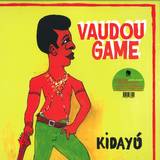
When faced with the decision to take a different direction at the risk of getting lost in a synthetic sound or to further explore the same musical path, Vaudou Game didn't need to consult the oracle for very long when putting together their new album. Since their first acclaimed album, Apiafo and its irresistible single "Pas Contente", these Lyon natives never turned down the heat on over 130 stages across Europe, Africa, America and Asia. Peter Solo has displayed his amulets, charisma and yellow pants around the globe.When time came for them to harness their Afro-Funk sound for the second time, they turned their attention once again to their analog strengths. Vintage material, instruments produced in the 70's and cassette tapes were the "grigris" (or lucky charms) which proved most effective to ward off digital corruption of their music and return them to a tight-knit group with a solid groove.This unbeatable trance rhythm, inherited from James Brown and Fela, icons of Funk and Afrobeat, becomes trident when joined by Mawu, the creative voodoo divinity hidden in each of the group's notes. This inspiration transcends their spirit of communion, plunges them deeply into Mother Earth and results in the telepathic trance which is directly connected to Togo Peter's native Togo.Each song then becomes a celebration where the listener becomes the group's voodoo doll, embraced by the rhythm, submitting itself to the mercilessly metronomic cutting of guitars, struck by the copper-colored flashes of lightning forged by the African voodoo deity Hevioso, pierced by the psychedelic visions generated by the organs and a six-string guitar, cheerful songs, and hypnotic incantations.KIDAYU means "sharing" in Kabye, the language spoken in northern Togo. Sharing, is the philosophy of Vaudou Game - both in their recorded music and on stage.Vintage African funk tinged with voodoo chanting: Togolese Peter Solo and his fellow musicians from Lyon electrify us in a frenzied ceremony" - Télérama
This 7-inch is a gift from the past, reissuing two rare Thai treasures from the late 1960s, big hits from that time which were actually covers of Japanese songs.
Pan-Asian music produced by Surin Paksiri, a legendary presence in the Isan music scene from the 1960s until the present. The first song "Ya Deon Show" was Paksiri's first hit, a Thai-language version of "Soran Bushi", a traditional work song of Hokkaido fishermen, sung here by popular actor Banchop Chaiphra. The song fuses a Luk Thung arrangement with a Japanese "Dodonpa" rhythm. The second singer here is Samai Onwong, a key force in the development of Thai pop music, with "Sakura La Kon (Goodbye Sakura)", sung in both Japanese and Thai. The original was a 1968 hit by Pinky & The Killers and features some fine Khaen playing by Samai, lending a bittersweet Thai feeling. With English lyrics and liner notes, this is a lovely treat, guaranteed to bring a smile and perhaps a tear.
since Ramona presented all her disciples work throughout the first Lifesaver compilation in 2013, it's now time for another episode of togetherness. Summoning all of her artists around Frankfurt and those who live around the world, Ramona is now ready to present the Lifesaver Compilation 2.
Kicked off by one of the Frankfurt young guns, the compilation leans into a melody-driven warm-up with a slight hint of analogue soul - "Digital Revolution" by Orson Wells. Next up is the Italian-born and now Berlin-based Massimiliano Pagliara. His contribution "Phasing Down The Sea" enriches the second Lifesaver installment with some of his signature synth-lines paired with a classic chicago-driven beat. The secret weapon from Kilianstädten also known as Mr. Melody, who goes by the name of Lauer, delivers a dark-italo and wave-ish piece topped off with the famous Lauer-craziness called "Language". Roman Flügel, the man of the hour, reinvents classic UK bleep-techno with Tender Hooligan". Another member of the young-guns-club, Chinaski, brings his certain level of synthesizer-love to the table with a track called Futuresex". Portable, one of Ramona's most delicate flowers, teamed up with Lcio again - together they created a hieroglyphic and deep-driven piece of music: "Dive In". TCB, also known as the only member of The Citizen's Band, delivers "Byrdmap", a solid piece of spheric deep and broken music. "Brainwashed" by Benedikt Frey marks the end of the compilation and simultaneously shows his dimension of futuristic dark-disco acid-madness.
The Lifesaver compilation will be released as a double 12"-vinyl. Additionally Live At Robert Johnson will release an Extension-10"-vinyl containing two brand new tracks by the infamous Hotel Lauer and Tuff City Kids end of March 2015.
Producer CRISTIAN VOGEL, born in Chile and in raised in Bristol, England, represents an inner turmoil within the history of electronic music and techno. Like only a few other artists such as Aphex Twin, he personifies the second wave of techno during which authorship, previously pronounced dead, returned in full force. The former punk, who had completed studies in composition (20th century classical music in Sussex) conveyed a powerful force in his music, which now finds its place very naturally as electronic music; back then, it did more than just shake up the concepts of techno. Complex and intricate rhythms (Süddeutsche Zeitung) dig deep chasms in dark (listening) spaces.
In 1996, together with JAMIE LIDELL as SUPER_COLLIDER, he made a final attempt to breathe life into electronic music, which was still primarily seen as dance/rave/club music, and produced clustered break funk music that was so relevant to its time that many considered it more a music of the future: science fiction for the dance floor. Although the project was not a failure, it did not succeed even halfway in meeting the expectations of an artist who was rather perplexed by the lack of interest he perceived in others in music as art and research. Vogel believes that music has a will to unfold, like a jungle from the undergrowth of industrial cities where music is thought of as an attack and a defense.
Seemingly out of disappointment in the predictably declining hedonism of the scene, he moved to Barcelona and bound his explosive ideas to more accessible formats, founded labels, created networks (No Future, Sleep Debt) and, at the same time, revisited his early days by working more and more on formats such as music for ballet and similar concepts. He also sought freedom precisely in what was referred to as functional electronic music through conceptual and serious endeavors in the artistic sense.
Vogel went under for a time and lived in Vienna before arriving in Berlin nearly two years ago, where he made his first new and daring attempt to assimilate everything that electronic music represented to him on one album: 'The Inertials' on SHITKATAPULT. Shortly after that, his mystical, floating ambient work 'Eselsbrücke' was released, which already spoke the language of the new city.
He now presents a new album on SHITKATAPULT entitled 'POLYPHONIC BEINGS' - a true masterpiece in the inimitable Vogel style, as his fans will no doubt claim. 'POLYPHONIC BEINGS' begins, after two minutes of an irritating noise wave, with a surprisingly classic dub track and grows darker and more abstract from track to track, minute by minute. An eerie and unbelievable sound, with all as it should be: every reverb tail, every movement of the fader, every composed note takes the listener piece by piece into Vogel's own cosmos.
He foregoes interwoven elements for swaying towers of rhythm, powerful sound passages, spaces, roads, mirrors and pathways, leading to a stream of ideas that never wants to end. He aptly quotes Karl-Heinz Stockhausen in the liner notes: These are the "atomic layers of ourselves." And so it is. We are what we hear. This is the definitive CRISTIAN VOGEL.