Repress!
Second Phase (aka Joey Beltram and Mundo Muzique) are 2 legendary producers whose output shaped an entire generation of ravers, DJs and producers minds.
'Mentasm / Mind To Mind' is one such influential release, literally creating new styles, new directions and impacting on dance music for decades to come. Unique programming and fresh sounds made their records stand out head and shoulders above everyone else's output. 'Mentasm' particularly broke ground with it's now infamous 'hoover sound', influencing house, techno and trance music to come and even spilling over into the nascent hardcore, jungle and D&B scenes where it was often imitated or sampled by producers who wanted that ruff, visceral feel for their own tracks, but didn't know how to create it themselves. A new energy was born and it emanated from this milestone 12". 'Mind To Mind' on the flipside is equally as deadly, but in a deeper, more spaced out realm it maneuvers and pulls into a trippy early morning space, the yin to 'Mentasm's yang. This is a quintessential techno record, a glimpse of innovation from back in the day. File under 'classic'.
This special 2021 edition is reissued by R&S Records from original master sources, remastered by Curve Pusher.
quête:second phase
ISOR29 with a six track mini-album titled ‘Moon Phase Gardening’. ISOR29 is a new project from Columbian musician Tomas Garcia Station and follows on from his highly regarded 2020 debut release under the ‘Irie Nation’ moniker.
The title ‘Moon Phase Gardening’ (also referred to as Gardening by the Moon or Planting by the Moon) draws upon the idea that the lunar cycle affects plant growth. Just as the Moon’s gravitational pull creates the tides of the oceans, it also creates more moisture in the soil, which encourages growth.
Evolving out of forced time off, individual confrontation and the love for someone close, ‘Moon Phase Gardening’ was recorded in the living room of an old flat in Lisbon during the first lockdown. Using only a microphone, computer, Korg MS20, hang drum and a field recorder, ISOR29 channels Tomas’ musical vocabulary via electronics to reflect an immersive and self-reflective story bound to a uniquely powerful time and space.
Oktave Records returns for the third installment from the label, once again featuring owner and proprietor Jeff Derringer at the helm. The 'Factions' EP shows Jeff at his most direct and robust, with three tracks of meticulously constructed techno.
'Factions' starts the EP and goes straight for the heart of the dance floor, with a tunneling groove that lures the listener into hypnosis before a devastating break takes the track to a whole new level of intensity. This one is for the ravers, no doubt.
The flip side starts with 'Penalty Phase', another floor-focused stunner that features Jeff's signature kick drum and drive, coupled with evolving synth arpeggios and melancholy vibes for those early club mornings as the sun comes up. Finally, 'The Second Plane' slows the tempo down a bit and ends the record with a thoughtful broken beat arrangement reminiscent of early Warp.
'Factions' was written during the winter of 2018 and mastered by Tim Xavier at Manmade Mastering.
Pressed on solid orange vinyl.
DJ Support: Ben UFO, Palms Trax and more…
Alex Kassian reunites with Hiroaki Oba as Opal Sunn. Following on from their massive 2024 hit Elastic this latest offering ‘Liquid’ is the second in a trilogy of releases on the ‘buy on sight’ Test Pressing Records. Having taken their live set to the world finest clubs & with Elastic being an end of night anthem for DJ’s such as Palms Trax and Ben UFO. This highly anticipated new release builds on their sound and is sure to be another hit with DJ’s and record buyers alike
The second solo chapter in EC13’s trajectory.
Loto Azul (EP) distills EC13’s sonic identity into four focused pieces shaped for the 12″ format: cinematic atmospheres, cosmic resonance, and meticulously crafted rhythmic structures — infused with high-energy dynamics, epic tension, and textured distortions that add depth, grit, and dramatic weight.
From the mystical tension of Astrum Nox (Phase I) to the melodic, ascending narrative of Sinfonía Tercera, the EP moves between introspection and propulsion.
Perdiendo, in both its original version and the Jupiter Rhythms reinterpretation, forms the emotional core of the release — a hybrid between electro, techno, and celestial harmonic design.
A refined work that expands EC13’s role within the Cosmic Tribe universe, reaching toward new sonic dimensions with precision and depth.
- 01: Maanitus &Amp; Tšiižik
- 02: Markka
- 03: Melkutus
- 04: Letška
- 05: Kuuen Parin Hoirola
- 06: Brišatka
- 07: Tšiižik
- 08: Kirkonkellot
- 09: Kirkonkellot Korkea
- 10: Hoirola, 3 Parin
- 11: Lippa
- 12: Kyngäkiža
- 13: Ristakondra
- 14: Vanha Polkka
- 15: Viistoista
- 16: Vanha Valssi
- 17: Kiberä
- 18: Maanitus Kuokan Kanteleella
- 19: Tuuti Lasta Nukkumahe
Vinyl[22,65 €]
Death Is Not The End present a further volume of Arja Kastinen's eerie amalgamations of 110 year old wax cylinders with her own meticulously transcribed takes, this time focussing in on Armas Otto Väisänen's field recordings of kantele player Iivana Mišukka (b. 1861 d.1919).
"Ivana Mišukka (1861–1919) was one of the Karelian kantele players recorded by the folk music researcher Armas Otto Väisänen on wax cylinders in 1916 and 1917. In the early 20th century, the remote areas of Border Karelia were undergoing the final phase of a transformation in musical culture, with the ancient runo song tradition giving way to newer forms of music. This transition is reflected in Mišukka's repertoire and choice of instrument. The ancient small kantele, hollowed out of a single piece of wood, was already rare at the turn of the century. Mišukka's kantele was a new type of instrument with 26 strings, constructed of several parts, but he played it using the traditional plucking technique. Like other Border Karelian kantele players, his repertoire consisted of music rooted in runosong culture, as well as newer dances and songs from the east and west. Most of the recorded material falls into the latter category.
Ivan Bogdanov Mišukka was born out of wedlock in Suursara village, Suistamo, on 1 May 1861. He began playing the kantele at the age of five or six, quickly mastering the instrument. In adulthood, he was considered one of the area's best master players. Mišukka was landless for most of his life and lived in different parts of the Suistamo parish. His first wife, Tekla Markintytär, died in 1897 at the age of 40, and his second wife, Jevdokia Filipintytär Jeminen, died in 1907 at the age of 50. Seven children were born from the first marriage, two of whom died young. The third wife, Maria Ignatintytär Gurnan (Kuurnanen), was a well-known master of lamentations. Together with Maria, Iivana Mišukka worked as a tenant farmer in the village of Suursara. Mišukka suffered from rheumatism, which prevented him from participating in physical work like Maria. This was apparently partly the reason why Iivana Mišukka went to earn extra money by playing the kantele on gig trips. He often had other traditional artists from Suistamo as his travelling companions, such as the runosingers Konstantin Kuokka and Iivana Onoila. Iivana Mišukka died in Leppäsyrjä village, Suistamo, on 18 May 1919 at the age of 58, and his kantele was donated to Teppana Jänis.
Mišukka only used 14 of the 26 strings on his kantele, playing the same tunes either a fourth higher or lower. He tuned his kantele to the major scale using fifths, except for a low seventh scale degree on the upper strings, but not below the fundamental. Since he did not use the seventh note of the scale on the upper strings at all, he could use the major scale both lower and a fourth higher with this tuning. According to Mišukka, the sound of higher, or 'finer', strings is 'more beautiful', while that of lower ones is 'greater'. Among runosingers, the size of the thirds varied, ranging from major to minor to neutral. A similar phenomenon can be observed in kantele tunings, where the third, sixth and seventh scale degrees vary in a comparable way.
During a meeting, Väisänen suggested that Mišukka play the smaller kantele belonging to Konstantin Kuokka. The idea was to bring it closer to the horn to improve the recording quality. However, the kantele was completely out of tune, and now Mišukka tuned it to the Lydian scale (track 18).
Using the old plucking technique, Mišukka placed his right middle finger on the fundamental tone, his right index finger on the second scale degree, his left middle finger on the third scale degree and his left index finger on the fourth scale degree, and his right thumb on the fifth. The thumb also played the notes above the fifth note of the scale. As Mišukka remarked to Väisänen: 'Peigaloll' tuloo enemb ruadoa' (the thumb has to do more work). However, he did not use the seventh note of the scale on the upper strings at all. Below the fundamental note, he played the seventh and sixth notes of the scale with his right middle finger of and the fifth note of the scale with his right ring finger. This fifth scale degree below the fundamental is almost always used as a drone. Sometimes, when the melody required it, Mišukka, like other players, also varied the fingering. He would also occasionally strike the same string with the side of his fingernail after plucking it.
The wax cylinder recordings of Karelian kantele players are kept in the archives of the Finnish Literature Society in Helsinki, Finland. Copies were made of them onto reel-to-reel tapes in both the 1960s and 1980s. The 1960s copies are mono and the 1980s copies are stereo. However, not all kantele recordings from these decades have survived.
The sound of the kantele is difficult to hear in wax cylinder recordings due to its low volume, and it occasionally becomes completely obscured by noise. During the copying process, the cylinder sometimes rotates unevenly, resulting in breaks or jumps in the music. Additionally, the rotation speed of the cylinder in the copies does not correspond to the performance speed of the original music, which alters the pitch. However, since Väisänen's precise notes are available in the archive, it is possible to deduce the melodies, their speed, and the tuning level of the kantele in the recordings. Of the copies of the original recordings from the 1960s and 1980s, I have selected the one that best met the requirements of this publication and adjusted the speed of the recording to align with Väisänen's notes. To enhance the listening experience, I have replayed the songs, which now partly overlap the old recordings on this release."
— Arja Kastinen
- 01: Maanitus &Amp; Tšiižik
- 02: Markka
- 03: Melkutus
- 04: Letška
- 05: Kuuen Parin Hoirola
- 06: Brišatka
- 07: Tšiižik
- 08: Kirkonkellot
- 09: Kirkonkellot Korkea
- 10: Hoirola, 3 Parin
- 11: Lippa
- 12: Kyngäkiža
- 13: Ristakondra
- 14: Vanha Polkka
- 15: Viistoista
- 16: Vanha Valssi
- 17: Kiberä
- 18: Maanitus Kuokan Kanteleella
- 19: Tuuti Lasta Nukkumahe
Tape[16,39 €]
Death Is Not The End present a further volume of Arja Kastinen's eerie amalgamations of 110 year old wax cylinders with her own meticulously transcribed takes, this time focussing in on Armas Otto Väisänen's field recordings of kantele player Iivana Mišukka (b. 1861 d.1919).
"Ivana Mišukka (1861–1919) was one of the Karelian kantele players recorded by the folk music researcher Armas Otto Väisänen on wax cylinders in 1916 and 1917. In the early 20th century, the remote areas of Border Karelia were undergoing the final phase of a transformation in musical culture, with the ancient runo song tradition giving way to newer forms of music. This transition is reflected in Mišukka's repertoire and choice of instrument. The ancient small kantele, hollowed out of a single piece of wood, was already rare at the turn of the century. Mišukka's kantele was a new type of instrument with 26 strings, constructed of several parts, but he played it using the traditional plucking technique. Like other Border Karelian kantele players, his repertoire consisted of music rooted in runosong culture, as well as newer dances and songs from the east and west. Most of the recorded material falls into the latter category.
Ivan Bogdanov Mišukka was born out of wedlock in Suursara village, Suistamo, on 1 May 1861. He began playing the kantele at the age of five or six, quickly mastering the instrument. In adulthood, he was considered one of the area's best master players. Mišukka was landless for most of his life and lived in different parts of the Suistamo parish. His first wife, Tekla Markintytär, died in 1897 at the age of 40, and his second wife, Jevdokia Filipintytär Jeminen, died in 1907 at the age of 50. Seven children were born from the first marriage, two of whom died young. The third wife, Maria Ignatintytär Gurnan (Kuurnanen), was a well-known master of lamentations. Together with Maria, Iivana Mišukka worked as a tenant farmer in the village of Suursara. Mišukka suffered from rheumatism, which prevented him from participating in physical work like Maria. This was apparently partly the reason why Iivana Mišukka went to earn extra money by playing the kantele on gig trips. He often had other traditional artists from Suistamo as his travelling companions, such as the runosingers Konstantin Kuokka and Iivana Onoila. Iivana Mišukka died in Leppäsyrjä village, Suistamo, on 18 May 1919 at the age of 58, and his kantele was donated to Teppana Jänis.
Mišukka only used 14 of the 26 strings on his kantele, playing the same tunes either a fourth higher or lower. He tuned his kantele to the major scale using fifths, except for a low seventh scale degree on the upper strings, but not below the fundamental. Since he did not use the seventh note of the scale on the upper strings at all, he could use the major scale both lower and a fourth higher with this tuning. According to Mišukka, the sound of higher, or 'finer', strings is 'more beautiful', while that of lower ones is 'greater'. Among runosingers, the size of the thirds varied, ranging from major to minor to neutral. A similar phenomenon can be observed in kantele tunings, where the third, sixth and seventh scale degrees vary in a comparable way.
During a meeting, Väisänen suggested that Mišukka play the smaller kantele belonging to Konstantin Kuokka. The idea was to bring it closer to the horn to improve the recording quality. However, the kantele was completely out of tune, and now Mišukka tuned it to the Lydian scale (track 18).
Using the old plucking technique, Mišukka placed his right middle finger on the fundamental tone, his right index finger on the second scale degree, his left middle finger on the third scale degree and his left index finger on the fourth scale degree, and his right thumb on the fifth. The thumb also played the notes above the fifth note of the scale. As Mišukka remarked to Väisänen: 'Peigaloll' tuloo enemb ruadoa' (the thumb has to do more work). However, he did not use the seventh note of the scale on the upper strings at all. Below the fundamental note, he played the seventh and sixth notes of the scale with his right middle finger of and the fifth note of the scale with his right ring finger. This fifth scale degree below the fundamental is almost always used as a drone. Sometimes, when the melody required it, Mišukka, like other players, also varied the fingering. He would also occasionally strike the same string with the side of his fingernail after plucking it.
The wax cylinder recordings of Karelian kantele players are kept in the archives of the Finnish Literature Society in Helsinki, Finland. Copies were made of them onto reel-to-reel tapes in both the 1960s and 1980s. The 1960s copies are mono and the 1980s copies are stereo. However, not all kantele recordings from these decades have survived.
The sound of the kantele is difficult to hear in wax cylinder recordings due to its low volume, and it occasionally becomes completely obscured by noise. During the copying process, the cylinder sometimes rotates unevenly, resulting in breaks or jumps in the music. Additionally, the rotation speed of the cylinder in the copies does not correspond to the performance speed of the original music, which alters the pitch. However, since Väisänen's precise notes are available in the archive, it is possible to deduce the melodies, their speed, and the tuning level of the kantele in the recordings. Of the copies of the original recordings from the 1960s and 1980s, I have selected the one that best met the requirements of this publication and adjusted the speed of the recording to align with Väisänen's notes. To enhance the listening experience, I have replayed the songs, which now partly overlap the old recordings on this release."
— Arja Kastinen
Due to overwhelming demand for our 5LP boxset which sold out on the day of release, here are the first ever official individual re-issues of all five of the iconic Lansdowne recording sessions by the legendary UK jazz combo, the Don Rendell/Ian Carr Quintet.
The five albums; Shades Of Blues (1965), Dusk Fire (1966), Phase III (1968), Change Is (1969) and Live (1969), have reached almost mythical status in the collector's world. Regarded as holy grail artefacts for even the seasoned aficionado, the collective second hand market value comes to an astonishing £6000.
The complete Don Rendell & Ian Carr Lansdowne recording sessions are now available as individual LPs. We located and acquired the original analogue master tapes from the Universal vaults and created masters at Abbey Road Studios to produce audiophile quality 180g pressings replete with replica artwork - shape, design, and even paper stock. No stone has been left unturned to deliver this absolute labour of love to the highest possible standard! Inside is a link to a printable online pdf which contains never before seen photographs, interviews with the remaining living band members and liner notes from BBC Radio 3 presenter and award-winning jazz writer Alyn Shipton.
The band played together for seven years and during this fruitful time they made a plethora of deeply melodic, post-bop British jazz compositions that later on took influences from Indo and more spiritually guided jazz. Produced by the influential Denis Preston and recorded at his Lansdowne Studios in London, the band was primarily made up of saxophonist Don Rendell, trumpeter/composer Ian Carr, and pianist/composer Michael Garrick. This is UK jazz at its absolute finest and is a treasure not to be missed.
POD & Edward Richards return with their second release on Kinetic Vision, the ‘Polar Phase’ EP, following their much lauded ‘SQZR’ EP. A landmark release for the label, ‘Polar Phase’ marks the first of a series of records to come. Set at a tempo of 100 BPM, the duo mix minimalism, broken beats, world music percussion and psychedelic synths to weave a tapestry of darkness, albeit more zen than melancholy.
The opening track ‘Mind Machine’ is propelled by a broken beat and flurry of hard hitting snares. A swirl of synths abound while a tribal incantation is whispered in the dark. The title track ‘Polar Phase’ takes us on a pulsing journey of techno hypnotism, with icy synths threatening deep underwater immersion. The B side ‘Flux Growth’ elicits an obscure playfulness with its punctuated kick and slowly building chaos. Finally the Sub Basics remix of ‘ Polar Phase’ lifts the tempo and we find ourselves in a bliss of pure dancefloor hedonism.
POD & Edward Richards have crafted a rich textural sound with slow paced hypnotic grooves, creating deep absorption for both DJ and listener alike.
- A1: Philip Smart - Get Smart Theme
- A2: Sammy Levi - Come Off The Road
- A3: Lilly Melody - Promotion & Stripe
- A4: Scion Success - Cry Fi Mi Girl
- A5: Tom And Jerry Horns - Autumn Leaves
- B1: Tony Tuff - Hit And Run
- B3: Shelene - Where Does It Go From Here
- B4: Frankie Paul - Plastic Smile
- B5: Half Pint - Don't Try To Use Me
Following our well received "Prince Philip Presents..." 2LP compilation, here's a lovely overview of the second phase of Philip's career, as engineer & producer at his own studio, HC&F. These ten tracks comprise our favorites from his production catalog, spanning the mid '80s when the studio really got going, right up until 1996 and his last set of proper productions. The album holds a mix of well known classics like the Garnett Silk, lesser known album only cuts like the Frankie Paul, NY dancehall 12" staples like the Scion Success or Shelene, as well as some lesser known gems. We'd be remiss in not mentioning that this album also contains two previously unreleased cuts - a wicked mid '80s Tony Tuff, and the wild vocoder laden 1985 theme song for Philip's "Get Smart" radio show, which ran for many many years on New York University's WNYU radio station.
Silicon Scally and Fleck E.S.C. need no introduction at this stage. Both artists are veterans not just of Sheffield's Central Processing Unit label but of modern electro as a whole, with the pair having decades of skin in the game at this point. Their new release, a four-track EP entitledSlipwhere Silicon Scally handles the first half and Fleck E.S.C. the second, carries itself with the adventurous confidence of a record made by masters of their craft.
Slipopener 'Phased Array' is exactly the kind of top quality machine-funk tackle you'd expect from this meeting of minds. The beat programming is deliciously tactile from the off, hissing and clanking like machinery in an old Detroit factory. The feel of 'Phased Array' is altered, though, when the chords come in, a series of alternating floating sounds which give the track an altogether eerier feel. When all of this is coupled with the otherworldly synth blurts that periodically force their way to the front of the track, the overall effect is a piece of real depth assembled by an expert practitioner.
'Phased Array' is followed up by 'Stax', another brilliantly propulsive number. Here we find the drum beat - one which is a little reminiscent of that Kraftwerk tune about the numbers, no less - once more offset by some decidedly more shadowy synth work, all while arpeggiated keyboard licks work against an intricate web of basslines, chords and unidentifiable flying synth tones.
Fleck E.S.C. opens theSlipB-side with 'Good Ride', a number where the nudge-wink title is borne out by a track built around looped snippets of sighing vocals. That said, with a bassline that sounds like a blurting old landline telephone, a ghoulish synth lead and all manner of motion-sick breakdowns, the 'ride' in question could just as well be aWipeout-style whizz through hyperspace as anything more suggestive. 'Good Ride' also sets itself apart from the other joints here by showing off a swaying halftime breakdown.
'Intox Remedy',Slip's closer, wraps the EP in a manner which continues some of the trends of the record's earlier tracks - richly tuneful chords, precision-engineered broken beat drum programming and a wide palette of delightfully unusual synth tones are all present and correct. However, there is also something about the chords here which pares back the eeriness of previous joints for a bit more of a wide-eyed, stargazing feel, and as such 'Intox Remedy' sees the record out by placing the listener firmly back in the cosmos.
Tough enough for the dancefloor and intricate enough for home listening, theSlipEP is a fabulous collaboration from two of the most respected voices in the electro game.
Between flesh and silicon. “Under My Skin” (2026) is the first album by IADI, released by Neo Life. A record like few
others, highly conceptual, cover art included. Its essence lies in the folds of the increasingly ambiguous relationship
between man and machine, where the former designs the latter and, perhaps without fully realizing it, is gradually
destined to adapt and be reprogrammed by it. Each track of “Under My Skin” is, in fact, a sort of interface, connector, or
any other imaginative point of contact between two creative phases, amid emotional impulses and binary calculations.
The sonic architecture oscillates between analog warmth and algorithmic coldness, constructing landscapes in which
pulsating synthesizers and mechanical rhythms seem to question each other. There's no linear narrative, but rather a
progressive immersion in a zone of near-friction, where the comfort of technology coexists with more than a faint
musical uneasiness, like a background noise that never ceases to remind you who's truly in charge. In “Under My Skin”,
the machine is neither an enemy nor a simple instrument: it's a real presence, intimate, even tactile, amplifying desires,
fears, and dreams of dawns beyond the digital realm. Intelligent dance music. Less noise, more sensations. Electronic,
but profoundly human.
The final result, then, is a music project that speaks to the present, yet sounds like an X-ray of the future, capturing that
fragile moment when humanity and technology stop observing each other from afar and begin to merge, track after
track. It's no coincidence that IADI's album opens with “Impulse”, an immediate expression of an electrical impulse, for
both humans and machines, which is also the language of the nervous system, as fast as it is vital—pure energy and
rhythm, a track as intense as it is irregular. And after this introduction, it's the turn of the equally erratic “Axon”, whose
title describes the neuron that transmits the signal over distance, telling the listener to sit back and relax for a new
journey through the notes toward the more melodic “Cortex”. The cerebral cortex, the ultimate seat of thought and
memory, becomes the source from which the musical flow of the first part of the work is drawn.
Then, suddenly, an automatic, or instinctive, response to the constant succession of impulses: “Reflex”, or zerotemperature techno, with a fragmented pace, featuring vocal samples, breaks, and restarts. In the producer's
imagination, the subsequent, and conversely placid, “Neuron” represents the emotional core of the second part of the
work, providing a kind of respite from the seething vibrations. While the neuron is the basic unit of the nervous system,
the synapse is the functional connection point between one neuron and another effector cell, essential for the
transmission of nerve impulses and communication in the nervous system, enabling functions such as learning and
movement. Likewise, a track like “Synapse” once again illuminates the path traced by IADI. The more experimental and
streamlined “Static” instead suggests true ordered chaos. “Dreamstate” is the conclusion suspended in the void, relating
to that dreamlike state between waking and sleeping, where consciousness fades toward infinity and visions begin. Pure
fading into the subconscious. Eternal return to where it all began. Dancing is a form of consciousness. Every beat is a
question. IADI, however, holds all the answers you need.
- A1: Big Mama
- A2: Captain Kernel
- A3: Antelope Onigiri
- A4: In The Forest - Day
- A5: Brobobasher
- A6: Horse Nuke
- A7: Pink Dream
Limitiertes blaues 12“ Vinyl mit Siebdruck auf B-Seite inklusive 12“ Stickerbogen.
Artwork von Christopher Ian Macfarlane
Flying Lotus, der Produzent – auch bekannt als Steve Ellison – veröffentlicht Anfang März seine neue ‘BIG MAMA’ EP auf Brainfeeder: dem Plattenlabel aus Los Angeles, das er vor fast zwei Jahrzehnten gegründet hat und das seitdem Alben von renommierten Künstlern wie Thundercat, Hiatus Kaiyote, Kamasi Washington und vielen anderen veröffentlicht hat.
BIG MAMA fängt Ellison in einem Moment spontaner, ungezügelter Dynamik ein. Die EP ist dicht gepackt mit unterschiedlichen Sounds, Rhythmen und Effekten und liefert, wie er es selbst beschreibt, „experimentelle, maximalistische, hyperschnelle, elektronische Energie“, wobei sieben dynamische Tracks zu einer einzigen durchgehenden Komposition zusammengefasst sind, in der jeder Takt einzigartig ist und es keine Loops gibt.
Die EP, die innerhalb von zwei Monaten fertiggestellt wurde, zeigt Ellison mit einem deutlich anderen Ansatz bei seiner Produktion. Anstatt sich hinzusetzen und an einzelnen Tracks zu arbeiten, stattete er sein Studio mit einer Vielzahl neuer Tricks und Spielzeuge aus, nutzte Software-Synthesizer, um FM-, Wavetable- und Granularsynthese zu erforschen, sowie Second-Hand Drum Machines und verbrachte den ersten Monat damit, ein Skizzenbuch mit einzelnen Sounds für die nächste Phase des Prozesses zu erstellen. Von dort aus begann er, die akribischen Details der BIG MAMA-Welt aufzubauen, wobei er täglich nur 10 bis 15 Sekunden Musik fertigstellte, bevor er die Fragmente zu ihrer endgültigen Form zusammenfügte: ein mehr als dreizehnminütiger Strom des Bewusstseins, der weder durch Tempo noch Stil eingeschränkt ist.
Xerrox Vol. 2 is the sixth studio album, released in 2009 by German electronic artist Alva Noto. It is the second installment of the Xerrox penthalogy, based on the concept of digital replication of source material.
As with the first Xerrox album, the starting point is a set of samples culled from external sources. This time, snippets and recordings from Sunn O))) collaborator Stephen O'Malley and composer Michael Nyman are featured, as is an excerpt from the 2004 Insen tour with Ryuichi Sakamoto.
While Alva Noto's oeuvre is predominantly affiliated with pristine sound design, the Xerrox series holds more intimate gestures and emotional sensibility. This volume moves further from the conceptualism and orderliness of prior musical outputs, ranging from heart-warming elegies to mind-bending sci-fi projections in extrasolar territories.
This remastered version will be reissued on NOTON in 2026
Tracklisting
---------------------------------------------------------
Medium: 1 // Side: A // Track: 1
Artist: Alva Noto
Title: Xerrox Phaser Acat 1
Playtime: 00:12:11
Explicit Lyrics: No
ISRC: DE1N62500015
(P): 2025 NOTON
Country: Germany
Composer: Carsten Nicolai
---------------------------------------------------------
Medium: 1 // Side: A // Track: 2
Artist: Alva Noto
Title: Xerrox Rin
Playtime: 00:00:51
Explicit Lyrics: No
ISRC: DE1N62500016
(P): 2025 NOTON
Country: Germany
Composer: Carsten Nicolai
---------------------------------------------------------
Medium: 1 // Side: A // Track: 3
Artist: Alva Noto
Title: Xerrox Soma
Playtime: 00:07:11
Explicit Lyrics: No
ISRC: DE1N62500017
(P): 2025 NOTON
Country: Germany
Composer: Carsten Nicolai
---------------------------------------------------------
Medium: 1 // Side: B // Track: 4
Artist: Alva Noto
Title: Xerrox Meta Phaser
Playtime: 00:06:23
Explicit Lyrics: No
ISRC: DE1N62500018
(P): 2025 NOTON
Country: Germany
Composer: Carsten Nicolai
---------------------------------------------------------
Medium: 1 // Side: B // Track: 5
Artist: Alva Noto
Title: Xerrox Sora 1
Playtime: 00:06:54
Explicit Lyrics: No
ISRC: DE1N62500019
(P): 2025 NOTON
Country: Germany
Composer: Carsten Nicolai
---------------------------------------------------------
Medium: 2 // Side: C // Track: 6
Artist: Alva Noto
Title: Xerrox Monophaser 1
Playtime: 00:08:04
Explicit Lyrics: No
ISRC: DE1N62500020
(P): 2025 NOTON
Country: Germany
Composer: Carsten Nicolai
---------------------------------------------------------
Medium: 2 // Side: C // Track: 7
Artist: Alva Noto
Title: Xerrox Monophaser 2
Playtime: 00:05:31
Explicit Lyrics: No
ISRC: DE1N62500021
(P): 2025 NOTON
Country: Germany
Composer: Carsten Nicolai
---------------------------------------------------------
Medium: 2 // Side: D // Track: 8
Artist: Alva Noto
Title: Xerrox Teion
Playtime: 00:02:03
Explicit Lyrics: No
ISRC: DE1N62500022
(P): 2025 NOTON
Country: Germany
Composer: Carsten Nicolai
---------------------------------------------------------
Medium: 2 // Side: D // Track: 9
Artist: Alva Noto
Title: Xerrox Teion Acat
Playtime: 00:05:26
Explicit Lyrics: No
ISRC: DE1N62500023
(P): 2025 NOTON
Country: Germany
Composer: Carsten Nicolai
---------------------------------------------------------
Medium: 2 // Side: D // Track: 10
Artist: Alva Noto
Title: Xerrox Tek Part 1
Playtime: 00:05:27
Explicit Lyrics: No
ISRC: DE1N62500024
(P): 2025 NOTON
Country: Germany
Composer: Carsten Nicolai
---------------------------------------------------------
Medium: 2 // Side: D // Track: 11
Artist: Alva Noto
Title: Xerrox Monophaser 3
Playtime: 00:06:14
Explicit Lyrics: No
ISRC: DE1N62500025
(P): 2025 NOTON
Country: Germany
Composer: Carsten Nicolai
The Fuga compilation returns to Token with its seventh installment by a fresh batch of artists emphasizing the cryptic sound of the Belgian record label. The V/A displays urgency as its focal point, expanding and contracting its acoustic space throughout to channel instability. With eight contributions, Fuga VII sifts through nail biting arpeggios, frenzied percussion, and obscure ambiance to recalibrate techno's current soundscape.
Opening the compilation is contemporary techno mainstay Rene Wise with his debut contribution to the record label 'Rough Rider'. In this A1, Wise plays to his strengths by blending deep techno influences with hyper-focused rhythmic work. With a hint of tribalism, he conjures up synthwork from far off to whip motion into heavy drum patterns. Following this first track, STIPP and Sandrien take control in presenting 'Corrie', a sequence-forward groover that slides through drum programing to streamline rhythm. A shrill pad comes in at the halfway mark, completely lifting the energy of 'Corrie' to strain the track's obscurity with an ethereal counterweight. The brief passage of these kinds of elements provides a lot of dynamic to what would otherwise be a powerfully straightforward piece. Diving deeper, Red Rooms unveils 'Limited Sensory' as the next chapter of the compilation. Always swift and exact, the German artist continues to push into the ultra immersive with a web of elements that whiz by for a peaktime lock in. Cold in attitude, Red Rooms tunnels through 'Limited Sensory' with quick drumsand far-off percussive hits that rumble through the track. Stepping up afterwards is Lindsey Herbert with 'Oscillations in Space' - an appropriately named recording that experiments with mania as a tool for the dancefloor. Fast and spiraling, Herbert keeps her hands on the arpeggio's filter to contain tension through thunderous reverb transitions, balancing panic with pace. AgainstMe then stretches out the followup with the commanding 'Phase Shift' to double down on weight. Textural intimidation and stomping percussion is given the space it needs to perform on heavy weight sound systems, making it an austere middle point for Fuga. MAL HOMBRE then guides the listener to more elastic sound design in 'Critical Velocity', in a most appropriate Token fashion. Snowballing in intensity halfway through, MAL HOMBRE pushes the cutoff of his melody and programs snare rolls for vintage craze through the second section. Bells clash with ringing hats to fly the track along its course without looking back or letting go. Conor Wall takes control with 'The Strategy' that focuses on pace rather than melody, weaponizing metallic texture for a deep dancefloor experience. The ambiance does a lot of story telling here, marking breaks and riding through drops to provide grit to an already substantial record. This leads us to the final contribution in Fuga VII - 'Ad Libitum'. Here, Porteix emphasizes the conclusion of the compilation with mystery. The synths slither around pulsating rhythm, creating uninterrupted motion throughout the track's entirety. Porteix draws the curtains on an inquisitive note, keeping the suspense high until the next Fuga compilation comes around.
Blue Vinyl
After a three year hiatus, the rap trident known as Death At The Derby is back with another full LP, this time entirely produced by Toronto based producer Finn. An 11 track project, “Capitano” is themed behind some of the games most respected & legendary captains to rock the honorary armband.
Inspired by their previous 2020 release “Ballon D’Or”, this latest LP is both the first official drop, yet second installment to their newest series entitled Club & Country. With the third & final season of their celebrates derby series around the way, this record is the next phase in their wave of worldwide work.
Cuts provided by their resident DJ, DJ Dubplates, the project is both a rare & raw blend of potent underground production, cultured sound bites, top flight lyricism & love for the beautiful game. Whether El Salvador, Romania, North Ireland or Argentina, the roster is monster. Centered around a tracklist aligned by the player’s actual jersey numbers, this collection of stars shine bright as any constellation.
- Éire Go Deo
- Smugglers & Scholars
- Carnival
- Palestine (Feat. Fawzi)
- Liars Tale
- Fenian
- Big Bad Mo
- Headcase
- An Ra
- Éire Go Deo
- Smugglers & Scholars
- Carnival
- Palestine (Feat. Fawzi)
- Liars Tale
- Fenian
- Big Bad Mo
- Headcase
- An Ra
- Cold At The Top
- Occupied 6
- Gael Phonics
- Cocaine Hill (Feat. Radie Peat)
- Irish Goodbye (Feat. Kae Tempest)
BLACK Vinyl[19,29 €]
KNEECAP return to bend genre, language, and rules. The most talked about artists in the world are turning the page. A new chapter, new sounds, new manifestos.
A blistering album that revels in darkness while bursting through the void with illuminated revery. This is FENIAN.
Produced by Dan Carey (Fontaines D.C., Kae Tempest, Wet Leg), FENIAN upends expectations with an expansive sonic palate, traversing acid house, trip-hop, dubstep, and more - Masters of rave and rap theatre, FENIAN represents Kneecap’s most sophisticated exploration of language and sounds.
More darkness. More confrontation. More craic. More energy. More solidarity. More absolute bangers. And more fuel for the unrelenting engine that powers this unstoppable force. For their remarkable second album, Kneecap have come out fighting.
Throughout, the sirens and alarms ring, and the chorus’s blast. Revolutionary and rebellious, confrontational and impossibly catchy, inescapably intelligent and brilliantly rendered, FENIAN doesn’t just represent the next phase in Kneecap’s trajectory but stands as a remarkable record that thrills as much as it surprises. The mayhem of their breakout year is a memory now. But Kneecap are neither dwelling on that nor merely persevering through it. In FENIAN they excel, reaching a new peak that is undeniable in its mastery.
Pressure makes diamonds, and FENIAN glistens with Kneecap’s uncut gems.
- Éire Go Deo
- Smugglers & Scholars
- Carnival
- Palestine (Feat. Fawzi)
- Liars Tale
- Fenian
- Big Bad Mo
- Headcase
- An Ra
- Éire Go Deo
- Smugglers & Scholars
- Carnival
- Palestine (Feat. Fawzi)
- Liars Tale
- Fenian
- Big Bad Mo
- Headcase
- An Ra
- Cold At The Top
- Occupied 6
- Gael Phonics
- Cocaine Hill (Feat. Radie Peat)
- Irish Goodbye (Feat. Kae Tempest)
TRI COLOUR Vinyl (RED, RED, BLACK)[24,79 €]
KNEECAP return to bend genre, language, and rules. The most talked about artists in the world are turning the page. A new chapter, new sounds, new manifestos.
A blistering album that revels in darkness while bursting through the void with illuminated revery. This is FENIAN.
Produced by Dan Carey (Fontaines D.C., Kae Tempest, Wet Leg), FENIAN upends expectations with an expansive sonic palate, traversing acid house, trip-hop, dubstep, and more - Masters of rave and rap theatre, FENIAN represents Kneecap’s most sophisticated exploration of language and sounds.
More darkness. More confrontation. More craic. More energy. More solidarity. More absolute bangers. And more fuel for the unrelenting engine that powers this unstoppable force. For their remarkable second album, Kneecap have come out fighting.
Throughout, the sirens and alarms ring, and the chorus’s blast. Revolutionary and rebellious, confrontational and impossibly catchy, inescapably intelligent and brilliantly rendered, FENIAN doesn’t just represent the next phase in Kneecap’s trajectory but stands as a remarkable record that thrills as much as it surprises. The mayhem of their breakout year is a memory now. But Kneecap are neither dwelling on that nor merely persevering through it. In FENIAN they excel, reaching a new peak that is undeniable in its mastery.
Pressure makes diamonds, and FENIAN glistens with Kneecap’s uncut gems.
The fifth transmission in the XTRICTLY ELEKTRO series connects the past and future of the genre in one powerful statement.
Side A channels the sharp, forward-driven pulse of the new school — EC13, Elektrotechnik, and Parand deliver cutting-edge vibes built for the modern floor. Side B pays tribute to the roots with Calagad 13, DJ Overdose, and Motorobot — a legendary alliance between Bass Junkie and Dynamik Bass System, returning for only their second-ever collaboration.
A bridge between eras: classic heritage meets futuristic sound design — timeless, synthetic, and deeply interconnected.
Limited edition of 150 copies.
Following a hotly tipped first instalment, the Family Trip series continues with a second VA RIDE19 featuring artists from the Magic Carpet family, celebrating five years of the label. In contrast to the first record, Disc 2 steers us into deeper, clubbier territory with bold basslines, chuggy goodness and mesmerising atmospherics. True to form, there’s an understated wild card on the B2, offering a transcendent cruise to the 5th dimension. Strap in!
Following the completion of the Pulse EP series, Peverelist invites four producers to present their own refreshing takes on choice cuts from his most recent phase of club exploration.
Fadi Mohem channels the bright angles of 'Pulse IX' into a buoyant, sleek run of uptempo dub techno with an unmistakable Berlin focus. Huey Mnemonic takes the crafty, curious swerve of 'Pulse XX' and sets it to a 4/4 rush of exuberant, steady-climbing techno informed by his Detroit surroundings. Munich-based artist Polygonia's snaking electronica response to 'Pulse VII' capitalises on the swooning melody of the original's second half and matches it with vibrant sound design. Rounding off an especially invigorating round of remixes, the stark jack of 'Pulse V' becomes a twinkling, dreamy Motor City reverie in the hands of the legendary Optic Nerve, aka Keith Tucker.
The end result is a collection of remixes bursting with the same vibrant, uplifting energy that courses throughout the Pulse series.
Livity Sound is a label set up by Peverelist in 2011 as a vehicle for a raw and exploratory strain of UK techno, rooted in the heritage of UK dance music and sound system culture. It has since become one of the UK's foremost protagonists for cutting edge underground electronic music.
2025 Repress
Tresor Records is proud to announce forthcoming special editions of its entire catalogue of Drexciya and related projects. 2022 marks the 20th anniversary of the passing of James Stinson and the releases of the Transllusion and Shifted Phases albums.
In recognition, the rightsholders, their families, and the label have commissioned Detroit-based contemporary artist Matthew Angelo Harrison to re-conceptualize the covers of Tresor's Drexciya-related catalogue. These editions will be released sequentially, bimonthly, starting early-September 2022.
Just a month after the album release of 'Neptune's Lair' in September, its companion 12" 'Hydro Doorways' will be second in the series, out on October 7th. In November, 'Harnessed The Storm' and 'Digital Tsunami' are coming, followed by the release of Transllusion in February 2023. The series is completed by the long-awaited re-release of 'Shifted Phases – The Cosmic Memoirs Of The Late Great Rupert J. Rosinthrope' - at the end of March.
These records, individually and as a catalogue, represent some of the most crucial moments in the Tresor label history, with the sound and mythic world of Drexciya undoubtedly inspiring generations.
- 01: Leela Chitnis, Ashok Kumar & Chorus - Chal Chal Re Naujawan
- 02: Zohra Ambala - Ankhiyan Milake
- 03: Shamshad Begum - Ek Kali Nazon Ki Pali
- 04: Ashok Kumar & Sitara - Jalja Jalja Patange
- 05: Noor Jehan - Badnam Mohabbat Kaun Kare
- 06: Noor Jehan, Kalyani, Sohrabai &Amp; Chorus - Aahen Na Bharin Shikve Na Kiye
- 07: Suman Kalyanpur & Shamshad Begum - Dil Gaya To Gaya
- 08: Roshanara Begum - Desh Ki Pur Kaif
- 09: Ameerbai - Ghar Ghar Mein Diwali Hai
- 10: Raj Kumari - Pardesi Ghar Aaja
- 11: Noor Jehan & Surendra - Aawaz De Kahan Hai
- 12: H Khan Mastana - Panghat Pe Ek Chhabili
- 13: K L. Saigal - Hat Gai Lo Kaali Ghata
- 14: Suraiya - Chale Dil Ki Duniya
- 15: Parul Ghosh & Suresh - Tum Ko Mubarak Ho
Death Is Not The End release a second part collecting pre-partition film music, compiled by Gary Sullivan of Bodega Pop.
As the 1940s began, South Asian cinema entered a transformative phase. Playback singing, still a new idea in the previous decade, quickly became standard practice. Actors no longer had to sing, and singers no longer had to act, opening the door to a wave of dedicated vocal talent that redefined the sound of the industry.
Voices like Noor Jehan, Shamshad Begum, and Suraiya rose to prominence, becoming household names across the subcontinent. Behind them, composers like Naushad, Anil Biswas, and Ghulam Haider were expanding the sonic palette of film music, blending ragas with Western orchestration, folk tunes with jazz-era instrumentation. Harmoniums, sarangis, violins, accordions, and clarinets filled out increasingly complex arrangements, while ghazals and qawwalis continued to influence mood and structure.
Although the post-Partition years are often considered to be Bollywood's "Golden Age," thanks to filmmakers like Raj Kapoor, Bimal Roy, and Guru Dutt, the music started its peak just before the divide. By 1947, Naushad and others were producing some of the most emotionally rich and musically intricate work in the industry's history, compositions that would prove challenging to surpass in the decades that followed.
Yet this high point came during a time of immense upheaval. The Second World War, the Bengal famine, and the crumbling of colonial rule all loomed large. Film songs often reflected the uncertainty, sometimes mournful, sometimes romantic, sometimes defiant. And when the Partition finally came, it fractured the world that had created this music. Artists became refugees, studios were split, and careers were thrown into flux. Noor Jehan, who would go on to become Pakistan's most iconic singer, recorded many of her most beloved songs in Bombay. Khursheed, another major star, faded from public life after migrating. K.L. Saigal, a towering figure of the 1930s and '40s, died in Lahore just months before the split.
This collection spans those final years before Partition, a time of creative flowering and looming catastrophe. Like Part 1, these songs were sourced from immigrant-run music shops in New York and New Jersey. They are fragments of a vanishing world, each one a snapshot of the art, longing, and resilience that defined this extraordinary era.
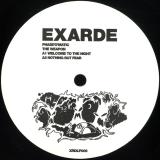
The labels catalogue is welcoming a third full feature album by no other than the young and promising producer from the UK – Phase ‘O Matic. This body of work marks the second LP by the artist in five years therefore to say the excitement levels can be measured by the excitement meter and these levels would be scientifically speaking - through the roof. From the opening track “Welcome to the Night” to the closing “The Weapon” which is named after the title of the album, the artist has demonstrated his impeccable production skills and knowledge of the 90’s sound with the modern twist applied. Over the years of hard work, he has developed his own sound and from what can be heard here safely could be said that this release is most definitely the weapon of mass destruction which has been added to the artist’s collection of releases. Straight from the mind onto this 12” canvas for you to enjoy.
‘selfsame’, the second 12” on false aralia, mirrors the structure of companion release ‘zero key’ in presenting an iterative exploration of versioning itself, unspooling a line of flight through four ascending rhythmic configurations. the objects at the center remain hard to glimpse: holographic percussion, snatches of breath, contorted blue chords, and roiling subs phase in and out of perception, interlocking, dissipating and reappearing as familiar silhouettes. the slow and quick domains of rhythm superimpose and bifurcate, perpetually just out of grasp, only visible in mutual reflection. the apparent solidity of the structure dissolves into a froth of microscopic activity upon close inspection.
The first new Electro Clash tracks from Break 3000 since 2003! After a string of re-issues of old gems on Italy's "Mondo Phase", the Argentinian label "Calypso's Dream" and his own "Electron Feel" last year, Break 3000 is finally back with some new original cuts!
The A-side "Electronique" has all the ingredients you would want from a hard-hitting Electro Clash track. EBM style drums and a powerful raw bass line topped with soaring rave leads and pads and added original (Vocoder) vocals by Break 3000 himself. This one is road tested already on dance floors and big systems and a guaranteed crowd pleaser! Second up is the driving "Continua", leaning more towards Break 3000 Techno classics like "Flash" and "Fix" this filtered rave lead will make a wild crowd go even wilder. Dark and twisted Electro Techno at its best.
The B-side opens with another aspect of the Break 3000 sound spectrum. We look back to the early years here and to songs like "The Wait" and "Spacemaschinenreise" that were produced in 1999. In a Detroit meets Rotterdam styled Electro setting this song uses a lot of the old sounds from 26 years ago, mostly coming from his original EMU sampler used at the time and a great 80s vocal sample gives this track it's title. We are transported back to the golden era of Cold Wave here. Closing out this new EP is the wonderful Marcello Giordani from Parma, Italy who build a strong reputation with his "Italo Deviance" label over the years. He gives the original "Electronique" a great funky "Proto House" bass line in best "Bobby Orlando" manner, what a brilliant crossover track this one is! With the Vermona drum sounds his - Dark Disco meets Early House - jam will certainly be on many DJ's want list.
We hope you enjoy these new tracks! There is more to come… stay tuned!
All tracks are mastered by Salz Mastering in Cologne. Music, Photography & Art by Break 3000.
When you’re running a label, a demo occasionally comes across your desk that makes you reconsider everything you thought your label was all about. For Balmat, such was the case with this stunning album from Stephen Vitiello, Brendan Canty, and Hahn Rowe. It sounds like nothing we’ve released so far—and that very otherness opened up a whole new world of possibilities for us.
Fans of ambient, experimental electronic music, and sound art will be familiar with Vitiello, a New York native, long based in Virginia, who has collaborated with a cross-generational list of greats: Taylor Deupree, Steve Roden, Lawrence English, Tetsu Inoue, Nam June Paik, Ryuichi Sakamoto, Pauline Oliveros, and many more. On labels like 12k, Room40, and Sub Rosa, he has explored a wide range of minimalism, microsound, lowercase, ambient, improv, and other styles. But this album is something different. It may begin in ambient-adjacent territory, but it quickly veers off, and it just keeps zigzagging, taking on elements of krautrock, post-punk, dub, and the groove-heavy interplay of groups like Natural Information Society and 75 Dollar Bill.
This stylistic turn is thanks in large part to Vitiello’s choice of collaborators. “We’re coming from three different schools,” Vitiello says: “sound art, art rock, and punk rock.”
Active since the early 1980s, Rowe—a violinist, guitarist, and producer/engineer—has played with, or manned the boards for, a frankly jaw-dropping list of musicians: Herbie Hancock, Gil Scott-Heron, the Last Poets, Roy Ayers, John Zorn, Glenn Branca, Swans, Live Skull, Brian Eno, David Byrne, Anohni, R.E.M., Yoko Ono, and many more. But he might be most closely associated with Hugo Largo, a one-of-a-kind New York quartet—two basses, vocals, and Rowe’s violin—that in the late 1980s helped lay the groundwork for what would eventually become known as post-rock.
Canty, of course, is the legendary drummer of Fugazi, the visionary DC post-hardcore group, as well as Rites of Spring before them, and, currently, the Messthetics, a Dischord-signed instrumental trio with guitarist Anthony Pirog and Fugazi bassist Joe Lally.
Vitiello’s trio first collaborated on First, a 17-minute piece released on the Longform Editions label in 2023. Second picks up where the freeform drift of First left off, channeling the trio’s exploratory energies into more intentionally structured tracks and—in a real first for Balmat—some almost shockingly muscular grooves. “Sometimes my projects are more conceptually driven,” Vitiello says, “but I think this was more musically geared. I just wanted to open up the references and bring in an incredible drummer, bring in some melodies, and I’m sort of the center.” But his collaborators, he stresses, are “vastly creative in making anything I might suggest better.”
Like its predecessor, Second took shape in phases, shifting between improvisation and collage. Vitiello laid down the skeleton of the music at home, sketching out initial ideas on Rhodes keyboard and acoustic and electric guitar; he then fed the parts through samplers and his modular system, recording 10- or 20-minute jams. Once he had edited them into more structured forms, he hit the studio with Canty, who added not just drums but also bass and piano; finally, Vitiello took the results of those sessions to Rowe, who played violin, viola, electric bass, and 12-string acoustic and bowed electric guitar, and assisted in some of the final structuring and mixdown.
A few more surprises along the way: Reanimator’s Don Godwin, the studio engineer where Vitiello recorded with Canty, contributed what he calls “resonant dustpan”; and none other than Animal Collective’s Geologist, who just happened to be in the studio that day, sits in on hurdy gurdy on “Mrphgtrs1,” the album’s gorgeous, stunningly atmospheric drone closer. “I love these chance encounters,” Vitiello says. “Somebody I admire, a group I admire—that was an unexpected gift.”
An unexpected gift is a great way of describing Second as a whole: three veteran musicians venturing outside their usual zones and finding a new collaborative language together. The results can’t be neatly slotted into any given genre; they belong not to any given category, but to the spirit of conversation itself.
In a blizzard of breaks and surrounded by towering slabs of icy atmospherics, Quelza comes spinning into the Dekmantel UFO orbit with an EP of grandiose proportions.
Anyone who caught Quelza at Dekmantel Ten last summer will be well aware of the breakthrough producer's affinity for evocative soundscapes — amongst his keen instinct for dancefloor propulsion its his richly rendered atmospheres that have made him such a vital new talent in the industry and club scene. The curious, extraterrestrial quality to his sound is the perfect fit for the resurgent UFO series, and Quelza has more than risen to the occasion with four tracks that take in the widest spectrum of his sound to date.
The title track 'Pensa Poetico' is a dramatic, 11-minute epic that moves beyond dancefloor rigidity into a fractured zone where rhythms splinter and shudder around immersive dub chords pulses and IDM infused rhythms . There might be the anchor of an insistent, staggered kick drum, but it's a simple tool to allow the freedom of movement for intricate layers of steel, glass, ice and dust before the second half erupts in a powerful display of breakbeat science. It's the most adventurous expression from Quelza to date — a track he credits with unblocking his creative process on the path towards a more honest expression within his production.
This spirit of adventure maintains throughout the EP, balancing cathartic compositional shifts with hyper-detailed scene-building and energy shifts that push and pull with your expectations. Quelza's well-established affinity for dancefloor physicality holds true as he twists and turns through these constantly surprising, nail-biting arrangements. Even when everything seems to fall apart, he'll sense the perfect moment to return to a pinpoint groove. Toying with minimal, modernist 2-step and complex organic percussion as well as choppy breaks, this is the sound of Quelza breaking out into a new phase where anything feels possible and his production vocabulary allows him to land audacious moves with mind-blowing finesse.
Prepare to delve deeper into the sonic universe of the «Force Bleu» with the second installment of this EP series on Prince's Castle Records.
Building upon the foundation laid by its predecessor, this EP continues to explore the realms of serious groove, delivering electrifying rhythms and captivating basslines that will keep you entranced from start to finish.
Get ready to elevate your musical experience as we embark on the next phase of this exhilarating journey.
Next stop... Second reference in the PHASELAB catalog and twenty-third of our PHASE IMPRINT label! What a satisfaction to finally present this project (vinyl and digital) by Aizikovic, the yout from Madrid who is trying to bring an especially fresh, as well as profound, vision to our city. This EP transmits us; altered visions in music, many experiences linked to the dance floor and feelings of light in a dark space. And in case anyone wanted a little more, Comissar Lag aka Lag has prepared a melting remix for us.
Many thanks for the designs to the snowboarder of the strokes @judyisangry, to Mario Castillo for the Master and to Pedro O'Connor for the Mix.
Scanning Backwards, Phase Fatale’s second full-length album originally released on Berghain’s in-house label Ostgut Ton in 2020 is now reissued via his label BITE on limited edition pink marble vinyl after being long sold out and sought after. Using the connection between weaponized sound and psychological manipulation as a conceptual foundation, Hayden Payne explores the ways in which music – and sub frequencies in particular – are used to influence thinking and to synchronize emotions and behavior: from military technology to sound systems and the physicality and sexuality of queer techno culture.
Known for his innovative post-punk takes of dance music as featured on EPs for unterton and Ostgut Ton, the Berghain resident draws on his background as both a guitarist and sound engineer to create a heady mix of broken rhythms, noise-, and shoegaze-inflected techno, often at slower tempos. The result is music with space and pace to expand, highlighting the intense rushes of frequencies found in both sonic warfare and functional dance music. Over eight tracks named after a combination of historical and fictional narratives from literature and science fiction, Payne’s rhythmic excursions explore different manifestations of sound as power – specifically within the context of seeing Berghain as an instrument itself. This is also reflected in the album artwork, taken from an early flyer for the SNAX party series and an obvious ode to the fetishization of power dynamics.
In his own words: “All tracks on the album, no matter the style, were tailored to sound a certain way in Berghain – something I figured out through years of dancing in the middle of the floor, DJing as a resident and investigating what frequencies really penetrate the body. This includes speech and high-frequency, brain-penetrating instrumentation and drilling textures that I had not utilized so often before, but which I think also have an effect on thought and memory. It’s especially true in a space where gay and fetish roots combine with music in unexpected ways, almost in a cultish manner. A musical and physical deprogramming and reprogramming, psychic driving and de-patterning, the erasing and replacing of memories.”
Ultimately, Scanning Backwards surveys not only the manipulative properties of electronic music (mantras, loops, subliminal messages) but also how rhythm facilitates both moving and thinking in synchrony; a pulse of coordinated sound- and brainwaves.
Makhunik Records is thrilled to announce the much anticipated second vinyl only release from the talented DJ, producer, and live performer, Generali Minerali. Known for his distinctive blend of raw electro/break sounds and techno, Generali Minerali has established himself as a prominent figure in the electronic music scene with a string of successful releases on esteemed record labels. With a discography that includes 8 EPs, 1 LP, and numerous contributions to various VA compilations, Generali Minerali brings a wealth of experience and expertise to his music. His productions are characterized by their immersive textures and dynamic rhythms, drawing inspiration from a wide range of electronic dance music genres such as Techno, Electro, Break, and Acid. As a crew member and resident artist of the TES Club, Generali Minerali has solidified his place as a driving force in the electronic music community, captivating audiences with his unparalleled live performances and DJ sets that span a diverse spectrum of sounds and vibes. The upcoming release, Dance In Factory EP, invites listeners to embark on a sonic journey through the depths of the mind. Each track on the EP, from the mesmerizing K Driver to the introspective Phase In Head, is a testament to Generali Mineralis skillful production and innovative approach to sound design. The concept behind Dance In Factory reflects the interconnected nature of humanity, where we are all integral parts of a larger whole, dancing to the rhythms of life. Through tracks like River and Transformer Fox, Generali Minerali invites listeners to explore the depths of their consciousness and experience a world of boundless creativity and imagination.
Schlammpeiziger, who had previously only been known to us for his top hits and T-shirts, burst upon us like a wild boar in search of affection in the middle of the coronavirus lockdown. He nested in our fully vaccinated home, drank our Eversbusch, ate from our plates, slept in our bed (wait - wrong fairy tale) and repeatedly urged us to organise egg runs with his testicles (after some contortions, we gave up trying). Childish faecal humour, far-fetched obs(t)enities, juicing, a desire to dissolve, composting of thoughts. In excesses of lack of concentration, the chains of associations curled and meandered like Jo's famous curlicue drawings. Every evening, after we had forcibly levered him out of our flat, he would ‘walk’ home to put together very unique , dreamy pieces. In the blissful brainfog of those days, for example, ‘Handicapfalter’ was created, for which the congenial °Bär° made our flat into the corresponding video. Among other quirks of the little gut-breather, we were fascinated to observe his phobia of literature and books. Just hold a printed page in front of his face for a few seconds and he writhes on the floor crying. A level of phobia that only my own laughable disgust and fear of writing myself can compete with. Jo shudders at the thought of reading sentences that build on each other in a meaningful way, and I shudder at the thought of having to write them down because I have something ‘to say’. A certain affinity cannot be denied. We are much, much more pleased by snatched-up, misunderstood or misheard snippets, hollow but unforgettable phrases, the diamond stoner humour of our ancestors. ‘From one turn/ I stop/ to walk on/ in all directions’ (as it murmurs in “Selten Gesehenes”), describes the process quite nicely. After all, Jo is ahead of me in that he can simply break off every tedious sentence and let it fade into music. Back to the essentials. It's five to 12 for the Schlammpeitzger (scientifically Misgurnus). The shy goby is under threat from climate change, so perhaps this vinyl is the last expression of life of the specimen that we have been allowed to look after sporadically since the lockdown phase of the corona epidemic. And it's turned out pretty. Even the aesthetically gutted like me and my beloved husband can THINK about sex when they see these sublime, silvery fart bubbles! It's tender as a fart. Make love!!!!!
Schamlose Dubtöse: Do you have words. Do you have sounds. Impertinently harmless piano tinkling turns into tugging zounds of increasing severity. It is not dubbed (would be unethical) but dubbed. Sounds dubby, as you can imagine. (Instrumental)
Loch ohne Licht: Possibly vaguely misogynistic. Could also be that there was simply no light in the hole. The sparse snippet of lyrics (‘du biss mir och esu e Loch ohne Licht’) sounds like one of those stroppy Cologne replicas whose anti-charm is hard to resist. Buzzing and grooving.
Selten Gesehenes: Casual. Confident. Soft. Fragrant. Thoughtful but lively.
The Arabian Vietmanese (instrumental) is probably the food we trust in the case of the munchies we get when we watch other people smoking weed. Transcendental and psychedelic states casually permeate the humdrum of everyday life. Klar Knuspermarsch: Marches and floats at the same time. Klebt Runner: Soundtrack to the cult film of the same name. Tyrrell Corporation loosens up. Ungenutzte Sätze: Stinks somehow, because there is dangerous proximity to comprehensible and then also critical statements here. Instead, the sinister electronic cheapness of Carpenter soundtracks can be heard. Parzipan: Actually, the time of origin was not so roaringly funny and simple, but for Jo it was also a gruelling, slow letting go of his brother. Here he sends him off with a gentle nudge into the vastness of a hopefully happy beyond.
Clara Drechsler
Schlammpeiziger, der uns bislang nur durch seine Top-Hits und seine T-Shirts bekannt gewesen war, brach mitten im Corona-Lockdown über uns herein wie ein wilder Eber auf der Suche nach Zuwendung. Er nistete sich in unserem durchgeimpften Zuhause ein, trank unseren Eversbusch, aß von unseren Tellerchen, schlief in unserem Bettchen (Moment - falsches Märchen) drängte uns wiederholt dazu, mit seinen Hoden Eierlauf zu veranstalten (nach Verrenkungen gaben wir den Versuch auf). Kindischer Fäkalhumor, weit hergeholte Obs(t)zönitäten, Entsaftung, Auflösungswunsch, Gedankenkompostierung. In Exzessen der Konzentrationsschwäche ringelten, kringelten und schlängelten sich die Assoziationsketten wie bei Jos berühmten Kringel-Schlängel-Zeichnungen. Jeden Abend, nachdem wir ihn gewaltsam aus unserer Wohnung gehebelt hatten, „ging“ er dann heim, um dort sehr eigene, verträumte Stücke zusammenzubasteln. Im seligen Brainfog dieser Tage entstand z.B. „Handicapfalter“, für das der kongeniale °Bär° aus unserer Wohnung das entsprechende Video machte. Neben anderen Marotten des kleinen Darmatmers beobachteten wir fasziniert seine Literatur- bzw. Bücherphobie. Halt ihm nur sekundenlang eine bedruckte Seite vors Gesicht, und er windet sich weinend am Boden. Ein Grad an Phobizität, mit dem sich nur meine eigene lachhafte Abscheu und Angst vor dem Selberschreiben messen kann. Jo schaudert beim Gedanken, sinnvoll aufeinander aufbauende Sätze lesen, mir wiederum beim Gedanken, sie hinschreiben zu müssen, weil ich irgendetwas „zu sagen“ habe. Eine gewisse Verwandtschaft ist nicht zu leugnen. Viel, viel mehr freuen uns aufgeschnappte, falsch verstandene oder misshörte Fetzen, hohle, aber unvergessliche Phrasen, der diamantene Kifferhumor unserer Vorfahren. „Aus einer Drehung/bleibe ich stehen/ um in alle Richtungen/weiter zu gehen“ (wie es in „Selten Gesehenes“ raunt), beschreibt den Prozess schon ganz schön. Immerhin hat Jo mir voraus, dass er jeden leidigen Satz einfach abbrechen und in Musik ausplempern lassen darf. Zurück zum Wesentlichen. Es ist fünf vor 12 für den Schlammpeitziger (wissenschaftlich Misgurnus). Die scheue Grundel ist von Klimawandel bedroht, vielleicht haltet ihr mit diesem Vinyl also die letzte Lebensäußerung des Exemplars in Händen, das wir seit der Lockdownphase der Corona-Epidemie sporadisch betreuen durften. Und die ist hübsch geworden. Selbst aus ästhetischer Erwägungen Entdarmte wie ich und mein geliebter Mann, können bei diesen sublimen, silberhellen Pupsbläschen DENNOCH an Sex denken! It´s zart as a fart. Make love!!!!!
Schamlose Dubtöse: Hast du Worte. Hast du Töne. Impertinent harmloses Klavierplätschern geht über in ziepende Zounds von zunehmender Strenge. Es wird nicht domptiert (wäre unethisch) sondern dubtiert. Klingt dubtig, wie ihr euch vorstellen könnt. (Instrumental)
Loch ohne Licht. Möglicherweise vage misogyn. Könnte auch sein, dass im Loch einfach kein Licht war. Das sparsame Textfetzchen („du biss mir och esu e Loch ohne Licht“) klingt nach einer jener pampigen kölschen Repliken, deren Anticharme man sich schwer entziehen kann. Schwirrt und groovt.
Selten Gesehenes: Lässig. Souverän. Softig. Duftig. Nachdenklich aber beschwingt.
Beim Arabischen Vietmanesen (Instrumental) gibt es wahrscheinlich die Speise unseres Vertrauens im Falle der Munchies, die wir kriegen, wenn wir anderen Leuten beim Kiffen zusehen. Transzendentale und psychedelische Zustände durchziehen beiläufig den schnöden Alltag. Klar Knuspermarsch: Marschiert und schwebt zugleich.
Klebt Runner: Soundtrack zum gleichnamigen Kultfilm. Tyrrell Corporation macht sich locker. Ungenutzte Sätze: Stinks irgendwie, weil hier gefährliche Nähe zu nachvollziehbarer und dann auch noch kritischer Aussage gegeben ist. Dafür klingt die sinistre elektronische Billigkeit von Carpenter-Soundtracks an.
Parzipan: Eigentlich war die Entstehungszeit gar nicht so brüllend lustig und einfach, sondern für Jo auch ein zermürbendes, langsames Loslassen des Bruders. Hier schickt er ihn mit sanftem Schubs hinaus in die Weiten eines hoffentlich schönen Jenseits.
Clara Drechsler
Downloads
Enigmatic producer bullet tooth makes Crosstown Rebels debut with ‘IF I CAN’T BE YOURS’. UKG meets melodic house on the four-track EP, featuring remixes from Enamour and SICARIA.
If you haven’t heard of bullet tooth yet, you soon will. Brimming with UKG, rave, and rap influences made deviously dark with heavy low-end basslines, this faceless newcomer’s captivating sound has seen him enjoy a meteoric rise since emerging on the scene in 2023. Graduating from Soundcloud bootlegs, the elusive artist made his Parklife debut this summer alongside rapper Capo Lee, with whom he produced ‘Keep It Rolling’. Featuring in sets for the likes of Sammy Virji, Main Phase, and Interplanetary Criminal, the aforementioned collab proved an instant hit, gracing BBC Radio 1 and 1Xtra airwaves via Sarah Story, Jeremiah Asiamah, DJ Target and more. Add supporters such as Floating Points, Laurent Garnier and Bicep to the mix, and it’s easy to see why there’s so much hype and intrigue.
Concluding his summer with a bang, the UK artist joined Damian Lazarus for his Hï Ibiza residency alongside Black Coffee, and now the DJ/producer ventures into melodic landscapes via Lazarus’ Crosstown Rebels with ‘IF I CAN’T BE YOURS’. The four-track EP also features additional remixes from LA-based talent Enamour and London’s hotly sought-after Moroccan dubstep favourite SICARIA. Leading with the powerful, ‘IF I CAN’T BE YOURS’, bullet tooth takes his sound to the club, featuring nostalgic 90s-esque vocals over dubby bass that lean towards the dancefloor. Second up is the uniquely melancholic-euphoric ‘YOU THINK YOU CAN FIX ME’, where UKG-style rhythms journey deep into melodic realms with purpose and precision. On the b-side, California’s Enamour reworks ‘IF I CAN’T BE YOURS’, directing his energy into a high-energy remix destined for festival grounds. To close out the EP, SICARIA leans into breakbeats with a climbing rendition of her own, infusing the track with lingering afro-leaning flavours.
TrioRox is a project born from the meeting of three protagonists of the Italian music scene (and not only): pianist Giovanni Guidi, bassist Joe
Rehmer and electronic musician DJ Rocca (Luca Roccatagliati). Three characters who boast an eclectic and consistent curriculum. Guidi, enfant prodige of Jazz piano, has published several albums for the prestigious ECM label, and has collaborated with the best jazz and electronic musicians, from Enrico Rava to Matthew Herbert, from Joe Lovano to Ricardo Villalobos. Joe Rehmer, an American transplanted to Italy, is one of the most sought-after bass players, sharing stages and recording studios together with authorities such as Bob Mintzer, James Moody and Danny Gottlieb.
DJ Rocca is a DJ and musician active since the nineties, and boasts numerous albums, singles and remixes with, and for key protagonists of the alternative dance scene (Andrew Weatherall, Dimitri From Paris and Howie B), as well as a militancy in the jazz scene with several albums together with Franco D’Andrea.
The music that the trio proposes is a mix of electronic, dance, Jazz and pop, with groove impulses in the field of house and techno music, without neglecting mixes between electro, classical and minimalism. A melting pot of styles between Keith Jarrett and Carl Craig.
Album to be released by IRMA Records in October 2024, with guests Luigi Di Nunzio, Gianluca Petrella, Dan Kinzelman and Jacopo Fagioli.
“Moods” is the debut album of Triorox that represents the photograph of the ‘Here and Now’. All the music was born from a studio session that lasted a few days, in which the mood of the three musicians gave the album its sound imprint. What came out of it became incandescent material to elaborate the musical flow of the entire work, which had three different phases.
The first, in which the tracks were born from the recordings, some developed as creations with a common denominator (the three moments of Mood), some as thematic suggestions (Angels, Corea and Next To Canada), and others as a stylistic challenge (the techno of Space Rain, or the drum and bass of Sax & The City).
The second phase, where the compositions were subjected to the test of live concerts, in which it was understood how the tracks could be better arranged, optimizing them and keeping the best ones. The last phase was the choice and insertion of the guests, reasoning according to the type of suggestion that we wanted to give to the specific song. So we gave free rein to Luigi Di Nunzio, who also participated in phase two, playing with us on stage on some occasions. In the same way, Gianluca Petrella chose the piece where he felt most at ease, also contributing to the arrangement.
Dan Kinzelman, a historic collaborator of both Guidi and Rehmer, was included because we wanted his bass clarinet in a specific suggestive situation. Finally, we wanted Jacopo Fagioli (the Tuscan reincarnation of Don Cherry), we wanted him in a specific episode of Mood, for his particular style, impeccable in determining the mood that the piece needed.
“The Blue Hour” is the second VA of Berlin-based THISBE Recordings, following “Black Ink” released in 2022. Curated by label owner Pyrame, The new compilation is an invitation to cruise through the blue hour, that unique time of the day from dusk to night.
During that special time lapse, as the sky goes through several shades of blue, so goes the record: Dominik Marz´s “Bura´s Hymn” brings us straight above the Earth´s surface with a track as atmospheric as it can get, before Radial Gaze & Balam´s collab tune “Foreclosed” sets the scene for a groovy dance above the clouds.
We have already lost sight of the ground when World Wild Web initiates an immersion into an enigmatic phase of the voyage with his track “Extase”, where we do not really know in which time-space we find ourselves any more. Agle hints at a possible spot: “Sahel”, a tune that feels like a breeze across the desert, before Philip Lawns shakes everyone up with the upbeat “Johns”, bringing our feet back just above the ground. Volta Cab wraps up our imaginary trip with “Krasnodar Nights”, bringing a treat for the soul and some peace of mind. The night can now settle down.
DJ support: Tim Sweeney, Make A Dance, Parris, Pleasure Voyage, Camillo Miranda
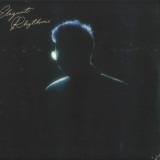
Back yard - Back yard is the first single from the new Teen Daze album, Elegant rhythms, and features singer-songwriter Andy Shauf on drums, and LA jazz staple, Sam Wilkes, on bass. This is a stark change in sound for Teen Daze, who’s last album Interior was an exploration of neon-lit House music. Back yard is a mellow groover, conjuring up images of Laurel Canyon in the 70s, yet still with its flourishes of contemporary sounds.
We’re out of phase again - We’re out of phase again is another vulnerable glimpse into the inner world of Teen Daze, and marks the release of his most personal album to date, Elegant rhythms. In contrast to the synthesized, digital world of his prior album, Interior, here we’ve been brought into a lush, organic arrangement, brought to you in large part to the stunning bass playing by Sam Wilkes. While the verses pulse forward, the chorus slows things down, and evokes the sophisti-pop sounds of The Blue Nile. This track is a stunning showcase of the world of Elegant rhythms.
Nothing’s gonna change my love - Teen Daze returns with his second single of the year, Nothing’s gonna change my love. The stark change in sound, as heard on previous single Back yard, is on display here again: a smouldering, 2 and a half minutes of slow jazz-pop, indebted to the great Sade, or perhaps the feeling of leaving downtown LA at 2 AM. Lyrically, we hear a story of a love, challenged by the unpredictable nature of our lives. This may be Teen Daze’s smoothest song to date.
Neighbourhood - Neighbourhood is the third single from the recently announced LP from Teen Daze, Elegant Rhythms. Along with Andy Shauf on the drums, and Sam Wilkes on the bass, Teen Daze gives us a languid tour of his quiet neighbourhood. The sun has set on the pleasant, tree-lined streets, and a stranger, more surreal environment presents itself. The song plods forward at an extremely comfortable pace, held down by the paradoxically loose-yet-tight rhythm section. Lyrically, we walk around the Neighbourhood at night, and while the chorus reveals a type of sobriety, the vibe of the song makes it easy to feel a little…effected.
Fade away - Fade away sets the tone for Elegant Rhythm’s side B: a deeply personal, though somewhat veiled, confession of loss. How does it feel to grieve something that was never really here? A smouldering, slowly progressing first half erupts in synthetic noise, and then fades into the ether with it’s repeating refrain, “I can feel you / feel you fade away / when there’s nothing / nothing left to say”.
Fall ahead - A sweet piano tune which serves as a quiet break in the record, intended to help the listener reflect and take a moment of pause before we reach the final two songs on the album.
HST underwater - The penultimate track on the record tells a story where the narrator finds themself in an alien, yet oddly familiar place. Arpeggios soaked in crystal blue water flow through the stereo field, while the narrator, vocoded and drenched in autotune, searches for meaning and purpose in a confusing world. This is one of Teen Daze’s most cinematic, emotional songs yet.
In the rain - It’s never really made explicitly clear on this record, but a lot of these songs find Teen Daze wrestling with life as a new father, and this song, the final on the album, expresses the fears of generational trauma. A touching, tender ode to his children, we hear Teen Daze at his most personal and vulnerable. The falling rain surrounds some absolutely breathtaking bass playing from Sam Wilkes, and Teen Daze’s signature ambient keyboard sounds.
Radio Support: Ruf Dug (Soup To Nuts on NTS)
Break 3000 present this special vinyl re-issue of some much sought after Electro Clash classics from the period 1998-2003.
Available now on limited Red Marbled Vinyl for the first time again since almost 25 Years ago!
After the fast selling “Emolotion EP” on Italy’s “Mondo Phase” imprint and the “The Rise of Poseidon 1” on the Argentinian label “Calypso’s Dream” released last year we present you the final chapter of the early 00’s Electro and Electro Clash gems produced by Break 3000 while living in Maastricht and Cologne.
The first track is a remix made for the legendary “Pocketgame” label from Germany in 2003 that was run by Maru & Comix, released on the “We Are He-Man EP” by “STR & Tim Tycoon” that also featured a stellar “Legowelt” remix. This one is an absolute belter of a track and to this day is one of Break 3000’s favorite tunes he ever produced. Followed by the cool, dark and Cold-Wave’esque Electro cut “The Wait” that was released on a massive Compilation on “Pocketgame” that same year called “Bonuslevel One – North and South” with such amazing artists on it like “Steril”, “Ladytron”, “Mutron”, “Nitsch and Gleinser”, “Hong Kong Counterfeit” and of course the label heads “Maru & Comix”.
The B-side looks back in time even further. “Electric Blue” and “Spacemachinenreise” were released on “Meuse Muzique” from Maastricht and were on the “Maastricht-Liege EP” and the “Electric Kingdom EP” from 2002 and 2003. Lastly “Lectrolite #2” was released on a one-off vinyl release on Break 3000’s own “Casa Nova” imprint in 1999. And especially this tune marked the start of his Electro endeavors the following years.
So get your hands on these fine tunes once more with this special packaged and limited re-release. All tracks have been carefully re-mastered from the original tapes and sound better than ever! Play it LOUD!
All tracks are re-mastered by Salz Mastering in Cologne. Music, Photography & Art by Break 3000.
On this second delivery of Uruguayan Sound, Mephis presents us with two like-minded producers with a love for machines and their sound.
On the A side we have Elias Sternin, with his particular nostalgic, mysterious and trance-inducing sound. The EP opens up with Wah Wah y Phaser, evoking the feeling of a spaceship lifting off, into the big Other. Bass rolls into the stratosphere, whilst sharp and poignant synths push us past the space rubble that surrounds our planet. The second Track is a proper mood work, landing us in an uncharted yet familiar alien landscape. You can breathe the mystery in, whilst closing your eyes and embracing the unknown.
On the B side we continue travelling through a path of esoteric and questioning vibes. Artesano Titer delivers an ominous mind trip with Science to Music, an utterly mesmerising soundscape to question yourself and your Umwelt. Closing off the EP, we have White Rabbit, a profoundly narcotic trip to the centre of our own perception. Slides, breaks, smooth lines and an acidic bass that spiral down to the core of the self.
Detective of Perspective; Need to try and get a bigger eye, Open wide.