
Cerca:sect various
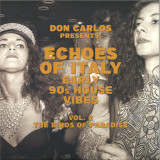
- A1: Montego Bay - Everything (Paradise Mix) 04 59
- A2: Atelier - Got To Live Together (Club Mix) 06 06
- A3: Golem - Music Sensations 04 56
- B1: The True Underground Sound Of Rome Feat. Stefano Di Carlo - Gladiators 05 26
- B2: Eagle Parade - I Believe 04 26
- C1: Dj Le Roi - Bocachica (Detroit Version) 05 28
- C2: Green Baize - Synthetic Rhythm 01 41
- C3: M.c.j. Feat. Sima - Sexitivity (Deep Mix) 05 30
- D1: Kwanzaa Posse Feat. Funk Master Sweat - Wicked Funk (Afro Ambient Mix) 06 31
- D2: Progetto Tribale - The Bird Of Paradise 06 29
- D3: Mbg - The Quite 06 59
11
disponibile anche
Vol 1[28,99 €]
Googling “paradise house”, the first results to pop up are an endless list of European b&b’s with whitewashed lime façades, all of them promising “…an unmatched travel experience a few steps from the sea”. Next, a little further down, are the institutional websites of a few select semi-luxury retirement homes (no photos shown, but lots of stock images of smiling nurses with reassuring looks). To find the “paradise house” we’re after, we have to scroll even further down. Much further down.
It feels like yesterday, and at the same time it seems like a million years ago. The Eighties had just ended, and it was still unclear what to expect from the Nineties. Mobile phones that were not the size of a briefcase and did not cost as much as a car? A frightening economic crisis? The guitar-rock revival?! Certainly, the best place to observe that moment of transition was the dancefloor. Truly epochal transformations were happening there. From America, within a short distance one from the other, two revolutionary new musical styles had arrived: the first one sounded a bit like an “on a budget” version of the best Seventies disco-music – Philly sound made with a set of piano-bar keyboards! – the other was even more sparse, futuristic and extraterrestrial. It was a music with a quite distinct “physical” component, which at the same time, to be fully grasped, seemed to call for the knotty theories of certain French post-modern philosophers: Gilles Deleuze, Félix Guattari, Paul Virilio... Both those genres – we would learn shortly after – were born in the black communities of Chicago and Detroit, although listening to those vinyl 12” (often wrapped in generic white covers, and with little indication in the label) you could not easily guess whether behind them there was a black boy from somewhere in the Usa, or a girl from Berlin, or a pale kid from a Cornish coastal town.
Quickly, similar sounds began to show up from all corners of Europe. A thousand variations of the same intuition: leaner, less lean, happier, slightly less intoxicated, more broken, slower, faster, much faster... Boom! From the dancefloors – the London ones at least, whose chronicles we eagerly read every month in the pages of The Face and i-D – came tales of a new generation of clubbers who had completely stopped “dressing up” to go dancing; of hot tempered hooligans bursting into tears and hugging everyone under the strobe lights as the notes of Strings of Life rose up through the fumes of dry ice (certain “smiling” pills were also involved, sure). At this point, however, we must move on to Switzerland.
In Switzerland, in the quiet and diligent town of Lugano, between the 1980s and 1990s there was a club called “Morandi”. Its hot night was on Wednesdays, when the audience also came from Milan, Como, Varese and Zurich. Legend goes that, one night, none less than Prince and Sheila E were spotted hiding among the sofas, on a day-off of the Italian dates of the Nude Tour… The Wednesday resident and superstar was an Italian dj with an exotic name: Don Carlos. The soundtrack he devised was a mixture of Chicago, Detroit, the most progressive R&B and certain forgotten classics of old disco music: practically, what the Paradise Garage in New York might have sounded like had it not closed in 1987. In between, Don Carlos also managed to squeeze in some tracks he had worked on in his studio on Lago Maggiore. One in particular: a track that was rather slow compared to the BPM in fashion at the time, but which was a perfect bridge between house and R&B. The title was Alone: Don Carlos would explain years later that it had to be intended both in the English meaning of “by itself” and like the Italian word meaning “halo”. That wasn’t the only double entendre about the song, anyway. Its own very deep nature was, indeed, double. On the one hand, Alone was built around an angelic keyboard pattern and a romantic piano riff that took you straight to heaven; on the other, it showcased enough electronic squelches (plus a sax part that sounded like it had been dissolved by acid rain) to pigeonhole the tune into the “junk modernity” section, aka the hallmark of all the most innovative sounds of the time: music that sounded like it was hand-crafted from the scraps of glittering overground pop.
No one knows who was the first to call it “paradise house”, nor when it happened. Alternative definitions on the same topic one happened to hear included “ambient house”, “dream house”, “Mediterranean progressive”… but of course none were as good (and alluring) as “paradise house”. What is certain is that such inclination for sounds that were in equal measure angelic and neurotic, romantic and unaffective, quickly became the trademark of the second generation of Italian house. Music that seemed shyly equidistant from all the rhythmic and electronic revolutions that had happened up to that moment (“Music perfectly adept at going nowhere slowly” as noted by English journalist Craig McLean in a legendary field report for Blah Blah Blah magazine). Music that to a inattentive ear might have sounded as anonymous as a snapshot of a random group of passers-by at 10AM in the centre of any major city, but perfectly described the (slow) awakening in the real world after the universal love binge of the so-called Second Summer of Love.
For a brief but unforgettable season, in Italy “paradise house” was the official soundtrack of interminable weekends spent inside the car, darting from one club to another, cutting the peninsula from North to centre, from East to West coast in pursuit of the latest after-hours disco, trading kilometres per hour with beats per minute: practically, a new New Year’s Eve every Friday and Saturday night. This too was no small transformation, as well as a shock for an adult Italy that was encountering for the first time – thanks to its sons and daughters – the wild side of industrial modernity. The clubbers of the so-called “fuoriorario” scene were the balls gone mad in the pinball machine most feared by newspapers, magazines and TV pundits. What they did each and every weekend, apart from going crazy to the sound of the current white labels, was linking distant geographical points and non-places (thank you Marc Augé!) – old dance halls, farmhouses and business centres – transformed for one night into house music heaven. As Marco D’Eramo wrote in his 1995 essay on Chicago, Il maiale e il grattacielo: “Four-wheeled capitalism distorts our age-old image of the city, it allows the suburbs to be connected to each other, whereas before they were connected only by the centre (…) It makes possible a metropolitan area without a metropolis, without a city centre, without downtown. The periphery is no longer a periphery of any centre, but is self-centred”.
“Paradise house” perfectly understood all of this and turned it into a sort of cyber-blues that didn’t even need words, and unexpectedly brought back a drop of melancholic (post?)-humanity within a world that by then – as we would wholly realise in the decades to come – was fully inhuman and heartless. A world where we were all alone, and surrounded by a sinister yellowish halo, like a neon at the end of its life cycle. But, for one night at least, happy."

- A1: Commands – Hey It's Love
- A2: Little Jr. Jesse & The Tear Drops – Give Your Love To Me
- A3: Tonettes – I Gotta Know
- A4: Doc & Sal – Can't Get You Offa My Mind
- A5: Commands – I've Got Love For My Baby
- A6: Willie Cooper & The Webs – You Don't Love Nobody
- A7: Little Jr. Jesse & The Tear Drops – Ain't No Big Thing
- B1: Commands – No Time For You
- B2: Webs – Little Girl Blue
- B3: Tonettes – My Heart Can Feel The Pain
- B4: Doc & Sal – Cry & Wonder Why
- B5: Commands – Don't Be Afraid To Love Me
- B6: Willie Cooper & The Webs – I Can't Take No More
- B7: Don & The Doves – Together
- C1: Webs – Don't Ever Hurt Me
- C2: Commands – Must Be Alright
- C3: Bobby Blackmon & The Soul Express – She's Gotta Have Soul
- C4: Doc & Sal – Laughing To Keep From Crying
- C5: Webs – Try Loving Me
- C6: Commands – Too Late To Cry
- C7: Doc & Sal – My Dream
- D1: Little Jr. Jesse & The Tear Drops – If You Don't Love Me
- D2: Webs – Can't Let You Go
- D3: Commands – A Way To Love Me
- D4: Little Jr. Jesse & The Tear Drops – It Keeps Rainin
- D5: Don & The Doves – I Need You
- D6: Bobby Blackmon & The Soul Express – You'll Find Another
- D7: Commands – Around The Go-Go
Whipped up in the dust of Rene & Rene’s Tejano tornado “Angelito,” the Dynamic label was just one among San Antonio record and real estate mogul Abe Epstein’s enterprises. Dynamic’s flagship outfit, the Commands, marched “No Time For You” up to the middle of the charts in 1966 with performance chops honed jet-sharp by the demanding Air Force Base circuit. That take off paved a runway for 20 more soulful Dynamic singles over an impressive 30-month campaign. Epstein’s open-door policy brought a diverse cross-section of Texas talent into convergence within his General McMullan Drive studio, as whites, blacks, and Latinos alike suited up for service in whichever new group the call of duty called for. Epstein’s Alamo City melting pot is ladled out here in 21 (28 on the 2LP) of Dynamic’s most intriguing dishes by the Tonettes, Little Jr. Jesse & the Tear Drops, Don & the Doves, Willie Cooper & the Webs, Bobby Blackmon & His Soul Express, and Doc & Sal. Lone Star pic sleeves, full-color dancehall photography, and rich ephemera plant a new flag for soul in soil that’s seen its share of hoisted banners.

- Don't Be Afraid To Love Me
- I Can't Take It No More
- Together
- Don't Ever Hurt Me
- Must Be Alright
- She's Gotta Have Soul
- Laughing To Keep From Crying
- Try Loving Me
- Too Late To Cry
- My Dream
- If You Don't Love Me
- Can't Let You Go
- A Way To Love Me
- It Keeps Rainin
- I Need You
- You'll Find Another
- Around The Go-Go
- Hey It's Love
- Give Your Love To Me
- I Gotta Know
- Can't Get You Offa My Mind
- I've Got Love For My Baby
- You Don't Love Nobody
- Ain't No Big Thing
- No Time For You
- Little Girl Blue
- My Heart Can Feel The Pain
- Cry & Wonder Why
Whipped up in the dust of Rene & Rene's Tejano tornado "Angelito," the Dynamic label was just one among San Antonio record and real estate mogul Abe Epstein's enterprises. Dynamic's flagship outfit, the Commands, marched "No Time For You" up to the middle of the charts in 1966 with performance chops honed jet-sharp by the demanding Air Force Base circuit. That takeoff paved a runway for 20 more soulful Dynamic singles over an impressive 30-month campaign. Epstein's open-door policy brought a diverse cross-section of Texas talent into convergence within his General McMullan Drive studio, as whites, blacks, and Latinos alike suited up for service in whichever new group the call of duty called for. Epstein's Alamo City melting pot is ladled out here in 21 (28 on the 2LP) of Dynamic's most intriguing dishes by the Tonettes, Little Jr. Jesse & the Tear Drops, Don & the Doves, Willie Cooper & the Webs, Bobby Blackmon & His Soul Express, and Doc & Sal. Lone Star pic sleeves, full-color dancehall photography, and rich ephemera plant a new flag for soul in soil that's seen its share of hoisted banners.

5
Welcome to 'Instrumental Dubs #3', the ongoing series that delves into the world of the Dub Version and beyond. Side one explores the axis of UK Street Soul and Reggae with the opening two tracks produced by Howard Hill and originally released on his Passion Enterprises label in the late eighties. Both 'Versions' have a machine lead rhythm section paired with a reggae skank and snippets of soulful vox. The Proto House of Protek's 'I Love to Dance With You' featured on a Jura Soundsystem DJ Mix for Planet Trip, a one off single from the now sadly deceased Errol Parkes that's been re-edited with love by The Nightlark from Edinburgh.
The B side features The Cool Notes 'Natural Energy', which isn't strictly speaking a Dub Version, but it has that vibe with a primarily instrumental backing track featuring sparse vocals and spacey FX. The album closes with a secret weapon of Ilija Rudman 'Dub 4 Love' that pays homage to a famous track from Acid House's heyday.
Pressed on 180g Heavyweight Vinyl with full sleeve jacket design by Bradley Pinkerton.

- A1: Progetto Tribale - The Sweep
- A2: Onirico - Echo Giomini
- A3: Open Spaces - Artist In Wonderland
- B1: Alex Neri – The Wizard (Hot Funky Version)
- B2: M C.j. Feat. Sima - To Yourself Be Free - Instrumental Mix Energy Prod
- B3: Mato Grosso - Titanic Expande
- C1: Dreamatic - I Can Feel It (Part 1)
- C2: Carol Bailey - Understand Me Free Your Mind (Dream Piano Remix)
- C3: The True Underground Sound Of Rome - Secret Doctrine
- D1: Don Carlos - Boy
- D2: Lazy Bird – Jazzy Doll (Odyssey Dub)
11
disponibile anche
Vol 2[28,99 €]
Volume 1 of this expertly curated project of 90s Italian House - put together by Don Carlos.
If Paradise was half as nice… by Fabio De Luca.
Googling “paradise house”, the first results to pop up are an endless list of European b&b’s with whitewashed lime façades, all of them promising “…an unmatched travel experience a few steps from the sea”. Next, a little further down, are the institutional websites of a few select semi-luxury retirement homes (no photos shown, but lots of stock images of smiling nurses with reassuring looks). To find the “paradise house” we’re after, we have to scroll even further down. Much further down.
It feels like yesterday, and at the same time it seems like a million years ago. The Eighties had just ended, and it was still unclear what to expect from the Nineties. Mobile phones that were not the size of a briefcase and did not cost as much as a car? A frightening economic crisis? The guitar-rock revival?! Certainly, the best place to observe that moment of transition was the dancefloor. Truly epochal transformations were happening there. From America, within a short distance one from the other, two revolutionary new musical styles had arrived: the first one sounded a bit like an “on a budget” version of the best Seventies disco-music – Philly sound made with a set of piano-bar keyboards! – the other was even more sparse, futuristic and extraterrestrial. It was a music with a quite distinct “physical” component, which at the same time, to be fully grasped, seemed to call for the knotty theories of certain French post-modern philosophers: Gilles Deleuze, Félix Guattari, Paul Virilio... Both those genres – we would learn shortly after – were born in the black communities of Chicago and Detroit, although listening to those vinyl 12” (often wrapped in generic white covers, and with little indication in the label) you could not easily guess whether behind them there was a black boy from somewhere in the Usa, or a girl from Berlin, or a pale kid from a Cornish coastal town.
Quickly, similar sounds began to show up from all corners of Europe. A thousand variations of the same intuition: leaner, less lean, happier, slightly less intoxicated, more broken, slower, faster, much faster... Boom! From the dancefloors – the London ones at least, whose chronicles we eagerly read every month in the pages of The Face and i-D – came tales of a new generation of clubbers who had completely stopped “dressing up” to go dancing; of hot tempered hooligans bursting into tears and hugging everyone under the strobe lights as the notes of Strings of Life rose up through the fumes of dry ice (certain “smiling” pills were also involved, sure). At this point, however, we must move on to Switzerland.
In Switzerland, in the quiet and diligent town of Lugano, between the 1980s and 1990s there was a club called “Morandi”. Its hot night was on Wednesdays, when the audience also came from Milan, Como, Varese and Zurich. Legend goes that, one night, none less than Prince and Sheila E were spotted hiding among the sofas, on a day-off of the Italian dates of the Nude Tour… The Wednesday resident and superstar was an Italian dj with an exotic name: Don Carlos. The soundtrack he devised was a mixture of Chicago, Detroit, the most progressive R&B and certain forgotten classics of old disco music: practically, what the Paradise Garage in New York might have sounded like had it not closed in 1987. In between, Don Carlos also managed to squeeze in some tracks he had worked on in his studio on Lago Maggiore. One in particular: a track that was rather slow compared to the BPM in fashion at the time, but which was a perfect bridge between house and R&B. The title was Alone: Don Carlos would explain years later that it had to be intended both in the English meaning of “by itself” and like the Italian word meaning “halo”. That wasn’t the only double entendre about the song, anyway. Its own very deep nature was, indeed, double. On the one hand, Alone was built around an angelic keyboard pattern and a romantic piano riff that took you straight to heaven; on the other, it showcased enough electronic squelches (plus a sax part that sounded like it had been dissolved by acid rain) to pigeonhole the tune into the “junk modernity” section, aka the hallmark of all the most innovative sounds of the time: music that sounded like it was hand-crafted from the scraps of glittering overground pop.
No one knows who was the first to call it “paradise house”, nor when it happened. Alternative definitions on the same topic one happened to hear included “ambient house”, “dream house”, “Mediterranean progressive”… but of course none were as good (and alluring) as “paradise house”. What is certain is that such inclination for sounds that were in equal measure angelic and neurotic, romantic and unaffective, quickly became the trademark of the second generation of Italian house. Music that seemed shyly equidistant from all the rhythmic and electronic revolutions that had happened up to that moment (“Music perfectly adept at going nowhere slowly” as noted by English journalist Craig McLean in a legendary field report for Blah Blah Blah magazine). Music that to a inattentive ear might have sounded as anonymous as a snapshot of a random group of passers-by at 10AM in the centre of any major city, but perfectly described the (slow) awakening in the real world after the universal love binge of the so-called Second Summer of Love.
For a brief but unforgettable season, in Italy “paradise house” was the official soundtrack of interminable weekends spent inside the car, darting from one club to another, cutting the peninsula from North to centre, from East to West coast in pursuit of the latest after-hours disco, trading kilometres per hour with beats per minute: practically, a new New Year’s Eve every Friday and Saturday night. This too was no small transformation, as well as a shock for an adult Italy that was encountering for the first time – thanks to its sons and daughters – the wild side of industrial modernity. The clubbers of the so-called “fuoriorario” scene were the balls gone mad in the pinball machine most feared by newspapers, magazines and TV pundits. What they did each and every weekend, apart from going crazy to the sound of the current white labels, was linking distant geographical points and non-places (thank you Marc Augé!) – old dance halls, farmhouses and business centres – transformed for one night into house music heaven. As Marco D’Eramo wrote in his 1995 essay on Chicago, Il maiale e il grattacielo: “Four-wheeled capitalism distorts our age-old image of the city, it allows the suburbs to be connected to each other, whereas before they were connected only by the centre (…) It makes possible a metropolitan area without a metropolis, without a city centre, without downtown. The periphery is no longer a periphery of any centre, but is self-centred”.
“Paradise house” perfectly understood all of this and turned it into a sort of cyber-blues that didn’t even need words, and unexpectedly brought back a drop of melancholic (post?)-humanity within a world that by then – as we would wholly realise in the decades to come – was fully inhuman and heartless. A world where we were all alone, and surrounded by a sinister yellowish halo, like a neon at the end of its life cycle. But, for one night at least, happy.

- A1: Prequel - Nothing Better
- A2: Silentjay X Jace Xl - Just Waking Up
- B1: Dan Kye - Change
- B2: Mallard - Surface
- B3: Duke Hugh - Zoe
- C1: Ruf Dug Presents The Committee - Down 2 It (Feat Watson)
- C2: Vels Trio - The Wad
- D1: Paula Tape - Astroturismo
- D2: Nicola Cruz - Surface Tension
- D3: Special Feelings - Down Goose
- E1: Retiree - Pumice Stone (Boulderhead Remix)
- E2: Local Artist - Feelings (Joey G Ii X Klein Zage Mapped Remix)
- E3: Jerome Thomas - Secret (Saul Remix)
- F1: Mmyykk - Science (Session Victim Remix)
- F2: The Colours That Rise - Deep Space (Private Joy Funk Joint)
- F3: Cato - 1 Man (Tone Remix)
- G1: Hiatt Db - Every Daybreak (Fyi Chris Remix)
- G2: Klein Zage - Prince (Gallegos Park Street Tube Mix)
- H1: 30/70 - Misrepresented (30/70 Jungle Flip)
- H2: Wallace - Whirl (Ruf Dug Remix)
- I1: Retromigration & Monty Dj - Tornado
- I2: Bamao Yende & Low Jack - Collina 4Am
- I3: Roni - Angel
- J1: Gayance, Magi Merlin & Funkywhat - Collect$$$Save
- K1: Douniah & Dhanya - A Fever Dream
- K2: Nitai Hershkovits & Rejoicer - Oye Igal
- L1: Frank Liin - 60 Chemical (Dub)
- L2: Cousin Kula - Pixie Prog
- J2: Pinty & Tomos - Want U Too (Feat Ell Murphy)
- J3: Dj Pitch & Mle - Hit From The Right
30
Rhythm Section International, the impossible-to-define label founded in South East London by Bradley Zero in 2014 has reached the ripe old age of 10 years.Spanning 6 discs and 30 tracks, the compilation begins by taking us on a walk down memory lane and presenting one track from each year of the labels output
Rhythm Section International, the impossible-to-define label founded in South East London by Bradley Zero in 2014 has reached the ripe old age of 10 years. Funny thing is, it feels like it could have been almost double that. It’s hard to imagine the Landscape of the London music scene without this foundational force whose influence is felt more than ever.
With this special anniversary release, the label takes stock at this milestone to present a compilation in 3 parts: PAST, RE-IMAGINED AND FUTURE: honouring the labels tradition of always paying homage to what has come before while setting sights firmly forwards.
With 100-odd releases in their extended back catalogue covering every imaginable style and boasting influence in every inhabited continent on earth, it’s been quite a decade for the independent label, which began on a shoestring budget with funds made via the now legendary Rhythm Section pool hall parties in Peckham.
From humble beginnings to an era defining output - few would have predicted the slow and steady rise of the imprint and the impact it has had on generations of Dj’s, musicians and listeners - at home and abroad.
Spanning 6 discs and 30 tracks, the compilation begins by taking us on a walk down memory lane and presenting one track from each year of the labels output - highlighting some forgotten classics from the archives over the first 2 discs. For discs 3 & 4, the label invited it’s stable of artists to pick a track from the back catalogue to re-imagine in their own style. This process resulted in some incredibly playful contributions from the likes of Ruf Dug, Session Victim and Private Joy - whose playful reinterpretations add new depth to old material.
Finally, the last 2 discs are entirely new material for 2024, carrying the torch of the previous SHOUTS compilations - whose sole aim is to shine light on new music from emerging artists

- A1: Heaven, Or Paradise; And Hell (Ft Adrien Soleiman)
- A2: Our Dead Can’t Rest (Old Jugha Flute Dance)
- A3: Miracle
- A4: The Crane Has Lost Its Way Across The Heaven
- A5: Unraveling (Interlude)
- B1: Zephyr
- B2: Far From The Eye, Far From The Heart
- B3: What Solace Can I Give (Ft Adrien Soleiman)
- B4: …Nothing Matters More Than Touching You Although I Haven’t Touched You Yet
9
Lara Sarkissian’s long-awaited debut full-length, ‘Remnants’ is an ornate patchwork of ancient and modern sonic shapes that uses the vernacular of electronic music to reformulate Armenian traditions and memories. Taking digitally modeled instruments (such as the kanun, a large zither, and the duduk, an ancient double reed woodwind instrument), vocals, davul and dhol drums, tenor saxophone (from acclaimed Paris-based player Adrien Soleiman) and myriad electronic elements and techniques, Sarkissian tangles the old and the new, creating an immersive, narrative-driven experience that’s powered by history, mythology and her own familial connection to the West Asian landscape. It’s an album that’s best absorbed like a film; only multiple encounters can reveal its layered themes and references to industrial music, noise, various club styles, ambient and traditional folk.
Born and raised in San Francisco and currently based in Los Angeles, Sarkissian has developed her unique approach to composition over years of relentless experimentation across various disciplines. Her interest in music production initially stemmed from her filmmaking and video editing work, when she began to sculpt her own sound collages and scores to accompany the visuals. Since then, she’s constantly blurred the boundary between dance and experimental music, DJing around the world, producing AV installations and scoring film and video projects that have been exhibited in Berlin’s Gropius Bau, Montréal’s Musée d’art contemporain, the Music Center Los Angeles and other prestigious institutions, and releasing music with labels such as Tresor, Knekelhuis, All Centre, Silva Electronics and CLUB CHAI, the label and event series she co-founded. In recent years, she’s also been able to advance the theory behind her art, publishing a conversation with ethnomusicologist Sylvia Alajaji in the Journal of the Society of Armenian Studies in 2021, and unveiling her methodology in Norient’s ‘This Track Contains Politics – The Culture of Sampling in Experimental Electronica’ a year later.
‘Remnants’ is a new stage in Sarkissian’s evolution as an artist; not only is it her first proper album, but it’s the inaugural release on her new platform btwn Earth+Sky. She sees the label as a place to encourage collaborations between musicians and producers and prioritize sound in visual arts realms, and ‘Remnants’ is the ideal proof of concept. It opens with ‘Heaven, or Paradise; and Hell’, a track that’s inspired by the layout of the Armenian sharakan (or hymn) ‘Aravot Luso’. Sarkissian imagines the original piece’s harmonies and melodies as parts of a dreamy electronic opera, using digital kanun sounds to punctuate her woozy, evocative synths. Soleimen joins on tenor sax in the third act, while Sarkissian repeats the chant and Jace Akira adds ghostly traces of electric guitar and bass. And on the rousing ‘Our Dead Can’t Rest (Old Jugha Flute Dance)’, Sarkissian chops urgent davul and dhol drum rhythms with spine-chilling shvi woodwind sounds lifted from a documentary about Old Jugha. The title is a reference to the moving of graves by Armenian families; the area initially housed over 10,000 elaborately carved khachkars (cross stones), one of which is pictured on the album’s cover, provided by historian Argam Aivazian’s archive.
On ‘Miracle’, Sarkissian samples atmospheres from the post-Soviet Armenian comedy film ‘Կիսանդրի’ (Kisandri). She takes this opportunity to lighten the mood a little, powdering her smudged samples with tightly edited breaks and bass thumps. It’s not until the album’s middle section that the duduk, perhaps Armenia’s best-known instrument, makes its appearance. Its familiar reedy tones, popularized by Djivan Gasparyan on his many Hollywood soundtrack appearances, emerge on ‘Unraveling (Interlude)’, weaving through the acidic ‘Zephyr’ and ‘Far from the eye far from the Heart’, a post-punk inspired stomper. Sarkissian mutates the instrument almost beyond recognition, pitching and layering it into a voice-like wail that creeps between her woody, dancefloor-primed percussion on the former, and turning it into a gentle, ghostly moan on the latter. And she brings ‘Remnants’ to a close with two of her most cryptic tracks, marrying digital kanun strings with Soleiman’s resonant tenor hums on ‘What Solace Can I Give’, and looping the same saxophone sounds until they dissolve into the air on the beatless closer ‘…nothing matters more than touching you although i haven’t touched you yet’.
It’s an album that ties up Sarkissian’s various interests and experiences, finding a romantic, poetic glimmer of light in history’s darkness. But most of all, ‘Remnants’ is about the optimism of starting anew, and rebuilding a life from the pieces of everything that’s been left behind.

2024 Repress
“Live at Sound City” is an instrumental collaboration between bassist Pino Palladino, guitarist/multi-instrumentalist/producer Blake Mills, and LA-based saxophonist Sam Gendel. Recorded in one day at the legendary Sound City Studios in Van Nuys, the EP presents new versions of compositions from Palladino & Mills’ Grammy-nominated 2021 album “Notes with Attachments” in an intimate chamber trio setting. Across four tracks, the accomplished trio explores common musical vocabularies, then goes about the work of defamiliarizing them in search of something new, blending the sounds of West African and Cuban music, jazz, R&B, English folk, pop, and beyond.
Pino Palladino is a Grammy Award winning songwriter, producer and bassist who helped create the rhythm-section sound of D’Angelo’s Voodoo and Black Messiah, and over a four-decade career has worked with artists including Keith Richards, Erykah Badu, Eric Clapton, Nine Inch Nails, Questlove, John Mayer, Paul Simon, Jeff Beck, Herbie Hancock and Adele.
Blake Mills is a two-time Grammy Awards Producer of the Year nominee. He has released four solo albums and produced and recorded with artists such as Alabama Shakes, Fiona Apple, Bob Dylan, John Legend, Perfume Genius, Jim James, Moses Sumney, Laura Marling, Phoebe Bridgers, Cass McCombs, The Killers, Sara Bareilles, Weyes Blood and Randy Newman. His most recent album Mutable Set, released last year, was praised by Pitchfork as “a hushed collection that floats through the subconscious like a tender dream,” and earned their Best New Music title.
Sam Gendel is a musician living in Los Angeles, CA. He is most known for his work with the saxophone, though he is proficient on multiple instruments. His work is diverse and includes collaborations with a wide range of artists including Ry Cooder, Laurie Anderson, Mach-Hommy, Sam Amidon, Perfume Genius, Moses Sumney, Knower, Vampire Weekend, and inc. no world.

Introducing the Headliner R4, a 4-channel analog rotary mixer
designed to elevate your DJ experience. Continuing the
tradition of precision, warmth, and affordability, the R4 is
packed with enhanced features and top-notch components,
including genuine ALPS potentiometers, ensuring an unparalleled mixing experience.
Crafted with four Line inputs, three Phono inputs, and one
Mic input on four stereo channels. Each channel boasts
essential features like gain control with peak LED, a 3-band
isolator EQ, headphone cue selector, generous channel volume
knob, and a filter activation switch, granting DJs precise control
over their sound.
At the heart of the R4 lies the Master channel, equipped with
an analog filter, headphone monitoring, and a comprehensive output control section.
Seamlessly toggle between High Pass / Low Pass Filter modes
with Frequency and Resonance controls to shape your signature sound.
Featuring independent Master and Booth outputs, both
equipped with volume controls and balanced XLR and
unbalanced RCA connectors, the R4 ensures seamless connectivity across various sound systems. Dual LED level meters for the Master output facilitate precise monitoring and
adjustment of audio levels. Additionally, the mixer boasts a
dedicated Record output with unbalanced RCA jacks, and an
additional microphone input with level control located on the
front panel.
The Headliner R4 stands as a testament to precision and
warmth in the DJ realm. Whether spinning house, techno, or
the timeless funk/soul/disco beats, this versatile mixer elevates
your setup, ensuring your mixes stand out with exceptional
quality and control
• Three stereo channels with selectable Line and Phono RCA inputs and one channel with selectable stereo Line and mono Microphone.
• Each channel features Gain control with Peak LED, 3-Band Isolator EQ, Headphones Cue selector with LED, channel
volume control and filter activation switch with LED.
• Master channel features analog filter, headphone monitoring and output control section.
• Analog filter features selectable High Pass / Low Pass Filter modes with Frequency and Resonance controls.
• Genuine ALPS potentiometers.
• Headphone Cue control section features headphones volume control, headphones mix control (Cue/Master), and split
monitor switch.
• High current headphone amplifier with dual 1/4” and 1/8” jacks.
• Independent Master and Booth outputs with volume controls, balanced XLR outputs and unbalanced RCA outputs.
• Additional Record output with unbalanced RCA jacks.
• Dual LED level meters for the Master output.
• Microphone input with level control on front panel.
• Sturdy metal enclosure with stained wood side panels for a classic look
• Modular internal construction for superior audio performance
• External split rail power supply connected via locking Mini XLR connector.
• Push-button power switch on rear panel
Microphone Input
Nominal Input Level: -50dBu
Frequency Response: 20Hz – 20kHz (+/- 0.1dB)
THD + N: 100dB (A-Weighted)
Crosstalk: 100dB
Übersprechen: < -65dB
THD + N: < 0,05%
Kopfhörerausgang
Maximaler Ausgangspegel: 70mA/Kanal in 150Ω
Minimale Lastimpedanz: 32 Ohm/Kanal
Stromversorgung
Typ: Extern mit verriegelbarem Mini-XLR-Stecker
Eingangsspannung: 100-240v ~ 50/60Hz
Ausgangsspannung: +/-15V; 500mA
Spezifikationen:
Abmessungen: 320 x 310 x 106 cm / Gewicht: 3,5 kg

- Kelly Moran - Heart Thread
- Brad Oberhofer - I Hugged A Clown In My Dream
- Alan Wyffels - Intermezzo
- Laaraji - Waltz Life
- Alice Boman - 17
- Ml Buch - Getting To Know Each Other
- The Kimba Unit - Three Sundays
- Mark William Lewis - Josh, This Is Lin, I Accidentally Left My Documents In Your Car Yesterday
- Matthew Tavares - Cool Piano Vibe
- Hand Habits - Not Worth The Lie
- Youth Lagoon - The Harvest
- Ichiko Aoba - 2024-06-13 03.33
Am 22. November veröffentlicht section1 eine Sammlung von Soloklaviermusik - 'piano1' enthält Original-Solostücke von 12 Künstlern, darunter Kelly Moran, Hand Habits, Youth Lagoon und andere.
Die Songs auf 'piano1' betonen die Schönheit und heilende Kraft der Klaviermusik und bewegen sich zwischen zeitgenössischer Klassik, Experimentalmusik und Ambient.
Die Compilation stellt sowohl die beteiligten Künstler vor als auch das Klavier als Instrument und die Art und Weise, wie verschiedene Künstler ihre kreative Beziehung zu diesem Instrument gestalten. Das berühmte Zitat von Brian Eno („as ignorable as it is interesting“) diente als Leitfaden für die Auswahl der Beiträge.

- Del Marista Daktar
- Bones Brigade Shuffle
- Skateboard Blues
- Future Primitive (Skateboard Blues Ii)
- Roll Daddy Roll
- Calling All Cars
- Airborne
- One, Two, Three, Four
- Big Dog
- Condemned
- Animal Chin Intro
- Chin Ramp Section 1
- Chin Ramp Section 2
- Chin Ramp Section 3
- S.f. Street Skating 1
- S.f. Street Skating 2
- Blue Tile Lounge
- Pink Motel Pool
- Chin Ramp Section 4
- S.f. Street Skating 3
- End
- Skate & Create
- Mctwist And Shout
- Skateboard Shuffle
- Raddy Daddy
25
Remember Bones Brigade Video Show, Future Primitive, Animal Chin featuring the skating of Tony Hawk, Steve Caballero, Tommy Guerrero, Mike McGill, and more? How many times did you and your friends watch these videos? Over and over and over. Did you know there was also original music by various artists playing while you watched these videos? This is the first ever vinyl pressing, double black and red vinyl gatefold jacket with mp3 download card and 2-sided fold out poster. You will instantly be transported back to this visual feast of skating, or if these videos are new to you, you will fall in love with the music from these classic skate videos.

“Überkeine underlines his inclination towards textured techno drifts with this second Ep. Four tracks designed for the club, designed for motion, stirring up disorder on the dancefloor. Aggressive Starter, as its name implies, lays the foundations of the record with assertiveness.
Infatuated with Broken beat techno debauchery, Überkeine continues
experimenting the relationship between kick drum layers and synthetic rambunctious sounds. Revolving around a simple yet effective loop, this track toggles between various stages of distortion bringing emotions through force and discharge. Piggyback Ride brings us into a wavering and unhealthy yet very danceable chamber of depravity.
Energetic, odd and straightforward, the track is divided into two different sections acting as trauma resolving pieces of cake. Radical Jazz starts the B side with ruthless energy, delivering a noteworthy slap dipped in lunatic infringement. A not so sorry, carnal bassline, that hits you in the guts, right where it belongs. Techno with a lack of boundaries. Last but not least, Atomic moog’s proficiency in making deep and spaced out techno acts as leverage for the record. A breath of fresh-air, dedicated to the after-hours. Solid, dubbed-out and delectable piece of equipment. Black and clear “split effect” vinyl, each record is unique !”

"One of the best bands to come out of NYC since who gives a shit." -CVLT Nation. When you enter White Hills' lair in Brooklyn, the duo's insatiable desire for music and art is immediately palpable. Crates of vinyl from floor to ceiling line the long hallway. Guitars appear at every angle, one lying across a sofa in obvious mid-play with others in cases tucked beside amplifiers into every conceivable corner. Synthesizers and cables cover the purple satin bed while gouache paintings in various stages of progress strewn the floor. Album covers, movie posters, books, paintings, prints and souvenirs of subversive culture occupy the remaining wall space. A sanctuary of adoration, creation and imagination, it's also the nerve center of their record label Heads on Fire Industries and the site where the final mixes of their latest album Beyond This Fiction took shape. For nearly two decades, White Hills have been blowing minds with their sonic alchemy: a unique mix of neo-psychedelia, art rock, and post-punk- at once original and recognizable. Their cult reputation emblazoned in celluloid following their performance in Jim Jarmusch's sultry vampire romance Only Lovers Left Alive, the duo has toured vigorously since their inception. With a vast catalogue that astounds and a relentless punk ethos, time seems to energize the duo, making them increasingly daring and prolific. "Music creates a bliss beyond sex and drugs," professes one-woman rhythm section Ego Sensation. "We'll never stop making music. It's the highest high to be had in life." Founding member Dave W, whose signature other-worldly guitar sorcery defines the White Hills sound, grabs his Les Paul to record a melody lingering in his head from last night's dream before it escapes. Outside, the sound of passing sirens, honking horns and bits of conversation remind you that you're in the middle of New York, a city so flush with rock legacy and artistic innovation it would take lifetimes to drink it all in. A voice from outside shouts, "This shit is going for 3! These people got to be out of their fucking minds!" Dave shakes his head and laughs, "There's no place I'd rather be." Committed to a vocation marked by extremes, doubt, struggle and moments of ecstasy, Dave and Ego continue this torrid affair with music bearing their latest fruit Beyond This Fiction. Inspired by the ideas of Joseph Campbell, the writer/philosopher known for the book The Power of Myth, the album explores the idea of "riding between opposites"- forging one's own path unrestrained by the dualistic constraints of society. It's a cry to all the seers among us- call us outsiders or rebels- who feel smothered by convention and see nonconformity as the gateway into divine mystery. Recorded with Martin Bisi, known for his iconic NYC sound developed through his work with no-wave titans Sonic Youth, Swans and Lydia Lunch, Beyond This Fiction sees Dave W (guitar/vocals/synths) and Ego Sensation (drums/bass/vocals) orchestrating their distinct guitar heavy meditations into songs with a stronger focus on vocals than previous albums. Opener "Throw It Up In The Air" and closer "Beyond This Fiction" both have a lush quality that flirts with shoegaze. "Killing Crimson", a song that takes inspiration from Killing Joke and King Crimson, has a driving beat and a catchy hook that begs for a sing-a-long. "The Awakening" plunges into the meditative ambient abyss the band is well known for, featuring the unique voice of frequent collaborator poet Dan McGuire to deliver the meaning behind Beyond This Fiction. The album harnesses the seductive accessibility of 2015's Walks For Motorists while evoking the tempestuous soul of the band's seminal 2011 H-p1. Notorious shapeshifters, White Hills make Beyond This Fiction a familiar surprise. Back in the lair, Dave draws eyes on his hands in preparation for the day's video shoot. Ego reaches in the closet pulling out the red velvet jacket she wears on the cover of Beyond This Fiction where she stands in a NYC alley holding a glowing orb. "That's the portal- the gateway into the mystery. The music will take you there.".

- Throw It Up In The Air
- Clear As Day
- Killing Crimson
- Fiend
- Closer
- The Awakening
- Beyond This Fiction
disponibile anche
CLOUDY SEA BLUE VINYL[28,53 €]
"One of the best bands to come out of NYC since who gives a shit." -CVLT Nation. When you enter White Hills' lair in Brooklyn, the duo's insatiable desire for music and art is immediately palpable. Crates of vinyl from floor to ceiling line the long hallway. Guitars appear at every angle, one lying across a sofa in obvious mid-play with others in cases tucked beside amplifiers into every conceivable corner. Synthesizers and cables cover the purple satin bed while gouache paintings in various stages of progress strewn the floor. Album covers, movie posters, books, paintings, prints and souvenirs of subversive culture occupy the remaining wall space. A sanctuary of adoration, creation and imagination, it's also the nerve center of their record label Heads on Fire Industries and the site where the final mixes of their latest album Beyond This Fiction took shape. For nearly two decades, White Hills have been blowing minds with their sonic alchemy: a unique mix of neo-psychedelia, art rock, and post-punk- at once original and recognizable. Their cult reputation emblazoned in celluloid following their performance in Jim Jarmusch's sultry vampire romance Only Lovers Left Alive, the duo has toured vigorously since their inception. With a vast catalogue that astounds and a relentless punk ethos, time seems to energize the duo, making them increasingly daring and prolific. "Music creates a bliss beyond sex and drugs," professes one-woman rhythm section Ego Sensation. "We'll never stop making music. It's the highest high to be had in life." Founding member Dave W, whose signature other-worldly guitar sorcery defines the White Hills sound, grabs his Les Paul to record a melody lingering in his head from last night's dream before it escapes. Outside, the sound of passing sirens, honking horns and bits of conversation remind you that you're in the middle of New York, a city so flush with rock legacy and artistic innovation it would take lifetimes to drink it all in. A voice from outside shouts, "This shit is going for 3! These people got to be out of their fucking minds!" Dave shakes his head and laughs, "There's no place I'd rather be." Committed to a vocation marked by extremes, doubt, struggle and moments of ecstasy, Dave and Ego continue this torrid affair with music bearing their latest fruit Beyond This Fiction. Inspired by the ideas of Joseph Campbell, the writer/philosopher known for the book The Power of Myth, the album explores the idea of "riding between opposites"- forging one's own path unrestrained by the dualistic constraints of society. It's a cry to all the seers among us- call us outsiders or rebels- who feel smothered by convention and see nonconformity as the gateway into divine mystery. Recorded with Martin Bisi, known for his iconic NYC sound developed through his work with no-wave titans Sonic Youth, Swans and Lydia Lunch, Beyond This Fiction sees Dave W (guitar/vocals/synths) and Ego Sensation (drums/bass/vocals) orchestrating their distinct guitar heavy meditations into songs with a stronger focus on vocals than previous albums. Opener "Throw It Up In The Air" and closer "Beyond This Fiction" both have a lush quality that flirts with shoegaze. "Killing Crimson", a song that takes inspiration from Killing Joke and King Crimson, has a driving beat and a catchy hook that begs for a sing-a-long. "The Awakening" plunges into the meditative ambient abyss the band is well known for, featuring the unique voice of frequent collaborator poet Dan McGuire to deliver the meaning behind Beyond This Fiction. The album harnesses the seductive accessibility of 2015's Walks For Motorists while evoking the tempestuous soul of the band's seminal 2011 H-p1. Notorious shapeshifters, White Hills make Beyond This Fiction a familiar surprise. Back in the lair, Dave draws eyes on his hands in preparation for the day's video shoot. Ego reaches in the closet pulling out the red velvet jacket she wears on the cover of Beyond This Fiction where she stands in a NYC alley holding a glowing orb. "That's the portal- the gateway into the mystery. The music will take you there.".

4
We interrupt our regular Drum Chums programming to bring you a little V/A tackle via the 'Percussion Pals' project.
These razor sharp cuts come from friends near and far, old and new, each one primed to upgrade your record collection.
Debuts abound on the A-side, first via international man of mystery DJ Poufsouffle and his Balea-rock disco stomper "Totally Manic". Brimming with Flash & The Pan style pub-rock wonk this one boasts a growling vocal, sparkling keys and an uplifting chorus which doesn't quite break the spell of extreme silliness.
On the A2, Bristol's Spice Route rescue a nebulous reggae gem from Library obscurity, swinging the scalpel and working the desk to turn out an unstoppable groover.
Built around an irresistible rhythm section, "Gruler Dub" keeps on getting higher as the space-based vocals and trilling synths turn your brain inside out.
The B1 brings the return of Drum Chum extraordinaire Neil Diablo, who follows the Balearic brilliance of his last label outing with a cosmic caper into pure oddball pop. "Starry Night" slinks along in a chromed out catsuit, purring weirdo vocals over robo-chug and mechanical drums before indulging in a catchy chorus packed with addled innuendo. Not only is this as arch as Gina X doing a forward fold, but it also boasts some serious bass weight in the later stages - you have been warned.
We're delighted to finally feature a little magic from Australian Italo wizard Hysteric, who brings the curtain down in utterly emotional fashion via AOR disco dream "Pinball". A steady beat, infectious bassline and glistening chords play host to a swooning vocal, which reminds us to go with the flow and follow fun at all times.
100% Drum Fun Guaranteed.

- A1: What A Cute Man - Max Romeo
- A2: Do Your Thing - Roland Alphonso & Don Lee
- A3: Boss Cocky - The Hotrod All Stars
- A4: The Whip - Winston Williams
- A5: Earthquake - Winston Scotland
- A6: Joe Lewis - Bunny Lee All Stars
- A7: Walk Through This World - Doreen Schaffer
- B1: Call On Me - U Roy
- B2: Welcome To Reggae City - Val Bennet
- B3: Devil’s Playground - Bunny Lee All Stars
- B4: Run For Cover - Lee Perry
- B5: In The Mood For Horns - Roland Alphonso
- B6: Chain Gang - Winston Francis
- B7: The Vow - Slim Smith & Doreen Schaffer
The early Reggae sound that came out of Jamaica between the years 1968 and 1971 became the soundtrack to the skinhead movement in the UK. Not only was the music embraced but also the dress style of the Jamaican Rude Boys.
The skinhead style started around 1968 and by the following year 1969, had become the style and fashion of the British teenagers. The uniform of the skinheads consisted of boots, braces, button down shirts and jeans and the upbeat reggae sounds seemed to match the style perfectly. The tempo of the music in Jamaica had previously slowed down from the more up tempo beat of Ska to the calmer pace of beat called Rock Steady. Some say this was to match the extreme heat wave that was hitting the island between 1966 and 1968. But that period had now passed and the evolution of the Reggae beat had again found a new pulse to hang its songs by. A more up tempo beat that all Jamaicans, British youths and various pockets of people around the world could groove to.
We have selected a cross section of tunes from those heady times, so sit back and enjoy some of the tunes the youths were listening to when the Skinhead Shuffle was all the rage. Hope you enjoy the set….

This latest installment of Mr. K Edits focuses on two midtempo cuts for the roller skaters and lowdown groovers, with a couple of deep album tracks that are appearing on 7-inch for the first time — both with unique Mr. K edits.
First up is “Felix Leo” from Californian keyboardist Rodney Franklin. A subtle instrumental that was overshadowed at the time by the monster hit “The Groove” (also known to UK’s jazz dancers as The Freeze), “Felix Leo” is that creeper that makes its way into your consciousness and won’t let go. As he so often does, Mr. K trims the track to its leanest, meanest measures, starting directly from the menacing, hypnotic chord progression that forms the root of the composition. Proceeding at a stately leonine pace befitting the title, the song spirals beautifully, as a lush string section encourages the listener to get lost in the unfolding sonic textures.
“In Love” is a very early Prince track, in fact it’s the very first cut in which we hear Prince play instruments on his debut album, released in 1978. And play instruments he does, every single one of them — drums, bass, guitar, and above all, those creamy ARP and Moog synth lines that power this tune. Bouncing along on a rhythm that blends a solid four-on-the-floor stepper’s groove with a hint of the staccato upbeats of reggae, this one’s an easy warmup for dancers and a perfect tempo for skaters. Mr. K’s edit gives us the extended mix the album never did, adding nearly two minutes to the LP timing without ever feeling strained or repetitive.
“I learned both of these songs for roller skaters in my early Roxy days,” Krivit says, referring to the legendary downtown NYC roller rink, “both had those grooves that stood the test of time.” We think this exclusive 7-inch will do the same!
As always, these are mastered and cut to vinyl with both home hi-fis and club systems in mind, and the sound is unmatched.

- Roland Alphonso - Live Desire (Trombone Version)
- The Skatalites - Live Wire
- Lynn Taitt - Ska-Ta-Shot (Take 2)
- Roland Alphonso - Step Down (Low Riff)
- Jackie Mittoo - Warlock
- Roland Alphonso - Determination (Take 2)
- Roland Alphonso - Determination (Take 5)
- Don Drummond - Love In The Afternoon
- Roland Alphonso - El Cid (Take 4)
- Johnny Moore - Red Is Danger (Take 3)
- Roland Alphonso - V.c.10 (Take 3)
- Johnny Moore - Yogi Man (Take 1)
- Roland Alphonso - Tough Talk (Take 1)
- Roland Alphonso - Tough Talk (Take 4)
14
“On August 5th 1962, after 300 years of British rule, which had soaked the earth of the island in blood, Jamaica was finally independent. The country that the British left behind was certainly a place of widespread poverty and deep inequality, but there seems to have been a real burst of confidence that came with independence. Newsreels of the day show well-dressed crowds reacting with enthusiasm and excitement, and the era found its perfect soundtrack in the boldness and exuberance of ska music, which was erupting all over the island.
This optimistic mood found probably its greatest artistic expression in the music of the Skatalites, who formed in June 1964 as a kind of Jamaican supergroup. Philip “Justin” Yap was a young, upcoming producer who had used members of the Skatalites for his first tunes, recorded either at RJR (Radio Jamaica and Redifussion) or at Federal studios. As Steve Barrow documented in the sleevenotes for Pressure Sounds’ reissue of the classic “Ska-Boo-Da-Ba” album, Justin had also befriended Clement “Coxsone” Dodd, and when Coxsone opened his own Studio One facility in December 1963, Justin immediately switched most of his production work to this new recording room. Studio One opened just in time to catch the formation of the Skatalites, and is where Justin recorded most of his classic Skatalites sides. He also recorded lots of excellent instrumentals with a smaller brass section, still mainly using members of the Skatalites, but crediting instead the composer or arranger of the tune. Combined with Coxsone’s own recordings, these productions for Justin’s Top Deck and Tuneico labels really captured the members of the Skatalites at their magnificent best in the unique atmosphere of Studio One.”

8
Tilman offers up his new album ‘The Spirit Continues’ via his own Pleasant Systems this June, comprised of ten original compositions. Since 2008, the German producer Tilman has been honing his craft in House music through numerous EP’s on various respected labels and here we see him deliver his fourth long player. Taking in§uence from 80s NYC protogarage and Nu Groove’s era of deep house Tilman creates a collection of works which encapsulate the essence of his sound and history with House music over the past two decades, embracing a raw yet dreamy aesthetic throughout. Across the ten tracks Tilman employs sturdy, jacking rhythm sections, ethereal atmospherics, bumpy bass lines, shimmering chord sequences, infectious vocals and enchanting top lines culminating in somatic ecstasy.
