This self-titled LP marks the fifth release of Scottish artist Murray Collier’s Dip Friso project, his longest running alias and the solitary vanguard of his own Real Landscape imprint. Across the six tracks he delivers another collection of warped percussive loops, heavily manipulated guitar work and psychedelic sound experiments that drift between popular music forms ('I’ll Get to Hiding') and whittled down takes on electric blues and shoegaze ('Another Country’). The former features the instantly recognisable croon of Still House Plants vocalist Jess HK embellishing a backdrop of tape loop alchemy, an inspired pairing given the shared history of Glasgow dwelling. ‘Thin Ayrshire’ (written with Hannan Jones) treads a similar path with Collier’s own beyond-unrecognisable voice featuring, broken suddenly by a brief flash of 12th Isle’s Loris S. Sarid & Innis Chonnel’s ‘Spalted Water Portal’ thanks to a recycled tape spool. ‘A Sorry Business’ takes on avant-jazz inspired puddle skronk, a stunted casio bleep propelling forward guitar dirge and cymbal crashes, whilst Australian minimal wave heroes The Systematics are paid homage via a farewell cover of their track ‘Midnight on Balancing Day’ (here ‘Midnight’).
All in, the album sees the project incorporating more instrumentation and a full use of vocalists, leaning less heavily on gauzy sample collage styles and providing a more introspective look at the hazy, dubwise world Collier has been building for the past half a decade.
Cerca:see f
Introducing ‘SONGS ABOUT THE SUN’ by ELWD. The London-based producer, commonly known for his signature sample style blended with live instrumentation, presents six new beats. Inspired by how the sun has always been a constant throughout his life and the nostalgia of a time when life seemed carefree, he unveils a new powerful and vitamin D-infused sound. ‘COSMIC CHAMELEON’ is a house gem that blends Balearic vibes with jazzy instrumentation, making it the perfect song to accompany a sunny, carefree day.
Leng’s San Francisco connection has long been strong, with the 40 Thieves collective – and their friend Cole Odin – providing some of the label’s most memorable releases of the last decade. That Bay Area connection comes to the fore once more on the imprint’s latest release, which sees Odin join forces with fellow San Francisco resident Marshall Watson, a long-serving producer, engineer and live performer known globally for his Balearic-minded productions.
‘Voyager’, the pair’s first collaborative single, is a genuine meeting of minds. It combines Odin’s love of low-slung dub disco, dancefloor psychedelia and low-tempo cosmic house with Watson’s
picturesque Balearic synths, sparkling piano riffs and immersive sound design. It’s this blend that dominates on the EP-opening Original Mix, an infectious workout that gets progressively more blissed-out and saucer-eyed as it progresses. Listen carefully and you’ll hear some suitably psychedelic guitar solos nestling amongst the heady washes of sound, sun-bright piano riffs and weighty bass.
Those languid, stretched-out guitar parts naturally take a more prominent role on the Extended
Guitar Mix. On this alternative take, the pair deliver a lightly tweaked take on the original groove, stretching it out while overlaying eyes-closed guitar solos, pots-and-pans percussion and a more DJ-friendly outro. It’s effectively an extended club mix – the club in question being a Bay Area basement at 5am. To round off the EP, Odin and Watson dust off their dancing shoes and pay tribute to San Francisco great Patrick Cowley. On the appropriately titled Cosmic Rave Mix, the pair swap their bass guitar for a pulsating sequenced bassline, trance-inducing synth sounds, and locked-in electronic loops designed to take you to a higher state of consciousness. By the time the track’s familiar piano refrain drops midway through, you’ll be reaching for the lasers in no time at all.
Pique is the sensational debut solo album from Dora Morelenbaum, one of the key talents spearheading Brazil’s new musical wave. A member of the Latin Grammy award-winning band, Bala Desejo, Dora showcases a new side to her solo productions on this special LP. Whereas Dora’s first solo EP, Vento de Beirada, was a leap of faith, Pique sees her soaring as one of Brazil’s standout stars, emboldened, emphatic but ever elegant. Building bridges between past and present, it’s a funkier, more groove-based affair, weaved together with those signature, slower, celestial tracks. Touching on disco, MPB, soul, R&B and jazz, the album is enriched with an indie pop aesthetic courtesy of fellow Brazilian star and co-producer, Ana Frango Elétrico.
With an ethereal, enveloping air few can match, Dora’s gift shines through both the serene and the spirited songs contained within. The blissful, sun-soaked ‘Não Vou Te Esquecer’ opens, before the funk-fuelled, feel-good ‘Venha Comigo’ and ‘Sim, Não.’ give a glimpse of the creativity bursting from the production partnership between Dora and Ana Frango Elétrico. Elsewhere, the album reclines into hazy lean-back realms via ‘A Melhor Saída’ and ‘Petricor’, virtuoso jazz funk in the form of ‘VW Blue’ and radiant MPB through the album’s title track ‘Pique’.
The drumming is tight, fresh and swung, the horns and strings deftly arranged, as funk-driven basslines and strutting guitars mesh with playful production touches that give an added vibrancy to the record. It is an album that exhibits every side of Dora and one she has been involved in from the ground up, from the songwriting, singing, arrangement and production to booking the studio time and sourcing the artwork designer, Maria Cau Levy.
An exchange of musical ideas powers every great scene and Rio’s contemporary landscape is no different - a family of interconnected musicians and friends that collaborate on each other’s productions. Pique is graced by a wealth of these leading Brazilian lights including her Bala Desejo bandmates Lucas Nunes, Julia Mestre and Zé Ibarra, as well as Guilherme Lirio, Alberto Continentino and Tom Veloso to name just a handful. This exchange crosses generations merging tradition with modernity. In a full circle moment, Dora’s parents Paula and Jaques Morelenbaum, who featured in countless recordings from Tom Jobim's Nova Banda and Ryuichi Sakamoto to Gal Costa and Gilberto Gil, join on the album through backing vocals and arrangement.
Pique sees Dora embrace a freedom through fresh forms, showcasing the depth and diversity of her creative artistry. An infinitely listenable release that nods to Brazilian greats like Gal Costa, Banda Black Rio and Lincoln Olivetti, fused with the indie pop edge of Ana’s production. The result is truly unique and sure to be a future Brazilian classic.
For number 84 in the Brazil 45 Series, we head to the North of Brazil with this dancefloor monster, double-sider by Magalhães & Os Panteras.
'Xangô' by Magalhães is taken from his 'E Sua Guitarra' album, from 1986, and originally released on Gravasom Records. A stunning, driving Lambada track with haunting vocals and a compelling gusto energy. It has been gaining popularity over recent years with DJs and is a sure-fire get-out-of-jail dancefloor saver.
On the flip, we find another biggy from Os Panteras, 'Lambada Pauleira’. Also released on Gravasom Records, but a year later in 1987. It is best known for Joutro Mundo's fine re-edit of the track, but here we have it in its original form, in all its quirky brilliance. It is easy to see why, over the years, it has been a staple of some of Brazil's finest DJs’ sets, such as Augusto Olivani (aka Trepanado).
We are super happy to present these two red-hot tracks back-to-back. Now let the dancefloors return so we can heat things up!
- Next installment in BRAZIL 45 Series.
- Two dancefloor focussed cuts.
- Sought-after original of an edit made famous by Joutro Mundo.
- A1: Rockin' Stroll
- A2: Confetti
- A3: It's A Shame About Ray
- A4: Rudderless
- A5: My Drug Buddy
- A6: The Turnpike Down
- B1: Bit Part
- B2: Alison's Starting To Happen
- B3: Hannah & Gabi
- B4: Kitchen
- B5: Ceiling Fan In My Spoon
- B6: Frank Mills
- C1: Mrs Robinson
- C2: Shakey Ground
- C3: My Drug Buddy (Kcrw Session)
- C4: Knowing Me, Knowing You
- C5: Confetti (Acoustic)
- C6: Alison´s Starting To Happen (Acoustic)
- C7: Divan
- D1: It´s A Shame About Ray (Demo)
- D2: Rockin´stroll (Demo)
- D3: My Drug Buddy (Demo)
- D4: Hannah & Gabi (Demo)
- D5: Kitchen (Demo)
- D8: Ceiling Fan In My Spoon (Demo)
- D9: Confetti (Demo)
- D6: Bit Part (Demo)
- D7: Rudderless (Demo)
Lemonheads’ seminal album ‘It’s A Shame About Ray’, lovingly reissued for it’s 30th Anniversary. The long overdue reissue includes a slew of extra material, including an unreleased ‘My Drug Buddy’ KCRW session track from 1992 featuring Juliana Hatfield, B-sides from singles ‘It’s A Shame About Ray’ and ‘Confetti’, a track from the ‘Mrs. Robinson/Being Round’ EP, alongside demos that will be released for the first time on vinyl. This reissue celebrates their prestigious fifth album, these deluxe bookback editions feature new liner notes and unseen photos.
Described by music journalist and author Everett True as “A 30-minute insight into what it’s like to live hard and fast and loose and happy with like-minded buddies, fuelled by a shared love for similar bands and drugs and booze and freedom.”. ‘It's A Shame About Ray’ had a considerable impact back in those heady, carefree days of '92, the record perfectly captures Dando’s ability to effortlessly encapsulate teenage longing and lust over the course of a two-minute pop song.
Singles such as 'My Drug Buddy' and the breezy perfect pop of the title track might stand out (plus the add-on of 'Mrs. Robinson' which later copies included), but the album's real strength lies in the tracks in-between; the truly fantastic 'Confetti' (written about Evan's parents' divorce), and the eye-wateringly casual acoustic cover of 'Frank Mills' (from the "hippie" musical Hair), a version that seems to resonate with every ounce of pathos and emotion felt for the lost 1960s generation. To hear Evan Dando sing lines like 'I love him/but it embarrasses me/To walk down the street with him/He lives in Brooklyn somewhere/And he wears his white crash helmet' is to truly appreciate how wonderful and tantalising pop music can be. Then, there's the rush of insurgency and brattishness on the wonderfully truncated 'Bit Part'; the topsy-turvy 'Ceiling Fan In My Spoon'... this was male teenage skinny-tie pop music on a level of brilliance with The Kinks, early Undertones, Wipers.
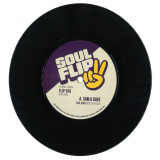
It's been a while, but after some significant restructuring behind the scenes, Soul Flip is back in the groove, with a fresh new look, and more sweet, soulful sounds.
Chapter 16 of the Soul Flip story sees Del Gazeebo breathe fresh life into a couple of absolute classics, steering them directly at the dancefloor.
First up for the Soul Flip treatment is Sam & Dave's "Soul Man", Del somehow making an already big tune even bigger, and very much more DJ-friendly.
On the flip, Del takes the O'Jays original version of "Now That We Found Love" & injects it with fresh energy. It also retains the glorious strings from the album version that was edited out from the original 7" (UK only) release.
Back in 2022, James Burnham aka Burnski started a White sub-series of his much-hyped Instinct label and the first one sold out as quick as a flash. Now he is finally back with a follow-up that will likely do the same. This limited one-sided 12" slab of sonic filth features just one tune, but what a tune it is. '02' is a house cut with elements of garage percussion, old-school dirty bass, and even some trance-infused chords that chime with what's going on in the dance world right now. Some return horns at the breakdown really send it into overdrive and it's not hard seeing this one blow the roof off many a club this summer.
Following the cult success of the first 2 EPs, Common Saints presents
the debut album "Cinema 3000". The theme continues, blending soul,
funk, and psychedelic influences, with the organic sound and rich
instrumentation that Common Saints has become known for.
Conceived in 2020 by writer/producer Charlie J Perry the production approach
for Commons Saints consists of him playing and recording real instruments in his
London home studio. One mike for the drums, his beloved piano and amps up
loud!
The album encapsulates the old school recording approach and musicianship the
discerning ear craves but with a more modern punch - a true sonic bath for all the
connoisseurs out there. Think, UK's equivalent to Tame Impala and Khruangbin.
The first EP "Idol Eyes" (2020) has seen 3 re-presses to date and is now selling at
multiples on Discogs. "Cinema 3000" is set to surpass expectations and is highly
anticipated within the Commons Saints community. The first LP pressing is on a
' blue meteorite splatter’ effect colour vinyl and will be limited to 2000 units
globally. Also available on CD, presented in a 6-panel digipak.
Shir Khan marks the 37th release on his infamous Black Jukebox imprint with an all-killer balearic house record courtesy of mysterious Cécille-affiliated Cabin Luv Affair hot on the heels of his debut album which has seen support from Fouk, Laurent Garnier, Jamie Jones, Mr. V and Archie Hamilton.
Here, the masked master lays out 4 convivial cuts that sit in a particular pocket between House and Disco; one that has historically been occupied by the likes of Pepe Bradock, Damiano Von Eckert and Andrés. A spot classically characterised by beautifully imperfect, sample-heavy productions that are shot through with palpable depth and soul.
The record sets sail with ’Te Siento’. Polyrhythmic percussion bubbles across the surface of a deep sonic pool that forms a bed for vivacious drums, romantic vocals and a spine-tingling strings riff. A hazy opening clears out before the backbone of recording shines through; an uplifting 90s piano motif that's later picked up by Xylophone tones while a tight, truncated bass line punches away at the track's core.
'Dance With Us' then rolls out a beautifully seductive mood. Softly shifting synth chords, a loose-limbed drum break and hedonic vocals whip up a hot and heavy vibe that shines with a distinctly Chicago-tinged elegance.
'Time Is Killing Us' follows up with an immaculately executed, 'last tune' House groove. A gentle but powerful euphoria is generated with swooning strings, more giddy piano riffs and another robust drum track that all gather momentum as progress rolls on. An ecstasy-crescendo forms before it crashes and fizzles before the lights go on.
'My Head Like Shibuya Crossing' then follows up with a tightly-knitted Deep House cut. Buttery melodies adorn an effortlessly kinetic bass groove before a delicate Japanese vocal bleeds into focus. As is the case with much of the record, the track graciously segues through its chapters with melody at the fore-front before bringing the record to a conclusion.
- Duke Ellington - Drop Me Off In Harlem 03:48:00
- Duke Ellington - I Let A Song Go Out Of My Heart 03:52:00
- Billy Strayhorn - Lush Life 06:40:00
- Duke Ellington - Come Sunday 04:57:00
- Duke Ellington - In A Mellow Tone 06:02:00
- Billy Strayhorn - Take The "A" Train 04:12:00
- Duke Ellington, Jonny Hodges, Don George, Harry James - I'm Beginning To See The Light 03:53:00
- Duke Ellington - Sophisticated Lady 04:19:00
- Duke Ellington, Don George - Ain't Got Nothing But The Blues 04:38:00
- Duke Ellington - I Got It Bad 06:20:00
- Duke Ellington, Billy Strayhorn - Satin Doll 03:56:00
Al Jarreau hat immer gesagt, dass er Al Jarreau-Musik singt, und er war wirklich einzigartig: Seine sechs Grammy-Awards und neunzehn Nominierungen als "Bester Sänger" decken nicht weniger als drei Kategorien ab – Jazz, Pop und R&B – mit anderen Worten, musikalische Genres interessierten ihn nicht wirklich. "Musik mag für andere Leute in Kategorien fallen, und ich verstehe das", sagte er, "aber für mich gilt: Wenn ich einen Song mag, muss ich ihn machen, und das war's. Wenn du zu meinen Konzerten kommst, setze ich mich auf deine Schulter und flüstere dir etwas ins Ohr. Ich öffne den Geist und gehe durch viele Türen." Diese Art von reichhaltigen, beschreibenden Bildern beschwört die Höhenflüge der stimmlichen Fantasie herauf, zu denen sein Gesang jederzeit fähig war. Er konnte einen Song plötzlich in neue und unerwartete Richtungen lenken. Er erklärte es immer so: "Wenn es ein Rückgrat für das gibt, was ich tue, dann ist es die Jazz-Umgangssprache."
Musik, Klänge und Rhythmus schienen ihn zu durchströmen, und das war kein Wunder. 1940 in eine musikalische Familie geboren, war er ein überdurchschnittlicher Student und schloss sein Studium mit einem Bachelor of Science in Psychologie und anschließend einem Master in beruflicher Rehabilitation ab. Und doch war die Musik nie weit von ihm entfernt. In den späten 1960er Jahren schloss er sich einem Trio an, das vom Pianisten George Duke geleitet wurde, und arbeitete daran, das Singen zu einer Vollzeitbeschäftigung in Los Angeles zu machen.
Zu diesem Zeitpunkt hörte ihn Siggi Loch, der damals ein hochkarätiger Manager bei Warner Brothers Records (WEA) war und später ACT Records gründete. "Ich sah Al Jarreau 1974 zum ersten Mal im Troubadour in Los Angeles und war sofort von seiner Stimme und seiner Bühnenpräsenz gefesselt", erinnert er sich. "Am nächsten Tag ging ich zu Mo Ostin, dem Präsidenten der WEA, um ihn davon zu überzeugen, ihn zu unterschreiben." Nach anfänglichen Widerständen erhielt Loch grünes Licht und 1975 erschien Jarreaus Debütalbum für WEA, "We Got By". "Ich habe Al nach Deutschland gebracht, bevor er in den USA Erfolg hatte", fährt Loch fort. "Al trat drei Nächte lang in Hamburg auf und ich schaffte es, Michael Naura, den Chef der Jazzabteilung des NDR, davon zu überzeugen, den dritten Abend für die Live-TV-Übertragung aufzunehmen." Diese Show machte Al über Nacht in Deutschland berühmt, und seitdem hat er immer einen besonderen Platz in den Herzen des deutschen Publikums. "We Got By" gewann den Preis der Deutschen Schallplattenkritik und seine erste Deutschlandtournee füllte große Konzertsäle.
Es folgte "Glow" (1976), das in Europa erneut gut ankam und einen zweiten Preis der Deutschen Schallplattenkritik gewann, in den USA aber nicht so gut ankam: "Das richtete sich an ein 'Smooth Jazz'-Publikum", so Loch. "Es hat Al nicht vor einem Live-Publikum eingefangen. Also bat ich darum, dass seine nächste Veröffentlichung ein Live-Album sein sollte. Mo Ostin stimmte widerwillig zu", und "Look to the Rainbow" wurde in Europa ein Riesenerfolg, "Als es in den USA veröffentlicht wurde, wurde es Al's Durchbruchsalbum und brachte ihm seinen ersten Grammy ein, also ist es wirklich richtig zu sagen, dass seine Karriere vor allem in Deutschland begann!", sagt Loch.
Jarreaus langjährige Zusammenarbeit mit dem NDR veranlasste Jörg Achim Keller, Chefdirigent der NDR Bigband, 2016 eine Zusammenarbeit mit dem Sänger vorzuschlagen: "Eine Produktion mit der Musik von Al und Ellington zu machen, war etwas, was ich schon seit Anfang der 2000er Jahre machen wollte", erinnert er sich. "Die Reaktion von Al war von Anfang an sehr positiv." Jörg bereitete eine Liste von einigen hundert Ellington-Titeln vor, und wie sich Jarreau später erinnerte: "Wir gingen einfach die Liste durch, und es war ein Fall von 'Oh, der funktioniert für mich' und 'Lass uns das als alten Darm-Blues machen – was für mich wichtig war, war, mich in der Musik wiederzufinden und vielleicht eine andere Art von Aussage über Ellington zu machen, damit die Leute die Musik auf eine andere Art und Weise hören konnten. alles, was sie vorher gehört hatten."
Beim Schreiben der Charts achtete Jörg darauf, Jarreaus Herangehensweise an das Material zu respektieren, indem er ihm Raum ließ. Tracks wie "I'm Beginning to See the Light" oder "I Got It Bad (and that Ain't Good)" geben den Solisten der Band ebenfalls Spielraum, um ihr Bestes zu geben. "Das sind hochentwickelte, intelligente Solisten, die mit jedem auf der Welt spielen können", sagte Jarreau. "Sie pushen mich, und ich liebe den Push, und sie lassen mich wie eine echte Sängerin klingen!"
Jarreau und die Band tourten in der zweiten Hälfte des Jahres 2016 mit der Musik, "Es gab immer noch einige Feinabstimmungen während der Tour, von Konzert zu Konzert", fügte Jörg mit einem Lächeln hinzu. "Er liebte es, diese Balladen zu singen – und jede hatte ein anderes Gefühl. "Am Sonntag" war ihm aber sehr wichtig. Diese Tabelle wurde zweimal überarbeitet, bevor er schließlich damit zufrieden war! Bei einigen Songs entschied er sich für einen reinen Balladenstil – 'I Got It Bad (and that Ain't Good)', einige Melodien wurden in eine Pop/R&B-Tasche gesteckt ('Lush Life', 'Come Sunday') und er liebte das 'Old Gutbucket Blues'-Feeling von 'I Ain't Got Nothing but the Blues'."
Rückblickend auf diese Sessions und Tour sagt Jörg: "Es waren Al's Stil und Persönlichkeit, die alles zusammenhielten. Das Ganze war eine echte Kombination aus der musikalischen Meisterschaft von Jarreau und Ellington – es hat das Publikum in ganz Europa angesprochen, sie liebten das Programm." Dieses Gefühl teilt auch Siggi Loch, der Jarreau mit der NDR Bigband in Paris erwischte: "Es war offensichtlich, dass er es wirklich genoss, diese Musik aufzuführen, und er tat es mit so viel Energie und Emotion, es war eine Freude zu sehen und zu hören. Leider verstarb Al nur wenige Monate später."
In vielerlei Hinsicht schließt sich mit "Ellington" ein Kreis: Es fühlt sich sehr richtig an, dass Jarreaus letztes Album auf ACT veröffentlicht wird, dem Label, das von Siggi Loch gegründet wurde, dessen starkes und unerschütterliches Eintreten für den Sänger ihn ursprünglich auf den Weg zum Superstar brachte. Und die Tatsache, dass es vom NDR und seiner hauseigenen Bigband aufgezeichnet wurde, ist eine passende Erinnerung daran, dass es sich um eben jenen Sender handelte, dessen TV-Sendung Jarreau einst über Nacht in Deutschland berühmt gemacht hatte. Darüber hinaus wurde "Ellington", genau wie "Look to the Rainbow", das Jarreaus internationales Durchbruchsalbum war, auch live aufgenommen. Manchmal gibt es Verbindungsfäden zwischen Ereignissen, die auf den ersten Blick in keinem Zusammenhang zu stehen scheinen, und das Ergebnis erweist sich nicht nur als besonders und magisch, sondern auch bedeutungsvoll und tief berührend. Das ist hier auf jeden Fall der Fall.
Stuart Nicholson, Musikjournalist und Autor
LIL PEEP; PART ONE war das erste große Projekt von Lil Peep, das in seinem Schlafzimmer in Long Island, New York entstand. Es markiert einen
bedeutenden Moment in Peeps Karriere, da es den Grundstein für seine einzigartige Mischung aus Emo, Punk und Hip-Hop legte. Das Projekt enthält
rohe, emotionsgeladene Texte gepaart mit eindringlichen Melodien, die Peps Kämpfe mit psychischer Gesundheit, Herzschmerz und
Drogenmissbrauch widerspiegeln.
Das Projekt enthält einige seiner populärsten Songs, darunter „Praying to the Sky“ und „The Way I See Things“. Außerdem enthält es einzigartige
Samples von Künstlern wie Thirty Seconds to Mars, Flyleaf, Lil B und dem Titelsong von Fullmetal Alchemist. Zur Feier des 9-jährigen Jubiläums wird
LIL PEEP; PART ONE auf Vinyl und CD veröffentlicht.
Camelot, the legendary seat of King Arthur's court in Early Middle Ages Britain, was probably not a real place. A corruption of the name of a real Romano-Briton city, the word "Camelot" accumulated symbolic, mythic resonances over centuries, until achieving its present usage as a near-synonym of "utopia." In the mid-20th century alone, Camelot inspired an explosion of representations and appropriations, among them the violent, affectless Arthurian court of Robert Bresson's 1974 film Lancelot du Lac and the absurdist iteration of Monty Python's 1975 Holy Grail, both of which feature armored knights erupting into fountains of blood; the mystical Welsh world of novelist John Cowper Powys's profoundly weird 1951 novel Porius, with its Roman cults, wizards and witches, and wanton giants; and the nationalist nostalgia of President John F. Kennedy's White House. Unsurprisingly there are fewer Camelots in more recent memory. Camelot, Canadian songwriter Jennifer Castle's extraordinary, moving 2024 chronicle of the artist in early middle age, charts a realer, more rooted, and more metaphorical place than the fabled Camelot of the Early Middle Ages (or its myriad depictions), but it too is a space more psychic than physical. In Castle's Camelot, the fantastic interpenetrates the mundane, and the Grail, if there is one, distills everyday experience into art and art into faith, subliming terrestrial concerns into sublime celestial prayers to Mother Nature, and to the unfolding process of perfecting imperfection in one's own nature. Co-produced by Jennifer and longtime collaborator Jeff McMurrich, her seventh record is at once her most monumental and unguarded to date, demonstrating a mastery of rendering her verse and melodies alike with crisply poignant economy. For all their pointedly plainspoken lyrical detail and exhilarating full-band musical flourishes, these songs sound inevitable, eternal as morning devotions. "Back in Camelot," she sings on the lilting, vulnerable title track, "I really learned a lot / circles in the crops and / sky-high geometry." The album opens with a candid admission of sleeping "in the unfinished basement," an embarrassing joke that comes true. But the dreamer is redeemed by dreaming, setting sail in her airborne bed above "sirens and desert deities." If she questions her own agency_whether she is "wishing stones were standing" or just "pissing in the wind"_it does not diminish the ineffable existential jolt of such signs and wonders. This abiding tension between belief and doubt, magic and pragmatism, self and other, sacred and profane, and even, arguably, paganism and monotheism, suffuses these ten songs, which limn an interior landscape shot through with sunstriped shadows of "multi-felt dimensions" both mystical and quotidian. The epic scale and transport of "Camelot," with its swooning strings, gives way dramatically to "Some Friends," an acoustic-guitar-and-vocals meditation in miniature on Janus-faced friends and the lunar and solar temperatures of their promises_"bright and beaming verses" versus hot curses_which recalls her minimalist last album, 2020's achingly intimate Monarch Season. (In a symmetrical sequencing gesture, the penultimate track, the incantatory "Earthsong," bookends the central six with a similarly spare solo performance and coiled chord progression, this time an ambiguous appeal to _ a wounded lover? a wounded saint? our wounded planet?) Those whom "Trust" accuses of treacherous oaths spit through "gilded and golden tooth"_cynics, critics, hypocrites, gurus, scientists, doctors, lovers, government, the so-called entertainment industry_sow uncertainty that can infect the artist, as in "Louis": "What's that dance / and can it be done? What's that song / and can it be sung?" Answering affirmatively are "Lucky #8," an irrepressible ode to dancing as a bulwark against the "tidal pools of pain" and the "theory of collapse," and "Full Moon in Leo," which finds the narrator dancing around the house with a broom, wearing nothing but her underwear and "big hair." But the central question remains: who can we trust, and at what cost faith, in art or angels or otherwise? Castle's confidence in her collaborators is the cornerstone of Camelot. Carl Didur (piano and keys), Evan Cartwright (drums and percussion), and steadfast sideman Mike Smith (bass) comprise a rhythm section of exquisite delicacy and depth. This fundamental trio anchors the airiness of regular backing vocalists Victoria Cheong and Isla Craig and frames the guitars of Castle, McMurrich, and Paul Mortimer (and on "Lucky #8," special guest Cass McCombs). Reprising his decennial role on Castle's beloved 2014 Pink City, Owen Pallett arranged the strings for Estonia's FAMES Skopje Studio Orchestra. On the ravishing country-soul ballad "Blowing Kisses"_Pallett's crowning achievement here, which can be heard in its entirety in the penultimate episode of the third season of FX's The Bear_Jennifer contemplates time and presence, love and prayer_and how songwriting and poetry both manifest and limit all four dimensions: "No words to fumble with / I'm not a beggar to language any longer." Such rare moments of speechlessness_"I'm so fucking honoured," she bluntly proclaims_suggest a state "only a god could come up with." (If Camelot affirms Castle as one of the great song-poets of her generation, she is not immune to the despairing linguistic beggary that plagues all writers.) Camelot evinces a thoroughgoing faith not only in the natural world_including human bodies, which can, miraculously, dance and swim and bleed and embrace and birth_but also in our interpretations of and interventions in it: the "charts and diagrams" of "Lucky #8," a daydreamt billboard on Fairfax Ave. in LA in "Full Moon in Leo," the bloody invocations of the organ-stained "Mary Miracle," and all manner of water worship, rivers in particular. (Notably, Jennifer has worked as a farmer and a doula.) The album ends with "Fractal Canyon"'s repeated, exalted insistence that she's "not alone here." But where is here? The word "utopia" itself constitutes a pun, indicating in its ambiguous first syllable both the Greek "eutopia," or "good-place"_the facet most remembered today_and "outopia," or "no-place," a negative, impossible geography of the mind. Utopia, like its metonym Camelot, is imaginary. Or as fellow Canadian songwriter Neil Young once sang, "Everyone knows this is nowhere." "Can you see how I'd be tempted," Castle asks out of nowhere, held in the mystery, "to pretend I'm not alone and let the memory bend?"
- Silent Night
- Lumberjack Christmas / No One Can Save You From Christmases Past
- Coventry Carol
- The Midnight Clear
- Carol Of St. Benjamin The Bearded One
- Go Nightly Cares
- Barcarola (You Must Be A Christmas Tree)
- Auld Lang Syne
- Christ The Lord Is Born
- Christmas Woman
- Break Forth O Beauteous Heavenly Light
- Happy Family Christmas
- Jingle Bells
- Mysteries Of The Christmas Mist
- Lift Up Your Heads Ya Mighty Gates
- We Wish You A Merry Christmas
- Ah Holy Jesus
- Behold! The Birth Of Man, The Face Of Glory
- Ding-A-Ling-A-Ring-A-Ling
- How Shall I Fitly Greet Tree?
- Mr. Frosty Man
- Make Haste To See The Baby
- Ah Holy Jesus
- Hark! The Herald Angels Sing
- Morning (Sacred Harp)
- Idumea (Sacred Harp)
- Eternal Happiness Or Woe
- Ah Holy Jesus (A Capella)
- I Am Santa's Helper
- Maoz Tzur" (Rock Of Ages)
- Even The Earth Will Perish And The Universe Give Way
- Angels We Have Heard On High
- Do You Hear What I Hear?
- Christmas In The Room
- It Came Upon The Midnight Clear
- Good King Wenceslas
- Alphabet St
- Particle Physics
- Joy To The World
- The Child With The Star On His Head
- Christmas Infinity Voyage
- I'll Be Home For Christmas
- Santa Claus Is Coming To Town
- The Sleigh In The Moon
- Sleigh Ride
- Ave Maria
- X-Mas Spirit Catcher
- Let It Snow! Let It Snow! Let It Snow!
- A Holly Jolly Christmas
- Christmas Face
- Have Yourself A Merry Little Christmas
- It Came Upon The Midnight Clear
- Up On The Housetop
- Angels We Have Heard On High
- We Need A Little Christmas
- Happy Karma Christmas
- We Three Kings
- Justice Delivers Its Death
- Christmas Unicorn
Feiern Sie die Weihnachtszeit mit der beliebten Weihnachtssammlung von Sufjan Stevens, ,Silver & Gold: Songs for Christmas, Vols. 6-10", die jetzt zum ersten Mal seit ihrer ursprünglichen Veröffentlichung 2012 wieder auf Vinyl im Handel erhältlich ist. Dieses umfangreiche Set enthält fast drei Stunden festliche Musik, darunter 18 Eigenkompositionen und kreative Interpretationen von Weihnachtsklassikern. Die 6-LP-Kollektion (vier Einzel-LPs und eine Doppel-LP) im Schuber zeigt Stevens' einzigartige Herangehensweise an Weihnachtsmusik, die Folk, Indie-Rock und experimentelle Klänge miteinander verbindet. Von intimen Weihnachtsliedern bis hin zu ausgedehnten Orchesterarrangements zeigt ,Silver & Gold" Stevens' künstlerische Vielseitigkeit und seinen kollaborativen Geist, was es zu einer unverzichtbaren Ergänzung jeder Weihnachtsmusiksammlung macht.
The 2015 edition of Winnipeg’s send + receive festival, focussed on rhythm, turned out to be a generative meeting of minds. There, Mark Fell encountered the music of Will Guthrie, a meeting that was eventually to result in the frenetic acoustic drumkit and digital synthesis pairing heard on Infoldings and Diffractions (2020). At the same festival, Limpe Fuchs first heard and appreciated the music of Mark Fell, planting the seed of a collaboration that came to fruition when Fell (along with his son Rian Treanor) visited Fuchs at her home in Peterskirchen, Germany in September 2022. Black Truffle is pleased to announce the release of the results of this extensive session in the audacious form of a triple LP, housing over two hours of music across its six sides. The collaboration might appear unlikely: what common ground could exist between Fuchs, classically trained pianist, legend of improvised music, instrument builder and sound sculptor active since the 1960s, whose group Anima Sound connected the dots between free jazz, krautrock and ritual, and Fell, proponent of radical computer music, known for his bracingly austere productions that twist remnants of club music into algorithmic stutters? For all their seeming disparity in technology, approach and background, the music on Dessogia/Queetch/Fauch makes it immediately evident the pair share a great deal in their essentially percussive approach and ability to, in Fuch’s phrase, ‘establish silence’. Recording at her home studio, Fuchs had the use of her entire array of instruments, found, invented, and traditional, and treats the listener to some that don’t often make their way to concerts, including extensive passages performed (with Gundis Stalleicher) on pieces of wooden parquetry. Alongside metallic, wooden and skin percussion of all kinds, sounded and struck in every conceivable way, we also hear bamboo flute, viola, and Fuchs’ distinctive free-form vocalisations. Fell also stretched himself, with his contributions ranging from characteristically fizzing pitched percussive pops to swarms of sliding tones and abstract digital noise. Showing both remarkable restraint and improvisational freedom, much of the music consists of duets between a single percussion instrument and a distinctive mode of digital sound, often lingering in one timbral-rhythmic space for minutes at a time. Improvisational forward momentum coexists with a free-floating, wandering quality. On opener ‘Dessogia I’, the shimmering almost-gilssandi tones of Fuchs’ enormous set of microtonally tuned metal tubes ripples across Fell’s rubbery pulse, which moves up the frequency spectrum as Fuchs becomes more animated and switches to horn. At some points, as on the metallic chiming tones that open ‘Fauch I’, only the unexpected dynamic behaviour of Fell’s sounds distinguish them from Fuchs’ acoustic instruments. At others, like on ‘Queetch III’, the waves of sliding tones and noise textures are bracingly synthetic, joined by piercing squeaks and scrapes from Fuchs’ metal objects. Epic in scope, immersing the listener in an entirely distinctive world of sounds, and thrillingly bold in its melding of the most ancient musical procedures with cutting edge technologies, Dessogia/Queetch/Fauch is an unexpected major statement from two of the great mavericks of contemporary music.
Arbes’ long-awaited debut album, "Counterways", exists on the cusp between the ethereal and the more attention-seeking concerns of pop. The record invites listeners into an unusual sonic world of atmospheric depth. Comparisons can be drawn to New York post-punk of a more colourful bent, running Blondie all the way through to Gang Gang Dance. The album's dream-pop dimension brings to mind Cocteau Twins, while its grittier, art-rock moments, coloured with ambience feels akin to Deerhunter. Glimmering flashes of psychedelia channels the likes of Melody's Echo Chamber.
The ten track album explores romantic dreaming and the struggle to (not) understand and to be understood. It memorialises glimmers of connection, discontentment and longing. Front woman Jess Zanoni’s soulful, oracular voice is anchored by the earthbound brambles of prickly guitar and brushstroke percussion, where all is tethered to a surface of unearthly detail and resonance. Written and recorded over a five year period (2017-2022), Arbes eke out every possible ounce of emotionality from their songs. Not to sedate, but to guide listeners somewhere unexpected, at the song or album's conclusion.
Black Vinyl[31,05 €]
"In a world where there are no more heroes, the Fleshtones walk the earth like Roman gods. Since their inception in 1976 in Queens, New York, and their sweaty, boozy gestation at legendary venues such as CBGB, Max’s Kansas City, and the storied Club 57— recently feted at the Museum of Modern Art, where their proto-video underground film “Soul City” was unspooled for art stars, glitterati, and a raft of punk rockers who managed to get past the front gate — they have perpetrated their proprietary brand of SUPER ROCK, a frenetic amalgam of garage punk and soul, punctuated by the big beat and unleashed with the spectacular show business majesty which has kept them on the road for over forty years, adored by audiences whose love for them borders on religious fervor.
It’s Getting Late (…and More Songs About Werewolves) is a smash that could have dropped at any point in their epic career — it is an outburst, and a celebration of the SUPER ROCK sound. Unlike their contemporaries, they have not dialed down the tempos to compensate for osteoporosis, they have not lost anything on their fastball, and continue to throw it for strikes. The hardest working band in garage rock has never sounded better, and now you see why they've been your favorite band's favorite band for decades."
Into The Woods is the fifth album from California-based quartet The Call, featuring the passionate singing and writing of Michael Been. The album was released in the US in 1987. While The Call’s earlier releases - notably The Call and Modern Romans - pointed out the world’s obvious problems, Into The Woods takes a more introspective look at life’s tougher personal questions. Into The Woods seems to be a study in contrast between beauty and danger where the imagery of the woods becomes a metaphor for self-examination.