Dark Evergreen VInyl. The odd couple of Kristian Dunn (El Ten Eleven) and Damon Che (Don Caballero) was the result of some clever musical matchmaking by Karl Hofstetter, founder and curator of Joyful Noise Recordings. Karl introduced Dunn and Che via email in April 2023 after Dunn's prolific output outgrew the resources and abilities of his instrumental duo El Ten Eleven. Less than a year later, after countless text messages and song sketches were exchanged, and one fateful meeting at a recording studio was organized, their nascent project's debut record, See You at the Solipsist Convention, was complete. Despite Che's initial unfamiliarity with Dunn's musical output, their personalities bridged any and all gaps_both Che and Dunn share a flair for the comically absurd and musically adventurous, a mindset that shines throughout See You at the Solipsist Convention. Che has become legendary for his calculated polyrhythms and undeniable physicality, while Dunn is known for relentless experimentation and productivity akin to a freight train. Quickly, the unlikely pair transformed into destined collaborators. Scaffolded around eight-string bass, knotty percussion, and intricate syncopation, See You at the Solipsist Convention is a carnival of delights for fans of the post-everything persuasion_uncategorizable yet reverent to the altar of instrumental rock. Beyond all measure, Yesness stands as a testament to the powerful dividends of friendship and collaboration. We are nothing without each other - our partners, our local record store clerks, our neighbors. Music, too, thrives on our entanglements. With twelve tracks, an upcoming tour, and an unexpected friendship stemming from one email, Yesness underscores the brilliant machinery of human connection.
Buscar:see know !
- White Trash Millionaire
- Killing Floor
- In My Blood
- Such A Shame
- Won't Let Go
- Blame It On The Boom Boom
- Like I Roll
- Can't You See
- Let Me See You Shake
- Stay
- Change
- All I'm Dreamin' Of
Coloured[34,41 €]
"Black Stone Cherry’s third album Between the Devil and the Deep Blue Sea offers another amount of fully loaded southern rock this bands well known for. The group was awarded the Best New Band at the Classic Rock Awards in 2007. The opening track of this record “White Trash Millionaire” refers to the celebrity culture and all the things that come with being famous. The dirty stomping riffs, melodic compositions, great vocal work and outstanding rhythms it's all here.
Between the Devil and the Deep Blue Sea is available as limited edition of 1000 individually numbered copies on blue coloured vinyl and includes a 6-page booklet."
- A1: Black Strength
- A2: Who Said You're Not Our Man
- A3: Pasadena
- A4: Chief Wells Redux
- A5: Bayard Bush Flashback
- A6: Show Me Your Ideas
- A7: Rustin Walks Home
- A8: Makes You Want To Believe
- A9: Bayard Breaks Down The Meeting
- A10: I Ne'r Didst Dream
- A11: King To March
- A12: Work As One, Move As One
- A13: Dinner Music Cha-Cha
- A14: Louis Reads The Pledge
- A15: Bayard Cruising
- A16: The Day Of, Part Iii
- A17: Meeting At The Mall
- B1: How I Got Over
- B2: Fingertips Redux
- B3: King To March, Version 2
- B4: The Day Of, Part I
- B5: The Day Of, Part Ii
- B6: Moving To Utopia
- B7: Elias' Song
- B8: Press Conference
- B9: Roy Has Issues With Me
- B10: Bayard Breaks Down The Meeting, Version 1
- B11: Bayard Goes To See Martin
- B12: Didn't It Rain
- B13: The Knowing
We are excited to present you with the soundtrack from the Netflix film Rustin, composed by the renowned saxophonist, conductor, and jazz composer Branford Marsalis. Branford is a highly respected figure in the jazz world, with an impressive list of accolades including three Grammy Awards, one Tony Award, and one Emmy. He is also a member of the illustrious Marsalis family, a dynasty of jazz musicians.
Gavin Vanaelst runs the space Aboli Bibelot in Antwerp where exhibitions and musical performances can happen side to side with dealings in centuries-old furniture and unique pieces of folk art or volkskunst. Gavin makes music under the aliases DJ Charme, Kassett and So Sorry. This is the first album under his birth name. Takeaway Loops cycles back to the days when Gavin was working as a courier for .
is a food delivery company. Their couriers - ehm, brand ambassadors, as the company prefers to call them - dressed in bright orange, they race their bikes around the city. They deliver meals and groceries for all sorts. Thanks to them, the privileged can stay tucked in their private spaces. Interaction between the two groups - the privileged and the brand ambassadors - is mostly kept to the bare minimum. And sparse communications are often driven by annoyances - “my Coke is warm because you kept it too close to the French Fries.” And on the streets the general public dis-approaches the brand ambassadors with pity. We tell our peers: “That’s not a good job,” and “stay away from the Sharing Economy.” Because, you know, in our capitalistic dollhouse we all stand our grounds and play our parts wholeheartedly.
During his shifts for , Gavin recorded location sounds on his phone at fast food restaurants while waiting on the orders he had to pick up and deliver. Later in his home studio Gavin added piano and electronics to this source material. The result: a gloomy soundtrack for a shadow world. Seven songs in evening blue with a bright orange glare.
A few years ago, our favorite Belgian publishing house Het Balanseer released Seizoenarbeid by Heike Geissler (available in English trough Semiotext(e)). Geissler writes about her job at Amazon in Leipzig. Because her writing and freelance work did not pay the bills any longer, she was forced towards this underprivileged shadow-world of unwanted jobs. Seizoenarbeid shed a light on freedom in an unfree world. A monument of ‘we are all in this, but not together’. Takeaway Loops gives us a similar peak in a world that is at the same time so visible, but then also very veiled for many. A world that we prefer to use, yet that most of us prefer not to see - a world that we don’t like to enter.
Last year at Harbourland subway station in Kobe i was mesmerized by its sound design, created by Hiroshi Yoshimura. For each part of the subway station he composed a short phrase. While walking trough the station, a full composition grows in your head. The looping melodies guide you trough a microworld. Trough a blue world of commuters, of the homeless, of the lonely, of the fast paced, of the tourist. Gavin creates a similar effect with Takeaway Loops. The tonality somehow corresponds to Yoshimura’s work. Yet instead of being guided trough a building, we are now taken to the after dark. You feel the concrete evening heat of the city. You hear the rain. Stiff fingers during cold winters’ nights. You are alone on the bike, cruising. Your maps app telling you where to go. You just left the fake leather bench of the well-lit pastiche interior of a fast food restaurant.
Next order, number ECN44! Please wait outside, sir?
It's a pleasure to see MOY back on AF. Sure, Jonny doesn't invent anything, but everything he does sounds incredible and his tracks have the ability to grab you and never let go. He seems to say: "I know what you're here for". The particular way he executes hyperactive beats, acid basslines and melodies, makes the material very emotive and timeless, walking his influences around and elevating the machine's rhythms to new emotional levels. Jonny Moy always delivers, in fact, the brilliantly titled 'Supermassive EP' is not just a title but a statement of intent. These four tracks will stick in your head for a long time, for the club, nightdriving or home. What are you waiting for? Go on!
qebrus (pronounced Ké-brusse) was a project by Thomas Denis, an enigmatic French musician and producer born in 1981 and based in Caen, France, before his untimely passing in February of 2018. His undefinable otherworldly compositions and internet glitch trickery turned many heads catching the attention and support of esteemed artists such as Aphex Twin, Four Tet and Venetian Snares. The appeal of his music to other forward-pushing producers was emblematic of the uniqueness of his productions and led to collaborations with the likes of Tom Middleton, Otto Von Schirach and Mr Bill. His only release on Love Love Records, 'ᐔ ᐌ ᐂ ᐍ ᐚ', proved to be one his furthest reaching, originally released on CD during a flurry of musical productivity during 2017. Those 6 tracks of intricate extraterrestrial electronics now get the vinyl treatment, having been lovingly remastered or this reissue and pressed on green coloured wax.
The qebrus guise was that of an alien stranded on Earth and this concept was consistent throughout. The project gained notoriety almost exclusively on the internet, with many people's first experiences of his persona coming from the use of chaotic ASCII syntax in track titles which at the time 'broke' many of the websites he used to host his music. This theme of incomprehensibility extended to the sonic qualities of his music, foregoing any shred of familiar sounds in favour of an entirely electronically synthesised sound palate resulting in jarring and frenetic works full of near-imperceptible micro-details.
qebrus rarely performed live with one of the few occurrences being at an after-party following the now legendary Day For Night Festival 2016 in Austin, Texas where Aphex Twin played some of Qebrus' music to a crowd of 20,000 as Thomas watched on in what was undoubtedly an otherworldly experience for him.
Despite his vision being entirely self-driven without a care for popularity or recognition, there were many people across the globe that connected with the sheer weirdness of it all. 7 years on 'ᐔ ᐌ ᐂ ᐍ ᐚ' still sounds wholly futuristic and will likely remain so for centuries to come. In a time where it seems everything has already been done before Thomas leaves behind a legacy of an artist who was truly 'doing their own thing'.
Thomas is survived by his two children who will be receiving his proceeds from sales of this release.
“really alien sounding music”
Aphex Twin —
“Did you know that guy, Qebrus? He was on his own shit, he was making some really out there music, his music was incredible”
Venetian Snares —
“Listening to intelligent dance music producer Qebrus feels a lot like entering another dimension, his music stumbling its way through electronic chaos, leaving the listener unsure over what just happened.”
Thomas Hobbs — Crack Magazine
Late-night jams in their new studio sees Jazzbois return to their beat-tape roots on Still Blunted
Having established themselves as one of the leading live bands in Europe grooving in improvised jazz motifs and hip-hop beats, Budapest trio Jazzbois return with their fourth LP Still Blunted that sees them touch base with their beat-tape roots.
Now situated in the heart of Buda at their new studio above a club, the Hungarian trio of Bencze Molnár (Rhodes/synth), Viktor Sági (bass) and Tamás Czirják (drums) take a more considered approach to Still Blunted and offer a snapshot into the jams, sessions, and shows they have played over the past year. The new album comes after performing at the legendary Montreux Jazz Festival this summer and will be followed by a European tour in October.
Inspired by contemporaries Domi and JD Beck, Kiefer, Nala Sinephro, and the sounds of Radio Juicy, Jazzbois have been more critical of their track selection for the sequel to their Goes Blunt albums. They’ve ripped up their playbook of producing records in a matter of days and took their time to approach the record through reworking their favourite tracks recorded over the past year.
“We’re trying to keep the same formula but there was a lot of thought gone into the process of making an improvised jam sound like a song. It has to be good in the moment, and we chose the ones we felt were expressive and resonated the most with us musically. We focus on our feelings in the moment and have trust in our own taste and music visions.”
The trio’s new studio has offered them the space and time to get the best out of their creativity. “This new spot is a Jazzbois headquarters. It’s above this club, sometimes there's a DJ playing outside on the street – everyday there's something on and lots of people coming and going. We hang out for the whole day and just record anything or edit.”
Jazzbois are a part of the rich, underground jam scene in Budapest, and those improvised-led sessions have fed into Still Blunted. One of their late-night jams turned after-parties produced sketches for tracks they selected for the album.
“It was the end of a wild night celebrating getting the album done. We’re having a jam and we looked around while we were recording and there was twenty people smoking and drinking around us – half of them we didn't even know who they are. It turned into an open after-party where people were coming to ours from the club. It was very spontaneous and unexpectedly, we made five or six new songs we ended up using for the album.”
The ethos of those unplanned, open jams is something they carry through into their live shows, as they never rehearse so their music can develop freely. Their trusted fourth ‘live’ member DomBeats joins them on Still Blunted adding saxophone to some of the psychedelic-tinged beats, such as on singles Shangri La and Chrome. After recently digging back into 70s and 80s jazz, discovering more hip-hop sampled tracks, and absorbing the breaks and high-energy of footwork and juke, these influences come through strong across Still Blunted.
The footwork sound is replicated in the shuffling, busy drums of Shangri La, with the echoing guitar twang reminiscent of a sample you may hear on an MF Doom beat. “Shangri La was a catalyst for the new album. It reflects on our trip to America and SXSW. We played at this venue Shangri La. The Texan air and sun are in that track.”
Chrome takes on a much more furious style of playing that allows for the drums to cascade and flow along with the pulsating, chromatic bass line, with the synths and saxophone spiralling into an engrossing frenzy. The liquidy keys and synths glides over the bass on Flute Thang, creating a 70s jazz-funk vibe that stands out from the rest of the album.
With hundreds of thousands of monthly listeners across Spotify and Apple Music, they have become a playlist staple that has earned them millions of streams since their debut release Jazzbois Goes Blunt in 2019. As more live dates are booked for the Hungarian trio, Jazzbois continue to transform the traditional jazz trio sound into deep, groove-led beats on Still Blunted.
imited White Vinyl
Norwegian post punk duo Mayflower Madame return with their 3rd Studio album and we are delighted to welcome them to the Up In Her Room Family!
Norwegian band Mayflower Madame is set to release their highly anticipated third LP Insighton 1st November 2024. The lead singles, "A Foretold Ecstasy" and "Paint It All in Blue," have garnered widespread acclaim and extensive radio support, including airtime on BBC 6 Music. These tracks offer just a glimpse of what the album delivers—an expansive canvas of pulsating post-punk, shimmering shoegaze, and atmospheric psych-noir, masterfully blended with delicate sonic nuances.
Mixed and mastered by Maurizio Baggio (known for his work with The Soft Moon, Boy Harsher, and The Vacant Lots),Insightshowcases the band refining their sound into a sharper and more expansive sonic landscape than ever before. This album sees them exploring greater depths and heights, delivering a hypnotic journey through the shadows, filled with haunting melodies and dreamy melancholia. At the same time, it remains catchy and dynamic, with moments of vibrant brightness.
Insightis dedicated to frontman Trond Fagernes' stillborn daughter and is bookended by two songs—"Ocean of Bitterness" and "Insightfor the Mourning Hours"—that directly address this profound sorrow. Between these somber pieces, the album delves into a wide range of emotions, from nostalgic reflections on lost loves to feverish depictions of escapism and catharsis.
Over the past years, Mayflower Madame have gained a reputation far beyond their hometown of Oslo, Norway. They made their debut with the album ‘Observed in a Dream’ in 2016, which created a buzz in the indie music press and earned them tours across Europe and North America, while 2020s long-awaited sequel ‘Prepared for a Nightmare’ firmly established their position as one of the continent’s leading purveyors of cinematic shoegaze psychedelia swathed in 1980s post-punk and dark romanticism.
Hitting their tenth release, Heels & Souls Recordings journey to South Africa reissuing Hot Slot Machine’s pioneering and sought after self-titled album from 1992. Cultivating a sound and vibe that took South Africa by storm in the early '90s, the six track LP took influence from the genres that drifted over the Atlantic from the US and UK. From house and R&B, through to soul, hip-hop and reggae - creating a rhythm-driven, bass-heavy blend of them all, repackaged with a township flavour.
Known to many as Joe Nina, Makhosini Henry Xaba’s early forays into production would help lay the foundation for the infectious, groove-laden genre that would go on to be labelled as kwaito. With two albums already under his belt as T. McCool and King Rap, aged just 16 Makhosini wrote and produced Hot Slot Machine with the help of Gerdes Chessman - an LP that was far beyond both its time and his youthful years.
Striving to imitate the heavy house sounds inbound from the UK and America, artists like Blackbox and Ten City became big influences. Hot Slot Machine radiates with those impressions, providing something unique in South Africa in the early ‘90s. Leaning more into house and hip hop than the disco-flavoured bubblegum rhythms, the tracks were richer in sound, heavier on the synths and powered by rattling basslines.
Undeniably infectious and unquestionably well put together, the album contains six hits and no misses. With the chunky hip house grooves of ‘Rhythm’, ‘Unchain My Heart’ and ‘Shake Ya Down’, running side by side with the low slung, magnetic bounce of ‘Lookin’ Mix’, ‘I’ll Be Ready’ and ‘Lovin’ Mix’.
Sadly the tapes were long lost, so the wizards Sean P and Justin Drake ripped and restored the album, with Justin giving it a well-deserved remaster. Licensed from Gallo with the blessing of Makhosini, this truly must-have LP now comes complete with a printed inner sleeve housing liner notes and never-before-seen photography.
Original copies changing hands for £50+ on Discogs. Remastered and reissued for the first time since 1992!
- A1: Nobuo Yagi - Mi Mi Africa
- A2: Nobuyuki Shimizu - Silver Spot
- A3: Piper - Samba Night
- B1: Haruko Kuwana - Akogareno Sundown
- B2: Aru Takamura - Koi Wa Saikou
- B3: Hitomi Tohyama - Love Is The Competition
- B4: Homma Express -What The Magic Is To Try
- C1: Colored Music - Colored Music
- C2: Shohjo-Tai & Red Bus St Project - Electric City
- C3: Yumi Murata - Krishna
- D1: Eri Ohno - Live Hard, ,Live Free
- D2: Minnie - Rocket 88
- D3: Shoody - Tokyo Melody
2024 Repress
at mule musiq, we've focused on shining light on the many aspects of what electronic music can be, putting out house, techno and ambient releases on our main label, while releasing alternative-leaning dance music through our endless flight imprint. but with the launch of our new label, studio mule, we are stepping away from electronic club music for a bit. the label will not be tied to a specific genre, as we will instead focus on releasing any kind of music that we feel is a little bit different and interesting, but somehow make sense in this day and age. for our first batch of releases, we will be focusing on japanese music.
to be honest, i have been watching the recent rise of global interest in japanese music with a skeptical eye, not sure of how to feel about all these labels overseas licensing great albums that were birthed in our country. but then, i was told by somebody i greatly respect that i should do something similar with mule, and put our own spin on it, which sounded like a good idea to me. after a period of procrastination, i finally got around to doing it. we are starting things off with a compilation of japanese disco, boogie and soul music that we selected from a modern dance music perspective — the kind of songs that we feel would intrigue music fans across the world.
at first, i started seeking authentic-sounding disco that sound like it could have been recorded in the states, but after struggling to get licensing rights for many of those tracks, i started to wonder if that was really the direction we should be going in. when we start new labels or projects, we often come up with the title or artwork first, before deciding on the actual music. we came up with the title midnight in tokyo first, which dictated that we needed to find music that would be a perfect soundtrack to listen to at night in tokyo. we ended up compiling a selection of tracks that you could both listen to at home, and play in clubs at certain time slots. the compilation also ended up sounding a lot more pop than we initially imagined...
during the selection process, we did not care whether the tracks have been reissued already or not, and how rare the original copies of the records were. our sole purpose was to gather a handful of songs from across labels, major or otherwise, that we felt could be listened to for many years to come — even after this whole japanese music trend dies down. although we put together this release mainly for listeners outside of japan, the compilation can also be a chance for japanese music lovers to rediscover the greatness of domestic music, as we did during the process.
the compilation starts off with the afro disco classic 'mi mi africa' by harmonica player nobuo yagi, which was also included in the compilation mastercuts.
'silver top' is a jazzy fusion disco taken from composer, arranger and multi-instrumentalist nobuyuki shimizu's first album, which he released when he was 19. the track features singer epo, whom he worked with many times over the years as an arranger.
'samba night' is by vocalist keisuke yamamoto and his band piper, from their masterpiece second album summer breeze. a delightful city pop number that should appeal to tatsuro yamashita fans.
'akogareno sundown' is a japanese soul classic, sang by singer haruko kuwana (the sister of well-known musi-cian masahiro kuwana). recorded in hawaii and produced by mackey feary band, known for the soulful classic 'a million stars.'
'koiwa saiko (i'm in love)' is a mellow and groovy track by singer aru takamura, the great-grandchild of sculptor kouun takamura, whose son kotaro takamura is a famed poet and sculptor. can be thought of as japan's answer to cheryl lynn's 'got to be real.'
'what the magic is to try' is a cult electropop track by honma express, a project helmed by producer kanji honma. hailed as japan's trevor horn, he is also known as the producer of legendary techno pop band tpo.
'colored music' is a song by colored music, a duo of pianist ichiko hashimoto and her partner atsuo fujimoto, who have gone on tour with ymo. taken from colored music's sole album, the japanese rare groove treasure is a mesh of new wave, synth pop and jazz influences.
the dubby electronic new wave disco 'electric city' is a b side of pop idol group shohjo-tai's debut 12' single, but the girls aren't actually singing on it, making the instrumental one of japan's greatest '80s dance tracks.
'love is the competition' is a breezy disco jam by okinawa-born bilingual artist hitomi tohyama. featured on her album next door, the song's melody seems like an interpolation of the whispers' 'it's a love thing.'
taken from mariah project's diva yumi murata's first album, 'krishna' is a funky and soulful rockin' disco cut.reminiscent of chaka khan's 'i know you, i live you,' 'live hard, live free' is a song by jazz vocalist eri ohno who is known for her work with dj krush and singing on the soundtrack to anime rupin the third.
'rocket 88' is a melancholic disco number by singer minnie. though the track was released through sapporo's independent label paradise records, the superb production quality suggests otherwise.
closing out the 13-track compilation is japanese disco staple 'tokyo melody,' sang by half african and half swedish american singer shoody and backed by tetsuji hayashi's disco band the eastern gang.
Black Vinyl[32,14 €]
The complete, known recordings from Jimmie Dale Gilmore, Joe Ely, and Butch Hancock • Available on CD and 3-sided LP with laser etched 4th side. • Liner notes from acclaimed author and multiple-Grammy winner Colin Escott Reflecting on The Flatlanders in 1990, Jimmy Dale Gilmore said, “The band probably has a higher reputation now than it ever did. Every time Butch Hancock and Joe Ely and I go out on the road, people want to know about The Flatlanders. We always say it was more a legend than a band.” And against all odds, the legend has grown. –Colin Escott You know how it is when you can’t stop talking up a record. Someone will say, “Okay, but who do they sound like?” Or, “Let’s go see them.” Flatlanders fandom hits a wall right there. By the time the first compilation of Flatlanders' work appeared in England in 1980, they'd been apart for seven years, and another ten before their music was available in the US. Sort of… Recorded in 1972 and scheduled for release the following year, All American Music was put on hold and went unissued, save for a few copies that were released on 8-Track. It took a 1980 UK compilation to collect all of the known Flatlanders material, with a now out-of-print German collection unearthing one more. Now, Omnivore Recordings brings all known Flatlanders tracks back to CD and on a three sided LP with the musical saw etched on side four. (Did we mention the musical saw yet?...). All American Music features 18 tracks, newly remastered by multiple Grammy-winner Michael Graves, with packaging featuring liner notes from author and Grammy-winner Colin Escott, helmed by Grammy-winner Cheryl Pawelski. As Escott says in his notes – "More than a half-century later, The Flatlander's' original music still sounds fresh. It was truly a sound like no other. It's a stretch to call an artist 'prophetic' if no one heard them, but in some ways The Flatlanders foretold the grab-all that became Americana Music."
Black Vinyl[34,03 €]
The complete, known recordings from Jimmie Dale Gilmore, Joe Ely, and Butch Hancock • Available on CD and 3-sided LP with laser etched 4th side. • Liner notes from acclaimed author and multiple-Grammy winner Colin Escott Reflecting on The Flatlanders in 1990, Jimmy Dale Gilmore said, “The band probably has a higher reputation now than it ever did. Every time Butch Hancock and Joe Ely and I go out on the road, people want to know about The Flatlanders. We always say it was more a legend than a band.” And against all odds, the legend has grown. –Colin Escott You know how it is when you can’t stop talking up a record. Someone will say, “Okay, but who do they sound like?” Or, “Let’s go see them.” Flatlanders fandom hits a wall right there. By the time the first compilation of Flatlanders' work appeared in England in 1980, they'd been apart for seven years, and another ten before their music was available in the US. Sort of… Recorded in 1972 and scheduled for release the following year, All American Music was put on hold and went unissued, save for a few copies that were released on 8-Track. It took a 1980 UK compilation to collect all of the known Flatlanders material, with a now out-of-print German collection unearthing one more. Now, Omnivore Recordings brings all known Flatlanders tracks back to CD and on a three sided LP with the musical saw etched on side four. (Did we mention the musical saw yet?...). All American Music features 18 tracks, newly remastered by multiple Grammy-winner Michael Graves, with packaging featuring liner notes from author and Grammy-winner Colin Escott, helmed by Grammy-winner Cheryl Pawelski. As Escott says in his notes – "More than a half-century later, The Flatlander's' original music still sounds fresh. It was truly a sound like no other. It's a stretch to call an artist 'prophetic' if no one heard them, but in some ways The Flatlanders foretold the grab-all that became Americana Music."
Indignation Meeting are punky rail fans from Leeds. 15-year-old Peter is the driver - he's the drummer and lead singer, writes most of the songs, and also plays bass and trumpet on the album. The rest of the crew is his dad Michael on guitar, Hugo on bass, and with Keith, Heather and Sally often along for the ride when they play out. Here at DGHQ we loved listening to their self-released debut album Trouble In The Shed so much we eventually released it on vinyl for the first time. They now have a second album! Vocalist/drummer Peter very kindly talks us through the (train) tracks_ * "The Trainspotting Song" - Now, as a train geek, I go out filming trains an awful lot, and one thing you can't help noticing whilst out in the wilds of Staffordshire or the moors of Lancashire are a whole load of unnecessary 'Private Land' signs. This song is my response_ * "The Talyllyn Railway" - The history of the Talyllyn Railway is a fascinating one that I've long since wanted to explore, due to its unique nature as the first railway to ever be taken over by volunteers. This is the result! * "The Middleton Railway" - As a volunteer at the Middleton Railway, I had felt that a song needed to be written for quite a while. However, our guitarist Michael, ended up beating me to it! * "A Model World" - It was late one night, and I was lying on my sofa, trying my hardest to gain an ounce of enjoyment from 'Hornby; A Model World.' It was proving quite hard, due to the alarming lack of substance in the programme, so instead I decided that its name was rather good, and could be the basis of a song explaining my 'model world.' And, well, here it is! * "The Fifth Black Five" - This song is dedicated to the railway preservationists of old, who spent countless hours in cold, damp, dreary sidings, all to make sure us future generations would be able to enjoy the smell of a steam train. Thanks guys! * "Case Study" - This song is a commentary on the sensationalisation of disasters, when there's a massive tragedy and people at home just sit in their comfy sofas, watching the news and drinking tea. We know what's going on, but we can just choose to turn off the TV and forget it ever happened and continue with our lives. It also relates to the dehumanisation of those disasters you experience in school, where you have to write essays on someone who's just become homeless. It seems quite heartless sometimes_ * "Loco Motives" - This song is a fictional story of a man's personal struggle with a railway company, and the drastic measures he took to fix them_ * "That Would Never Suit His Grace" - With model railways, you always seem to get a few people who can never be satisfied with a layout or a model - no matter how hard someone's tried, there's always something to improve on, and they're never nice about it either. This song is a reality check for them_ * "Small Black Shunter" - This is our second homage to Zounds - Electrification would never be truly complete without its B-side. And this B-side is the story of a little loco who wanted to see the world. * "Rhydyronen" - Slowly but surely, we're going to pick off all of the stations on the Talyllyn Railway. Starting where Abergynolwyn left off, this is the story of our second favourite station on the TR. * "Typically English Day" - This is an homage to Mark Astronaut, a true punk genius who was gone before his time. Although there were many songs we could've picked to cover, it only seemed right to punk up one of his most popular tracks, and one of the main ones that got me into the Astronauts in the first place - Typically English Day, a heart-wrenching tale of an elderly couple trapped in the middle of a nuclear war, following their last moments before their inevitable demise. * "Just For The Record" - There is too much misinformation in the media these days, and one case I found particularly egregious was the gross misrepresentation of the strikers, who aren't so evil as the media want you to believe_
Esteemed US musician Mike Viola is bringing his new album Rock Of Boston to our shores with a handful of shows in November, forming a special pick-up band with members of The Zutons and The La’s for the tour. Mike Viola is a producer, musician, songwriter and singer best known for his work with Panic! at the Disco, Andrew Bird, Dawes, Ryan Adams and Jenny Lewis. However his solo career stands on its own, starting with a number of acclaimed records as the leader of New York based cult favourite Candy Butchers and 8 critically adored solo records. His original music has been featured on soundtracks for movies such as That Thing You Do!, Walk Hard: The Dewey Cox Story and Get Him to the Greek. Rock Of Boston was recorded over the winter of 2023 on 8 track ½” tape at Barebones, Viola’s home studio in Los Angeles. Once again joined by his friends Jake Sinclair (Weezer, Sia, Panic! at the Disco) on bass and Brendon Urie (Panic! At The Disco) on drums. For UK shows Mike has roped in Sean Payne (The Zutons) and Jay Lewis (The La's, Cast) to join Jake Sinclair and himself on the road. Viola says, “I’m always writing songs, or pieces of songs, or riffs. My writing process changes every song, so I never get trapped in a method. I let the song lead me. While I was on a world tour playing guitar for Panic at The Disco, I wrote the bulk of this record on the bus between soundcheck and showtime. On the days off, I’d find a recording studio wherever we were and I’d book studio time to sneak away to lay down a few ideas. When the tour finished, Jake and Brendon came home to LA and we never stopped playing music together. We just switched from touring with Panic! to recording Rock Of Boston pretty seamlessly without a break. Maybe that’s why the riffs seem bigger on this record, we had spent all those months in hockey arenas around the world playing big music.”
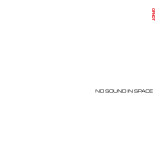
Blake Lee has always been fascinated by the unknown, and space, in its isolating, mysterious vastness, embodies this theme immaculately. The open void, captured so memorably by Stanley Kubrick in '2001: A Space Odyssey', is Blake's far-reaching canvas on 'No Sound In Space', a cinematic meditation on the cosmos that's painted in nuanced, emotionally sincere colors. The Los Angeles-based composer has been contemplating his full-length debut since 2021, using his guitar as a sonic paintbrush rather than find himself snared in its traditional aesthetic constraints. Transforming its characteristics with effects and subtle processes, he layers sustained tones and intimate improvisations, creating richly visual polychromatic utopias teeming with unknown life.
Since 2011, Blake has been most known for being the guitarist and a music director for Lana Del Rey, notching up three songwriting credits on her acclaimed ‘Ultraviolence’ full length. He sees his solo work is a form of escapism, a place where he can experiment and find comfort and catharsis outside of expectations and formal structure. The album was written instinctively, and Blake made sure he didn't force anything, letting go and getting out of his own way, listening intently as sounds and textures materialized organically. "I didn't want to ruin it by being a perfectionist," he laughs. And his collaboration with Kenyan sound artist KMRU, who runs the OFNOT label and contributes to two of the tracks on the album, occurred similarly organically.
Blake was moved to reach out to KMRU when he caught a performance of 'Natur' at Los Angeles' Zebulon in 2022, leading to a prolonged back-and-forth. They didn't meet in person until earlier this year, by which time they'd become firm friends, continuously sharing music and conversation. KMRU had lent a valuable ear to Blake, who sent early playlists of 'NSIS' that, over the months, slowly evolved into the finished album. It's the first release on OFNOT that's not by KMRU himself; the label emerged last year with the release of KMRU's own 'Dissolution Grip', and Blake's debut immediately expands its sonic universe. Alongside the playlists, Blake also provided KMRU with the tracks' raw stems, which KMRU began to edit and expand in his Berlin studio. 'Miura' and 'Waiting' are the result of this process, two sublime abstractions that augment Blake's dreamlike, euphoric tones with KMRU's pebbly distortions and booming low-end rumbles. And this same playful sense of freeness seeps into Blake's other compositions.
On the misty 'In A Cloud', he surrounds cascading string tones with soft-focus pads that swell until they're like crashing waves, and on the two 'Echoplexx' pieces, he uses delay and reverb to smudge his sounds until they're viscous residue, the harmonies obscured by whooshes of white noise and distant chimes. The mood is quieted somewhat on 'Moving Air', as Blake's swirling tones form half-heard lullabies, coalescing into a dense, melancholy crescendo, and he fills out the sound with reverberant airport recordings on 'Pan Am', letting pitchy My Bloody Valentine-esque drones warble beneath the transitory chatter. Each track melts into the next, forming a billowing, cryptic narrative that leaves more questions than answers. Blake is constantly searching, and fills his unoccupied space with warmth, perception and sensitivity.
Blake Lee has always been fascinated by the unknown, and space, in its isolating, mysterious vastness, embodies this theme immaculately. The open void, captured so memorably by Stanley Kubrick in '2001: A Space Odyssey', is Blake's far-reaching canvas on 'No Sound In Space', a cinematic meditation on the cosmos that's painted in nuanced, emotionally sincere colors. The Los Angeles-based composer has been contemplating his full-length debut since 2021, using his guitar as a sonic paintbrush rather than find himself snared in its traditional aesthetic constraints. Transforming its characteristics with effects and subtle processes, he layers sustained tones and intimate improvisations, creating richly visual polychromatic utopias teeming with unknown life.
Since 2011, Blake has been most known for being the guitarist and a music director for Lana Del Rey, notching up three songwriting credits on her acclaimed ‘Ultraviolence’ full length. He sees his solo work is a form of escapism, a place where he can experiment and find comfort and catharsis outside of expectations and formal structure. The album was written instinctively, and Blake made sure he didn't force anything, letting go and getting out of his own way, listening intently as sounds and textures materialized organically. "I didn't want to ruin it by being a perfectionist," he laughs. And his collaboration with Kenyan sound artist KMRU, who runs the OFNOT label and contributes to two of the tracks on the album, occurred similarly organically.
Blake was moved to reach out to KMRU when he caught a performance of 'Natur' at Los Angeles' Zebulon in 2022, leading to a prolonged back-and-forth. They didn't meet in person until earlier this year, by which time they'd become firm friends, continuously sharing music and conversation. KMRU had lent a valuable ear to Blake, who sent early playlists of 'NSIS' that, over the months, slowly evolved into the finished album. It's the first release on OFNOT that's not by KMRU himself; the label emerged last year with the release of KMRU's own 'Dissolution Grip', and Blake's debut immediately expands its sonic universe. Alongside the playlists, Blake also provided KMRU with the tracks' raw stems, which KMRU began to edit and expand in his Berlin studio. 'Miura' and 'Waiting' are the result of this process, two sublime abstractions that augment Blake's dreamlike, euphoric tones with KMRU's pebbly distortions and booming low-end rumbles. And this same playful sense of freeness seeps into Blake's other compositions.
On the misty 'In A Cloud', he surrounds cascading string tones with soft-focus pads that swell until they're like crashing waves, and on the two 'Echoplexx' pieces, he uses delay and reverb to smudge his sounds until they're viscous residue, the harmonies obscured by whooshes of white noise and distant chimes. The mood is quieted somewhat on 'Moving Air', as Blake's swirling tones form half-heard lullabies, coalescing into a dense, melancholy crescendo, and he fills out the sound with reverberant airport recordings on 'Pan Am', letting pitchy My Bloody Valentine-esque drones warble beneath the transitory chatter. Each track melts into the next, forming a billowing, cryptic narrative that leaves more questions than answers. Blake is constantly searching, and fills his unoccupied space with warmth, perception and sensitivity.
- Low (Latarnik Remix)
- Together (Pejzaż Remix)
- Behind The Curtain (Expo 2000 Remix)
- Break In (Magiera Remix) Feat. Kacper Krupa
- High (Zuchy Remix)
- Not Too Bad (Emade Remix)
- So Far (Zura Remix)
- Wonderland In Alice (Etnobotanika Remix)
- 2058: (Steez Remix)
- Directions 4 (En2Ak & Rafał Dutkiewicz Remix)
- Sculpture (Kixnare Remix)
- Quiz (Envee Remix)
- Ninjazz (Daniel Szlajnda Remix)
- Asphodel (2K88 Remix)
- Laboratorium (Pstyk Remix)
Music from Skalpel's iconic debut for Ninja Tune, reinterpreted by top Polish producers!
Poland's ambassadors of jazz-inspired electronics invited outstanding local producers of downtempo, dance music, hip-hop, and jazz to remix this album. The result is "Recut," the best remix album in the history of Polish phonography. A record every bit as worthy as the historic original. It’s an extraordinary tale of the past and present of Polish electronic music.
This year marks the 20th anniversary of the release of Skalpel’s debut album, which was released by the famous British label Ninja Tune in 2004. The Polish duo, Marcin Cichy and Igor Pudło, gained international acclaim by venturing into the then lesser-known territory of Eastern European jazz, updating it with electronic tools.
Pitchfork praised the album enthusiastically: „On these tracks, Skalpel smudge the line between organic and electronic effortlessly, like a landscape artist working with charcoal, creating deep nuances of light and shadow that give the work its overall depth. (…)Its rhythmic dexterity and melodic sweep are hard to deny” -
The prestigious The Wire added: "Jazz, breaks, scat shuffles and funky riffs? of the highest standard. This release deserves to see them revered far beyond Poland"
Today, looking back over two decades, this album can be confidently considered a milestone in Polish electronica and a timeless classic of downtempo, nu-jazz, and trip-hop. Thanks to this record, the band also gained worldwide recognition, and their subsequent consistently high-quality albums like "Highlight" and "Origins" continue to attract significant interest.
Skalpel’s debut with Ninja Tune undoubtedly changed the face of Polish music, redefined the perception of the Polish jazz canon, and paved the way for younger creators. "Many of them, on 'Recut,' pay tribute to the enduring legacy of Marcin Cichy and Igor Pudło.
Artists like Magiera, Emade, 1988, Kixnare, Steez, Latarnik, Envee, Pejzaż, Etnobotanika, and others are now recognized names and respected figures in the Polish music scene. Though each of the artists invited by the Wrocław duo has developed their own original style, they find common roots in the duo’s music, on the border between jazz groove, hip-hop ease, downtempo moodiness, or ambient.
The excellent interpretations showcase the incredible potential revealed by Skalpel’s debut material, which continues to inspire new discoveries. This is a record that does not age, still captivates, and continues to inspire and provoke new interpretations.
Let’s RECUT this!!
- Always
- Like Licorice
- My Baby Just Squeals (You Heel)
- The Devil's Wife
- Tipsy Woman
- My Baby Just Purrs (You Re Mine, Not Hers)
- My Baby Just Whistles (Here Come The Missiles)
- World Serious
- Early Shirley
- Yesteryear Is Near
- Birkenhead Girl
- Smoke Ring Angle
- Wooden Women
- (I Don T Want Your) Lyndon Johnson
- Lotta Money
- Pure Bubblegum
- Cathy Come Home
- Bygones
- Row Me Once
- Clown Around Town
The exact relationship between Henry (T-Bone Burnett) and Howard Coward (Elvis Costello) remains ambiguous. They often referred to themselves as “One and a Half Brothers,” which might hint at their height difference or imply they were not actually siblings but were involved in an elaborate ruse. Their musical partnership, known as The Coward Brothers, was initiated by Smiley “Doc” Snipson, who discovered Henry Coward in 1956 and signed him for a UK tour. The brothers' hit single, “My Baby Just Squeals (You Heel),” was followed by less successful records and a controversial Cold War-themed song. To preserve their fading fame, Snipson orchestrated their supposed death in a plane crash, but they were actually in hiding on a Caribbean island, secretly recording music and sending it back to Snipson. When their funds ran out, they returned to Miami and made sensational claims about writing famous songs, leading to a brief stint as songwriters for Bill Bogguss. They later resumed recording, but their partnership eventually fractured, leading to years of estrangement. Their music, from early rock and roll hits to later, more introspective songs, is compiled in the album, The Coward Brothers. After years of silence, their story was explored in a radio program, revealing the complexity of their relationship and their enduring bond. Despite their tumultuous history, their music remains a testament to their unyielding spirit. The Coward Brothers are Elvis Costello and T-Bone Burnett. The Audible Original radio play, The True Story Of The Coward Brothers, is directed by Christopher Guest, and stars Howard Coward, Henry Coward, Harry Shearer, Edward Hibbert, Rhea Seehorn, Stephen Root, and Kathreen Khavari.
Ludwig Hart, who over two albums has established himself as our foremost innovator of classic American road rock aesthetics, has throughout 2024 released songs with a sound that is even bigger than on the artist's breakthrough album, 2021's "Paloma". The song "Less I Try" has been in constant radio rotation in Sweden, Germany and the UK, and Hart has had time to appear on national TV, embark on a major tour with two successful gigs at The Great Escape in Brighton and spend a summer playing the biggest Swedish festival stages. On his third album "Stay Young" - released on September 27 via Argle Bargle Studios - Hart showcases an increasing freedom to genre and style. From reflective, stripped-down tracks like "Ghost of You" and the title track, we're taken through the reverb-drenched garage boogie of "Run Run" to the big chorus wind-in-the-hair rock of single favorites like "Less I Try" and "Journey." On previous albums, Hart has been praised for his lyrics - personal stories about people around him growing up and their life situations. On ”Stay Young” - on the contrary - he turns inward and faces his own fears and demons. "It's been scary but necessary. The album is about my fears of getting older, fears of ending up like my dad. It's about how much I've tried to suppress things I've been through, and how they've probably shaped me into who I am. I live with ghosts that never seem to want to let go, I have my own devil on my shoulder that constantly makes itself known. I am periodically terrified of ending up in total fucking darkness. This record has helped me try to understand why."
- Court And Spark
- Help Me
- Free Man In Paris
- People's Parties
- Same Situation
- Car On A Hill
- Down To You
- Just Like This Train
- Raised On Robbery
- Trouble Child
- Twisted
Joni Mitchell Gets Jazzy, Counterbalances Love and Trust with Freedom and Confusion on Court and Spark
Mobile Fidelity's UltraDisc One-Step 180g 45RPM 2LP
Plays with Definitive Detail and Clarity: Pressed on MoFi SuperVinyl Strictly Limited to 5,000 Numbered Copies
Box Set Features New Liner Notes
1/4" / 15 IPS / Dolby A analogue master to DSD 256 to analogue console to lathe
Court and Spark, the most commercially successful album of Joni Mitchell's trailblazing career, arrived after a year in which she took some time to breathe and kept a low profile. The pause led to more breakthroughs for the singer-songwriter. Marking Mitchell's increasing drift toward jazz (and affinity for Miles Davis and John Coltrane), Court and Spark garnered four Grammy nominations, earned the Best Album of the Year vote in the prestigious Pazz & Jop poll, and ranks #110 on Rolling Stone’s list of the 500 Greatest Albums of All Time.
Sourced from the original analog master tapes, pressed at Fidelity Record Pressing on MoFi SuperVinyl, strictly limited to 5,000 numbered copies, and featuring new liner notes, Mobile Fidelity's UltraDisc One-Step 180g 45RPM 2LP box set presents the 1974 classic with definitive detail, tonality, and directness. Marking the first time the revered LP has received audiophile-quality treatment, it's one of six iconic 1970s Mitchell records Mobile Fidelity is reissuing on vinyl and SACD sets.
Benefitting from a virtually nonexistent noise floor, dead-quiet surfaces, and superior groove definition, this collectible edition reproduces without compromise the textures, details, and breathtaking craftsmanship that help make Court and Spark into what many fans believe is the Canadian native’s finest hour. Notes bloom and decay as they do amid an acoustic live environment. Soundstages extend far and deep, with black backgrounds and balanced tones adding to the uncanny realism.
The reference-grade presence and openness put in transparent view Mitchell’s incisive words and unique phrasing, as well as the contributions of her prized support musicians — including Tom Scott and the L.A. Express as well as guest turns by the likes of David Crosby, Graham Nash, Jose Feliciano, and Robbie Robertson. Mitchell, experimenting with the melodic parameters of guitar and piano, is rightly found at the center of it all. The jazz-rock rhythms of drummer John Guerin, slippery guitar lines of Larry Carlton, vibrant horns and reeds laid down by Scott — crucial to the songs’ shape-shifting arrangements — can now also be heard with fresh ears.
Visually and physically, the packaging of the Court and Spark UD1S set complements its distinguished status. Housed in a deluxe slipcase, both LPs come in foil-stamped jackets with faithful graphics that illuminate the splendor of the recording. This reissue is for listeners who desire to engage themselves in everything involved with the album, including Mitchell’s “The Mountain Loves the Sea” painting — a picture of waves embracing and receding away from a mountain, a metaphor for the record’s lyrical themes — on the cover art.
Pitching deceptively light compositions against underlying tensions, Court and Spark witnesses the singer-songwriter finding her footing with a group of top-shelf musicians who seemingly understand her visions as well as expanding her lyrical palette and venturing further into territory no artist had dared explore. Mitchell’s accessibly complex structures, beat-propelled rhythms, and spirited interplay with Scott & Co. both give the music a different identity than her prior efforts and point in the directions she soon headed.
Lyrically, Court and Spark matches the wit, integrity, originality, and intellect of anything in Mitchell’s oeuvre — no small feat. Offsetting positives with negatives, and considering circumstances from multiple angles, Mitchell explores issues connected to love and freedom, certainty and confusion, and trust and fear with unfettered boldness and introspective empathy. She teeters between surrender and retreat, and spends a majority of the record sussing out the complications and sacrifices involved with such actions.
Mitchell addresses the transactional nature of desire (the intimate title track, the upbeat “Raised on Robbery,” complete with rock ‘n’ roll pep from Robertson and zesty sax from Scott); anticipation and disappointment of romance (“Car on a Hill,” “”Down to You); fame and celebrity (“A Free Man in Paris,” “People’s Parties”); and sanity (the dark and stormy “Trouble Child,” a satirical cover of Annie Ross’ “Twisted”). Throughout, she sings with an emotionally penetrating beauty and devastating honesty that teaches about ourselves.
Or, as Mitchell relays on “People’s Parties”: “Laughing and crying/You know it’s the same release.”