The seeds of composer Rafael Anton Irisarri’s latest LP were first planted during his 2016 tour in Italy, months before that Autumn’s unexpected presidential election. The linguistic glitch of an innocuous diner in Milan named “il Mito Americano” – meant as “The American Dream” but translated literally to English as “The American Myth” – sparked a series of ideas, both conceptual and musical.
Amid the chaos of 2020, while exploring the stark world of brutalist architecture and inspired by the false fronts of Potemkin villages, a vision started to take shape: FAÇADISMS. Composed over three years, it’s a late capitalist lament of simmering electric despondency.
Irisarri’s obsession with repeating motifs mirrors the cyclical nature of our tumultuous political history. The album’s eight tracks heave and storm like a tempest being drained of its rage. This is the sound of majestic dissipation, of morning afters, fashioned from a mournful haze with cavernous guitars and granular twilight. A euphony of a receding tide as one sifts through the remnants of what remains: dust, delusion, and memory.
Opening with the somber gauze of “Broken Intensification," FAÇADISMS moves fluidly between moments of absence and abandon. Ashen swaths of electronics billow above smoldering embers of melody, guitar, and scattered streaks of processed strings and voice, as on the rapturous doom of “Control Your Soul's Desire for Freedom,” featuring Julia Kent on cello and Hannah Elizabeth Cox on vocals. "The impoverished peoples of the Americas have known all along that 'freedom' is a cruel illusion crafted by the elites, akin to Potemkin's fake villages designed to impress Catherine the Great," Irisarri indicates. "FAÇADISMS illustrates a twisted inversion where the rulers deceive their subjects with illusions of safety, democracy, and free speech to create a grotesque mirage of control over their own lives.”
Elsewhere, Irisarri leans into passages of hushed oblivion (“Hollow,” “Dispersion of Belief”), while ragged drones rumble and disintegrate into wind-battered ambient wreckage. One has the sense that it’s all too late. The hour of fury has passed. The beauty has come and gone. Irisarri’s muse has become the crack in the façade of the unraveling myth.
The record closes with a climax of grand departure. Co-written with Kenyan sound artist KMRU, “Red Moon Tide” surges from flickering elegy to celestial disquiet, roiling waves of hymnal descent, and bristling noise. The effect is unsettling and unmooring: a soundtrack for the soul leaving the body, only to discover a void. It’s the sound of the center not holding, of shared illusions being dissolved in a tunnel of white light.
The cover photograph captures a profound sense of desolation. Taken in the historic shanty town of La Perla, Puerto Rico, where Irisarri spent his childhood, brutal colonial mysteries are lost to time. A skeletal concrete structure decays against an expansive blue horizon. Only the shadow of its shell ripples on the empty sea.
Has the American myth finally run its course?
Cerca:see know
As a young conservatory student back in 2016, Danish trumpeter Anders Malta was invited to participate in a reunion concert with the legendary Ernie Wilkins Almost Big Band. He was so taken with the band and the music, that on the spot he decided that he wanted to form his own. In 2020, Anders Malta Almost Big Band played its first concert, going on to play a monthly residency at Christiania Jazz Club in Copenhagen for the past two years. Their debut album Introducing is set to release on August 23rd on April Records. Since the early days of jazz, the broad sound pallet and dynamic range of the big band has proven irresistible to composers and arrangers. However, the traditional big band, with its 16 16-19 individual moving parts, can also at times, and for different reasons, be an unwieldy machine to maneuver. Malta s 13 13-piece made up of Denmark s finest young soloists is agile like a small group, retaining the powerful force of the larger orchestra. Belonging to a new generation of musicians with a deep love and knowledge of the jazz tradition, Introducing " sees the band pay tribute to the timeless Hardbop sound of the 50" s and 60" s through the three movement suite Hardbop Conversations "", whilst offering a contemporary European perspective on the classic large ensemble format through Ouverture, Interludium and Epilog ". Intricate arrangements, rich harmony, soaring trumpet & flugelhorn improvisations and a diverse array of feel and grooves showcase the impressive stylistic and artistic breadth Malta has to offer as a bandleader, arranger, composer and instrumentalist. From the high high-energy swing and powerful tutti chords one craves from a Big Band to the more intimate textures of solo instrumental passages, the ensemble s sophisticated, complex, and joyous debut proves once again that Denmark s jazz scene is among the world s most prolific and exciting.
Louis De Roo already knows a thing or two about what life can throw at a person, yet this young Belgian songwriter is still very much on the threshold of a promising international musical career. Fall 2024 sees the release of his debut album ‘Troubled Waters’ as Isaac Roux. His debut and breakthrough single White Rose (which is not on the album) became an alternative hit in Belgium and the Netherlands, with follow-up singles Colours and Autumn Love opening doors in Germany (radioeins), France (Radio Néo) and Austria (FM4) and to trendy streaming playlists. Roux’s combination of warm indie folk and alternative rock works even better on stage, never failing to leave a crowd open-mouthed, like during a live session on German national radio (Deutschlandfunk Kultur). Impressing crowds at the Rock Werchter and Pukkelpop festivals in his home country, he did the same in the Netherlands and Germany (playing Reeperbahn three times), and supporting Dotan on his European tour in places like London, Paris and Vienna. Every song, and the album as a whole, gives the listener a glimpse into the life of De Roo, who hasn’t always had it easy, hoping that his music can give people in similar situations something to hold on to. “To win, to lose, to dream and to hope, they’re just some of the things that have shaped me into the person that I am today”, De Roo says. “And through my stories I hope to provide a little bit of a moral compass for people who, like me, haven’t always been treated nicely by life.”
Mysterious, multifaceted collective i Häxa have unveiled their epic self-titled, full length debut; a ground-breaking conceptual double album shaped by a collision of ancient gods and bleeding-edge technology_ Released as four distinct Parts over the course of the year, `i Häxa' now comes together as a singular vision that weaves together genre-defiant soundscapes, abstract cinema and ancient meteorological mythologies from singer-songwriter and visual artist Rebecca Need-Menear (also of electronic alt-rock duo Anavae) and forward-thinking producer Peter Miles (Architects, Dodie, Fizz). i Häxa is a ritualistic dissection of the world as we know it, a forceful separation of the monotony of modernity from the rites and rituals that for centuries formed the foundations for who we are, how we came to be and where we claim to belong. Disjointed fragments of time collide. Two sides, one of logic and one of chaos, seeking unity and balance through an expression of freedom. This is i Häxa. Whilst the album is composed of four distinct movements, each consisting of four distinct tracks themselves; pulling them apart into easily digestible, standalone singles isn't an easy feat and, as is now clear from the project's sprawling cyclic nature, was never the intention. In an age of fast fun and instant gratification, the ties that bind these works together are intended to transcend tracklisting. With aural, visual and lyrical themes freely intertwining, i Häxa is something to be consumed whole; just as it will, in time, consume you. Charting an existential journey to the very depths of what makes us who we are, with every dark corner illuminated in glitched out, discordant glory; i Häxa is a project years in the making that draws simultaneously from rituals for old gods and the modern day deification of data. i Häxa is both heartwarming and horrifying; i Häxa is ancient history and hyper-real; i Häxa is everybody and no one at all. Check out if you like Radiohead, Julie Christmas, Agnes Obel, Bjork, Fever Ray, Massive Attack, Dead Can Dance, Emma Ruth Rundle, Jenny Hval, Cult of Luna, Eivor, Zola Jesus, Marissa Nadler, Soft Moon
- A1: The Springfields - Are We Gonna Be Alright
- A2: Talulah Gosh - Talulah Gosh
- A3: Blueboy - Meet Johnny Rave
- A4: The Flatmates - I Could Be In Heaven
- A5: Primal Scream - Velocity Girl
- A6: The Primitives - Way Behind Me
- A7: The Orchids – I’ve Got A Habit
- A8: Popguns - Waiting For The Winter
- A9: Mccarthy - Should The Bible Be Banned
- B1: The Soup Dragons - Soft As Your Face
- B2: The Darling Buds – Burst
- B3: The Wedding Present – A Million Miles
- B4: 14 Iced Bears – Sure To See
- B5: The Wake - Crush The Flowers
- B6: Even As We Speak - Falling Down The Stairs
- B7: The Pooh Sticks - Indie Pop Ain't Noise Pollution
- B8: Brighter - Does Love Last Forever?
- C1: Heavenly - Over And Over
- C2: Bmx Bandits - I Wanna Fall In Love
- C3: Blake Babies – Look Away
- C4: The Vaselines - Jesus Wants Me For A Sunbeam
- C5: Velocity Girl – Sorry Again
- C6: Milky Wimpshake – Scrabble
- C7: Helen Love - We Love You
- D2: Veronica Falls - Waiting For Something To Happen
- D3: Joanna Gruesome - Do You Really Wanna Know Why Yr Still In Love With Me?
- D4: The Hit Parade - You Didn't Love Me Then
- D5: Allo Darlin' - My Heart Is A Drummer
- D6: The Spook School - Speak When You're Spoken To
- D7: Ribbon Stage – Playing Possum
- D8: The Lost Days - Mess You Made
- D9: The Goon Sax - Boyfriend
- C8: The Pains Of Being Pure At Heart - Young Adult Friction
- D1: Dum Dum Girls - Blank Girl
Black Vinyl[34,41 €]
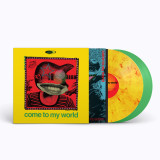
Two-Piers bringt mit "Come To My World" eine kurze Geschichte und Tauchgang in die Welt des Indie-Pop, von seinen bescheidenen Anfängen in den 1980ern bis zu den vielen grossartigen Bands, die heute die Flagge hochhalten.
"Come To My World" beginnt mit coolen Bands wie Talulah Gosh, The Flatmates, Blueboy, Primal Scream, McCarthy, 14 Iced Bears und The Springfields auf bahnbrechenden DIY-Labels wie Sarah Records, The Subway Organization und Creation. Über die einflussreichen C86-Kassettenjahre gelangen wir zu den kommerzielleren Spät-1980er-Sounds von The Primitives, The Soup Dragons und The Darling Buds. Wir navigieren durch die 1990er mit der unterschätzten Brillianz von Heavenly, der florierenden schottischen Szene mit Acts wie BMX Bandits und The Vaselines, bis zum Durchbruch der Indie-Pop-Sounds von Velocity Girl und Blake Babies in den USA. In den 2000ern brachte die US-Szene exzellente Bands wie Dum Dum Girls und The Pains Of Being Pure At Heart hervor, neben Underground-Acts wie Joanna Gruesome, The Spook School und Veronica Falls. Die Zusammenstellung endet mit einem Blick in die glänzende Zukunft des Indie-Pop mit Künstlern wie The Goon Sax, The Lost Days und Ribbon Stage.
Für Indie-Pop-Liebhaber ist diese Underground-Musik seit fast 40 Jahren eine ständige Quelle der Freude. 2LP mit 34 Tracks. 2CD mit 40 Tracks.
Introducing ‘SONGS ABOUT THE SUN’ by ELWD. The London-based producer, commonly known for his signature sample style blended with live instrumentation, presents six new beats. Inspired by how the sun has always been a constant throughout his life and the nostalgia of a time when life seemed carefree, he unveils a new powerful and vitamin D-infused sound. ‘COSMIC CHAMELEON’ is a house gem that blends Balearic vibes with jazzy instrumentation, making it the perfect song to accompany a sunny, carefree day.
Leng’s San Francisco connection has long been strong, with the 40 Thieves collective – and their friend Cole Odin – providing some of the label’s most memorable releases of the last decade. That Bay Area connection comes to the fore once more on the imprint’s latest release, which sees Odin join forces with fellow San Francisco resident Marshall Watson, a long-serving producer, engineer and live performer known globally for his Balearic-minded productions.
‘Voyager’, the pair’s first collaborative single, is a genuine meeting of minds. It combines Odin’s love of low-slung dub disco, dancefloor psychedelia and low-tempo cosmic house with Watson’s
picturesque Balearic synths, sparkling piano riffs and immersive sound design. It’s this blend that dominates on the EP-opening Original Mix, an infectious workout that gets progressively more blissed-out and saucer-eyed as it progresses. Listen carefully and you’ll hear some suitably psychedelic guitar solos nestling amongst the heady washes of sound, sun-bright piano riffs and weighty bass.
Those languid, stretched-out guitar parts naturally take a more prominent role on the Extended
Guitar Mix. On this alternative take, the pair deliver a lightly tweaked take on the original groove, stretching it out while overlaying eyes-closed guitar solos, pots-and-pans percussion and a more DJ-friendly outro. It’s effectively an extended club mix – the club in question being a Bay Area basement at 5am. To round off the EP, Odin and Watson dust off their dancing shoes and pay tribute to San Francisco great Patrick Cowley. On the appropriately titled Cosmic Rave Mix, the pair swap their bass guitar for a pulsating sequenced bassline, trance-inducing synth sounds, and locked-in electronic loops designed to take you to a higher state of consciousness. By the time the track’s familiar piano refrain drops midway through, you’ll be reaching for the lasers in no time at all.
- A1: Rockin' Stroll
- A2: Confetti
- A3: It's A Shame About Ray
- A4: Rudderless
- A5: My Drug Buddy
- A6: The Turnpike Down
- B1: Bit Part
- B2: Alison's Starting To Happen
- B3: Hannah & Gabi
- B4: Kitchen
- B5: Ceiling Fan In My Spoon
- B6: Frank Mills
- C1: Mrs Robinson
- C2: Shakey Ground
- C3: My Drug Buddy (Kcrw Session)
- C4: Knowing Me, Knowing You
- C5: Confetti (Acoustic)
- C6: Alison´s Starting To Happen (Acoustic)
- C7: Divan
- D1: It´s A Shame About Ray (Demo)
- D2: Rockin´stroll (Demo)
- D3: My Drug Buddy (Demo)
- D4: Hannah & Gabi (Demo)
- D5: Kitchen (Demo)
- D8: Ceiling Fan In My Spoon (Demo)
- D9: Confetti (Demo)
- D6: Bit Part (Demo)
- D7: Rudderless (Demo)
Lemonheads’ seminal album ‘It’s A Shame About Ray’, lovingly reissued for it’s 30th Anniversary. The long overdue reissue includes a slew of extra material, including an unreleased ‘My Drug Buddy’ KCRW session track from 1992 featuring Juliana Hatfield, B-sides from singles ‘It’s A Shame About Ray’ and ‘Confetti’, a track from the ‘Mrs. Robinson/Being Round’ EP, alongside demos that will be released for the first time on vinyl. This reissue celebrates their prestigious fifth album, these deluxe bookback editions feature new liner notes and unseen photos.
Described by music journalist and author Everett True as “A 30-minute insight into what it’s like to live hard and fast and loose and happy with like-minded buddies, fuelled by a shared love for similar bands and drugs and booze and freedom.”. ‘It's A Shame About Ray’ had a considerable impact back in those heady, carefree days of '92, the record perfectly captures Dando’s ability to effortlessly encapsulate teenage longing and lust over the course of a two-minute pop song.
Singles such as 'My Drug Buddy' and the breezy perfect pop of the title track might stand out (plus the add-on of 'Mrs. Robinson' which later copies included), but the album's real strength lies in the tracks in-between; the truly fantastic 'Confetti' (written about Evan's parents' divorce), and the eye-wateringly casual acoustic cover of 'Frank Mills' (from the "hippie" musical Hair), a version that seems to resonate with every ounce of pathos and emotion felt for the lost 1960s generation. To hear Evan Dando sing lines like 'I love him/but it embarrasses me/To walk down the street with him/He lives in Brooklyn somewhere/And he wears his white crash helmet' is to truly appreciate how wonderful and tantalising pop music can be. Then, there's the rush of insurgency and brattishness on the wonderfully truncated 'Bit Part'; the topsy-turvy 'Ceiling Fan In My Spoon'... this was male teenage skinny-tie pop music on a level of brilliance with The Kinks, early Undertones, Wipers.
For number 84 in the Brazil 45 Series, we head to the North of Brazil with this dancefloor monster, double-sider by Magalhães & Os Panteras.
'Xangô' by Magalhães is taken from his 'E Sua Guitarra' album, from 1986, and originally released on Gravasom Records. A stunning, driving Lambada track with haunting vocals and a compelling gusto energy. It has been gaining popularity over recent years with DJs and is a sure-fire get-out-of-jail dancefloor saver.
On the flip, we find another biggy from Os Panteras, 'Lambada Pauleira’. Also released on Gravasom Records, but a year later in 1987. It is best known for Joutro Mundo's fine re-edit of the track, but here we have it in its original form, in all its quirky brilliance. It is easy to see why, over the years, it has been a staple of some of Brazil's finest DJs’ sets, such as Augusto Olivani (aka Trepanado).
We are super happy to present these two red-hot tracks back-to-back. Now let the dancefloors return so we can heat things up!
- Next installment in BRAZIL 45 Series.
- Two dancefloor focussed cuts.
- Sought-after original of an edit made famous by Joutro Mundo.
Following the cult success of the first 2 EPs, Common Saints presents
the debut album "Cinema 3000". The theme continues, blending soul,
funk, and psychedelic influences, with the organic sound and rich
instrumentation that Common Saints has become known for.
Conceived in 2020 by writer/producer Charlie J Perry the production approach
for Commons Saints consists of him playing and recording real instruments in his
London home studio. One mike for the drums, his beloved piano and amps up
loud!
The album encapsulates the old school recording approach and musicianship the
discerning ear craves but with a more modern punch - a true sonic bath for all the
connoisseurs out there. Think, UK's equivalent to Tame Impala and Khruangbin.
The first EP "Idol Eyes" (2020) has seen 3 re-presses to date and is now selling at
multiples on Discogs. "Cinema 3000" is set to surpass expectations and is highly
anticipated within the Commons Saints community. The first LP pressing is on a
' blue meteorite splatter’ effect colour vinyl and will be limited to 2000 units
globally. Also available on CD, presented in a 6-panel digipak.
Camelot, the legendary seat of King Arthur's court in Early Middle Ages Britain, was probably not a real place. A corruption of the name of a real Romano-Briton city, the word "Camelot" accumulated symbolic, mythic resonances over centuries, until achieving its present usage as a near-synonym of "utopia." In the mid-20th century alone, Camelot inspired an explosion of representations and appropriations, among them the violent, affectless Arthurian court of Robert Bresson's 1974 film Lancelot du Lac and the absurdist iteration of Monty Python's 1975 Holy Grail, both of which feature armored knights erupting into fountains of blood; the mystical Welsh world of novelist John Cowper Powys's profoundly weird 1951 novel Porius, with its Roman cults, wizards and witches, and wanton giants; and the nationalist nostalgia of President John F. Kennedy's White House. Unsurprisingly there are fewer Camelots in more recent memory. Camelot, Canadian songwriter Jennifer Castle's extraordinary, moving 2024 chronicle of the artist in early middle age, charts a realer, more rooted, and more metaphorical place than the fabled Camelot of the Early Middle Ages (or its myriad depictions), but it too is a space more psychic than physical. In Castle's Camelot, the fantastic interpenetrates the mundane, and the Grail, if there is one, distills everyday experience into art and art into faith, subliming terrestrial concerns into sublime celestial prayers to Mother Nature, and to the unfolding process of perfecting imperfection in one's own nature. Co-produced by Jennifer and longtime collaborator Jeff McMurrich, her seventh record is at once her most monumental and unguarded to date, demonstrating a mastery of rendering her verse and melodies alike with crisply poignant economy. For all their pointedly plainspoken lyrical detail and exhilarating full-band musical flourishes, these songs sound inevitable, eternal as morning devotions. "Back in Camelot," she sings on the lilting, vulnerable title track, "I really learned a lot / circles in the crops and / sky-high geometry." The album opens with a candid admission of sleeping "in the unfinished basement," an embarrassing joke that comes true. But the dreamer is redeemed by dreaming, setting sail in her airborne bed above "sirens and desert deities." If she questions her own agency_whether she is "wishing stones were standing" or just "pissing in the wind"_it does not diminish the ineffable existential jolt of such signs and wonders. This abiding tension between belief and doubt, magic and pragmatism, self and other, sacred and profane, and even, arguably, paganism and monotheism, suffuses these ten songs, which limn an interior landscape shot through with sunstriped shadows of "multi-felt dimensions" both mystical and quotidian. The epic scale and transport of "Camelot," with its swooning strings, gives way dramatically to "Some Friends," an acoustic-guitar-and-vocals meditation in miniature on Janus-faced friends and the lunar and solar temperatures of their promises_"bright and beaming verses" versus hot curses_which recalls her minimalist last album, 2020's achingly intimate Monarch Season. (In a symmetrical sequencing gesture, the penultimate track, the incantatory "Earthsong," bookends the central six with a similarly spare solo performance and coiled chord progression, this time an ambiguous appeal to _ a wounded lover? a wounded saint? our wounded planet?) Those whom "Trust" accuses of treacherous oaths spit through "gilded and golden tooth"_cynics, critics, hypocrites, gurus, scientists, doctors, lovers, government, the so-called entertainment industry_sow uncertainty that can infect the artist, as in "Louis": "What's that dance / and can it be done? What's that song / and can it be sung?" Answering affirmatively are "Lucky #8," an irrepressible ode to dancing as a bulwark against the "tidal pools of pain" and the "theory of collapse," and "Full Moon in Leo," which finds the narrator dancing around the house with a broom, wearing nothing but her underwear and "big hair." But the central question remains: who can we trust, and at what cost faith, in art or angels or otherwise? Castle's confidence in her collaborators is the cornerstone of Camelot. Carl Didur (piano and keys), Evan Cartwright (drums and percussion), and steadfast sideman Mike Smith (bass) comprise a rhythm section of exquisite delicacy and depth. This fundamental trio anchors the airiness of regular backing vocalists Victoria Cheong and Isla Craig and frames the guitars of Castle, McMurrich, and Paul Mortimer (and on "Lucky #8," special guest Cass McCombs). Reprising his decennial role on Castle's beloved 2014 Pink City, Owen Pallett arranged the strings for Estonia's FAMES Skopje Studio Orchestra. On the ravishing country-soul ballad "Blowing Kisses"_Pallett's crowning achievement here, which can be heard in its entirety in the penultimate episode of the third season of FX's The Bear_Jennifer contemplates time and presence, love and prayer_and how songwriting and poetry both manifest and limit all four dimensions: "No words to fumble with / I'm not a beggar to language any longer." Such rare moments of speechlessness_"I'm so fucking honoured," she bluntly proclaims_suggest a state "only a god could come up with." (If Camelot affirms Castle as one of the great song-poets of her generation, she is not immune to the despairing linguistic beggary that plagues all writers.) Camelot evinces a thoroughgoing faith not only in the natural world_including human bodies, which can, miraculously, dance and swim and bleed and embrace and birth_but also in our interpretations of and interventions in it: the "charts and diagrams" of "Lucky #8," a daydreamt billboard on Fairfax Ave. in LA in "Full Moon in Leo," the bloody invocations of the organ-stained "Mary Miracle," and all manner of water worship, rivers in particular. (Notably, Jennifer has worked as a farmer and a doula.) The album ends with "Fractal Canyon"'s repeated, exalted insistence that she's "not alone here." But where is here? The word "utopia" itself constitutes a pun, indicating in its ambiguous first syllable both the Greek "eutopia," or "good-place"_the facet most remembered today_and "outopia," or "no-place," a negative, impossible geography of the mind. Utopia, like its metonym Camelot, is imaginary. Or as fellow Canadian songwriter Neil Young once sang, "Everyone knows this is nowhere." "Can you see how I'd be tempted," Castle asks out of nowhere, held in the mystery, "to pretend I'm not alone and let the memory bend?"
The 2015 edition of Winnipeg’s send + receive festival, focussed on rhythm, turned out to be a generative meeting of minds. There, Mark Fell encountered the music of Will Guthrie, a meeting that was eventually to result in the frenetic acoustic drumkit and digital synthesis pairing heard on Infoldings and Diffractions (2020). At the same festival, Limpe Fuchs first heard and appreciated the music of Mark Fell, planting the seed of a collaboration that came to fruition when Fell (along with his son Rian Treanor) visited Fuchs at her home in Peterskirchen, Germany in September 2022. Black Truffle is pleased to announce the release of the results of this extensive session in the audacious form of a triple LP, housing over two hours of music across its six sides. The collaboration might appear unlikely: what common ground could exist between Fuchs, classically trained pianist, legend of improvised music, instrument builder and sound sculptor active since the 1960s, whose group Anima Sound connected the dots between free jazz, krautrock and ritual, and Fell, proponent of radical computer music, known for his bracingly austere productions that twist remnants of club music into algorithmic stutters? For all their seeming disparity in technology, approach and background, the music on Dessogia/Queetch/Fauch makes it immediately evident the pair share a great deal in their essentially percussive approach and ability to, in Fuch’s phrase, ‘establish silence’. Recording at her home studio, Fuchs had the use of her entire array of instruments, found, invented, and traditional, and treats the listener to some that don’t often make their way to concerts, including extensive passages performed (with Gundis Stalleicher) on pieces of wooden parquetry. Alongside metallic, wooden and skin percussion of all kinds, sounded and struck in every conceivable way, we also hear bamboo flute, viola, and Fuchs’ distinctive free-form vocalisations. Fell also stretched himself, with his contributions ranging from characteristically fizzing pitched percussive pops to swarms of sliding tones and abstract digital noise. Showing both remarkable restraint and improvisational freedom, much of the music consists of duets between a single percussion instrument and a distinctive mode of digital sound, often lingering in one timbral-rhythmic space for minutes at a time. Improvisational forward momentum coexists with a free-floating, wandering quality. On opener ‘Dessogia I’, the shimmering almost-gilssandi tones of Fuchs’ enormous set of microtonally tuned metal tubes ripples across Fell’s rubbery pulse, which moves up the frequency spectrum as Fuchs becomes more animated and switches to horn. At some points, as on the metallic chiming tones that open ‘Fauch I’, only the unexpected dynamic behaviour of Fell’s sounds distinguish them from Fuchs’ acoustic instruments. At others, like on ‘Queetch III’, the waves of sliding tones and noise textures are bracingly synthetic, joined by piercing squeaks and scrapes from Fuchs’ metal objects. Epic in scope, immersing the listener in an entirely distinctive world of sounds, and thrillingly bold in its melding of the most ancient musical procedures with cutting edge technologies, Dessogia/Queetch/Fauch is an unexpected major statement from two of the great mavericks of contemporary music.
- 1: Red Mist White Knuckles
- 2: The Story Of War
- 3: Should Be Heaven
- 4: Don’t Be Afraid
- 5: Where’s The One?
- 6: Like An Avalanche
- 7: I Am Dead
- 8: What Is This Love?
- 9: Sunflowers And Starlight
- 10: The World I See Is Not The World I Want
On How It Ends (?), slinky melodies snake through nocturnal atmospherics, drawing you into a world built on poetic, painterly lyricism. Night Crickets, a long-distance groove affair that materialized during the drawn-out days of lockdown, has emerged once again to soundtrack our waking dreams.
David J (Bauhaus, Love & Rockets), Victor DeLorenzo (Violent Femmes) and multi-instrumentalist Darwin Meiners spearhead a loose collective of like-minded creative souls whom, through sheer tenacity and a burning desire to collaborate and create, transcend the restrictions of space and time. Audio files shared from Los Angeles to Milwaukee, from London to the San Francisco Bay, and the ghosts of Candlestick Park shimmer through the fog, coalescing in a glorious ‘gesamtkunstwerk’ that draws from the past, the present and the imagined future.
Declaring Bauhaus, Love And Rockets, and Violent Femmes iconic, foundational bands in the history of alternative music would receive little pushback from those in the know. San Francisco born artist Darwin Meiners is a fan of all three. A chance meeting with David J grew into a friendship, and Darwin not only became a bandmate, but his manager. After reaching out to Victor DeLorenzo through e-mail, Darwin met the Violent Femmes drummer after their set at Coachella. Soon, after the three collaborated on Darwin’s 2014 release Souvenir.
As the pandemic took hold, Darwin was looking for a new project to occupy the lock down time and approached Victor, who was keen to proceed and suggested that David join as well. The musical trust established between these three was immediate and Night Crickets were born. Within weeks a global process was initiated between them, the recordings eventually forming the album, A Free Society.
Following that release, inspired by how well – and quickly – they all worked together, the trio kept up their collaboration. “We are each free to discover musical connections that could only exist in an ideal creative setting” explains Victor. “We are very lucky to have three musicians who write, sing and play various instruments in one trio… our egos seem to melt into one when we face musical decisions, so our expeditions are always filled with pure discovery, humor and drive!”
How It Ends (?) was crafted with the same collaborative spirit as A Free Society. Each member contributed contributed unique elements to spur their collective creativity—whether a drum pattern, a lyrical concept, or a musical idea—and together, they expanded these initial sparks into the finished work. True to their approach, much of what you hear was captured in the first take, reflecting a genuine, unfiltered moment.
The music on the How It Ends (?) is a true evolution of the debut album. It is deeper and darker. Having said that, the dark tone is alleviated by a healthy measure of the buoyant, bouncy and melodic. “Much of the new material is very psychedelic and the contrast between this heavy, dark psychedelia and the more uplifting pop elements puts me in mind of The Beatles’ ‘Revolver’ album to some degree,” tells David J. “The recording process for the new album was exactly the same as the first in that we all recorded remotely, taking turns to share files and reacting spontaneously to the previous track, overdubbing then passing on once again until we all felt that the track was done.”
“While we didn’t start with a specific theme, the album emerged as a contemplative exploration of endings” says Darwin. “It touches on the loss of individuals, the shifting of ideas, and the fragility of systems. Beneath this sense of darkness and finality, however, there are threads of beauty and glimpses of hope. We invite you to immerse yourself in the album and experience the journey we’ve embarked upon.”
Making a return to his Chronicle alias for the first time since 2001, Tim Cant brings his unique blend of laid back atmospherics to the Spatial family for the first time with Time and Space on Curvature. Sit back, relax, or dance Chronicle has you covered for either with this welcome return to the scene.
A1 Geosynchronous
Getting straight to business with an intro of thick Hot Pants breaks, Geosynchronous sees Chronicle bring his unique take on atmospherics to Curvature in welcome style. An early breakdown with synths and subtle melodies is followed by a dreamy layer of two step amens and 808 basslines, completing a collage of beats as the increasingly memorable melodies slowly weave their story throughout the track.
A2 Life On Earth
A dream like, reflective affair is up next with Life On Earth Chronicle returning to the late 90s vibe of the moniker with a plethora of classic FX, vocal samples and long constant synthwork cascading above. Utilising a simple but effective core melody, danceable two step breaks and layers of detail that would fit in any retrospective set from the Progression Sessions era to the modern renaissance, this is one to savour.
B1 Future Fragments
A real treat for fans of synthy, sci fi tinged atmospheric goodness from eras gone by as Chronicle transports you to 99 Shepherds Bush Empire you had to be there now you can be with a track that encapsulates the era perfectly. Drizzling the mix with frequent echoing effects and washes of spacey synths and pads over an earworm melody not to mention the crisp rolling breaks this is a versatile and enduring track youll keep going
back to.
B2 Nostradamus
Closing out the EP, we have Nostradamus which opens lightly with hi hats and airy padwork before finely edited old school breakwork injects energy to the mix.
The breaks build with additional elements creating a very danceable and rhythmic loop, punctuated by a catchy melody. One sample proclaims The Future Is Power - if its in the hands of producers like Chronicle, effortlessly channeling the past with a modern twist, we know
we are in good hands.
Words by Chris Hayes Spatial Red Mist
Alternative Jazz. This is a 5 track EP of brand new, previously unreleased material from The Near Jazz Experience (Terry Edwards, Mark Bedford and Simon Charterton). Whilst recording the new album Terry asked pianist Mike Garson (best known for his work with David Bowie, Nine Inch Nails, Smashing Pumpkins) - whom Terry has toured with if he'd like to play on a track. Mike said yes, recorded a stupendous solo for Character Actor at his home studio and sent it over. All in the space of 24 hours! On hearing the piano part NJE bassist Mark Bedford came up with the idea of having the piano mixed with the original track (as intended) but also using it as the basis for a completely new recording with the piano leading rather than complementing the band. Side 1 of the EP has these two very different versions from the same seed. Unidentical twins indeed. Side 2 of the EP contains 4 outliers from the album sessions. These aren't out-takes or unfinished pieces. They simply couldn't find a place for themselves within the album - along the lines of the tunes Tom Waits put together for his Orphans compilation of 2006. They are standalone tunes which have found a home together on this EP because in some way they all have filmic qualities. Side 1 contains 2 takes on Character Actor (the title being a nod to Cracked Actor, a tune on Aladdin Sane, the album that introduced Bowie fans to Mike Garson), and Side 2 has The Loping Four; Projector; MacGuffin and Lockstep, all titles which contain strong cinematic elements, MacGuffin in particular. It was Alfred Hitchcock's favourite word for a red herring in the plot. The musical cast on this release has a remarkable pedigree. The NJE consists of Terry Edwards (solo artist and session player with PJ Harvey, Franz Ferdinand, Siouxsie, Jimi Tenor, Piroshka, Tindersticks etc); Mark Bedford (Madness, Robert Wyatt, Robyn Hitchcock, Nightingales etc); Simon Charterton (The Higsons, Alex Harvey, Zook, Serious Drinking etc). Alongside featured guest Mike Garson there is an appearance by Oliver Cherer (Aircooled, Miki Berenyi Band) on keys and synth. This is an RSD exclusive, 500 copies on black vinyl in full colour sleeve which reflects the filmic quality of the recorded material. No download. The title track will appear on the next Near Jazz Experience studio album. The 4 additional tracks, however, will remain exclusive to Record Store Day.
- A1: Dub Takeover
- A2: Nobodies Dub
- A3: A Dub Tribulation
- A4: Liquidator Dub
- A5: African Dub Child ( Part 1)
- A6: None Shall Escape The House Of Dub
- B1: Legalise The Dub
- B2: Satta Massa Dub
- B3: A Bad Way To Dub
- B4: Dub To The Roots
- B5: Zion Gates Of Dub
Sly Dunbar and Robbie Shakespeare or Sly and Robbie as they are affectionately known are the drum and bass backbone of Reggae Music, they have played on, produced, invented, reinvented more records then many of their contemporaries put together.
Sly Dunbar born Lowell Charles Dunbar on 10 May 1952, Kingston, Jamaica, drummed his first session for Mr Lee Perry which included a Jamaican hit ,a track called 'Night Doctor', before moving on to the group Skin, Flesh & Bones who had a residency at Kingston's famous 'Tit for Tat' club. This band would evolve into the Channel One house band The Revolutionaries where Sly named after his fondness of the band Sly and the Family Stone would begin to play alongside a bass player who would become his long standing partner in music, namely one Robbie Shakespeare.
Robbie Shakespeare born 27 September 1953, Kingston, Jamaica, had worked his way through session bands including the legendary Aggrovators before uniting with Sly Dunbar in The Revolutionaries. Both musicians had worked with other respective bass / drum players including such figures as Lloyd Parks bass, Carlton 'Santa' Davis drums, but everything seemed to fall into place when they worked together.
They also both had a quest to push the boundaries of reggae music, which they would do throughout their careers, over many sessions to numerous to mention. But highlights would include the groundbreaking Mighty Diamonds 1976 set 'Right Time' with its fresh rockers rhythms which lead the way in the 1970's. Also their work with the bands Culture and Black Uhuru the later of which they toured extensively with, spreading the reggae vibes across Europe and America. Not to forget to mention their Taxi label / productions which are always inventitive whether its in the reggae field or outside where their playing / production skills are much in demand.
The third piece of this jigsaw is the mighty Mr Bunny 'Striker' Lee who brought these legends together. Born Edward O'Sullivan Lee 23 August 1941, he must be one of reggae's most underrated producers. Leading the way in the 1970's especially in the dub field and being one of the early exponents of a King Tubby remix ,which would see nearly all his 7'' releases carrying a Tubby reworking on its flip side. Bunny started his musical career in 1962 working for Duke Reid's Treasure Isle label and soon moved into the world of production gaining his first hit in 1967 with 'Musical Field' by Roy Shirley for the WIRL label. The 1970's was a very productive time for Bunny Lee and saw the launch of his LEE'S label which was producing hits in Jamaica. Not having a studio of his own and renting studio time from the existing establishments like Randy's Studio 17 and Channel One he had to have a crack team of session players to carry out this task, fast and efficiently. This happened firstly under the guise of THE AGGROVATORS see The Aggrovators dubbing it studio 1 style JRCD005 and then with the group of musicians THE REVOLUTIONARIES[ see The Revolutionaries at Channel 1 dub plate specials JRCDOO3]. It’s here in the latter of these groups that Bunny matched Sly and Robbie together for the first time and it’s this match made in heaven that these tracks on this release are culled from. Sessions that Bunny Lee produced with Sly and Robbie during this magical 70's period. These rare dubs are taken from the original master tapes, you may have heard the tune before but not these versions. So sit back and enjoy Reggae Musical History in the making....
- A1: Despertar
- A2: Mutty (Feat. Stove God Cooks)
- A3: Give & Give (Feat. Cool & Dre)
- A4: Milano Nights, Pt. 1
- B1: Kin Xpress (Feat. Larry June)
- B2: Meth Back! (Feat. Method Man, Sk Da King & Flee Lord)
- B3: Ninja Man (Feat. Swizz Beatz)
- C1: Vertino (Feat. Joey Bada$$)
- C2: Ten / Rya Interlude (Feat. Key Glock & Rya Maxwell)
- C3: Dasani
- C4: Raw! (Feat Tech N9Ne)
- D1: Surf & Turf (Feat Jay Worthy, T.f, 2 Eleven & Ab-Soul)
- D2: Karimi
- D3: The Red Moon In Osaka (Feat Raekwon)
Following his most commercially and critically successful year to date, Conway the Machine returns with his first full length offering of 2024, “Slant Face Killah.” Long teased as the second half of the chart-topping 2023 album, “WON’T HE DO IT,” fans see Conway the Machine embracing his killer instincts on the mic, and doing so with versatility - rapping over the familiar gritty, dark beats fans remember discovering him on during his come up (Milano Nights, Pt. 1) to more unconventional beats, showcasing his ability to adapt and grow (Raw!). With an impressive feature list including Method Man, Raekwon, Joey Bada$$, Larry June, Key Glock, Jay Worthy & more, and production from heavyweight producers such as The Alchemist, Daringer, Conductor Williams, Cardo, Swizz Beatz & more, The Machine illustrates both his reach in today’s rap game, as well as his ability as a tastemaker. Known for consistently delivering quality music for his die-hard fans, The Machine is back to put his stamp on 2024. 2xLP Vinyl, includes Gatefold Jacket.
- A1: Children Don’t Cry Featuring Prince Alla
- A2: Heaven On Earth Featuring Junior Ross
- A3: Poverty Featuring Silvertones
- A4: Man-A-Man Tapper Zukie
- A5: Help Me Featuring The Viceroys
- A6: I Wanna Go Featuring Dennis Walks
- B1: Be On The Right Track Featuring Junior Ross
- B2: People Of Love Tapper Zukie
- B3: Good Over Evil Featuring Prince Alla
- B4: That Was The Day Featuring The Viceroys
- B5: Magic Touch Featuring Silvertones
- B6: Youths In The Ghetto Featuring Little Roy
This follow up album to Tapper Zukies `Bunker Buster’ set, sees Tapper again rally calling his fellow reggae singers to work up some great songs. This group of tunes lean towards a more soulful sound, yet still holding that reggae feel we know and expect from Mr Zukie. The title itself `A Soulful Chant I’ we felt suited this set of songs perfectly .
The roll call of great singers starts with Prince Alla adding his distinctive feel to the opening track `Children Don’t Cry’. `Heaven On Earth’ features Junior Ross on vocal duties. `Poverty’ is richly enhanced by one of Jamaica’s greatest vocal bands, Silvertones. Tapper himself follows with the thoughtful `Man-A-Man’ and another great reggae trio the Viceroys counter with `Help Me’. Dennis Walks guides us with `I Wanna Go’ and Junior Ross appears again with the timeless `Be On The Right Track’. Mr Zukie points the way on `People of Love’ and Prince Alla insures us that right will always overcome wrong doing with `Good Over Evil’. A favourite of ours `That Was The Day’ again song so majestically by the Viceroys leads us into the Silvertones `Magic Touch’. Little Roy leads us out with `Youth In The Ghetto’.
Hope you enjoy the set.
- Kitchen
- Skin On Skin
- Highfield
- Breaking In Reverse
- You Are The Morning
- Best Friend's House
- Guy Fawkes Tesco
- Dissociation
- Tall Girl
- New Shoes
- Roan
- Elephant
- Transition
- Woman
You Are The Morning was formed amid personal upheaval in 2021. "I came out as trans to my nearest and dearest," she says, "Some did not accept me, but some did." Jasmine got divorced, and a difficult home life meant she was writing while experiencing homelessness and precarious housing, sleeping on friend's couches and relying on community support. Despite the pain of some of its background, the record is an uplifting look at t4t love. Jasmine describes her first trans romance as the first time she experienced joy in a deep sense, because of her experience of living as a woman. First single `Skin on Skin' explores the new joy of physical touch. Usually a quick writer, it's a rare song that grew over time, during which a close connection with a friend began to form. "Sticking to the physical boundaries we wanted to have with each other became increasingly difficult. We were spending lots of time together, then falling in love. This song became a celebration of healing and physical catharsis found through unrepressed queer love." The first UK signee on Saddest Factory Records, the album was produced by Julien Baker, Phoebe Bridgers and Lucy Dacus. Jasmine and her band travelled to L.A. to record at Sound City Studios. It was made across 12 days in a highly collaborative and emotional process, and because Jasmine sees her songs as fluid and ever-changing, the recordings carry that free and spontaneous spirit. jasmine.4.t is supported by an all-trans band, Phoenix Rousiamanis contributes piano and strings, with Eden O'Brien on drums and Emily Abbott on bass. With Jasmine's voice and songwriting at the centre, the record incorporates a wider cast of voices. `Best Friend's House' features a chorus including her bandmates, Julien Baker, Phoebe Bridgers and Lucy Dacus ("the girls and the boys"), Saddest Factory Records label-mate Claud, Becca Mancari and E.R. Fightmaster. The song carries the communal spirit of the record's creation. On the closing track, `Woman', she is backed by the Trans Chorus of Los Angeles, a cross-generational group of trans singers who, like Jasmine, use their voice as a source of communal power. The song blossoms from solo performance to wider group catharsis. All the while, Jasmine sings unwaveringly about the power of knowing yourself at a core level: "I am, in my soul, a woman". The writing of You Are The Morning pulled from dark moments to tell its story. Surrounded by friends, the recording process was full of light. Through her performances, activism and artistry, jasmine.4.t is ushering in a new dawn.
Strange Power!, the fifth record from Durham, NC-based songwriter and poet Anne Malin Ringwalt, emerges from the darkest waters of the self into a world remade. Releasing in conjunction with her second book of poetry, What Floods (Inside the Castle, Oct. 2024), Strange Power! overflows with Ringwalt's teeming and sensuous personal symbolry: glowing lilacs and gentle queens, dolphins wild and girls who grew up brave _ T.S. Eliot sung by Cat Power, backed by Mount Eerie. She sings: "I rose up from water." Ringwalt writes and performs with the authority of a lifetime spent harnessing the alchemy of storytelling; her belief in the power of words to heal and transform is palpable in each achingly- delivered lyric. Made amidst profound inner and outer change, Strange Power! also sees Ringwalt taking up the role of self-producer for the first time, mirroring and supporting the record's Orphic quest by gathering contributions from a coterie of friends wielding an electric range of American instruments. Violins, vibraphones, drum machines, electric guitars dappled with spring reverb, wind-blown shells, and a host of other numinous sounds form an unfurling and shadowy world which was then carefully honed during the mixing process (shepherded by Michael Cormier-O'Leary and Lucas Knapp) _ settling the final record in an eerie meridian between spareness and verdancy. The result is a beguiling and darkly blooming realm: the sound of a personal cosmos being remade, piece by piece. Ringwalt is at the height of her spirit as both songwriter-poet and singer, her willowy voice by turns conjuring and keening as she reckons with her deep past and the stories told since. Opening track "The Pines" sets the stage for a record of truly life-long scope: "I was a child, now I hold her / I was asleep for many years." Some songs, like the gorgeous "North Carolina" and "The Saint," were written as early as 2013 but, Ringwalt says, "insisted upon being remembered" as the record took shape; in its final form, they serve as inciting moments of self-discovery before the journey to come. "The Visionary" recalls one of Ringwalt's earliest musical breakthroughs _ her re-rendering of an Emily Brontë poem into a song at age 15 _ and, she says, "`cites' the melody of that song in the context of this new one _ a holding of the past and present and every layer in between/beyond, in utter solitude _ a solitude that reflects certain aspects of abandon as a child and an adult..." This unusually lengthy time-scale lends Strange Power! a deeply moving sense of narrative fullness. Stretches of the record _ particularly the "Judgment Day" ? "River" ? "Lilac Bloom" trifecta that form the black heart of Side 1 _ may recall familiar wanderings of personal underworlds such as Mount Eerie's Lost Wisdom Pt. 2 or Neil Young's Ditch Trilogy. Yet this hollowed landscape is in turn exorcized by the a capella "I Know," in which Ringwalt sings "I won't be gutted by you / For giving and trying to heal / I won't be gutted, I am not a fool / I deserve a love that is new" before the song concludes with a piano passage that recalls hymnal music _ suggesting a faith in life itself to offer new beginnings. Side 2 features some of Ringwalt's most powerfully introspective writing to date, as the songwriter casts off myth after myth in her search for personal transformation. By the final song, "Stories," the energy that has been gathering all throughout the record breaks loose as Ringwalt reflects: "I wrote so many stories, not knowing what the end was." But at this stage in the journey, we know there is no such thing as an ending; if the healing process is never complete, the storyteller's strange power is what finally offers liberation.