Recorded at the Staples Centre in Los Angeles, CA, this release marks a first time on standalone vinyl. Originally included in the Selected Works 1972-1999 CD boxed set, the live show includes some of Eagles’ biggest hits featuring “Hotel California”, “Please Come Home for Christmas”, and “Take It to the Limit”.
[a] A1. HOTEL CALIFORNIA [6:57]
[b] A2. VICTIM OF LOVE [5:01]
[c] A3. PEACEFUL EASY FEELING [5:23]
[d] B1. PLEASE COME HOME FOR CHRISTMAS [3:52]
[e] B2. OL’ 55 [5:20]
[f] B3. TAKE IT TO THE LIMIT [4:02]
[g] C1. THOSE SHOES [3:28]
[h] C2. FUNKY NEW YEAR [3:45]
[i] C3. DIRTY LAUNDRY [5:54]
[j] D1. FUNK 49 [3:47]
[k] D2. ALL SHE WANTS TO DO IS DANCE [5:20]
[l] D3. THE BEST OF MY LOVE [5:06]
Поиск:selected works
Все
Atlanta soul music hero, RICHARD MARKS, released an impeccable run of 45s, mainly on tiny, local labels. Thanks to many years of work, Eothen Alapatt at Now-Again and Georgia soul authority Brian Poust researched, rescued and released the late great man’s entire works from the Marks family. We have specially selected the two alternate versions of his solitary Shout 45, fitting neatly on one side, backed with his final release: the hideously obscure 80s ballad I CAN’T STAND (Being Alone Without You)
Harry Bertoia's Glowing Sounds LP contains three versions of the same composition, each transferred at different tape speeds in accordance with the artist's instructions. This is the third LP to be released from Bertoia's extensive tape archive and it's the first, of many, to be released using instructions left behind by the artist himself.
Bertoia wrote the concept for this Glowing Sounds LP on a note in 1975 and slipped it into the master tape case where it sat unread for 45 years. The idea was simple, transfer the original recording at its original speed and two slower speeds. Bertoia noticed that the results, however, were profound.
Recorded on January 20, 1975 using two large gongs, Glowing Sounds is one of the most powerfully minimal recordings yet discovered in Bertoia's collection. The artist's note left with the tape indicated that it was recorded at a speed of 15 IPS (inches per second) but slowing it down to speeds of 7.5 IPS and 3.25 IPS were quite effective for enhanced playback. Side A features the original 15 IPS recording and the 50% slower 7.5 IPS recording. Side B features a 20 minute, ultra-slow version at 3.25 IPS.
Long, deep drones and powerful overtones define the sound of this recording. Comparison of the three speeds provides a revealing magnification of Bertoia's gongs, overtones and the artist's inventive approach to performance, composition and recording.
Bio:
Harry Bertoia first gained some artistic visibility in the early 1940s, then came into prominence with his sculptural, ergonomic chairs, produced by Knoll Furniture beginning in 1952, which quickly became classics of modernist furniture. Inspired by the resonant sounds emanating from metals as he worked them and encouraged by his brother Oreste, whose passion was music, Harry restored a fieldstone "Pennsylvania Dutch" barn as the home for this experiment in sounding sculptures which he had begun in the late 1950s. Bertoia was an obsessive composer and relentless experimenter, often working late into the night and accumulating hundreds of tapes of his best performances; Oreste, too, would explore and record the sculptures' sounds during his annual visits to his brother's home in rural Pennsylvania.
Harry Bertoia's recently dismantled Sonambient barn collection was an attentive listener's paradise full of warm, expressive instruments that were gorgeous visually and audibly. Nothing could prepare you, even on return visits, for the overwhelming experience of entering the spacious wood and plaster interior where gongs, some of them giant, hung among the ranks of standing sculptures of various metals. Over nearly twenty years of adding, culling and rearranging, Bertoia carefully selected nearly 100 harmonious pieces ranging in height from under a foot to more than fifteen feet. He considered this barn a full experience, sights and sounds comprising not a collection of works, but one piece unto itself. It was here, deep in the woods, that his Sonambient recording work took place.
Learning by experimentation was common for Bertoia and he mastered the art of tape recording, turning the Sonambient barn into a sound studio with four overhead microphones hanging from the rafters in a square formation. He would experiment with overdubbing by performing along to previous recordings, sometimes backwards, constantly improving his methods while also honing his performance skills. Bertoia was a careful editor of his own work and only chosen recordings remained, each with a date and carefully considered observations written on a note included with each tape. Through these pieces of paper a the artist's logic can be uncovered, a careful approach to composition, ideas, feelings and forms. The story of Sonambient barn collection will slowly be told through the release of recordings from the archive as well as installations and performances built from Bertoia's own recordings, lectures and a book.
Without warning, a group of young girls from a remote region of Benin is shaking up the world of garage rock with breathtaking freshness, ingenuity and energy, playing spot-on, loud and clear.
A musician named André Baleguemon decided to form an exclusively female band rooted in the concerns of its time. He puts the spotlight on the guitar, drums and keyboard, instruments he has admired since his childhood, symbols of modernity in this remote region. His observation is simple: “In the North, girls have no room to advance and women are put aside. I simply wanted to show the importance of women in the societies of North Benin by forming a female orchestra “.
On July 25th, 2016, with the support of the city of Natitingou, André launched a press release on Nanto FM offering to help train girls in music for free. A few days later, dozens of aspiring musicians showed up at the Youth Center. “The girls who came didn’t know anything about music. We selected seven girls of the Waama and Nabo ethnic groups from the surrounding villages, some had never even seen these types of instruments before. “
The girls quickly became passionate about their new musical activities, learning how to play drums, guitar, piano and sing vocal harmonies. Their progress was astounding. An intense work of musical training took place, starting with drum workshops, their favorite instrument. Angelique and Urrice on drums and vocals, assisted by Marguerite, the third drummer. Sandrine is on keyboards, as is Grace, who also sings vocals. Julienne is on bass and Anne on guitar.
André’s determination is one of the key elements of this human and artistic success. The girls have already performed dozens of concerts in the region, forging and expanding an already solid repertoire, while attracting an ever-increasing local audience. In addition to musical progress, he has been personally involved with each family, showing them the importance of his project, both musically and humanly and in particular the fact that each girl must remain in school and not be forced into marriage.
At the end of 2018, their encounter with the young French sound engineer Jérémie Verdier accelerated the course of things. On a mission in the region, he called on his Spanish friends Juan Toran and Juan Serra who showed up with their recording equipment in order to record the band’s first songs in the annex of the local museum. Random encounters and fate led Jean-Baptiste Guillot to hear the tapes. He decided to go meet them at the end of 2019. This short but memorable journey sealed the fate of the record you are now holding in your hands.
The Mighty Jah Stitch was a legend in Jamaica, making the move as so many ghetto youth’s have tried from Bad Man to Music Man. Jah Stitch embraced the DJ Culture that he himself was an integral part of.
He put not one but two musical stamps on the format. His initial Big Youth sounding chants grew from working alongside the man on the mic. The second almost spoken vibe came about after a well documented incident that led to him being shot .He lived to tell the tale and cut some of the finest Roots DJ cuts, with his new vocal style that many copied but few have surpassed.
We have selected some of his best known tracks to show the knack of working a killer rhythm and dubbed vocal with an almost call and response story telling style.
The opening and title track to this set ‘Dread Inna Jamdown’ sees him working over John Holt’s ‘In The Springtime’.
The second cut ‘Dem Seek Natty Everywhere’ works another John Holt classic ‘Forgot to Say I Love You’.
After some hits in the 1970’s, the 1980’s would see a short name change to Major Stitch.
But we feel that his best loved monicker Jah Stitch serves the man well.
So sit back and enjoy some fine DJ Cuts
No Dread Can’t Dead…Jah Stitch R.I.P
Unbegrenzt is the third in an ongoing series of archival records of the unheard music of Swedish composer Catherine Christer Hennix, co-released by Blank Forms Editions and Empty Editions. It follows Selected Early Keyboard Works and Selections from 100 Models of Hegikan Roku (named the #1 archival release of 2019 by The Wire), in addition to a two-volume collection of Hennix’s writing titled Poësy Matters and Other Matters.
Recorded in February of 1974 and featuring Catherine Christer Hennix (recitation, percussion, and electronics) and Hans Isgren (bowed gong), Hennix’s realization of Karlheinz Stockhausen’s “Unbegrenzt” (German for “unlimited”) from Aus den Sieben Tagen is an elaboration both rigorous and radically different from the canonical 1969 recording issued by Shandar. The collection of 15 text pieces written in Paris during May of 1968, Aus den Sieben Tagen, denies its performers notated direction and instead provides poetic cues that hinge upon Stockhausen’s conception of “intuitive music,” a Eurocentric perspective on improvisation antithetical to the vernacular forms Hennix had engaged with as a young drummer performing in Stockholm jazz clubs with musicians like Bill Barron, Cam Brown, Hans Isgren, Lalle Svenson, Allan Vajda, Bo Wärmell, and many others. While both Hennix and Isgren saw the formal prospect of Aus den Sieben Tagen as a productive development of and beyond La Monte Young’s event scores, she here steadfastly counters his rationalization of intuition with the Principle of Sufficient Reason. (Cf. Brouwer’s Lattice.) Eschewing the busy, conservatory-addled lapses into idiomatic citation of Stockhausen’s 1969 recording, Hennix’s alternative realization of the “Unbegrenzt” score’s instructions to “play a sound with the certainty that you have an infinite amount of time and space” is based on her concept of Infinitary Compositions, the trademark of her ensemble The Deontic Miracle which, at one time, considered adding Stockhausen, La Monte Young and Terry Jennings scores to its repertoire. Taking a mature, minimal iteration of Stockhausen’s compositional method of “moment-forming” to heart, her version’s dark, controlled feedback and amplified bowed gong subtly shift through an immanent sequence of formative moments, step by step. Its bubbling computer noise, percussion, and repeated ominous transient sounds of temple blocks over the bowed gong terminate with the integrated recitation of exotic text fragments from Hevajra Tantra which faithfully take Stockhausen’s score into deeper vistas of the unconscious and a more devastating opening to the unlimited time and space of a dreaming mind.
Audio restoration and mastering by Stephan Mathieu, with an essay by Bill Dietz.
Catherine Christer Hennix (b. 1948) started her creative life playing drums with her older brother Peter, growing up in Sweden where she heard jazz luminaries, such as John Coltrane, Eric Dolphy, Dexter Gordon, Archie Shepp, and Cecil Taylor perform from 1960 to 1967. Directly after high school, Hennix went to work at Stockholm’s pioneering Elektronmusikstudion (EMS), where she developed early tape music, incorporating computer generated speech done at the Royal Technological University (KTH), where she was an undergraduate student. After traveling to New York In 1968, she met artists Dick Higgins and Alison Knowles who invited her to stay at the Something Else Press Town House where she had the opportunity to meet, among others, composers John Cage, James Tenney, and Phil Corner. During the following years she developed fruitful collaborative relationships with many composers in the burgeoning American avant-garde, including, most significantly, Henry Flynt and La Monte Young. Young introduced Hennix to Hindustani raga master Pandit Pran Nath and she would later study intensively under him as his first European disciple. While Hennix continued to make music performing alongside Arthur Russell, Marc Johnson, Henry Flynt, and Arthur Rhames, she also served as a professor of Mathematics and Computer Science at SUNY New Paltz and as a visiting Professor of Logic (at Marvin Minsky’s invitation) at MIT’s Artificial Intelligence Laboratory. In recent years Hennix has led the just-intonation ensemble the Chora(s)san Time-Court Mirage, which has featured musicians Amelia Cuni, Amirtha Kidambi, Chiyoku Szlavnics, Hilary Jeffrey, Amir El-Saffar, Benjamin Duboc and Rozemarie Heggen. She currently resides in Istanbul, Turkey pursuing studies in classical Arabic and Turkish makam.
Automatic Tasty (Jonny Dillon) has been away from Central Processing Unit for five years now, releasing on labels such as AC Records and Furthur Electronix in the intervening time. However, new EP The Future Is Not What It Used To Be shows that the chemistry between label and artist is still in good nick by offering up four tracks of contemplative electro-boogie.
While the preceding CPU/Automatic Tasty drop may be 2015's The Life Parochial, The Future Is Not What It Used To Be actually has more in common with Sentimentalist's Choice, Automatic Tasty's CPU debut which came out back in 2013. This is not due to a huge stylistic shift - all three records bring together classic electro, techno and boogie sounds to create charming and melodious tracks - but more to do with the tone of the record. You see, while The Life Parochial was a squelchy machine-funk delight, The Future Is Not What It Used To Be is a more pensive affair befitting its title.
This isn't to say that The Future Is Not What It Used To Be is a muted EP. Far from it - this record contains some of the most gorgeous electro joints you'll hear all year. The vibe is established on its eponymous opening jam, a vocoder-laced production pitched somewhere between the more ruminative tunes on Posthuman's 2018 LP Mutant City Acid and contemporary boogie acts such as Funkineven/Steven Julien and Galaxians. The track is made by the beautiful, bittersweet timbre of its synths, and these are maintained on following number 'Romance In The Old Country'. Given the offbeat skip in its groove and sunset-glow ruefulness of the keys, 'Romance In The Old Country' is a cut which invokes the instrumentals of Jessy Lanza LPs - and even (whisper it) a little Sade.
The Future Is Not What It Used To Be is an EP of evocative track titles, but there may be none more accurate than first B-side 'Rising Sun'. Here, Automatic Tasty tweaks the wistfulness of the A-side cuts into something more uplifting. While a thoughtful quality remains in 'Rising Sun's soft synths and skittering 808s, the track is driven by the exuberant energy of the 'Woo! Yeah!' drum break to become the sort of tune you drop as dawn begins to break over the rave. 'Rising Sun's afterglow falls over the closing track 'Adventures In The World Of Becoming', a steady IDM-electro pulse that channels the spirit of Aphex Twin's seminal Selected Ambient Works 85-92.
'The future is not what it used to be - no past, no memory'. With this robo-voiced intonation, Automatic Tasty returns to Sheffield's Central Processing Unit with four moving, poignant machine-funk tracks.
Mr Bongo presents a new and exciting collaborative project with Swedish label Piano Piano Records.
Hearing the Swedish outfit Sven Wunder for the first time is as refreshing as an ice-cold Limoncello after an Italian meal. One of those bands that feel instantly familiar like an old friend, yet simultaneously fresh and new. Straight away we fell in love with their sound and knew we had to work with them.
The Sven Wunder 'Wabi Sabi' 7" is the second collaborative release between Mr Bongo and Piano Piano Records. 'Wabi Sabi' is Sven Wunder’s follow up to the already contemporary cult-classic album 'Doğu Çiçekleri (Eastern Flowers) from 2019. Not one to be complacent and recreate a carbon copy of their previous works, Sven Wunder switched from the psychedelic-Turkish-funk sounds of 'Doğu Çiçekleri' to the Japanese inspired ethereal funk of 'Wabi Sabi'. We have selected the tracks ‘Hanami’ and ‘Shinrinyoko’ for this collector’s edition 7’. Japanese artists such as Hozan Yamamoto, Tadao Sawai, Kazue Sawai, spring to mind, but also David Axelrod and Dorothy Ashby on the beautiful string-led 'Hanami' with it's laid-back funk breaks. 'Shinrinyoku' has a slightly more raw cinematic-funk sound, yet is cushioned with warm strings and tripped-out keys - pure, rare-library music vibes.
We are delighted to be able to release these amazing tracks, cut at the Timmion Records Cutting Lab in Finland.
Startisha introduces Naeem as a restlessly creative artist with an impressionistic, genre-bending album. As a complete work, Startisha exemplifies artistic daring and emotional intelligence while exploring new ideas and sounds, and philosophically excavating the artist's histories. Startisha may be loaded with impressive collaborations and left-field sounds, but don't get it twisted_this music comes straight from Naeem's heart, representing the journey he's taken to get to this point as well as what lies in the future for him. Baltimore-hailing Naeem Juwan has spent much of the last decade stretching his creative legs in a variety of ways: he's hit the road with artists ranging from the Avalanches and Bon Iver to Big Red Machine and Mouse on Mars, took part in a 37d03d residency in Berlin, and was selected as the music resident in 2019 for New York's Pioneer Works space. Through it all, he's been building the songs that make up Startisha, a record a half-decade in the making that featured Juwan pulling from creative circles all across the U.S. to craft a truly unique document of sound. After studio sessions in Philadelphia and New York, Juwan decamped to Minneapolis and holed up in Justin Vernon's home studio, where Startisha continued to come together with contributions from Vernon, Ryan Olson (Gayngs, Polica), Swamp Dogg, Velvet Negroni, Francis and the Lights, and regular collaborators Amanda Blank and Micah James.
Composed as a means to map the cultural translation between Chinese culture and European traditions, Piotr Kurek’s A Sacrifice Shall Be Made / All The Wicked Scenes is comprised of pieces composed between 2016 and 2018 specifically to accompany theatre performances directed by Tian Gebing (500m and The Decalogue) and Grzegorz Jarzyna (Two Swords). Kurek attended performance rehearsals in Beijing and Shanghai, with additional preparations and recording sessions taking place back in Warsaw.
While most of Kurek’s past work is unaccompanied by other musicians or outside help, A Sacrifice Shall Be Made / All The Wicked Scenes features various Polish and Chinese musicians both from classical and experimental scene (Barbara Kinga Majewska, Grzegorz Hardej, Łukasz Rychlicki and Hubert Zemler) as well as by actors of Paper Tiger Theatre Studio from Beijing. This approach of Kurek exploring new players and places is further juxtaposed as Kurek recycled samples from his own past, including various recordings with musicians he did throughout years, found sounds from the Internet, or cannibalised old solo work.
Recorded over the course of several years, this aural report of a monumental multi-disciplinary venture is in the end an enthralled and enthralling survey of a contemporary composer who is unencumbered by geographic or cultural boundaries. Concurrently, ditching any resemblance to local musical traditions and rearranging the compositions for all three performances, Kurek has formed an architecture that allows the phases of rituals to unfold while projecting social structure assumed in myth making. The regrouping of different moments in these stories is a curious way of narrating another myth — a synthetic, polyvalent story set in a city that strangely reassembles Beijing, Giza, and Prague at the same time.
Piotr Kurek is a Warsaw based musician and composer who straddles the world of electronic music taking inspiration from various genres but fitting comfortably in none. Through his unconventional use of a wide array of instruments both electronic and acoustic, he built a reputation for himself as a qualified inventor of hypnotic worlds drenched in uncanny arrangements.
Kurek has already released a range of idiosyncratic, forward-thinking works on a variety of imprints (including but not limited to Sangoplasmo, Black Sweat Records, Hands In The Dark, Dunno Recordings, Crónica, Foxy Digitalis) and participated in numerous music festivals including Unsound, CTM, OFF, TodaysArt and UH Fest as well as participating in extensive tours in Poland and abroad. In 2014 and 2015 he opened for Bonnie “Prince” Billy’s two European mini-tours. In 2016 he has been selected as a part of Shape platform for innovative music and audiovisual art from Europe.
First time on vinyl. Recorded for DC's Black Fire Records in 1976, Theatre West's music never made record until now. Selected works taken from the master tapes of James "Plunky" Branch (Oneness of JuJu, Experience Unlimited etc). Hailing from Ohio and resident in DC, Theatre West was made up of musicians from Slave, Gil Scott Heron's Midnight Band, The Fabulous Originals, Malone & Barnes and others. Serious jazz-funk-soul selections via the vaults of Plunky and Black Fire Records.
Limited gold vinyl version + insert. Three years after the release of his magnum opus 'Sciencing', Tim Vanhamel is back with new album 'APPLZ ≠ APPLZ'. Sly & the Family Stone, Marvin Gaye, Curtis Mayfield, Public Enemy, Jimi Hendrix... Consider this a tribute to those kinds of records, with a tongue in cheek nod and celebratory flavour.
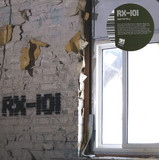
RX-101 has quietly been making waves in the IDM/electronic music underground for the past few years, through a series of archival releases — material recorded in the late-90s, but previously unreleased until Suction Records began compiling and releasing these records in 2016. What’s truly mind-boggling about RX-101’s output is the sheer quantity of stunning, top-drawer material that Dutch producer Erik Jong recorded over the period of just 3 years, 1997-1999. Many have suggested that the whole thing is a publicity stunt — some insisting that this is all new material masquerading as vintage, while others have proposed that the material may in fact be a secret alias for Aphex Twin to release gems from his own legendary ’90s audio archive. RX-101 has absolutely nailed the sound, and quality, of early-90s AFX/Rephlex, that much is true. “Serenity,” this latest full-length RX-101 release, is no exception.
Just as RX-101’s last album, 2019’s Dopamine, concentrated on one hallmark of Aphex Twin’s sound — the smooth melodic techno of his Selected Ambient Works 1985-1992 LP — so too does Serenity reference another classic early-Aphex era, but this time it’s a completely different beast. Don't let the title fool you - Suction Records' latest dive into RX-101's 1997-1999 tape archives is not all lush, serene melodies. On Serenity, scorched, crunchy jackhammer beats combine with emotional, plaintive pads, delivering a classic set of vintage-Rephlex-style bliss, à la AFX, Caustic Window, and Cylob. It was Cylob who coined the term Industrial Folk Songs for his classic 1995 LP, and that release is clearly a blueprint for RX-101’s latest collection.
Standout cut Hearts Utd., featuring a stunning music video by Aidan Fantinatto and I Dream Of Wires’ director Robert Fantinatto, not only nails the magic of AFX’s trademark, irresistible jackhammer-beats-meets-plaintive-melody device, it arguably rivals the master at his own sound. As a whole, what could be a harsh and monotonous collection is lifted by RX-101’s subtle diversity and skill, particularly in his ability to create eerie, evocative moods, with gorgeous melodies that speak volumes of emotion.
When Elena Colombi launched the Osàre! Editions label in the autumn of 2019, she explained that the label would become home to bold, daring, future-facing music rooted in experimentation and free-spirited musical abandon. These are all descriptions that could apply to the label’s latest release, a retrospective album of little-known works by Greek musician and producer Thanasis Zlatanos.
Many will not have heard of Zlatanos, or Nekropolis, the band he fronted alongside dear friend and regular collaborator Trygve Mathiesen, yet the music he made during the 1980s was otherworldly, intergalactic and undoubtedly alluring. These songs and instrumentals made extensive use of analogue synthesizers and lo-fi drum machines, as well as Zlatanos’s trusted Gibson Les Paul guitar and his own distinctive voice.
Stylistically, the musician and producer refused to settle on a specific sound, preferring instead to create inspired, often mind-altering pieces that join the dots between wave music, skewed leftfield pop, ambient, prototype electronic and Madedonian folk music. Operating for much of the period from a crumbling house earmarked for demolition, Zlatanos kept up a daily music-making vigil that resulted in a vast vault of music, most of which has remained unissued since the 1980s.
The breadth of and width of Zlatanos’s distinctive approach is laid bare on Retrospective, a compilation album prepared by Colombi and the artist himself that draws on tracks from his numerous albums, those by Nekropolis – whose sophomore set “The New Europeans” was banned in Norway – and his epic archive of previously unheard material.
The artist’s singular but wide-ranging musical vision is free for all to see across the 13 tracks stretched across the vinyl version of the album (digital buyers also get a further four superb cuts). It veers attractively from the ghostly, traditional-meets-futuristic new age electronica of “The Crystal Sight (Excerpt)” and the doom-laden coldwave throb of “Master Chameleon”, to the undulating, soft-touch creepiness of “Surreal Moment”, the Vocoder-laden operatic poignancy of “The New Barbarians” and the squally guitar solos and effects-laden electronics of “The Light”.
Words from the artist___:
"I live in the Internet. Visits from outer space make me compose. I breathe here. I am the master chameleon, the psychedelic clown. I am not here anymore, neither in the picture, nor the reflection. Our bed is a boat that takes us tomorrow without us.
Here is an album of dreams and digital emotions. Analogue recordings made with a Prophet, a Moog Rogue, a tape recorder and a Gibson Les Paul guitar.
As far as I can remember I have always been in a recording studio. I listen to, understand and live my life through songs and music. I have worked alone and with friends such as Trygve Mathiesen. Although I am a guitarist, I continue to work with synthesizers on music that blends elements of Macedonian folk music, recordings from the streets and embryonic electronic sounds.
Some of my albums have been critically acclaimed, others banned by radio stations. For years I worked on endless recording sessions in a crumbling house that should have been torn down. The music on this retrospective compilation was recorded at various points between 1982 and the present day. Some of the compositions first appeared on previous albums, while others have never been released before. They were sat on tapes waiting for a saviour. Now that saviour has arrived and they can be free.
For further proof of Zlatanos’s unique sonic approach, check the startling contrast between the bass-laden slacker pop headiness of “No Expectations” and the spacey ambience of “The Dead Don’t Remember”. Considered together, the selected pieces and those elsewhere on Retrospective forms a snapshot of a genuinely unique and visionary musician, composer and producer. It’s a celebration of someone whose work has previously been overlooked."
WRWTFWW Records is insanely happy to announce the first ever vinyl reissue for both volumes of Yoshio Ojima's superb environmental music project Une Collection des Chaînons I and II: Music For Spiral, originally released in 1988 on CD only. Each volume is sourced from original masters and comes as a double vinyl LP with liner notes in English and Japanese . This marks the inaugural release from the ESPLANADE SERIES by WRWTFWW Records which focuses on the works of Yoshio Ojima and friends.
Une Collection des Chaînons II (along with its complementary predecessor Une Collection des Chaînons I) gathers selected music pieces conceptualized and produced for sound-designing the Wacoal Art Center in Aoyama (Tokyo) also known as Spiral, a hub for a wide range of sophisticated cultural proposals spanning visual arts, theatre, music, design, fashion, and lifestyle.
Named after its superb curled-shaped structures laid in a vast atrium, Spiral is a monumental work of architecture by Fumihiko Maki, designed according to the principles of Metabolism, a movement advocating the fusion of the notions of megastructures and organic biological growth - in essence, evolving designs and constructions, adapting to human needs naturally.
Evolving, organic, adapting, these are notions that perfectly describe Yoshio Ojima's divinely designed brand of environmental music. Continuing, embellishing and bringing the Collection des Chaînons (which translates as collection of links) full circle, this second volume approaches sound design in relation to various contexts, sizes, and shapes. The nanoscopic neoclassical lullaby "Les Trois Grâces" brings attention to the importance of small details, "Pulse at Soothe" starts with the minimalism of a Satoshi Ashikawa piece and slowly drifts into mystical landscapes and cavernous echoes, "Entomology" and its melancholic artificial forest feels like a Twin Peaks mirage, and "Atrium" literally feels like a floating visit of a gigantic open space structure. With each timbre selected with extreme precision, each element placed in space with the utmost care, and textures worked to allow a wide canvas of emotion for the listeners, Yoshio Ojima's music is the constantly transforming connecting point between humanity and architecture.
Sitting alongside Midori Takada's Through The Looking Glass, Satoshi Ashikawa's Still Way, Hiroshi Yoshimura's Green, or Yutaka Hirose's NOVA, Une Collection des Chaînons is a pivotal work of Japanese environnmental/ambient/minimalist music.
A note from Yoshio Ojima: "Please listen to this album at around the same volume as daily life sounds such as air conditioners and refrigerators."
Secretsundaze welcomes Eliphino to the gala relaunch of their imprint for a thoroughly satisfying mini album of contemplative jacking and dulcet breakbeats.
Eliphino's most recent 'Realistic Sex EP' on the hotly tipped Meda Fury label boasts thunderous breaks, 303s and serious sub-bass pressure which has gained praise from tastemakers such as Jon K, Carista, Josey Rebelle, Moxie and Gilles Peterson.Having flexed with this darker edged EP after a long lay-off from releasing, while sharpening his skills and reconnecting with his musical inspiration, Eliphino is now ready to really cut loose with 'Breaking Up Is Hard' - a statement longplayer that dreamily investigates the dusty spaces between house, breakbeat, ambient, hardcore and acid. Tom This album came about as way of focussing my energy in the wake of a significant break up. I tried to experiment with melody and texture to convey some of the range of emotions that come with such a testing time. That being said, the B-side bangers are more dedicated to abandon and forgetting your worries.
Hailing originally from the Leeds, but with time spent in both London and Berlin, 'Breaking Up Is Hard' lands somewhere between the Hessle Audio crew, Joy O and Selected Ambient Works era Aphex.
Having previously released heaters for Brownswood and Hoya Hoya over the years, Eliphino stepping up for the debut artist LP on the reactivated Secretsundaze label feels like a natural fit as James Priestley explains:
""We've collectively had a connection and friendship with Tom that goes back several years and in fact it was receiving this work as demos that really spurred and inspired us into getting the label rolling again. It feels totally right to be working with him on this and for this mini-LP to herald the relaunch of the label as it moves towards a more artist led as opposed to EP driven approach.
Global tracks is a mystery; browsing the name online gives nothing associated with the artist. All we really know is that Gothenburg is home base. Most points toward that this is Global Tracks first release and Hoga Nord Rekords are more than proud to be first out giving his/her music out.
With albums like 'Selected Ambient Works' by the Aphex Twin and cities like London and Sheffield as a ground for the sound, Global Tracks displays how breakbeats should sound in 2019. The music is mostly influenced by Jungle, but also by Footwork and Dancehall. The roots lie shallow but the phantom behind this music don't give up with trying to recreate the nineties straight up, instead he/she develops the legacy from all the best and most drug marinated DJ:s from England circa 1995.
Breakbeat has a new vanguard in this mysterious shadow crawler that we know almost nothing about, but rumor has it Global Tracks is locked up with the machines under ground somewhere in Vastra Gotaland in Sweden working on new broke up beats, ready to surface when the time is right for more, deep and ganja oozing dance music!
When A&R get an email from a legend saying 'listen to these tracks, I think they're up your street' we knew we were on to something special.
Please welcome Biochip with their debut release 'Synthase'. Eight tracks of analog electro and acid techno, all recorded live. Very much of the Selected Ambient Works Vol. 1 ilk. Beautifully noisy, highly melodic and raw, with those emotional mid nineties IDM tendencies that very few successfully capture.
Biochip are Melissa Speirs and Julian Kochanowski from Montreal, Canada. Listening to Synthase you can tell they are huge fans of vintage analogue synths, magnetic tape and drum machines; their sound has a reassuring warmth and human feel to it.
We already can't wait to hear their next live sessions.
TV Victor was one of the first artists of Tresor Records where he became legendary with several of his ambient and trance productions including Trance Garden 1-3 and Trancecology Chapter 1. In 1989, he launched his first solo project: Moondance - The Magic Sound of the Moon, where he lay foundations for later explorations with experimental sounds fused with pop elements and anticipated an ambient excursion to be had in the future.
In the following decades TV Victor created impressive solo works that traversed between ambient and trance, he collaborated with artists like Moritz v. Oswald, Max Loderbauer, Ari Benjamin Meyers, Paul Browse and Tobias Freud. Contrary to common mainstream tendencies he created a very unique interpretation of both genres. In recent years Victor has concentrated on creating experimental and abstract sonic spaces for escaping reality, spaces that live through the imagination of the listener. Each piece, a segment of a larger musical movement; stands alone to create new sonic continuums. Otherworldy music that is in its own sphere.
30 years after the release of Moondance and 50 years after the first landing, Lullabies For Insomniacs revisit TV Victor's musical roots with 'Back To The Moon'. The previously unreleased works were carefully selected from his vaults and restored by Berlin based engineer Brett Olke (B Ashra), the album offers a glimpse into the future by creating a soundtrack for mankind's settlement of beyond in a conceivable hereafter.
Pi Gao Movement presents their first and long awaited release of the HAdES (Humanoid Advanced Engineering Society ) Network concept on vinyl. Originally released as a digital download, Descendants of Starfish Prime introduces Majestic 12 as a genre - blending mavericks of electronic music. Much like the name implies, Descendants takes a still landscape and captures it in time as it is violently uprooted, stripped to it's base elements and becomes something foreign, something unimaginable, something beautiful. This four song release takes the listener through a journey offering little consolation and no apologies; using varying tempos, patterns, structures, and vocals as operators on a clean canvass. What is the HAdES Network Series The HAdES or Humanoid Advanced Engineering Society Network series will be a collection of works from various artists presenting obscure and diverse facets of electronic music. Man creating machines to replace the human being. Who is Majestic 12 Majestic 12 is not a who, but a what. There are no names attached to this conceptual group. It is a cluster of concepts that have been carefully selected through experimentation. Strains have been extracted, combined, and developed