Blending ambient, drone, krautrock, psychedelic, house music elements into a unique sonic universe... that's what Cloudland Canyon is known for! This American experimental music project led by Kip Uhlhorn comes with the release of their new self-titled LP on the always trustworthy Medical Records! The band continues to explore the boundaries of sound and space, taking the listener on a journey through lush soundscapes and immersive textures. Formed in 2002, Cloudland Canyon has released several critically acclaimed albums, including "Fin Eaves," "Lie In Light," and "An Arabesque."
Their recent releases have been produced by Sonic Boom from Spacemen 3/Spectrum. With each release, Uhlhorn has pushed the envelope of experimental pop music, collaborating with various musicians and producers to create intricate and otherworldly compositions. This time around Uhlhorn collaborated primarily with AI to generate and create a compositions that sound like they are meant for an alternate realm where both beauty and suffering are both present, but not at odds with one another. AI has helped Uhlhorn take one step further into the transfigurative looking glass.
The new LP, marks a new chapter in Cloudland Canyon's journey, expanding their sonic palette to include elements of techno and electronic music while still retaining their signature dreamy atmospheres. The album is a journey through a sonic landscape that is at once futuristic and nostalgic, evoking the feeling of driving down an endless highway into the sunset. Past musical collaborators have included some of the most exciting musicians working today, including Sonic Boom from Spacemen 3, Wayne Coyne & Kliph Scurlock of Flaming Lips, David Scott Stone of the Melvins, Unwound,& LCD Soundsystem, Dean & Britta from Galaxie 500 & Luna, and Jody Stephens from Big Star to name a few. "S/T" is a testament to Cloudland Canyon's ability to collaborate and create music that is both innovative and accessible. Whether you are a longtime fan or a newcomer to Cloudland Canyon's music, "S/T" is a must-listen for anyone interested in the possibilities of experimental music in the 21st century. With its combination of analog and digital textures, hypnotic rhythms, and expansive soundscapes, it is a journey you won't soon forget.
Buscar:self self
As it celebrates its 50th anniversary, Bill Withers' Still Bill remains true to its title – and stands as the greatest male-fronted soul album not made by a singer named Marvin, Al, Sam, James, or Ray. Though the saying "keeping it real" did not exist in popular parlance when Withers released his sophomore effort on Sussex Records, no words better capture the music's approach, mindset, and value. Every facet of Still Bill radiates honesty, truth, and emotion.
These characteristics – along with Withers' strong singing, hybrid arrangements, and deceptively simple songwriting – have allowed the album to endure to the point where it sounds as fresh today as in 1972.
After rising into the Top 5 of the Billboard Album charts and attaining gold status within a year of release, Still Bill has long been evaluated not by sales – but according to its merit, spirit, and agelessness. Included by The Guardian on its "1,000 Albums to Hear Before You Die" list (2007) as well as in Tom Moon's 1,000 Recordings to Hear Before You Die book (2008), its contemporary standing as one of history's most venerated soul efforts eclipses the positive reception it enjoyed in the early ‘70s.
Still Bill walks the same hallowed ground as What's Going On, Call Me, Night Beat, and Genius + Soul = Jazz. Like those landmarks, Still Bill plays with a mix of consistency, effortlessness, and complexity that rewards repeat listening and transcends categorization.
In combining four of the era's predominant styles – Philly soul, sweaty funk, Southern-reared blues, acoustic-based folk – and melding them with standout production borrowed from both minimalist affairs and sophisticated singer-songwriter albums, Still Bill occupies a distinct universe.
Its rhythmic fare is equally laidback and invigorating; relaxing and rollicking; eloquent and muscular; soft and tough. Withers' calm, self-assured voice hovers above it all, doubling as a warm blanket that adds comfort and grace to lyrics steeped in maturity, perspective, and compassion.
Withers' balanced outlook on human desires, needs, and situations stem from his own existence as a former blue-collar employee who believed his time as a musician would soon end. That grounding forever separates Withers from other contemporary soul greats – and stamps Still Bill with a conversational nature and egoless approachability.
"I mean look, I'm really a factory worker," said Withers in 1972. "That's a real job." There's that word again: real. The songs on Still Bill are tethered to modesty and actuality, wedded to a belief in simplicity, and connected to universal truths that link us all – independent of our economic or social standing. No track better exemplifies those principles than "Lean on Me," a feel-good paean to brotherhood and community that hit No. 1 on the pop and R&B charts en route to becoming a mainstream staple.
Withers approaches the plainspoken insight on "Lonely Town, Lonely Street" and heartbreaking vulnerability of "I Don't Want You on My Mind" with similar sincerity and straightforwardness. His proclivity for authenticity extends to the record's other big hit: the sexual, funk-laden "Use Me," which reached No. 2 and reflects the singer's everyman persona. It's an identity couched in keeping it real, the very inclination that ultimately led Withers to retire in the mid-'80s rather than bend to industry pressures or risk credibility.
That commitment to truthfulness and realism helps make Still Bill feel as unaffected as the air we breathe. Looking back on "Lean on Me" years later, Withers said it seemed like "something that was there before I got here" – the kind of song that could be 100 or 10 years old, or one we encounter anew 10 years into the future. The same can be said for every note on Still Bill.
Two mavericks, out on the weekend, trying to make it pay...
"Maverick was the word that came to mind when I listened to this music. A slightly wayward independence of spirit and outlook. The word originally referred to an unbranded male calf that had become separated from the herd (because Texan rancher Sam Maverick was so negligent in his branding - ‘if it ain’t branded, it’s a Maverick’). But Sam’s grandson Maury Maverick gave it a different twist in his short but stormy Congressional career as the only liberal member of the Southern Democratic caucus. Maury was so out of step with his own folks that he not only voted in 1937 to make lynching a federal crime, he even addressed the House to condemn the practice as barbaric. His attempt to ban racist mob murder sadly failed, but it’s that refusal to march in step which distinguishes the two ‘mavericks’ who made this record.
Who would attempt to combine cunning ethnological forgery, Scottish folk songs, claw-hammer guitar, untutored horn-tootling, elastically relaxed drumming and garage electronic fuckery? Only Greg and Stefan, high on sea, sunshine and mis-judged micro-dosing – that’s who. ‘Don’t drown’ was offered as practical advice during the self-described ‘Yellow Submarine’ phase of making this record. And while they managed to avoid literally doing so (phew), they sound here like they got pretty ‘deep in’ to an Octopus’s sound world all their own. This surprisingly clear analogue recording has just enough Bikini Bottom grit to ensure traction. The tunes are inviting, and the sonic disruptions are too good-natured and goofy to upset even the most delicate digestion.
The sessions have had a couple of years to marinate, courtesy of some pandemic, and are here offered in that most Archducal of vinyl formats, the double ten inch. What are you waiting for, a side of Crabby Patties? Get your water-wings and dive in (unless you’re tripping)!" - Bruce Russell (The Dead C)
Pumice is the long-running, endlessly inventive project of New Zealand native Stefan Neville (1974), whose shambolic music is equally reminiscent of Kiwi pop groups such as The Clean and Tall Dwarfs as well as the country's experimental noise-rock bands like the Dead C. Largely recorded solo by himself on junky equipment, his songs typically feature blown-out guitars, wheezing chord organs, and vocals disguised by tape hiss and static.
Greg Malcolm (1965) is a guitarist from New Zealand who has played everywhere on the globe and with all most everyone, including Rosy Parlane, Toshimaru Nakamura, Tetuzi Akiyama and Bruce Russell, as well as solo releases on his own label, Corpus Hermeticum, Kraak and Celebrate Psi Phenomenon.
For fans of psych rock, space rock, psych-prog, noise rock etc
Their journey started a long time ago, some say on Saturn, some say in the subconscious of the human psyche, coming out in different manners through the ages, channelled by mystics, witch doctors, shamans, free thinkers, free spirits. But we do know that what has become Codex Serafini travelled here from their home world on Enceladus in 2019 and crash landed into the music scene of Sussex.
Invoking many styles of psychedelic rock from the recent human musical history to open the minds of their human audience to the other world, and higher plane.
After releasing two EP’s, ‘Serpents of Enceladus’ in 2020 and ‘Invisible Landscape’ in 2021 Codex Serafini embarked on their most immersive journey so far creating what would become ‘The Imprecation Of Anima’ an exploration of the self, the duality of the human existence. The album is heavy, much heavier than their previous output and the albums longest song, ‘Animus in Decay’ is longer than either of the bands previous EP’s.
It snakes and weaves an epic motif through the wilderness of the sometimes barren lands of the unconsciousness, focusing the mind with it’s almost heavy metal mantra and using this to open up the third eye to the realisation of our mortal existence. The whole album is a pilgrimage into one's inner self and its relationship with its own shadow in its truest form, two parts coming together as a whole.
Finally, our debut album is out. It is based on a well-calibrated selection of tracks chosen from intense live performances since our project's inception in 2018.
Dream Dome is a small window in our studio that looks out into the sky - a symbol of the musical vision of two opposites whose style and DAWless music-making skills have created 13 tracks, carefully calibrated by us on the dance floor.
Dream Dome is a blend of musical styles closest to leftfield house and techno. It is characterized by warm analog timbres, polyrhythmic structures, and the self-expression of our individuals.
Dream Dome is available on limited 180g vinyl with 8 tracks + download code for full extended 13 tracks.
Made in Valencia with love.
Kinn turns the Post-Rock continuum inside out with his sophomore album, Dogtooth.
Shifting focus between his present self and his misled teenage years, 'Dogtooth' sees London born and raised sound art graduate Fred Lomas contemplate the vulnerability of youth, addiction and suicide as Kinn. Unabashed in their creative ambition, Kinn's tongue-in-cheek 'dread-voyeurism' is underpinned by a palpably sincere vulnerability that seeps through their dynamic and rewardingly dense records.
An insight into Fred's formative years can be unraveled from his nickname "Dread", originally given to him by his parents. Growing up in North London as a 'constantly out of the house' youth, Fred only had eyes on any counterculture he could find to defy the city's notorious empty capitalist centric mainstream culture, skateboarding, graffiti, and terrible punk bands which would only last 1-3 rehearsals (max). As a teenager he experienced the notorious 2011 Tottenham riots, which is often referenced in the artist's output and greatly informed their sensibilities. Barely an adult, he was confronted first hand with concepts of constant hostility and corruption which were seemingly welded to his surroundings, corruption formed by high rises and international political scandals taking place only a short journey away.
Even today, Dogtooth reflects on this contrast of community and anger and surmises it to be part and parcel of modern metropolitan life, looking to peel away the bad looking for meaning, comfort and ways of goofing off amidst oppressive forces, sirens and snake oil salesmen everywhere.
Montreal duo Bas Relief present a collection of rough-cut IDM and pitch-corrected emo on Insulary, a five-song EP out June 2023 on Brooklyn imprint Quiet Time. Written and compiled long distance from threads of bass music-inspired alt pop and guitar recorded in isolation, Insulary is the duo’s first substantial release since 2018. Granulated microglitches fill out the digital drum arrangements, calling on influences Baths and Loraine James, overlaid with warm piano progressions, melancholic guitar loops, and collaged vocal production.
These self-reckoning, forlorn vocals form a patchwork narrative, hazed like a shapeshifted memory, long reconfigured with each conjuring, coherence inconsistent but still there. Recurring dreams find home among recursive passages, self-referencing lyrically and with samples churned through plugins, recorded on loop until you fall upon the most satisfying aha! moment and lock it to the grid. At certain moments all the pieces combine to reminisce in sentimental shards of Porter Robinson or The Postal Service, while never straying from Bas Relief’s own vernacular.
Visiting the past in person simply by walking the routes you took in a life long past, that reenactment of memory, that attempt to capture that which you can’t – it might even be a future – is a central bolt of Insulary’s lyrical content. It’s sentimental, it longs for some past which might not even have existed, and it’s hopeful too, never capitulating to traditional structures in its embrace of unusual stylistic combinations. Insulary – brim-packed with fragments of drum and bass, uptempo electronica, and emo – is but a preview of Bas Relief’s exciting near future
The brilliantly entitled 1619 Bad Ass Band covered myriad different styles from mellow sound to furious funk on their superlative and self-titled debut long player back in 1976. Two of it's standout tunes now get pulled and pressed on this red hot 7" from P-Vine, complete with a flip-back sleeve.
That LP is a rare one amongst the famous TSG catalogue and first up from it is the mid-tempo dance gem 'Nothing Can Stop My Loving You' while on the flip there is the more heavy funk sound of 'Step Out' which anyone who has listened to any DJ Shadow will know he sampled.
Contagion Vapors was recorded between May 2020 and March 2021, in tandem with 'Transgressive Transmissions'. Both albums have been released by Castles in Space, however they feature completely different sonic energies.
Caught up in the first wave of pandemic doom/gloom which resulted in a bizarre creative bloom for Patrick, both albums have unique sounds anchored in the immense Patrick R Pärk/Kösmonaut discographies. This one is definitely a Kösmonaut record, however.
Patrick’s Contagion Vapors is a vaporwave sonic adventure which
soothes the worn soul like an icy balm with its motorik repetitions and sonic patterns and swirls.
Uncharacteristically upbeat and always positive, the album was a personal exercise in not becoming consumed by COVID isolation and misery. Major influences were Patrick Cowley, Cybotron, Automat, Cluster, and Harmonia and the entire album was recorded / mixed in the midnight witching hours over the course of only 2-3 days.
Ever prolific, Patrick is currently deep diving hard into post Y2K New Age conjurations with his massive Galactic Mirage project which should see another CD box set later this year. There's also some forthcoming Teeth Of Glass vinyl coming from Library Of the Occult later this year and plenty of Patrick’s self released "chrome sonic babies" in between.
"We entered the shadowy mouth of a new space, descending into a realm that precedes the underworld, the arcane, far from our time. We met beasts that gave us lessons about their language which we started learning without grammar."
'The animal world is a constant in the work of Milan improvisational duo Rosso Polare. If Cani Lenti was guided by the diaphanous birdsong integrated into their sparkling mix of folklore, ambiences and occasional humming, on Bocca D’ombra the themes go darker, textures are harder to pin down and the animal presence takes on new connotations.
Instead of an anonymous, patchworked outdoors we enter a cavernous space that invokes the collective unconscious with bestial and funereal undertones, as the animals take on the role of the psychopomps, ancient guides through the shadow realm.
The album is influenced by Timothy Morton’s Dark Ecology, a thinker who sees the constant exchange between the human and natural world as an ongoing dialogue, the two influencing each other, in a series of reverberating loops. This looping is also reflected in their compositions, where improvisations with traditional instruments like electric and acoustic guitars, monophonic synths, horns or flutes meet natural noise-making tools like branches, rocks or nuts that amount to lugubrious, often dissonant textures. Bocca D’ombra is built on a series of whispers, breaths, panting and rustling, creating a feeling of closeness sometimes verging on the claustrophobic, ingeniously set against sounds evoking space – fireworks crackling, crows echoing, church bells reverberating, indistinct cries from a children’s playground.
Distance and repetition are deeply ingrained in their own understanding of sound and their surroundings, becoming the building blocks of their practice. Just like Gregory Bateson in the ‘70s, the duo believes in a more romantic approach to ecology, seeking a porous border between self and environment, human and animal, internal monologue and external ambient hum.
If earlier releases were noisier and denser, Bocca D’ombra is tight and focused - every sound and melody is given room to breathe and develop on its own, enhancing the haunting, otherworldly aspect of the music. The result is heady, intoxicating mix which sublimates chaos into sparkling compositions of contemporary animism.'
Sonic chaotic, tender terror. On New Stone, Lithuanian producer Kamile Rimkute a.k.a. Caline with C dazes and uplifts us with her reflective post-modern electronics. This album is a personal long-term project in the making, one of auditive self-expression, treading across themes such as adventure, love, discovery and grounding.
The album is driven by Kamile's interest in futuristic boundary-crossing music and intersectional feminism, as well as her studies in Sonology. With an advanced skill for composition, sound synthesis and her knowledge on the totality of sound, she claimed the means of production, as New Stone is all produced, mixed and mastered by herself.
New Stone was recorded in a period of two years that started in 2020 and incorporates highlights of her landmark livesets ever since. New Stone is full of concocted emotion that sustains and releases through her trademark of stark contrasts - triplet-driven, jolted yet angelic atmospheres - resulting in a tangible, body-driven sound.
Interweaving her vocals near the final salvo, this album marks the end of a creative cycle and start of a next, allowing her personal touch to seep through her art more and more. Embarking from home ground, stepping on a new stone.
The Blood of Heroes is a amalgamation of artists re-envisioning worlds first created in the Rutger Hauer film by the same name. In “Nine Cities”, the trilogy is completed. The first self-titled album depicted the PRESENT post-apocalypse as depicted in the film. The second album,The Waking Nightmare, showed the world during the actual apocalypse in the PAST that led to the times in the film. This third album is the FUTURE – further past even post-apocalypse – “Nine Cities buried deep underground” – what had survived, and how did these cities evolve beyond the world-ending criteria of their creation and burial? Past the film inspired storyline, we have for the first time in many years, 2 members of the original Napalm Death collaborating with each other: guitarist Justin K. Broadrick is joined by Scorn beat master Mick Harris. With Submeged on bass, and Enduser on keyboards, the frame is set. Joined by all the artists depicted below, including returning vocalist Dr. Israel, and Fear Factory’s Burton C. Bell, this cast is full of surprising interactions, all masterfully mixed by Dadub’s Daniele Antezza. Original artwork is an extended booklet by Khomatech; these Nine Cities are a world of their own, illustrated by one of the masters of fantasial art.
We are happy to announce that Ruf Dug, the Mancunian record producer, radio host, and self-professed video game freak is the latest artist to climb aboard the Pinchy train.
Well known for his kaleidoscopic approach both in the DJ booth and in the studio, Ruf Dug has touched on genres as diverse as street soul, vaporwave, and acid house over the years. He has released material on labels such as Rhythm Section, Klasse Wrecks, and his own Moodymann approved Ruf Kutz.
For his Pinchy & friends’ debut (there's a 6-song EP in the works as well) the NTS radio host distils some of these aforementioned influences and presents a two-track 12" that explores dub techno, Chicago acid, and atmospheric balearica.
Built around a solid, techy thud, "Thru The Night!" rides seismic bass waves and reverb-laden stabs to more tropical climes, thanks to gusts of echoed flutes and a catchy, 8-bit vocal hook.
On the flip, "I Love You" takes a minor-key synth riff and sends it off to music school for some late-night nasty dance floor bliss.
REPRESS!
The afrobeat-inspired eight-piece drop their hotly-anticipated debut.
A horn-fuelled, soul-shaking introduction to the young collective.
Their first solo release after featuring on london jazz primer we out here.
Kokoroko are part of the thriving scene that's grown out of london's young, jazz-influenced musical circles. Led by bandleader Sheila Maurice-Grey, their self-titled ep is the group's first solo release, following their early 2018 debut with 'Abusey Junction', a track that has gone on to accrue over 15 million plays on youtube and 2.6 million on spotify. Across the E.P's four tracks, the eight-piece deliver on the promise of that memorable introduction, offering a bigger vision of their afrobeat-influenced, soulfully-imbued sound, west african roots shaded with inner London hues.
'Abusey Junction' was first featured on we out here, the 2018 Brownswood compilation documenting London's bright-burning, jazz-influenced musical underground, picked by Rough Trade as compilation of the year 2018, and praised by the Wire, Monocle and the New York Times. Writing and performing as a group since 2014, Kokoroko have played at iconic venues from ronnie scott's, performed at the festival, Afropunk, and toured in Brazil, Colombia and France. Inspired by Fela Kuti, Ebo Taylor, Tony Allen and the great sounds that come out of West Africa, Kokoroko put on a performance to honour the masters that taught them.
- A1: Giniro No Tsubasa
- A2: Losangeles City
- A3: Silent Love
- A4: Seventy Cherrys
- A5: Space Flight
- B1: Prologue
- B2: Happy Turkey Days
- B3: Improvisation (Love) (Love)
- B4: None (Words By?) (Words By?)
- B5: How Short Our Life Are
- B6: Mad Love
- B7: God Truth Love
- B8: Telephone
- B9: Nothing Meaning Of Life!
- B10: Eraser Head
- B11: Evil Spirits
- B12: Crush!
Twin Cosmos is not only the name of the musical output of fraternal twins Morihito & Yasuhito Ito, but more philosophically, an album that encapsulates, “the universe of twins”.
The pair were born 1953 in Yokkaichi, Mie Prefecture. A port city 50 kilometres west of Nagoya, famous for its chemical plants. Despite their surroundings, they grew up in an environment that fostered learning and self-expression. From an early age, they began to carve out their own paths.
Morihito was fascinated with scientific endeavours, space travel and spirituality. His father, an electrician by trade - motivated him to build his own musical equipment. This led him to attend an acoustic engineering school in Tokyo from 1972-1974, after which, Morihito returned to Yokkaichi where he worked in the instrument and audio section of a department store. This helped him keep up to date with the latest equipment, while allowing him to simultaneously work on his own musical endeavours.
Morihito’s side of the ‘Double Action’ LP is a cohesive piece, which effortlessly drifts from one song to the next through samples of flowing water and rockets launching into space ,that were recorded while visiting his brother in the States. His music is carried by flowing vocal harmonies, guitar strums, and floating synths to create an eternal dreamlike ambiance.
In contrast, Yasuhito gravitated towards philosophy and the arts and in 1976 followed his Englsih teachers’ advice and moved to the ‘foreign world’ of the United States. It’s here that he further explored his interests in Christianity, sadomasochism and poetry. He was exposed to artists like John Cage and Sun Ra, as well as a variety of ‘Do It Yourself’ recording techniques that enabled him to record remotely.
Using samples, poetry, and an original approach to traditional folk & rock songs, he recorded his side of the LP. The outcome being provocative, dark and confronting realisations, which solely used English lyrics to represent his experiences in the ‘Western world’. In 1980, Yasuhito was wooed back to Japan by his brother and the prospect of a combined record release.
The self-released album ‘Double Action’, was completed at Victor studios in Japan. Without a distribution network, the release was sold mostly to family and friends and fell into obscurity. Despite not reaching commercial success, the pair have continued to make music over the past four decades, crediting it as their driving force in life. This 2022 release includes an insert with archival images & liner notes in both English & Japanese.
The formidable Rex The Dog returns with his first single for Kompakt in three years, “Change This Pain For Ecstasy”, a slow-burning disco-glitter stomp that’s charged with analog energy. Pushing his self-built modular hardware set-up to its limits, “Change This Pain For Ecstasy” is taut and thrilling, stripped-back and pulsating, with sweeping chords shimmering through a classic Moroder arpeggio, as a delirious voice sings out a psychedelic raver’s plaint for liberation, pleading for you to "take away my sorrow and this pain”. Deeply emotional, it’s also a masterwork in tension and release, dizzy with snare-rush peaks, and dark, humid valleys where Rex is bound to the patchbay.
On the flipside, Rex gives us “Moto”, which tickles your ear with cymatic phenomena, its gentle vibrations building, beautifully, into a monster-piece of stealth techno. Rex’s DIY synths work overtime as he chases patterns and phases through circuitry, wielding the tones until they erupt into a spray of pointillist pizzicato. The sounds here crackle and corrode, the textures so tantalizing, so sensual, you can almost grab hold of them with your hands. It’s great to have Rex The Dog back, making livewire, yet deeply human techno, alive and bursting with electricity.
Der formidable Rex The Dog kehrt mit seiner ersten Single für Kompakt seit drei Jahren zurück, “Change This Pain For Ecstasy”, ein mit analoger Energie aufgeladener, stürmischer Disco-Glitter-Stomper. Man kann förmlich spüren, wie Rex’ selbstgebautes modulares Hardware-Setup an seine Grenzen gerät. “Change This Pain For Ecstasy” ist eine Hymne an das Nachtleben, an die kathartische Qualität einer durchtanzten Nacht. Über schwungvolle Akkorde und ein hochenergetisches Moroder-Arpeggio bittet eine delirierende Stimme um Befreiung von allem Leid und Schmerz. Das ist zutiefst rührend und emotional – da es sich hier aber um ein Meisterwerk der Spannung und Entspannung handelt – schwingt sich der Track plötzlich auf in schwindelerregende Höhen der Euphorie.
Auf der anderen Seite gibt Rex uns “Moto”, das das Ohr mit zymatischen Phänomenen kitzelt, deren sanften Vibrationen sich zu einem Monster von Stealth-Technotrack aufbauen. Rex’ DIY-Synthesizer machen Überstunden, während er Muster und Phasen durch die Schaltkreise jagt bis sie in einen Sprühregen aus pointillistischem Pizzicato ausbrechen. Die Sounds hier knistern und korrodieren, die Texturen so verlockend, so sinnlich, dass man sie fast mit den Händen greifen kann.
Es ist großartig, Rex The Dog zurück zu haben, der hochverdrahteten und doch zutiefst menschlichen Techno macht, voller Leben und Elektrizität.
Anthony Linell puts a steely force at the foreground of his latest EP, Sheltering Skies. Blunt force tension builds, layer upon layer, as an anatomy of mechanistic torsion is worked in across an opening pair of tracks. Linell holds out the respite and oxygen for the EP's closer, undercut by aching feedback that just threatens to go again.
We are proud to present the Mr Bongo pressing of Guilherme Coutinho E O Grupo Stalo's self-titled mythical album. Blending lo-fi, Brazilian tropicalia, jazz, funk and MPB with a unique aroma, this record is pure perfection.
It was originally released in 1978 on Erla - Estudio Rauland, an obscure record label from Belém in Brazil, that only released 7” singles, with this album being one of two exceptions. During the 1970s, Belém had a thriving nightclub scene, but it is thousands of miles away from the music industry hubs of Rio de Janeiro and São Paulo, making this record insanely difficult to find, even in Brazil. Added to the scarcity factor is the magical nature of the recording, which has naturally resulted in a hefty price tag to match. Original copies have become a prized, collector’s item.
The elusive Brazilian band leader and keyboard player, Guilherme Coutinho is a true cult artist. He passed away in 1983, at the age of just 41, and during his career he only seems to have appeared on a handful of marvellous records, which makes them all the more special. This album feels individualistic and distinctive from other albums of the day. Listening back to vocalist Elinho’s (aka Hélio Rubens de Oliveira) delivery, it sounds not too dissimilar to some of Belle & Sebastian’s songs. ‘Guilherme Coutinho E O Grupo Stalo’ is rich in charm, quirky and playful. It feels cinematic, soothing and benefits from being heard in its entirety. A proper album experience.
Repress!
New material from the enegmatic Mr Langestraat. TIP!
"One afternoon a couple of years ago, an excited Ronald Langestraat could barely contain himself. “I’ve started dancing!” he exclaimed. “I never did it before - I’d always admired it in the past, but just wasn’t able to move like that!” But then, at the ripe old age of 81, Ronald was gripped by the urge to respond to the rhythm and express himself in this physical way.
For a man who’s dedicated his life to music, in particular Jazz with a funky Latin inflection, it feels like an especially sage realization - like the treasure at the end of a long quest, or the princess after the end-game boss. The prize is freedom, and the shapes we make on the dance floor are mirrored in that piano solo over the stanzas - a caravan that trips from smokey basement clubs all the way to Shiva’s Tandava on the edge of the universe.
The music on this album is inspired by this revelation. Although these songs were written many moons ago, their interpretation is modern, full of renewed energy, with young, yet well-worn players. While it slots neatly into the daily music practice that Ronald adheres to, it’s a new chapter in a story that is still being written - and an invitation to get in touch with your dancing self and try out some new moves."
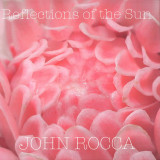
Reflections of the Sun is a collection of new music that see JOHN ROCCA experiment with a more laid back side to his musical personality. John is best know in Jazz Funk circles for his 1980s self funded, self produced and self released Brit Funk classic 'Southern Freeez', and as the band Freeez's founder.
"The melancholic suburban soul of ‘Southern Freeez’ never gets tired for me....an album that has remained at the top of my Brit Funk pile!" - GILLES PETERSON
Much of the album is also somewhat reflective. A personal and emotional reflection on John's life - the tracks a nod to John's varied musical pasts. Sounds, a pondering upon his collection of global influences and his life experiences over the years; Genre, the pulse of today, societal, musical or otherwise - but not easy to place as is John's character; Lyrics, the present dilemmas we face as humanity, whilst reflecting on our own private and deepest human feelings, of life and, of love in all its wonderous forms.
Musically, the 'Reflections of the Sun' album casts a glimpse back to Rocca's Brit Funk roots growing up amongst 1970s classic Jazz Funk and Soul, while also blending inspiration from his 1980-90s electronic influences topped off with everything else he has seen and heard on his life travels since then.
Giving a nod to John's own past while bringing Reflections of the Sun up to date was completed by adding elements of London's re-surgent and vibrant jazz scene. Not so different from John’s own early days jamming with Freeez, he is accompanied on all the album's tracks by his two young nephews and highly respected jazz musicians, Benjamin Rocca on keyboards and Joel Rocca on Saxophone. The two youngsters are known on the current London Jazz scene as the "Rocca Brothers".
The album's title track, "Reflections of the Sun" refers to how humanity, gorging on the sunshine that brings life to everything, also has a tendency to reflect the hellishness of the sun itself. Comparing our self-destructive nature with our planet's volumes of un-ending beauty.
Initial support for various tracks has come via radio plays on UK stations such as JazzFM, Jazz Funk & Soul Radio (JFSR), Soul Groove Radio and Solar (amongst others).
- A1: A Poil
- A2: Gilbert Contre L'univers
- A3: Monte Le Son
- A4: De Rouille Et De Diamant
- A5: Balek
- A6: Punks Des Cavernes
- A7: Terreplate
- B1: L'amour Est Un Crapaud Qui Pue
- B2: Chuck Norris Dans La Prairie (Si Señor)
- B3: Derrick A Mes Basques
- B4: Cthulhu !
- B5: Je Sens Que Ca Me Gonfle
- B6: Les Beatles Du Cosmos
- B7: Métal Noir
"L'Hiver Des Crêtes" is THE new vinyl chapter that signs 40 years of existence of Ludwig Von 88!
It's in a real marathon of approximate punk that they lead their audience, all together (hey hey), to blow out 40 candles joyfully lit by Archives de la Zone Mondiale! A festive and frantic anniversary that will last all year long in 2023!
Judge for yourself: a song to be discovered every week, an album every quarter and a tour of some 50 dates across the country. These true legends of French alternative rock come back full of energy and derision in this first opus with 14 new tracks (including an unreleased one that nobody knows, not even them!) Let the deaf wake up! In 2023, the world belongs to the Ludwigs (or will self-destruct).
Awesome Latin jazz-funk self-titled LP from Venezuelan band La Retreta Mayor —founded and led by guitarist Alex Rodríguez— originally released in 1976 on Discomoda. The short-lived 10-piece band and numerous guest musicians created a jazz-funk & fusion gem considered a reference in Venezuelan music history. The group unfortunately disbanded right after the recording and did not play live or record any more music together. The album contains quite a few heaters for the dance floor like ‘Zambo’ and ‘Líquido Elemento’, blazing with the rich brass section and percussion. First time reissue. 180g vinyl.
Symphony Orchestra is a new group from Maximilian Turnbull and Michael Rault. Both Rault and Turnbull are accomplished songwriters, performers and producers in their own right, with Turnbull leading The Badge Epoque Ensemble, playing with the group Darlene Shrugg, and once releasing records under the name Slim Twig and Rault having released several psychedelic rock & roll classics under his own name in the past decade. The pair have worked together in various capacities for many years, writing and recording together on U.S. Girls' In A Poem Unlimited, and contributing to each other's releases, but the debut LP from Symphony Orchestra (due out May 12th on Telephone Explosion) marks their first release as an official entity.
Needless to say, there is a potent creative chemistry between Rault and Turnbull and Radiant Music showcases the alchemy between their distinct skill sets. The album is an exercise in pure collaboration. After years spent focusing on solo projects and working as hired guns on other projects, the duo came together with no specific intentions other than to work free of boundaries and direction. Freeing themselves from the familiar pressures of deadlines and expectations, they found a sense of discovery through togetherness. Duties on this project were split between Rault acting primarily as a one-man rhythm section and lead vocalist with Turnbull bringing chord sketches and his trademark aphoristic lyrical musings to the table. Trading off roles on guitar and keys from song to song, the duo's deft approach to melody bleeds through their instrumental parts as much as it does through Rault's vocal melodies. The majority of this album was self-engineered over the course of three sessions in 2018, at Michael's Montreal studio. Dormant during the pandemic, Rault's move to Los Angeles and the birth of Turnbull's twin sons, work reignited in 2022. The latterly tracked instrumental 'Concerto' and ballad 'Unthink The Thinkable' provide a dynamic depth to the album perhaps attributable to this tumultuous pause. Mixing came courtesy of Steve Chahley & Tony Price (U.S. Girls, BÉE, Jane Inc, etc).
In all of their work, Rault and Turnbull have made a hallmark of elaborately precise production and arrangement, Radiant Music is no different, though its pared-back simplicity provides a streamlined directness. The pairing of Rault's soulful, elastic vocal with Turnbull's evocatively cerebral lyrics provides a thrilling sensation unlike anything else in their respective catalogs. With an explosive, groove-forward approach, kaleidoscopic walls of vocal harmony and technicolor displays of guitar work, these 31 minutes of music will most certainly stimulate the mind of any fan of classic pop rock and funk. The blown-out breakbeats, winsome woven vocal melodies and propulsive wah-wah guitars of the title track evoke memories of an after-school cartoon special that never really existed outside of a lysergic daydream. "Harp In The Wind" is a perfect moment of overcast melancholy complete with ribbons of weeping synthesizers and velcro-fuzz guitar that could rip a clean line through Kevlar. "Know Thyself" and the harmony-rich "Intersection" are standout tracks that find a kinship in Stereolab's space-age effervescence. "Concerto" is a slab of beaming, mischievous funk that nods to Billy Preston's extraterrestrial keyboard explorations.
Radiant Music, like the best pop music, is life-affirming, confectionary, and enticing. Symphony Orchestra have created an album that hits you right where you need it, anchoring heady, adventurous sonic ideas down to a solid foundation of masterful songcraft, virtuosic instrumental performances and undeniable groove. Not a bar, nor beat is wasted.
On this second delivery of Uruguayan Sound, Mephis presents us with two like-minded producers with a love for machines and their sound.
On the A side we have Elias Sternin, with his particular nostalgic, mysterious and trance-inducing sound. The EP opens up with Wah Wah y Phaser, evoking the feeling of a spaceship lifting off, into the big Other. Bass rolls into the stratosphere, whilst sharp and poignant synths push us past the space rubble that surrounds our planet. The second Track is a proper mood work, landing us in an uncharted yet familiar alien landscape. You can breathe the mystery in, whilst closing your eyes and embracing the unknown.
On the B side we continue travelling through a path of esoteric and questioning vibes. Artesano Titer delivers an ominous mind trip with Science to Music, an utterly mesmerising soundscape to question yourself and your Umwelt. Closing off the EP, we have White Rabbit, a profoundly narcotic trip to the centre of our own perception. Slides, breaks, smooth lines and an acidic bass that spiral down to the core of the self.
Detective of Perspective; Need to try and get a bigger eye, Open wide.
Recently created Guatemalan label Identidata is extremely proud to present Sacratávica, the very first collected survey of Joaquín Orellana’s compositions. With a career spanning over 50 years of activity across contemporary art, performance, theater and sound art, Orellana is a highly singular figure in Guatamalan culture. Often considered to be the sole avant-garde composer in the country, his work has a deeply interdisciplinary quality. Most of his music was created using an orchestra of his self-built instruments, also known as Útiles Sonoros. Sitting at the border of sculpture, sound installation and musical instrument, these Útiles Sonoros, which he’s been building and developing since the late ‘60s, are at the center of his artistic activity.
Aside the obvious formal aspect, his compositions also have a strong political message, while being deeply rooted in Guatemalan history, folklore and various identities, both indigenous and modern. Playful opener “Híbrido a presión” was one of the first of his compositions to be performed entirely using the Útiles Sonoros. However, due to its technical complexity the piece was seldom reproduced, except for a later staging that Orellana directed in Louisville, Kentucky. “Ramajes”(1984), initially titled “Evocación profunda y ramajes de una marimba” , tracks the many incarnations of the marimba across history, before reaching its final form as one of Orellana’s instruments by combining vibrational percussion with melody and poetry fragments.
The title track, ‘’Sacratávica’’, represents one of the most ambitious and emotionally charged pieces from the album. An expansive 22 minute composition mixing textures that mimick field recordings and multi-layered vocal melodies culminating in choral catharsis, ‘’Sacratávica’’ deals in baroque maximalism without ever feeling cluttered. For the casual listener, the track immediately stands out, not only because of the moving vocal layered harmonies, but also through its epic scale and strong sonic narrative. Dubbed “Las voces del Rio Negro”, the piece references the massacres that took place in Coban during a period where the army massacred numerous towns, throwing the bodies in the nearby Rio Negro (the Black River).
Final track, “Fantoidea”, a glistening, metallic ambient improvisation, was a reimagining of Disney’s Fantasia using Paul Dukas’s “The Sorcerer's Apprentice” as inspiration.
Despite his work being presented in numerous exhibitions and concerts in various prestigious museums and theaters across the world, very few quality recordings exist to date. The only previously available recordings so far or either of very poor quality or did not receive enough attention. This is why, although The compositions presented not being previously unheard, having them all together in a high quality audio object represents a key moment In Guatemalan and Latin American culture.
Recorded on August 31st 2016 during a historical concert attended by over 1000 people at the Centro Cultural Miguel Angel Asturias, designed by Efrain Recinos, one of Guatemala’s leading contemporary artist from the last century, the four pieces were performed by a selection of over 90 musicians (including 60 vocalists) who were already familiar with Orellana’s instruments, cherry-picked from the Guatemalan Conservatory.
For the people behind Identidata, it has been a long and arduous process to put together these pieces. Trying to offer a panoramic view of Orellana’s work, the curators have selected pieces ranging from different decades and artistic periods. Sacratávica is a portrait of a singular artist whose work speaks not only to his culture, but carries strong aesthetic sensibilities that resonate universally.
"Drums from heaven, keys from Mars, a bass made from mother earth's soil and guitars from a guy who's time-traveling from German Kraut in the last 60ies into the next 60ies and who happens to gift us today with this funky, dirty, pulsating, delicious music that's everything which music is supposed to be: ALIVE! (Note to self: Always keep a copy of this record in your suitcase!)." (Malakoff Kowalski)
"Afrokraut" is a stylistic expression of Krautrock, primarily associated with Can, and their creative use of time and space in music. "A Guide To Afrokraut III" is David Nesselhauf´s third and last contribution to the dusty shrine of this long forgotten style.
Next to "Afrokraut" (2016) and "Afrokraut II: The Lowbrow Manifesto" (2018), this album completes a humble sonic Trypticon in honour of David Nesselhauf's musical heroes. Experimentation was key in the immersive process of producing this album, which encompasses elements of Funk, Afrobeat and Krautrock as well as otherworldly Drones, early Elektronische Musik and even field recordings.
Inspired by the unfinished manuscript 'History Deletes Itself' by the late science fiction author Joseph Sabiers, Nesselhauf decided to produce a b-movie soundtrack to the original plot, ignoring the fact that there will likely never be a movie to this music.
In the original script, a virus has infected history, the resulting changes of historical facts leading to an unpredictable present and future for mankind. Every attempt to solve the problem – including time travelling – only worsens the situation. But three planets at the end of the known universe seem to be unaffected by the phenomenon, they become a sanctuary known as 'Afrokraut III'. Three brothers arrive there to start new lives. They are introduced to The Guide, their mysterious advisor...
The striking parallels to today's uncertainties, a strong feeling of hope and the idea to never stop exploring (come what may) certainly have encouraged the making of this album, which sees a belated release due to the obstacles everyone faces right now.
David Nesselhauf lives in Hamburg/Germany and appears as a bass player/songwriter in bands like Hamburg Spinners, The Drawbars, Diazpora, and Angels Of Libra.
Sardinian born E.L.I.A.S is an artist who’s always evolving and producing music that combines hard kicks with distorted synths and mean rumbling grooves in equal heavy measure. His enthusiastic mind grows with each step he takes musically, becoming more and more focused with every fist clenching beat he knocks out.
Continuing with the ‘Limited As Fuck’ series of releases, on our fiercely independent techno label based in Scotland, we’re exploiting some other-worldly storming techno here for those club conquering moments in which you’d unconditionally establish full control over the dance floor with a warlike incursion into the bass bins.
Penetration directly into the minds of those who hear this invasive release will inevitably lead to a lack of all self-control as all members of the tribe will involuntarily bust some ferocious moves on their favourite pista da ballo.
WARNING: NOT PLAYING THIS RIOTOUS MUSIC WILL INSTIGATE AN ABOMINABLE SCANDAL
"A Place For Love" is a captivating electronic house music endeavor, expertly crafted by the synergistic partnership of San Proper and Figi, hailing from the vibrant city of Amsterdam. The project boasts an impressive roster of guest contributors, including Tom Trago, Seth Troxler, and the esteemed label heads of Guti & David Gtronic, each imbuing the compositions with their signature style. The project exudes a funky, charming, and inviting energy, inviting listeners to fully embrace their individuality and lose themselves in the hypnotic beats. Whether it be the electrifying dubby techno, the shimmering and ethereal twists, or the razor-sharp edges injected into the club-ready tracks, "A Place For Love" offers a diverse array of auditory delights. It is truly a sanctuary for those seeking to indulge in the boundless beauty of electronic music and the euphoria of self-
Bog Bodies - the band consisting of Robert Stillman, Anders Holst and Seán Carpio delve into deep time to carve sonic abstractions across their self-titled new album on MIC.
Navigating the “liminal territory between noise and signal, chaos and control, form and abstraction,” the trio recorded and mixed the album on an
8-track cassette machine. Bog Bodies is a searching inquiry into the mythologies and magical undercurrents that knit together our existence in the information age.
Bog Bodies opens with a leftfield homage to Superman III, exploring the mythical qualities of technology through a series of angular horn lines that dissolve into the mire of feedback noise on the album’s raking, anthemic title track. Reverberating in tectonic sheets of sound on ‘One That Is Reflected In The Image Becomes All’ and Bog Bodies reaches its climax on the 11-minute ‘Cave Painting 2019’ - a subterranean epic of mystic force, drawn up from the earth in sweeping drones.
Bringing together their combined experiences playing with the likes of Manuel Göttsching, Luke Temple, The Smile and more recently Coby Sey.
Packed Rich's Warp Fields LP depicts the journey of an individual traveling through a field of energy that connects different locations in space. Through the course of this journey the individual experiences a metamorphosis through different stages of physical existence and spiritual consciousness in order to overcome the borders of space and time.
The question remains if the individual will still maintain the same sense of consciousness and distinction of self that originally made up its personality.
Reissue of this cult 1972 album which featured on the infamous Nurse With Wound List.
During the long, dark hangover of the Summer of Love, the classically-trained Essex prodigy approached CBS Records with demo recordings. A forward-thinking A&R executive must have seen a potential revenue stream in Don Bradshaw-Leather's avant-classical noise. The artist was given an advance to record an album. He used the funds to create a large studio in Sussex with many instruments including an actual church organ. Here, on his own, without the use of any electronic sequencing, he recorded "Distance Between Us" using simply multitrack tape, layering each part of the composition. Upon hearing the product of their financial investment - four side-long tracks of blurry organ drones, frantic piano tinkling, and ritualistic percussion - CBS got cold feet.
The album was self-released on Bradshaw-Leather's own Distance imprint; a vanity label established for the sole purpose of releasing the album. The sleeve art is full of mysteries, from the misspelling of "Bradshaw" ("Bradsham"), to the coal-blackened visage of the bohemian madman on the cover (DBL himself?), to the rear photo collage depicting the same madman accosting a nude woman. The music isn't any less mysterious; shapeless symphonies of smeared-out Mellotron, tribal drums, and wordless vocals. Don Bradshaw-Leather passed away in the 90's.
Presented in a matt-laminate gatefold digisleeve.
Far Out Recordings proudly presents the self-titled debut album by Rio de Janeiro born multi-instrumentalist, composer and arranger Tunico. Honing Brazilian roots rhythms like maracatu, xanadu, and samba, to combine with a global contemporary jazz outlook, the newcomer adds a modern classic to the ever rich vein of Brazilian instrumental music.
Consider it a natural evolution from the legacies of greats like Quarteto Novo, Hermeto Pascoal, Banda Black Rio, Tamba Trio, and Dom Um Romão, Tunico’s debut brings together an eye catching ensemble of talents from the Rio jazz community, with whom he performs on a weekly basis at celebrated live sessions and jam’s at venues like Macuna and Comuna Lapa, which often go on all night.
Released in 2022, the album’s rip-roaring lead single “Galope” features the effervescent vocals of Katerina Assef, as well as consummate solos from all over the band, as Sounds & Colours put it “…it exudes distinction and promise”. “Sambola” calls on the signature swagger of Far Out favourite Antonio Neves, indulging us in irresistible swinging samba-funk, undeniably reminiscent of the aforementioned Banda Black Rio in their late 70s heyday.
Born and raised in an artistic Rio household, Antonio Secchin aka Tunico’s father was the painter Guilherme Secchin, whose original work is lovingly repurposed to create the album’s cover. Antonio learned his trade on guitar from a young age, which remains his primary method for composition, but at the age of eighteen he started to gravitate towards the saxophone, and in particular the soprano sax, from which he now leads bands despite being entirely self taught. He would develop his skills busking on curbsides and metro stations before becoming a mainstay player in venues and clubs around the city.
When the pandemic struck, Antonio retreated to his family home in the Rio countryside. With time and space to breathe and reflect in a natural environment, he set to work at fleshing out the compositions he’d written throughout his musical life into full bodied works. His affinity with his rural surroundings is reflected in the luscious, blossoming feel of this groovy, mystical and poignant instrumental debut album.
Tunico will be released on vinyl, CD and digital platf
Dishwasher_ are the latest disciples of yet another new wave of talent in the fertile Belgian groove and jazz scene. It would, however, be a shame to limit them to the constraints of any given musical style. Ever since their formation in 2019, the Ghent-based trio have been experimenting with all possible genres to create a contemporary sound they can now rightfully call their own. With their self-titled debut album, to be released in April 2023 via Sdban Ultra, they are closing off an impressive first chapter, delivering a unique and diverse yet coherent collection of groove-driven cuts.
While labeling Diswasher_ as a jazz band wouldn’t do them enough justice, it is a fact that improvisation and a certain free approach turn out to be key in the creation and performance process of the album’s tracks. Werend, Louise and Arno specifically aim to capture their live energy and synergy on the album by experimenting with structures and textures, playing with song lengths and implementing influences from various other styles — electronic music in the first place, but as well traces from (Middle-)Eastern and Balkan music, next to dance, hip-hop and even metal.
As a result, the record tends to be a pure and honest representation of Diswasher_’s musical identity and artistic quest over the past years — both as individual musicians and as a band. Saxophones drenched in effects, diverse layers of synthesizers, a bass guitar hopping from fingerpicking licks to deep and drone-like bass tones, drums can sometimes sound like drum computers, and sometimes as subtle rhythmic chords: it’s pretty clear how deep this trio have dived to search and find something totally fresh and new.
Members of the band are Arno Grootaers, Werend Van Den Bossche and Louise van den Heuvel. Their debut album is coming out on Sdban Ultra, the innovative label of Black Flower, ECHT! and Compro Oro (among others). In 2023 they will fully focus on new talent, by signing Dishwasher_, but also KAU (formerly KAU trio) and Schroothoop. Apart from that, you can expect debut albums or EPs by LũpḁGangGang, Bandler Ching, KVR trio and Adja coming out this year. Stay tuned.
Futuristic electronics by Niels Luinenburg (Delta Funktionen) under his new guise Immediate Proximity - in collab with Diana Napirelly. Ambient, Bass, Electro and Techno are the main identifiers for their output. Deep and emotive is the mood, but at the same time the music is playful and has a robust and confident character. This distinct direction, which was laid-out on the pair's debut LP '2334', has now led to the start of their own label: IMPROX - on which they'll release a series of EPs. On IMPROX, the duo experiments vivaciously with color, rhythm, space and tempo. Hi-tech, yet tribalistic rhythms are interlaced with elusive sci-fi themes. Big stage anthems are comfortably combined with cinematic ambient excursions. And through self engineered audio-gen modules, backed by a stark focus on sound design, the IMPROX series marks a powerful upgrade to Luinenburg's production capabilities.
- A1: Dreams (Feat Xênia França&Zé Leônidas)
- A2: Kismeti (Feat Matthias Schriefl)
- A3: Asase (Feat Eric Owusu)
- A4: Sábado (Feat Zé Leônidas)
- A5: Carrossel (Feat Zé Leônidas)
- B1: Caio & Eric (Feat Eduardo Camargo)
- B2: Ndiyakhangela (Feat Bongani Givethanks &Amp; Mpho Nkuzo)
- B3: Agôra (Feat Matthias Schriefl)
- B4: Oblique Sunshine (Feat Rebekka Ziegler)
Global pointing Brazilian jazz trio releases their new album Agôra, that sparkles with electric funk and Herbie-esque eclecticism. It features a myriad of guest vocalists and musicians including Brazilians Xênia França and Zé Leônidas, Jembaa Groove's Ghanaian singer Eric Owusu and South African artists Bongani Givethanks & Mpho Nkuzo
Re-wiring the concept of 'fusion' for 2023, Agôra is Brazilian trio Caixa Cubo's resurgent new record with the title referring to 'now', based upon the intuitive and fluid nature of the trio's method, and this inspired recording. With shoots to black music culture, from Brazil to Brooklyn, Ghana and South Africa, Agôra is the group's ninth album yet is their first where they've invited guests, mainly singers, onto each track and follows their last, Angela from 2020, released on Heavenly Records, which won a BBC 6 Music Album of the Year (Huey Morgan's selection) granting them much deserved international recognition.
The core musical elements of Caixa Cubo are Henrique Gomide (keys), João Fideles (drums) and Noa Stroeter (bass), all from São Paulo, Brazil and where they met as teenagers and would continue their friendship and musical bond at the Royal Conservatory in The Hague, Netherlands. Now all in their mid thirties, João and Noa live back in the city where it all started but Henrique has settled in Cologne, Germany where the recording of Agôra took place, over the course of 3 days, at the home cum studio of Chris 'Dusty' Doepke, their friend and owner of the label they signed to, Jazz & Milk.
In line with all their creations where flow and energy provide the magic, allowing what the moment provides, the album shines not only for its virtuosity but for its minimalism, the depth of space, and for the first time, the ability to figure in and outside of the jazz fold, as the trio decided, for the first time, to bring in singers and add a new aesthetic to their sound.
"Agôra is a wake-up call to reality, a reminder that the infinite possibilities of technological progress should not disconnect us from the earth, from eye-to-eye relationships, and from moments lived in person" the band are keen to point out. "And that we must not be consumed by greed, for all we truly possess.... is the NOW."
Turning hope and metaphor into music, the debut single Sábado, an electrified future- jazz-fizz reflects perfectly the spontaneity that permeated the entire recording of the album. "When we got to the studio, we had no idea what we were going to record. We started playing a groove, kind of inspired by Gilberto Gil's 80s albums, and our drummer João started singing this funny song 'Sábado Barrigudão' (Big Belly Saturday) alongside the bass groove and that was that". Inspired by their city of birth, São Paulo, it features long time collaborator and vocalist Zé Leônidas, with cuicas, tamborim, agogo and shakers providing the most obvious Brazilian affect from the album.
Dreams is the band's first foray into R'n'B melding the group's simple and sporadic instrumentation of drums, keys and bass into a Jill Scott inspired song that could have been born in Brooklyn yet sung by Brazilian singer and Grammy nominated Xênia França and Zé Leônidas in both English and Portuguese. Xênia recently performed online for hip-to-it website Colors and it's her latest collaboration with Caixa Cubo, having first met in 2009 for a series of live performances.
South African artists Bongani Givethanks & Mpho Nkuzo come to the record with a wholly different approach on Ndiyakhangela, providing spoken word and vocal refrains on top of an Afro-Brazilian percussion jam with a delivery and verse in Xhosa, Zula and Ndebele. Asase is the album opener and features vocals of Eric Owusu who is part of highlife pioneer Pat Thomas's live band and most recently, co-leader of Jembaa Groove, an Afro-soul band from Berlin. It's a synth wig out with djembe grooves and offers a brand new take on Afro-soul-jazz.
Other contributions come from Cologne based jazz singer Rebekka Ziegler (Oblique Sunshine), São Paulo based guitarist Eduardo Camargo (Caio & Eric) and trumpet player Matthias Schriefl on Kismeti, a gorgeous and rolling number that ebbs and flows, exemplifying the group's effortless ability to craft a sound energised by a belief in one-self and the idea of having faith without the need to look at each other for verification.
As drummer and percussionist João Fideles perfectly surmised upon arriving for the recording session, "What drums do you have? Whatever you have, I'll use it". Agôra is testament to nearly 20 years of camaraderie, friendship and most importantly, trust.
Angelo is an LP, named after a car, featuring nine songs Brijean have crafted and carried with them through a period of profound change, loss, and relocation. It finds percussionist/singer Brijean Murphy and multi-instrumentalist/producer Doug Stuart processing the impossible the only way they know how: through rhythm and movement. The months surrounding the acclaimed release of Feelings, their full-length Ghostly International debut in 2021 which celebrated tender self-reflection and new possibilities, rang bittersweet with the absence of touring and the sudden passing of Murphy’s father and both of Stuart’s parents. In a haze of heartache, the duo left the
Bay Area to be near family, resetting in four cities in under two years. Their to-go rig became their traveling studio and these tracks, along with Angelo, became their few constants. Whereas Feelings formed over collaborative jams with friends, Angelo’s sessions presented Murphy and Stuart a chance to record at their most intimate, “to get us out of our grief and into our bodies,” says Murphy. They explored new moods and styles, reaching for effervescent dance tempos and technicolor backdrops, vibrant hues in contrast to their more somber human experiences. Angelo beams with positivity and creative renewal — a resourceful, collective answer to “what happens now?”
Angelo the car is a 1981 Toyota Celica they got off Craigslist during their first stint in Los Angeles, where Murphy and Stuart have since settled. “Such a bro-y, ‘80s dude car, it’s been super fun to drive around in a new town,” Murphy says. “He’s older than us, he’s a classic, he’s got a story.” It is a spiritual vehicle with a cinematic appeal, first dropping them off in an alleyway for the scene-setting intro, “Which Way To The Club.” The question is quickly resolved by “Take A Trip” as a cruising bassline mingles with crowd sounds, hand-claps, cuíca hiccups, whip-cracks, even a horse neigh. Brijean have found some club on this cross-dimensional trip — the kind of
imagined space or chamber within one’s self capable of “shifting a fraction of who you are,” says Murphy. They wrote the track with the simple intention to be “as free as we could be,” adds Stuart, likening the flip on the B section to a realm unlocked: ”What if the world changed completely? You open the door to a new room.”
Next is “Shy Guy,” a motivational anthem for the wallflowers among us. Murphy sets up the daydream: “We are in junior high, we’re on the dance floor, what’s going down, who is dancing, who is not, how are we gonna make them dance?” The narrator, the MC, hypes up the room as conga-driven rhythms bounce between languid synth and guitar lines. “Show me how to move...I feel something...I know you feel it too,” Murphy sings sweetly, calling back to the opening lines of Feelings, and this time the audience chants it back. It is easy to picture Brijean performing this one — something they only got to do a handful of times until more recently, opening shows for Khruangbin and Washed Out, an experience they found informative. Murphy explains, “It was inspiring to be out there and let loose more. To see how people can expand their expression on stage gave me more liberty with how I viewed my musicianship. My role for so long was to be a backup percussionist, so why would I ever leave the drums, you know? But then after playing all these runs, you see these artists and realize you can, you have permission.”
“Angelo” and “Ooo La La” deliver the danciest stretch in Brijean’s catalog to date. The title track adopts a deep house pulse replete with strings, hi-hats, and kicks. The latter opts for a funkier groove that foregoes verses in favor of warbled hums and extended breakdowns. What follows is perhaps the duo’s dreamiest run, a comedown initiated with the honey-hued interlude “Colors” drifting into “Where Do We Go?”, a tropicália reverie where Murphy contemplates the passage of time and space.
It all culminates in “Caldwell’s Way,” a fond farewell to their Bay Area community — “a part of my life that I knew couldn’t come back,” says Murphy. Above shimmering organ sounds, lush strings, and the birdcall of their former neighborhood, she wistfully articulates the uncertainty of moving on by remembering the characters dear to them. There’s the wisdom of their neighbor, Santos, who refused payment when helping them move out: “I’d rather have 100 friends than 100 dollars.” And the song’s namesake, Benjamin Caldwell Brown, a friend and club night cohort for many years. “I’m only miles away, maybe I’m just feeling lonely,” the line resigns to warm nostalgia, and “Nostalgia” runs the closing credits to this healing and transportive collection.
"A Place For Love" is a captivating electronic house music endeavor, expertly crafted by the synergistic partnership of San Proper and Figi, hailing from the vibrant city of Amsterdam. The project boasts an impressive roster of guest contributors, including Tom Trago, Seth Troxler, and the esteemed label heads of Guti & David Gtronic, each imbuing the compositions with their signature style. The project exudes a funky, charming, and inviting energy, inviting listeners to fully embrace their individuality and lose themselves in the hypnotic beats. Whether it be the electrifying dubby techno, the shimmering and ethereal twists, or the razor-sharp edges injected into the club-ready tracks, "A Place For Love" offers a diverse array of auditory delights. It is truly a sanctuary for those seeking to indulge in the boundless beauty of electronic music and the euphoria of self-expression.
Dune Castle Records Presents… For Private Use Only by Cantrips, two heaving psychedelic funk pieces composed by Cantrips' Patrick Ryan and recorded over one day by a studio band including members of Surprise Chef and Karate Boogaloo.
Cantrips is a Melbourne psychedelic funk and cinematic soul group led by multi instrumentalist and studio producer Patrick Ryan. With heavy groove sensibilities, Ryan composes head nodding psychedelic funk music from the Dune Castle Throne Room, a DIY studio in Thornbury, Melbourne, from where he operates the label Dune Castle Records. Ryan composed two tracks in homage to David Axelrod's work with Psychedelic Pop band The Electric Prunes in the late 1960s. Ryan performed these pieces with members of Surprise Chef, with Henry Jenkins (Karate Boogaloo, Surprise Chef, Emma Donovan and The Putbacks) producing the two pieces.
This release follows a psychedelic funk LP composed by Ryan under Dune Castle named Dark Age Martial Arts. A self released record; it was nominated for the Australian Music Prize 2022. It received airplay and support from Radio DJs around Australia on stations such as PBS, RRR and FBI, as well as featuring on radio shows across England, Scotland and France. It also received considerable support from record stores in Australia and the UK.
YIAN” (燕), means swallow in Chinese, and is part of “Siew Yian,” the name given to Chua by her parents to preserve her connection with her Chinese heritage. Just as the migratory songbird lives between places, so did Chua, the artist living in the in-between of the English, Malaysian and Chinese cultures that make up her heritage. In the absence of Mandarin as a mother tongue, music became a way to express the parts of herself that couldn’t be described in words; “YIAN” emerged as a way to heal.
A deeply introspective and fully realized vessel of creative expression (Chua self-produced and engineered eight of the ten tracks), “YIAN” emerges as less an album than a worldview, a commitment to learning and uncovering one’s own selfhood honed over Chua’s lifelong reconciliation with her own personal history and identity.
Staran Wake is a collaborative project by Andrew Bunsell and Tom Relleen. After several years creating music in various groups together, followed by countless hazy late night recording sessions at each other’s studios and crisper afternoons producing the results, the British duo’s musical vision materialised with this self-titled instrumental album, taking nearly 4 years to complete.
This collection of pieces is composed with a wide range of instruments and combines multiple dark, experimental genres to form a rather lavish and unique proposition. It is imprinted with intense turgid textures, interweaving the hyper-tactile characteristics of analogue sound with field recording elements and sound effects.
Although the project’s name suggests a rather celestial concept (‘an’ means moon in one of the early protolanguages), the music actually explores the intimate feelings of transient space and otherness. It uses subtle build-ups of tension and repetitive progressions to shape an impression of distended time and space. More than a mere treat for the ears, it’s a multi-layered album that invites reflection.
All tracks composed, performed and recorded by Andrew Bunsell and Tom Relleen at Dalston Studios, Space Studios and The Bunker, London, UK
Arranged, produced and mixed by Andrew Bunsell and Tom Relleen at The Bunker, London, UK
Mixed and mastered by Marta Salogni at Studio Zona, London, UK
Artwork and design by Jonas Meier
Inner Zone’s latest project marks the launch of their brand new eponymous label - the first EP in what’s set to be a run of self-released work. Kicking things off in style, Neurolink arrives with supercharged energy thanks to sizzling breaks, wonky rave chords and blissed-out vocal samples. Next up, My Mind is a winding journey through signal-firing, synapse-stimulating percussion - this time the breaks are faster, more vortex-like. Fragmented vocals and a nostalgia-tinged melody combine to create the gloomy euphoria of the third track, Dark Night. The Final track, Crystal Cut, is spell-casting - a heady potion of ethereal chimes, paired with a delicate melody, guides us into a state of hypnosis. Inner Zone’s latest release offers a contemporary re-imagining of the much-loved sound of breaksy, rave-hued, 90s dance floors.
- A1: Evol - The Dark Dreamquest (Intro)
- A2: Corvus Neblus - Forever I Shalt Dwell In Ravenloft
- A3: Asmorod - Fiat Abyssus (Second Chapter)
- A4: Vindalv - Swærþ Stimma (Excerpt)
- B1: Apeiron - Pan's Journey To The Cosmic Void
- B2: Secret Stairways - Lammas Tide
- C1: Dolch - Tumulus
- C2: Endoki Forest - Ii
- C3: Lunar Womb - Night Towers
- C4: Maelifell - La Dame Du Lac
- D1: Kadotus 609 - The Summoning Through Crimson
- D2: Neptune Towers - To Cold Void Desolation
In the early 1990s, a handful of black metal artists were enticed by the possibility of conjuring new fantastical worlds from the deep isolation of their home setups. Rather than the dense metal sound of their existing projects, this new direction would be centred around intimate synth soundscapes: forlorn organs and otherworldly MIDI theatrics.
The music on ASCEND is predominantly from self-produced, self-distributed releases, typically manufactured in small numbers. Though some artists producing this style of music, most notably Mortiis and Burzum, gained wider recognition outside underground circles, it is only in recent years that the sound and its influence has really been appreciated. This is particularly the case with the late Matthew Davis and his recently reappraised Secret Stairways project, whose song ‘Lammas Tide’ (from the 1997 Enchantment of the Ring album) appears on ASCEND. A simple home recording on a Yamaha KX-W392 manages to be both elegant and tortured, ambiguously devotional and recalling latter years Popol Vuh.
This battle between dark and light is a constant thread through ASCEND, with simple minimal synth lines that can be both delicate and menacing. Compilation opener ‘The Dark Dreamquest’ from Italian black metal group Evol is loaded with occult warning, and Finnish act Kadotus 609’s ‘The Summoning Through Crimson’ is languid, twisted and dark. In spite of the darkness, several pieces of the music on ASCEND have formal similarities with the sometimes saccharine new age music that rose to prominence in that era: but to a rougher, darker ends. The closing song from Darkthrone icon (and past NTS radio host) Fenriz, under his Neptune Towers pseudonym, pulls us further out, with ‘To Cold Void Desolation’ — an astral synth project, akin to ’70s kosmische muzik masters Harmonia.
The gentler side can often amplify an uncannily sinister edge, heard in German act Dolch’s ‘Tumulus’, where orc marching horns contrast against delicate rompler harps and softly whispered chanting. It hammers home a deep loneliness and detachment constant throughout ASCEND, made possible by these unusual contrasts, both unsettling and otherworldly.
- A1: Golden Skies (Feat Lydia Waits)
- A2: It's Never Late In Neon Signs (Feat Lydia Waits)
- A3: Fake Fur (Feat Helle Larsen)
- A4: Hold That Thought (Feat Helle Larsen)
- A5: Sandcastles (Feat Helle Larsen)
- B1: Today's Tales Of Tomorrow
- B2: This Kitty Got Claws (Feat Helle Larsen)
- B3: Rhythm Cast A Spell On Me (Feat Lydia Waits)
- B4: Not Supposed To Be Me (Feat Lydia Waits)
- B5: Let's Stay Right Here (Feat Helle Larsen)
Beatservice Records are beyond thrilled to announce the arrival of Kohib's hotly anticipated studio album 'Today's Tales Of Tomorrow'.
DJ, producer and club organiser Øivind 'Kohib' Sjøvoll has been in truly dazzling form of late, serving a series of mesmerising singles that served as a tantalising taster to his latest album – the third he's crafted for Beatservice. Actively producing immaculately crafted sounds for over two decades, sonic alchemist Kohib continues his deft aptitude for sculpting genre-defying compositions, with 'Today's Tales Of Tomorrow' playing host to some of his most compelling material to date. From pitch black introspection to rousing dancefloor abandon, the album is every bit as far-reaching as we've come to expect from this singularly talented artist.
The collection bursts into life via the club-focused thrust of 'Golden Skies', featuring the seductive vocals of enigmatic songstress, Lydia Waits, whose stirring performance shines like a beacon as it soars over Kohib's slick four/four groove. Crisp drums drive the hypnotic rhythm over a subaquatic bass line, as icy pads and pitched synth percussion combine to stunning effect, effortlessly building to Waits' rousing chorus section. Subtly shifting the mood, we arrive in the heads-down throb of 'It's Never Late In Neon Signs', where glistening arpeggios and snarling bass caress Lydia Waits' honeyed vocal, the pristine instrumentation undulating over a mesmerising, radio-friendly arrangement.
'Fake Fur' arrives with deliciously brooding intent, with (Kohib's High Heeled Giants bandmate) Helle Larsen's bewitching vocal gliding over immersive instrumentation and otherworldly textures. Evocative harmonics combine with ethereal synth leads and dramatic aural waves, the hypnotic percussion gently driving the groove deep into the half-light of a crisp autumnal haze. Next, 'Hold That Thought' mischievously switches the rhythm, as thick sub bass and searing synth motifs power over broken drums while Helle Larsen's affecting vocal rises from delicate verse into dramatic chorus bursts.
'Sandcastles' once again sees Helle Larsen grace the stage, lacing waves of cinematic pads glide and live bass as scattered percussion forms an alluring rhythm. Sparse and precise, the evolving music ebbs and flows as the tides, gorgeously caressing Larsen's emotion-rich vocal as she weaves her seductive lyrical metaphors. The album's title track 'Today's Tales Of Tomorrow' sees sinister lead synths exploding over deviant bass as the pulsating rhythm drives the cut through distant vocals, the low-slung groove proving magnetic as the nocturnal melody works its magic.
The tempo rises rapidly, with the pounding bass arpeggio of 'This Kitty Got Claws' purposefully marching through cascading synth textures, euphoric chords, and self-assured lead vocals. Expertly displaying his expansive production finesse, the rhythm once again switches as we sashay into the utterly bewitching 'Rhythm Cast A Spell On Me', with Lydia Waits' indelible vocal providing a profoundly atmospheric moment. A sublimely constructed bed of neatly woven keys, xylophone strikes and haunting bass clarinet elegantly embrace the ethereal lead vocal.
The mystical melodies of 'Not Supposed To Be' echo over a misty woodland landscape, with Lydia Waits' unfeigned vocal flowing over jagged synth textures and gently broken rhythms, before Helle Larsen returns with the sensual swansong 'Let's Stay Right Here'. Sumptuous keys shimmer over a steady tempo, with warm bass and sugary melodies supporting the intoxicating lead vocal for a gorgeously heartfelt finale.
Vividly illustrating Kohib's unthinkably vast sonic repertoire, 'Today's Tales Of Tomorrow' looks set to further enhance the Norwegian producer's already glowing reputation, with each exquisitely-formed track combining to create a collection that's at once powerfully memorable and profoundly coherent.
“Somaesthesia” is for the body, for how the body feels and how the body communicates with its soul. It was written through a year of growth and sickness, which stimmed inflection to a body at rest, a body aroused, a body communicating needs, a body happy, a homeostatic body, a friend body.
These four songs drift through different dimensions of somatic sensation. Deep corporal sensuality, spectrums of control of self, identity, and their relation to others, plateau, release, extra sensorial touch, extraterrestrial encounter, novelty, experiment, finding self where you thought you stood alone, finding self in bass, basing self in body.
Do not disembody, hold closeness to body, trust body, body as a litmus, body as a truth, truth as unmovable, unmovable as grounded, rooted, dense body, flesh body, REAL body, this is your body, feel your body feel.
Somaesthesia: the faculty of bodily perception; sensory systems associated with the body; includes skin senses and proprioception and the internal organs
Death Is Not The End's 333 sub-label follows the reissue of Devon Russell's Darker Than Blue LP late last year with a first-time reissue of a veritable reggae-dancehall holy grail - Robert Ffrench's 1985 LP 'Wondering'.
Pioneering artist and producer (and cousin of the late, great Pat Kelly) Robert Ffrench was born in central Kingston in 1962, recording his first records in 1979 at the age of 17. Coming out off the back of a slew of roots & early dancehall-style 45s cut with a wide range of producers thoughout the early '80s, the Wondering LP followed closely after two acclaimed LP sets ('Showcase' produced with Lord Koos & 'The Favourite' for Ossie Thomas' Black Solidarity label - plus a split showcase LP with Anthony "Gunshot" Johnson for Jah Thomas' Midnight Rock label).
Ffrench would write and produce the Wondering LP himself in it's entirity, laying down the tracks at Herman Chin-Loy's Aquarius & Michael Carroll's Creative Sounds studios with the help of engineer Christopher Daley. Representing the sound of an artist first confidently sriking out on his own, the album elegantly mixes a classic rub-a-dub & lovers rock-inspired sound with nascent digi-esque flourishes. It boasts an enviable list of contributors too, incl. Sly & Robbie, Dwight Pinkney, Robbie Lyn, Nelson Miller (Burning Spear) and Ronald "Nambo" Robinson among others, with Beres Hammond also providing backing vocals in places.
Following the release of Wondering, Ffrench would continue to write and produce, soon after releasing two further self-produced LPs for Edgar White's Parish label - and founded his own 'France' label in the late 80s, through which his productions would start to hit big, most notably alongside Courtney Melody on 'Modern Girl', and with US rapper Heavy D on the track 'More Love'. Robert's productions released through later label 'Ffrench' would go on to boast the cream of the crop of dancehall artists throughout the 90s and early 2000s, and he is often credited with discovering Buju Banton (producing his first single "Ruler" on the Stamina riddim). Ffrench is still actively producing music of his own to this day, having released singles 'Everyday of My Life' and 'Black Is a Colour' in late 2022 and Feb 2023 respectively, available through all digital platforms now.
333, under exclusive license from Robert Ffrench.
In 1975, under the oppressive air of military dictatorship in Brazil, brothers Lelo and Zé Eduardo Nazario invited bassist Zeca Assumpção to join their musical experiments in a basement under Sao Paulo’s Teodoro Sampaio Street. As teenagers, the trio had already been playing together in Hermeto Pascoal’s Grupo, alongside guitarist Toninho Horta and saxophonist Nivaldo Ornelas, and it was while working together under Hermeto’s direction that the Paulista rhythm section (as they were then known) began to realise their own potential.
With many nightclubs and venues closed in the mid-70s and government censors dictating the output of radio, TV and art galleries, many Brazilian artists fled during the years of dictatorship. But underground, Grupo Um were fusing avant garde ideals with contemporary jazz and Afro Brazilian rhythm; making phenomenally free and expressive music - in stark contrast to the sterile, conservative conditions being imposed above ground.
Just like Hermeto Pascoal’s Viajando Com O Som from the following year, Starting Point was recorded over two days at Vice-Versa Studios, by revered engineer Renato Viola. The studio was one of the best in Sao Paulo and musicians communicated with engineers through cameras and a monitor, allowing the group complete immersion in the process. They also made use of the studio’s hemispherical tiled room, which served as an acoustic reverberation chamber.
The album begins with Zé Eduardo Nazario’s thunderous drum solo on “Porão da Teodoro”, before clearing the clouds with the lone Berimbau which opens “Onze Por Oito”. Built around a hypnotic electric bass line, heady Fender Rhodes improvisations, and more rip-roaring drums, it’s a rapturous, electrifying freak-jam in 11/8.
Like some invertebrate deep-sea curiosity, the free-form “Organica” is made up of Lelo Nazario’s playfully eerie prepared piano, with Zé Eduardo’s percussion flurries darting around Assumpçao’s double bass. The equally non-conformist, percussion-only piece “Jardim Candida” features many of Zé Eduardo’s home-made instruments, including a long saw blade played with vibraphone sticks and violin bow. While working with Hermeto, Zé Eduardo famously built his own all-in-one percussion set-up known as the “Barraca de Percussão” (Percussion Tent) - the first of its kind in Brazil, which he would also use on Hermeto Pascoal’s Viajando Com O Som and throughout his career.
“Suite Orquidea Negra'' (Black Orchid Suite) was written by Lelo Nazario as the score for an imaginary movie - the story of a rare, black orchid which produced a substance meant to cure all diseases, but which had mysteriously disappeared from the laboratory… “As a screenplay it’s not very good” reflects Lelo in jest, “but the music ended up being very interesting, the way its parts are chained to one another carries a little of the mystery I imagined for the movie.”
The album closes with the triumphant “Cortejo dos Reis Negros” (Procession of Black Kings) - a groovy variation on the Maracatu rhythm, with a two-note bassline underpinning piano improvisations, exultant wordless vocals, cuicas, slide-whistles and a very special guest appearance from Zé’s dog Bolinha.
Starting Point was to mark the inception of one of Brazil’s most daring instrumental groups. Their debut now sits in the lofty echelon of otherworldly 70s Brazilian music, alongside the likes of Marcos Resende & Index’s self-titled debut, Cesar Mariano & Cia’s Sao Paulo Brasil, Azymuth’s debut and indeed Hermeto Pascoal’s Viajando Com O Som. But just like all of those titles, which were either shelved or largely ignored at the time, Grupo Um - so radically ahead of their time - struggled to find a label to release their debut album. So Lelo kept the tapes safe in his archives, which is where they sat for almost half a century. Finally, almost fifty years later, this mesmerising piece of history is here, and it was only the beginning...
Grupo Um’s Starting Point will be released by Far Out Recordings, on vinyl LP, with an insert featuring unseen photos and liner notes by the Nazario brothers, as well as a CD on 17th February 2023.
We've been writing new material as a trio since the first lockdown in the spring of 2020.
An organic and electro-acoustic impulse that translates both mine and Eliete's need of self-archiving,
re-inventing and auto-cannibalising Tetine's past, present and
future in order to explore other aural
landscapes and modes of composing intuitively, while at the same time, re-experiencing moments of our
trajectory as a hybrid organism.
Music For Breathing was born as a respiratory, meditative, and improvisatory piece of DIY
tropical-mutant-punk "chamber music" written for cello, voice, piano, organ and electronics.
The work responds to the suspended acts of breathing and vertigos experienced in contemporary polluted
environments in political, social and philosophical transitions, whilst investigating the
secret ontologies of inanimate objects and architectures, as well
as the echoes and ethics of modes of operating things.
Recorded during the intense period of heatwaves that hit London between July and August 2022, in
a small studio set up in our flat's kitchen - so that we could capture the acoustic instrumentation
(in particular, for the recording of cellos) without much
noise interference from the street -
this vinyl version of the album comprises of 5 distinct yet complementary reflective movements.
Musically and lyrically, it explores the atmospherics and syntaxes of time and space, voice, rhythm,
as well as themes such as hearing loss, menopause, pollution and respiration. It builds an expanded suite of unexpected
electro-acoustic textures through repetition, minimalistic motives, simple melodies, chromatic
developments, free counterpoint and atonalism. Conceived as an ode to the poetics of slowness,
the sounds you hear give continuity to the music we composed for the performance-film
The Ether - Prelude No.1 over the first lockdown in 2020 as it simultaneously explores the warmth,
melodiousness and power of the cello in conjunction with electronics.
Music For Breathing evokes this transitory moment: a place and time where language runs out,
communication and information lose their functions, sound and meaning do not correspond. Facts do not correspond to contexts. Spaced Out in Paradise. The last degree of the structure, the
loss of memory. The lost voice.
The album also features our 12-year-old daughter Yoko Afi on cello and vocals. It reflects
a period of free sound experimentation influenced both by romantic composers of the late
19th / early 20th centuries and contemporary electronic music. The pieces you hear were composed, arranged, and recorded
with the joy and melancholy of "those who do not know". In other words, "with the arrogance
of a second childhood" as Derek Jarman once put it. 'Agile and candid as a child'(1).
1) Manifesto da Poesia Pau-Brasil, Oswald de Andrade, Correio da Manhã, 18 de Março de 1924.
- A1: Report From The Frontlines
- A2: Ask Believe Feel Receive
- A3: Lost In Solitude
- A4: Art Is The Only Real Translation Of Living For Me
- B1: We Belong To Never
- B2: Pain
- B3: Superrare
- B4: We Want To Feel Love
- C1: Musik Ist Meine Sprache
- C2: Equalista
- C3: Mirrors
- C4: Skin
- D1: Free
- D2: Still Feat Pascal Schumacher
- D3: Afterhour
ENARCHY is the debut album by Leipzig-based producer and singer Maria die Ruhe. It is the result of a deep and thorough look the
artist took into both her own inner workings and the world around her. In 14 tracks, she explores different types of energy,
oscillating between head and heart. Final destination of this sometimes painful process of self- exploration is the embodiment of
her own power and creativity; the realization, that she manifests her role as catalyst, healer, and fighter for freedom and equality
by reporting on her experiences. These songs are about nothing less than that. And you can also dance to them.
In a musical sense, Maria surpasses herself compared to previous releases. She is bolder, more explorative and dissolves genre
boundaries. Acoustic instruments like the cello and the piano unite playfully with electronic beats. Her expressive voice speaks and
sings from the lowest lows to the loftiest heights. Her self-disclosing lyrics communicate the deepest messages of the soul. One can
tell right away: something is at stake here, this is about a real human living through something real, and now reporting from the
front lines of the human experience.
With lines like „Things are changing all the fucking time“ (ENARCHY) she posts a reminder for the current zeitgeist and the resulting
global uncertainty. „Some things need to be destroyed before they can heal“ is a demand for openness towards change, even if it is
challenging, requires energy, and leaves behind some scars.
In ART IS THE ONLY REAL TRANSLATION OF LIVING FOR ME, Maria uses sentences like „I’ve been trying to please you, I got headaches
and I still don’t fit“ to express her desperation with existing structures of injustice and the lack of livability of the artist lifestyle.
„Ah, you’re an artist - and what do you do professionally?“ Everyone loves music and art! When, o when, will the understanding
follow that there need to be people who make this art as a central part of their lives?
Frustration takes turns with hope and a growing acceptance of the self. In EQUALISTA, Maria discusses antiquated conditions like the
inequality between the sexes in a kind of manifesto, with a simple proposal for solution: „Let’s both be selfish and raise our
energies, to create a whole world with all the things we need.“
In WE BELONG TO NEVER, Maria sings about the everyday horror of toxic relationships. Lines like „Disengagement and rage, I’ve become such a slave.“ express the despair of the emptiness that results from a lack of affection. She also describes treacherous
narcissistic manipulation: „You cut me small just to feel tall.“
In SKIN, she confesses: „I’m not as enough as everyone else.“ and describes the long and painful way from rejecting her own body
to loving herself unconditionally. „I hate what I feel, while I pretend to be free“ means she doesn’t want to be reduced down to
her body, doesn’t want to be seen as an instagrammable, thoroughly designed product; she wants to be acknowledged as an
individual.
In LOST, she poses a question that many are currently forced to ask themselves: „What do we do with all this solitude?“ Maybe
making use of the reclusion by exploring the shadow self. „Can you cope with the truth?“
The conclusion: energy is being freed up through the means of self-experience and living through the personal darkness -
ENARCHY. The realization: every human being is self-determined and should simply do what they feel. It is everyone’s right to
choose their own life’s path. Here, intuition serves as a signpost. This is both feminine and strong.
ENARCHY celebrates an embodied anarchy by working through the personal shadow and the genuine, healthy integration of the
struggle survived - not as a destructive rebellion, but as a testament of shameless, joyful self-empowerment.
„In the end, I want to be alive, because in reality, I’m free.“
Having released his own music for several years on his self-titled label, Berlin-based DJ/producer Amotik presents AMTK+, a new extension of the imprint focussed on featuring other artists via split-EPs. Leading this new series is an EP from Italian-born producer Deluka and Amotik himself, a four-track offering of stripped-back, hypnotic, driving and meditative techno from two artists at the top of their game.
Cremation Lily’s »Dreams Drenched in Static« exists at the horizon of consciousness and heavy experimental music. Through the use of frenetic vocal melodies, tape degradation, and guitar noise, the album documents the liminal moments at the edge of sleep, and the distressing thoughts that often accompany late-night R.E.M. disturbances. The lyrics were largely written at three in the morning and serve to evoke the depression and meditations on death that seem to haunt these early hours.
Based in London, England, Cremation Lily is the project of Zen Zsigo. Like many Flenser artists, the work of Cremation Lily is difficult to classify. The project began in 2009 as sample-based ambient music, but has evolved to incorporate more rock-oriented guitar instrumentation and influence from a wide range of genres such industrial, shoegaze, tape loops, noise, and power electronics.
Although rooted in electronic music, Cremation Lily shares similarities with Flenser artists like Planning For Burial and Have a Nice Life, as well as black metal. »Dreams Drenched in Static« is the first Cremation Lily album to rely primarily on guitar and vocal-based contributions, and is the project’s most intentional and developed work to date.
- A1: Dancing As An Act Of Rebellion
- A2: Fuck Green New Deal
- A3: Your Miserable Fake Flag Is Not Your True Homeland
- A4: La Maté Porque Era Mía (Feat Espectra Negra)
- A5: Semiconducteur Dopage (Poupees Electriques Remix)
- B1: Embrace Capitalism (Until It Strangles You)
- B2: Fake News, Good News
- B3: Religious Music For Atheists (Feat Bavs)
- B4: Quiet Before The Last Storm
- B5: Europe Is Dead (We Are Not Brothers Rework Feat Ana Curra)
- C1: Your Miserable Fake Flag Is Not Your True Homeland (Melting Dogmas Remix)
- C2: Religious Music For Atheists (Feat Bavs) (Hbk Remix)
- C3: Fake News, Good News (José Rodríguez Remix)
- C4: Fuck Green New Deal (Soj Remix)
- C5: Embrace Capitalism (Until It Strangles You) (We Are Not Brothers Remix)
- D1: Fake News, Good News (Geistform Remix)
- D2: La Maté Porque Era Mía (Feat Espectra Negra) (Smforma Vs. Morbia Remix)
- D3: Fake News, Good News (Ober Dada Remix)
- D4: Embrace Capitalism (Until It Strangles You) (Pandemian Mascletà Dework)
Dancing as an act of rebellion is the first Abraxas LP in collaboration with the Valencian label Soil Records. A compilation of the first project recordings released between 2020 and 2021 plus some new tracks and, in addition to this, a second vinyl by other darkwave electronic artists remixing the first one: Geistform, We Are Not Brothers, Ober Dada, Melting Dogmas, SMforma, HBK1, José Rodríguez, SOJ and PanDemian.
Abraxas is a halfway project between dark dance electronic music, philosophical reflection, socio-political activism and musical entrepreneurship. Its main goal is to shake bodies and minds by spreading messages of individual and social self-criticism from the point of view of duality, extremes and contradiction, inherent to the human being and capitalist society.
- A1: Interlude Between Brussels & Rio
- A2: Dead End (Ft. Janet King)
- A3: Clout Chaser's Anthem (Ft. Janet King , Hua Li)
- A4: Jazz Cats Run (Ft. Sarah Mk)
- A5: 1996 Inner G
- A6: Shore Apart
- A7: Lord Have Mercy (Ft. Judith Little D ,Raveen)
- B1: Nunca Mais
- B2: In The Gaze
- B3: Mascarade
- B4: Moon Rising (10 Years) (Ft. Judith Little D)
Gayance joins forces with Rhythm Section for her debut album ‘Mascarade’ - a swaying dance that moves between poetic, soulful odes to the past, accounts of the Afro-diasporic feminine experience and playfully energetic dance floor grooves.
Mascarade is a collection of dancey, broken rhythms, interwoven with heartfelt stories and bright, unapologetic outpours of joy. In her own words, “It's the story of my 20's. I wanted to pay homage to this kid everybody knew, but not deeply. It's about taking back a power that is mine and was always in my hands...It's about making peace with the past and moving forward”.
Gayance (real name Aïsha Vertus) takes her alias from the Haitian creole word for joyfulness.Based in Amsterdam, born and raised in Montreal-Nord, she started as a DJ in 2013, and has toured the world with shows in Paris, Brooklyn, Marrakech, Berlin, Sao Paulo and more, bringing electrifying and contagious energy wherever she goes.
Her own production is influenced by underground UKG and the respective house scenes of Detroit and New York, with nods to the vivid, sun-soaked colours of Latin America. Shades of blues, jazz and gospel can also be heard in her newest project, pulling together styles from each corner of the world. Following her catalog of entirely self-released projects, Gayance announces her full-length debut album on Rhythm Section, bringing some fellow Montrealers along for the ride.
On the heels of their monolithic collaborative LP Mental Wounds Not Healing, the collaboration between industrial-noise post-everything bands Uniform & The Body returns with a second entry, Everything That Dies Someday Comes Back. Comprised of an amalgam of abrasive influence that spans Swans-y dirge and purge, Whitehouse’s clenched-jaw noise, middle-period Ministry’s penchant for metallic post-industrial everything, New Order’s nose for melodic emotionality, and Juicy J-inspired beats, Uniform & The Body’s approach delves deeper down the rabbit hole than before, igniting a sonic world of terror and bliss poised to grip the throats of fans yet again. Prepare for a record that the band self-describes as “the middle ground between Robyn and Corrupted, but weirder.”
Much like the collective’s bombastic debut, Everything was built over a series of collaborative sessions with Seth Manchester at Machines with Magnets in Rhode Island, mixing industrial-influenced synths, squalls of harsh noise, manipulated guitar, oodles of samples along with hard rock-inspired riffs, saccharine pop, and the alternately antagonistic and harrowing vocals of Michael Berdan
Regular Edition Silver/Grey - Craftpack Black with glued Sticker - Sticker Kicking things off on the A-Side is an brutal technoish interpredation & exclusive vinyl only version of the italian guy I-ROBOTS track “Frau” by ILLNURSE........ Current releases from I-Robots OPILEC MUSIC and iLLnurse RAW ......followed by the renowned Columbian Artist Filmmaker the owner of his Label Body Musick who’s welcomed to our Bombtrap Camp for the first time. His productions are demanding, multi-layered and spread a morbid atmosphere that we appreciate very much. We could not decide and so there are 2 nasty dance floors monsters of him on it...... current releases Tartarus Records ......In case you weren't awake, "Endless" by the Georgian Downwell from Tiflis conjures up the distorted depths of screaming vocals and sub-splitting kicks for a wake-up call..... current releases Persephonic Sirens ( Ancient Methods ) , X-IMG , HEX Techno movement and Deviate records ...and this is where "Body Theory", from Lyon based guy NƵM 99 seamlessly picks up. The whipping hi-hats and polyrhythmic surfaces kicks you into your own afterlife...... current releases Persephonic Sirens ( Ancient Methods ) and Flesh or Die ( Rave Or Die ) .....the closing "LIES" comes from our mate Delectro also from columbia and he get you a KO finish with his EBM killer vision of a post apocalyptic view of the future of the world. current releases on Dame-Music and Industrias Mekanikas so play it loud and attack your crowd. peace
Limited 150 Pieces Hand numbered Marble/Grey/Black - Craftpack Cover with glued Patch - Infosheed - Stickers - Butter Rug ( Bombtrap Logo ) Kicking things off on the A-Side is an brutal technoish interpredation & exclusive vinyl only version of the italian guy I-ROBOTS track “Frau” by ILLNURSE........ Current releases from I-Robots OPILEC MUSIC and iLLnurse RAW ......followed by the renowned Columbian Artist Filmmaker the owner of his Label Body Musick who’s welcomed to our Bombtrap Camp for the first time. His productions are demanding, multi-layered and spread a morbid atmosphere that we appreciate very much. We could not decide and so there are 2 nasty dance floors monsters of him on it...... current releases Tartarus Records ......In case you weren't awake, "Endless" by the Georgian Downwell from Tiflis conjures up the distorted depths of screaming vocals and sub-splitting kicks for a wake-up call..... current releases Persephonic Sirens ( Ancient Methods ) , X-IMG , HEX Techno movement and Deviate records ...and this is where "Body Theory", from Lyon based guy NƵM 99 seamlessly picks up. The whipping hi-hats and polyrhythmic surfaces kicks you into your own afterlife...... current releases Persephonic Sirens ( Ancient Methods ) and Flesh or Die ( Rave Or Die ) .....the closing "LIES" comes from our mate Delectro also from columbia and he get you a KO finish with his EBM killer vision of a post apocalyptic view of the future of the world. current releases on Dame-Music and Industrias Mekanikas so play it loud and attack your crowd. peace
Weorus is back. This time with four deeply minimalistic tracks.
The opening track comes with Andrea Ferlin’s masterpiece “TRK”. The evolution of the sound rising in it uplifts the sense of a deeper inner self. Perfect meditative notes bound together with miscellaneous hi-hats and organic tones.
The journey continues with Neem’s “Joke or serious”. Master Neem knows well how to touch souls and push the right buttons. The track is an evolution of a higher time space perspective. Listen carefully, it will change you.
Fabrizio Siano’s “L’erosione monometrica” flips the vinyl of the B side. Constant evolutionary and revolutionary sound design brought together with majestic writing. The micro minimalistic approach stands out in front of a constant kick and bass roll. The background piano gives the right atmosphere for a newer meaning of the track.
To close the 12” is Dragosh’s “Kardiomomo”, a one shot production that brings out drum based percussion throughout the track. Vocals and drifting concepts melt together with the less electronic touch of a piano. Perfect for afters and sophisticated mixes.
Weorus strikes again.
Watch out for its (r)evolution
- A1: Approach 1' 52
- A2: Omaggio A Fellini 1' 50
- A3: Pipes 4' 05
- A4: Orgal 3' 38
- A5: Babbel 3' 54
- A6: Yaya 4' 21
- B1: Ba Loon 3' 17
- B2: Clocking 3' 37
- B3: Wail 8' 34
- B4: Bottom 3' 34
- B5: Feeder 1' 36
- C1: Spindrift 3' 35
- C2: Surfer 4' 00
- C3: Low Roller 3' 24
- C4: Still 4' 56
- C5: Beating 3' 51
- D1: Picolo 5' 41
- D2: Wire 2' 07
- D3: Knock 6' 21
- D4: Wah 3' 02
- D5: Aah 1' 40
Tod Dockstader's Aerial series, an electronic/drone masterpiece, is cherished among fans of the artist's work and this second volume is available in an audiophile quality double LP edition.
Tod Dockstader's Aerial series is sourced from his life long passion for shortwave radio. Dockstader collected over 90 hours of recordings, made at night, and comprised of cross signals and fragments plucked from the atmosphere.
Opening with airwave drones, Dockstader gradually allows elements to slowly come and go, summoning an ominous atmosphere of ethereal cloud clouds. Malignant placidity continues, giving the feeling of eavesdropping upon late-night audio activity not unlike discovering number stations while sweeping the dials. These sounds pull you in as their density and rhythms come and go.
Backward voices, deep echoing choruses of conversations flowing under the surface, ocean sounds, pulsing electro-rhythms, all seem to be created via the collaging of many hours of source recordings. A masterwork of collage and juxtaposition by an overlooked pioneer of American electronic music.
Artwork by John Brien (Imprec) is inspired by the propagation of shortwave radio signals throughout the earth's atmosphere.
"This return of Dockstader is something to cherish, not just because his output has been so limited and scarce but because what we do have is so intriguing, persuasive and cliche-free; the music of an inspired explorer who trails in nobody's slipstream." The Wire
"One of the great figures of musique concrete composition." Dusted
The Aerial project
I've written before of my interest in shortwave radio, in the notes to the Quatermass CD. Also, in the notes to the Omniphony CD (which has my first "Aerial" mix, "Past Prelude," in it), I mentioned "The Aerial Etudes," which was my working title for what became the three CDs you have. And, at the end of an interview with Chris Cutler (which can be found in the "Unofficial TD Website"), the piece I mentioned I was starting to work on at the time became Aerial.) When I was very young, people got most of their entertainment from radio. They called it "playing the radio," as if it were a musical instrument. That's what I've tried to do in this piece. About this time, a few people encouraged me to look into using a computer for this work.
I'd never used one, but I saw it would allow me to keep my mixes digital - no more transfer losses. So, at the end of 2001, I got a computer and an editing program for it, and spent what seemed a long time learning it. I began selecting mixes and loading them into the computer in late March, 2002. Out of the 580, I selected 90 "best" mixes - eventually reduced to 59, the ones on the CDs. Finally, in assembling the CDs, I followed David Myers' suggestion to allow each piece to flow into the next - making a continuous journey to the end. Tod Dockstader, 14 september 2003
About Tod Dockstader: Dockstader moved to New York in 1958 and became a self-taught sound engineer and sound effects specialist and apprenticed as a recording engineer at Gotham Recording Studios. It was around this time that he started to use his off-work hours to experiment with mixing and manipulating sounds on magnetic tape (musique concrète). By 1960 he had amassed enough material to assemble his first record Eight Electronic Pieces which was released on the Folkways label in 1961 (this would later be used in the soundtrack of Fellini’s Satyricon). The last of the eight pieces was later re-worked into his first stereo piece. In 1961 he applied to use the facilities at the Columbia-Princeton Electronic Music Center and was denied access by Vladimir Ussachevsky. Ussachevsky’s official reason was the “overstrained” scheduling of the studios, although many suspect that Dockstader’s lack of academic training was a factor in the decision. He continued to create music throughout the first half of the 60s, working principally with tape manipulation effects. His last piece at Gotham was Four Telemetry Tapes in 1965, after which he left to work as an audio-visual designer on the Air Canada Pavillion at Montreal’s Expo ‘67. It was around this time in 1966 that some of Dockstader’s pieces were released on three Owl L.P.s, and his work became known to a larger audience. He achieved modest recognition and radio play alongside the likes of Karlheinz Stockhausen, Edgard Varèse, and John Cage.
Everything is vibrations.
The infinitely deep chaos of things rests on the tiny and fragile chemical balance of the depths.
Eliaz traps us in his raw and introspective groove with complex and saturated signals that call for bodies motions. He gives us a key to read and decript the Mercury Frequencies.
SHDW & Obscure Shape return to their mothership label From Another Mind with their six-track 'Vergessene Welt' EP, signalling the first material on the imprint for 18 months.
Founded in 2015, the launch of SHDW and Obscure Shape's label From Another Mind saw the Stuttgart-based DJ/producers establish themselves via a wealth of self-released material while welcoming a long list of high-profile remixers, including Rodhad, James Ruskin and Dax J. However, the pair's evolution saw new ventures explored and attention focused wider afield with the launch of their second label Mutual Rytm in 2022. Utilising their A&R skills, the label has seen the duo curate and invite a selection of up-and-coming and established names while also delivering their first EP on the label in Summer, 'Poetic Justice'. Exploring the techno sounds of tomorrow while drawing on influences of the past, the label quickly turned heads and has become a go-to for many. Following a brief hiatus, the attention is now turned back towards From Another Mind as the pair explore their origins and the signature FAM sound once again, opening the New Year with six fresh productions across their 'Vergessene Welt' EP.
Opener 'Planet Der Sturme' is an exhilarating ride through driving basslines, menacing synth lines and hard-hitting percussion to march towards the peak hours and set the tone for what's to come. 'Der Urknall' is a trippy and murky dive through off-kilter textures and regimented percussion, while 'Das Gefallene Konigreich' ups the energy levels further with sharp metallic tones, skittering hats and subtle haunting melodies launching deep into the late night hours.
On the flip, 'Geburt Der Erde' brings a slice of paired-back, groove-led techno as a slick acid line takes control and ebbs and flows throughout the track's six-minute duration, before closing the physical record via the delicate yet compelling sonics of title cut 'Vergessene Welt' - showcasing a deep dive into far-reaching corners of the genre.
In October 1974, the first number of “L'Indépendant du Jazz”, a small self-produced magazine DIY -before punk supposedly invented the concept- was launched by Jef Gilson, Gérard Terronès, Jean-Jacques Pussiau and a few other specialists of a different kind of jazz in France, it looked at the already long career of Jef Gilson and in detail at the album with saxophonist Philippe Maté:
“The ‘Workshop’ is, with Philippe Maté (alto-sax), an undeniable success. Maté is genuinely ‘the’ most inventive French saxophonist since Michel Portal burst onto the jazz scene (who has also worked with Jef Gilson on both “Enfin” and “Gaveau”).”
Even though the author of the article is a mysterious I.H. Dubiniou, and it is difficult to know if it is a real person or a pseudonym used by one of the merry bunch, it is also tempting to hear it as what Jef Gilson really thought about his new discovery. Even more so as the two men would work together over a long period, as Maté became one of the key figures of Gilson’s Europamerica orchestra up until the 1980s.
Philippe Maté had started to make a name for himself with the Acting Trio when they released an album on the BYG label in 1969, and he was also one of the regular sidemen for the Saravah studios (he can notably be heard on albums by Higelin, Fontaine or his cult duo album with Daniel Vallancien).
The album was recorded on 4 February 1972, at the Foyer de Montorgueuil, where Gilson had set up his studio, with more or less the same team found on “La Marche Dans Le Désert” by Sahib Shihab + Gilson Unit (recorded ten days later). This was drummer Jean-Claude Pourtier and pianist Pierre Moret (regular Gilson accomplices since “Le Massacre Du Printemps”), alongside Maurice Bouhana and Bruno Di Gioa on various percussions and/or wind instruments. On bass is Didier Levallet, of the now mythical Perception, (Jean-François Catoire would replace him with Shihab) and Philippe Maté who took top billing, rather than the American saxophonist afterwards. The two albums are however quite different. This “Workshop” is more abrasive, more free. Made up of two long improvisations each of over 22mn, “L'Œil” on side A and “Vision” on side B (Gilson specialists would recognise the nod to one of his albums from the 60s), the album plunges you into the depths, attempting to drown you in electronic waves, dragging you back to the surface by the collar, giving you a good shakedown, before showing you the light, leaving you breathless on the shore after 46mn of the most intense music French has to offer. “An undeniable success”, they said. (by Jérôme "Kalcha" Simonneau)
Nous'klaer audio presents Oceanic's debut album Choral Feeling. A rhythmically diverse electronic album full of sonic explorations and beautiful moments, all bound together by a sense of colour. The album touches on the core of what music can be for: a sense of togetherness, finding meaning in moments, a way to cope with loss and soundtracking dreams about a different future. The music on this album reflects that in the most personal way. Each track consists almost entirely of his friends' voices, recorded and transformed into the sounds you'll hear. No, you can But how Just think of anything How can it just be anything Why does it need to be more Because they're afraid of it. They're not afraid of the words Then what are they afraid of The power behind the words How can words have power If you say something, only you, maybe I can hear it. Perhaps someone sitting over near that tree can hear it too. If we say it together, maybe we can reach past that tree and reach that rock. But if us and a million others say them same thing, all at the same time. Then every tree and every rock everywhere will hear us. Trees and rocks don't have ears. No they don't but they do. Why don't they just cover their ears Because then they need to do that every time we use our voice. And use them we did and use them again we shall. They got tired of covering their ears, so they decided to cover our mouths. Won't they hear us now? We're safe here. For how long will we be safe? For now. Perhaps until later. Just try. Read the words like I've written, but do so like the birds in the trees. You are my sunshine A little louder You are my sunshine, my only sunshine, you make me happy When skies are grey You'll never know dear How much I love you Please don't take my sunshine away Beautiful. Shall we go teach the others When will we have enough to free ourselves We'll always have more than they do. We only need to not forget I'll never forget Sing it again. Artwork by Bob Verhoeven. Text by Gregory Markus.
Angelo Sindaco is the producer’name behind the self-titled project, Sindaco, active since the mid-80s in the experimental and industrial electronic music’ circuit up to the most innovative house music now lands
on Simona Faraone’s label, New Interplanetary Melodies with his latest work, Spiritual Safari (NIM010).
For this release, Sindaco took the help of some of his longtime collaborators and friends such as DJ and producer Andrea Salomoni, here with his aka Abyssy, Brazilian Kraut-classic singer Marcela Dias and musician Nico Pasquini aka Stromboli.
Spiritual Safari was born from a particular sci-fi vision of Africa as the last border of post-post-modernism, in which, Sindaco’s artsy approach combined with Abyssy’s more exquisitely Detroit feel blend to perfection giving birth to tracks with a more ecstatic flavor such as Absenthium (1) and Gommaflex feat. Stromboli (3) or more sinuous and deep like Bem bem bem (2), graced by the sweet voice of Marcela Dias or Monolite (4) feat. Abyssy that transports us to a Techno dimension of rare elegance.
With Atlantic Road (5) the mood becomes more rarefied despite of the pushing rhythm, while in Son (6 feat. Abyssy) field recordings and synths turns more airy and shimmering bringing to mind some typical early 90s house productions. In Amazonas (7 feat. Marcela Dias) sounds comes from idm matrix while The Cave (8 feat Abyssy), the track that closes this beautiful record, you are enveloped by a soft tropical cloud thanks to its wrapping bass line and foggy synths that will conquer the most demanding users as by now a tradition for all the records curated by New Interplanetary Melodies.
Spiritual Safari was written and recorded between Bologna and Rio de Janeiro during 2022.
Following their iconic remix of ‘Space Date’ in 2019, the classic collaborative work of Adam Beyer, Layton Giordani and Green Velvet, we are thrilled to have Pleasurekraft back on Drumcode for their debut solo release on the label.
Not keen to colour within the lines, the production duo caught Adam Beyer’s ear as they carved out their self-dubbed ‘cosmic techno’ niche within the techno genre. Conceived as a musical vision that attempts to go beyond mere hands-in-the-air moments, Pleasurekraft incorporate a cinematic soundscape as a canvas for philosophical themes regarding humanity's place within the cosmos. Their 2020 album, ‘Love in the Age of Machines’ explored the myriad and often dystopian relationships we have with the ubiquitous technologies that pervade our every interaction.
The new two-tracker ‘Sex and the Machine’, continues this thematic trajectory in considering the role machines will increasingly play in satisfying the more carnal desires of our species. The title track considers questions such as, will machines of the future have the capacity for thoughts and feelings? Will our answers to such questions be forever tainted by our singular perspective, unable and unwilling to grant future silicon entities such capabilities? The EP’s second track, ‘Body Horror’, with its repeating refrain, “You are changing”, considers the manner in which future technologies will continue to merge with biological entities giving rise to all manner of unimagined consequences. Both tracks showcase the tough, yet still melody-driven cosmic techno sound Pleasurekraft has become synonymous with. However, despite the cerebral content that inspired the music – the form is still pure dance floor muscle.
In the wake of a 2020 edition of Movement in the City's second album Black Teardrops (1981), Sharp-Flat Records returns with a prequel by way of a reissue of the band's self-titled debut from 1979.
As the 1970s were drawing to a close, the epic Black Disco studio project with its signature pairing of drum machine and organ had run it course. After delivering a killer trilogy of cosmic lounge outings dating back to 1975, the group yearned for funkier grooves and the core trio of composer Pops Mohamed on organ with Basil Coetzee on tenor sax and Sipho Gumede on bass decided to hire a drummer and rebrand as Movement in the City. In contrast with the New Age detachment of Black Disco, Movement in the City was conceptually grounded in the bleak social realism depicted on its photographic album covers and leaned into the vivid sensibilities of library music from the era. Blending Cape jazz with funk and soul, the group's output evokes a soundtrack for South African city life at the outset of the 1980s while nodding allegorically to the subterranean movements that were in the course of shaking the cage for political change.
With its cast of jazz fusion all-stars, Movement in the City is the manifesto of a band in transition - a bold and slick first offering that delivers a modern South African sound capable of both the funky exuberances of "Mister Lucky" as well as the down-home pathos of "Blue Sunday." Restored from its original tape masters and released in partnership with As-Shams Archive and Pops Mohamed, this rare artefact of South African jazz history is back in print for the very first time since its original 1979 release.
The light is at the end of the tunnel. The light is shining bright because of love. The love is the answer to the darkness + the remedy for the experience which might bring unclearness and letting drown in the metaphorical swamp which every single human has felt during the journey they are on. The EP by the Switzerland based mastermind Dan Piu is dedicated to the love and to the love only. The tracks that were produced from the artist’s creative inflow are from the year 1995 to our present days and are telling the story of hope and compassion. Starting from A side we have a demonstrative rollercoaster which is ‘Selfish War Machine’ gracing before the ‘Made in Japan’ which is inspired by the early arcade machines and the ethos they were bringing with them. Side B starts with seductive house number straight up from the year 1995, followed by Robotic tool ‘Robota’ and finishing off on the perfect and soul caressing track going by the name ‘Equinox of Ceres’. This precise body of work which has found its home with Sakskøbing is pure and direct message of love, in a way when things are seem bleak the light can be sparked again. The answer how this spark gets obtained is the four-letter word which is mentioned frequently in this text
Dynamite Cuts is proud to be able to press, for the first time on 7” vinyl; the superb, original, Brit-Funk cut, taken from the rare and highly collectable 1977 self-entitled album FBI. Our A side, “Keep on Running”, is an uplifting vocal groove written by Mr. Stevie Wonder, delivered by F.B.I. Awesome: a heavy so groove, driving vocals, and a funky clav groove makes this a perfect vibe and an essential track.
On the flip is our part two version, a breakdown from the original master tape, giving a moving and up-tempo feel; a supreme funky instrumental cut, edited. Heavy groove, including a massive DJ drum break.
Endlec starts his label "Renegade Methodz" with one of his most powerful & personal EPs.
"Year Of The Kill" is a product of its time, having been written and produced during one of the most challenging and unique periods of the modern age, between March and April of the "lethal" 2020.
When the world was in a state of full lockdown, a moment in history that we, as a generation, forever will remember.
It's a pessimistic piece of work, that, across it's 3 trax, features, dark & melancholic melodies, sitting on top of heavy beatz, with Endlec's signature, dirty texture, and his unique brutal kinetics raising the energy, forcing you to take notice and dance until u release WHATEVER THE FUCK bothers u!
Scream from anger, scream from joy.
Cry from happiness, cry from sadness.
Raise your hands in the air and just let your self go.
Listen to the music, in whatever corner of the world u are, alone, with friends, with your lover or with whoever TF u care about and just feeeel.
BE IN the moment.
And dance, dance, DANCE U MTF!
So, at the end "Year Of The Kill" is a very personal work of art,
It is what it is, and if u like it that's great, if u don't, then fuck off
and try figure what's wrong with your ears!!
WE are who WE are, WE do whatever the fuck WE want,
WE ARE RENEGADES!
AND THOSE ARE OUR METHODZ.
credits
"Vermillion Plaza," the second single from Deastro's full-length debut, Moondagger, miniaturizes the album's best assets and shoots them out of a cannon. Plucky synth arpeggios, end-of-the-world choruses, joyously careening melody lines-it's all there, squashed into a life-affirming three minutes and 50 seconds. "Vermillion Plaza"'s hidden weapon is its songcraft, which may easily goes unnoticed as the pop-music blur flies by-the song lives uneasily in its skin, buttressing its fireworks display of a chorus with odd moments of synthesizer psychedelia, funk, and disco. And when Deastro's Randolph Chabot pleads for contact, singing, "Would you be my son / 'cause all of mine have died?," it's less a cry of self-pity than a salute to the power of human connection. The B-side is Mux Mool's lumbering, half-time remix of "Vermillion Plaza." The former Ghostly Swim featured artist plunges Chabot's vocal into a sinister electronic nightmare-scape, squelching through mud puddles of bass as synthesized strings circle the skies.
- A1: J C.'s State Fair
- A2: A Finite Sequence Of Defined Computer Implementable Instructions
- A3: Particular Conditions That Someone Is In A Specific Time In Use To Indicate A Position On A Diagram
- A4: An Informal Contraction Of A Material Universe
- B1: Field I (Infringe Or Go Beyond The Bounds Of A Moral Principle Or Other Established Standard Of Behavior)
- B2: To The Same Extent I Execute
- B3: Field Ii (Infringe Or Go Beyond The Bounds Of A Moral Principle Or Other Established Standard Of Behavior)
- B4: Afta Mi Till Dem Di Soil
- B5: Field Iii (Infringe Or Go Beyond The Bounds Of A Moral Principle Or Other Established Standard Of Behavior)
Night Defined Recordings is proud to welcome Roger 23 for his first solo album in seven years since the widely acclaimed „Thao-N-Y“ on Mensch in 2015. The enigmatic producer, DJ and record digger has released his music via renowned quality labels such as Playhouse, Bio Rhythm, Meakusma and Ilian Tape among others. After appearing on our rapidly sold out first NDVAX compilation, he’s now back at NDR with an album, which showcases the versatile musical interest of the cheerful Saarländer. Self-imposed highest demands on sound quality, complete openness to give place to various musical influences and the experience of many years of a music inhaling individual make ‚Bounds Of A Moral Principle And Established Standard Behavior‘ an album complete in itself
Finnish Heavy Metal legends, Spiritus Mortis unveil a grand–scale epic of antique Doom on 16th of September via Svart Records.
Erecting a new monolith in the halls of Doom Metal history with their fifth album The Great Seal, Spiritus Mortis certify true classic status as one of the scene’s modern greats.
There are few modern-day bands that can be uttered under the same breath as the giants of Traditional Doom and Heavy Metal like Spiritus Mortis. Formed in 1987 as Rigor Mortis they can firmly attest to having been “the first Finnish Doom Metal band”, uncovering hallowed ground before the later imitators. Carrying the banner of powerful true Metal, the likes of which stands proudly next to the masters such as Dio era Sabbath, Solitude Aeturnus and Trouble, Spiritus Mortis have established a tradition of catchy song-writing and consummate knowledge of sacred riff-craft. The Great Seal is a collosal album which Spiritus Mortis describes as “a rite of collective suicide and an orgy of self-immolation” and plumbs the depths of epic sorrow with gargantuan slabs of igneous riffs and emotional vocals.
Synonymous with classic Finnish Doom bands like Reverend Bizarre, whose singer Albert Witchfinder intoned previous albums’ vocals, Spiritus Mortis continue to define and cement their formidable legacy. Albert’s replacement, Kimmo Perämäki is more than worthy of the consecrated robes he inherits, delivering a performance which is flawlessly dominating and instantly gratifying. Tracks like Martyrdom Operation and Visions Of Immortality see Perämäki boldly carving his own name in the stone tablets of future history, marrying the riffs of the Maijala brothers and guitarist Kari Lavila with the splendor of magnificent melancholy that Spiritus Mortis is so known and admired for.
Not only will true devotees of the Spiritus Mortis Doom church be raising their fists with full hearts, but those who seek knowledge of the faithful spirit of real Metal can surely look no further than within The Great Seal.
Melancholia is a made-up medical condition manifested in an incessant moment of reflection. The newest album is a soundtrack to different stages of it and the accompanying feelings. The extremes of those got illustrated by Wojtek Łebski who designed the graphic identity of the album.
"I wrote this music during the last 3 years which for me and to many others were the most bizarre time on the planet we live. Lots of dilemmas, problems, ups and downs, self-doubt and permanent anxiety I transformed into different frequencies of sound. From the very first song, you can hear my fascination with the bass and half-step music scene. Thanks to Mr Envee who mixed the album, it sounds exactly how I imagined - deep and worm. Welcome to the journey." - says the author.
Teielte is a very important person to U Know Me Records - his debut album was the first one in the history of the label. To honour the album properly, the "Melancholizm" was labelled with the number UKM 100 and it will be released exactly 12 years after the famous debut of Taielte's album "Homeworkz".
The album will be released in two versions - classic black LP and limited colour LP. What's special about the limited edition is that every copy is different and is numbered by hand (100 copies). Also, both versions have different covers designed by Wojtek Łebski
- A1: Diplo & Damian Lazarus - Don't Be Afraid (Dj Tennis & Carlita Remix (Extended))
- A2: Aluna, Diplo & Durante - Forget About Me (Nite Version (Be?A~Tfo´øt & Ashee Remix)
- B1: Diplo & Mele´ - Right 2 Left (Red Axes Remix (Extended))
- B2: Diplo & Sidepiece - On My Mind (Sebra Cruz Remix)
- B3: Diplo & Seth Troxler - Waiting For You (Danny Daze Sun & Waves Mix (Extended))
Diplo (Life And Death Remixes)' EP sees DJ Tennis tap an all-star lineup of artists from his Life And Death label roster to remix tracks from Diplo's acclaimed new self-titled album showcasing the synergy and close relationship of Diplo and DJ Tennis and their respective imprints Higher Ground and Life And Death. From the suave and expansive sounds of DJ Tennis and Carlita's remix of 'Don't Be Afraid' the mesmerizing and complex drum patterns of Red Axes' rendition of 'Right 2 Left' to the complete reimagination of BEÃTFÓØT & Ashee's 'Forget About Me (Nite Version)' as well as remixes from Danny Daze and Sebra Cruz. DJ Tennis has curated an impressive collection of remixes from Life And Death artists bringing the energy from all directions.
Birimingham’s TRMNL Records returns with its third release this September, coming courtesy of Paris, France’s Djebali.
Djebali has been releasing his twist on House and Techno since 2008 via the the likes of Fuse London's label and sub-label Infuse, Burnski’s Aesthetic, Chez Damier’s Balance Music, REda daRE Records and of course his own self-titled Djebali label which has been the predominant home for his output over the past decade.
Here though we see Djebali join the roster of the fledgling TRMNL Records, launched by the Birmingham club night of the same name so far the imprint has unveiled two EP’s by East End Dubs and Samu.l to date and here the story continues.
Title-cut ‘Rave Vision’ leads with a squelchy acid bassline and robust drums running alongside gritty stabs, spacey atmospheric pads and choppy vocal samples. ‘Line 56’ follows, shifting focus to dubby stab sequences, heavily swung drums and a bumpy bass groove all flowing with a subtly nuanced feel throughout.
The Hypnotic floaty sounds of ‘Cotton Candy’ then round out the release, diving deeper via an amalgamation of airy synth flutters, resonant synth licks and snaking subs atop a shuffled drum groove.
DJ Support:
Marco Carola
Chris Stussy
Rich Nxt
Davide Squillace
Mahony
Ilario Alicante
Jorge Savoretti
Silvie Loto
Hermanez
Tobi Neumann
DJ Feedback:
Rich Nxt - Top groove!
Salvo Borrelli - una bomba !!!!
Carlos Valdes - dope!
Alejo Galvez - lovely grooves!
Hermanez - Loving the grooves.
Tobi Neumann - Decent grooving & sounding tracks..
Karlos Sense - Wow!!!.Amazing EP. bro!!!
Mirko - super ep!
Mancini - Great EP as usual from Djebali!!
Sasa - Solid EP
Adrian Barr - Solid release, cool club rollers
Jade - Brilliant !
Lis Sarroca - all nice!
Juliche Hernandez - MASTER Djebali!! Amazing!!
Ocean Lam - Lovely summer vibes! Rave Version is my fav,
Chris Davis - rave vision is amazing!
Jorge Savoretti - Love Line 56, Djebali groover all the way
Lele Sacchi - cool deep acid driver, reminiscent of early 00's brit electronic deep, yess.
AI-31 sees the debut release from a new collaboration between Samuel van Dijk (Netherlands) and Rasmus Hedlund (Finland). Both key proponents to the scene in Northern Europe, they come together with mutual understanding and a common vision to sound. Dialog acts as a conversational exchange that sees the interplay of dynamic frequencies, evocative imagery and contemporary sonic art. Spread across four sides, the album as a whole exists as a kind of metaphysical process, eternally growing and contracting — change is the only constant, marked by a continuous progression of sound and space.
Expansive, deep, and at moments arresting, Dialog unfolds with sweeping soundscapes and shimmers with tactile sonic details. A chasmic rift of scintillating drone structures, each layer exposes a series of ever-deeper shades. In a play of dynamic dualities, the pair harnesses both earthly materials as well as access to more ethereal dimensions in the music. Side A begins with sub-terrestrial ruptures, gestating in a process of constant elemental changes. Rattling hits sputter amongst a state of nascent chaos, yet continues to be maintained in self-regulating stasis. Side B sets a more introspective tone, whispering with ghostly artefacts and bubbling synth lines, before building into a driving energy of layered field recordings and mechanistic timbres. The essence of form continues to be contested, until it subsides into momentary calm on side C. A cleansing period of soft drones float into the space and the pace slows, washing away remnants of past. The journey continues with side D’s conclusion - a solemn contour that reaches its internal extent, to then finally return to its source.
After their monumental rise from mask-sporting weirdos to forefathers of a new generation of mainstream metal, many wondered how or if Slipknot would manage to top their blistering self-titled debut, and its malevolent follow-up, 'Iowa.'
Hindsight paints doubts in curious colours, as 'Vol 3: The Subliminal Verses' is now regarded as one of the nine's most expansive, dynamic, and universally acclaimed works.
From the caustic anthem, 'Duality' to the surprisingly accessible 'Before I Forget', the collective managed the impressive feat of honing their craft to appeal to a wider audience while sacrificing little of the unbridled angst of their earlier projects.
Hearing frontman Corey Taylor let his guard down for gentle and hypnotic cuts like 'Circle' and 'Vermillion, Pt. 2', offered entirely new insights into a group known for their brutal intensity and little else. There's still plenty of that on display, with the venomous ode to their fanbase, 'Pulse Of The Maggots', ringing true with its abrasive composition.
Finally reissued alongside its predecessors, there's never been a more ideal time to finally lock down this seminal trilogy that would introduce, shock and cement Slipknot as legends of their own kind for decades to come.
The Tenets of Forgetting is the long-awaited follow-up to MSYLMA’s lauded 2019 debut, Dhil-un Taht Shajarat Al-Zaqum. This time he’s joined by fellow musician and producer ISMAEL for seven tracks, built around a lush palette of synths and MSYLMA’s singular voice.
Written and produced in Cairo between 2015 and 2020, The Tenets of Forgetting is the first collaboration between MSYLMA and ISMAEL. Like his first record, The Tenets of Forgetting finds MSYLMA singing in classical Arabic, and the musicians have enlisted Nariman Youssef to provide translations of the lyrics. This gesture of openness runs parallel to the themes of the record; romance and vulnerability; growth and change; pathos and passion. Listeners who aren’t familiar with pre-Islamic poetry or classical Arabic will find the lyrics just as rich and beautiful as the vocal melodies imply, telling a story of love, loss, self-doubt, and grave introspection.
Musically, the album moves in broad, painterly sweeps of 808 kicks, rich synthesizer chords, and MYSLMA’s soaring, plaintive voice. The English translations reveal a second world of mathematically sound rhythmic structures and poetry in the lyrics. The music pushes and pulls in both tempo and timbre, swirling both around and underneath MSYLMA’s voice but never losing a sense of self-contained narrative.
The album is rounded out by Jesse Osborne-Lanthier and Omar El-Sadek’s immersive, esoteric art, and features additional production on track 7 by Osborne-Lanthier, Pierre Guerineau, and Asaël Robitaille.
Limited run of 300. Includes insert + DL code.
Hot on the heels of 001, Tonal Oceans proudly presents 6 carefully selected tracks from Nicole Skeltys' rather extensive catalog.
Compiling tracks from her Artificial alias, TNL-OCS002 consists of material which draws from her self-released 12"s, a long lost 7" lathe cut, as well as some CD-only material.
Being active since the 90's, Nicole has paved her way through many genres and moods, which together represent all things "Antipodean Electronica" excellently.
Also features a track from close friends Dark Network.
Following on from his debut album ºs on AD93, conceptual artist Aboutface presents a new vaporous LP– a vital climate emergency-themed project which utilises poetry collected from his dreams alongside glaciology research and sound recordings captured during polar expeditions c/o the Alfred Wegener Institute – a centre for polar and marine research. Featuring long term Violin collaborator Taro and dream prose reciter Leyla Pillai, the album explores a surreal and abstract intersection between the collective dream realm and the disappearing polar cryosphere, evoking the interconnectivity between environmental change and the collective subconscious.
A self-release, all profits will go towards Extinction Rebellion’s legal fund to help provide counsel to those protesting against contributors to the climate emergency. Limited to 300 Eco renewable-energy recycled gatefold vinyl produced with Deepgrooves, NL. Downloads and streaming limited to one of Earth’s revolution of the Sun only– an ephemeral release for an ephemeral existence.
Clear Vinyl
Tacit Group is an audio-visual group founded in 2008 with a vision of creating new art for the 21st century. Based in Seoul but working globally, the group comprises composer Jaeho Chang and electronic musician Gazaebal(Lee Jinwon).
With audio-visual art as its core content, Tacit Group has expanded in a contemporary and experimental way in multimedia performances, interactive installations, and music installations. Representative works such as ‘Hun-Min-Jeong-Ak,’ ‘Game Over,’ ‘Morse ㅋung ㅋung,’ combine a systematic worldview weaved through intuitive materials and technology inspired by normal everyday activities such as games and text chatting. In particular, works that utilize the beauty and communica- tion power of characters are among their most striking.
“It’s like wind chimes,” says Tacit Group’s Jeaho Chang. “The creator makes the pipes, but the wind makes the music.” He’s talking about the algorithmic music that Tacit Group creates. Jaeho and Gazaebal create audio/visual systems using code that the pair work within to unleash their utterly compelling AV performances, each show, each track, as unique as a snowflake. The pair met at Korea National University of Arts in 2006. Jaeho Chang was a media installation artist and composer who’d studied classical composition in Korea and electronic music at Den Haag’s Conservatoire. Gazaebal, who’d moved to the US as a teen, had worked at the renowned Quad group studios as a sound engineer, recording acts including Rage Against The Machine, Wu Tang and Janet Jackson. Returning to Korea, he had found success as a K-Pop producer, (founding the act Banana Girl, and writing their No.1 Korean hit ‘Shake Your Ass’) and DJing under the moniker Gazaebal, before deciding to go ‘back to school’ to learn to create more challenging music.
The quiet and reserved Jae and the more outgoing Gazaebal bonded over a shared vision, forming Tacit Group in 2008. And until recently, everything they have done has been through the medium of their globally acclaimed live shows, playing all over the world from Lincoln Center in NY, the Museum of Contemporary Art in Chicago, MMCA (National Museum of Modern and Contemporary Art) and Nam June Paik Art Center in Korea, Aarhus Festival in Denmark, Stereolux in France and NYU Abu Dhabi.
Each show an utterly unique and compelling event, a synthesis of music and visual art that has echoes of the concept of synesthesia: “we love the idea that the audience can ‘see’ the music.” says Gazaebal, “the way that you can hear a painting like Edvard Munch’s ‘The Scream’.” The frameworks and systems are created in advance using code such as C++ and max/M- SP(sometimes combined with analog and modular synthesizers), often growing out a of a simple idea (one of their first composi- tions, ‘Game Over’ explored the idea of a Tetris gameplay as a musical score) while on stage the pair react to the audience, creating new inputs and variables that can lead the performance in ways that are unexpected and even self sustaining - some of their installations could in theory continue to evolve and run on into infinity.
For Tacit Group, the process is as important as the outcome, and every bit as fascinating for the audience, who’ve been known to react like the crowd at a rock band gig to tracks / installations like ‘Hun-Min-Jeong-Ak’ which sees abstract geometric shapes based on the Korean alphabet evolve (through the process of live text interchanges between the pair) to become almost an immersive call and response.With that in mind, the duo have long been reluctant to commit to the idea of releasing via a ‘fixed medium’ it was actually the release of an acclaimed (and beautifully designed) book Tacit.print0_Anthology that convinced them to share their work more widely through an album.
Rolling Blackouts Coastal Fever return in 2022 with Endless Rooms, the Melbourne quintet's third album proper. Described by the band - comprised of Fran Keaney, Joe White, Marcel Tussie and brothers Tom Russo and Joe Russo - as them "Doing what we do best: chasing down songs in a room together", Endless Rooms stands as a testament to the collaborative spirit and live power of RBCF. While initial ideas were traded online during long spells spent separated by lockdowns, the album was truly born during small windows of freedom in which the band would decamp to a mud-brick house in the bush around 2hrs north of Melbourne built by the extended Russo family in the 1970s. There, its 12 tracks took shape, informed to such an extent by the acoustics and ambience of the rambling lakeside house that they decided to record the album there. The house also features on the album cover. For the first time, the band self-produced the record (alongside engineer, collaborator and old friend, Matt Duffy), creating their most naturalistic and expansive document yet. The result is a collection of songs permeated by the spirit of the place; punctuated by field recordings of rain, fire, birds, and wind. "It's almost an anti-concept album," say the band. "The 'endless rooms' of the title reflects our love of creating worlds in our songs. We treat each of them as a bare room to be built up with infinite possibilities."
Son of Chi returns to Astral Industries, alongside Spanish artist Clara Brea, for the collaborative release of AI-29. A product of fate, chance experiments, but most of all, sensitive artistry - ’The Wetland Remixes’ exists as a confluence of two kindred musical spirits, a wayfaring epic that draws together a rich archive of ecological field recordings, live instrumentation and higher inspirations.
Ahead of Hanyo’s concert at Calma (Madrid) at the end of 2019, the curators organised a special dinner and arranged the meeting of Clara and Hanyo. As Hanyo recalls,“It was like stereochemistry. There was an instant match and understanding, and basically we decided in a split second to exchange recordings and to collaborate on future live and studio experiments.”
The auspicious meeting of the two ignited a remote exchange of materials and ideas, as the world descended into a series of pandemic-related lockdowns. The first of said recordings included the stems of Clara’s ‘Wetland Project’ - a site-specific audiovisual project originally produced for Eufonic Festival (Spain), using field recordings from the Ebro Delta nature reserve (one of the most threatened regions of climate change on the Iberian peninsula).
From this initial impetus, Hanyo began working on the first sketches of the album back in Rotterdam, Netherlands. Just like their meeting in Madrid, the project developed naturally and spontaneously with extraordinary ease. Later, Hanyo started adding field recordings from the Magic Cave and Wetlands of the ‘Kallikatsou’ (Patmos, Greece) as well as organic and acoustic overdubs, featuring bass, drums, percussion, guitars, oud, piano, hammond organ, wurlitzer, flutes, bells, and mouth harp.
In the distance, the sound of birds peak through the effervescent wash of the wetland soundscapes. The pass of running water flows deeper into a land full of secrets never told. On the strike of dusk, the silhouettes of shapely trunks and foliage melt slowly into the impenetrable darkness. As darkness passes, light emerges, with exquisite moments of tranquility that seemingly emerge from nothingness.
Beneath the shimmering veneer of textures, wildlife and melodies, one may hear the deeper references of ’The Wetland Remixes’. With credit to Clara’s input, for Hanyo the album process became a kind of refuge, and ultimately inspired the return to the core of Abstract Sound - what the Sufis call“Saut-i Sarmad.”Such references allude to the spiritual quality embedded in the music - the autonomous process of self-expression, the great mystery. Hanyo: “An ambience like this cannot be created by routine. There is no blueprint. The music has to find you. It’s like a blessing if it happens. You should not interfere, just observe and be impressed...”
Deep, luscious mind trips as per the classic Chi sound, ‘The Wetland Remixes’ beautifully correlates the interconnecting dots of geography, ecology, and mythology’s forgotten lore.
- A1: All Werk Is Play
- A2: Move Different
- A3: You Kraft
- B1: Eterno Retorno (Feat Moreiya)
- B2: Battered Mars Bar
- B3: Downtools & Boost
- B4: In Saint-Gilles (Feat Le Motel)
- C1: May Day (Feat Chunky)
- C2: On The Rhythm Of It
- C3: Microwerk
- C4: Beauty & The Bloc
- D1: Pick Up Football
- D2: Count Yer Pace (Feat Kemani Anderson)
- D3: Derive
First Word Records is very pleased to bring you the sophomore album from Werkha, a 14-track double LP entitled 'All Werk Is Play'.
Werkha hails from Manchester and has been releasing music for a decade, collaborating and remixing artists such as Quantic, Bryony Jarman-Pinto, Marcos Valles and Andrew Ashong. Werkha and his live band have been lighting up dancefloors in recent months at venues such as Low Four Studio in Manchester and The Jazz Cafe in London, with festival appearances locked for the Summer at the likes of We Out Here and Moovin. In past years, he has toured extensively with artists like Bonobo, Chet Faker and Mr Scruff.
In 2020, Werkha released 'The Rigour' on First Word, and dropped 'Beat Tapestry' in late 2021 on a limited cassette. 'All Werk Is Play' marks Werkha's first full-length solo project since his debut album 'Colours Of A Red Brick Raft' on Tru Thoughts in 2015, and sees this multi-talented musician produce a delightfully vibrant body of werk.
This album is predominantly a set of uptempo compositions from Werkha (real name Tom Leah), fusing analogue jazz-funk vibes with modern dance music sensibilities. Nestling somewhere between broken beat and breakbeat, Werkha has been nurturing his own unique sonics for some time; incorporating live horns & wind instruments with bass, double-bass, harp and guitar, along with a selection of sweet squelchy synths and deliciously delectable drum programming.
We've had several single releases from this project so far, namely 'Eterno Retorno' (with Portuguese singer Moreiya),'In Saint-Gilles' (with Brussels DJ & producer, Le Motel), 'Move Different' (with Mancunian singer & musician Ellen Beth Abdi), 'Beauty & The Bloc' and 'Battered Mars Bar'. As well as the afore-mentioned collaborations, this album also features bars from legendary MCR MC Chunky (Swamp81 / Levelz) on 'May Day', soulful vocals from Kemani Anderson (Secret Night Gang) on 'Count Yer Pace' and some heavyweight accompaniment from the likes of bassists Nick Blacka (GoGo Penguin) and Tom Driessler (Adele, Tom Misch, Jordan Rakei) amongst others.
'All Werk Is Play' was an opportunity for Werkha to produce a full body of work in the conceptual formation of an album, as opposed to a set of singles strung together. From 'The Rigour' EP to the subsequent releases, this album completes a circle in his current creative curve, from a design perspective and sonically. Werkha has been steadily pushing his own self-production and musicality, embracing mistakes, and challenging himself both creatively and mentally. As a self-edutaining piece, the depth, nuances and examples of work as play are numerous, and whilst each track was thematically inspired by different topics, the fun element of "play" was always forefront in his mind, to ultimately create something powerful, yet positive.
In Werkha's words "this record is dedicated to mixing things up, to walking down that street for once because your feet took you that way, to deciding not to take the bus today, to moments of improv, to breaking with convenience, to challenging structure, to play."
Tracks have received recent spins & support from BBC Radio heavyweights on 1Xtra & 6 Music like Jamz Supernova, Tom Ravenscroft, Huey Morgan and Afrodeutsche, as well as love from selectors such as DJ Paulette, Scratcha DVA, Harvey Sutherland, Zakia Sewell (NTS) & Jyoty (Rinse).
Over the past few years, Luca Binatti released a steady stream of quality EPs that showcased a remarkable talent with a clear understanding of what makes dance music unique. Also known for his guise as D:fferent Place, where house music is the main topic, Luca's boldest experiments belong under the Pressure Point project.
Pressure Point's debut on Pluie/Noir is no different — a collection of four ultra-personal tracks drenched in honest emotion and playful psychedelia. And it sounds as human as it sounds outer-worldly. Inspired by music genres unrestricted by the club ecosystems, "Ghost on Tape" features compositions that span from deeply spacial house to low-swung finely-detailed minimal.
Cover artwork features a stunning painting by the exquisite London-based artist David Surman. "Mask of a King / Midas" is inspired by Agamemnon's mask found in ancient Mycenae and Picasso's last self-portraits, furthering the emotional impact of the release as a whole. Limited pressing.
*2021 Repress*
Minami Deutsch 1st self-titled album. Minami Deutsch’s debut album is sated with an absolute love of Krautrock and the driving motorik beat.
=Band Description=
Minami Deutsch was formed by Kyotaro Miula (guitar, vocals, synthesizer) in Tokyo in 2014. Their sound is influenced by both their love for Krautrock legends such as Can and Neu!, and the band members being self-professed "repetition freaks" who heavily listen to minimal techno.
The music proceeds straightforwardly with the Motorik beat (Hammer beat), devised by Klaus Dinger (Kraftwerk, Neu!), as its central axis. Humorous, yet bizarre Japanese lyrics are whispered over a hard, cold beat that is maniacally repeated, creating a pleasant ambience of electronic pulses drifting in space. Sharp guitar tones reminiscent of Michael Karoli (Can) occasionally explode into fuzz distortion, on the verge of collapse.
Aestum’s self-titled debut album is an in-depth journey into supreme and tranceformative soundscapes. Oscillating around the apex of spacious power ambient and drone, the compositions recorded during 2020 combine monolithic electronica with decaying fantasies and slow-motion euphoria.
The imagination for the album was inspired by the idea of panortosia (universal reform) as described in old scholar books devoted to inter-communication and sacrosanct harmonies in order to find a way into divine temple and shining lux (eternal light). From sonic perspective Aestum created a juxtaposition between warped atmospheres and distant remnants for a state of trance, a multiverse vision of feeling that was evoked by timeless parties and almost religious peak-time club anthems during end of 90’s and 00’s when Aestum as a duo of young friends were entering dancefloors across Europe. With this attitude every composition - often accompanied with dreamy messages and heavenly choirs of Dutch vocalist Bobbie 0rkid - marks its own emotional landscape and reaches new enigmatic spheres.
Influenced by this concept a New York based multidisciplinary artist Emma Pryde created visuals for the album - not just the cover where the story of panartosia is being told across the front and back cover, but also transformative videos for tracks Panortosia and Himmel. Using pure elements like heaven or meadows on the base, she added layers of imagery from sci-fi effects to more ancient and religious images, warping and blending into each other, leading into a fantasy that represents the past and future, and gives a meaningful hope.
Founded in 2016, the Molekül label celebrates its fifth anniversary with this compilation that brings together the 6 members of the Parisian crew.
The collective asserts its identity, wishing to highlight the effervescence of the self-produced techno labels of the 2000's, through a rave and old school music that unabashedly dismantles the sounds of the past, to compose tracks full of influences in a modern way.
In this album, each artist expresses his own vision and asserts his style within the label. The project also features exclusive collaborations between the different members, giving it an extra originality.
- A1: Film 2
- A2: Schlachtet!
- A3: Hinter Den Bergen
- A4: Maikäfer Flieg
- A5: Marmelade Und Himbeereis
- B1: Wütendes Glas
- B2: Kälte Kriecht
- B3: Kunstgewerbe
- B4: Der Weg Zu Zweit
- B5: In Der Nacht
- C1: Eisbär
- C2: Ich Lieb Sie
- C3: Moskau
- C4: Ein Tanz Mit Dem Tod
- D1: Traüme Mit Mir
- D2: Ich Und Du
- D3: Wütendes Glas (Maxi Version)
- D4: Raum
- D5: Film 1
Cassette[33,74 €]
Double LP: Heavy 350gsm Sleeve, Liner Notes, Sticker
WRWTFWW Records is very happy to reissue Swiss cult band Grauzone's self-titled album in an expanded 40 Years Anniversary Edition packed with the original 1981 album plus 9 extra songs, as well as extensive liner notes by Swiss music historian Lurker Grand. The 19-track album is available as a double LP vinyl in heavy 350gsm sleeve and a digipack CD, both sourced from the original reels and put together under the supervision of band member and all around legend Stephan Eicher.
The pioneering band from Bern (Switzerland) had a short-lived but highly-regarded career which birthed a cult discography that still fascinates and resonates today. Consisting of core members Martin Eicher, Stephan Eicher, and Marco Repetto, and on-and-off participants Christian GT Trüssel, Claudine Chirac, and Ingrid Berney, the elusive group broke new grounds in the early 80s, experimenting with punk and industrial music, early techno sounds, minimalism, new wave, pop, and various electronics. With an innovative and polished approach to design, visuals, performance, and all around style and philosophy on top of their superb music, the constantly transforming unit developed a whole experience - the Grauzone experience: wild and unpredictable, yet sophisticated and cohesive, or as Swiss music historian Lurker Grand would call it, "an Art band with a Punk attitude".
Completely rejecting the music industry rules and refusing to play the game of promotion, touring, release schedules, and TV appearances even though they had a multi-platinum international hit with the song "Eisbär", the band quickly disintegrated in full convention-defying glory, leaving behind an inspiring music legacy for the world to discover and discover again, one generation after the other.
This extended version of their debut (and only) album beautifully crystallizes the Grauzone miracle/accident - where pop and youthful experimentation meet at (new/cold/no) wave and industrial crossroads, and where classic hits ("Eisbär", "FILM 2", "Raum", "Träume Mit Mir", "Der Weg Zu Zweit"…) flawlessly mesh with unconventional deep cuts ("In Der Nacht", "Film 1", "Maikäfer Flieg"…). Very simply put: GOOD timeless music with an edge.
Stephan Eicher went on to be, arguably, the most successful Swiss musician ever, with an international career extending from pop chanson to experimental escapades and collaborations with Moondog, artists Sophie Calle and Sylvie Fleury, and author Martin Suter among many other luminaries. Marco Repetto flourished as a techno and ambient producer, releasing multiple projects including releases on Aphex Twin's Rephlex label.
- A1: I Was Never Really Here
- A2: Like Sunlit Threads
- A3: Last Silence
- B1: Mystery Beyond Mystery
- B2: Outwardly Attaching
- B3: Holographic Matrix Of Informational Totality
- C1: Self Aware Field Pt. 1
- C2: Birth Of The Healer
- C3: Self Aware Field Pt. 2
- D1: In The Absence Of Becoming
- D2: Logos Triggering Agent
- D3: Deeply Rooted Peace
Encounters with the ineffable.
The dormant roused.
Openness, observation, questioning, humility, sincerity.
Re-imagining the known, that which is untapped, all that was concealed.
Pathways to wholeness unearthed.
Meeting of truest self.
Temporal versus infinite.
The fallout.
Sudden disintegration, falling away, continuity shattered.
Facade ruptured, persona released, identity laid bare, history withdrawn.
Appearance of no-thing-ness.
Pregnant with possibilities, birth out of chaos, mystery unfolds.
Healing through anguish, renewal through trauma.
Newborn imaginings.
Accept the summons.
Chapters of lucidity, adventures in clarity.
Alignment in harmony.
All encompassing.
Reorientation emerges, subsequent renewal, transcendent insights, enlightened revelations.
Surrender reached, acceptance embraced, liberation appears.
Transmutation.
Solemn symbols of gratitude.
New found depth of meaning, of understanding, of moving, of seeing.
Beyond mental illusion, unifying as nature, expression of stillness.
Vision of the undivided, transmission of wisdom.
Flowering into being.
- Kas ॐ
Brooklyn-based queer nightlife luminary Jasmine Infiniti self-released her debut album, BXTCH SLÄP, in March 2020. Dark Entries steps forward to present the album remastered and on double vinyl. Over the thirteen disruptive club cuts of BXTCH SLÄP, Jasmine conjures occult rave incantations with sub-tectonic bass and seductive harmonies. Audaciously championing R&B, vogue, and hip-hop sounds, Jasmine Infiniti’s latest collection of techno-hybrid dance tunes is built for the dancefloors of underground nightlife.
While SiS, her debut EP, was an ode to queer solidarity, community, and sisterhood, BXTCH SLÄP refines the art of personal myth-building. It is an unflinching and uncompromising album, but it also boasts surprising range, moving briskly between ethereal hardcore house (“HOTT”), anxious dark electro (“SPOOKED”), and certifiable techno bangers (“YES, SIR”, “WELLFAIR”). Meanwhile album standout “<3” hovers just above 100 BPM, a defiant statement of euphoric sensuality that’s no less gripping for its dramatic deceleration. Closing number “SHONUFF” clocks in at ten and half minutes, but not a second of this acid-laced adrenaline rush feels wasted. BXTCH SLÄP might be suited for the high-impact dancefloor, but this music takes on a new life in the moments we spend between the parties, alone and full of desire.
BXTCH SLÄP was mastered by George Horn at Fantasy Studios. The sleeve features photography from Guerrilla Davis and hand drawn Infiniti logo designed by Eloise Leigh with a 3-D chrome effect by Sebastian Ortega. Each copy includes a 3-D chrome die-cut sticker. The Queen of Hell is back and her powers are stronger than ever. All hail The Queen!
- A1: Ryuichi Sakamoto - The End Of Asia
- A2: Mariah - Shinzo No Tobira
- A3: Chika Asamoto - Self Control
- A4: Jun Fukamachi - Treasure Hunter
- B1: Yumi Murata - Watashi No Bus
- B2: Hitomi 'Penny' Tohyama - Rainy Driver
- B3: Yumi Seino - La Maison Est En Ruine
- B4: Kyoko Furuya - Tokyo
- C1: Kazue Itoh - Chinatown Rose
- C2: Kazumi Watanabe - Tokyo Joe
- C3: Juicy Fruits - Jenie Gets Amgry
- C4: Haruo Chikada & Vibra-Tones - Soul Life
- D1: Colored Music - Heartbeat
- D2: Akira Sakata - Room
- D3: Yasuaki Shimizu - Semi Tori No Hi
- D4: Shigeo Sekito - The Word Ii
Repress!
A MAJOR EXPLORATION OF TOKYO'S CUTTING EDGE 80S SOUND THROUGH THE MUSIC OF CULT JAPANESE LABEL NIPPON COLUMBIA AND ITS BETTER DAYS IMPRINT, SELECTED BY BRITISH RADIO PRESENTER AND DJ NICK LUSCOMBE.
‘Tokyo Dreaming’ is a superb selection picked from the highly collectible Nippon Columbia label and its Better Days sub-label. For the occasion, we’ve teamed up with journalist and Japanese music expert Nick Luscombe who was granted rare access to the much-guarded Nippon Columbia's vaults for a masterful selection encapsulating the fascinating sound of Tokyo in the late 70s and 80s. The selection mixes electro, synth-pop, funk and ambient and features such artists as Ryuichi Sakamoto, Mariah, Shigeo Sekito, Juicy Fruits, Hitomi "Penny" Tohyama and Yumi Murata. The tracklist includes many sought-after rarities and hidden gems which have never been released outside of Japan and the set has been newly remastered by Nippon Columbia. The album has been designed by famed London-based designer Optigram and is annotated by Nick.
Nippon Columbia, one of Japan's oldest music labels is also one of its most collectible thanks to its sub-label Better Days which, in the late 70s, became a hotbed for Tokyo's new generation of pop artists eager to experiment with ambient, electro and funk. Armed with a string of new Japanese-made synthesizers and drum machines that would soon take the world by storm, they made cutting-edge music, which has since become highly sought-after by a new generation of Japanese music lovers. Nick Luscombe, who has long been a leading advocate of Japanese music from this era, has handpicked a selection of some of the sharpest music released on these labels at the time.
According to Nick, “Tokyo Dreaming is a look back to an incredible era of Japanese music, that still sounds and feels like the future. It was a moment when brand-new music tech from Japan helped forge new ideas and experiments that permeated pop, soul and jazz and helped create new forms of music including electro and techno. The perfect meeting point that would help create a new soundtrack for modern living.“
?The selection starts with "The End of Asia" by Ryuichi Sakamoto from his 1978 ground-breaking debut "Thousand Knives Of" (reissued last year by Wewantsounds). The track became a staple of Sakamoto's and YMO's live shows and was even re-recorded by the group for their 1980 album 'X Multiplies'. The track is followed by Mariah's cult Armenian folk flavoured synth pop classic "Shinzo No Tobira" (1983), which first spread outside of Japan when the Scottish DJ duo Optimo started playing the track regularly at their shows.
?Chika Asamoto's "Self Control" (1988) and Jun Fukamachi's "Treasure Hunter" (1985) are perfect songs in the synth-pop canon, while Yumi Murata's rendition of Akiko Yano's "Watashi No Bus" and Hitomi "Penny" Tohyama's "Rainy Driver" both from 1981, move closer towards the slicker, funkier sound of City Pop.
?'Tokyo Dreaming' superbly showcases the breadth of 80s Japanese music and the way electro pop was a playing ground for musicians to experiment with many styles, as showcased by Akira Sakata's dub-enfused "Room" from 1980, Kazumi Watanabe's discoid "Tokyo Joe" (1980) and Juicy Fruits' "kawai" robotic Techno pop song "Jenie Gets Angry".
?The selection flows effortlessly between many shades of synth and ends with two cult classics in the form of Yasuaki Shimizu's "Semi Tori No Hi" and Shigeo Sekito's ambient-jazz masterpiece "The Word II" from his highly sought-after album "Kareinaru Electone (The Word) Vol.2" which, although recorded in 1975, perfectly announces the synth revolution to come. Tokyo Dreaming showcases the groundbreaking sounds of a city turned giant sonic lab which was restlessly inventing the music of the future.
Nick Luscombe is a highly respected and in-demand music influencer who discovers great music from all over the world and shares it internationally through his many radio shows and DJ sets. He has been in charge of music selection for various radio programs since 1999, and from 2010 - 2019, was the DJ for the popular BBC Radio music program "Late Junction”. He has also curated and presented music shows for Monocle and British Airways radio stations. He has worked as both Chief Music Editor at iTunes and Director of Music at London’s Institute of Contemporary Art, and is the founder of MSCTY.
2025 Repress
On his fourth album proper, Now Here No Where, Danish producer Kölsch (aka Rune Reilly Kölsch) is charting new terrain. Fans of his ‘years trilogy’ – 1977, 1983 and 1989, released on Kompakt over the past decade – were privy to a kind of sonic diary, an autobiography, tracking the artist’s early years through three albums of superior, meticulously rendered techno. Calling in collaborators where needed – most notably, the strings of Gregor Schwellenbach – there was still something deeply personal going down, not quite hermetic, but internally focused; the albums proved not only Kölsch’s mastery of his chosen form, but also his capacity to make techno personal, individual, and to trace histories of the self through music. But on Now Here No Where, Kölsch finds his feet firmly planted in the present. Reflecting on his new album, he notes, “It is fascinating to write about memories and feelings that have had years to manifest and develop, but how would I approach current emotions?” It’s a good question: our past coheres through the narratives we build around memories, but the moment we’re in, the newness of the now-ness, is harder to navigate; this story is as yet untold. For Kölsch, this makes Nowhere Now Here “an album about life in the year 2020. A time defined by confusion, misinformation and environmental challenges. It is an emotional interpretation of personal and mental challenges, observations and personal growth.” Kölsch does this with music that effortlessly balances emotional heft with the dancefloor’s brimming desires. It’s a space that Kölsch has navigated for a while now – one of techno’s breakthrough acts, an in-demand DJ across the globe and a prolific and restlessly creative producer, he’s also Kompakt’s biggest-selling act – but Now Here No Where ratchets up the lushness, making for a delirious drift across twelve tracks that are at once perfectly poised and deeply trippy. “Great Escape” is an elegant swoon, an opener that pivots on a sigh and a prayer; then “Shoulder Of Giants” bustles into view, subliminal clatter and an aching violin line giving way to a riff that glows with fluorescence and iridescence. “Remind You” combines an odd ECM jazziness with notes from a twenty-first century torch song; “Sleeper Must Awaken” mines huge buzzing synths and lets them float, in and out of sync, with reduced, ticking beats; “Traumfabrik” (dream factory – there’s a giveaway) is oddly lush, the tones malleable and plastic, morphing across a glitching undertow. There are sad, emotional washes of strings throughout the penultimate “While Waiting For Something To Care About”, while “Romtech User Manual”’s patterns twist and shape in the light. Throughout, Kölsch never keeps his eye off the dancefloor, and you can tell this is his still his home. “The amount of energy and joy I experience every time I perform, has a profound effect on me. It has inspired me so much of late and has become an integral part of my musicality.” “The way we join in expressing our hope for the future every weekend has given me so much,” Kölsch concludes. The club as a temporary autonomous zone, as a space both of freedom and of politics; somehow, that’s all here, Now Here No Where. “Most of all, it is an album about hope.”
Auf seinem vierten Album “Now Here No Where” betritt der dänische Produzent Kölsch (alias Rune Reilly Kölsch) neues Terrain. Seine Trilogie mit den Jahreszahlen 1977, 1983 und 1989, die in den letzten zehn Jahren bei Kompakt erschienen war, hatte seine Fans durch eine Art akustisches Tagebuch, eine Autobiografie geführt, die die frühen Jahre des Künstlers über die Länge von drei großartig produzierten Techno-Alben nachgezeichnet hatte. Wo es nötig war, wurden Kollaborateure hinzugezogen - allen voran für die Streicher, arrangiert von Gregor Schwellenbach -, dennoch zeichnete die Musik immer auch etwas zutiefst Persönliches aus, etwas nicht Hermetisches, auf eine bestimmte Art immer auch nach Innen fokussiert. Die Alben bewiesen nicht nur, wie sehr Kölsch die von ihm gewählte äußere Form beherrscht, sondern auch seine Fähigkeit, Techno zu etwas Persönlichem und Individuellem zu machen und der eigene Geschichte durch Musik näher zu kommen.
Auf “Now Here No Where” steht Kölsch nun mit beiden Beinen fest auf dem Boden der Gegenwart. Mit Blick auf sein neues Album stellt er fest: "Es ist faszinierend, über Erinnerungen und Gefühle zu schreiben, die Zeit hatten, sich zu manifestieren und zu entwickeln, aber wie nähere ich mich meinen aktuellen Emotionen?”. Eine gute Frage: Unsere Vergangenheit wird im Innersten zusammengehalten durch Geschichten, die aus Erinnerungen entstehen, aber der Moment, in dem wir uns befinden, die Neuheit des Neuen, ist schwieriger zu beschreiben; die Geschichte ist noch nicht erzählt. Für Kölsch ist “No Here Now Where” daher "ein Album über das Leben im Jahr 2020. Eine Zeit, die von Verwirrung, Desinformation und ökologischen Herausforderungen geprägt ist. Es geht dabei um die emotionale Interpretation von persönlichen und mentalen Herausforderungen, von Beobachtungen und der eigenen, individuellen Weiterentwicklung".
Kölsch tut dies mit Musik, die mühelos kleine Gefühlsausbrüche mit den großen Sehnsüchten der Tanzfläche in Einklang bringt. Es ist dieser Zwischenraum, in dem sich Kölsch schon seit einiger Zeit bewegt, als weltweit gefragter und gefeierter Live Act, DJ und so unermüdlicher wie kreativer Produzent (nicht umsonst ist Kölsch der “biggest-selling-artist” bei Kompakt), doch “Now Here No Where” treibt all das noch weiter auf die Spitze: ein enormer Sog entsteht, der uns über zwölf Tracks hinweg gefangen hält wie ein perfekt ausbalancierter Trip. Der Opener "Great Escape" ist pure Eleganz, ein Track, der irgendwo zwischen Seufzer und Gebet hin und her schwankt; dann drängt "Shoulder Of Giants" ins Blickfeld, ein unterschwelliges Geklapper, eine wehende Geige, schließlich ein schillernder Riff, der in der Dunkelheit zu leuchten und zu glühen scheint.
"Remind You" kombiniert seltsamen ECM-Jazz mit einem sentimentalen Liebeslied des 21. Jahrhunderts; "Sleeper Must Awaken" schürft im Bergwerk riesiger Synthesizer, mal im Takt, mal aus dem Takt ticken die minimalen Beats; "Traumfabrik" ist ungewöhnlich “lush”, die einzelnen Töne, geschmeidig und modelliert, zerfließen in einem glitzernden Abgrund. Das vorletzte Stück "While Waiting For Something To Care About" wird von traurigen, emotionalen Strings untermalt, während sich die Strukturen von "Romtech User Manual" im Licht drehen und immer wieder neu formieren. Die ganze Zeit über behält Kölsch die Tanzfläche im Auge, und man merkt ihm an, dass sie immer noch sein Zuhause ist: "Die Menge an Energie und Freude, die ich bei jedem Auftritt erlebe, hat eine tiefe Wirkung auf mich. Sie hat mich gerade in letzter Zeit stark inspiriert und ist zu einem integralen Bestandteil meiner Musik geworden.”
"Die Art und Weise, wie wir an jedem Wochenende gemeinsam unsere Hoffnung auf eine bessere Zukunft zum Ausdruck bringen, hat mir viel gegeben", so Kölsch abschließend. Die Vision des Clubs als eine temporäre autonome Zone, als ein Raum von großer Freiheit aber auch von politischen Ideen, das ist irgendwie alles hier drin, Now Here No Where. "Es ist vor allem ein Album über Hoffnung."
Caiphus Semenya, AKA Mr Letta Mbulu, is a South African legend and Streams Today… Rivers Tomorrow, his second solo LP, is perfect. A ten out-of ten album if ever we heard one. It’s also incredibly rare, especially in good condition, so Be With is delighted to present this reissue.
Now a revered composer, musician, and arranger, Caiphus left apartheid South Africa in the 60s for self-imposed exile in Southern California together with his wife, Letta Mbulu. Settling in Los Angeles he started working with the likes of Hugh Masekela and Miriam Makeba and other exiled and semi-exiled South african artists, as well as, of course, his wife Letta.
Caiphus also found himself working with and composing for a broad range of jazz and pop artists, including Lou Rawls, Nina Simone and Cannonball Adderley. His facility with both jazz and African forms served him well. His LA stay also the beginning of an ongoing collaboration with Quincy Jones, the fruits of which can be tasted in Caiphus’s African compositions for the scores to Roots and Spielberg’s adaptation of The Color Purple.
Originally released in 1984, Streams Today… Rivers Tomorrow is not just a musical masterpiece, it is also the soundtrack to the life of many South Africans - both then and now. Fusing the US-heavy sounds of boogie, disco and funk with Afrobeat and traditional African elements, it’s truly a spectacular listen. Jabu Nkosi handles keyboards on the album, with synths by Caiphus and Craig Harris. Sipho Gumede is on bass and Condry Ziqubu is on guitars.
The Afro-Cuban grooves of “Mamase” open the record. Continuing where Listen To The Wind left off, this is another horn-heavy call-and-response ode to a positive life. Life as an invitation to party, to take part, to “get involved”. But only if you’re willing to let in the transcendent power of music. “There’s gonna be a Mardi Gras, there’s gonna be a carnival; there’s gonna be a jamboree, there’s gonna be a bacchanal”. Who can resist that? Vibrations everywhere.
It’s followed by the joy of “Aida”. Gleeful, dayglow keys and synths *just* on the right side of mid-80s sleaze are accompanied by a killer bassline, slick, skipping drums and proud horns. Infectious funk.
The tempo is taken down a few notches for the powerful “Nomalanga” and the lamentations of a heartbroken man who must leave his wife Nomalanga and their children to join the fight against apartheid. It’s an emotional song, no question, but it doesn’t bring you down. The uplifting music and optimistic vocal delivery from Caiphus and his backing singers in the second half offer hope.
Breezy drums and contemplative keys act as a backdrop for the stunning backing vocal harmonies in the intro of “Moshanyana”. This gives way to stuttering beats, a bassline to die for and Caiphus giving it his all, over guitars, marimba and synth strings. Another slo-mo winner.
Side two opens with “Dial Your Number”, an uptempo English-language boogie-funk workout, complete with mid-song cutaway to a random telephone call. Whether or not this propels the song into “key track” status, we’ll let you decide.
What’s not up for debate is the brilliance of “Matswale”. This was a hit in South Africa in the mid-80s and you can still hear why. It might just be our favourite Caiphus hit. Wow. This is some damn fine breezy, beautiful, emotional pop. The restrained playing, the guitar licks and the gentle keys are out of this world. The beats? Thundering, direct and slick. The singing? It’ll give you goosebumps. As for the sentiment? This is Caiphus singing to his in-laws about their daughter’s adultery, begging them to intervene and help him save his marriage. Not your typical pop single story-telling!
The ferocious “Ndi-Kulindile” closes the set with a nod to the coming sound of the States. The hard-edged, electro-influenced drum patterns and bouncing, elastic bassline are something of a departure from the album’s predominant sound, yet one wonderful constant, Caiphus’s exceptional delivery and his sparring with his backing vocalists, is satisfyingly present and warmly deployed.
With Simon Francis handling the mastering of this Be With edition, you know it sounds as fantastic as ever. The stunning sleeve has been restored, with its painting of a dream-like cosmic vista, as a lone figure takes in a scene that’s part distant planet, part urban sprawl. One listen and you’ll be transported.
Caiphus Semenya, AKA Mr Letta Mbulu, is a South African legend and Streams Today… Rivers Tomorrow, his second solo LP, is perfect. A ten out-of ten album if ever we heard one. It’s also incredibly rare, especially in good condition, so Be With is delighted to present this reissue.
Originally released in 1984, Streams Today… Rivers Tomorrow is not just a musical masterpiece, it is also the soundtrack to the life of many South Africans - both then and now. Fusing the US-heavy sounds of boogie, disco and funk with Afrobeat and traditional African elements, it’s truly a spectacular listen. Jabu Nkosi handles keyboards on the album, with synths by Caiphus and Craig Harris. Sipho Gumede is on bass and Condry Ziqubu is on guitars.
One listen and you’ll be transported.
Hidden in a world of anonymity we are craving for intimacy.
AI. The second output in the MAT editions series on CLIKNO is a double 12" separated into "Anonymity" and "Intimacy". The digital world and social media in particular change our perception and behavior; our values and morals undergo a transformation and
shift. How much are we still anonymous? How much are we still intimate (with us/with others)? What does anonymity and intimacy mean to us today?
MUSIC. Dr.Nojoke shows on AI his deeper, darker and trippier side.
A. Petar Plet Plete is a Bulgarian tongue twister sung by anonymous voices, which hypnotize through endless repetitions over a straight Maurizio-esque groove with odd melodic percussion. Nivin grooves elegantly with typical Dr.Nojoke clicks and sophisticated loops of a mysterious female voice reminding slightly to Kraftwerk's Man-machine era.
I. EOW and Nuknot are both intimate orgies of thick textures of reverberations and reflections as if space is folding in itself and time is on hold. EOW seduces with a heavy kick-drum groove and a triplet bassline underneath crawling through unconscious memories. Woe! Nuknot is carried by transcending atmospheres, a dubby low end bassline and a repetitious glassy sound, that can drive a crowd into madness - inspired by Moritz von Oswald and Deadbeat. Nuknot ends with an ambient lock groove.
ART. CLIKNO curates artworks from living artists. On MAT ed.02 CLIKNO is proud to present digital artist Lucas Gutierrez and his work "Your Mesh.sgl", originally part of the exhibition - Knowledge Of - at Aperto Raum Berlin, 2017. An exhibition and dialogue exploring the term "knowledge" and the manner in which self-studies are structured within contemporary artistic approach.
TEXT. MAT02 comes with writings to anonymity and intimacy from the Danish philosopher, actress and choreographer Marianne Kjaer Klausen.
The album celebrates also the 15th CLIKNOversary of Dr.Nojoke.
Repress!
New Single By Legendary Brazilian Singer Di Melo, 40 Years After His Classic Self-titled Samba-soul Lp. Performed And Produced By French Brilliant Combo Cotonete, This Single And Collaboration Will Be Followed By A Full Album Early 2019.
Florian Pelissier Speaks About The Project: on Tour In Brazil With Cotonete, We Had A Few Days Off In Sao Paulo And I Really Hoped To Make A Collaboration With An Important Artist Or Band From The Brazilian Funk Scene. We Had Thought Of Marcos Valle, Meta Meta Or Ed Motta... But Rafaela Prestes Our Brazilian "sound Ingineer/genious" Told Me: "i Worked For The Return Of Di Melo In Rio 2 Years Ago. He Rocks, He's Adorable And He Lives In Sao Paulo, Here's His Number, He Would Be Perfect For Cotonete."
No Sooner Said Than Done. I'm A Huge Fan Of Di Melo And Had Already Tried To Contact Him For Cotonete 6 Years Ago. The Next Day, On A Sunday, He Arrives At Our House With Jo, His Wife, And Gabi, His Daughter. He Takes The Guitar In Front Of Us In The Kitchen, And Gives Us A Private Show Of 3 Hours... We Cried The Tears Of Joy.
He Had 400 Original Songs Never Recorded, A Gold Mine. On The Same Night, We Started Working The Arrangements For 2 Days, Followed By A Rehearsal And Two Small Gigs In Sao Paulo. Immediately After, We Recorded In The Magical Epsilon B Studio. All With The Participation Of Gabi, His 10-year-old Daughter, And Future Star.
This Album Is The Summary Of This Moment, Of These 5 Days Of Madness Spent Together Between the Best Band In The World' And The Legend Roberto Di Melo... Simple, Beautiful, Brazilian-french, Human Music...'
NOWNEXT is a voyage from the past to the future, from now to then, from what's behind us to what's waiting for us just around the next corner. In musical terms these are the gaps that appear when you drift between genres and take risks. Strolling far from the well travelled Zeitgeist path. The second album by the Sepalot Quartet floats through this timeless space and fills those cracks with a relaxed fusion of Jazz meets Indie meets Electronica, not once denying Sepalots hip hop roots.
This freedom of expression can also be considered a sign of our times, with a generation coming of age without rivalling youth phenomena. Where a jazz show is held in a techno club with no further explaination needed.
With their first release the Quartet still relied on remakes from the established Sepalot dicography, with their current work they laid the foundation for a truly solid form of musical self discovery.
NOWNEXT is enlivened by this spirit and offers a fascinating and confindent blend of varied sounds spanning time and space.
With all this being said, NOWNEXT is truly an up to date album of international format, feeding from the rich experience of its diverse members (Sepalot, Angela Aux, Fabian Füss, Matthias Lindermayr). Memories, associations and a well carved vision are melted into a masterpiece.
NOWNEXT is the latest offering by SEPALOT and his QUARTET and needs to experienced with all senses.
We are proud to release ‘Fortunate Isolation’ the sophomore album from Borusiade. Born and raised in Bucharest, Romania, Borusiade aka Miruna Boruzescu started DJ-ing in 2002 as one of the very few female DJs in the city’s emerging alternative clubbing scene. Influenced by a classical musical education, a bachelor in film direction and fascinated by raw electronic sounds, Borusiade first combined these universes in the construction of her DJ sets and starting 2005 also in her music production. A sound of her own has slowly crystallized, often dark with poignant bass lines, obsessive themes and by all means melodic. She has released EPs on labels like Pinkman, Unterton, Cititrax, Correspondant and Cómeme, who released her debut album ‘A Body’ in 2018.
‘Fortunate Isolation’ is perhaps Borusiade’s most personal release to date. Eight songs that capture a bystander witnessing the world as it undergoes drastic changes. We have disconnected ourselves from ecology, humanity, preservation, care for what surrounds us, for what is still alive. Borusiade adds, “| know that this place, our home has went through so many other extinctions, but | believe things will find their own way on this planet only once we are gone. Entropy creates a time-line but also a transformation - a new beginning.” The album’s sound is gloomy and powerful mixing sonic film sequences, rhythmic excursions and soothing yet obsessive vocals that touch one’s deepest senses. Lyrically the songs tackle themes of forgotten memories, spirituality, mortality, and destruction. All songs have been mastered by George Horn at Fantasy Studios in Berkeley. Each copy is housed in a jacket designed by Eloise Leigh with decaying daguerreotypes against a rust color palette and includes an insert with lyrics.
RX-101 has quietly been making waves in the IDM/electronic music underground for the past few years, through a series of archival releases — material recorded in the late-90s, but previously unreleased until Suction Records began compiling and releasing these records in 2016. What’s truly mind-boggling about RX-101’s output is the sheer quantity of stunning, top-drawer material that Dutch producer Erik Jong recorded over the period of just 3 years, 1997-1999. Many have suggested that the whole thing is a publicity stunt — some insisting that this is all new material masquerading as vintage, while others have proposed that the material may in fact be a secret alias for Aphex Twin to release gems from his own legendary ’90s audio archive. RX-101 has absolutely nailed the sound, and quality, of early-90s AFX/Rephlex, that much is true. “Serenity,” this latest full-length RX-101 release, is no exception.
Just as RX-101’s last album, 2019’s Dopamine, concentrated on one hallmark of Aphex Twin’s sound — the smooth melodic techno of his Selected Ambient Works 1985-1992 LP — so too does Serenity reference another classic early-Aphex era, but this time it’s a completely different beast. Don't let the title fool you - Suction Records' latest dive into RX-101's 1997-1999 tape archives is not all lush, serene melodies. On Serenity, scorched, crunchy jackhammer beats combine with emotional, plaintive pads, delivering a classic set of vintage-Rephlex-style bliss, à la AFX, Caustic Window, and Cylob. It was Cylob who coined the term Industrial Folk Songs for his classic 1995 LP, and that release is clearly a blueprint for RX-101’s latest collection.
Standout cut Hearts Utd., featuring a stunning music video by Aidan Fantinatto and I Dream Of Wires’ director Robert Fantinatto, not only nails the magic of AFX’s trademark, irresistible jackhammer-beats-meets-plaintive-melody device, it arguably rivals the master at his own sound. As a whole, what could be a harsh and monotonous collection is lifted by RX-101’s subtle diversity and skill, particularly in his ability to create eerie, evocative moods, with gorgeous melodies that speak volumes of emotion.
Black Vinyl[12,23 €]
Clear Vinyl
As Rune & Ruin’s initial release, the duo of Lynette Cerezo and Zanias present a new offering of brutalizing intimacy.
'INSHROUDSS' marks the first Bestial Mouths release entirely written and conceived by Cerezo, vocalist and frontwoman since the project’s roots in 2006. Through each of the EP’s five tracks, Cerezo’s commanding voice usurps the role of victim for that of destroyer
- with scars where wings once beat the sky.
Drawing from the initial Bestial sound of emotionally gripping post-punk, Cerezo crafts deeply personal lyrics of self-stagnation and trauma, while longtime friend and collaborator Brant Showers (∆AIMON/SØLVE) provides a heart-pulverizing fury of industrialized electronics.
Along with production by new collaborator Alex DeGroot (Zola Jesus), INNSHROUDSS remains infinitely body-moving on even the most discerning of darkwave dance floors.
For the inauguration of the label, Disconnekt brings you a fine selection of artists that have played in the event series based in Berlin. Trying to catch a specific moment of those nights, each one of them from a different artist, each one of them with a different sound, this VA compilation features well-established techno producers Wrong Assessment, Rommek, Fabrizio Lapiana and Deepbass.
The A-side represents the darker and harder side of the Disconnekt nights, with Wrong Assessment delivering an up-front dance floor killer, and Rommek evoking the feeling of self-immersion inside an evolving, but aggressive synth-line driven by a hard hitting groove.
The B-side, on the other hand, brings a more melodic and hypnotic side. Fabrizio Lapiana and Deepbass both bring to the record their signature sound, with their own characteristic voice.
Funk and soul at its finest. Two Chicago classics from the Gene Chandler vault get an official remastered, reissue exactly as they deserve to be.
On the A side, 'I'll Make The Living If You Make The Loving Worthwhile' combines heavenly orchestral flair with Chandler's sweeter than sweet vocals. That early 80's influence weaves it's way throughout with a healthy dose of slap bass bringing a flavour of funk to the fore.
Take to the B side and Chandler offers up a more disco focused track, complete with a killer boogie tinged bassline, sensuous keys and strings of stratospheric proportions. Those silky-smooth trademark Gene Chandler tones keep the iconic soul running deeply through the veins of this 1980 number.
Any self-respecting music lover deserves this remastered version nestled in their collection.
No Spiritual Surrender, AKA Spanish techno producers J.C. (Deeply Rooted/Tresor) and Kastil (Esperanza/Wilson Records) return for a four-track EP following their self-titled, debut album late last year.
A1 'Ez Du Axola' portrays rampant synth based percussion, dominating the mix while A2 'The Shakes' is a paranoid, DnB roller for the eyes down crew.
For more pleasant surprises, flip for the B1 'T.Y.S.R.' which is an abstract and disjointed collage of radio samples that massage the ears, before B2 'XXX' closes out with distorted kicks that have enough torque to shatter any system.
Polaroid were an Italian post-punk/new wave band, formed in Turin in 1981. This vinyl re-issue of 'Senza Respiro' contains all 6 original songs with 4 bonus tracks from the band's later period.
.
Polaroid made their debut with the cassette 6-track EP 'Senza Respiro', self-released in 1984. Influenced by Bauhaus, Joy Division, The Cure, Pere Ubu as well as Chic and Talking Heads. The music was dark and cold, but also melodic especially with regards to guitars and voices. At the end of 1984 the band added vocalist Michele Cantoblundo while drummer Marco left and was replaced by a Roland TR-909. With Michele began a period of very dark and poetic music, influenced also by bands like Red Lorry Yellow Lorry and The Sisters of Mercy. The band peacefully broke-up in 1987.
All songs have been remastered by George Horn at Fantasy Studios. The record is housed in custom jacket designed by Eloise Leigh and includes 4 polaroid sized postcards with photos notes and lyrics.
with »redsuperstructure«, robert lippok created a new foundation for his musical endeavors. now - 7 years later - this system properly comes to life on »applied autonomy«. the title of the new album is a clear indicator as to what the berlin-based producer has been up to during the last couple of years, both on a conceptual level as well as how he molds his ideas into tracks.
»applied autonomy« orchestrates a certain state of frantic standstill, which occurs once a structure is set. has this state been reached, the artist is free to focus on other equally important aspects, balancing the various shades, pushing ideas even further to really make them shine and blossom in their self-declared autonomy. the more light one lets in, the more layers become visible.
layers are key when it comes to understanding »applied autonomy«. big chunks of the material with which the album has been produced derive from sketches specifically made for a club performance. rather than meticulously devising each and every detail, lippok focussed instead on recording as many fragments as possible in a short period of time, elements which he could later combine and layer on stage. based on this material and his experience experimenting with it in a live environment, the album slowly began to shape. an album culminating in a collaboration with klara lewis, with whom lippok spent 2 days at the EMS studios in stockholm, approaching the idea of autonomy from yet another angle. during the session, both musicians played and performed simultaneously, yet not explicitly together, lost in their own thoughts and ideas, only subconsciously taking in what the other one was coming up with. the result is »samtal«, 14 minutes of a constantly evolving state of poise, magically connecting all the dots Lippok had already defined as »applied autonomy«.
Meaning 'universe' or 'the cosmos' in Greek, Sýmpan is the second full EP from Lazaros, Cologne-based artist and long-time friend of the label.
Dive into the rich, musical universe of Lazaros with this EP - an intricately composed sonic world mostly made up of self-created sounds by the producer from scratch. With previous releases on KX (subdivision of Kompakt) and Nautilus Rising (label of Glasgow's Sub Club), the music of Lazaros is always deeply personal and a mirror of his inner self. From darker club tracks like 'Byzantion' to ambient electronica like 'Cold Faucet', the EP displays the versatility of Lazaros, unfolding yet another chapter in a story that begins with his roots in Greece.
After dropping several tracks and performing at select festivals throughout the years, Ólafur Arnalds and Janus Rasmussen dedicated the year 2014 to explore the area in-between Ólafur's more acoustic, piano-based solo work and Janus's synth-heavy electro pop, with their collaborative electronic project Kiasmos.
By focusing solely on their self-titled debut album, Ólafur and Janus have been able to combine and further develop their unique sound aesthetics to complete an album driven by their mutual love for electronic music. Made in Ólafur's newly build studio in Reykjavík, Iceland, a majority of the album was recorded using acoustic instruments next to a variety of synthesisers, drum machines and tape delays. It features a live drummer, string quartet and Ólafur performing on the grand piano, producing an ambient, textured sound, which makes it a perfect home listen and equally danceable record. If you listen closely, you can spot them record the thumb piano, finger snapping and even the sound of the metal grinder of a lighter slowly to replace the usual electronic hi-hat sounds, giving the album a far more intimate and unique atmosphere.
We decided to start almost completely over with this record, so most of the material is written this year with the idea of making a record that can stand as one piece rather than a collection of songs. I am very excited to get a proper record out exploring a different territory than I am used to. I touch a lot on electronic genres in my own music but never have the opportunity to go full out electronic like we do here.' - Ólafur Arnalds
The Kiasmos project has been around since 2007, but because of all our other projects we never really got the time to sit down and write all the tracks we always wanted to. So when we early this year finally found the time to sit down and make a full length album there was so much we wanted to try out. The result surprised us a bit, it's deeper and more emotional than we imagined it to be, but that's the beauty of being able to make an album.' - Janus Rasmussen
Long-term Erased Tapes graphics collaborator Torsten Posselt at Feld Studios in Berlin created the cover artwork. Feld Studios was a natural choice for Kiasmos, seeing he also designed the cover for their Thrown EP, released previously.
Kiasmos is made up of Icelandic BAFTA-winning composer Ólafur Arnalds, known for his unique blend of minimal piano and string compositions with electronic sounds, and Janus Rasmussen from the Faroe Islands, known as the mastermind of the electro-pop outfit Bloodgroup. Based in Reykjavík, Arnalds used to work as a sound engineer, often for Rasmussen's other projects, where the two musicians discovered their common love for minimal, experimental music. They eventually became best friends, often hanging out in their studio, exploring electronic sounds.
Oddball Japanese electro-fueled vocoder funk with occasional raps from the 80s, including unreleased material...
.
Japanese Electro original, Minoru Hoodoo Fushimi, self-released four albums. Two vinyl LPs and two CDs between 1985 and 1992. Melbourne`s Left Ear Records have selected twelve tracks, for a double vinyl retrospective. 10 tracks from Minoru`s four albums and a further two unreleased tracks from the archives.
Minoru set out to combine his love of all things Funk with traditional instruments and song from his homeland. He uses shamisen on Thanatopsis. Where Parliament`s Flashlight, George Clinton`s Atomic Dog, ride with Osamu Kitajima`s Masterless Samurai. Shakuhachi on Mizuko No Tamashii Hyakumademo. Nohdashi puts koto with a Jimmy Castor riff. All set to popping and locking beats.
Minoru`s vocals switch between raps about cellular metabolism and haemoglobin, Soul croon and vocoder. On Shinz-San he adds Metal guitar to vintage Sugarhill. And he goes crazy with his sampler. Scratching in cats, frogs, babies, laughter, giggles, traffic jams, failing ignitions, opera singers, and amorous sighs. Furarete mixes elephant roars and Go-Go. Creating unique avant grooves that share something with Tackhead`s ON-U Sound System, Savant`s tape experiments, and fellow countrymen EP-4.
co-compiled by Left Ear Records and Jerome Qpchan
Sivuca's legendary Brazilian cover of the Bill Withers classic 'Ain't No Sunshine' was a big hit on the Rare Groove scene and still sounds amazing today.
We've also included his amazing cover of Edu Lobo's 'Ponteio' on the flip - both where originally released on Sivuca's self titled album from 1973 on Vanguard.
Mana is producer and composer Daniele Mana from Torino in Italy. His debut EP for Hyperdub, 'Creature', is also the first under his own surname. It's one of his most vivid, personal and confident releases to date. Since 2010, he has been releasing under the moniker Vaghe Stelle, with EPs and two full length albums on labels such as Gang of Ducks, Aisha Devi's Danse Noire, Astro:Dynamics and most recently, Nicolas Jaar's Other People records. He is also a member of One Circle with Lorenzo Senni and soundtracks composer Francesco Fantini. On 'Creature', over eight tracks, he ingests Shostakovitch, Drexciya, Darkthrone, Frank Ocean and Paul Lansky, and refashions them into an almost operatic record - a rich, melodrama of dark tension and excitable in-your-face synth melodies. In using his own name for the first time, he says he is confronting the unfiltered, brutal truth' of his self, compressing tension and anxiety' into a claustrophobic sense of emotional vacuum.' From the skulking clockwork of 'Crystaline,' the rich drifting ambience of 'Sei Nove', to the panicky, rushy rave stabs meets horror theme of 'Running Man', it's lucid, dynamic synth music which uses drums sparingly, but occasionally swirls into little sublime vortices of arpeggiated hyperrhythm. The melodies are bright and pitch bent, swollen by euphoric voltage surges and stuttering, soaring strings in 'Rabbia', plucking wide-screen, heart strings on 'Uno e Solo' and lulling down into the delicate, shimmering prisms of 'Wetlife' and 'Consolations'. While in its own lane, 'Creature' feels totally at home on Hyperdub.
A fantastic afro-beat album from a Fela Anikulapo Kuti disciple and Kalakuta Republic member. A sublime spiritual and political session recorded in 1979 at the Emi studio in Lagos (Nigeria). Arranged and self-produced, this second Kingsley Bucknor's album, hopelessly obscure and impossible to find ranks alongside the best afro-beat album in history!
.
At the age of 19, King Bucknor Jr, also known as the Black Isaiah of Africa, released his second album backed by a 16 band members called The Afrodisk' and 10 background singers .
Two long and hypnotic grooves with all the afro -beat ingredients, fluid and complex drums patterns, strong horns, female voices on chorus, strong lyrics, beautiful keys and horns solos .
Essential for all the afro collectors and music lovers.
- A1: The Stowaway - A Suspicious Passenger
- A2: International Anything - When It's Dark (Moonlight Medley)
- B1: Bodycode - Synchronized Sleep
- B2: Kalabrese - Düdingen
- B3: Pile - Noshow
- C1: Dimbiman - Turtle Gone
- C2: Margaret Dygas - Saasafras
- D1: Fumiya Tanaka - Standing North 6
- D2: Baby Ford - Dognosematic
- E1: Narcotic Syntax - Agents With Fatty Acids
- E2: Ricardo Villalobos - Gono Fuznk
- F1: Binh - Wochenbett
- F2: Darren - 1999 / 2017 (Extd. Version)
- F3: Spacetravel - No More
- G1: Soul Capsule - Them Yeah
- G2: Sammy Dee - Marvin Goes Savage Deep
- H1: Maayan Nidam - Trail Of Glitter
- H2: Melchior Productions Ltd - The Hope
When Perlon started releasing their 'SuPERLONgevity' compilation series in 1999, it was not evident that the name, which had initially been chosen just for pun, would become a self-fulfilling prophecy. Now, Perlon is in its 20th year, indeed, and preparing the celebration of this anniversary, the label invites its listeners to enter the sixth round of illuminating expression, once more driven by playfulness and fluffy swingtime. This time, the journey extends to eight sides with no guidepost except maybe the order to set the controls for the heart of the potoo. 18 tracks unfold their magic formulas to release a cascade of funky blobs. The collection reflects the label's unique interpretation of sound and vision, of caring and sharing, of 'glitches and itches' - by forward and froward thinking artists who set landmarks and break standards for the sake of the sound of the extraordinary. Here's what you will find in this brand-new Perlon toy box that adds one more shade to the corporate colour scheme: House bubbles that sound like they come straight from a 'Bällchenparadies". A motor drive with a sexy beat. Tribal dances, warped ballads, romantic fantasies. Heavy bass fundaments with aerial notes that hover above like helium balloons. A meditation machine, chilly chimes and future clockworks. Speaking things with nonsense as a foreign language.
Koichi Shimizu's contribution to the Holotone Catalogue 002 sounds like journeys from a ticket that exploded. Self organizing bodies without organs laying the blueprint for a soft machine spreading and fizzling towards available spaces or trickling downwards towards new spaces through fissures and gaps, eroding what is in its way. Drawing the tonal line from a cube to a tesseract, entering the Holotone realm.
- A1: Keep The Family Close
- A2: 9
- A3: U With Me
- A4: Feel No Ways
- A5: Hype
- B1: Weston Road Flows
- B2: Redemption
- B3: With You Ft Partynextdoor
- B4: Faithful Ft Pimp C & Dvsn
- B5: Still Here
- C1: Controlla
- C2: One Dance Ft Wizkid And Kyla
- C3: Grammys Ft Future
- C4: Childs Play
- C5: Pop Style
- D1: Too Good Ft Rihanna
- D2: Summers Over Interlude
- D3: Fire & Desire
- D4: Views
- D5: Hotline Bling
With immaculate vocal turns and sleek production, Views is Drake's tour through the city that made him. A meticulous contrast to the off-the-cuff brilliance of recent mixtapes, he taunts adversaries with speaker-rattling anthems ('Hype,' 'Still Here'), revisits his humble beginnings ('Weston Road Flows'), and rekindles the seductive chemistry with Rihanna ('Too Good'). Those extremes—the Caribbean warmth of 'One Dance' and the icy lament of 'Fire & Desire,' the unflinching vulnerability and unapologetic self-assurance—make Views a riveting victory lap from Toronto's game-changing MC.
- A1: Children (Dream Version)
- A2: One And One Feat. Maria Nayler (Radio Version)
- B1: Fable (Message Version)
- B2: Fable (Dream Version)
- C1: Children (Original Version)
- C2: Freedom (Rdio Edit)
- D1: Fantasya (Radio Edit)
- D2 4: Us
- Cd-01 | Children (Dream Version
- Cd-02 | Fable (Message Version)
- Cd-03 | Fantasya
- Cd-04 | Landscape
- Cd-05 | In My Dreams
- Cd-06 | Princess Of Light
- Cd-07 | Fable (Dream Version)
- Cd-08 | In The Dawn
- Cd-09 | Children (Original Version)
- Cd-10 | Red Zone
- Cd-11 | One And One Feat. Mary Nayler (Radio Version)
- Cd-12 | 4 Us
After 20 years of onset record of Robert Miles Self and Smilax Publishing have no exclusive for the World "Dreamland" in a special double LP "Deluxe Edition" which includes the most successful singles like CHILDREN, FABLE, ANE AND ONE and FREEDOM with the old so-called "Dreamland" in homage. unique debut album that holds the record as the most Italian dance 'album sold in the World of all time, but also as a representative of the only Italian manufacturer to have won the prestigious British award !!!!!!
An obscure tape release discovery by Red Light Radio founder and close friend of the label, Orpheu de Jong, led to Music From Memory's latest release.This two track 12' highlights the work of electronic music pioneer Joel Graham, a San Francisco based artist who self released two cassettes in 1984/85.
Originally recorded and performed live on pre-MIDI analogue equipment in 1982 as an outline for a live performance, these visionary tracks provoke much of the same sensibilities found in both contemporary dance music as well as in works of more established vanguard artists of the time. Slowly unravelling and deeply hypnotic, Joel Graham's music seems to manifest a doorway to a profound new world and can be seen as a forerunner of what was to come in electronic music.
The first taste from Joseph Capriati's 'Self Portrait' has landed, as Drumcode drop a double shot from techno's heir apparent hugely anticipated second album. The tracks 'Fratello' and 'Awake', have been highlights of Capriati's sets in recent months, punctuating performances at landmark gigs such as his main room closing set at the internationally respected Time Warp Festival in Germany and maiden coast-to-coast tour of the US.
'Awake' was born out of Joseph's longstanding love affair with Holland's famous Awakenings parties and is a homage to the fanatical fans who turn out en masse at each event. Tense, atmospheric and relentless, 'Awake' captures the feeling of a momentary release of energy that is such a part of the high-octane Awakenings experience.
'Fratello' has achieved anthem status since it debuted in Capriati's sets last September, such is the reaction it has garnered from fans. A work of rare beauty, this is techno at its most emotive, as hypnotic melody is laced with intricate key patterns, while the Italian's trademark shaking percussion propel the track forward.u
First time reissue of JP free jazz rarity, pre-Seikatsu Kōjyō Iinkai group.
The single album self-released by the quartet Shūdan Sokai in 1977 is one of the most vital documents of mid-seventies Japanese free jazz, documenting Tokyo’s free scene at the precise moment when it began to shift to a handful of tiny venues on the western fringes of the city. In Free Jazz in Japan, Teruto Soejima identifies the extant venue Aketa no Mise in Nishi-Ogikubo as the pioneer of this decamping from the centre: a cramped basement beneath a rice shop, seating just 20 people. Musician-run, operated on a shoestring, these spaces offered a vital site for community, creativity, and a small measure of financial independence — “even though it was in a basement, in spirit it was a loft.”
Among the most active of the new venues was Alone in Hachiōji, nearly an hour from Shinjuku, in a district shaped by universities, lower rents, and a thriving counterculture. Originally opened in 1973 as a jazu kissa, Alone was unusually spacious and equipped with a stage, grand piano, and drum kit. Around 1974, Junji Mori and Yasuhiro Sakakibara began working there, booking free jazz players on weekends and establishing the venue as a crucial hub. Mori recalls early appearances by figures including Kazutoki Umezu, Toshinori Kondo, and others who would define the scene.
In early 1976, Umezu and pianist Yoriyuki Harada — recently returned from New York’s loft jazz environment, where they had played with musicians such as David Murray and William Parker — formed Shūdan Sokai with Mori and drummer Takashi Kikuchi. The name, meaning “mass evacuation,” pointed to their self-chosen exile in Hachiōji. With Alone as their home base, the quartet developed a music characterized by an infectious sense of enjoyment and a willingness to integrate free jazz with elements of song structure. Harada switched between piano and bass; the group experimented with rap-like vocal pieces, jabbering nursery rhymes over bass rhythms.
They returned to Alone on December 24 to record Sono zen’ya (Eve), releasing it on their own Des Chonboo Records, partially funded by advertisements from local businesses printed on the rear cover. The closing “Ballad for Seshiru,” dedicated to Harada’s newborn son, unfolds over a delicate piano melody that moves into emphatic chords as intertwining alto lines rise and spiral.
Alone closed in September 1977, and Shūdan Sokai soon dissolved, later morphing into the expanded Seikatsu Kōjyō Iinkai Orchestra. What remains is a recording rooted in a specific place and moment: a fiercely independent scene sustained by small rooms, close listening, and collective commitment.
BCUC – Bantu Continua Uhuru Consciousness – have been channeling the spirit of Soweto for over twenty years. Indigenous funk, hip-hop consciousness, and punk rock energy fused into something utterly original and deeply rooted. Their mantra: Music for the people, by the people, with the people. From humble beginnings rehearsing in a shipping container, a stone's throw from the church where Desmond Tutu organized the escape of the most wanted anti-Apartheid activists, they kept believing in their dream of self-empowerment. Today they command festival stages worldwide: Glastonbury West Holts, Roskilde, Afropunk Brooklyn, WOMAD, Fusion, Sziget, FMM Sines, Beaches Brew, Boomtown, Colours of Ostrava, Couleur Café – to name just a few. In 2023, BCUC were honoured with the prestigious WOMEX Artist Award, an accolade usually reserved for more established artists, in recognition of their fearless work and transcendent live performances.
THE ROAD IS NEVER EASY
The Road Is Never Easy is BCUC's fifth album and their debut on Outhere Records. On this new offering, BCUC take listeners on another Afro-psychedelic journey into the soul of Soweto. It feels like a gospel sermon colliding with a punk concert, "guaranteed to touch untapped corners of your soul" (OkayAfrica). BCUC's music is deeply rooted in history and echoes the voices of the ones who came before. The road was never easy for the people of Soweto who originally came to work in the mines of Egoli, the City of Gold, Johannesburg. When apartheid finally ended after a long struggle, it was hoped that life would improve. But more than 30 years later, many of those initial hopes and dreams are still waiting to be fulfilled. This album is about that struggle. The album contains 10 brand new songs – a record for BCUC, whose previous albums featured an average of 3 songs. It represents the culmination of more than two decades of performing together and building a reputation as a powerful live act. These ten songs encapsulate that same live energy, each one building gradually and drawing you into BCUC's Afro-psychedelic stream of consciousness. It's a seismic tour de force through life in Soweto today. Songs like Amakhandela (Breaking All the Chains) connect history to daily life: "How is this precious metal inflicting so much pain in us," sing BCUC, "this government has been telling us we are free, but we don't benefit from being free." The album also talks about all the hopes and dreams that remain: "I have too many wishes and dreams in my head," BCUC sing in Um duma khanda, "I think I am losing my mind". The album ends with the soothing Matla a rona ke Bophelo, "our strength is life", praising the spirits and thanking the elders for protection. The Road Is Never Easy is about the harsh reality of life in Soweto, where "people always carry heavy loads". BCUC are street poets trying to deal with that burden: sometimes revolutionary, sometimes soothing, but always hopeful and compassionate. "When you are from Soweto you can't retreat nor surrender." (Sebenzela)
RECORDING
The album was largely recorded in Munich, Germany during tour breaks over two sessions, each three days long. It took place in a small studio located in a German WW II bunker converted into rehearsal spaces. The songs were recorded in one take altogether in one room, with only a few overdubs added, mainly backing vocals, by BCUC at Fourways studio in Johannesburg. BCUC have created their own distinctive way of writing, or rather, finding and creating their songs. The recording process is like an improvised live performance. They bring their ideas into a zone where the music, the rhythm and the spirits take over until the song starts to form. In this Afro-psychedelic zone BCUC create their unique poetry that feeds on the dreams still dreamt, the hopes, the fears and the temptations lingering everywhere. BCUC's songs need to breathe and time to build. The right take was the one when the song took over, and just like their live performances, no one knew beforehand where the song would take them. During the recording, BCUC just let it all flow out: inner turmoil, cries of rebellion, but also resilience and a search for healing, love, unity and compassion. You don't have to be from Soweto to feel the deep meaning and impact of this music. In these times of so much hate and division, BCUC are like a campfire for people to gather around.
PRODUCTION & ARTWORK
"BCUC have a unique magic," says Outhere's Jay Rutledge, who produced the album. "It blew our minds. It's like punk and pure gospel at the same time. Their music can make you dance and it can make you cry, all at the same time. And when the song is over, you feel you're not alone in this world anymore. We felt compelled to do this." The album cover is based on a matchbox design, matches being a common household item in South Africa even today. "These were the matches people used to burn government buildings and cars," explain BCUC. Little messages, addresses, or phone numbers used to be scribbled on the back of these boxes; each one a reminder of the strength, resilience, and resistance that once drove the struggle for freedom in Soweto. BCUC keep this flame burning. The Road Is Never Easy is a heavy spiritual road trip, a deep dive into the subconscious of Soweto and a quest for truth, justice and sanity in this crazy world. BCUC tackle the harsh realities of the voiceless, guided by the spirit world of their ancestors. Rather than reinforcing stereotypes of poverty, BCUC's portrayal of Africa is one rich in tradition, rituals and beliefs. "We bring fun and Afro-psychedelic fire from the hood," says vocalist Kgomotso Mokone.
After an exceptional and well-received collaborative EP with Tina Ramamurthy on Amotik 014 earlier in 2024, Amotik picks up where he left off and delivers four sublime solo works for Amotik 015. His self-titled imprint, running since 2015, has been a steady home base for his own productions, quickly becoming an essential catalogue in modern techno. Here, once again, he delivers a full pack of pure techno jams. Whether its the swinging percussion hooks in Assi, the hypnotic groove of Unnasi, or the banging kick drums of Ikyasi, this is yet another essential release for every techno enthusiast.
- A1: Welcome
- A2: Imagination
- A3: 1917 Revolution
- A4: Soldier In The Willow
- A5: Fishing Song
- A6: The Painted Vase
- A7: Pillar Of Economy
- B1: A Nation's Pride
- B2: The Sun Dancer
- B3: Rain
- B4: Morning Sun
- B5: The Summer Has Gone
- B6: The Ways Of Winter
- B7: Welcome-Tag Piece
- B8: Sleeping Town (Bonus Track)
- B9: Time (Bonus Track)
Leeds-born folk-rocker John Trevor Midgely, alias Beau, was known for his deft twelve-string guitar work, his poignant voice and distinctive song-writing, which brought him onto the roster of John Peel’s Dandelion label in 1969. His self-titled debut album is arguably his best and includes the outstanding single ‘1917 Revolution,’ said to have inspired America’s smash, ‘Horse With No Name,’ the LP ably demonstrating that all the artist needed was his voice, his guitar, and his individual approach to song writing, the work bearing his haunting hallmarks throughout. In short, an unjustly obscure release that is ripe for current reappraisal. Including 2 Bonus Tracks
- A1: Even God Gets Stuck In Devotion
- A2: Plenty For All The Masses
- A3: Plenty For All Of Lifes Messes
- A4: Even God Gets Stuck In Devotion Featuring Zach Phillips
- A5: Garden
- A6: Photography The Hard Way
- A7: Why I Remember Each Day Of Summer
- B1: Ln60 - Jupiter Opposite Jupiter
- B2: Rose Of Mysterious Union
- B3: A Car With No Lights On
- B4: Her Masters Voice
- B5: Memory Always Sees The Loved One Smaller
- B6: In Filth Your Mystery Is Kingdom
- B7: To Live Happily
Cassette[16,77 €]
Nicaraguan-American artist Dagmar Zuniga makes music that feels both intimate and expansive: songs drift like disrupted signals, carried by harmony, tape hiss, and a strong sense of touch. Her debut solo album in filth your mystery is kingdom / far smile peasant in yellow music — written and recorded in New York, Norway, and Athens, Georgia over a period of five years on her longtime companion, the Tascam 424 — was uploaded to Bandcamp and YouTube in January 2025, quickly garnering over two hundred thousand views and the attention of artists such as Mount Eerie, who invited her to tour with them that summer. This year, what was once a jewel of tapped-in algorithms and message boards will meet the world at large, with in filth arriving digitally on March 4, and physically on April 10, via AD 93.
in filth is an atmospheric, devotional collage where one voice multiplies into a chorus of selves, sometimes delicate, sometimes severe; an effect created by Zuniga’s masterful layering of texture and complex harmonies. Synths glitter out like spears of sunlight from beneath clouds of moody, time-distorted guitars, and songs spin about themselves like tightly-wound music boxes, making use of a kind of hypnotic repetition, before melting apart into their components or slipping into the following track.
Zuniga began recording to tape as a teenager, drawn to the physicality of the medium — how a tape recording is fragile, mutable, and alive. Though her ethereal sound may draw easy comparisons to other female pioneers of psychedelic folk, she is influenced just as much by the darker sounds of Syd Barrett and The Fall. Like Barrett, Zuniga is a painter, and she is interested not only in recording music but in creating a full, self-contained artistic universe: she creates her own artwork, merchandise, music videos, and bootleg tapes of new and unfinished music that she exclusively sells at live shows (“If something is not material, it does not exist,” she insists). Her world has not gone unvisited, garnering her a monthly show on NTS Radio ‘World of Pain’, as well as a forthcoming appearance at Rewire Festival in April 2026.
Though Zuniga’s work explores themes of solitude and suffering, the suffering in her songs is not borrowed or displayed; it is held, then opened outward through empathy — an exacting practice of attention that insists on shared ground. Solitude, in her work, is not withdrawal but a starting point for connection. Likewise, over time, her recording process has become increasingly communal, with in filth featuring musicians Hayes Hoey, Austyn Wohlers (Tomato Flower), and Zach Phillips (Fievel Is Glauque). Newer recordings widen the circle even more. For Zuniga, collaboration is a way to “find a place between worlds,” echoing Badiou’s idea of love as a vision refracted through the prism of difference. Meaning emerges there — in the space between voices, between artist and listener. “I hope my music helps people work through difficult experiences,” she says. “The same way it helps me.”
José González has delivered a new album, Against the Dying of the Light, a companion and further meditation on the themes of his critically acclaimed album, Local Valley. Where Local Valley turned inward toward place, language, and personal reflection, this new record widens its gaze, becoming an urgent call to preserve the light of humanity with all its flaws, at a moment when, technology increasingly shapes how we think, feel, and relate to one another.
While José has always embraced technological advancement, he questions the assumption that every new possibility must be pursued to its maximum potential, especially when progress comes at the expense of human flourishing, attention, and empathy.
Keeping in the tradition of folk music as protest, José’s new single — sharing its title with the forthcoming album — urges listeners to resist systems that dehumanize and divide: “Disconnect from every algorithm, every perverse incentive that drags you down. Let’s rebel against the replicators, against the dying of the light. Kill the codes that feed the hate, keep the codes that make you thrive, celebrate the **king fact that we’re alive.”
Across the album, González works within a deliberately minimal framework, pushing his familiar palette to new heights through subtle variation, restraint, and detail. Each song unfolds with its own distinct character, proving how much emotional and musical range can be achieved within self - imposed limitations. Written in English, Swedish, and Spanish, the record reflects his Swedish - Argentine roots and frames its humanist message as a global one rather than a purely personal or political statement.
José González is one of the most quietly influential artists of our generation. The Swedish - Argentine artist has built a singular musical world from hypnotic, minimal guitar work and his unmistakably gentle voice — a sound that has become deeply personal to millions of listeners worldwide. With billions of streams across platforms and hundreds of thousands of physical records sold, González’s songs often act as emotional landmarks. Ask almost anyone, and they can name at least one of his tracks tied to a defining moment in their lives.
- Even God Gets Stuck In Devotion
- Plenty For All The Masses
- Plenty For All Of Lifes Messes
- Even God Gets Stuck In Devotion Featuring Zach Phillips
- Garden
- Photography The Hard Way
- Why I Remember Each Day Of Summer
- LN60: Jupiter Opposite Jupiter
- Rose Of Mysterious Union
- A Car With No Lights On
- Her Masters Voice
- Memory Always Sees The Loved One Smaller
- In Filth Your Mystery Is Kingdom
- To Live Happily
COLOURED VINYL[23,11 €]
Nicaraguan-American artist Dagmar Zuniga makes music that feels both intimate and expansive: songs drift like disrupted signals, carried by harmony, tape hiss, and a strong sense of touch. Her debut solo album in filth your mystery is kingdom / far smile peasant in yellow music — written and recorded in New York, Norway, and Athens, Georgia over a period of five years on her longtime companion, the Tascam 424 — was uploaded to Bandcamp and YouTube in January 2025, quickly garnering over two hundred thousand views and the attention of artists such as Mount Eerie, who invited her to tour with them that summer. This year, what was once a jewel of tapped-in algorithms and message boards will meet the world at large, with in filth arriving digitally on March 4, and physically on April 10, via AD 93.
in filth is an atmospheric, devotional collage where one voice multiplies into a chorus of selves, sometimes delicate, sometimes severe; an effect created by Zuniga’s masterful layering of texture and complex harmonies. Synths glitter out like spears of sunlight from beneath clouds of moody, time-distorted guitars, and songs spin about themselves like tightly-wound music boxes, making use of a kind of hypnotic repetition, before melting apart into their components or slipping into the following track.
Zuniga began recording to tape as a teenager, drawn to the physicality of the medium — how a tape recording is fragile, mutable, and alive. Though her ethereal sound may draw easy comparisons to other female pioneers of psychedelic folk, she is influenced just as much by the darker sounds of Syd Barrett and The Fall. Like Barrett, Zuniga is a painter, and she is interested not only in recording music but in creating a full, self-contained artistic universe: she creates her own artwork, merchandise, music videos, and bootleg tapes of new and unfinished music that she exclusively sells at live shows (“If something is not material, it does not exist,” she insists). Her world has not gone unvisited, garnering her a monthly show on NTS Radio ‘World of Pain’, as well as a forthcoming appearance at Rewire Festival in April 2026.
Though Zuniga’s work explores themes of solitude and suffering, the suffering in her songs is not borrowed or displayed; it is held, then opened outward through empathy — an exacting practice of attention that insists on shared ground. Solitude, in her work, is not withdrawal but a starting point for connection. Likewise, over time, her recording process has become increasingly communal, with in filth featuring musicians Hayes Hoey, Austyn Wohlers (Tomato Flower), and Zach Phillips (Fievel Is Glauque). Newer recordings widen the circle even more. For Zuniga, collaboration is a way to “find a place between worlds,” echoing Badiou’s idea of love as a vision refracted through the prism of difference. Meaning emerges there — in the space between voices, between artist and listener. “I hope my music helps people work through difficult experiences,” she says. “The same way it helps me.”
- 1: Seven Days Of The Weak
- 2: We Reap Our Crops
- 3: Raped Beauty Sleep
- 4: Old Blood Kapala
- 5: O Ziemia!
Crypt of the Wizard is proud to make available two legendary underground albums by Slutet on vinyl and digital formats. Here we present the debut self titled LP Slutet - Slutet
Slutet originated in Uppsala well over a decade ago, first emerging as a loose idea around 2010. The original cluster of strangely like minded individuals - Dingir, Ryttersson, J.P., Sviatopolk, were equally set on starting a cult as they were a band, the former emerging as a loose collective known as The End Commune, while the latter eventually began rehearsing together as Slutet on September 1, 2013.
From this constellation three notorious demo tapes sprung which were self-released in very limited numbers, and only available by trading bodily fluids, blood, and/or hair for the cassettes. “A very loose guess but we made probably around 20-30 hand-drawn/custom demo tapes of the first three releases. We got blood and hair from many places, actually the very first offering was from INDONESIA. Slovakia, Germany, USA, Argentina, Norway, Canada, Finland followed.... if my memory serves..... hazy years indeed”
J.P. left early 2015. Later that year, after trying the band as a bass-drum-vocals outfit for a while, Fjalar joined on guitar. This is the classic constellation. Dingir, Ryttersson, Fjalar, Sviatopolk. The same troupe playing to this very day.
While the difficulty of obtaining the demos certainly added to the band’s bottomless mystique, the subsequent release of the self-titled compilation / LP secured their reputation as one of the most interesting and unorthodox bands recording under the somewhat ill-fitting moniker of ‘underground black metal’.
First released as a cassette by Berlin label Teratology Sound & Vision, and later on vinyl in an edition of 100 by Goatowarex, the self-titled LP is the definitive document of the very early and very wild years of the band as they begin to take form, fulminating against whatever was on offer.
“Between September 2013 and September 2014 we rehearsed and recorded 3 very crude demo cassettes; although sub-par in many musical and performance-wise aspects, the passion seeping through those recordings were evidently very real.”
Istanbul-based producers Grup Ses and Gökalp K present their collaborative album on SOUK Records, showcasing a distinctive fusion of musical styles such as hip hop, grime, dubstep, and jungle. Two years in the making, their self-titled album features contributions from Cologne-based multi- instrumentalist Elektro Hafız, Marseille-based DJ Syr from Scratch Bandits Duo and Ethnique Punch, a Turkish MC & producer now based in Bremen.
Grup Ses project began in 2007, initially focusing on edits and breakcore mash-ups. By 2008, it evolved into a beatmaking project incorporating elements of humor and local materials such as records, tapes, and radio broadcasts, which have become the signature Grup Ses sound. Grup Ses has previously collaborated with sub-labels of Discrepant, releasing two albums on SOUK and three mixtapes on Sucata Tapes.
Gökalp K, the alias of composer and sound designer Gökalp Kanatsız, has been releasing music since 2011. Under this name, he has released two albums and performed as a DJ. Alongside his beat production, he also composes electro-acoustic music and collaborates with creative studios as a sound artist on various interdisciplinary projects.
The AMTK+ series on Amotik's self-titled imprint gives room for friends and admired artists to present their futuristic take on techno. For the fifth edition, Italian producer D-Leria joins the team and presents two highly effective, booming techno trips. The first track, 'Filterbank' sets the tone with its punching kick-drums mangled in between buzzing bass lines. His second track, 'Let It Be' shows a rare side from D-Leria where he uses mesmerising vocal chops to create an immersive, driving techno tool. On the flip side, Argentinian artist Translate comes in with some excellent bleepy hypnotism on 'Notation', followed by the darker, pulsating 'Shifted Communication'.
How do losers dance? According to Helmut, almost weightlessly, with soft feet, warm gestures, sometimes alone, sometimes together. Content Creatures, Helmut's fourth album, evokes the pop archetype of the "beautiful loser", who had almost disappeared from view in so-called late capitalism. In a present in which even suffering is often similarly instrumentalised and tailored to clicks like a competitive sport, this album sets a counterpoint: those who listen to it suddenly want to be enchanting losers again, useless and joyfully messing up, losing something beloved, having their hearts broken, giving up a dream, sinking into beauty.
You don't sink alone. Comforting harmonies envelop you, the voices of friends appear, accompany you for a while and then disappear again. Warm grooves, floating synths and delicate guitar lines characterise an indie sound that remains open and breathes.
Self-produced for the first time in his home studio in Neukölln, 'Content Creatures' sounds thoughtful and light at the same time. The album will be released digitally and on vinyl on 10 April 2026 on Berlin-based label St.Vladimir. There are four songs on one side and four songs on the other. The cover is adorned with an exceptionally pretty guinea pig. Helmut shows the special in the seemingly ordinary: a child's pet, the most ordinary of all, is his cover star and headstrong protagonist.
Wie tanzen Verlierer? Wenn man nach Helmut geht, dann fast schwerelos, mit weichen Füßen, warmen Gesten, manchmal allein, manchmal gemeinsam. Content Creatures, Helmuts viertes Album, evoziert den Pop-Archetypus des "beautiful loser", der im sogenannten Spätkapitalismus fast aus dem Blick geraten war. In einer Gegenwart, in der sogar das Leid oft ähnlich durchinstrumentalisiert und auf Klicks getrimmt ist wie ein Leistungssport, setzt dieses Album einen Kontrapunkt: Wer es hört, möchte auf einmal gern wieder ein bezaubernder Verlierer sein, nutzlos und freudvoll abkacken, etwas Geliebtes verlieren, das Herz gebrochen bekommen, einen Traum aufgeben, in Schönheit versinken.
Man versinkt nicht allein. Tröstende Harmonien legen sich um einen, die Stimmen von Freundinnen tauchen auf, begleiten einen ein Stück weit und verschwinden wieder. Warme Grooves, schwebende Synths und feine Gitarrenlinien prägen einen Indie-Sound, der offen bleibt, atmet. Erstmals in seinem Neuköllner Homestudio selbst produziert, klingt "Content Creatures" bedacht und leicht zugleich.
Das Album erscheint digital und auf Vinyl am 10.04.2026 auf dem Berliner Label St.Vladimir. Es hat vier Songs auf der einen und vier Songs auf der anderen Seite. Das Cover ziert ein außergewöhnlich hübsches Meerschweinchen. Helmut zeigt das Besondere im scheinbar Gewöhnlichen: Ein Kinderhaustier, das normalste von allen, ist bei ihm Coverstar und eigensinnige Protagonistin.
How do losers dance? According to Helmut, almost weightlessly, with soft feet, warm gestures, sometimes alone, sometimes together. Content Creatures, Helmut's fourth album, evokes the pop archetype of the "beautiful loser", who had almost disappeared from view in so-called late capitalism. In a present in which even suffering is often similarly instrumentalised and tailored to clicks like a competitive sport, this album sets a counterpoint: those who listen to it suddenly want to be enchanting losers again, useless and joyfully messing up, losing something beloved, having their hearts broken, giving up a dream, sinking into beauty.
You don't sink alone. Comforting harmonies envelop you, the voices of friends appear, accompany you for a while and then disappear again. Warm grooves, floating synths and delicate guitar lines characterise an indie sound that remains open and breathes.
Self-produced for the first time in his home studio in Neukölln, 'Content Creatures' sounds thoughtful and light at the same time. The album will be released digitally and on vinyl on 10 April 2026 on Berlin-based label St.Vladimir. There are four songs on one side and four songs on the other. The cover is adorned with an exceptionally pretty guinea pig. Helmut shows the special in the seemingly ordinary: a child's pet, the most ordinary of all, is his cover star and headstrong protagonist.
Wie tanzen Verlierer? Wenn man nach Helmut geht, dann fast schwerelos, mit weichen Füßen, warmen Gesten, manchmal allein, manchmal gemeinsam. Content Creatures, Helmuts viertes Album, evoziert den Pop-Archetypus des "beautiful loser", der im sogenannten Spätkapitalismus fast aus dem Blick geraten war. In einer Gegenwart, in der sogar das Leid oft ähnlich durchinstrumentalisiert und auf Klicks getrimmt ist wie ein Leistungssport, setzt dieses Album einen Kontrapunkt: Wer es hört, möchte auf einmal gern wieder ein bezaubernder Verlierer sein, nutzlos und freudvoll abkacken, etwas Geliebtes verlieren, das Herz gebrochen bekommen, einen Traum aufgeben, in Schönheit versinken.
Man versinkt nicht allein. Tröstende Harmonien legen sich um einen, die Stimmen von Freundinnen tauchen auf, begleiten einen ein Stück weit und verschwinden wieder. Warme Grooves, schwebende Synths und feine Gitarrenlinien prägen einen Indie-Sound, der offen bleibt, atmet. Erstmals in seinem Neuköllner Homestudio selbst produziert, klingt "Content Creatures" bedacht und leicht zugleich.
Das Album erscheint digital und auf Vinyl am 10.04.2026 auf dem Berliner Label St.Vladimir. Es hat vier Songs auf der einen und vier Songs auf der anderen Seite. Das Cover ziert ein außergewöhnlich hübsches Meerschweinchen. Helmut zeigt das Besondere im scheinbar Gewöhnlichen: Ein Kinderhaustier, das normalste von allen, ist bei ihm Coverstar und eigensinnige Protagonistin.
Vinyl LP pressing. Bad Brains is the self-titled debut studio album recorded by hardcore punk/reggae band Bad Brains. Recorded in 1981 and released on (then) cassette-only label ROIR on February 5, 1982, many fans refer to it as The Yellow Tape because of it's yellow packaging. Though Bad Brains had recorded the 16 song Black Dots album in 1979 and the 5-song Omega Sessions EP in 1980, the ROIR cassette was the band's first release of anything longer than a single. In coordination with the band, Org Music has overseen the restoration and remastering of the iconic Bad Brains' recordings. The audio was mastered by Dave Gardner at Infrasonic Mastering and pressed at Furnace Record Pressing. This Punk Note edition comes with alternate packaging artwork from designer John Yates (Stealworks). The artwork is a nod to Reid Miles and Francis Wolff, and their amazing work at the Blue Note label
- 1: Reichpop
- 2: Lady Blue
- 3: A Woman's Wisdom
- 4: Japanese Alice
- 5: Life Of Pause
- 6: Alien
- 7: To Know You
- 8: Adore
- 9: Tv Queen
- 10: Whenever I
- 11: Love Underneath My Thumb
White vinyl. Signed Print Edition. When Jack Tatum began work on Life of Pause, his third full-length to date, he had lofty ambitions: Don't just write another album; create another world. One with enough detail and texture and dimension that a listener could step inside, explore, and inhabit it as they see fit. "I desperately wanted for this to be the kind of record that would displace me," he says. "I'm terrified by the idea of being any one thing, or being of any one genre. And whether or not I accomplish that, I know that my only hope of getting there is to constantly reinvent. That reinvention doesn't need to be drastic, but every new record has to have its own identity, and it has to have a separate set of goals from what came before." What came before: a rightfully acclaimed, much beloved display of singular pop craftsmanship. Tatum's dreamy, unexpected 2010 debut, Gemini, was written while he was still a student at Virginia Tech University. Its equally disarming follow-up, 2012's Nocturne, marked the first time he'd been able to bring his bedroom recordings into a studio, to be performed and fully realized with the help of other musicians. There has been a set of wonderfully expansive EPs in between_each hinting at new directions and punctuating previous ideas_but with Life of Pause, Tatum delivers what he describes as his most "honest" and "mature" work yet, an exquisitely arranged and beautifully recorded collection of songs that marry the immediate with the indefinable. "I allowed myself to go down every route I could imagine even if it ended up not working for me," he says. "I owe it to myself to take as many risks as possible. Songs are songs and you have to allow yourself to be open to everything." After a prolonged period of writing and experimentation, recording took place over several weeks in both Los Angeles and Stockholm, with producer Thom Monahan (Devendra Banhart, Beachwood Sparks) helping Tatum in his search for a more natural and organically textured sound. In Sweden, in a studio once owned by ABBA, they enlisted Peter, Bjorn and John drummer John Ericsson and fellow Swedish Radio Symphony Orchestra veteran Pelle Jacobsson, to contribute drums and marimba. In California, at Monahan's home, Tatum collaborated with Medicine guitarist Brad Laner and a crew of saxophonists. From the hypnotic polyrhythms of "Reichpop" to the sugary howl of "Japanese Alice" to the hallucinogenic R&B of "A Woman's Wisdom," the result is a complete, fully immersive listening environment. "I just kept things really simple, writing as ideas came to me," he says. "There's definitely a different kind of `self' in the picture this time around. There's no real love lost, it's much more a record of coming to terms and defining what it is that you have_your place, your relationships. I view every record as an opportunity to write better songs. At the end of the day it still sounds like me, just new."
- 1: 23
- 2: Cross My Heart
- 3: Downtown Lover
- 4: All Bad Parts
- 5: Maybe Not Tonight
- 6: Body
- 7: Lifestyle
- 8: Undressed
- 9: Always Talking About You
- 10: Do You Know What I'm Thinking
Brighton four-piece Lime Garden return with their self-reckoning second album 'Maybe Not Tonight' So Young Records (the record label launched by So Young Magazine).
'Maybe Not Tonight' unfolds as a full night out, charting the pleasures and perils of partying and impulsive decisions.
Vocalist and guitarist Chloe Howard says: “The album is about a night out, from start to finish. As the night progresses, you’re having a great time, until your ex walks in with someone else. You hate the way you look but rather than going home, you press the big red button and get even more drunk. Eventually, you take yourself home full of melancholy, chaos and anger.”
Following their critically acclaimed 2024 debut 'One More Thing', which captured the raw live energy that earned them slots at festivals including Glastonbury and Green Man, Maybe Not Tonight sees Lime Garden expand their signature “wonk-pop” sound upwards and outwards. The result is their most intoxicating and luminous material to date.
- Pon De Dungle
- Equatorial Forest
- Brothers On The Slide
- Changes
- Breezeman
- Promised Heights
- Losin' Ground
- Leavert
- The Recluse
- Sheshamani
2024 marked the 50th anniversary of Cymande’s ‘Promised Heights’, a record that closed out an historic three album run of seminal early 1970s Afro-soul that also included their 1972 self-titled debut and 1973’s ‘Second Time Round’
Promised Heights’ solidified Cymande’s place in music history and contains some of their most- beloved and often-sampled tracks such as ‘Brothers On The Slide’.
As children of the Windrush Generation, Cymande were part of the first wave of innovators and originators of the fledgling Black British music scene.
Taking influences from their Guyanese and Jamaican roots, the band fused reggae basslines, Afro-tinged Nyabinghi percussion, psychedelic rock touches, and American style funk instrumentation into a unique sound they dubbed as ‘Nyah-rock’.
‘Promised Heights’ was recorded following the band’s US tour with Al Green, which had firmly planted Cymande in the ears of an adoring American audience.
- 1: The Maker
- 2: Writhe And Coil
- 3: Plague Of Flies
- 4: May Your Memory Rot
- 5: Violent Obsession
- 6: No Savior
- 7: Blade Between The Teeth
- 8: Two Empty Caskets
- 9: Survive Or Die
- 10: Hell Is Home
Florida deathcore heavyweights Bodysnatcher return with their most punishing and purposeful statement to date. ‘Hell Is Here, Hell Is Home’, out April 10, is not an escape record, it is a confrontation. Brutal, unrelenting, and emotionally unfiltered, the album captures a band fully locked into its identity while sharpening every weapon in its arsenal. True to their roots, Bodysnatcher deliver a sound steeped in suffocating grooves, bone-crushing breakdowns, and feral intensity. ‘Hell Is Here, Hell Is Home’ pushes beyond pure aggression. The record explores cycles of trauma, self-destruction, survival, and the uncomfortable truth that for many, suffering is not a phase, it is a place.
This is deathcore grounded in lived experience, written from inside the fire rather than in hindsight. Across the album, Bodysnatcher balance sonic violence with a disciplined sense of control. Downtuned riffs grind with oppressive weight, drums hit with mechanical precision, and vocals swing between outright hostility and grim reflection. Each track feels deliberate, built not just to hit hard, but to linger. With this release, Bodysnatcher continue to cement their position as one of modern deathcore’s most uncompromising voices. ‘Hell Is Here, Hell Is Home’ is a record built for the pit, rooted in truth, unflinching and heavy in every sense, delivered with absolute conviction.
Broadside has never been a band to stay in one place for too long—musically or otherwise. The Richmond, Virginia-based band has spent the past decade carving out their own space in the pop rock scene. Drawing influence from The Killers, AFI, Kings of Leon, and Taking Back Sunday, their sound seamlessly fuses nostalgic rock energy with a fresh, modern edge. Their evolution has been nothing short of remarkable, taking them from underground favorites to genre staples, all while embracing the idea that growth and change are not just inevitable but necessary. With Oliver Baxxter (vocals), Domenic Reid (guitar), and Patrick Diaz (bass/backup vocals) at the helm, Broadside has built a career on crafting music that feels both deeply personal and universally relatable.
Their last full-length album, Hotel Bleu, served as a bold chapter in their story, using the transient nature of hotel stays as a metaphor for self-reflection, fleeting moments, and personal reinvention. The album marked a significant milestone in their career, amassing over 100 million streams and standing as their boldest, brightest, and most ambitious work to date. Now, as they prepare to enter their next era, the band is gearing up to release their most dynamic music yet, continuing to evolve while staying true to the energy and authenticity that first captivated listeners.
Broadside has never been a band to stay in one place for too long—musically or otherwise. The Richmond, Virginia-based band has spent the past decade carving out their own space in the pop rock scene. Drawing influence from The Killers, AFI, Kings of Leon, and Taking Back Sunday, their sound seamlessly fuses nostalgic rock energy with a fresh, modern edge. Their evolution has been nothing short of remarkable, taking them from underground favorites to genre staples, all while embracing the idea that growth and change are not just inevitable but necessary.
With Oliver Baxxter (vocals), Domenic Reid (guitar), and Patrick Diaz (bass/backup vocals) at the helm, Broadside has built a career on crafting music that feels both deeply personal and universally relatable. Their last full-length album, Hotel Bleu, served as a bold chapter in their story, using the transient nature of hotel stays as a metaphor for self-reflection, fleeting moments, and personal reinvention. The album marked a significant milestone in their career, amassing over 100 million streams and standing as their boldest, brightest, and most ambitious work to date. Now, as they prepare to enter their next era, the band is gearing up to release their most dynamic music yet, continuing to evolve while staying true to the energy and authenticity that first captivated listeners.
With Alouette!, Les Louanges attempts to make sense of his human condition and Québécois identity by bringing guitars and Joual (the French language dialect spoken in Québec) to the forefront while still fuelling his signature grooves. More rock-oriented than his previous albums, this third effort is luminous yet rich in sounds, emotion and political commentary. It unfolds through a journey that will lead Loulou to encounter universal experiences such as illness, death, and true love.
The album is also the result of an artistic quest that began during a period of self-reflection, when Vincent Roberge (aka Les Louanges or Loulou) seized the opportunity to take a break after his last extended tour. Alongside the existential questions typical of someone approaching their thirties came a rediscovery of the classics—from Leonard Cohen and Prince to Richard Desjardins and the nursery rhyme that gives the album its name–, followed by total exploration. In addition to playing most of the instruments himself, the singer-songwriter revived obscure Quebec records through sampling and got to experiment with actual sound recording. Roberge co-produced Alouette! with his long-time collaborator Félix Petit (because why change a winning formula).
Four years after the success of his sophomore album Crash, Les Louanges returns more confident than ever, thanks to a renewed cultural and emotional baggage that allows him to reflect on the past to better engage with the present, while also enjoying it to the fullest. All of this, without overlooking the future, which he foresees with hope despite the collective challenges that await us.
HYPER GAL are restless. Since 2019, Kansai’s minimalist duo has been in persistent, perpetual motion.
In January of 2024, SKiN GRAFT Records introduced HYPER GAL to western audiences, giving the previously self-released album “Pure” a worldwide release. It was followed by “After Image”; a new full-length record; in September of that same year. In short order HYPER GAL left Japan to embark on a month-long European tour, performing at festivals such as Left of the Dial in Rotterdam and Le Guess Who? in Utrecht.
Consisting of Koharu Ishida (vocals) and Kurumi Kadoya (drums), HYPER GAL craft a sound all their own, characterized by avant-garde rhythms, looping landscapes, and hypnotic vocals. Their music resists traditional genre boundaries to carve out a truly singular sonic space.
With their fourth album “Our Hyper”, HYPER GAL thrust their sound into a deeper, harder core. Songs unfold into surprising shapes, embracing shadowy turns emboldened by a heavier low-end, while unearthing sharp takes on Japan’s harsh noise roots. The drums have grown even more acrobatic and unorthodox, while the vocals take on new colors, shifting from mesmerizing repetition to melodic, pop-tinged expression.
The album’s artwork is no less adventurous and features masks created by contemporary artist Tokiyoshi Akina and photographed in the band’s own hands, signaling resistance to the performative dualities of social media and a commitment to authenticity.
Despite the lean, unadorned two-piece setup, HYPER GAL’s music attains an intense and unmistakable presence - an unwavering momentum driven by an unrelenting intent. “Our Hyper” is HYPER GAL amplified.
"With each release they appear as mirage sculptors, using simple tools (drums, keyboards, vocals) in craft of multi-genre spanning work which only becomes more captivating the simpler their execution becomes...”
– MYSTIFICATION
- Squeezing The World
- No Heroes
- Nazi Polizisten
- Not True
- Sexual Harassment
- Selfish Bastards
- Don't Choose To Abuse
- Real Fashion Victim
- Glasgow Smile
- Zyanid
- Slay The Slayer
- Fuck!...Offy
The 12" vinyl is now back from the pressing plant after months of delays. Availablefrom Phobia records treat your ears to something beautiful today, love from the Klaptrapers to all the drinkers, stinkers & thinkers out there. Line- up incl. members from Doom or/and Visions Of War
- A1: Of The Sea
- A2: I Don't Live Today
- A3: Five Six
- A4: Blue Gold
- A5: Foggy Night
- A6: Empty Of Your Possession
- B1: What A Way To Be Laughing
- B2: Let It Alone
- B3: Never With You (Acoustic Version)
- B4: To Catch The Sun
- B5: Don't Move Girl
Born into a musical family Al Manfredi started writing songs when he was child. As a teenager in 1965, he formed the Nuts & Bolts in the small beach town of San Clemente, California. Inspired by the Kinks, the Beatles and the Byrds, the group separated themselves from the pack by also performing original material written by Manfredi and band mate Mike Ingram. In late 1966 they changed their name to the Lost & Found and relocated to Phoenix, Arizona, where they cut a rare single, “Don’t Move Girl” b/w “To Catch the Sun,” which now commands high coin from ‘60s garage collectors. When they returned to San Clemente in early 1967 their music had taken a more psychedelic direction. The Lost & Found were riding high that year, until tragedy struck. Ingram was found hanged under suspicious circumstances and soon after Lost & Found drummer Mike Ryer died of cancer at the age of 19. Heartbroken, Manfredi gave up on the band scene completely and moved to Garden Grove to teach at his family’s music store. But alone, behind closed doors, he kept writing songs and working on his music, recording hours of tapes, often tracking all the instruments himself. In 1973 he chose six of his best songs, some of them written back in the Lost & Found days, and had them custom-pressed as an LP. Only a handful of copies were pressed, and most of these were sent out to various record companies in the hope of landing a deal. Despite the outstanding quality of the music, there were no takers. But decades later, collectors discovered the Al Manfredi album and hailed it a West Coast rock masterpiece. In his Acid Archives book, Patrick Lundborg called its discovery a deus ex machina and compared it to David Crosby’s first solo album and Hawaii-era Merrell Fankhauser, “not just the acutely captured mellowness, but the self-confidence and the talent.”This little-known West Coast rock masterpiece was rediscovered and celebrated by Acid Archives founder Patrick Lundborg and others around the time that Manfredi died in 1995. This version of the album, overseen by Manfredi’s son Exile, and with Manfredi’s story told by Ugly Things’ founder Mike Stax, presents the complete package of an incredible lost and found artist. Contains the album, as originally issued, on side A with unreleased music on side B.
- 01: Rotting
- 02: Long Day
- 03: Fargo
- 04: Cheer Up
- 05: Standstill
- 06: Huckleberry Flynn
- 07: Crashing Down
- 08: It's Too Bloody Anyway
- 09: Close Enough Away
- 10: Trust
- 11: Passerby
- 12: Three Cheers
- 13: Beatdown
- 14: Latchkey Kid
- 15: Decycling
- 16: Sloppy Fucking Drunk
- 17: Landmine Lullabye
American Steel is the last great band to come out of Berkeley's 924 Gilman scene. Forged in the same ¬res as Operation Ivy, Crimpshrine, and Rancid, these soulful punks have at long last decided to unearth their self-titled album from 1998. AmSteel evolved into one of the most artful and sophisticated punk bands around, but this quartet began as a truly raw and wrathful DIY outfit, and we're grateful for the opportunity to share this 17-song hidden gem. We have been begging the band to release this material since Red Scare first began. Literally pestering them for twenty years. Listen to this dynamic debut and you will understand why.
- A1: Volleyball
- A2: Ignored
- A3: 9-2-5
- A4: Boyfriend
- A5: Demolition Man
- A6: Shift
- A7: Gusto
- B1: Imagine
- B2: In The Dark
- B3: Shadow Work
- B4: Enemy
- B5: Beast
- B6: Gimmie Love
Swedish visionary Boko Yout is releasing their long-awaited debut album GUSTO, out via Hoopdiggas Recordings.
GUSTO is Boko Yout’s debut album – a kaleidoscopic journey through memory, trauma, humour and healing. Framed as a fictional therapy programme led by the eccentric Dr. Gusto, each track represents a confrontation with a different shadow of the self: unspoken fears, inherited burdens, or unresolved inner conflicts. But GUSTO is not just about darkness – it’s also about hope, longing and the light that makes those shadows visible in the first place.
Boko Yout weaves together raw emotion, spiritual symbolism and bold experimentation. Referencing vodun philosophy, Jungian archetypes and post-genre production, they draws inspiration from artists like Yves Tumor, Odd Future and LCD Soundsystem. The result is a debut that feels more like a sonic manifesto – driven by love, intention and a deep commitment to artistic freedom.
- 1: Match Questions - Gasoline Truth
- 2: Goddess Of Paradox (Tiamat Yawns Awake)
Crypt of the Wizard is proud to make available two legendary underground albums by Slutet on vinyl and digital formats.
Slutet originated in Uppsala well over a decade ago, first emerging as a loose idea around 2010. The original cluster of strangely like minded individuals - Dingir, Ryttersson, J.P., Sviatopolk, were equally set on starting a cult as they were a band, the former emerging as a loose collective known as The End Commune, while the latter eventually began rehearsing together as Slutet on September 1, 2013.
From this constellation three notorious demo tapes sprung which were self-released in very limited numbers, and only available by trading bodily fluids, blood, and/or hair for the cassettes. “A very loose guess but we made probably around 20-30 hand-drawn/custom demo tapes of the first three releases. We got blood and hair from many places, actually the very first offering was from INDONESIA. Slovakia, Germany, USA, Argentina, Norway, Canada, Finland followed.... if my memory serves..... hazy years indeed”
J.P. left early 2015. Later that year, after trying the band as a bass-drum-vocals outfit for a while, Fjalar joined on guitar. This is the classic constellation. Dingir, Ryttersson, Fjalar, Sviatopolk. The same troupe playing to this very day.
Following on from the compilation Slutet began work on their next offering entitled Jihad. While the departure of J.P. left them temporarily without a guitarist, a chance meeting with Fjalar at a rave ushered in a new era for the band. “I met the drummer and the bass player at a psytrance rave in the forest. I didn’t have any band and I wanted to play music and I saw this fucking weirdo with long dreads and a Hellhammer shirt and I just went up to talk to him”.
After Fjalar joined the rather chaotic fray, songwriting duties were spread out more broadly and Jihad was rehearsed and recorded in a haze. First released as a cassette by Manifest Of Hate Creations, and later on vinyl in an edition of 100 by Goatowarex the release quickly sold out and became as legendary, and as incredibly difficult to obtain as the previous releases. “It has got some psychedelic improvs, some very unorthodox and quite genius vocal work, some electronic undertones, some noisy ambience, a message of existentialism; all this wrapped up in some sloppy but very authentic and intense black metal-ish music.”
“After the vinyl compilation was out (early 2015) we felt probably a bit directionless, and, having parted ways with a befriended and talented guitar player, we felt maybe a bit morally weakened to continue. First, for a year almost, we toiled on without the 6-strings and rehearsed quite lengthy material for a proposed upcoming LP. However, that material never surfaced. Then we got a new guitar player (Fjalar) and created and recorded this mess”.
It is with great pride that we make these albums available to a general audience and in a wider pressing without need for bloodshed.
legwork Barcelona launches its inaugural release, thoughtfully titled in Catalan: ‘PEUS I ÀNIMA’, dedicated to the global spirit of dance music.
All 4 cuts come from a live set recorded in 2025 at a legwork party. They were then postproduced and re-jammed in 2026 to create this 12" built strictly for the floor. This creative process is intended to continue in future EPs.
Across the tracks, the signal mutates while always keeping that raw energy alive. The whole concept comes from a deeply personal mix of self-doubt, determination, friendship, and a pure passion for music and dancing.
Solid, no-nonsense material.
Mastered by Johanz Westerman
Artwork & design by PEBE Studio
UILTY RAZORS, BONA FIDE PUNKS.
Writings on the topic that go off in all directions, mind-numbing lectures given by academics, and testimonies, most of them heavily doctored, from those who “lived through that era”: so many people today fantasize about the early days of punk in our country… This blessed moment when no one had yet thought of flaunting a ridiculous green mohawk, taking Sid Vicious as a hero, or – even worse – making the so-called alternative scene both festive and boorish. There was no such thing in 1976 or 1977, when it wasn’t easy to get hold of the first 45s by the Pistols or the Clash. Few people were aware of what was happening on the fringes of the fringes at the time. Malcolm McLaren was virtually unknown, and having short hair made you seem strange. Who knew then that rock music, which had taken a very bad turn since the early 1970s, would once again become an essential element of liberation? That, thanks to short and fast songs, it would once again rediscover that primitive, social side that was so hated by older generations? Who knew that, besides a few loners who read the music press (it was even better if they read it in English) and frequented the right record stores? Many of these formed bands, because it was impossible to do otherwise. We quickly went from listening to the Velvet Underground to trying to play the Stooges’ intros. It’s a somewhat collective story, even though there weren’t many people to start it.
The Guilty Razors were among those who took part in this initial upheaval in Paris. They were far from being the worst. They had something special and even released a single that was well above the national average. They also had enough songs to fill an album, the one you’re holding. In everyone’s opinion, they were definitely not among the punk impostors that followed in their wake. They were, at least, genuine and credible.
Guilty Razors, Parisian punk band (1975-1978). To understand something about their somewhat linear but very energetic sound, we might need to talk about the context in which it was born and, more broadly, recall the boredom (a theme that would become capital in punk songs) coupled with the desire to blow everything off, which were the basis for the formation of bands playing a rejuvenated rock music ; about the passion for a few records by the Kinks or the early Who, by the Stooges, by the Velvet mostly, which set you apart from the crowd.
And of course, we should remember this new wave, which was promoted by a few articles in the specialized press and some cutting-edge record stores, coming from New York or London, whose small but powerful influence could be felt in Paris and in a handful of isolated places in the provinces, lulled to sleep by so many appalling things, from Tangerine Dream to President Giscard d’Estaing...
In 1975-76, French music was, as almost always, in a sorry state ; it was still dominated by Johnny Hallyday and Sylvie Vartan. Local rock music was also rather bleak, apart from Bijou and Little Bob who tried to revive this small scene with poorly sound-engineered gigs played to almost no one.
In the working class suburbs at the time, it was mainly hard rock music played to 11 that helped people forget about their gruelling shifts at the factory. Here and there, on the outskirts of major cities, you still could find a few rockers with sideburns wearing black armbands since the death of Gene Vincent, but it wasn’t a proper mass movement, just a source of real danger to anyone they came across who wasn't like them. In August 1976, a festival unlike any other took place in Mont-de-Marsan – the First European Punk Festival as the poster said – with almost as many people on stage as in the audience. Yet, on that day, a quasi historical event happened, when, under the blazing afternoon sun, a band of unknowns called The Damned made an unprecedented noise in the arena, reminiscent of the chaotic Stooges in their early adolescence. They were the first genuine punk band to perform in our country: from then on, anything was possible, almost anything seemed permissible.
It makes sense that the four+1 members of Guilty Razors, who initially amplified acoustic guitars with crappy tape recorder microphones, would adopt punk music (pronounced paink in French) naturally and instinctively, since it combines liberating noise with speed of execution and – crucially – a very healthy sense of rebellion (the protesters of May 1968 proclaimed, and it was even a slogan, that they weren’t against old people, but against what had made them grow old. In the mid-1970s, it seemed normal and obvious that old people should now ALSO be targeted!!!).
At the time, the desire to fight back, and break down authority and apathy, was either red or black, often taking the form of leafleting, tumultuous general assemblies in the schoolyard, and massive or shabby demonstrations, most of the time overflowing with an exciting vitality that sometimes turned into fights with the riot police. Indeed, soon after the end of the Vietnam War and following Pinochet’s coup in Chile, all over France, Trotskyist and anarcho-libertarian fervour was firmly entrenched among parts of the educated youth population, who were equally rebellious and troublemakers whenever they had the chance. It should also be noted that when the single "Anarchy in the UK" was first heard, even though not many of us had access to it, both the title and its explosive sound immediately resonated with some of those troublemakers crying out for ANARCHY!!! Meanwhile, the left-wing majority still equated punks with reckless young neo-Nazis. Of course, the widely circulated photos in the mainstream press of Siouxsie Sioux with her swastikas didn’t necessarily help to win over the theorists of the Great Revolution. It took Joe Strummer to introduce The Clash as an anti-racist, anti-fascist and anti-ignorance band for the rejection of old-school revolutionaries to fade a little.
The Lycée Jean-Baptiste Say at Porte d’Auteuil, despite being located in the very posh and very exclusive 16th arrondissement of Paris, didn’t escape these "committed" upheavals, which doubled as the perfect outlet for the less timid members of this generation.
“Back then, politics were fun,” says Tristam Nada, who studied there and went on to become Guilty Razors’ frontman. “Jean-Baptiste was the leftist high-school in the neighbourhood. When the far right guys from the GUD came down there, the Communist League guys from elsewhere helped us fight them off.”
Anything that could challenge authority was fair game and of course, strikes for just about any reason would lead to increasingly frequent truancy (with a definitive farewell to education that would soon follow). Tristam Nada spent his 10th and 11th unfinished grades with José Perez, who had come from Spain, where his father, a janitor, had been sentenced to death by Franco. “José steered my tastes towards solid acts such as The Who. Like most teenagers, I had previously absorbed just about everything that came my way, from Yes to Led Zeppelin to Genesis. I was exploring… And then one day, he told me that he and his brother Carlos wanted to start a rock band.” The Perez brothers already played guitar. “Of course, they were Spanish!”, jokes their singer. “Then, somewhat reluctantly, José took up the bass and we were soon joined by Jano – who called himself Jano Homicid – who took up the rhythm guitar.” Several drummers would later join this core of not easily intimidated young guys who didn’t let adversity get the better of them.
The first rehearsals of the newly named Guilty Razors took place in the bedroom of a Perez aunt. There, the three rookies tried to cover a few standards, songs that often were an integral part of their lives. During a first, short gig, in front of a bewildered audience of tough old-school rockers, they launched into a clunky version of the Velvet Underground's “Heroin”. Challenge or recklessness? A bit of both, probably… And then, step by step, their limited repertoire expanded as they decided to write their own songs, sung in a not always very accurate or academic English, but who cared about proper grammar or the right vocabulary, since what truly mattered was to make the words sound as good as possible while playing very, very fast music? And spitting out those words in a language that left no doubt as to what it conveyed mattered as well.
Trying their hand a the kind of rock music disliked by most of the neighbourhood, making noise, being fiercely provocative: they still belonged to a tiny clique who, at this very moment, had chosen to impose this difference. And there were very few places in France or elsewhere, where one could witness the first stirrings of something that wasn’t a trend yet, let alone a movement.
In the provinces, in late 1976 or early 1977, there couldn’t be more than thirty record stores that were a bit more discerning than average, where you could hear this new kind of short-haired rock music called “punk”. The old clientele, who previously had no problem coming in to buy the latest McCartney or Aerosmith LP, now felt a little less comfortable there…
In Paris, these enlightened places were quite rare and often located nex to what would become the Forum des Halles, a big shopping mall. Between three aging sex workers, a couple of second-hand clothes shops, sellers of hippie paraphernalia and small fashion designers, the good word was loudly spread in two pioneering places – propagators of what was still only a new underground movement. Historically, the first one was the Open Market, a kind of poorly, but tastefully stocked cave. Speakers blasted out the sound of sixties garage bands from the Nuggets compilation (a crucial reference for José Perez) or the badly dressed English kids of Eddie and the Hot Rods. This black-painted den was opened a few years earlier by Marc Zermati, a character who wasn’t always in a sunny disposition, but always quite radical in his (good) choices and his opinions. He founded the independent label Skydog and was one of the promoters of the Mont-de-Marsan punk festivals. Not far from there was Harry Cover, another store more in tune with the new New York scene, which was amply covered in the house fanzine, Rock News (even though it was in it that the photos of the Sex Pistols were first published in France).
It was a favorite hang-out of the Perez brothers and Tristam Nada, as the latter explained. “It’s at Harry Cover’s that we first heard the Pistols and Clash’s 45s, and after that, we decided to start writing our first songs. If they could do it, so could we!”
The sonic shocks that were “Anarchy in the UK”, “White Riot” or the Buzzcocks’s EP, “Spiral Scratch” – which Guilty Razors' sound is reminiscent of – were soon to be amplified by an unparalleled visual shock. In April 1977, right after the release of their first LP, The Clash performed at the Palais des Glaces in Paris, during a punk night organised by Marc Zermati. For many who were there, it was the gig of a lifetime…
Of course, Guilty Razors and Tristam were in the audience: “That concert was fabulous… We Parisian punks were almost all dressed in black and white, with white shirts, skinny leather ties, bikers jackets or light jackets, etc. The Clash, on the other hand, wore colourful clothes. Well, the next day, at the Gibus, you’d spot everyone who had been at this concert, but they weren’t wearing anything black, they were all wearing colours.”
It makes sense to mention the Gibus club, as Guilty Razors often played there (sometimes in front of a hostile audience). It was also the only place in Paris that regularly scheduled new Parisian or Anglo-Saxon acts, such as Generation X, Siouxsie and the Banshees, the Slits, and Johnny Thunders who would become a kind of messed-up mascot for the venue. A little later, in 1978, the Rose Bonbon – formerly the Nashville – also attracted nightly owls in search of electric thrills… In 1977, the iconic but not necessarily excellent Asphalt Jungle often played at the Gibus, sometimes sharing the bill with Metal Urbain, the only band whose aura would later transcend the French borders (“I saw them as the French Sex Pistols,” said Geoff Travis, head of their British label Rough Trade). Already established in this small scene, Metal Urbain helped the young and restless Guilty Razors who had just arrived. Guitarist for Metal Urbain Hermann Schwartz remembers it: “They were younger than us, we were a bit like their mentors even if it’s too strong a word… At least they were credible. We thought they were good, and they had good songs which reminded of the Buzzcocks that I liked a lot. But at some point, they started hanging out with the Hells Angels. That’s when we stopped following them.”
The break-up was mutual, since, Guilty Razors, for their part, were shocked when they saw a fringe element of the audience at Metal Urbain concerts who repeatedly shouted “Sieg Heil” and gave Nazi salutes. These provocations, even still minor (the bulk of the skinhead crowd would later make their presence felt during concerts), weren’t really to the liking of the Perez brothers, whose anti-fascist convictions were firmly rooted. Some things are non-negotiable.
A few months earlier (in July 1978), Guilty Razors had nevertheless opened very successfully for Metal Urbain at the Bus Palladium, a more traditonally old-school rock night-club. But, as was sometimes the case back then, the night turned into a mass brawl when suburban rockers came to “beat up punks”.
Back then, Parisian nights weren’t always sweet and serene.
So, after opening as best as they could for The Jam (their sound having been ruined by the PA system), our local heroes were – once again – met outside by a horde of greasers out to get them. “Thankfully,” says Tristam, “we were with our roadies, motorless bikers who acted as a protective barrier. We were chased in the neighbouring streets and the whole thing ended in front of a bar, with the owner coming out with a rifle…”
Although Tristam and the Perez brothers narrowly escaped various, potentially bloody, incidents, they weren’t completely innocent of wrongdoing either. They still find amusing their mugging of two strangers in the street for example (“We were broke and we simply wanted to buy tickets for the Heartbreakers concert that night,” says Tristam). It so happened that their victims were two key figures in the rock business at the time: radio presenter Alain Manneval and music publisher Philippe Constantin. They filed a complaint and sought monetary compensation, but somehow the band’s manager, the skilful but very controversial Alexis, managed to get the complaint withdrawn and Guilty Razors ended up signing with Constantin with a substantial advance.
They also signed with Polydor and the label released in 1978 their only three-track 45, featuring “I Don't Wanna be A Rich”, “Hurts and Noises” and “Provocate” (songs that exuded perpetual rebellion and an unquenchable desire for “class” confrontation). It was a very good record, but due to a lack of promotion (radio stations didn’t play French artists singing in English), it didn’t sell very well. Only 800 copies were allegedly sold and the rest of the stock was pulped… Initially, the three tracks were to be included on a LP that never came to be, since they were dropped by Polydor (“Let’s say we sometimes caused a ruckus in their offices!” laughs Tristam.) In order to perfect the long-awaited LP, the band recorded demos of other tracks. There was a cover of Pink Floyd's “Lucifer Sam” from the Syd Barrett era – proof of an enduring love for the sixties’ greats –, “Wake Up” a hangover tale and “Bad Heart” about the Baader-Meinhof gang, whose actions had a profound impact on the era and on a generation seeking extreme dissent... On the album you’re now discovering, you can also hear five previously unreleased tracks recorded a bit later during an extended and freezing stay in Madrid, in a makeshift studio with the invaluable help of a drummer also acting as sound engineer. He was both an enthusiastic old hippie and a proper whizz at sound engineering. Here too, certain influences from the fifties and sixties (Link Wray, the Troggs) are more than obvious in the band’s music.
Shortly after a final stormy and rather barbaric (on the audience’s side) “Punk night” at the Olympia in June 1978, Tristam left the band ; his bandmates continued without him for a short while.
But like most pioneering punk bands of the era, Guilty Razors eventually split up for good after three years (besides once in Spain, they’d only played in Paris). The reason for ceasing business activities were more or less the same for everyone: there were no venues outside one’s small circuit to play this kind of rock music, which was still frightening, unknown, or of little interest to most people. The chances of recording an LP were virtually null, since major labels were only signing unoriginal but reassuring sub-Téléphone clones, and the smaller ones were only interested in progressive rock or French chanson for youth clubs. And what about self-production? No one in our small safety-pinned world had thought about it yet. There wasn’t enough money to embark on that sort of venture anyway.
So yes, the early days of punk in France were truly No Future!
Xylitol, aka producer and DJ Catherine Backhouse, shifts up the refinement and musical breadth for her second album Blumenfantasie, the follow-up to her Planet Mu debut Anemones.
With Blumenfantasie, Xylitol wanted “to make space and for the music to float and propel at once”, finding routes through the pointillistic figures, cascading synths and the meditative stillness of kosmische musik and bolder breakbeat programming. She reaches this delicate balance through careful subtraction, hoping “to convey a sense of intimacy and sadness but without sentimentality” which she manages with a feel and sound that's raw and intuitive.
Blumenfantasie rolls through detailed jungle workouts that flutter and bleep, through beatless ambience, taking a rare dip below 160 bpm for the elegiac Mirjana, the album’s most explicit nod to Krautrock with a drum break chopped up from Amon Duul II’s anthemic ‘Archangel’s Thunderbird’, through to Halo, a bare bones grime rhythm that calls to mind the missing link between industrial pioneers Nurse With Wound and Wiley's Eskibeat.
Catherine cast her net to draw in experimental audiovisual duo Sculpture and Reading based post-rock band The Leaf Library as collaborators, pulling the former’s whirling eddies of musique concrète into a slice of sublime aquatic jungle, and the latter’s radiophonic folksong into a dark and disorientating breakbeat workout equally indebted to Source Direct as to Broadcast.
Blumenfantasie moves with a confident, self-effacing fluidity which has been informed by DJ Bunnyhausen’s more regular DJ gigs. She speculates ‘if this album feels more cohesive than its predecessor it's likely because I've been DJing a lot more, with Worthing Techno Militia, with central and eastern european electronica collective Slav to the Rhythm, as well as being part of Italo Disco crew Flex. Moving between these zones seemed to open up hidden pathways between the disparate musical trajectories they represent.'
While Anemones contrasted the rough and the delicate, its successor is an album built for the head, hips and heart, with painterly sounds and a sense of intimacy that encourages deep listening while keeping its eyes on the strobelight and its feet on the dancefloor.
Born in Victoria, B.C., and shaped by formative years in Vancouver, artist and producer Sophia Stel found a rapt cult fanbase with her 2024 debut EP Object Permanence, a fiercely vulnerable collection of genre-agnostic earworms fueled by her full-bodied, affecting alto. By following her intuition and going against the grain of online fads, Stel is setting trends, not chasing them - always creating from a place of true originality. Her self-directed, sometimes spurâÇ`ofâÇ`theâÇ`moment digicam visuals for tracks like "I"ll Take It" and "You Could Hate Me" have the fuzzy realism of vintage photos or cherished memories: effortlessly cool without ever trying to be. In addition to earning co-signs from Troye Sivan and A.G. Cook and being selected for this year"s DAZED 100, she recently made her runway debut at Ann Demeulemeester"s PFW SS26 show and embarked on her first headline tour, which included a performance at Pitchfork Festival in Paris, following the release of her sophomore EP How to Win At Solitaire. Continuing to push the boundaries of today"s music landscape while honing a truly singular, post-genre sound that"s all her own, Stel is currently working on her debut album.
Counting to forty two... I draw a breath from a single drifting oxygen molecule and swim my self into the eye of truth. Behind that eyelid floats a teardrop - falling - leaving behind a resonating noise that becomes an invisible language, echoing the questions of reality. Teardrops turns to rain, tinting existence and grounding gravity in my soil. While my footprint takes shape within a flourishing garden, I'm searching for a logical answer to the life that has never been but always existed. Through all, I remain my own nature. credits w/p: Joline Scheffler design: Janu Krohm mastering: Giuseppe Tillieci a.k.a. Neel @ Enisslab, Rome
- 01: Glass Mask On
- 02: Celebrity Culture Simp Farm
- 03: Please Just Make It Stop
- 04: No Laughter Left In Me
- 05: Weaponizing My Failures
- 06: Unthinking My Every Thought
- 07: Insignificant Other
- 08: It Keeps On Stinging
- 09: I Took A Pill In Vilvoorde
- 10: Suffering In Technicolor
DOODSESKADER clearly haven’t had enough of redefining boundaries – they’ve only just gotten started. Tim De Gieter and Sigfried Burroughs return on April 3rd, 2026 with their third full-length album, The Change Is Me, a rollercoaster that can only be described as the unstable lovechild between witch house, hip-hop, industrial dream pop, and stadium rock that can’t decide if it wants to watch the world burn or shout from the rooftops that we need to save it. Their combination of grungy 90s melodies with distorted synths, sludgy bass, hard tuned vocals, rapping, singing, and explosions of undiluted rage at the current state of the world leave you wondering just exactly what it was you smoked last night, and if it was too much or not enough. The Change Is Me is an album that grabs you by the arm and asks if you’re ready to go on a grand adventure, then pulls you into its chaos before you can say “yes” or “no.”
Tim and Sigfried aren’t just breaking the boundaries between genres; they’re breaking out of their own Year cycle, a path they had laid out for themselves at the band’s inception in 2020. Up until now, the duo had set out to document their “journey to getting better” through writing one album each year: Year Zero (2020), Year One (2022), and most recently Year Two (2024). After spending eight months throughout 2024 and 2025 writing, recording, producing and mixing Year Three, the band scrapped the finished record entirely. Playing shows while simultaneously navigating the process of mixing Year Three created a sort of disconnect – the people that they were when they wrote that record and the people that playing shows made them become were no longer one and the same. “We’re people with faults and strengths, and we realized we needed to accept it. That’s equal parts bleak and liberating. If you’re so focused on self-improvement, you can’t even applaud yourself for how far you’ve come,” the band explains. “This project is meant to be a document of us and of the human condition, not a self-improvement handbook designed to keep us all stuck on what may or may not have happened to us or because of us in the past.”
DOODSESKADER chose instead to embark anew on a week-long creative journey in Tim’s own Much Luv Studio with one goal in mind: to make an album that captures who they are right now. Finally writing everything together in the same room for the first time in years, the process of bringing "The Change Is Me" to life was captured by Diana Lungu in their latest documentary, "Now I Know You See Me", out December 2nd, 2025.
"The Change Is Me" marks the beginning of DOODSESKADER’s shift into a more positive era, both musically and conceptually. Over the course of the 40-minute record we hear the two friends unite in a fight against a world that grows more and more disappointing, a concept made crystal clear in tracks like “Celebrity Culture Simp Farm,” “It Keeps On Stinging,” and of course the album’s epic closer “Suffering In Technicolor.” While their previous albums saw them trying to outrun their pasts and arrive at a better version of themselves, here the search for some external or internal revelation that will “make them better” is no more. It’s been replaced by the realization that change isn’t something we force: it’s gradual, and more importantly, it’s something that’s already there – we just need to reach out and accept it.
The band’s live appearances over the last several years have been instrumental in shaping their ideology. On stage is where the duo find connection; not only with the audience, but also with each other. Their sold-out release shows at Ancienne Belgique (2022) and VierNulVier (2024) have proven that they are one of Belgium’s must-see acts. Abroad, their energy has translated into a month-long EU/UK tour with French band Alcest in 2024, as well as appearances at festivals such as Roadburn Festival (NL), Eurosonic (NL), Hellfest (FR), Mystic Fest (PL), Jera On Air (NL), ArcTanGent (UK), Fluff Fest (CZ) and more.
"The Change Is Me" is out April 3rd, 2026 on DOODSESKADER’s own label, 45 Records.
WRWTFWW Records presents an ultra limited (100 copies !) vinyl edition of Meemo Comma’s Decimation Of I album, originally released digitally in 2024 on Mike Paradinas' Planet Mu label. The collector’s pressing is housed in a heavyweight sleeve.
Decimation Of I is the fifth album by Brighton-based electronic musician Meemo Comma. It's a work based on the Strugatsky brothers‘ 1971 novel Roadside Picnic, a book that was also turned into the Russian cult classic Stalker by Andrei Tarkovsky. The inspiration came from reading the book alongside the backdrop of global climate disasters where an environment is rapidly becoming less habitable, all while powerful nations occupy and commit genocide.
The rough story of both film and novel is about a select group of characters exploring a land that has been transformed by alien visitors. We never meet the extraterrestrials, nor is it important to, we only have the artefacts left behind. The environment itself becomes the character, neither wholly Earth-like nor alien, but a surreal blend of both, inviting introspection on our insignificance amidst profound change. Within this land’s rebirth, our characters confront ego death, a necessary step towards the profound revelation, the discovery of one's true desire in the absence of ego.
The album opens with the innocent flutes of ’They, spoke,‘ and the disorienting electronica of ‘The Soldier‘ building towards the Terry Riley like undulating clarinets of ‘The Poet’, whose intertwining synth organ drones set the scene. Nods to the seventies electronica of Wendy Carlos and Eduard Artemyev can be heard with the use of Bach melodies in ‘P3Alpha Exotoxin‘ and ‘Area X,‘ however each of these songs draw the listener to primal noise undercurrents, their disintegrating melodies hinting at humanity's gradual dissolution, unveiling profound revelations beyond our comprehension.
As the album reaches its midpoint, ‘Spectral Alignment‘ paints a hazy morning prairie scene with Aaron Copland style French horn, restful woodwinds, spatial arpeggios and a warm drone culminating in an emotional pitstop as the soldiers wake in the dewy morning of this alien landscape, unaware the last of their humanity remains.
The last sentence in Roadside Picnic “HAPPINESS FOR EVERYBODY, FREE, AND MAY NO ONE BE LEFT BEHIND!” is the inspiration for ‘As It Is Written.’ We can either take from this the total annihilation of self has been filled with propaganda from their homeland, or the epiphany of their own autonomy in the war against a land and its inhabitants.
Heavyweight psychedelic improvisers EarthBall are back with their third and most monstrous record to date: ‘Outside Over There’, released on Upset The Rhythm (Nov 7th). Born from the haunted basements of Nanaimo, Canada, the quintet thrives on spontaneity, shaping improvisation into jagged hallucinations and ecstatic eruptions.
Recorded live-off-the-floor in 2024 in Jeremy, Izzy, and Kellen’s basement, and mixed by drummer John Brennan, ‘Outside Over There’ is an album that feels both summoned and inevitable. Each track lands with uncanny purpose, as if uncovered rather than written.
The opener, 100%, features a cameo from comedian and English icon Stewart Lee, who lent his blessing for the band to use a fragment of his stand-up. The album was mastered by John Dieterich (Deerhoof), with liner text contributed by longtime comrade John Olson (Wolf Eyes). Olson describes the album in his unmistakable style:
“This eight-track odyssey unfolds like a dreamscape, where whispered incantations brush against the shadowy fringes of the cosmos, and wild, Cézanne-inspired rock anthems erupt like geysers of color in the midst of a western warm and wet rain storm… culminating in the sprawling eleven minute masterpiece, ‘And The Music Shall Untune The Sky,’ aptly dubbed the Earth Crusher. A creation so utterly deconstructed and intertwined with the pulse of nature itself that if AI was called upon to conceive ‘Outside Over There’ anew, it would just spit back, “F.U. in Tree Font”. An enchanting invitation for even the flat-earthers to join the circle, if only just a little.”
EarthBall’s trajectory has been relentless. Their 2024 album ‘It’s Yours’ was praised by The Quietus as “fully aggressive and fully life-affirming,” and by The Wire as "a boisterous mind-melting album”. The band’s live double set LP ‘Actual Earth Music Vol. 1 & 2’ (2025) captured blistering performances: a performance opening for Wolf Eyes at the Fox Cabaret, and a Café OTO improvised throw-down featuring Chris Corsano and Steve Beresford. These releases on their own confirm them as one of Canada’s most vital experimental exports, not to mention the impressive self-released discography on their Bandcamp. The band’s reach has stretched far beyond their west coast roots with a UK tour May 2024, plus this past June, EarthBall closed Montreal’s Suoni Per Il Popolo Festival alongside Pulitzer Prize-winning composer Raven Chacon. This November they will perform at Le Guess Who? Festival in Utrecht, with a European tour to follow (tour dates below). Outside of EarthBall, each member carries their own torch. Jeremy Van Wyck, founding member of the legendary Shearing Pinx, has toured extensively, released over 100 records, and has been a vital force in the Vancouver and West Coast underground for the past 25 years. He and Isabel Ford (Izzy) play together not only in EarthBall, but also in Psychedelic Dirt, Shearing Pinx, Behaviours, and Crotch.
John Brennan collaborates widely, including recently with Endlings (Raven Chacon and John Dieterich), Evichen (Victoria Shen), Francesco Fonassi, Plan Your Future (with Greg Saunier of Deerhoof), Brennan/Corsano duo and Physics with John Dieterich. Kellen Maclaughlin performs with KVMP and Ora Corgan, while saxophonist Liam Murphy is a west coast staple, playing with the best across Vancouver Island and the mainland. On three of the tracks of ‘Outside Over There’, the band is joined by their comrade Justin Patterson, who also plays with Brennan in the duo Modale. This cross-pollination fuels EarthBall’s sound - a collective improvisation, psychically overdriven, and grinding into bloom.
Outside Over There’ is more than an album though, it is a ritual, a gathering of sound at the forest’s edge; where feedback, saxophone screams, and ecstatic vocals dissolve the boundary between chaos and clarity. EarthBall invite you into their circle, to share in the joyful terror of spontaneous creation. ‘Outside Over There’ will be released on November 7th through Upset The Rhythm digitally and as a limited blue-in-black vinyl LP.
- A1: Big Dumb
- A2: Stowaway
- A3: Throwin' Stones
- A4: Sex With Your Own Shadow
- A5: Too On (Feat. Anderson .Paak)
- A6: I'd Rather Be Me
- B1: Full Flavored Vibrations
- B2: Strange Is My Name
- B3: Change The Vibration
- B4: Gunsmoke & Mirrors
- B5: Drive Me Home
- B6: Bound To Bloom
Few artists can make chaos sound this fun. Steel Beans, the self-titled album from the genre-bending one-man band, is a wild ride through rock, funk, jazz, and whatever else happens to cross the radar of Everett, WA’s Jeremy DeBardi — the multi-instrumentalist and mad scientist behind it all. Known for his jaw-dropping live performances where he sings, shreds guitar, and drums at the same time, Steel Beans brings that same unfiltered energy to tape, capturing the spirit of a garage jam gone cosmic.
The album moves effortlessly from fuzzed-out psych-rock to greasy funk breakdowns and tongue-in-cheek lyricism, mixing humor and virtuosity in equal measure. It’s unpredictable, unpolished in all the right ways, and full of personality — the kind of record that feels alive because it’s never trying to be perfect. Steel Beans isn’t just an album; it’s a reminder that music can still be weird, raw, fun, and ridiculously entertaining. Whether you’re hearing him for the first time or you’ve already seen the madness live, this album is the perfect introduction to the wild world of Steel Beans.
Twice Grammy-nominated, Mercury Prize and BRIT Award-winning artist Arlo Parks announces her new album, Ambiguous Desire, due April 3rd via Transgressive Records.
Ambiguous Desire is Parks at her most confident and experimental, supplanting live band sessions for modular synths, ableton plugins and samplers that channel the frenetic, vibrant spaces she was immersed in, all while spotlighting the acclaimed poetry and lyricism she’s beloved for.
Reflecting on the making of the record, Parks shares, "I danced more than ever as I made this record, I made more friends than ever too, found myself in the weird underbelly of New York juke nights, unleashed, laughed and laughed and laughed. This record has desire at its centre. Desire is a life force, it’s a wanting, a yearning, a momentum - we are all alive because there is something or someone we want - desire is an engine. But it is also mysterious, tangled, random, enlightening and HUMAN."
Parks crafted the album with producer Baird (Brockhampton, Kevin Abstract). Their process unfolded between NYC’s vibrant, community-rooted nightlife and long, introspective days spent in Baird’s downtown loft. The result is Parks’ most vulnerable, self-affirming, and euphoric work to date.
Die zweifach Grammy-nominierte, mit dem Mercury Prize und BRIT Award ausgezeichnete Künstlerin Arlo Parks kündigt ihr neues Album „Ambiguous Desire“ an, das am 3. April über Transgressive Records erscheinen wird.
„Ambiguous Desire“ zeigt Parks von ihrer selbstbewusstesten und experimentellsten Seite. Live-Band-Sessions wurden durch modulare Synthesizer, Ableton-Plugins und Sampler ersetzt, die die frenetischen, pulsierenden Räume widerspiegeln, in denen sie sich bewegte, während gleichzeitig ihre gefeierte Poesie und Lyrik, für die sie so geliebt wird, im Vordergrund stehen.
Über die Entstehung des Albums sagt Parks: „Ich habe während der Arbeit an diesem Album mehr getanzt als je zuvor, ich habe mehr Freunde gefunden als je zuvor, ich habe mich in den seltsamen Untergrund der New Yorker Juke-Nächte begeben, mich gehen lassen, gelacht und gelacht und gelacht. Dieses Album dreht sich um das Thema Begehren. Sehnsucht ist eine Lebenskraft, sie ist ein Verlangen, eine Dynamik – wir alle leben, weil es etwas oder jemanden gibt, den wir wollen – Sehnsucht ist ein Motor. Aber sie ist auch geheimnisvoll, verworren, zufällig, erleuchtend und MENSCHLICH.“
Parks hat das Album zusammen mit dem Produzenten Baird (Brockhampton, Kevin Abstract) produziert. Der Entstehungsprozess fand zwischen dem pulsierenden, gemeinschaftsorientierten Nachtleben von NYC und langen, introspektiven Tagen in Bairds Loft in der Innenstadt statt. Das Ergebnis ist Parks' bisher verletzlichstes, selbstbewusstestes und euphorischstes Werk.
Heavyweight psychedelic improvisers EarthBall are back with their third and most monstrous record to date: ‘Outside Over There’, released on Upset The Rhythm (Nov 7th). Born from the haunted basements of Nanaimo, Canada, the quintet thrives on spontaneity, shaping improvisation into jagged hallucinations and ecstatic eruptions.
Recorded live-off-the-floor in 2024 in Jeremy, Izzy, and Kellen’s basement, and mixed by drummer John Brennan, ‘Outside Over There’ is an album that feels both summoned and inevitable. Each track lands with uncanny purpose, as if uncovered rather than written.
The opener, 100%, features a cameo from comedian and English icon Stewart Lee, who lent his blessing for the band to use a fragment of his stand-up. The album was mastered by John Dieterich (Deerhoof), with liner text contributed by longtime comrade John Olson (Wolf Eyes). Olson describes the album in his unmistakable style:
“This eight-track odyssey unfolds like a dreamscape, where whispered incantations brush against the shadowy fringes of the cosmos, and wild, Cézanne-inspired rock anthems erupt like geysers of color in the midst of a western warm and wet rain storm… culminating in the sprawling eleven minute masterpiece, ‘And The Music Shall Untune The Sky,’ aptly dubbed the Earth Crusher. A creation so utterly deconstructed and intertwined with the pulse of nature itself that if AI was called upon to conceive ‘Outside Over There’ anew, it would just spit back, “F.U. in Tree Font”. An enchanting invitation for even the flat-earthers to join the circle, if only just a little.”
EarthBall’s trajectory has been relentless. Their 2024 album ‘It’s Yours’ was praised by The Quietus as “fully aggressive and fully life-affirming,” and by The Wire as "a boisterous mind-melting album”. The band’s live double set LP ‘Actual Earth Music Vol. 1 & 2’ (2025) captured blistering performances: a performance opening for Wolf Eyes at the Fox Cabaret, and a Café OTO improvised throw-down featuring Chris Corsano and Steve Beresford. These releases on their own confirm them as one of Canada’s most vital experimental exports, not to mention the impressive self-released discography on their Bandcamp. The band’s reach has stretched far beyond their west coast roots with a UK tour May 2024, plus this past June, EarthBall closed Montreal’s Suoni Per Il Popolo Festival alongside Pulitzer Prize-winning composer Raven Chacon. This November they will perform at Le Guess Who? Festival in Utrecht, with a European tour to follow (tour dates below). Outside of EarthBall, each member carries their own torch. Jeremy Van Wyck, founding member of the legendary Shearing Pinx, has toured extensively, released over 100 records, and has been a vital force in the Vancouver and West Coast underground for the past 25 years. He and Isabel Ford (Izzy) play together not only in EarthBall, but also in Psychedelic Dirt, Shearing Pinx, Behaviours, and Crotch.
John Brennan collaborates widely, including recently with Endlings (Raven Chacon and John Dieterich), Evichen (Victoria Shen), Francesco Fonassi, Plan Your Future (with Greg Saunier of Deerhoof), Brennan/Corsano duo and Physics with John Dieterich. Kellen Maclaughlin performs with KVMP and Ora Corgan, while saxophonist Liam Murphy is a west coast staple, playing with the best across Vancouver Island and the mainland. On three of the tracks of ‘Outside Over There’, the band is joined by their comrade Justin Patterson, who also plays with Brennan in the duo Modale. This cross-pollination fuels EarthBall’s sound - a collective improvisation, psychically overdriven, and grinding into bloom.
Outside Over There’ is more than an album though, it is a ritual, a gathering of sound at the forest’s edge; where feedback, saxophone screams, and ecstatic vocals dissolve the boundary between chaos and clarity. EarthBall invite you into their circle, to share in the joyful terror of spontaneous creation. ‘Outside Over There’ will be released on November 7th through Upset The Rhythm digitally and as a limited blue-in-black vinyl LP.
- A1: Blue Disco
- A2: Jetta
- A3: Get Go
- A4: Senses Ft. Sampha
- A5: Heaven
- A6: Beams
- B1: South Seconds
- B2: Nightswimming
- B3: 2Sided
- B4: Luck Of Life
- B5: What If I Say It?
- B6: Floette
Blue Vinyl[25,63 €]
Twice Grammy-nominated, Mercury Prize and BRIT Award-winning artist Arlo Parks announces her new album, Ambiguous Desire, due April 3rd via Transgressive Records.
Ambiguous Desire is Parks at her most confident and experimental, supplanting live band sessions for modular synths, ableton plugins and samplers that channel the frenetic, vibrant spaces she was immersed in, all while spotlighting the acclaimed poetry and lyricism she’s beloved for.
Reflecting on the making of the record, Parks shares, "I danced more than ever as I made this record, I made more friends than ever too, found myself in the weird underbelly of New York juke nights, unleashed, laughed and laughed and laughed. This record has desire at its centre. Desire is a life force, it’s a wanting, a yearning, a momentum - we are all alive because there is something or someone we want - desire is an engine. But it is also mysterious, tangled, random, enlightening and HUMAN."
Parks crafted the album with producer Baird (Brockhampton, Kevin Abstract). Their process unfolded between NYC’s vibrant, community-rooted nightlife and long, introspective days spent in Baird’s downtown loft. The result is Parks’ most vulnerable, self-affirming, and euphoric work to date.
Die zweifach Grammy-nominierte, mit dem Mercury Prize und BRIT Award ausgezeichnete Künstlerin Arlo Parks kündigt ihr neues Album „Ambiguous Desire“ an, das am 3. April über Transgressive Records erscheinen wird.
„Ambiguous Desire“ zeigt Parks von ihrer selbstbewusstesten und experimentellsten Seite. Live-Band-Sessions wurden durch modulare Synthesizer, Ableton-Plugins und Sampler ersetzt, die die frenetischen, pulsierenden Räume widerspiegeln, in denen sie sich bewegte, während gleichzeitig ihre gefeierte Poesie und Lyrik, für die sie so geliebt wird, im Vordergrund stehen.
Über die Entstehung des Albums sagt Parks: „Ich habe während der Arbeit an diesem Album mehr getanzt als je zuvor, ich habe mehr Freunde gefunden als je zuvor, ich habe mich in den seltsamen Untergrund der New Yorker Juke-Nächte begeben, mich gehen lassen, gelacht und gelacht und gelacht. Dieses Album dreht sich um das Thema Begehren. Sehnsucht ist eine Lebenskraft, sie ist ein Verlangen, eine Dynamik – wir alle leben, weil es etwas oder jemanden gibt, den wir wollen – Sehnsucht ist ein Motor. Aber sie ist auch geheimnisvoll, verworren, zufällig, erleuchtend und MENSCHLICH.“
Parks hat das Album zusammen mit dem Produzenten Baird (Brockhampton, Kevin Abstract) produziert. Der Entstehungsprozess fand zwischen dem pulsierenden, gemeinschaftsorientierten Nachtleben von NYC und langen, introspektiven Tagen in Bairds Loft in der Innenstadt statt. Das Ergebnis ist Parks' bisher verletzlichstes, selbstbewusstestes und euphorischstes Werk.
- A1: Intro
- A2: Off The Turnpike
- A3: Tripleback Tuck
- A4: New Dance Show (Feat. Boldy James)
- B1: Youngblood Priest
- B2: Just The Three Of Us
- B3: Large Step! (Feat. Blu)
- B4: Perceived Merits
- C1: Calculated Risks (Feat. Theravada)
- C2: Coffee Into Coins (Feat. Dreamcastmoe)
- C3: Thx-1138 (Feat. Genevieve Artadi)
- C4: Flick Of The Wrist (Feat. Grip)
- D1: The Amazing Randi (Feat. Kool Keith & Fatboi Sharif)
- D2: This Or That
- D3: Tell Me Something Different
Real Bad Man and YUNGMORPHEUS are excited to announce their new album The Chalice & The Blade is out now. The album features Boldy James, Kool Keith, Grip, Blu, Fatboi Sharif, and more.
YUNGMORPHEUS is a highly innovative rapper that consistently endeavors to redefine the boundaries of originality and elevate the art of lyricism. Earlier this year, YUNGMORPHEUS dropped his critically acclaimed album “From Whence It Came” which received praise from The FADER, NPR, SPIN, and was hailed by QUIP Mag as “Everything you need from a hip-hop record.”
Since 2020, Prolific LA-based producer and designer Adam Weissman (Real Bad Man) has been on a sensational run releasing albums with Boldy James, Smoke DZA, and Pink Siifu. The Chalice & The Blade will be Real Bad Man’s third album of the year following his remarkable collaborations with Blu (“Bad News”) and Kool Keith (“Serpent”).
The Chalice & The Blade showcases a unique ambiance marked by a stoney and atmospheric quality, interspersed with elements of funk. Real Bad Man explains the album making process, "I always tailor the music to the artist I’m collaborating with. I sent Morpheus a bunch of beats that he’d sound good over and once he started picking them, that set the path. We’d record and I’d make more beats, and move stuff around, get rid of some songs and record new ones. It was a good process. I like being able to adjust as we go, I think that makes for a good album. We left some songs on the cutting room floor. Cream rises."
YUNGMORPHEUS discussing the new album, “‘The Chalice & The Blade’ is an album primarily rooted in dichotomies; contemplation of action vs action itself, inner locus vs outer locus, pursuit for self vs pursuit for others. Honesty is always the centerpiece. Play if you want cause I’m not!”
On The Chalice & The Blade, the seamless synergy between Real Bad Man and YUNGMORPHEUS takes center stage, showcasing an extraordinary chemistry that elevates every track to new heights of musical innovation.
REPRESS ON SILVER VINYL . COMES WITH 24”x24” POSTER + DOWNLOAD CARD + GATEFOLD JACKET.
On The Beths’ album Expert In A Dying Field, Elizabeth Stokes’ songwriting positions her somewhere between being a novelist and a documentarian. The songs collected here are autobiographical, but they’re also character sketches of relationships – platonic, familial, romantic – and more importantly, their aftermaths. The shapes and ghosts left in absences. The question that hangs in the air: what do you do with how intimately versed you’ve become in a person, once they’re gone from your life?
The third LP from the New Zealand quartet houses 12 jewels of tight, guitar-heavy songs that worm their way into your head, an incandescent collision of power-pop and skuzz. With Expert, The Beths wanted to make an album meant to be experienced live, for both the listeners and themselves. They wanted it to be fun -- to hear, to play -- in spite of the prickling anxiety throughout the lyrics, the fear of change and struggle to cope.
Most of Expert was recorded at guitarist Jonathan Pearce’s studio on Karangahape Road in Tāmaki Makaurau, Aotearoa (Auckland, New Zealand) -- and sometimes in the building's cavernous stairwell at 1am -- toward the end of 2021, until they were interrupted by a four-month national lockdown. They traded notes remotely for months, songwriting from afar and fleshing out the arrangements alone, the first time they’d written together in such a way. The following February, The Beths left the country for the first time in more than two years to tour across the US, and simultaneously finish mixing the album on the road. That latter half felt more collaborative, with everyone on-hand to trade notes in real time, until it all culminated in a chaotic three-day studio mad-dash in Los Angeles. There, Expert finally became the record they were hearing in their heads.
Expert is an extension of the same skuzzy palette the band has built across their catalog, pop hooks embedded in incisive indie rock. The album’s title track “Expert In A Dying Field” introduces the thesis for the record: “How does it feel to be an expert in a dying field? How do you know it’s over when you can’t let go?” Stokes asks. “Love is learned over time ‘til you’re an expert in a dying field.”
The rest is a capsule of The Beths’ most electrifying and exciting output, a sonic spectrum: “Your Side” is a forlorn and sincere love song, emotive; while “Silence is Golden,” with its propulsive drum line and stop-start staccato of a guitar line winding up and down, is one of the band’s sharpest and most driving. “When You Know You Know” skews a bit groovier, pure pop and a natural addition to the band’s live set. “Knees Deep” was written last minute, but yields one of the best guitar lines on Expert. There’s a certain chaos across the 12 tracks, the palpable joy of playing music with long-time friends colliding with the raw nerves of pain.
Stokes strings it all together through her singular songwriting lens, earnest and self-effacing, zeroing in on the granules of doubt and how they snowball. Did I do the wrong thing? Or did you? And are we still good people at the end of it? She isn’t interested in villains, but instead interested in just telling the story. That insecurity and thoughtfulness, translated into universality and understanding, has been the guiding light of The Beths’ output since 2016. In the face of pain, there’s no dwelling on internal anguish - instead, through The Beths’ music, our shortcomings are met with acceptance. And Expert In A Dying Field is the most tactile that tenderness has been.
Talulah’s Tape is the debut offering from magnetic Midwest-jangle collective Good Flying Birds. Across a patchwork mixtape of stripped-down home recordings that span the independent-guitar spectrum, the band delivers colorful, intricate pop songs perched between the immediacy of DIY punk and the intimate sweetness of twee. Breakbeats, memes, and noise glue everything together, making the album feel as chronically online as it is timeless.
Originally released on cassette in January 2025 by Midwest-punk legend Martin Meyers’s Rotten Apple label, the tape sold more than 300 copies in under a month and quickly became an out-of-print and coveted item. Meyers called it “certified catnip for popheads.” Now, with a refined track list and a fresh master from Greg Obis, Talulah’s Tape returns on LP and CD via Carpark and Smoking Room in October 2025.
While production and approach vary, a through-line of sensitive self-contemplation rests on bright, scrappy guitars and hyperactive melodic bass. Opener “Down on Me” rides a buoyant bass line while jangling guitars frame reflections on overcoming trauma: “I see you in the mirror every time I cry / I hear your voice every time I try.” Next, the guitars trade twinkling counter-melodies on “I Care for You,” pairing sugary, lovestruck lyrics with effervescent strums: “You catch me when I fall / You build me up so tall.”
The rosy grin occasionally twists into a wicked smirk. “Dynamic” warns, “You used to paint the face, but now you’re just the clown,” while “Glass” asks, “Is it lonely at the top when everyone follows the trend, and you hold the pen?” Both tracks brim with sparkling guitar interplay. By the closing, nearly five-minute “Last Straw,” Good Flying Birds stand far beyond conventional indie-pop or 4-track punk, unveiling a roller-coaster of unpredictable changes, vocal harmonies, and instrumental cross-talk.
Altogether, Talulah’s Tape is a pastel-yellow, candy-coated shell filled with thoughtful juxtapositions and melodic experiments. Standing on the same ground as idiosyncratic songwriters like Connie Converse and Daniel Johnston, Good Flying Birds find sweetness in sadness, tear stains on a colorful flower-print couch. Simultaneously, it’s packed with the scratchy guitars and vibrant rhythms of Scottish guitar groups like The Pastels, Orange Juice, and Josef K. It’s a tremendous opening statement from a band just getting started.




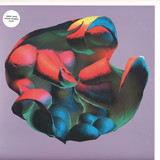








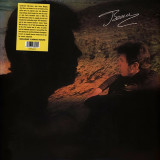


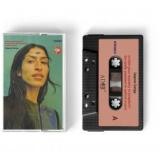
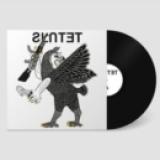





![WILD NOTHING - LIFE OF PAUSE (LENTICULAR SLEEVE) [SIGNED PRINT ED]](https://www.deejay.de/images/l/9/4/1227394.jpg)