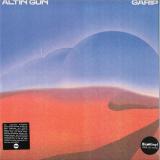
Altin Gün, die türkisch-psychedelische Band aus Amsterdam, veröffentlicht ihr sechstes Studioalbum "Garip", ein ehrgeiziges und vielseitiges Werk, das als Hommage an die türkische Volksmusiklegende Neset Ertas (1938-2012) dient. "Garip" enthält zehn von Ertas" ikonischen Kompositionen, die von Altin Gün auf einzigartige Weise neu interpretiert und musikalisch erweitert werden. Die Band verbindet dabei eine Vielzahl von Einflüssen, von der klassischen Anatolischen Volksmusik über Arabesque und Bollywood-Soundtracks bis hin zu westlichen Rock- und Synth-Vibes. Das Album ist eine kreative Weiterentwicklung des bereits etablierten Sounds von Altin Gün, der Elemente aus Funk, Rock, und türkischer Folklore miteinander vereint. Mit hypnotischen Basslinien, kräftigen Schlagzeugrhythmen und filigranen Synthesizer-Arpeggien schafft "Garip" eine Atmosphäre, die die Essenz von Ertas" emotional aufgeladenen Liedern einfängt und gleichzeitig die experimentierfreudige Energie der Band widerspiegelt. Die Band, die für ihre packenden Live-Auftritte bekannt ist, beweist mit "Garip" einmal mehr, dass sie zu den innovativsten Vertretern der modernen türkischen Musikszene gehört.
Поиск:sen
Все
Daniele Baldelli and Jolly Mare come together for a record that feels less like a collaboration and more like a shared state of mind. Flusso Uno moves through Afro-cosmic kraut-inflected psychedelia and cinematic electronics with a natural, unforced flow, where rhythm, texture and narrative all pull in the same direction.
Rather than referencing the past, the EP treats it as a living language. The longform, ritualistic percussion of early cosmic dance culture meets the hypnotic motorik pulse of krautrock and the more structured, sample-driven tribalism that followed in later decades. What ties it all together is a deep sense of atmosphere and intention: music that feels physical, emotional and quietly transportive.
“We particularly focused on ritual percussions, hypnotic grooves and suspended atmospheres, trying to blend musical anthropology, auteur electronics and narrative instinct.”
Dhol Parade opens the journey like a slow-burning procession, drums circling and expanding as if guiding the listener into another space. With Icari the perspective lifts, melodic lines drifting and tilting, constantly searching for balance between gravity and flight. Huldufolk pulls everything back into a shadowy, nocturnal zone, where textures feel half-real, half-imagined.
Finally, Viaggio Tascabile loses the record in a quietly reflective way, a compact voyage that sums up the EP’s philosophy: small in scale, deep in meaning. Flusso Uno is not about nostalgia or revivalism. It is about taking the spirit of cosmic culture and letting it breathe in the present, where storytelling, dancefloor intuition and sonic exploration still meet. A record made for open ears, open minds and long nights.
At the start of this summer, following a three-year hiatus for Daphni (punctuated only by his first ever collaborative Daphni track ‘Unidos’ alongside Sofia Kourtesis), he dropped ‘Sad Piano House’. The track represented something of a continuation in the Daphni catalogue, its roots growing from Cherry’s ‘Cloudy’ and its subsequent Kelbin remix, something in that song’s makeup having a profound effect when played on dancefloors by Snaith and countless others. ‘Sad Piano House’ deployed more intangibly irresistible bendy piano to equally satisfying effect and continues to achieve similarly rhapsodic dancefloor saturation.
Though a sizeable gap for Daphni releases, between Cherry and Butterfly however of course sits Honey, the latest Caribou album and one that saw the more instantaneous and dancefloor leaning traits of Daphni peaking through the cracks more than ever before. This blurring of the lines leads to an intriguing collaboration in Butterfly’s lead single ‘Waiting So Long (feat. Caribou)’. An unlikely duo - in that both artists are the same man, Dan Snaith - ‘Waiting So Long’ is not so much an identity crisis, ego trip, or the result of a chemical spill in the Snaith laboratory. It’s simply a track that Snaith felt for the first time belongs to both aliases, and might appeal to fans of both. He has never sung on a Daphni track before, and did not set out with the intention to do so this time, and yet this strange billing was born.
Daphni music has always been Snaith’s way of hitting directly to the core of the dancefloors he spends so much of his time playing to, and those dancefloors have been steadily expanding as his name grows, with the music following suit. This album however also draws from further back with a definite kinship to the very first Daphni album, the invigorating bag of ideas that was Jiaolong.
Butterfly is a showcase of the wonderful variety and surprising twists and turns that made that album such an exciting new prospect and that still to this day make Snaith such an intriguing DJ. There are more heavy hitters here, tracks that fill those dancefloors better than anyone, like ‘Clap Your Hands’ which picks up the energy of ‘Sad Piano House’ and flips it, exposing the gritty and intoxicating underbelly of Snaith’s hitmaking side, while retaining the playful urgency that runs through all of his work of late. Meanwhile ‘Hang’’s comic-strip horns are unpinned by gleeful force, unrelenting and thrillingly unshakeable. Elsewhere though comes a clutch of other tunes that might creep out somewhere more off the beaten path, a path Snaith has never stopped seeking in amongst his larger billings. ‘Lucky’ is squirmy and elusively intoxicating, ‘Invention’ skitters down meandering, inviting corridors, ‘Talk To Me’ grumbles and broods in the murk, and ‘Miles Smiles’ could roll on endlessly, so confident in its groove. There are no obvious peaks in these tracks or unifying moments, in fact many of them really have no business being on the dancefloor at all, and yet in the right setting, they could be the most fun to be had all night.
One such club is a good microcosm for the ethos of Butterfly as a whole. “Around the time I was finishing up this album I played a long set in a club called Open Ground in Wuppertal, Germany.” Snaith recalls, “It’s kind of, in one sense, the platonic ideal of the kind of club I’d want to play in. Every single decision has been taken, at great expense, with the aim of making the perfect sounding medium sized club room. But on top of it being the perfect acoustic environment it also is run by an amazing collection of people in a way that gives it a sense of community that dance music at its best provides. It is an absolute pleasure to play in that room to a crowd of people who come from all over. Playing in there you feel like you can play anything, and I played works in progress of pretty much every track on this album in my set there. Don’t get me wrong, I love playing a short set at a festival or in a more raw warehouse kind of club where you bang it out and only really functional music works but on record I guess the point of these Daphni records is to keep in mind a more expansive idea of dance music where the parameters are broad and the church is broad. I think that actually, putting really functional stuff next to weirder tracks (both on an album and in a dj set) might be the thing that’s still most interesting to me.”
This is the feeling that’s most palpable on Butterfly, and in every single time you see Snaith DJ. Right from the inception of the Daphni alias - and even before that – the thrill of trying stuff out, pushing at the boundaries has always been there and on Butterfly is present in all its twists and turns. It leaps all over the place and yet it hangs together, never feeling like a grab bag of dancefloor utilities but rather a distillation of all the strings to Snaith’s bow, exhilaratingly human and unified by one singular concept – simple and joyful exploration.
Born Bad Records knew exactly what it was doing when it signed this Nantes-based trio, whose sharply defined sound and raw authenticity stand out. With Rage Blossom, Île de Garde unveils an EP charged with palpable tension, somewhere between dark pop and psycho-wave. A catalogue of modern misdeeds, a David Lynch-like backdrop where Sylvia Plath’s poetry might cross paths with the controlled excesses of Fever Ray.
The EP opens with “Fear The Sun,” its Mike Oldfield-esque soundscapes plunging us into an apocalyptic and unsettling world. “Homicide Volontaire” follows with meticulous narration, a technical exercise evoking the anger and defiant lucidity of a Virginie Despentes. The hallucinatory hit “To Death” snaps like an anthem to collective dancing in the face of the inevitable. Since we’re going to die, let’s dance! On the B-side, “Ageless Woman” weaves together a half-mythological, half-mysterious text, carried by haunting backing vocals. “Birthday Girl,” featuring Kuntessa, radiates an ironic and joyful riot-grrrl energy, an uninhibited celebration of women’s liberation. Finally, “Boy,” a small post-punk jewel, closes the EP with an ending as surprising as it is delicate.
The group’s genius also lies in the complementarity of its musicians. Morgane Poulain anchors the drums with a dynamic that is both subtle and narrative, airy yet jagged. Cécile Aurégan, the architect behind a multitude of synths, builds powerful sonic landscapes, layer upon layer. Klara Coudrais, the band’s poetic figurehead, elevates her texts with a rich and plural vocal palette, giving life to several characters who vibrate with intensity. The band’s writing, hovering between darkness and light, echoes a kind of visceral poetry, exploring the seasons of the soul with authenticity and force.
With this EP, Île de Garde establishes itself as a band to watch closely, capable of translating on stage both the raw energy and the fine craftsmanship that define their music. An immersive journey, full of tension, urgency, beauty, and electric flashes.
Île de Garde, a Nantes-based trio with sharply drawn sonic contours and raw authenticity, unleashes its full arsenal on Rage Blossom, an EP radiating palpable tension between dark pop and psycho-wave. A catalogue of modern misdeeds, a David Lynch-like setting where Sylvia Plath’s poetry would meet the controlled excesses of Fever Ray. An immersive journey of tension, urgency, beauty, and electric sparks.
Opening track “Fear The Sun” plunges us into an apocalyptic and unsettling landscape. “Homicide Volontaire” continues with meticulous storytelling, a crime vignette evoking anger and the fierce lucidity summoned by a situation with no way out. The hallucinatory trance of “To Death” snaps like an anthem to collective dance in the face of the inevitable. Since we are going to die, let’s dance! “Ageless Woman” blends a half-mythological, half-mysterious text, carried by hypnotic backing vocals. “Birthday Girl,” featuring Kuntessa, releases an ironic and joyful riot-grrrl spirit, an uninhibited celebration of feminine liberation. Finally, “Boy,” a small post-punk case study, closes the EP with a simple, sensitive truth.
The three musicians propel and relay one another in this breathless race. Morgane Poulain drives the drums with a dynamic that is both subtle and narrative, airy yet staccato. Cécile Aurégan, architect of multiple synths, builds powerful sonic landscapes, layer after layer. Klara Coudrais, the storyteller, elevates her texts with a rich and multifaceted vocal palette, giving life to all their characters, both mythical and ordinary. The band’s writing, between darkness and light, proclaims a visceral poetry, exploring the seasons of the soul with authenticity and strength.
- A1: Rock Me Amadeus (The Salieri Version)
- A2: America (The City Of Grinzing Version)
- A3: Tango The Night (The Heart Mix)
- A4: Munich Girls (Just Another Paid One)
- A5: Jeanny (Sus-Mix-Spect Crime Version)
- B1: Vienna Calling (The Metternich Arrival-Mix)
- B2: Männer Des Westens - Any Kind Of Land (Wilde Bube Version)
- B3: Nothin' Sweeter Than Arabia (The Relevant Madhouse Danceteria Jour-Fix-Mix)
- B4: Macho Macho (Sensible Boy's Song)
- B5: It's All Over Now, Baby Blue (No Mix)
- A1: ) | Anuradha Paudwal – Gayatari Mantra
- A2: ) | Baba Zula – Arsiz Saksagan (Cheeky Magpie)
- A3: ) | Orchestra Tout Puissant Marcel Duchamp – So Many Things (To Feel Guilty About)
- A4: ) | Christopher Martin – Playing Games With My Heart
- B1: ) | Geir Sundstøl – C’est Vide En Ville
- B2: ) | Brother Ah – Transcendental March (Creation Song)
- B3: ) | Les Abranis – Therrza Rathwenza
- B4: ) | Sparkels – That Boy Of Mine
- C1: ) | Maximum Joy – Stretch (7” Mix)
- C2: ) | Chillera – Schax
- C3: ) | Elijah Minnelli – I Hope The Goats Come Back (Ze-Hood De-Sham Lichdal)
- C4: ) | Siti Muharam – Pakistan
- D1: ) | Muriel Grossmann – Traneing In
- D2: ) | Catford Gyrations – Land Of 1000 Presets **
- D3: ) | Living Daylights – Let’s Live For Today
- D4: ) | Natalie Bergman – Shine Your Light On Me
Yellow / Pink Vinyl[49,37 €]
Crate digger and music enthusiast James Endeacott compiles ‘Unlock Your Mind With Morning Glory’ for Two-Piers Records – A glorious heady mix of the weird and wonderful eclectic music from his radio show ‘Morning Glory’
“One weekday afternoon towards the end of 2017 I sat in The Lyric pub on Great Windmill Street, Soho with my dear friend Raf. I’d just finished another of my weekly Soho Radio shows and was starting to think about the next one. Raf had been on as a guest playing some of his favourite tunes of the day. We had a few drinks, told a few stories and started to plot and scheme. It was always a dream of mine to have a daily radio show. Radio had always informed and excited me from my early teens listening to John Peel under the blanket when I should’ve been either sleeping or revising right up to the present-day musical excursions of NTS, WFMU and numerous internet based stations.
We decided to speak to Adrian and Dan who ran Soho Radio to see if they’d be up for us doing a daily morning show. To our surprise they were into the idea and within 5 minutes Adrain came up with the name Morning Glory. We all liked it. We were all excited. It was all systems go. In December 2017 Raf and myself started a daily 2 hour show. We did the show together, got guests in and the musical policy was whatever we felt like that day. After several months Raf found the mornings too much. Off he went into the distance occasionally coming back with a smile, and a bag of new music. I carried on alone and then suddenly in March 2020 the world stopped, and we went into lockdown.
We set up in my house in Catford, Southeast London and carried on. The show became 3 hours a day and I started to invite friends, record labels, record shops, bands etc.. to supply me with hour long mixes that I played every day. The show took off during this time. My musical tastes expanded as I spent all day long searching for new sounds from around the globe. People started to send me more and more music. I became obsessed with the show. The audience started to take to social media and ask for certain tracks or artists to be played. I got listeners to make me mixes to play on the show and I did several phone interviews with musicians while playing some of their favourite tunes.
I was grateful that Soho Radio left me to my own devices. They never told me what to do or what to play – they trusted ma and I trusted my instincts.
The music on this compilation is not a ‘best of’ it’s just how I felt when I compiled it at the start of 2025. Apart from a couple of tracks they are all things I’ve come across since the show started in December 2017. If I did a list of tracks now I’m sure it would be completely different. Surely that’s the point. We never stick in one place. We are always moving and searching. Always trying to unlock our minds. Put it on. Take your time and let it take you somewhere” James Endeacott 2025
Yeong Die would typically be described as DJ, musician, or “experimental” composer, but in reality she is a sculptor. Between the rapidly disintegrating boundaries of composition and sound design, her work employs a hunting and gathering of intangible material—bursts of memory, fragments of liminal space, interstitial banalities—materializing as boundless expressions that evade genre constructs. As an integral presence among Seoul’s most forward thinking sound artists, Yeong is in a constant uphill battle rejecting the reverence that so quickly creeps in and infects contemporary craft, that relegates even the most audacious attempts of her peers to pigeon-hole pastiche. Given this style-agnostic starting line, her ESP Institute debut 'Uncapturable' exudes non-urgency, an unfettered pace that allows breathing room, affording the listener freedom to mentally isolate and explore elements without fear of missing a “bigger picture.” There is a warm and welcoming feeling that invites repetitive, even studied listening. While half the work is somewhat singular in presentation—'1km', 'Like Your Flaw', or 'Burnt'—there are moments of meticulous complexity—'Morning Rum Punch' (featuring vocals by Cifika) and 'Did' (featuring a smattering of spoken words by icecream drum), both underground Korean peer artists. These moments feel more of like an acute focus on execution that compliments the overall shape of the album, rather than a dynamic contrast. Cifika’s vocals, in particular, command the listener’s periphery in a playful and refreshing way, exaggerating negative space and in-between moments that not only the paint an arresting stereo field but a remarkable sense of depth, not easily achieved without production sorcery. It is, without a doubt, these beautiful fleeting moments that we describe as 'Uncapturable'.
Accepting the darkness can be a liberating experience. Realising, and struggling with just who we are and what world we live in requires it. By further complicating the fractured sense of beauty found on his droning 2022 release, ‘I dreamt we found a way’, Bristol-based composer, Rob Winstone creates a language that encapsulates the lifelong reach for our own personal heavens, along with the darkness and fear on which those foundations are built.
Winstone’s instrumental palette continues to reach out far from behind his keyboards, however the sound of ‘sifting through heaven’ is stripped back and pared down, putting melody front and centre. 'postcards and loose tea', a love song written for Winstone’s partner during a period coming to terms with health difficulties had previously self-released with heavy spectral and granular manipulation from the artist. Here Winstone re-presents the original: “the stripped back recording I made in my old damp and cold studio that was in a building that has since been demolished”. It reflects the composer’s own journey, doing away with veils and histrionics, and embracing emotional bliss wherever it can be found, warts and all. Even the rumbling dark ambience of ’hospital corridor’ - where distant chimings, groans, and droplets synthesized from field recordings made nervously in a hospital waiting for test results coalesce - harbours a sacred-seeming beauty and aseptic warmth within its very bleak sense of dread.
There’s no better way to describe Winstone’s method than ‘sifting through heaven’. The hymnal organ chords, sketched out acoustic guitar phrases, scattering drum thuds, and meditative field recordings may flit between tenebrous to incandescent, but his focus is always on the embrace of love; “a view of life that embraces positive growth, yet doesn't deny immense suffering,” as he puts it. The album is bookended by two of Winstone’s most outright peaceful moments, summarising his core message: 'in spite of it all...' '...love finds a way'.
Eastside Edits is back with their 1st release in 2026 with two upbeat 60’s Motown/Soul edits from Greece’s production duo Senior Citizens (DJ S & DJ Chairman)
Side A) “The Best Things In Life” turns a classic 60’s Motown anthem into an upbeat & funky, drumheavy weapon for the dancefloor. A must have for any DJ or collector!
Side B) “Ticket For An Aeroplane” brings more of that 60’s soul nostalgia with a perfect pairing to the A side. Upbeat and funky, with a memorable chorus that needed an edit to bring this into your crates!
2026 Repress
The overexcited young men at the Droid factory up the beats per minute and channel the spirit of other sensible chaps a la John Belushi, River Phoenix and John 'I chose the best exit' Entwhistle on our latest audio laboratory assault. Less terminal, with careful use, perhaps, than a fat fully loaded speedball, we hope man and beast find some musical justice or bemusement in the latest hoedown on offer. We have various takes at various tempos, so bar mitzvah's, weddings and indeed acid house events should be covered for those game enough to get on the Droid bucking bronco....
Enjoy the relaxing, meditative sound of Droid !
Made across 2024 between London and Amsterdam, WITH A VENGEANCE (or WAV for short) is the sound of uptempo catharsis, of SHERELLE making sense of a turbulent and difficult moment in time in her personal life. Determined to write one track a day, the studio became a safe space for SHERELLE to channel anger and feelings of betrayal, her hard and fast club tracks turning darkness into the cerebral joy of overcoming adversity. From those intense daily writing sessions has emerged a sharp, finely-crafted 10-track LP that is powered by fierce feminine energy and reflects the hard/soft and light/dark dualities of the dancefloor and life itself.
WITH A VENGEANCE is also a rally cry for the 160 scene, designed to push the tempo in new, exciting and as yet undiscovered directions. Inspired by SHERELLE’s foundational influences such as Kode9, Scratch DVA, Machinedrum, Lone and SBTRKT as well as the soundsystem-shaking groove of grime’s R&G sub genre, the album is designed to change perceptions of what 160 can be. But don’t get it twisted: this isn’t a concept album. WAV is for the dancefloor, delivering shades of London, New York, Detroit and Chicago in ways that are guaranteed to raise gun finger salutes.
The union of Antwerp synthesist David Edren and Tokyo minimalist Hiroki Takahashi is a fit so natural as to feel preordained. Both traffic in subtle shades of contemplative electronics, marked by patience, space, and poetic restraint. And both have rich histories of curation and collaboration – Edren in the duo Spirit & Form alongside Bent Von Bent, and Takahashi as proprietor of the Kankyō record shop, as well as one fourth of cosmic ambient quartet UNKNOWN ME. Mutual fans of one another’s work, they began sharing stems in the latter half of 2020, which slowly blossomed into a collection of multi-hued compositions inspired by notions of connectivity and impermanence, translated for east and west: Flow | 流れ.
Opener “Dusk Decorum | 黄昏 礼節” maps the mood of what’s to come, elegantly pirouetting and percolating through an expanding vista of looming stars and half-light horizons. Takahashi describes Edren’s arrangements as evoking “a strange feel, something we haven't heard much of before.” The sensation is one of “in-betweenness,” a restless current whispering beneath the beauty, like seasons seen in time-lapse footage: flickering but infinite, transience turned permanent. Takahashi’s signature sculpture garden tones plot spiral patterns over which Edren cascades dazzling pointillist synthesizer coloration. The pieces veer between delicate and dilated, micro and macro, their aperture forever softly in flux.
From the oscillating orchestral lullaby of “Stalactime | 鍾乳石時計” to the sweeping, sparkling dream sequence closer, “Shift Register | シフトレジスタ,” the album achieves the elusive goal of being more than the sum of its parts. This is music of rare air, elevated and amorphous, shimmering just out of reach. Though Edren and Takahashi have yet to cohabitate the same room in person (a fact that should be rectified soon by an astute festival booker), their palettes and poise are perfectly paired, twin fragilities woven into seven radiant and regenerative vibrational states. The cover design of a beatific, beaded leaf rippling on the surface of a hidden pond aptly captures the record’s muted majesty. Takahashi’s quiet pride is justified: “We are very happy with this time-consuming and carefully crafted work.”
There is a strong sense of place running through 'North West Tonight', as God Colony aka Crack Copies label heads and Liverpool-raised duo James Rand and Thomas Gorton sketch out a hazy, after-hours portrait of their hometown. Drawing on 80s new wave melodies and rough-edged club rhythms, the EP balances sounds of yore with present-day energy. There is crunchy, disrupted bass on 'The Column', backlit broken beat on 'Middle Eye' and more sun-kissed depths on 'Rhyll Sun Centre'. 'The Paradox' stands out as a darker, more edgy and club-ready sound while the rework by Sasha stretches the track into something built for wide-eyed dancefloors.
Companion 10" to the recent, superb LP Sampler from The Belfast duo...
After showcasing their broad and boisterous tastes on a series of super limited Edits 12's, plus original releases on labels like Touch Sensitive, Hoga Nord, Duca Bianco and Optimo Music, we finally have a fully formed suite of original cuts which take us on a journey through their varied and vivid vibrations...
On Barrios & Barricades, BB deliver two powerful Dark Disco delights...
The kind of peak-time industrial funk-outs that have soundtracked infamous, strobe-lit joy factories over the decades from Chicago's Medusa's, Ghent's Boccaccio or Optimo's legendary Sundays at The Sub Club.
Yes, it's that good !
Soft lines draw a texture in the sky, marking time in the most unpredictable ways. A call comes from far away. It’s Romanian legend SEPP, who’s making his RE.FACE LIMITED debut with three tracks that carry his long-lasting, unique touch. Rolling, hypnotic, lush, as he blends rhythm and emotion, flooding the dancefloor with energy in a sensational manner.
- 1: No Me Jodas
- 2: The City Begins
- 3: Sirena
- 4: Yellow Sun
- 5: Viva La Rosa
- 6: Enemy Without
- 7: You're A Ghost
- 8: Albuterol
- 9: Mi Concha
- 10: Public Works
- 11: Public Luxury
Downtown Boys have pushed relentlessly forward as an artistic and political project since their founding. Singer Victoria Marie and guitarist/singer Joey La Neve DeFrancesco first met at union meetings while working together at a hotel in Providence, RI, writing many of the band's early songs about labor organizing and exploitative workplaces. The quintet is completed by Joe DeGeorge (sax/synth), Mary Jane Regalado (bass), and Joey Doubek (drums). Over years of touring, and three acclaimed albums, Downtown Boys have continued to grow as artists, musicians, and organizers. Now, the band has arrived with Public Luxury, an enthralling album that keeps politics front and center while summoning the band's most urgent and powerful sound to date. The definition of Public Luxury falls very much in line with that of the title of the second Downtown Boys LP, Full Communism. Straight up, Public Luxury means, "everything for everyone." It's the stubborn insistence that a better world is possible, while fully recognizing the horrors we witness daily, and the individual and collective responsibility to resist the nihilism and hopelessness we all feel. Sentiments like "everything for everyone," and "we will have it all" perfectly represent the cathartic, communal live experience this cadre of multi-instrumentalists create. These sentiments also encapsulate the inclusive, joyful sonic fusion that defines the album: anthemic punk and indie rock mix with Latin traditions, drum machines blend with acoustic drums, saxophones punctuate riffs, and layers of synths add flourishes from new-wave to industrial. The amount of ground covered on Public Luxury can't be overstated, and yet the album feels totally vital and cohesive. Public Luxury is a revisitation of the band's past for the sake of their future. It was co-produced by DeFrancesco with recording engineer and longtime Downtown Boys supporter Seth Manchester (Lambrini Girls, Lightning Bolt, Model/Actriz) at the Pawtucket, RI studio and arts space Machines With Magnets, not far from the band's first home of Providence, RI. Victoria Marie's grandmother-a monumental figure for the band throughout their existence-passed away in May of 2025, and her influence looms large over the album; the songs "No Me Jodas" and "Sirena" are crystallized representations of the love between a woman and her ancestor. Beyond the loss, rage and frustration of the present, Public Luxury points boldly towards a vibrant, open-hearted vision of both music and the world: "Our music is simply for anyone and everyone who believes in the new future we can make together," Victoria Marie declares. "A world that will be awkward, inconsistent, yet truly free when it comes to all that matters."
- A1: It Could Happen To You
- A2: I Want To Talk About You
- A3: Early Summer
- B1: Willow Weep For Me
- B2: Autumn Leaves
- B3: Scenery
His fresh, delicate playing has captivated countless listeners, and his debut album Scenery has come to be highly acclaimed around the world. Fukui, who began playing the piano at the age of 22, recorded this album when he was just 28. The earnest passion of his youth resonates throughout the music, gently stirring the emotions of those who listen. The spacious, confident swing of “It Could Happen To You”, the refreshing joy radiating from “Early Summer”, the late autumn coolness imbued in the title track “Scenery” each embodies the uniquely expansive yet nuanced “Hokkaido sensibility” that flowed naturally from Fukui’s artistry.
Within this album, the beautiful landscapes that Ryo Fukui crafted his Scenery continue to breathe eternally.
text by Yusuke Ogawa (UNIVERSOUNDS / DEEP JAZZ REALITY)
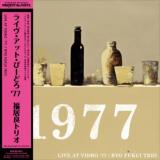
Who could have imagined that Ryo Fukui had left behind a recording like this? Captured on June 8, 1977, this previously unreleased live session was recorded at the Sapporo jazz club Vidro by Masataka Ito, the producer behind Fukui’s albums Scenery and Mellow Dream. It is unmistakably the Ryo Fukui Trio of that era, yet the performance possesses an overwhelming intensity and freshness that far surpass any studio recording—excitement in its purest form.
The 16-minute, searing performance of “Mellow Dream” is just the beginning. The propulsive energy of “Speak Low”, the beautifully woven lyricism of “Body & Soul,” the blistering drive of “Love For Sale”, the weighty depth of “Mr. P.C.”, and the crystalline fragility of “My Foolish Heart”—each track is delivered with feverish brilliance. It was this very live recording, excerpts of which were evaluated at the Trio Records headquarters at the time, that ultimately led to the production of Fukui’s second album Mellow Dream. In every sense, this is an extraordinarily precious document.
This third album by Ryo Fukui arrived a full 17 years after Mellow Dream, marking his first and only solo piano recording. Alongside signature pieces like “Scenery” and “Mellow Dream”, the album includes “Voyage” and “Nord”, both written during a trip toward the northern regions, as well as “Nobody’s”, a piece imbued with Fukui’s deep respect for his mentor Barry Harris. The selection is nothing short of a delight for fans.
Here, the depth and weight Fukui cultivated as a bebop pianist blend seamlessly with the profound “Hokkaido sensibility” that had always resided within him. It is a masterpiece that truly deserves to be passed down through time.
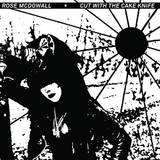
Cut The With The Cake Knife was recorded by Rose McDowall in 1988/89 following the break up of her group Strawberry Switchblade. Produced with the aid of several musicians in several studios, the album features songs written for the fabled second Strawberry Switchblade album. More importantly perhaps it showcases the honest, direct and life-affirming songs of one of the greatest unsung songwriters of the modern pop era at a tumultuous time in her career.
Tibet opens the set and could be one of the best pop songs you've never heard. The innate sadness of the songs' content - the loss of a friendship, impending sorrow - is heightened to heart-melting level by McDowall's pop nous and melodic sensibility. Choruses and hooks are everywhere on Cake Knife, from the outsider take on stadium 80s pop in Wings Of Heaven to the spiraling, ecstatic So Vicious, a glorious anthem that highlights the human fragility in McDowall's vocal performance, an instrument that has never lost the naïve purity it first exemplified in Strawberry Switchblade's early 80s recordings. The centerpiece of the album, the title-track, is the greatest Switchblade pop chart hit that never was. Like the veiled melancholy of her former group's hits, Cut With The Cake Knife hints at a darkness beneath the gloss, a darkness that saw McDowall delve into more esoteric territory with her subsequent recordings and collaborations. Cut With The Cake Knife serves as the bridge between the pop music McDowall had been making with her friends Jill Bryson, Lawrence from Felt and Primal Scream to what became a more extreme, deep sound informed by neo-folk and post industrial music.
Rose McDowall's role in the canon has always been one of an outsider. Beginning in Glasgow's East End in the avant proto-noise group The Poems, achieving fame briefly in the 80s and then disappearing into counter-cultural folklore, the emphasis in the internet-age has been skewed towards her image and cultural significance. Unseen to many, her solo work, her groups Sorrow and Spell and her collaborations with a whole host of underground luminaries have still touched lives. As McDowall elucidates: 'They're real sad songs, about real life. I've had people come up to me to say I'd connected with them and helped them. I remember a gig in America when we made a whole room cry. It was bizarre. A couple at the front of the stage started crying and then these two boys beside and suddenly everyone was crying. And I thought, "that's power."
Night School's issue of Cut With The Cake Knife includes unpublished photographs, extensive sleeve notes from Rose McDowall and 2 bonus tracks culled from the bootleg 7' 'Don't Fear The Reaper.' First vinyl pressing is Clear w/ Black swirl; 500 only / has DL card and booklet, with a poster
CD has extensive booklet and is packaged in anO-Card.