Italy’s own L.D.F. makes his debut on Shadow Pressings with a fresh slab of raw, analog funk—pressed strictly to wax and destined for selectors who still worship the turntable altar. With contributions from Detroit icons, Javonntte, Gary Romalis, & European groove architects Tilman & Böhm, the EP threads classic motifs through a modern underground sensibility—never nostalgic, always alive.
Search:sen
The fifth release on Objekt’s Kapsela imprint is (re)weave, an EP of crystalline club tracks from Detroit-born, London-based producer Tristan Arp.
(re)weave was written during a prolonged period of flux for the artist. “When I started making this record, my life and the world felt like a maze,” he recounts. As he routed and re-routed through past and future homes – Mexico to New York to Detroit to Mexico and finally to London – his output bore the marks of this repeated uprooting. “I was thinking about making music that reflected these twists and turns, and the knotty pathways through them. I was also re-reading Borges around this time, which must have influenced my interest in labyrinths.”
Accordingly, the EP is a mycelial puzzle, a tangle of spidery, undulating ostinatos and earthy percussion, stitched through with syncopated kicks. Employing the sounds of multitudinous critters and kin – whales, insects, thunder, water, forests – the arrangements sum to a sentient mesh of organic matter, the compositions living and breathing like earthly beings. Kaleidoscopic tendrils explore in every direction but are always underpinned by a driving, percussive backbone. It’s not easily classifiable: it’s bass-driven, but to simply call it “bass music” would sell it short.
In keeping with the winding geographical paths traced over the EP’s creation, (re)weave saw Tristan Arp revisiting and reinterpreting unfinished sessions and incorporating them into newer ideas. Rhythms and sounds have been transplanted and self-recycled from previous projects and woven into the fabric of the record. In this way, (re)weave also describes a looping back over time, a recalibration of the self from past to present through interlocking rhythms, channeling and communing with versions of oneself from times gone by.
The closing track, Wish Server, slows the EP to walking pace and hints at tentatively emerging from the deepest jungle into a delicate, innocent light. Tristan Arp imagines it as a dialog with a baby-self. “Some of my earliest memories are of sitting at my mother’s loom,” he offers. “The sequence of these tracks traces these feelings and follows the thread back to the primordial soup… through mazes… to a feeling of levitation.”
- Amaliah - No Way Out
- Call Super - I Love Like Your Men
- Chaos In The Cbd - Orange Blank
- Charlie Dark - Foundation And History
- Dreamcastmoe - In And Out
- Isaac Carter - Take U There
- Joe Armon-Jones Maxwell Owin - Se Discoteque
- Kink Feat. Rachel Row - Its Already Here
- Manami - Scramble Clip
- Marcellus Pittman - #Eastsidechampions
- Mr. Redley Transatlantic Era
- Nat Wendell - Tell Me
- Niks - Lilac Skies
- Suze Ijó - Up There
- Yu Su - Flourish
GALA announce Ten Years of GALA – a compilation marking a decade of independent culture
Ten Years of GALA is both an archive and a horizon: a reflection on where GALA has come from, and a signal of what lies ahead.
Founded in 2016 as a one-day gathering in South London, GALA has grown into a global point of reference for dancers, artists and collectives drawn together by a shared commitment to independence, collaboration and underground music culture. Rather than charting success through scale alone, the festival has consistently prioritised integrity, community and musical curiosity – values that underpin this release.
Spanning fifteen tracks, Ten Years of GALA unfolds as a considered journey. It opens with an intimate spoken contribution from Charlie Dark, grounding the compilation firmly in GALA’s home of Peckham before gradually expanding outward into fuller, club-focused terrain. From there, the record moves between moods and tempos, tracing a path from reflective moments into the physical language of the dancefloor.
The compilation brings together longtime friends of the festival alongside newer voices drawn into its orbit in recent years. Each artist contributes a distinct perspective, but collectively the tracks form a coherent portrait – not of a single sound, but of a shared ethos shaped over ten years of gatherings, collaborations and days spent dancing together.
Rather than a retrospective in the conventional sense, Ten Years of GALA functions as a living document. It captures fragments of past editions, scenes and relationships, while remaining firmly oriented toward the future. These are not museum pieces, but records designed to be played, shared and folded back into the spaces from which they came.
Together, the compilation holds a piece of GALA’s first decade – not as a closed chapter, but as a foundation for what comes next.
- A1: Red Axes & Man Parrish Ft. Roy Garrett - Hot Rod To Hell And Back
- A2: James Infiltrate - Chaos
- B1: Queen Atom - Tributemaki
- B2: The New Black - Androids Are Sexy
- C1: Red Axes - Clear Beats
- C2: 100Hz - Whisper
- D1: Red Axes - Time To Take It
- D2: Sluts`n Strings & 909 - Past The Gates
- (10") A. Redrago - Spikes
- (10") B. Redrago - Frequency
Red Axes step into the fabric presents series with a release that feels both inevitable and deeply personal. Known for their hypnotic, psychedelic approach to club music, the Tel Aviv–based duo bring a narrative-driven sensibility that aligns seamlessly with fabric’s legacy of long-form storytelling and forward-thinking curation.
Across years of performances at fabric and other key global institutions, Red Axes have developed a reputation for sets that unfold patiently and unpredictably, drawing dancers into a world where groove, tension, and atmosphere take precedence over genre or trend. Their contribution to the fabric presents series reflects this ethos: a carefully sculpted journey that prioritises mood, momentum, and emotional depth, while remaining firmly rooted in the physical language of the dancefloor.
Formed by Dori Sadovnik and Niv Arzi, Red Axes emerged from Tel Aviv’s underground with a sound shaped by post-punk, acid, krautrock, and cosmic disco influences. Over the past decade, they have built a catalogue defined by raw textures, twisted melodies, and a distinctly human looseness, qualities that translate as powerfully in the club as they do on record. Their releases and remixes for labels such as Phantasy, Correspondant, Running Back, Dark Entries, and Permanent Vacation have established them as artists who consistently operate just outside the expected.
As DJs, Red Axes are celebrated for their ability to stretch time on the dancefloor, weaving obscure selections, unreleased material, and leftfield classics into slow-burning, trance-inducing narratives. This approach has seen them invited to venues and festivals including Panorama Bar, De School, Bassiani, Dekmantel, Sonar, and Primavera Sound, where their sets are defined not by peaks alone, but by the tension built between them.
With the forthcoming fabric presents Red Axes release, the duo deliver a statement that captures years of shared musical intuition and a deep respect for the club as a communal, transformative space. It is a mix that rewards close listening as much as physical immersion, a snapshot of Red Axes at their most focused, expressive, and uncompromising.
To mark the launch of their forthcoming fabric presents album, the duo unveil the lead single, “Hot Rod To Hell”, a bold reworking of Man Parrish and Roy Garrett’s 14-minute spoken-word electro epic, reimagined through Red Axes’ signature psychedelic lens.
Stripped back and refocused, the original’s narrative tension is transformed into a hypnotic, downtempo house track built for late-night immersion. A rolling, elastic groove anchors the track, while pulsing low-end, subtly warped synth lines, and tightly controlled percussion create a sense of slow, smouldering momentum. The spoken vocal elements drift through the mix like fragments of memory, lending the track a ritualistic, cinematic quality without overwhelming the dancefloor.
- 1: Back In Los Angeles
- 2: Wu-Tang
- 3: Sleep's Older Sister
- 4: Je N'en Ai Pas
- 5: Outside Brain
- 6: Let's Fall In Lava
- 7: Telescope
- 8: Garbage In
- 9: What The Cat Dragged In
- 10: They Might Be Feral
- 11: Get Down
- 12: New Wave Will Never Die
- 13: Overnight Sensation (Hit Record)
- 14: Character Flaw
- 15: Hit The Ground
- 16: What You Get
- 17: Slow
- 18: In The Dead Mail
Yellow Vinyl[30,67 €]
- 1: Back In Los Angeles
- 2: Wu-Tang
- 3: Sleep's Older Sister
- 4: Je N'en Ai Pas
- 5: Outside Brain
- 6: Let's Fall In Lava
- 7: Telescope
- 8: Garbage In
- 9: What The Cat Dragged In
- 10: They Might Be Feral
- 11: Get Down
- 12: New Wave Will Never Die
- 13: Overnight Sensation (Hit Record)
- 14: Character Flaw
- 15: Hit The Ground
- 16: What You Get
- 17: Slow
- 18: In The Dead Mail
Black Vinyl[30,67 €]
- 1: Vengeance And Grace
- 2: End Of My Rope
- 3: It's What You Meant
- 4: Goner
- 5: Closing The Door
- 6: Martyr Of A Man
- 7: My Pride
- 8: Ticket Home
- 9: The Bottle's Gone
- 10: I Ain't Bound
- 11: Vengeance And Grace (Alone)
- 12: End Of My Rope (Alone)
- 13: It's What You Meant (Alone)
- 14: Goner (Alone)
- 15: Closing The Door (Alone)
- 16: Martyr Of A Man (Alone)
- 17: My Pride (Alone)
- 18: Ticket Home (Alone)
- 19: The Bottle's Gone (Alone)
- 20: I Ain't Bound (Alone)
Opaque Red Vinyl[32,98 €]
Grounded in a season of life that has been earned rather than borrowed, Benjamin Tod speaks with the ease of someone no longer running from himself. There is joy now - a steadiness that comes from commitment. With the recent arrival of his son and a deep well of new music on the horizon, Tod is firmly rooted in both purpose and possibility. That clarity is evident in Vengeance and Grace, the Lost Dog Street Band frontman's forthcoming and most expansive solo album to date. Conceived as a "dual-version" release, the project presents two parallel worlds: (Alone) is a stripped solo-acoustic version, along with its full band counterpart.
Together, the two versions form the full range of what Tod is capable of: restraint on one side, force on the other. At the core of Tod's writing is a simple conviction: music should serve something larger than the moment. His writing speaks to mind, body, and soul, shaped by faith, discipline, and a hard-earned understanding of consequence. The darkness that once defined him is neither denied nor indulged. It is understood and no longer in control. Today, Tod moves with a sense of calm that wasn't always there. He is grateful, settled, and intentional, continuing to follow the compass that's guided him from the beginning. Rooted in traditional country and folk, his work stands firmly in the modern music landscape, shaped by experience, restraint, and the life he's built around it.
“Dance Music That Hurts” — the motto of Work of Intent.
Hurts, because it goes straight to your heart.
There’s no better way to put it.
His productions are rooted in the UK underground,
dripping with both techno and pop sensibilities.
This is “big room” like you’ve never experienced it before—
music you can’t ignore, driven by storytelling and raw emotion.
He’s found a home on labels such as Monkeytown, Turbo, and REKIDS, and continues his relationship with Laurent Garnier’s COD3 QR .
Founder of the clandestine edit factory *Emotional Weaponry*,
he continues to receive support from industry heavyweights.
Former manager of *DAYTIMERS*, the UK-based collective championing
South Asian sounds, stories, and voices,
and a highly sought-after mix engineer for some of the UK’s most exciting prospects.
We’re beyond happy to welcome Roshan Chauhan aka Works Of Intent to the family.
Feels like the beginning of a long, dramatic love story.
Credits:
Written and produced by *Works of Intent*
Distributed by *One Eye Witness*
Free As You Wanna Be", the first album by drummer Bubbha Thomas and his band The Lightmen, predates the deep-set, maverick jazz issued by the likes of Tribe and Strata East: This album is a harbinger of the collective voice of resistance to the musical and cultural status quo that emerged in the 1970s jazz underground. Drummer, bandleader and activist Bubbha Thomas had toured America with R&B revues, served as a session musician for peacock and back beat records, and played straight ahead jazz with legends before the political and social upheaval of the late 1960s led him to a path first charted by Coltrane. Most of the tracks remain strongly groove-based with a clear sense of cohesion, but a few of the performances push further out than you might expect from later Lightmen releases, revealing the band's deep roots in avant-jazz. This lineup includes a very young Ronnie Laws sounding noticeably removed from the jazz-fusion style he'd adopt in the late '70s. Alongside Thomas on drums, the ensemble is rounded out by Doug Harris on tenor sax, Carl Adams on trumpet, Kenny Abair on guitar, and Joe Singleton on trombone.
- 1: Duck Pond
- 2: Across The Northern Border
- 3: Up The Country
- 4: The Ballad Of A Sometimes Traveller
- 5: Cannon Beach
- 6: Descending Star
- 7: Blue
- 8: Last In Line
- 9: You Make The Call
- 10: Shade Of Love
- 1127: Forever
- 12: Spin Your Wheels
- 1330: 0 Miles
- 14: Rockin' Chair
- 15: Lovely Today
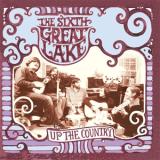
Originally released in 2001, Up The Country is the debut album by The Sixth Great Lake and a quietly revered title within the late-'90s / early-2000s indie scene. Rooted in jangly guitars, melodic songwriting, and a distinctly pastoral sensibility, the album sits at the intersection of indie pop, folk-rock, and classic guitar-driven pop. Although initially released with modest exposure, Up The Country steadily developed a loyal following, earning cult status among fans of understated, melody-focused indie. Its charm lies in its simplicity: clean arrangements, memorable hooks, and an unforced warmth that has allowed the record to age exceptionally well over the past 25 years. This 25th anniversary reissue presents an opportunity to reintroduce an overlooked catalogue gem to today's market, appealing both to original fans and to a new audience drawn to timeless, guitar-led indie records. With renewed interest in archival and heritage releases, Up The Country offers strong long-term catalogue potential beyond initial anniversary demand. A timeless, understated record with strong appeal for fans of melodic, guitar-driven indie.
Originally released on vinyl in 2012, H2DAIZZO quickly became one of the NYC duo’s most sought-after records, with original copies fetching over $100 on Discogs. Now widely considered a timeless club essential, this deep, minimal house cut returns via a long-awaited repress on Defected Records.
The release is further elevated by three standout remixes, each bringing a distinct perspective: Peggy Gou delivers a signature 2017 rework, slicing and reshaping the groove with her unmistakable flair; Butch injects his 2018 remix with driving, dancefloor-focused energy; and Josh Baker offers a fresh, contemporary take, rounding out the package with a modern club sensibility.
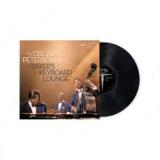
Eine Sensation für Oscar-Peterson-Fans: ein unveröffentlichtes Konzert des Piano-Giganten mit seinem
Trio weltweit erstmals auf LP und CD!
Oscar Petersons Trio mit Bassist Ray Brown und Drummer Ed Thigpen gehörte zu den populärsten und
swingendsten Jazz-Formationen der 1960er Jahre. Besonders live waren die perfekt aufeinander eingespielten Musiker ein unschlagbares Team. Ein unveröffentlichtes Konzert aus der Glanzzeit des Trios entdeckte
Verve Records jetzt in seinem Bandarchiv: zwei Wochen begeisterten die Musiker im August 1960 das
Publikum in Baker’s Keyboard Lounge in Detroit. Die damals geplante Verve-Veröffentlichung des Konzertmitschnittes fand nicht statt und erfreut stattdessen jetzt, kurz nach Petersons 100 Geburtstag, seine
zahlreichen Fans.
Ausstattung LP: 140g, Gatefold-Sleeve mit ausführlichen Linernotes
CD: Mintpak, Booklet mit ausführlichen Linernotes
SOULFUL03 brings another deep and beautifully understated chapter from Soulful Dubs straight out of Finland with a special collaboration between Tm Shuffle, Monoder, and Tapani Rinne. warm, organic, and timeless. The record carries a quiet emotional depth, balancing hypnotic groove structures with spacious textures and subtle melodic detail. There’s a strong sense of atmosphere throughout, but always with enough movement and rhythm to keep the floor engaged. The collaboration feels natural and refined: you can hear the musical sensitivity in every layer, from the gently rolling low-end to the airy, dubwise treatment and the beautifully restrained arrangement style.
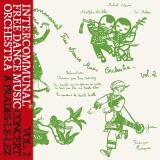
Concert at Prades-le-Lez marks the origins of the Intercommunal Free Dance Music Orchestra. In 1974, François Tusques and his companions (Michel Marre, Jo Maka, Adolf Winkler and Guem), in the spirit of Don Cherry or Chris McGregor, playfully dismantle all borders and all styles of creative music.
On this second volume, the Intercommunal builds unprecedented soundscapes around a song of revolt, a dance tune, or a burst of dissonance. The journey is unforgettable, no question about it. On repeat listening, it even becomes… lunar!
“The music that we make is primarily meant to be listened to live,” warned a leaflet from the Intercommunal Free Dance Music Orchestra. This is precisely why the (restored!) reissue of the two volumes of Concert at Prades-le-Lez, recorded on January 25 and 26, 1974 by François Tusques and his comrades, is such an important event.
In 1971, after recording a series of albums that would leave a lasting mark on French jazz (Free Jazz, of course, with Michel Portal, François Jeanneau, Bernard Vitet, Beb Guérin and Charles Saudrais, but also Le Nouveau Jazz with Barney Wilen, or the solo Piano Dazibao), François Tusques founded the Intercommunal—a grouping whose very name called for the fraternization of the various communities making up the country: Our music will help, we hope, to resolve the contradictions that exist between workers be longing to different communities, by breaking down various forms of national chauvinism, and more particularly the chauvinism of certain French people toward the cultures of Third World countries… Long live the friendship between the peoples of the whole world!
Among the great records made by the Intercommunal Free Dance Music Orchestra, the two volumes of Concert at Prades-le-Lez come first, before L’Inter Communal, Vol. 4, Le Musichien, and Après la marée noire (four titles already reissued by Souffle Continu). François Tusques and his companions (Michel Marre and Jo Maka on saxophones, Adolf Winkler on trombone, and Guem on percussion) performed on January 25 and 26, 1974 at the Moulin de Prades-le-Lez, a few kilometers from Montpellier. It was thus in the southern region of Occitanie that the first echoes of this musical vision of a borderless brotherhood were recorded.
“We’re not among the Colonels,” the Intercommunal reassures us right away, performing a stride piano tune carried by African winds that the audience cannot resist for long. The energy is already striking and it never lets up throughout these two recordings, from start to finish: jazz, blues, traditional music, minimalism, even funk… The musicians of the Intercommunal have heard a lot of great music and now delight in reinventing it by mixing it all together.
“We want the song form to take its place as a weapon in the struggle against capitalist exploitation and all those who oppress us morally and materially,” declared an Intercommunal leaflet, quoting Jean-Baptiste Clément, author of the lyrics to “Le Temps des cerises.” The struggle was therefore serious—but it did not prevent François Tusques and his group from waging it in a festive spirit: each piece on Concert at Prades-le- Lez sends out a call for love and fraternity. Fifty years later, the message remains as relevant as ever—and once again, it is François Tusques who makes it heard.
- On N'est Pas Chez Les Colonels
- Intercommunal Blues
- Mazir
- Kan-Ha-Diskan - We Shall Over Come
- African Rythm-N-Logy
2[23,95 €]
Concert at Prades-le-Lez marks the origins of the Intercommunal Free Dance Music Orchestra. In 1974, François Tusques and his companions (Michel Marre, Jo Maka, Adolf Winkler and Guem), in the spirit of Don Cherry or Chris McGregor, playfully dismantle all borders and all styles of creative music.
On this first volume, the Intercommunal takes its audience from New Orleans to Brittany and on to North Africa. The journey was bold, without a doubt—and its memory remains unforgettable.
“The music that we make is primarily meant to be listened to live,” warned a leaflet from the Intercommunal Free Dance Music Orchestra. This is precisely why the (restored!) reissue of the two volumes of Concert at Prades-le-Lez, recorded on January 25 and 26, 1974 by François Tusques and his comrades, is such an important event.
In 1971, after recording a series of albums that would leave a lasting mark on French jazz (Free Jazz, of course, with Michel Portal, François Jeanneau, Bernard Vitet, Beb Guérin and Charles Saudrais, but also Le Nouveau Jazz with Barney Wilen, or the solo Piano Dazibao), François Tusques founded the Intercommunal—a grouping whose very name called for the fraternization of the various communities making up the country: Our music will help, we hope, to resolve the contradictions that exist between workers be longing to different communities, by breaking down various forms of national chauvinism, and more particularly the chauvinism of certain French people toward the cultures of Third World countries… Long live the friendship between the peoples of the whole world!
Among the great records made by the Intercommunal Free Dance Music Orchestra, the two volumes of Concert at Prades-le-Lez come first, before L’Inter Communal, Vol. 4, Le Musichien, and Après la marée noire (four titles already reissued by Souffle Continu). François Tusques and his companions (Michel Marre and Jo Maka on saxophones, Adolf Winkler on trombone, and Guem on percussion) performed on January 25 and 26, 1974 at the Moulin de Prades-le-Lez, a few kilometers from Montpellier. It was thus in the southern region of Occitanie that the first echoes of this musical vision of a borderless brotherhood were recorded.
“We’re not among the Colonels,” the Intercommunal reassures us right away, performing a stride piano tune carried by African winds that the audience cannot resist for long. The energy is already striking and it never lets up throughout these two recordings, from start to finish: jazz, blues, traditional music, minimalism, even funk… The musicians of the Intercommunal have heard a lot of great music and now delight in reinventing it by mixing it all together.
“We want the song form to take its place as a weapon in the struggle against capitalist exploitation and all those who oppress us morally and materially,” declared an Intercommunal leaflet, quoting Jean-Baptiste Clément, author of the lyrics to “Le Temps des cerises.” The struggle was therefore serious—but it did not prevent François Tusques and his group from waging it in a festive spirit: each piece on Concert at Prades-le- Lez sends out a call for love and fraternity. Fifty years later, the message remains as relevant as ever—and once again, it is François Tusques who makes it heard.
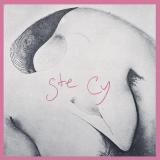
Ste Cy, the latest studio offering from the trio of Jac Berrocal, Vincent Epplay, and Timo van Luijk, ripens like a forbidden fruit—born of an improvised instrumental session captured in the secluded hush of Kulta Saha by Timo van Luijk. These raw recordings were later reshaped into 12 songs by Vincent Epplay at Studio Villejuif in Paris. And over it all drifts the poetry of Jac Berrocal— sensual and incendiary, seeping into the music like spice into flesh.
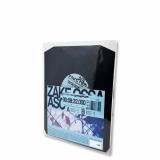
Drawn from the wider Microliths and Momentary Drifts project, this EP finds zak�, Ossa and ASC working in miniature form with signature restraint but real emotional resonance. Each piece functions as a fleeting vignette where tone and texture carry more weight than the structures. ‘Microlith 1’ opens with soft, cascading keys, while ‘Microlith 2’ drifts further into distant, spectral territory. By the time ‘Microlith 8’ arrives, its gentle fade into static leaves a quiet sense of unresolved possibility. It is a concise, thoughtful collection that will have you keen to hear the whole LP.
- Vent D'aether
- Réville V
- Levast Ill
- Le Vast Iv
- Le Vast Xiii
- Montfarville V
»Vents d’aether« is the first collaborative album by sound artist Jérôme Bouve and composer-performer Delphine Dora. The six pieces are based on live improvisations on organ and harmonium. They were recorded in different churches on the Cotentin peninsula in France’s Normandy region and later enriched with additional field recordings by SA~RA. This adds an extra layer to compositions which were created both in and out of the moment and which quite literally resonate with the histories of the instruments and the buildings that were so integral to their emergence. »Vents d’aether« is to be understood as a dialogue between sound and space that takes place across time and place.
Bouve carried the idea of working with the organs and harmoniums that can be found in the churches and chapels in the Val de Saire in the Northeast of Cotentin around with him for years. When he got to know Dora, he found the perfect musical partner with whom to finally make a record »about the wind, the wood, the stones of the Val de Saire.« In September 2024, the duo embarked on a short but fruitful journey during which they stopped by at several different churches. They recorded hours-long improvised sessions dedicated to »capturing the moment, letting space and time shape gestures and sound, seizing fleeting epiphanies in their greatest simplicity,« as Dora notes in the album’s linernotes.
She took the lead behind the instruments, however Bouve assisted her on drawbars for the last two pieces on »Vents d’aether,« thus adding an even more unusual touch to the recordings. They formed the basis for an album that Dora calls »the testimony of a sensory quest, a collection of memories suspended in time.« Indeed, starting with the epic 20-minute-long titular piece up until the ringing of church bells near the end of the closing piece »Montfarville V,« this overwhelming yet intimate record blurs the boundaries between different times and spaces altogether.