It is not by looking at the light that one becomes luminous, but by diving into one's own darkness. Yet, this work is often unpleasant and therefore unpopular” C. Jung After a string of releases on La Mamie’s Records, Visions Recording, Local Talk Records, Maytra makes his vinyl debut on Swiss based label Léman records.
On this three-track EP, accompanied by a remix, Maytra delivers his own vision of the deep-house genre, infused with a sense of melancholy. His approach is instinctive, resulting in tracks that feel raw and unpolished, embracing their imperfections. Maytra heads the label Energy Exchange Records, which pays tribute to jazz and live artists such as Kyle Hall, Jay Daniel, and Hanna. Detroit music stands as the cornerstone of his musical education — for what it represents and for its immense influence on today’s musical landscape. ZIggy Zeitgeist, close collaborator and drummer-artist based in Berlin, contributed to Eli and Endless Hours with additional Percussions. Matthew Hayes (Xpress Point) contributed with bass on Midnight RIde (Bandcamp bonus track). Gary Superfly contributed to the project with his own laid back and breaky interpretation of Endless Hours.

Cerca:sen
For the fourth release of Marseille-based label Planète 51, co-founder Apoteoz steps forward with his first full vinyl EP — a deeply personal and evocative collection produced throughout 2024.
Crafted with a strong sense of family and emotional resonance, Switch My Face EP blends hypnotic grooves with intimate storytelling. The title track “Switch My Face” features the voice of Apoteoz’s father, while “Et Toi” includes a touching vocal sample from his mother
The B-side presents a more recent side of his production, including “Echoes in Blue”, one of his latest inspiration — a deeper, more introspective journey that expands the emotional palette of the record.
Step into the world of Cicciolina, a sonic journey as captivating as it is audacious. This reissue captures the electrifying energy of the 80s, blending pulsating dance rhythms with surprisingly melodic moments, all wrapped in lyrics as provocative as they are unforgettable. Produced by Jayhorus, “Avec Toi” is an album that defies easy categorization – a testament to Ilona Staller’s unique artistry and the irresistible power of a truly original sound. Prepare to be seduced and ignite your senses. Open the gatefold cover and rediscover the uninhibited spirit of an icon.
Tracks from original master tapes.
- A1: Coaster - Simon Park
- A2: Rippling Reeds - Wozo
- A3: Leaving - Sam Spence
- A4: Northern Lights 1 - John Cameron
- A5: Spaghetti Junction - Peter Reno
- A6: Space Walk - Rubba
- A7: Prospect - Paul Hart
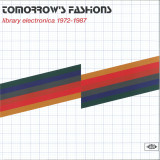
- B1: Tomorrow's Fashions - Geoff Bastow
- B2: Blue Movies - Brian Wade
- B3: Videodisc - Trevor Bastow
- B4: Interface - Astral Sounds
- B5: Starways - Brian Chatton
- B6: Optics - Unit 9
- B7: Atomic Station - Wozo
- C1: Future Prospect - Adrian Baker
- C2: Planned Production - Warren Bennett
- C3: Future Perspectives - Anthony Hobson Aka Tektron
- C4: Waterfall - Chameleon
- C5: Telecom - James Asher
- C6: Eagle - Simon Park Aka Soul City Orchestra
- C7: Astral Plain - Alan Hawkshaw
- D1: Drifting In Time - Paul Williams
- D2: Earth Born - Brian Bennett
- D3: Soft Waves - Harry Forbes
- D6: Infinity - John Cameron
- D7: Morning Dew - Andy Grossart & Paul Williams
- D4: Topaz - Astral Sounds
- D5: Eternity - Alan Hawkshaw
Nothing said new or modern or futuristic quite like a synthesiser in the 70s and 80s. If you were shooting an advert and you wanted your product or your company to appear forward-thinking and ahead of the game, then you would want something electronic, something out of the ordinary. When TV producers and advertising directors started searching for music that sounded like “Tubular Bells” – and then Tomita, and later Jean Michel Jarre – music libraries such De Wolfe, Bruton, Parry and Chappell had to have the tracks readily available.
Compiled by Bob Stanley, “Tomorrow’s Fashions” varies from advertising jingles and TV themes to space exploration and gorgeous, beatless ambience. Though it’s 40-to-50 years old there’s a real freshness to this music. Older jazz players Brian Bennett, John Cameron, Alan Hawkshaw and others seized the chance to operate a synth; younger pups including John Saunders and Monica Beale were simply intrigued by the new technology being wheeled into the studios. There’s a tangible sense of adventure.
“Tomorrow’s Fashions’” brand of electronica anticipated new age and ambient music. It also had both a direct and indirect influence on pop – the early Human League and the future sounds of Warp Records are all over this collection. Electronic library tracks have been sampled by everyone from MF Doom to Kendrick Lamar.
One person’s primitive and experimental is another person’s space-age lullaby. This was music made in the shadows – in Soho’s secretive music library studios – that has now become desirable and influential. The chances are chunks of it will be sampled and used on hit records that have yet to be written. If the musicians’ aim was to soundtrack tomorrow’s fashions, they couldn’t have got it more right.
Italian duo USAW join Fusion Of Thought for 'Not A Reason EP'! The prolific duo has gradually carved out a position in the modern techno space with live-performances at Tresor and OHM, as well as outings on established labels such as Clergy, ARTS, OECUS and their own USAW label. On 'Not A Reason', USAW deliver a distinctive slice of techno: unrelenting and forceful, yet with a particular sense for melody and hooks. Seasoned producer and Clergy label founder Cleric joins the cause with a remix, transporting original 'Illogical Behavior' to a new dimension.
DJ Support: Gilles Peterson (BBC Radio 6 Music), Tom Ravenscroft/Deb Grant – New Music Fix (BBC Radio 6 Music), Huey Morgan (BBC Radio 6 Music)
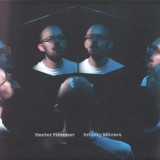
Infinity Mirrors is a representation of the ongoing process of learning about who we are and how we chose to live our lives. Taking moments to reflect on where we have come from, where we currently are, and where we might be going.
Thematically, this record explores a breadth of human experiences… Yearning to be with loved ones far away, battling with anxiety, recognising love felt for the first time, welcoming life into the world, learning to go with the flow & not get caught up on focusing on things that don't necessarily matter.
Written, developed and reworked over the five year period since second album Next to Nothing.
The process of this album spanned over two different studios, birth, death, the pandemic and more. Almost all of the music on this record was started between 2020 & 2021. It’s been an enlightening experience being able to go back to old tracks and re-work them to bring them up to date based on my lived experiences up until that point. With each new revision I have learnt something else about my creative practice and brought my current self into the music whilst also maintaining where I’ve been at previously.
This album has the most features on any of my records to date, both long time and brand new collaborators with guest appearances from Laura Misch, Marysia Osu, Andrew Ashong, Julia Biel, Dariés Street-Soul, Tawiah, Alexa Harley, Rohan Ayinde and Alex Cosmo Blake.
Romanian groove technician SEPP lands on _NRV with a trio of high-powered, floor-primed cuts. 'Feeling Ma Bass' opens up with weighty low-end pressure and a hypnotic pulse that locks you in early. 'Body Language' twists with crisp percussion and a woozy sense of movement, keeping tension tight throughout. 'Do You Love Me’ dips into moodier territory, with dusty textures and a vocal loop that cuts just enough to keep the floor leaning in.
There’s a particular magic that happens when seasoned producers with global roots come together under a shared ethos - not for hype, but for connection. That’s precisely what MISINGO represents. A cross-continental studio experiment born out of Covid-era isolation, the group spans hemispheres and histories: Yorkshire's Doorly, L.A. legend Gary Richards (aka Destructo), and Australian duo Colour Castle. Their debut offering, Give You Love, lands via UK House Music institution Hard Times Records, and it’s as emotionally resonant as it is built for the floor.
Anchored by a slow-burning acid line and moody, immersive synthwork, 'Give You Love' carries the DNA of classic house without feeling like pastiche. DJ Rae’s smokey vocal, recorded in Doorly’s Ibiza studio, sets the tone - raw, intimate, immediate. Gene Farris enters with a gravelly, magnetic counterpoint, flipping the call-and-response into something spiritual. It’s a record that feels both new and deeply lived-in, a jam session from afar that somehow lands with unity and purpose.
For the remix suite, Hard Times dig into family ties and deliver a heavyweight lineup that spans generations of dance music lineage.
First up, DJ Pierre, the Phuture pioneer himself, brings a Wild Pitch revision that is pure summer sleaze and shimmer. Glistening keys, kinetic snares, and a syrup-thick bassline collide in a mix that’s tailor-made for golden-hour sets and open-air systems.
DJ Romain brings that New York swing. All velvet chords, stabbing pianos, and organ swells that spiral skyward. It’s gospel-house energy that doesn’t need to shout to be heard, a reminder that soul still moves the dancefloor.
Closing out the package is Charles Lavine of Soul Clap fame, whose Boston-bred funk sensibility steers things into new territory. He strips back the mix, lets Rae’s vocal ride the groove, and injects a subtle bounce that turns heads and hips in equal measure.
With 'Give You Love', MISINGO and Hard Times haven’t just released a single, they’ve bottled a moment: one born of distance, stitched together with soul, and destined for collective release on dancefloors worldwide.
The year is 2025, 30 years on from the release of the original “We Are Borg”, Bass Junkie’s first vinyl release under his Cybernet Systems alias. This seminal Electro Bass track, originally featuring additional production from the legendary Dynamix II out of Florida, was the first release on the short lived Panic Trax label. Using the same sounds salvaged from the original SP1200 disc, Bass Junkie has remixed this classic for the next generation…
Next up is “Bass Force”, delivering a heavy assault on the senses with its soaring synths and deadly Bass, pushing the envelope and bringing forth a new take on the Electro Bass sound.
Flip to side 2 for “Electron Spin Resonance”, a DMX driven track of relentless pounding rhythms, tape style edits and a ferocious marching bassline.
Finally Bass Junkie takes us back to the old school with “Proceed”, a homage to the 80s sound and the early trax that broke boundaries and made Electro a force to be reckoned with.
End transmission
Le Chatroom, a record label established in 2016 by the English producer Kouslin, searches for the missing link between underground bass music and outer national sounds. Its music is defined by the blend of synthetic and organic tones, modern / classic instruments and low- end heavy percussive rhythms.
Pushing artists from all around the globe that share the same love for this newfound sound, Kouslin's aim with Le Chatroom is to promote musical diversity, open-mindedness and experimentation at a time when unity between cultures is crucial. With 'LCR001' the label advances into a new physical environment from which this release should be experienced.
Real talk and native percussion establish the steady climax of 'Brothers', the A-side of Le Chatroom's inaugural wax release. Kouslin cuts through this sediment with a bright flute, before the state of the sound switches into something far darker and meditative. By placing several samples at irregular intervals, the Londoner achieves a fascinating charm that'll unite us all.
Booming bass in 'Gyals' lingers with a steady pace while percy tribal hits forge a raw groove that's far from common. With this movement, the producer from Bristol disintegrates the sense of a generic production and sticks to his true nature. Through this it becomes clear that Galtier has his polyrhythms down to a science.
Londoner Sheik clinches the B-side with a craze that unveils a nearly psychotic sense of sample architecture. Pushing crystal clear 808 kicks in- between the haunting atmospheres and a wall of pressure simply becomes one of his most inventive takes documented on wax. If you love to swerve through a minefield, the odd 'Oxram' would be your favourite pick off this first outline.
The three producers that feature on 'LCR001' pass on their fundamentals to conjure Le Chatroom's philosophy red-handed. Together they do the imprint's name justice by handing over critical bass repertoire that'll excite many!
- A1: Secret Knock
- A2: Checkers
- A3: Movie Night
- A4: Ewr - Terminal A, Gate 20
- A5: 1010Wins (Feat Armand Hammer)
- B1: So Be It (Feat Open Mike Eagle)
- B2: Send Help
- B3: John Something
- B4: Ice Sold Here
- B5: Costco
- C1: Bird School
- C2: Snail Zero
- C3: Charlie Horse (Feat Lupe Fiasco & Homeboy Sandman)
- C4: Steel Wool
- D1: Black Plums
- D2: The Red Phone
- D3: Himalayan Yak Chew
- D4: Unbelievable Shenanigans (Feat Hanni El Khatib)
Cassette[14,08 €]
Black Hole Superette, the latest album from Aesop Rock, delves into the invisible forces that shape our lives and psyches. It's about the small, often overlooked moments_the everyday experiences that blur the lines between the real and the unreal, waking and sleeping. Aesop's signature gift for transforming the mundane into something dreamlike gives the album a surreal quality, leaving listeners questioning what's truly real as they navigate its vivid, half-remembered imagery. Entirely self-produced, Black Hole Superette is one of Aesop Rock's most technically accomplished works to date. The album's intricate beats and complex structures provide the perfect backdrop for his expansive lyricism, balancing cerebral exploration with emotional depth. From the reflective 'Movie Night' and the eccentric 'Send Help' to the wistful 'Black Plums,' Aesop channels the spirit of a mad scientist, experimenting with sound and concept in ways that defy the ordinary. With a stellar lineup of collaborators that includes Lupe Fiasco, Armand Hammer, Hanni El Khatib, Open Mike Eagle and Homeboy Sandman, Black Hole Superette is dense and kinetic, an album that deftly navigates between complexity and instinct. It's clear this project stands as one of Aesop Rock's most multifaceted and ambitious works yet.
We’re beyond proud to announce UER003, a powerful new chapter for Unearthed Records, and a symbolic release marking our move from the underground scenes of Austin, Texas to the pulsating heart of Milan, Italy.
“Unstable Energy EP” comes from Two Opposites, a rising Italian duo with a sharp ear for deep, analog Italo and razor-edged electro. Hailing from the new school but drawing heavily from the roots, they deliver a record that bridges dreamy nostalgia with modern club energy. Every track is a journey—raw, emotional, and primed for dance floors that live in the shadows.
This record isn’t just a release—it’s a statement. The sound of Unearthed going global. The beginning of a new era.
Limited vinyl only. No repress.
- A1: Dj Koze I Haven't Been Everywhere But It's On My List (Dj-Kicks
- A2: Dimlite Can't Get Used To Those (Kosi Edit) / Efdemin - Ohara
- A3: Clouddead Dead Dogs Two (Boards Of Canada Remix)
- A4: Strong Arm Steady Best Of Times (Instrumental)
- A5: Homeboy Sandman Holiday (Kosi & Fink's Edit)
- A6: Freddie Gibbs & Madlib Shame (Instrumental)
- B1: Mndsgn Camelblues (Kosi Edit)
- B2: Broadcast Tears In The Typing Pool
- B3: Daniel Lanois Carla
- B4: Hi-Tek / The 2 Bears Come Get It (Tekstrumental) / Modern Amily (Kosi Kos Mélange)
- B5: William Shatner It Hasn't Happened Yet
- C1: Marker Starling In Stride
- C2: Session Victim Hyuwee (Dj Koze Remix)
- C3: Frank & Tony Bring The Sun Feat. Gry (Kosi Edit)
- D1: Marcel Fengler Jaz (Kosi Edit)
- D2: Portable Feat. Lcio Surrender (Kosi Edit)
- D3: The Gentle People Superstar
2023 Repress
DJ Koze - with his friendly and sometimes slightly melancholic take on the world - is one of the greatest auteurs of club music today, and one of the few internationally active DJs who dares to make music that has relevance beyond the dance floor. During the 70-minute journey on his DJ Kicks - the 50th edition - Kosi
Kos manages to establish a uniform color even though genres alternate in a way that is rarely heard on a mix CD: the stripped down hip hop of Madlib, brutalist Berghain techno, timeless songwriting, floating indie-pop and outlier numbers that oscillate between absurdity andmelancholy. Koze's disregard for the stylistic yoke presents him with an immense challenge. Hence, almost all the tracks are more or less edited, and one is fully rhymed (Session Victim: Hyuwee).Koze rambles on here himself: "I didn't want to kick around ophisticated knowledge, but rather try and weave together some good gems that would make sense to anyone, even people who aren't necessarily music nerds". But this is blabbing that you can count on, also because he approaches the term "mix" from a different angle and doesn't even try to make something fit that doesn't fit: "During the day, I don't need to hear anything that's mixed on the beat. I put the focus on making sure that it works harmoniously - the idea is more to create the impression of a radio show, like people such as John Peel did so uniquely. There is a giant cosmos of music and it runs through my filter".
2025 Repress
The COEO boys need no introduction anymore. Their two last singles made it into the sets of so many DJs. They are among the emerging artists of that new German scene of kids that make house music inspired by old Jazz and Funk records. The boys are mad about rare vinyl. And they love to make music with a positive spirit. Yes, there is something sunny in their tracks. Something that instantly makes you want to move. We heard so many mixtapes that started with a COEO track. Makes sense: They are perfect to set a vibe. A good mood. But if you know that the COEO boys work in a studio over the roofs of Munich, with a fantastic view over the lights of the city, with a great vibe where you see all the glammy colors of the light in the night..... then you understand why COEO's music sounds as it sounds.
Two Drumcode mainstays, Layton Giordani & Bart Skils, join forces on rapturous but dark-edged techno thriller ‘Deadly Valentine’. Skils is globally renowned for his chart-invading take-no-prisoners techno. The Dutch producer’s last release on Beyer’s imprint was the 2024 ‘Sakura’ EP comprising collaborations with SUDO and Drunken Kong. Giordani, also a chart topper, at the forefront of an exciting new genre-bending sound, combines influences of melodic house, progressive, and indie dance with techno. His last DC outing was a recent rework of the seminal ‘Let’s Go Dancing’ from Tiga and Audion, and the otherworldly but peak time ‘Freaks At Night’ single last June.
The duo have a history of playing B2B at massive events like Drumcode, Loveland and Awakenings. This is their first collaborative standalone single (their ‘Midnight Magic’ was on Layton’s 2020 Drumcode LP). 'I was listening to Spotify and going through an indie dance rabbit hole’ Layton says. ‘I stumbled upon this track, was instantly hooked, and knew Bart was the right guy to collaborate with on this record.’ ‘Layton sent me the vocal idea and I turned it into an arrangement with a rolling groove’ Bart says. ‘After that the track was updated several times and mixed with a new vocalist for release.’ ‘Deadly Valentine’: complex, steady percussion with insistent techno beat gives a dark questioning edge to the high, sweet vocal, fast, echoing, often layered or harmonising with itself, singing the apparently romantic wedding ceremony lyrics in French & English.
2024"s retrospective box We Have Dozens of Titles brought the revelatory 1993-"98 output of Gastr del Sol back into the world of physical objects, following a decade in which most of their music was mostly available online. The ruckus that the box generated in the so-called real world was intense enough to warrant some more fun excursions; thus, we begin our vinyl reissue series of the Gastrlog at the end of the line, with their "art-pop masterpiece" somebody"s words, not ours - but we"ll take "em): Camoufleur. Gastr del Sol released Camoufleur in February of 1998. It was a ringing down of the curtain on an extraordinary five years of music making (and unmaking) with one of the best albums of that era - or any other. Once out in the world, Camoufleur went over like gangbusters. Listening in today, it still does - time has only burnished its unique superpowers. Upon release, of course, and with the same sense of enigma in which they"d issued their music, Gastr del Sol abruptly vanished, leaving all that stuff to time. And by golly, in time we"ve found it again, and huzzah almighty, have recommitted it to ol" reliable, the singular magic of the vinyl platter, for the enjoyment and edification of a new nation.
- A1: What Lies Beneath 3 Arp 5 02
- A2: What Lies Beneath 2 5 43
- A3: Forrest Gump 3 01
- A4: Spiderman 2 08
- A5: Chilling Adventures Of Sabrina 2 35
- A6: Mad Men S04 1 1 46
- B1: Mad Men S04 2 1 18
- B2: Stranger Things S02 E07 3 55
- B3: Stranger Things 2 3 55
- B4: Stranger Things 3 4 00
- B5: Reacher S01 E07 2 03
- B6: Reacher S01 E08 2 44
- B7: Irma Vep S01 E05 2 31
LIMITED VINYL COMES IN CARDBOARD SLEEVE WITH BOOKLET!
OSTRANENIE is a collection of digitally manipulated, impressionistic piano miniatures — each named after blockbuster films and TV series. Improvised late at night as a reaction against passive media consumption, these pieces function as both homage and critique, navigating the space between classical impressionism and contemporary digital manipulation. They don’t just deconstruct traditional piano expression; they interrogate the emotional stakes of sound in an era where immersion culture flattens meaning and algorithmic logic erodes agency.
The album’s title references the Russian formalist Viktor Shklovsky’s concept of “ostranenie” (ɐstrɐˈnjenjɪj, estrangement/defamiliarization), a term he introduced in the early 1920s to describe art’s role in resisting the indifference of habitual perception.
“And so, held accountable for nothing, life fades into nothingness. Automation eats away at things, at clothes, at furniture, at our wives, and at our fear of war.”
—Viktor Shklovsky, Theory of Prose (1925)
Shklovsky saw art as a way to break through the anesthetizing effects of routine, stripping away the layers of habit that dull our senses. By making the familiar strange, art reclaims perception from the mechanical and the automatic. His argument wasn’t just a theoretical exercise — it was a response to a world rapidly consumed by industrialization, war machines, and the alienation of a technologically dominated modern life. In this context, he positioned artistic technique as something autonomous, distinct from mere social criticism or psychological reflection. Art seeks to remove “...the crust that the world of things deposits on our senses, with routine’s unending murder of the real.” Ben Ehrenreich on Serena Vitale’s Making Strange (The Nation, 2013)
This tension—between revolutionary/artistic and industrial technologies—defined the 20th century, and it continues to resonate today. The mechanization and automation that fueled the First World War’s devastation, alongside the social and economic turbulence of the 1920s, became central to the era’s self-conception. But just as technology was a source of alienation, it was also positioned as an agent of radical change. As the shock of modernity disrupted the human condition, it also became the driving force behind an ideological utopia — one that ultimately deformed into political totalitarianism — a paradox that remains unresolved.
OSTRANENIE plays within this contradiction. The music shifts seamlessly between an uncanny black MIDI dismantling of traditional piano virtuosity and moments of raw, fragile intimacy. The result is a work that resists automatic anonymity while questioning what it means to create in an era where the technological mediation of sound — and experience itself — is unavoidable: Art in the age of its technological constructedness.
Azzurro 80's new album—his first ever on LP—is a beautifully faded Polaroid that, like a true flashback, plunges listeners into the heart of the 1980s. It's a sonic journey that captures the essence of a decade, distant yet vividly etched in our collective memory.
The Roman producer unleashes his sonic vision with even greater intensity than before, weaving through dreamy italo-disco, electric atmospheres, soundtrack-worthy synth-pop, and boogie-funk grooves.
Each track opens a window onto an era the artist experienced only fleetingly as a child, yet he evokes it with a powerful and refreshingly original touch. Much like a classic library music record, these tracks conjure a wealth of images, scenes, and visual sequences—perfect soundtracks for imagined films or evocative advertising campaigns: as seductive as a perfume ad, as desirable as a car commercial, and brimming with the bright future the 80s promised.
It's no surprise that cinematic references spring to mind even before musical ones. The album echoes the dreamy atmospheres of early 80s Italian cinema, particularly films like Carlo Verdone's "Acqua e Sapone" (1983) and Carlo Vanzina's "Amarsi Un Po'" (1984). Meanwhile, flashes of New Romantic aesthetics and hints of electro-funk transport you to a neon-lit dance floor where a DJ is spinning the vinyl copy of Flashback.
Azzurro 80's new album is a vibrant, energetic work, balancing groove and emotion in equal measure and infused with a sense of nostalgia that feels remarkably contemporary.
Available May 9th on LP and Digital from Four Flies Records!
Part 1[11,72 €]
A noughties classic, an earworming anthem, an eventual schoolyard ringtone favourite; Roman Flügel’s once inescapable ‘Geht’s Noch?’ celebrates turning 21 on Running Back, refreshed and remixed by a scene-spanning set of artists paying keen tribute to its absurdist energy.
Casually released as part of a Cocoon Records compilation in 2004, ‘Geht’s Noch?’ rose from the depths with the support of Sven Väth, becoming an international phenomenon, conquering and uniting the dominant scenes of minimal and electroclash alike. Some have said it laid the foundations for the ‘Dirty Dutch’
house scene, albeit from over the border in Germany.
Well known for injecting much-needed levity into the contemporary club landscape via her Live From Earth parties, DJ Gigola adds additional firepower to ‘Geht’s Noch?’, inducing a planet-shaking kick drum, before sending the track’s signature bleeps into nonsensical Morse code for even greater pleasure. Another rave
culture connoisseur, Luca Lozano, offers two alternate takes; his ‘Technocs’ mix rolls deep with additional cowbells, robotic voice commands and stadium-sized claps. Meanwhile, the ‘Gehts Garage Remix’ draws a savvy connection with the original’s as-yet-untapped UK funky potential.
Peder Mannerfelt, who straddles the line between innovation, functionality, humor and seriousness quite like its original author, takes ‘Geht’s Noch?’ to truly wuthering heights. His remix builds unexpected drama and catharsis around the enduring riff, before a collaboration with studio partner Par Grindvik as Aasthma
spins the club out with a glossy, anime-tinted take, full of whimsy and colour.
And while the digital release of Geht’s Noch? also spans interpretations from Audion, Domnik Eulberg & Moguai, this vinyl release presses Steve Angello vs Who’s Who remix to wax, that which helped take ‘Geht’s Noch?’ out of the underground and into the stratosphere. Twenty years on, and Flügel’s offbeat hit is always ascending. Love it or hate it, ‘Geht’s Noch?' will still get you good.
Words by John Loveless
As most of us now live in a world saturated with information, this album feels like a reflection of how the modern world might sound if it were to process its own chaos through a unified scream. Hailing from the highlands of Bandung, West Java, a city where tradition and modernization intertwine in the rhythm of daily life, Xin Lie unpretentiously translates this cultural fusion into a sonically rich and rhythmically bold debut LP.
The artist’s roots in the hardcore and punk scenes reverberate throughout the album, though they’ve been reshaped and refined for the club. There’s an undeniable pleasure in experiencing the chaos Xin Lie channels—irregular beats, dynamic frequencies, and disjointed grooves collide and expand, each track laced with a sense of unpredictable energy. Yet even in its most chaotic moments, the music feels deliberate, its edges softened by a sense of compositional care.
The album reveals a strange duality: tracks that seem to beckon you to the dance floor but never quite let you settle there. Frequencies flicker and fluctuate in patterns that feel just slightly off-grid, as though resisting traditional structures. Yet, amidst the digital textures, Xin Lie weaves in organic sounds—snippets of native conversations or environmental noise—creating layers that feel both intimate and expansive.It’s fair to say this album extends far beyond the boundaries of today’s club music.
Picture this: you’re moving through your daily routines—mundane, repetitive—and suddenly, the music shifts your perspective. It reframes the ordinary as something surreal, as though it’s deconstructing itself in real-time, breaking into fragments or conjuring entirely new forms. Perhaps it’s best imagined as the soundtrack to a multi-sensory art installation or a performance staged not in a gallery but in an unassuming house down your street. Who’s to say where it might take you?